The right preparation can turn an interview into an opportunity to showcase your expertise. This guide to Occupational Analysis interview questions is your ultimate resource, providing key insights and tips to help you ace your responses and stand out as a top candidate.
Questions Asked in Occupational Analysis Interview
Q 1. Describe the different methods used in occupational analysis.
Occupational analysis employs several methods to understand the demands and characteristics of a job. These methods can be broadly categorized into observation-based, interview-based, and quantitative methods.
- Observation: This involves directly watching workers perform their tasks, noting their actions, tools used, and the work environment. Think of it like being a silent, observant fly on the wall. This is great for capturing the actual flow of work, but might miss the nuances of cognitive processes.
- Interviews and Questionnaires: These methods gather information directly from workers about their tasks, responsibilities, and challenges. Structured questionnaires ensure consistency across respondents, while open-ended interviews provide richer qualitative data. Imagine interviewing a chef to understand their daily tasks and the complexities involved in creating a dish. This gives you the worker’s perspective, but it relies on their recall and honesty.
- Quantitative Methods: These involve using standardized tools and techniques to measure aspects of the job. Examples include functional job analysis (FJA) which quantifies the demands of a job in terms of data, people, and things, or the Position Analysis Questionnaire (PAQ) which assesses jobs along several dimensions, giving a numerical score for each. These offer objective measures but can be time-consuming and may lack context-rich data.
The choice of method depends on the specific goals of the analysis, the resources available, and the nature of the job being studied. Often, a combination of methods is used to get a comprehensive picture.
Q 2. Explain the difference between task analysis and job analysis.
While both task analysis and job analysis aim to understand work, they differ in their scope and focus. Think of it like zooming in and out on a map.
- Task Analysis focuses on individual tasks within a job. It breaks down a complex job into its smallest, most fundamental components, providing detailed information on how each task is performed, the tools and materials required, and the skills and knowledge needed. It’s like dissecting a recipe, identifying each individual step.
- Job Analysis takes a broader perspective, examining the entire job as a whole. It includes the tasks, but also encompasses the job’s purpose, responsibilities, required qualifications, working conditions, and relationships with other jobs. It’s like understanding the whole meal, not just one recipe.
For example, a task analysis of a ‘prepare a salad’ task might detail the specific steps involved – washing lettuce, chopping vegetables, making the dressing. A job analysis of a ‘line cook’ position would include these tasks but also cover responsibilities like following recipes, maintaining kitchen hygiene, interacting with other kitchen staff, and working under pressure.
Q 3. How would you conduct a functional job analysis?
Functional Job Analysis (FJA) is a structured method that quantifies the demands of a job across three dimensions: data, people, and things. It uses a detailed task inventory and a rating scale to score each task on each dimension.
Conducting an FJA involves these steps:
- Identify the tasks: List all the tasks involved in the job, breaking them down into their smallest, meaningful components.
- Rate each task: Use the FJA rating scale to score each task based on its demands on data, people, and things. The scale ranges from low to high, reflecting the complexity and responsibility level. For ‘data’ you might consider whether the job requires handling complex information, ‘people’ looks at interaction and communication needs, while ‘things’ focuses on physical manipulation of equipment and materials.
- Analyze the results: The scores provide a quantitative profile of the job, showing the relative importance of each dimension. This can help in identifying training needs, selection criteria, and potential ergonomic hazards.
- Develop job description and specifications: The results inform the creation of a detailed job description and specifications reflecting the knowledge, skills and abilities needed.
Example: In a nurse’s job, administering medication might score high on ‘data’ (requires knowledge of dosages and potential side effects), high on ‘people’ (involves patient interaction), and moderate on ‘things’ (handling syringes and medication). Conversely, cleaning a patient’s room might score lower on ‘data’ but higher on ‘things’ (cleaning supplies and equipment).
Q 4. What are the key elements of a successful job description based on occupational analysis?
A successful job description based on occupational analysis is more than just a list of duties; it’s a comprehensive document outlining the job’s purpose, responsibilities, and requirements. Key elements include:
- Job Title: Clearly identifies the position.
- Job Summary: Concisely describes the overall purpose and main responsibilities.
- Essential Duties and Responsibilities: Detailed list of tasks and responsibilities, prioritized based on importance. It should reflect the findings from the occupational analysis, including both physical and mental demands.
- Knowledge, Skills, and Abilities (KSAs): Specifies the knowledge, skills, and abilities (technical and soft skills) required to perform the job successfully. This is directly informed by the task analysis.
- Working Conditions: Describes the work environment, including physical demands, hazards, and potential ergonomic risks. This directly addresses the findings of the ergonomic analysis if performed.
- Supervisory Responsibilities: Indicates if the position supervises others and the extent of supervisory responsibility.
- Reporting Relationships: Explains to whom the position reports.
Using occupational analysis ensures the job description is accurate, complete, and legally sound, reducing the risk of legal challenges related to discrimination or inadequate job specifications.
Q 5. How do you identify and analyze critical tasks within a job?
Identifying critical tasks requires a careful review of the results from the occupational analysis, specifically the task analysis. Several methods can be used:
- Frequency and Importance Ratings: Tasks performed frequently and having significant impact on the overall job outcome are usually considered critical. You can use rating scales or questionnaires to assess frequency and importance from both the employee and supervisor perspective.
- Impact Analysis: Consider the consequences of not performing the task or performing it incorrectly. Tasks with high-impact consequences (safety, quality, efficiency) are critical.
- Critical Incident Technique: Collect accounts from employees about times when the task was particularly challenging or crucial for success or failure. These incidents highlight critical elements.
- Subject Matter Expert (SME) Input: Involve experienced employees and supervisors in the identification of critical tasks, leveraging their expertise and knowledge of the job.
Once identified, these critical tasks should be further analyzed to determine the specific skills, knowledge, tools, and working conditions required for successful execution. This informs training programs, performance evaluation criteria, and job design improvements.
Q 6. Explain the concept of ergonomics and its role in occupational analysis.
Ergonomics is the science of designing workspaces, tasks, and tools to fit the capabilities and limitations of the human body. In occupational analysis, ergonomics plays a vital role in identifying and mitigating potential musculoskeletal disorders (MSDs) and other work-related injuries.
Ergonomic considerations within occupational analysis include:
- Posture: Assessing the postures adopted during tasks to identify prolonged awkward postures or excessive reaching.
- Force: Evaluating the amount of force required to perform tasks, looking for excessive exertion or repetitive movements.
- Repetition: Identifying repetitive movements that could lead to MSDs.
- Vibration: Assessing exposure to hand-arm or whole-body vibration.
- Workstation Design: Analyzing the layout of the workspace and the tools and equipment used, ensuring they are appropriately designed for the worker.
By integrating ergonomic principles into the occupational analysis, we can design jobs and workspaces that are safer and more efficient, minimizing the risk of injury and improving worker well-being.
Q 7. How would you assess the ergonomic risks associated with a particular job?
Assessing ergonomic risks requires a systematic approach:
- Job Observation: Observe workers performing their tasks to identify potential ergonomic hazards (awkward postures, repetitive movements, excessive force).
- Interview and Questionnaires: Gather information from workers regarding discomfort, pain, and previous injuries. Use standardized questionnaires to assess musculoskeletal symptoms.
- Workstation Assessment: Measure and analyze the dimensions of the workstation, including chair height, desk height, monitor placement, and tool accessibility. This might involve using ergonomic assessment tools.
- Physical Demands Analysis: Quantify the physical demands of the job, such as lifting weights, pushing/pulling forces, and reaching distances. Tools like the NIOSH Lifting Equation can be used.
- Risk Ranking: Combine the observations and measurements to rank the ergonomic risks, prioritizing those with the highest potential for injury.
- Recommendations: Develop recommendations for mitigating the identified risks. This might include workstation adjustments, tool modifications, changes in work procedures, or provision of personal protective equipment.
Example: Assessing a cashier’s job might involve observing posture while scanning items, measuring the height of the counter, and interviewing the cashier about any discomfort. Based on findings, recommendations could include an adjustable counter, anti-fatigue mats, and training on proper lifting techniques.
Q 8. Describe different methods for collecting data in occupational analysis.
Occupational analysis relies on diverse data collection methods to gain a comprehensive understanding of a job. The choice of method depends on the specific goals of the analysis and resource availability. Common methods include:
Observation: A direct, firsthand observation of the worker performing the job. This allows for capturing the actual tasks and workflows in real-time. For example, observing a surgeon during an operation provides insights into hand movements, tool usage, and decision-making processes.
Interviews: Structured or unstructured conversations with workers, supervisors, and other stakeholders. This allows for gathering subjective perspectives on job tasks, challenges, and required skills. Think of interviewing a software engineer to understand their daily tasks, problem-solving strategies, and necessary coding languages.
Questionnaires/Surveys: Standardized questionnaires distributed to a larger sample of workers to collect quantitative and qualitative data about job tasks, working conditions, and job satisfaction. For instance, surveying nurses about their workload, patient interaction, and stress levels.
Work Diaries/Logs: Workers record their activities and time spent on various tasks over a specified period. This provides detailed information about task frequency and duration. Imagine a construction worker keeping a daily log of tasks completed, materials used, and time spent on each activity.
Job Task Analysis (JTA): A systematic process of breaking down a job into its component tasks, analyzing the required knowledge, skills, and abilities (KSAs), and identifying critical aspects of job performance. This could involve analyzing the tasks required for a customer service representative, from answering calls to resolving customer issues.
Performance Data: Analyzing existing performance data, such as error rates, productivity levels, or customer satisfaction scores, to identify areas of strength and weakness in job performance. A manufacturing plant might analyze productivity data to identify bottlenecks in the production process.
Q 9. How do you analyze collected data to identify areas for improvement?
Analyzing collected data involves a systematic approach to identify areas for improvement. This typically involves:
Data Summarization: Summarize quantitative data (e.g., time spent on tasks) using descriptive statistics (mean, median, standard deviation). For qualitative data (e.g., interview transcripts), use thematic analysis to identify recurring themes and patterns.
Comparison and Benchmarking: Compare data across different jobs, departments, or organizations to identify best practices and areas for improvement. Compare the productivity of workers using different tools or techniques.
Gap Analysis: Identify gaps between the current state of job performance and desired outcomes. Determine if employees possess the skills needed to perform certain tasks effectively.
Root Cause Analysis: Investigate the underlying causes of identified problems or inefficiencies. Use methods like the 5 Whys technique to uncover the root causes of recurring errors.
Prioritization: Prioritize areas for improvement based on their impact and feasibility of implementation. Focus on addressing the most critical issues first.
For example, if data analysis reveals high error rates in a specific task, you might investigate the underlying cause – insufficient training, unclear procedures, or inadequate tools – and design interventions to address the problem.
Q 10. What are the common challenges in conducting occupational analysis?
Conducting occupational analysis presents several challenges:
Time Constraints: Collecting comprehensive data can be time-consuming, especially with large samples or complex jobs.
Resource Limitations: Conducting thorough analysis requires financial resources for equipment, software, and personnel.
Data Reliability and Validity: Ensuring the accuracy and consistency of data collected through various methods can be difficult. Observer bias, for example, can skew results.
Participant Cooperation: Securing the participation of workers and managers is crucial but can be challenging due to time constraints or skepticism about the process.
Keeping Up with Change: Jobs constantly evolve, making it challenging to maintain up-to-date occupational analyses.
Subjectivity in Interpretation: Interpreting qualitative data, such as interview responses, requires careful consideration and can be influenced by the analyst’s perspective.
Q 11. How do you address limitations in data collection during occupational analysis?
Addressing limitations in data collection requires a strategic approach:
Triangulation: Use multiple data collection methods to cross-validate findings and improve the reliability of the analysis. Combining observations, interviews, and questionnaires provides a more robust picture of the job.
Pilot Testing: Test data collection instruments (e.g., questionnaires) on a small sample before full-scale deployment to identify and address any issues.
Data Quality Control: Implement procedures to ensure data accuracy and consistency. This might involve double-checking data entry or using standardized coding schemes.
Addressing Non-Response: Develop strategies to encourage participation, such as incentives or personalized communication. Analyze non-response bias to understand potential limitations.
Acknowledging Limitations: Clearly state the limitations of the data and analysis in the final report. Transparency builds credibility.
For example, if there’s low response rate to a questionnaire, the report should acknowledge this limitation and discuss potential biases this might introduce.
Q 12. How do you use occupational analysis data to inform training and development programs?
Occupational analysis data is invaluable for designing effective training and development programs. It provides crucial insights into:
Identifying Training Needs: Analysis highlights the KSAs required for successful job performance, indicating areas where employees need training or development.
Developing Training Content: The data informs the content, methods, and delivery of training programs. For example, if the analysis reveals a need for improved communication skills, the training program would focus on this area.
Evaluating Training Effectiveness: The data can be used to measure the effectiveness of training by tracking changes in employee performance after the training intervention.
Targeting Specific Groups: Analysis can identify groups of employees with specific training needs based on job role or performance levels.
Imagine a manufacturing company finding through occupational analysis that a significant number of assembly line workers lack proficiency in using a new software program. This data would inform the design of a focused training program addressing that specific software.
Q 13. Explain how occupational analysis informs job design and redesign.
Occupational analysis is fundamental to both job design and redesign. It allows for:
Creating New Jobs: Analysis helps to define the tasks, responsibilities, and KSAs required for new roles, ensuring they are effectively designed to meet organizational needs.
Improving Existing Jobs: Analysis identifies areas for improvement in existing jobs, such as reducing workload, improving work flow, or enhancing job satisfaction.
Implementing Ergonomic Principles: Analysis can help identify ergonomic hazards and guide the design of workspaces and tools to minimize risk of musculoskeletal disorders.
Enhancing Job Satisfaction: By identifying factors contributing to job satisfaction (e.g., autonomy, feedback), analysis can guide the design of more engaging and motivating jobs.
Facilitating Technology Integration: Analysis can assess the impact of new technologies on jobs and guide the redesign of tasks and workflows to integrate the technology effectively.
For instance, analysis might reveal that a customer service representative’s job involves repetitive and monotonous tasks, leading to high employee turnover. Redesigning the job to incorporate more varied tasks and opportunities for problem-solving could significantly improve job satisfaction and retention.
Q 14. How does occupational analysis contribute to workplace safety and health?
Occupational analysis significantly contributes to workplace safety and health by:
Identifying Hazards: The analysis process helps identify potential hazards and risks associated with specific job tasks and work environments.
Developing Safety Procedures: Data gathered informs the development of safe work practices and procedures to minimize risks and prevent accidents.
Selecting Appropriate PPE: Analysis helps determine the appropriate personal protective equipment (PPE) needed for workers to protect them from hazards.
Designing Safe Workspaces: Analysis guides the design of workspaces that are ergonomically sound and minimize risk of injury or illness.
Training Employees on Safety: Analysis reveals safety training needs and informs the design of effective training programs.
Evaluating Safety Interventions: Analysis helps evaluate the effectiveness of implemented safety interventions and identify areas for further improvement.
For example, an occupational analysis of a construction job might reveal a high incidence of back injuries due to manual material handling. This would prompt the development of safety procedures, such as using mechanical lifting devices and implementing proper lifting techniques, to prevent future injuries.
Q 15. How can you use occupational analysis to improve employee performance?
Occupational analysis is the systematic process of identifying and describing the tasks, skills, knowledge, and abilities required for a particular job. By thoroughly understanding the job demands, we can identify areas where employee performance can be improved. This might involve providing targeted training to address skill gaps, redesigning work processes to improve efficiency, or implementing better performance management systems.
For example, if an occupational analysis reveals that customer service representatives consistently struggle with conflict resolution, we can implement a training program focusing on de-escalation techniques and assertive communication. Or, if the analysis shows that a repetitive task could be automated, we can free up employees’ time for more complex and engaging work, boosting morale and productivity.
- Identify skill gaps: Compare required skills with employee capabilities.
- Optimize workflows: Streamline processes to reduce inefficiencies.
- Develop targeted training: Address identified skill deficiencies.
- Improve performance management: Align expectations with job demands.
Career Expert Tips:
- Ace those interviews! Prepare effectively by reviewing the Top 50 Most Common Interview Questions on ResumeGemini.
- Navigate your job search with confidence! Explore a wide range of Career Tips on ResumeGemini. Learn about common challenges and recommendations to overcome them.
- Craft the perfect resume! Master the Art of Resume Writing with ResumeGemini’s guide. Showcase your unique qualifications and achievements effectively.
- Don’t miss out on holiday savings! Build your dream resume with ResumeGemini’s ATS optimized templates.
Q 16. What software or tools are you familiar with for conducting occupational analysis?
I’m proficient in several software and tools for conducting occupational analysis. These range from simple spreadsheet programs like Microsoft Excel for data entry and analysis, to more sophisticated software packages like:
- Occupational Information Network (O*NET): This online database provides detailed information on various occupations, including tasks, skills, knowledge, and work context.
- Position Analysis Questionnaire (PAQ): A standardized questionnaire that helps systematically collect data about job tasks and worker characteristics.
- Functional Job Analysis (FJA): A methodology that involves systematically analyzing the functions and tasks of a job to determine its components.
- Specialized HRIS systems: Many Human Resource Information Systems include modules for job analysis and competency modeling.
I also utilize project management software like Asana or Trello for organizing tasks and collaborating with team members throughout the analysis process.
Q 17. Describe your experience using different occupational analysis methodologies.
My experience spans several occupational analysis methodologies. I’ve utilized the Position Analysis Questionnaire (PAQ) for its structured approach and quantifiable data, particularly beneficial for comparing jobs across departments. I’ve also employed Functional Job Analysis (FJA) which focuses on the worker’s actions and interactions with data, people, and things. This is ideal for clarifying the level of cognitive, physical, and interpersonal demands of a job. Further, I’ve used competency modeling to identify the skills, knowledge, and behaviors needed for successful performance, going beyond specific tasks to explore broader capabilities. Finally, I’ve incorporated ethnographic techniques, such as direct observation and interviews, to gain a rich understanding of the workplace context and informal aspects of job performance.
The choice of methodology depends heavily on the project’s goals, resources available, and the nature of the jobs being analyzed. A blended approach often yields the most comprehensive understanding.
Q 18. How do you ensure the reliability and validity of your occupational analysis findings?
Ensuring reliability and validity is paramount. Reliability refers to the consistency of the results, while validity ensures we’re actually measuring what we intend to measure (in this case, the job requirements). I implement several strategies to achieve this:
- Multiple data sources: Using a combination of methods – interviews, observations, questionnaires – helps to triangulate findings and minimizes bias from any single source.
- Standardized procedures: Following established methodologies like PAQ or FJA ensures consistency across analyses.
- Inter-rater reliability checks: If multiple analysts are involved, comparing their assessments ensures agreement and reduces subjectivity.
- Pilot testing: Before full-scale implementation, I test the analysis instruments on a small sample to identify and correct potential flaws.
- Content validation: Subject matter experts (SMEs) review the findings to ensure they accurately reflect the job demands.
By employing these strategies, I can confidently present findings that are both reliable and valid.
Q 19. How do you communicate your occupational analysis findings to stakeholders?
Communicating findings effectively is crucial. I tailor my communication style to the audience. For senior management, I focus on high-level summaries, emphasizing the impact on strategic goals, such as cost savings or improved efficiency. For HR, I present detailed reports outlining job descriptions, skill gaps, and training needs. For employees, I use clear and accessible language, avoiding jargon, and focusing on how the analysis impacts their work.
My communication methods include:
- Formal reports: Detailed written documents with data, charts, and tables.
- Presentations: Engaging visual aids and clear explanations.
- Workshops and training sessions: Interactive sessions to discuss findings and answer questions.
- Infographics: Visual summaries for quick understanding.
Active listening and soliciting feedback are integral to ensure everyone understands and agrees with the interpretations.
Q 20. Describe a time you had to overcome a challenge during an occupational analysis project.
During a recent project analyzing roles in a rapidly changing tech company, we encountered resistance from employees who felt the analysis was overly intrusive and would lead to job cuts. To overcome this, we initiated a series of transparent and collaborative workshops. We explained the purpose of the analysis, emphasizing its goal of identifying skill gaps to facilitate professional development, not to eliminate positions. We involved employees in the process, encouraging their input and feedback at each stage. This collaborative approach transformed initial skepticism into active participation and ultimately resulted in a more accurate and accepted analysis, leading to a more effective training program that boosted employee morale and skill sets.
Q 21. How do you incorporate legal and regulatory considerations into occupational analysis?
Legal and regulatory compliance is critical. Occupational analysis must adhere to relevant laws and regulations regarding equal employment opportunity, disability discrimination, and job safety. I ensure compliance by:
- Considering the Americans with Disabilities Act (ADA): Analyzing jobs to identify essential functions and reasonable accommodations for individuals with disabilities.
- Addressing Equal Employment Opportunity (EEO) guidelines: Ensuring job descriptions and analyses are free from gender, race, or age bias.
- Complying with Occupational Safety and Health Administration (OSHA) standards: Identifying hazards and incorporating safety measures into job descriptions.
- Staying up-to-date on relevant legislation: Regularly reviewing and updating my knowledge of employment laws.
By integrating these considerations, I create a legally sound and ethically responsible occupational analysis that protects both the organization and its employees.
Q 22. Explain the importance of considering human factors in occupational analysis.
Considering human factors in occupational analysis is paramount because it ensures that the job design, tasks, and work environment align with the capabilities and limitations of the human worker. Ignoring human factors leads to inefficiencies, errors, injuries, and decreased job satisfaction. We’re not just analyzing tasks; we’re analyzing how people perform those tasks.
For example, a poorly designed workstation could lead to repetitive strain injuries (RSI), a significant concern in many office settings. By analyzing the physical demands of the job – such as posture, reach, and force – and the cognitive demands – such as decision-making and information processing – we can identify potential risks and propose ergonomic solutions, like adjustable chairs and keyboard trays. This proactive approach prevents problems and fosters a healthier, more productive workforce.
Another example is considering cognitive load. A job might involve complex decision-making under time pressure. Occupational analysis helps identify the mental demands and potential for cognitive overload, suggesting interventions like improved training, task simplification, or the use of decision support tools.
Q 23. How do you ensure the ethical conduct of occupational analysis projects?
Ethical conduct in occupational analysis is crucial. It involves protecting the privacy and confidentiality of participants, obtaining informed consent, ensuring transparency in the methodology, and using the findings responsibly. We must avoid bias and ensure fairness in our assessments.
For instance, when conducting interviews or observations, I always obtain informed consent, ensuring participants understand the purpose of the study, how their data will be used, and their right to withdraw at any time. Anonymity and data security are strictly maintained, with data stored securely and identifiers removed where possible. I’m very meticulous about avoiding bias in my analysis, critically evaluating my own assumptions and perspectives, and actively seeking diverse perspectives within the workforce.
Furthermore, the results of the analysis should be used to improve working conditions and enhance job satisfaction, not to exploit or disadvantage workers. Transparency in how the data is interpreted and used is paramount.
Q 24. How do you adapt your occupational analysis approach to different industries or contexts?
Adaptability is key in occupational analysis. The approach needs to be tailored to the specific industry and context. While the fundamental principles remain the same, the methods and tools might differ significantly.
For example, analyzing a software developer’s role requires a different approach than analyzing a nurse’s role. A software developer’s work is largely cognitive and involves problem-solving, while a nurse’s work involves significant physical demands and interpersonal skills. This means the data collection methods would vary. For the software developer, I might focus on task analysis and cognitive task analysis methods, while for the nurse, I might employ observational methods, interviews, and perhaps even physiological monitoring to assess physical demands.
The industry context also matters. Regulatory requirements and industry best practices influence the analysis. For example, safety regulations in a manufacturing setting would heavily influence my approach, leading to a more rigorous focus on hazard identification and risk assessment compared to an analysis in a less physically demanding office environment.
Q 25. Describe your experience working with different types of data in occupational analysis (e.g., quantitative, qualitative).
My experience encompasses both quantitative and qualitative data in occupational analysis. Each type provides a unique perspective, and a combined approach generally yields the most comprehensive understanding.
Quantitative data, such as time and motion studies, production rates, or error rates, provides objective measures of job performance and efficiency. This data is crucial for identifying bottlenecks, inefficiencies, and areas for improvement. For example, using a stopwatch to time task completion during a time and motion study provides quantifiable data on task durations. Statistical analysis can identify trends and patterns.
Qualitative data, such as observations, interviews, and focus groups, offers richer insights into the worker’s experience, perceptions, and perspectives. It provides context and explanation for the quantitative data. For example, interviews with workers can reveal their frustrations with specific tasks or challenges they face, explaining potential reasons for lower production rates observed in the quantitative data.
Combining both approaches provides a holistic picture. For instance, I might observe workers performing a task (qualitative) and simultaneously record the time taken to complete sub-tasks (quantitative), correlating worker experience and efficiency data.
Q 26. How do you prioritize different aspects of a job during occupational analysis?
Prioritizing aspects of a job during occupational analysis requires a structured approach that balances different criteria. I generally use a multi-criteria decision analysis (MCDA) approach, weighting different aspects based on their criticality to the job’s success and the organization’s objectives.
For example, in a manufacturing setting, safety might be the highest priority. This means elements related to hazard identification, risk assessment and mitigation strategies would receive a higher weighting. Productivity might be next, followed by aspects of worker satisfaction and ergonomics. This weighting informs the selection of data collection methods and the depth of analysis for each aspect.
This prioritization also informs the recommendations. If safety is the highest priority, and the analysis reveals a significant safety hazard, then recommendations related to safety improvements will naturally take precedence over other improvements, even if those others might improve productivity.
Q 27. How do you use occupational analysis to support workforce planning?
Occupational analysis plays a vital role in workforce planning. By understanding the knowledge, skills, and abilities (KSAs) required for each job, we can identify current and future workforce needs. This involves analyzing existing jobs and forecasting future job requirements based on technological advancements, industry trends, and business growth.
For instance, by analyzing current job descriptions and identifying skill gaps, we can develop targeted training programs to upskill or reskill existing employees. Moreover, forecasting future job requirements helps organizations anticipate recruitment needs, develop effective recruitment strategies, and manage succession planning more effectively.
The data from occupational analysis can also be used to create realistic job previews for potential recruits, helping them understand the demands of the job and manage expectations. This contributes to improved recruitment and retention rates.
Q 28. How do you integrate occupational analysis with other HR processes?
Occupational analysis is not an isolated activity; it integrates seamlessly with other HR processes. The output of an occupational analysis directly informs several HR functions.
For example, job descriptions are directly derived from occupational analysis. Accurate and comprehensive job descriptions are essential for recruitment, performance management, and compensation and benefits administration. The KSA requirements identified through occupational analysis become the basis for selection criteria in recruitment and performance standards in performance appraisals.
Furthermore, compensation and benefits design are also influenced by occupational analysis. By understanding the demands and responsibilities of a job, organizations can develop fair and competitive compensation packages. Finally, the analysis can help in the design of training and development programs, ensuring that employees have the necessary skills and knowledge to perform their jobs effectively.
Key Topics to Learn for Occupational Analysis Interview
- Job Analysis Methods: Understanding various techniques like questionnaires, interviews, observations, and work sampling. Practical application: Critically evaluating the strengths and weaknesses of different methods for a specific job role.
- Data Collection and Analysis: Mastering the process of gathering, organizing, and interpreting data related to job tasks, responsibilities, and required skills. Practical application: Explaining how to analyze collected data to identify key competencies and performance indicators.
- Occupational Information Systems (O*NET): Familiarity with O*NET and other similar databases for researching occupations and their characteristics. Practical application: Demonstrating how to effectively utilize O*NET to inform job descriptions and performance evaluations.
- Competency Modeling: Defining and assessing the competencies (knowledge, skills, and abilities) required for successful job performance. Practical application: Developing a competency model for a specific occupation and explaining its application in recruitment and training.
- Performance Evaluation and Measurement: Understanding methods for evaluating job performance and using data from occupational analysis to inform these evaluations. Practical application: Designing a performance evaluation system based on identified key competencies.
- Job Design and Redesign: Applying occupational analysis principles to improve job design, efficiency, and employee satisfaction. Practical application: Proposing modifications to a job role based on occupational analysis findings to enhance productivity and employee well-being.
- Legal and Ethical Considerations: Understanding the legal and ethical implications of occupational analysis, including issues related to fairness, bias, and privacy. Practical application: Discussing strategies to mitigate bias in job analysis and ensure fair and equitable employment practices.
Next Steps
Mastering Occupational Analysis is crucial for career advancement in Human Resources, Organizational Development, and related fields. A strong understanding of these principles allows you to contribute significantly to effective workforce planning, talent acquisition, and employee development. To maximize your job prospects, creating a compelling and ATS-friendly resume is essential. ResumeGemini is a trusted resource that can help you build a professional and impactful resume tailored to your skills and experience. Examples of resumes tailored to Occupational Analysis are available to guide you in crafting your own. Use this opportunity to showcase your expertise and land your dream job!
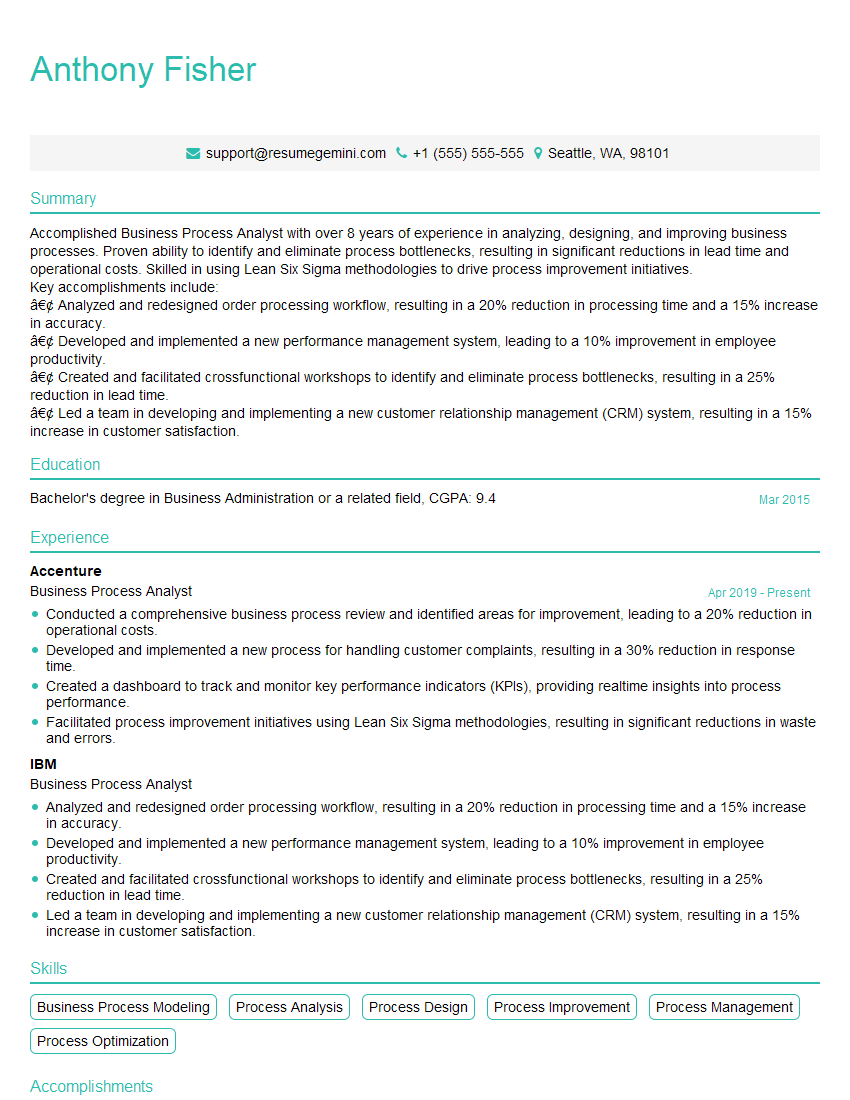
Business Process Analyst Resume Sample
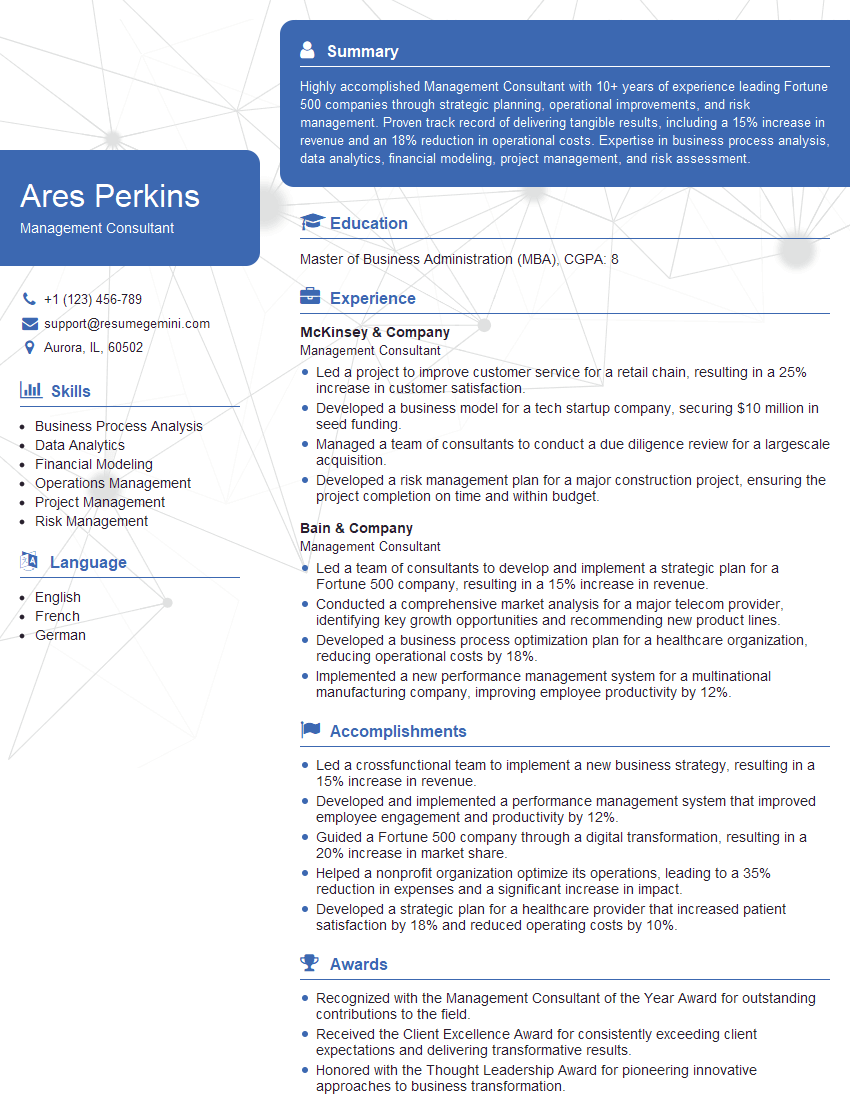
Management Consultant Resume Sample
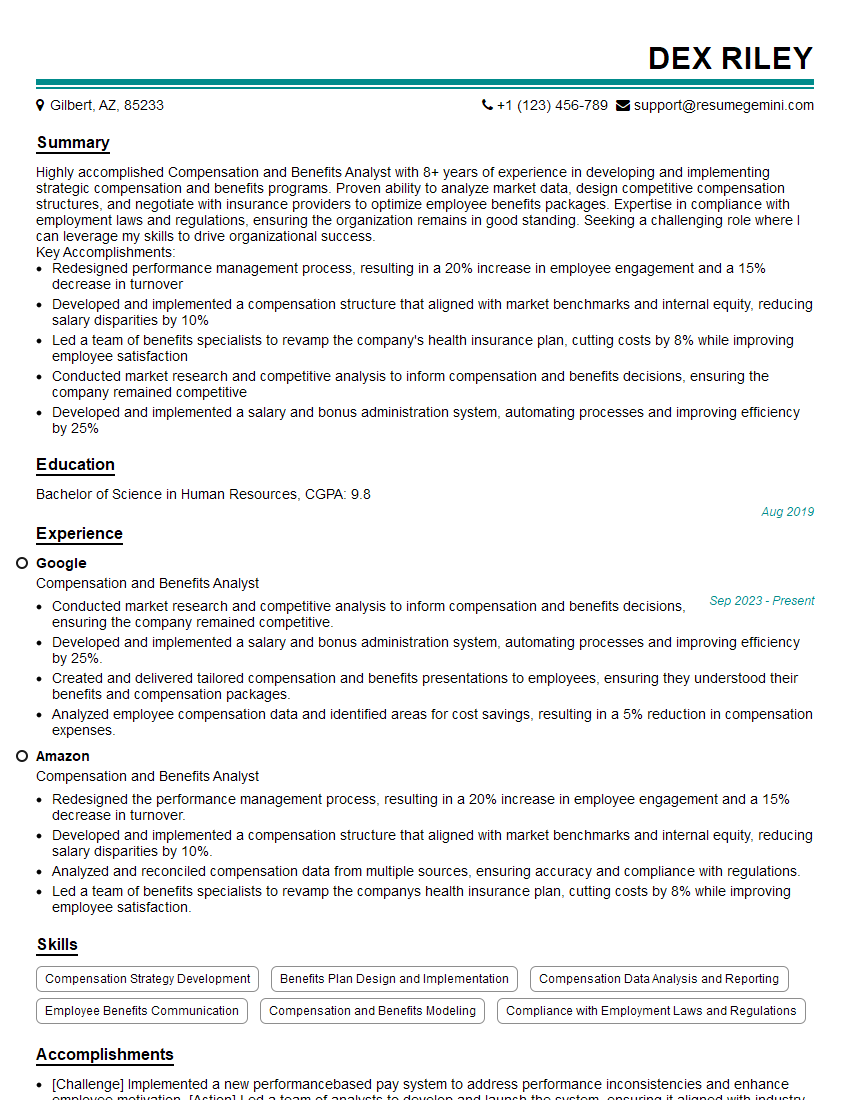
Compensation and Benefits Analyst Resume Sample
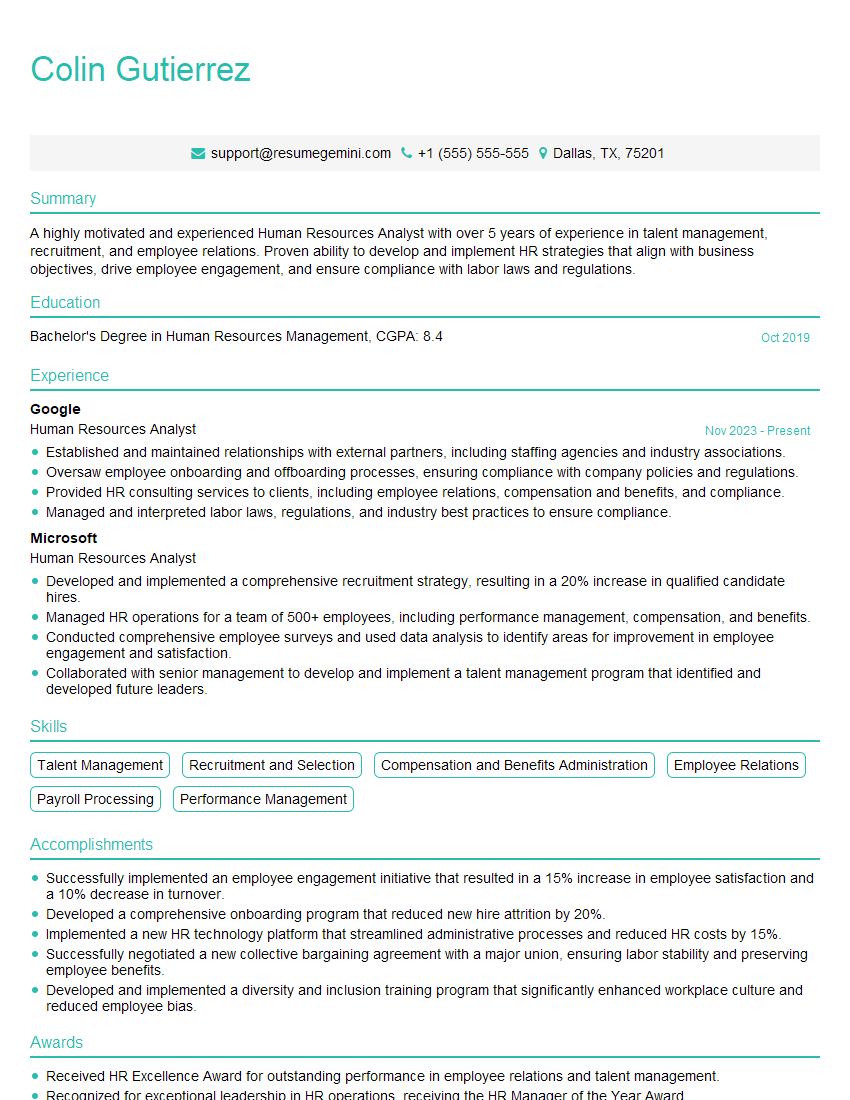
Human Resources Analyst Resume Sample
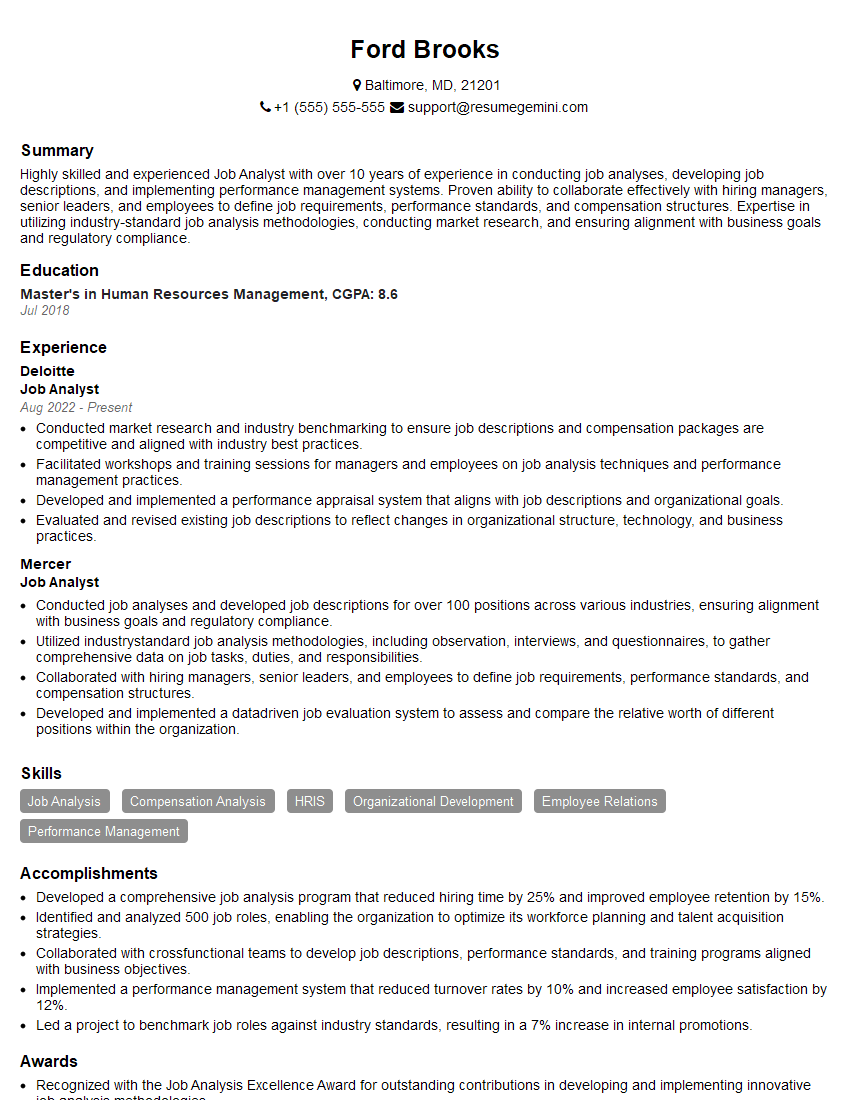
Job Analyst Resume Sample
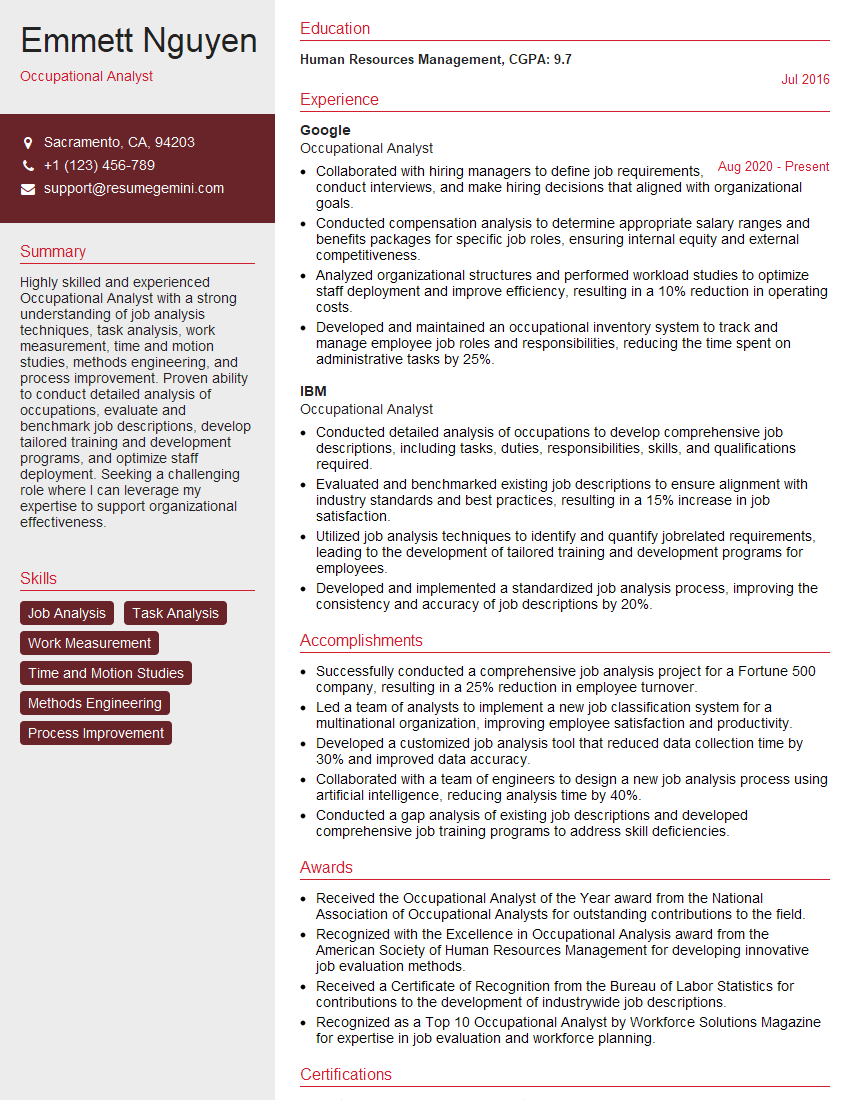
Occupational Analyst Resume Sample
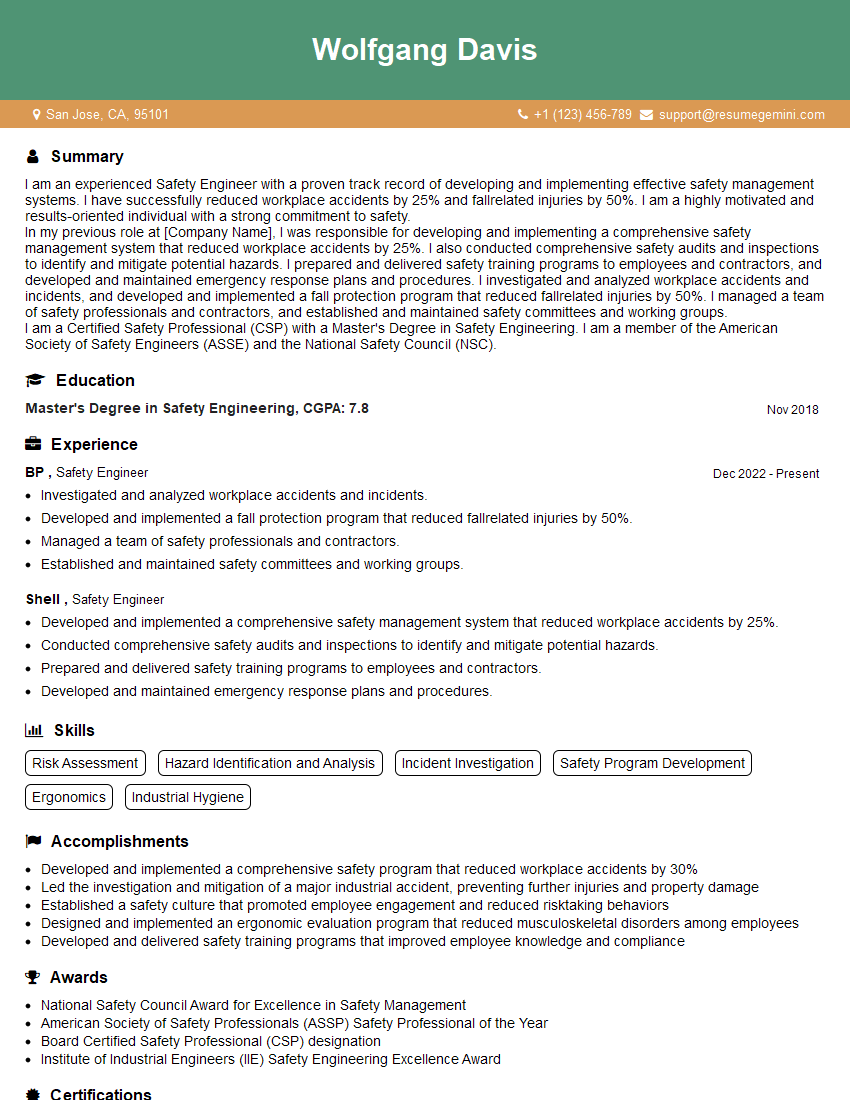
Safety Engineer Resume Sample
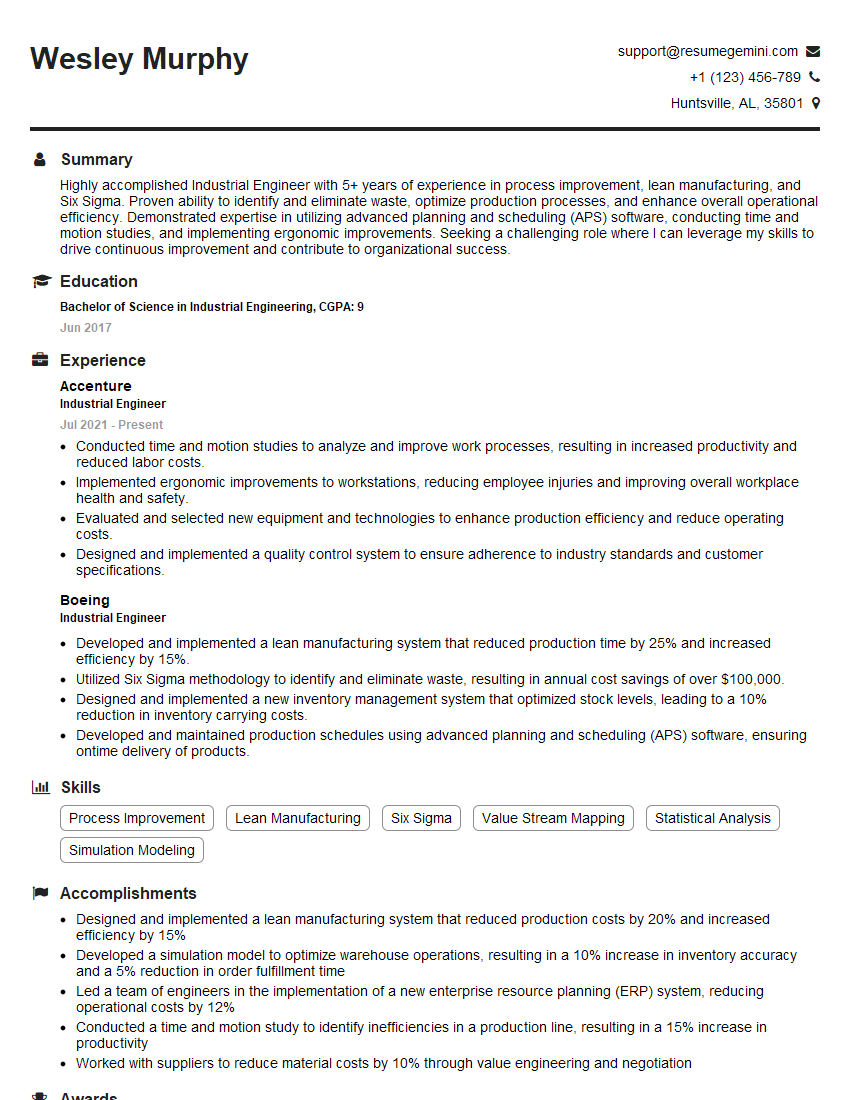
Industrial Engineer Resume Sample
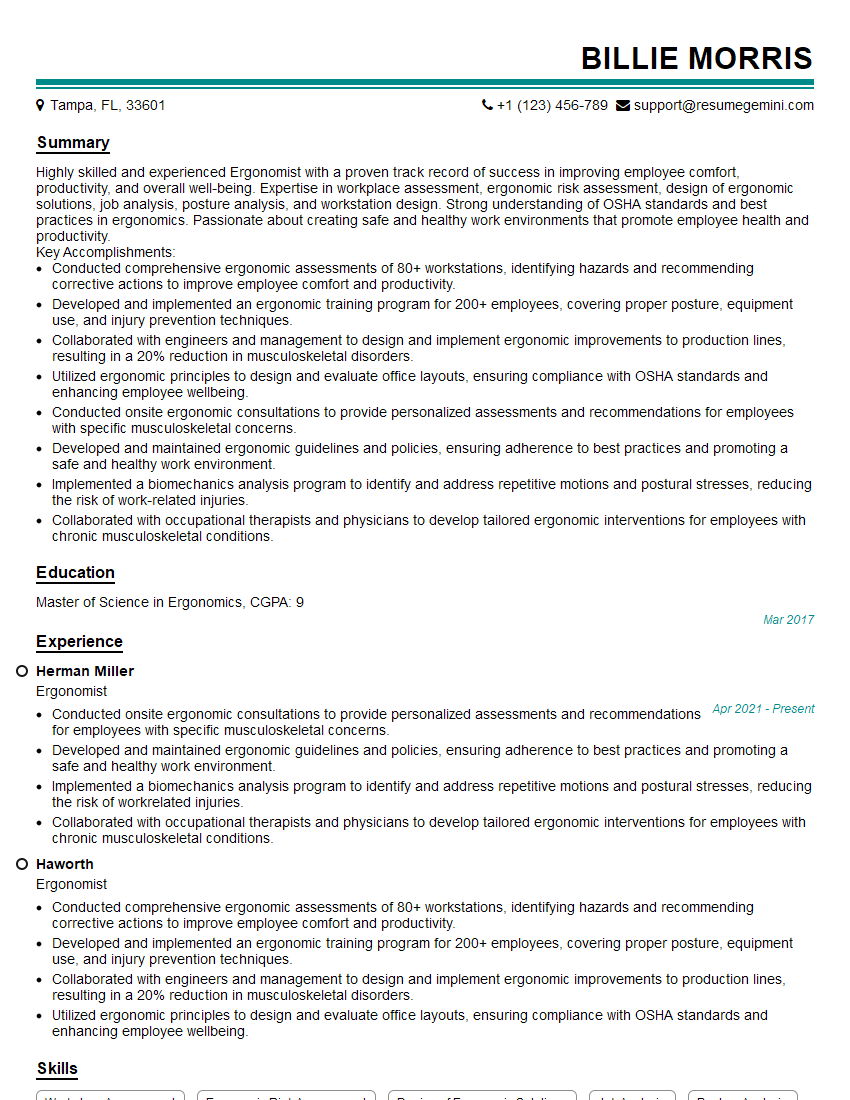
Ergonomist Resume Sample
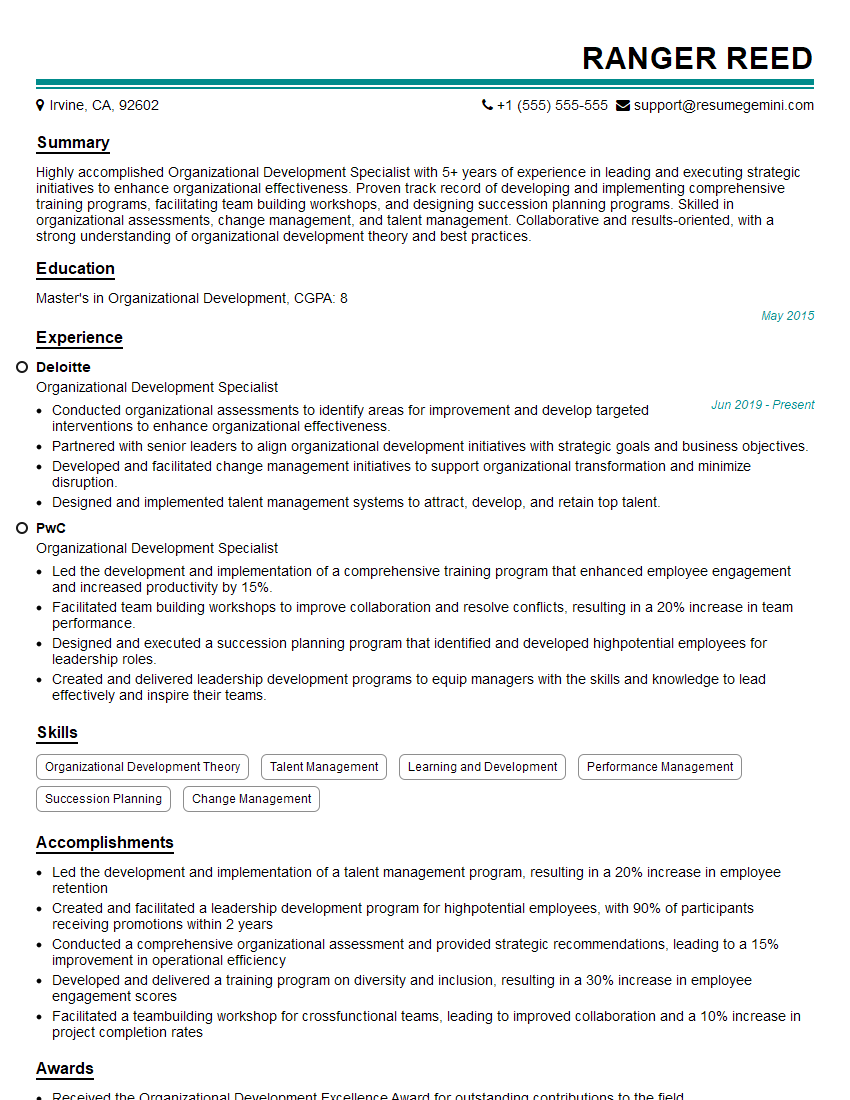
Organizational Development Specialist Resume Sample
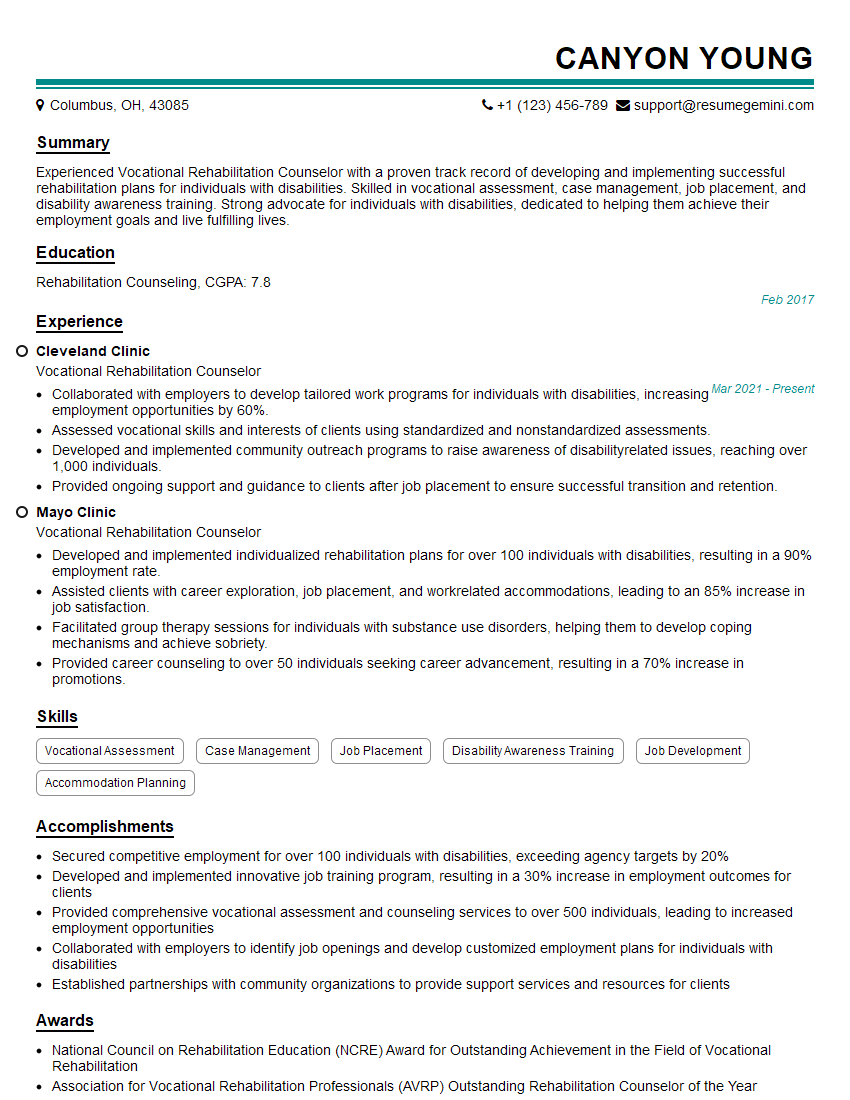
Vocational Rehabilitation Counselor Resume Sample
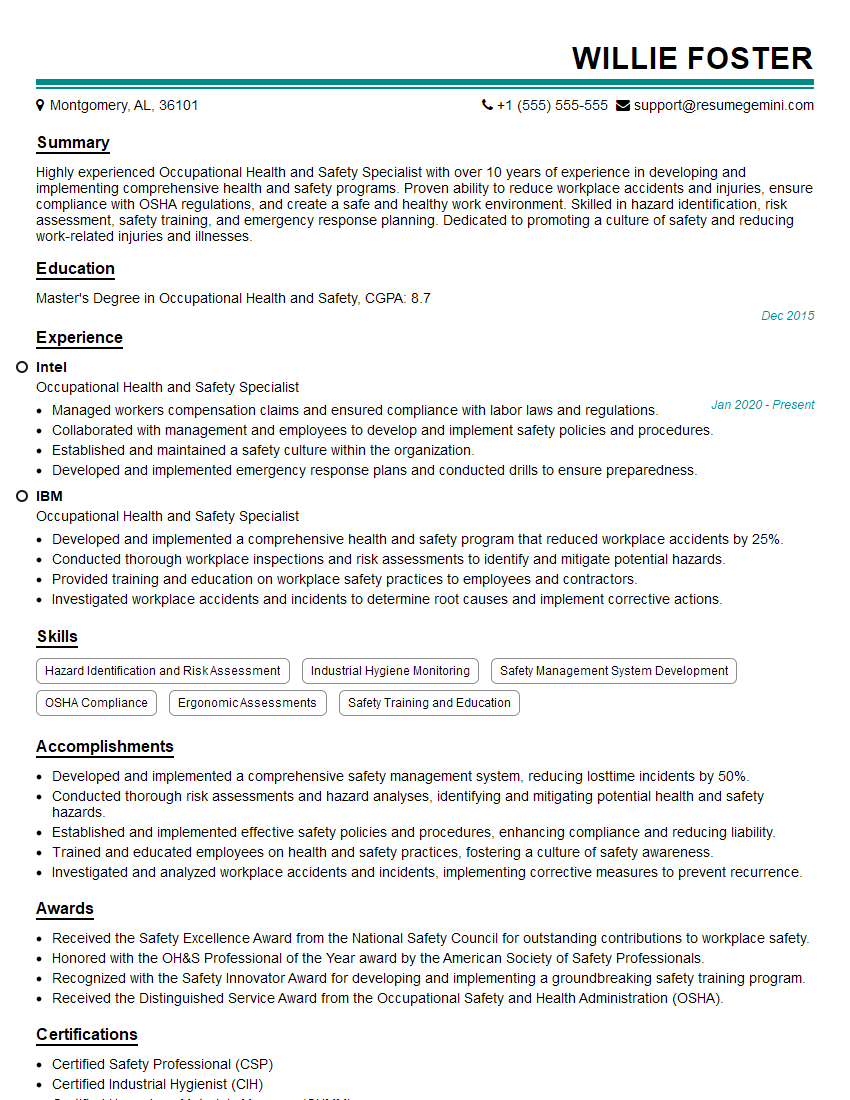
Occupational Health and Safety Specialist Resume Sample
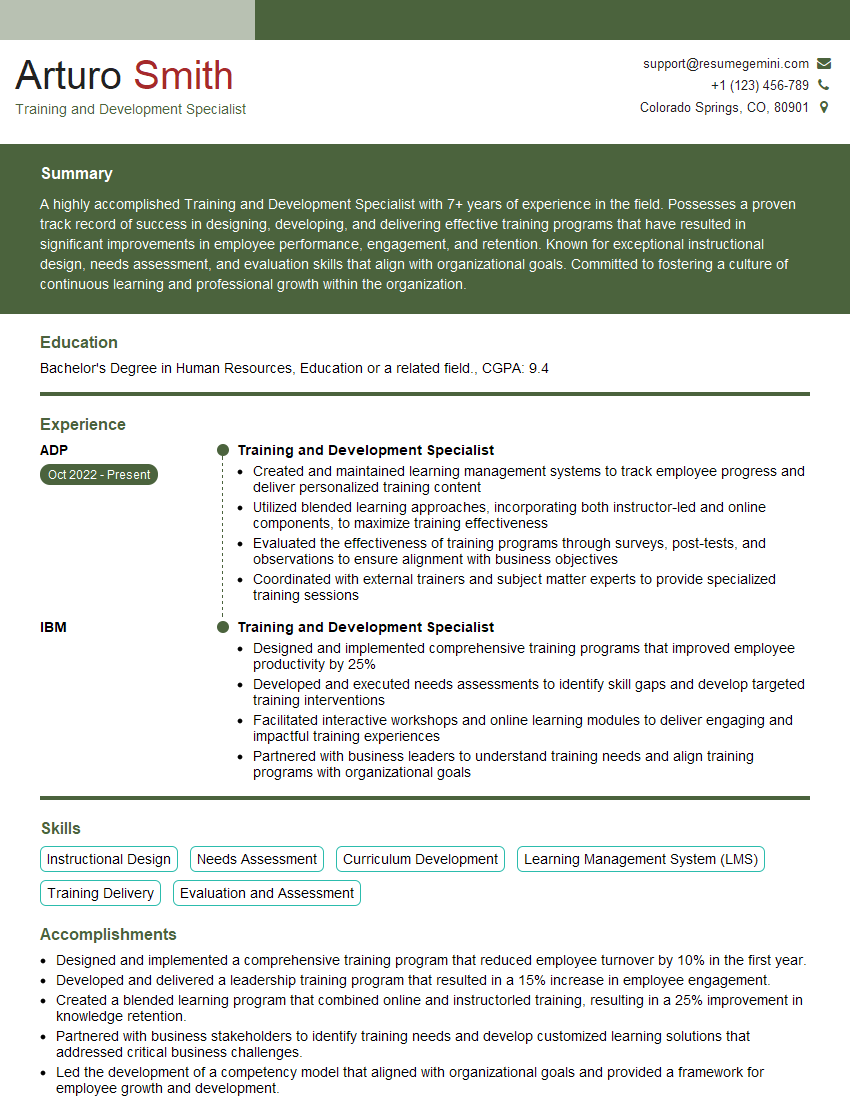
Training and Development Specialist Resume Sample
- Business Process Analyst
- Management Consultant
- Compensation and Benefits Analyst
- Human Resources Analyst
- Job Analyst
- Occupational Analyst
- Safety Engineer
- Industrial Engineer
- Ergonomist
- Organizational Development Specialist
- Vocational Rehabilitation Counselor
- Occupational Health and Safety Specialist
- Training and Development Specialist
Explore more articles
Users Rating of Our Blogs
Share Your Experience
We value your feedback! Please rate our content and share your thoughts (optional).
What Readers Say About Our Blog
To the interviewgemini.com Webmaster.
Very helpful and content specific questions to help prepare me for my interview!
Thank you
To the interviewgemini.com Webmaster.
This was kind of a unique content I found around the specialized skills. Very helpful questions and good detailed answers.
Very Helpful blog, thank you Interviewgemini team.