The thought of an interview can be nerve-wracking, but the right preparation can make all the difference. Explore this comprehensive guide to Understanding of Duralumin Material Properties interview questions and gain the confidence you need to showcase your abilities and secure the role.
Questions Asked in Understanding of Duralumin Material Properties Interview
Q 1. What are the primary alloying elements in Duralumin, and how do they affect its properties?
Duralumin, a trade name for aluminum alloys, primarily contains aluminum (Al) as its base metal. The key alloying elements that significantly impact its properties are copper (Cu), magnesium (Mg), manganese (Mn), and sometimes silicon (Si) and iron (Fe). These elements are added in specific proportions to achieve desired characteristics.
- Copper (Cu): Contributes significantly to strength through solid solution strengthening and precipitation hardening. Higher copper content generally leads to greater strength but can reduce corrosion resistance.
- Magnesium (Mg): Plays a vital role in age hardening. It forms precipitates that enhance strength and hardness during the aging process.
- Manganese (Mn): Improves workability and enhances the alloy’s resistance to corrosion.
- Silicon (Si) and Iron (Fe): These are often present as impurities but can influence mechanical properties and microstructure. They are generally kept to low levels.
Think of it like a recipe: each ingredient (alloying element) contributes specific flavors (properties) to the final product (Duralumin alloy). The precise balance determines the overall quality.
Q 2. Explain the heat treatment process for Duralumin and its impact on mechanical strength.
Heat treatment is crucial for achieving the high strength characteristics of Duralumin. The most common process involves solution heat treatment followed by artificial aging.
- Solution Heat Treatment: The alloy is heated to a specific temperature (e.g., 500-520°C for 2024) to dissolve the alloying elements into the aluminum matrix, forming a homogenous solid solution. This step is followed by rapid quenching (usually in water) to trap the atoms in this high-energy state. This step forms a softer, more malleable structure.
- Artificial Aging: This involves holding the quenched alloy at a lower temperature (e.g., 175-190°C for 2024) for a controlled time. During this stage, finely dispersed precipitates of copper-rich phases form within the aluminum matrix. This precipitation process significantly increases the material’s hardness and strength.
The careful control of temperature and time during these steps is critical. Incorrect heat treatment can lead to suboptimal mechanical properties or even cracking of the alloy. Think of it as baking a cake; the precise temperature and time are crucial for a perfect outcome.
The impact on mechanical strength is substantial. Solution heat treatment results in a relatively soft but workable state, while artificial aging dramatically increases strength and hardness without sacrificing significantly ductility (ability to deform before fracture), making it suitable for structural applications.
Q 3. Describe the difference between different Duralumin alloys (e.g., 2024, 6061).
Different Duralumin alloys, identified by their numerical designations (e.g., 2024, 6061), possess varying compositions and consequently different properties. Here’s a comparison of two common examples:
- 2024: This alloy is known for its high strength-to-weight ratio, making it ideal for aerospace applications. It typically contains higher amounts of copper and magnesium, resulting in excellent strength after age hardening, but slightly reduced corrosion resistance compared to 6061.
- 6061: This is a more versatile alloy offering good strength, weldability, and corrosion resistance. It has lower copper content than 2024, leading to lower ultimate strength but greater formability and weldability. It’s often used in applications where weldability and corrosion resistance are prioritized.
Other Duralumin alloys exist, each tailored to specific application needs. The choice of alloy depends on factors such as required strength, weldability, formability, and corrosion resistance. The balance between these characteristics determines the best option for a given application.
Q 4. How does the microstructure of Duralumin affect its performance?
The microstructure of Duralumin, which is influenced by alloy composition and heat treatment, directly impacts its performance. The size, distribution, and type of precipitates within the aluminum matrix play a crucial role.
- Fine Precipitates: A fine and uniformly distributed dispersion of precipitates (particularly in age-hardened alloys) contributes to increased strength and hardness due to obstacles hindering dislocation movement (dislocations are crystal lattice imperfections that cause plastic deformation).
- Coarse Precipitates: Coarse precipitates have a less significant strengthening effect and can even reduce ductility.
- Grain Size: Smaller grains generally lead to higher strength due to more grain boundaries, which impede dislocation movement.
Understanding and controlling the microstructure is crucial to tailoring the alloy’s properties to the application requirements. Microscopic analysis (e.g., optical microscopy, transmission electron microscopy) is often used to evaluate and optimize the microstructure.
Q 5. Discuss the susceptibility of Duralumin to corrosion and common mitigation techniques.
Duralumin alloys, particularly those with higher copper content, are susceptible to corrosion, especially in environments containing chloride ions (like saltwater). Corrosion can occur through various mechanisms including pitting, intergranular corrosion, and stress corrosion cracking.
- Surface Treatments: Anodizing creates a protective oxide layer, enhancing corrosion resistance. Other surface treatments include painting or powder coating.
- Alloy Selection: Choosing alloys with inherently higher corrosion resistance, such as 6061, is a crucial design consideration.
- Corrosion Inhibitors: Adding corrosion inhibitors to the environment can minimize corrosion rates.
- Design Considerations: Proper design to avoid stress concentrations and stagnant water accumulation is crucial in preventing corrosion.
Corrosion is a major concern and needs proactive mitigation strategies to ensure the structural integrity and longevity of components made of Duralumin.
Q 6. What are the typical mechanical properties of Duralumin (yield strength, tensile strength, elongation)?
The mechanical properties of Duralumin vary significantly depending on the specific alloy and its heat treatment. However, here’s a general range of values for some common alloys:
- Yield Strength: 275-620 MPa (megapascals)
- Tensile Strength: 415-760 MPa
- Elongation: 3-20% (percent elongation at break)
It’s important to consult the material datasheet for the specific alloy and condition to obtain precise values for yield strength, tensile strength, and elongation. These properties are crucial for engineering design and ensuring structural integrity.
Q 7. Explain the concept of age hardening in Duralumin.
Age hardening, also known as precipitation hardening, is a heat treatment process that significantly enhances the strength of Duralumin alloys. It relies on the precipitation of finely dispersed particles from a supersaturated solid solution.
During solution heat treatment, the alloying elements (like copper and magnesium in 2024) dissolve completely into the aluminum matrix. Rapid quenching traps these elements in solution, forming a supersaturated solid solution that is relatively soft. During subsequent artificial aging at a lower temperature, the dissolved atoms gradually precipitate out, forming finely dispersed strengthening particles. These particles impede dislocation movement, thereby significantly increasing the strength and hardness of the alloy.
The process is akin to slowly dissolving sugar in water (solution treatment) and then letting it crystallize again (aging), forming a stronger, harder candy. The size and distribution of these precipitated particles are critical for optimizing the final mechanical properties. This is a time-dependent process and the length of time of aging affects the final strength
Q 8. How does the temperature affect the mechanical properties of Duralumin?
Temperature significantly impacts Duralumin’s mechanical properties. Think of it like this: heat makes things softer and weaker, while cold makes them harder and stronger (within limits). Specifically, increasing temperature reduces yield strength, tensile strength, and hardness, while increasing ductility (ability to deform before breaking). Conversely, lowering the temperature generally increases strength and hardness but reduces ductility. This is especially relevant during heat treatments, where precise temperature control is critical for achieving desired properties. For instance, solution heat treating involves heating Duralumin to a specific temperature to dissolve precipitates, followed by quenching to rapidly cool it, leading to a softer, more workable state. Subsequent artificial aging then increases the strength and hardness by allowing controlled precipitate formation. The temperature during service is also crucial; prolonged exposure to high temperatures can lead to creep (gradual deformation under stress) and loss of strength, potentially leading to component failure.
Q 9. Describe the common manufacturing processes used for Duralumin components (e.g., forging, extrusion).
Duralumin components are manufactured using various processes, each suited to different shapes and sizes.
- Forging: This process involves shaping the heated Duralumin using compressive forces, resulting in high strength and grain refinement, perfect for high-stress components like aircraft parts. Imagine hammering a hot piece of metal into the desired shape – that’s the basic principle. The controlled deformation improves mechanical properties.
- Extrusion: This is like squeezing toothpaste from a tube. Heated Duralumin is forced through a die to create long, uniform shapes such as rods, tubes, and profiles. It’s highly efficient for producing large quantities of standardized parts.
- Casting: Molten Duralumin is poured into a mold to solidify, forming complex shapes. While offering design flexibility, cast Duralumin typically exhibits lower strength compared to wrought processes like forging and extrusion.
- Rolling: This involves passing the metal through rollers to reduce its thickness, creating sheets or plates. The rolling process improves the material’s strength and workability.
Q 10. What are the limitations of Duralumin in different applications?
While Duralumin offers excellent strength-to-weight ratio, it’s not a universal solution. Its limitations include:
- Susceptibility to Corrosion: Duralumin, like most aluminum alloys, is susceptible to corrosion, particularly in aggressive environments. Proper surface treatments like anodizing are often necessary to extend its lifespan.
- Limited High-Temperature Strength: Compared to some other alloys, its strength degrades significantly at elevated temperatures, restricting its use in high-temperature applications.
- Stress Corrosion Cracking (SCC): This is a serious concern, especially under tensile stress in corrosive environments. We’ll discuss this further in another question.
- Formability: Certain Duralumin alloys may exhibit lower formability (difficulty in being bent or shaped) compared to other aluminum alloys, limiting design flexibility.
- Cost: Compared to some standard aluminum alloys, Duralumin can be relatively more expensive.
Q 11. Compare and contrast Duralumin with other aluminum alloys.
Duralumin (specifically, 2000 series aluminum alloys) is a heat-treatable aluminum alloy known for its high strength-to-weight ratio. Compared to other aluminum alloys:
- Compared to 6000 series (e.g., 6061): 6000 series alloys are less strong but exhibit better corrosion resistance and weldability. They are a good choice when weldability and corrosion resistance are primary concerns.
- Compared to 7000 series (e.g., 7075): 7000 series alloys, like Duralumin, are also high-strength alloys, but 7075 generally offers even higher strength, especially at higher temperatures. However, they may be more expensive and less readily available.
- Compared to pure aluminum: Pure aluminum is much softer and weaker than Duralumin, but it offers superior corrosion resistance. It’s typically used where high strength isn’t required.
Q 12. How would you select the appropriate Duralumin alloy for a specific application?
Selecting the appropriate Duralumin alloy requires a systematic approach, considering the specific application requirements. A good starting point is defining:
- Required Strength: Tensile strength, yield strength, and fatigue strength all contribute to this. Higher strength often demands a more complex alloy and may compromise other properties.
- Corrosion Resistance: The environment in which the component will operate is crucial. If exposed to highly corrosive conditions, surface treatments may be needed regardless of alloy choice.
- Formability: If intricate shapes are required, the selected alloy needs to be easily formed through processes like forging or extrusion.
- Weldability: If welding is required, the chosen alloy must be compatible with welding procedures, and weldability is sometimes compromised for increased strength.
- Cost: Different Duralumin alloys have varying costs, and the budget must be considered.
Q 13. Explain the significance of stress corrosion cracking in Duralumin.
Stress corrosion cracking (SCC) is a serious degradation mechanism in Duralumin, and other susceptible materials. It’s a delayed failure that happens when the combination of tensile stress and a corrosive environment causes cracking and ultimately failure. Imagine a tiny crack forming and slowly propagating under sustained stress and corrosive attack. This can happen even at stresses below the material’s yield strength. SCC is particularly insidious because it is often unexpected. Factors influencing SCC include the alloy’s composition, the magnitude and type of stress (residual or applied), the corrosive environment (e.g., salt water, certain chemicals), and temperature. Minimizing SCC risk involves selecting corrosion-resistant alloys, employing appropriate surface treatments (like anodizing), reducing residual stresses during manufacturing, and designing components to avoid high stress concentrations. Regular inspections and careful monitoring of service conditions are also essential.
Q 14. How does cold working affect the properties of Duralumin?
Cold working, also known as cold deformation, involves shaping Duralumin at room temperature. This process significantly alters its properties, primarily by increasing strength and hardness while simultaneously decreasing ductility. Think of it like working clay – the more you shape and compress it, the harder it gets. The cold working process introduces dislocations in the metal’s crystal structure, which hinder the movement of atoms and increase resistance to deformation. However, this increase in strength and hardness comes at a cost: the material becomes more brittle, making it susceptible to cracking. The extent of these changes depends on the degree of cold working. Annealing is often used after cold working to relieve internal stresses and restore some ductility. The effect of cold working must be carefully considered during design and manufacturing, as it has a profound impact on the final product’s mechanical behavior and performance.
Q 15. Discuss the fatigue behavior of Duralumin.
Duralumin, an aluminum alloy, exhibits fatigue behavior similar to other aluminum alloys, but its specific response depends heavily on its precise composition and heat treatment. Fatigue refers to the progressive and localized structural damage that occurs when a material is subjected to cyclic loading. Essentially, it’s like repeatedly bending a paper clip – eventually, it’ll break, even if each bend is far below the breaking point.
For Duralumin, the fatigue life (number of cycles to failure) is influenced by factors like the amplitude of the stress cycles (how high and low the stress goes), the mean stress (the average stress level), surface finish (rough surfaces act as stress concentrators), and the presence of any defects. A smoother surface and a lower stress amplitude generally translate to longer fatigue life.
Imagine an aircraft wing made from Duralumin. It experiences countless cycles of stress during flight. Understanding Duralumin’s fatigue behavior is crucial to ensure the wing’s structural integrity throughout its operational lifespan. Regular inspections and careful design, considering fatigue limits, are paramount to prevent catastrophic failure.
Career Expert Tips:
- Ace those interviews! Prepare effectively by reviewing the Top 50 Most Common Interview Questions on ResumeGemini.
- Navigate your job search with confidence! Explore a wide range of Career Tips on ResumeGemini. Learn about common challenges and recommendations to overcome them.
- Craft the perfect resume! Master the Art of Resume Writing with ResumeGemini’s guide. Showcase your unique qualifications and achievements effectively.
- Don’t miss out on holiday savings! Build your dream resume with ResumeGemini’s ATS optimized templates.
Q 16. Describe the non-destructive testing methods used for Duralumin components.
Non-destructive testing (NDT) is crucial for ensuring the quality and integrity of Duralumin components without causing damage. Several methods are commonly employed:
- Visual Inspection: A simple yet effective method to detect surface cracks, corrosion, or other visible defects.
- Dye Penetrant Inspection: A liquid dye is applied to the surface, penetrating any cracks. A developer then draws the dye to the surface, making cracks visible.
- Magnetic Particle Inspection: Suitable for ferromagnetic materials (not Duralumin directly, but potentially any steel components in a Duralumin assembly), this method uses magnetic fields to detect surface and near-surface cracks.
- Ultrasonic Testing: High-frequency sound waves are used to detect internal flaws. The reflection of the waves indicates the presence and size of defects. This is particularly effective for detecting internal cracks or porosity in Duralumin castings.
- Radiographic Testing (X-ray or Gamma-ray): This technique uses penetrating radiation to create images of the internal structure, revealing internal flaws like porosity or inclusions.
The choice of NDT method depends on the specific component, its geometry, and the type of defects being sought.
Q 17. Explain how to interpret a Duralumin tensile test report.
A Duralumin tensile test report provides essential mechanical properties. Key parameters include:
- Ultimate Tensile Strength (UTS): The maximum stress the material can withstand before breaking. This indicates the material’s strength.
- Yield Strength: The stress at which the material begins to deform permanently (plastic deformation). This shows the material’s resistance to permanent deformation.
- Elongation: The percentage increase in length after the material breaks. This represents the material’s ductility (ability to deform before fracture).
- Reduction in Area: The percentage decrease in cross-sectional area at the fracture point. This also reflects the material’s ductility.
- Young’s Modulus (Elastic Modulus): A measure of the material’s stiffness – its resistance to elastic deformation.
Interpreting the report involves comparing the obtained values with the specified material standards to ensure the Duralumin meets the required properties for its intended application. Values outside the acceptable range might indicate a problem with the material’s composition, heat treatment, or manufacturing process.
Q 18. How would you identify and address a failure in a Duralumin component?
Identifying a failure in a Duralumin component involves a systematic approach:
- Visual Inspection: Carefully examine the failed component for visible signs of damage like cracks, corrosion, or deformation.
- Fracture Analysis: Analyze the fracture surface to determine the mode of failure (e.g., ductile, brittle, fatigue). Microscopic examination may be needed.
- Material Testing: Perform tensile tests, hardness tests, or chemical analysis on samples from the failed component to determine if the material properties meet specifications.
- Stress Analysis: Use finite element analysis (FEA) or other techniques to determine the stress distribution in the component under the operating conditions to identify potential stress concentrations.
- Root Cause Analysis: Investigate the factors that contributed to the failure, such as design flaws, manufacturing defects, incorrect material selection, or improper operating conditions.
Addressing the failure requires corrective actions based on the root cause analysis. This might involve design modifications, improved manufacturing processes, stricter quality control measures, or changes in operational procedures.
Q 19. What are the environmental factors that can impact the performance of Duralumin?
Duralumin’s performance can be significantly impacted by environmental factors:
- Corrosion: Exposure to moisture, salt spray, or other corrosive environments can lead to significant degradation of the material’s properties, causing pitting, cracking, and eventually failure. Protective coatings are often necessary.
- Temperature: Extreme temperatures can affect Duralumin’s strength and ductility. High temperatures can reduce its strength, while very low temperatures can make it brittle.
- Stress Corrosion Cracking (SCC): A combination of sustained tensile stress and a corrosive environment can cause cracking, even at stresses below the material’s yield strength. This is particularly relevant in marine environments.
Understanding these environmental influences is crucial for selecting appropriate Duralumin alloys, applying protective coatings, and designing components that can withstand the expected environmental conditions.
Q 20. Describe the welding procedures suitable for Duralumin.
Welding Duralumin is challenging due to its susceptibility to cracking and porosity. Special techniques and precautions are essential:
- Gas Tungsten Arc Welding (GTAW) or TIG Welding: This is the most commonly used method for welding Duralumin. It offers excellent control over the welding process, minimizing the risk of defects. A pure argon shielding gas is crucial to prevent oxidation.
- Gas Metal Arc Welding (GMAW) or MIG Welding: Can be used, but requires careful control of parameters and often specialized filler wires to achieve good results and avoid porosity.
- Preheating and Post-heating: Preheating the Duralumin before welding and post-heating after welding can help reduce residual stresses and minimize the risk of cracking. The precise temperatures depend on the alloy and thickness of the material.
- Filler Metal Selection: Using the correct filler metal with a similar composition to the base Duralumin is crucial for achieving a strong and corrosion-resistant weld.
Proper cleaning of the weld area before and after welding is also essential to prevent contamination and ensure a high-quality weld.
Q 21. What are the safety precautions to consider while working with Duralumin?
Safety precautions when working with Duralumin include:
- Eye and Respiratory Protection: Welding Duralumin produces fumes and sparks that can be harmful to eyes and lungs. Appropriate eye protection (welding shields) and respiratory protection (masks) are essential.
- Proper Ventilation: Ensure adequate ventilation in the work area to remove welding fumes and prevent the buildup of hazardous gases.
- Fire Safety: Duralumin is flammable, particularly as fine particles or shavings. Take precautions to prevent ignition and have appropriate fire suppression equipment readily available.
- Handling Precautions: Use appropriate hand protection (gloves) to prevent cuts and abrasions from sharp edges or burrs on the material.
- Proper Disposal: Dispose of Duralumin scraps and waste materials according to local regulations.
Always follow the manufacturer’s safety data sheets (SDS) and relevant safety guidelines when working with Duralumin or any other metal.
Q 22. Discuss the joining methods for Duralumin (riveting, bolting, adhesive bonding).
Duralumin, an aluminum alloy known for its high strength-to-weight ratio, can be joined using several methods, each with its advantages and disadvantages. Let’s explore riveting, bolting, and adhesive bonding.
- Riveting: This is a classic method, especially prevalent in aerospace applications where weight is critical. Rivets are mechanically deformed to create a strong, permanent joint. It’s relatively simple and reliable, but requires careful hole preparation to avoid weakening the structure. Think of it like connecting two pieces of metal with tiny, strong pins that are then squeezed flat. Different rivet types, such as solid rivets and blind rivets (which don’t require access to the backside), are chosen based on the application.
- Bolting: This is a more versatile method offering reusability. Bolts create a mechanically fastened joint, easily disassembled and replaced. However, bolts add more weight compared to rivets and may require larger holes, potentially reducing structural integrity if not carefully designed. Think of it like screwing two pieces of metal together, offering easy access for adjustments or repairs.
- Adhesive Bonding: This method uses specialized structural adhesives to create a strong, lightweight bond. It’s especially advantageous for joining complex shapes or dissimilar materials. Proper surface preparation is crucial for success, and the bond strength depends on the adhesive type, curing time, and environmental factors. Imagine the glue that’s so strong, it can hold two pieces of metal together as firmly as a rivet.
The best joining method depends on factors like strength requirements, weight limitations, assembly complexity, and cost. For instance, riveting is preferred for high-strength, lightweight applications, while bolting is chosen for situations requiring easy maintenance or disassembly.
Q 23. How does surface treatment affect the corrosion resistance of Duralumin?
Surface treatment is paramount for enhancing the corrosion resistance of Duralumin. Duralumin, while stronger than pure aluminum, is still susceptible to corrosion, especially in harsh environments. Several treatments address this vulnerability:
- Anodizing: This electrochemical process creates a thick, protective oxide layer on the aluminum’s surface. This layer is highly resistant to corrosion and can be colored for aesthetic purposes. It’s frequently used in aerospace and architectural applications where corrosion protection is essential.
- Chromate Conversion Coating: This chemical treatment produces a thin, corrosion-resistant chromate layer. While effective, environmental concerns regarding hexavalent chromium have led to a reduction in its use.
- Painting or Powder Coating: These act as barriers between the Duralumin and the environment, preventing moisture and corrosive substances from reaching the underlying metal. They offer good corrosion protection but can be less durable than anodizing.
- Cladding: This involves bonding a thin layer of a more corrosion-resistant material, such as stainless steel or another corrosion-resistant aluminum alloy, to the surface of the duralumin, providing an additional shield.
The choice of surface treatment depends on the specific application and the desired level of corrosion protection. For example, aircraft components might undergo anodizing for its durability and corrosion resistance in varying weather conditions, while less demanding applications may use simpler methods like painting.
Q 24. What is the impact of impurities on the properties of Duralumin?
Impurities in Duralumin significantly affect its mechanical properties. The alloy’s composition is carefully controlled to achieve the desired strength, ductility, and corrosion resistance. Even small amounts of impurities can have a detrimental effect.
- Iron (Fe): Increases strength but can reduce ductility and corrosion resistance. High iron content can lead to intermetallic compounds, reducing overall performance.
- Silicon (Si): Affects grain size and can increase strength. Excessive silicon can impair corrosion resistance.
- Copper (Cu): A major alloying element that contributes to strength and hardness, but too much copper can hinder formability and corrosion resistance. The balance is key.
- Other Impurities: Elements like manganese, magnesium, zinc, and titanium are purposely included in specific proportions to refine grain size, increase strength, or enhance other properties, but their levels must be precisely controlled to avoid negative impacts.
Think of it like a carefully crafted recipe – deviating from the precise proportions of ingredients can spoil the final product. In Duralumin, controlling impurities is crucial for consistent performance and reliability.
Q 25. Explain the role of grain size in the mechanical properties of Duralumin.
Grain size plays a significant role in the mechanical properties of Duralumin. Grain size refers to the average size of the individual crystals (grains) that make up the metal’s microstructure. A finer grain size generally leads to superior mechanical properties.
- Increased Strength and Hardness: Smaller grains impede dislocation movement, making it harder for the material to deform. This results in higher strength and hardness. Imagine many tiny obstacles making it harder for something to slide through.
- Improved Ductility: Although smaller grains increase strength, they can also sometimes improve ductility by providing more pathways for deformation, enhancing formability.
- Enhanced Fatigue Resistance: A finer grain size increases the material’s resistance to fatigue failure (failure under repeated stress cycles).
Heat treatment processes, like solution treatment and aging, are used to control grain size and optimize mechanical properties. Heat treatment is essential for achieving the target balance between strength, ductility, and other properties. The optimal grain size will vary depending on the specific application requirements.
Q 26. Discuss the machinability of Duralumin.
Duralumin is generally considered to be moderately machinable. However, its machinability depends on several factors:
- Alloy Composition: Different Duralumin alloys have varying machinability characteristics. Some are easier to machine than others.
- Heat Treatment: The heat treatment condition significantly impacts machinability. Hardened Duralumin is more difficult to machine than softer, annealed material. Think of cutting through a piece of hardened steel versus soft aluminum – the harder material presents greater resistance.
- Cutting Tools: Proper cutting tools are essential for successful machining. Sharp, well-maintained tools minimize the chances of work hardening and tool wear during machining.
- Cutting Parameters: Cutting speed, feed rate, and depth of cut should be optimized to minimize heat generation and tool wear while achieving the desired surface finish.
Effective machining strategies include using appropriate cutting fluids (lubricants) and employing techniques to prevent work hardening, which can lead to tool breakage and poor surface finishes. The overall machinability is significantly improved by proper planning and use of appropriate tools and techniques.
Q 27. How does the thickness of Duralumin affect its properties?
The thickness of Duralumin affects its mechanical properties and behavior. While the material properties themselves remain relatively consistent regardless of thickness, the thicker the material is, the greater its resistance to bending and deformation under load.
- Strength and Stiffness: Thicker sections generally possess higher resistance to bending and buckling. Think of a thin sheet of metal versus a thick plate – the plate is more rigid and harder to bend.
- Heat Treatment Response: The thickness of a component can influence the heat treatment process required to achieve the desired mechanical properties. Thicker sections may require longer heat treatment cycles to ensure uniform temperature distribution.
- Machinability: Thicker sections are typically more challenging to machine compared to thinner ones. Cutting and milling may take longer and require more power due to the greater volume of material removal.
- Corrosion Resistance: While the intrinsic corrosion resistance of Duralumin doesn’t change with thickness, thicker sections provide more material for corrosion protection, meaning the total time to penetration by corrosion will increase.
Therefore, the selection of the appropriate Duralumin thickness needs to be carefully considered as a balancing act for achieving the required strength, stiffness, machinability, and corrosion resistance for a specific application.
Q 28. What are some common applications of Duralumin in aerospace engineering?
Duralumin’s high strength-to-weight ratio and corrosion resistance make it ideal for numerous aerospace applications:
- Aircraft Fuselage and Wings: Duralumin is extensively used in the construction of aircraft structures to minimize weight without sacrificing strength. The reduced weight translates directly into fuel efficiency.
- Engine Components: Certain engine parts, where strength and lightweight are important, may use Duralumin.
- Landing Gear: The high strength and fatigue resistance of Duralumin are key factors in its use for landing gear components.
- Control Surfaces: Duralumin’s lightweight characteristics make it suitable for use in ailerons, elevators, and rudders, contributing to overall aircraft performance.
- Spacecraft Structures: While other materials are employed for extreme environments, Duralumin has found use in parts of some spacecraft structures.
The choice of specific Duralumin alloy depends on the application’s particular requirements for strength, corrosion resistance, and other specific properties. The continuous improvement in the design of alloys allows for the tailoring of materials to the particular needs of many complex aerospace components.
Key Topics to Learn for Understanding of Duralumin Material Properties Interview
- Composition and Alloying Elements: Understand the key elements contributing to duralumin’s properties (aluminum, copper, magnesium, manganese) and how variations in composition affect its characteristics.
- Mechanical Properties: Become familiar with duralumin’s strength, ductility, hardness, elasticity, and fatigue resistance. Understand how these properties are measured and tested.
- Heat Treatment and Age Hardening: Master the principles of heat treatment processes crucial for achieving optimal mechanical properties in duralumin. Explain the concept of age hardening and its impact.
- Corrosion Resistance: Discuss duralumin’s inherent corrosion resistance and the factors that can influence it. Understand protective measures and surface treatments.
- Fabrication and Machinability: Explore the common manufacturing processes used for duralumin (casting, forging, machining, extrusion) and their impact on final product quality.
- Applications in Engineering: Be prepared to discuss practical applications of duralumin in various industries, such as aerospace, automotive, and construction. Provide specific examples.
- Comparing Duralumin to other Aluminum Alloys: Understand the advantages and disadvantages of duralumin compared to other aluminum alloys, highlighting specific situations where it is the preferred material.
- Material Selection Considerations: Discuss the factors to consider when selecting duralumin for a particular engineering application, emphasizing the balance between cost, performance, and durability.
- Failure Analysis: Be prepared to discuss potential failure modes in duralumin components and the methods used to investigate and prevent them.
Next Steps
A strong understanding of duralumin material properties is crucial for career advancement in engineering and related fields. It demonstrates a solid foundation in materials science and your ability to apply that knowledge to real-world problems. To significantly boost your job prospects, creating an ATS-friendly resume is essential. This ensures your application gets noticed by recruiters and hiring managers. ResumeGemini is a trusted resource for building professional, impactful resumes that highlight your skills and experience effectively. We provide examples of resumes tailored to showcasing expertise in Understanding of Duralumin Material Properties to help you get started.

Quality Assurance Manager Resume Sample
Production Supervisor Resume Sample
Chief Engineer Resume Sample
Applications Engineer Resume Sample
Test Engineer Resume Sample
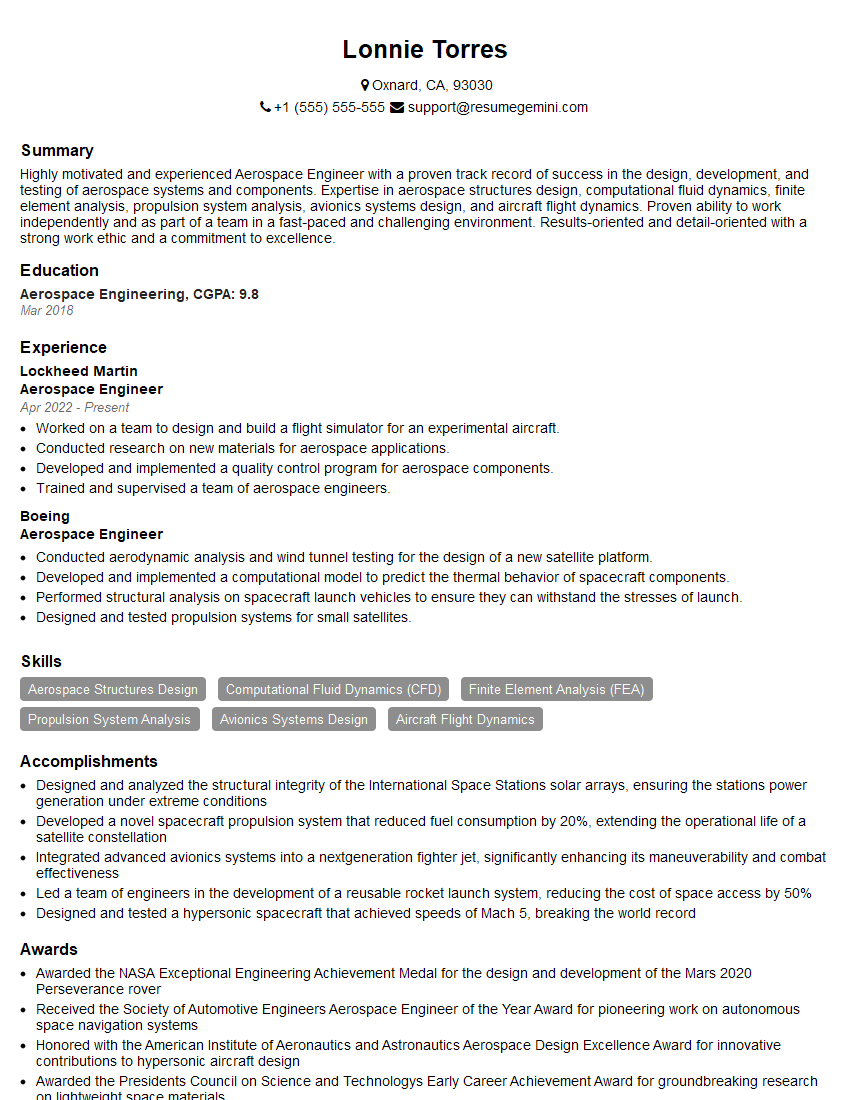
Aerospace Engineer Resume Sample
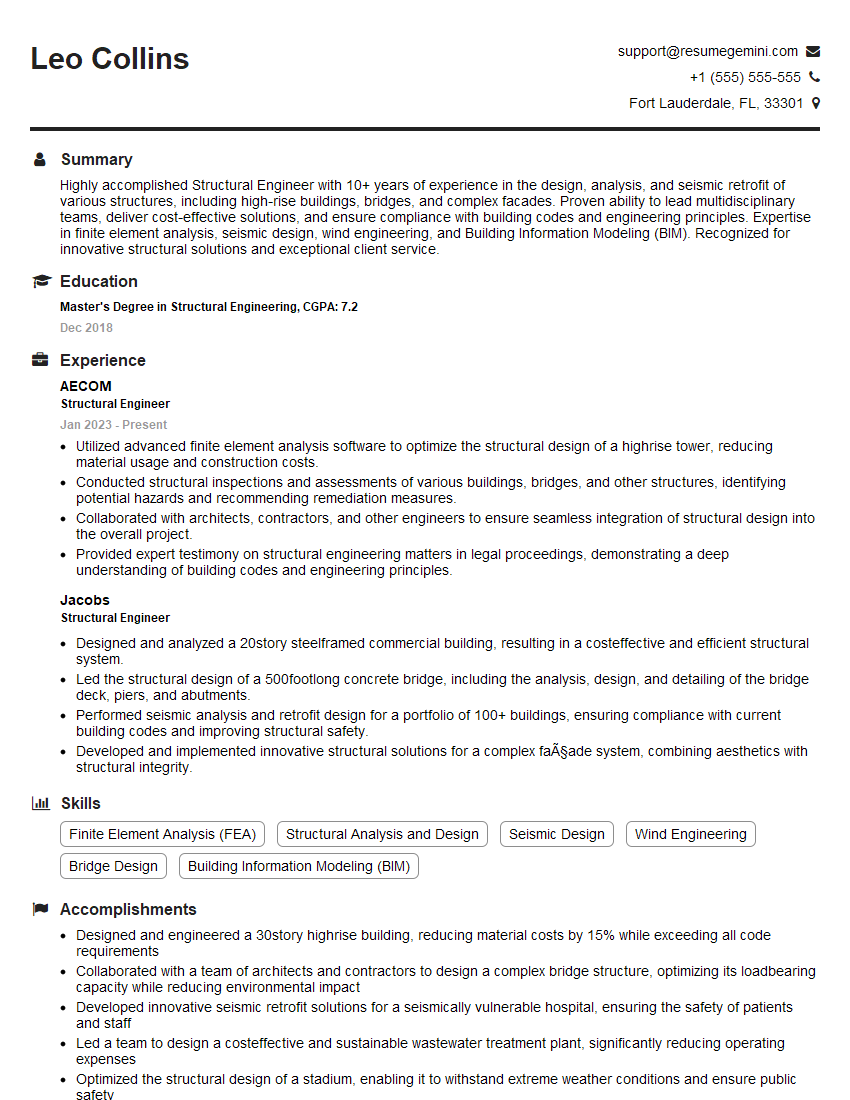
Structural Engineer Resume Sample
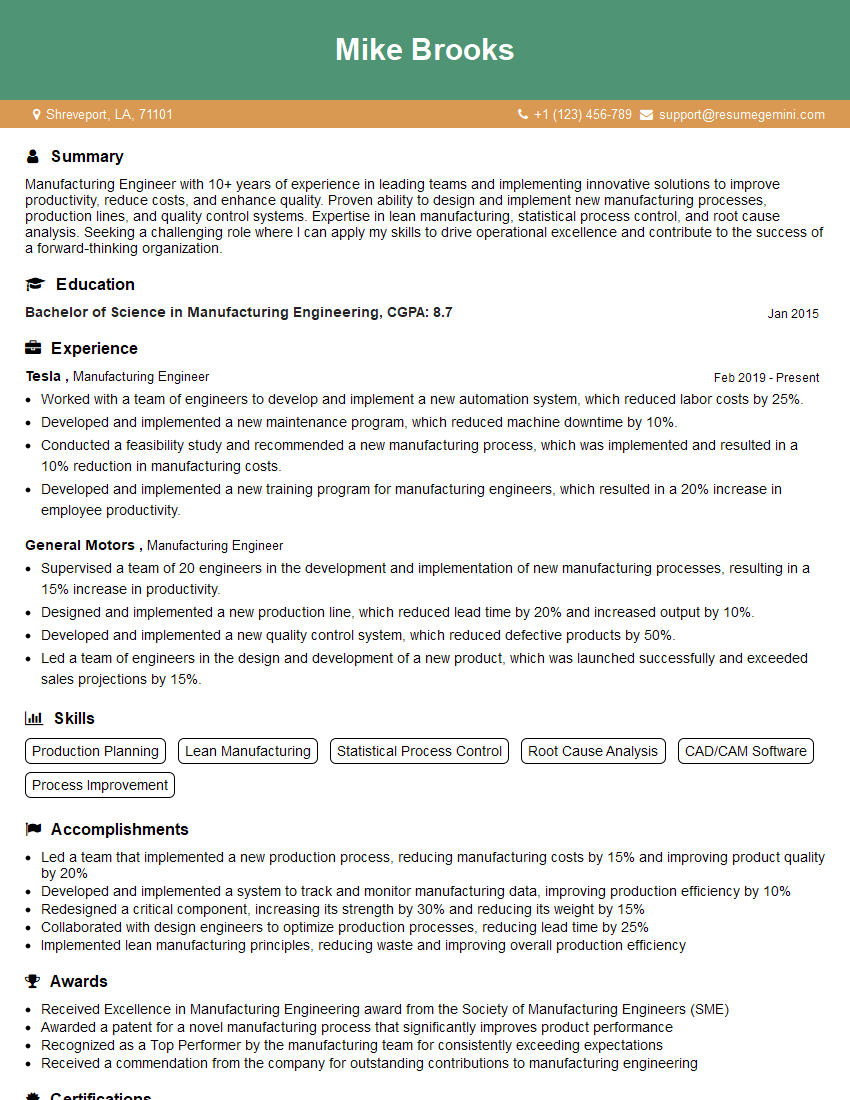
Manufacturing Engineer Resume Sample
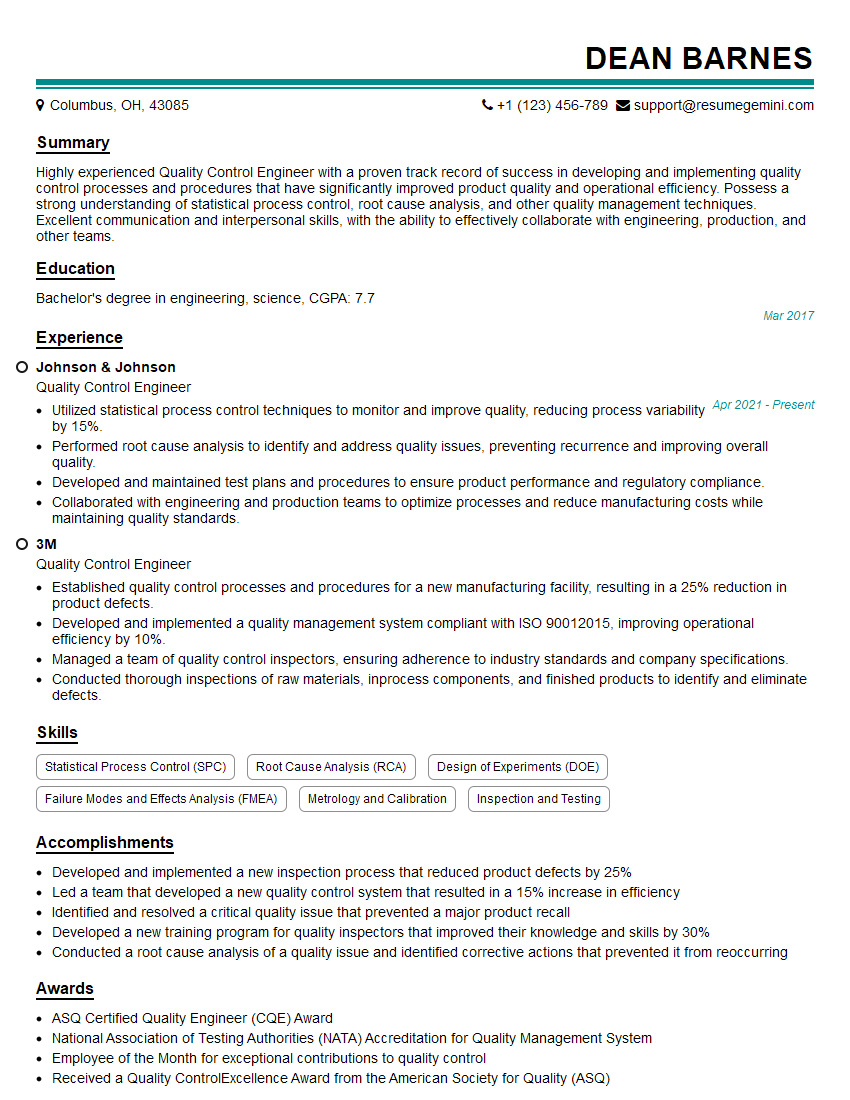
Quality Control Engineer Resume Sample
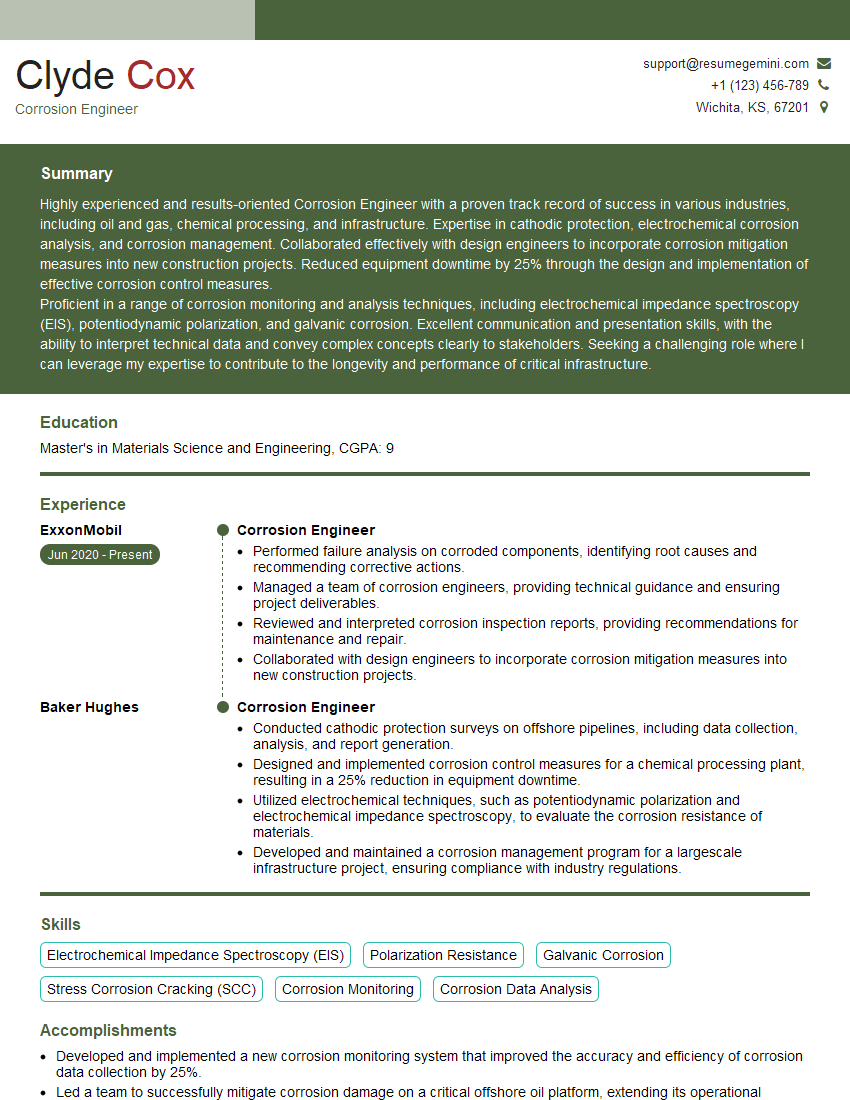
Corrosion Engineer Resume Sample
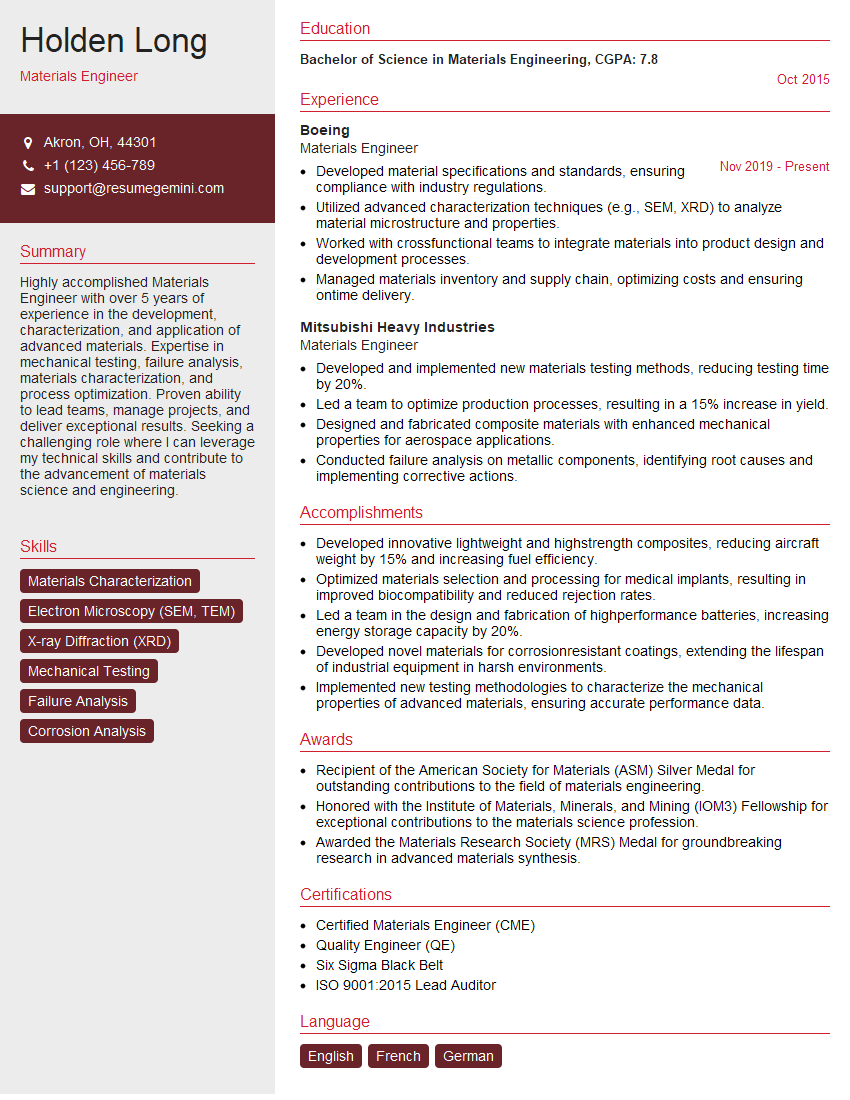
Materials Engineer Resume Sample
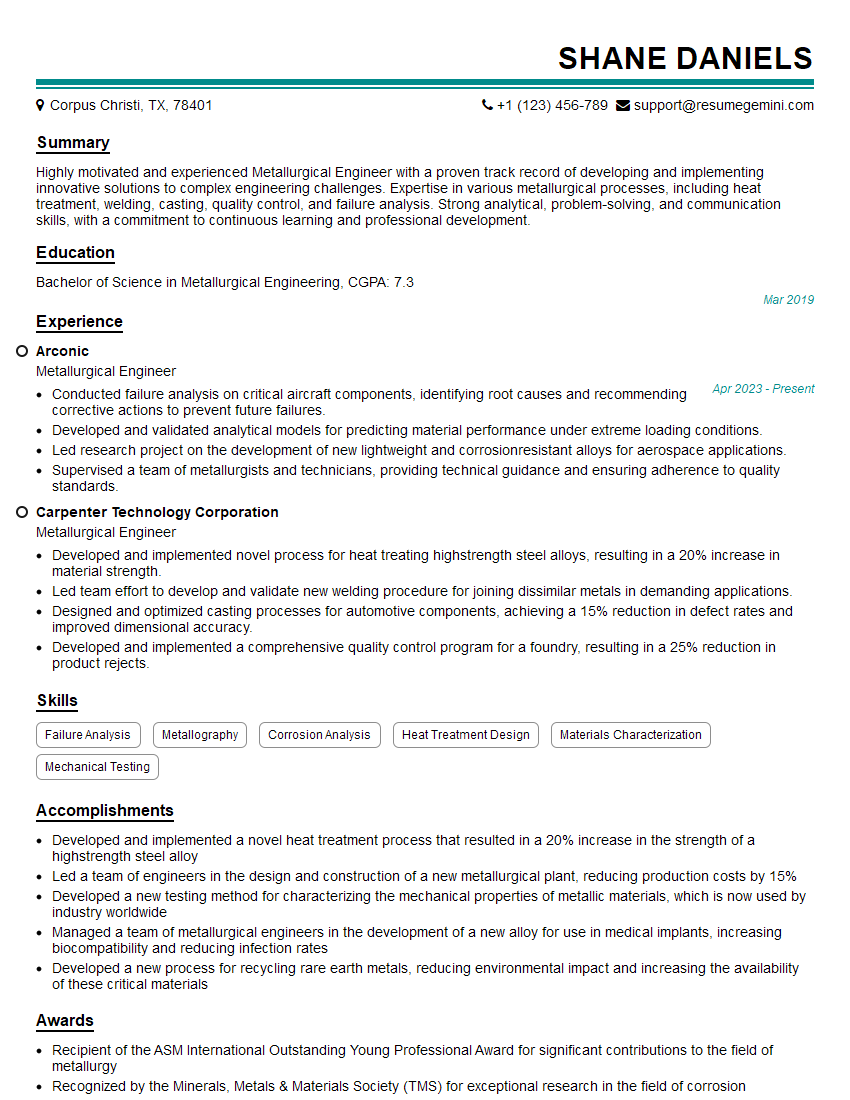
Metallurgical Engineer Resume Sample

Welding Engineer Resume Sample
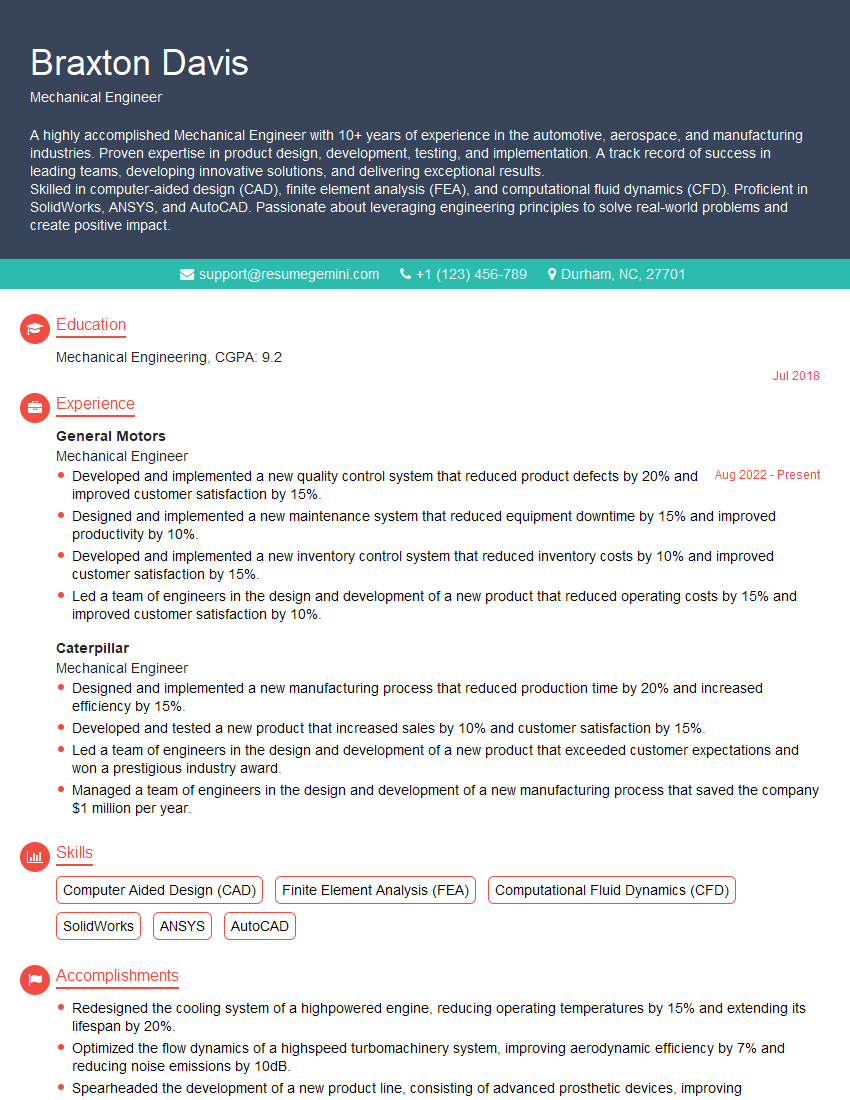
Mechanical Engineer Resume Sample
Senior Materials Scientist Resume Sample
- Quality Assurance Manager
- Production Supervisor
- Chief Engineer
- Applications Engineer
- Test Engineer
- Aerospace Engineer
- Structural Engineer
- Manufacturing Engineer
- Quality Control Engineer
- Corrosion Engineer
- Materials Engineer
- Metallurgical Engineer
- Welding Engineer
- Mechanical Engineer
- Senior Materials Scientist
Explore more articles
Users Rating of Our Blogs
Share Your Experience
We value your feedback! Please rate our content and share your thoughts (optional).
What Readers Say About Our Blog
To the interviewgemini.com Webmaster.
Very helpful and content specific questions to help prepare me for my interview!
Thank you
To the interviewgemini.com Webmaster.
This was kind of a unique content I found around the specialized skills. Very helpful questions and good detailed answers.
Very Helpful blog, thank you Interviewgemini team.