Preparation is the key to success in any interview. In this post, we’ll explore crucial Wheelchair Mobility interview questions and equip you with strategies to craft impactful answers. Whether you’re a beginner or a pro, these tips will elevate your preparation.
Questions Asked in Wheelchair Mobility Interview
Q 1. Describe the different types of wheelchair propulsion systems.
Wheelchair propulsion systems are the methods used to move the chair. The primary types are manual and powered.
- Manual Propulsion: This involves the user pushing the wheels using their hands. Different techniques exist, impacting efficiency and exertion. For example, a higher-pressure propulsion system, where the hands are positioned closer to the axle, allows for greater speed but requires more strength. A lower-pressure system involves pushing further away from the axle, lessening the force needed per push.
- Powered Propulsion (Electric Wheelchairs): These use electric motors to propel the chair, offering greater independence to individuals with limited upper body strength or endurance. Different control methods exist, including joystick controls, sip-and-puff systems for individuals with limited mobility, and even voice-activated controls. Power wheelchairs can be categorized further based on their maneuverability (e.g., standard, mid-wheel drive, and all-wheel drive).
- Hybrid Propulsion: Some wheelchairs offer a blend of manual and powered propulsion, allowing for versatility depending on the user’s needs and environment.
Choosing the appropriate propulsion system depends on the individual’s physical capabilities, lifestyle, and environment. A comprehensive assessment is crucial for making an informed decision.
Q 2. Explain the process of conducting a wheelchair assessment.
A wheelchair assessment is a multi-faceted process designed to determine the best wheelchair to meet a person’s individual needs. It’s not just about selecting a chair; it’s about optimizing their comfort, mobility, and independence.
- Initial Consultation: This involves gathering information about the individual’s medical history, current physical abilities, lifestyle, and living environment. This includes discussing their goals and expectations for wheelchair use.
- Physical Assessment: This includes evaluating the individual’s range of motion, muscle strength, balance, and coordination. It helps determine their ability to self-propel a wheelchair, if necessary, and identifies areas of potential pressure risk.
- Seating and Positioning Assessment: This focuses on achieving optimal postural support and pressure relief. It includes evaluating spinal alignment, pelvic position, and overall comfort. This step often involves utilizing pressure mapping technology (explained in more detail later).
- Trial and Error: This involves trying out different wheelchair types, sizes, and configurations to determine the best fit. This is an iterative process, adjusting components as needed to find the ideal setup.
- Final Recommendations and Fitting: After considering all assessment factors, recommendations are made for the most appropriate wheelchair type, size, cushions, and other accessories. The wheelchair is then fitted to the individual, ensuring a comfortable and safe fit.
The assessment should be performed by a qualified wheelchair professional, such as an occupational therapist or prosthetist.
Q 3. What are the key considerations for wheelchair seating and positioning?
Wheelchair seating and positioning are critical for comfort, health, and function. The main considerations include:
- Postural Support: Proper seating promotes good posture, preventing muscle fatigue and discomfort. This includes supporting the back, hips, and head to maintain spinal alignment.
- Pressure Relief: Pressure sores (pressure ulcers) are a significant risk for wheelchair users. Proper seating and positioning, along with appropriate cushions, are vital for distributing pressure and minimizing this risk.
- Stability and Support: The seating system must provide adequate stability to prevent falls and maintain proper alignment during transfers.
- Comfort and Adjustability: The chair must be comfortable and allow for adjustments to accommodate changes in the individual’s body or needs over time.
- Accessibility: The design should allow for easy access to clothing, hygiene, and personal belongings.
Poor seating and positioning can lead to pain, contractures, skin breakdown, and reduced respiratory function. A well-fitted chair promotes comfort, prevents health complications, and optimizes independence.
Q 4. How do you determine the appropriate wheelchair size and configuration for a client?
Determining the appropriate wheelchair size and configuration involves a detailed assessment of the individual’s physical characteristics and functional needs.
- Seat Width and Depth: Measured to provide adequate space while preventing excessive sliding. A seat that’s too narrow or too deep can lead to discomfort and pressure points.
- Seat Height: Determined based on the user’s leg length and footrest position, allowing for proper foot placement and ease of transfers.
- Backrest Height: Should provide adequate support and prevent slouching while maintaining freedom of movement.
- Armrest Height: Considered relative to seat height and elbow height, ensuring the user’s elbows can be supported at a 90-degree angle without strain.
- Wheelbase and Configuration: Different wheelbases and configurations (e.g., standard, mid-wheel drive, or lightweight) influence maneuverability and stability based on the user’s needs and environment.
Often, several chairs are trialled to achieve the best fit. The process involves continuous adjustment and refinement until the optimal size and configuration are determined for the client’s comfort and functionality.
Q 5. Describe the different types of wheelchair cushions and their functions.
Wheelchair cushions are essential for pressure relief, postural support, and comfort. They are categorized based on their material and function.
- Foam Cushions: Offer varying levels of support and pressure relief, depending on density and thickness. They are relatively inexpensive but may need replacing more frequently.
- Gel Cushions: Provide excellent pressure redistribution. They conform to the body, distributing pressure evenly. These are typically more expensive than foam.
- Air Cushions: Allow for customized pressure relief by adjusting the air pressure in individual cells. This is beneficial for users whose pressure needs change based on activity or posture.
- Hybrid Cushions: Combine different materials (e.g., gel and foam) to offer a balance of support, pressure relief, and comfort. They are a popular choice as they offer a range of benefits.
- Roho Cushions: These are highly specialized cushions with individual air cells, offering excellent pressure redistribution for individuals with high risk for pressure injuries.
The choice of cushion depends on the individual’s needs, weight, physical condition, and pressure tolerance.
Q 6. Explain the role of pressure mapping in wheelchair fitting.
Pressure mapping is a valuable tool used in wheelchair fitting to visualize pressure distribution on the user’s body when seated. A pressure mapping system uses sensors to measure the pressure at various points on the surface of a cushion.
This data is displayed as a visual map (often a color-coded image) showing areas of high and low pressure. Areas of high pressure indicate potential pressure points, which may lead to skin breakdown.
Pressure mapping helps to:
- Identify high-pressure areas: Pinpoint locations where pressure is concentrated, allowing for adjustments to seating and cushions to optimize pressure distribution.
- Evaluate cushion effectiveness: Determine whether a specific cushion adequately distributes pressure and meets the user’s needs.
- Monitor pressure changes: Track pressure over time, allowing for adjustments to prevent pressure sores.
- Guide cushion selection: Help choose the best cushion to address specific pressure needs.
By using pressure mapping, clinicians can make informed decisions to optimize seating and prevent skin breakdown. The data provides objective evidence to support the fitting process, leading to improved patient outcomes.
Q 7. How do you address skin breakdown prevention in wheelchair users?
Skin breakdown prevention in wheelchair users is crucial and requires a multi-pronged approach.
- Regular Skin Checks: Frequent inspection of the skin, particularly over bony prominences, is essential for early detection of any redness, discoloration, or breakdown.
- Proper Seating and Positioning: As discussed earlier, appropriate seating and positioning are vital for pressure relief. This includes ensuring good postural support, and using appropriate cushions and support surfaces.
- Pressure Relief Techniques: Implementing strategies like weight shifts every 15-30 minutes to prevent prolonged pressure on specific areas. This can be achieved actively (user-initiated) or passively (using tilt-in-space or recline functions).
- Skin and Hygiene Care: Keeping the skin clean and dry is important. Using moisturizers and avoiding harsh soaps can help maintain skin integrity.
- Nutritional Support: Adequate nutrition, including sufficient protein and calories, is vital for skin healing and overall health.
- Regular Exercise: Movement and exercise improve circulation, which is beneficial for skin health.
- Use of Protective Dressings and Devices: For individuals with existing skin lesions, appropriate dressings and devices (such as protective pads) can aid in healing and prevention of further damage.
Prevention is always better than cure. Proactive measures and regular monitoring are key to prevent skin breakdown in wheelchair users.
Q 8. What are the common causes of wheelchair-related injuries?
Wheelchair-related injuries are unfortunately common, stemming from a variety of factors. They can range from minor discomfort to serious, debilitating conditions. The most frequent causes fall into these categories:
- Pressure sores (pressure ulcers): Prolonged pressure on the skin, especially over bony prominences like hips and buttocks, restricts blood flow, leading to tissue breakdown. This is particularly prevalent in users with limited mobility or sensation.
- Musculoskeletal injuries: These include back pain, shoulder pain, and repetitive strain injuries from pushing the chair, especially on uneven terrain. Incorrect posture while in the chair significantly exacerbates this risk.
- Falls: Falls are a significant concern, causing fractures, head injuries, and soft tissue damage. Factors contributing to falls include poor wheelchair fit, environmental hazards (uneven surfaces, obstacles), and medical conditions.
- Contractures: These are shortening and tightening of muscles, tendons, and ligaments, limiting range of motion and potentially leading to pain and disability. They are often a consequence of prolonged immobility.
- Carpal tunnel syndrome: Repetitive movements involved in propulsion can lead to compression of the median nerve in the wrist, causing pain, numbness, and tingling.
Preventing these injuries requires careful consideration of wheelchair prescription, proper seating and positioning, regular skin checks, and user training on safe mobility techniques. Regular assessment by healthcare professionals is vital.
Q 9. Describe the process of maintaining and repairing a wheelchair.
Maintaining and repairing a wheelchair is crucial for safety and longevity. A regular maintenance schedule is key. Think of it like servicing your car – regular checks prevent major problems down the line.
- Daily checks: Inspect tires for wear and tear, check brakes, and ensure all fasteners are tight. Wipe down the chair to remove dirt and debris.
- Weekly checks: Lubricate moving parts such as wheels, axles, and brakes according to manufacturer instructions. This prevents squeaking and premature wear.
- Monthly checks: Thoroughly inspect the frame for cracks or damage. Check the condition of upholstery and any cushions for tears or wear.
- Annual servicing: A professional should inspect the wheelchair thoroughly for structural integrity, adjust components, and replace worn parts. This is especially crucial for complex wheelchairs with electronic components.
Repairs can range from simple fixes like replacing a flat tire to more complex tasks such as repairing a broken frame or replacing components. For significant repairs, always consult a qualified wheelchair technician or repair service. Improper repairs can compromise safety.
Q 10. What are the different types of wheelchair accessories and their uses?
A wide range of accessories enhances wheelchair functionality and user comfort. The choice depends heavily on the individual’s needs and preferences.
- Anti-tip devices: These add stability to prevent the chair from tipping backward.
- Cup holders and trays: Provide convenient places for drinks and meals.
- Backrests and cushions: Improve posture support and comfort, potentially preventing pressure sores.
- Footrests: Provide support and positioning for the feet and legs. Adjustable footrests are particularly beneficial.
- Headrests: Offer neck support and can improve posture, especially for individuals with limited head control.
- Lap trays: Provide a stable surface for working, eating, or writing.
- Lighting accessories: Improve visibility during nighttime use.
- Wheelchair bags: Provide storage for personal belongings.
- Adaptive technology: Includes joystick controls for power wheelchairs, specialized switches for individuals with limited hand function, and environmental control units for operating lights and appliances.
These accessories can significantly improve the user’s independence and quality of life. It’s essential to consider the user’s specific physical needs and lifestyle when selecting appropriate accessories.
Q 11. How do you adapt a wheelchair for specific client needs?
Adapting a wheelchair involves customizing it to meet a client’s unique needs, considering physical limitations, lifestyle, and environmental factors. This can involve several approaches:
- Seating and positioning systems: Custom seating systems address postural needs, pressure relief, and support. This often includes specialized cushions, backrests, and lateral supports.
- Adaptive controls: For individuals with limited hand function, alternative control systems such as sip-and-puff devices or chin controls might be implemented.
- Environmental modifications: Ramp installation, doorway widening, and removal of obstacles are crucial for ensuring safe and independent mobility in the client’s environment.
- Wheelchair modifications: This might involve altering the chair’s geometry, adjusting the seat height and depth, or adding specialized attachments such as specialized handles or push rims.
- Assistive technology: Integration of assistive technology, such as smartphone apps for control or navigation, can enhance the user experience.
A thorough assessment is paramount before any adaptation. This involves evaluating the client’s physical capabilities, limitations, and their environment. Collaborating with the client, their family, and other healthcare professionals is crucial for successful adaptation.
Q 12. Explain the importance of client education in wheelchair mobility.
Client education is absolutely vital for successful wheelchair mobility. It’s not just about transferring the chair; it’s about empowering the individual to use it safely and effectively, maintaining their independence and preventing injuries.
- Safe wheelchair operation: This includes instruction on proper propulsion techniques, maneuvering in various environments, and safe transfer procedures.
- Maintenance and repair: Users need to understand basic maintenance tasks like checking tire pressure, lubricating moving parts, and identifying signs of wear and tear.
- Pressure sore prevention: Education on proper posture, weight shifting, and regular skin checks is crucial for preventing pressure ulcers.
- Emergency procedures: Users should know what to do in case of a wheelchair malfunction, such as a flat tire or broken component.
- Advocacy and resources: Clients should be equipped with knowledge about available resources, support groups, and advocacy organizations.
Effective education fosters user confidence, promotes independent living, and improves overall quality of life. It transforms the wheelchair from a piece of equipment into a tool for empowerment.
Q 13. How do you assess a client’s functional abilities related to wheelchair use?
Assessing a client’s functional abilities for wheelchair use is a multi-faceted process requiring a thorough evaluation. It goes beyond just measuring physical strength; it involves understanding their cognitive abilities, sensory perception, and overall health.
- Physical assessment: This includes assessing muscle strength, range of motion, balance, and coordination. We evaluate their ability to propel a wheelchair, perform transfers (e.g., from bed to chair), and navigate different terrains.
- Cognitive assessment: This involves evaluating the client’s ability to understand instructions, follow safety procedures, and make independent judgments about mobility. Cognitive impairments can significantly impact safe wheelchair use.
- Sensory assessment: Assessing their sensory capabilities, like touch, vision, and hearing, is important for safe navigation and awareness of the environment.
- Medical history: A complete medical history is essential, including information on existing conditions, medications, and any previous injuries. These factors influence wheelchair selection and adaptation strategies.
- Environmental assessment: We must consider the client’s living environment. Are there stairs? How wide are doorways? These factors influence the type of wheelchair that is appropriate.
This comprehensive assessment ensures that the recommended wheelchair and associated training meet the client’s unique needs and capabilities, promoting safety and independence.
Q 14. Describe the process of recommending a wheelchair for a client.
Recommending a wheelchair is a crucial step in ensuring client independence and well-being. The process is highly individualized and considers several key factors.
- Thorough assessment: This forms the foundation of the recommendation. It’s a collaboration between the client, therapist, and potentially other healthcare professionals, and utilizes the assessment methods described in the previous question.
- Wheelchair type selection: Based on the assessment, the appropriate wheelchair type is selected. Options range from manual wheelchairs (requiring user propulsion) to power wheelchairs (motorized), and further categorized by features like lightweight frames, folding mechanisms, and various seating systems.
- Seating and positioning system: The client’s postural needs dictate the seating system. This might include customized cushions, backrests, and lateral supports to optimize comfort, pressure relief, and postural support.
- Trial and evaluation: Whenever possible, the client should trial several wheelchairs to identify the best fit and functionality. This ensures comfort and successful integration into their daily routine.
- Training and follow-up: Once a wheelchair is selected, comprehensive training is provided to the client and their caregivers on proper use, maintenance, and safety procedures. Regular follow-up sessions are crucial to address any challenges and make necessary adjustments.
The aim is to provide a wheelchair that not only meets the client’s immediate needs but also promotes long-term independence, comfort, and safety. It is a collaborative and ongoing process, adapting to the client’s changing needs over time.
Q 15. What are the legal and ethical considerations in wheelchair prescription?
Legal and ethical considerations in wheelchair prescription are paramount to ensuring client safety, autonomy, and well-being. Legally, we must adhere to anti-discrimination laws, ensuring equitable access to services regardless of race, ethnicity, disability, or socioeconomic status. This includes providing appropriate assessments and equipment suitable for the individual’s needs, not based on preconceived notions or budget limitations. Ethically, informed consent is crucial. Clients must fully understand the implications of various wheelchair options and participate in the decision-making process. Maintaining confidentiality and respecting client autonomy are also non-negotiable. For example, I once had a client who initially expressed a preference for a lightweight wheelchair, despite needing more robust support. Through thorough discussion, we explored his concerns about maneuverability and independence, and ultimately found a chair that met his needs while addressing his anxieties. This ensured he felt empowered and respected throughout the process.
Furthermore, we must consider the potential impact of our recommendations on the client’s overall health and quality of life. Over-prescription or under-prescription can have significant consequences. Accurate assessments, tailored to the individual’s unique needs, are essential to avoid these ethical pitfalls. We must balance client wishes with clinical best practice. The ethical framework guides not only the type of chair recommended but also how we work with families and caregivers to ensure smooth integration and appropriate use of the device.
Career Expert Tips:
- Ace those interviews! Prepare effectively by reviewing the Top 50 Most Common Interview Questions on ResumeGemini.
- Navigate your job search with confidence! Explore a wide range of Career Tips on ResumeGemini. Learn about common challenges and recommendations to overcome them.
- Craft the perfect resume! Master the Art of Resume Writing with ResumeGemini’s guide. Showcase your unique qualifications and achievements effectively.
- Don’t miss out on holiday savings! Build your dream resume with ResumeGemini’s ATS optimized templates.
Q 16. How do you work with other healthcare professionals to provide comprehensive wheelchair services?
Providing comprehensive wheelchair services requires a collaborative, multidisciplinary approach. I regularly work with occupational therapists (OTs), physical therapists (PTs), physicians, and other healthcare professionals. OTs contribute their expertise on daily living activities and adaptive equipment needs. They may assess the client’s upper limb strength and dexterity, which influence the choice of wheelchair propulsion and control mechanisms. PTs provide insights into mobility, gait analysis (if applicable), and muscle strength assessment. This input is crucial in deciding the appropriate wheelchair type and seat configuration. Physicians provide medical information like diagnoses, prognosis, and any underlying health conditions, informing decisions on seating systems and postural support.
Communication is key. We use case conferences and shared electronic medical records to streamline information exchange. For instance, recently we worked with a client suffering from multiple sclerosis. The OT assessed dexterity and the PT evaluated muscle strength and endurance. This input, combined with the physician’s report on disease progression, allowed me to recommend a power wheelchair with customized seating to best meet the evolving needs of the client. This collaborative approach ensures a holistic assessment, and results in better-tailored solutions and improved client outcomes.
Q 17. What are the latest advancements in wheelchair technology?
The field of wheelchair technology is constantly evolving. Recent advancements include significant improvements in lightweight materials, such as carbon fiber and titanium, leading to more maneuverable and comfortable chairs. Smart wheelchairs are incorporating advanced technologies like GPS, obstacle detection sensors, and voice control systems to enhance safety and independence. We’re also seeing improvements in seating systems with more sophisticated pressure-relieving cushions and posture-support components, which is especially crucial for individuals with high-risk conditions. Another exciting area is the development of exoskeletons and powered lower limb orthoses that can augment or replace traditional wheelchairs in certain contexts.
For example, I’ve seen a notable increase in the use of intelligent power wheelchairs that allow for customizable settings for the user’s individual needs, leading to improved comfort and safety. The introduction of lightweight, yet durable materials has significantly impacted the design of manual wheelchairs, reducing fatigue and making them easier to propel. The integration of smart technology allows individuals with limited hand function to operate the chair using alternative controls and voice commands, thus expanding the access to independent mobility. These improvements reflect an ongoing commitment to increasing personalization, comfort, and safety for wheelchair users.
Q 18. Describe your experience with different types of wheelchair frames.
My experience encompasses various wheelchair frame types, each with its advantages and disadvantages. I’ve worked extensively with rigid frames, known for their efficiency and responsiveness, particularly suitable for active users with good upper body strength. Conversely, folding frames offer ease of transport and storage, making them popular for those needing to frequently move their chairs in and out of vehicles or store them in smaller spaces. Lightweight wheelchairs, often incorporating titanium or aluminum alloys, are beneficial for users with limited upper body strength or those who frequently self-propel.
A recent client needed a wheelchair for both home and travel, leading to a discussion of the benefits of a foldable rigid frame. While they prioritized lightweight properties, we discussed the trade-off between maneuverability (rigid frame) and compact storage (foldable). Ultimately, the client opted for a lightweight foldable rigid frame that balanced these needs. Understanding the specific requirements and lifestyle of the client, therefore, is crucial in recommending the most suitable frame type. Other specialized frames like hemi-height chairs cater to specific needs, such as easier transfers for individuals with certain types of disabilities.
Q 19. Explain your understanding of the different components of a wheelchair.
A wheelchair is a complex system comprising various interconnected components. The frame, as discussed earlier, provides the foundation. The wheels, including both caster (front) and drive (rear) wheels, impact maneuverability and propulsion. The seat and back support systems are critical for comfort, posture, and pressure relief, especially in long-term users. They usually involve the seat cushion, back upholstery, and possibly lateral supports. The armrests provide additional support and assist in transfers. Footrests play a role in posture and comfort. Lastly, the axle and other mechanisms allow for the adjustments to the chair’s fit.
Consider the seat cushion. It’s not just about comfort; it’s about pressure relief to prevent skin breakdown. Different cushions utilize various materials, and their selection depends on the individual’s needs and medical conditions. Similarly, the position of the armrests and footrests impacts posture and the ease of transfers, which is why thorough assessment is critical. Proper understanding of each component allows for optimization of the overall wheelchair configuration, aligning with the client’s needs and preventing potential issues down the line.
Q 20. How do you assess a client’s home environment for wheelchair accessibility?
Assessing a client’s home environment for wheelchair accessibility is a crucial step in the prescription process. It involves a thorough on-site visit, examining various aspects such as doorway widths, hallway clearances, bathroom layouts, and the presence of ramps or steps. Measurements are taken to ensure that the wheelchair can navigate the home safely and efficiently. This includes checking turning radii, assessing the gradient of any ramps, and examining the type and condition of flooring surfaces. We also assess the accessibility of other spaces the user frequent, such as the kitchen or bedrooms.
For instance, recently, I assessed a house where the client’s wheelchair wouldn’t fit through the bathroom doorway. This led to recommendations for either modifying the doorway or exploring alternative bathroom solutions. I also examined the kitchen and assessed whether appropriate counter height and maneuvering space was present for safe and independent food preparation. This environmental assessment enables us to identify potential barriers and develop solutions that facilitate independent mobility and participation in daily life. Appropriate adaptations or assistive devices may be recommended to resolve any identified barriers.
Q 21. Describe your experience in providing wheelchair training to clients.
Providing wheelchair training is an essential part of ensuring that clients can safely and effectively use their new wheelchairs. My approach is individualized and focuses on practical skills development through hands-on instruction. This includes teaching proper propulsion techniques, maneuvering in different environments (including tight spaces and inclines), safe transfers, and basic wheelchair maintenance. The goal is to empower clients with the knowledge and skills to maximize their mobility and independence.
I use a phased approach, starting with basic skills in a controlled setting, gradually progressing to more complex maneuvers in real-world situations, such as navigating crowded areas or using public transportation. I always emphasize the importance of safety and regularly check for correct posture and techniques. I adjust the training based on the client’s physical capabilities and learning style. For example, with a client who had a recent stroke and weaker left side, I tailored the training to compensate for that, focusing on one-handed propulsion and adapted transfer techniques. Following up with clients after the initial training sessions is essential to address any challenges they might encounter and to ensure continued safe and effective wheelchair use.
Q 22. How do you adapt your approach to clients with different cognitive abilities?
Adapting my approach to clients with varying cognitive abilities is paramount. I believe in person-centered care, meaning I tailor my communication and assessment strategies to each individual’s unique needs.
- Clients with mild cognitive impairment: I might use simpler language, visual aids like diagrams or pictures of wheelchair components, and break down complex information into smaller, manageable chunks. I’ll also check for understanding frequently, ensuring they’re following along and can articulate their needs. For example, instead of explaining complex pressure relief techniques, I’ll demonstrate them using a simple model.
- Clients with moderate to severe cognitive impairment: My approach would involve collaborating closely with caregivers and family members to understand the client’s communication preferences and limitations. I might rely heavily on nonverbal communication, demonstrations, and simple yes/no questions to gather information. The focus would shift to ensuring safety and comfort, potentially prioritizing functional needs over aesthetic preferences. For instance, we might simplify the chair’s controls to minimise potential confusion.
- Clients with communication disorders: I utilize assistive communication tools, like picture exchange systems or speech generating devices, and adapt my communication style accordingly. Patience and understanding are crucial. I might use a variety of methods—visual cues, written instructions, and gestures—to ensure the client fully grasps the information.
Ultimately, successful communication relies on patience, observation, and a willingness to adapt to the individual’s unique communication style.
Q 23. Describe your experience with measuring clients for a wheelchair fitting.
Measuring a client for a wheelchair fitting is a meticulous process requiring precision and attention to detail. It’s more than just taking measurements; it’s about understanding the client’s individual needs and preferences.
- Initial Assessment: I begin by observing the client’s posture, mobility, and range of motion. This gives me a baseline understanding of their physical capabilities and limitations. For example, assessing if they have any scoliosis or contractures that influence seating posture.
- Measurement Taking: I use standardized measuring tools to record key dimensions such as seat width, seat depth, seat height, back height, and armrest height. These are critical in selecting the right chair size and configuration. I meticulously measure the client’s torso length, hip width, thigh length, leg length, and foot size.
- Pressure Mapping: This is a crucial step. I use pressure mapping systems to identify areas of potential pressure points during seating. This helps in selecting appropriate cushions and customizing the seat to reduce pressure sores and improve comfort.
- Trial & Error: We often have the client try out different chair components (cushions, backrests, armrests) and configurations to optimize their seating position. We continually refine the fit during this process.
Throughout the process, client feedback is integral. Their comfort and ability to participate in daily activities are my guiding principles. I’ve found that taking the time for careful measurement and client input significantly reduces the likelihood of post-fitting adjustments and increases client satisfaction.
Q 24. What are the differences between manual and power wheelchairs?
Manual and power wheelchairs offer distinct advantages and disadvantages, making the choice dependent on the individual’s needs and capabilities.
- Manual Wheelchairs: These require the user to propel themselves using their hands. They’re lightweight, portable, and generally less expensive. They’re suitable for individuals with good upper body strength and endurance. However, they may be challenging for those with limited arm strength or stamina. Different types exist, such as standard wheelchairs, lightweight wheelchairs, and sports wheelchairs, each designed for specific needs and activities.
- Power Wheelchairs: These are motorized and offer greater independence for users with limited upper body strength or mobility. They provide greater speed and ease of maneuverability, especially over longer distances or challenging terrain. Power chairs come in various designs, from standard models to highly customized ones featuring advanced control systems and specialized features like tilt-in-space or recline functions. However, they are more expensive, heavier, and require more maintenance than manual chairs.
The decision between a manual and power wheelchair is made on a case-by-case basis, considering the client’s physical abilities, lifestyle, and living environment. Factors such as the presence of ramps or elevators in the home and the need for long-distance travel influence this critical decision.
Q 25. How do you address challenges in wheelchair access?
Addressing challenges in wheelchair access requires a multifaceted approach, involving advocacy, problem-solving, and collaboration.
- Advocacy: I work with clients to identify and report accessibility barriers in their environment. This can involve contacting building managers, businesses, and local authorities to advocate for improvements in accessibility features such as ramps, curb cuts, and accessible restrooms. I support them in utilizing resources like the Americans with Disabilities Act (ADA) to ensure compliance.
- Problem-solving: When faced with immediate access challenges, I explore creative solutions. This might include suggesting alternative routes, using portable ramps, or adapting the environment temporarily. For instance, if a curb is too high, a temporary ramp might be a practical solution until a permanent one can be installed.
- Collaboration: I work closely with other healthcare professionals, occupational therapists, and architects to ensure holistic solutions for clients facing access barriers. This collaborative approach may involve designing custom modifications to the client’s wheelchair or their environment to improve maneuverability and access.
Proactive identification and resolution of access issues are crucial for ensuring client independence and quality of life. I view myself not only as a wheelchair provider but also as an advocate for improving accessibility in the community.
Q 26. Explain your understanding of different reimbursement models for wheelchairs.
Reimbursement models for wheelchairs vary significantly depending on the payer (insurance company, Medicare/Medicaid, private pay) and the client’s specific circumstances. Understanding these models is crucial for ensuring clients receive the appropriate funding for their wheelchair needs.
- Medicare/Medicaid: These government programs have specific criteria for wheelchair coverage. They often require a detailed assessment demonstrating medical necessity. The type and features of the wheelchair must be justified based on the client’s functional limitations.
- Private Insurance: Private insurance plans differ greatly in their coverage for wheelchairs. Pre-authorization is typically required, and coverage may depend on the plan’s specific benefits and exclusions. Some plans may only cover basic models, while others offer broader coverage.
- Private Pay: When insurance doesn’t cover the cost, clients may need to pay out-of-pocket. This can be a significant financial burden. In these cases, I help clients explore options for financial assistance, including grants, charitable organizations, and fundraising.
Navigating the complex world of reimbursement can be challenging. I assist my clients throughout the process, providing guidance on documentation, insurance claims, and appeal procedures. My goal is to secure the best possible funding for the wheelchair that best meets their needs.
Q 27. How do you ensure client satisfaction with their wheelchair?
Client satisfaction is my top priority. It’s achieved through a combination of meticulous fitting, effective communication, and ongoing support.
- Thorough Assessment and Fitting: A precise fitting, addressing both physical needs and personal preferences, forms the foundation of client satisfaction. I ensure the chair fits comfortably and promotes proper posture and pressure relief. I also involve the client in the selection process, letting them choose features and colors they like to foster a sense of ownership.
- Open Communication: Maintaining open lines of communication throughout the process is essential. I encourage clients to ask questions, express concerns, and provide feedback. I actively listen to their needs and adjust my approach accordingly. Regular check-ins are crucial to ensure they feel heard and valued.
- Post-Fitting Follow-up: This is where many providers fall short. I schedule follow-up appointments to address any issues or concerns. This shows clients I’m committed to their long-term well-being and satisfaction.
I frequently receive positive feedback from clients, underscoring the importance of these approaches. For instance, I had a client who was initially hesitant about a particular chair feature. After explaining its benefits and demonstrating its use, they expressed gratitude for my patience and guidance. They later sent a heartfelt thank-you note, highlighting their newfound independence and satisfaction.
Q 28. Describe your experience with providing post-fitting support and adjustments.
Post-fitting support is critical for ensuring the client’s long-term success and satisfaction with their wheelchair. This involves ongoing adjustments, troubleshooting, and education.
- Follow-up Appointments: I schedule regular check-ups to assess the client’s comfort, identify any issues, and make necessary adjustments. This might involve fine-tuning the chair’s settings, replacing worn components, or providing training on maintenance and repair.
- Troubleshooting and Repair: Inevitably, issues arise. I provide prompt and efficient troubleshooting and repair services. This might include replacing a broken wheel, adjusting the braking system, or resolving issues with the chair’s electronics.
- Education and Training: I educate clients on proper wheelchair maintenance, including cleaning, storage, and basic repairs. I teach them how to safely operate their wheelchair, navigate different terrains, and perform basic maintenance tasks to prolong the chair’s lifespan. This empowerment increases the client’s independence and confidence.
I recently worked with a client whose wheelchair needed a minor adjustment. After a quick visit, I addressed the issue and taught them how to make similar minor adjustments independently. This empowered them to manage many small problems on their own, enhancing their overall experience.
Key Topics to Learn for Wheelchair Mobility Interview
- Wheelchair Types and Features: Understanding different wheelchair types (manual, power, lightweight, heavy-duty), their components, and functionalities is crucial. Consider the pros and cons of each type in various settings.
- Mobility Assessment and Prescription: Learn the process of assessing an individual’s needs and recommending appropriate wheelchair solutions. This involves understanding different seating systems, pressure relief techniques, and adaptive equipment.
- Safe Transfer Techniques: Mastering various transfer methods (e.g., stand-pivot, sliding board, Hoyer lift) is essential. Practice explaining the safety precautions and considerations for each technique.
- Wheelchair Propulsion and Maneuverability: Explore efficient propulsion techniques for both manual and power wheelchairs. Understand how to navigate different terrains and environments safely and effectively.
- Maintenance and Repair: Familiarize yourself with basic wheelchair maintenance, including tire changes, brake adjustments, and common repairs. Knowing how to troubleshoot minor issues is valuable.
- Adaptive Technology and Assistive Devices: Explore the integration of technology with wheelchairs, such as power assist devices, environmental controls, and communication systems. Understanding various assistive devices that enhance mobility is beneficial.
- Accessibility and Environmental Considerations: Discuss the importance of accessibility in various environments (home, work, community). Learn about relevant regulations and design considerations for wheelchair users.
- Ethical and Clinical Considerations: Understand the ethical implications of providing wheelchair services, ensuring client autonomy, and maintaining confidentiality.
Next Steps
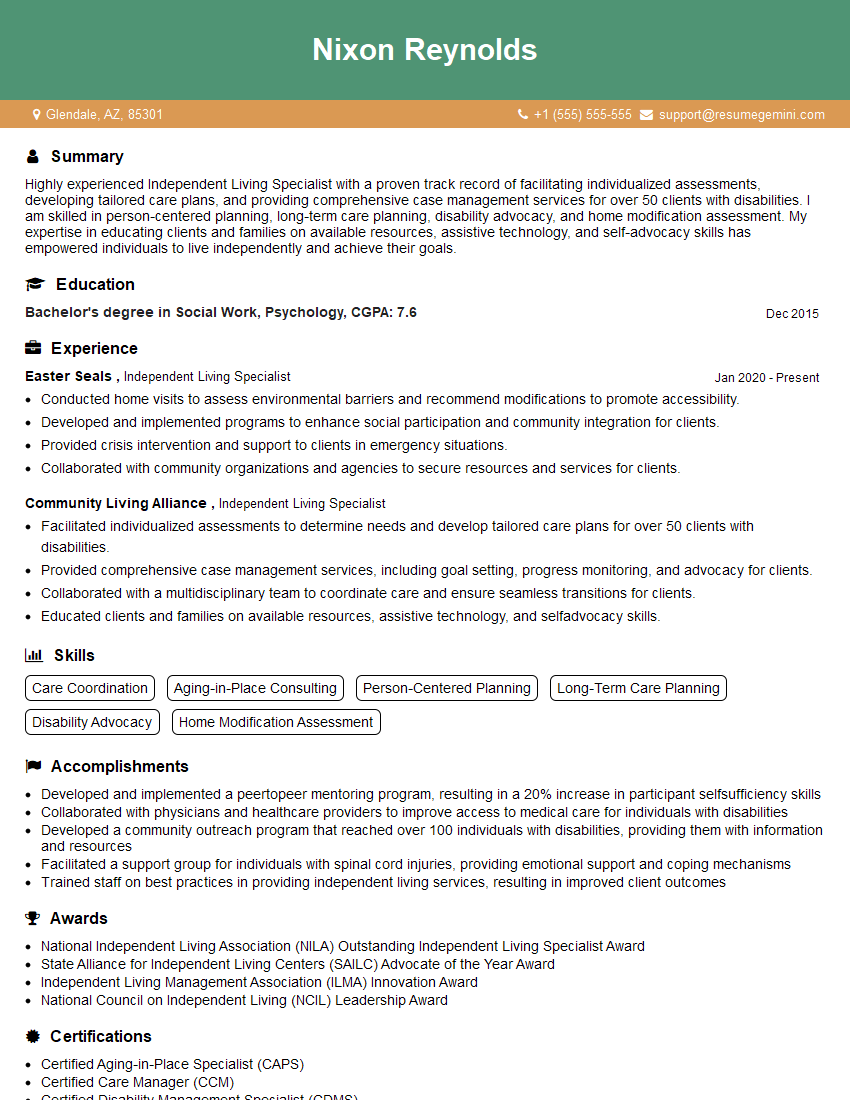
Mastering Wheelchair Mobility knowledge opens doors to rewarding careers impacting lives significantly. To stand out, crafting a strong, ATS-friendly resume is critical. ResumeGemini is a trusted resource that can help you build a professional resume tailored to highlight your skills and experience. Examples of resumes specifically tailored for Wheelchair Mobility professionals are available to guide you. Invest time in creating a compelling resume – it’s your first impression and key to securing your dream job.
Explore more articles
Users Rating of Our Blogs
Share Your Experience
We value your feedback! Please rate our content and share your thoughts (optional).
What Readers Say About Our Blog
To the interviewgemini.com Webmaster.
Very helpful and content specific questions to help prepare me for my interview!
Thank you
To the interviewgemini.com Webmaster.
This was kind of a unique content I found around the specialized skills. Very helpful questions and good detailed answers.
Very Helpful blog, thank you Interviewgemini team.