Interviews are opportunities to demonstrate your expertise, and this guide is here to help you shine. Explore the essential Prosthetics Training interview questions that employers frequently ask, paired with strategies for crafting responses that set you apart from the competition.
Questions Asked in Prosthetics Training Interview
Q 1. Explain the difference between socket design for transtibial and transfemoral amputations.
Socket design for transtibial (below-knee) and transfemoral (above-knee) amputations differs significantly due to the anatomical variations and functional demands. Transtibial sockets primarily focus on distributing weight across the residual limb’s distal end (the end of the leg). They often utilize a relatively simple shape, often incorporating a total-contact design to evenly distribute pressure and prevent pressure sores. Transfemoral sockets, on the other hand, must account for the more complex anatomy of the thigh, including the ischial tuberosity (your sit bone), which bears a significant portion of the body weight. These sockets are typically more intricate, often incorporating a suspension system to secure the prosthesis. Think of it like this: a transtibial socket is like a snug cap for the end of the leg, while a transfemoral socket is more like a custom-molded shell designed to cradle the entire thigh. Different design principles, such as the ischial containment design for transfemoral sockets, are used to optimize weight distribution and provide stability. The materials and fabrication techniques employed also vary to accommodate these different needs.
Q 2. Describe the various materials used in prosthetic fabrication and their respective advantages and disadvantages.
A range of materials is employed in prosthetic fabrication, each with its own set of advantages and disadvantages.
- Polyurethane: A popular choice known for its durability, lightweight nature, and ability to be easily shaped. However, it can be less breathable than some other materials, increasing the risk of skin irritation.
- Carbon fiber: Offers superior strength-to-weight ratios, making it ideal for active individuals. It’s more expensive than polyurethane, however, and requires specialized manufacturing techniques.
- Acrylic: Used for socket fabrication, providing a durable and customizable option. Its ability to accept various surface finishes (such as gel liners) is beneficial. It can be heavier than polyurethane and more difficult to modify.
- Silicone: Frequently used in liner fabrication, offering comfort, cushioning, and improved suspension. It’s more expensive and prone to wear and tear compared to other liner materials.
The selection of materials depends on the patient’s activity level, body type, and budget. For example, a patient with a high activity level might benefit from a carbon fiber socket with a silicone liner, whereas a patient with a limited budget might opt for a polyurethane socket and a simpler liner.
Q 3. How do you assess a patient’s needs and goals during the initial prosthetic fitting consultation?
The initial consultation is crucial for establishing a strong patient-prosthetic relationship. We begin by thoroughly assessing the patient’s medical history, including the cause and type of amputation, surgical complications, and any existing comorbidities. A physical examination evaluates the residual limb’s length, shape, and skin condition. Then, we delve into the patient’s functional goals. What activities do they hope to resume? What level of independence are they aiming for? Are there any specific mobility limitations or aspirations they have? These discussions inform the type of prosthetic chosen and guide socket design. For instance, a patient eager to return to hiking might require a lightweight, durable prosthesis with a high level of mobility, while a patient focused on basic ambulation at home would need a different design that prioritizes comfort and stability.
Q 4. Explain the process of taking a cast for a prosthetic socket.
Casting a socket involves several key steps. First, we prepare the residual limb by ensuring it’s clean and dry. A thin layer of stockinette is applied to protect the skin. A plaster bandage or other casting material is then applied, carefully shaping it to the limb’s contours. We ensure proper alignment and avoid excessive pressure on bony prominences. The cast is allowed to set completely, and then it’s carefully removed. The process demands precision, ensuring the cast accurately reflects the residual limb’s shape and dimensions. Any irregularities can compromise the fit and functionality of the prosthesis. In some cases, we may utilize advanced digital imaging techniques to achieve a more precise fit and avoid the need for a traditional plaster cast.
Q 5. Describe the different types of suspension systems used in prosthetic limbs.
Several suspension systems are used to keep the prosthesis securely attached to the residual limb.
- Suction suspension: Relies on the negative pressure created within the socket to hold the prosthesis in place. This is often used for transtibial amputations and requires a tight-fitting socket and good residual limb shape.
- Sleeve suspension: Employs a soft liner worn inside the socket, providing cushioning and creating a seal that prevents the prosthesis from slipping. This system is often used in combination with other methods for added security.
- Pin suspension: Uses pins or other types of attachments inserted into the residual limb. These provide superior stability and are often used for transfemoral amputations. This system requires more careful monitoring of the pin sites to avoid skin irritation.
- Belt suspension: Employs straps or belts to secure the prosthesis to the body. This is often used as a secondary or supplemental form of suspension.
The optimal suspension system is chosen based on individual patient needs, amputation level, and residual limb characteristics. For example, someone with a well-formed residual limb might benefit from suction suspension, while someone with a shorter or more irregular limb shape may benefit more from pin or sleeve suspension.
Q 6. How do you address skin irritation or pressure sores associated with prosthetic use?
Skin irritation and pressure sores are common concerns with prosthetic use. We address them through a multi-pronged approach. Careful socket fit is paramount. Regular inspections of the residual limb for redness, swelling, or blisters are crucial. We educate patients on proper hygiene, recommending daily cleaning of the socket and limb. The use of appropriate liners, such as silicone liners, can provide additional cushioning and pressure relief. In cases of minor irritation, topical creams may be recommended. For more severe cases, pressure-relieving pads or modifications to the socket design can be implemented. If a pressure sore develops, immediate medical attention is necessary to prevent infection and complications.
Q 7. What are the common complications associated with prosthetic use, and how do you manage them?
Several complications can arise from prosthetic use, including:
- Skin breakdown: Pressure sores, irritation, and infections due to poor socket fit or hygiene.
- Phantom limb pain: Pain perceived in the missing limb, often managed through medication, physical therapy, and specialized prosthetic components.
- Contractures: Shortening and tightening of muscles and tendons, addressed through physical therapy and proper prosthetic fitting.
- Socket discomfort: May be caused by poor fit, improperly adjusted suspension, or ill-fitting liners. Adjustments or modifications can be made.
- Neuroma: Nerve inflammation often causing pain, which might necessitate medication, injections, or surgical intervention.
Management involves proactive measures, including regular check-ups, patient education on limb care and prosthesis maintenance, and addressing issues promptly. Collaboration with other healthcare professionals, such as physical therapists and physicians, is essential for comprehensive care and optimal outcomes.
Q 8. Explain the role of gait analysis in prosthetic fitting.
Gait analysis plays a crucial role in prosthetic fitting by providing a detailed assessment of a patient’s walking pattern. It’s like creating a blueprint for the prosthetic limb. We use motion capture technology and visual observation to analyze how the patient moves, identifies their gait deviations, and determines the type and components needed for optimal function. This helps us to create a personalized prosthetic that complements their natural movement instead of hindering it. For example, a patient with a knee amputation might exhibit a limp due to compensatory movements. Gait analysis can pinpoint the cause of this limp, informing the selection of a prosthetic knee that facilitates more natural walking patterns, like a microprocessor-controlled knee that adjusts to various terrains and walking speeds.
The data gathered from gait analysis helps us understand the forces acting on the residual limb, the patient’s muscle strength and coordination, and the presence of any pain or discomfort during walking. We then use this information to design a prosthetic that can effectively distribute weight, manage stresses, and promote proper limb alignment. This ultimately reduces pain and improves overall mobility and quality of life.
Q 9. Describe different prosthetic components (e.g., sockets, knees, feet).
Prosthetic components work together like a finely tuned machine to restore function and mobility. Let’s consider the key components:
- Socket: This is the interface between the residual limb and the prosthetic. Think of it as the foundation – it’s custom-made to precisely fit the patient’s limb shape and size, ensuring comfort and proper weight distribution. Different materials like silicone, carbon fiber, or polyurethane are used depending on the patient’s needs and level of activity.
- Knees: Prosthetic knees offer varying levels of sophistication, ranging from simple mechanical knees that provide stability to advanced microprocessor-controlled knees that adapt to different terrains and walking speeds. The choice depends on the patient’s activity level, mobility goals, and their physical capabilities. A microprocessor knee can learn walking patterns and dynamically adjust its resistance to mimic a natural knee.
- Feet: Much like knees, feet also vary significantly in design. Some are simple, providing basic support and stability, while others are more advanced, incorporating features like energy-return systems and dynamic motion control. These features aim to replicate the natural foot’s shock absorption and energy efficiency, improving comfort and reducing the load on the residual limb. A flexible keel foot, for instance, would be suited for a patient who is highly active.
Other crucial components include suspension systems (to secure the socket), liners (to provide comfort and cushion the residual limb), and various attachment systems.
Q 10. How do you select the appropriate prosthetic components for a specific patient?
Selecting appropriate prosthetic components is a collaborative process involving patient needs, medical history, lifestyle, and activity level. It’s not a ‘one-size-fits-all’ approach. For example, a young, active individual might require a sophisticated microprocessor-controlled knee and a dynamic foot for running and sports participation, while an elderly patient with limited mobility needs might be better served by a simpler, more stable prosthetic design.
We conduct thorough assessments, including gait analysis (as discussed earlier), residual limb measurements, and evaluations of muscle strength and overall health. This data is vital in determining the patient’s functional goals. We discuss these goals with the patient, collaborating to find a solution that maximizes their independence and quality of life. We might use a combination of clinical tests and patient interviews to fully understand their needs. Consider a patient who works as a gardener – the choice of components will differ greatly from a patient who has a sedentary lifestyle. The interaction between the clinician and the patient is crucial for a successful outcome.
Q 11. What is the importance of patient education in prosthetic care?
Patient education is paramount in prosthetic care. It’s not just about handing someone a prosthetic limb; it’s about empowering them to manage and care for it. This includes detailed instructions on proper socket care, liner hygiene, and maintenance of the components. We also educate patients on how to perform daily tasks with their prosthetic limb, including proper donning and doffing techniques and strategies for managing potential challenges, such as skin issues or discomfort. Regular follow-up appointments for adjustments and maintenance are also critical.
For example, patients need to understand the importance of regular skin checks to prevent sores and infections. They also need to learn how to identify and address potential problems early, avoiding complications down the line. Patient education is integral to their successful rehabilitation, and promotes confidence and independence. We use a variety of teaching methods, including demonstrations, written instructions, and videos, to make sure the patient fully understands all aspects of prosthetic care.
Q 12. How do you measure for a prosthetic socket?
Measuring for a prosthetic socket is a precise and meticulous process. We utilize a combination of techniques to ensure an accurate and comfortable fit. The process involves taking detailed casts of the residual limb using plaster bandages or digital scanning technology. We consider the shape, volume, and any existing bony prominences or soft tissue variations of the limb. This is important because even small discrepancies can significantly impact comfort and functionality.
Before casting, we perform a thorough assessment of the residual limb, noting any areas of pressure or sensitivity. We also take into account the patient’s posture and alignment. The cast serves as a template for the socket fabrication. Accurate measurements are critical to ensure a proper fit; an ill-fitting socket can cause skin breakdown, pain, and limit mobility. Modern digital scanning systems offer significant advantages in terms of accuracy and time efficiency, generating a three-dimensional model of the residual limb that can be used for precise socket design.
Q 13. Describe the process of aligning and adjusting a prosthetic limb.
Aligning and adjusting a prosthetic limb is an iterative process that involves precise adjustments to the socket, knee, and foot components to optimize gait and function. This process involves detailed assessment of the patient’s gait and identifying any deviations from a normal walking pattern. Adjustments are then made to the prosthetic components to correct these deviations, which is often done using specialized tools.
For example, if a patient is exhibiting excessive knee flexion during gait, we might adjust the alignment of the knee joint to increase its stability. Similarly, if there is insufficient foot clearance during swing phase, we might make adjustments to the foot and ankle to improve gait symmetry. These adjustments require a thorough understanding of biomechanics, prosthetics design, and patient-specific needs. We often utilize real-time motion capture data to evaluate the effectiveness of adjustments and fine-tune the alignment until optimal gait is achieved. This process can often involve multiple adjustments over several visits.
Q 14. What are the legal and ethical considerations in prosthetic care?
Legal and ethical considerations in prosthetic care are paramount. We adhere to strict standards of practice, ensuring patient confidentiality, informed consent, and appropriate documentation. Proper documentation of the fitting process, including patient assessments, component selection, and adjustments, is crucial for legal protection and efficient communication between healthcare providers.
We must also consider issues of patient autonomy and informed consent. Patients must be fully informed about the different prosthetic options, their benefits and limitations, and potential risks involved. Additionally, ethical considerations extend to issues of accessibility and equitable access to prosthetic care, particularly in cases involving patients with diverse socioeconomic backgrounds. Maintaining transparency and adhering to regulations related to medical device use and reimbursement practices are vital aspects of ethical and legal compliance in prosthetic care.
Q 15. How do you maintain and repair prosthetic devices?
Maintaining and repairing prosthetic devices is crucial for ensuring optimal function and patient comfort. It’s a multi-faceted process that involves regular cleaning, inspection, and component replacement as needed.
Regular Cleaning: Daily cleaning is essential. This typically involves gently washing the socket and any exposed skin with mild soap and water, ensuring thorough drying to prevent skin irritation and infection. The prosthetic itself should be cleaned with a damp cloth and mild detergent, avoiding harsh chemicals.
Inspection: Regular visual inspection for wear and tear is vital. Look for cracks, loose screws, or any signs of damage to the socket, liner, or components. This proactive approach prevents small issues from escalating into major problems.
Component Repair/Replacement: Over time, components like liners, suspension systems, and even the socket itself may need repair or replacement. This often requires specialized tools and expertise. For instance, a torn liner needs to be replaced to maintain proper fit and comfort. A cracked socket may necessitate a complete socket refabrication.
Professional Maintenance: Regular visits to a prosthetist or certified technician are crucial for professional maintenance and adjustments. They can perform thorough inspections, make necessary repairs, and address any emerging issues before they impact the patient’s mobility or comfort. Imagine a car needing regular servicing; prosthetic devices are similar and require professional attention to remain functional.
Career Expert Tips:
- Ace those interviews! Prepare effectively by reviewing the Top 50 Most Common Interview Questions on ResumeGemini.
- Navigate your job search with confidence! Explore a wide range of Career Tips on ResumeGemini. Learn about common challenges and recommendations to overcome them.
- Craft the perfect resume! Master the Art of Resume Writing with ResumeGemini’s guide. Showcase your unique qualifications and achievements effectively.
- Don’t miss out on holiday savings! Build your dream resume with ResumeGemini’s ATS optimized templates.
Q 16. What are the latest advancements in prosthetic technology?
The field of prosthetic technology is constantly evolving, leading to remarkable advancements in both functionality and aesthetics.
- Myoelectric Control: Sophisticated sensors detect muscle signals, translating them into highly nuanced movements in prosthetic limbs, providing users with more intuitive control. Think of it as a direct connection between the user’s thoughts and the prosthetic’s action.
- Targeted Muscle Reinnervation (TMR): This surgical procedure reroutes nerves to available muscles, enabling more precise control of myoelectric prosthetics. It’s a truly groundbreaking approach that enhances the connection between the nervous system and the artificial limb.
- 3D Printing: Additive manufacturing is revolutionizing prosthetic design, allowing for customized, lightweight, and highly durable components tailored to individual patients. This technology enables intricate designs and a better fit, leading to enhanced comfort and function.
- Advanced Materials: New materials like carbon fiber and shape-memory alloys offer improved strength, durability, and lighter weight, leading to more comfortable and functional prosthetics. These materials offer a much better balance of strength and weight than older designs.
- Osseointegration: This groundbreaking technique involves surgically implanting a titanium fixture into the bone, providing a direct attachment point for the prosthetic. This creates a much stronger and more stable connection between the body and the prosthetic limb, enhancing both control and comfort.
Q 17. Explain the different types of prosthetic sockets (e.g., patellar-tendon-bearing, total-surface-bearing).
Prosthetic sockets are the interface between the residual limb and the prosthetic device. Different socket designs cater to various limb conditions and activity levels.
- Patellar-Tendon-Bearing (PTB) Socket: This design uses the patella (kneecap) and the patellar tendon as weight-bearing structures. It distributes weight evenly, reducing pressure on the sensitive areas of the residual limb. It’s a very common design for below-knee amputations.
- Total-Surface-Bearing (TSB) Socket: TSB sockets distribute weight evenly across the entire surface of the residual limb. This design offers greater comfort and reduces pressure points by maximizing the contact area. It’s commonly used for both above-knee and below-knee amputations.
- Other Designs: Other designs exist, including supracondylar-supracondylar sockets (SC-SC), which provide additional support in the knee area for above-knee amputations, and custom-designed sockets that address unique anatomical needs.
The choice of socket depends on several factors, including the level and type of amputation, the patient’s activity level, and the residual limb’s shape and condition. A thorough assessment by a prosthetist is essential to determine the most suitable socket design for each individual.
Q 18. Describe the role of a prosthetic technician in the prosthetic fitting process.
The prosthetic technician plays a vital role throughout the prosthetic fitting process, working closely with the prosthetist and the patient.
- Socket Fabrication: Based on the prosthetist’s prescription and measurements, the technician meticulously crafts the prosthetic socket, using various materials and techniques. This requires precision and attention to detail to ensure a proper fit.
- Component Assembly: The technician assembles the various components of the prosthetic, including the socket, liner, suspension system, and other mechanical components. This requires knowledge of different components and their interaction.
- Alignment and Adjustments: The technician ensures the proper alignment of the prosthetic components to optimize gait and function. They perform fine adjustments based on the patient’s feedback during the fitting process.
- Maintenance and Repair: The technician also handles routine maintenance and repairs, ensuring the prosthetic remains in optimal working condition. They address any minor issues that might arise over time.
- Patient Education: The technician educates the patient on proper prosthetic care, hygiene, and maintenance procedures, empowering them to take care of their device.
The technician’s expertise ensures the prosthetic functions correctly and provides the patient with the best possible outcome. They are the artisans who bring the prosthetist’s vision to life.
Q 19. How do you handle patient complaints or dissatisfaction?
Handling patient complaints or dissatisfaction requires empathy, active listening, and a problem-solving approach.
Active Listening: I start by actively listening to the patient’s concerns, allowing them to fully express their feelings without interruption. This helps me understand the root cause of their dissatisfaction. It’s vital to truly understand their perspective and empathize with their situation.
Investigation: Next, I thoroughly investigate the issue, assessing the prosthetic device for any technical problems or misalignments. Sometimes, the problem isn’t necessarily a defect in the prosthesis itself, but rather a misunderstanding of its proper use or a need for adjustments.
Problem-Solving: Based on my investigation, I work collaboratively with the patient to find a solution. This could involve making adjustments to the socket, replacing components, or offering additional training on proper use and maintenance. Sometimes, further assessment and consultations with other medical professionals may be required.
Communication: Open and honest communication is key throughout the process. I keep the patient informed of the steps being taken and explain the rationale behind my recommendations.
Follow-Up: Finally, I follow up with the patient after any adjustments or repairs to ensure their satisfaction and address any lingering concerns. It’s a process of continuous improvement.
Q 20. Explain the process of taking measurements for a prosthetic limb.
Taking accurate measurements for a prosthetic limb is crucial for a proper fit and function. It involves a meticulous process.
- Preparation: The residual limb needs to be properly prepared, ensuring it’s clean, dry, and free of any lotions or creams. The patient should be comfortable and relaxed.
- Casting: Traditional methods utilize plaster or fiberglass casts to create a precise mold of the residual limb. This requires careful application of the casting material, ensuring even distribution and accurate capture of the limb’s shape and contours.
- 3D Scanning: Modern techniques leverage 3D scanning technology, which provides a highly accurate digital model of the residual limb, eliminating the need for plaster casting. This approach is faster and more comfortable for the patient.
- Measurements: Regardless of the method, key measurements are taken, including limb length, circumference at various points, and assessment of any bony prominences or soft tissue variations. These measurements are essential for creating a custom-fit socket.
- Documentation: All measurements and observations are meticulously documented, along with any specific needs or considerations related to the patient’s anatomy and activity level. This information is crucial for the prosthetist and technician in the subsequent phases of prosthetic fabrication.
Precise measurements are vital for a comfortable and functional prosthetic. Inaccurate measurements can lead to discomfort, skin irritation, or even compromised functionality of the device.
Q 21. How do you ensure proper hygiene and maintenance of prosthetic devices?
Maintaining proper hygiene and the cleanliness of prosthetic devices is essential to prevent skin irritation, infection, and odor.
- Daily Cleaning: The socket and any exposed skin should be washed daily with mild soap and water, ensuring thorough drying. This prevents the accumulation of sweat, bacteria, and debris. Think of it as a daily shower for the residual limb.
Socket Liner Cleaning: The liner should also be cleaned daily, following the manufacturer’s instructions. Some liners are machine washable, while others require hand washing with a mild detergent.
Disinfection: Periodic disinfection of the socket and liner using appropriate antimicrobial solutions can help prevent the growth of bacteria and fungi. Always follow the manufacturer’s recommendations for disinfection solutions and procedures.
Drying: Thorough drying is crucial. Moisture promotes bacterial growth. Ensure the socket and liner are completely dry before reapplying.
Regular Inspections: Regularly inspect the socket and liner for any signs of damage or wear, and address any issues promptly.
Professional Guidance: Always follow the guidance of your prosthetist on proper cleaning and hygiene protocols, as they may vary depending on the type of prosthesis and individual needs.
Good hygiene practices are crucial not only for maintaining the integrity of the prosthetic but also for protecting the patient’s health and well-being.
Q 22. Describe the different types of prosthetic feet and their applications.
Prosthetic feet are designed to mimic the function of a natural foot, providing stability, shock absorption, and energy return during gait. The choice of foot depends heavily on the individual’s activity level, lifestyle, and residual limb characteristics. Here are a few common types:
- Solid Ankle Cushioned Heel (SACH): This is a simple, cost-effective foot, suitable for low-activity individuals. It provides basic shock absorption but offers minimal energy return. Think of it like a simple, firm cushion.
- Single-Axis Feet: These feet allow for plantarflexion (pointing the foot downwards) and dorsiflexion (lifting the toes) in a single plane. They provide better mobility than SACH feet and are suitable for moderate activity levels. They’re like a slightly more flexible hinge.
- Multi-Axis Feet: Offering more natural movement, these feet allow for movement in multiple planes, mimicking the natural foot’s flexibility. They’re ideal for active individuals who engage in a variety of activities, providing improved stability and energy return. Imagine a sophisticated, flexible hinge that allows for much more natural movement.
- Dynamic Response Feet: These advanced feet incorporate sophisticated springs or other mechanisms to store and release energy during walking, making locomotion more efficient and natural. These are often preferred by very active individuals, and they feel almost like a natural foot.
- Microprocessor Feet: The most advanced type, these feet use microprocessors to adjust their response based on the terrain and activity level. They provide exceptional adaptability and are suitable for individuals with high activity levels. They’re essentially like a ‘smart’ foot, constantly adapting to the conditions.
The selection process involves a thorough assessment of the patient’s needs and capabilities to ensure the best possible fit and function.
Q 23. How do you address challenges in fitting patients with complex medical conditions?
Fitting patients with complex medical conditions requires a multidisciplinary approach. This often involves collaborating with physicians, physical therapists, and other specialists to address the patient’s unique challenges. For example, a patient with diabetes might require specialized socket design to accommodate compromised circulation and potential skin sensitivities. We address this by using meticulous measurements and careful socket fabrication techniques that minimize pressure points. A patient with nerve damage might experience altered proprioception (sense of body position). To compensate for this, we might utilize sensors or other technologies in the prosthesis to provide feedback. Similarly, patients with limb deformities might require custom-fabricated components to ensure a proper fit. We might design custom components and utilize CAD/CAM technology (Computer-Aided Design/Computer-Aided Manufacturing) for precision and accuracy. Every case necessitates a tailored solution, prioritizing comfort, function, and the patient’s overall well-being.
Q 24. What is your experience with myoelectric prosthetics?
I have extensive experience with myoelectric prosthetics, having fitted numerous patients with these advanced devices. Myoelectric prosthetics utilize electromyography (EMG) sensors to detect electrical signals from the muscles in the residual limb. These signals are then used to control the movement of the prosthetic hand or other components. I’m proficient in fitting, aligning, and adjusting these prostheses. Beyond the initial fitting, we also spend time training patients on proper use and maintenance. This includes teaching them how to interpret feedback from the prosthetic and adjust their muscle control to achieve desired movements. It’s not just about attaching the prosthetic; it’s about the comprehensive rehabilitation process to maximize functionality and user confidence.
Q 25. What is your understanding of the biomechanical principles involved in prosthetic design?
A strong understanding of biomechanical principles is crucial in prosthetic design. We need to consider the forces acting on the residual limb during various activities, ensuring that the prosthesis distributes these forces efficiently and prevents injury. This includes understanding the mechanics of gait, the influence of joint angles and moments, and the impact of different materials on stress distribution. For instance, designing a socket that accurately conforms to the residual limb’s shape and distributes pressure evenly is critical to preventing discomfort and skin breakdown. We consider factors such as leverage, stability, and energy conservation. We leverage this knowledge to select appropriate materials and design components that minimize stress concentration and maximize energy efficiency. A deeper understanding of muscle activation patterns also guides the design of myoelectric prostheses, ensuring optimal signal detection and control.
Q 26. How do you stay current with advancements in the field of prosthetics?
Staying current in this rapidly evolving field requires continuous professional development. I regularly attend conferences, workshops, and seminars. I actively participate in professional organizations like the American Academy of Orthotists and Prosthetists (AAOP). I subscribe to relevant journals and publications, keeping up-to-date on the latest research and technological advancements. Furthermore, I regularly engage with colleagues through professional networks, exchanging knowledge and experiences, learning best practices and new techniques. Continuous learning is essential to providing the best possible care for my patients.
Q 27. Describe a time you had to troubleshoot a problem with a prosthetic device.
I once encountered a situation where a patient’s microprocessor knee was exhibiting erratic behavior, leading to instability during gait. Initially, the problem seemed to be a software glitch. Following a systematic troubleshooting approach, I first checked the battery connection, ensuring that it was secure and making proper contact. Next, I thoroughly inspected the wiring and connectors for any damage or loose connections. When these steps didn’t resolve the issue, I consulted the manufacturer’s technical documentation and ran diagnostic tests using the available software. It turned out that a sensor responsible for detecting the knee’s position had become misaligned. After carefully realigning the sensor and recalibrating the system, the problem was resolved, restoring the knee’s proper functionality and the patient’s confidence in their prosthetic.
Q 28. What are your long-term career goals in the field of prosthetics?
My long-term career goals involve continuing to enhance my expertise in advanced prosthetic technologies, particularly in areas like personalized prosthetics and the integration of advanced sensor technologies. I also aspire to contribute to research and development, potentially collaborating with engineers and scientists to develop innovative prosthetic solutions. Furthermore, I plan to mentor and train the next generation of prosthetists, sharing my knowledge and experience to improve the quality of care available to amputees. Ultimately, I hope to make a significant contribution to improving the lives of individuals with limb loss through advanced prosthetics and a patient-centered approach to care.
Key Topics to Learn for Prosthetics Training Interview
- Biomechanics of the Musculoskeletal System: Understanding joint mechanics, muscle function, and movement patterns is fundamental to designing effective prosthetic devices.
- Prosthetic Design and Fabrication: Gain a thorough understanding of materials science, CAD/CAM technologies, and the fabrication process for various prosthetic components.
- Gait Analysis and Biomechanics: Learn how to analyze patient gait to assess needs and design personalized prosthetic solutions. This includes understanding different gait patterns and their implications.
- Socket Design and Fit: Master the principles of socket design, including pressure mapping and ensuring proper fit and comfort for the amputee. This is crucial for successful prosthetic use.
- Prosthetic Control Systems: Familiarize yourself with different control systems for prosthetic limbs, including body-powered, externally powered, and myoelectric systems. Be prepared to discuss their advantages and disadvantages.
- Patient Assessment and Rehabilitation: Understand the process of assessing patient needs, developing a treatment plan, and providing rehabilitation services to ensure successful prosthetic integration.
- Ethical Considerations in Prosthetics: Discuss the ethical implications of prosthetic care, including patient autonomy, informed consent, and the equitable distribution of resources.
- Emerging Technologies in Prosthetics: Stay updated on advancements in materials, control systems, and other technologies shaping the future of prosthetics. This showcases your commitment to the field.
- Troubleshooting and Problem-Solving: Develop your ability to identify and solve problems related to prosthetic fit, function, and patient comfort. Be ready to discuss examples from your training or experience.
- Communication and Interpersonal Skills: Emphasize your ability to communicate effectively with patients, clinicians, and other professionals involved in prosthetic care. This is a crucial aspect of the profession.
Next Steps
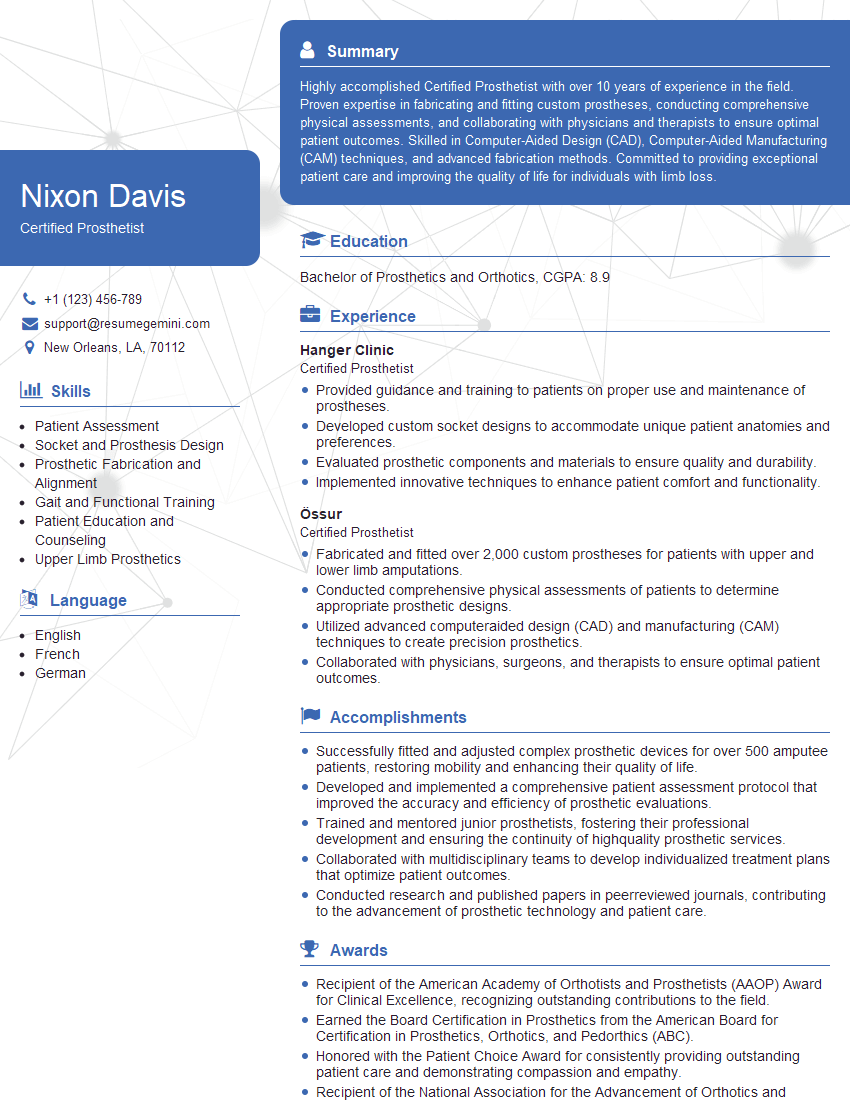
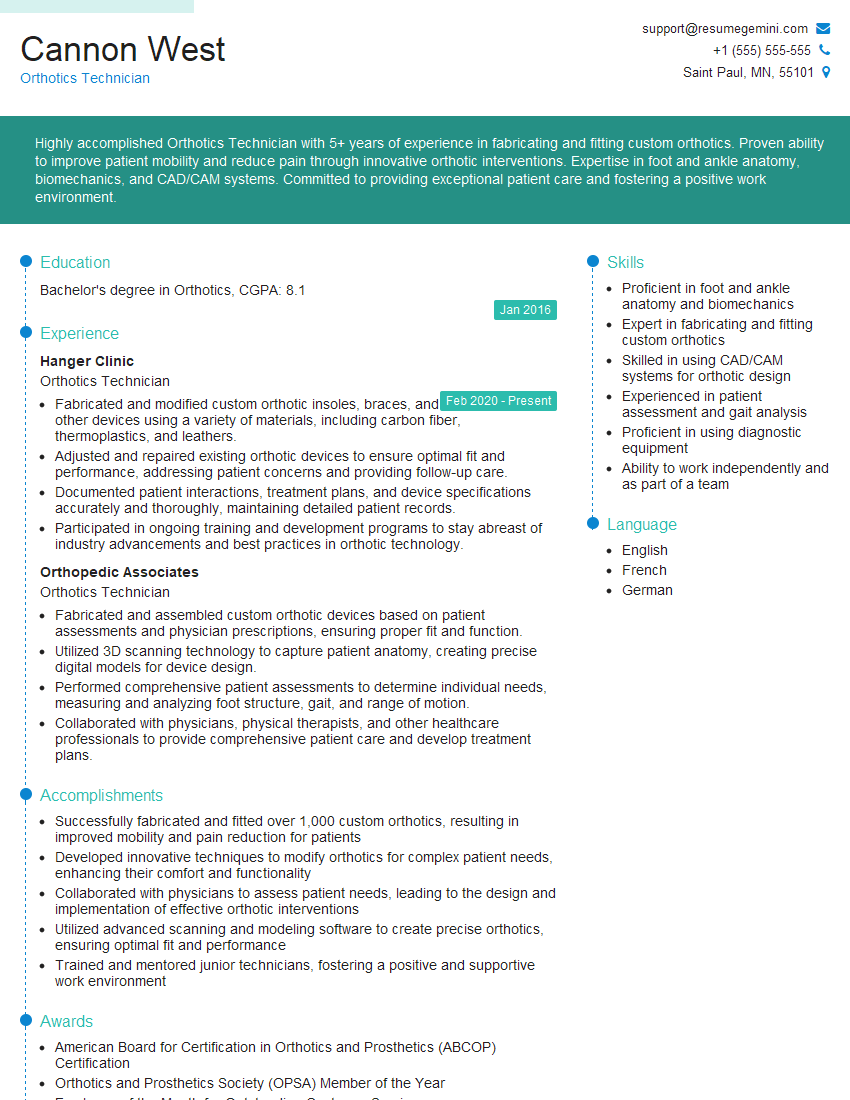
Mastering Prosthetics Training opens doors to a rewarding career helping individuals regain mobility and independence. To maximize your job prospects, crafting an ATS-friendly resume is essential. ResumeGemini is a trusted resource that can help you build a professional and impactful resume designed to get noticed. Examples of resumes tailored to Prosthetics Training are available to guide you. Invest time in building a strong resume; it’s your first impression on potential employers.

Explore more articles
Users Rating of Our Blogs
Share Your Experience
We value your feedback! Please rate our content and share your thoughts (optional).
What Readers Say About Our Blog
To the interviewgemini.com Webmaster.
Very helpful and content specific questions to help prepare me for my interview!
Thank you
To the interviewgemini.com Webmaster.
This was kind of a unique content I found around the specialized skills. Very helpful questions and good detailed answers.
Very Helpful blog, thank you Interviewgemini team.