Cracking a skill-specific interview, like one for Tool Fabrication, requires understanding the nuances of the role. In this blog, we present the questions you’re most likely to encounter, along with insights into how to answer them effectively. Let’s ensure you’re ready to make a strong impression.
Questions Asked in Tool Fabrication Interview
Q 1. Explain the difference between a jig and a fixture.
The difference between a jig and a fixture lies primarily in their purpose and how they guide the work piece. A jig is a tool that guides cutting tools and provides location for the work piece to ensure consistent and accurate machining operations, particularly for drilling, reaming, and tapping. Think of it as a ‘guide’ that ensures accuracy and repeatability. A fixture, on the other hand, holds the work piece securely in place during machining, often involving more complex clamping mechanisms. While it might provide some location guidance, its main function is secure clamping to prevent movement during operations like milling, turning, or grinding. Imagine a jig as a template that directs the tool, and a fixture as a vise that holds the work piece firmly.
Example: A drilling jig would have precisely located bushings to guide drill bits, ensuring holes are drilled in the exact same location every time. A milling fixture would hold a complex part securely while multiple milling operations are performed. The jig ensures accuracy of location, while the fixture ensures the part’s stability during the machining process.
Q 2. Describe your experience with various machining processes (e.g., milling, turning, grinding).
Throughout my career, I’ve extensively used various machining processes, including milling, turning, and grinding. My milling experience encompasses both conventional and CNC milling, working with materials ranging from aluminum and steel to plastics and composites. I’m proficient in selecting appropriate cutting tools, speeds, and feeds for different materials and desired surface finishes. Turning experience includes both lathe work and CNC turning, focusing on creating precise cylindrical parts. I’m adept at using various turning tools and techniques, from facing and parting to thread cutting. Finally, my grinding experience includes surface grinding, cylindrical grinding, and centerless grinding. This involves understanding wheel selection, dressing, and truing to achieve very fine surface finishes and tight tolerances.
For instance, I once tackled a project requiring the creation of a high-precision aluminum part with complex internal features. Using CNC milling, I successfully programmed and executed the machining operation resulting in a part that met the stringent tolerances specified in the engineering drawings.
Q 3. How do you select the appropriate material for a specific tooling application?
Material selection for tooling applications is crucial for performance and longevity. The process considers several factors:
- Required strength and hardness: Will the tool face high forces? High hardness materials are necessary for resisting wear and abrasion.
- Wear resistance: Some applications, such as cutting high-strength alloys, require extremely wear-resistant materials.
- Toughness: The ability to withstand impact forces and resist fracture is vital, particularly for tools used in roughing operations.
- Corrosion resistance: For tools used in corrosive environments, materials with high corrosion resistance are necessary.
- Machinability: The ease with which the material can be machined into the desired tool geometry impacts the fabrication process and cost.
- Thermal conductivity: The ability of the material to dissipate heat is crucial to prevent tool failure due to excessive temperatures.
Example: For a high-speed cutting tool used on hardened steel, a material like high-speed steel (HSS) or a cemented carbide would be chosen for its exceptional hardness and wear resistance. For a less demanding application, like shaping wood, a high carbon steel might suffice. The specific material is determined by carefully evaluating these factors and selecting the best balance of properties for the intended use.
Q 4. What are the common types of tooling steels and their properties?
Tooling steels are alloys specifically designed for their excellent properties in tool applications. Common types include:
- High-Speed Steel (HSS): Contains high amounts of tungsten, molybdenum, vanadium, and chromium, providing high hardness and wear resistance at elevated temperatures. Suitable for various machining operations.
- Carbon Tool Steels: High carbon content contributes to high hardness, but they are typically less resistant to high temperatures than HSS. Used in applications where less extreme conditions are present.
- Powder Metallurgy Tool Steels: Produced via powder metallurgy, these steels have improved uniformity and finer grain structures, leading to enhanced hardness, wear resistance, and toughness. They are often used for demanding applications.
- Cemented Carbides (Ceramics): Composed of tungsten carbide particles cemented together with a cobalt binder. They offer exceptional hardness and wear resistance, making them ideal for high-speed machining and demanding applications.
Each steel has different properties; for example, HSS excels in high-temperature applications, while cemented carbides boast superior wear resistance, albeit at a higher cost.
Q 5. Explain the importance of heat treatment in tool fabrication.
Heat treatment is absolutely critical in tool fabrication, as it significantly alters the material’s microstructure and consequently its mechanical properties. The process involves heating the tool steel to a specific temperature, holding it at that temperature for a certain time, and then cooling it at a controlled rate. This controls the transformation of the steel’s crystal structure, affecting its hardness, toughness, and wear resistance.
Importance: Heat treatment allows us to achieve the desired balance of hardness and toughness. For instance, hardening increases hardness and wear resistance but can reduce toughness. Tempering then follows to decrease the brittleness induced by hardening. Appropriate heat treatment ensures that the tool can withstand the stresses and wear of the intended application without fracturing or losing its cutting edge. Incorrect heat treatment can result in a tool that is too brittle, too soft, or has inconsistent properties, leading to premature failure.
Q 6. Describe your experience with CAD/CAM software (specify software).
I have extensive experience using Mastercam and Fusion 360 CAD/CAM software. In Mastercam, I’m proficient in creating 2D and 3D models of tooling components, developing CNC programs for various machining operations (milling, turning, and wire EDM), and simulating the machining process to identify potential problems before manufacturing. My skills with Fusion 360 extend to 3D modeling and design, particularly for complex tool geometries. It allows for seamless integration between design and manufacturing, significantly reducing design and fabrication time. I use these softwares to design, generate CNC toolpaths, and simulate tooling processes to ensure accuracy and efficiency before machining.
For example, I recently used Mastercam to create the CNC program for a complex milling operation involving multiple axes and various cutting tools, significantly reducing the manufacturing time and improving the accuracy of the final product.
Q 7. How do you interpret engineering drawings and blueprints for tooling?
Interpreting engineering drawings and blueprints is fundamental to successful tool fabrication. I meticulously review all aspects of the drawings, including:
- Dimensions and tolerances: Precise dimensions and tolerances are crucial for the proper functioning of the tool. Any deviation can lead to performance issues or failure.
- Material specifications: The material selected impacts the tool’s properties and manufacturing process.
- Surface finish requirements: The drawing specifies the required surface roughness of the tool, determining the machining processes and parameters.
- Geometric features: Understanding the tool’s geometry, including angles, curves, and other features, is crucial for accurate design and fabrication.
- Annotations and notes: Additional notes and annotations provide crucial information about specific requirements, manufacturing processes, or quality control aspects.
I often use these drawings to create 3D models in CAD software which helps visualize the tool and identify any potential design or manufacturing challenges early on. This proactive approach ensures that the fabricated tool meets the design specifications and is functional.
Q 8. Explain your experience with CNC programming and operation.
My experience with CNC programming and operation spans over 10 years, encompassing various machine types and control systems. I’m proficient in G-code programming, using both conversational and manual programming methods. I can create programs from scratch, modify existing ones, and optimize them for efficiency and precision. My expertise includes Fanuc, Siemens, and Haas controls.
For example, I recently programmed a complex milling operation for a titanium aerospace component requiring extremely tight tolerances. This involved using advanced techniques like tool path optimization and high-speed machining to achieve the required surface finish and minimize machining time. Another example involves creating a program to efficiently machine a series of intricate parts using subprograms to reduce code complexity and improve reusability. I’m also experienced in troubleshooting CNC machine errors, such as tool breakage detection, and implementing preventative maintenance procedures.
Q 9. How do you troubleshoot and resolve common tooling issues?
Troubleshooting tooling issues requires a systematic approach. I start by identifying the symptom—is the tool breaking, producing inconsistent results, or showing signs of wear? Then I systematically check: the tool itself (for chips, cracks, or wear); the machine setup (spindle speed, feed rate, and tool clamping); the workpiece material (is it harder than expected?); and the program (are there any errors in the toolpath or parameters?).
- Tool breakage: This often points to excessive forces, incorrect speeds and feeds, or a dull tool. I’d check the program for optimal cutting parameters and inspect the tool for flaws.
- Inconsistent results: This could indicate problems with tool clamping, workpiece fixturing, or machine vibration. I’d meticulously check each element and make necessary adjustments.
- Premature wear: This suggests incorrect material selection or inappropriate cutting conditions. I’d analyze the tool’s wear pattern to diagnose the problem and select a more suitable material or adjust the cutting parameters.
I document all troubleshooting steps and solutions to improve future processes and prevent similar issues.
Q 10. Describe your experience with precision measurement tools (e.g., calipers, micrometers).
Precision measurement is crucial in tool fabrication. My experience with calipers, micrometers, and other precision instruments ensures accurate dimensions and consistent quality. I’m proficient in using both analog and digital versions of these tools, understanding their limitations and potential sources of error.
I regularly use vernier calipers to measure external dimensions, micrometers for internal and external measurements needing higher precision, and dial indicators for checking runout and surface flatness. For instance, when creating a precision jig, I’ll use a micrometer to verify the dimensions of critical features to ensure they meet the required tolerances. I also understand the importance of proper calibration and maintenance of these tools for reliable measurements. In fact, I’m trained to perform routine calibrations of these instruments to ensure accuracy and traceability.
Q 11. How do you ensure the accuracy and precision of fabricated tools?
Ensuring accuracy and precision starts with careful planning and preparation. This involves selecting appropriate tooling materials, designing robust tool geometries, and using precise machining techniques. Throughout the fabrication process, I employ multiple checks and measurements at each stage.
- Material Selection: The material must be appropriate for the application and possess the necessary strength, hardness, and wear resistance.
- Design Optimization: Utilizing CAD/CAM software allows for detailed design, simulation, and optimization of tool geometry before actual fabrication.
- Precise Machining: Employing correct cutting parameters (speeds and feeds) and using appropriate cutting fluids are critical for achieving high accuracy and surface finish.
- Regular Inspections: Using precision measuring instruments at various stages of the process to verify dimensions and alignment.
For example, in the fabrication of a complex mold insert, I would use a Coordinate Measuring Machine (CMM) for final inspection to guarantee that all dimensions and surface finishes meet the exacting specifications. Failing this, corrective measures will be put in place.
Q 12. What quality control measures do you employ during the tool fabrication process?
Quality control is integrated throughout the tool fabrication process, not just at the end. I use various methods to ensure consistent quality.
- Incoming Inspection: I check the quality of raw materials, ensuring they meet the required specifications.
- Process Monitoring: Continuously monitor machine parameters, tool wear, and workpiece dimensions during machining operations to detect and correct any deviations early on.
- In-Process Inspection: Regular measurements and inspections are performed at different stages to ensure the tool is being made according to the design.
- Final Inspection: A thorough inspection using precise measuring instruments is conducted to verify that the finished tool meets all specifications before release. This frequently includes CMM inspection.
- Documentation: Detailed records of every step are maintained for traceability and continuous improvement.
A statistical process control (SPC) approach is employed to track key parameters, allowing us to identify trends and make adjustments to maintain consistency. This ensures that each tool is manufactured to the same high standards.
Q 13. Describe your experience with different types of tooling materials (e.g., carbide, high-speed steel).
My experience includes working with a wide range of tooling materials, each with its own strengths and weaknesses.
- High-Speed Steel (HSS): A versatile and cost-effective material suitable for many applications. It’s tougher than carbide but wears faster.
- Carbide: Offers superior hardness, wear resistance, and cutting speeds, making it ideal for high-volume production or machining hard materials. It’s more brittle than HSS.
- Ceramics: Used for extremely high-speed machining and extremely hard materials; but these tools are brittle and must be carefully handled.
- Cubic Boron Nitride (CBN): Exceptional hardness and wear resistance, particularly effective when machining hardened steels.
The choice of material depends heavily on the application. For instance, HSS might be suitable for general-purpose tools, while carbide would be preferred for high-precision machining of difficult-to-machine materials. CBN would be chosen for the most challenging materials like hardened steel.
Q 14. How do you manage tolerances and surface finishes in tool fabrication?
Managing tolerances and surface finishes requires careful attention to detail at every step of the process.
- Tolerance Control: Tolerances are specified in the design and maintained through precise machining techniques, proper tool selection, and regular measurements using precision instruments. The level of precision required dictates the choice of equipment and machining strategy.
- Surface Finish Control: Surface finish is influenced by factors such as cutting parameters, tool geometry, and cutting fluids. Fine surface finishes require slower feed rates, sharper tools, and appropriate cutting fluids.
- Toolpath Optimization: Advanced CAM software can be used to optimize toolpaths to minimize surface irregularities and achieve the desired finish.
For example, achieving a specific Ra (roughness average) value requires optimizing cutting parameters and selecting tools with appropriate geometry. Precise control of feed rates and spindle speeds is essential. Regular monitoring and measurement are critical in ensuring that the tolerances and surface finishes are consistently met.
Q 15. Explain your experience with various types of cutting tools and their applications.
My experience encompasses a wide range of cutting tools, each chosen based on the material being worked and the desired finish. For example, high-speed steel (HSS) end mills are excellent for general-purpose milling of various metals, offering a good balance of hardness and toughness. I’ve extensively used them in creating intricate features for molds and dies. For tougher materials like hardened steel, I’d opt for carbide end mills, which boast superior wear resistance. Their higher cost is justified by their extended lifespan and the ability to handle demanding applications.
Then there are specialized tools like diamond-coated saws for cutting ceramics or extremely hard materials, and various types of drills, ranging from twist drills for general holes to specialized step drills for creating multiple-diameter holes simultaneously. The selection process always involves careful consideration of factors like material properties, required accuracy, surface finish requirements, and the overall production goals. For instance, creating a smooth surface on a delicate part would necessitate a different tooling choice compared to roughing out a large block of metal.
- HSS End Mills: General purpose milling, various metals.
- Carbide End Mills: High-wear applications, hardened steels.
- Diamond-coated Saws: Ceramics, hard materials.
- Twist Drills: General purpose hole making.
- Step Drills: Creating multiple-diameter holes.
Career Expert Tips:
- Ace those interviews! Prepare effectively by reviewing the Top 50 Most Common Interview Questions on ResumeGemini.
- Navigate your job search with confidence! Explore a wide range of Career Tips on ResumeGemini. Learn about common challenges and recommendations to overcome them.
- Craft the perfect resume! Master the Art of Resume Writing with ResumeGemini’s guide. Showcase your unique qualifications and achievements effectively.
- Don’t miss out on holiday savings! Build your dream resume with ResumeGemini’s ATS optimized templates.
Q 16. How do you ensure the safety of yourself and others while operating machinery?
Safety is paramount in tool fabrication. My approach is multifaceted and starts even before the machinery is powered on. I always conduct a thorough pre-operation inspection of all equipment, checking for loose parts, damaged components, and proper functioning of safety guards. This routine minimizes the risk of accidents caused by malfunctioning machinery.
During operation, I strictly adhere to all safety protocols, wearing appropriate personal protective equipment (PPE), including safety glasses, hearing protection, and often gloves and a safety apron, depending on the task. I never operate machinery when fatigued or under the influence of any substances that could impair my judgment or reflexes. Maintaining a clean and organized workspace is another critical aspect; clutter can lead to trips and falls. Finally, I always ensure that adequate lighting is available to prevent accidental injuries.
Moreover, I’m a strong advocate for training and awareness. I believe that ongoing safety training and refreshers keep everyone updated on best practices and help build a safety-conscious environment. Sharing safety tips and observations with colleagues is a regular practice, helping create a collaborative and safer workplace.
Q 17. Describe your experience with designing and building progressive dies.
Designing and building progressive dies is a complex process requiring a thorough understanding of sheet metal forming principles and tooling design. My experience spans various die types, from simple blanking dies to more intricate progressive dies involving multiple operations in a single pass. This includes the design and manufacturing of punches, dies, and strippers, as well as the incorporation of features like pilot pins, guide bushings, and ejection mechanisms.
The process begins with a detailed analysis of the part drawing, determining the optimal sequence of operations, and choosing the appropriate materials and tolerances. Using CAD software, I create detailed 3D models, simulating the forming process to identify and address potential issues before manufacturing. This design phase incorporates considerations for material flow, strength, and wear resistance. Once the design is finalized, I oversee the fabrication process, which often involves CNC machining, EDM, and possibly grinding, ensuring precise dimensions and surface finishes. Finally, I conduct rigorous testing to validate the die’s functionality and make any necessary adjustments.
For instance, I recently designed a progressive die for a complex automotive part requiring multiple stages of blanking, piercing, and forming. Through careful planning and simulation, I managed to minimize material waste and maximize efficiency, leading to significant cost savings for the client.
Q 18. How do you plan and manage your workload effectively?
Effective workload management is crucial in tool fabrication. I use a combination of techniques to stay organized and meet deadlines. It starts with clear communication and understanding of project requirements. I then break down large projects into smaller, manageable tasks and prioritize them based on urgency and dependency. This allows me to focus on critical tasks first and avoid bottlenecks.
I utilize project management tools and software to track progress, deadlines, and resource allocation. Visual aids like Gantt charts help me visualize the project timeline and identify potential scheduling conflicts. Regularly reviewing my schedule and adjusting priorities as needed ensures that I’m always on track. Proactive communication with colleagues and supervisors is vital to keep everyone informed and address potential issues early on. This prevents unforeseen delays and ensures smooth workflow.
Moreover, I believe in the importance of time management techniques like time blocking, allocating specific time slots for specific tasks. This minimizes distractions and enhances focus, improving productivity.
Q 19. What is your experience with different types of welding processes?
My welding experience includes various processes, each suited for specific applications. Shielded Metal Arc Welding (SMAW), or stick welding, is a versatile method I use for general-purpose welding of various metals. It’s robust and requires less specialized equipment, making it ideal for field work or when working with thicker materials. Gas Metal Arc Welding (GMAW), or MIG welding, is another common technique I utilize, particularly for its high deposition rate and smooth welds, making it efficient for mass production.
Gas Tungsten Arc Welding (GTAW), or TIG welding, offers superior control and produces high-quality, precise welds, making it suitable for critical applications where aesthetics and precision are paramount. I’ve also worked with resistance welding, particularly spot welding, a technique perfect for joining sheet metal parts quickly and efficiently. The choice of process is always driven by the material’s properties, the weld’s required quality, and the overall project constraints. For example, I would use TIG welding for joining thin stainless steel components in a precision instrument, whereas MIG welding would be preferred for joining thicker steel sections in a structural element.
Q 20. Describe your problem-solving approach when encountering unexpected challenges during tool fabrication.
My problem-solving approach when facing unexpected challenges follows a systematic process. The first step is always a thorough assessment of the situation. I carefully analyze the problem, identifying its root cause and the potential impact on the project. This may involve collecting data, examining the failed component, or consulting relevant documentation.
Once the problem is defined, I brainstorm potential solutions, considering various approaches and their implications. This often involves discussions with colleagues, drawing on their expertise and experience. I then evaluate each potential solution based on feasibility, cost, and effectiveness. Once a solution is chosen, I implement it carefully, documenting the process and monitoring the results. If the solution is ineffective, I iterate on the process, refining my approach until the problem is resolved. A recent example involved a die cracking during operation. Through careful analysis, I determined the cause was a design flaw in a critical area. I redesigned the part, simulated the changes, and successfully resolved the issue.
Q 21. How do you stay updated on the latest advancements in tool fabrication technology?
Staying updated in tool fabrication necessitates continuous learning. I regularly attend industry conferences and workshops to stay abreast of the latest advancements in materials, processes, and equipment. This allows me to learn about new technologies and best practices from industry leaders and experts. I also actively engage with professional organizations and publications, such as industry magazines and journals, to stay informed on the newest innovations and research findings.
Online learning platforms and technical webinars offer another avenue for continuous professional development. I actively participate in these courses, expanding my knowledge and skills in areas such as CAD/CAM software, advanced machining techniques, and new material properties. Moreover, I regularly review technical documentation and manuals related to the machinery and tools I use, ensuring I’m always aware of safe operating procedures and best practices. Staying current in this field is critical for maintaining high standards of work and meeting the demands of increasingly complex projects.
Q 22. Explain your experience with tooling design for injection molding.
My experience in tooling design for injection molding spans over 10 years, encompassing the entire process from initial concept to final product validation. I’ve worked extensively with various CAD software, including SolidWorks and Autodesk Inventor, to create detailed 3D models of molds, incorporating features like gates, runners, and cooling channels. Understanding material properties is crucial; for example, selecting the right steel grade for the mold base based on the plastic being injected and the cycle time. I’ve managed projects involving both single-cavity and multi-cavity molds, optimizing designs for efficient production and minimizing cycle time. A recent project involved designing a mold for a complex medical device housing, requiring precise tolerances and intricate internal features. We utilized advanced simulation software to predict flow patterns and potential issues like weld lines or sink marks before manufacturing the mold, saving significant time and resources.
One key aspect is understanding the interaction between mold design and the injection molding machine. For instance, I’ve worked with various clamping forces and injection pressures to determine optimal mold parameters and prevent issues such as short shots or flash. Furthermore, I’m proficient in designing and incorporating ejection systems to ensure smooth removal of parts from the mold. I’ve also tackled design challenges related to part ejection, ensuring minimal risk of damage to the molded parts. I’ve addressed challenges such as warpage by strategically designing cooling lines and incorporating venting channels in the mold design.
Q 23. Describe your experience with tooling design for stamping processes.
My experience with stamping tooling involves the design and fabrication of progressive dies, blanking dies, and forming dies for various applications. I have a solid understanding of sheet metal properties, including their formability and springback characteristics. This knowledge allows me to design tools that accurately form parts to the required specifications. I’m experienced with using CAD software to design dies and also familiar with using dedicated die design software such as AutoCAD and specialized plug-ins for die design. For progressive dies, I’ve designed efficient tooling layouts to minimize material waste and optimize production throughput. One notable project involved creating a progressive die for a complex automotive part, requiring multiple stages of blanking, piercing, and forming operations. The challenge was to precisely control tolerances and ensure the die’s robustness for high-volume production. I tackled this by utilizing finite element analysis (FEA) to simulate the die’s performance under various load conditions, leading to the optimization of its structural design and improved longevity.
The design of stamping dies is heavily influenced by the selection of materials. I use my experience to choose materials suitable for handling high stress and wear conditions encountered during the stamping operation. This includes factors like tool steel selection, heat treatment, and surface coating selection to improve the tool life and quality of produced parts. Furthermore, safety is paramount; my designs incorporate features to prevent operator injury such as proper guarding and ejection systems.
Q 24. How do you ensure the longevity and maintainability of fabricated tools?
Ensuring the longevity and maintainability of fabricated tools involves a multi-pronged approach starting from the design phase. First, robust materials are selected, considering the application’s demands and environmental factors. For example, using hardened tool steel for high-wear areas or corrosion-resistant materials when needed. Second, careful design considerations incorporate features that prevent premature wear, such as strategically located wear inserts or optimized cooling channels. Third, detailed drawings and specifications are provided, documenting every aspect of the tool’s construction, assisting in maintenance and repairs.
Regular maintenance plays a crucial role. This includes preventative measures such as lubrication, cleaning, and periodic inspections for wear and tear. Furthermore, proper storage is important; keeping tools clean, dry and protected from impacts and corrosion can significantly extend their useful lifespan. I also believe in designing for modularity whenever possible. This enables easier repair and replacement of individual components rather than replacing the whole tool, reducing downtime and cost. For example, in a large progressive die, individual stations could be designed as replaceable modules. A detailed preventative maintenance plan can also be established including frequency of lubrication, inspection and replacement of wear components.
Q 25. What is your experience with different types of surface treatments for tools?
My experience encompasses various surface treatments for tools, each chosen based on the specific needs of the application. For example, hard chrome plating is often used to enhance wear resistance and improve surface finish. This is common in molds for plastic injection molding and stamping dies that encounter significant friction. Nitriding provides excellent wear resistance and fatigue strength, particularly beneficial for tools used in high-stress environments. For applications requiring corrosion resistance, coatings like DLC (Diamond-Like Carbon) or titanium nitride are excellent choices. The selection of surface treatment directly affects tool life and the quality of the finished product. A poorly chosen coating can lead to premature failure or undesirable surface characteristics on the workpiece.
The decision for a specific surface treatment involves considering factors such as cost, wear resistance, corrosion resistance, and the material compatibility of the base tool. I thoroughly consider all these factors during the design phase and specify the appropriate surface treatment in the tool drawings and specifications. We often conduct tests on coatings to ensure the longevity of the surface treatment under various operational conditions.
Q 26. Describe your experience with reverse engineering existing tools.
Reverse engineering existing tools involves a systematic process of analyzing and documenting the tool’s design, dimensions, and functionality. It starts with careful inspection of the tool, often using advanced measuring equipment like CMM (Coordinate Measuring Machines) to precisely capture its geometry. I then utilize CAD software to recreate the 3D model based on the measurements obtained. This process often involves creating 2D drawings from the physical tool and then reconstructing it into a 3D model. This requires a deep understanding of manufacturing processes and tolerances. It’s important to understand the tool’s original design intent and then improve it for future application based on the experience we already gained.
For example, we recently reverse-engineered a highly complex injection molding tool. The tool was nearing end of life and the original design documentation was incomplete. By carefully measuring and analyzing the tool, we were able to recreate the 3D model and identify areas for improvement. This improved design incorporated better cooling channels, resulting in a shortened cycle time and reduced warpage. The reverse engineering process allowed us to produce a better functioning tool and avoid costly redesigns. This knowledge also helps us improve our own design practices. Ethical considerations are also very important when reverse engineering; respecting intellectual property rights and only working with tools legally available to us.
Q 27. How do you document the tool fabrication process for future reference?
Documenting the tool fabrication process is crucial for maintaining traceability, enabling future repairs or modifications, and facilitating knowledge transfer within the team. Our documentation system uses a combination of digital and physical records. For digital records, we rely heavily on CAD models containing detailed design information, including material specifications, tolerances, and surface treatments. We utilize a Product Lifecycle Management (PLM) system to manage all drawings, revisions, and related documents. This system also tracks changes throughout the tool’s lifetime.
Physical documentation includes detailed process sheets outlining each step of the fabrication process, along with inspection reports, material certificates, and photographs showing different stages of construction. This is especially crucial for highly customized or complex tools where details are less readily apparent in the CAD model. We maintain a detailed database of tools and their corresponding documentation ensuring easy retrieval when necessary. Using a centralized system allows for efficient knowledge sharing among team members, simplifying maintenance, repair, and future design iterations. This is particularly useful when multiple individuals or teams are working on the same project. The level of documentation is tailored to the complexity and criticality of the tool; simpler tools require less extensive documentation compared to highly complex tools with many different components.
Key Topics to Learn for Tool Fabrication Interview
- Design and Engineering Principles: Understanding CAD software (SolidWorks, AutoCAD, etc.), tolerance analysis, GD&T (Geometric Dimensioning and Tolerancing), and material selection for tooling.
- Manufacturing Processes: Familiarize yourself with machining processes (milling, turning, drilling, grinding), casting, forging, and other relevant fabrication techniques. Be prepared to discuss their applications and limitations.
- Tooling Materials and their Properties: Develop a strong understanding of different materials used in tool fabrication (e.g., high-speed steel, carbide, ceramics) and their respective strengths, weaknesses, and suitability for various applications.
- Tool Design and Optimization: Learn about the principles of designing efficient and robust tools, including considerations for wear resistance, strength, and cost-effectiveness. Be able to discuss optimization strategies for different tooling applications.
- Quality Control and Inspection: Understand quality control methods used in tool fabrication, including dimensional inspection, surface finish evaluation, and non-destructive testing techniques.
- Troubleshooting and Problem Solving: Practice identifying and resolving common problems encountered during tool fabrication, such as tool breakage, dimensional inaccuracies, and surface defects. Be prepared to discuss your approach to problem-solving in a manufacturing setting.
- Safety Procedures and Regulations: Demonstrate your understanding of relevant safety protocols and regulations within a tool fabrication environment.
- Project Management and Teamwork: Be ready to discuss your experience collaborating on projects, managing timelines, and working effectively within a team.
Next Steps
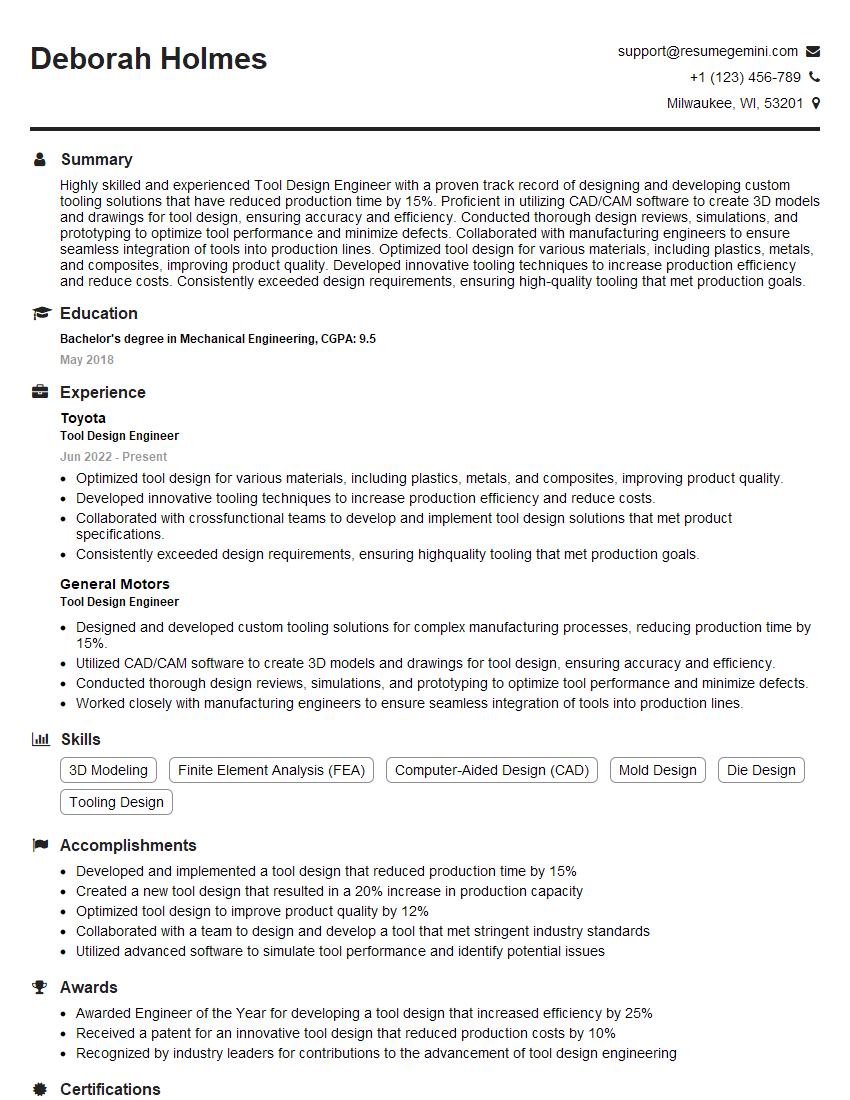
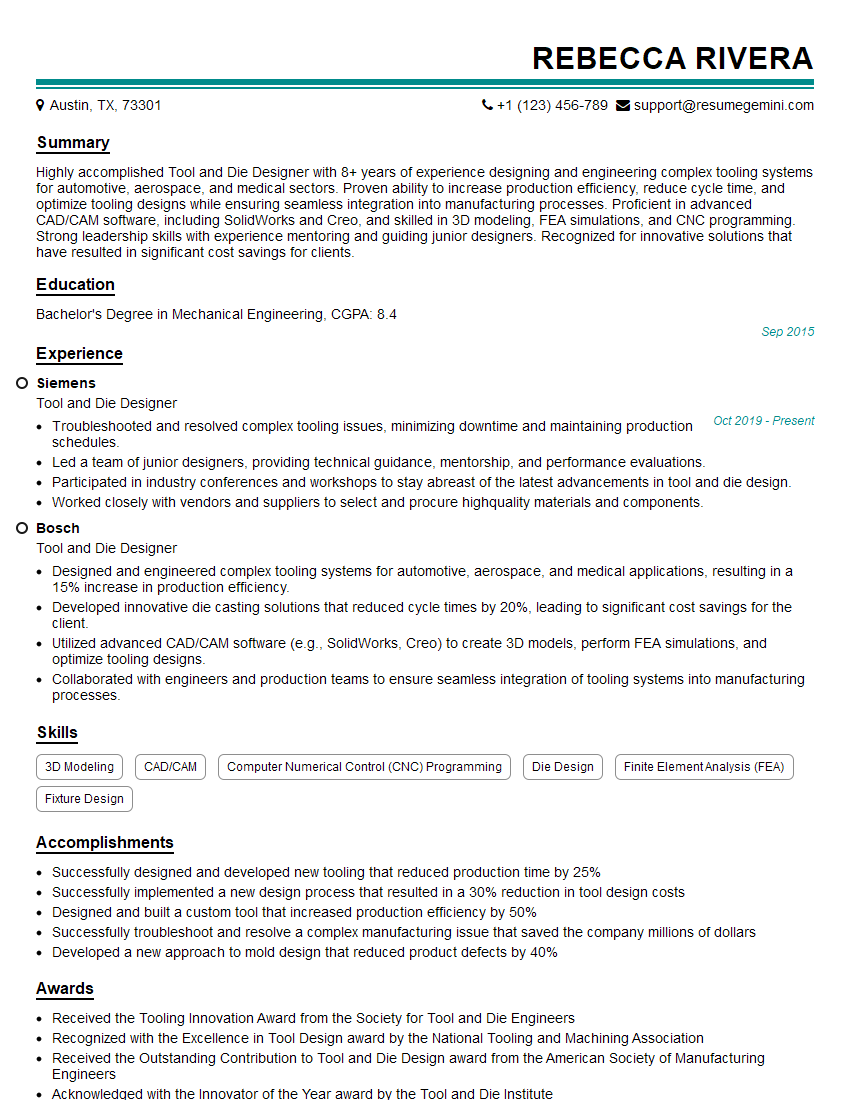
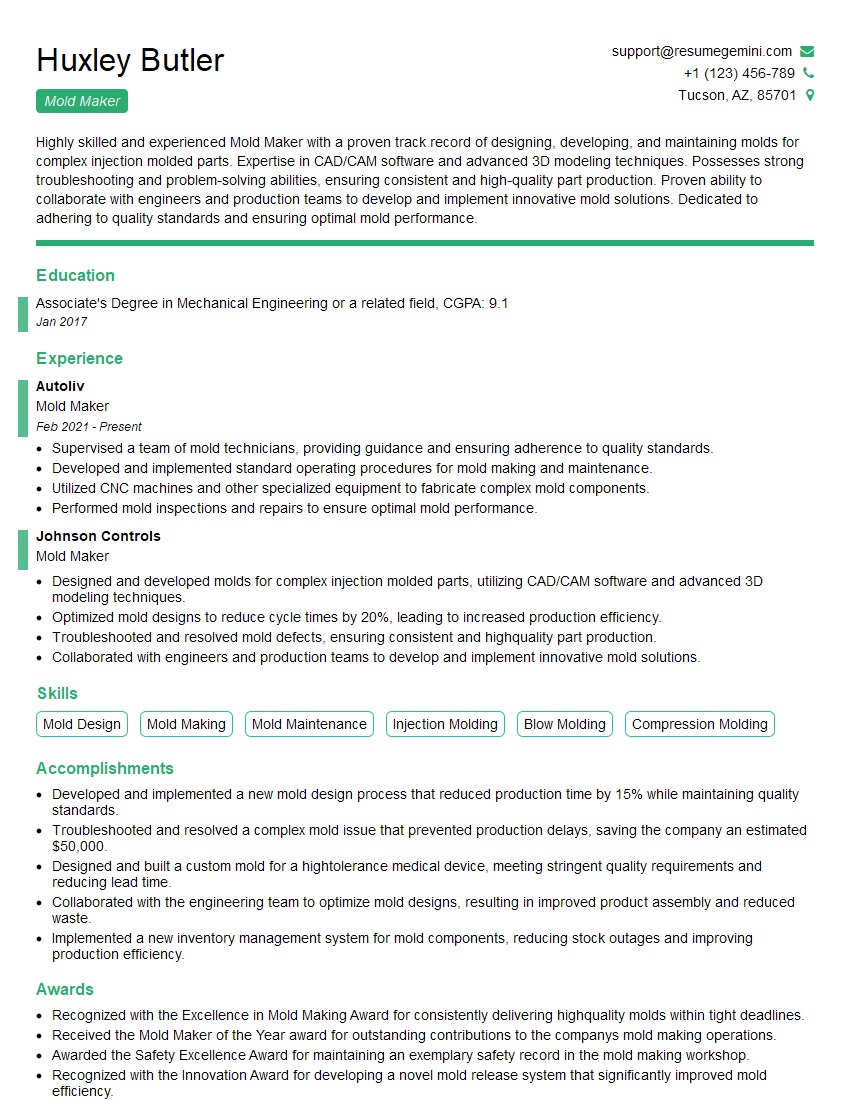
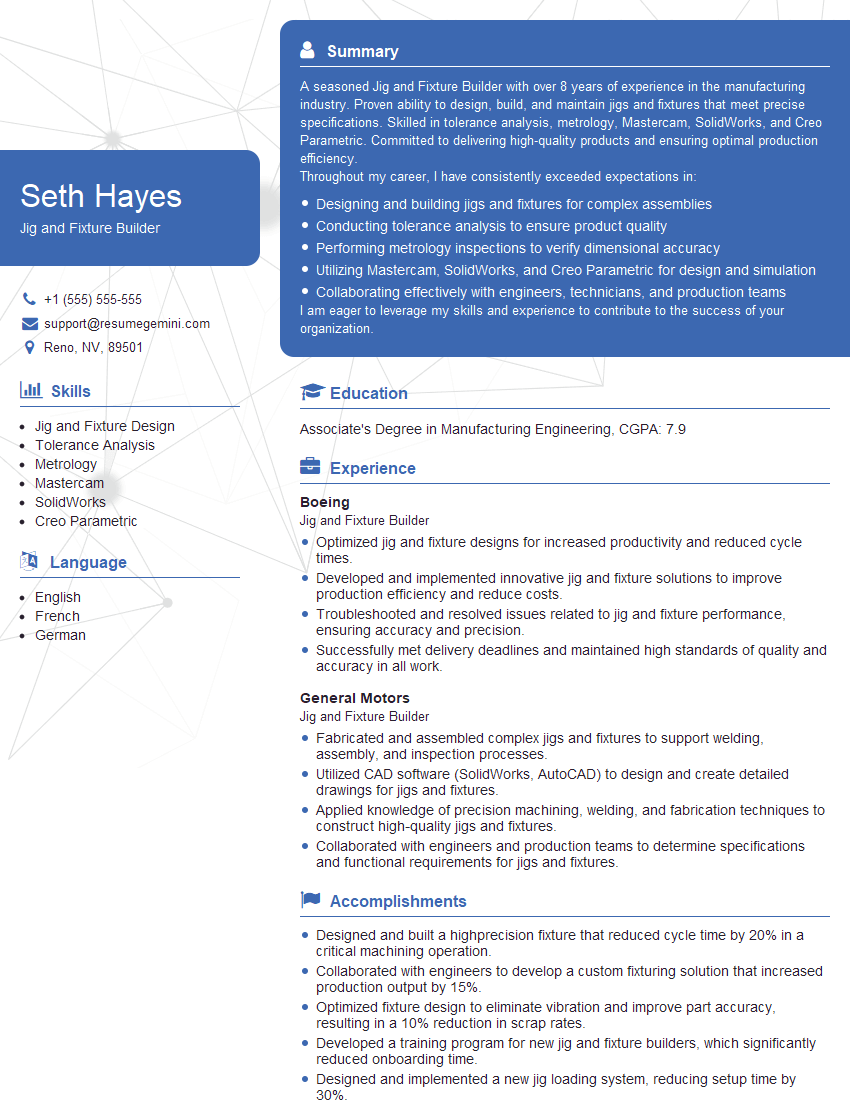
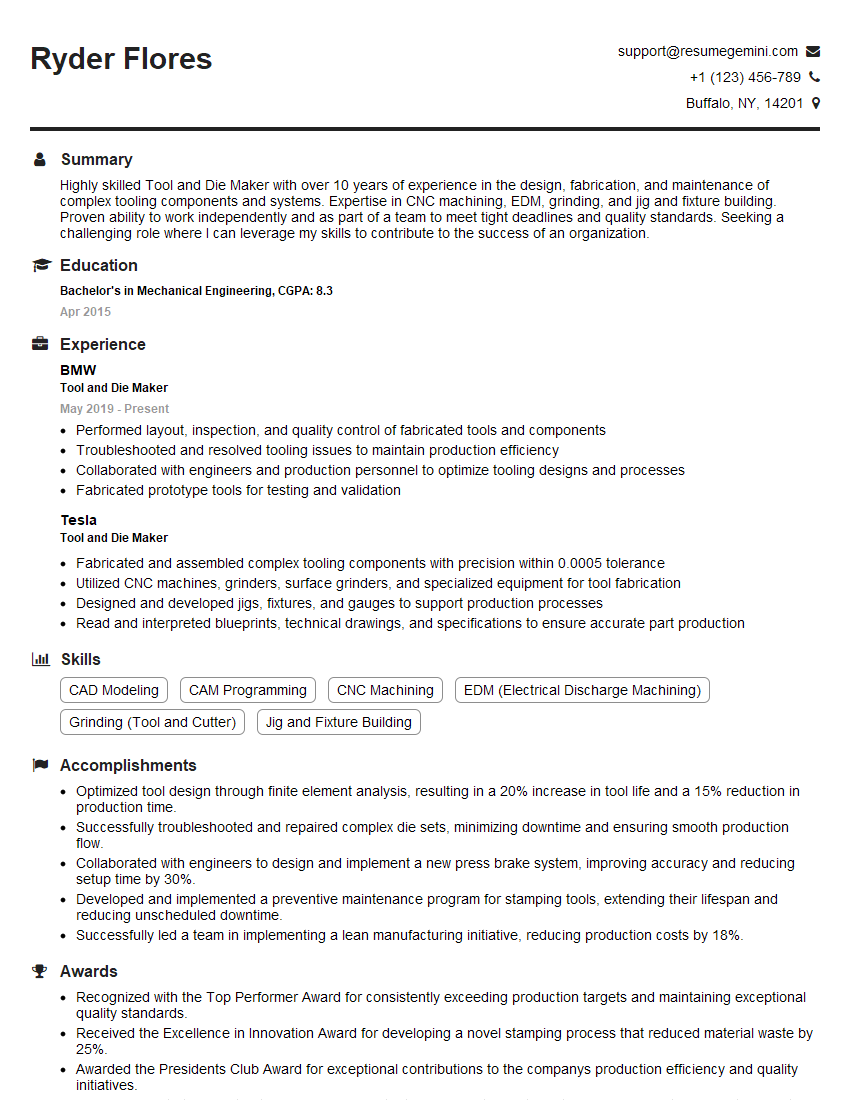
Mastering tool fabrication opens doors to a rewarding career with diverse opportunities for growth and specialization. To significantly boost your job prospects, invest time in crafting a compelling and ATS-friendly resume that showcases your skills and experience effectively. ResumeGemini is a trusted resource that can help you build a professional resume tailored to the specific requirements of the Tool Fabrication industry. Examples of resumes specifically designed for Tool Fabrication roles are available to help guide you.

Explore more articles
Users Rating of Our Blogs
Share Your Experience
We value your feedback! Please rate our content and share your thoughts (optional).
What Readers Say About Our Blog
To the interviewgemini.com Webmaster.
Very helpful and content specific questions to help prepare me for my interview!
Thank you
To the interviewgemini.com Webmaster.
This was kind of a unique content I found around the specialized skills. Very helpful questions and good detailed answers.
Very Helpful blog, thank you Interviewgemini team.