Interviews are opportunities to demonstrate your expertise, and this guide is here to help you shine. Explore the essential Workforce Readiness Training interview questions that employers frequently ask, paired with strategies for crafting responses that set you apart from the competition.
Questions Asked in Workforce Readiness Training Interview
Q 1. Describe your experience designing and delivering workforce readiness training programs.
Designing and delivering effective workforce readiness training involves a multi-stage process. It starts with a thorough needs assessment to identify the specific skills gaps within an organization. This might involve surveys, interviews, and analysis of existing performance data. Next, I develop a curriculum that addresses those needs, incorporating various learning modalities like interactive workshops, online modules, and hands-on simulations. Finally, I deliver the training, focusing on active learning techniques to maximize engagement and knowledge retention. For example, in a recent project for a tech startup, I designed a program focusing on agile methodologies and project management. The training combined theoretical knowledge with practical exercises using project management software, resulting in a significant improvement in team efficiency.
My experience encompasses a wide range of training topics, including communication skills, problem-solving, teamwork, digital literacy, and industry-specific technical skills. I tailor each program to the specific context of the organization and its employees, ensuring that the training is relevant, practical, and impactful.
Q 2. What methodologies do you employ to assess the effectiveness of your training programs?
Assessing training effectiveness is crucial to ensure a return on investment. I use a mixed-methods approach, combining quantitative and qualitative data. Quantitative methods include pre- and post-training assessments to measure knowledge gained and skill improvement. For instance, I might use a multiple-choice test to evaluate understanding of key concepts before and after the training. I also track participant feedback through surveys to understand their satisfaction and the training’s impact on their job performance.
Qualitative data provides a richer understanding. I conduct follow-up interviews with participants and their managers to gauge the long-term impact of the training on job performance and workplace behaviors. For example, I might interview managers to assess whether employees are applying the learned skills in their daily work. This combination provides a comprehensive understanding of the training’s success and areas for improvement.
Q 3. How do you adapt your training approach to meet the diverse learning styles of participants?
Recognizing that learners have diverse styles is essential. I employ a multi-modal approach, catering to visual, auditory, and kinesthetic learners. For visual learners, I use presentations with clear visuals, diagrams, and videos. For auditory learners, I incorporate group discussions, lectures, and audio-based learning materials. Kinesthetic learners benefit from hands-on activities, simulations, and role-playing exercises.
Furthermore, I use a variety of teaching methods such as case studies, group projects, and interactive games to keep participants engaged and allow them to learn in ways that suit their preferences. For example, in a leadership training program, I used a simulation where participants had to make decisions in a virtual business environment, allowing them to experience leadership challenges firsthand.
Q 4. Explain your process for identifying skills gaps within an organization.
Identifying skills gaps involves a systematic process. I begin by reviewing the organization’s strategic goals and identifying the skills needed to achieve them. This often involves collaborating with HR and department managers. Next, I assess the current skills of employees through various methods such as performance reviews, skills assessments, and interviews.
I then compare the required skills with the existing skills to pinpoint the gaps. This analysis is often visualized using a skills gap matrix, which clearly highlights areas where training is needed. For example, if an organization is implementing a new software system, I would assess employee proficiency with that system and design training to bridge the identified gaps.
Q 5. How do you incorporate technology into your workforce readiness training?
Technology plays a vital role in modern workforce readiness training. I incorporate various technologies to enhance engagement and accessibility. Learning Management Systems (LMS) are used to deliver online modules, track progress, and facilitate communication. Interactive simulations and gamified learning experiences make training more engaging and memorable. Video conferencing tools enable remote training sessions and facilitate collaboration.
I also utilize data analytics tools to track learner progress and identify areas for improvement in the training materials. For example, I might use data from an LMS to understand which modules participants find most challenging and adjust the curriculum accordingly.
Q 6. Describe a time you had to modify a training program due to unforeseen circumstances.
In one instance, I was delivering a leadership development program when a key speaker unexpectedly cancelled due to illness. I had to quickly adapt. I contacted a backup speaker, but their availability was limited. Therefore, I repurposed some of the planned group activities and leveraged the expertise of participants to facilitate discussions around the planned topics. I also used pre-recorded video content related to the speaker’s planned session. This required quick thinking and flexibility, but the participants still reported a positive and valuable learning experience, highlighting the importance of adaptability in training delivery.
Q 7. What are some common challenges faced in delivering workforce readiness training, and how have you overcome them?
Common challenges include limited budgets, time constraints, and resistance to training from participants. Budgetary constraints often necessitate creative solutions, such as leveraging free online resources or partnering with community organizations. Time constraints can be addressed by using shorter, more focused training modules, and delivering training in bite-sized pieces. Addressing resistance requires careful planning and communication. Emphasizing the value of the training, and tailoring it to the specific needs and interests of participants is vital. Making the training engaging and relevant makes a huge difference.
For example, I once faced resistance to a new software training program. By engaging early adopters within the team as champions and showcasing early success stories, I was able to reduce resistance and promote participation. In short, proactive communication and addressing concerns early on, along with focusing on impact and creating a positive learning environment, are crucial for overcoming these challenges.
Q 8. How do you measure the return on investment (ROI) of your training programs?
Measuring the ROI of workforce readiness training requires a multifaceted approach that goes beyond simply counting attendees. We need to quantify the impact on key business metrics. This typically involves a pre- and post-training assessment of employee skills and performance. For example, we might measure improvements in productivity, reduction in error rates, or faster onboarding times. We also track employee satisfaction through surveys.
Quantitative Measures: We use metrics like increased sales per employee (following sales training), reduced customer service call resolution times (after customer service training), or improved safety incident rates (post-safety training). These are directly tied to the bottom line.
Qualitative Measures: We also collect qualitative data. This includes employee feedback surveys, manager observations on improved performance, and case studies demonstrating how the training led to specific successes. For instance, we might interview employees to see how the training impacted their confidence in handling specific tasks.
Calculating ROI: A simple ROI calculation might look like this: (Return - Investment) / Investment. The return is the increased revenue or cost savings attributed to the training, while the investment includes training costs, instructor fees, materials, and employee time. However, a robust ROI analysis considers both quantitative and qualitative data to present a complete picture.
Q 9. What strategies do you use to ensure participant engagement and motivation in your training sessions?
Participant engagement and motivation are paramount. I use a blended learning approach incorporating various strategies to cater to different learning styles.
- Interactive Activities: Instead of passive lectures, I incorporate group discussions, case studies, role-playing, and simulations to actively involve participants.
- Gamification: Introducing game-like elements, like points, leaderboards, and badges, can boost motivation and encourage healthy competition.
- Personalized Learning: I tailor the content and pace to meet the individual needs of the participants. Pre-assessments help identify skill gaps, allowing for targeted instruction.
- Real-world Applications: Connecting training content to real-world scenarios and challenges makes learning relevant and engaging. For example, using real customer complaints in customer service training.
- Regular Feedback and Recognition: Providing timely and constructive feedback and acknowledging participants’ achievements fosters motivation and a sense of accomplishment.
- Technology Integration: Utilizing interactive eLearning platforms, videos, and simulations keeps training dynamic and engaging.
For instance, in a recent leadership training program, I used a simulated business game where participants had to make decisions under pressure, leading to lively discussions and practical learning.
Q 10. How do you build strong relationships with stakeholders and clients?
Building strong stakeholder and client relationships requires consistent communication, collaboration, and a genuine understanding of their needs. I start by clearly defining expectations and objectives at the outset of any project.
- Regular Communication: I maintain regular contact with stakeholders and clients through email updates, progress reports, and meetings. This ensures transparency and addresses any concerns proactively.
- Active Listening: I actively listen to their feedback and incorporate it into the training design and delivery. This demonstrates that I value their input.
- Collaboration and Partnership: I view myself as a partner, not just a vendor. This involves working collaboratively with them throughout the training process.
- Performance Measurement and Reporting: I provide regular reports on the training progress, outcomes, and ROI. This demonstrates the value I bring.
- Relationship Building: I strive to build personal rapport by understanding their challenges and celebrating their successes.
For example, I recently worked with a client who was facing high employee turnover. By actively listening to their concerns and tailoring the training to address their specific needs, I was able to build a strong relationship and deliver a program that significantly reduced turnover.
Q 11. What are the key components of an effective onboarding program for new employees?
An effective onboarding program is crucial for new employee success and retention. It should be comprehensive, engaging, and aligned with the company culture. Key components include:
- Pre-boarding: This phase begins before the employee’s first day. It includes paperwork completion, sending a welcome package, and setting up necessary accounts and access.
- Orientation: The first day typically includes a welcome from leadership, an overview of company culture, policies, and benefits.
- Role-Specific Training: This is crucial to equip new hires with the skills and knowledge needed to perform their jobs effectively. This may involve job shadowing, mentorship, or formal training courses.
- Team Integration: Introducing the new employee to their team and colleagues helps foster a sense of belonging and accelerates integration.
- Ongoing Support and Feedback: Regular check-ins, performance reviews, and mentorship programs provide ongoing support and guidance.
- Technology and Systems Training: Ensuring employees can efficiently use necessary software, systems, and tools is paramount for early success.
A well-structured onboarding program reduces time-to-productivity, improves employee retention, and fosters a positive first impression of the company.
Q 12. How do you ensure your training materials are accessible to individuals with disabilities?
Accessibility is paramount. To ensure training materials are accessible to individuals with disabilities, I adhere to WCAG (Web Content Accessibility Guidelines) and Section 508 standards.
- Alternative Text for Images: All images must include descriptive alternative text, allowing screen readers to convey the image’s content.
- Captioning and Transcripts: Videos and audio content need accurate captions and transcripts for hearing-impaired individuals.
- Keyboard Navigation: All interactive elements must be operable using only a keyboard, beneficial for users with motor impairments.
- Color Contrast: Sufficient color contrast between text and background is essential for readability.
- Structural Markup: Proper HTML structure using headings, lists, and other semantic elements aids screen readers in navigating the content logically.
- Accessible Documents: Documents should be in accessible formats like PDF/UA or DOCX, ensuring compatibility with assistive technologies.
Using accessibility checkers and seeking feedback from users with disabilities is a crucial part of the process. I regularly review materials to ensure they are inclusive and meet accessibility standards.
Q 13. Describe your experience with developing and delivering virtual or online training.
I have extensive experience designing and delivering virtual and online training using various platforms, including Zoom, Webex, and Learning Management Systems (LMS) such as Moodle and Canvas.
Key Considerations for Virtual Training:
- Interactive elements: I utilize polls, quizzes, breakout rooms, and collaborative tools to maintain engagement in virtual environments.
- Shorter sessions: To avoid Zoom fatigue, I break down longer training into shorter, more focused sessions.
- Engaging content: Using multimedia, such as videos and interactive simulations, enhances engagement and knowledge retention.
- Technical support: Providing technical assistance to participants before, during, and after the training ensures a smooth experience.
- Post-training support: Following up with participants via email or online forums provides additional support and allows for addressing any questions.
For example, I recently developed an online leadership training program using an LMS that included pre-recorded lectures, interactive exercises, and online discussions forums, resulting in high participant satisfaction and knowledge transfer.
Q 14. What are some best practices for creating engaging and effective eLearning modules?
Creating engaging and effective eLearning modules requires careful planning and design. Key best practices include:
- Clear Learning Objectives: Define specific, measurable, achievable, relevant, and time-bound (SMART) learning objectives.
- Microlearning Approach: Break down content into shorter, focused modules, improving knowledge retention and reducing cognitive overload.
- Interactive Elements: Incorporate interactive elements such as quizzes, simulations, branching scenarios, and drag-and-drop exercises to actively involve learners.
- Multimedia Content: Utilize videos, images, and audio to cater to different learning styles and make the content more engaging.
- Gamification: Integrate game-like elements like points, badges, and leaderboards to motivate learners and foster a sense of accomplishment.
- Regular Feedback and Assessments: Provide immediate feedback on learner responses and incorporate regular quizzes or assessments to reinforce learning.
- Accessibility Considerations: Ensure the modules are accessible to individuals with disabilities by adhering to WCAG guidelines.
- User-Friendly Design: Use a clean, intuitive interface with clear navigation to enhance the learner experience.
For example, in a recent eLearning module on customer service, I used a branching scenario where learners had to make decisions based on different customer complaints, receiving immediate feedback on their choices, making the learning both engaging and relevant.
Q 15. How do you stay current with the latest trends and best practices in workforce readiness training?
Staying current in the dynamic field of workforce readiness training requires a multi-pronged approach. I actively engage with several key resources. Firstly, I subscribe to and regularly read industry publications such as journals from SHRM (Society for Human Resource Management) and ATD (Association for Talent Development), which provide insights into the latest research and trends. Secondly, I attend industry conferences and workshops, both online and in-person, to network with peers and learn from leading experts. This allows me to learn about new methodologies and technologies. Thirdly, I actively participate in online professional development communities and forums, engaging in discussions and sharing best practices with other professionals. Finally, I regularly review government reports and data on employment trends and skill gaps to understand the evolving needs of the workforce.
For example, recently I participated in a webinar on the impact of AI on the future of work, which significantly shaped my understanding of the skills needed for the next generation of employees. This continuous learning process allows me to adapt my training programs to meet the ever-changing demands of the job market.
Career Expert Tips:
- Ace those interviews! Prepare effectively by reviewing the Top 50 Most Common Interview Questions on ResumeGemini.
- Navigate your job search with confidence! Explore a wide range of Career Tips on ResumeGemini. Learn about common challenges and recommendations to overcome them.
- Craft the perfect resume! Master the Art of Resume Writing with ResumeGemini’s guide. Showcase your unique qualifications and achievements effectively.
- Don’t miss out on holiday savings! Build your dream resume with ResumeGemini’s ATS optimized templates.
Q 16. Explain your understanding of adult learning principles.
My understanding of adult learning principles is grounded in the understanding that adults are self-directed, experienced learners who bring a wealth of prior knowledge to the learning environment. Unlike children, who often learn passively, adults are most effective when learning is relevant to their lives and work. Key principles I incorporate include:
- Andragogy: This approach emphasizes self-concept, experience, readiness to learn, orientation to learning, and motivation. I focus on making the training relevant to participants’ existing knowledge and experiences.
- Experiential Learning: I believe in learning by doing. I often incorporate case studies, simulations, and group projects to allow participants to apply their learning in a practical setting.
- Collaborative Learning: Adults learn effectively from each other. I design activities that encourage interaction, discussion, and peer-to-peer learning.
- Relevance and Application: I always make sure the training content is directly applicable to the participants’ jobs and career goals. I use real-world examples and case studies to illustrate key concepts.
For instance, instead of simply lecturing on communication skills, I might conduct role-playing exercises where participants practice giving presentations or handling difficult conversations. This allows for immediate application and feedback, enhancing retention and skills development.
Q 17. How do you assess the knowledge and skills of participants before, during, and after training?
Assessing participant knowledge and skills is crucial for effective training. I employ a multi-faceted approach:
- Pre-training Assessment: Before the training begins, I use pre-tests, surveys, or interviews to gauge existing knowledge and identify areas needing focus. This helps me tailor the curriculum and pace of the training accordingly.
- During-training Assessment: Throughout the training, I use various methods, including observation of participant engagement in activities, participation in discussions, and completion of short quizzes, to monitor understanding and address any learning gaps in real-time.
- Post-training Assessment: After the training, I conduct post-tests, performance evaluations, or surveys to measure the effectiveness of the training and identify areas for improvement. This can include on-the-job observations or feedback from supervisors.
For example, in a customer service training program, a pre-training assessment might include a scenario-based quiz to assess existing knowledge of conflict resolution techniques. During the training, I observe participants’ performance in role-playing exercises, providing immediate feedback. Finally, a post-training assessment might involve evaluating their performance metrics on customer satisfaction and complaint resolution after returning to their roles.
Q 18. What techniques do you use to provide constructive feedback to participants?
Providing constructive feedback is essential for participant growth. I use the following techniques:
- Specificity: I avoid vague comments and instead focus on specific behaviors, actions, or outcomes. For example, instead of saying “You need to improve your communication skills,” I might say, “In the presentation, your pacing was a little fast, which made it difficult for some participants to follow. Consider using pauses and varying your vocal tone.”
- Balance: I emphasize both strengths and areas for improvement. Highlighting successes first builds confidence and creates a receptive environment for addressing areas needing development.
- Actionable Advice: I provide concrete suggestions for improvement. I don’t just point out problems; I offer specific steps to take to address them.
- Two-way Conversation: I encourage a dialogue and welcome participants’ perspectives and self-assessment. This collaborative approach fosters ownership and commitment to growth.
- Timely Feedback: I provide feedback as soon as possible after the event or performance to maximize its impact.
I always frame feedback within a supportive context, focusing on improvement and growth rather than criticism.
Q 19. Describe your experience with needs assessment and curriculum development.
Needs assessment and curriculum development are integral parts of my work. I begin with a thorough needs assessment, using a combination of methods tailored to the specific organization and training goals. This may include interviews with stakeholders, surveys of employees, analysis of performance data, and reviews of job descriptions to identify skill gaps and training needs.
Based on this assessment, I design a curriculum that is relevant, engaging, and effective. I utilize various instructional design models, like ADDIE (Analysis, Design, Development, Implementation, Evaluation), to structure the training. The curriculum includes clear learning objectives, diverse learning activities, and opportunities for practice and feedback. I also incorporate technology to enhance the learning experience, selecting appropriate tools and platforms based on the target audience and learning objectives. For example, I might use e-learning modules for self-paced learning, simulations for practicing complex skills, or virtual reality for immersive experiences.
Recently, I conducted a needs assessment for a manufacturing company that revealed a critical shortage of employees skilled in using a new automated system. The resulting curriculum included a combination of online modules, hands-on training with the equipment, and simulated scenarios to practice troubleshooting and problem-solving.
Q 20. How do you create a safe and inclusive learning environment for participants?
Creating a safe and inclusive learning environment is paramount. I achieve this by:
- Establishing Ground Rules: At the beginning of each training session, I establish clear ground rules for respectful communication and participation, emphasizing active listening and valuing diverse perspectives.
- Promoting Inclusivity: I use inclusive language, ensuring materials are accessible to all learners, and incorporate diverse examples and case studies to resonate with participants from various backgrounds.
- Respectful Communication: I model respectful communication and encourage participants to do the same, addressing any instances of bias or discrimination promptly and firmly.
- Creating a Safe Space: I foster an environment where participants feel comfortable sharing their thoughts and experiences without fear of judgment, encouraging open dialogue and honest feedback.
- Addressing Individual Needs: I identify and cater to the specific learning styles and needs of individual participants, offering accommodations where necessary.
For instance, I might use various learning activities to cater to visual, auditory, and kinesthetic learners. I also ensure that the physical environment is accessible and inclusive, considering factors such as lighting, seating, and accessibility for people with disabilities.
Q 21. What are the key differences between training for hard skills and soft skills?
Hard skills and soft skills are both essential for workforce readiness, but they differ significantly:
- Hard Skills: These are technical skills that are easily defined, measured, and taught. They are often specific to a particular job or industry and are typically learned through formal education, training, or on-the-job experience. Examples include programming, data analysis, welding, or operating specific machinery. Training for hard skills often involves structured instruction, demonstrations, and hands-on practice.
- Soft Skills: These are interpersonal skills that are more difficult to quantify and measure. They are transferable across various jobs and industries and are essential for successful collaboration and professional success. Examples include communication, teamwork, problem-solving, critical thinking, time management, and adaptability. Training for soft skills often involves role-playing, simulations, group projects, and feedback sessions to develop and refine these abilities.
The key difference lies in measurability and transferability. Hard skills are typically assessed through tests or demonstrations of proficiency, while soft skills are evaluated through observation and assessment of behavior in various contexts. While both are crucial for career success, soft skills are often considered more critical in navigating the complexities of the modern workplace and building successful careers.
Q 22. Describe your experience with performance management and its relationship to training.
Performance management and training are inextricably linked. Effective performance management identifies skill gaps, while training addresses those gaps to improve performance. My experience involves using performance reviews to pinpoint areas needing improvement. For instance, if an employee consistently misses sales targets due to poor presentation skills, we’d implement targeted training in communication and sales techniques. This isn’t a one-off; it’s an ongoing cycle. Post-training, we track performance improvements to measure training effectiveness and make adjustments as needed. This might involve follow-up coaching or additional training modules.
I’ve utilized various performance management tools, including 360-degree feedback and competency assessments, to inform training needs. The data provides concrete evidence for identifying the most impactful training interventions. For example, a low score across multiple 360 assessments for a particular skill indicates a widespread need for training, which can then be designed and rolled out to improve overall team performance.
Q 23. How do you handle difficult participants or challenging learning situations?
Handling difficult participants or challenging learning situations requires a multi-pronged approach emphasizing empathy, clear communication, and proactive strategies. Firstly, I focus on understanding the root cause of the challenge. Is the participant disengaged because the material is irrelevant, too difficult, or are there underlying personal issues? Active listening and open communication are crucial here. I might ask questions like, “What’s making it difficult for you to engage today?” or “What are your concerns about this material?”
For instance, if a participant is consistently interrupting, I might address it directly and privately, clarifying expectations and offering individual support. If the learning environment is challenging (e.g., noisy room, technical difficulties), I adapt the delivery method or find alternative solutions. I believe in creating a safe space for learning; if the group dynamic is hindering progress, I use team-building activities or group discussions to encourage collaboration.
Sometimes, individual coaching is necessary. If a participant needs more individualized attention, I schedule a one-on-one session to address specific learning needs. Documentation of these challenges and adjustments made is vital for improvement in future sessions.
Q 24. What are your thoughts on blended learning approaches?
Blended learning, combining online and in-person training, offers a powerful approach to maximize learner engagement and accommodate diverse learning styles. I’m a strong advocate for this approach. It allows for self-paced learning through online modules, followed by in-person workshops for collaborative activities, knowledge sharing, and personalized feedback. This balance of flexibility and interaction caters to different learning preferences and maximizes knowledge retention.
For example, a leadership development program might include online modules on leadership theories and self-assessment exercises, followed by workshops focusing on practical application of these theories through case studies, role-playing, and peer-to-peer feedback. This blend allows learners to grasp theoretical concepts at their own pace, followed by applying and practicing these concepts in an engaging, interactive setting. The result is a richer, more effective learning experience.
Q 25. How do you evaluate the long-term impact of your training programs?
Evaluating the long-term impact of training goes beyond immediate post-training assessments. It requires a comprehensive approach involving multiple data points collected over time. Key metrics include improved performance indicators (e.g., sales figures, customer satisfaction scores), reduced error rates, increased productivity, and employee feedback through surveys and interviews. We track these metrics before, immediately after, and at various intervals post-training (e.g., 3 months, 6 months, 1 year) to analyze long-term effects.
For example, if we’re training employees on a new software, we’d measure the reduction in time spent on tasks, the improvement in accuracy, and the number of support tickets related to the software after the training. Collecting this data informs us on the efficacy of the program and allows for continual improvement. Additionally, regular follow-up sessions and coaching can help ensure knowledge retention and continuous application of learned skills.
Q 26. What are some effective strategies for creating and maintaining a learning management system (LMS)?
Creating and maintaining an effective LMS involves careful planning and ongoing effort. First, define clear learning objectives and target audience. The LMS should align with your organization’s training goals and cater to the specific needs of learners. Next, choose a user-friendly platform with features relevant to your training needs, like course creation tools, content management, tracking and reporting capabilities, and communication features.
Content curation is crucial. Make sure the content is engaging, accessible, and regularly updated. Regular maintenance is key: this includes ensuring the system is functioning correctly, content is updated, and user queries are addressed promptly. Data analytics play a crucial role. Use data to track learner progress, identify areas for improvement in the training content or system, and evaluate the overall effectiveness of the LMS.
Finally, ensure proper user training and technical support to enhance adoption. Think of the LMS as a living entity that requires constant attention and improvement to best serve its users.
Q 27. Describe your experience with different training delivery methods (e.g., workshops, webinars, coaching).
I have extensive experience across various training delivery methods. Workshops allow for interactive learning, group discussions, and hands-on activities, ideal for collaborative skill building. Webinars are efficient for reaching a larger audience geographically dispersed and provide cost-effective training. Coaching offers highly personalized learning experience, tailoring instruction to individual needs and providing ongoing support and feedback.
The choice of method depends on the specific training objectives, target audience, and budget. For instance, a product training program for a large sales team may utilize webinars supplemented by online modules, allowing broad access while maximizing efficiency. A leadership development program might use a blend of workshops, coaching, and online resources to foster both group learning and individualized support. I’m adept at choosing the most effective mix for each project, leveraging the strengths of each method.
Q 28. How familiar are you with different learning theories (e.g., Andragogy, Kolb’s learning cycle)?
I’m very familiar with several prominent learning theories. Andragogy emphasizes the adult learner’s self-concept, prior experience, readiness to learn, orientation to learning, and motivation. It recognizes that adults are self-directed and need to see the relevance of learning to their own lives. Kolb’s experiential learning cycle highlights the process of learning through experience – concrete experience, reflective observation, abstract conceptualization, and active experimentation.
I apply these theories in my training design by creating learning experiences that are relevant to the learners’ work and provide opportunities for active participation and reflection. For example, when using Kolb’s cycle, I might incorporate case studies (concrete experience) followed by group discussions and reflection exercises (reflective observation), leading to the development of new strategies (abstract conceptualization), which are then tested through simulations (active experimentation). Applying Andragogy, I’d ensure that the learning objectives and content are clearly linked to the learners’ jobs and professional goals, empowering them to take ownership of their learning journey.
Key Topics to Learn for Workforce Readiness Training Interview
- Understanding the Labor Market: Analyze current job trends, identify in-demand skills, and research potential career paths aligned with your training.
- Resume and Cover Letter Writing: Craft compelling narratives showcasing your skills and experience, tailored to specific job applications. Practice using keywords effectively to improve ATS compatibility.
- Interview Skills and Techniques: Develop strong communication skills, practice answering behavioral questions, and learn how to effectively showcase your strengths and accomplishments. Prepare for questions about teamwork, problem-solving, and conflict resolution.
- Professional Networking and Communication: Understand the importance of networking, both online and offline. Practice active listening and professional communication in various settings.
- Job Search Strategies: Explore various job search platforms, learn effective job searching techniques, and understand the importance of persistence and patience in the job search process.
- Time Management and Organization: Demonstrate your ability to manage multiple tasks, prioritize effectively, and meet deadlines – crucial skills employers seek.
- Financial Literacy and Budgeting: Understand basic financial principles and demonstrate responsible financial management skills relevant to securing and maintaining employment.
Next Steps
Mastering Workforce Readiness Training is vital for accelerating your career growth. It equips you with the essential skills and knowledge to navigate the job market effectively and land your dream role. Creating an ATS-friendly resume is crucial for increasing your chances of getting your application noticed. To build a professional and impactful resume, we strongly encourage you to utilize ResumeGemini. ResumeGemini provides a user-friendly platform to craft a winning resume. Examples of resumes tailored to Workforce Readiness Training are available to help you get started.
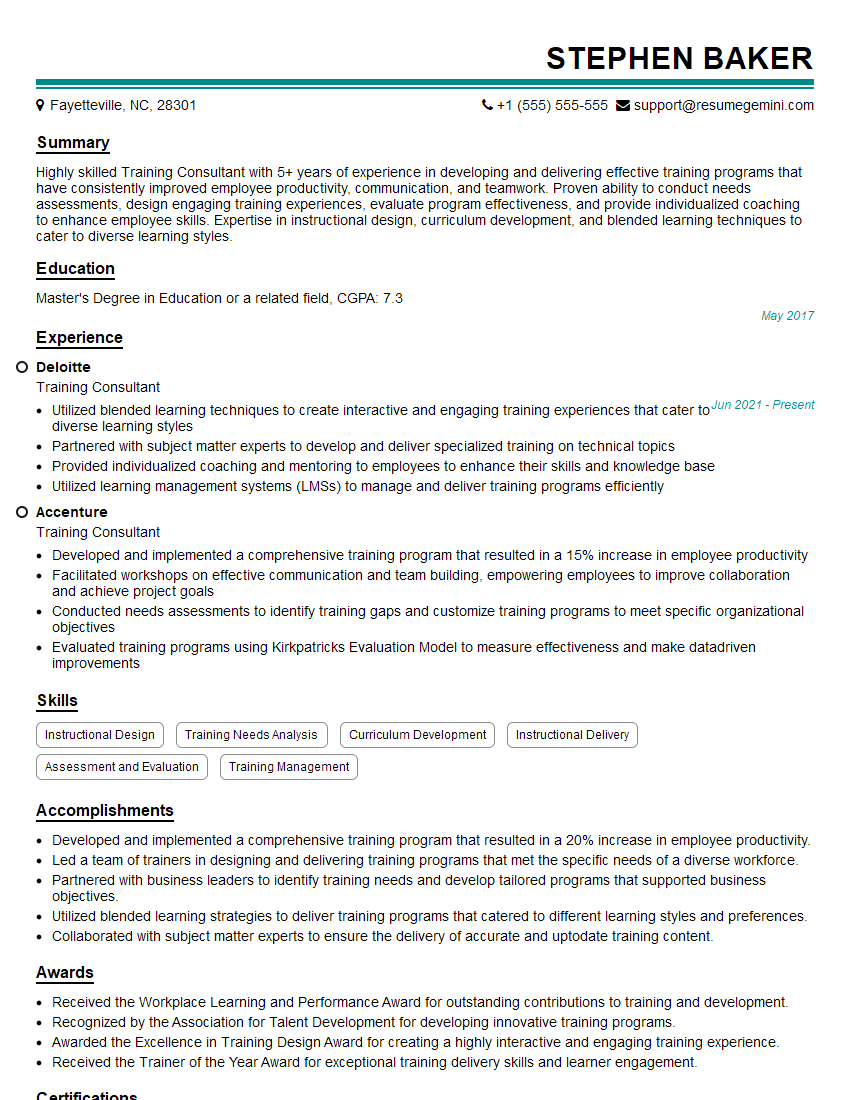
Training Consultant Resume Sample
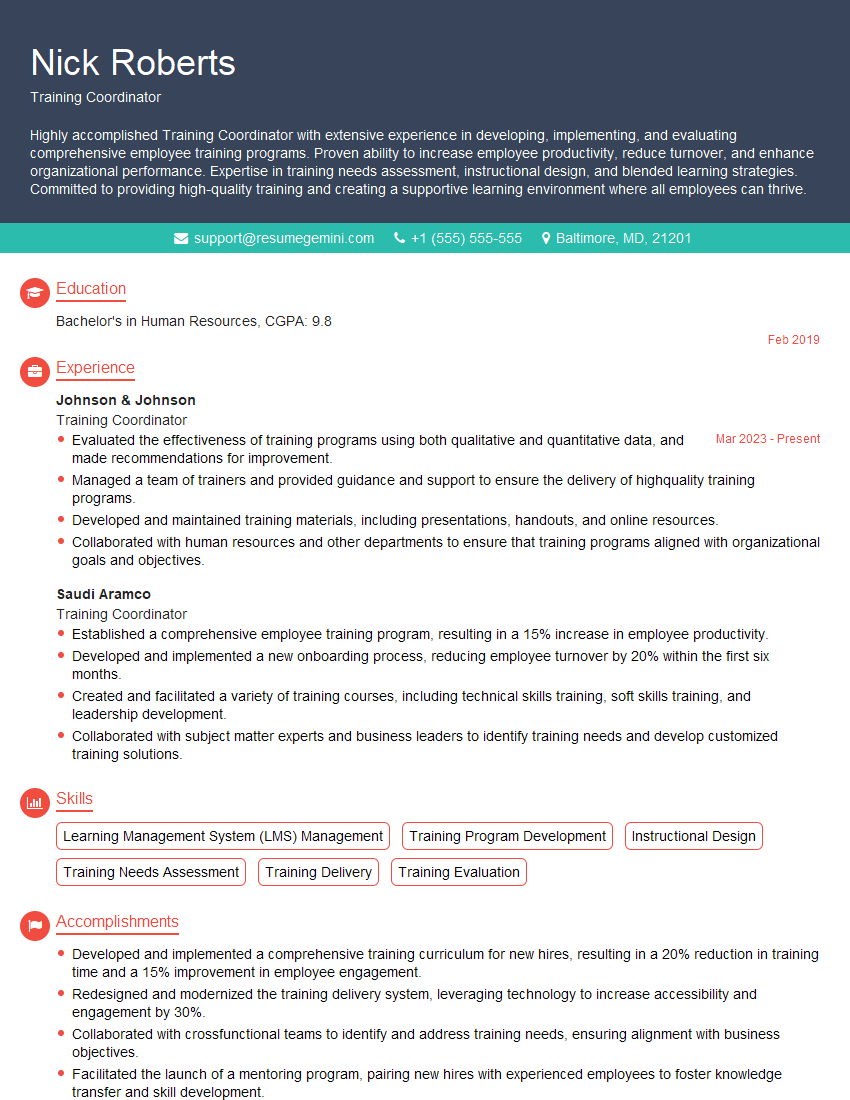
Training Coordinator Resume Sample
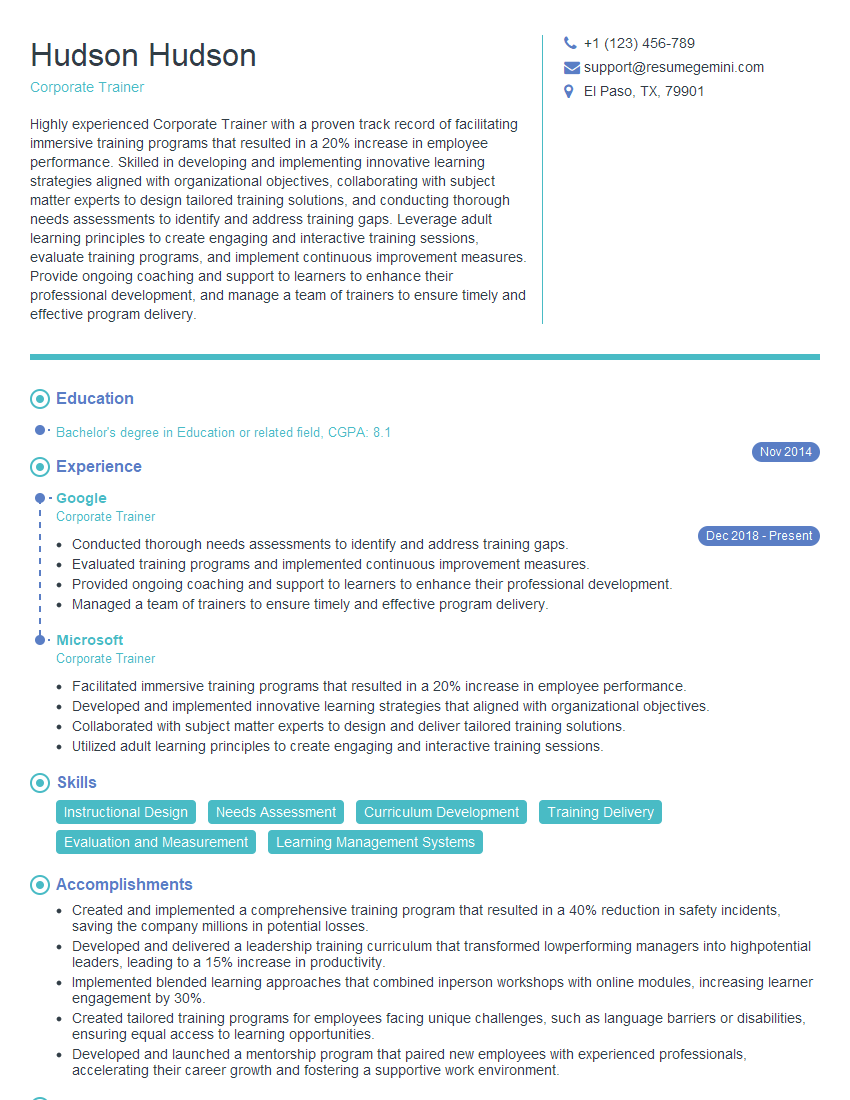
Corporate Trainer Resume Sample

Curriculum Developer Resume Sample
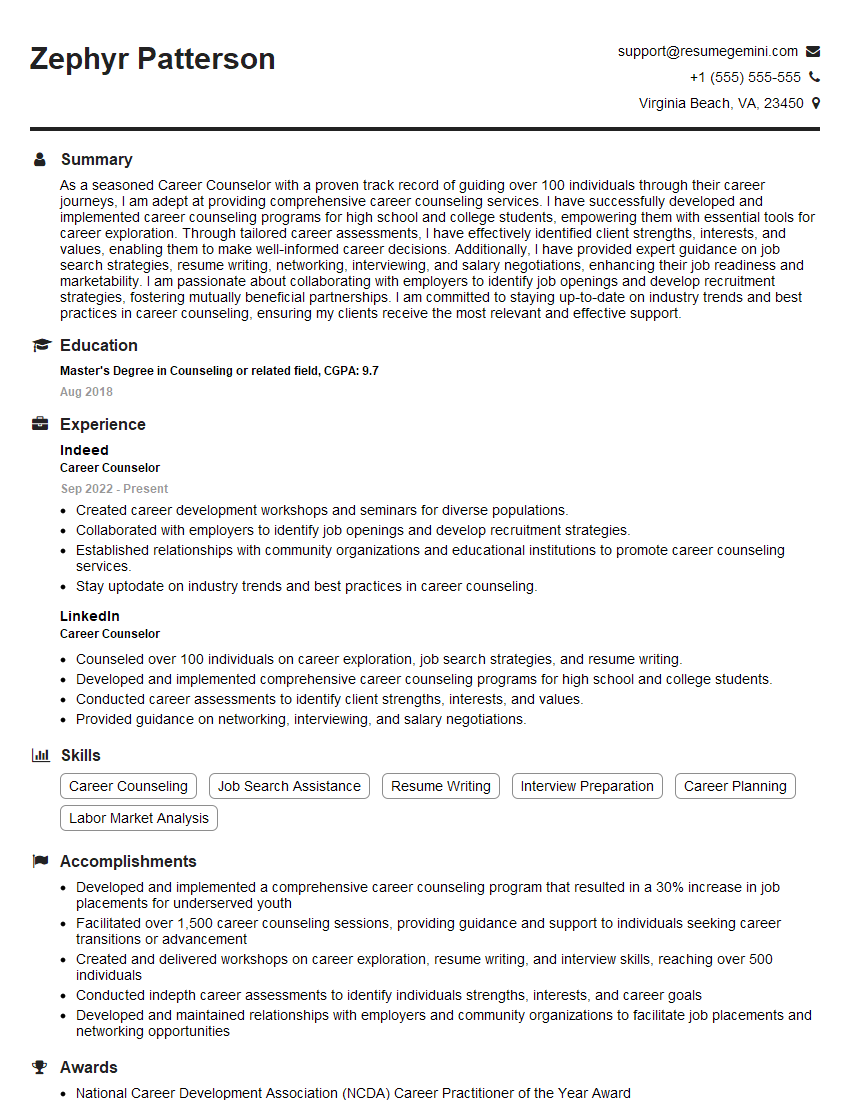
Career Counselor Resume Sample

Adult Education Instructor Resume Sample
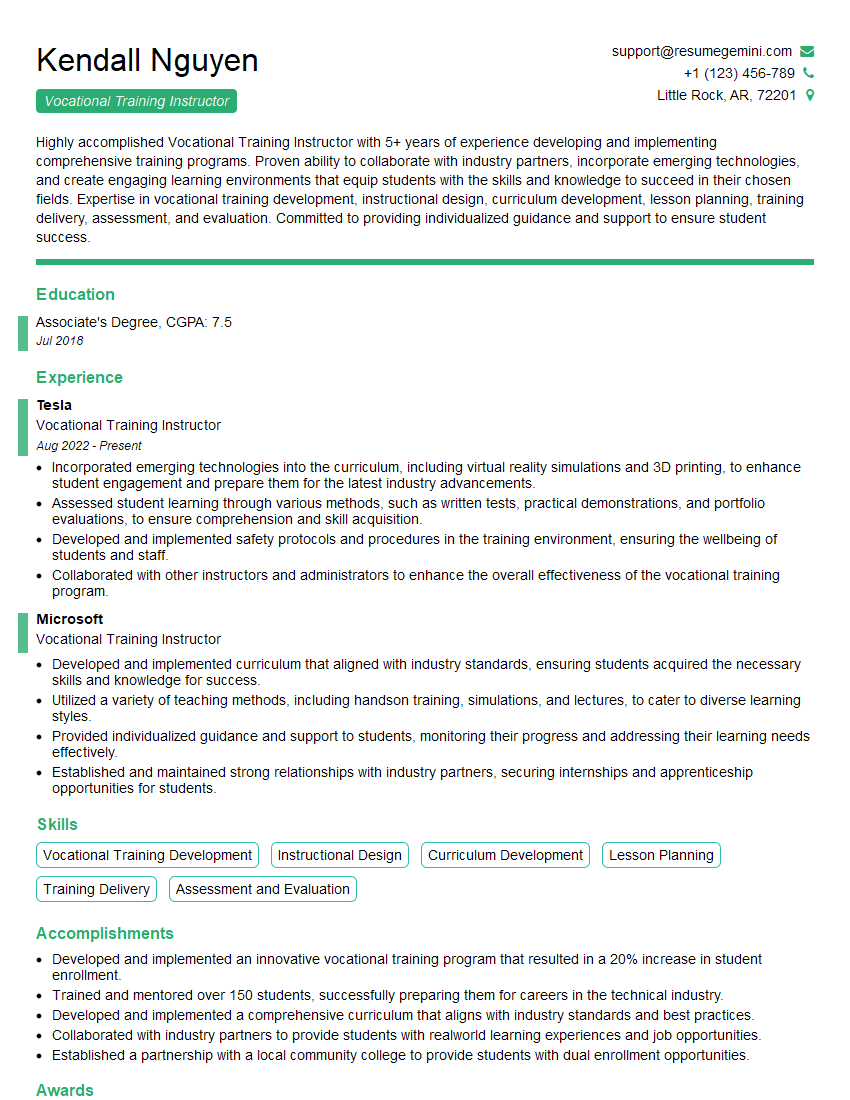
Vocational Training Instructor Resume Sample
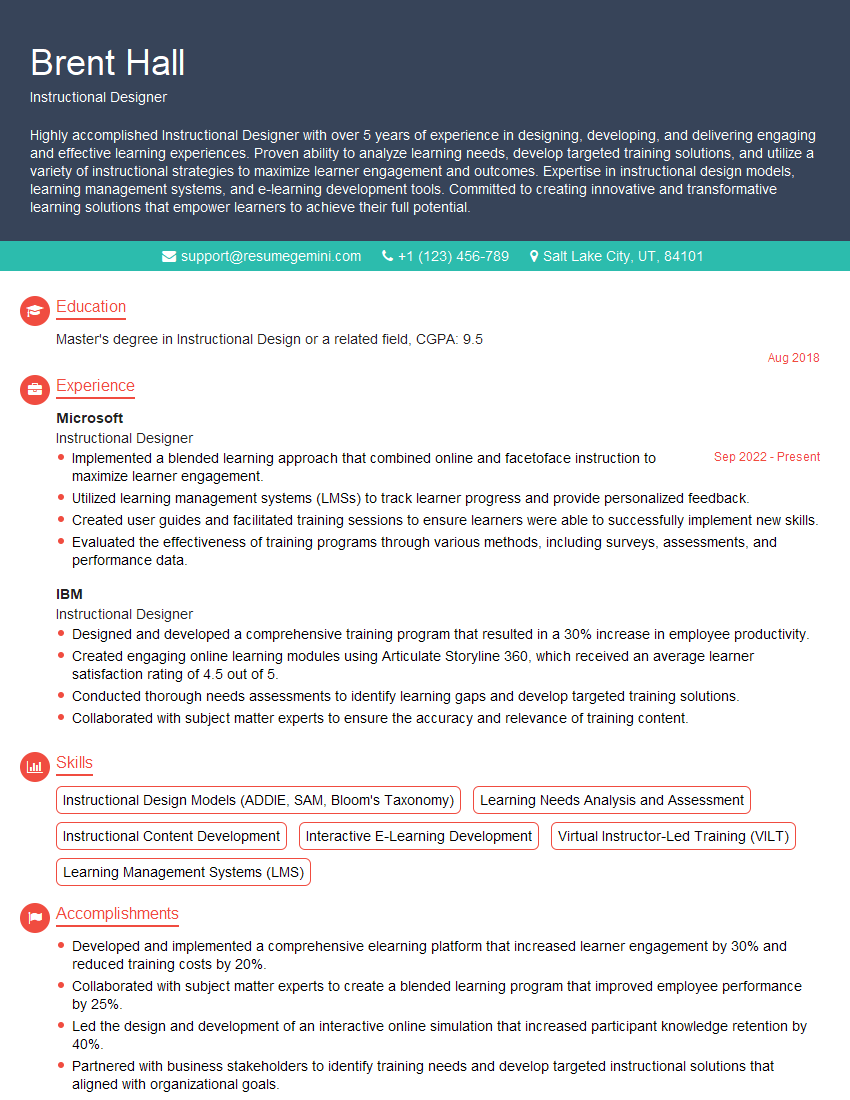
Instructional Designer Resume Sample
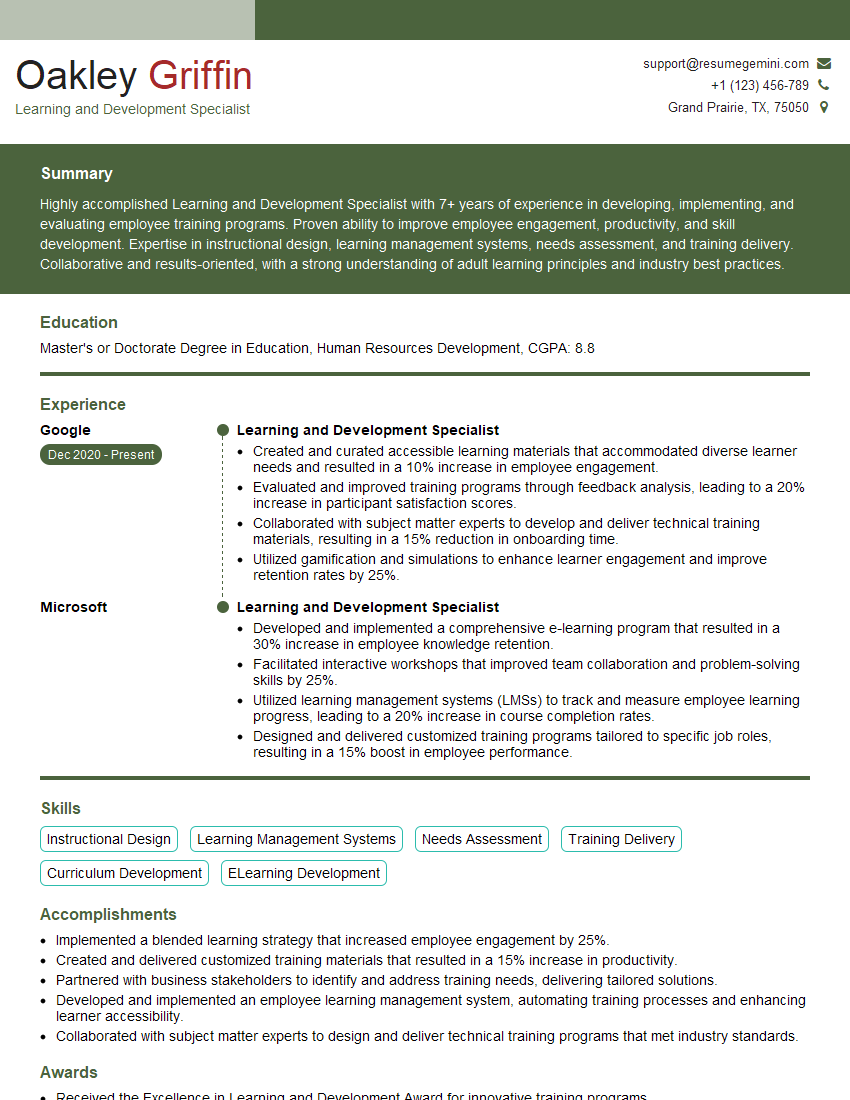
Learning and Development Specialist Resume Sample
Explore more articles
Users Rating of Our Blogs
Share Your Experience
We value your feedback! Please rate our content and share your thoughts (optional).
What Readers Say About Our Blog
To the interviewgemini.com Webmaster.
Very helpful and content specific questions to help prepare me for my interview!
Thank you
To the interviewgemini.com Webmaster.
This was kind of a unique content I found around the specialized skills. Very helpful questions and good detailed answers.
Very Helpful blog, thank you Interviewgemini team.