Interviews are more than just a Q&A session—they’re a chance to prove your worth. This blog dives into essential Marine Composites interview questions and expert tips to help you align your answers with what hiring managers are looking for. Start preparing to shine!
Questions Asked in Marine Composites Interview
Q 1. Explain the difference between thermoset and thermoplastic resins in marine applications.
The core difference between thermoset and thermoplastic resins lies in their response to heat. Thermosets undergo an irreversible chemical change during curing, forming a rigid, cross-linked network. Once cured, they cannot be melted and reshaped. Thermoplastics, on the other hand, can be repeatedly melted and remolded without significant degradation. This is because their molecular structure is comprised of long chains that are not permanently linked.
In marine applications, thermosets like polyester, vinyl ester, and epoxy are prevalent due to their high strength, stiffness, and excellent resistance to water absorption, crucial for long-term durability in harsh marine environments. However, they are less forgiving during manufacturing if mistakes are made. Thermoplastics, such as polyethylene and polypropylene, offer advantages like recyclability and ease of processing, making them suitable for less demanding applications like certain hull components or interior fittings where extreme strength isn’t paramount.
Think of it like this: a thermoset is like an egg; once cooked, it can’t be uncooked. A thermoplastic is like a plastic bottle that can be melted and reshaped. The choice depends on the specific needs of the marine component.
Q 2. Describe the various types of reinforcement fibers used in marine composites.
Marine composites utilize a variety of reinforcement fibers to enhance the resin’s mechanical properties. The choice of fiber depends on factors like strength requirements, cost, and desired weight. Common types include:
- Glass Fiber: The most widely used due to its cost-effectiveness and good mechanical properties. Various types exist, including E-glass (electrical grade) and S-glass (higher strength). E-glass is suitable for many hull applications whereas S-glass would be better suited for high-strength applications like racing yachts.
- Carbon Fiber: Offers superior strength-to-weight ratio compared to glass fiber, making it ideal for high-performance applications like racing boats and luxury yachts. However, it’s significantly more expensive.
- Aramid Fiber (Kevlar): Known for its high tensile strength and impact resistance. Often used in areas requiring exceptional impact protection, such as impact-prone sections of a hull.
- Basalt Fiber: A relatively newer entrant, offering a balance between cost and performance. Its properties are comparable to glass fiber with higher tensile strength and better resistance to alkaline environments.
The selection of the fiber type is critical for optimizing the composite’s performance characteristics and cost-effectiveness for a given application.
Q 3. What are the advantages and disadvantages of using carbon fiber reinforced polymers (CFRP) in marine construction?
Carbon fiber reinforced polymers (CFRP) are highly sought after in marine construction due to their exceptional properties.
Advantages:
- High Strength-to-Weight Ratio: This allows for lighter structures, improving fuel efficiency and performance in boats.
- High Stiffness: Provides excellent structural rigidity, reducing flex and vibration, particularly important in fast boats and larger vessels.
- Fatigue Resistance: CFRP demonstrates excellent resistance to repeated cyclic loading, critical for long-term durability in marine environments.
- Design Flexibility: Allows for complex shapes and intricate designs, optimizing hydrodynamic performance.
Disadvantages:
- High Cost: CFRP is considerably more expensive than glass fiber composites.
- Susceptibility to Impact Damage: While strong in tension, CFRP can be vulnerable to impact damage, requiring careful handling and design considerations.
- Difficult to Repair: Repairing damaged CFRP structures can be challenging and expensive, requiring specialized skills and materials.
- Osmosis Concerns: While less susceptible than some other materials, proper resin selection and fabrication techniques are essential to minimize the risk of osmosis.
The decision to use CFRP should be carefully weighed against its cost and specific challenges.
Q 4. How do you select the appropriate resin system for a specific marine application?
Selecting the appropriate resin system is crucial for the longevity and performance of a marine composite structure. The choice depends on several factors:
- Environmental Exposure: The resin must withstand prolonged exposure to saltwater, UV radiation, and other environmental stressors. Epoxy resins are often preferred for their superior chemical resistance compared to polyester.
- Mechanical Requirements: Strength, stiffness, and impact resistance requirements dictate the resin choice. High-performance applications may demand epoxy or vinyl ester resins for their superior mechanical properties.
- Cost: Polyester resins are generally the most economical, followed by vinyl ester, and then epoxy resins.
- Processing Requirements: The resin’s viscosity, curing time, and processing temperature will influence the manufacturing method.
- Toxicity Concerns: Environmental regulations dictate the acceptable level of volatile organic compounds (VOCs) in the resin system.
For example, a small recreational boat might use a cost-effective polyester resin, whereas a high-performance racing yacht would likely utilize a more expensive epoxy resin for its superior mechanical properties and chemical resistance.
Q 5. Explain the process of hand lay-up in marine composite manufacturing.
Hand lay-up is a relatively simple and cost-effective method for producing composite parts, especially for smaller or less complex structures. It involves manually applying layers of reinforcement fibers (typically glass fiber mat or woven cloth) to a mold, followed by saturating the fibers with resin.
The process typically involves these steps:
- Mold Preparation: The mold is prepared by applying a release agent to prevent the composite from sticking.
- Fiber Placement: Layers of reinforcement fibers are carefully placed onto the mold, following a predetermined lay-up schedule to achieve the desired thickness and fiber orientation.
- Resin Application: The resin is then applied evenly over the fibers, ensuring complete saturation.
- Roll-out/Consolidation: Excess resin is removed and the fibers are consolidated using rollers to remove air bubbles and achieve uniform resin distribution. This step is crucial for optimizing mechanical properties.
- Curing: The part is then left to cure, usually at room temperature or in a controlled oven.
- Demolding: Once cured, the part is carefully removed from the mold.
Hand lay-up is labor-intensive and requires skilled technicians to ensure proper fiber orientation and resin saturation for optimal structural integrity. While simple, achieving high quality and consistency can be challenging.
Q 6. Describe the process of vacuum bagging and its benefits.
Vacuum bagging is an advanced composite manufacturing technique that improves the quality and consistency of the finished part. It involves enclosing the composite laminate in a flexible bag and then applying a vacuum to remove air and excess resin, ensuring complete fiber saturation and compaction.
The process typically includes:
- Mold Preparation: Similar to hand lay-up, the mold is prepared with a release agent.
- Lay-up: The reinforcement fibers are laid up on the mold.
- Resin Application: The resin is applied to saturate the fibers.
- Bagging Material: A flexible bagging material (typically a polyethylene film) is placed over the laminate.
- Bleeder and Breather: Bleeder ply (absorbent material) and a breather cloth are added to absorb excess resin.
- Vacuum Application: A vacuum pump is connected to the bag through a port. The vacuum draws out air and excess resin, compressing the laminate and ensuring proper consolidation.
- Curing: The part cures under vacuum.
- Demolding: The cured part is demolded.
Benefits of Vacuum Bagging:
- Improved Fiber Volume Fraction: Leads to higher strength and stiffness.
- Reduced Voids: Eliminates air pockets, improving mechanical properties.
- Consistent Resin Distribution: Ensures uniform properties throughout the part.
- Enhanced Surface Finish: Results in a smoother, better-looking surface.
Vacuum bagging is more complex than hand lay-up but delivers significant improvements in part quality and consistency.
Q 7. What are the common failure modes of marine composites and how can they be prevented?
Marine composites are susceptible to various failure modes, often due to environmental exposure and manufacturing defects.
Common Failure Modes:
- Osmosis: Water ingress through the laminate, causing delamination and blistering.
- Delamination: Separation of layers within the laminate, reducing strength and stiffness.
- Fiber breakage: Failure of the reinforcement fibers due to excessive loading or impact.
- Matrix cracking: Cracking of the resin matrix, compromising structural integrity.
- Corrosion of embedded components: Corrosion of metal fittings or fasteners, weakening the structure.
- UV Degradation: Deterioration of the resin due to prolonged exposure to sunlight.
Prevention Strategies:
- Proper Material Selection: Choosing resins and fibers with excellent resistance to water, UV radiation, and chemicals.
- Careful Manufacturing Techniques: Using vacuum bagging or autoclave curing to minimize voids and ensure complete fiber saturation.
- Quality Control: Implementing strict quality control measures during manufacturing to detect and correct defects.
- Protective Coatings: Applying gel coats and topcoats to protect the laminate from UV degradation and water ingress.
- Corrosion Protection: Using corrosion-resistant fasteners and coatings.
- Regular Inspection and Maintenance: Regularly inspecting the composite structure for signs of damage and performing timely repairs.
By addressing these areas, the service life of marine composites can be significantly extended.
Q 8. Explain the importance of quality control in marine composite manufacturing.
Quality control in marine composite manufacturing is paramount because the integrity of the structure directly impacts the safety and longevity of the vessel. A single flaw can lead to catastrophic failure at sea. Our quality control measures begin with raw material inspection, ensuring the resin, fibers (e.g., fiberglass, carbon fiber), and core materials meet stringent specifications. We meticulously monitor the layup process, ensuring proper fiber orientation and resin distribution to achieve the desired strength and stiffness. Regular checks throughout the manufacturing process, including visual inspections and dimensional checks, help identify and correct any defects early on. Finally, we conduct non-destructive testing (NDT) on completed components or the entire structure to verify its structural integrity before deployment.
For instance, in one project involving a high-speed catamaran, we implemented a rigorous quality control program that included real-time resin content monitoring during the layup process. This helped us ensure consistent resin distribution and avoid potential voids, which significantly reduced the risk of structural weaknesses.
Q 9. How do you conduct non-destructive testing (NDT) on marine composite structures?
Non-destructive testing (NDT) is crucial for assessing the quality and integrity of marine composite structures without causing damage. Several techniques are employed, each with its own strengths and limitations. Ultrasonic testing (UT) uses high-frequency sound waves to detect internal flaws like delaminations or voids. This is like using sonar to map the underwater terrain – we send sound waves through the composite, and the reflections reveal internal features. Radiographic testing (RT), or X-ray inspection, uses X-rays to create images of the internal structure, revealing defects like porosity or inclusions. This is similar to a medical X-ray, showing the ‘bones’ and internal structure of the composite material. Visual inspection, often combined with dye penetrant testing (DPT) for surface cracks, remains a critical first step. Acoustic emission testing (AET) is useful for monitoring structures under load to detect developing cracks.
In a recent project involving the repair assessment of a sailboat hull, a combination of UT and visual inspection allowed us to precisely locate and characterize delamination damage, guiding the subsequent repair process.
Q 10. Describe your experience with different types of bonding techniques for marine composites.
My experience encompasses a wide range of bonding techniques for marine composites. These techniques are crucial for joining different components, reinforcing existing structures, or attaching fittings. Common methods include adhesive bonding using epoxy resins, which offer excellent strength and durability in marine environments. Mechanical fastening, using bolts or rivets, provides a strong connection but can lead to stress concentrations around the fasteners. Hybrid methods often combine adhesive bonding with mechanical fastening for optimum strength and reliability. The choice of bonding technique depends on the specific application, materials involved, and required load capacity.
For example, when bonding a composite deck to an aluminum superstructure, we often opt for a hybrid approach, employing structural adhesives to distribute the load and mechanical fasteners to provide additional security against high impact loads.
Q 11. What are the key considerations for designing a marine composite structure for strength and durability?
Designing a marine composite structure for strength and durability requires careful consideration of several factors. The material selection is crucial – the choice between fiberglass, carbon fiber, or other composites impacts strength-to-weight ratio, stiffness, and cost. Finite element analysis (FEA) is used extensively to simulate the structural behavior under various loading conditions, ensuring the design can withstand anticipated stresses. Layup design, including fiber orientation and ply thickness, is optimized to distribute loads effectively and minimize stress concentrations. Proper design of joints and connections is equally crucial to avoid premature failure. Finally, considering manufacturing processes and quality control measures is essential for ensuring the final product meets the design specifications.
In the design of a racing yacht’s hull, for example, we utilized FEA to optimize the layup schedule, minimizing weight while ensuring sufficient strength to withstand the extreme loads experienced during racing conditions.
Q 12. How do you account for environmental factors (UV exposure, saltwater corrosion) in marine composite design?
Environmental factors, especially UV exposure and saltwater corrosion, pose significant challenges in marine composite design. UV exposure can degrade the resin matrix, reducing strength and stiffness over time. We mitigate this by selecting UV-resistant resins and coatings. Saltwater corrosion can attack reinforcing fibers and weaken the bond between fibers and resin. We address this by using corrosion-resistant fibers and protective coatings. Careful material selection is key, ensuring the chosen materials exhibit excellent resistance to these environmental factors. Incorporating protective barrier coats and topcoats adds another layer of protection against UV degradation and osmotic blistering.
A good example is our work on a research vessel operating in a highly corrosive marine environment, where we utilized specialized epoxy resins with exceptional UV and saltwater resistance along with a multi-layer protective coating system to ensure long-term durability.
Q 13. Explain your experience with different types of marine composite repairs.
My experience in marine composite repairs covers a wide range of damage types, from minor scratches to extensive structural damage. Repair techniques vary depending on the nature and extent of the damage. For minor damage, surface repairs may suffice, involving cleaning, sanding, and applying filler followed by fairing and repainting. More significant damage, such as delamination or impact damage, requires more complex repairs. These may involve removing the damaged area, reinforcing the structure, and applying new composite layers, using carefully chosen adhesives and resins. Structural repairs may require extensive use of FEA to ensure the repaired area meets the original design strength.
One memorable repair involved a powerboat hull with significant impact damage. We used a combination of structural repair techniques, including removing the damaged area, installing carbon fiber patches, and injecting epoxy resin into the delaminated area, ensuring structural integrity and aesthetics.
Q 14. Describe the process of repairing damage to a fiberglass hull.
Repairing damage to a fiberglass hull involves a systematic approach. First, the damaged area must be thoroughly cleaned and inspected to determine the extent of the damage. Any loose or damaged fibers must be removed. If the damage is superficial, surface repair may be sufficient, involving filling the damaged area with epoxy-based filler and fairing it smooth. For more significant damage, such as cracks or delamination, the damaged area may need to be cut out to expose the sound material. A new fiberglass patch, appropriately sized and shaped, should be laminated over the repaired area, ensuring good bonding with the surrounding structure. Finally, the repaired area must be properly faired and painted to match the original hull surface.
The key is to ensure a strong, durable repair that restores the hull’s structural integrity and prevents future water ingress. Improper repair can lead to further damage and compromise the vessel’s safety.
Q 15. What are the safety precautions you take when working with composite materials?
Working with marine composites involves handling hazardous materials, so safety is paramount. My approach is multi-layered, starting with proper Personal Protective Equipment (PPE). This includes respirators (especially when working with isocyanates or styrene), safety glasses with side shields, chemical-resistant gloves (nitrile or neoprene), and coveralls to prevent skin contact. I always ensure adequate ventilation, especially in enclosed spaces, to minimize exposure to volatile organic compounds (VOCs) released during resin curing. Proper waste disposal is critical; I meticulously separate cured and uncured resin, solvents, and other waste according to local regulations. Furthermore, I meticulously follow the Material Safety Data Sheets (MSDS) for every material used, and I conduct regular safety training for myself and my team, emphasizing hazard awareness and emergency procedures.
For example, during a recent project involving carbon fiber prepreg, we established a dedicated ventilation system and employed stringent cleaning protocols to minimize airborne fiber inhalation. We also designated a specific area for material handling, clearly marked with safety signage and emergency eyewash stations. Safety is not just a protocol; it’s an ingrained part of our work process.
Career Expert Tips:
- Ace those interviews! Prepare effectively by reviewing the Top 50 Most Common Interview Questions on ResumeGemini.
- Navigate your job search with confidence! Explore a wide range of Career Tips on ResumeGemini. Learn about common challenges and recommendations to overcome them.
- Craft the perfect resume! Master the Art of Resume Writing with ResumeGemini’s guide. Showcase your unique qualifications and achievements effectively.
- Don’t miss out on holiday savings! Build your dream resume with ResumeGemini’s ATS optimized templates.
Q 16. How do you ensure the proper curing of resin systems?
Ensuring proper curing is essential for achieving the desired mechanical properties and durability of the composite structure. This involves carefully following the resin manufacturer’s instructions, paying close attention to the recommended curing temperature, pressure (if applicable), and time. I use calibrated ovens or autoclaves for precise temperature control, and often employ thermocouples to monitor the temperature profile during the curing cycle. For larger structures, where temperature uniformity can be a challenge, I utilize specialized insulation and potentially active heating/cooling systems to ensure even curing across the entire component. The curing process is not merely a timed event; it’s about achieving complete polymerization of the resin system, validated through non-destructive testing (NDT) methods like ultrasonic inspection.
For instance, in one project involving a large yacht hull, we utilized a sophisticated autoclave system to cure the composite laminates under precise pressure and temperature conditions, ensuring optimal fiber impregnation and resin consolidation. Post-cure, we performed ultrasonic testing to confirm the absence of voids or delaminations, ensuring the integrity of the structure.
Q 17. What software are you proficient in for designing and analyzing marine composites?
My proficiency in software spans both design and analysis. For design, I’m highly experienced in Autodesk AutoCAD for 2D drafting and SolidWorks for 3D modeling of complex marine composite structures. These tools allow me to create detailed designs, incorporating features such as reinforcement patterns and structural details. For analysis, I’m adept at using ANSYS and ABAQUS, powerful finite element analysis (FEA) packages which are crucial for predicting the structural behavior and performance of marine composites under various load conditions.
In addition to these, I have experience with specialized software for composite simulation like MSC Nastran. These tools are essential for optimizing designs and ensuring that the final product meets the required strength, stiffness, and durability demands. I’m also familiar with Moldex3D, a software package used for molding simulation, which helps us predict and optimize the RTM process.
Q 18. Describe your experience with finite element analysis (FEA) in relation to marine composites.
Finite Element Analysis (FEA) is indispensable in designing reliable marine composite structures. My experience involves using FEA to predict the structural response of components under various loading scenarios, including static loads, fatigue cycles, and impact events. I develop detailed finite element models, meshing the geometry to accurately represent the composite layup and material properties. I then apply boundary conditions and loads that simulate real-world scenarios, such as wave impacts on a hull or wind loads on a deck. The resulting simulations provide critical insights into stress, strain, and deflection patterns, allowing for design optimization and identification of potential failure modes. I use these results to refine the design, ensuring structural integrity and safety.
For example, in a recent project involving the design of a high-speed boat hull, FEA helped us optimize the layup sequence to minimize stress concentrations around critical areas like the keel and transom. This led to a more efficient and robust design with enhanced durability and reduced weight.
Q 19. How do you interpret and utilize material data sheets for composite materials?
Material data sheets are the cornerstone of accurate composite design and analysis. I meticulously interpret these sheets, extracting essential information like fiber volume fraction, resin type, elastic modulus, tensile strength, shear strength, Poisson’s ratio, and temperature-dependent properties. I pay close attention to the testing standards used (ASTM, ISO, etc.) to ensure the data’s validity. I input this data directly into FEA software to accurately model the composite’s mechanical behavior. Discrepancies between different data sheets for the same material necessitate careful review and validation.
Understanding the limitations of the data is crucial; I consider the variability inherent in manufacturing and environmental factors which could impact the material’s performance. For instance, the effect of moisture absorption on the mechanical properties of a composite is carefully considered, leading to appropriate adjustments in the design calculations and safety factors.
Q 20. Explain your understanding of different types of resin transfer molding (RTM).
Resin Transfer Molding (RTM) is a widely used process for manufacturing composite parts. I’m familiar with several variations, including:
- Standard RTM: Resin is injected into a closed mold containing dry reinforcement fibers. This provides excellent fiber impregnation and part quality.
- Liquid Resin Infusion (LRI): A similar process but with a more controlled resin flow, often used for larger parts.
- Vacuum Assisted Resin Transfer Molding (VARTM): Uses vacuum pressure to assist resin flow, which is especially advantageous for complex shapes and large parts.
- SeRIMP (Sequential Resin Injection Molding Process): Involves injecting resin into sections of the mold sequentially, reducing the amount of resin required and offering better control.
My experience includes selecting the most appropriate RTM variant based on factors like part complexity, size, and production volume. The choice influences the tooling design, resin injection strategy, and overall process optimization. Understanding the limitations of each method, like the potential for air entrapment, is crucial for successful part manufacturing.
Q 21. How do you manage project timelines and budgets for marine composite projects?
Managing project timelines and budgets for marine composite projects requires a structured approach. I start by meticulously defining the project scope, deliverables, and milestones. This involves close collaboration with the client, engineering team, and manufacturing personnel to create a detailed Work Breakdown Structure (WBS). This WBS forms the basis of a realistic project schedule, created using tools like Microsoft Project. I incorporate buffer times to account for potential delays and unforeseen issues. Budget allocation is equally critical; I develop a detailed budget that accounts for material costs, labor, tooling, testing, and contingency funds.
Regular progress monitoring is vital; I use project management software to track milestones and proactively address potential deviations from the schedule or budget. Transparent communication is key; I regularly update stakeholders on progress, risks, and any necessary adjustments to the plan. My experience shows that a well-defined plan, coupled with proactive risk management and consistent communication, is the key to successful project delivery within the defined timelines and budgetary constraints.
Q 22. Describe your experience with working within regulatory compliance for marine composite manufacturing.
Regulatory compliance in marine composite manufacturing is paramount, ensuring the safety and longevity of vessels. My experience encompasses a thorough understanding and adherence to standards like ISO 9001 (Quality Management), ABS (American Bureau of Shipping), and DNV (Det Norske Veritas) guidelines. These standards cover aspects from material selection and testing to manufacturing processes and documentation. For instance, I’ve been directly involved in implementing and maintaining a quality management system that ensures traceability of materials, proper handling, and rigorous testing throughout the production process. This includes meticulously documenting every step, from raw material inspection to final product testing and certification, to meet stringent auditing requirements. A specific example would be implementing a system to track the curing cycle of composite parts, ensuring it aligns with the manufacturer’s specifications and recording this data for future reference and potential analysis. This meticulous approach is crucial for meeting regulatory requirements and guaranteeing the structural integrity of the final product. Non-compliance can lead to serious consequences, including product recalls, legal penalties, and reputational damage, therefore careful attention to these regulations is always prioritized.
Q 23. What is your experience with pultrusion or filament winding processes?
I possess extensive experience in both pultrusion and filament winding, two crucial processes in marine composite manufacturing. Pultrusion is a continuous process used to create profiles with constant cross-sections, ideal for components like handrails, spars, and structural beams. I’ve worked with various resin systems in pultrusion, optimizing parameters like resin flow rate, curing temperature, and pull speed to achieve desired mechanical properties and surface finishes. For example, I was involved in a project optimizing the pultrusion process to create stronger and lighter spars for a sailing yacht, reducing weight while increasing strength. Filament winding, on the other hand, is ideal for creating cylindrical components like pressure vessels and pipes. My expertise includes designing the winding patterns, selecting appropriate fiber orientations, and optimizing resin impregnation to achieve desired strength-to-weight ratios. I once worked on a project where we used filament winding to create a lightweight but exceptionally strong fuel tank for a high-speed boat, significantly improving efficiency and safety.
Q 24. How do you address challenges in maintaining consistency in composite manufacturing?
Maintaining consistency in composite manufacturing is critical for producing reliable and predictable results. In my experience, this hinges on several key factors. First, strict quality control of raw materials is paramount. We utilize statistical process control (SPC) methods to monitor material properties like resin viscosity and fiber content, identifying and addressing deviations promptly. Second, process parameter control is vital. This involves precisely controlling factors like temperature, pressure, and cure time, often using automated systems and data logging. Third, thorough operator training and standardized procedures are essential to ensure consistent execution of manufacturing steps. Regular calibration of equipment and preventative maintenance are also key. Imagine making a cake – you wouldn’t expect consistent results if you used different ingredients each time, changed the oven temperature randomly, or didn’t follow a recipe. Similarly, in composite manufacturing, consistency requires meticulous attention to detail throughout the entire process. In practice, deviation from the standard operating procedures would trigger a root cause analysis to identify and correct the problem. This would involve checking machinery, materials, and operator techniques.
Q 25. Describe your experience with different types of gelcoats and their applications.
Gelcoats are crucial for providing a protective barrier and a desired aesthetic finish to composite parts. I’ve worked with various types, including isophthalic, orthophthalic, and vinylester gelcoats. Isophthalic gelcoats offer excellent UV resistance and durability, making them ideal for exterior applications exposed to harsh marine environments. Orthophthalic gelcoats are more economical but offer slightly less UV resistance. Vinylester gelcoats offer a good balance of chemical resistance and mechanical properties, often used in demanding applications. The choice of gelcoat depends on the specific application and desired properties. For instance, in a high-end yacht, we would use an isophthalic gelcoat with added color pigments for superior aesthetics and long-term durability. Conversely, a less-expensive boat might use a more economical orthophthalic gelcoat. In each case, careful consideration is given to UV resistance, chemical resistance, impact resistance, and the desired surface finish.
Q 26. How do you handle discrepancies between design specifications and manufacturing outputs?
Discrepancies between design specifications and manufacturing outputs are addressed through a rigorous investigation and corrective action process. The first step involves a thorough comparison of the design drawings and specifications with the actual manufactured component, using precise dimensional measurements and material testing. Once the discrepancy is identified, its root cause is investigated. This might involve reviewing the manufacturing process, inspecting tooling, and analyzing material properties. The investigation often involves cross-functional collaboration between design, manufacturing, and quality control teams. After identifying the root cause, corrective actions are implemented, ranging from minor adjustments to process parameters to major tooling revisions. This process is meticulously documented and corrective actions are verified to ensure the problem is resolved and does not recur. For example, if a part consistently falls short of the specified thickness, we would investigate potential causes like resin content, curing process, or tooling issues. Corrective actions might involve adjusting the resin-to-fiber ratio, optimizing the curing cycle, or refining the mold.
Q 27. What are your preferred methods for documenting composite manufacturing processes?
Effective documentation of composite manufacturing processes is crucial for traceability, quality control, and continuous improvement. My preferred methods involve a combination of digital and physical documentation. Digital documentation includes using Computer-Aided Manufacturing (CAM) software for detailed process plans and work instructions. We also utilize a Manufacturing Execution System (MES) to track material usage, production parameters, and quality inspection results in real-time. Physical documentation includes detailed work instructions, quality control inspection reports, and material certificates of compliance, meticulously filed and readily accessible. Each step of the process is precisely documented, from material preparation and lay-up procedures to curing cycles and final inspections. This comprehensive documentation allows for easy traceability and rapid identification of potential sources of error. For example, the batch number of the resin used in a particular part will be recorded, allowing for immediate identification of the source material if a quality issue arises.
Q 28. Explain your approach to troubleshooting problems during the composite manufacturing process.
My approach to troubleshooting problems during composite manufacturing follows a structured problem-solving methodology. The first step is to clearly define the problem, gathering all available data, including visual inspection results, dimensional measurements, and process parameters. The next step involves brainstorming potential root causes, drawing on my experience and expertise. Then, using a process of elimination, we systematically test our hypotheses, gathering further data to validate or refute each potential cause. The key is to be methodical and systematic; rushing to a solution before a full understanding is reached can often lead to the recurrence of the problem. Once the root cause is identified, a corrective action plan is developed and implemented, and the effectiveness of the corrective action is verified through rigorous testing and monitoring. Documentation of the entire process is crucial for learning from past experiences and preventing similar issues in the future. For example, if delamination is observed in a finished part, we would investigate possible causes, including improper resin mixing, insufficient curing, or poor fiber alignment, through systematic testing until the root cause is pinpointed.
Key Topics to Learn for Your Marine Composites Interview
- Material Science Fundamentals: Understanding the properties of fiberglass, carbon fiber, Kevlar, and other common composite materials. This includes their strengths, weaknesses, and how they behave under stress.
- Manufacturing Processes: Familiarize yourself with techniques like hand layup, resin transfer molding (RTM), vacuum infusion, and filament winding. Be prepared to discuss the advantages and disadvantages of each method.
- Design and Engineering Principles: Learn about structural analysis, finite element analysis (FEA), and the design considerations specific to marine environments (e.g., corrosion, fatigue, impact resistance).
- Quality Control and Testing: Understand the importance of non-destructive testing (NDT) methods like ultrasonic testing and visual inspection in ensuring the structural integrity of marine composite structures.
- Repair and Maintenance: Knowledge of common repair techniques for damaged composite parts is valuable, demonstrating practical application of your theoretical understanding.
- Industry Standards and Regulations: Familiarity with relevant industry standards and regulations governing the design, construction, and maintenance of marine composite structures will showcase your commitment to safety and compliance.
- Specific Applications: Research different applications of marine composites, such as hulls, decks, superstructures, and internal components. Be ready to discuss the material choices and manufacturing methods used in each application.
Next Steps: Chart Your Course to Success
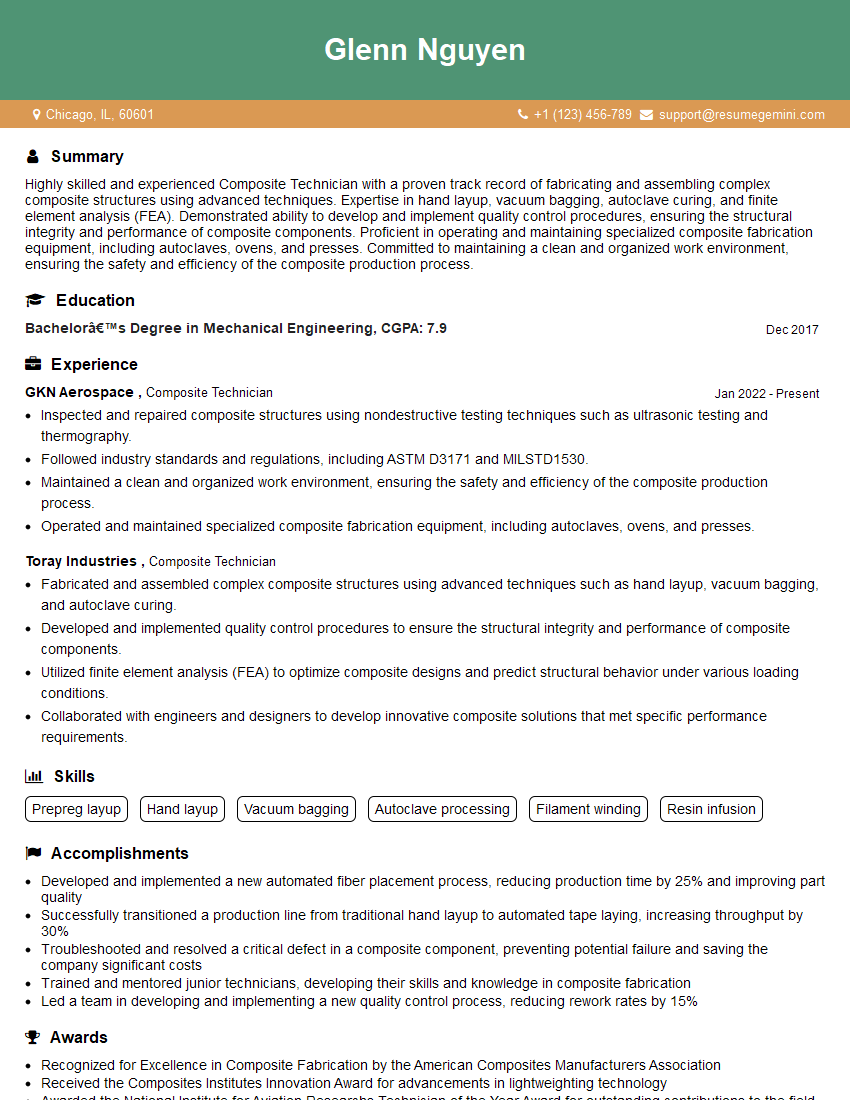
Mastering Marine Composites opens doors to exciting and rewarding careers in the maritime industry. A strong understanding of these principles will significantly enhance your interview performance and set you apart from other candidates. To maximize your job prospects, it’s crucial to present your skills effectively. Creating an ATS-friendly resume is key to getting your application noticed by recruiters. ResumeGemini is a trusted resource that can help you build a professional and impactful resume tailored to the marine composites industry. Examples of resumes specifically designed for this field are available to guide you.
Explore more articles
Users Rating of Our Blogs
Share Your Experience
We value your feedback! Please rate our content and share your thoughts (optional).
What Readers Say About Our Blog
To the interviewgemini.com Webmaster.
Very helpful and content specific questions to help prepare me for my interview!
Thank you
To the interviewgemini.com Webmaster.
This was kind of a unique content I found around the specialized skills. Very helpful questions and good detailed answers.
Very Helpful blog, thank you Interviewgemini team.