Preparation is the key to success in any interview. In this post, we’ll explore crucial Ductwork Assembly interview questions and equip you with strategies to craft impactful answers. Whether you’re a beginner or a pro, these tips will elevate your preparation.
Questions Asked in Ductwork Assembly Interview
Q 1. What are the common types of ductwork materials used in HVAC systems?
HVAC ductwork utilizes a variety of materials, each with its strengths and weaknesses. The choice depends on factors like budget, system requirements, and the environment. Common materials include:
- Galvanized Steel: The workhorse of the industry, offering durability, affordability, and resistance to corrosion. It’s suitable for most applications but can be heavier than other options.
- Aluminum: Lighter than steel, offering excellent corrosion resistance, making it ideal for humid environments or areas prone to condensation. It’s often used in residential settings or where weight is a concern. However, it’s more expensive than galvanized steel.
- Stainless Steel: The premium choice, offering superior corrosion resistance and longevity. It’s typically used in demanding applications like chemical processing facilities or where hygiene is paramount (e.g., food processing). It’s significantly more expensive than steel or aluminum.
- Fiberglass: A flexible ductwork material often used in residential applications, particularly for quieter systems. It’s lightweight and easy to install but is less durable than metal and can be more susceptible to damage.
- Flexible Duct: Used primarily for short runs and connecting components. Typically made of a flexible fabric lined with aluminum foil or other materials to ensure airtightness. It’s easy to install but not ideal for high-pressure systems.
Selecting the right material is crucial for ensuring the system’s efficiency and lifespan. For instance, using aluminum in a corrosive environment might be more cost-effective in the long run than using cheaper, less resistant steel.
Q 2. Explain the process of measuring and cutting sheet metal for ductwork.
Accurately measuring and cutting sheet metal is fundamental to successful ductwork assembly. It ensures proper fit and minimizes material waste. The process generally involves these steps:
- Blueprint Review: Carefully examine the blueprints to determine the required dimensions and shapes of each duct section.
- Layout and Marking: Using a metal straight edge and a marking pencil or marker, accurately transfer the dimensions onto the sheet metal. Double-checking measurements is crucial at this stage.
- Cutting: Sheet metal can be cut using various tools, including shears (for straight cuts), rotary cutters (for curved cuts), and plasma cutters (for faster, precise cuts). The choice of tool depends on the material thickness and the complexity of the cut. Remember to always use appropriate safety equipment, including eye protection and gloves.
- Deburring: After cutting, any sharp edges or burrs must be removed using a deburring tool to prevent injuries and ensure a smooth, airtight seal during joining.
- Verification: Before proceeding, verify the dimensions of the cut piece against the blueprint to ensure accuracy. This will save time and material later in the process.
Imagine building a house; accurate measurements are crucial, and ductwork is no different. Inaccurate cuts can lead to air leaks, reduced efficiency, and potentially costly rework.
Q 3. Describe different methods for joining duct sections (e.g., crimping, welding, riveting).
Several methods exist for joining duct sections, each with its own advantages and disadvantages:
- Crimping: This involves using a crimping machine to mechanically lock together pre-fabricated duct sections with interlocking edges. It’s quick and relatively simple but is suitable for smaller ducts and might not provide as strong a seal as welding.
- Welding: Provides the strongest and most airtight seal, commonly used for larger ducts and high-pressure systems. Different welding methods can be used, including gas metal arc welding (GMAW) and shielded metal arc welding (SMAW), depending on the material and application. Requires specialized equipment and skilled welders.
- Riveting: Involves using rivets to mechanically fasten duct sections. It’s a strong and durable method suitable for various materials. It’s less common than welding or crimping in modern applications due to higher labor costs and the potential for air leaks if not done correctly.
- Screws/Bolts: These are often used with flanges or other joining accessories, allowing for easy assembly and disassembly. Appropriate sealant is typically needed to ensure airtightness.
The choice of joining method depends heavily on factors such as the duct size, material, system pressure, and budget constraints. For instance, welding might be chosen for a high-pressure industrial system, while crimping is appropriate for a small residential system.
Q 4. How do you ensure proper airflow in a duct system?
Ensuring proper airflow is paramount for an efficient HVAC system. Several factors contribute to this:
- Correct Duct Sizing: Ducts must be appropriately sized to handle the required airflow volume based on the load calculations of the HVAC system. Undersized ducts will restrict airflow, while oversized ducts can lead to energy waste and uneven air distribution.
- Airtight Seals: All joints and connections must be properly sealed to prevent air leakage. This prevents energy loss and ensures the system operates at the designed efficiency. Proper sealing techniques and high-quality sealants are critical.
- Strategic Duct Routing: The ductwork should be strategically routed to minimize friction losses and ensure even air distribution throughout the building. Long runs of ductwork should be avoided whenever possible.
- Proper Duct Insulation: Insulation helps minimize energy loss due to heat transfer. This is especially important in climate-controlled environments, where maintaining temperature consistency is crucial.
- Balancing the System: Once the system is installed, it needs to be balanced to ensure that air is evenly distributed throughout the building. This often involves adjusting dampers to fine-tune the airflow.
Think of it like a river; a narrow channel will restrict flow, while a wide channel allows for smoother, more efficient movement. Similarly, proper duct sizing and sealing allow for smooth, controlled airflow in the HVAC system.
Q 5. What are the safety precautions when working with sheet metal and HVAC equipment?
Safety is paramount when working with sheet metal and HVAC equipment. Key precautions include:
- Personal Protective Equipment (PPE): Always wear appropriate PPE, including safety glasses, gloves, hearing protection (for noisy tools), and respirators (when working with dust or fumes).
- Sharp Objects: Sheet metal has sharp edges, so handle it carefully and wear cut-resistant gloves. Use deburring tools to remove sharp edges after cutting.
- Lifting Safety: Heavy duct sections should be lifted using proper lifting techniques and equipment to prevent injuries. Use hoists or other mechanical lifting devices whenever possible.
- Working at Heights: When working at heights, use appropriate fall protection equipment, such as harnesses and safety lines.
- Electrical Safety: When working near electrical equipment, ensure power is disconnected and locked out/tagged out to prevent accidental electrocution.
- Fire Safety: Be aware of potential fire hazards associated with welding and cutting operations. Use fire extinguishers and other fire suppression measures where necessary.
- Confined Spaces: If working in confined spaces, ensure adequate ventilation and follow proper confined-space entry procedures.
Prioritizing safety not only protects you but also helps prevent costly accidents and delays in the project. A safe work environment is essential for successful ductwork installation.
Q 6. How do you interpret blueprints and schematics for ductwork installation?
Interpreting blueprints and schematics is crucial for accurate ductwork installation. These drawings provide detailed information about the system’s layout, dimensions, materials, and connections. Effective interpretation involves:
- Understanding Symbols and Conventions: Familiarize yourself with standard HVAC symbols and conventions used in the blueprints. This includes understanding symbols for different duct sizes, materials, fittings, and dampers.
- Identifying Dimensions: Accurately identify the dimensions of each duct section, including length, width, height, and angles.
- Tracing the Airflow Path: Trace the path of the airflow from the air handler to the various outlets and returns to ensure a complete understanding of the system’s design.
- Understanding Specifications: Pay close attention to material specifications, such as the type of sheet metal and its gauge (thickness). Also, note the required insulation levels and any special requirements.
- Checking for Revisions: Always check for any revisions or updates to the original blueprints.
Think of the blueprint as a roadmap. Following it carefully ensures the ductwork is installed correctly and efficiently. A misunderstanding can lead to incorrect measurements, wasted materials, and potential system malfunctions.
Q 7. What are the common tools used in ductwork assembly?
A variety of tools are essential for efficient and safe ductwork assembly. These include:
- Measuring Tools: Tape measures, rulers, and levels are necessary for accurate measurements.
- Cutting Tools: Sheet metal shears, rotary cutters, and plasma cutters are used to cut the sheet metal to the required dimensions. Nibblers are also useful for smaller cuts.
- Joining Tools: Crimping machines, welding equipment (including torches and welders), and rivet guns are used for joining duct sections.
- Fasteners: Rivets, screws, bolts, and self-tapping screws are used to secure ductwork components.
- Hand Tools: Tin snips, hammers, punches, and screwdrivers are used for various tasks during assembly.
- Other Tools: Sheet metal brakes are used for bending sheet metal, while duct sealant and tape ensure airtight connections. Safety equipment is essential.
Having the right tools on hand streamlines the process, ensures accuracy, and improves overall efficiency. A well-equipped technician can work more effectively and produce high-quality results.
Q 8. Explain the process of insulating ductwork.
Insulating ductwork is crucial for maximizing energy efficiency and maintaining consistent indoor temperatures. The process involves wrapping the ductwork with a suitable insulation material, typically fiberglass, mineral wool, or rigid foam. The choice of material depends on factors like temperature requirements, budget, and fire safety regulations.
The process generally involves these steps:
- Preparation: Clean the ductwork surface to ensure proper adhesion of the insulation.
- Insulation Application: Carefully wrap the insulation around the ductwork, ensuring complete coverage and minimizing gaps. For flexible fiberglass insulation, overlapping seams are important. For rigid foam, proper joining techniques are crucial to prevent air leakage.
- Securing the Insulation: Use mastic sealant or a suitable adhesive to secure the insulation in place. This prevents shifting and helps create an airtight seal.
- Vapor Barrier (Optional): In humid climates, a vapor barrier is often applied over the insulation to prevent moisture from entering the ductwork and causing condensation or mold growth.
- Final Inspection: Check for any gaps, loose insulation, or damage to the vapor barrier. Properly sealed ductwork is key to effective insulation.
Example: In a recent project, we insulated a large commercial HVAC system using rigid foam insulation with a foil-faced vapor barrier. The foil facing also aided in reflectivity, reducing heat transfer.
Q 9. How do you troubleshoot common ductwork problems, such as leaks or restricted airflow?
Troubleshooting ductwork problems requires a systematic approach. Leaks can lead to energy loss and reduced efficiency, while restricted airflow impacts the HVAC system’s performance.
For Leaks:
- Visual Inspection: Carefully examine the ductwork for visible cracks, holes, or separations. Often, leaks are found at joints, seams, and connections.
- Pressure Testing: Use a pressure gauge to test the airtightness of the duct system. This helps pinpoint the location and severity of leaks.
- Smoke Test: A smoke test is a very effective way to visualize airflow and identify leaks. Introducing smoke into the system allows you to see where it escapes.
- Repair: Once leaks are identified, repair them using mastic sealant, metal tape, or other suitable materials. For significant damage, sections might need to be replaced.
For Restricted Airflow:
- Check for Obstructions: Examine the ductwork for debris, rodents’ nests, or other obstructions blocking airflow.
- Inspect Dampers: Ensure dampers are fully open and functioning correctly. A partially closed damper can significantly reduce airflow.
- Assess Duct Size: Verify that the duct size is appropriate for the system’s capacity. Undersized ductwork can lead to restricted airflow and increased pressure.
- Clean the System: Accumulated dust and dirt can restrict airflow; professional duct cleaning is sometimes necessary.
Example: During a service call, I discovered a significant leak at a poorly sealed joint using a smoke test. By applying high-quality sealant, we restored proper airflow and energy efficiency.
Q 10. Describe your experience with different types of ductwork fittings (e.g., elbows, transitions, dampers).
I have extensive experience with various ductwork fittings, critical components in ensuring efficient and effective airflow. These fittings each serve specific purposes and understanding their properties is crucial for proper system design and installation.
- Elbows: Used to change the direction of airflow. Different radius elbows (long radius, short radius) impact pressure drop. I’ve worked with galvanized steel, aluminum, and fiberglass elbows in various projects.
- Transitions: These fittings gradually change the shape and size of the ductwork, for instance, from a rectangular section to a circular one. Careful transition design minimizes pressure loss.
- Dampers: Used to control airflow. I’ve installed various types, including manual, motorized, and balancing dampers, ensuring precise airflow regulation within the system. This is particularly important for zoning applications.
- Registers and Grilles: These are the outlets and inlets where air enters and leaves the space. Proper selection based on airflow requirements is critical. I’ve worked with various types, including linear diffusers, ceiling diffusers, and floor registers.
- Flexible Connectors: Used to connect duct sections and accommodate minor misalignments. While convenient, careful selection is important as they can be a source of air leakage if not properly installed.
Example: In a recent hospital renovation, I specified and installed motorized dampers to precisely control airflow in each patient room, maintaining individual comfort and preventing the spread of airborne particles.
Q 11. What are the common causes of noise in a duct system?
Noise in a duct system can be caused by several factors, primarily related to airflow and vibration. Addressing these issues is key to a quiet and comfortable indoor environment.
- High Air Velocity: Excessive air velocity within the ductwork can create whistling or whooshing sounds. This often indicates that the ductwork is undersized or improperly designed.
- Turbulence: Irregularities in the ductwork, such as sharp bends, poorly designed transitions, or obstructions, can generate turbulence and noise.
- Vibration: Vibrations from the HVAC equipment can transmit through the ductwork, resulting in rumbling or buzzing sounds. This often requires isolating the equipment from the duct system.
- Leaks: Air escaping from leaks can create hissing or whistling noises.
- Resonance: Certain frequencies of noise can resonate within the ductwork, amplifying the sound. This often depends on the size and shape of the duct sections.
Example: A recent project involved troubleshooting a loud whistling sound. We traced it to a poorly designed transition section with sharp bends. By installing a smoother transition piece and reducing the velocity, we significantly reduced the noise.
Q 12. How do you address noise issues in ductwork?
Addressing noise issues in ductwork requires a multi-pronged approach, focusing on the root causes and employing suitable mitigation strategies.
- Reduce Air Velocity: Increasing duct size or modifying the system design to reduce air velocity is often the most effective way to reduce noise.
- Improve Duct Design: Smooth out sharp bends, use properly sized transitions, and eliminate obstructions to reduce turbulence.
- Vibration Dampening: Isolate the HVAC equipment from the ductwork using vibration dampeners or flexible connectors. This prevents vibrations from traveling through the duct system.
- Acoustic Liners: Install acoustic liners inside the ductwork to absorb noise. These liners are typically made of fibrous materials that effectively dampen sound.
- Silencers: Incorporate duct silencers, which are specifically designed to reduce noise levels. These are particularly effective in high-velocity sections of the ductwork.
- Proper Sealing: Ensure all joints and connections are properly sealed to eliminate air leaks that create noise.
Example: In one instance, we used a combination of acoustic liners and vibration dampeners to significantly reduce noise emanating from a rooftop HVAC unit. The improved system created a much more comfortable working environment.
Q 13. What is the importance of proper ductwork sealing?
Proper ductwork sealing is paramount for several reasons, impacting both energy efficiency and indoor air quality.
- Energy Efficiency: Leaks in the ductwork lead to significant energy loss. Conditioned air escapes into unconditioned spaces, forcing the HVAC system to work harder and consume more energy. This translates to higher energy bills.
- Indoor Air Quality: Unsealed ductwork can allow the infiltration of dust, pollen, and other contaminants from attics, crawl spaces, or other areas. This reduces indoor air quality, potentially exacerbating allergies or respiratory problems.
- System Performance: Leaks disrupt the carefully balanced airflow of the HVAC system. This can lead to inconsistent heating or cooling, reduced system efficiency, and shorter equipment lifespan.
- Preventing Noise: Air leaking from the ductwork creates whistling or hissing sounds, leading to noise issues.
Example: I once inspected a home with significant ductwork leakage. After sealing the leaks, we measured a 15% improvement in heating efficiency, showcasing the dramatic impact of proper sealing.
Q 14. How do you determine the appropriate size of ductwork for a specific application?
Determining appropriate ductwork sizing requires careful consideration of several factors and involves using engineering principles and calculations.
The key factor is the required airflow, determined by the heating or cooling load of the building and the capacity of the HVAC equipment. This airflow rate, typically measured in cubic feet per minute (CFM), dictates the duct size. We use industry-standard calculation methods, often involving software tools, to determine optimal duct sizes. Factors to consider include:
- Airflow Rate (CFM): The total airflow required to meet the building’s heating or cooling needs. This is determined through load calculations based on building size, insulation, climate, and occupancy.
- Pressure Drop: The amount of pressure loss due to friction as air moves through the ductwork. Proper sizing minimizes pressure drop, maximizing efficiency.
- Velocity: The speed of airflow inside the ducts. Maintaining appropriate velocity prevents excessive noise and energy losses. Generally, we target velocities within a specific range.
- Duct Material: Different materials have different friction factors, influencing pressure drop and the required duct size.
- Duct Configuration: The layout and shape of the duct system, including the number of bends, branches, and fittings, affect pressure drop calculations.
Example: For a recent commercial project, we used specialized software to model the airflow within the building, accounting for all branches and fittings. This helped us optimize duct sizing, minimizing pressure drop and ensuring efficient distribution of conditioned air. We always perform detailed calculations and may conduct airflow testing post-installation to verify system performance.
Q 15. What are the different types of ductwork systems (e.g., spiral, rectangular, flexible)?
Ductwork systems come in various shapes and materials, each suited for different applications. The most common types include:
- Spiral Ductwork: Made from galvanized steel, these ducts are formed into a continuous spiral. They are strong, relatively lightweight, and offer good airflow.
- Rectangular Ductwork: Usually fabricated from galvanized steel or aluminum, these ducts are more space-efficient in certain applications, especially in tight spaces with limited height. They offer flexibility in design.
- Flexible Ductwork: Constructed from flexible materials like aluminum foil or fabric-reinforced vinyl, these ducts are highly adaptable for hard-to-reach areas and irregular installations. They are often used for short runs or in situations where precise airflow isn’t critical.
- Fabric Ductwork: This relatively newer option uses woven fabric, typically with a fire-retardant coating. It’s lightweight, flexible, and can be aesthetically pleasing, especially in exposed applications.
The choice depends heavily on factors like the building’s structure, airflow requirements, budget, and aesthetic considerations.
Career Expert Tips:
- Ace those interviews! Prepare effectively by reviewing the Top 50 Most Common Interview Questions on ResumeGemini.
- Navigate your job search with confidence! Explore a wide range of Career Tips on ResumeGemini. Learn about common challenges and recommendations to overcome them.
- Craft the perfect resume! Master the Art of Resume Writing with ResumeGemini’s guide. Showcase your unique qualifications and achievements effectively.
- Don’t miss out on holiday savings! Build your dream resume with ResumeGemini’s ATS optimized templates.
Q 16. What are the advantages and disadvantages of each type of ductwork system?
Each duct type has its own set of advantages and disadvantages:
- Spiral Ductwork:
- Advantages: Strong, relatively inexpensive, good airflow, readily available.
- Disadvantages: Can be bulky, less aesthetically pleasing than other options, potentially more challenging to install in tight spaces.
- Rectangular Ductwork:
- Advantages: Space-efficient in certain applications, aesthetically more versatile, can easily integrate with other components.
- Disadvantages: Can be more expensive to fabricate, potential for leakage if not properly sealed.
- Flexible Ductwork:
- Advantages: Highly adaptable, easy to install in confined spaces, cost-effective for short runs.
- Disadvantages: Prone to higher air friction losses, limited durability, less suitable for high-pressure systems.
- Fabric Ductwork:
- Advantages: Lightweight, flexible, aesthetically pleasing, good for applications where the ductwork is visible.
- Disadvantages: Can be more expensive than metal options, limited in high-pressure applications, needs careful cleaning.
Q 17. Explain the concept of static pressure in ductwork.
Static pressure in ductwork is the pressure difference between two points in the system when air is *not* flowing. Imagine it as the ‘resistance’ the air encounters as it travels through the duct. It’s caused by factors like friction within the duct, bends, fittings, and the air handling unit itself. A higher static pressure indicates more resistance and requires a more powerful fan to move the air. Think of it like pushing water through a garden hose – the tighter the hose, the harder you have to push (higher pressure).
Q 18. How do you calculate static pressure?
Calculating static pressure accurately requires specialized software and detailed knowledge of the ductwork system. It’s not a simple calculation! However, a simplified approach involves considering the following factors:
- Duct length and diameter/dimensions: Longer and smaller ducts create more friction.
- Number and type of fittings: Elbows, transitions, and dampers significantly increase pressure drop.
- Air velocity: Higher air velocity equates to higher pressure.
- Air density: Changes in temperature and altitude impact density and thus pressure.
Professionals use specialized software to model the airflow, incorporating these factors, to determine the static pressure accurately. Simplified equations exist, but they are often insufficient for complex systems. We typically use the Darcy-Weisbach equation and friction factor charts within the software.
Q 19. How do you use a manometer to measure static pressure?
A manometer is a simple yet effective tool for measuring static pressure. It uses a liquid (usually water or oil) in a U-shaped tube to compare the pressure at two points. One side is connected to the ductwork, and the other is open to the atmosphere. The difference in the liquid levels in the two arms indicates the pressure difference (static pressure).
Here’s how it works:
- Connect one side of the manometer to the ductwork via a small access port.
- Ensure the manometer is level.
- Observe the difference in the liquid levels. The height difference is directly proportional to the static pressure.
- Use the appropriate conversion factor (depending on the liquid used) to calculate the pressure in inches of water column (in. w.c.) or Pascals (Pa).
It’s crucial to ensure proper sealing to prevent leaks and accurate readings. A digital manometer provides more precise and easily readable results than a traditional liquid-filled manometer.
Q 20. Describe your experience with different types of HVAC equipment.
Throughout my career, I’ve worked extensively with a wide range of HVAC equipment, including air handling units (AHUs), fan coil units (FCUs), variable refrigerant flow (VRF) systems, and packaged rooftop units. My experience encompasses various sizes and types of equipment, from small residential systems to large commercial installations. I am familiar with their operational characteristics, performance parameters (like CFM, static pressure, and efficiency ratings), and maintenance requirements. I’ve also been involved in troubleshooting and repairing malfunctions in these systems. For example, in one project, I diagnosed a significant airflow reduction in a large AHU by meticulously examining the ductwork and identifying a partially collapsed section caused by settling.
Q 21. Explain the relationship between ductwork design and energy efficiency.
Proper ductwork design is crucial for energy efficiency. An inefficient design leads to increased fan energy consumption and reduced system performance. Here’s how:
- Minimizing pressure drops: A well-designed system minimizes bends, transitions, and obstructions, reducing friction and the static pressure required to move air. This directly translates to lower energy demand from the fan.
- Proper sizing and insulation: Ducts should be correctly sized to match the airflow requirements, avoiding oversizing or undersizing. Proper insulation minimizes heat loss or gain, improving the overall efficiency of the HVAC system.
- Leakage control: Air leaks in the ductwork reduce efficiency by causing pressure losses and forcing the system to work harder. Thorough sealing of all connections and joints is vital.
- Duct material selection: Selecting materials with low friction coefficients can further reduce energy consumption. Properly designed and installed ductwork significantly reduces the workload on the HVAC system, thus contributing to lower energy bills and a reduced carbon footprint. For instance, by implementing an optimized duct design, we were able to reduce fan energy consumption by 15% in a recent office building project.
Q 22. What are the common building codes and regulations related to ductwork installation?
Building codes and regulations for ductwork installation vary by location but generally focus on safety, energy efficiency, and performance. Commonly referenced codes include the International Mechanical Code (IMC), International Building Code (IBC), and local amendments. These codes address aspects like:
- Material specifications: Codes dictate acceptable materials for duct construction, including galvanized steel, aluminum, and fiberglass. They often specify gauge thicknesses based on pressure and size.
- Leakage standards: Codes set limits on air leakage from the ductwork system to minimize energy loss and maintain proper air pressure. This is often tested using specialized equipment.
- Installation methods: Proper sealing, support spacing, and connections are crucial and detailed in the codes to ensure system integrity and longevity. Improper installation can lead to noise, poor airflow, and safety hazards.
- Access panels: Codes typically mandate access panels for maintenance and inspection, improving accessibility for future repairs or modifications.
- Fire dampers and firestopping: Codes require fire dampers in specific locations to prevent the spread of fire through the ductwork, along with firestopping materials around penetrations through fire-rated assemblies.
Ignoring these codes can lead to significant penalties, including project delays, rework, and potential safety risks.
Q 23. How do you ensure that your ductwork installation meets building codes?
Ensuring code compliance is a multi-step process that begins with thorough design and continues through installation and testing. We start by carefully reviewing the applicable building codes for the project location. Our design process uses CAD software (more on that in a later answer) to ensure ductwork meets code requirements, including proper sizing, leakage rates, and support spacing. During installation, we meticulously follow our approved plans and use calibrated tools and gauges to verify dimensions and connections. Regular inspections throughout the process are critical. Finally, we conduct a thorough leakage test, usually using a duct blaster or similar equipment, to verify that leakage is within the acceptable limits outlined in the code. All documentation, including test results, is kept for future reference and to demonstrate compliance.
Q 24. Describe your experience with working at heights and using fall protection equipment.
Safety is paramount, especially in ductwork installation which often involves working at significant heights. I have extensive experience working at heights, consistently adhering to OSHA and ANSI fall protection guidelines. This includes using appropriate fall arrest systems, such as harnesses, lifelines, and anchor points, and making sure that all safety equipment is properly inspected and maintained. I’m proficient in the use of various fall protection equipment and comfortable assessing risk and implementing the necessary safety measures to minimize hazards. For example, on a recent project involving high-level ductwork installation in a multi-story building, we used a comprehensive fall protection system, including a designated fall protection plan, regular inspections, and mandatory safety training for all crew members. This ensured everyone’s safety and the smooth completion of the project.
Q 25. What is your experience with using CAD software for ductwork design?
I’m proficient in using several CAD software packages for ductwork design, including AutoCAD MEP and Revit. My skills extend beyond simply creating drawings. I’m adept at using these programs to model the entire ductwork system, perform calculations (like pressure drop and airflow), and generate detailed fabrication drawings. This ensures accuracy, minimizes material waste, and facilitates efficient installation. For example, using parametric modeling in Revit allows for quick design modifications and immediate updates to the fabrication drawings, saving valuable time and resources. My experience with CAD software allows me to create detailed 3D models, perform clash detection with other building systems (like plumbing and electrical), and generate accurate quantities for material ordering, streamlining the entire process.
Q 26. How do you handle difficult or unusual ductwork installations?
Difficult or unusual installations require creative problem-solving and a deep understanding of both the code requirements and the physical limitations of the space. I approach these challenges systematically. First, I conduct a thorough site assessment to understand the constraints. Then I explore different design options using CAD software to find optimal solutions. This may involve using different duct materials, unconventional routing strategies, or custom fabrication techniques. For example, on a project with limited access, we had to fabricate and install ductwork in small sections, using specialized tools and techniques to ensure precise alignment and sealing. Communication and collaboration with other trades are also crucial to resolve conflicts and ensure a safe and effective installation.
Q 27. Describe a time you had to troubleshoot a complex ductwork problem.
On one project, we encountered significant airflow issues after the ductwork installation. The system wasn’t delivering the required airflow to certain areas, despite seemingly proper design and installation. We systematically investigated the problem, starting with a thorough airflow test using a pressure gauge and anemometer. We discovered that a section of the ductwork had a significant leak due to a poorly sealed joint. After identifying the source of the problem, we repaired the leak using appropriate sealant, retested the system, and achieved the desired airflow. This experience highlighted the importance of rigorous testing and attention to detail during the installation process. The ability to isolate the problem using a methodical approach and finding a practical solution showcased my troubleshooting skills.
Q 28. What are your salary expectations?
My salary expectations are commensurate with my experience and skills in the field of ductwork assembly, taking into consideration the specific requirements and responsibilities of this position. I’m open to discussing a competitive compensation package that aligns with industry standards and the value I bring to your organization.
Key Topics to Learn for Ductwork Assembly Interview
- Blueprint Reading and Interpretation: Understanding ductwork diagrams, specifications, and measurements is fundamental. Practice interpreting complex drawings and identifying critical details like dimensions, materials, and connection points.
- Ductwork Fabrication Techniques: Mastering various joining methods (e.g., crimping, welding, flanging) and fabrication processes is crucial. Understand the strengths and limitations of different techniques and materials used in duct construction.
- Material Selection and Properties: Familiarize yourself with common duct materials (galvanized steel, aluminum, fiberglass) and their properties (strength, durability, corrosion resistance). Be prepared to discuss appropriate material choices for various applications and environmental conditions.
- Installation Procedures and Safety: Demonstrate knowledge of safe installation practices, including proper use of tools and equipment, adherence to safety regulations, and understanding of potential hazards. Highlight your experience with various installation methods and scenarios.
- Troubleshooting and Problem-Solving: Be ready to discuss approaches to diagnosing and resolving common ductwork assembly issues, such as leaks, improper connections, and dimensional discrepancies. Showcase your analytical and problem-solving skills.
- HVAC System Integration: Understand how ductwork integrates with the overall HVAC system. Be prepared to discuss airflow dynamics, pressure balancing, and the relationship between ductwork design and system efficiency.
- Tools and Equipment: Demonstrate familiarity with common tools and equipment used in ductwork assembly, including measuring tools, cutting tools, fastening tools, and safety gear.
Next Steps
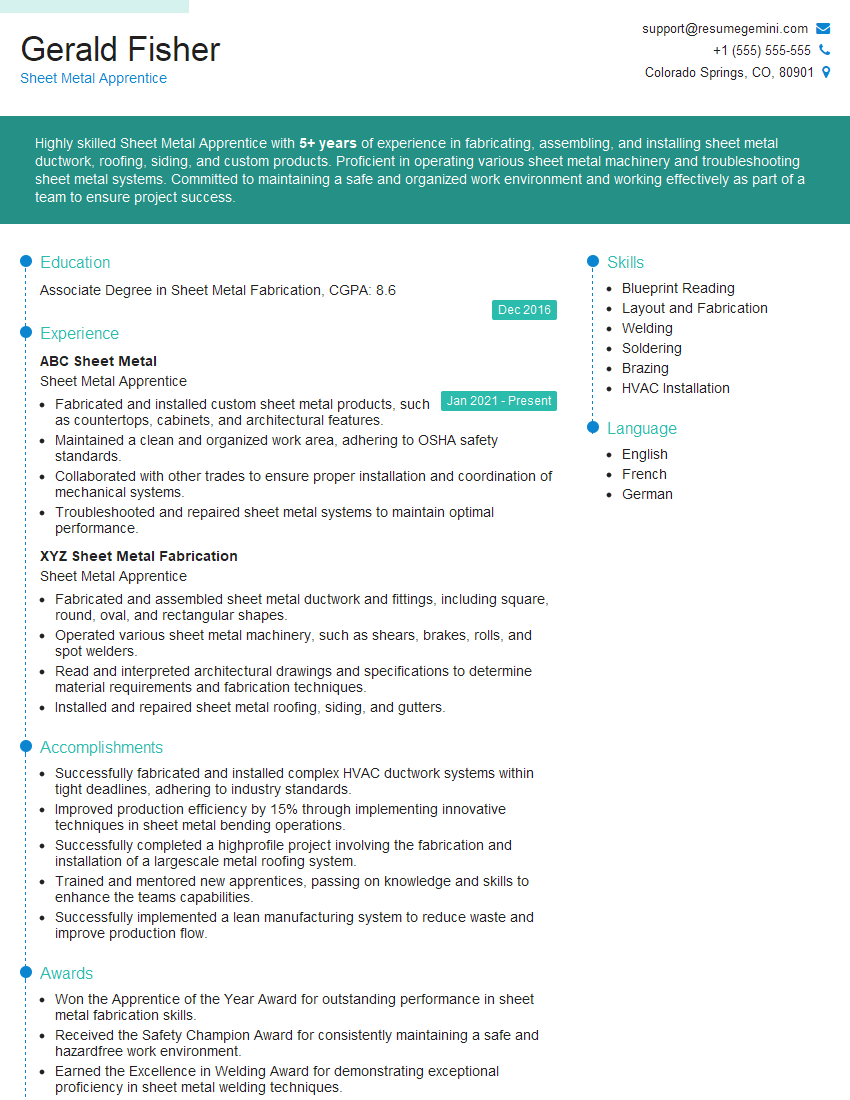
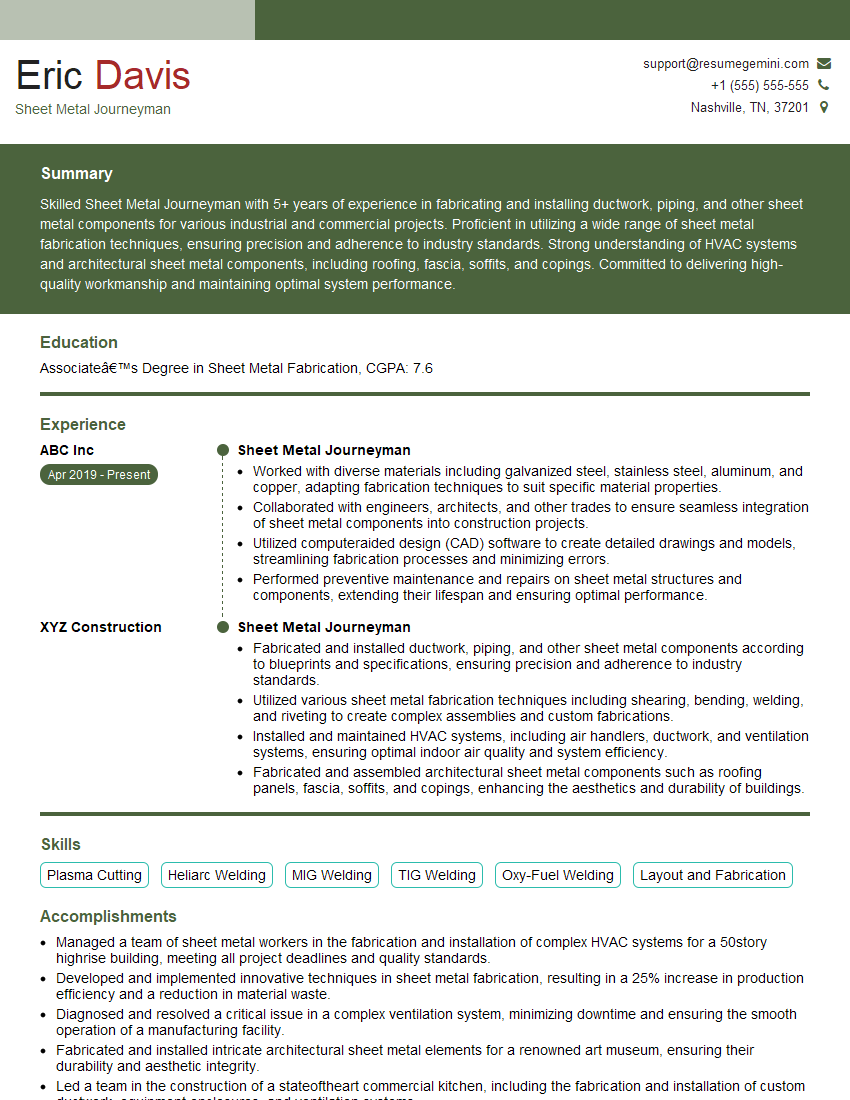
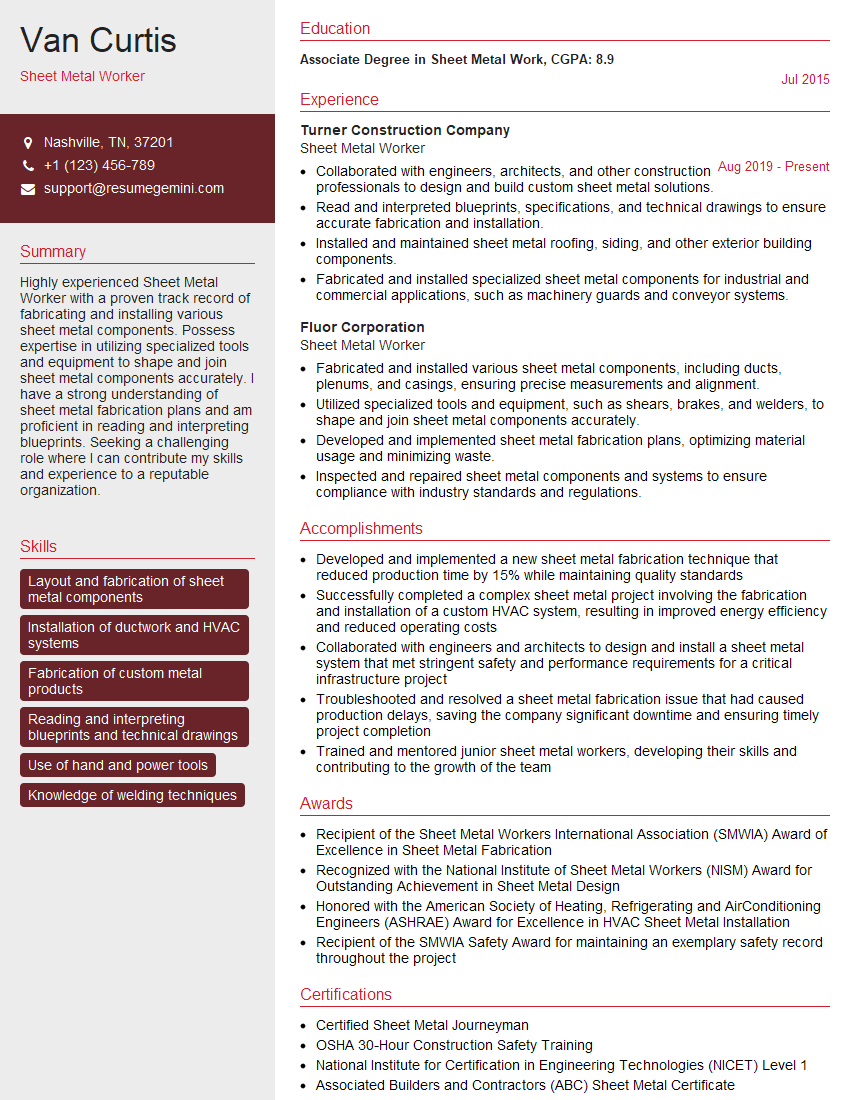
Mastering ductwork assembly opens doors to a rewarding career with excellent growth potential in the HVAC industry. To maximize your job prospects, creating a strong, ATS-friendly resume is essential. ResumeGemini is a trusted resource that can help you build a professional resume that highlights your skills and experience effectively. Examples of resumes tailored to the Ductwork Assembly field are available to guide you through the process.



Explore more articles
Users Rating of Our Blogs
Share Your Experience
We value your feedback! Please rate our content and share your thoughts (optional).
What Readers Say About Our Blog
To the interviewgemini.com Webmaster.
Very helpful and content specific questions to help prepare me for my interview!
Thank you
To the interviewgemini.com Webmaster.
This was kind of a unique content I found around the specialized skills. Very helpful questions and good detailed answers.
Very Helpful blog, thank you Interviewgemini team.