Interviews are opportunities to demonstrate your expertise, and this guide is here to help you shine. Explore the essential Low vision advocacy interview questions that employers frequently ask, paired with strategies for crafting responses that set you apart from the competition.
Questions Asked in Low vision advocacy Interview
Q 1. Explain the different types of low vision and their impact on daily living.
Low vision encompasses a wide spectrum of visual impairments that cannot be fully corrected with glasses, contact lenses, or medication. It significantly impacts daily life, varying in severity from person to person.
- Age-related macular degeneration (AMD): This is a leading cause of low vision, affecting the central vision needed for detailed tasks like reading. Imagine trying to read a book with a blurry spot in the middle – that’s the impact of AMD.
- Glaucoma: This condition damages the optic nerve, often resulting in peripheral vision loss. Think about navigating a room where you can only see the very center of your vision; bumping into things becomes a real risk.
- Diabetic retinopathy: High blood sugar damages blood vessels in the retina, causing blurry vision or blind spots. It can fluctuate in severity, making daily life unpredictable.
- Cataracts: Clouding of the eye’s lens leads to blurry, hazy vision. It’s like looking through a frosted window.
The impact on daily living is profound. Simple tasks like reading, cooking, driving, and even recognizing faces become challenging. Independence, social interaction, and overall quality of life can be greatly affected.
Q 2. Describe various assistive technologies used for low vision individuals.
Assistive technology plays a crucial role in empowering individuals with low vision. The right tools can significantly improve their independence and quality of life.
- Magnifiers: From simple handheld magnifiers to high-powered electronic magnifiers with adjustable lighting, these devices enlarge print and objects. Handheld magnifiers are great for quick tasks, while electronic ones offer better magnification and features.
- Closed-circuit television (CCTV): This device displays magnified images on a screen, perfect for reading books, newspapers, or documents.
- Optical aids: Telescopes and other specialized lenses help improve distance vision.
- Screen readers and screen magnification software: These computer programs read aloud text on a screen or magnify the content, making computer use accessible.
- Smartphones and tablets: With their magnification features, voice-activated functions, and large font options, smartphones and tablets can be vital tools for everyday use.
- Adaptive devices for daily life: Specialized kitchen tools with large handles, talking clocks and timers, and tactile markings on everyday objects.
The selection of assistive technology depends on the individual’s specific needs and visual impairment.
Q 3. Outline the process of conducting a low vision assessment.
A low vision assessment is a comprehensive evaluation conducted by a low vision specialist, typically an optometrist or ophthalmologist with specialized training. The goal is to determine the individual’s visual abilities and identify the best strategies for maximizing their remaining vision.
- Detailed history: The assessment begins with a thorough review of the patient’s medical history, including their current visual problems, past eye conditions, and overall health.
- Visual acuity testing: This measures how well the individual sees at different distances.
- Visual field testing: This assesses the extent of their peripheral vision.
- Contrast sensitivity testing: This evaluates the ability to distinguish objects with varying levels of contrast.
- Color vision testing: This checks for any color vision deficiencies.
- Functional vision assessment: This crucial part evaluates how the individual uses their remaining vision in daily life, such as reading, cooking, and managing personal care.
- Recommendations and rehabilitation planning: Based on the assessment, the specialist will make recommendations for assistive devices, low vision strategies, and a rehabilitation plan.
This multi-faceted approach ensures that the plan addresses the individual’s unique visual needs and functional limitations.
Q 4. What are the key components of a comprehensive low vision rehabilitation plan?
A comprehensive low vision rehabilitation plan focuses on maximizing an individual’s independence and quality of life. It’s a holistic approach that extends beyond simply prescribing assistive devices.
- Assistive technology assessment and training: This involves selecting and teaching individuals how to use appropriate devices, tailored to their specific needs and learning styles.
- Visual efficiency training: Techniques to improve visual skills and strategies, such as scanning, using peripheral vision effectively, and organizing visual information.
- Adaptive techniques for daily living: Strategies and modifications for performing everyday tasks such as cooking, reading, and using technology.
- Environmental modifications: Adjusting the home or work environment to improve lighting, contrast, and organization. For example, using brighter bulbs and high-contrast paint.
- Orientation and mobility training: For those with significant visual impairments, learning how to navigate safely and confidently.
- Counseling and support: Addressing emotional and psychological challenges associated with vision loss.
Regular follow-up appointments are crucial to monitor progress and make adjustments to the plan as needed. The plan is always personalized to the patient’s specific condition and goals.
Q 5. How do you adapt training methods for individuals with diverse learning styles and vision impairments?
Adapting training methods is crucial for effective low vision rehabilitation. Individuals learn differently, and visual impairments further complicate this process.
- Diverse teaching methods: I utilize a multi-sensory approach incorporating visual, auditory, and tactile cues. For example, while teaching how to use a magnifier, I’ll describe the process verbally, demonstrate it, and have the individual feel the device.
- Individualized instruction: I tailor the pace and content of the training to each person’s specific needs, cognitive abilities, and learning preferences.
- Visual aids and adaptations: Using large-print materials, high-contrast colors, and simple diagrams.
- Assistive technology integration: Incorporating assistive technologies into the training process, so the patient learns how to use them in context.
- Patience and understanding: Acknowledging that learning may take more time and require more repetition for those with low vision.
- Regular feedback and adjustment: Getting frequent feedback from the individual and adjusting the training plan accordingly.
The key is to create a supportive and flexible learning environment that accommodates individual differences and promotes success.
Q 6. Describe your experience with different magnification devices and their applications.
My experience encompasses a wide range of magnification devices. The choice depends on the type of vision impairment and the task being performed.
- Handheld magnifiers: Ideal for quick tasks like reading menus or checking labels. Different magnifications and lens types are available to suit various needs.
- Stand magnifiers: Useful for prolonged reading tasks as they provide hands-free magnification.
- Electronic magnifiers (CCTV): These offer superior magnification and versatility. Many models include features like adjustable lighting, contrast settings, and different magnification levels, making them adaptable to different tasks.
- Telescopes: Excellent for improving distance vision, aiding in activities like watching television or attending events.
For example, I’ve worked with individuals who prefer handheld magnifiers for quick checks while others rely heavily on CCTV systems for reading and writing. I guide each patient towards the best combination of devices that fit their lifestyle and visual needs.
Q 7. How do you address emotional and psychological challenges faced by individuals with low vision?
Low vision can lead to significant emotional and psychological challenges. Addressing these is a crucial part of rehabilitation.
- Grief and loss: Many experience a sense of grief and loss as their vision deteriorates. I encourage open discussion and validation of these feelings.
- Depression and anxiety: The challenges of daily life can lead to depression and anxiety. Referral to mental health professionals may be necessary.
A supportive and empathetic approach is essential. Building a strong therapeutic relationship and providing practical solutions empowers individuals to navigate their emotional challenges while optimizing their independence and quality of life.
Q 8. Explain your understanding of the legal and ethical considerations in low vision care.
Legal and ethical considerations in low vision care are paramount. They revolve around patient autonomy, informed consent, confidentiality, and non-discrimination. Legally, we must adhere to HIPAA regulations regarding patient privacy and protected health information. Ethically, we must prioritize patient well-being and empower them to make informed decisions about their care, respecting their choices even if they differ from our recommendations. For instance, a patient might decline a specific assistive device due to cost or personal preference; respecting that decision is crucial. Another example is ensuring that all patients, regardless of their background or socioeconomic status, have equal access to quality low vision services. We must be mindful of potential biases and ensure equitable treatment for all.
A key ethical challenge is balancing patient autonomy with beneficence – the desire to act in the patient’s best interest. Sometimes, a patient may not fully grasp the potential benefits of a particular intervention. In such cases, our role is to educate thoroughly and transparently, emphasizing the potential advantages and drawbacks, ultimately allowing them to make the best decision for themselves.
Q 9. How do you collaborate with ophthalmologists and other healthcare professionals?
Collaboration is key in low vision care. I work closely with ophthalmologists to understand the patient’s diagnosis and visual acuity. The ophthalmologist provides the medical diagnosis and information on the underlying cause of vision loss, while I focus on the functional impact of that vision loss and implement strategies to maximize their remaining vision. This collaborative approach involves regular communication, sharing of relevant information, and joint decision-making regarding the most appropriate interventions. I also collaborate with other professionals like occupational therapists, who can assess adaptive skills in daily living, and social workers who can address the psychosocial impact of vision loss. For example, I might work with an occupational therapist to adapt kitchen tools for a patient with macular degeneration, or with a social worker to connect a patient with support groups and resources.
Q 10. Describe your approach to patient education and empowerment.
My approach to patient education and empowerment is holistic and individualized. I believe in a collaborative learning environment where patients actively participate in shaping their treatment plan. This starts with a thorough assessment of their needs and goals. I use simple language, avoiding jargon, and provide visual aids or demonstrations when necessary. For example, when explaining the use of a magnifier, I demonstrate its use with real-life tasks, like reading a newspaper or a medication bottle label. I provide education on the nature of their vision impairment, explaining why they experience certain difficulties and what is realistic to expect in terms of vision improvement. I empower them by teaching self-advocacy skills, encouraging them to actively participate in their healthcare decisions, and to confidently ask questions and seek clarification. Furthermore, I provide them with resources, including websites, support groups and local agencies, to continue learning and adjusting to their changing visual needs.
Q 11. What are some common barriers to accessing low vision services, and how can they be overcome?
Several barriers hinder access to low vision services. These include limited awareness of available services, geographical barriers (especially in rural areas), financial constraints (many assistive devices are expensive and not fully covered by insurance), and a lack of qualified low vision specialists. Transportation can also be a significant issue for many. Overcoming these requires a multi-pronged approach. We need increased public awareness campaigns, telehealth options to reach remote areas, advocating for improved insurance coverage, training more low vision specialists, and developing accessible transportation solutions. For example, community outreach programs can raise awareness, while telehealth can bring specialized services to underserved communities. Working with local transportation providers to offer subsidized transport options for patients would also address the geographical barrier.
Q 12. How do you assess a patient’s functional vision needs and match them with appropriate interventions?
Assessing a patient’s functional vision needs involves a comprehensive evaluation. This includes a detailed interview, visual acuity testing, assessing their ability to perform daily activities, such as reading, writing, cooking, and navigating their environment. I employ standardized tests and observation techniques to evaluate their performance in various lighting conditions and with different visual aids. Matching interventions involves careful consideration of the patient’s individual needs, lifestyle, and preferences. For example, a patient who enjoys reading might benefit from large-print books and electronic magnifiers, while a patient who primarily needs to navigate their home might benefit from improved lighting and contrasting color schemes. The goal is not simply to improve visual acuity, but to enhance the patient’s independence and quality of life.
Q 13. Explain your experience with adaptive technology training, including troubleshooting and maintenance.
Adaptive technology training is a crucial aspect of low vision care. I provide hands-on training on devices like screen readers, magnifiers, and voice-activated software. My approach is patient-centered and tailored to their specific needs and technological literacy. I start with basic functionalities and gradually introduce more advanced features. Troubleshooting and maintenance are integral parts of the training. I provide clear instructions and demonstrate solutions to common problems, and empower patients to perform basic maintenance tasks. For example, I teach them how to clean their magnifier lenses or troubleshoot a frozen screen reader. I also provide resources and contact information for ongoing support. I emphasize the importance of regular updates and software maintenance to optimize device performance and prevent malfunctions.
Q 14. Describe your approach to working with families and caregivers of individuals with low vision.
Working with families and caregivers is essential. I recognize that vision loss affects not only the individual but also their support network. I involve family members or caregivers in the assessment and intervention process. This includes providing education about the condition, available assistive devices, and coping strategies. I address their concerns and offer practical advice on how to best support their loved one. For instance, I might teach family members how to modify the home environment to enhance safety and accessibility, or how to communicate effectively with the person experiencing vision loss. Open communication and collaboration with the family are crucial to ensuring the success of the intervention and improving the overall well-being of both the individual with low vision and their support system. Family involvement enhances the patient’s compliance with the care plan and promotes a supportive home environment.
Q 15. How do you stay updated on the latest advancements in low vision technology and research?
Staying current in the rapidly evolving field of low vision technology and research requires a multi-pronged approach. I regularly subscribe to and actively read journals such as the Journal of Visual Impairment & Blindness and Investigative Ophthalmology & Visual Science. These publications provide in-depth articles on the latest breakthroughs in assistive technology, rehabilitation strategies, and scientific advancements related to visual impairment.
Beyond academic journals, I actively participate in professional organizations like the American Academy of Ophthalmology and the Association for Education and Rehabilitation of the Blind and Visually Impaired (AER). These organizations host conferences, webinars, and workshops that offer valuable opportunities to network with colleagues and learn about new developments directly from researchers and clinicians. Furthermore, I actively engage with online communities and forums specifically dedicated to low vision, which provides a platform for exchanging information and staying abreast of emerging trends. Finally, maintaining a network of contacts within the field allows for informal knowledge sharing and keeps me aware of the latest clinical trials and technological innovations.
Career Expert Tips:
- Ace those interviews! Prepare effectively by reviewing the Top 50 Most Common Interview Questions on ResumeGemini.
- Navigate your job search with confidence! Explore a wide range of Career Tips on ResumeGemini. Learn about common challenges and recommendations to overcome them.
- Craft the perfect resume! Master the Art of Resume Writing with ResumeGemini’s guide. Showcase your unique qualifications and achievements effectively.
- Don’t miss out on holiday savings! Build your dream resume with ResumeGemini’s ATS optimized templates.
Q 16. Explain your understanding of different types of visual impairments and their impact on daily life.
Visual impairments vary widely in type and severity, significantly impacting daily life. We can broadly categorize them into:
- Refractive Errors: These include nearsightedness (myopia), farsightedness (hyperopia), and astigmatism, which can often be corrected with eyeglasses or contact lenses. The impact on daily life can range from mild inconvenience to significant difficulty with tasks requiring clear vision at various distances.
- Macular Degeneration: This condition affects the central vision, leading to blurred or distorted vision in the center of the visual field. Daily activities like reading, driving, and facial recognition become challenging.
- Glaucoma: Characterized by damage to the optic nerve, glaucoma often results in peripheral vision loss, creating difficulty with navigation and spatial awareness. Severe cases can lead to blindness.
- Cataracts: Clouding of the eye’s lens, cataracts cause blurry, cloudy vision, reduced color perception, and sensitivity to light. Surgical removal is often necessary.
- Diabetic Retinopathy: Damage to the blood vessels in the retina, this condition can lead to vision loss and even blindness. Early detection and management are crucial.
The impact of these impairments varies greatly, depending on the severity and the individual’s adaptive skills. Simple tasks like reading, writing, and navigating public spaces can become significantly more difficult, leading to reduced independence, social isolation, and decreased quality of life. The level of support required also varies significantly, from simple visual aids to extensive rehabilitation programs.
Q 17. How would you teach a patient to use a screen reader or other assistive software?
Teaching a patient to use a screen reader or other assistive software requires a patient, individualized approach. I start by assessing the patient’s existing computer skills and their specific visual needs. The learning process is broken down into manageable steps, focusing first on basic navigation and then progressing to more complex functions. For example, with a screen reader like JAWS or NVDA, I begin by explaining how to start and stop the screen reader, how to move the cursor, and how to access the main menus.
I demonstrate each step, encouraging the patient to repeat the actions. We’ll practice opening and closing applications, navigating web pages, and composing emails. I use hands-on training, providing immediate feedback and making adjustments as needed. It’s crucial to acknowledge the emotional aspects of learning assistive technology; patience and encouragement are key components of effective teaching. We frequently take breaks, and I ensure the patient feels comfortable asking questions. Regular follow-up sessions are crucial for reinforcing what was learned, addressing new challenges, and adapting techniques as needed. The ultimate goal is to empower the patient to use the technology independently to improve their quality of life. Customized exercises and ongoing support are crucial for long-term success.
Q 18. Describe your experience with orientation and mobility training for individuals with low vision.
Orientation and mobility (O&M) training is essential for individuals with low vision to maintain independence and safety in their environment. My experience includes working with patients of varying ages and levels of vision loss. The process begins with a thorough assessment of the individual’s visual capabilities, mobility skills, and environmental challenges. I then develop a personalized training plan that addresses their specific needs and goals.
Training typically involves both indoor and outdoor sessions. Indoor training might focus on techniques for navigating familiar spaces like their home or workplace, emphasizing the use of tactile cues and auditory information. Outdoor training focuses on techniques for safe street crossing, using canes and other mobility aids, and navigating unfamiliar environments. I teach techniques such as trailing (following a consistent path), using landmarks, and employing spatial awareness strategies. The emphasis is on building confidence and developing practical strategies for independent navigation. Regular practice and consistent reinforcement are key to successful O&M training. I aim to empower individuals to move confidently and safely in their environment, improving their quality of life and sense of independence.
Q 19. How do you adapt your communication style to meet the needs of different individuals with varying degrees of vision impairment?
Adapting communication styles to individuals with varying degrees of vision impairment requires sensitivity and flexibility. My approach involves considering several factors: the individual’s specific visual impairment, their cognitive abilities, and their communication preferences. For individuals with significant vision loss, I use clear and concise language, avoiding jargon and ambiguous terms. I may use more descriptive language to paint a clearer picture of the environment or situation.
Tactile communication, such as providing braille materials or using large-print handouts, is essential for some individuals. For those who are blind, clear and well-organized verbal descriptions are paramount. I use visual aids such as large-print materials, high-contrast displays, and visual organizers when appropriate. Active listening is essential—ensuring that the individual understands the information conveyed and providing opportunities for them to ask clarifying questions. It’s also important to be mindful of the pace of communication and adjust it to match the individual’s cognitive processing speed. A person’s preferred method of communication should always guide my interaction to foster a sense of respect and understanding.
Q 20. Explain your knowledge of relevant legislation regarding accessibility for the visually impaired.
My understanding of relevant legislation regarding accessibility for the visually impaired is extensive. The Americans with Disabilities Act (ADA) of 1990 is a cornerstone, prohibiting discrimination based on disability in employment, state and local government services, public accommodations, and commercial facilities. The ADA requires reasonable accommodations, including providing accessible information and communication technologies, and modifying physical environments to allow individuals with disabilities to fully participate in society.
Section 508 of the Rehabilitation Act of 1973 mandates accessibility standards for electronic and information technology procured, developed, maintained, or used by federal agencies. This includes requiring federal agencies to make their websites and electronic documents accessible to people with disabilities. At the state level, many jurisdictions have their own accessibility regulations that often mirror or extend federal requirements. These laws often mandate features such as alternative text for images, captions for videos, and accessible document formats. Staying current with these legal requirements is critical in advocating for the rights of individuals with low vision and ensuring that they have equal access to services and opportunities.
Q 21. How do you advocate for the rights and needs of individuals with low vision within the healthcare system?
Advocating for the rights and needs of individuals with low vision within the healthcare system requires a multifaceted approach. I begin by ensuring that patients receive appropriate and timely diagnosis and treatment. This involves working collaboratively with ophthalmologists and other healthcare professionals to facilitate timely access to comprehensive eye examinations, low vision assessments, and effective treatment options. I also advocate for access to assistive technology, including low vision aids, screen readers, and other adaptive devices. This involves navigating insurance coverage, explaining the benefits of these technologies to healthcare providers, and assisting patients in obtaining necessary equipment.
Furthermore, I advocate for policies and programs that promote accessibility in healthcare settings, such as ensuring that facilities are physically accessible and that healthcare professionals are trained in providing culturally sensitive and inclusive care to people with visual impairments. I collaborate with patient advocacy groups, healthcare organizations, and government agencies to raise awareness about the challenges faced by individuals with low vision and to promote policies that improve their quality of life. Effectively advocating includes understanding the healthcare system’s bureaucratic processes, while continuously working to break down systemic barriers and promote inclusive, accessible, and equitable care.
Q 22. Describe a situation where you had to problem-solve a complex challenge related to low vision care.
One particularly challenging case involved a 70-year-old gentleman, Mr. Jones, who had recently experienced a significant decline in his vision due to macular degeneration. He was initially resistant to using any assistive technology, believing it would be too difficult to learn and ultimately ineffective. The problem wasn’t just his visual impairment, but also his deeply ingrained reluctance to adapt. My approach involved a multi-pronged strategy. Firstly, I listened empathetically to his concerns, validating his feelings and addressing his anxieties about technological complexity. Secondly, I didn’t overwhelm him with options. We started with a simple large-print book and a magnifier, focusing on immediate practical improvements in his daily reading. Thirdly, I demonstrated how these simple aids could enhance his enjoyment of reading, a cherished hobby. This gradual introduction built trust and demonstrated the tangible benefits of assistive technology. Finally, as his confidence grew, we explored more advanced options, like a CCTV (closed-circuit television) system for reading mail and menus. By focusing on his individual needs and pace, we successfully integrated assistive technology into his life, vastly improving his independence and quality of life.
Q 23. How do you measure the effectiveness of low vision interventions?
Measuring the effectiveness of low vision interventions requires a multi-faceted approach that considers both objective and subjective measures. Objective measures often involve assessing visual acuity and functional vision skills using standardized tests, such as the Low Vision Functional Assessment. We might track improvements in reading speed, distance, or the ability to perform everyday tasks like cooking or dressing. Subjective measures are equally important; they capture the patient’s perception of their improvement in quality of life. We use questionnaires and interviews to gauge their satisfaction with interventions, their perceived independence, and their overall well-being. For example, we might use a quality-of-life scale specifically designed for people with low vision. A combination of these objective and subjective measures provides a comprehensive understanding of the intervention’s impact, ensuring we are providing truly effective and personalized care.
Q 24. What are some strategies for improving accessibility and inclusion for individuals with low vision in the community?
Improving accessibility and inclusion for individuals with low vision requires a multi-pronged approach involving environmental modifications, technological advancements, and societal shifts in attitudes. Firstly, we advocate for universal design principles in public spaces and buildings – easily accessible ramps, clear signage with tactile elements, and well-lit environments. Secondly, we promote the use of assistive technology like screen readers, text-to-speech software, and accessible digital formats. Thirdly, we work to educate the public about low vision and dispel common misconceptions. This involves raising awareness through community events, workshops, and educational materials. For instance, training staff at local libraries in how to assist patrons with low vision is critical. Finally, advocating for policies that protect the rights of individuals with low vision, guaranteeing access to services and employment opportunities, is crucial. A good example is ensuring accessible voting systems for individuals with low vision.
Q 25. Explain your understanding of the role of vision rehabilitation in improving quality of life.
Vision rehabilitation plays a pivotal role in improving the quality of life for individuals with low vision. It’s not merely about correcting vision; it’s about empowering individuals to maximize their remaining vision and adapt to their visual challenges. This involves a holistic approach, addressing both the physical and psychological aspects of vision loss. Vision rehabilitation helps patients learn compensatory strategies to perform daily tasks, such as using adaptive devices, adjusting lighting, organizing their environment, and improving visual efficiency. Equally important is addressing the emotional impact of vision loss through counseling and support groups. By fostering independence, boosting confidence, and providing strategies for successful navigation of daily life, vision rehabilitation enhances overall well-being and leads to a significant increase in quality of life. Consider the positive impact on someone able to independently prepare meals, navigate their home safely, or maintain social connections – all made possible through tailored vision rehabilitation programs.
Q 26. How do you handle situations where a patient is resistant to using assistive technology?
Resistance to assistive technology is common, stemming from various factors such as frustration, fear of the unknown, or perceived inconvenience. My approach centers around building trust and understanding. I start by actively listening to their concerns, validating their feelings, and acknowledging the potential challenges. Then, I tailor my recommendations to their specific needs and preferences, focusing on the practical benefits of the technology in their daily lives. Instead of pushing a particular device, I might show them how different options address specific problems. For instance, if they struggle with reading, I might compare several magnifiers and large-print options, letting them try each out to see what feels most comfortable and effective. A gradual introduction, starting with a simple device and gradually adding more advanced technologies as their confidence grows, often proves successful. Importantly, I emphasize the device’s role as a tool to enhance their independence and overall well-being, reframing it not as a replacement for sight, but rather an enabler of a full and active life.
Q 27. Describe your experience working in a team setting to provide comprehensive low vision care.
Comprehensive low vision care requires a collaborative team approach. My experience working with ophthalmologists, optometrists, occupational therapists, and social workers has been invaluable. In a typical team setting, the ophthalmologist or optometrist diagnoses the condition and determines the extent of vision loss. The occupational therapist assesses the patient’s functional abilities and recommends assistive devices and adaptive techniques. The social worker addresses emotional and psychosocial needs, providing support and connecting patients with resources. My role as a low vision specialist bridges these disciplines. I work directly with patients, translating technical assessments into practical strategies for daily living, coordinating services, and monitoring progress. For example, in one case, the team collaborated to help a patient with age-related macular degeneration learn to use a screen reader on their computer, enabling them to continue their passion for writing. This team-based approach ensures a holistic and personalized approach, optimizing patient outcomes and improving their quality of life.
Key Topics to Learn for Low Vision Advocacy Interview
- Understanding Low Vision: Defining low vision, differentiating it from blindness, and understanding the diverse range of visual impairments.
- Assistive Technology and Adaptive Strategies: Knowledge of various assistive technologies (e.g., screen readers, magnification software, adaptive devices) and their practical applications for individuals with low vision. This includes familiarity with training and support strategies.
- Legal and Policy Frameworks: Understanding relevant legislation (e.g., ADA, Rehabilitation Act) protecting the rights of individuals with low vision and advocating for inclusive policies.
- Communication and Advocacy Skills: Developing effective communication techniques for interacting with individuals with low vision, their families, healthcare providers, and policymakers. This includes active listening and empathetic communication.
- Community Resources and Support Networks: Familiarity with existing community resources, support groups, and organizations dedicated to assisting individuals with low vision. This includes understanding referral processes and connecting individuals with appropriate services.
- Accessibility and Universal Design: Understanding principles of accessibility and universal design in various environments (e.g., workplaces, public spaces, technology) and how to advocate for their implementation.
- Data Analysis and Program Evaluation: Ability to analyze data related to low vision prevalence, service utilization, and program effectiveness to inform advocacy efforts.
- Ethical Considerations: Understanding the ethical implications of advocating for individuals with low vision, including issues of autonomy, informed consent, and confidentiality.
Next Steps
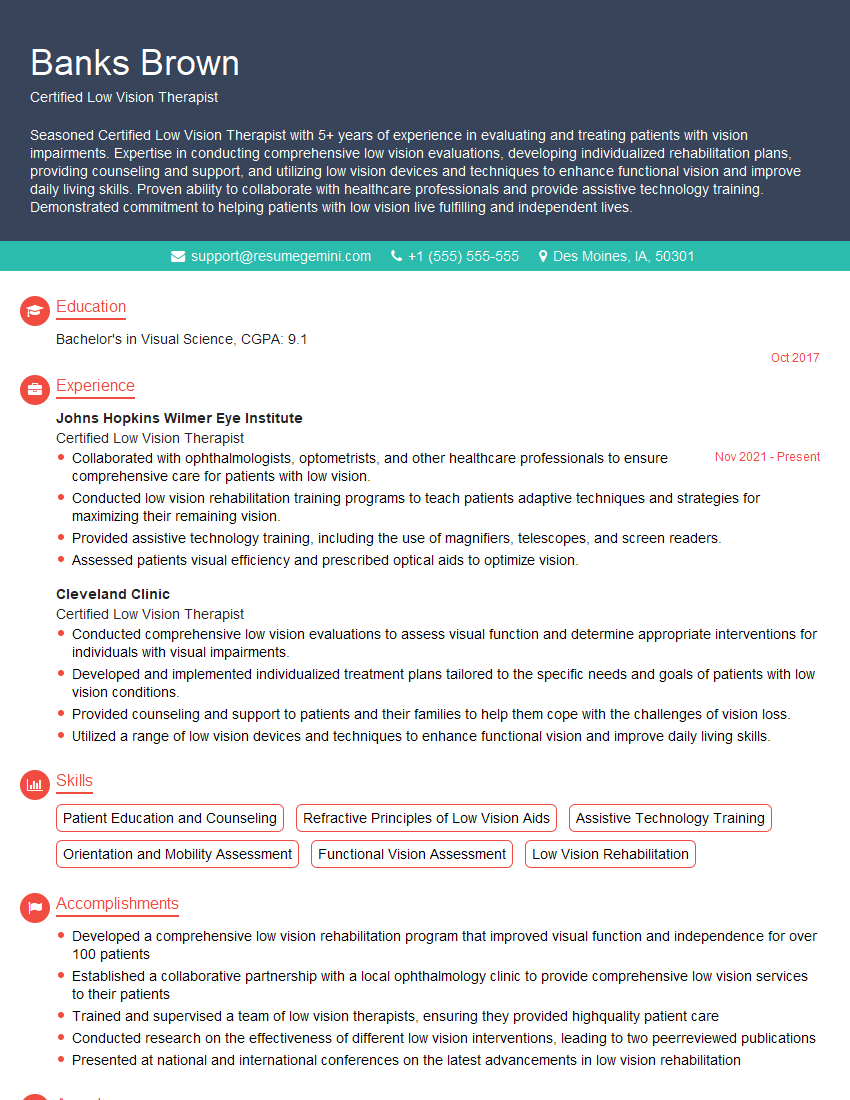
Mastering low vision advocacy opens doors to impactful careers, allowing you to make a real difference in the lives of others. A strong, ATS-friendly resume is crucial for showcasing your skills and experience to potential employers. To significantly enhance your job prospects, we highly recommend using ResumeGemini to craft a compelling and effective resume. ResumeGemini provides valuable tools and resources, including examples of resumes tailored specifically to low vision advocacy, to help you present yourself as the ideal candidate.
Explore more articles
Users Rating of Our Blogs
Share Your Experience
We value your feedback! Please rate our content and share your thoughts (optional).
What Readers Say About Our Blog
To the interviewgemini.com Webmaster.
Very helpful and content specific questions to help prepare me for my interview!
Thank you
To the interviewgemini.com Webmaster.
This was kind of a unique content I found around the specialized skills. Very helpful questions and good detailed answers.
Very Helpful blog, thank you Interviewgemini team.