Are you ready to stand out in your next interview? Understanding and preparing for Knowledge of Heavy Equipment and Tools interview questions is a game-changer. In this blog, we’ve compiled key questions and expert advice to help you showcase your skills with confidence and precision. Let’s get started on your journey to acing the interview.
Questions Asked in Knowledge of Heavy Equipment and Tools Interview
Q 1. Describe your experience operating an excavator.
My excavator operating experience spans over eight years, encompassing various models from Caterpillar and Komatsu. I’ve worked on projects ranging from residential site preparation to large-scale infrastructure developments. My expertise includes proficient use of different excavator attachments like buckets, rippers, and hydraulic hammers, adapting my technique based on the specific task and ground conditions. For instance, on a recent road construction project, I used a long-reach excavator to precisely place large drainage pipes, minimizing disruption to the surrounding environment. I am adept at maneuvering the machine in tight spaces, maintaining precision and efficiency while prioritizing safety. I am also experienced in using GPS-guided systems for increased accuracy in excavation.
Q 2. Explain the different types of bulldozers and their applications.
Bulldozers are categorized primarily by their blade type and application. The most common types include:
- Crawler Bulldozers: These use tracks for traction, providing excellent stability and maneuverability on uneven terrain. They’re ideal for heavy earthmoving, clearing land, and pushing large volumes of material. Think of them as the workhorses of the construction site.
- Wheel Bulldozers: These use wheels for mobility and are faster on paved or relatively smooth surfaces. They are often used for lighter tasks like grading, finish work, and moving materials shorter distances. They’re more versatile but less powerful than crawler bulldozers.
- Angle Dozers: These feature a blade that can be angled to the left or right, facilitating side-casting and maneuvering material more efficiently. This is excellent for creating level surfaces or moving material to a specific location.
The application depends on the specific project. For instance, a crawler dozer would be chosen for clearing a heavily wooded area, while a wheel dozer might be better suited for grading a large parking lot.
Q 3. What safety procedures do you follow when operating heavy equipment?
Safety is paramount when operating heavy equipment. My safety procedures include:
- Pre-operational checks: Thoroughly inspecting the machine for any mechanical issues, fluid leaks, or damage before starting.
- Personal Protective Equipment (PPE): Always wearing appropriate PPE, including hard hats, safety glasses, hearing protection, and high-visibility clothing.
- Site awareness: Maintaining constant awareness of my surroundings, including other personnel, equipment, and potential hazards.
- Communication: Using clear hand signals or two-way radios to communicate with other workers on the site.
- Safe operating practices: Following all relevant safety regulations and company policies. This includes maintaining a safe speed, avoiding sharp turns, and ensuring the load is stable and secure.
- Emergency procedures: Knowing and following emergency procedures in case of accidents or equipment malfunctions.
One time, I noticed a loose bolt on a bucket while doing my pre-operational check, preventing a potential accident during operation.
Q 4. How do you perform pre-operational checks on a forklift?
Pre-operational checks on a forklift are crucial for safe operation. My procedure involves:
- Visual Inspection: Checking for any visible damage, leaks, or loose parts on the mast, forks, tires, and body.
- Fluid Levels: Verifying the levels of hydraulic fluid, engine oil, coolant, and fuel.
- Tires: Inspecting tire pressure and condition for wear and tear.
- Lights and Signals: Ensuring all lights and warning signals are functioning correctly.
- Horn and Brakes: Testing the horn and brakes to ensure they are responsive.
- Mast and Forks: Checking the smooth operation of the mast and forks, making sure they raise and lower without any binding or unusual noises.
- Parking Brake: Engaging and checking the parking brake.
This detailed inspection helps to prevent potential accidents and ensures efficient operation.
Q 5. What are the common maintenance tasks for a crane?
Regular maintenance is key to extending the lifespan and ensuring the safe operation of a crane. Common tasks include:
- Daily Inspections: Checking for any wear and tear, loose bolts, or damage to the structure, cables, hooks, and other components.
- Lubrication: Regularly lubricating moving parts to prevent wear and tear and ensure smooth operation.
- Wire Rope Inspection: Regularly inspecting wire ropes for fraying, corrosion, or damage, replacing them as needed. This is vital for safety.
- Brake System Checks: Regularly checking the brake system for proper function and responsiveness.
- Load Testing: Periodic load testing to ensure the crane can safely handle its rated capacity.
- Hydraulic System Checks: Inspecting hydraulic fluid levels and looking for leaks or other issues.
- Engine Maintenance: Performing routine engine maintenance such as oil changes, filter replacements, and tune-ups.
Ignoring these tasks can lead to costly repairs and, more importantly, pose serious safety risks.
Q 6. Describe your experience with hydraulic systems in heavy equipment.
I have extensive experience working with hydraulic systems in heavy equipment. My understanding encompasses both the theory and practical application of hydraulic principles, including pressure, flow, and power. I can troubleshoot and repair common hydraulic issues like leaks, pump failures, and valve malfunctions. I’m familiar with various hydraulic components such as pumps, valves, cylinders, and hoses. For instance, I once successfully diagnosed a pressure drop in an excavator’s hydraulic system by systematically checking each component, identifying a faulty pressure relief valve that was causing the problem. Replacing the valve restored full functionality, demonstrating a practical understanding of hydraulic systems and their function in heavy machinery.
Q 7. How do you troubleshoot a malfunctioning engine in a heavy machine?
Troubleshooting a malfunctioning engine requires a systematic approach. My process generally involves:
- Gather Information: First, I gather information about the symptoms of the malfunction – for example, lack of power, unusual noises, smoke, or warning lights.
- Visual Inspection: Then, I conduct a visual inspection of the engine compartment, looking for visible damage, leaks, or loose connections.
- Check Vital Signs: I then check vital signs such as oil pressure, coolant temperature, and battery voltage.
- Diagnostics: Depending on the machine, I may use onboard diagnostics or specialized diagnostic tools to pinpoint the problem.
- Testing Components: If needed, I will test individual components, such as fuel injectors, sensors, or spark plugs.
- Repair or Replacement: Once the problem is identified, I will either repair the component or replace it with a new one.
It’s important to remember safety precautions throughout this process. For example, always disconnect the battery before working on electrical components.
Q 8. Explain the different types of attachments used with excavators.
Excavators are incredibly versatile machines, and their functionality is greatly expanded through the use of various attachments. Think of them as the interchangeable tools in a power tool set. These attachments are designed to perform specific tasks, optimizing the excavator for different jobs.
- Buckets: These are the most common attachment, used for digging, loading, and moving materials. Different bucket types exist, including general-purpose, ditch cleaning, rock, and demolition buckets, each designed for a specific material and task. For example, a rock bucket has a reinforced design to withstand the stresses of breaking up rock.
- Hydraulic Hammers: These powerful attachments break up concrete, rock, or frozen ground using repeated impacts. They are essential in demolition and foundation work. I once used a hydraulic hammer to break up a particularly stubborn section of concrete during a road construction project, saving a significant amount of time and effort compared to manual methods.
- Hydraulic Breakers: Similar to hammers but usually smaller, better suited for smaller scale demolition or breaking up asphalt.
- Grapples: These claw-like attachments are ideal for handling and sorting scrap metal, timber, or other bulky materials. Their versatility makes them a favorite on recycling sites and in forestry.
- Augers: Used for drilling holes in the ground for piling, planting, or utility work. Different diameters and lengths of augers are available depending on the job requirements.
- Rippers: These heavy-duty attachments are used to loosen and break up hard soil or rock before excavation. They’re often employed in agriculture or mining where the ground is particularly resistant.
- Thumbs: These are often added to buckets to provide additional control and precision, improving material handling capabilities.
The choice of attachment depends heavily on the specific application. A project requiring delicate work in a confined space might use a smaller grapple, while large-scale demolition would call for a heavy-duty hydraulic hammer.
Q 9. What are the load capacity limitations of a typical forklift?
The load capacity of a forklift is a critical safety factor, and it varies significantly depending on the forklift’s model, size, and the type of mast (the vertical structure that lifts the load). Manufacturers specify the maximum load capacity, often expressed in kilograms or pounds, for a given forklift. This capacity is typically found on a data plate affixed to the machine itself.
Several factors influence the load capacity and should always be considered:
- Center of Gravity: The weight distribution of the load directly impacts the forklift’s stability. A load that is unevenly distributed or has a high center of gravity will reduce the safe load capacity. Think about carrying a long plank of wood – it’s much easier to carry it when it’s close to your body than when it’s extended outward.
- Mast Height: Lifting the load to a higher point reduces the forklift’s stability and effective load capacity. The higher you lift, the less weight the forklift can safely handle.
- Fork Length: Longer forks spread the load over a greater distance, potentially increasing stress on the forklift’s components and affecting capacity.
- Terrain Conditions: Operating on uneven or soft ground reduces stability and, hence, the safe load capacity. Never exceed the manufacturer’s specified load capacity, even under seemingly ideal conditions.
Exceeding the load capacity can lead to serious accidents, including tipping, structural failure, and potential injury or death. Always prioritize safety and operate within the forklift’s stated limits.
Q 10. How do you ensure the stability of a crane during operation?
Ensuring crane stability is paramount for safe operation. A collapse could have devastating consequences. Several key factors contribute to crane stability:
- Proper Ground Conditions: The ground where the crane is positioned must be level, firm, and able to support the crane’s weight and the load it carries. Soft soil or uneven surfaces should be avoided, and outriggers (support legs) should be properly extended and firmly seated.
- Load Charts and Calculations: Before lifting any load, it’s absolutely crucial to consult the crane’s load chart. This chart indicates the safe load capacity for different radii (distances from the crane’s pivot point). Incorrect load calculations are a major cause of crane accidents.
- Outrigger Deployment: Most cranes use outriggers to increase stability, especially when lifting heavier loads or at greater radii. These should always be fully extended and properly secured on a stable base before commencing any lift.
- Weather Conditions: High winds can significantly impact crane stability. Operations should be suspended in severe weather conditions. Wind speed and direction should be considered when assessing the safety of a lift.
- Proper Rigging and Slinging: The load must be properly rigged and secured using appropriate slings and chains. Uneven load distribution or improperly secured slings can significantly reduce stability and increase the risk of accidents.
- Operator Training and Experience: Skilled and experienced crane operators are critical to maintaining stability. They must be familiar with the crane’s capabilities and limitations, as well as safe operating procedures.
Imagine trying to balance a stack of books on one hand – a slightly unsteady hand or an uneven stack will lead to a collapse. Crane stability follows the same principle; attention to detail and adherence to safety procedures are essential.
Q 11. What are the signs of wear and tear in heavy equipment components?
Identifying wear and tear in heavy equipment is vital for preventative maintenance and safety. Regular inspections are essential to catch problems early, preventing costly repairs or catastrophic failures.
- Leaks: Fluid leaks (hydraulic oil, engine oil, coolant) are a common sign of wear in seals, hoses, or gaskets. Regular checks for leaks are crucial.
- Unusual Noises: Grinding, squealing, knocking, or other unusual sounds indicate potential issues with bearings, gears, or other moving components. It’s important to immediately investigate the source of any unexpected noises.
- Excessive Vibration: Significant vibration can indicate worn-out components, imbalance, or alignment problems. A skilled mechanic can diagnose the underlying issue.
- Excessive Wear on Tires or Tracks: Uneven tire or track wear suggests problems with the alignment or suspension system.
- Damage to Bodywork: Dents, cracks, or other damage to the machine’s bodywork can indicate structural weaknesses or past collisions, requiring closer inspection.
- Gauge Readings: Monitoring engine temperature, oil pressure, and other gauges provides insights into the overall health of the equipment. Unusual readings may warrant attention.
- Smoke from Exhaust: Unusual amounts of smoke (blue, black, or white) can point to problems with the engine, such as low compression, burned oil, or coolant leaks.
I once noticed a slight knocking sound in an excavator’s engine during a routine inspection. This turned out to be a worn connecting rod, which could have led to a major engine failure if left unchecked. Early detection prevented a costly downtime situation.
Q 12. Describe your experience with preventative maintenance schedules.
Preventative maintenance is the cornerstone of keeping heavy equipment running smoothly and safely. My experience involves developing and adhering to detailed maintenance schedules tailored to the specific equipment and its operating conditions. These schedules typically include both daily and periodic inspections and service.
Daily Inspections: These are quick checks for obvious problems – fluid levels, leaks, unusual noises, and overall condition. These daily checks catch problems before they escalate.
Periodic Maintenance: This involves more thorough inspections and servicing at predetermined intervals (e.g., every 500 hours of operation, every six months). These schedules typically include:
- Oil changes: Engine oil, hydraulic oil, transmission oil.
- Filter replacements: Oil filters, air filters, fuel filters.
- Lubrication: Greasing of moving parts and joints.
- Component inspections: Visual inspection of belts, hoses, chains, and other components for wear or damage.
- Functional checks: Testing of systems such as brakes, steering, and hydraulics.
I maintain detailed records of all maintenance activities, including dates, services performed, and any issues encountered. This helps in tracking equipment performance, identifying trends, and planning future maintenance effectively. A well-maintained piece of equipment is not only more productive but also significantly safer.
Q 13. How do you handle unexpected equipment malfunctions on a job site?
Unexpected equipment malfunctions on a job site are a reality, and efficient handling is crucial to minimize downtime and safety risks. My approach follows a structured process:
- Safety First: The immediate priority is to ensure the safety of personnel and the surrounding area. Secure the malfunctioning equipment, warn others, and establish a safe perimeter.
- Assessment: Carefully assess the nature and extent of the malfunction. If possible, identify the root cause – is it a simple fix like a blown fuse, or something more complex that requires specialized tools and expertise?
- Communication: Communicate the situation clearly to supervisors, relevant personnel, and potentially the equipment manufacturer’s support line. This is essential for obtaining assistance, coordinating repairs, and ensuring everyone is informed.
- Troubleshooting: If the problem seems manageable, attempt basic troubleshooting steps within your skillset and safety parameters. Simple fixes can save considerable time and resources.
- Repair or Replacement: If the problem is beyond immediate resolution, arrange for repairs or replacement of parts as needed. Prioritize the speed of repairs without compromising safety.
- Documentation: Thoroughly document the malfunction, the troubleshooting steps taken, repairs made, and any lessons learned. This documentation improves future preventative maintenance and reduces similar incidents.
During a road construction project, a bulldozer suffered a sudden hydraulic failure. Following my procedure, I immediately secured the area, contacted the supervisor and maintenance team, and collaborated with a specialist to diagnose the problem, which was a faulty hydraulic pump. Quick action minimized downtime and prevented project delays.
Q 14. What are the regulations surrounding the operation of heavy equipment?
Regulations surrounding heavy equipment operation vary by location but generally focus on safety and environmental protection. These regulations typically include:
- Operator Licensing and Certification: Many jurisdictions require operators of specific heavy equipment types to hold valid licenses or certifications demonstrating competency and training. This is vital for ensuring a certain skill level and promoting safe operation.
- Regular Inspections and Maintenance: Strict regulations often mandate regular inspections and maintenance schedules for heavy equipment to ensure its continued safe operation. Records of these inspections must often be kept.
- Safety Equipment: Operators are required to use appropriate safety equipment, such as hard hats, safety glasses, hearing protection, and high-visibility clothing.
- Environmental Regulations: Regulations often cover the handling of fuels, lubricants, and other materials to minimize environmental impact. Proper disposal and spill response procedures must be followed.
- Load Limits and Safe Operating Procedures: Regulations dictate the safe operating loads for various types of heavy equipment. Operators must adhere to these limits and follow specific safety procedures.
- Traffic Control and Site Safety: In many settings, regulations dictate traffic control and site safety measures to protect workers and the public from hazards associated with heavy equipment operations. Signage, barriers, and flaggers are often mandatory.
Non-compliance with these regulations can result in hefty fines, suspension of operations, or even criminal charges. Understanding and adhering to local regulations is critical for safe and legal operation of heavy equipment.
Q 15. Explain your understanding of load charts and weight limits.
Load charts and weight limits are crucial for the safe operation of heavy equipment. They’re essentially instruction manuals that detail the maximum weight a machine can lift or carry at various distances and angles. Think of it like a car’s towing capacity – you wouldn’t tow a house with a compact car, right? Similarly, exceeding a load chart’s limits can lead to catastrophic equipment failure, injury, or even death.
These charts are usually found in the operator’s manual and are specific to each machine model. They typically depict a diagram showing the maximum load capacity at different boom lengths or reach distances. For example, a crane’s load chart might show that it can lift 10 tons at a 10-meter reach, but only 5 tons at a 20-meter reach. Ignoring these limits puts the entire operation at serious risk.
Understanding these charts is paramount. Before every lift, I always cross-reference the load chart with the actual weight of the material being lifted, factoring in any additional weight from slings or attachments. It’s a crucial step in risk assessment, ensuring the job is done safely and efficiently.
Career Expert Tips:
- Ace those interviews! Prepare effectively by reviewing the Top 50 Most Common Interview Questions on ResumeGemini.
- Navigate your job search with confidence! Explore a wide range of Career Tips on ResumeGemini. Learn about common challenges and recommendations to overcome them.
- Craft the perfect resume! Master the Art of Resume Writing with ResumeGemini’s guide. Showcase your unique qualifications and achievements effectively.
- Don’t miss out on holiday savings! Build your dream resume with ResumeGemini’s ATS optimized templates.
Q 16. How do you communicate effectively with other workers on a job site?
Effective communication on a job site is paramount, especially with heavy equipment involved. Clear and concise communication prevents accidents and ensures smooth workflow. I utilize a multi-pronged approach.
- Visual Signals: Hand signals are essential when verbal communication is difficult due to noise. I ensure everyone on the team understands and uses standardized hand signals. For example, before lifting a load, I confirm the path is clear and have the spotter acknowledge with a thumbs-up.
- Two-Way Radios: On larger sites or when distances are great, two-way radios are critical for maintaining constant communication between the operator, spotters, and other workers. I always confirm messages to ensure understanding.
- Pre-Job Briefings: Before starting any task, I participate in a pre-job briefing to discuss the plan, potential hazards, and communication protocols. This ensures everyone is on the same page, minimizing potential misunderstandings.
- Clear and Direct Language: I always use clear, concise, and unambiguous language, avoiding jargon where possible. I confirm understanding from the other party, rephrasing if needed.
Remember, miscommunication can be deadly. Open, respectful, and constant communication is my top priority.
Q 17. Describe your experience working with different types of terrain.
My experience encompasses working with diverse terrains, from stable, level ground to challenging, uneven landscapes. Each terrain presents unique operational challenges and demands a different approach.
- Level Ground: This is the easiest terrain. However, even here, stability is crucial, especially when working with heavier loads. I always ensure the ground is firm and level before commencing operations.
- Slopes: Working on slopes requires careful assessment of ground stability and potential slides. I pay close attention to the machine’s stability, using techniques like counterbalancing and avoiding abrupt movements.
- Muddy or Soft Ground: In these conditions, ground bearing capacity significantly decreases. I might need to use wider tracks or tires to distribute the weight or employ specialized techniques to prevent getting stuck.
- Rocky Terrain: Rocky ground can damage undercarriage components. I operate more carefully, selecting the appropriate speed and avoiding sharp rocks whenever possible.
Adaptability is key. I assess the ground conditions before starting any work, adjusting my technique to maintain safety and efficiency.
Q 18. What are the environmental considerations when operating heavy equipment?
Environmental considerations are crucial. The operation of heavy equipment can have a significant impact on the environment. My approach emphasizes minimizing that impact.
- Erosion Control: I minimize ground disturbance by carefully planning the work area and using erosion control measures like silt fences when necessary.
- Fuel Efficiency: I operate the equipment efficiently to reduce fuel consumption and minimize emissions. Proper machine maintenance plays a significant role here.
- Noise Pollution: I am mindful of noise pollution, using quieter equipment when available and scheduling noisy operations during permitted times.
- Waste Management: Proper disposal of waste materials like oil, fuel, and other hazardous substances is essential. I adhere strictly to environmental regulations and company protocols for waste handling.
- Wildlife Protection: Awareness of potential wildlife in the working area is crucial. I operate cautiously and take steps to avoid disturbing wildlife habitats.
Environmental responsibility is not just a guideline; it’s an integral part of my operating philosophy.
Q 19. How do you ensure the safety of yourself and others while operating heavy equipment?
Safety is paramount. My safety procedures are rigorous and proactive.
- Pre-Operational Checks: Before operating any equipment, I perform thorough pre-operational checks, verifying that all components are functioning correctly. This includes brakes, lights, hydraulics, and safety systems.
- Personal Protective Equipment (PPE): I always wear the appropriate PPE, including safety helmets, high-visibility clothing, safety glasses, and hearing protection.
- Site Awareness: I maintain constant awareness of my surroundings, including other workers, pedestrians, and potential hazards. I anticipate potential problems and adjust operations accordingly.
- Load Stability: When lifting loads, I always ensure that they are properly secured and stable, avoiding sudden movements.
- Emergency Procedures: I am familiar with all emergency procedures and know how to respond to potential accidents or equipment malfunctions.
Safety isn’t just a checklist; it’s a mindset. I always prioritize safety above all else, fostering a safe working environment for myself and others.
Q 20. What is your experience with GPS-guided heavy equipment?
I have extensive experience using GPS-guided heavy equipment, particularly in earthmoving projects. This technology significantly enhances accuracy and efficiency.
GPS guidance systems use satellite signals to guide the machine along a pre-planned path, allowing for precise grading, excavation, and other tasks. For instance, in road construction, GPS ensures the road bed is graded to exact specifications, reducing rework and material waste. This translates to significant cost and time savings.
Beyond accuracy, GPS also aids in safety. By automating some of the steering and operation, the technology reduces operator fatigue and the risk of human error, leading to a safer work environment. I find it particularly beneficial in large-scale projects with complex geometries. My proficiency with these systems includes utilizing different types of GPS receivers and software applications.
Q 21. Describe your experience with different types of fuels used in heavy equipment.
Heavy equipment utilizes a variety of fuels, each with its pros and cons. My experience includes working with several types.
- Diesel Fuel: This is the most common fuel for heavy equipment due to its high energy density and relatively low cost. I’m well-versed in handling and storing diesel fuel safely, adhering to all relevant safety regulations. Understanding the different grades of diesel fuel and their suitability for various machines is important.
- Gasoline: Some smaller pieces of equipment, like compact loaders or generators, might run on gasoline. I am familiar with the appropriate safety measures required for handling gasoline, which includes avoiding sparks and open flames.
- Biodiesel: I have some experience with biodiesel blends, which offer an environmentally friendlier alternative to traditional diesel. However, it’s crucial to understand their compatibility with the specific equipment and potential impact on engine performance.
- Liquified Petroleum Gas (LPG): Certain specialized machines use LPG as a cleaner-burning fuel. I’m familiar with the proper handling and safety procedures associated with this fuel source, including leak detection and prevention.
Fuel selection and proper handling are critical factors in both equipment performance and environmental responsibility.
Q 22. What are the common causes of heavy equipment breakdowns?
Heavy equipment breakdowns stem from a variety of factors, often interacting in complex ways. Think of it like a car – a single failing part can trigger a cascade of problems. Common causes fall into several categories:
- Mechanical Wear and Tear: This is the most frequent cause. Components like hydraulic pumps, engines, and transmissions degrade over time and use. Imagine a constantly moving part – eventually, friction and stress cause it to fail. Regular maintenance, including oil changes and inspections, is crucial here.
- Operator Error: Improper operation, overloading, or neglecting safety procedures significantly contributes to breakdowns. For instance, running a machine at full throttle on uneven terrain can overload components and cause damage. Training and adherence to best practices are vital.
- Environmental Factors: Extreme weather conditions, such as excessive heat or cold, can damage seals, lubricants, and other sensitive components. Imagine the impact of freezing temperatures on hydraulic fluids – they can become sluggish and ineffective.
- Lack of Maintenance: Neglecting scheduled maintenance is a recipe for disaster. A seemingly small issue, like a cracked hose, can quickly escalate into a major breakdown if not addressed promptly. This is like ignoring a small dent in your car – it might become a much larger problem later.
- Poor-Quality Parts: Using substandard or counterfeit parts leads to premature failures. This is like using cheap tires on a car; they may not last as long and could pose safety hazards.
Identifying the root cause involves a thorough inspection, often employing diagnostic tools (discussed further in a later answer). Addressing these issues proactively through preventative maintenance is key to maximizing equipment uptime and safety.
Q 23. How do you interpret and follow blueprints and schematics?
Interpreting blueprints and schematics is fundamental to my work. Think of them as the ‘recipe’ for a piece of heavy equipment. They provide a detailed visual representation of the machine’s components, their arrangement, and their interconnections. My process involves:
- Initial Overview: I start by reviewing the overall layout and identifying key components. This gives me a general understanding of the machine’s structure.
- Detailed Examination: I then delve into specifics, focusing on dimensions, specifications, and component relationships. I look for things like hydraulic lines, electrical wiring diagrams, and mechanical linkages.
- Cross-Referencing: Often, multiple drawings are needed. I’ll cross-reference details between different views (e.g., side view, cross-section) to gain a complete picture.
- Identifying Symbols and Notation: I have extensive familiarity with the standardized symbols and notations used in technical drawings. Understanding these symbols is essential for accurate interpretation.
- Applying Knowledge: I combine my understanding of the drawings with my practical experience in operating and maintaining similar equipment. This allows me to visualize the system in 3D and understand how it functions.
For example, if a blueprint shows a hydraulic valve in a specific location and a problem arises with that section of the system, the blueprint helps pinpoint the problem area for quicker diagnosis and repair.
Q 24. What is your experience with using diagnostic tools for heavy equipment?
Diagnostic tools are essential for efficient troubleshooting. My experience spans a range of technologies, from basic pressure gauges and multimeters to sophisticated diagnostic software connected to the machine’s computer systems. I’m proficient in using:
- Pressure Gauges and Thermometers: Used to check hydraulic pressure, oil temperature, and other critical parameters. For example, low hydraulic pressure might indicate a leak or pump failure.
- Multimeters: To test electrical circuits for voltage, current, and continuity. This helps diagnose problems in electrical systems, like faulty sensors or wiring.
- Engine Diagnostic Scanners: These connect to the machine’s onboard computer system and provide diagnostic trouble codes (DTCs), which point to specific faults within the engine’s control system.
- Specialized Software: Many modern machines have proprietary diagnostic software that provides even more detailed information. This software helps me analyze sensor data, identify performance issues, and track historical trends.
By analyzing the data gathered from these tools, I can accurately diagnose the source of a malfunction and develop an effective repair strategy. It’s like a detective using various tools to solve a case.
Q 25. How do you maintain accurate records of equipment maintenance?
Accurate record-keeping is crucial for compliance, preventative maintenance, and cost control. My approach involves a combination of digital and physical methods. I use:
- Computerized Maintenance Management Systems (CMMS): These software systems allow me to track all maintenance activities, including scheduled maintenance, repairs, parts used, and labor costs. They create a central database for easy access and reporting.
- Physical Logs and Work Orders: I always maintain physical records as a backup, detailing repairs, inspections, and any unusual occurrences. This provides a physical copy for auditing purposes.
- Digital Documentation (Photos/Videos): When appropriate, I use photos and videos to document the condition of equipment before and after maintenance or repairs. This is incredibly useful for tracking progress and highlighting problems.
This multi-pronged approach ensures accurate and readily available information for decision-making. Imagine trying to manage maintenance without records – it would be chaos!
Q 26. Describe your experience with working at heights using heavy equipment.
Working at heights with heavy equipment requires meticulous adherence to safety protocols. My experience includes operating equipment such as cranes, aerial lifts, and excavators in elevated positions. Safety is paramount. My approach emphasizes:
- Thorough Inspection: I always start by meticulously inspecting the equipment and the work area for any hazards before starting any work at heights. This involves checking equipment stability, safety harnesses, and ground conditions.
- Appropriate Personal Protective Equipment (PPE): Safety harnesses, hard hats, and other relevant PPE are always worn, and I ensure they are correctly fitted and in good condition.
- Site Assessment: I carefully assess the work area, considering potential obstacles, wind conditions, and the overall stability of the ground.
- Safe Operating Procedures: I strictly follow safe operating procedures for each piece of equipment, including load limitations and appropriate lifting techniques. Think of it like climbing a ladder; you need to use proper technique and be mindful of your surroundings.
- Communication and Coordination: Clear and consistent communication with ground personnel is vital for ensuring safety and efficiency.
Working at heights demands extra caution and awareness of the potential risks. Safety is never an optional extra.
Q 27. What is your experience with heavy equipment repair and welding?
I possess significant experience in heavy equipment repair and welding. My skills encompass both preventative maintenance and the repair of damaged components. My welding experience includes:
- Various Welding Processes: I’m proficient in several welding processes including MIG, TIG, and stick welding, depending on the material and application.
- Material Selection: Selecting appropriate filler materials and ensuring correct welding parameters to achieve high-quality welds, matching the base material.
- Repair Techniques: I can repair cracks, holes, and other damage to components using appropriate welding techniques. For instance, I might use TIG welding to repair a crack in a hydraulic cylinder to ensure strength and leak-proof integrity.
- Fabrication: I can fabricate parts or components necessary for repair or maintenance. For example, I might fabricate a bracket needed for a specific machine component.
Welding is a critical skill in heavy equipment maintenance, requiring precision and expertise to ensure the safety and reliability of the repaired components. It’s all about building strength and integrity, just like a building needs a strong foundation.
Q 28. What is your experience with specialized heavy equipment such as a roller or paver?
My experience with specialized heavy equipment includes extensive work with road construction machinery like rollers and pavers. This experience encompasses:
- Roller Operation and Maintenance: I am proficient in operating various types of rollers, including static, vibratory, and pneumatic rollers. I understand their applications, limitations, and maintenance requirements. This includes regular checks of vibration levels, drum condition, and water spray systems.
- Paver Operation and Maintenance: I understand the operation of asphalt pavers, from setting screed height and material flow to ensuring smooth and consistent paving. Maintenance includes understanding auger systems, hopper conditions, and the operation and maintenance of the screed.
- Troubleshooting and Repair: I am able to troubleshoot common problems, such as compaction issues with rollers or uneven paving with pavers. This includes identifying causes and implementing solutions.
- Safety Procedures: I am well-versed in the specific safety requirements associated with these machines, including operating them on busy roads and in complex environments.
Working with these machines requires a good understanding of the paving process and the impact of machine operation on the final product. It’s like baking a cake; you need the right ingredients and techniques to produce a quality end result.
Key Topics to Learn for Knowledge of Heavy Equipment and Tools Interview
- Types of Heavy Equipment: Understanding the functionalities, capabilities, and limitations of various heavy equipment (e.g., excavators, bulldozers, loaders, cranes). This includes recognizing different models and manufacturers.
- Operational Procedures: Demonstrating knowledge of safe and efficient operation procedures, including pre-operation checks, maintenance routines, and emergency protocols. Be prepared to discuss practical experience.
- Safety Regulations and Compliance: Familiarity with relevant safety standards, regulations, and best practices for operating heavy equipment and using associated tools. This includes personal protective equipment (PPE) and hazard identification.
- Maintenance and Repair: Knowledge of basic maintenance tasks, troubleshooting common issues, and understanding the importance of preventative maintenance to ensure equipment longevity and safety. Discuss your experience with diagnostics and repairs.
- Tools and Attachments: Familiarity with various tools and attachments used with heavy equipment, understanding their purpose and application in different contexts. Be ready to discuss specific examples.
- Troubleshooting and Problem-Solving: Ability to identify, diagnose, and resolve common problems encountered during operation or maintenance. Describe your approach to problem-solving in a practical scenario.
- Technical Specifications and Data Interpretation: Understanding how to read and interpret technical manuals, schematics, and operational data to make informed decisions.
Next Steps
Mastering your knowledge of heavy equipment and tools is crucial for career advancement in this field. It demonstrates your commitment to safety, efficiency, and technical proficiency, opening doors to higher-paying roles and increased responsibility. To maximize your job prospects, create a strong, ATS-friendly resume that highlights your skills and experience effectively. ResumeGemini is a trusted resource that can help you build a professional resume that showcases your abilities. Examples of resumes tailored to the Knowledge of Heavy Equipment and Tools field are available to help guide you. Invest the time in crafting a compelling resume – it’s your first impression on potential employers.

Crane Operator Resume Sample

Heavy Equipment Operator Resume Sample

Bulldozer Operator Resume Sample

Excavator Operator Resume Sample

Forklift Operator Resume Sample
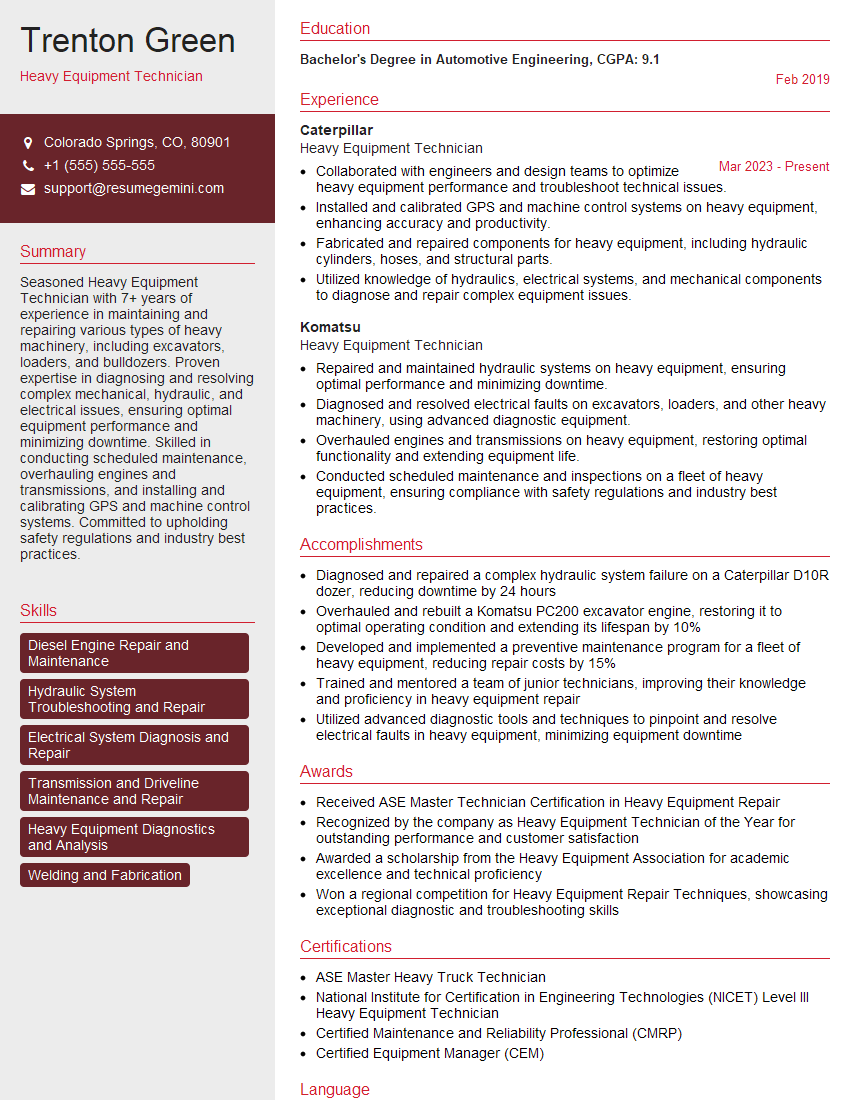
Heavy Equipment Technician Resume Sample

Construction Equipment Mechanic Resume Sample
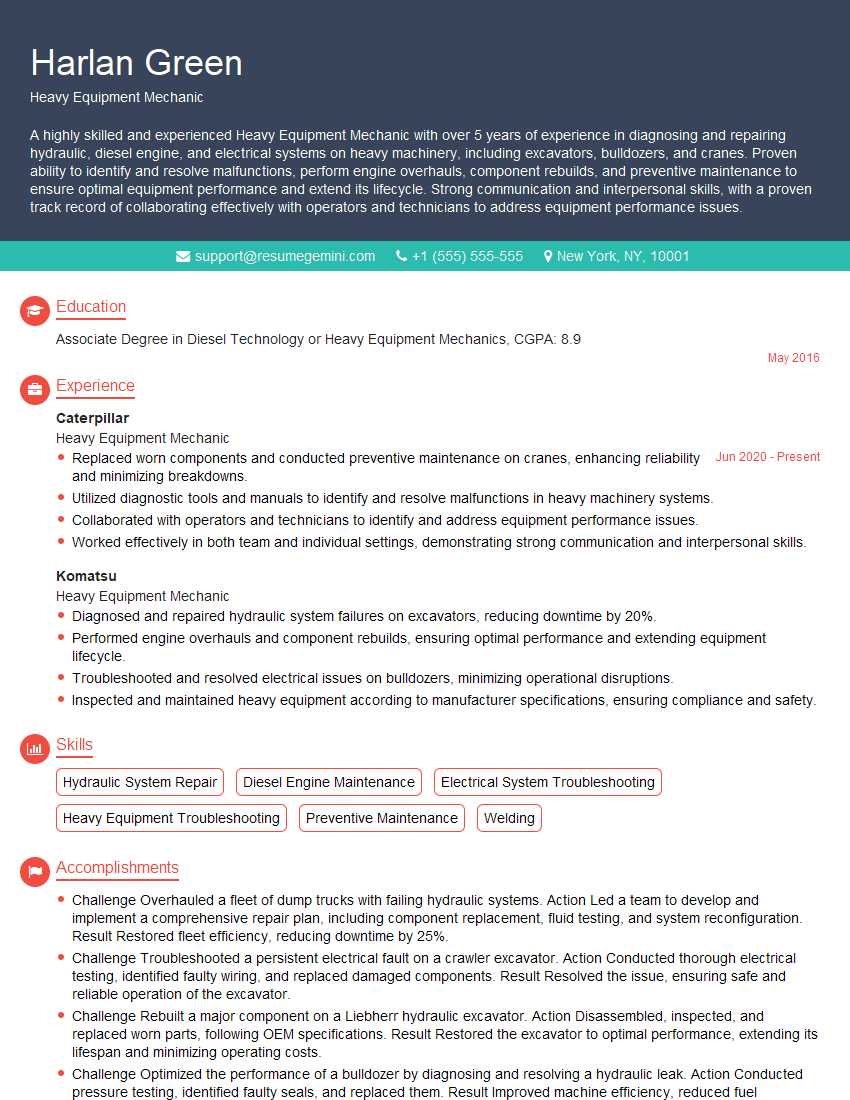
Heavy Equipment Mechanic Resume Sample
Explore more articles
Users Rating of Our Blogs
Share Your Experience
We value your feedback! Please rate our content and share your thoughts (optional).
What Readers Say About Our Blog
To the interviewgemini.com Webmaster.
Very helpful and content specific questions to help prepare me for my interview!
Thank you
To the interviewgemini.com Webmaster.
This was kind of a unique content I found around the specialized skills. Very helpful questions and good detailed answers.
Very Helpful blog, thank you Interviewgemini team.