Every successful interview starts with knowing what to expect. In this blog, we’ll take you through the top Soil Remediation and Reclamation interview questions, breaking them down with expert tips to help you deliver impactful answers. Step into your next interview fully prepared and ready to succeed.
Questions Asked in Soil Remediation and Reclamation Interview
Q 1. Explain the difference between in-situ and ex-situ remediation techniques.
In-situ and ex-situ are two primary approaches to soil remediation, differing fundamentally in where the cleanup process takes place.
- In-situ remediation involves treating the contaminated soil in its original location. Think of it like a doctor treating an illness without surgery – the treatment is applied directly to the affected area. This approach minimizes soil disturbance and transportation costs, making it environmentally and economically favorable in many cases. Examples include bioremediation (using microorganisms to break down contaminants), phytoremediation (using plants to extract contaminants), and chemical oxidation/reduction.
- Ex-situ remediation, on the other hand, involves excavating the contaminated soil and treating it elsewhere. This is similar to a surgical procedure – the affected area is removed and treated separately. This allows for more aggressive treatment methods, but it’s more expensive and disruptive due to excavation, transportation, and potential disposal issues. Examples include soil washing, thermal desorption, and incineration.
The choice between in-situ and ex-situ depends on factors such as the type and extent of contamination, the soil type, site accessibility, regulatory requirements, and cost-effectiveness.
Q 2. Describe the process of risk assessment in soil remediation.
Risk assessment in soil remediation is a crucial first step to determine the nature and extent of the environmental threat posed by contaminated soil. It’s a systematic process that involves several key stages:
- Site Characterization: This involves detailed investigation of the site, including historical land use, potential sources of contamination, and preliminary soil sampling to identify the extent and type of contaminants present.
- Contaminant Identification and Quantification: Laboratory analysis of soil samples identifies the specific contaminants (e.g., heavy metals, petroleum hydrocarbons, pesticides) and quantifies their concentrations. This data helps define the level of contamination.
- Exposure Assessment: This step assesses the potential pathways of exposure to humans and the environment. It considers how contaminants could migrate through soil, groundwater, or air and reach receptors such as people, plants, or animals. Factors such as proximity to residential areas, groundwater use, and soil properties are considered.
- Toxicity Assessment: This evaluates the potential health effects of the identified contaminants on humans and the environment. This assessment utilizes established toxicity thresholds and guidelines to determine the risk associated with the contaminant concentrations.
- Risk Characterization: This integrates the results from the previous steps to estimate the overall risk associated with the contaminated site. This involves combining exposure and toxicity data to calculate risk probabilities.
The risk assessment guides the selection of appropriate remediation technologies and helps determine the cleanup goals. It’s a crucial component of regulatory compliance and protects human health and the environment.
Q 3. What are the common methods used for the remediation of petroleum hydrocarbon contaminated soil?
Petroleum hydrocarbon contamination is a common environmental problem requiring specialized remediation techniques. Common methods include:
- Bioremediation: Uses naturally occurring microorganisms to degrade the hydrocarbons. This is a cost-effective and environmentally friendly option, but it’s time-consuming and its effectiveness depends on factors like soil conditions and contaminant type.
- Thermal Desorption: Heats the contaminated soil to volatilize the hydrocarbons, which are then captured and treated. It’s effective for a wide range of contaminants but is energy-intensive and can produce air emissions that need to be managed.
- Soil Washing: Uses water or solvents to extract the hydrocarbons from the soil. It’s effective for removing easily soluble hydrocarbons, but it generates wastewater that requires treatment.
- Air Sparging and Bioventing: These in-situ methods introduce air into the soil to enhance the biodegradation of hydrocarbons. Air Sparging is used for groundwater, while Bioventing targets the soil itself.
- Chemical Oxidation: Uses strong oxidizing agents to break down hydrocarbons into less harmful substances. It can be effective for a range of contaminants but can be expensive and may require careful management of chemical byproducts.
The choice of method often depends on the specific circumstances of the site, the type and concentration of hydrocarbons, and regulatory requirements.
Q 4. Explain the principles of bioremediation and its limitations.
Bioremediation leverages the natural ability of microorganisms (bacteria, fungi) to break down complex organic pollutants into simpler, less harmful substances. It’s a cost-effective, environmentally friendly approach for many contaminants, including petroleum hydrocarbons, pesticides, and explosives.
Principles of Bioremediation:
- Microbial Degradation: Microorganisms utilize contaminants as a source of energy or carbon, transforming them through metabolic processes. This often requires optimal conditions including sufficient nutrients (nitrogen, phosphorus), oxygen (for aerobic processes), moisture, and a suitable temperature.
- Stimulation vs. Augmentation: Stimulation involves optimizing environmental conditions to enhance the activity of naturally occurring microorganisms. Augmentation involves introducing specific microorganisms with enhanced degradation capabilities.
Limitations of Bioremediation:
- Slow Process: Bioremediation can be time-consuming, especially for recalcitrant contaminants.
- Site-Specific: The effectiveness depends on soil conditions, contaminant type, and presence of suitable microorganisms. It may not be effective for all types of contaminants or in all soil environments.
- Monitoring Challenges: Monitoring microbial activity and contaminant degradation can be complex and require specialized techniques.
- Toxicity of Byproducts: In some cases, the byproducts of microbial degradation could be toxic.
Despite its limitations, bioremediation is a valuable tool in soil remediation, often used in combination with other techniques for optimal results. For example, it’s commonly used in conjunction with bioventing for petroleum hydrocarbon remediation.
Q 5. What are the regulatory requirements for soil remediation in your region?
(Note: This answer must be adapted to reflect the specific regulatory requirements of a particular region. The following is a general example and should not be considered legal advice.)
Regulatory requirements for soil remediation vary by location but generally involve:
- Environmental Agencies: Compliance with regulations set by federal and/or state environmental protection agencies (e.g., EPA in the US, equivalent agencies in other countries).
- Site Assessments: Conducting thorough site investigations and risk assessments to characterize the contamination and potential risks.
- Remediation Plans: Submitting remediation plans outlining proposed cleanup strategies, technologies, and monitoring plans for regulatory approval.
- Cleanup Standards: Meeting specific cleanup goals or standards established by the regulatory agencies. These standards can vary depending on the type of contaminant, land use, and risk assessment.
- Monitoring and Reporting: Regular monitoring of soil and groundwater to track the effectiveness of the remediation and submit periodic reports to the regulatory agencies.
- Closure Certification: Obtaining closure certification from the regulatory agency once cleanup goals have been met and the site is deemed safe.
It’s essential to work closely with regulatory agencies throughout the remediation process to ensure compliance.
Q 6. How do you determine the appropriate remediation technology for a specific site?
Selecting the appropriate remediation technology for a specific site requires a multi-faceted approach considering several factors:
- Site Characterization: A comprehensive understanding of the site’s geology, hydrology, and the nature and extent of contamination (type, concentration, depth) is crucial.
- Risk Assessment: A thorough risk assessment identifies the potential risks to human health and the environment and helps define remediation goals.
- Technology Screening: Various remediation technologies are evaluated based on their effectiveness, cost-effectiveness, feasibility given the site conditions, and regulatory requirements. Factors such as soil type, permeability, and the presence of groundwater significantly influence technology selection. Consideration is given to potential environmental impacts (e.g., generation of hazardous waste).
- Pilot Testing: Pilot-scale testing of promising technologies can help validate their effectiveness and optimize parameters before full-scale implementation. This reduces risk and cost associated with deploying a technology that may not perform as expected.
- Cost-Benefit Analysis: A cost-benefit analysis compares the costs and benefits of different technologies, including initial costs, operational costs, and long-term maintenance costs. The analysis should also factor in potential risks and liabilities.
- Regulatory Compliance: The chosen technology must meet all regulatory requirements and obtain necessary permits.
Often, a combination of technologies (integrated remediation) is the most effective approach. For instance, bioremediation might be followed by soil washing to remove residual contaminants. This decision-making process is iterative and involves expert judgment.
Q 7. Describe your experience with soil sampling and analysis techniques.
My experience encompasses a wide range of soil sampling and analysis techniques, essential for accurate site characterization and risk assessment. I am proficient in both field and laboratory procedures.
Field Sampling:
- Sample Locations: Determining appropriate sampling locations based on site maps, historical information, and preliminary investigations. This often involves using GPS technology for precise location tracking.
- Sampling Methods: Employing various sampling techniques, including auger drilling, hand augers, and split-spoon samplers, depending on the depth and soil conditions. I am experienced with maintaining chain of custody for ensuring sample integrity.
- Sample Handling: Proper preservation and handling of samples are critical to preventing contamination or degradation before analysis. This involves appropriate containers, preservatives, and transportation methods.
Laboratory Analysis:
- Chemical Analysis: Experience with various analytical techniques for identifying and quantifying contaminants, including gas chromatography (GC), high-performance liquid chromatography (HPLC), inductively coupled plasma mass spectrometry (ICP-MS), and atomic absorption spectroscopy (AAS).
- Physical and Chemical Characterization: Determining soil properties such as particle size distribution, organic matter content, pH, and moisture content.
- Data Interpretation: Analyzing the analytical results to determine the extent and nature of contamination, assess risk, and inform remediation strategies. I’m proficient in using statistical methods to interpret large datasets.
Through years of experience, I’ve developed a thorough understanding of quality assurance/quality control (QA/QC) procedures necessary for reliable and defensible results. Proper sampling and analysis are the bedrock of successful soil remediation projects.
Q 8. What are the challenges associated with remediation of heavy metal contaminated soil?
Remediating heavy metal-contaminated soil presents unique challenges due to the inherent properties of these pollutants. Heavy metals, unlike organic contaminants, don’t readily break down; they persist in the environment, posing long-term risks.
- Persistence: Heavy metals are non-biodegradable, meaning they remain in the soil for extended periods, requiring long-term management strategies.
- Toxicity: Even at low concentrations, certain heavy metals (like lead, mercury, and cadmium) can be highly toxic to plants, animals, and humans through bioaccumulation in the food chain.
- Mobility: The mobility of heavy metals in soil depends on factors like pH, redox potential, and the presence of organic matter. This variability makes remediation challenging as the metals might migrate deeper into the soil profile over time.
- Cost-Effectiveness: Remediation techniques for heavy metals are often expensive and time-consuming, making site-specific solutions crucial to balance effectiveness with cost.
- Regulatory Compliance: Stringent regulations govern acceptable levels of heavy metals in soil, demanding rigorous monitoring and adherence to specific remediation goals.
For example, a site contaminated with lead from past industrial activities might require excavation and off-site disposal of the contaminated soil, a costly and logistically complex process. Alternatively, techniques like phytoremediation or soil washing could be considered, but their effectiveness depends heavily on site-specific conditions and the type of heavy metal present.
Q 9. Explain the concept of soil vapor extraction (SVE).
Soil Vapor Extraction (SVE) is a in-situ remediation technology used to remove volatile organic compounds (VOCs) from the subsurface. Think of it like a giant vacuum cleaner for the ground. It involves extracting contaminated soil vapor through a network of wells, then treating the extracted vapor to remove the contaminants before releasing the cleaned air.
The process typically begins with installing a series of wells into the contaminated soil. A vacuum is applied to these wells, drawing the soil vapor upward. This vapor then travels through a treatment system, often using activated carbon adsorption or thermal oxidation, to remove the VOCs. The cleaned air is then released into the atmosphere.
SVE is effective for contaminants that readily volatilize, meaning they easily transition from liquid or solid phases to a gaseous state. It’s frequently used at sites contaminated with gasoline, dry cleaning solvents, and other VOCs. The success of SVE heavily relies on the soil’s permeability – it needs to allow for efficient vapor flow. Factors such as soil moisture content and the depth of the contamination also significantly influence the effectiveness of the technique.
Q 10. How do you manage and interpret data obtained during a remediation project?
Data management and interpretation are crucial for successful remediation. It involves a multi-step process, beginning with robust data collection and ending with informed decision-making.
- Data Collection: This includes collecting soil samples, groundwater samples, and air samples at various points across the site. The frequency and location of sampling are determined based on site-specific factors and the type of contamination.
- Data Analysis: Statistical analysis is used to assess the extent of contamination, identify trends, and compare pre- and post-remediation data. Sophisticated software packages are used to visualize data and create maps showing the spatial distribution of contaminants.
- Data Interpretation: The interpreted data is used to evaluate the effectiveness of remediation strategies, track progress towards regulatory goals, and make adjustments to the remediation plan as needed. This often requires an understanding of contaminant fate and transport principles.
- Reporting: Comprehensive reports are generated that document all aspects of data collection, analysis, and interpretation. These reports are vital for regulatory compliance and communication with stakeholders.
For instance, we might use GIS software to create a three-dimensional model of contaminant plume movement, informing the optimal placement of extraction wells in an SVE system. Regular analysis of groundwater data allows us to monitor the effectiveness of a pump-and-treat system and prevent groundwater contamination.
Q 11. What are the key performance indicators (KPIs) for a successful remediation project?
Key Performance Indicators (KPIs) for a successful remediation project are critical for measuring success and making informed decisions throughout the project lifecycle. These can be broadly categorized into:
- Contaminant Reduction: This measures the percentage decrease in contaminant concentrations in soil, groundwater, or soil vapor after remediation. This is typically compared against regulatory cleanup goals.
- Cost-Effectiveness: This considers the total remediation cost against the achieved reduction in contamination. An effective project minimizes costs while meeting regulatory requirements.
- Time Efficiency: This tracks the project timeline against the planned schedule. Delays can significantly increase costs and impact project success.
- Safety Record: This measures the number of safety incidents and lost-time injuries during the remediation process. A strong safety record demonstrates commitment to worker well-being.
- Regulatory Compliance: This assesses adherence to all applicable environmental regulations and permits throughout the remediation process.
For example, a KPI could be reducing the concentration of TCE (trichloroethylene) in groundwater by 95% within 18 months, while maintaining a lost-time injury rate below 1%. Regular monitoring and reporting against these KPIs allows for timely corrective actions and ensures the project remains on track.
Q 12. Describe your experience with phytoremediation techniques.
Phytoremediation, using plants to remove or neutralize contaminants, is a sustainable and cost-effective remediation technology in specific situations. My experience includes several projects utilizing different phytoremediation approaches:
- Phytoextraction: This involves cultivating plants that accumulate high concentrations of heavy metals in their shoots. After harvesting, the plants are safely disposed of, removing the contaminants from the soil. I’ve successfully used this method for removing cadmium and lead from contaminated agricultural land.
- Phytostabilization: This technique uses plants to reduce the mobility and bioavailability of contaminants. It’s beneficial in situations where complete removal is not feasible or cost-effective. I’ve utilized this on sites with arsenic contamination, where plants helped prevent the spread of the contaminant through the soil profile.
- Phytovolatilization: This involves the uptake of contaminants by plants and their subsequent release into the atmosphere as less harmful gases. While effective for certain VOCs, careful consideration of potential air quality impacts is essential. I’ve worked on projects using this approach for the removal of selenium.
The selection of appropriate plant species is crucial, as different plants have varying capacities to accumulate or stabilize specific contaminants. Site-specific factors like soil pH, moisture content, and climate play significant roles in determining the success of phytoremediation efforts.
Q 13. How do you ensure the safety of workers during remediation projects?
Worker safety is paramount in any remediation project. A robust safety program is essential, encompassing several key elements:
- Pre-Project Risk Assessment: Thorough assessment of potential hazards, including chemical exposure, physical risks, and confined space entry.
- Personal Protective Equipment (PPE): Providing appropriate PPE, such as respirators, gloves, and protective clothing, based on the identified hazards.
- Training and Education: Regular training for workers on safe handling procedures, emergency response protocols, and the health effects of the contaminants being remediated.
- Site Security: Restricting access to the remediation site to authorized personnel and implementing measures to prevent unauthorized entry.
- Monitoring and Evaluation: Regular monitoring of worker health and the effectiveness of safety protocols. Regular safety meetings to address concerns and improve safety practices.
For instance, on a project involving asbestos abatement, all workers underwent extensive training on safe asbestos handling and wore specialized respirators. Regular air monitoring ensured that exposure levels remained below permissible limits.
Q 14. What are the long-term monitoring strategies for remediated sites?
Long-term monitoring is essential to ensure the long-term success of remediation efforts and verify that the site remains compliant with regulatory standards. A comprehensive long-term monitoring plan typically includes:
- Groundwater Monitoring: Regular sampling of groundwater wells to monitor contaminant concentrations and assess the effectiveness of remediation actions. This continues until regulatory closure criteria are met.
- Soil Monitoring: Periodic soil sampling to verify the stability of remediation and to detect any potential re-contamination events.
- Air Monitoring: If applicable (e.g., SVE), monitoring air quality to ensure that the released air does not pose any environmental or human health risks.
- Vegetation Monitoring: For phytoremediation projects, monitoring plant growth and contaminant uptake can provide valuable data on the long-term effectiveness of the approach.
- Data Analysis and Reporting: Regular analysis and interpretation of collected data and the preparation of comprehensive reports to regulatory agencies and stakeholders.
The duration and frequency of monitoring are determined on a site-specific basis, considering factors like the type and concentration of contaminants, the remediation technology employed, and regulatory requirements. In some cases, monitoring may be required for decades after remediation is completed.
Q 15. Describe your experience with developing remediation work plans.
Developing a remediation work plan is akin to creating a detailed roadmap for a complex journey. It requires a thorough understanding of the site, the contaminants, and the regulatory landscape. My approach involves several key steps:
- Site Characterization: This is the foundation. We conduct thorough investigations to define the extent of contamination, identify the types and concentrations of contaminants, and understand the soil properties (e.g., texture, permeability). This often involves soil sampling, laboratory analysis, and geophysical surveys.
- Remediation Goal Setting: We establish clear, measurable, achievable, relevant, and time-bound (SMART) goals. These goals are guided by regulatory requirements and risk assessment results, defining the desired level of soil cleanup.
- Technology Selection: Based on the site characteristics and contamination profile, we select the most appropriate remediation technology. This could range from bioremediation (using microorganisms to break down contaminants) to thermal desorption (heating the soil to volatilize contaminants) or excavation and disposal. The choice always considers cost-effectiveness, environmental impact, and feasibility.
- Work Plan Development: This document outlines all aspects of the project, including tasks, schedules, personnel, equipment, safety protocols, quality assurance/quality control (QA/QC) procedures, and contingency plans. It serves as a guide for the entire remediation process and ensures smooth execution.
- Regulatory Compliance: Throughout the process, we maintain strict adherence to all relevant environmental regulations and permits. This often involves regular reporting to regulatory agencies and ensuring all work is conducted in a compliant manner.
For instance, on a project involving petroleum hydrocarbon contamination in a former gas station, we conducted extensive soil sampling to determine the extent of the plume, selected in-situ bioremediation as the most suitable technology, and developed a detailed work plan that included regular monitoring of soil conditions and microbial activity.
Career Expert Tips:
- Ace those interviews! Prepare effectively by reviewing the Top 50 Most Common Interview Questions on ResumeGemini.
- Navigate your job search with confidence! Explore a wide range of Career Tips on ResumeGemini. Learn about common challenges and recommendations to overcome them.
- Craft the perfect resume! Master the Art of Resume Writing with ResumeGemini’s guide. Showcase your unique qualifications and achievements effectively.
- Don’t miss out on holiday savings! Build your dream resume with ResumeGemini’s ATS optimized templates.
Q 16. How do you handle unexpected challenges during a remediation project?
Unexpected challenges are inevitable in soil remediation. My approach centers around proactive risk management and a flexible, adaptive mindset. When faced with an unforeseen issue, my steps are:
- Immediate Assessment: First, we thoroughly assess the nature and extent of the problem. This involves gathering data, analyzing the situation, and understanding its potential impact on the project timeline, budget, and safety.
- Problem Solving: We brainstorm solutions with the team, considering alternative approaches and technologies. This often involves consulting with experts in various fields, such as geotechnical engineers or hydrogeologists.
- Risk Evaluation: We evaluate the risks associated with each potential solution, considering environmental implications, cost, and schedule adjustments. We prioritize safety and environmental protection at all times.
- Mitigation and Implementation: We select the best solution based on our evaluation and implement it effectively. This may involve modifying the existing work plan or developing a supplementary plan to address the new challenge.
- Documentation and Reporting: All changes, decisions, and actions taken are thoroughly documented and reported to relevant stakeholders, including clients and regulatory agencies.
For example, during a soil washing project, we encountered unexpectedly high levels of heavy metals in the soil. We immediately paused operations, conducted further analysis, and adapted the treatment process by adding a specialized chemical treatment step to remove the heavy metals, avoiding potential environmental damage.
Q 17. Explain the role of risk management in soil remediation projects.
Risk management is paramount in soil remediation. It’s a systematic process to identify, assess, and control potential hazards throughout the project lifecycle. This involves:
- Identifying Hazards: This includes potential risks to human health, the environment, and the project itself (e.g., cost overruns, schedule delays).
- Assessing Risks: We evaluate the likelihood and potential consequences of each identified hazard. This often involves using quantitative methods like risk matrices.
- Developing Control Measures: We establish strategies to mitigate or eliminate identified risks. These controls can include engineering solutions, administrative procedures, or safety protocols.
- Monitoring and Review: We continuously monitor the effectiveness of our control measures and review the risk assessment throughout the project. This ensures that the risks remain manageable and the project stays on track.
A strong risk management plan not only protects human health and the environment but also ensures project success by preventing unforeseen issues and cost overruns. For instance, in a project involving volatile organic compounds (VOCs), a thorough risk assessment would identify the need for specialized equipment and safety measures to prevent VOC exposure to workers and the surrounding environment.
Q 18. What are the different types of soil contaminants?
Soil contaminants are diverse and can be broadly categorized as:
- Metals: Heavy metals like lead, mercury, arsenic, and cadmium are highly toxic and persistent in the environment.
- Petroleum Hydrocarbons: These are organic compounds found in petroleum products like gasoline, oil, and diesel fuel. They can contaminate soil through spills or leaks.
- Pesticides and Herbicides: These chemicals, used in agriculture, can leach into the soil and contaminate groundwater.
- Polychlorinated Biphenyls (PCBs): These are persistent organic pollutants that were once widely used in industrial applications. They are highly toxic and persistent.
- Volatile Organic Compounds (VOCs): These are organic chemicals that readily evaporate at room temperature. Examples include benzene, toluene, and trichloroethylene.
- Semi-Volatile Organic Compounds (SVOCs): These are organic chemicals that evaporate more slowly than VOCs. Examples include polycyclic aromatic hydrocarbons (PAHs).
The specific contaminants present in a particular site dictate the remediation approach. A site might contain a mix of these contaminants, requiring a tailored remediation strategy.
Q 19. Describe your experience with soil washing technology.
Soil washing is a physical separation process that removes contaminants from soil. My experience involves designing and overseeing soil washing systems for a variety of contaminated sites. The process involves several steps:
- Excavation and Screening: Contaminated soil is excavated and screened to remove large debris and rocks.
- Washing: The screened soil is then mixed with water (and potentially additives like surfactants or chelating agents) in a washing unit. The contaminants are separated from the soil particles.
- Separation: This is crucial. Different separation technologies are used to separate the washed soil from the contaminated water, such as hydrocyclones or settling tanks.
- Treatment: The contaminated water needs to be treated before disposal or reuse, usually through filtration, chemical precipitation, or biological treatment.
- Disposal/Reuse: The clean soil can then be reused or disposed of according to regulations. The treated water can be reused or safely discharged.
I’ve worked on projects where soil washing was successfully used to remove petroleum hydrocarbons from soil at a former gas station, achieving significant reductions in contaminant concentrations and allowing for soil reuse. The choice of the specific washing process (e.g., counter-current washing, batch washing) depends on the soil properties and contaminant characteristics.
Q 20. How do you assess the effectiveness of a remediation technique?
Assessing the effectiveness of a remediation technique is crucial. It involves a combination of quantitative and qualitative methods:
- Monitoring: Regular monitoring of soil and groundwater samples is performed to track contaminant concentrations. This provides quantitative data on the effectiveness of the remediation efforts.
- Data Analysis: Statistical analysis of monitoring data helps assess whether the remediation goals have been achieved and the rate of contaminant reduction.
- Performance Evaluation: This compares the actual performance with the projected outcomes outlined in the remediation work plan. This helps identify any discrepancies and areas for improvement.
- Regulatory Compliance: Meeting regulatory standards for soil and groundwater cleanup is a key indicator of the remediation technique’s success.
- Long-Term Monitoring: Post-remediation monitoring is crucial to ensure the long-term stability of the site and prevent future contamination.
For instance, in a bioremediation project, the effectiveness is measured by the reduction in contaminant concentrations over time, as well as the changes in microbial activity and soil properties. Visual inspections and geophysical techniques can also contribute to a complete assessment of the remediation effort.
Q 21. What are the environmental impacts of soil remediation?
While soil remediation aims to improve environmental conditions, it can have both positive and negative environmental impacts. It’s essential to carefully consider these factors:
- Energy Consumption: Many remediation technologies, especially those involving excavation or thermal treatment, require significant energy, potentially contributing to greenhouse gas emissions.
- Waste Generation: Some remediation methods generate hazardous waste that needs to be properly managed and disposed of, adding to the environmental burden.
- Air and Water Pollution: Some techniques may release pollutants into the air or water during the remediation process. Careful planning and control measures are essential to mitigate these impacts.
- Habitat Disruption: Excavation and other physical remediation methods can disrupt soil ecosystems and habitats, affecting local plant and animal communities.
- Positive Impacts: However, successful remediation can have significant positive impacts, such as protecting human health, improving water quality, and restoring ecological function to contaminated sites.
Minimizing negative environmental impacts is a key goal. This requires selecting environmentally friendly remediation techniques, employing best management practices, and adhering to stringent environmental regulations. Life cycle assessments (LCAs) can help assess the overall environmental footprint of different remediation options.
Q 22. Explain the concept of soil permeability and its relevance to remediation.
Soil permeability refers to the ease with which water and other fluids can move through the soil. It’s essentially how ‘porous’ the soil is. High permeability means fluids move easily, while low permeability means they move slowly or are blocked. In remediation, permeability is crucial because it dictates how effectively contaminants can be removed. For example, in bioremediation (using microorganisms to break down pollutants), a highly permeable soil allows better oxygen and nutrient flow, essential for microbial activity. Conversely, low permeability can trap contaminants, hindering remediation efforts and requiring more intensive techniques.
Think of it like this: imagine trying to wash sand versus clay. Sand (high permeability) washes easily, while clay (low permeability) clings to the dirt. Similarly, contaminants in highly permeable soils are easier to flush out using techniques like pump and treat, while those in low-permeability soils may require more invasive methods like soil vapor extraction or in-situ chemical oxidation.
Q 23. How do you ensure compliance with environmental regulations during remediation?
Ensuring compliance with environmental regulations during remediation is paramount. It involves a multi-faceted approach. First, we meticulously review all applicable federal, state, and local regulations before commencing any project. This includes the Comprehensive Environmental Response, Compensation, and Liability Act (CERCLA), the Resource Conservation and Recovery Act (RCRA), and any specific regulations relevant to the site and contaminants. We then develop a detailed remediation plan that explicitly addresses these regulations, outlining the chosen methods, monitoring procedures, and reporting requirements. This plan is submitted to the relevant regulatory agencies for approval.
Throughout the remediation process, we maintain rigorous documentation, including sampling data, analytical results, and progress reports. We conduct regular monitoring to ensure the remediation is progressing as planned and meeting the regulatory targets. Any deviations from the plan are documented, investigated, and addressed with appropriate corrective actions. Finally, we submit comprehensive closure reports to the agencies, demonstrating that the remediation has achieved the required standards and the site is safe for its intended future use.
Q 24. Describe your experience with thermal desorption technology.
Thermal desorption is a technology I’ve utilized extensively for treating soils contaminated with volatile and semi-volatile organic compounds (VOCs and SVOCs). This process involves heating the contaminated soil to a high temperature in a controlled environment, volatilizing the contaminants. The vaporized contaminants are then captured and treated using techniques like a thermal oxidizer, before being released safely into the atmosphere. I’ve been involved in several projects where this technology was the most effective solution. For example, we used thermal desorption to remediate a site contaminated with PCBs (polychlorinated biphenyls) – a very persistent and hazardous group of chemicals.
The success of thermal desorption hinges on careful parameter optimization. Factors like temperature, residence time, and airflow rate significantly influence the efficiency of contaminant removal. We utilize sophisticated modeling and simulation tools to optimize these parameters, ensuring maximum contaminant removal while minimizing energy consumption and emissions. Post-treatment, the soil is typically cooler and free of hazardous contaminants, making it suitable for reuse or disposal based on further risk assessment.
Q 25. What are the economic considerations in choosing a remediation method?
Economic considerations are central to selecting a remediation method. The cost of remediation can vary dramatically depending on the chosen technology, the extent of contamination, site conditions, and regulatory requirements. We typically conduct a thorough cost-benefit analysis comparing various options. This includes evaluating the initial capital costs (equipment, site preparation), operational costs (energy, labor, maintenance), and disposal costs. We also factor in the potential for cost savings through reuse or recycling of treated soil and the potential long-term liability associated with each option.
For instance, bioremediation is generally less expensive than thermal desorption but may require a longer remediation timeframe. In some cases, a phased approach may be cost-effective, using less expensive methods initially followed by more intensive techniques to achieve the desired cleanup levels. Ultimately, the most economically sound solution involves balancing the cost of remediation with the long-term environmental and societal benefits.
Q 26. How do you communicate technical information to non-technical audiences?
Communicating complex technical information to non-technical audiences is a crucial skill in our field. I employ several strategies. Firstly, I avoid technical jargon as much as possible, instead opting for plain language and clear, concise explanations. I often use analogies and metaphors to illustrate complex concepts. For instance, explaining soil permeability using the sand-versus-clay example clarifies the concept without using specialized terminology. Secondly, I use visuals extensively—charts, graphs, and diagrams—to convey data and results effectively. Thirdly, I tailor my communication to the specific audience, understanding their level of understanding and adjusting my language and approach accordingly.
When presenting to community members, I use simple terms and focus on the implications for their health and environment. When addressing regulators, I use more precise terminology but maintain clarity and avoid unnecessary complexity. I firmly believe that effective communication is vital for fostering trust and ensuring a successful remediation project.
Q 27. Describe a situation where you had to troubleshoot a problem during a remediation project.
During a remediation project involving groundwater contamination with chlorinated solvents, we encountered unexpected challenges. Our initial pump and treat system wasn’t achieving the expected contaminant removal rates. After a thorough investigation, we discovered that the plume was extending beyond the initially modeled area due to previously unknown subsurface flow patterns. We addressed this by expanding the well network and incorporating enhanced in-situ bioremediation techniques. This involved introducing nutrients and oxygen to stimulate the growth of naturally occurring microorganisms capable of degrading the solvents.
The problem-solving process involved a multi-disciplinary approach. We collaborated with hydrogeologists to refine the groundwater flow model, microbiologists to optimize the bioremediation process, and engineers to modify the existing pump and treat system. Through careful analysis of the data and creative application of different techniques, we successfully remediated the site and met the regulatory requirements.
Q 28. What are your career goals in the field of soil remediation and reclamation?
My career goals center on advancing the field of soil remediation and reclamation through innovation and leadership. I aspire to contribute to the development and implementation of more sustainable and cost-effective remediation technologies. This includes exploring the potential of emerging technologies such as phytoremediation (using plants to remove contaminants) and advanced oxidation processes. I also aim to contribute to a more robust regulatory framework that supports responsible site management and remediation. Furthermore, I plan to mentor and train the next generation of professionals in this field, fostering a culture of environmental stewardship and responsible land management.
Ultimately, my goal is to play a significant role in restoring contaminated sites and making a positive impact on environmental health and sustainability.
Key Topics to Learn for Soil Remediation and Reclamation Interview
- Soil Characterization and Assessment: Understanding soil properties (texture, structure, pH, organic matter content), contaminant identification and quantification techniques (e.g., laboratory analysis, field screening), and risk assessment methodologies.
- Remediation Technologies: Practical knowledge of various remediation techniques including bioremediation (microbial degradation), phytoremediation (plant-based remediation), thermal desorption, soil washing, and excavation and disposal. Be prepared to discuss the advantages and limitations of each, and their suitability for different contaminant types and site conditions.
- Reclamation Strategies: Understanding the principles of land reclamation, including topsoil management, grading and contouring, revegetation techniques, and erosion control measures. Be ready to discuss sustainable reclamation practices and long-term monitoring strategies.
- Regulatory Compliance and Risk Management: Familiarity with relevant environmental regulations and permitting processes. This includes understanding risk assessment, risk management plans, and the reporting requirements for remediation projects.
- Project Management and Cost Estimation: Understanding project timelines, budgeting, and resource allocation. Experience with site investigation reports, remediation plans, and feasibility studies is beneficial.
- Emerging Technologies and Sustainable Practices: Demonstrate awareness of innovative remediation technologies and sustainable approaches to soil management, showing a commitment to environmental stewardship.
- Problem-Solving and Case Studies: Prepare to discuss real-world scenarios, analyzing challenges and proposing effective solutions. Consider researching case studies of successful soil remediation and reclamation projects.
Next Steps
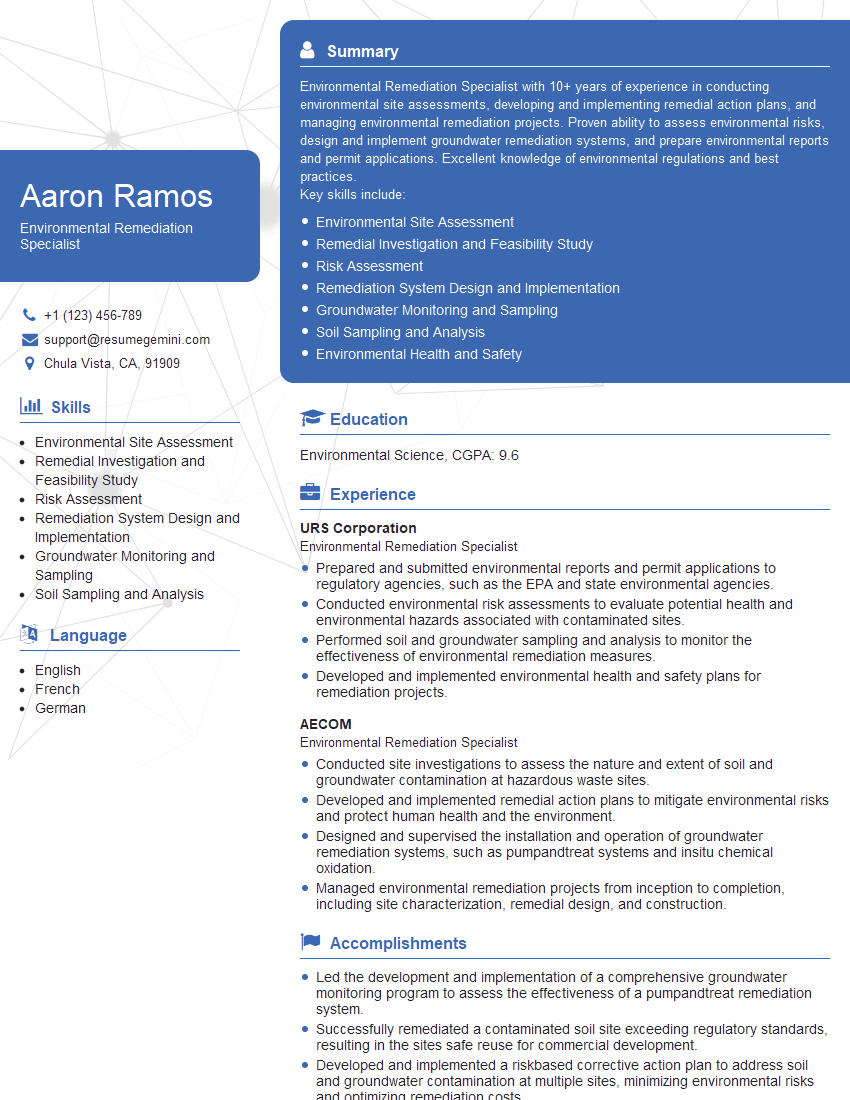
Mastering Soil Remediation and Reclamation opens doors to a rewarding career with significant impact on environmental sustainability. A strong understanding of these key areas will significantly boost your interview performance and career prospects. To maximize your chances, creating a compelling and ATS-friendly resume is crucial. ResumeGemini is a trusted resource that can help you build a professional resume tailored to highlight your skills and experience in this competitive field. Examples of resumes specifically designed for Soil Remediation and Reclamation professionals are available through ResumeGemini to guide you.
Explore more articles
Users Rating of Our Blogs
Share Your Experience
We value your feedback! Please rate our content and share your thoughts (optional).
What Readers Say About Our Blog
To the interviewgemini.com Webmaster.
Very helpful and content specific questions to help prepare me for my interview!
Thank you
To the interviewgemini.com Webmaster.
This was kind of a unique content I found around the specialized skills. Very helpful questions and good detailed answers.
Very Helpful blog, thank you Interviewgemini team.