Interviews are opportunities to demonstrate your expertise, and this guide is here to help you shine. Explore the essential PV System Maintenance and Troubleshooting interview questions that employers frequently ask, paired with strategies for crafting responses that set you apart from the competition.
Questions Asked in PV System Maintenance and Troubleshooting Interview
Q 1. Describe the process for visually inspecting a PV array.
A visual inspection of a PV array is the first and often most crucial step in PV system maintenance. It’s like giving your solar panels a thorough once-over to identify any potential problems before they become major issues. This involves systematically checking each component for signs of damage or degradation.
- Panel Inspection: Look for cracks, discoloration (especially yellowing or browning), hotspots (areas significantly hotter than others), or physical damage like hail impacts. Check for soiling (dirt, bird droppings, leaves) that reduces energy production.
- Wiring and Connections: Examine all wiring for damage, loose connections, or signs of overheating (discoloration or melting). Pay close attention to connectors and junction boxes.
- Mounting System: Inspect the racking system for corrosion, loose bolts, or structural issues that could compromise the array’s stability. Ensure panels are securely fastened and aligned.
- Surroundings: Check the area around the panels for obstructions like overhanging branches or excessive vegetation that might shade panels and reduce their efficiency. Note the presence of wildlife or any signs of intrusion.
Remember to document everything with photos and notes. This creates a valuable record for tracking changes over time and for future reference during troubleshooting.
Q 2. Explain the common causes of reduced PV system output.
Reduced PV system output can stem from a variety of factors, often a combination rather than a single cause. Think of it like a car – if one part malfunctions, the entire system is affected.
- Shading: Even partial shading of a single panel can significantly reduce the output of the entire string due to the series connection. This is akin to one weak link breaking a chain.
- Soiling: Dust, dirt, bird droppings, and other debris accumulate on panels, hindering light absorption. Regular cleaning is essential.
- Faulty Panels or Modules: Damaged or defective panels exhibit reduced or zero output. Visual inspection and electrical testing are needed to identify such issues.
- Wiring Problems: Loose or corroded connections, damaged cables, or poor grounding can lead to significant power losses.
- Inverter Malfunctions: The inverter is the heart of the system; issues with its operation directly translate to reduced output. Troubleshooting the inverter is critical.
- Environmental Factors: High temperatures can negatively affect panel efficiency, while extreme weather events can cause physical damage.
Diagnosing the root cause often requires a systematic approach, involving visual inspection, electrical measurements, and possibly advanced diagnostic tools.
Q 3. How do you troubleshoot a malfunctioning solar inverter?
Troubleshooting a malfunctioning solar inverter requires a methodical approach, starting with safety precautions (always disconnect the system from the grid before working on it!).
- Check the Inverter’s Display: Many inverters display error codes or diagnostic messages. Consult the manufacturer’s manual to understand these codes.
- Inspect the Connections: Ensure all AC and DC connections are secure and tight. Look for signs of overheating or damage.
- Verify AC and DC Voltages: Use a multimeter to measure the DC input voltage from the PV array and the AC output voltage from the inverter. Compare these readings to the inverter’s specifications.
- Check Circuit Breakers and Fuses: Ensure all circuit breakers and fuses are functioning correctly. A tripped breaker or blown fuse indicates a fault somewhere in the system.
- Assess Environmental Conditions: Extreme temperatures can affect inverter operation. Verify proper ventilation.
- Communication Checks: If the inverter is network-connected, check the network communication status. Issues with network connectivity might prevent proper operation.
- Consult the Manufacturer: If the problem persists, contact the inverter manufacturer’s technical support for further assistance. They can often provide remote diagnostics.
Remember that attempting complex repairs without proper training can be dangerous. For serious issues, always call a qualified technician.
Q 4. What safety precautions must be taken when working on a PV system?
Safety is paramount when working on a PV system. High voltages and potentially dangerous currents are involved, necessitating strict adherence to safety protocols. Think of it like working with high-powered electrical equipment – carelessness can lead to serious injury or even death.
- Lockout/Tagout (LOTO): Always lock out and tag out the system’s disconnects to prevent accidental energization.
- Personal Protective Equipment (PPE): Wear appropriate PPE, including insulated gloves, safety glasses, and arc flash protective clothing, depending on the voltage level.
- Grounding: Ensure the system is properly grounded to prevent electrical shock.
- Working at Heights: If working on a rooftop or elevated structure, use appropriate fall protection measures such as harnesses and safety lines.
- Awareness of Hot Spots: Be mindful of panels that might exhibit overheating (hot spots) as these can pose a burn risk.
- Fire Safety: Be prepared for potential fire hazards, particularly when working near electrical components.
- Training and Qualifications: Only qualified and trained personnel should work on PV systems.
Never compromise on safety. A thorough understanding of the system’s design and electrical characteristics is crucial before any maintenance or troubleshooting is attempted.
Q 5. What are the typical maintenance tasks for a PV system?
Regular maintenance is crucial for optimal performance and longevity of a PV system. It’s like regular servicing for a car – preventive maintenance is much cheaper and easier than major repairs.
- Visual Inspection: Regular visual checks for damage, soiling, or obstructions (as discussed earlier).
- Cleaning: Periodic cleaning of panels to remove dirt and debris, improving energy production.
- Connection Checks: Inspecting all wiring and connections for tightness and corrosion.
- Inverter Monitoring: Regularly checking inverter performance data for any anomalies.
- Grounding Check: Periodically checking the system’s grounding resistance to ensure proper safety.
- Insulation Resistance Testing: Measuring insulation resistance of PV strings to detect potential faults in wiring insulation.
- Performance Monitoring: Tracking the system’s energy production and comparing it to historical data. This helps identify any potential performance degradation.
The frequency of these tasks depends on the environment and system design. A system in a dusty environment will require more frequent cleaning than one in a cleaner location. A robust maintenance plan, tailored to the specific system and location, is essential.
Q 6. How do you diagnose and resolve issues with shading on PV panels?
Shading on PV panels is a common issue that significantly impacts system output. Imagine a group of musicians – if one is significantly quieter than the rest, the overall sound is diminished. Similarly, a shaded panel reduces the output of the entire string.
- Identify the Shading Source: Determine what is causing the shading (trees, buildings, other structures). Use visual observation and possibly shadow mapping techniques.
- Measure the Impact: Use a multimeter or a specialized data logger to quantify the reduction in power output caused by the shading.
- Implement Mitigation Strategies: Depending on the cause and severity of shading, various mitigation strategies exist:
- Pruning: Trim overhanging branches that are casting shadows.
- Relocation: If feasible, relocate the system to a location with less shading.
- Optimized Panel Placement: Rearrange panels to minimize shadow overlap.
- Bypass Diodes: Ensure that bypass diodes in the panels are functioning correctly. They help isolate shaded cells and minimize the impact of shading.
- Microinverters or Power Optimizers: Consider upgrading to microinverters or power optimizers which can help mitigate the impact of shading on an individual panel level.
- Monitor Results: After implementing the chosen mitigation strategy, monitor the system’s performance to ensure it has effectively resolved the shading issue.
A comprehensive approach combining investigation, analysis, and appropriate mitigation is key to resolving shading-related problems.
Q 7. Explain the process of testing the insulation resistance of PV strings.
Testing the insulation resistance of PV strings is a critical safety and maintenance procedure. It checks the integrity of the insulation on cables and connections, preventing electrical shorts and ensuring the safety of the system and personnel. It’s like checking the insulation on electrical wires in your house – a fault here can lead to a fire hazard.
- Safety Precautions: Ensure the system is properly disconnected and grounded before beginning the test. Use appropriate PPE.
- Equipment: Use a megohmmeter (insulation resistance tester) with a suitable voltage rating for the system voltage.
- Testing Procedure:
- Disconnect the PV string from the inverter.
- Connect the megohmmeter leads to the positive and negative terminals of the PV string.
- Perform the test according to the manufacturer’s instructions for the megohmmeter.
- Record the measured insulation resistance.
- Interpretation: The measured insulation resistance should be above a certain minimum value (usually specified by the system manufacturer or relevant standards). A low reading indicates potential insulation breakdown that needs immediate attention.
- Repairs: If a low insulation resistance is found, carefully inspect the PV string for damaged cables, connectors, or other insulation defects. Repair or replace any damaged components before reconnecting the string.
Regular insulation resistance testing is vital for maintaining the system’s safety and reliability. Consistent testing can prevent costly repairs or potential safety hazards caused by insulation failure.
Q 8. How do you interpret a PV system’s performance data?
Interpreting PV system performance data involves analyzing key metrics to assess its efficiency and identify potential problems. Think of it like a health check-up for your solar system. We look at several key indicators. First, we examine the daily and monthly energy production, comparing it to the system’s expected output based on its size and location. Significant deviations suggest issues. Then we analyze the voltage and current at various points in the system – panels, strings, inverters. Low voltage or current might indicate shading, faulty wiring, or failing components. Power factor is also important; a low power factor can signal problems with the inverter or system impedance. Finally, we look at the performance ratio, a metric that summarizes the overall efficiency of the system, accounting for losses due to various factors. A low performance ratio indicates areas needing attention. Software and data loggers are crucial for this process, providing continuous monitoring and detailed historical data for analysis and trend identification. For example, a sudden drop in daily energy production might indicate a fault in the inverter or shading from newly grown trees.
Q 9. What are the signs of a faulty solar panel?
A faulty solar panel can manifest in several ways. Imagine a team of solar panels working together; if one is weak, the whole team suffers. Visually, you might see visible damage like cracks, hotspots (discolored areas), or delamination (separation of layers). These are clear signs of physical damage. Performance-wise, a faulty panel will show lower voltage or current output compared to other panels in the string. You can measure this using a multimeter. Another sign is a significantly lower temperature than other panels under the same conditions. This indicates a reduced ability to convert sunlight into electricity. Also, hotspots can significantly reduce the efficiency and lifespan of the panel, even without visible damage. Specialized infrared cameras can detect these hotspots, providing early warning of potential problems.
Q 10. How do you handle a PV system experiencing ground faults?
Ground faults in a PV system are serious safety hazards. Think of it as a short circuit – electricity taking an unintended path to ground. The first step is to immediately disconnect the system from the grid and the battery bank (if applicable) to prevent further damage and ensure safety. This typically involves switching off the main disconnect switches. Next, use a ground fault detection device, such as a clamp meter, to precisely locate the fault. Following the safety procedures outlined in the system’s documentation is crucial. Once the fault is located, the affected component, be it a cable, panel, or inverter, needs to be replaced or repaired. After repairs, a thorough ground fault test needs to be conducted to ensure the fault has been resolved. This involves checking ground resistances throughout the entire system. Ignoring ground faults can lead to fire hazards and damage to equipment. Proper grounding is essential for a safe and efficient PV system.
Q 11. Explain the difference between series and parallel connections in a PV array.
Series and parallel connections in a PV array differ significantly in how they combine the voltage and current outputs of individual solar panels. Imagine a series connection like a train – each panel adds its voltage to the next, increasing the total system voltage but keeping the current constant. Conversely, a parallel connection is like adding lanes to a highway – each panel adds its current to the others, boosting the system current while keeping the voltage relatively constant. A series connection is advantageous for higher voltage systems, simplifying the design and reducing wiring losses, but a single faulty panel can bring the whole string down. In contrast, a parallel connection is more fault-tolerant; a faulty panel affects only its branch. However, parallel systems require more wiring and may suffer from increased wiring losses.
Q 12. What are the common causes of overheating in a PV system?
Overheating in a PV system is a major concern, reducing efficiency and potentially damaging components. Several factors contribute. Shading on panels creates hotspots, leading to overheating. Poor ventilation around panels and inverters traps heat, increasing temperatures. Faulty connections create resistance, causing heat build-up. High ambient temperatures, especially in hot climates, put additional stress on the system. Dust and debris accumulation on the panel surfaces reduces the amount of sunlight hitting the cells, and the extra heat build-up. Regular cleaning and proper installation practices that allow for adequate airflow are crucial to mitigate overheating. Monitoring panel temperatures using infrared cameras and ensuring the system is operating within its specified temperature range is crucial for preventing thermal damage.
Q 13. How do you test the functionality of a solar charge controller?
Testing a solar charge controller involves several steps. First, visually inspect it for any signs of damage or overheating. Then, use a multimeter to check the voltage and current at the input (solar array side) and output (battery side). Verify that the voltages are within the rated operating voltage ranges of the controller and that the current flows appropriately during different sunlight levels (charging and floating phases). Check the battery voltage to ensure it’s properly charged. For example, if the battery voltage shows less than the set voltage, it indicates a problem with either the charging algorithm or the battery itself. Furthermore, check the controller’s output voltage and current during various operating stages to see if they’re consistent with expected values. Also, examine the controller’s operational LED indicators to verify it’s functioning correctly, often indicating charging status and any potential faults. A complete test considers the entire system; the controller’s functionality depends on the health of both the array and battery bank.
Q 14. What are the common types of PV system monitoring systems?
PV system monitoring systems range from simple to sophisticated. Basic monitoring systems often consist of a single meter measuring the total energy produced by the system. These provide a general overview of the system’s performance. More advanced systems use data loggers and remote monitoring platforms to collect detailed real-time data on various parameters such as voltage, current, power, and temperature at different points within the system. These systems are often web-based, allowing remote access to system data through a web browser, showing you a complete picture of your system’s status, even when you are not physically present. The most sophisticated systems include predictive maintenance capabilities, using data analysis to anticipate potential issues before they occur, improving the overall reliability and efficiency of the system. They will often alert you to specific issues or even predict necessary maintenance before there is a failure.
Q 15. How do you interpret the data from a PV system monitoring system?
Interpreting data from a PV system monitoring system is crucial for proactive maintenance and ensuring optimal performance. These systems typically provide real-time and historical data on various parameters. I start by looking at the overall energy production – is it meeting expectations based on the system’s capacity and the solar irradiance? Then, I delve into individual components. For example, I’d examine the voltage and current of each string, looking for discrepancies that might indicate shading, faulty panels, or connection issues. A string with significantly lower voltage or current than others is a red flag. I also analyze the inverter’s performance, checking its efficiency, temperature, and any error codes. Finally, I compare the data against historical trends to identify any deviations from the norm. For example, a gradual decrease in overall energy production over time could point to panel degradation. Software tools often provide visual representations like graphs and charts, making it easier to spot anomalies. Think of it like monitoring a patient’s vital signs; consistent monitoring allows for early detection of problems.
For instance, I recently worked on a system where the monitoring data showed consistently low voltage from one particular string. Further investigation revealed a partial shading issue caused by a tree branch encroaching on the panels. Trimming the branch resolved the problem, restoring the system’s efficiency.
Career Expert Tips:
- Ace those interviews! Prepare effectively by reviewing the Top 50 Most Common Interview Questions on ResumeGemini.
- Navigate your job search with confidence! Explore a wide range of Career Tips on ResumeGemini. Learn about common challenges and recommendations to overcome them.
- Craft the perfect resume! Master the Art of Resume Writing with ResumeGemini’s guide. Showcase your unique qualifications and achievements effectively.
- Don’t miss out on holiday savings! Build your dream resume with ResumeGemini’s ATS optimized templates.
Q 16. Explain the different types of PV panel bypass diodes and their function.
Bypass diodes are essential safety components in PV panels. They protect the panel from the effects of shading or cell failure. If one cell is shaded or damaged, it becomes a high-resistance path, blocking current flow. Without bypass diodes, this would affect the entire string’s performance. There are primarily two types: 1) Individual bypass diodes: These are placed parallel to each individual solar cell, offering the most effective protection, but increase the panel’s complexity and cost. 2) String bypass diodes: Usually three to four diodes are placed in parallel with a series of cells forming a string. This reduces cost and complexity compared to individual bypass diodes, but protection is less granular. They provide protection at the series string level and minimize power loss due to shading of a section of the string. The diodes are designed to allow current to bypass a faulty cell or shaded section, preventing the entire panel or string from becoming inactive.
Q 17. What are the effects of high humidity and extreme temperatures on PV systems?
High humidity and extreme temperatures significantly impact PV system performance and longevity. High humidity accelerates corrosion on metal components, such as the frames, connectors, and wiring. This corrosion can lead to increased resistance, reducing current flow and efficiency. Extreme temperatures, both high and low, affect the efficiency of the solar cells themselves. High temperatures reduce the voltage output of the cells, while extremely low temperatures can slow down the chemical reactions within them, impacting energy generation. Furthermore, temperature cycling (frequent swings between hot and cold) can induce thermal stress, leading to cracking and premature failure of the cells and other components.
In my experience, I’ve seen systems in humid coastal areas suffering from significantly accelerated corrosion. Regular inspections and preventative measures, such as applying anti-corrosion coatings, are crucial in such environments. Similarly, systems in desert climates are prone to high temperature degradation, and careful panel selection with high temperature coefficients is essential.
Q 18. Describe your experience with different types of PV inverters.
My experience encompasses various PV inverter types, including string inverters, microinverters, and power optimizers. String inverters are the most common, converting power from a string of panels. They are relatively inexpensive but less flexible than other types. If one panel fails, it impacts the whole string. Microinverters, on the other hand, are connected to individual panels, maximizing energy harvest and offering superior fault tolerance. A faulty panel only affects that panel. Power optimizers lie in between; they optimize the energy harvest of each panel within a string, improving overall system efficiency and enabling better monitoring at panel-level. I’ve worked extensively with SMA, SolarEdge, and Enphase inverters, familiar with their specifications, troubleshooting procedures, and communication protocols.
For example, in one project, we chose microinverters for a large, complex system with varied shading conditions. This ensured maximum energy production from each panel despite the shading challenges.
Q 19. How do you perform a performance ratio calculation for a PV system?
The performance ratio (PR) is a key indicator of a PV system’s efficiency. It represents the ratio of the actual energy generated to the system’s theoretical maximum energy output. The calculation is fairly straightforward: PR = (Actual Energy Yield) / (Nominal Power * Peak Sun Hours * Days in Period). ‘Actual energy yield’ is the actual energy generated by the system over a given period. ‘Nominal power’ refers to the system’s rated power in kWp. ‘Peak sun hours’ represents the average number of hours per day that the system receives its rated power. ‘Days in Period’ signifies the length of time the data is collected. The result is a percentage representing how efficiently the system converts solar energy into usable electricity. A higher PR indicates better performance, typically ranging from 0.7 to 0.8, but it can go higher depending on the conditions.
For accurate calculation, high-quality data from monitoring systems are essential. Factors influencing PR include array losses (shading, soiling), inverter losses, wiring losses, and operating conditions such as temperature and irradiance.
Q 20. What are the common causes of rapid panel degradation?
Rapid panel degradation can be caused by several factors, most significantly, manufacturing defects, environmental stressors, and installation issues. Manufacturing defects can result in cells with poor initial quality or weak construction, leading to rapid failure. Environmental factors include excessive heat, ultraviolet (UV) radiation, and PID (Potential Induced Degradation), which accelerates degradation in certain environments. Incorrect installation, such as improper grounding or poor module mounting, can exacerbate these problems. Poor-quality materials can lead to faster degradation compared to panels using high quality materials that are durable and can endure high temperatures and UV radiation. Shading can also cause hot spots, leading to accelerated degradation of the shaded cells.
Identifying the root cause requires careful visual inspection, electrical testing, and potentially laboratory analysis. In my experience, the most common cause is often the combination of environmental stress and underlying manufacturing defects, which are often compounded by improper installation practices.
Q 21. How would you determine if a problem is with the panels, the wiring or the inverter?
Diagnosing problems in PV systems requires a systematic approach. I would begin by checking the system’s monitoring data for any obvious issues, such as low voltage or current, or inverter error codes. Then, I’d visually inspect the panels for physical damage, shading, or soiling. A multimeter can help measure voltage and current at various points in the system—panels, combiner boxes, and inverters. Low voltage at the panel level could indicate a faulty panel, while low voltage after the combiner box might point to wiring issues. If the voltage is good at the combiner box but low at the inverter, the problem likely lies with the inverter itself. I also check the grounds, making sure they are securely connected and have low resistance. Finally, I’ll use the tools available and knowledge of the system to help locate the problem. A systematic, step-by-step approach can accurately pinpoint the issue efficiently.
Q 22. What are some preventative maintenance tasks you would perform?
Preventative maintenance is crucial for maximizing the lifespan and efficiency of a PV system. Think of it like regular check-ups for your car – it prevents bigger problems down the line. My preventative maintenance tasks include:
Visual Inspection: Regularly checking for physical damage to modules, such as cracks, hotspots, or debris accumulation. This often involves using drones or thermal imaging cameras for hard-to-reach areas.
Connection Integrity: Inspecting all electrical connections, including those at the modules, combiner boxes, inverters, and the main disconnect. Loose connections lead to energy loss and potential fire hazards.
Grounding Verification: Testing the grounding system to ensure it’s effectively protecting the system from lightning strikes and other electrical surges. We use specialized equipment to measure ground resistance.
Performance Monitoring: Regularly reviewing the system’s performance data to identify any anomalies or trends. This might involve analyzing data from the inverter’s built-in monitoring system or using specialized software.
Cleaning: Cleaning the solar panels to remove dirt, bird droppings, and other debris that can reduce energy output. The frequency depends on the environment, but generally, it’s recommended at least once or twice a year.
Vegetation Management: Ensuring that vegetation doesn’t shade the panels or obstruct airflow, affecting performance and potentially causing overheating.
Q 23. What is your experience with various types of racking systems and their maintenance?
I have extensive experience with various racking systems, including fixed-tilt, single-axis tracking, and dual-axis tracking systems. Each system has its unique maintenance requirements. For example:
Fixed-Tilt: Maintenance focuses primarily on structural integrity, ensuring bolts are tight, and checking for corrosion. Regular inspections for looseness or damage are vital, especially in high-wind areas.
Single-Axis Tracking: In addition to structural checks, we also need to inspect the drive mechanism, motors, and sensors for proper operation. Lubrication and cleaning are important preventative measures.
Dual-Axis Tracking: These systems are more complex, requiring more frequent inspections and maintenance of the multiple motor systems and control mechanisms. Careful monitoring of the system’s alignment and tracking accuracy is crucial.
My experience encompasses troubleshooting mechanical issues, addressing corrosion problems, and performing preventative maintenance to ensure optimal system performance and longevity. I am proficient in working with both ground-mounted and rooftop systems, adapting maintenance procedures according to the specific racking system and environmental conditions.
Q 24. Explain the importance of proper grounding in a PV system.
Proper grounding is absolutely critical for the safety and reliability of a PV system. It provides a low-resistance path for fault currents to flow to the earth, preventing dangerous voltage buildup and minimizing the risk of electrical shocks, fires, and equipment damage. Think of it as a safety valve for the electrical system.
Without proper grounding, a fault in the system could result in dangerous voltages appearing on exposed metal parts, posing a serious risk to personnel. Furthermore, a lack of grounding can lead to damage to the inverters and other sensitive components, significantly reducing the lifespan and efficiency of the system.
A properly grounded system provides a safe and reliable environment for maintenance and operation, protecting both personnel and equipment. We perform regular grounding resistance tests to verify the effectiveness of the grounding system and ensure it meets safety standards.
Q 25. How do you document your maintenance procedures?
Meticulous documentation is essential in PV system maintenance. We use a combination of methods:
Digital Maintenance Logs: We use software specifically designed for tracking maintenance activities. This includes detailed descriptions of performed tasks, dates, findings, any corrective actions taken, and parts replaced. This information is readily accessible and allows for trend analysis.
Photographs and Videos: Visual documentation is critical, especially for documenting damage, before and after repairs, or hard-to-explain issues. We use high-resolution images and videos to aid in troubleshooting and future reference.
System Diagrams and Schematics: Keeping up-to-date system diagrams is vital for efficient troubleshooting. We annotate these diagrams to reflect any modifications made during maintenance or repair.
Client Reporting: Regular reports summarizing the maintenance activities and any findings are provided to the client. This keeps them informed of the system’s health and allows for proactive planning.
This comprehensive approach ensures transparency and accountability, allowing us to efficiently track system performance and identify recurring issues that may require further investigation or preventative measures.
Q 26. How do you handle emergency situations (e.g., fire, arc flash)?
Emergency situations require immediate and decisive action. My training includes comprehensive safety protocols for handling such events:
Fire: Immediately evacuate the area, call emergency services (911), and attempt to contain the fire using appropriate fire extinguishers, if safe to do so. The main disconnect should be turned off once it’s safe to approach the system.
Arc Flash: Arc flash incidents are extremely dangerous. The primary response is to immediately vacate the area to a safe distance. Never approach the affected equipment until it has been confirmed safe by qualified personnel. The main disconnect should be turned off once it’s safe to approach the system.
We conduct regular safety training to reinforce emergency procedures and ensure that all team members are familiar with appropriate safety equipment and protocols. Our safety plan includes designated assembly points and clear communication strategies for emergency situations.
Q 27. What are some advanced troubleshooting techniques you utilize?
Beyond standard troubleshooting, I utilize advanced techniques like:
Thermal Imaging: Identifying hotspots on panels or connections that indicate potential issues before they escalate into failures. This helps in proactive maintenance and preventing catastrophic events.
Infrared Thermography: Similar to thermal imaging, this provides a detailed temperature map of the system, allowing for pinpoint identification of problematic areas.
Data Analysis: Using software to analyze performance data, identifying subtle changes in energy production that might suggest underlying problems. This allows for early detection of degradation or issues that might not be visible during a visual inspection.
I-V Curve Tracing: This is a more sophisticated diagnostic technique for assessing the performance of individual solar panels. By analyzing the current-voltage characteristics of each panel, we can pinpoint specific faults and quantify their impact on system performance.
These advanced techniques allow for a more comprehensive and proactive approach to troubleshooting, enabling us to address issues efficiently and prevent system downtime.
Q 28. Describe a challenging PV system issue you resolved and how you approached it.
One challenging case involved a system experiencing intermittent power outages. Initial visual inspections revealed nothing unusual. The system’s performance data, however, showed a recurring pattern of outages coinciding with periods of high humidity. I suspected a connection issue, possibly exacerbated by moisture.
We systematically checked each connection point, using a thermal camera to identify any signs of heating or arcing. We discovered a partially corroded connection within a combiner box, causing intermittent resistance and power interruptions. The corrosion was only visible upon closer examination and could not be easily detected visually.
We cleaned the corroded connections, applied a corrosion inhibitor, and re-tightened the connections. After this, the intermittent outages ceased completely. This case highlighted the importance of combining visual inspections with data analysis and advanced diagnostic techniques for effective troubleshooting. It’s a perfect example of how a seemingly simple problem can require a more detailed investigation to identify the root cause.
Key Topics to Learn for PV System Maintenance and Troubleshooting Interview
- Safety Procedures and Regulations: Understanding and applying relevant safety standards (e.g., OSHA, NEC) for working with high-voltage DC systems and potential hazards.
- PV System Components and Functionality: Thorough knowledge of solar panels, inverters, racking systems, wiring, and other components; understanding their individual functions and how they interact within the system.
- Performance Monitoring and Data Analysis: Interpreting data from monitoring systems to identify performance issues, such as underperformance, shading losses, or equipment malfunctions.
- Troubleshooting Techniques: Systematic approaches to diagnosing problems, including visual inspections, multimeter readings, and using specialized diagnostic tools.
- Preventive Maintenance Schedules and Procedures: Developing and implementing regular maintenance plans to prevent equipment failures and maximize system lifespan. This includes cleaning, inspections, and minor repairs.
- Common PV System Faults and their Solutions: Identifying and rectifying issues like faulty panels, inverter malfunctions, grounding problems, and wiring defects. Understanding the root cause analysis is crucial.
- Battery System Maintenance (if applicable): Knowledge of battery technologies, charging/discharging cycles, and safety precautions for maintaining battery banks in PV systems.
- Reporting and Documentation: Maintaining accurate records of maintenance activities, repairs, and system performance data. Clear and concise communication skills are vital here.
- Advanced Troubleshooting Techniques: Understanding the use of infrared cameras, power analyzers, and other specialized equipment for advanced diagnostics.
Next Steps
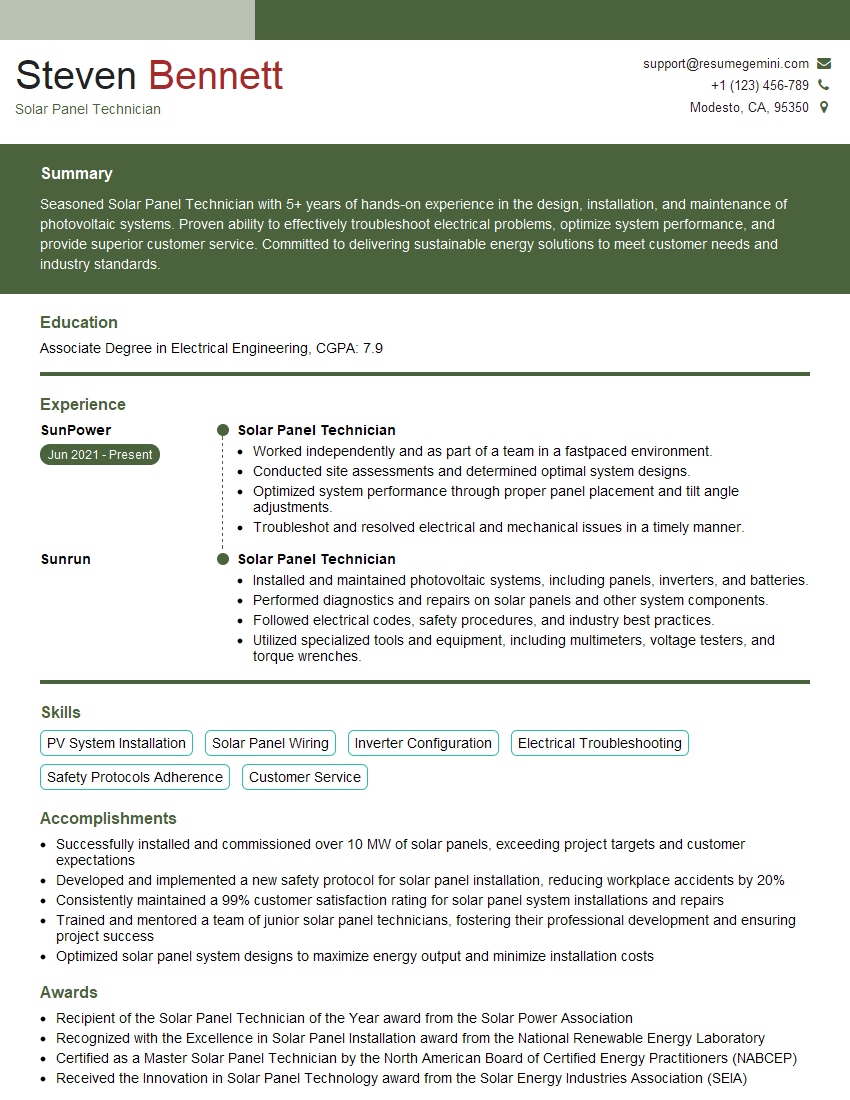
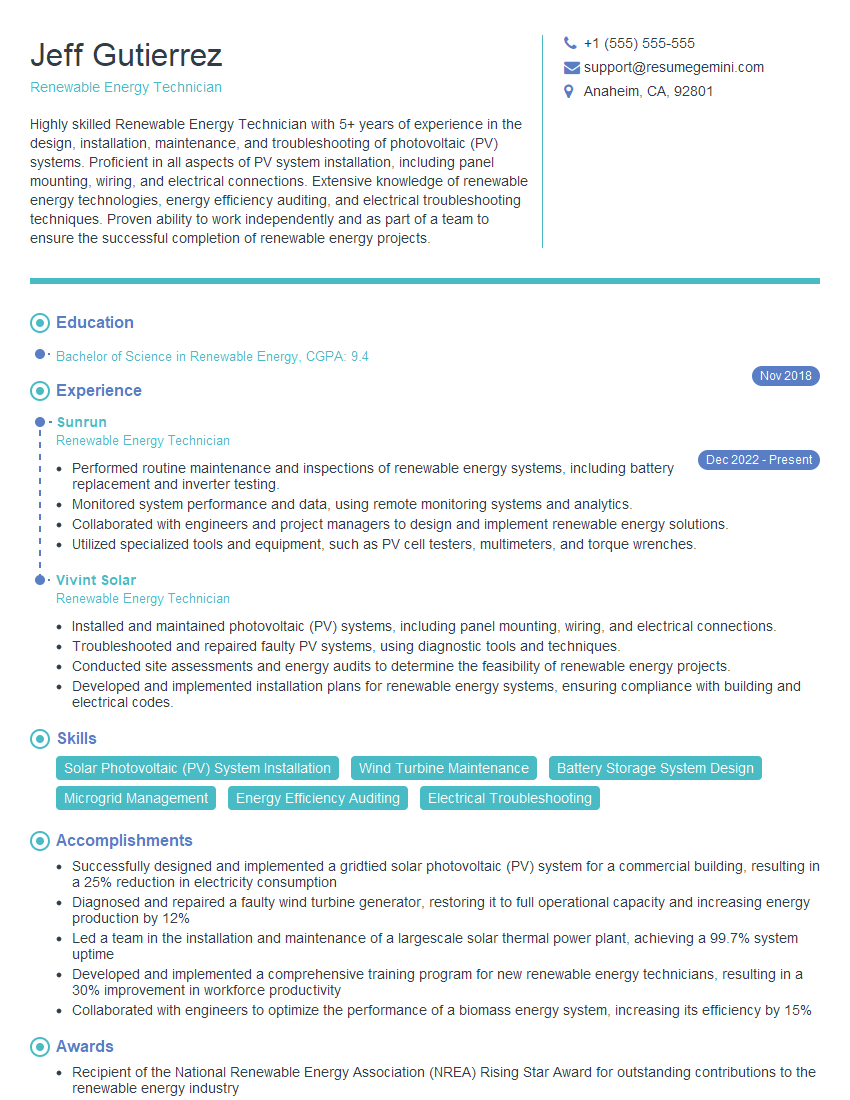
Mastering PV system maintenance and troubleshooting is crucial for career advancement in the rapidly growing renewable energy sector. Demonstrating proficiency in these areas will significantly enhance your job prospects and open doors to higher-paying positions and leadership roles. To make a strong impression on potential employers, it’s essential to present your skills effectively through a well-crafted resume. Creating an ATS-friendly resume is key to getting your application noticed. We highly recommend leveraging ResumeGemini to build a professional and impactful resume that highlights your expertise. ResumeGemini offers examples of resumes tailored specifically for PV System Maintenance and Troubleshooting professionals, ensuring your application stands out from the competition.

Explore more articles
Users Rating of Our Blogs
Share Your Experience
We value your feedback! Please rate our content and share your thoughts (optional).
What Readers Say About Our Blog
To the interviewgemini.com Webmaster.
Very helpful and content specific questions to help prepare me for my interview!
Thank you
To the interviewgemini.com Webmaster.
This was kind of a unique content I found around the specialized skills. Very helpful questions and good detailed answers.
Very Helpful blog, thank you Interviewgemini team.