The thought of an interview can be nerve-wracking, but the right preparation can make all the difference. Explore this comprehensive guide to Home Energy Assessment and Auditing interview questions and gain the confidence you need to showcase your abilities and secure the role.
Questions Asked in Home Energy Assessment and Auditing Interview
Q 1. Explain the process of conducting a blower door test.
A blower door test is a crucial part of a home energy audit. It measures how airtight your home is by creating a pressure difference between the inside and outside. Imagine trying to inflate a balloon with a small hole – air escapes easily. Similarly, a leaky house loses heated or cooled air, wasting energy and money.
The process involves:
- Sealing: We seal all open doors and windows except one, where we install a calibrated fan.
- Pressurization: The fan creates a pressure difference, either pulling air out (negative pressure) or pushing air in (positive pressure). This pressure difference reveals air leakage points.
- Measurement: Specialized equipment measures the amount of air leaking into or out of the house. The result is expressed as air changes per hour (ACH50) – how many times the entire house volume’s air is exchanged in an hour at a 50 Pascal pressure difference.
- Leak Location: Using a smoke pencil or thermal camera, we pinpoint the location of air leaks. Think of the smoke as revealing the ‘holes’ in your home’s ‘balloon’.
- Report Generation: A detailed report is generated, showing the ACH50, leak locations, and recommended sealing solutions.
Practical Application: A high ACH50 indicates significant air leakage, leading to higher energy bills and discomfort. The blower door test helps prioritize sealing solutions for maximum energy savings.
Q 2. Describe different types of insulation and their R-values.
Insulation materials reduce heat transfer, keeping your home warm in winter and cool in summer. Different materials offer varying levels of resistance to heat flow, measured by their R-value. The higher the R-value, the better the insulation.
- Fiberglass Batt and Roll: Common, cost-effective, and readily available. R-values range from R-13 to R-38. Think of it as a fluffy blanket trapping air.
- Spray Foam: Offers excellent air sealing and insulation. R-values vary based on the density and type of foam (open-cell or closed-cell). Excellent for filling hard-to-reach areas and creating an air-tight barrier.
- Cellulose: Made from recycled paper, it’s environmentally friendly and offers good insulation. R-values range from R-21 to R-38. It’s blown into wall cavities, filling them completely.
- Mineral Wool (Rock Wool and Glass Wool): Durable, fire-resistant, and offers good sound insulation as well. R-values vary depending on the density and thickness.
Example: A wall with R-13 fiberglass insulation might benefit from upgrading to R-21 for improved energy efficiency. Remember, R-values are additive, so adding more insulation increases the overall R-value.
Q 3. How do you identify air leakage in a building?
Identifying air leakage is crucial for improving a building’s energy efficiency. Several methods can pinpoint those sneaky drafts.
- Visual Inspection: Look for gaps around windows, doors, electrical outlets, and plumbing penetrations. Feel for drafts with your hand near suspected leak areas.
- Blower Door Test: As previously explained, this test pressurizes the building to reveal air leakage points. This is a more quantitative method.
- Thermographic Imaging (Infrared Camera): An infrared camera detects temperature differences, highlighting areas where heat is escaping. Cooler areas often indicate air leaks. Think of it like night vision for leaks.
- Smoke Test: A smoke pencil produces a visible stream of smoke, which follows airflow patterns. This helps to visualize and locate the air leaks visually.
Practical Example: During a visual inspection, we might notice gaps around window frames. A blower door test would quantify the overall air leakage, while an infrared camera would show precisely where heat is escaping around those windows. This combination helps prioritize repair solutions.
Q 4. What are the key components of a comprehensive home energy audit?
A comprehensive home energy audit goes beyond a simple inspection. It’s a thorough assessment of a building’s energy performance, providing actionable recommendations for improvement.
- Blower Door Test: Measures air tightness and identifies air leakage points.
- Thermal Imaging: Identifies areas of heat loss or gain using an infrared camera.
- Building Envelope Assessment: Evaluates the condition of walls, roofs, windows, and foundations, considering insulation levels and potential air leaks.
- HVAC System Inspection: Assesses the efficiency and performance of heating, ventilation, and air conditioning systems. This might involve checking ductwork for leaks or evaluating the age and efficiency of the equipment.
- Lighting and Appliance Audit: Identifies opportunities to improve lighting and appliance efficiency (e.g., switching to LEDs, replacing outdated appliances).
- Occupancy Habits Assessment: Understands how the occupants use the building and its impact on energy consumption.
- Energy Modeling: Uses software to simulate the building’s energy performance and predict the impact of proposed improvements. This provides more precise data.
- Detailed Report with Recommendations: Summarizes the findings, prioritizes cost-effective upgrades, and estimates potential energy savings.
Real-world application: A comprehensive audit can identify hidden issues like insufficient insulation in the attic or poorly sealed ductwork, providing significant energy savings beyond simple surface-level improvements.
Q 5. Explain the concept of thermal bridging and its impact on energy efficiency.
Thermal bridging occurs when materials with high thermal conductivity (like metal studs in a wall) interrupt the insulation layer, creating a pathway for heat to flow more easily.
Imagine a bridge across a river – heat flows easily across the bridge (metal stud) instead of being blocked by the insulation. This bypasses the insulation’s effectiveness and results in energy loss, or gain depending on the outside temperature. It’s like having a hole in your insulation blanket.
Impact on Energy Efficiency: Thermal bridging reduces the overall R-value of the building envelope, leading to higher heating and cooling costs. It creates cold spots in winter and hot spots in summer, resulting in uncomfortable living conditions.
Mitigation Strategies: Using thermally broken studs, continuous insulation, or adding insulation around metal framing can reduce thermal bridging.
Q 6. How do you calculate the energy savings from energy efficiency upgrades?
Calculating energy savings from upgrades requires a combination of data and estimation. The most accurate method uses energy modeling software.
Simplified Method: We can estimate savings based on the improvement in insulation levels and the reduction in air leakage. For example, upgrading insulation in an attic from R-13 to R-30 will lead to significant energy savings, quantifiable using existing energy bills and local climate data to extrapolate estimates. However this is very generalized and approximate.
Detailed Method (using energy modeling software): Energy modeling software simulates the building’s energy performance before and after upgrades. By inputting details about the building, climate, and proposed upgrades, the software estimates the percentage reduction in energy consumption. This approach is far more accurate.
Example: Let’s say a home’s annual energy cost is $2000. An energy model predicts a 20% reduction in energy consumption after implementing recommended upgrades. The estimated annual savings would be $400 ($2000 * 0.20).
Q 7. What software or tools do you use for energy modeling or analysis?
Several software tools are available for energy modeling and analysis, each with its strengths and weaknesses. The choice depends on the project’s scope and complexity.
- RESNET software: Often used for creating energy rating reports for homes.
- EnergyPlus: A sophisticated, open-source energy modeling program widely used by professionals.
- eQUEST: Another widely used energy simulation program.
These tools allow us to simulate different scenarios, evaluate various upgrade options, and accurately predict energy savings. They assist in providing detailed, data-driven recommendations to clients, maximizing the impact and ROI on any home energy improvements.
Q 8. Describe your experience with infrared thermography.
Infrared thermography, or thermal imaging, is a crucial tool in home energy assessments. It uses a specialized camera to detect temperature differences on the surface of building materials. These temperature variations reveal areas of heat loss or gain, which are often invisible to the naked eye. Think of it like a highly sensitive thermometer that can ‘see’ heat.
In practice, we scan the exterior and interior walls, windows, doors, and even the attic and crawlspaces. Areas that are significantly colder (in winter) or warmer (in summer) than surrounding areas indicate potential problems such as inadequate insulation, air leaks, or malfunctioning windows. For instance, a cold spot on an exterior wall might indicate insufficient insulation, while a warm spot around a window frame suggests air infiltration.
The images produced are color-coded, with different colors representing different temperatures. We use this data to pinpoint areas needing attention, allowing for targeted improvements and maximizing energy efficiency.
Q 9. How do you interpret the results of a blower door test?
A blower door test measures the air tightness of a home. A large fan is installed in an exterior door, creating a pressure difference between the inside and outside. The test measures the amount of air leaking into or out of the house under this pressure difference, usually expressed in cubic feet per minute (CFM) or air changes per hour (ACH50).
Interpreting the results involves comparing the measured air leakage to established standards and best practices. A low ACH50 value (typically below 3 ACH50) indicates a relatively airtight building envelope. Higher values signify significant air leakage, resulting in increased energy consumption for heating and cooling, drafts, and potential moisture problems. We then use a diagnostic smoke test or infrared thermography to precisely locate and assess the air leakage pathways—cracks in the framing, gaps around windows and doors, and so on.
For example, if a home has an ACH50 of 8, we know substantial air sealing is needed. The test’s results, combined with thermal imaging, allow us to create a prioritized list of energy improvements, focusing on the most significant air leakage points.
Q 10. What are the common energy efficiency measures for homes?
Common energy efficiency measures for homes cover a wide range, focusing on improving the building envelope (walls, roof, windows, foundation) and optimizing HVAC systems. These measures often include:
- Air sealing: Sealing gaps and cracks in the building envelope to prevent air leakage.
- Insulation upgrades: Adding or improving insulation in attics, walls, floors, and crawlspaces to reduce heat transfer.
- Window and door replacements: Installing energy-efficient windows and doors with better insulation and air sealing.
- HVAC system improvements: Upgrading or maintaining furnaces, air conditioners, and heat pumps, including replacing filters and ensuring proper ventilation.
- Lighting upgrades: Replacing incandescent and halogen bulbs with energy-efficient LEDs.
- Appliance upgrades: Replacing old and inefficient appliances with Energy Star certified models.
- Smart thermostats: Installing programmable or smart thermostats to optimize heating and cooling schedules.
The specific measures recommended will vary depending on the home’s unique characteristics and energy consumption patterns, as revealed by the energy audit.
Q 11. Explain the difference between a Level 1 and Level 2 energy audit.
Level 1 and Level 2 energy audits differ significantly in their scope and depth. A Level 1 audit is a relatively quick and less expensive assessment, typically involving a visual inspection of the home and its systems. It provides a general overview of energy efficiency opportunities, often focusing on readily visible issues. Think of it as a preliminary health check.
A Level 2 audit, on the other hand, is much more comprehensive and detailed. It involves advanced testing, such as blower door testing and infrared thermography, to precisely identify areas of energy loss. It provides detailed recommendations for improvements with cost estimates. This is akin to a thorough physical exam with detailed diagnostic tests.
In short: a Level 1 audit pinpoints obvious problems while a Level 2 audit utilizes advanced techniques to provide a more thorough diagnosis, leading to more accurate and effective improvements.
Q 12. What are the benefits of using energy-efficient windows and doors?
Energy-efficient windows and doors offer numerous benefits, significantly impacting a home’s energy efficiency and comfort. They reduce energy consumption by limiting heat transfer through the windows and doors. Better insulation reduces the amount of heat lost in winter and gained in summer.
Improved air sealing reduces drafts and air infiltration, further minimizing energy waste. This translates to lower energy bills, increased comfort, and a more stable indoor temperature. High-performance windows and doors are designed to minimize heat transfer, often featuring multiple panes of glass with low-E coatings, specialized gas fills (like argon or krypton), and improved frames for better insulation and air sealing.
For example, switching from single-pane windows to double or triple-pane windows with low-E coatings can drastically reduce heat loss in the winter and heat gain in the summer. This contributes to considerable savings on energy costs over the lifetime of the windows.
Q 13. How do you assess the performance of HVAC systems?
Assessing HVAC system performance involves a multi-faceted approach. We start by checking the system’s age, maintenance history, and overall condition. We also verify the proper sizing of the system for the home, as an undersized or oversized system can be highly inefficient. We then perform measurements of airflow, temperature differentials, and combustion efficiency.
For furnaces, we measure the combustion efficiency using a combustion analyzer, ensuring the system is burning fuel effectively. For air conditioners, we assess the cooling capacity and efficiency, often using a specialized tool to measure refrigerant pressure and temperature. We’ll also examine airflow through the ductwork, looking for leaks or restrictions.
In addition, we inspect the air filters, looking for signs of clogging. Clean filters are vital for efficient operation and longevity. The goal is to identify problems, such as low airflow, improper combustion, or refrigerant leaks that may be lowering efficiency and increasing energy consumption.
Q 14. What are some common building envelope issues that impact energy efficiency?
Many building envelope issues significantly impact energy efficiency. These include:
- Air leaks: Gaps and cracks in walls, windows, doors, and around plumbing penetrations allow uncontrolled airflow, leading to heat loss in winter and heat gain in summer.
- Insufficient insulation: Inadequate insulation in attics, walls, and floors allows excessive heat transfer, increasing energy consumption for heating and cooling.
- Moisture problems: Water intrusion can lead to mold growth, reducing insulation effectiveness and causing structural damage, often resulting in higher energy use.
- Lack of proper ventilation: Insufficient ventilation can lead to moisture buildup and poor indoor air quality, impacting comfort and potentially causing damage.
- Old or damaged windows: Single-pane windows or windows with damaged seals are poor insulators, leading to significant heat loss or gain.
Identifying and addressing these issues is critical for improving a home’s energy performance, which significantly improves comfort and reduces energy waste.
Q 15. Describe your experience with different types of energy audits (e.g., residential, commercial).
My experience spans both residential and commercial energy audits. In residential audits, I’ve assessed hundreds of homes, ranging from older, inefficient structures to newly built, energy-efficient homes. This involved using blower door tests to identify air leakage, infrared cameras to detect thermal bridging, and detailed inspections of HVAC systems, insulation, and windows. Commercial audits are more complex, often involving larger buildings with more intricate HVAC systems and diverse energy-consuming equipment. For example, I’ve worked on office buildings, retail spaces, and industrial facilities, where I’ve used more sophisticated tools like energy modeling software (as I’ll discuss later) to analyze energy consumption patterns and identify optimization opportunities. A key difference lies in the scale and complexity – a residential audit focuses on individual components, while a commercial audit requires a holistic approach, considering the entire building’s energy performance.
Career Expert Tips:
- Ace those interviews! Prepare effectively by reviewing the Top 50 Most Common Interview Questions on ResumeGemini.
- Navigate your job search with confidence! Explore a wide range of Career Tips on ResumeGemini. Learn about common challenges and recommendations to overcome them.
- Craft the perfect resume! Master the Art of Resume Writing with ResumeGemini’s guide. Showcase your unique qualifications and achievements effectively.
- Don’t miss out on holiday savings! Build your dream resume with ResumeGemini’s ATS optimized templates.
Q 16. How do you communicate complex technical information to non-technical clients?
Communicating complex technical information to non-technical clients is crucial. I use several strategies: First, I avoid jargon. Instead of saying “thermal bridging,” I’ll explain it as “heat escaping through gaps in insulation.” Second, I use visuals – charts, graphs, and photos – to illustrate key findings. For example, I might show a before-and-after image of an air-sealed window to demonstrate the impact of improvements. Third, I create analogies. Explaining energy efficiency using the concept of a leaky bucket helps homeowners understand the need to plug those leaks. Finally, I tailor my communication to the client’s level of understanding, offering more detail only when appropriate. I always end by summarizing the key recommendations in simple terms, focusing on the financial benefits and the comfort improvements.
Q 17. What are the different types of energy audits available and their purpose?
Several types of energy audits cater to different needs and budgets. A Level 1 audit is a visual inspection, identifying obvious energy waste areas like outdated appliances or insufficient insulation. It’s quick and inexpensive, suitable for initial assessments. A Level 2 audit is more detailed, using blower door tests, infrared scans, and diagnostic tools to precisely measure energy loss. It provides a more comprehensive picture and informs detailed improvement plans. A Level 3 audit employs advanced energy modeling software to simulate building performance and predict energy savings from various improvements. It’s most suitable for larger, complex buildings requiring highly accurate predictions. Finally, there are specialized audits, like those focusing solely on HVAC systems or lighting. The purpose of any audit is to identify opportunities to reduce energy consumption, improve comfort, and lower energy bills.
Q 18. How do you prioritize energy efficiency improvements based on cost-effectiveness?
Prioritizing energy efficiency improvements involves a cost-effectiveness analysis. I typically calculate the Simple Payback Period (SPP) for each potential improvement. SPP is the time it takes for the savings generated by an improvement to cover its initial cost. For example, if an upgrade costs $1000 and saves $200 annually, the SPP is 5 years (1000/200). I then rank improvements from shortest to longest SPP, focusing on those with the quickest return on investment. However, SPP isn’t the only factor. I also consider the potential for energy savings, the lifespan of the improvement, and the client’s budget and priorities. Sometimes, an improvement with a slightly longer SPP might be prioritized due to its larger overall savings over time.
Q 19. What are some common barriers to implementing energy efficiency measures?
Several barriers hinder the implementation of energy efficiency measures. Financial constraints are a major hurdle; upfront costs can be significant for homeowners and businesses. Lack of awareness about available technologies and incentives also plays a role. Homeowner resistance to changes or disruption, for example, reluctance to replace appliances, is common. Building design limitations, such as limited access for insulation installation, can create challenges. Finally, lack of qualified contractors can also hinder implementation. Addressing these barriers often requires providing detailed cost-benefit analyses, exploring financing options, and connecting clients with reliable contractors.
Q 20. How do you ensure the accuracy and reliability of your audit reports?
Ensuring accuracy and reliability is paramount. I use calibrated equipment for all measurements, following established testing protocols. For blower door tests, for instance, I follow ASHRAE standards. All data is meticulously documented, including equipment details, test conditions, and calculations. The audit report includes clear explanations of the methodology, assumptions made, and uncertainty ranges in the estimations. I perform quality control checks on my data analysis, comparing results against expectations and identifying potential inconsistencies. I also include clear limitations and disclaimers in my reports, acknowledging the inherent uncertainties associated with predictive modeling or estimations.
Q 21. Describe your experience with energy modeling software (e.g., EnergyPlus, eQuest).
I have extensive experience using energy modeling software, primarily EnergyPlus. EnergyPlus allows me to create detailed 3D models of buildings, incorporating various components and their thermal properties. This allows for detailed simulations of energy consumption under different operating conditions and weather scenarios. Using EnergyPlus, I can accurately predict energy savings from proposed efficiency improvements, enabling clients to make informed decisions. For example, I might model the impact of different insulation levels or window types on heating and cooling loads. The software provides quantitative results which are crucial in justifying investments in energy efficiency upgrades. I also have familiarity with other software like eQuest, although EnergyPlus remains my preferred tool due to its open-source nature and extensive capabilities.
Q 22. How do you stay up-to-date with the latest energy efficiency technologies and standards?
Staying current in the rapidly evolving field of energy efficiency requires a multi-pronged approach. I actively participate in professional organizations like the Building Performance Association (BPA) and attend their conferences and webinars, which often feature cutting-edge technologies and updated standards. I also subscribe to industry publications like Building Green and Energy User News, keeping me informed about new products and research. Furthermore, I regularly review updated building codes and energy standards from organizations such as the International Energy Conservation Code (IECC) and the Department of Energy (DOE) to ensure my assessments are compliant and incorporate the latest best practices. Finally, I actively network with other energy auditors and professionals, participating in online forums and attending local industry events to learn from others’ experiences and stay ahead of the curve. For example, recently I learned about advancements in air sealing techniques using specialized infrared cameras and blower door testing, which has significantly improved my assessment accuracy.
Q 23. How do you handle situations where clients are reluctant to invest in energy efficiency upgrades?
Client reluctance to invest in energy efficiency upgrades is a common challenge. My strategy focuses on building trust and demonstrating value. I begin by clearly explaining the long-term financial benefits – highlighting potential savings on utility bills and increased home value. I present comprehensive reports with detailed cost-benefit analyses, illustrating the return on investment (ROI) for each suggested upgrade. Visual aids, like charts and graphs, are helpful in conveying this information effectively. I also tailor my recommendations to the client’s budget and priorities, suggesting a phased approach if necessary, prioritizing the most impactful upgrades first. For example, I might recommend sealing air leaks as a first step, as it’s often a relatively inexpensive and highly effective measure. Finally, I often provide information about available financial incentives, such as rebates and tax credits, that can significantly reduce upfront costs and make upgrades more financially palatable. Transparency and building rapport are key to overcoming this hurdle.
Q 24. What are your strategies for improving the energy performance of older buildings?
Improving the energy performance of older buildings presents unique challenges, but also significant opportunities. My approach is holistic and considers multiple factors. First, a thorough energy audit using advanced tools like blower door testing and infrared thermography is crucial to identify areas of heat loss and air leakage. This data-driven approach helps prioritize improvements. Then, I focus on addressing the building envelope – improving insulation in attics, walls, and foundations, and upgrading windows and doors. Air sealing is critical, preventing drafts and reducing energy waste. Finally, I assess the HVAC system, suggesting upgrades or replacements as needed, perhaps incorporating a high-efficiency heat pump. For instance, I recently worked on a 1920s home where we discovered significant air leakage around window frames. By carefully sealing these areas and adding insulation, we achieved a noticeable reduction in energy consumption. Often, simple improvements like adding weatherstripping can yield surprisingly significant results.
Q 25. Explain the concept of embodied carbon and its relevance in energy audits.
Embodied carbon refers to the greenhouse gas emissions associated with the manufacturing, transportation, installation, and disposal of building materials. It’s becoming increasingly relevant in energy audits because it accounts for the ‘upfront’ environmental impact of upgrades. While energy efficiency reduces operational carbon emissions (emissions from energy use during the building’s lifespan), choosing sustainable materials with low embodied carbon can further reduce the overall environmental footprint. For example, using recycled steel instead of newly manufactured steel for framing significantly reduces embodied carbon. In an energy audit, I consider embodied carbon when recommending material choices. A life-cycle assessment, considering both operational and embodied carbon, provides a more comprehensive evaluation of a building’s environmental impact, and informs decisions on the most sustainable and cost-effective options.
Q 26. How do you integrate renewable energy technologies into energy efficiency recommendations?
Integrating renewable energy technologies is a key component of comprehensive energy efficiency recommendations. The best approach is to optimize the building’s energy performance first through efficiency upgrades (reducing energy demand), and then size the renewable energy system (generating energy supply) appropriately to meet the remaining energy needs. For example, if a home has significant air leakage, addressing that issue before installing solar panels will make the renewable energy system more efficient and cost-effective. Common technologies I integrate include solar photovoltaic (PV) systems for electricity generation, and solar thermal collectors for water heating. I consider factors like roof orientation, shading, and local incentives when recommending these systems. I also assess the feasibility of other renewable options like small-scale wind turbines or geothermal heat pumps, depending on the specific site conditions and client needs. A well-integrated approach maximizes the benefits of both efficiency improvements and renewable energy generation.
Q 27. Describe your experience with building codes and energy standards.
I possess extensive experience with building codes and energy standards, including the International Energy Conservation Code (IECC), ASHRAE standards, and local building codes. I understand the requirements for energy-efficient construction and retrofits. My assessments are always conducted in compliance with relevant codes and standards. In many cases, I help clients navigate the complexities of these regulations and identify opportunities to meet or exceed compliance requirements, often uncovering ways to save money while meeting code. For instance, I’m very familiar with the IECC’s requirements for insulation levels and air sealing, and I can help clients understand how to meet those standards while taking advantage of any possible exemptions or incentives. This ensures my assessments are not only accurate but also legally sound and compliant.
Q 28. How do you ensure the quality assurance of your home energy assessments?
Quality assurance is paramount in home energy assessments. My approach involves several key steps. Firstly, I adhere to rigorous testing protocols, using calibrated instruments and employing established procedures. Secondly, I meticulously document all findings and calculations, including photos and detailed reports, creating a transparent and auditable record. Thirdly, I conduct thorough quality checks on my own work, reviewing data and ensuring consistency before delivering the final report. I also participate in continuing education courses to ensure I stay current with the latest testing methods and best practices. Finally, I am comfortable providing clients with supporting documentation for my findings and am always open to discussions about the details of the assessments. This multi-layered approach ensures the accuracy and reliability of my home energy assessments, giving clients confidence in the recommendations provided.
Key Topics to Learn for Home Energy Assessment and Auditing Interview
- Building Envelope Analysis: Understanding heat transfer mechanisms (conduction, convection, radiation), identifying thermal bridges, and assessing insulation levels. Practical application: Interpreting blower door test results and recommending insulation upgrades.
- HVAC System Assessment: Evaluating the efficiency and performance of heating, ventilation, and air conditioning systems. Practical application: Identifying opportunities for system upgrades or repairs to improve energy efficiency.
- Energy Modeling and Simulation: Utilizing software tools to predict energy consumption and analyze the impact of different energy-saving measures. Practical application: Creating energy models to compare the effectiveness of various retrofit options.
- Renewable Energy Technologies: Familiarity with solar photovoltaic (PV) systems, solar thermal systems, and other renewable energy options for homes. Practical application: Assessing the feasibility and potential savings of incorporating renewable energy into a home’s energy system.
- Energy Audits and Reporting: Developing comprehensive energy audit reports that clearly communicate findings, recommendations, and cost-benefit analyses to clients. Practical application: Presenting audit results and recommendations in a clear and concise manner.
- Building Codes and Standards: Understanding relevant building codes and energy efficiency standards (e.g., IECC, ASHRAE). Practical application: Ensuring recommendations align with current regulations and best practices.
- Data Analysis and Interpretation: Proficiency in analyzing energy consumption data to identify trends and areas for improvement. Practical application: Using data to support recommendations and demonstrate potential energy savings.
- Client Communication and Consultation: Effectively communicating technical information to clients with varying levels of technical expertise. Practical application: Developing a clear and persuasive presentation of audit findings and recommendations.
Next Steps
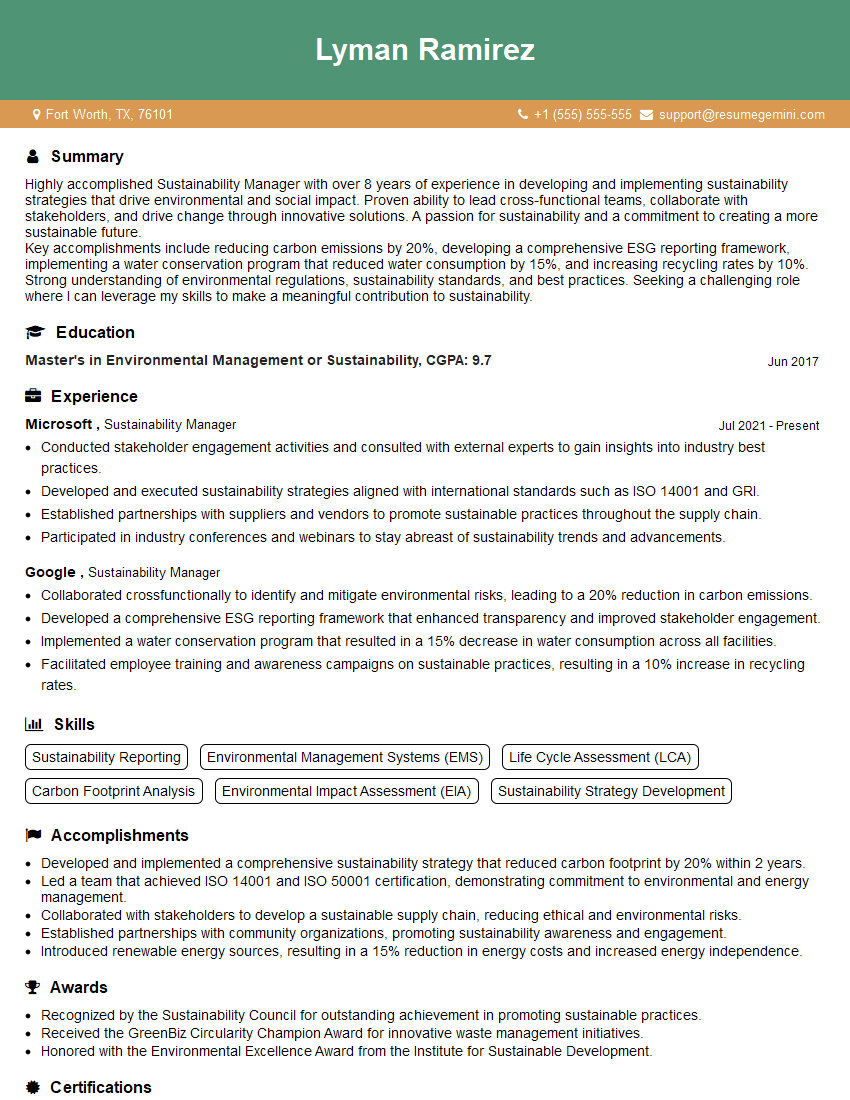
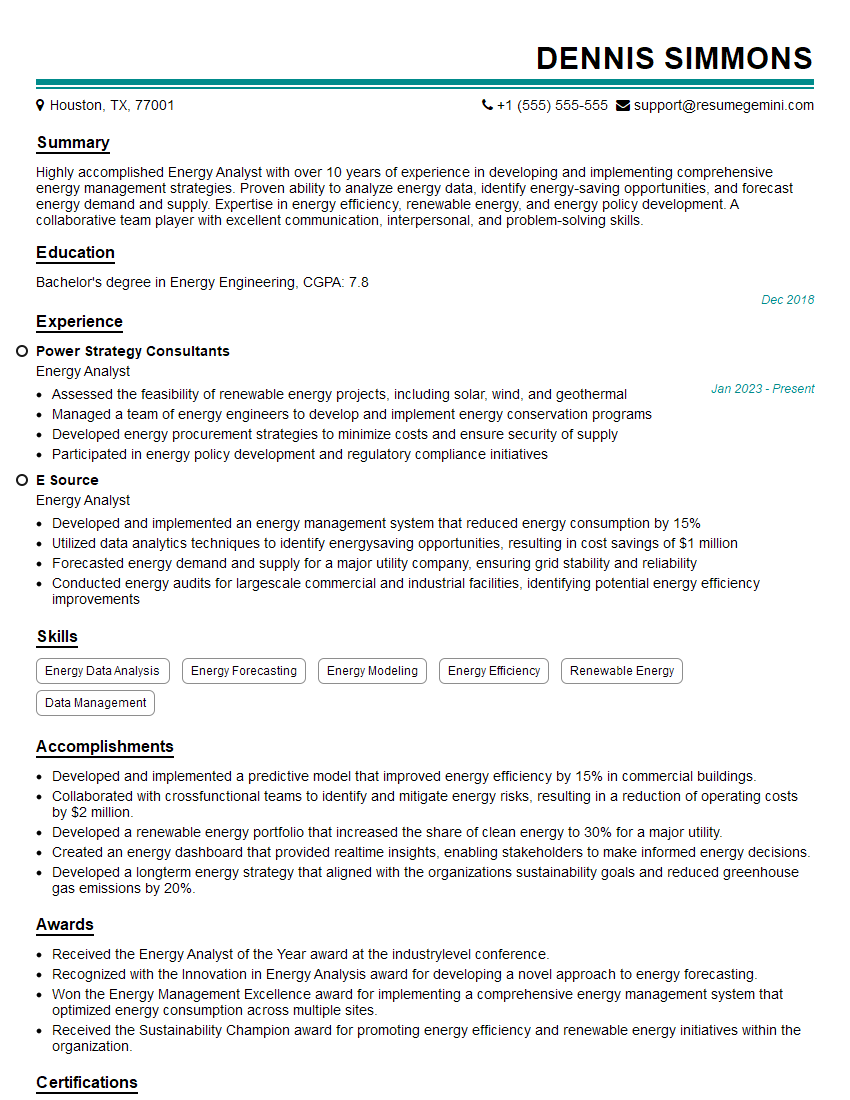
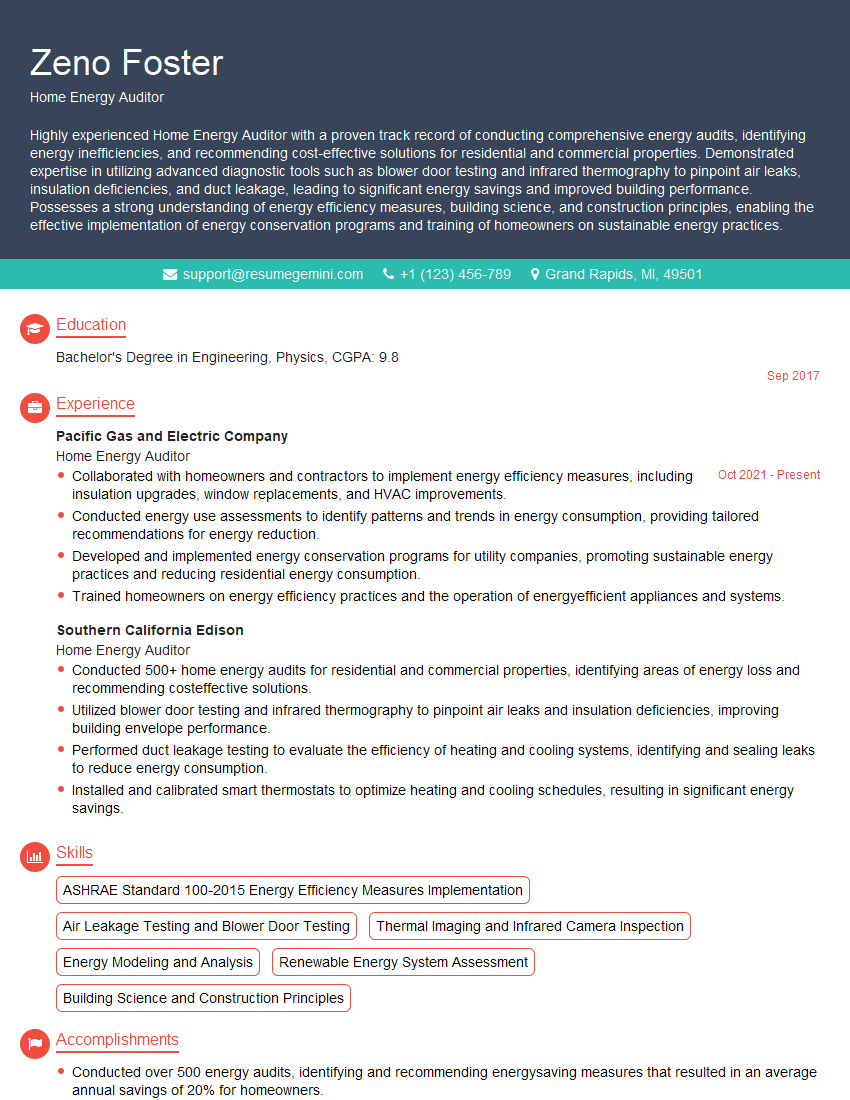
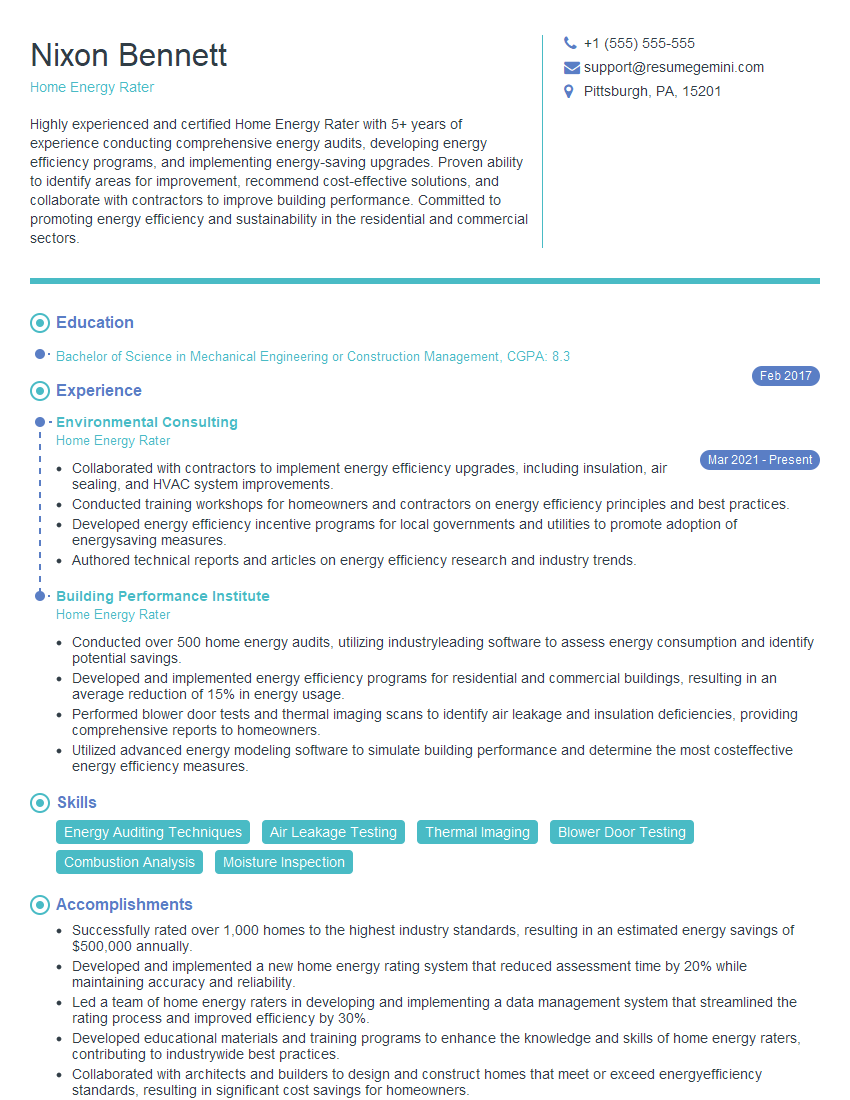
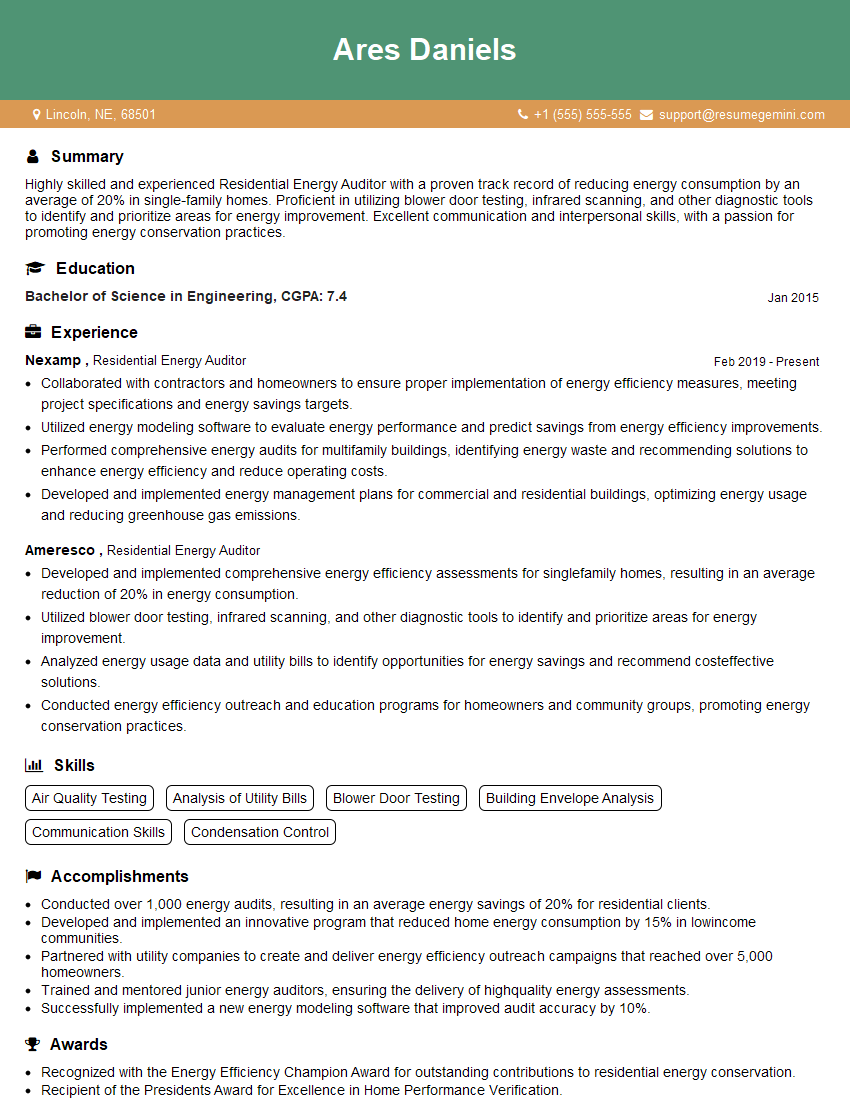
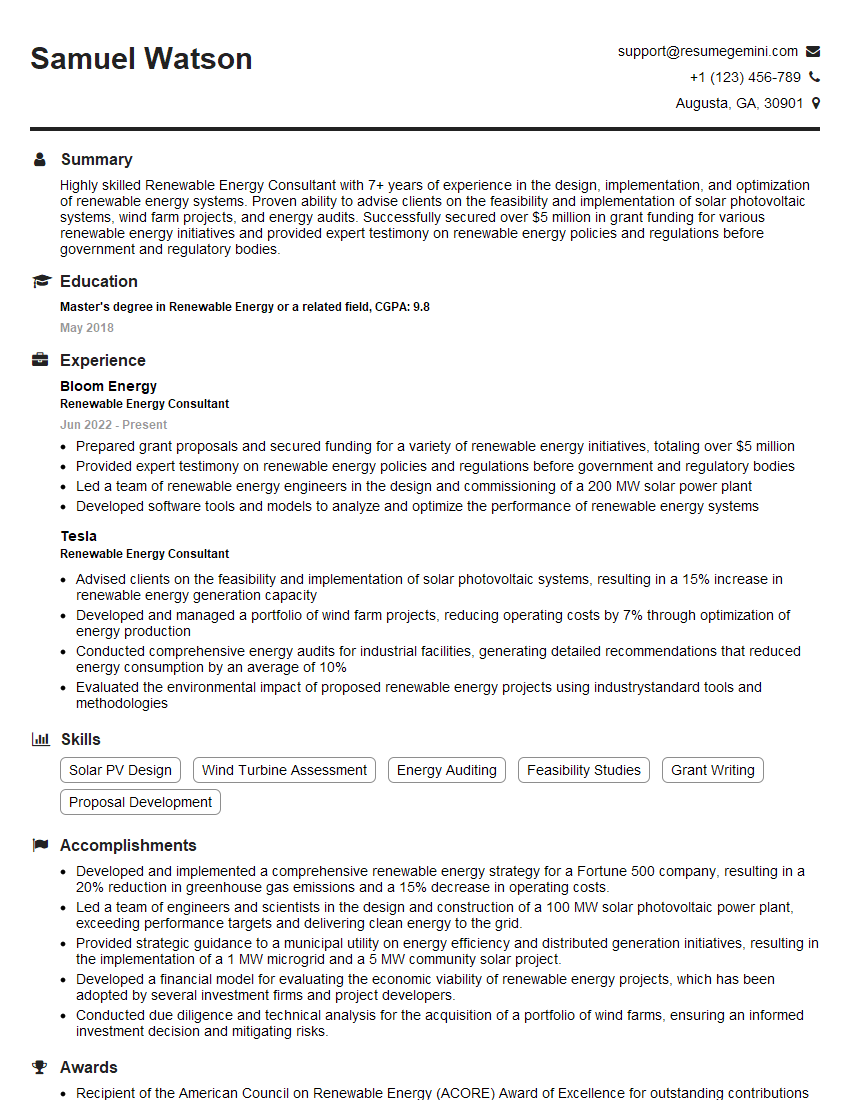
Mastering Home Energy Assessment and Auditing opens doors to a rewarding career with significant growth potential in a vital sector. Demand for skilled professionals in this field is high, making it a smart career choice. To maximize your job prospects, crafting an ATS-friendly resume is crucial. ResumeGemini is a trusted resource that can help you build a professional and impactful resume tailored to attract recruiters. Examples of resumes tailored specifically to Home Energy Assessment and Auditing are available to guide you, ensuring your resume stands out from the competition. Take the next step towards a successful career; create a compelling resume with ResumeGemini today.

Explore more articles
Users Rating of Our Blogs
Share Your Experience
We value your feedback! Please rate our content and share your thoughts (optional).
What Readers Say About Our Blog
To the interviewgemini.com Webmaster.
Very helpful and content specific questions to help prepare me for my interview!
Thank you
To the interviewgemini.com Webmaster.
This was kind of a unique content I found around the specialized skills. Very helpful questions and good detailed answers.
Very Helpful blog, thank you Interviewgemini team.