Interviews are opportunities to demonstrate your expertise, and this guide is here to help you shine. Explore the essential Solar Panel Repair interview questions that employers frequently ask, paired with strategies for crafting responses that set you apart from the competition.
Questions Asked in Solar Panel Repair Interview
Q 1. Explain the different types of solar panel technologies.
Solar panels utilize various technologies to convert sunlight into electricity. The most common are:
- Monocrystalline Silicon: These panels use a single, large silicon crystal, resulting in high efficiency (typically 18-22%) and a dark, uniform appearance. They are ideal for space-constrained installations where maximizing power output is key. Think of them as the ‘sports car’ of solar panels.
- Polycrystalline Silicon: These panels are made from multiple silicon crystals, leading to slightly lower efficiency (around 15-17%) and a speckled, blue appearance. They’re generally more affordable than monocrystalline panels, making them a popular choice for larger-scale projects. These are the ‘reliable sedan’ option.
- Thin-Film Solar Panels: These panels use thin layers of photovoltaic materials deposited onto a substrate, such as glass or plastic. They’re lightweight, flexible, and can be integrated into various surfaces. Efficiency is typically lower (8-13%), but their flexibility and aesthetic appeal make them suitable for specific applications, like building-integrated photovoltaics (BIPV). They’re the ‘versatile minivan’.
Each technology has its strengths and weaknesses regarding efficiency, cost, durability, and aesthetic appeal. The best choice depends on individual needs and project requirements.
Q 2. Describe the process of diagnosing a faulty solar panel.
Diagnosing a faulty solar panel involves a systematic approach. It starts with visual inspection for obvious signs of damage like cracks, hotspots (discolored areas indicating excessive heat), or bypass diode failure (visible darkening). Then, we move on to electrical testing.
First, I use a multimeter to check the voltage and current produced by the panel under direct sunlight. Low voltage could indicate shading, cell damage, or connection issues. Low current points to faulty cells or wiring problems. I also check for shorts by measuring the resistance. A low resistance indicates a short circuit.
Infrared (IR) thermography is an invaluable tool. It identifies hotspots which suggest damaged cells before they cause significant problems. Finally, if the problem isn’t readily apparent, I’ll use an electroluminescence (EL) test, which illuminates the panel to reveal microscopic cracks or faulty cells that may be otherwise invisible.
Q 3. What safety precautions do you take when working with solar panels?
Safety is paramount when working with solar panels. Always treat them as if they are energized even when disconnected. My safety procedures include:
- Personal Protective Equipment (PPE): This includes safety glasses, insulated gloves, and closed-toe shoes to prevent injuries from sharp edges, electrical shocks, and falling debris.
- Lockout/Tagout Procedures: Before any work, I ensure the system is safely de-energized and locked out to prevent accidental re-energization.
- Proper Grounding: I always ensure the system and my tools are properly grounded to eliminate the risk of electric shock.
- Awareness of Surroundings: I’m careful of overhead power lines and other potential hazards.
- Working with a Partner: For larger or more complex jobs, having a second person improves safety and efficiency.
Following these procedures helps minimize risks and ensures a safe work environment.
Q 4. How do you test the voltage and current of a solar panel?
Testing the voltage and current of a solar panel requires a multimeter, set to the appropriate DC voltage and current ranges. The exact steps depend on the type of multimeter, but generally:
- Connect the Multimeter: With the panel in direct sunlight, connect the positive (red) lead of your multimeter to the positive (+) terminal of the solar panel, and the negative (black) lead to the negative (-) terminal.
- Measure Voltage: Set the multimeter to DC voltage (usually represented by ‘V’ with a ‘—‘ symbol). The reading should be close to the panel’s rated open-circuit voltage (Voc) – this is the voltage when no load is connected.
- Measure Current: Connect a load resistor (or use a lamp) in parallel with the panel. Change the multimeter setting to DC current (usually represented by ‘A’). The reading represents the short circuit current (Isc) of the panel. You need to carefully pick a resistor that is able to withstand the power without getting damaged.
Comparing these readings to the panel’s specifications helps determine its performance. Deviations can indicate problems.
For example, a significantly lower voltage might indicate shading or damaged cells, while a low current could mean connection issues or internal panel damage. This is then compared to the expected parameters listed in the panel’s datasheet.
Q 5. Explain the process of replacing a damaged solar panel.
Replacing a damaged solar panel involves several steps:
- Safety First: Follow all safety precautions as mentioned earlier. De-energize the system completely and lock it out.
- Disconnect Wiring: Carefully disconnect the wiring from the damaged panel, making sure to note the connections for accurate reassembly. Take photos if it helps.
- Remove Damaged Panel: Remove the damaged panel, using appropriate tools to detach it from the mounting system. Be cautious of sharp edges.
- Install New Panel: Mount the new panel securely using the existing mounting system. Make sure it’s properly aligned and fastened.
- Reconnect Wiring: Connect the wiring to the new panel, carefully matching the connections to the previous panel. Double-check all connections before moving on.
- Inspect and Test: Inspect all connections and components before re-energizing the system. Perform voltage and current tests to ensure proper functionality.
Proper installation is crucial for optimal performance and longevity of the new panel. It is also important to ensure the new panel is compatible with the existing system.
Q 6. How do you troubleshoot a solar panel system with low output?
Troubleshooting a solar panel system with low output requires a systematic approach. First, I would check the following:
- Shading: Even partial shading can significantly reduce output. Inspect the panels for shade from trees, buildings, or other obstructions.
- Wiring Issues: Check all wiring connections for loose or corroded parts. Loose connections or faulty wiring can drastically decrease output.
- Dirty Panels: Accumulated dirt, dust, and debris can reduce efficiency. Clean the panels with water (avoid abrasive cleaners) and a soft brush.
- Inverter Problems: A malfunctioning inverter can prevent electricity from flowing to your home. Test the inverter’s functionality and check for error codes.
- Individual Panel Performance: Test each panel individually to identify specific underperforming units. This helps pinpoint the faulty element.
- Battery issues (if applicable): In a system with batteries, check the state of charge and the battery performance.
By systematically eliminating these possibilities, the root cause of the low output can be identified and addressed.
Q 7. What are the common causes of solar panel degradation?
Solar panel degradation is a natural process, but it can be accelerated by various factors:
- Environmental Factors: Extreme temperatures, UV radiation, and moisture can damage the cells and materials over time.
- Microcracks: These tiny cracks, often invisible to the naked eye, can develop due to thermal stress, physical impacts, or manufacturing defects and reduce efficiency.
- PID (Potential Induced Degradation): This phenomenon occurs when electrical potential differences cause corrosion and degradation within the panel.
- Soiling: Accumulation of dirt, dust, and other contaminants on the panel surface reduces energy generation.
- Bypass Diode Failure: If one or more bypass diodes fail, it can lead to a significant drop in power output.
Regular cleaning, proper installation, and selecting high-quality panels help mitigate degradation, but some level of performance decrease is inevitable over the panel’s lifespan. Understanding the factors contributing to degradation allows for better preventative measures and longer-lasting systems.
Q 8. Describe your experience with different types of inverters.
My experience encompasses a wide range of inverters, from string inverters, which are the most common and cost-effective, to microinverters, which offer superior performance and monitoring capabilities at a higher cost. I’ve also worked extensively with power optimizers, which sit between the panels and the inverter, maximizing energy harvest even with shading. String inverters are like a single translator for a whole group of solar panels; if one panel has an issue, it can affect the entire string. Microinverters, on the other hand, act as individual translators for each panel, offering more resilience. Power optimizers provide a middle ground, optimizing the energy from each panel individually while still using a central inverter. I understand the nuances of each technology, including their strengths, weaknesses, and troubleshooting procedures. For instance, I’ve successfully diagnosed and repaired a system where a faulty string inverter caused a significant power drop, and another where a single failing microinverter was pinpointed and replaced efficiently.
Q 9. How do you identify and address shading issues in a solar array?
Shading issues are a major cause of reduced solar panel output. I identify them through a combination of visual inspection and performance data analysis. Visually, I look for any obstructions like trees, buildings, or even bird droppings that could cast shadows on the panels. Performance data from the inverter or monitoring system reveals underperforming strings or individual panels, hinting at shading. To address these issues, I may recommend pruning trees, adjusting panel angles, or installing bypass diodes to minimize the impact of shaded cells. For example, in one case, a slight angle adjustment, combined with strategically placed bypass diodes, increased a system’s output by 15% after a tree’s leaves had grown over a section of panels.
Q 10. Explain the importance of grounding in a solar panel system.
Grounding is crucial for safety and system protection. It provides a path for fault currents to flow safely to the earth, preventing electrical shocks and equipment damage. Without proper grounding, a short circuit could lead to fires or electrocution. I ensure all components, from the panels and racking to the inverter and grounding rod, are correctly grounded according to the National Electrical Code (NEC) and manufacturer’s specifications. I’ve seen firsthand the devastating consequences of inadequate grounding, and I always prioritize it in every installation and repair job. A proper ground is the unsung hero of the system’s safety, ensuring the safety of everyone working with or around the system.
Q 11. What are the common causes of electrical faults in solar panel systems?
Common electrical faults include faulty wiring, damaged connectors, inverter malfunctions, and issues with the grounding system. Damaged wiring can be caused by rodent activity, weather damage, or improper installation. Loose or corroded connectors can interrupt current flow and create hotspots. Inverter malfunctions can range from simple software glitches to hardware failures. Identifying these faults often requires systematic testing with multimeters, infrared cameras, and specialized tools to pinpoint the exact location and cause of the problem. For instance, I recently troubleshooted a system experiencing intermittent power loss, ultimately finding a corroded connector hidden under a layer of accumulated dirt.
Q 12. How do you perform a visual inspection of a solar panel array?
A visual inspection is the first step in any solar panel repair. I systematically examine each panel, looking for cracks, discoloration, hotspots (revealed by infrared cameras), debris buildup, and signs of physical damage like hail damage or bird droppings. I check the connections between panels, making sure they are secure and free from corrosion. The racking system is also inspected for any signs of rust, looseness, or damage. Documentation, including photos and notes, is crucial to pinpoint problems and track repairs. A thorough visual inspection is like a general health check for the system, helping us to prevent small issues from becoming large, expensive problems.
Q 13. What tools and equipment do you typically use for solar panel repair?
My toolbox includes a variety of specialized tools and equipment, including multimeters for measuring voltage and current, infrared cameras to detect hotspots, clamp meters for measuring current, insulation resistance testers, various hand tools (screwdrivers, wrenches, etc.), a ladder, safety equipment (gloves, eye protection, hard hat), and specialized tools for working with different types of connectors. Depending on the specific repair, I may also use a thermal imaging camera to detect minor issues and a DC voltage tester to safely work with the DC side of the system. Safety is always paramount, and the correct equipment ensures both safe and effective repairs.
Q 14. Describe your experience with different types of solar panel mounting systems.
I have extensive experience with various mounting systems, including roof-mounted systems (using rails and clamps), ground-mounted systems (using posts and racking), and pole-mounted systems. Each system has its unique installation challenges and potential failure points. I’m familiar with the different types of materials used in mounting systems – aluminum, steel, and specialized alloys – and understand their strengths and limitations. For instance, I know how to properly address the unique challenges of working on sloped roofs with different tile types or dealing with potential corrosion in coastal environments. Careful consideration of the mounting system is critical not only to the structural integrity of the array but to its long-term performance and safety.
Q 15. How do you interpret a solar panel system’s performance data?
Interpreting solar panel system performance data involves analyzing several key metrics to understand the system’s health and efficiency. Think of it like a doctor’s checkup for your solar power plant. We look at things like:
- Power Output (kW): This tells us the current power being generated by the system. A consistent drop in power output over time might indicate shading, soiling, or a faulty panel.
- Voltage (V): Lower-than-expected voltage can pinpoint a problem with individual panels or wiring.
- Current (A): Similar to voltage, inconsistent current readings suggest potential issues.
- Energy Yield (kWh): This tracks the total energy produced over a specific period. Comparing this to historical data helps identify seasonal variations and potential problems.
- Inverter Efficiency: Monitors the efficiency of the inverter in converting DC power from the panels to AC power for your home. Lower efficiency might indicate inverter issues.
- String Performance: In systems with string inverters, monitoring the performance of each string of panels allows for faster identification of faulty strings.
We use monitoring software and data loggers to track these metrics, often visualizing them through graphs and charts. For instance, a sudden drop in power output on a sunny day immediately flags a potential problem that needs investigation.
Career Expert Tips:
- Ace those interviews! Prepare effectively by reviewing the Top 50 Most Common Interview Questions on ResumeGemini.
- Navigate your job search with confidence! Explore a wide range of Career Tips on ResumeGemini. Learn about common challenges and recommendations to overcome them.
- Craft the perfect resume! Master the Art of Resume Writing with ResumeGemini’s guide. Showcase your unique qualifications and achievements effectively.
- Don’t miss out on holiday savings! Build your dream resume with ResumeGemini’s ATS optimized templates.
Q 16. Explain the process of cleaning solar panels.
Cleaning solar panels is crucial for maintaining optimal performance. Think of it as regularly washing your windows – dirt and debris significantly reduce efficiency. The process is straightforward but requires careful attention to safety and technique:
- Safety First: Turn off the system at the breaker box before you begin cleaning. This prevents any electrical shock hazards.
- Assessment: Inspect the panels for any damage before starting. Cracked panels or loose wires need professional attention.
- Equipment: You’ll need a soft-bristled brush, a hose with a spray nozzle (avoid high-pressure washers, which can damage panels), and deionized or distilled water. Avoid harsh chemicals, as they can damage the panel surface.
- Cleaning: Rinse the panels gently with water. Use the brush to remove any stubborn dirt or debris, working from top to bottom. Rinse again thoroughly to remove all cleaning residue. Avoid scratching the panels with abrasive materials.
- Drying: Let the panels air dry naturally. You can gently wipe them with a clean, soft cloth if necessary.
Regular cleaning, ideally every 3-6 months, depending on your location and climate, is essential to maximize your system’s energy production.
Q 17. What are the signs of a faulty solar panel?
Identifying a faulty solar panel often involves a combination of visual inspection and performance data analysis. Some common signs include:
- Visible Damage: Cracks, hotspots (discolored areas), or physical damage are clear indicators of a problem.
- Lower Voltage or Current Output: A consistently lower voltage or current compared to other panels in the same string indicates a malfunction.
- Hotspots: These are areas on the panel that get significantly hotter than others, often visible through infrared thermal imaging. Hotspots usually indicate cell failure.
- Performance Degradation: A steady decline in the panel’s energy production compared to its initial performance, even after cleaning, may signify internal issues.
- Visible discoloration: Uneven or strange discoloration, like browning or yellowing, might signal delamination or other internal problems.
If you suspect a faulty panel, it’s crucial to disconnect it from the system and have it professionally assessed to avoid further damage or safety risks.
Q 18. How do you handle damaged or cracked solar panels?
Handling damaged or cracked solar panels requires a careful and safe approach. Never attempt to repair a cracked panel yourself; the risk of electrical shock and further damage is too high. Instead, follow these steps:
- Safety First: Turn off the system at the breaker box.
- Assessment: Assess the extent of the damage. Cracked panels usually require replacement.
- Disconnection: Disconnect the damaged panel from the system according to the manufacturer’s instructions and safety guidelines.
- Professional Help: Contact a qualified solar panel technician. They have the expertise and equipment to safely replace the damaged panel.
- Disposal: Properly dispose of the damaged panel following local regulations. Solar panels contain materials that need specialized recycling.
Remember, attempting DIY repairs on damaged panels is dangerous and could void your warranty.
Q 19. Explain the process of disconnecting a solar panel system for repair.
Disconnecting a solar panel system for repair is a critical safety procedure requiring careful attention to detail. It involves several steps:
- Safety First: Always turn off the system at the main breaker before starting any work.
- Lockout/Tagout Procedure: Implement a lockout/tagout procedure to prevent accidental re-energization of the system during repairs. This ensures nobody accidentally switches the power back on while work is in progress.
- Grounding: Ensure that the system is properly grounded to prevent any electrical shock hazards.
- Disconnecting Panels: Disconnect the individual panels from the string or microinverter, carefully unplugging connectors and securing the wiring to avoid accidental contact.
- Disconnecting Inverters: Disconnect the inverters from the grid and from the solar array. The specific procedure varies between microinverters and string inverters.
- Verification: Double-check that all connections are disconnected, and use a non-contact voltage tester to confirm that there is no power flowing in the system.
Following a strict disconnection procedure is vital for the safety of anyone working on the system.
Q 20. How do you ensure the safety of yourself and others while working on a solar panel system?
Safety is paramount when working on solar panel systems. These systems operate at high voltages, posing a significant risk of electrical shock. Here are some key safety measures:
- Proper Training: Receive adequate training and certification before working on solar panel systems.
- Personal Protective Equipment (PPE): Always wear appropriate PPE, including safety glasses, insulated gloves, and safety boots.
- Lockout/Tagout: Utilize lockout/tagout procedures to prevent accidental re-energization of the system.
- Grounding: Ensure the system is properly grounded to eliminate the risk of electrical shock.
- Non-Contact Voltage Tester: Always verify that the system is de-energized using a non-contact voltage tester before starting any work.
- Awareness of Surroundings: Be aware of the surroundings, potential fall hazards, and weather conditions.
- Teamwork: Work with a team whenever possible, ensuring that there is a buddy system in place for better safety.
Following these safety measures reduces the risk of accidents and ensures the well-being of everyone involved.
Q 21. What is your experience with microinverters vs. string inverters?
Both microinverters and string inverters are essential components of solar power systems, each with its advantages and disadvantages. My experience encompasses both:
- String Inverters: These are typically less expensive and are often used in larger systems. They convert power from an entire string of panels. A single faulty panel can affect the performance of the whole string. They are easier to install but offer less granular monitoring capabilities.
- Microinverters: Each panel has its own microinverter, optimizing the energy output of individual panels. If one panel malfunctions, it doesn’t affect the performance of others. This leads to better monitoring and diagnostics, providing detailed panel-level data. They are typically more expensive and slightly more complex to install, but this higher cost reflects their increased efficiency and monitoring capabilities.
The best choice between microinverters and string inverters depends on the system’s size, budget, and desired level of monitoring and efficiency. I’ve worked on numerous projects utilizing both types, and my experience allows me to recommend the most suitable solution for each client’s specific needs.
Q 22. Describe your knowledge of NEC (National Electrical Code) requirements for solar panel installations.
The National Electrical Code (NEC) is crucial for safe and compliant solar panel installations. It outlines specific requirements for everything from grounding and wiring methods to overcurrent protection and system sizing. My expertise lies in understanding and applying Article 690 of the NEC, which covers solar photovoltaic (PV) systems. This includes adhering to regulations on:
- Grounding: Proper grounding is paramount to prevent electrical shocks and protect against surges. The NEC specifies grounding requirements for the array, the inverter, and all other system components. I always ensure a low-impedance grounding path to earth.
- Overcurrent Protection: This involves using fuses, circuit breakers, and disconnect switches to protect the system from overloads and short circuits. Understanding the appropriate ampacity ratings and coordinating these protective devices is vital for system safety. I’ve handled many instances where incorrect sizing caused system failures.
- Wiring Methods: The NEC dictates the type of wire (e.g., THWN-2, USE-2), its size, and installation methods. I always use properly rated conductors and adhere strictly to the requirements for conduit and cable routing to maintain system integrity and meet code.
- Rapid Shutdown: For larger systems, rapid shutdown systems are required to ensure firefighter safety during emergencies. I am well-versed in the installation and testing of these systems. Knowing how to properly install a rapid shutdown system has saved many jobs from costly rework and ensured firefighter safety.
Ignoring NEC requirements can lead to system failure, fire hazards, and legal repercussions. I meticulously follow the code during all phases of installation and repair, ensuring compliance and system longevity.
Q 23. How do you troubleshoot communication issues between solar panels and the inverter?
Troubleshooting communication issues between solar panels and the inverter involves a systematic approach. The first step is to identify the nature of the problem. Is it a complete communication failure, or are there intermittent issues? I use a combination of techniques:
- Check for physical connections: Start by visually inspecting all cables and connectors for any damage, loose connections, or corrosion. Sometimes a simple tightening can solve the problem. I’ve found loose connections to be the culprit in a surprising number of cases.
- Examine the inverter’s display and logs: The inverter usually provides error codes or diagnostic information that pinpoint the communication problem. This helps narrow down the possible causes. I use the specific model’s manual to understand its error codes effectively.
- Check the communication protocol: Solar panel communication typically relies on protocols like Modbus or proprietary protocols. I use my multimeter to check communication signals if the inverter does not clearly state the problem. Understanding the protocol helps determine if the problem lies in the panel’s communication circuitry or the inverter’s communication port. This often requires specialized tools and knowledge.
- Test individual panels: If the issue is with a specific panel, I use a multimeter to measure its voltage and current. This helps isolate faulty panels that might not be communicating properly. I’ve often found that damaged panels affect the entire string, so pinpointing a single failing panel is essential.
- Check for shading or environmental factors: Sometimes, environmental factors such as excessive shading can disrupt communication. I inspect the panels for such occurrences.
This systematic approach, combined with my experience, allows me to quickly diagnose and resolve communication problems, minimizing downtime and ensuring optimal system performance.
Q 24. What are the different types of bypass diodes and their function?
Bypass diodes are essential components within solar panels, safeguarding the system from shading effects. Each solar cell has its own diode. If a cell is shaded or faulty, it can act as a significant resistor and reduce the performance of other cells in the series. There are different types:
- Standard Bypass Diodes: These are the most common type, usually made of silicon. Their purpose is to shunt the current around a shadowed or faulty cell, preventing voltage drop across that cell and allowing the remaining cells in the string to continue operating at optimal efficiency. They ensure that the entire panel isn’t affected by a single faulty cell.
- High-Temperature Bypass Diodes: These are designed to withstand higher operating temperatures than standard diodes, especially beneficial in hot climates. Their use improves overall system reliability in extreme conditions.
- Schottky Diodes: These diodes have a lower forward voltage drop compared to standard silicon diodes. This slightly increases efficiency as less voltage is lost across the diode. This is also an increasingly utilized type.
The function of all bypass diodes is essentially the same: to bypass a faulty or shadowed cell, thereby minimizing power loss and preventing the overall performance of the panel from being adversely affected. Diagnosing a faulty bypass diode often requires advanced testing equipment.
Q 25. How do you determine the appropriate size of wire for a solar panel system?
Determining the appropriate wire size for a solar panel system is crucial for safety and efficiency. It depends on several factors:
- Amperage: The most important factor is the current (amperage) the wire will carry. Higher amperage requires thicker wires to prevent overheating and voltage drop.
- Voltage: The voltage of the system also influences wire selection. Higher voltage systems may require insulation rated for that voltage.
- Distance: The length of the wire run impacts voltage drop. Longer runs necessitate thicker wires to minimize voltage loss.
- Ambient Temperature: Higher ambient temperatures reduce the current-carrying capacity of the wire. I adjust the wire size accordingly to account for this.
- NEC Code Requirements: The NEC provides tables and guidelines for selecting appropriate wire sizes based on the current, voltage, and installation conditions.
I typically use a voltage drop calculator and refer to NEC tables to determine the correct wire gauge. A common mistake is undersizing the wire, which can lead to excessive voltage drop, overheating, and potential fire hazards. It’s better to err on the side of caution and use slightly larger wire sizes than necessary.
Q 26. Explain your experience with different types of racking systems.
I’ve extensive experience with various racking systems, each with its own advantages and disadvantages. My experience includes:
- Ground-mounted systems: These systems use posts driven into the ground to support the panels. I’ve worked with various ground mount designs, from simple single-post setups to complex, multi-panel arrays. Ground mounts are very common.
- Roof-mounted systems: These systems attach directly to the roof, utilizing various mounting methods depending on the roof type (e.g., asphalt shingles, metal roofing). I am proficient in ensuring proper roof penetration and structural integrity. Roof mounting is a very common, and it’s crucial to avoid roof damage.
- Ballasted systems: These systems use weight (usually concrete blocks) to secure the panels to the roof, avoiding penetration. It’s a good option for flat, non-penetrable roofs.
- Tile-integrated systems: These involve integrating solar panels directly into the roof tiles, offering a sleek and aesthetically pleasing solution. I’ve worked with many of these systems that look like a regular roof.
My expertise extends to selecting the appropriate racking system based on the specific site conditions (roof type, ground conditions, wind load, snow load), budget, and aesthetic preferences. I also ensure all installations are structurally sound and code-compliant. I carefully assess the local environment and apply my knowledge of the available racking options to ensure the optimal choice is made for each project.
Q 27. How do you handle a situation where a solar panel is damaged due to weather conditions?
Handling solar panel damage from weather conditions requires a methodical approach:
- Safety First: Before anything else, I ensure the area is safe and the system is de-energized to prevent electrical shock. This is the utmost priority.
- Assessment: I carefully inspect the damaged panel(s) to determine the extent of the damage. This includes checking for cracks, delamination, cell breakage, or other physical damage. I carefully assess the damage and document everything.
- Documentation: I take detailed photos and notes documenting the damage. This is important for insurance claims and warranty considerations.
- Repair or Replacement: Depending on the extent of the damage, I may be able to repair the panel or it might require replacement. Minor cracks or delamination may be repairable with specialized adhesives; however, extensive damage usually requires panel replacement.
- Warranty Claims: I assist the homeowner in filing warranty claims, providing the necessary documentation to support the claim. Knowing the intricacies of warranties is essential for this step.
- System Inspection: After repair or replacement, I perform a thorough system inspection to ensure everything is functioning correctly and to detect any other potential problems related to the weather event.
In one instance, a severe hailstorm caused significant damage to several panels on a residential system. I carefully documented the damage, worked with the homeowner’s insurance company to facilitate a swift replacement, and ensured the system was operating at full capacity after repairs.
Q 28. Describe your understanding of solar panel warranties and their implications.
Solar panel warranties are crucial to understand. They typically cover two key aspects:
- Product Warranty: This covers defects in materials and workmanship. It usually lasts for 10-25 years, with the length varying depending on the manufacturer and the specific panel. It guarantees that any manufacturing defects will be fixed or the panel replaced.
- Performance Warranty: This warranty guarantees a certain level of power output over a specific period (typically 25 years). It typically states that the panel will maintain a certain percentage of its initial power output. For example, a panel may be guaranteed to maintain 80% of its initial power output after 25 years.
Understanding the fine print is important. Warranties often have conditions; for example, the warranty might be void if the panel is damaged due to misuse or improper installation. I always inform homeowners about their warranty rights and help them navigate any warranty claims. It’s critical for me to be aware of these details to help customers manage and use them.
In my experience, manufacturers have different warranty terms, so meticulous understanding of a particular panel’s warranty is crucial for successful claims.
Key Topics to Learn for Your Solar Panel Repair Interview
- Solar Panel System Components: Understanding the intricacies of solar panel systems, including panels, inverters, racking systems, and wiring, is crucial. This includes knowing the function of each component and how they interact.
- Troubleshooting Common Issues: Be prepared to discuss diagnosing problems like hot spots, shading issues, faulty connections, and inverter malfunctions. Practical experience in identifying and resolving these problems will be highly valued.
- Electrical Safety Procedures: Demonstrate a thorough understanding of safe working practices related to high-voltage DC and AC electricity. Highlight your knowledge of relevant safety regulations and equipment.
- Panel Testing and Diagnostics: Familiarize yourself with the tools and techniques used to test solar panels for performance, including multimeter usage and interpreting test results. Be ready to discuss different testing methods.
- Repair Techniques: Discuss your experience in repairing or replacing damaged solar panels, inverters, or other system components. This includes describing the steps involved and the tools utilized.
- Preventive Maintenance: Explain the importance of regular inspections and preventative maintenance to ensure optimal system performance and longevity. Highlight your knowledge of scheduled maintenance tasks.
- Understanding different Panel Technologies: Show your familiarity with various solar panel technologies (monocrystalline, polycrystalline, thin-film) and their respective strengths and weaknesses. This demonstrates a broader understanding of the field.
- Reading and Interpreting Wiring Diagrams: Showcase your ability to interpret electrical schematics and diagrams to understand the system’s layout and troubleshoot effectively.
Next Steps
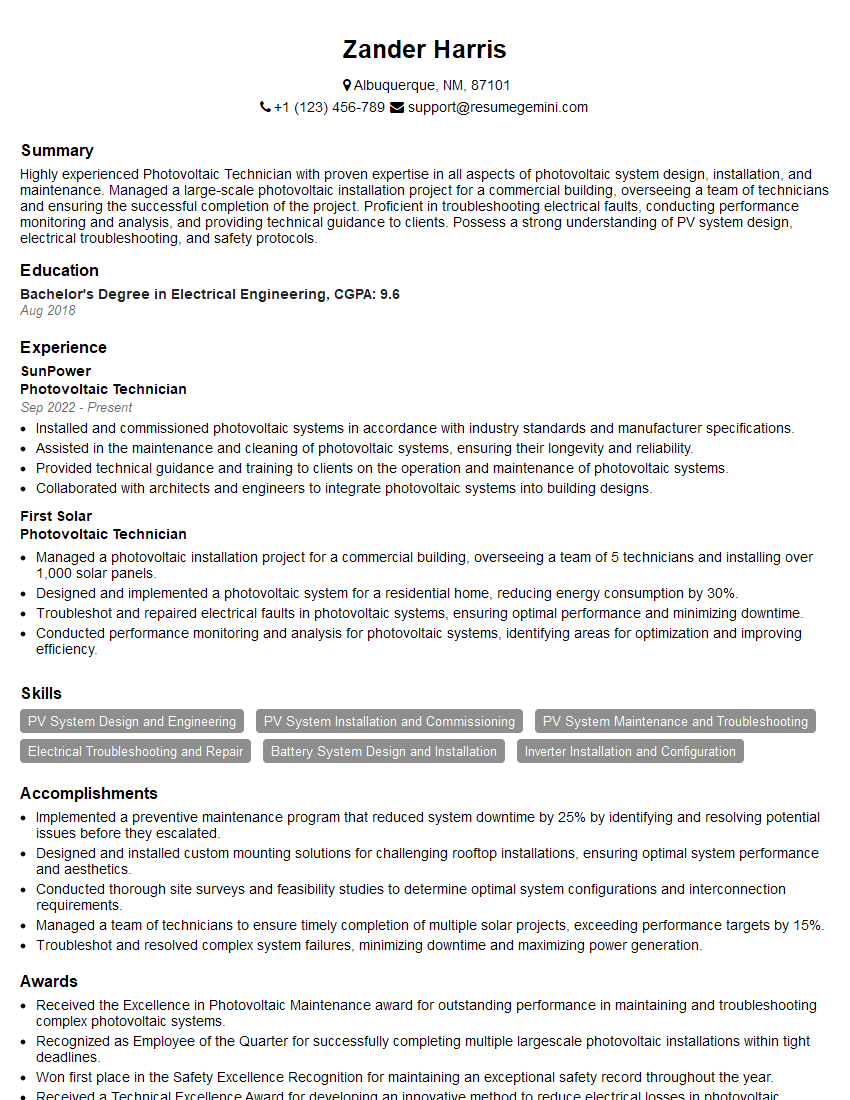
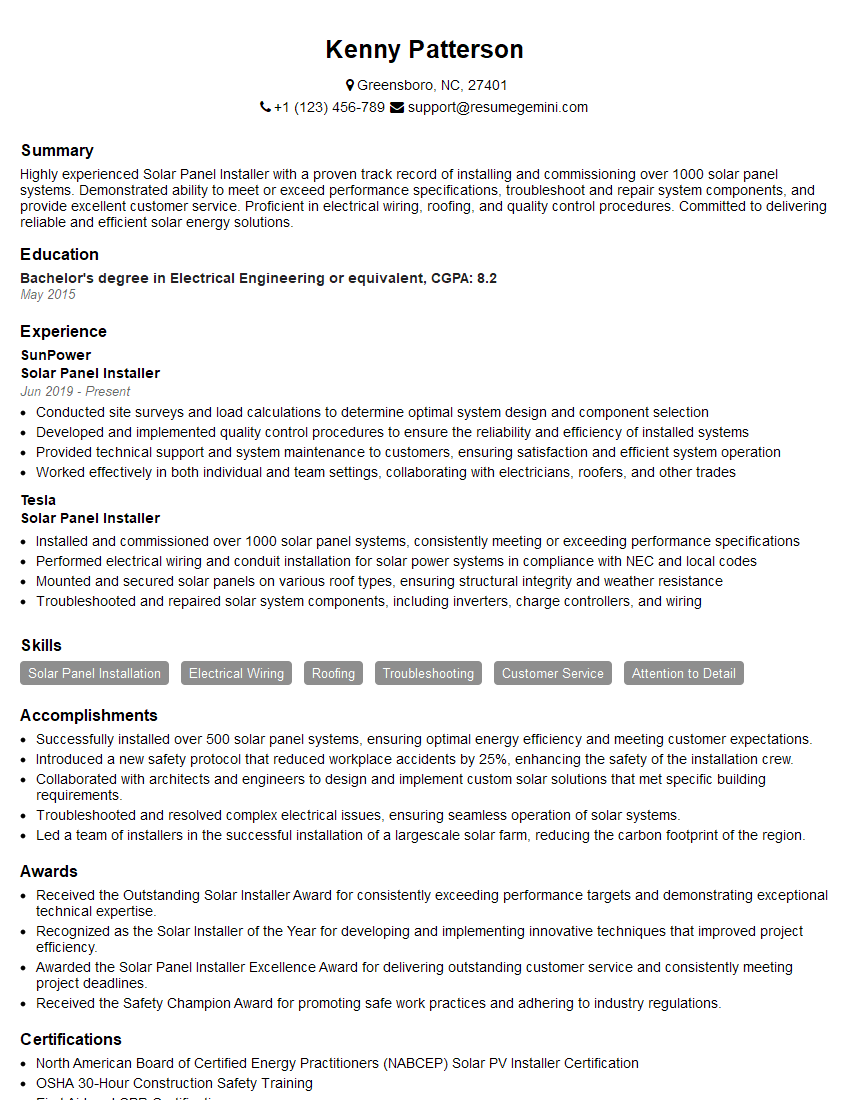
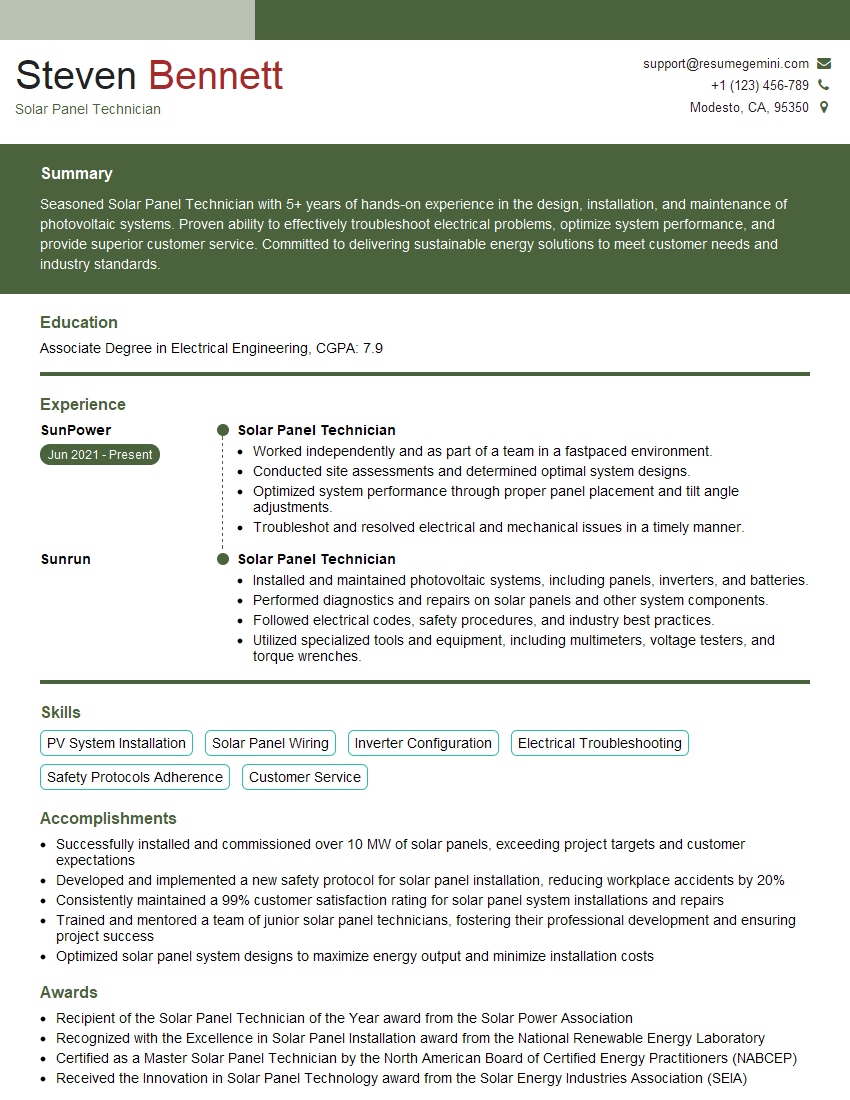
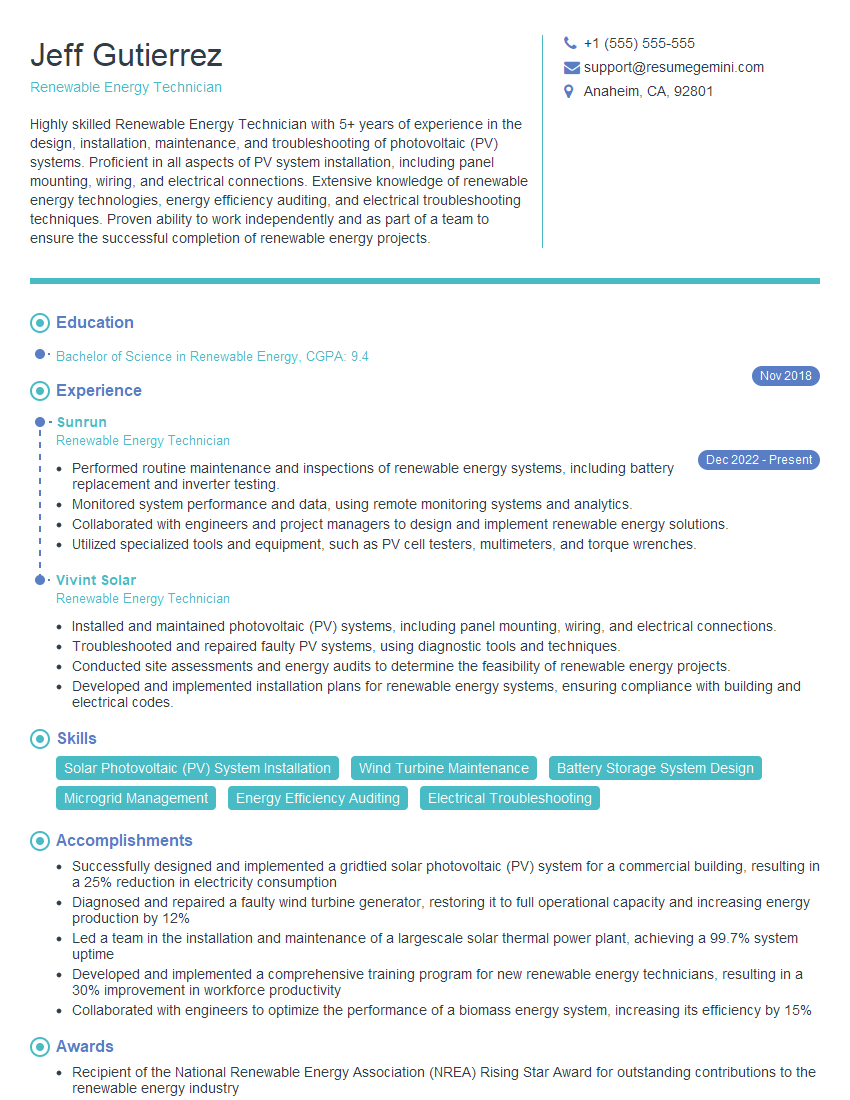
Mastering solar panel repair offers excellent career growth opportunities in a rapidly expanding green technology sector. A strong understanding of these technical skills is essential for securing your ideal role. To significantly boost your job prospects, focus on creating a compelling and ATS-friendly resume that highlights your expertise. ResumeGemini is a trusted resource that can help you craft a professional and impactful resume tailored to the specific requirements of solar panel repair jobs. Examples of resumes specifically designed for this field are available to help guide your creation process.

Explore more articles
Users Rating of Our Blogs
Share Your Experience
We value your feedback! Please rate our content and share your thoughts (optional).
What Readers Say About Our Blog
To the interviewgemini.com Webmaster.
Very helpful and content specific questions to help prepare me for my interview!
Thank you
To the interviewgemini.com Webmaster.
This was kind of a unique content I found around the specialized skills. Very helpful questions and good detailed answers.
Very Helpful blog, thank you Interviewgemini team.