The thought of an interview can be nerve-wracking, but the right preparation can make all the difference. Explore this comprehensive guide to Ability to develop and teach music therapy workshops interview questions and gain the confidence you need to showcase your abilities and secure the role.
Questions Asked in Ability to develop and teach music therapy workshops Interview
Q 1. Describe your experience developing a music therapy curriculum for a specific population.
Developing a music therapy curriculum requires a deep understanding of the target population’s needs and abilities. For example, when creating a curriculum for children with autism spectrum disorder (ASD), I focused on incorporating sensory-based activities, repetitive patterns, and structured routines to promote engagement and reduce anxiety. The curriculum included elements like:
- Sensory Integration: Activities involving different instruments and textures to stimulate various senses.
- Repetitive Rhythms: Drumming exercises and simple songs with predictable patterns to develop rhythm and predictability.
- Vocalization and Communication: Singing games and vocal exercises to improve communication skills.
- Emotional Regulation: Calm and soothing music to help manage emotional outbursts and anxiety.
The curriculum was designed to be flexible and adaptable, allowing for individualization based on each child’s specific strengths and challenges. Progress was monitored using observation checklists, parent feedback, and informal assessments to ensure the effectiveness of the interventions.
Q 2. What teaching methodologies are you most proficient in, and how do you adapt them for diverse learning styles in music therapy workshops?
My teaching methodologies are multifaceted and adapt to various learning styles. I integrate experiential learning, where participants actively participate and discover concepts through music-making. For visual learners, I utilize color-coded charts, diagrams, and visual aids. For auditory learners, I use lectures, musical examples, and discussions. For kinesthetic learners, hands-on activities and movement-based exercises are crucial. For example, when teaching improvisation techniques, I might start with a structured exercise for visual learners, then provide auditory examples, and finally have participants freely improvise, catering to kinesthetic learners. I regularly assess individual learning styles and modify my approach accordingly, creating a dynamic learning environment.
Q 3. How do you assess the effectiveness of your music therapy workshops?
Assessing the effectiveness of my workshops involves a multi-pronged approach. I utilize pre- and post-workshop assessments to measure changes in participants’ knowledge, skills, and attitudes related to music therapy. These assessments can include:
- Questionnaires: To gauge attitudes toward music therapy and self-reported improvements.
- Skill-based assessments: To evaluate improvement in musical skills and therapeutic techniques.
- Observation checklists: To track changes in behavior and engagement.
- Feedback forms: To gather qualitative data about participant experiences and suggestions for improvement.
Furthermore, I regularly collect anecdotal data through observations during the workshops and maintain ongoing communication with participants to gain insights into their learning journey.
Q 4. Explain your approach to incorporating evidence-based practices in your music therapy workshops.
Evidence-based practices are essential in music therapy. I ensure my workshops incorporate research-supported interventions. For instance, when working with individuals experiencing anxiety, I incorporate neurologic music therapy techniques which have shown effectiveness in reducing physiological symptoms of anxiety. I also stay updated on current research through professional journals and conferences to incorporate the latest findings into my curriculum. I strive to create a balance between theoretical knowledge and practical application, explaining the rationale behind chosen techniques and referencing supporting research to enhance understanding and credibility.
Q 5. How do you manage challenging behaviors or learning difficulties within a music therapy workshop setting?
Managing challenging behaviors requires a proactive and individualized approach. I create a safe and supportive environment that emphasizes respect and understanding. I establish clear expectations and boundaries at the beginning of the workshop. If challenging behaviors arise, I use techniques such as:
- Redirection: Gently redirecting the individual’s attention to a different activity.
- Positive reinforcement: Praising and rewarding positive behaviors.
- Sensory breaks: Providing a quiet space for calming down.
- Collaboration with caregivers/support staff: Working collaboratively to develop individualized strategies.
If the behavior persists, I might consult with relevant professionals to develop a more comprehensive strategy.
Q 6. Describe your experience with creating engaging and interactive music therapy workshop activities.
Engaging and interactive activities are key to successful workshops. I design activities that are stimulating and relevant to the workshop objectives. For example, I might use creative movement activities to explore emotions, improvisational exercises to enhance self-expression, and songwriting to facilitate personal narratives. I incorporate group discussions, role-playing, and collaborative projects to foster a sense of community and shared learning. The use of a variety of instruments and musical styles keeps the sessions fresh and engaging.
Q 7. How do you tailor your workshop content to meet the specific needs and learning objectives of a given group?
Tailoring workshop content involves pre-workshop assessments to understand the participants’ needs, goals, and prior knowledge. I use needs assessments, surveys, or interviews to gather relevant information. For instance, a workshop for oncology patients might focus on relaxation techniques and emotional support through music, while a workshop for children with ADHD might emphasize rhythmic activities and focus training. I adapt the pace, content, and activities to meet the specific needs of each group, ensuring everyone feels comfortable and included. The feedback gathered throughout the workshop helps refine the content further.
Q 8. What are your strategies for incorporating feedback into the design and delivery of your music therapy workshops?
Incorporating feedback is crucial for refining my music therapy workshops. My strategy is multifaceted and begins even before the workshop commences. I gather preliminary feedback through surveys and needs assessments to understand participant expectations and needs. During the workshop, I actively solicit feedback through informal methods like open discussions and observation of participant engagement. I utilize structured feedback mechanisms like post-session questionnaires, and I also pay attention to nonverbal cues such as body language and facial expressions. This feedback informs adjustments to both the workshop’s content and my delivery style. For example, if participants express difficulty with a specific rhythmic exercise, I might simplify the exercise in future iterations or offer more detailed explanations. Post-workshop, a comprehensive evaluation survey allows for in-depth reflection and planning for future improvements.
Q 9. Describe your process for selecting appropriate musical materials and instruments for your workshops.
Selecting appropriate musical materials and instruments is critical for effective music therapy. My process involves careful consideration of the workshop’s objectives, the participants’ needs and abilities, and the therapeutic goals. I begin by defining the specific learning outcomes I want to achieve. Then, I research and select music that aligns with the chosen themes and therapeutic modalities. For example, if the workshop focuses on stress reduction, I might choose calming classical pieces or nature sounds. If the focus is on rhythm and coordination, I might opt for songs with repetitive beats or simple percussion instruments like shakers or tambourines. The choice of instruments also considers accessibility and participant comfort. I often incorporate a variety of instruments, including those that are both familiar and novel to participants, ensuring a balance of engagement and exploration. Testing materials in a pilot setting before a full workshop allows me to fine-tune selections.
Q 10. How do you ensure the safety and well-being of participants during your music therapy workshops?
Ensuring participant safety and well-being is paramount. My approach begins with a thorough risk assessment identifying potential hazards, such as allergies to certain instruments or pre-existing medical conditions. I obtain informed consent from all participants, clearly outlining the workshop’s activities and associated risks. I create a safe and inclusive environment, fostering mutual respect and trust among participants. This includes clear guidelines on appropriate behavior and respect for personal space. During the workshop, I monitor participants closely, paying attention to signs of discomfort or distress. I have protocols in place for handling emergencies, including readily available first aid supplies and contact information for emergency services. I emphasize that participation is voluntary and participants can opt out of any activity at any time without judgment. Prioritizing a supportive and non-judgmental atmosphere is vital in ensuring a safe and therapeutic experience.
Q 11. How do you adapt your teaching style to meet the needs of different age groups or learning abilities in your music therapy workshops?
Adapting my teaching style to diverse age groups and learning abilities is essential. I utilize differentiated instruction, tailoring my approach to meet individual needs. For younger children, I incorporate more playful and interactive activities, such as movement-based games and creative play using simple instruments. For older adults, I might focus on reflective exercises and discussions related to personal memories and experiences associated with music. For participants with learning disabilities, I modify activities to accommodate their specific needs, using visual aids, simplified instructions, and breaking down complex tasks into smaller, manageable steps. I always assess participants’ levels of musical experience and tailor the complexity of the material accordingly. Flexibility and responsiveness to individual needs are key to maximizing engagement and learning for all participants.
Q 12. How do you handle questions from participants that fall outside your area of expertise in your music therapy workshops?
When faced with questions outside my area of expertise, I prioritize honesty and transparency. I acknowledge that I don’t have all the answers and explain that I need to research or consult with a colleague. I make sure to clearly communicate this to participants in a timely and respectful manner. I then take the initiative to find the information or expert advice, returning to the participant with a responsible answer or appropriate referral. This approach maintains credibility and builds trust. It also showcases the importance of ongoing professional development and the collaborative nature of healthcare.
Q 13. What are your preferred methods for evaluating participants’ progress and learning outcomes in music therapy workshops?
Evaluating participant progress and learning outcomes is vital. My methods combine both quantitative and qualitative data collection. Quantitative methods include pre- and post-workshop assessments measuring changes in specific skills or knowledge. For example, I might use a standardized test to assess musical aptitude before and after a workshop focusing on rhythmic training. Qualitative data is collected through observation of participant engagement, informal discussions, and feedback from participants themselves. I analyze both the quantitative and qualitative data to determine the overall effectiveness of the workshop and identify areas for improvement. The results of the evaluation inform future iterations of the workshop, ensuring continuous improvement in teaching and learning outcomes.
Q 14. Describe your experience working with diverse cultural backgrounds in music therapy workshops.
My experience working with diverse cultural backgrounds has been incredibly enriching. I embrace cultural sensitivity by recognizing that music has different meanings and functions across cultures. I strive to incorporate culturally relevant music and instruments into my workshops. This might involve using music from various world traditions or adapting activities to reflect different cultural practices. I encourage participants to share their musical backgrounds and experiences, creating a space for sharing and mutual learning. This approach fosters inclusivity and promotes a deeper understanding and appreciation of diverse musical traditions. Open communication and respect for cultural differences are essential to creating a positive and welcoming learning environment for everyone.
Q 15. How do you ensure that your music therapy workshops are inclusive and accessible to all participants?
Creating inclusive and accessible music therapy workshops is paramount. It starts with pre-workshop planning, considering diverse needs from the outset. This includes offering various communication formats (visual aids, written materials, verbal instructions), accommodating physical limitations with adaptable spaces and equipment (e.g., wheelchair access, adjustable seating), and being sensitive to cultural and religious backgrounds.
For example, I recently adapted a workshop on rhythmic expression to include participants with visual impairments. We incorporated tactile instruments and replaced visual cues with auditory ones, ensuring everyone could actively participate. Similarly, I ensure diverse musical styles are represented to appeal to a broader range of cultural backgrounds and preferences.
During the workshop, I actively solicit feedback about accessibility and adjust as needed. Open communication and a welcoming atmosphere are key to making everyone feel comfortable and included. For instance, if a participant reveals a sensory sensitivity, we might adjust lighting, soundscapes, or activity duration.
Career Expert Tips:
- Ace those interviews! Prepare effectively by reviewing the Top 50 Most Common Interview Questions on ResumeGemini.
- Navigate your job search with confidence! Explore a wide range of Career Tips on ResumeGemini. Learn about common challenges and recommendations to overcome them.
- Craft the perfect resume! Master the Art of Resume Writing with ResumeGemini’s guide. Showcase your unique qualifications and achievements effectively.
- Don’t miss out on holiday savings! Build your dream resume with ResumeGemini’s ATS optimized templates.
Q 16. What is your process for creating a positive and supportive learning environment in your music therapy workshops?
A positive and supportive learning environment is built on mutual respect, trust, and a sense of safety. I begin by clearly outlining workshop expectations and guidelines, emphasizing the importance of active listening, respectful communication, and non-judgmental participation. I explicitly state a ‘no judgment’ zone where all attempts are encouraged, and errors are viewed as learning opportunities.
Icebreaker activities at the start help participants bond and create a welcoming atmosphere. Throughout the workshop, I use positive reinforcement, encouraging active participation and celebrating individual accomplishments, whether big or small. For example, I might say, “I love the creativity you’re showing with that rhythm,” or “That was a brave attempt; let’s try a slightly different approach.” This positive feedback builds confidence and motivates continued participation.
I actively encourage peer support by structuring activities that promote collaboration and sharing of experiences. Group discussions are moderated to ensure everyone feels heard. I create a space where participants can openly share their feelings and experiences without fear of judgment.
Q 17. How do you promote professional development and networking opportunities for participants in your music therapy workshops?
Promoting professional development and networking is integral to my workshops. I achieve this by incorporating opportunities for skill-building, knowledge sharing, and peer interaction. I often invite guest speakers who are experts in specific areas of music therapy, offering insights into new techniques or research findings.
Workshops often feature case studies and interactive problem-solving sessions to help participants apply their learning directly to their work. For instance, we might discuss effective strategies for working with clients facing trauma or depression. I also dedicate time for peer networking and collaboration, facilitating group discussions and providing opportunities for participants to exchange ideas and experiences.
I maintain a workshop alumni network, providing access to relevant resources, upcoming events, and continuing education opportunities. This provides a valuable platform for ongoing professional development and relationship building long after the workshop concludes. We often use an online forum or email list to connect participants.
Q 18. How would you address a participant who is struggling to engage with the workshop activities?
Addressing a struggling participant requires empathy, patience, and individualized support. The first step is to observe and understand the root cause of the disengagement. Is it a lack of understanding, discomfort with the activity, or something else entirely?
I approach the participant privately, creating a safe space for open communication. I ask gentle, open-ended questions such as, “How are you feeling about the activity? Is there anything I can do to make this more comfortable or understandable for you?” I listen attentively to their response, validating their feelings and experiences. Then, I can offer tailored adjustments. For example, I might offer a different activity, modify the instructions, or provide additional support and guidance.
If the disengagement is persistent, I might recommend a break or suggest working individually to address any specific challenges. It’s important to remember that everyone learns at their own pace, and creating a safe and supportive environment where it’s okay to struggle is key.
Q 19. What strategies do you use to maintain the confidentiality of participant information in your music therapy workshops?
Maintaining confidentiality is critical in music therapy. From the outset, I clearly communicate my confidentiality policies, explaining what information will be kept private and what, if any, exceptions might exist (e.g., mandated reporting). This information is provided in writing and discussed verbally.
I avoid using participants’ names or identifying information in group discussions or examples. During individual or group activities, I refrain from sharing personal information about participants with others, even among workshop participants. Any notes or recordings are stored securely and confidentially, following HIPAA or other relevant guidelines.
The workshop space itself is designed to ensure privacy during individual activities. I also obtain informed consent before recording any sessions and ensure participants understand how their data will be used and stored. Clear policies on data storage and disposal are implemented.
Q 20. Describe your experience using technology to enhance the delivery or effectiveness of music therapy workshops.
Technology significantly enhances music therapy workshops. I’ve used online platforms like Zoom to host virtual workshops, expanding access to individuals geographically distant or with mobility issues. This allows for real-time interaction and participation using features like screen sharing and breakout rooms.
I utilize music creation software and digital audio workstations (DAWs) for collaborative composition projects. Participants can explore different instruments and soundscapes virtually, creating opportunities for creative expression that might not be feasible in a traditional setting. For example, we might use GarageBand for collaborative songwriting, or Ableton Live for sound design exploration.
Online resources and learning management systems are also valuable. Pre-workshop materials, supplemental resources, and post-workshop assessments can all be delivered digitally, promoting efficiency and accessibility. Participants can also access recordings of sessions for review and continued learning.
Q 21. How do you handle unexpected situations or logistical challenges that may arise during a music therapy workshop?
Unexpected situations are inevitable. My approach is proactive, involving thorough pre-planning and contingency planning. This includes having backup plans for technical difficulties (e.g., having alternative methods for presenting materials if technology fails), extra materials in case of damage or loss, and a flexible schedule that allows for adjustments.
If a participant experiences a medical emergency, I have protocols in place for contacting emergency services and have a designated first-aid kit on hand. In the case of disruptive behavior, I address the issue calmly and directly, adhering to the pre-established workshop guidelines and ensuring the safety and comfort of all participants. I always prioritize the well-being of everyone involved.
Unexpected logistical challenges, such as equipment malfunctions, can be addressed by having backup equipment or finding creative solutions. Open communication with participants is essential to reassure them and maintain a sense of calm and control.
Q 22. What are some examples of successful outcomes you have achieved through your music therapy workshops?
My music therapy workshops consistently yield positive outcomes. For instance, in a workshop focused on stress reduction for healthcare professionals, participants reported a significant decrease in perceived stress levels post-workshop, as measured by validated questionnaires. This was further evidenced by their increased ability to self-regulate emotions during simulated high-pressure scenarios we incorporated into the sessions. In another workshop targeting children with autism, we saw improvements in communication skills and social interaction. One participant, previously largely nonverbal, began initiating simple vocalizations and interactive play following the workshop’s completion. These improvements were documented by both parents and therapists involved in the children’s ongoing care.
- Improved emotional regulation: Many participants experience increased self-awareness and the ability to manage challenging emotions through musical expression.
- Enhanced communication skills: Workshops often facilitate the development of nonverbal and verbal communication abilities, particularly beneficial for individuals with communication disorders.
- Increased self-esteem and confidence: The creative process inherent in music therapy empowers participants, boosting self-esteem and fostering a sense of accomplishment.
Q 23. What are your goals for participants who complete your music therapy workshops?
My overarching goal is to empower participants with the tools and skills to utilize music therapeutically, both for self-care and potentially within their professional or personal lives. This includes not only mastering specific music therapy techniques but also understanding the underlying principles and theoretical frameworks. I aim for participants to leave feeling confident, capable, and inspired to incorporate music into their well-being strategies. Specifically, I hope participants will:
- Develop a deeper understanding of music’s therapeutic potential.
- Gain practical skills in applying music therapy techniques.
- Improve their ability to self-regulate emotions through music.
- Enhance their communication and interpersonal skills.
- Build a strong foundation for continued learning and personal growth in music therapy.
Q 24. How do you maintain your own professional development in the field of music therapy?
Maintaining professional development is crucial in the ever-evolving field of music therapy. I actively participate in continuing education opportunities, including attending conferences like the American Music Therapy Association’s annual meeting, webinars presented by leading music therapists, and workshops focusing on specific techniques or populations. I regularly review the latest research published in peer-reviewed journals like the Journal of Music Therapy. Furthermore, I actively engage in peer supervision with other music therapists, discussing cases and best practices to refine my skills and broaden my perspective. This collaborative approach fosters continuous learning and professional growth.
Q 25. Describe your experience with marketing and promoting your music therapy workshops.
Marketing my workshops involves a multi-pronged approach. I leverage social media platforms like Facebook and Instagram to reach a broader audience, creating engaging content showcasing the benefits of my workshops and featuring testimonials from past participants. I also actively network with local organizations and professionals who may refer clients, such as schools, hospitals, and community centers. Collaborating with complementary health and wellness providers helps to expand my reach. Finally, I maintain a user-friendly website with detailed workshop information, online registration, and contact details. This integrated approach ensures a consistent and effective marketing strategy.
Q 26. How do you manage and track your workshop expenses?
I utilize spreadsheet software to meticulously track workshop expenses. This includes all direct costs, such as venue rental, marketing materials, supplies (instruments, handouts), and any professional fees (e.g., guest speakers). Indirect costs, such as my time investment and administrative tasks are also factored in, allowing for a comprehensive understanding of profitability. Regularly reviewing these expenses helps me identify areas for cost optimization and informs future pricing strategies. I maintain a separate account for workshop-related finances, ensuring clear separation from personal funds.
Q 27. What are your strategies for ensuring your music therapy workshops are financially sustainable?
Financial sustainability is achieved through a combination of strategies. Firstly, accurate cost analysis and competitive pricing are key. I carefully research the market to determine appropriate fees while ensuring profitability. Secondly, I focus on attracting a consistent number of participants through effective marketing and building strong relationships with referral sources. Thirdly, I explore diverse funding opportunities, such as grants or sponsorships from relevant organizations, particularly for workshops targeting specific populations or addressing social needs. Finally, I regularly review my pricing and marketing strategies to adapt to market changes and maintain a strong financial position.
Q 28. How do you balance the theoretical and practical aspects of music therapy in your workshop delivery?
Balancing theory and practice is a cornerstone of my workshop delivery. I begin by introducing the relevant theoretical frameworks of music therapy, explaining the underlying principles and research supporting different techniques. This theoretical foundation is then immediately applied through hands-on activities and experiential learning. Participants engage in practical exercises, group music-making sessions, and role-playing scenarios to solidify their understanding. This integrated approach ensures that participants not only grasp the conceptual aspects but also develop practical skills in applying music therapy techniques. For example, we might discuss the neurobiological effects of music on stress reduction, followed by a guided meditation using calming musical elements.
Key Topics to Learn for Ability to Develop and Teach Music Therapy Workshops Interview
- Curriculum Design: Understanding the principles of curriculum development for music therapy workshops, including learning objectives, session plans, and assessment methods. Consider diverse learning styles and needs.
- Therapeutic Techniques: Mastering various music therapy techniques applicable to different populations and therapeutic goals. Be prepared to discuss your experience with specific approaches and their practical applications.
- Group Facilitation Skills: Demonstrate your ability to create a safe and supportive environment for group workshops. This includes managing group dynamics, conflict resolution, and promoting active participation.
- Adaptability and Modification: Showcasing your ability to adapt workshop content and techniques to meet the individual needs of participants with varying backgrounds, abilities, and challenges.
- Ethical Considerations: Understanding and applying ethical principles relevant to music therapy practice, including confidentiality, informed consent, and professional boundaries within a workshop setting.
- Assessment and Evaluation: Describing methods for assessing participant progress and evaluating the effectiveness of the workshops. Be prepared to discuss data collection and analysis techniques.
- Musical Proficiency: Highlighting your musical skills and repertoire relevant to the target population of your workshops. Be prepared to discuss your ability to adapt your musical skills to different therapeutic contexts.
- Resource Management: Demonstrating your ability to effectively manage resources, including instruments, materials, and time, within a workshop setting.
- Marketing and Outreach: Discuss strategies for promoting workshops and engaging potential participants. Understanding the needs of potential clients is vital.
Next Steps
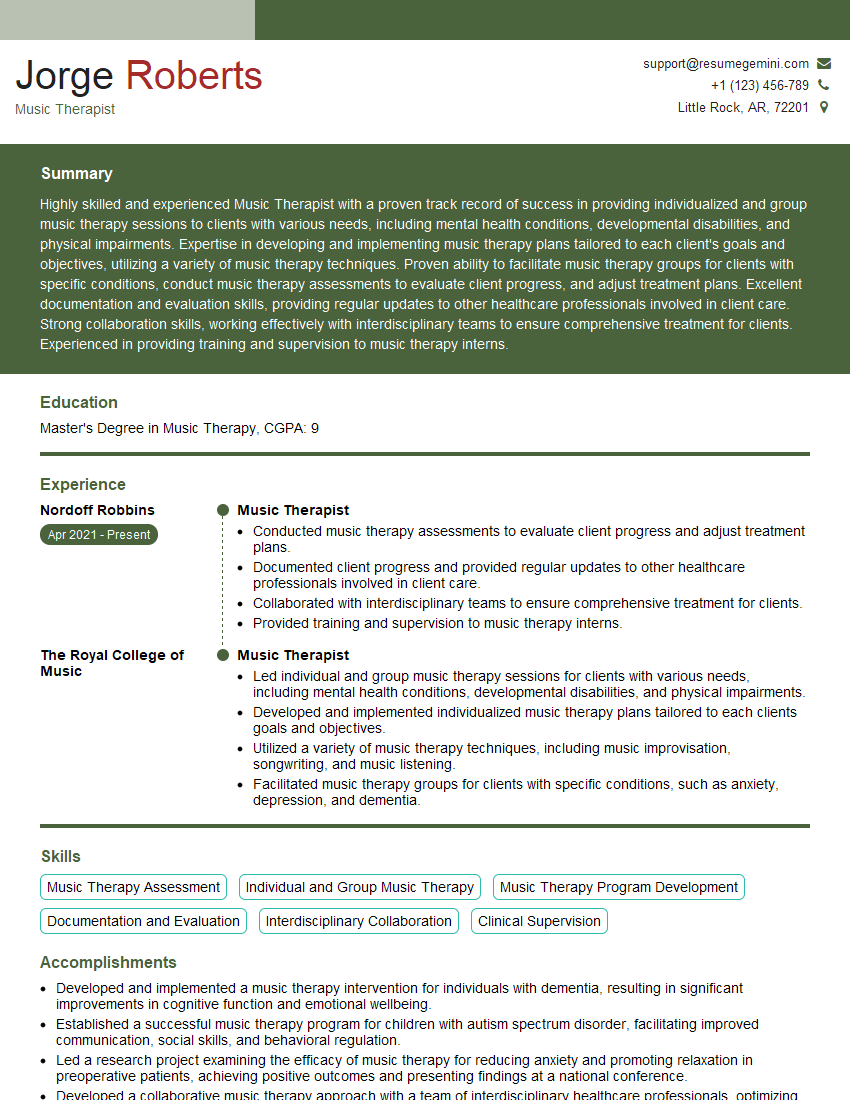
Mastering the ability to develop and teach music therapy workshops significantly enhances your career prospects, opening doors to diverse opportunities and showcasing your expertise. A well-crafted, ATS-friendly resume is crucial for maximizing your job search success. To build a compelling and effective resume that highlights your skills and experience, we recommend using ResumeGemini. ResumeGemini provides a user-friendly platform to create professional resumes, and we offer examples of resumes tailored to highlight experience in developing and teaching music therapy workshops.
Explore more articles
Users Rating of Our Blogs
Share Your Experience
We value your feedback! Please rate our content and share your thoughts (optional).
What Readers Say About Our Blog
To the interviewgemini.com Webmaster.
Very helpful and content specific questions to help prepare me for my interview!
Thank you
To the interviewgemini.com Webmaster.
This was kind of a unique content I found around the specialized skills. Very helpful questions and good detailed answers.
Very Helpful blog, thank you Interviewgemini team.