The right preparation can turn an interview into an opportunity to showcase your expertise. This guide to Nuclear Safety and Regulatory Commission (NSRC) Guidelines interview questions is your ultimate resource, providing key insights and tips to help you ace your responses and stand out as a top candidate.
Questions Asked in Nuclear Safety and Regulatory Commission (NSRC) Guidelines Interview
Q 1. Explain the significance of the NSRC’s 10 CFR Part 50 in reactor licensing.
10 CFR Part 50, ‘Domestic Licensing of Production and Utilization Facilities,’ is the cornerstone of the Nuclear Regulatory Commission’s (NRC, formerly NSRC) reactor licensing program. It establishes the requirements for the design, construction, and operation of nuclear power plants in the United States. Think of it as the rulebook for building and running a nuclear reactor safely. It covers everything from the initial application process, including detailed safety analyses, to ongoing operational oversight and eventual decommissioning.
- Design Certification: Part 50 outlines the process for obtaining design certification for standardized reactor designs, promoting efficiency and safety consistency.
- Licensing Reviews: The NRC meticulously reviews applications, ensuring compliance with stringent safety regulations, examining detailed safety analysis reports (SARs) that meticulously describe the reactor’s safety features.
- Operational Inspections: Ongoing inspections are performed to ensure continued compliance with regulations and the effectiveness of safety programs.
- Emergency Preparedness: Part 50 also addresses the requirements for comprehensive emergency preparedness plans, detailing procedures for managing accidents and protecting the public.
For example, a plant applying for a license must demonstrate that its design incorporates multiple layers of defense to prevent accidents and mitigate the consequences if one occurs. Failure to meet these requirements will result in the application being rejected.
Q 2. Describe the process for reporting a significant nuclear safety event to the NSRC.
Reporting a significant nuclear safety event to the NRC follows a structured process, emphasizing speed and accuracy. The gravity of the event dictates the reporting method and timeframe. Immediate notification is required for events that could cause substantial harm to public health or safety.
- Immediate Notification (IN): For events posing immediate risk, such as a significant release of radioactive material, immediate notification is mandated through specified channels.
- Initial Report (IR): Within 24 hours of discovering a significant event, a detailed Initial Report must be submitted providing preliminary information.
- Supplemental Reports: Follow-up reports are needed to provide further details and updates on the event’s investigation, causes, and corrective actions.
The NRC utilizes a severity grading scale (e.g., INES – International Nuclear and Radiological Event Scale) to classify events, guiding the urgency and extent of the reporting and investigation. For example, a loss of offsite power at a nuclear plant would trigger a specific reporting procedure, leading to a thorough investigation and potential corrective actions to prevent future incidents.
Q 3. What are the key differences between NSRC regulations and international safety standards?
While both NRC regulations and international safety standards (e.g., IAEA Safety Standards) aim to ensure nuclear safety, key differences exist due to variations in legal frameworks, national contexts, and regulatory approaches. The NRC’s regulations are legally binding within the U.S., whereas international standards are generally recommendations that member states can adapt to their specific circumstances.
- Legal Enforceability: NRC regulations are legally binding and directly enforceable, while international standards lack direct legal force within a nation’s jurisdiction.
- Specificity: NRC regulations tend to be more detailed and specific, reflecting the U.S. legal and regulatory system. International standards are often broader, providing principles and guidance that countries can tailor to their needs.
- Enforcement Mechanisms: The NRC has its own inspection and enforcement mechanisms, whereas international standards rely on national authorities for implementation and enforcement.
For instance, the specific requirements for emergency planning might vary between the NRC and IAEA guidelines, although both emphasize the importance of effective emergency response strategies. The NRC has very specific requirements on the content and format of these plans.
Q 4. How does the NSRC’s regulatory framework address the management of spent nuclear fuel?
The NRC’s regulatory framework for spent nuclear fuel management is extensive and addresses multiple stages, from on-site storage to eventual disposal. This is a highly complex area with significant long-term implications.
- On-site Storage: The NRC sets strict requirements for the design, construction, and operation of spent fuel pools and dry storage casks at nuclear power plants, emphasizing safety and security.
- Transportation: Regulations cover the safe transportation of spent nuclear fuel, addressing packaging, routing, and security protocols.
- Repository Development: The NRC is involved in overseeing the development of a geological repository for permanent disposal of spent nuclear fuel, establishing rigorous safety and environmental protection criteria.
The process of licensing and regulating a geological repository is extremely rigorous, requiring extensive scientific and engineering analysis to demonstrate that the site and design can safely contain the fuel for millennia. This involves evaluating factors like geological stability, groundwater flow, and potential impacts on the environment.
Q 5. Explain the role of probabilistic risk assessment (PRA) in nuclear safety.
Probabilistic Risk Assessment (PRA) is a systematic and comprehensive method for evaluating the risks associated with nuclear power plant operation. It uses quantitative methods to identify potential accidents, estimate their likelihood, and analyze their potential consequences. Think of it as a sophisticated tool to understand and manage uncertainty.
- Accident Sequence Analysis: PRA identifies potential accident sequences and estimates their probabilities.
- Consequence Analysis: It determines the potential consequences of each accident scenario, including the release of radioactive materials and potential health effects.
- Risk Mitigation: PRA informs the development of risk mitigation strategies to enhance plant safety and reduce the likelihood and consequences of accidents.
Imagine a plant’s cooling system failing. PRA would estimate the probability of this failure occurring, the likelihood of further system failures cascading from the initial event, and the potential consequences of a core meltdown. This analysis can help prioritize safety improvements and allocate resources effectively.
Q 6. What are the NSRC’s requirements regarding emergency planning at nuclear facilities?
The NRC’s emergency planning requirements for nuclear facilities are stringent, ensuring robust preparedness for potential accidents. The goal is to protect the public and the environment in case of an emergency.
- Emergency Plans: Nuclear facilities must develop and maintain comprehensive emergency plans, outlining procedures for responding to various accident scenarios.
- Offsite Response: Plans must detail the roles and responsibilities of offsite emergency response organizations, such as state and local agencies.
- Public Information: The plans must include strategies for timely and effective public information dissemination, informing the public about potential risks and emergency actions.
- Exercises and Drills: Regular exercises and drills are mandated to test the effectiveness of emergency plans and ensure that personnel are adequately trained.
These plans are not just documents; they are living, breathing systems that are regularly reviewed and updated based on lessons learned from past incidents and advances in technology. This includes planning for various scenarios, including natural disasters that might impact the facility.
Q 7. Describe the NSRC’s inspection process for nuclear power plants.
The NRC’s inspection process for nuclear power plants is rigorous and comprehensive, employing a multi-faceted approach to ensure compliance with regulations and maintain safety. The process involves proactive monitoring and reactive responses to reported events.
- Routine Inspections: Regular inspections are conducted by NRC inspectors to assess compliance with regulations, focusing on various aspects of plant operation and maintenance.
- Special Inspections: Special inspections may be initiated following events or reported issues, conducting thorough investigations to determine root causes and implement corrective actions.
- Enforcement Actions: If noncompliance is identified, the NRC may take enforcement actions, ranging from issuing violations to imposing fines or ordering plant shutdowns.
- Independent Oversight: The NRC’s oversight involves a significant level of independent review of the plant’s own self-assessment and incident reports.
The inspection process is not simply a checklist; it involves trained personnel who conduct detailed evaluations of systems, equipment, procedures, and personnel performance. Inspectors are experts in nuclear safety and engineering and frequently have significant experience in the industry before joining the NRC.
Q 8. What are the NSRC’s requirements for radiation protection of workers?
The NSRC’s radiation protection requirements for workers center around the ALARA principle – As Low As Reasonably Achievable. This means keeping radiation exposure to workers as far below regulatory limits as is practical, considering economic and social factors. Specific requirements include:
- Dose limits: NSRC sets annual effective dose limits for occupational exposure, with lower limits for specific organs. These limits are strictly enforced and tracked meticulously.
- Protective measures: Facilities must implement a comprehensive radiation protection program, including engineering controls (e.g., shielding, distance), administrative controls (e.g., work procedures, training), and personal protective equipment (PPE) such as dosimeters and protective clothing.
- Monitoring and assessment: Regular monitoring of worker exposure through dosimetry and area monitoring is mandatory. Exposure records are maintained, and thorough assessments are conducted to identify and mitigate potential hazards.
- Emergency preparedness: Robust emergency plans must be in place to address potential radiation incidents, including procedures for evacuation, decontamination, and medical treatment.
For example, a nuclear power plant might use robotic systems for handling highly radioactive materials, minimizing worker exposure. Regular training and drills ensure workers are prepared to handle radiation-related emergencies effectively.
Q 9. How do NSRC regulations address the security of nuclear materials?
NSRC regulations on nuclear material security are designed to prevent unauthorized access, use, theft, sabotage, or diversion of nuclear materials. These regulations incorporate a multi-layered approach, including:
- Physical protection: This involves physical barriers, surveillance systems, access controls, and armed security personnel to deter and prevent unauthorized entry to facilities storing or using nuclear materials.
- Transportation security: Strict regulations govern the transportation of nuclear materials, ensuring secure packaging, routing, and escort procedures.
- Personnel security: Background checks, security clearances, and ongoing monitoring of personnel with access to nuclear materials are crucial to prevent insider threats.
- Cybersecurity: Protecting computerized systems that control or monitor nuclear facilities and materials from cyberattacks is essential for maintaining security.
- Accountability and tracking: Stringent inventory control and accounting measures track the movement and location of all nuclear materials.
Imagine a scenario where a facility needs to transport highly enriched uranium. The NSRC regulations would mandate specific secure containers, armed escorts, GPS tracking, and detailed reporting throughout the transportation process to prevent theft or diversion.
Q 10. Explain the concept of defense-in-depth as it applies to nuclear safety.
Defense-in-depth is a cornerstone of nuclear safety. It’s a layered approach that incorporates multiple independent safety systems to mitigate the risk of accidents. Think of it like a castle with multiple defensive layers – if one fails, others are in place to prevent a breach. In nuclear safety, this translates into:
- Prevention: Designing and operating facilities to prevent accidents through robust engineering design and operating procedures.
- Mitigation: Implementing safety systems that would mitigate the consequences of an accident if it does occur (e.g., emergency core cooling systems in a nuclear reactor).
- Containment: Designing the facility to contain radioactive materials in the event of an accident (e.g., containment buildings around reactors).
- Emergency response: Developing and exercising emergency plans to handle accidents and protect the public and workers.
For example, a nuclear power plant might have multiple independent backup power sources to ensure cooling of the reactor core even if the primary power source fails. This layered approach significantly reduces the likelihood of a severe accident.
Q 11. Describe the NSRC’s regulatory framework for decommissioning nuclear facilities.
The NSRC’s regulatory framework for decommissioning nuclear facilities is extensive and focuses on protecting human health and the environment. It involves:
- Planning and assessment: Detailed plans for decommissioning are developed and reviewed by the NSRC, considering all potential hazards and environmental impacts.
- Licensing and approvals: The NSRC issues licenses and approvals at different stages of decommissioning, ensuring compliance with regulatory requirements.
- Site characterization: A thorough assessment of the site’s radiological conditions is performed to determine the extent of contamination and the required remediation efforts.
- Waste management: Safe disposal or storage of radioactive waste generated during decommissioning is a critical aspect of the process, adhering to strict regulations.
- Site restoration: The site is restored to a condition suitable for its intended future use, ensuring that radiological hazards are minimized or eliminated.
For instance, decommissioning a research reactor might involve removing fuel elements, decontaminating equipment, dismantling structures, and managing resulting radioactive waste according to NSRC standards, potentially leading to the site being repurposed for other uses.
Q 12. What are the key performance indicators (KPIs) used to evaluate nuclear safety performance?
Key Performance Indicators (KPIs) for evaluating nuclear safety performance are numerous and depend on the specific facility and its operations. However, some common KPIs include:
- Radiation exposure levels: Tracking worker and public radiation exposure levels to ensure they are below regulatory limits and ALARA.
- Number and severity of events: Monitoring the frequency and severity of safety-related events, including unplanned shutdowns and incidents.
- Safety system performance: Assessing the reliability and effectiveness of safety systems through testing and inspections.
- Compliance with regulations: Tracking compliance with NSRC regulations and other relevant safety standards.
- Emergency preparedness effectiveness: Evaluating the effectiveness of emergency response plans through drills and exercises.
These KPIs are often used in conjunction to provide a comprehensive picture of nuclear safety performance. For example, a consistently high number of minor safety-related events might indicate a need for improved operational procedures.
Q 13. How do you ensure compliance with NSRC regulations in a nuclear facility?
Ensuring compliance with NSRC regulations requires a multi-faceted approach, encompassing:
- Comprehensive safety programs: Developing and implementing comprehensive safety programs that cover all aspects of facility operations, from design and construction to operation and decommissioning.
- Regular inspections and audits: Conducting regular self-assessments and undergoing inspections and audits by the NSRC or independent organizations.
- Corrective actions: Implementing prompt and effective corrective actions to address any identified deficiencies or non-compliances.
- Training and qualification: Providing thorough training and qualification to all personnel involved in nuclear operations.
- Record keeping and reporting: Maintaining accurate and complete records of all safety-related activities and promptly reporting any safety-related events to the NSRC.
For example, a nuclear facility might have a dedicated safety department responsible for conducting regular safety assessments, implementing corrective actions, and ensuring compliance with all applicable regulations. Continuous monitoring and improvement are crucial.
Q 14. Explain the role of quality assurance (QA) in maintaining nuclear safety.
Quality assurance (QA) plays a vital role in maintaining nuclear safety by ensuring that all activities are performed according to established quality standards and procedures. This involves:
- Establishing quality standards: Developing and implementing documented quality standards for all aspects of facility design, construction, operation, and maintenance.
- Independent verification and validation: Employing independent processes to verify and validate that work is performed according to those standards.
- Audits and inspections: Regular audits and inspections to identify and address any potential quality issues.
- Corrective actions: Promptly implementing corrective actions to address any identified non-conformances.
- Continuous improvement: Continuously improving quality management systems based on lessons learned and best practices.
Imagine a scenario where a critical component of a nuclear reactor needs replacement. A robust QA program would ensure that the new component is of the correct specification, properly installed, and thoroughly tested before being put into service, preventing failures that could compromise safety.
Q 15. Describe the process for obtaining a license to operate a nuclear power plant from the NSRC.
Obtaining a license to operate a nuclear power plant from the NSRC (Nuclear Safety and Regulatory Commission – a fictional name used as a stand-in for real-world nuclear regulatory bodies) is a rigorous and multi-stage process. It’s akin to building a skyscraper – you need meticulous planning, robust designs, and continuous oversight.
- Pre-Licensing Phase: This involves site selection, preliminary safety analysis reports (PSAR), and environmental impact assessments. The NSRC scrutinizes the proposed site’s geological stability, seismic activity, and proximity to population centers. The PSAR details the plant’s design, safety systems, and operational procedures.
- Construction Permit: Once the PSAR and environmental assessments are approved, the NSRC issues a construction permit. This allows the applicant to begin building the plant, but under strict NSRC oversight. Regular inspections are conducted to ensure adherence to approved designs and safety standards.
- Operating License Application: Upon completion of construction, a detailed operating license application is submitted. This includes comprehensive training programs for personnel, emergency response plans, and a detailed security plan.
- Licensing Board Review and Public Hearings: The NSRC’s licensing board rigorously reviews the application and holds public hearings to allow for community input. This ensures transparency and allows for public concerns to be addressed.
- License Issuance: If the NSRC is satisfied that the plant meets all safety and regulatory requirements, an operating license is issued. This is not a permanent license; it’s subject to periodic renewals, which involves demonstrating continued compliance with NSRC regulations.
The entire process can take years, even a decade or more, depending on the complexity of the project and the regulatory reviews.
Career Expert Tips:
- Ace those interviews! Prepare effectively by reviewing the Top 50 Most Common Interview Questions on ResumeGemini.
- Navigate your job search with confidence! Explore a wide range of Career Tips on ResumeGemini. Learn about common challenges and recommendations to overcome them.
- Craft the perfect resume! Master the Art of Resume Writing with ResumeGemini’s guide. Showcase your unique qualifications and achievements effectively.
- Don’t miss out on holiday savings! Build your dream resume with ResumeGemini’s ATS optimized templates.
Q 16. What are the consequences of non-compliance with NSRC regulations?
Non-compliance with NSRC regulations carries serious consequences, ranging from financial penalties to operational shutdowns and even criminal charges. Imagine driving a car without a license or ignoring traffic laws; the risks are significantly magnified in the nuclear industry.
- Financial Penalties: The NSRC can impose substantial fines for violations, depending on the severity and nature of the non-compliance.
- Operational Restrictions: The NSRC may order the plant to reduce power output, implement corrective actions, or even shut down operations until the violations are rectified. This can lead to significant financial losses for the operator.
- License Revocation: In cases of serious or repeated violations, the NSRC can revoke the operating license, forcing the plant to permanently cease operations.
- Criminal Prosecution: Grave violations that endanger public safety can lead to criminal charges against individuals and the operating organization.
The NSRC employs a graduated response system, starting with warnings and escalating to harsher penalties based on the severity and history of non-compliance.
Q 17. Explain the concept of ALARA (As Low As Reasonably Achievable) in radiation protection.
ALARA, or ‘As Low As Reasonably Achievable,’ is a fundamental principle in radiation protection. It’s not about eliminating radiation exposure entirely (which is often impossible), but about keeping it as low as possible while considering economic and social factors. Think of it as driving safely – you can’t eliminate all risk, but you can minimize it through careful driving.
ALARA is implemented through various measures, including:
- Time Minimization: Reducing the time spent in radiation fields. For example, workers performing maintenance near a radiation source would limit their exposure time.
- Distance Maximization: Increasing the distance from the radiation source. The intensity of radiation diminishes rapidly with distance.
- Shielding Optimization: Employing appropriate shielding materials (e.g., lead, concrete) to reduce radiation exposure.
- Engineering Controls: Implementing design changes to minimize radiation emissions from equipment.
The ‘reasonably achievable’ aspect emphasizes that ALARA is a balance between minimizing radiation exposure and the practicality of implementing such measures. It’s not just about safety; it’s about finding cost-effective and efficient solutions.
Q 18. How do you handle a situation where a potential safety violation is identified?
Identifying a potential safety violation triggers a well-defined process. It’s like discovering a crack in the hull of a ship – immediate action is crucial.
- Immediate Action: The violation is immediately reported to the relevant supervisors and the NSRC, ensuring that immediate actions are taken to mitigate any potential risks.
- Investigation: A thorough investigation is launched to determine the root cause of the potential violation, involving personnel from operations, maintenance, and engineering.
- Corrective Actions: Corrective actions are implemented to prevent recurrence. This might involve modifying equipment, updating procedures, or retraining personnel.
- Reporting to NSRC: A detailed report on the potential violation, investigation, and corrective actions is submitted to the NSRC.
- Follow-up Inspection: The NSRC may conduct follow-up inspections to verify the effectiveness of the corrective actions.
Transparency and prompt response are key to handling potential safety violations effectively. Delaying action can escalate a minor issue into a major incident.
Q 19. What are the NSRC’s requirements for the training of nuclear personnel?
The NSRC has stringent requirements for the training of nuclear personnel, ensuring that only highly qualified and competent individuals operate and maintain nuclear facilities. Imagine surgeons needing extensive training – the stakes are equally high in the nuclear industry.
Training programs typically encompass:
- Initial Training: Comprehensive training covering nuclear physics, reactor theory, radiation protection, and emergency procedures.
- Recurrent Training: Regular refresher courses to maintain competency and update knowledge on new technologies and procedures.
- Specialized Training: Specialized training for specific tasks or roles, such as reactor operators, maintenance technicians, and radiation protection officers.
- Simulator Training: Hands-on training using simulated reactor environments to prepare personnel for various scenarios, including emergencies.
The NSRC rigorously audits training programs to ensure they meet its standards, certifying the competence of nuclear personnel.
Q 20. Explain the role of the NSRC in overseeing the transportation of nuclear materials.
The NSRC plays a crucial role in overseeing the transportation of nuclear materials, ensuring that such movements are conducted safely and securely. It’s like regulating the transportation of hazardous materials – strict controls are essential to prevent accidents.
The NSRC’s oversight includes:
- Licensing of Transporters: The NSRC licenses organizations that transport nuclear materials, ensuring they meet specific safety and security requirements.
- Approval of Packaging and Transportation Plans: The NSRC approves the design and testing of packaging for nuclear materials and reviews transportation plans to ensure that the materials are transported safely and securely.
- Inspection and Enforcement: The NSRC conducts inspections of transportation operations and enforces regulations to maintain safety and security.
- Emergency Response Planning: The NSRC ensures that adequate emergency response plans are in place to address potential accidents during transportation.
The NSRC works closely with other regulatory bodies and law enforcement agencies to ensure the safe transportation of nuclear materials.
Q 21. Describe the NSRC’s regulatory approach to the management of nuclear waste.
The NSRC’s regulatory approach to the management of nuclear waste focuses on ensuring the protection of human health and the environment for both current and future generations. This is a long-term responsibility, much like managing a long-term investment fund.
Key aspects of the NSRC’s regulatory approach include:
- Licensing of Waste Disposal Facilities: The NSRC licenses facilities that manage and dispose of nuclear waste, ensuring they meet strict safety and environmental standards.
- Regulation of Waste Handling and Transportation: The NSRC regulates the handling, packaging, and transportation of nuclear waste from nuclear power plants and other sources.
- Monitoring and Surveillance: The NSRC monitors the performance of waste disposal facilities and conducts regular inspections to ensure ongoing compliance with regulations.
- Development of Long-Term Management Plans: The NSRC works with stakeholders to develop long-term plans for the management and disposal of nuclear waste, addressing issues of safety and environmental protection.
The NSRC’s strategy incorporates an emphasis on minimizing the amount of waste generated, as well as finding sustainable ways to manage the waste that is created.
Q 22. How do NSRC regulations address the protection of the environment from radioactive releases?
NSRC regulations prioritize environmental protection from radioactive releases through a multi-layered approach. This involves stringent limits on emissions, comprehensive monitoring programs, and robust emergency response plans. The regulations dictate the design and operation of nuclear facilities to minimize the likelihood of releases, incorporating features like containment structures, filtration systems, and waste management protocols.
For example, limits are placed on the amount of radioactive materials allowed to be released into the atmosphere or water, with these limits varying depending on the specific radionuclide and environmental factors. These limits are scientifically derived based on risk assessments that consider potential impacts on human health and the environment. Regular monitoring of environmental samples, such as air, water, and soil, ensures compliance with these limits and allows for rapid detection of any abnormal releases. Furthermore, emergency plans outline procedures to mitigate the consequences of any accidental releases, minimizing their impact on the surrounding communities and ecosystems.
Q 23. What are the NSRC’s requirements for the design and construction of nuclear facilities?
The NSRC’s requirements for the design and construction of nuclear facilities are exceptionally rigorous, encompassing multiple phases from initial site selection to decommissioning. These regulations cover various aspects, including:
- Site suitability: Thorough geological investigations, seismic assessments, and hydrological studies are mandatory to ensure the chosen location is appropriate for the specific facility.
- Structural integrity: Designs must withstand extreme events like earthquakes, floods, and fires, prioritizing safety over economic considerations. This often involves redundant systems and fail-safe mechanisms.
- Radiation shielding: Facilities must incorporate robust shielding to minimize radiation exposure to workers and the public.
- Containment systems: These structures are designed to prevent the release of radioactive materials in case of an accident. Their design and construction are subject to stringent quality control measures.
- Emergency systems: Back-up power systems, cooling systems, and emergency response procedures are essential elements, designed to handle various scenarios.
Failure to adhere to these requirements can result in significant penalties, including operational shutdowns and potential legal action. The regulatory process includes rigorous inspections and reviews at each stage of the construction and operation.
Q 24. Explain the role of the NSRC in preventing nuclear proliferation.
The NSRC plays a crucial role in preventing nuclear proliferation through a multifaceted strategy involving stringent regulations, inspections, and international cooperation. This includes:
- Accountability for nuclear materials: The NSRC ensures that nuclear materials are properly accounted for, tracked, and secured to prevent diversion for unauthorized purposes. This involves regular inventories, rigorous security measures, and audits.
- Export controls: The NSRC regulates the export of nuclear materials and technologies, ensuring that they are not transferred to countries or entities that could misuse them for weapons development.
- Safeguards agreements: The NSRC collaborates with international organizations like the IAEA (International Atomic Energy Agency) to implement safeguards agreements, allowing for independent verification of the peaceful use of nuclear materials.
- Physical protection: The NSRC mandates robust physical protection measures at nuclear facilities to deter theft, sabotage, and unauthorized access.
These measures, along with international collaborations, contribute significantly to preventing nuclear materials from falling into the wrong hands and reducing the risk of nuclear proliferation.
Q 25. Describe the different types of nuclear reactor designs regulated by the NSRC.
The NSRC regulates various nuclear reactor designs, each with its own unique characteristics and safety considerations. Common types include:
- Pressurized Water Reactors (PWRs): The most prevalent design globally, characterized by a high-pressure primary coolant loop that maintains water in a liquid state.
- Boiling Water Reactors (BWRs): Similar to PWRs, but allow the water in the reactor core to boil, generating steam directly for turbine power generation.
- CANDU Reactors (CANada Deuterium Uranium): Heavy-water-moderated reactors using natural uranium as fuel, characterized by their on-power refueling capability.
- High-Temperature Gas-Cooled Reactors (HTGRs): Employ helium as a coolant, offering inherent safety features due to their high operating temperatures and the use of graphite as a moderator.
Each design undergoes rigorous safety reviews and licensing processes by the NSRC, tailored to the specific design features and potential risks. The regulations ensure that each reactor type meets stringent safety criteria before it can be constructed and operated.
Q 26. How do NSRC regulations address the issue of human factors in nuclear safety?
Human factors play a critical role in nuclear safety, and NSRC regulations address this through various measures. Recognizing that human error is inevitable, the regulations focus on mitigating its impact. This is achieved through:
- Human Reliability Analysis (HRA): This process identifies potential human errors and their consequences during design, operation, and maintenance, allowing for proactive safety measures.
- Ergonomic design: Control rooms and workspaces are designed to minimize human error through clear displays, intuitive interfaces, and reduced workload.
- Training and qualification: Rigorous training programs are mandatory for personnel involved in all aspects of nuclear operations, ensuring they have the knowledge and skills to perform their tasks safely.
- Crew resource management (CRM): These techniques improve teamwork and communication, ensuring effective problem-solving during emergencies.
- Independent safety assessment teams: External audits and reviews help identify human-related vulnerabilities.
These efforts collectively aim to reduce the probability and severity of accidents caused by human error.
Q 27. What are some of the emerging challenges facing nuclear safety regulation?
Nuclear safety regulation faces several emerging challenges:
- Cybersecurity: Nuclear facilities are increasingly reliant on digital systems, making them vulnerable to cyberattacks. Robust cybersecurity measures are crucial to protect against sabotage and data breaches.
- Climate change: Extreme weather events pose increasing risks to nuclear facilities, requiring upgrades to infrastructure and emergency response plans.
- Aging infrastructure: Many nuclear power plants are aging, necessitating extensive maintenance and upgrades to ensure continued safe operation.
- Terrorism: Protecting nuclear facilities from terrorist attacks requires ongoing enhancements to physical security and emergency response capabilities.
- Public perception and acceptance: Maintaining public trust and confidence in nuclear power necessitates transparent communication and addressing public concerns effectively.
Addressing these challenges requires ongoing advancements in technology, strengthened regulatory frameworks, and proactive engagement with stakeholders.
Q 28. Explain how the NSRC uses performance indicators to assess the effectiveness of its regulations.
The NSRC uses a range of performance indicators (PIs) to assess the effectiveness of its regulations. These PIs provide objective measurements of safety performance and regulatory effectiveness. Examples of these PIs include:
- Number and severity of events: Tracking the frequency and impact of safety-related events, including near misses, provides insights into the effectiveness of safety measures.
- Radiation releases: Monitoring the amount of radioactive materials released into the environment helps assess the effectiveness of emission control measures.
- Inspection findings: Analyzing the results of regulatory inspections highlights areas needing improvement in compliance and regulatory processes.
- Timeliness of regulatory actions: Evaluating the speed and efficiency of regulatory reviews and licensing processes is critical for efficient oversight.
- Stakeholder satisfaction: Gathering feedback from stakeholders provides insights into the effectiveness of communication and engagement strategies.
Regular analysis of these PIs allows the NSRC to identify trends, areas of improvement, and measure the overall impact of its regulatory activities, ensuring the safety and security of nuclear operations.
Key Topics to Learn for Nuclear Safety and Regulatory Commission (NSRC) Guidelines Interview
Preparing for an NSRC interview requires a thorough understanding of its guidelines. Focus on demonstrating not just knowledge, but also the ability to apply that knowledge to real-world scenarios. The following subtopics provide a strong foundation:
- Radiation Protection Principles: Understand the fundamental principles of ALARA (As Low As Reasonably Achievable), dose limits, and radiation shielding. Be prepared to discuss practical applications in various nuclear facilities.
- Nuclear Reactor Safety Systems: Familiarize yourself with the design, function, and safety features of various reactor types. Consider the role of emergency core cooling systems, containment structures, and other safety mechanisms.
- Nuclear Material Control and Accountability: Understand the regulations and procedures for tracking and securing nuclear materials throughout their lifecycle. Be prepared to discuss safeguards and security measures.
- Emergency Preparedness and Response: Review emergency planning and response procedures, including communication protocols, evacuation strategies, and the handling of potential accidents. Think critically about effective response strategies.
- Regulatory Compliance and Enforcement: Understand the NSRC’s regulatory framework and enforcement mechanisms. Consider how compliance is monitored and ensured within nuclear facilities.
- Nuclear Waste Management: Familiarize yourself with the different stages of nuclear waste management, from storage to disposal, and the regulatory aspects involved.
- Risk Assessment and Management: Understand the principles of probabilistic risk assessment (PRA) and its application in nuclear safety. Be prepared to discuss risk mitigation strategies.
Next Steps
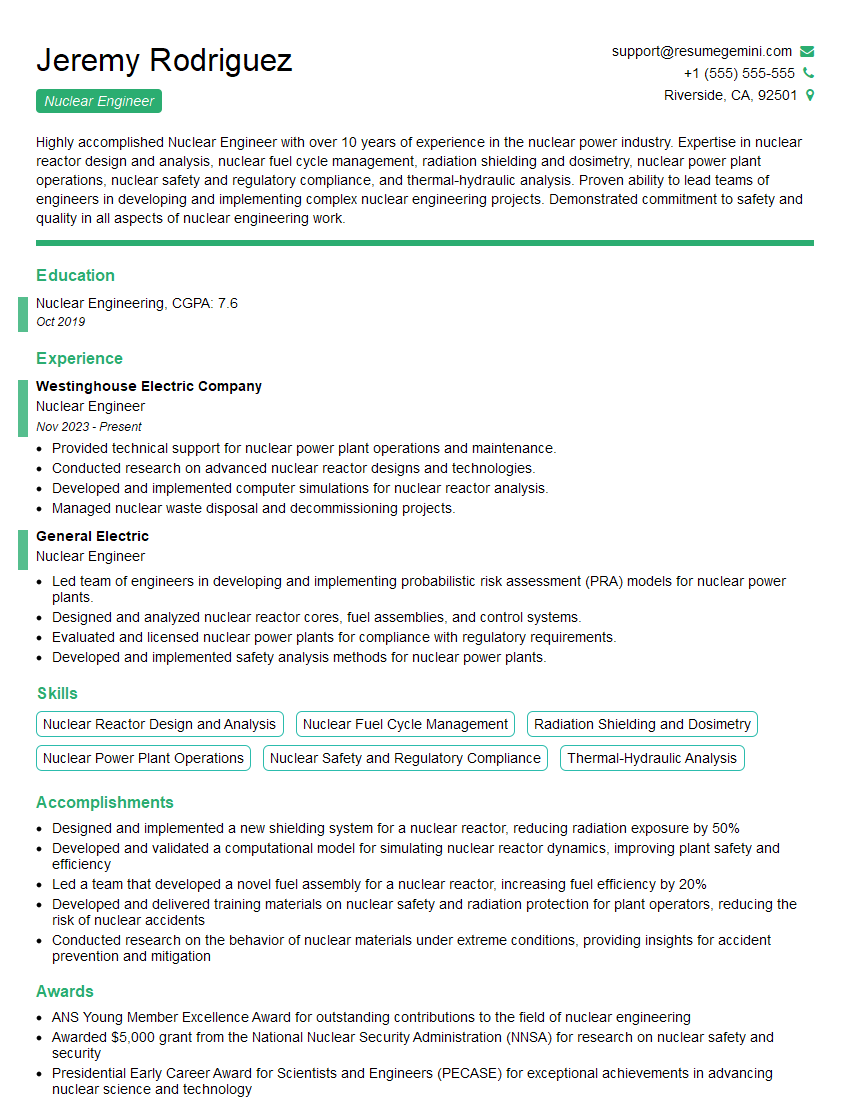
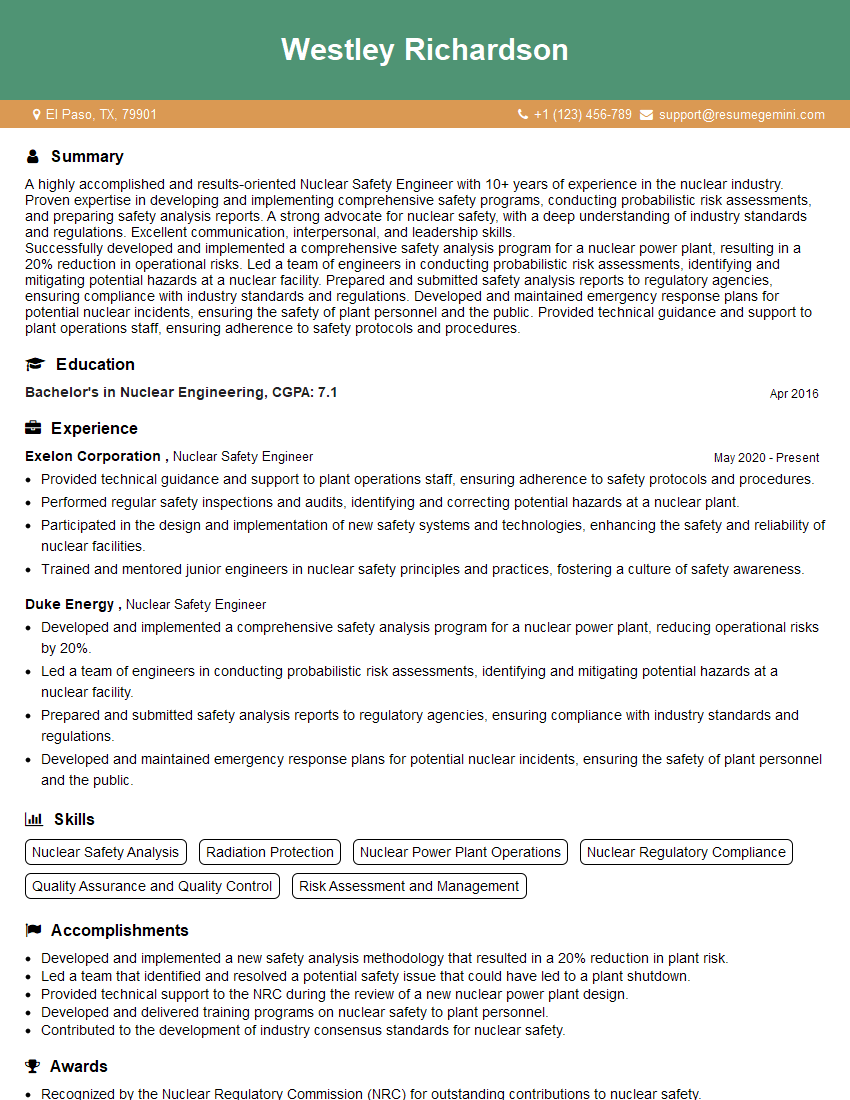
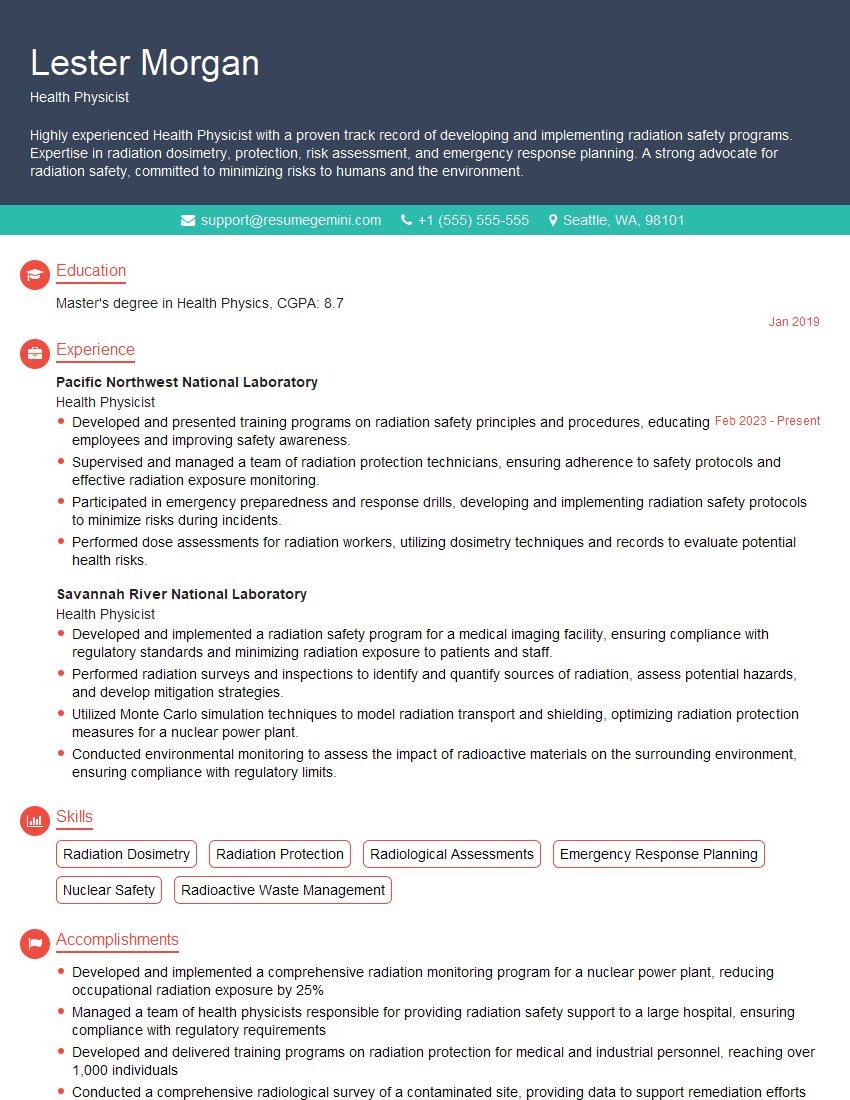
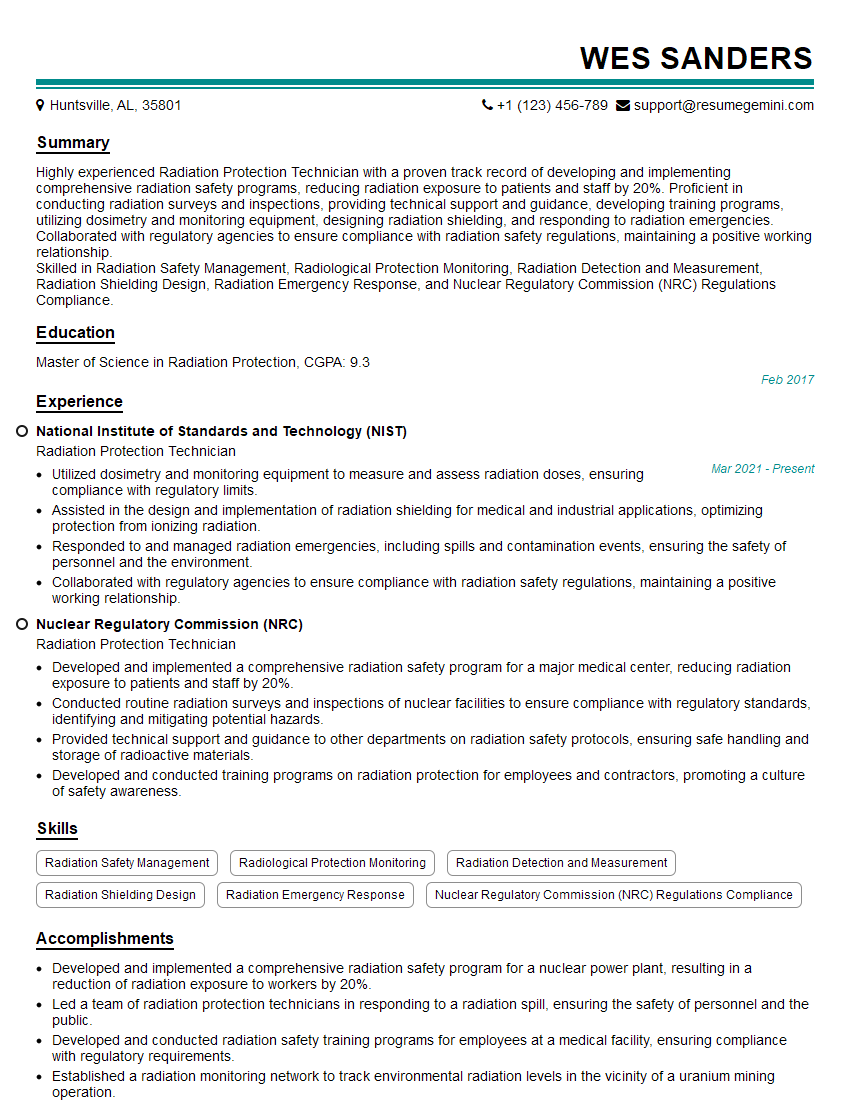
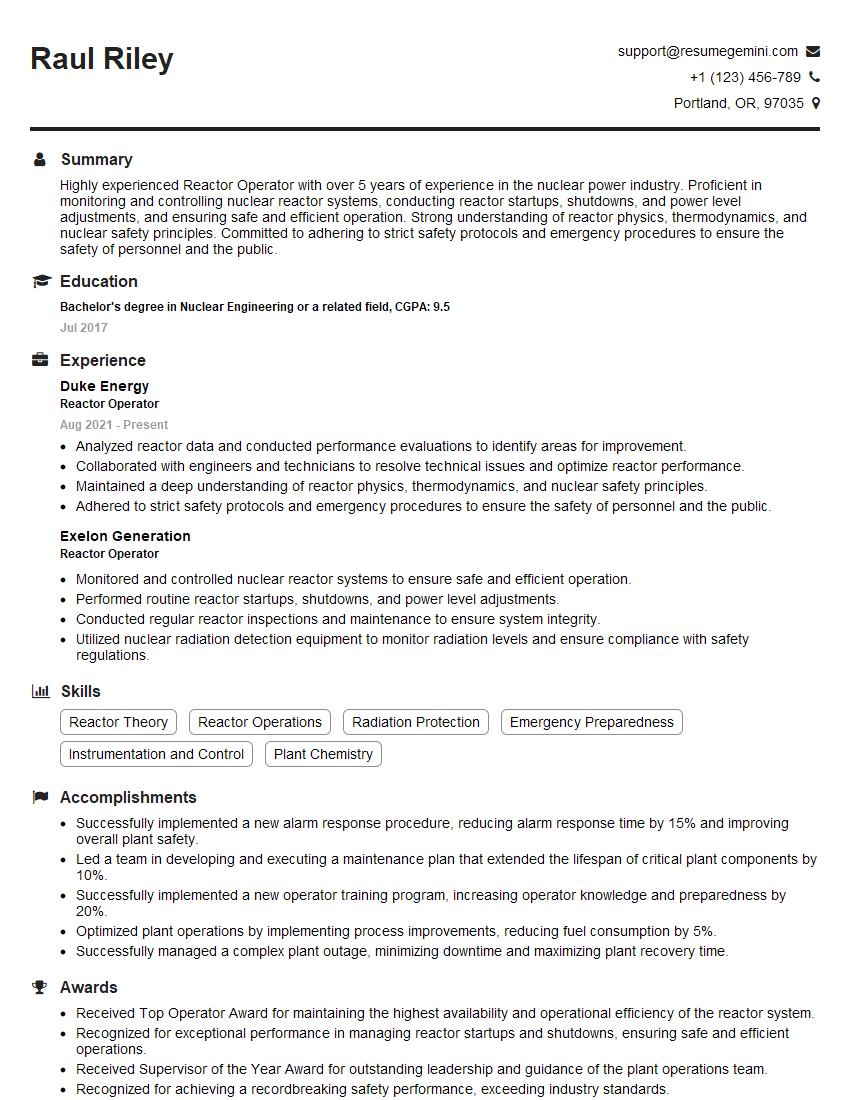
Mastering NSRC guidelines is crucial for advancing your career in the nuclear industry. A strong understanding of these regulations will significantly improve your interview performance and demonstrate your commitment to safety. To maximize your job prospects, create a compelling and ATS-friendly resume that highlights your relevant skills and experience. ResumeGemini is a trusted resource that can help you build a professional resume tailored to the nuclear industry. Examples of resumes tailored to the NSRC guidelines are available to further assist you in crafting a winning application.

Explore more articles
Users Rating of Our Blogs
Share Your Experience
We value your feedback! Please rate our content and share your thoughts (optional).
What Readers Say About Our Blog
To the interviewgemini.com Webmaster.
Very helpful and content specific questions to help prepare me for my interview!
Thank you
To the interviewgemini.com Webmaster.
This was kind of a unique content I found around the specialized skills. Very helpful questions and good detailed answers.
Very Helpful blog, thank you Interviewgemini team.