Feeling uncertain about what to expect in your upcoming interview? We’ve got you covered! This blog highlights the most important Trip Coordination and Logistics interview questions and provides actionable advice to help you stand out as the ideal candidate. Let’s pave the way for your success.
Questions Asked in Trip Coordination and Logistics Interview
Q 1. Describe your experience managing complex travel itineraries.
Managing complex itineraries involves orchestrating multiple interconnected travel arrangements to ensure a seamless experience. It’s like conducting an intricate symphony, where each instrument (flight, hotel, ground transportation, activities) needs to play in harmony.
My experience includes coordinating trips involving multiple destinations, various modes of transportation (air, rail, car), diverse group sizes, and specific needs like accessibility requirements or dietary restrictions. For instance, I once managed a 10-person business trip spanning three continents, requiring meticulous scheduling of flights to minimize layover times, securing appropriate accommodation in each location, and pre-arranging ground transportation and meetings.
I approach each itinerary as a puzzle, carefully considering factors such as time zones, travel durations, and potential delays. I meticulously document every detail in a centralized system, enabling easy access and modification as needed.
Q 2. How do you prioritize tasks when managing multiple trips simultaneously?
Prioritizing tasks when managing multiple trips concurrently requires a strategic approach. I use a combination of techniques including a prioritization matrix and time blocking.
- Prioritization Matrix: I categorize tasks based on urgency and importance (high/low for both). This allows me to focus on high-urgency, high-importance tasks first (e.g., imminent flight bookings or urgent visa applications), followed by high-importance, low-urgency tasks (e.g., researching long-term accommodation options).
- Time Blocking: I dedicate specific time slots for each trip. This prevents tasks from overlapping and ensures focused attention to each itinerary. For example, I might dedicate Monday morning to planning the itinerary for Trip A, while Tuesday afternoon focuses on booking flights for Trip B.
Furthermore, I use project management software to track deadlines, monitor progress, and assign tasks when working with a team. This aids in identifying potential bottlenecks and making adjustments as needed.
Q 3. What software and tools are you proficient in for trip coordination?
Proficiency in various software and tools is essential for efficient trip coordination. I’m adept at using:
- Global Distribution Systems (GDS): Amadeus, Sabre, Galileo – for accessing real-time flight and hotel availability, and making bookings.
- Online Travel Agencies (OTA) platforms: Expedia, Booking.com, Kayak – for comparing prices and options, particularly for smaller scale trips or independent traveler bookings.
- Project Management Software: Asana, Trello, Monday.com – for tracking tasks, managing deadlines, and collaborating with colleagues or clients.
- Spreadsheet software: Microsoft Excel, Google Sheets – for creating detailed itineraries, managing budgets, and tracking expenses.
In addition, I am familiar with various specialized travel apps for mobile devices that provide real-time updates, manage flight information, and offer translation capabilities.
Q 4. Explain your process for booking flights and accommodations.
My process for booking flights and accommodations is systematic and detail-oriented. It starts with understanding the traveler’s needs and preferences (e.g., budget, preferred airlines, desired amenities).
- Research and Comparison: I use GDS and OTAs to compare prices, flight schedules, and hotel options across various providers.
- Booking and Confirmation: Once the best options are identified, I proceed with the booking, ensuring all details are accurate (names, dates, special requests).
- Documentation: I meticulously record all booking confirmations, including booking reference numbers, payment details, and any relevant communication with providers.
- Verification: Post-booking, I verify the reservation details with the respective providers to ensure everything is accurate and in order.
For large groups or complex itineraries, I leverage the capabilities of GDS to secure group rates and negotiate better terms with suppliers.
Q 5. How do you handle unexpected travel disruptions (e.g., flight cancellations)?
Handling unexpected disruptions, like flight cancellations, requires quick thinking and decisive action. My approach involves a series of steps:
- Immediate Assessment: I assess the impact of the disruption on the overall itinerary, identifying affected components.
- Communication: I promptly communicate with the travelers, informing them of the situation and outlining possible solutions.
- Problem Solving: I actively explore alternative options (rebooking flights, arranging alternative transportation, securing new accommodations).
- Documentation: I meticulously document all communication, changes made, and expenses incurred due to the disruption.
- Follow-up: I follow up with the affected providers to ensure smooth resolution and seek appropriate compensation if warranted.
The goal is to minimize inconvenience to the travelers and restore the travel plans as quickly and efficiently as possible.
Q 6. What strategies do you use to optimize travel costs?
Optimizing travel costs is a crucial aspect of trip coordination. My strategies include:
- Flexible Travel Dates: Traveling on weekdays or during off-peak seasons can often lead to significant savings on flights and accommodations.
- Price Comparison: Utilizing various booking platforms and tools to compare prices and identify the best deals.
- Loyalty Programs: Leveraging airline and hotel loyalty programs to accumulate points and earn discounts.
- Bundle Deals: Exploring package deals that combine flights, hotels, and other services at a discounted price.
- Negotiation: Negotiating rates with suppliers, particularly for larger groups or long-term bookings.
For instance, by shifting a flight by a single day, I once saved a client over $500 on roundtrip tickets. This highlights the importance of being flexible and diligent in searching for the most cost-effective options.
Q 7. How do you ensure compliance with company travel policies?
Ensuring compliance with company travel policies is paramount. My approach involves:
- Thorough Understanding: I familiarize myself with the company’s travel policy before starting the planning process. This includes understanding permitted booking channels, expense reimbursement guidelines, and any restrictions on travel class or accommodation types.
- Policy Adherence: I meticulously adhere to the policy during all stages of the trip planning, from initial booking to final expense reporting.
- Documentation: I maintain comprehensive records of all bookings, expenses, and related communications, which can serve as evidence of policy compliance.
- Training and Communication: If working with individuals unfamiliar with the company’s travel policy, I provide necessary training and clear guidelines to ensure they understand and adhere to all relevant requirements.
By proactively addressing compliance issues, I help prevent potential audit problems and ensure the smooth flow of travel reimbursements.
Q 8. Describe your experience with visa and passport requirements.
Visa and passport requirements are the cornerstone of successful international travel. My experience encompasses meticulously researching and verifying visa needs based on nationality, destination, and purpose of travel. This involves navigating complex government websites, understanding application processes, required documentation (like proof of funds and travel itineraries), and potential processing times. I’ve handled situations requiring expedited visas due to tight deadlines, and I’m adept at identifying and addressing potential visa-related issues proactively. For example, I once helped a group secure urgent visas to India by working closely with a visa agency and expediting the process through personalized communications with the consulate. Beyond visas, I carefully check passport validity, ensuring sufficient remaining validity as per the destination’s immigration rules, and advising travelers on renewal processes if needed. A crucial aspect is understanding the nuances of different countries’ immigration policies, considering factors such as entry and exit requirements and any specific health-related declarations.
Q 9. How do you manage travel documentation and itineraries for large groups?
Managing travel documentation for large groups requires meticulous organization and a robust system. I utilize specialized software and cloud-based platforms to create and distribute comprehensive digital itineraries, including flight details, hotel reservations, activity schedules, and emergency contact information. This ensures everyone has access to the information they need, anytime, anywhere. For example, I use a system where each traveler receives a personalized QR code linked to their itinerary, enhancing security and ease of access. Physical copies of essential documents are also provided, considering potential connectivity issues. A critical element is pre-trip briefings where I review itineraries, answer questions, and emphasize essential details like flight check-in procedures and local customs. Post-trip, I collect feedback and document any issues for future improvements. Creating master spreadsheets that track passport details, visa status, and any specific dietary or accessibility needs of each traveler is essential for effective management.
Q 10. What is your experience with ground transportation arrangements?
Ground transportation is a critical component of successful trip coordination. My experience includes arranging everything from airport transfers (private cars, shuttles, or group coaches) to local transportation within a destination (taxis, private drivers, rental cars). I consider factors such as group size, budget, time constraints, and the specific needs of travelers (accessibility, etc.). I frequently negotiate contracts with transportation providers, ensuring competitive pricing and high-quality service. For example, I recently negotiated a discounted rate for a fleet of buses for a large corporate event, saving the company a considerable amount of money. I also develop contingency plans, such as backup transportation options in case of delays or cancellations. Thorough research into the transportation infrastructure of the destination is essential, and I always verify the reliability and safety of the selected providers.
Q 11. How do you communicate effectively with travelers and stakeholders?
Effective communication is paramount in trip coordination. I utilize a multi-pronged approach, combining various methods to reach travelers and stakeholders. This includes regular email updates, pre-trip briefings (both in-person and virtual), easily accessible online platforms for information sharing, and prompt responses to queries via email, phone, or messaging apps. For instance, I established a dedicated WhatsApp group for a recent tour, ensuring seamless communication and instant updates on any changes or important announcements. For stakeholders, I maintain regular communication through reports and presentations, providing updates on the trip’s progress, budgets, and any potential issues. Clear, concise, and timely communication minimizes confusion, builds trust, and ensures smooth operation. I actively listen to feedback and adapt communication strategies based on the audience and the situation.
Q 12. How do you track expenses and reconcile travel budgets?
Tracking expenses and reconciling travel budgets is crucial for financial transparency and accountability. I employ budgeting software and spreadsheets to meticulously track all travel-related costs, from airfare and accommodation to ground transportation and meals. Every expense is categorized and documented with supporting receipts. Regular budget reports are generated, comparing actual expenditures against the planned budget and highlighting any variances. For example, I use a system where receipts are scanned and digitally stored, linked to specific budget line items. This helps in quick reconciliation and audit trail generation. I proactively identify and manage potential budget overruns, suggesting cost-saving measures while maintaining the trip’s quality. Reconciliation involves verifying all expenses against invoices and contracts, resolving any discrepancies, and preparing final financial reports for stakeholders.
Q 13. What is your experience with travel insurance and risk management?
Travel insurance and risk management are critical aspects of responsible trip planning. My experience involves selecting appropriate travel insurance policies that cover medical emergencies, trip cancellations, lost luggage, and other potential risks. The choice of policy depends on factors like the destination, duration of the trip, and the travelers’ needs. I also develop comprehensive risk assessment plans, identifying potential hazards (political instability, natural disasters, health risks) and implementing mitigation strategies. For example, I developed an emergency evacuation plan for a group traveling to a region prone to seismic activity. This included identifying nearby emergency services, establishing communication protocols, and pre-selecting alternative accommodations. Regular monitoring of global events and destination-specific advisories are crucial for proactive risk management. Detailed risk assessment documentation is maintained, and any necessary changes to the trip plan are implemented promptly.
Q 14. Describe your experience coordinating international travel.
Coordinating international travel presents unique challenges, requiring expertise in navigating international regulations, time zones, and cultural differences. My experience encompasses coordinating trips across various continents, managing logistical complexities such as international flights, visa requirements, currency exchange, and local customs. I’ve handled groups with diverse needs, considering dietary restrictions, religious observances, and accessibility requirements. For example, I recently planned a multi-country tour of South America, meticulously researching entry requirements for each country, securing appropriate visas, and arranging international flights with optimal connections. A deep understanding of international travel protocols, such as baggage allowances, customs regulations, and in-flight amenities, is crucial. Building strong relationships with international partners (hotels, transportation providers, local guides) is key to ensuring smooth and successful trips. Effective communication across time zones and cultural barriers is paramount, and I always prioritize building trust and rapport with all stakeholders.
Q 15. How do you handle emergency situations while travelers are away?
Handling emergencies while travelers are away requires a proactive and well-defined protocol. It’s about being prepared for the unexpected and having clear communication channels in place. My approach centers around a three-pronged strategy: prevention, rapid response, and post-incident support.
- Prevention: This starts with thorough pre-trip briefings, including emergency contact information, local emergency numbers, and instructions on how to reach me. I also ensure travelers have copies of their itinerary, travel insurance details, and any necessary medical information readily accessible.
- Rapid Response: When an emergency arises, my priority is immediate action. I utilize a combination of tools – a dedicated 24/7 emergency contact line, a global communication platform, and real-time tracking (where appropriate and authorized) to swiftly assess the situation. This may involve contacting local authorities, medical services, or the traveler’s family.
- Post-Incident Support: Once the immediate crisis is resolved, I focus on providing continued support. This includes assisting with repatriation, liaising with insurance providers, and providing emotional support to the traveler and their family. Documentation of the entire process is crucial for future reference and improvement.
For example, I once had a client who experienced a medical emergency in a remote area. Using the pre-arranged emergency contact details, I was able to coordinate a timely medical evacuation and ensure they received appropriate care. Following the event, I assisted with their insurance claim and arranged for their safe return home.
Career Expert Tips:
- Ace those interviews! Prepare effectively by reviewing the Top 50 Most Common Interview Questions on ResumeGemini.
- Navigate your job search with confidence! Explore a wide range of Career Tips on ResumeGemini. Learn about common challenges and recommendations to overcome them.
- Craft the perfect resume! Master the Art of Resume Writing with ResumeGemini’s guide. Showcase your unique qualifications and achievements effectively.
- Don’t miss out on holiday savings! Build your dream resume with ResumeGemini’s ATS optimized templates.
Q 16. Explain your experience with different booking systems (e.g., Sabre, Amadeus).
I have extensive experience with several Global Distribution Systems (GDS) including Sabre and Amadeus. These systems are crucial for accessing real-time flight and hotel availability, making bookings, and managing reservations. They’re essentially the backbone of the travel industry.
My proficiency in Sabre allows me to efficiently search for the best flight options based on price, time, and airline preferences. I can also utilize its powerful tools to manage complex itineraries with multiple flights and layovers. Similarly, with Amadeus, I can perform similar functions, including generating customized reports and analyzing travel trends. I am familiar with their various modules, including those for flight and hotel bookings, car rentals, and other ancillary services.
The key difference lies in the specific functionalities and user interface. Both systems offer extensive functionalities, but my expertise allows me to leverage the strengths of each system depending on the specific needs of the trip.
Q 17. How do you stay up-to-date on travel regulations and industry best practices?
Staying current on travel regulations and best practices is a critical aspect of my role. It’s not a one-time task; it’s an ongoing process. My strategy combines several approaches:
- Subscription to Industry Publications and Newsletters: I regularly subscribe to leading travel publications and newsletters that provide up-to-date information on changes in regulations, safety advisories, and industry trends.
- Government and International Organization Websites: I routinely check websites of relevant government bodies (like the TSA, IATA) and international organizations (like the WHO) for travel advisories, visa requirements, and health protocols.
- Professional Development: I actively participate in webinars, conferences, and workshops to keep my knowledge updated and network with other professionals in the field. This helps stay abreast of emerging trends and best practices.
- Utilizing Technology: Many reputable travel technology companies offer real-time updates and alerts on travel regulations, and I utilize these resources proactively.
This multi-faceted approach ensures that I am consistently informed and can provide accurate and up-to-date advice to my clients.
Q 18. Describe your experience with negotiating rates with vendors (hotels, airlines, etc.).
Negotiating rates with vendors is a significant part of my job, directly impacting the overall cost-effectiveness of trips. My approach is based on building strong relationships, presenting a clear value proposition, and understanding the market.
- Relationship Building: I cultivate strong relationships with key vendors, ensuring open communication and trust. This makes negotiations smoother and more productive.
- Market Research: Before initiating negotiations, I perform thorough market research to understand current rates and competitive offerings. This gives me a solid foundation for proposing fair and competitive rates.
- Value Proposition: I present a strong value proposition, emphasizing the volume of business I bring, the consistency of my bookings, and the long-term potential of our partnership.
- Strategic Negotiation: I approach negotiations strategically, aiming for mutually beneficial outcomes. This involves active listening, flexible approaches, and a willingness to compromise where appropriate.
For instance, I successfully negotiated a discounted group rate for a large corporate client at a luxury hotel by highlighting their commitment to booking a significant number of rooms throughout the year. The resulting savings were substantial.
Q 19. How do you handle conflicting travel preferences among travelers?
Handling conflicting travel preferences among travelers requires a diplomatic and organized approach. It’s about finding a balance that satisfies everyone’s needs as much as possible.
- Open Communication: I facilitate open and honest communication among travelers, encouraging them to express their preferences and priorities. This might involve surveys or group meetings.
- Prioritization: We collaboratively determine the most important factors – budget, destination type, activities – and prioritize them. This helps focus the decision-making process.
- Compromise and Flexibility: I guide travelers towards compromises, encouraging flexibility and understanding of differing preferences. Sometimes, it’s about finding creative solutions that satisfy everyone.
- Alternative Options: I present several different itinerary options that cater to varying preferences. This allows everyone to see different possibilities and reach a consensus.
For example, when planning a family trip, I had members who wanted a relaxing beach vacation, while others preferred exploring historical sites. Through discussion and presenting different options combining both, we created an itinerary that satisfied everyone’s desires, albeit with some compromises on time spent at each location.
Q 20. How do you ensure the safety and security of travelers?
Ensuring the safety and security of travelers is paramount. My approach is multi-layered, incorporating pre-trip planning, on-trip monitoring, and post-trip follow-up.
- Pre-Trip Security Briefings: I provide travelers with detailed safety briefings, including information on local laws, potential risks, and recommended safety precautions.
- Travel Insurance: I strongly encourage and assist with securing comprehensive travel insurance that covers medical emergencies, trip cancellations, and lost belongings.
- Emergency Contacts and Protocols: I ensure travelers have readily available emergency contact information and clear communication protocols in case of any unforeseen incidents.
- Real-time Tracking (Where Appropriate): With proper authorization, I utilize technology to monitor the location and well-being of travelers, especially during solo trips or travel to high-risk areas.
- Post-Trip Debriefing: Following the trip, I conduct a brief debriefing to gather feedback on safety and security measures and identify areas for improvement.
For example, when organizing a business trip to a politically unstable region, I provided detailed safety briefings, arranged for secure transportation, and ensured that the travelers were aware of local emergency contacts and procedures.
Q 21. Describe your experience with creating detailed travel itineraries.
Creating detailed travel itineraries involves more than just listing flights and hotels; it’s about crafting a seamless and enjoyable travel experience. My itineraries are meticulously planned and include:
- Comprehensive Flight and Accommodation Details: Confirmation numbers, airline information, hotel addresses, check-in/check-out times, and contact details.
- Activity Scheduling: A detailed schedule of activities, including times, locations, and booking information (museum tickets, tours, etc.).
- Transportation Planning: Specific information about transportation between locations – airport transfers, rental car information, public transportation schedules.
- Maps and Directions: Detailed maps and directions for key locations, often with hyperlinks to online maps for easy access.
- Restaurant Recommendations and Bookings: A list of recommended restaurants, with contact information and booking details if necessary.
- Emergency Contact Information: A readily available section with emergency contacts, including local emergency services and my own contact information.
- Cultural Notes and Tips: Relevant cultural information and useful tips for navigating the destination.
I use a combination of specialized software and spreadsheets to create and manage these itineraries, ensuring they are visually appealing, easy to understand, and readily accessible to the travelers. My goal is to deliver an itinerary that’s not just a document, but a comprehensive guide to a successful and enjoyable trip.
Q 22. How do you measure the success of your trip coordination efforts?
Measuring the success of trip coordination goes beyond simply completing the trip. It involves a multifaceted approach focusing on efficiency, cost-effectiveness, traveler satisfaction, and risk mitigation. I use a combination of Key Performance Indicators (KPIs) to track these aspects.
- On-time performance: This tracks the percentage of trips that commenced and concluded as scheduled, reflecting logistical efficiency. For example, a 98% on-time performance suggests a highly efficient process.
- Cost savings: This compares budgeted trip costs against actual expenses, highlighting areas for improvement in negotiations, booking strategies, or expense management. A consistent reduction in trip costs year-over-year demonstrates success in this area.
- Traveler satisfaction: Feedback surveys, both pre- and post-trip, are crucial. High satisfaction scores indicate effective communication, proactive problem-solving, and a positive travel experience. A score of 4.5 out of 5 on a satisfaction survey would be a strong indicator of success.
- Risk mitigation: Successful trip coordination minimizes disruptions and emergencies. This is measured by the number of unforeseen events, their impact, and the effectiveness of our response. Zero incidents requiring major intervention would signify excellent risk management.
By analyzing these KPIs, I gain a comprehensive understanding of the performance of our trip coordination efforts and identify areas for continuous improvement. This data-driven approach ensures we’re constantly optimizing our processes.
Q 23. What are your strengths and weaknesses in trip coordination?
My strengths lie in my proactive approach, meticulous planning, and strong communication skills. I excel at anticipating potential problems and developing contingency plans. For example, during a recent trip to a region with unpredictable weather, I proactively booked flexible flight tickets and alternative accommodation options, ensuring a smooth journey even when faced with flight delays. My detailed itineraries, which incorporate backup plans, and my clear communication with travelers keep everyone informed and confident.
However, I acknowledge that delegating tasks can sometimes be challenging. While I ensure all details are considered, I am working on more effectively entrusting certain aspects to capable team members to improve overall efficiency and reduce my workload, which in turn will allow me to focus on the higher-level strategic aspects of trip coordination.
Q 24. How do you handle stressful situations and tight deadlines?
Stressful situations and tight deadlines are par for the course in trip coordination. My approach involves a calm, methodical process. Firstly, I prioritize tasks based on urgency and impact. This often involves using a prioritization matrix, such as Eisenhower’s Urgent/Important matrix, to help me focus on the most critical elements first.
Secondly, I leverage technology and automation where possible. For instance, I use travel management systems to automate certain booking processes and generate reports quickly. Thirdly, open communication is crucial; I keep all stakeholders updated on progress and challenges, ensuring everyone is on the same page and working collaboratively towards solutions. Finally, I maintain a positive and solution-oriented attitude. This helps me to think clearly and effectively manage stress under pressure. I view tight deadlines as an exciting challenge to overcome, not an insurmountable obstacle.
Q 25. Describe your experience with sustainability and responsible travel practices.
Sustainability and responsible travel are paramount in my approach to trip coordination. I actively seek out eco-friendly travel options, such as carbon-offsetting programs for flights, selecting accommodations with sustainable practices (e.g., LEED certification), and promoting local transportation and businesses.
For instance, when planning a business trip, I actively research and recommend hotels and transportation options that are committed to reducing their environmental footprint. I also encourage travelers to pack light to reduce luggage weight and associated fuel consumption. I incorporate these considerations into my itineraries and communicate them clearly to travelers, emphasizing the importance of minimizing our impact on the environment and supporting local communities. In the process, we ensure that the environmental, social and economic impact of our trips are all considered.
Q 26. How do you use data analytics to improve trip coordination processes?
Data analytics plays a vital role in improving trip coordination processes. I use data from various sources, such as travel management systems, expense reports, and traveler feedback surveys, to identify trends, patterns, and areas for optimization.
For example, analyzing historical booking data helps me identify peak travel times and optimize flight and accommodation bookings for better pricing and availability. Similarly, tracking expense data allows me to identify cost-saving opportunities and negotiate better rates with vendors. Traveler feedback data provides valuable insights into areas where the travel experience could be improved. Using these analytical findings, we implement strategies to optimize our processes to enhance efficiency, cost savings, and customer satisfaction.
Q 27. What is your experience with corporate travel programs?
I have extensive experience with corporate travel programs, having worked with several companies to design, implement, and manage their travel policies and procedures. This includes developing travel guidelines, negotiating contracts with travel vendors, implementing booking tools, and monitoring compliance.
My experience encompasses managing diverse travel requirements, including international travel, group bookings, and executive travel. I’ve worked with various travel management platforms to streamline the booking process, track spending, and ensure compliance with company policies. I understand the complexities involved in managing corporate travel programs and am adept at balancing cost control with employee satisfaction and safety.
Q 28. Describe your experience using travel management platforms.
I have extensive experience using various travel management platforms (TMPs), including Concur, SAP Concur, and TravelPerk. My proficiency extends to utilizing their features for tasks like booking flights and hotels, managing itineraries, generating expense reports, and tracking travel data.
I understand the nuances of different TMPs and can effectively utilize their reporting and analytics functionalities to improve trip coordination efficiency and cost management. Moreover, I am familiar with integrating TMPs with other corporate systems for seamless data flow and enhanced reporting capabilities. My familiarity with these platforms ensures I leverage technology to improve efficiency, streamline processes, and reduce manual work.
Key Topics to Learn for Trip Coordination and Logistics Interview
- Itinerary Planning & Optimization: Understanding factors like travel time, cost, and client preferences to create efficient and cost-effective itineraries. Practical application: Designing a multi-city itinerary for a business trip, considering flight schedules, accommodation options, and ground transportation.
- Booking & Ticketing: Mastering various booking platforms and procedures for flights, hotels, and ground transportation. Practical application: Successfully booking flights and accommodations for a group of 10 people with specific needs and budget constraints.
- Risk Management & Contingency Planning: Identifying potential travel disruptions (e.g., weather delays, cancellations) and developing proactive strategies to mitigate risks. Practical application: Creating a backup plan for a trip in case of unexpected flight cancellations or natural disasters.
- Budgeting & Expense Management: Accurately tracking and managing travel expenses, ensuring adherence to allocated budgets. Practical application: Developing a detailed budget for a corporate trip, including flights, accommodation, meals, and ground transportation.
- Communication & Client Relations: Effectively communicating with clients, vendors, and internal stakeholders throughout the trip planning process. Practical application: Proactively managing client expectations and addressing any concerns or issues that arise during a trip.
- Logistics Software & Technology: Familiarity with various travel management systems (TMS) and booking platforms. Practical application: Demonstrating proficiency in using a TMS to track expenses, manage bookings, and communicate with stakeholders.
- Legal & Regulatory Compliance: Understanding relevant regulations and policies related to international and domestic travel. Practical application: Ensuring compliance with visa requirements, customs regulations, and other relevant legal frameworks.
Next Steps
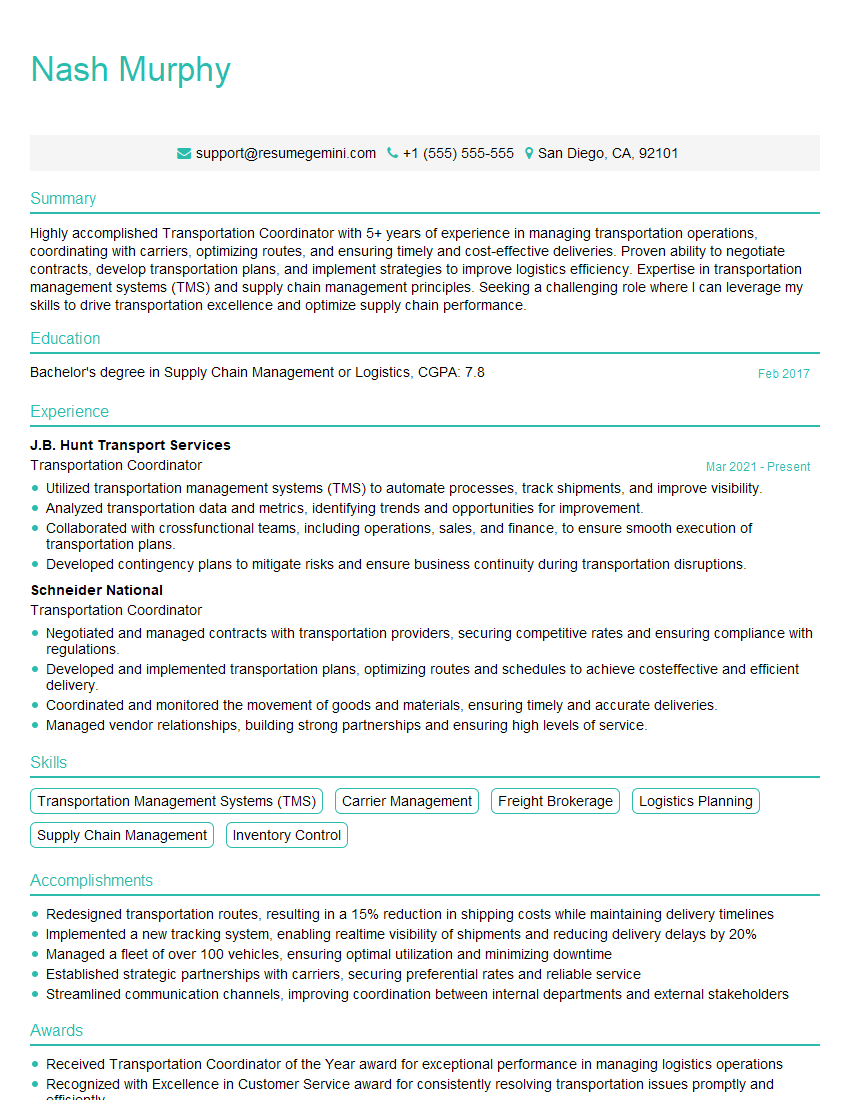
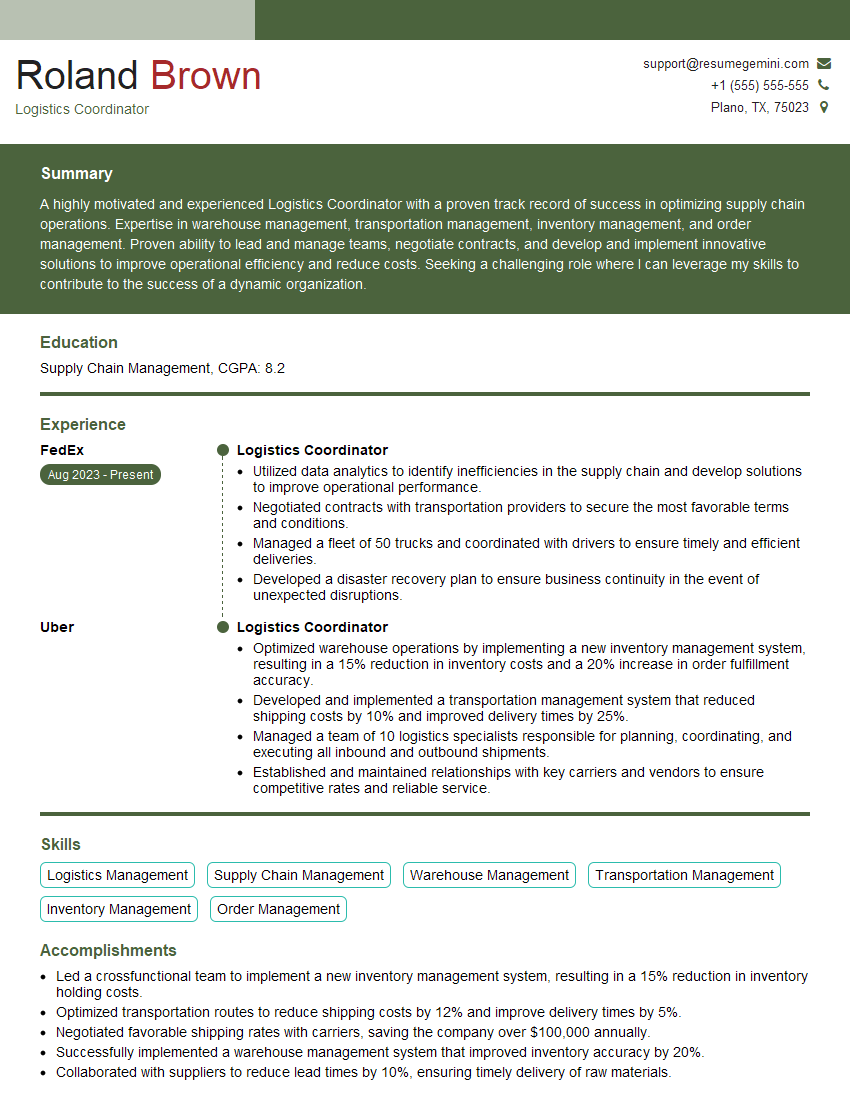
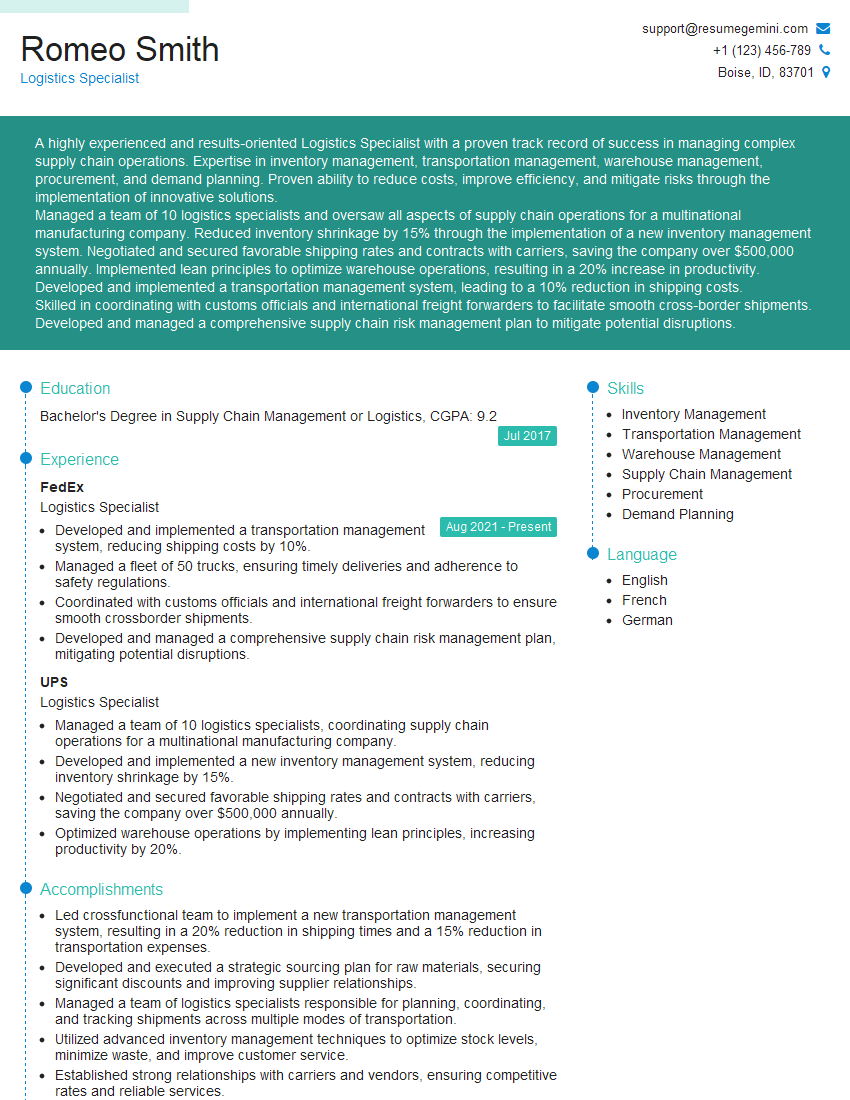
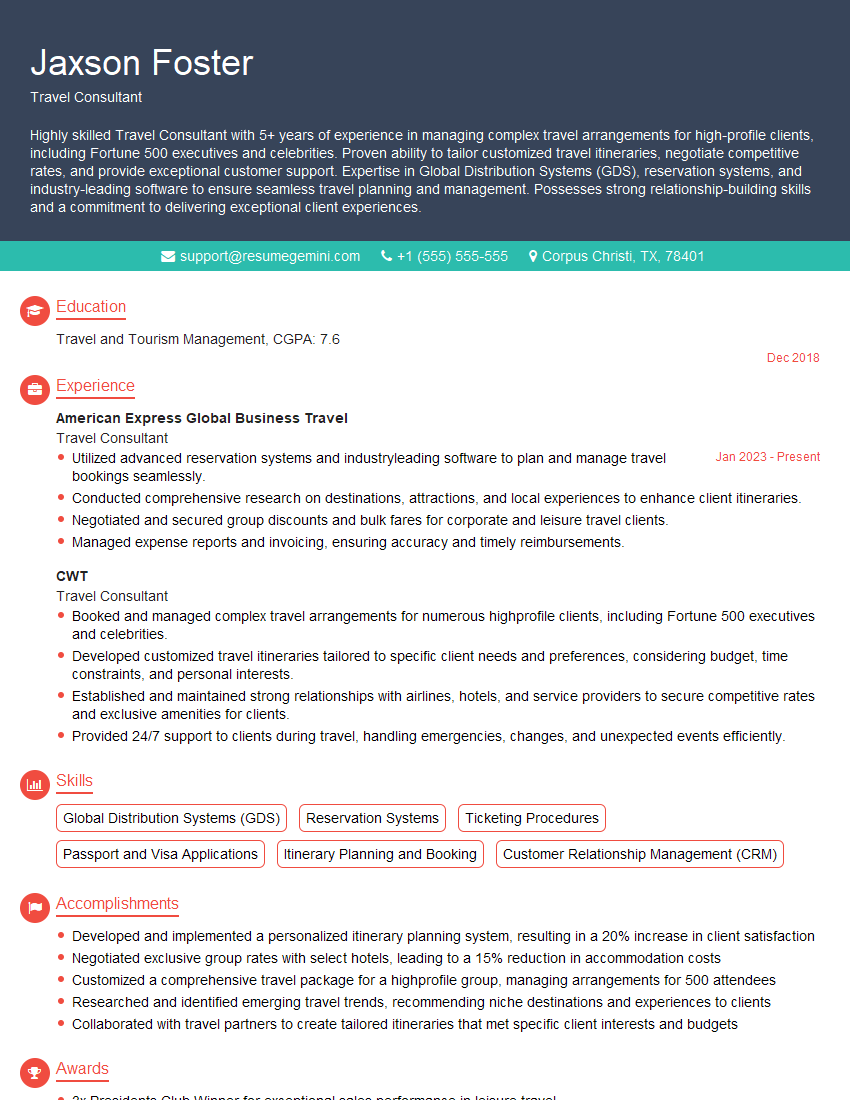
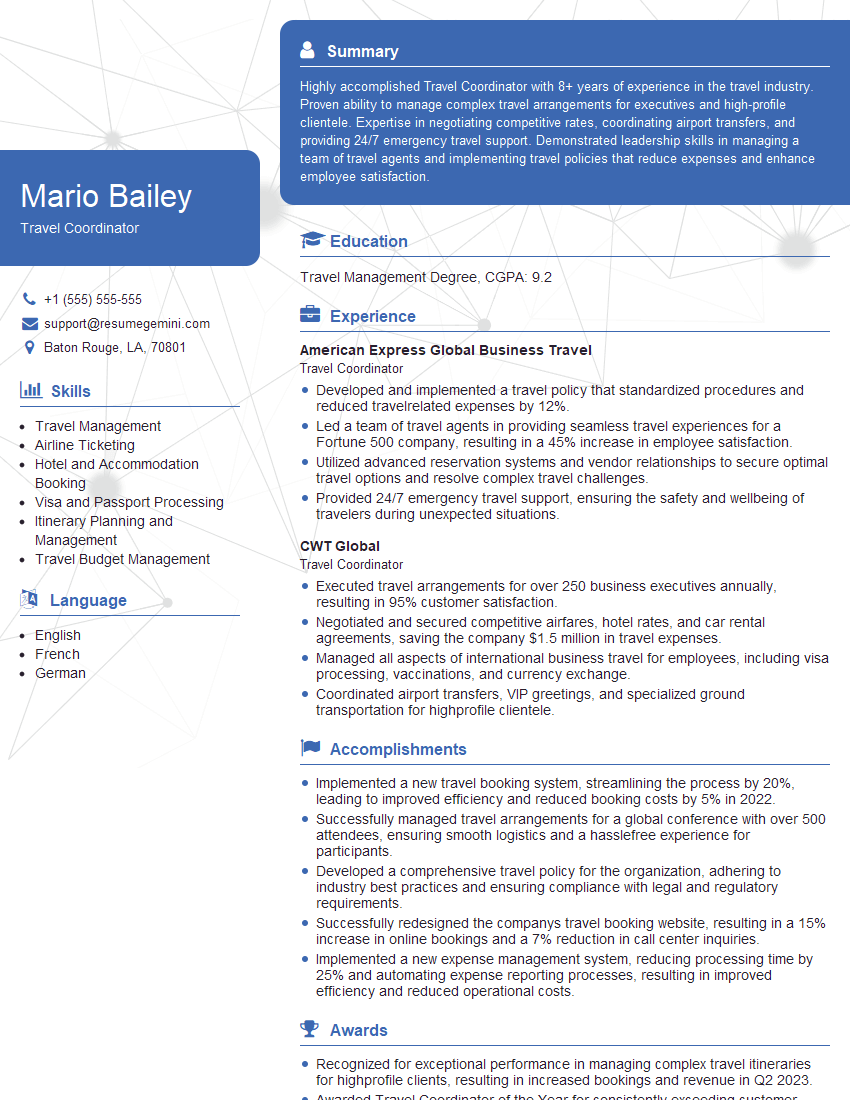
Mastering Trip Coordination and Logistics opens doors to exciting career opportunities in travel, tourism, event planning, and corporate settings. To significantly boost your job prospects, it’s crucial to create an ATS-friendly resume that highlights your skills and experience effectively. ResumeGemini is a trusted resource to help you build a professional and impactful resume that gets noticed. They provide examples of resumes tailored to Trip Coordination and Logistics, giving you a head start in crafting a winning application. Invest the time to create a compelling resume – it’s your key to unlocking your career potential.
Explore more articles
Users Rating of Our Blogs
Share Your Experience
We value your feedback! Please rate our content and share your thoughts (optional).
What Readers Say About Our Blog
To the interviewgemini.com Webmaster.
Very helpful and content specific questions to help prepare me for my interview!
Thank you
To the interviewgemini.com Webmaster.
This was kind of a unique content I found around the specialized skills. Very helpful questions and good detailed answers.
Very Helpful blog, thank you Interviewgemini team.