Feeling uncertain about what to expect in your upcoming interview? We’ve got you covered! This blog highlights the most important Nuclear Facility Design and Construction interview questions and provides actionable advice to help you stand out as the ideal candidate. Let’s pave the way for your success.
Questions Asked in Nuclear Facility Design and Construction Interview
Q 1. Explain the principles of radiation shielding in nuclear facilities.
Radiation shielding in nuclear facilities is paramount to protecting workers, the public, and the environment from harmful ionizing radiation. The principle is based on attenuating or absorbing radiation using materials that interact with radiation particles and photons, reducing their intensity to safe levels. This is achieved through several methods:
- Mass Thickness: The thicker the shielding material, the more radiation it will absorb. Think of it like throwing a ball at a wall – a thicker wall will stop the ball more effectively.
- Material Selection: Different materials have varying effectiveness in absorbing different types of radiation. For example, lead is excellent for shielding gamma rays, while concrete is often used for neutrons and gamma rays. Water is also effective as a neutron shield.
- Distance: The intensity of radiation decreases rapidly with distance from the source. This is why keeping personnel and equipment as far as possible from radiation sources is a critical aspect of safety.
- Shielding Design: The arrangement of shielding materials is crucial. Optimal designs account for radiation scattering and other complex phenomena to maximize effectiveness. This often involves sophisticated simulations using software like MCNP or FLUKA.
For instance, in a nuclear power plant, the reactor core is housed within a thick concrete and steel containment structure, further shielded by layers of lead and borated materials to reduce neutron and gamma ray leakage to acceptable levels. The design and construction of these shielding systems are meticulously calculated and regularly tested to ensure safety and regulatory compliance.
Q 2. Describe your experience with nuclear regulatory compliance (e.g., NRC regulations).
Throughout my career, I’ve been extensively involved with nuclear regulatory compliance, primarily focusing on NRC regulations in the United States. This has included working on projects that required navigating the intricate processes of licensing, design reviews, inspections, and operational reporting. I’m very familiar with Title 10 of the Code of Federal Regulations (10 CFR), particularly parts 20, 50, and 70, which relate to radiation protection, reactor licensing, and materials licensing respectively.
For example, on a recent project involving the modification of a spent fuel pool, we had to prepare a detailed safety analysis report (SAR) demonstrating that the proposed changes would not compromise safety and complied with all applicable NRC regulations. This involved numerous simulations and analyses to evaluate potential accident scenarios and their consequences, along with the preparation of comprehensive documentation and response to NRC queries.
Experience with regulatory compliance extends beyond documentation; it necessitates a thorough understanding of the inspection process, the ability to proactively identify potential non-compliances, and a strong commitment to implementing corrective actions swiftly and effectively.
Q 3. What are the key considerations in designing a nuclear containment structure?
Designing a nuclear containment structure is a complex undertaking demanding meticulous attention to detail and robust engineering. Key considerations include:
- Leak Tightness: The primary function is to contain radioactive materials in the event of an accident, so maintaining absolute leak tightness is critical. This necessitates rigorous design and construction standards, including multiple barriers and rigorous leak testing.
- Strength and Durability: The structure must withstand extreme pressures and temperatures that could arise from various scenarios, including accidents and natural disasters (earthquakes, hurricanes). This requires specialized materials and advanced structural analysis.
- Shielding: As discussed previously, the containment must provide effective shielding against radiation. This often involves multiple layers of steel, concrete, and other specialized shielding materials.
- Accessibility and Maintainability: Designing for inspection, maintenance, and repair access is crucial. This often involves incorporating access points, inspection hatches, and other features.
- Seismic Design: Containment structures are designed to withstand seismic events, requiring extensive seismic analysis and the use of seismic dampening systems to protect against damage.
- Thermal Management: Controlling temperature within the containment structure is critical. This often requires sophisticated cooling systems to manage the heat generated by the reactor.
For instance, the design must account for the pressure buildup during a postulated loss-of-coolant accident (LOCA). Sophisticated computer models are used to simulate such scenarios and ensure the containment structure can reliably withstand the resulting forces. These designs often involve complex analyses of stress, strain, and fatigue to ensure long-term structural integrity.
Q 4. How do you ensure quality control during the construction of a nuclear facility?
Quality control (QC) in nuclear facility construction is not just important, it’s absolutely paramount. It involves a multi-layered approach that starts with the design phase and continues throughout construction and commissioning. This comprehensive system ensures that every component and process meets the stringent safety and regulatory requirements.
- Independent Quality Assurance (QA): A dedicated QA team independently verifies that all work complies with specifications, codes, and regulations. This ensures objectivity and avoids conflicts of interest.
- Material Traceability: Every material used must be traceable to its origin, ensuring it meets required specifications and quality standards. This is crucial to maintaining compliance and avoiding the use of substandard components.
- Welding Inspection: Welding is a critical aspect of nuclear construction. Extensive inspections, including visual inspections, non-destructive testing (NDT) such as radiography and ultrasonic testing, are performed to ensure weld integrity.
- Inspection and Testing: Regular inspections and rigorous testing are conducted at all stages. This includes leak tests, pressure tests, and functional tests to validate equipment and systems.
- Documentation: Meticulous documentation is essential, recording all aspects of the construction process, including inspections, tests, and any deviations or non-conformances. This forms a comprehensive audit trail.
- Corrective Actions: A well-defined process is in place to address any non-conformances or deficiencies discovered. This may involve rework, design changes, or other corrective actions to resolve issues.
For example, during the construction of a reactor coolant system, each weld would be subject to thorough visual inspection and radiographic testing to ensure complete penetration and the absence of any defects that could compromise the system’s integrity. Any non-conformances would be meticulously documented, investigated and corrected, with the corrective actions reviewed and approved by the QA team.
Q 5. What are the different types of nuclear reactors and their design differences?
Nuclear reactors are categorized based on several factors, including the type of fuel used, the coolant, and the moderator. Some key types include:
- Pressurized Water Reactor (PWR): The most common type globally, PWRs use water as both coolant and moderator. Water is kept under high pressure to prevent boiling. They are known for their relative simplicity and maturity.
- Boiling Water Reactor (BWR): Similar to PWRs, BWRs use water as coolant and moderator, but water is allowed to boil, generating steam that directly drives turbines. BWRs are generally simpler in design but may be more sensitive to certain types of accidents.
- CANDU Reactor (CANada Deuterium Uranium): These reactors use heavy water (deuterium oxide) as both coolant and moderator. They are known for their flexibility in fuel management and the ability to use natural uranium fuel.
- Pressurized Heavy Water Reactor (PHWR): Similar to CANDU reactors, but often with different designs and features.
- Gas-Cooled Reactor (GCR): These reactors use gas, such as carbon dioxide or helium, as a coolant. They are often designed for high temperatures and efficiencies. Different types of GCRs exist (AGR, Magnox, etc.), each having unique design features.
- Fast Breeder Reactor (FBR): These reactors do not use a moderator, allowing fast neutrons to sustain the chain reaction. They can also breed fissile material from fertile materials, potentially offering a more efficient use of nuclear fuel.
The design differences stem from the choice of coolant and moderator. These choices impact safety considerations, efficiency, fuel requirements, and operational characteristics. For example, the high pressure in PWRs necessitates robust pressure vessels and complex safety systems, while the use of heavy water in CANDU reactors leads to different neutronic and thermal-hydraulic characteristics.
Q 6. Explain the process of nuclear waste management and disposal.
Nuclear waste management and disposal is a complex and multifaceted process, encompassing various stages to minimize environmental and health risks. The process generally involves:
- Spent Fuel Storage: Spent nuclear fuel, containing highly radioactive isotopes, requires temporary storage in specially designed pools or dry storage casks to allow for radioactive decay.
- Reprocessing (in some countries): Some countries reprocess spent fuel to recover usable uranium and plutonium. This reduces the volume of high-level waste but generates liquid high-level waste requiring further treatment.
- Waste Treatment and Conditioning: High-level waste (HLW) is treated to solidify and immobilize the radioactive materials into a stable form suitable for long-term disposal. Vitrification, a process of encapsulating HLW in glass, is a common method.
- Disposal: Deep geological repositories are considered the most suitable option for the long-term disposal of HLW. These repositories involve siting in geologically stable formations deep underground, ensuring the waste is isolated from the biosphere for thousands of years.
- Low-Level Waste (LLW) Management: LLW, with lower radioactivity levels, can be treated and disposed of in near-surface repositories or through other methods, depending on the type and level of radioactivity.
Each stage has stringent safety requirements and regulatory oversight. The long-term safety of geological repositories is critically important, requiring detailed assessments of geological stability, hydrological conditions, and potential pathways for radionuclide release. The choice of disposal method heavily depends on the specific characteristics of the waste and the geological environment.
Q 7. Describe your experience with nuclear safety systems and their design.
My experience with nuclear safety systems encompasses their design, analysis, and integration into overall plant safety architectures. These systems are designed to prevent accidents, mitigate their consequences, and protect personnel and the environment. The design process is heavily reliant on probabilistic risk assessment (PRA) and fault tree analysis (FTA) to identify potential hazards and develop effective safety measures.
Key safety systems include:
- Emergency Core Cooling System (ECCS): This system is designed to cool the reactor core in the event of a loss-of-coolant accident (LOCA), preventing core meltdown. Different reactor designs utilize diverse ECCS configurations.
- Containment System: As previously discussed, the containment structure is a crucial safety barrier to prevent the release of radioactive materials.
- Reactor Protection System (RPS): The RPS is a sophisticated system of sensors, logic circuits, and actuators that automatically shuts down the reactor if certain safety parameters are exceeded.
- Safety Instrumentation and Control Systems: These systems monitor various plant parameters and provide operators with information to manage plant operation safely. They also integrate with the RPS to ensure proper reactor shutdown.
- Accident Management Procedures: Well-defined procedures are developed to guide operators in handling various accident scenarios, ensuring effective mitigation and control.
In one project, I was involved in the design and analysis of a new ECCS for a PWR plant upgrade. This involved detailed simulations using thermal-hydraulic codes to demonstrate the system’s ability to cool the reactor core under various accident scenarios. This meticulous design process and rigorous testing ensure that safety systems function reliably and effectively, protecting the plant and the environment.
Q 8. How do you manage risks associated with nuclear construction projects?
Managing risks in nuclear construction is paramount. It’s a multi-layered approach, starting even before the first shovel hits the ground. We utilize a comprehensive risk management framework that integrates hazard identification, risk assessment, and mitigation strategies throughout the project lifecycle. This includes:
- Hazard Identification: We employ techniques like HAZOP (Hazard and Operability Study) and What-If analyses to identify potential hazards related to design, construction, materials, and operations. For example, identifying the risk of seismic events in a specific location and designing accordingly.
- Risk Assessment: We quantitatively assess the likelihood and consequences of each identified hazard, using probabilistic risk assessment (PRA) methodologies. This allows us to prioritize risks, focusing on those with the highest potential impact.
- Risk Mitigation: Once risks are identified and assessed, we develop and implement mitigation strategies, ranging from design changes (e.g., incorporating seismic dampers) to enhanced safety procedures (e.g., stricter quality control during welding).
- Regular Monitoring and Review: Risk management isn’t a one-time event. We continuously monitor and review the effectiveness of our mitigation strategies throughout construction and operation. Regular audits and safety reviews are crucial.
For instance, in one project, we identified a potential risk of flooding during construction. By implementing a robust drainage system and incorporating flood-resistant materials, we successfully mitigated this risk. This proactive approach ensures that our nuclear facilities are built and operated to the highest safety standards.
Q 9. What are the key safety features of a nuclear power plant?
Nuclear power plants incorporate multiple layers of safety features, designed to prevent accidents and mitigate their consequences. These features can be broadly categorized as:
- Passive Safety Features: These features rely on natural phenomena, requiring minimal operator intervention. Examples include the inherent negative temperature coefficient of reactivity in the reactor core (reducing power in case of overheating) and the use of gravity-driven safety systems.
- Active Safety Features: These require active components like pumps and instrumentation to function. Examples include Emergency Core Cooling Systems (ECCS) which inject water into the reactor core in case of an accident and the containment building that prevents the release of radioactive material.
- Redundancy and Diversity: Critical safety systems are often designed with multiple independent systems (redundancy) and using different operating principles (diversity), to increase reliability and reduce the probability of a complete system failure.
- Instrumentation and Control Systems: Sophisticated monitoring and control systems continuously monitor reactor parameters and provide early warnings of potential problems. This helps operators to take timely corrective actions.
- Physical Protection: Security measures are in place to protect the facility from sabotage, theft, or unauthorized access.
Imagine a multi-layered shield protecting the core – each layer representing a different safety feature, working in conjunction to ensure safety.
Q 10. Explain the principles of criticality safety.
Criticality safety is about preventing accidental nuclear chain reactions. It’s crucial in any facility handling fissile materials (like uranium or plutonium) because an uncontrolled chain reaction can lead to a criticality accident, resulting in a release of radiation and potentially a nuclear explosion. The principles revolve around:
- Geometry Control: The shape and size of fissile materials are carefully controlled to prevent them from reaching criticality. For example, materials are kept dispersed or subcritical in their configuration.
- Mass Control: The amount of fissile material in a given area is strictly limited to prevent exceeding the critical mass. Precise measurements and inventory control are vital.
- Neutron Moderation/Absorption: Using materials that absorb neutrons (like boron or cadmium) or slow down neutrons (moderators like water) can prevent or control a chain reaction.
- Administrative Controls: Strict procedures, training, and safety reviews are essential to ensure that criticality safety principles are followed consistently.
For instance, in fuel fabrication plants, strict limits on the amount of fissile material in a given container and regular inspections ensure that criticality cannot occur. These measures are backed up by detailed calculations to assure subcriticality.
Q 11. How do you handle potential emergencies during nuclear facility operation?
Handling emergencies in nuclear facilities requires rigorous preparation and a well-defined emergency response plan. This plan outlines procedures for dealing with various scenarios, including:
- Early Warning Systems: A network of sensors and detectors provides early warning of any abnormal conditions.
- Emergency Procedures: Operators are trained to follow specific procedures to mitigate the consequences of an incident. This could involve shutting down the reactor, activating safety systems, and evacuating personnel.
- Emergency Response Organization: A dedicated team is responsible for coordinating the emergency response, communicating with external agencies, and managing the situation.
- Off-site Emergency Planning: Coordination with local, state, and federal agencies to establish evacuation plans, provide medical care, and manage public information.
- Post-Accident Analysis: After any incident, a thorough investigation is conducted to determine the root cause, learn from the experience, and improve safety procedures.
Regular drills and simulations help ensure that personnel are well-prepared to handle emergencies effectively. For example, we regularly conduct simulations of a loss-of-coolant accident (LOCA) scenario to refine our response protocols.
Q 12. Describe your experience with nuclear instrumentation and control systems.
My experience with nuclear instrumentation and control systems (I&C) spans over fifteen years. I’ve been involved in the design, procurement, installation, testing, and commissioning of I&C systems for various nuclear facilities. My expertise includes:
- Safety-Related I&C Systems: I have extensive knowledge of the design and implementation of safety systems, including ECCS, reactor protection systems, and safety instrumentation systems.
- Plant Monitoring Systems: I’m proficient in designing and integrating systems that monitor various parameters of the nuclear plant, providing real-time data for operators.
- Data Acquisition and Analysis: I’ve worked with various data acquisition systems and utilized advanced analytical tools to process and interpret plant data.
- Human-Machine Interface (HMI): I’ve been involved in designing user-friendly operator interfaces, ensuring efficient and effective control of the plant.
- Digital I&C Systems: I’m well-versed in the latest advancements in digital I&C systems, including their design, implementation, and cybersecurity aspects.
In a recent project, I led a team that successfully upgraded the I&C system of an aging nuclear power plant, improving its reliability and safety. This involved careful planning, rigorous testing, and close coordination with the plant operators.
Q 13. What are the challenges in designing for seismic activity in nuclear facilities?
Designing nuclear facilities for seismic activity presents unique challenges. The consequences of seismic damage in a nuclear facility can be catastrophic, leading to the release of radioactive materials. Our approach involves:
- Seismic Hazard Analysis: We start with a comprehensive assessment of the seismic hazard at the site, considering historical earthquake data, geological surveys, and probabilistic seismic hazard analyses (PSHA). This analysis helps determine the design basis earthquake (DBE).
- Structural Design: The facility’s structural design must withstand the forces generated by the DBE. This involves using robust materials, incorporating seismic dampers, base isolation systems, and other advanced structural engineering techniques.
- Equipment Qualification: All critical equipment must be qualified to withstand seismic events. This involves subjecting the equipment to simulated seismic loads in a laboratory to ensure its functionality after the event.
- Seismic Instrumentation: A network of sensors monitors the facility’s response during seismic events, providing crucial data for assessment and future improvements.
- Soil-Structure Interaction: The interaction between the soil and the structure is carefully analyzed to design foundations that can effectively transfer seismic forces.
For example, in a recent project, we employed base isolation to protect the reactor building from seismic forces. This technique reduces the transmission of ground motions to the structure, significantly enhancing its seismic resistance.
Q 14. Explain the process of nuclear fuel handling and storage.
Nuclear fuel handling and storage is a critical aspect of nuclear power plant operation. It involves:
- Fuel Receiving and Storage: Spent nuclear fuel arrives at the plant in shielded casks. It’s inspected, and then stored in a spent fuel pool, a large pool of water that cools the fuel and shields against radiation. This pool typically acts as an interim storage solution.
- Fuel Transfer and Loading: Specialized equipment (e.g., fuel handling bridges and manipulators) is used to carefully transfer fuel assemblies from the storage pool to the reactor core and vice versa.
- Reactor Core Operations: Fuel assemblies are carefully arranged in the reactor core to optimize power generation and fuel burnup.
- Spent Fuel Storage: After several years of operation, spent fuel is considered highly radioactive waste and requires long-term storage. Dry cask storage is a method where fuel is stored in specialized casks, reducing the need for constant water cooling. Long-term geological repositories are being developed for ultimate disposal.
- Transportation and Disposal: The transport of spent nuclear fuel to storage or disposal sites requires highly specialized, heavily shielded casks to ensure safety and security.
Safety is paramount throughout the entire process. Strict procedures, radiation monitoring, and multiple safety systems ensure the safe handling of the fuel at every stage, minimizing radiation exposure to workers and the environment.
Q 15. How do you ensure the structural integrity of a nuclear facility?
Ensuring the structural integrity of a nuclear facility is paramount due to the potential consequences of failure. It’s not just about withstanding normal loads; we must account for extreme events like earthquakes, floods, and even potential accidents within the facility itself. This involves a multi-layered approach:
Seismic Design: We use sophisticated computer models to simulate earthquake scenarios and design structures capable of withstanding the anticipated ground motion. This includes specifying reinforced concrete structures with specific ductility requirements and employing base isolation techniques to reduce the impact of seismic waves.
Material Selection: We meticulously select materials based on their strength, durability, and resistance to radiation and corrosion. This often involves specialized high-strength steels and concretes with enhanced radiation shielding properties.
Redundancy and Fail-Safe Mechanisms: The design incorporates redundancy in critical systems, meaning multiple independent systems perform the same function. This ensures that if one system fails, others are available to maintain safety. Fail-safe mechanisms automatically shut down systems in case of anomalies to prevent cascading failures.
Regular Inspections and Maintenance: A rigorous inspection and maintenance program is crucial. This includes visual inspections, non-destructive testing techniques like ultrasonic testing and radiography to detect internal flaws, and regular structural assessments to monitor the condition of the facility over its lifetime.
Quality Assurance and Control: A robust quality assurance and control program, from design through construction and operation, ensures adherence to stringent standards and regulations, verifying the quality of materials, workmanship, and overall structural integrity.
For example, in a recent project, we used advanced finite element analysis to design the containment structure to withstand a beyond-design-basis earthquake, ensuring the integrity of the reactor core even under extreme conditions. This involved extensive simulations and iterative design refinements to meet the stringent safety requirements.
Career Expert Tips:
- Ace those interviews! Prepare effectively by reviewing the Top 50 Most Common Interview Questions on ResumeGemini.
- Navigate your job search with confidence! Explore a wide range of Career Tips on ResumeGemini. Learn about common challenges and recommendations to overcome them.
- Craft the perfect resume! Master the Art of Resume Writing with ResumeGemini’s guide. Showcase your unique qualifications and achievements effectively.
- Don’t miss out on holiday savings! Build your dream resume with ResumeGemini’s ATS optimized templates.
Q 16. Describe your experience with piping and pressure vessel design in nuclear applications.
My experience with piping and pressure vessel design in nuclear applications spans over 15 years, encompassing various reactor types and auxiliary systems. The design process demands rigorous adherence to ASME Section III and other relevant codes and standards, prioritizing safety above all else. This requires deep understanding of material properties under high temperature and pressure conditions, stress analysis techniques like finite element analysis (FEA), and fracture mechanics principles.
I’ve been involved in:
Pressure Vessel Design: This includes designing the reactor pressure vessel itself, as well as smaller pressure vessels used in various systems. The design process involves detailed stress analysis to ensure the vessel can withstand the internal pressure and thermal stresses generated during operation. We use advanced techniques like fatigue and creep analysis to predict the long-term integrity of the vessels.
Piping System Design: This involves designing the complex network of pipes that carry radioactive fluids, steam, and other materials throughout the facility. Considerations include pipe routing, support design, stress analysis to prevent fatigue failure, and ensuring compliance with seismic requirements. The design also emphasizes minimizing the potential for leaks and ensuring containment in case of rupture.
Code Compliance and Qualification: I have extensive experience in ensuring compliance with ASME Section III, Division 1, and other relevant codes and standards, including performing design qualification, and ensuring proper documentation and traceability throughout the design process.
In one project, we had to redesign a piping system to accommodate a higher operating temperature, requiring the selection of a new, more resistant alloy. We used FEA to optimize the pipe support design, ensuring minimal stress concentrations and maximizing the fatigue life of the system.
Q 17. What are the key considerations in the decommissioning of a nuclear facility?
Decommissioning a nuclear facility is a complex, lengthy, and costly process, requiring meticulous planning and execution. The primary goal is to safely dismantle the facility, manage radioactive waste, and restore the site to a condition suitable for alternative use. Key considerations include:
Characterisation and Assessment: A thorough characterisation of the facility’s inventory of radioactive materials, and an assessment of the structural integrity and contamination levels are needed to develop a safe and cost-effective decommissioning strategy.
Waste Management: This is the most significant challenge, encompassing the handling, packaging, transportation, and disposal of radioactive waste, ensuring regulatory compliance and environmental protection.
Regulatory Compliance: Decommissioning must adhere to stringent national and international regulations, involving permits, approvals, and ongoing monitoring.
Safety and Security: Maintaining a high level of safety and security throughout the decommissioning process is crucial, minimizing worker exposure to radiation and preventing unauthorized access to radioactive materials.
Cost Estimation and Funding: Accurately estimating the costs and securing adequate funding are essential, as decommissioning projects can span decades.
The chosen strategy often depends on the type and size of the facility, the level of contamination, and available technologies. Strategies range from immediate dismantlement to deferred dismantlement, where certain parts of the facility are left in place for a period of time to allow for radioactive decay.
Q 18. Explain the principles of thermal hydraulics in nuclear reactor design.
Thermal hydraulics in nuclear reactor design deals with the flow and heat transfer of fluids (usually water or liquid metal) within the reactor core and associated systems. It is crucial for reactor safety and performance. The principles involve understanding:
Heat Transfer Mechanisms: Heat generated by nuclear fission must be effectively transferred from the fuel to the coolant, preventing fuel meltdown. This involves various mechanisms like conduction, convection, and radiation.
Fluid Dynamics: The flow of coolant through the reactor core is critical for efficient heat removal and maintaining uniform fuel temperature. Understanding fluid dynamics helps design optimal flow patterns and avoid hot spots.
Two-Phase Flow: In many reactor designs, the coolant undergoes phase changes (liquid to steam), creating complex two-phase flow phenomena. This necessitates advanced modeling techniques to predict pressure drops, void fractions, and stability.
Transient Analysis: Thermal hydraulics also plays a crucial role in assessing the reactor’s response to transient events, such as loss of coolant accidents (LOCAs). This involves simulating the changes in temperature, pressure, and flow rate during these events and evaluating the effectiveness of safety systems.
For example, ensuring sufficient coolant flow and pressure during normal operation and during transient events prevents overheating and potential damage to the fuel elements. Sophisticated computer codes (like RELAP5 or TRACE) are used to simulate the thermal-hydraulic behavior of the reactor under various operating conditions and accident scenarios.
Q 19. Describe your experience with nuclear material accounting and control.
My experience with nuclear material accounting and control (NMAC) focuses on ensuring that all nuclear material is properly accounted for and controlled throughout its lifecycle, from acquisition to disposal. This involves meticulous record-keeping, regular inventories, and the implementation of safeguards measures to prevent theft, diversion, or unauthorized use.
My experience includes:
Material Balance Area (MBA) design and implementation: Establishing MBAs, defining boundaries, and implementing procedures for tracking material movements and quantifying losses.
Inventory Management: Conducting physical inventories, using various techniques like gamma scanning and calorimetry to measure the quantity and isotopic composition of nuclear materials.
Statistical Analysis: Using statistical methods to analyze material balances, identify potential discrepancies, and investigate anomalies.
Safeguards implementation: Working with international organizations like the IAEA to implement safeguards measures to verify nuclear material quantities and prevent proliferation.
In a previous project, we implemented a real-time tracking system for nuclear materials using RFID tags and a centralized database. This allowed for continuous monitoring and immediate detection of any unauthorized movements or discrepancies.
Q 20. How do you ensure the environmental protection during nuclear facility operations?
Environmental protection during nuclear facility operations is crucial to minimize the impact on the surrounding ecosystem and public health. This involves a multi-faceted approach:
Effluent Monitoring and Control: Continuous monitoring of liquid and gaseous effluents released from the facility to ensure compliance with regulatory limits for radioactivity and other pollutants. Treatment systems are employed to reduce the concentration of contaminants before release.
Waste Management: Proper handling, storage, and disposal of radioactive waste, including low-level, intermediate-level, and high-level waste. This involves specialized facilities and technologies to minimize environmental impact.
Environmental Impact Assessment: Conducting thorough environmental impact assessments (EIAs) before construction and during operation to identify and mitigate potential environmental risks.
Emergency Preparedness: Developing and implementing emergency response plans to address potential accidents or releases of radioactive materials, minimizing their impact on the environment.
Site Restoration: Planning for the eventual decommissioning and site restoration to return the land to a safe and usable condition.
For example, we implemented a closed-cycle cooling system to minimize water consumption and reduce the thermal impact on the surrounding water bodies. We also developed a robust environmental monitoring program to detect any unexpected changes in the local ecosystem.
Q 21. What are the different types of nuclear security measures?
Nuclear security measures are designed to protect nuclear facilities and materials from theft, sabotage, and unauthorized access. These measures can be categorized into:
Physical Protection: This includes perimeter security (fencing, lighting, intrusion detection systems), access control (badges, security checkpoints), and surveillance (CCTV cameras, guards). The design considers potential threats and vulnerabilities, implementing layers of protection.
Cybersecurity: Protecting the facility’s computer systems and networks from cyberattacks that could disrupt operations or compromise safety systems. This involves robust firewalls, intrusion detection systems, and regular security audits.
Personnel Security: Thorough background checks, security clearances, and training for personnel involved in handling nuclear materials or accessing sensitive areas. This includes measures to prevent insider threats.
Material Control and Accounting (MCA): As mentioned earlier, maintaining meticulous records of nuclear materials, conducting regular inventories, and using statistical methods to detect anomalies. This ensures that all nuclear materials are accounted for and prevents diversion.
Emergency Response: Having plans and procedures in place to respond effectively to various security threats, including terrorist attacks or sabotage attempts.
A layered approach combining these measures offers the best protection. For instance, a facility might employ multiple layers of physical barriers, sophisticated intrusion detection systems, and a robust cybersecurity infrastructure to deter and prevent attacks. Regular security exercises and drills test the effectiveness of the security measures and enhance personnel preparedness.
Q 22. Explain your understanding of the nuclear fuel cycle.
The nuclear fuel cycle encompasses all the stages involved in the utilization of nuclear fuel, from uranium mining to the final disposal of radioactive waste. Think of it as a closed-loop system, although perfect closure is an ongoing goal.
- Uranium Mining and Milling: Uranium ore is extracted, processed, and converted into uranium oxide (U3O8), also known as yellowcake.
- Conversion and Enrichment: Yellowcake is converted into uranium hexafluoride (UF6), which is then enriched to increase the proportion of uranium-235 (U-235), the fissile isotope necessary for nuclear reactions. This enrichment process is crucial; natural uranium contains only about 0.7% U-235, whereas reactors usually require 3-5% or higher.
- Fuel Fabrication: Enriched uranium is fabricated into fuel assemblies, which are bundles of fuel rods containing uranium dioxide (UO2) pellets. These assemblies are the heart of a nuclear reactor.
- Reactor Operation: Fuel assemblies are loaded into the reactor core where nuclear fission occurs, releasing energy in the form of heat. This heat generates steam, which drives turbines to produce electricity.
- Spent Fuel Management: After a period of operation, the fuel assemblies become spent and contain highly radioactive materials. They are carefully handled, stored, and eventually disposed of, with options including temporary storage in spent fuel pools, dry cask storage, and ultimately, geological repositories.
- Reprocessing (Optional): Some countries reprocess spent fuel to recover unused uranium and plutonium, which can be reused in reactors. Reprocessing is controversial due to the complexity and potential risks involved.
Understanding the entire cycle is essential for managing safety, security, and environmental impact throughout the process. For example, a thorough understanding of the enrichment process is crucial to preventing the diversion of highly enriched uranium for weapons purposes.
Q 23. Describe your experience with nuclear licensing and permitting.
My experience with nuclear licensing and permitting spans over 15 years, encompassing projects from initial application to final operational license issuance. I’ve worked extensively with regulatory bodies such as the NRC (Nuclear Regulatory Commission) in the US and equivalent international agencies. This involves a deep understanding of regulations, standards, and safety criteria.
The process typically begins with a conceptual design review, followed by detailed design reviews, safety analyses, and environmental impact assessments. We meticulously document every aspect, ensuring compliance with stringent requirements. A comprehensive safety analysis report (SAR) forms the cornerstone of the licensing process. This report meticulously assesses potential hazards and demonstrates the facility’s safety features.
I’ve been directly involved in navigating the complexities of public hearings and responding to stakeholder concerns. This includes building trust with communities through transparent communication and proactive engagement. I successfully managed the licensing for a new advanced reactor design, which required a particularly rigorous and innovative approach to address novel safety challenges posed by the technology. This project showcases my ability to adapt and apply licensing strategies to advanced reactors and to resolve complex issues with regulatory bodies and stakeholders.
Q 24. How do you manage project timelines and budgets in nuclear construction projects?
Managing timelines and budgets in nuclear construction projects requires a robust, multi-faceted approach that leverages proven project management methodologies. It’s not just about meeting deadlines; it’s about ensuring safety and regulatory compliance throughout.
- Detailed Scheduling: We utilize critical path method (CPM) scheduling software, breaking down the project into smaller, manageable tasks with defined dependencies. This allows for proactive identification of potential delays.
- Earned Value Management (EVM): EVM provides a quantitative framework for tracking project progress against planned costs and schedules. It enables early detection of variances and allows for corrective action.
- Risk Management: Nuclear projects are inherently complex and face a wide range of potential risks, from regulatory changes to equipment delays. We conduct thorough risk assessments, developing mitigation plans to minimize their impact on the schedule and budget.
- Cost Control: Detailed cost estimates are developed during the design phase, regularly updated and tracked throughout construction. This includes regular cost performance analysis and rigorous change management to control any deviations from the baseline budget.
- Collaboration: Effective communication and collaboration among all stakeholders—from engineers and contractors to regulators and the client—are essential for successful project execution. Regular meetings and progress reports maintain transparency and facilitate efficient problem-solving.
For example, on a recent project, we successfully mitigated a potential delay in component delivery by proactively engaging with the vendor and implementing an alternative sourcing strategy, keeping the project on schedule without exceeding budget.
Q 25. What software tools are you proficient in for nuclear facility design?
My proficiency in nuclear facility design software includes a range of tools, from CAD software to specialized simulation packages.
- AutoCAD: For detailed design and drafting of plant layouts, piping systems, and structural components.
- REVIT: For Building Information Modeling (BIM), allowing for integrated design and collaboration among different disciplines.
- ANSYS: For Finite Element Analysis (FEA), simulating stress, strain, and thermal performance of components and structures under various operating conditions.
- MCNP/SERPENT: For neutron transport simulations, crucial for reactor core design and criticality safety analysis.
- RELAP5/TRAC: For thermal-hydraulic simulations, modeling the behavior of the reactor coolant system under various scenarios, including accidents.
My expertise extends beyond individual software packages; I am skilled at integrating these tools to create comprehensive digital models for analysis and design review, significantly enhancing efficiency and accuracy during design and construction.
Q 26. Explain the process of nuclear reactor startup and shutdown.
Nuclear reactor startup and shutdown are highly controlled and regulated processes, involving multiple stages and safety checks to ensure safe and reliable operation.
Startup: Begins with a thorough pre-startup inspection and testing of all systems. Then, control rods, which absorb neutrons, are gradually withdrawn, increasing the neutron flux within the core. The process is slow and monitored continuously to prevent rapid power increases. Various instruments precisely measure parameters like temperature, pressure, and neutron flux. Operators meticulously follow predefined procedures and checklists. The process culminates in reaching the desired power level for electricity generation.
Shutdown: The process is equally rigorous. Control rods are inserted into the core to absorb neutrons and reduce the chain reaction. Operators carefully manage the reactor’s power level and ensure the core remains subcritical (meaning the chain reaction is not self-sustaining). The reactor is then cooled down, and safety systems are monitored to ensure the fuel remains safely submerged. Emergency core cooling systems (ECCS) are tested and verified to be fully functional. Post-shutdown procedures include further inspections and maintenance to ensure safety and readiness for subsequent operations.
Safety is paramount, and every step involves multiple layers of redundancy and safety interlocks. Detailed procedures, operator training, and regulatory oversight are essential to ensure safe and controlled reactor operations.
Q 27. Describe your experience with hazard identification and risk assessment in nuclear facilities.
Hazard identification and risk assessment are fundamental to the design and operation of nuclear facilities. My experience involves applying methodologies such as HAZOP (Hazard and Operability Study), FMEA (Failure Mode and Effects Analysis), and fault tree analysis.
HAZOP: A systematic technique that uses a structured guide word approach to identify potential hazards in a system. For instance, we might consider scenarios like ‘no flow’ in a cooling system, using guide words like ‘no,’ ‘more,’ ‘less,’ ‘part of,’ etc., to explore deviations from normal operation and their consequences.
FMEA: Focuses on identifying potential failures of individual components or systems and their effects on overall safety and operability. We analyze each component’s potential failure modes, their severity, probability of occurrence, and the detectability of the failure. This data helps prioritize areas requiring further attention or design modifications.
Fault Tree Analysis: A deductive technique used to analyze accident scenarios and identify the contributing factors that lead to a specific undesired event. It helps in assessing the probabilities of different accident sequences and allows us to develop effective mitigation strategies.
The results of these analyses are incorporated into the design, safety systems, and operating procedures of the nuclear facility, ensuring that potential hazards are effectively mitigated and risks are reduced to acceptable levels. This process requires rigorous documentation and regulatory review.
Q 28. What are the ethical considerations in nuclear engineering?
Ethical considerations in nuclear engineering are paramount, given the potential impact of this technology on the environment and human health.
- Safety: The foremost ethical consideration is ensuring the safety of workers, the public, and the environment. This involves adhering to the highest safety standards and continuously striving to improve safety practices.
- Security: Preventing the proliferation of nuclear weapons and materials is crucial. Design and operational practices should be implemented to safeguard against theft, sabotage, and unauthorized access.
- Transparency: Open and honest communication with the public and stakeholders regarding potential risks and benefits is essential to build trust and confidence.
- Waste Management: Developing safe and sustainable solutions for the management and disposal of radioactive waste is a long-term ethical responsibility. We have an obligation to future generations to minimize the environmental impact of this waste.
- Environmental Protection: Minimizing the environmental impact of nuclear activities, such as minimizing the release of radioactive materials and mitigating the effects of uranium mining, is vital.
The ethical responsibilities of a nuclear engineer extend beyond the technical aspects of design and operation. It demands a commitment to responsible innovation, sustainable practices, and upholding the highest standards of integrity.
Key Topics to Learn for Nuclear Facility Design and Construction Interview
- Reactor Design & Safety Systems: Understand the principles behind different reactor types (PWR, BWR, etc.), their safety features (emergency core cooling systems, containment structures), and the regulatory requirements governing their design.
- Nuclear Materials Handling & Storage: Explore the safe handling, transportation, and storage of nuclear fuel, spent fuel, and radioactive waste. This includes understanding relevant regulations and safety protocols.
- Radiation Shielding & Protection: Learn about the principles of radiation shielding, design considerations for minimizing radiation exposure to personnel, and the use of shielding materials.
- Structural Design & Seismic Considerations: Understand the unique structural design challenges posed by nuclear facilities, including seismic design requirements and the use of reinforced concrete and other specialized materials.
- Instrumentation & Control Systems: Familiarize yourself with the complex instrumentation and control systems used to monitor and manage reactor operations, ensuring safe and efficient functioning.
- Quality Assurance & Regulatory Compliance: Gain a solid understanding of quality assurance processes in nuclear construction, adherence to regulatory standards (e.g., NRC regulations), and the importance of documentation and traceability.
- Project Management & Cost Estimation: Learn about project management methodologies applicable to large-scale nuclear projects, including cost estimation, scheduling, risk assessment, and resource allocation.
- Environmental Impact Assessment: Understand the environmental impact of nuclear facilities and the processes involved in conducting environmental impact assessments and mitigating potential environmental hazards.
- Decommissioning & Waste Management: Explore the planning and execution of nuclear facility decommissioning, including safe dismantling, waste management, and site restoration.
- Problem-Solving & Critical Thinking: Practice applying your knowledge to solve complex design and operational challenges, emphasizing safety and regulatory compliance in your problem-solving approach.
Next Steps
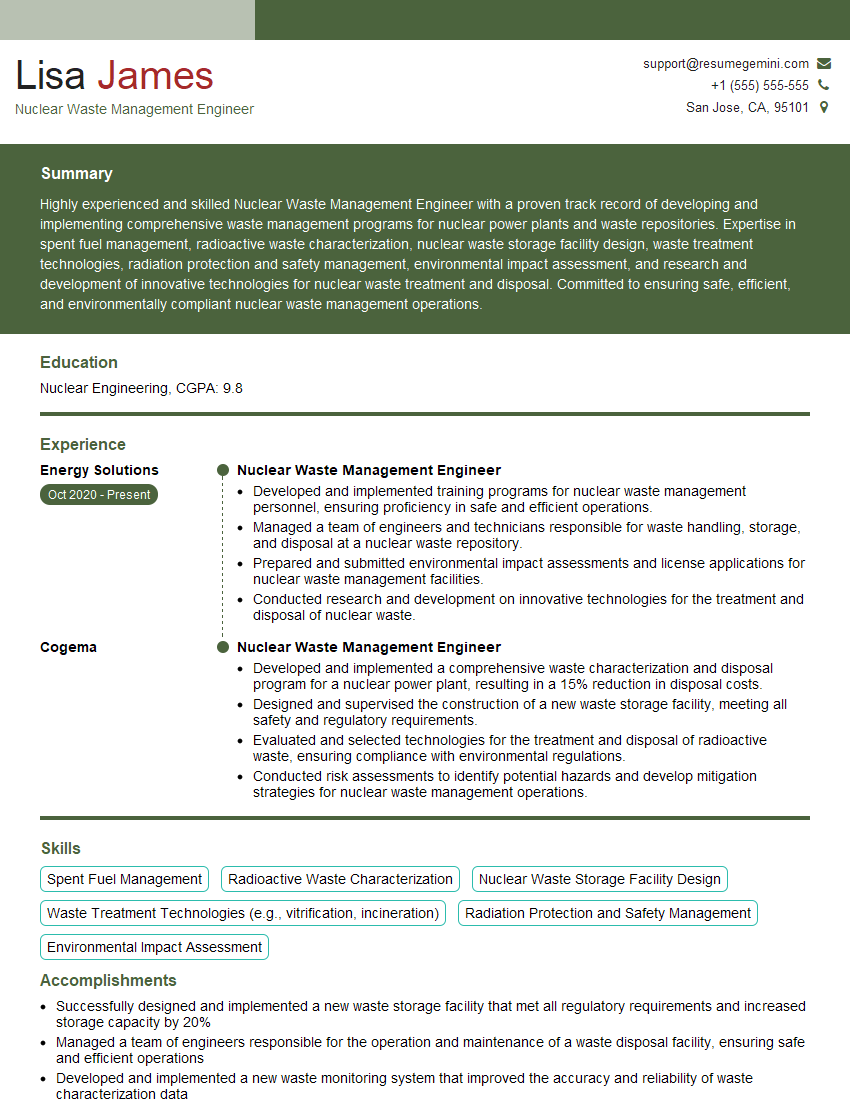
Mastering Nuclear Facility Design and Construction opens doors to a rewarding and impactful career, offering opportunities for professional growth and contributing to a vital industry. To maximize your job prospects, create a compelling and ATS-friendly resume that showcases your skills and experience effectively. ResumeGemini is a trusted resource to help you build a professional resume that stands out. They provide examples of resumes tailored to Nuclear Facility Design and Construction to help guide your process. Take the next step and craft a resume that reflects your expertise and helps you secure your dream role.
Explore more articles
Users Rating of Our Blogs
Share Your Experience
We value your feedback! Please rate our content and share your thoughts (optional).
What Readers Say About Our Blog
To the interviewgemini.com Webmaster.
Very helpful and content specific questions to help prepare me for my interview!
Thank you
To the interviewgemini.com Webmaster.
This was kind of a unique content I found around the specialized skills. Very helpful questions and good detailed answers.
Very Helpful blog, thank you Interviewgemini team.