Preparation is the key to success in any interview. In this post, we’ll explore crucial Materials Science and Testing interview questions and equip you with strategies to craft impactful answers. Whether you’re a beginner or a pro, these tips will elevate your preparation.
Questions Asked in Materials Science and Testing Interview
Q 1. Explain the difference between tensile strength and yield strength.
Tensile strength and yield strength are both crucial measures of a material’s ability to withstand force, but they represent different points on its stress-strain curve. Tensile strength indicates the maximum stress a material can endure before it breaks or fractures. Think of it as the ultimate breaking point. Yield strength, on the other hand, signifies the stress at which the material begins to deform permanently. This is the point where the material transitions from elastic deformation (where it returns to its original shape after the load is removed) to plastic deformation (where it undergoes permanent changes). Imagine bending a paperclip; yield strength is reached when you bend it past the point of return, while tensile strength is the point where it snaps.
In simpler terms: Tensile strength tells you how much force is needed to break the material, while yield strength tells you how much force is needed to permanently deform it. This distinction is crucial in engineering design, as components need to remain functional and retain their shape, not simply avoid fracturing.
Q 2. Describe the process of conducting a hardness test.
A hardness test measures a material’s resistance to indentation. Several methods exist, with the most common being the Brinell, Rockwell, and Vickers hardness tests. These tests involve applying a precisely controlled force with an indenter (a hard object like a steel ball or diamond pyramid) to the material’s surface for a specified time. After removing the force, the size or depth of the indentation is measured. This measurement directly correlates to the material’s hardness. A larger indentation signifies lower hardness and vice-versa.
For example, in a Rockwell hardness test, a minor load is initially applied to seat the indenter, followed by a major load. The difference in depth between the two loads is used to calculate the hardness number. The specific scale and indenter used (e.g., Rockwell A, B, or C scales) depend on the material being tested. Hardness testing is widely used in quality control, as it’s a quick, non-destructive method to assess material properties.
Q 3. What are the different types of failure modes in materials?
Materials can fail in various ways, broadly categorized as ductile failure and brittle failure. Ductile failure is characterized by significant plastic deformation before fracture. It often involves necking (a localized reduction in cross-sectional area) and subsequent ductile rupture. Think of pulling taffy until it stretches and eventually breaks. Brittle failure, on the other hand, occurs with little or no plastic deformation. It’s often sudden and catastrophic, like shattering glass. Other failure modes include:
- Fatigue failure: Progressive cracking due to cyclic loading.
- Creep failure: Time-dependent deformation under constant load at high temperatures.
- Stress corrosion cracking: Cracking caused by the combined action of tensile stress and a corrosive environment.
- Corrosion: Degradation of material due to chemical or electrochemical reactions.
Understanding failure modes is crucial in designing safe and reliable structures and components. For instance, in aerospace engineering, the selection of materials resistant to fatigue failure is paramount to prevent catastrophic accidents.
Q 4. Explain the concept of fatigue in materials.
Fatigue failure occurs when a material subjected to repeated cyclic loading eventually cracks and fractures, even if the stress levels in each cycle are below the material’s yield strength. It’s like repeatedly bending a wire back and forth—eventually, it’ll break, even if each bend is far less than what’s needed to break it in a single action. This is because microscopic cracks develop and propagate during each load cycle, eventually leading to failure. Factors influencing fatigue life include stress amplitude, mean stress, material properties, surface finish, and environmental conditions.
Fatigue is a significant concern in many engineering applications, particularly in rotating components like shafts, axles, and turbine blades. Proper design, material selection, and rigorous testing are essential to mitigate fatigue failure and ensure the longevity of these components. For example, inspecting bridges and aircraft regularly for fatigue cracks is vital for ensuring their safety.
Q 5. How do you interpret a stress-strain curve?
A stress-strain curve graphically depicts the relationship between stress (force per unit area) and strain (deformation) for a material. It provides valuable insights into the material’s mechanical properties. The curve typically exhibits several regions:
- Elastic region: Stress and strain are proportionally related (Hooke’s Law applies). The slope of this region represents the Young’s modulus (or modulus of elasticity), a measure of the material’s stiffness.
- Yield point: The point where plastic deformation begins.
- Plastic region: Permanent deformation occurs. The material doesn’t return to its original shape after unloading.
- Ultimate tensile strength: The maximum stress the material can withstand before failure.
- Fracture point: The point where the material breaks.
By analyzing the stress-strain curve, we can determine key material properties like yield strength, tensile strength, ductility (the ability to deform plastically), and toughness (the ability to absorb energy before fracture). This information is vital for designing structures and components capable of withstanding anticipated loads.
Q 6. What are the common Nondestructive Testing (NDT) methods?
Nondestructive testing (NDT) methods allow inspection of materials and components without causing damage. Common methods include:
- Visual inspection: Simple observation for surface defects.
- Liquid penetrant testing: Detecting surface cracks by using a dye that seeps into them.
- Magnetic particle testing: Detecting surface and near-surface cracks in ferromagnetic materials using magnetic fields.
- Ultrasonic testing: Using high-frequency sound waves to detect internal flaws.
- Radiographic testing (X-ray or gamma-ray): Using penetrating radiation to image internal defects.
- Eddy current testing: Using electromagnetic induction to detect surface and subsurface flaws in conductive materials.
NDT techniques are extensively employed across various industries, from manufacturing and construction to aerospace and medicine, to ensure product quality, safety, and reliability.
Q 7. Describe the principles behind ultrasonic testing.
Ultrasonic testing (UT) utilizes high-frequency sound waves (typically above the audible range) to detect internal flaws in materials. A transducer emits ultrasonic waves into the material, and these waves reflect (echo) off internal discontinuities like cracks, voids, or inclusions. The time it takes for these echoes to return to the transducer is measured, providing information about the location, size, and nature of the defects. The principle is based on the reflection and refraction of sound waves at interfaces between materials with different acoustic impedances (a product of density and sound velocity).
Different UT techniques exist, such as pulse-echo and through-transmission methods, each suitable for specific applications and material types. UT is widely used in various applications, including weld inspection, thickness gauging, and flaw detection in metals, composites, and other materials. Its ability to detect internal flaws makes it invaluable for ensuring the structural integrity of critical components.
Q 8. Explain the difference between destructive and non-destructive testing.
Destructive testing involves methods that damage or destroy the sample during the testing process, providing detailed information about the material’s properties at the point of failure. Non-destructive testing, on the other hand, evaluates material properties without causing any permanent damage. Think of it like this: destructive testing is like breaking a bone to examine its structure, while non-destructive testing is like taking an X-ray to see the bone’s internal structure without harming it.
- Destructive Testing Examples: Tensile testing (measuring a material’s strength before it breaks), impact testing (measuring a material’s resistance to sudden impacts), hardness testing (measuring a material’s resistance to indentation).
- Non-Destructive Testing Examples: Ultrasonic testing (using sound waves to detect internal flaws), radiographic testing (using X-rays or gamma rays to detect internal defects), magnetic particle inspection (detecting surface and near-surface flaws in ferromagnetic materials).
The choice between destructive and non-destructive testing depends on the application and the importance of preserving the sample. If you only have one component and need precise information on its strength, destructive testing might be necessary. However, for quality control on a production line where many samples are available, non-destructive testing is preferable.
Q 9. What are the common types of microscopy used in materials characterization?
Microscopy plays a crucial role in materials characterization by revealing the microstructure – the arrangement of the material’s constituent phases at a microscopic level. Several microscopy techniques are commonly used:
- Optical Microscopy: Uses visible light to magnify the sample, providing information about surface features and grain boundaries. Relatively simple and inexpensive, but its resolution is limited.
- Scanning Electron Microscopy (SEM): Employs a focused beam of electrons to scan the sample’s surface, providing high-resolution images with significant depth of field. It can be used for both surface imaging and elemental analysis (using EDS or WDS).
- Transmission Electron Microscopy (TEM): Uses a transmitted electron beam to analyze the internal structure of a thin specimen. It offers the highest resolution of all the microscopy techniques, revealing crystallographic details and defects at the atomic level.
- Atomic Force Microscopy (AFM): A scanning probe microscopy technique that uses a sharp tip to scan a surface, providing information about surface topography and material properties at the nanoscale. This is especially useful for studying very soft or delicate materials.
Each microscopy technique offers unique advantages, and the selection depends on the material and the information sought. For instance, if you need to identify the composition of inclusions in a metal alloy, SEM with EDS would be ideal, while if you want to study the crystal structure of a ceramic material, TEM would be more appropriate.
Q 10. How does grain size affect the mechanical properties of a material?
Grain size significantly impacts the mechanical properties of a polycrystalline material. Smaller grains generally lead to higher strength and hardness, but lower ductility (ability to deform before fracturing). This is because smaller grains create more grain boundaries, which act as obstacles to dislocation movement – the primary mechanism of plastic deformation in metals.
Imagine grains as individual puzzle pieces. Smaller pieces are harder to slide past each other compared to larger pieces. Similarly, smaller grains make it more difficult for dislocations to move through the material, thus enhancing its strength and hardness. However, because the movement of dislocations is hampered, the material becomes less ductile and more brittle.
Conversely, larger grains result in lower strength and hardness, but higher ductility. This is because dislocations can move more easily through fewer grain boundaries. This principle is widely utilized in material processing to tailor the mechanical properties of materials. For example, heat treatment can be used to control grain size, resulting in materials with the desired combination of strength, hardness, and ductility.
Q 11. Explain the concept of creep.
Creep is the time-dependent deformation of a material under a constant load or stress at elevated temperatures. It’s a gradual, permanent deformation that occurs even at stresses below the material’s yield strength. Think of a piece of taffy slowly stretching under its own weight over a long period. This slow deformation is analogous to creep.
Several factors influence creep behavior, including temperature, stress level, material microstructure, and environmental factors. High temperatures and stresses accelerate creep. The mechanisms involved in creep are complex and often involve dislocation motion, diffusional processes, and grain boundary sliding.
Understanding creep is essential in designing components for high-temperature applications such as gas turbines and nuclear reactors. Creep can lead to significant dimensional changes and eventual failure, so engineers need to select materials and design components that can withstand the creep strain at the expected service temperature and load.
Q 12. What are the factors influencing corrosion?
Corrosion is the deterioration of a material, usually a metal, due to its reaction with its environment. Several factors influence the rate and type of corrosion:
- Material Properties: The inherent corrosion resistance of a material is a key factor. Some metals, like gold and platinum, are highly resistant to corrosion, while others, like iron, are more susceptible.
- Environment: The surrounding environment plays a crucial role. Factors include temperature, humidity, pH, presence of corrosive chemicals, oxygen availability, and the presence of microorganisms.
- Electrolyte: The presence of an electrolyte, which is a substance that can conduct electricity (like saltwater or an acidic solution), is usually necessary for many types of corrosion to occur. The electrolyte allows for the flow of ions, facilitating electrochemical reactions.
- Stress: Stress concentration areas can accelerate corrosion, as they create micro-galvanic cells.
For example, rusting of iron is a common form of corrosion driven by the presence of oxygen and moisture, which act as an electrolyte.
Q 13. Describe the different types of corrosion.
Corrosion can manifest in various forms:
- Uniform Corrosion: Corrosion occurs evenly over the entire surface of the material. This is often predictable and easier to manage.
- Galvanic Corrosion: Occurs when two dissimilar metals are in contact in the presence of an electrolyte. The more active metal corrodes preferentially.
- Pitting Corrosion: Localized corrosion that forms small pits or holes on the material’s surface. It’s often difficult to detect until significant damage has occurred.
- Crevice Corrosion: Corrosion concentrated within crevices, gaps, or under deposits on the material surface. Limited access to oxygen within these confined areas can accelerate corrosion.
- Stress Corrosion Cracking (SCC): A combination of tensile stress and corrosive environment leading to crack initiation and propagation. This is a particularly dangerous form of corrosion.
- Intergranular Corrosion: Corrosion that occurs preferentially along grain boundaries, weakening the material.
Understanding the different types of corrosion helps in selecting appropriate materials and implementing effective corrosion prevention strategies.
Q 14. How do you select materials for a specific application?
Material selection is a crucial step in engineering design. The process involves considering various factors and often requires a multi-step approach.
- Define the Application Requirements: Clearly identify the service conditions, including the expected stresses (mechanical, thermal, chemical), temperature range, environmental factors, and required lifespan.
- Identify Potential Materials: Based on the service conditions, create a shortlist of materials that potentially meet the requirements. Consider factors like strength, stiffness, ductility, corrosion resistance, cost, and availability.
- Material Property Evaluation: Analyze the material properties of each potential candidate using available data (material datasheets, handbooks, literature) and testing (if necessary). This may involve considering factors like yield strength, ultimate tensile strength, fatigue strength, creep resistance, and fracture toughness.
- Cost-Benefit Analysis: Evaluate the cost-effectiveness of each material, weighing its performance characteristics against its cost and availability.
- Safety Considerations: Evaluate the safety implications of each material, including toxicity, flammability, and environmental impact.
- Fabrication and Manufacturing Considerations: Assess the ease of fabrication and manufacturing processes for each material. Some materials might be easier to machine, weld, or cast than others.
- Final Selection: Select the material that best balances performance, cost, safety, and manufacturing considerations. This often involves a compromise; there’s rarely a perfect material.
For example, designing a surgical implant requires selecting a biocompatible material (like titanium alloys or certain ceramics) that is strong, resistant to corrosion in the body, and non-toxic. Each step in the material selection process is critical to ensure that the chosen material meets all the required specifications and results in a successful design.
Q 15. Explain the concept of material compatibility.
Material compatibility refers to the ability of two or more materials to coexist in a specific environment without undergoing undesirable chemical or physical changes. Think of it like arranging guests at a party – some guests get along famously, while others might clash. Similarly, materials can react negatively to each other, leading to corrosion, degradation, or embrittlement. For instance, placing aluminum in contact with steel in a saline environment can cause galvanic corrosion, where the aluminum corrodes preferentially. Assessing compatibility involves considering factors like temperature, pressure, chemical exposure, and the materials’ inherent properties. In engineering design, compatibility is crucial for ensuring the long-term performance and safety of systems. For example, choosing compatible materials for biomedical implants is critical to prevent adverse reactions within the human body.
Career Expert Tips:
- Ace those interviews! Prepare effectively by reviewing the Top 50 Most Common Interview Questions on ResumeGemini.
- Navigate your job search with confidence! Explore a wide range of Career Tips on ResumeGemini. Learn about common challenges and recommendations to overcome them.
- Craft the perfect resume! Master the Art of Resume Writing with ResumeGemini’s guide. Showcase your unique qualifications and achievements effectively.
- Don’t miss out on holiday savings! Build your dream resume with ResumeGemini’s ATS optimized templates.
Q 16. What are the different types of polymers and their applications?
Polymers are large molecules composed of repeating structural units called monomers. They are broadly classified into several categories based on their structure and properties:
- Thermoplastics: These can be repeatedly melted and reshaped without significant degradation. Examples include polyethylene (PE), used in plastic bags and bottles; polypropylene (PP), used in containers and fibers; and polyvinyl chloride (PVC), used in pipes and flooring. Think of them like playdough – you can mold them again and again.
- Thermosets: These undergo irreversible chemical changes upon heating, forming a rigid, cross-linked network. They cannot be remelted. Examples include epoxy resins, used as adhesives and coatings; and phenolic resins, used in electrical components and laminates. These are more like baking a cake – once it’s baked, you can’t unbake it.
- Elastomers: These are flexible polymers with high elasticity. Examples include natural rubber and synthetic rubbers like styrene-butadiene rubber (SBR), used in tires and other flexible products. Think of a rubber band – it stretches and returns to its original shape.
The applications of polymers are vast and span various industries, including packaging, construction, automotive, electronics, and biomedical engineering. The choice of polymer depends on the required properties, such as strength, flexibility, temperature resistance, and chemical resistance.
Q 17. Describe the properties of ceramics and their applications.
Ceramics are inorganic, non-metallic materials formed by high-temperature processing. Their properties are often defined by their strong ionic or covalent bonds, resulting in high hardness, stiffness, and compressive strength, but also brittleness. They typically exhibit excellent high-temperature stability and chemical resistance.
- Properties: High hardness, high melting point, excellent chemical resistance, good electrical insulation, low thermal conductivity (some exceptions exist).
- Applications: Examples include alumina (Al2O3) in abrasives and cutting tools; zirconia (ZrO2) in high-performance ceramics; silicon carbide (SiC) in high-temperature applications; and silicon nitride (Si3N4) in engine components. In addition, traditional ceramics like clay-based materials are used extensively in construction (bricks, tiles) and tableware.
The brittleness of ceramics limits their applications where impact resistance is critical, but advancements in ceramic matrix composites are addressing this challenge.
Q 18. What are the properties of metals and their applications?
Metals are characterized by their strong metallic bonding, which results in properties like high electrical and thermal conductivity, ductility (ability to deform without fracturing), and malleability (ability to be shaped). Their properties are greatly influenced by their crystal structure, composition, and processing.
- Properties: High strength, high ductility, good electrical and thermal conductivity, malleability, reflectivity.
- Applications: Iron-based alloys (steels) are used extensively in construction, automotive, and manufacturing. Aluminum alloys are used in aerospace and transportation due to their high strength-to-weight ratio. Copper is widely used in electrical wiring due to its excellent conductivity. Titanium alloys are valued for their high strength and corrosion resistance in aerospace and biomedical applications. Precious metals like gold and silver find use in jewelry and electronics.
The selection of a metal for a specific application involves considering factors like strength, corrosion resistance, cost, and machinability.
Q 19. Explain the concept of phase diagrams.
Phase diagrams are graphical representations of the equilibrium relationships between phases (solid, liquid, gas) in a material system as a function of temperature, pressure, and composition. Think of it as a map showing the different ‘territories’ occupied by different phases under varying conditions. They are crucial in understanding how materials behave during processing and in service. A simple example is the water phase diagram, showing the solid (ice), liquid (water), and gaseous (steam) phases under different temperature and pressure conditions.
For alloy systems (mixtures of metals), phase diagrams indicate the phases present at different compositions and temperatures. They are essential for controlling the microstructure and properties of alloys through heat treatments, enabling the prediction of phase transformations during processing.
Q 20. How do you determine the composition of a material?
Determining the composition of a material can involve several techniques, depending on the material type and desired level of detail:
- Chemical analysis: Techniques like wet chemical analysis, titration, and atomic absorption spectroscopy (AAS) can determine the elemental composition. For example, AAS can measure the concentration of specific elements in a sample by measuring the light absorption of their atoms.
- Spectroscopic techniques: X-ray fluorescence (XRF) spectroscopy is non-destructive and can analyze the elemental composition of a wide range of materials. Energy-dispersive X-ray spectroscopy (EDS) or X-ray diffraction (XRD) can provide both qualitative and quantitative information about the composition and crystal structure of a material.
- Instrumental techniques: Techniques like gas chromatography-mass spectrometry (GC-MS) and inductively coupled plasma mass spectrometry (ICP-MS) can be used to analyze organic and inorganic compounds in the material.
The choice of method depends on the required precision, the type of material, and the available resources. For example, if you need a quick, non-destructive analysis of a metal alloy, XRF would be a good choice. If a more detailed elemental analysis is required, then ICP-MS might be more suitable.
Q 21. Explain the process of heat treatment.
Heat treatment involves subjecting a material to controlled heating and cooling cycles to modify its microstructure and, consequently, its mechanical properties. It’s like baking a cake; the temperature and time you spend baking change the texture and taste. This is widely used to alter strength, ductility, hardness, and toughness in metals and some ceramics. The process typically involves several stages:
- Heating: The material is heated to a specific temperature within a furnace, often to a temperature where phase transformations occur.
- Soaking: The material is held at the desired temperature for a specific time to allow for the completion of the phase transformations and homogenization of the microstructure.
- Cooling: The material is cooled at a controlled rate, often through air cooling, furnace cooling, or quenching (rapid cooling in a liquid). The cooling rate significantly influences the final microstructure and properties.
Common heat treatments include annealing (reducing internal stresses), hardening (increasing hardness), tempering (reducing brittleness after hardening), and normalizing (refining the grain structure). Heat treatments are critical in improving the performance and reliability of metal components, especially in engineering applications where high strength and toughness are required, like in automotive parts and aircraft structures. For instance, heat treatment is used to make steel harder and more resistant to wear.
Q 22. What is the significance of the microstructure of a material?
The microstructure of a material refers to the arrangement and distribution of its constituent phases at a microscopic level. Think of it like a city’s layout – buildings (grains), roads (grain boundaries), and parks (second phases) all contribute to the overall functionality and resilience of the city. Similarly, the microstructure dictates a material’s macroscopic properties, including strength, ductility, toughness, and corrosion resistance. For example, a fine-grained steel will generally be stronger and harder than a coarse-grained steel because the smaller grains hinder dislocation movement, a major mechanism of plastic deformation. Understanding the microstructure is therefore crucial for materials selection and processing to achieve desired properties.
Q 23. Describe the different types of crystal structures.
Crystal structures describe the ordered arrangement of atoms in a solid material. Several common structures exist:
- Body-Centered Cubic (BCC): Atoms are located at the corners and the center of a cube. Examples include iron (at lower temperatures), chromium, and tungsten. BCC structures are typically quite strong and have good ductility.
- Face-Centered Cubic (FCC): Atoms are located at the corners and the center of each face of a cube. Examples include aluminum, copper, and nickel. FCC metals are generally known for their ductility and malleability.
- Hexagonal Close-Packed (HCP): Atoms are arranged in a hexagonal pattern. Examples include magnesium, titanium, and zinc. HCP structures tend to be less ductile than FCC or BCC structures.
Beyond these basic structures, numerous variations exist, including those with interstitial atoms, substitutional alloys, and complex intermetallic phases. The specifics of the crystal structure profoundly impact a material’s properties. Imagine building a wall with different types of bricks – different shapes and sizes will lead to a wall with different strength and stability.
Q 24. How do you interpret a fracture surface?
Fracture surface analysis provides invaluable insights into the cause and mechanism of failure. By carefully examining the fracture surface under a microscope, we can identify clues about the material’s properties, the loading conditions, and the presence of defects. For example, a brittle fracture will often show a relatively flat, cleavage-type surface with sharp features, indicating rapid crack propagation without significant plastic deformation. In contrast, a ductile fracture will exhibit dimples, indicating plastic deformation and void nucleation before final fracture. The presence of fatigue striations indicates cyclical loading, and the presence of inclusions or voids can pinpoint the initiation site of the fracture. The orientation of the fracture surface relative to the applied load can also provide information about the direction of crack propagation and the stress state at failure. By systematically analyzing these features, we can reconstruct the failure scenario and implement corrective measures.
Q 25. Explain the concept of stress concentration.
Stress concentration refers to the localized increase in stress around geometric discontinuities or flaws in a material. Imagine a thin section in a large metal plate. The stress will be concentrated in that thinner section compared to the rest of the plate. These discontinuities, such as holes, notches, cracks, or fillets, can significantly amplify the applied stress, leading to premature failure even at relatively low overall loads. The magnitude of stress concentration is quantified by the stress concentration factor (Kt), which represents the ratio of the maximum stress to the nominal stress. Understanding stress concentration is critical in design to avoid premature failure by incorporating design features that minimize stress concentrations such as using fillets or radiusing sharp corners. Using finite element analysis (FEA) software can help to analyze these stress concentration effects.
Q 26. What are the limitations of different testing methods?
Various materials testing methods have inherent limitations. For example, tensile testing provides accurate measures of strength and ductility, but it may not fully replicate real-world loading conditions. Hardness testing is simple and rapid but provides only a relative measure of material resistance to indentation and not a comprehensive evaluation of mechanical properties. Fatigue testing, while crucial for determining endurance limits, is time-consuming and expensive. Furthermore, the size and shape of the test specimen can influence the results. It’s important to carefully select the appropriate testing method based on the specific material and application and to interpret the results in the context of these limitations. Each method’s applicability is restricted by factors like cost, time, and the type of information desired.
Q 27. How do you ensure the accuracy and reliability of testing results?
Ensuring the accuracy and reliability of testing results involves several key steps: First, proper specimen preparation is vital, including accurate dimensions and surface finish. Second, using calibrated equipment and adhering strictly to standardized testing procedures (e.g., ASTM standards) is crucial. Third, careful control of testing environment (temperature, humidity) is necessary, as these factors can influence results. Fourth, conducting multiple tests and performing statistical analysis to determine the mean and standard deviation is essential to account for variability. Finally, regular calibration and maintenance of equipment and thorough documentation of procedures and results are critical for maintaining quality control. The emphasis should be placed on traceability of calibration standards and comprehensive documentation for audits.
Q 28. Describe your experience with data analysis in materials testing.
My experience with data analysis in materials testing spans various techniques. I am proficient in using statistical software packages such as Minitab and JMP to analyze tensile, fatigue, and hardness testing data, including calculating mean, standard deviation, and performing hypothesis testing to validate results. I also have expertise in using data visualization tools to create graphs and charts that effectively communicate findings to both technical and non-technical audiences. Moreover, I have experience with digital image analysis of microstructures using software like ImageJ for quantitative analysis of grain size, phase fraction, and other microstructural features. This has allowed me to correlate microstructural characteristics with the macroscopic properties of the materials. In one particular project, I used data analysis to identify a correlation between the inclusion content in a steel alloy and its susceptibility to fatigue cracking, leading to improvements in the manufacturing process.
Key Topics to Learn for Materials Science and Testing Interview
- Mechanical Properties of Materials: Understanding stress-strain relationships, tensile testing, hardness testing, fatigue, creep, and fracture mechanics. Practical application: Analyzing the performance of materials under various loading conditions in engineering design.
- Material Characterization Techniques: Mastering microscopy (SEM, TEM, optical), X-ray diffraction (XRD), thermal analysis (DSC, TGA), and spectroscopy techniques. Practical application: Identifying material composition, microstructure, and defects to ensure quality control.
- Material Selection and Design: Applying knowledge of material properties to select the optimal material for a specific application considering cost, performance, and environmental factors. Practical application: Designing lightweight yet strong components for aerospace applications.
- Failure Analysis: Investigating material failures to determine the root cause and prevent future occurrences. Practical application: Analyzing a fractured component to understand the failure mechanism and recommend improvements in design or manufacturing.
- Corrosion and Degradation: Understanding corrosion mechanisms, types of corrosion, and methods of corrosion prevention. Practical application: Designing corrosion-resistant components for harsh environments such as marine or chemical processing industries.
- Non-Destructive Testing (NDT): Familiarizing yourself with various NDT methods like ultrasonic testing, radiography, and magnetic particle inspection. Practical application: Ensuring the integrity of components without causing damage during inspection.
- Composite Materials: Understanding the properties and behavior of composite materials, including their manufacturing processes and applications. Practical application: Designing lightweight and high-strength structures for automotive or aerospace industries.
- Data Analysis and Interpretation: Developing skills in statistical analysis and data visualization to effectively communicate findings from materials testing. Practical application: Presenting clear and concise reports on material properties and performance.
Next Steps
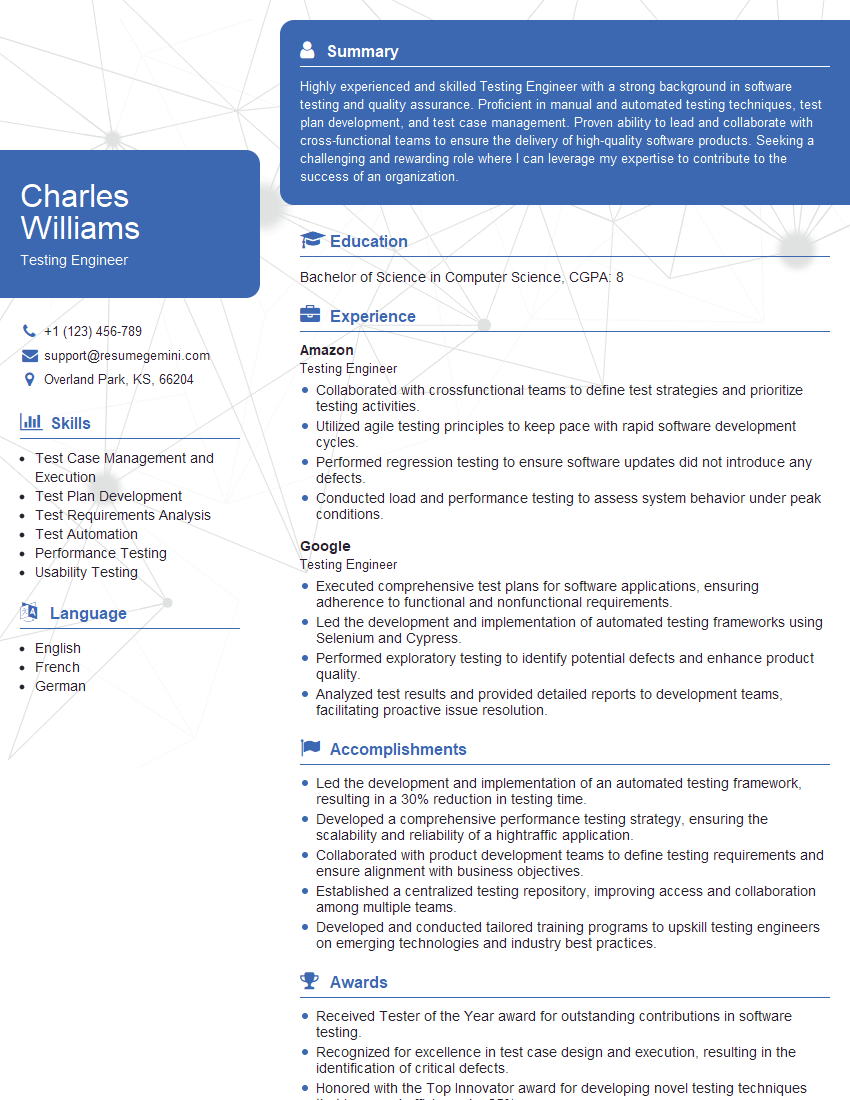
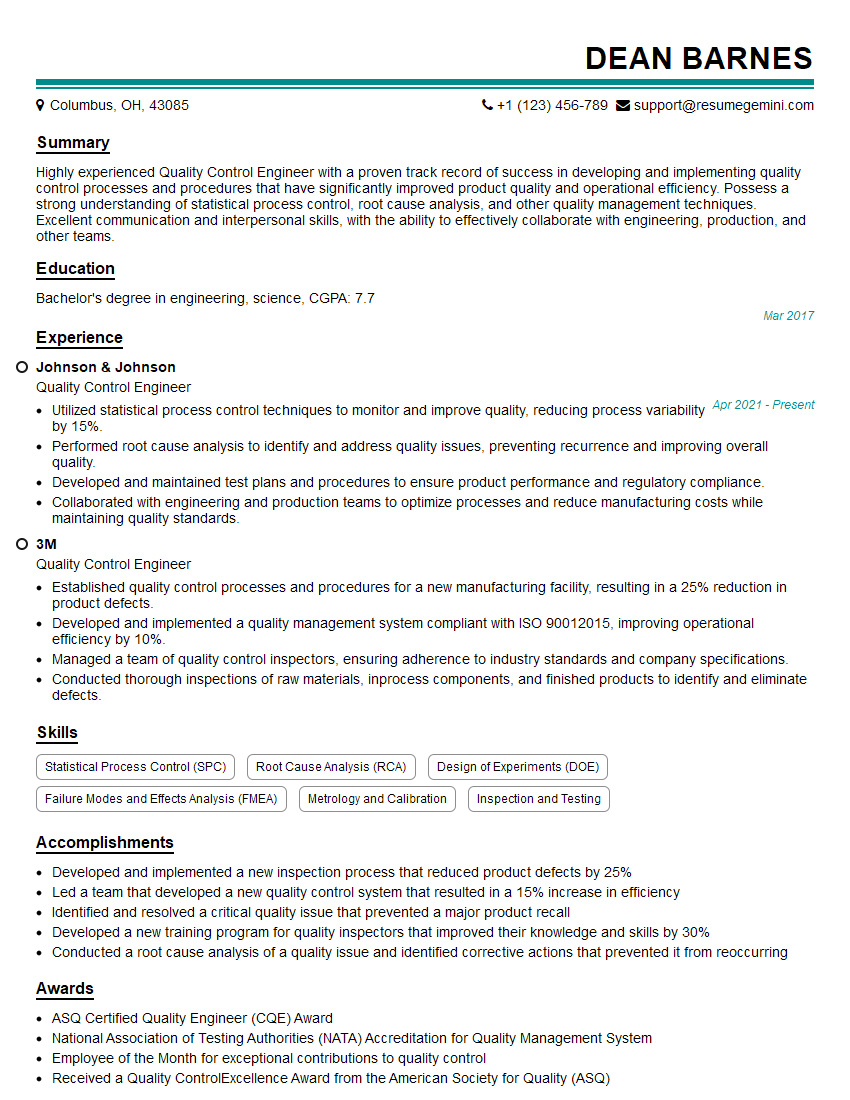
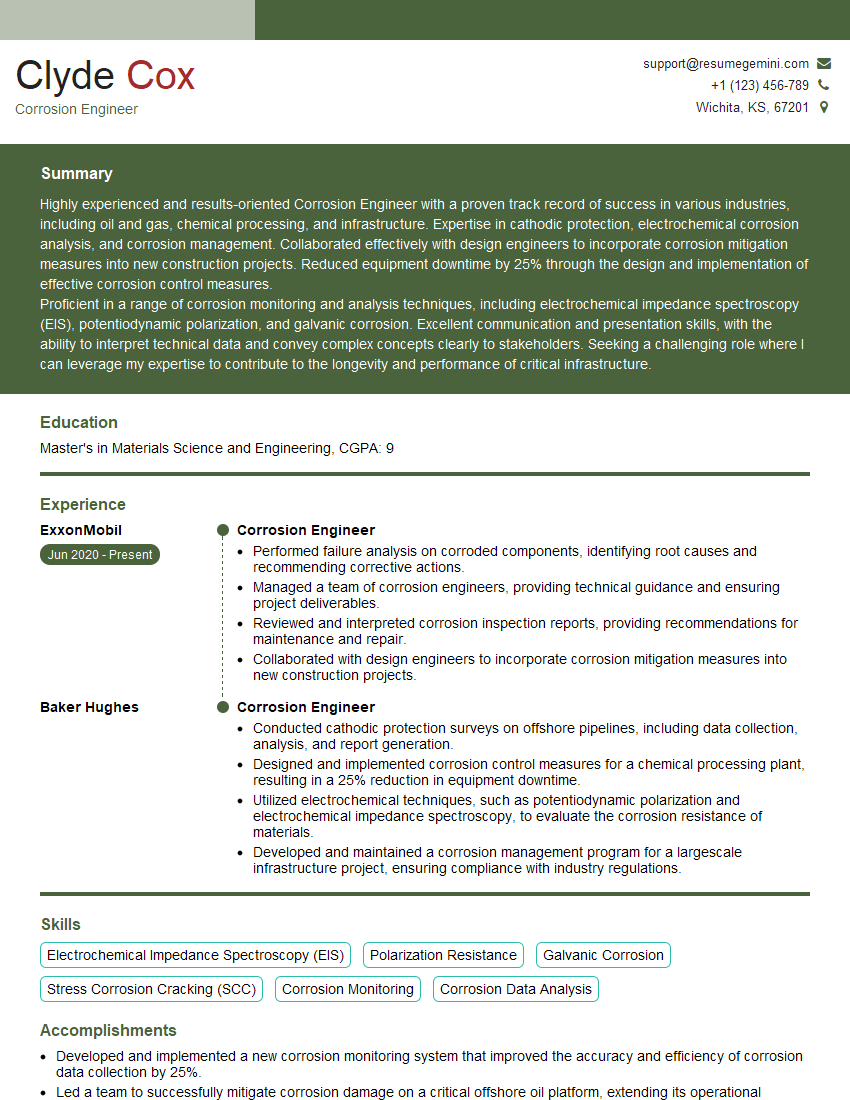
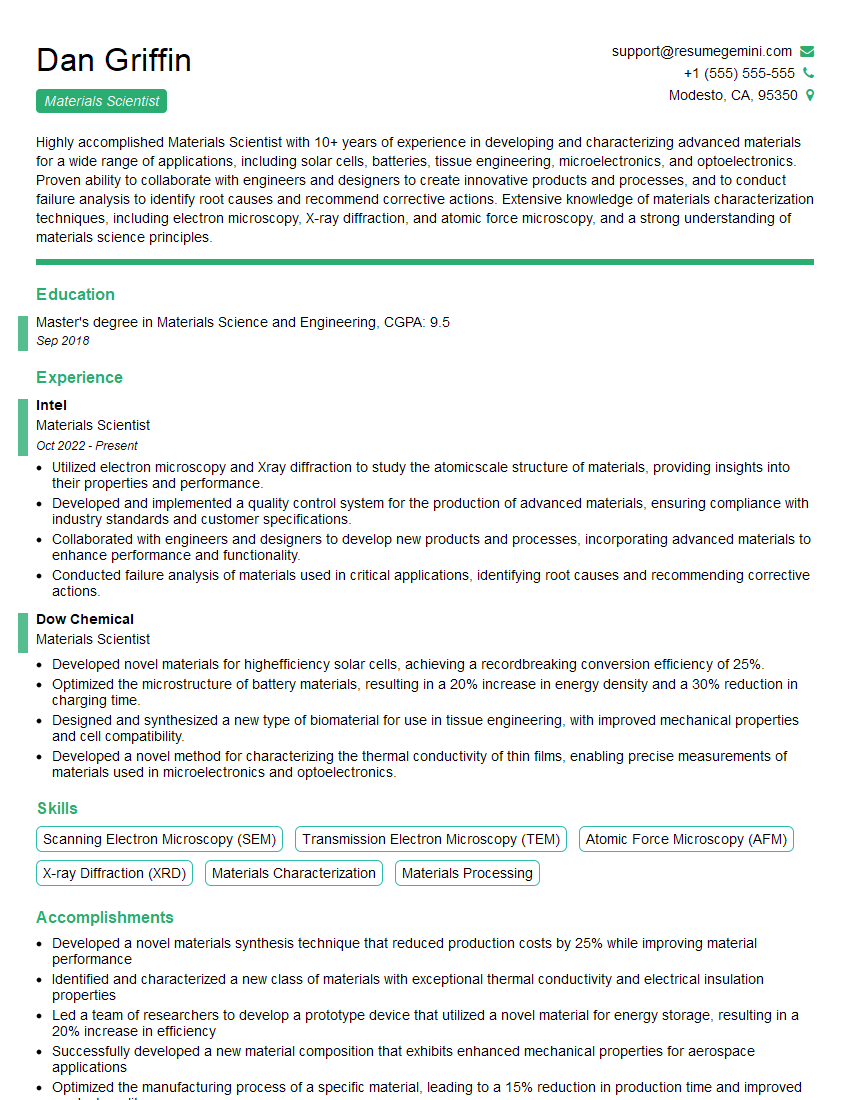
Mastering Materials Science and Testing opens doors to diverse and rewarding careers in various industries. A strong understanding of these concepts is crucial for success in roles requiring material selection, quality control, failure analysis, and research & development. To maximize your job prospects, it’s essential to present your skills effectively. Crafting an ATS-friendly resume is key to getting your application noticed. ResumeGemini is a trusted resource that can help you build a professional and impactful resume, significantly enhancing your chances of securing an interview. Examples of resumes tailored to Materials Science and Testing are available to guide you through the process.




Explore more articles
Users Rating of Our Blogs
Share Your Experience
We value your feedback! Please rate our content and share your thoughts (optional).
What Readers Say About Our Blog
To the interviewgemini.com Webmaster.
Very helpful and content specific questions to help prepare me for my interview!
Thank you
To the interviewgemini.com Webmaster.
This was kind of a unique content I found around the specialized skills. Very helpful questions and good detailed answers.
Very Helpful blog, thank you Interviewgemini team.