Preparation is the key to success in any interview. In this post, we’ll explore crucial Separating Machine Operation interview questions and equip you with strategies to craft impactful answers. Whether you’re a beginner or a pro, these tips will elevate your preparation.
Questions Asked in Separating Machine Operation Interview
Q 1. Explain the principle of centrifugal separation.
Centrifugal separation leverages the principle of centrifugal force to separate substances with different densities. Imagine spinning a salad spinner – the denser lettuce stays at the bottom while the lighter water is flung outwards. Similarly, in a centrifuge, a rotating vessel spins at high speeds, creating a strong centrifugal force. This force pushes denser particles outwards towards the wall of the vessel, while lighter particles remain closer to the center. The separated components can then be collected.
For example, in a dairy plant, centrifuges separate cream from milk based on their density difference. The denser milk forms a layer closer to the outer wall, while the lighter cream forms a layer closer to the center.
Q 2. Describe the different types of filters used in separating machines.
Separating machines utilize various filter types, each suited for specific applications. Common types include:
- Screen filters: These employ woven mesh or perforated plates to separate solids from liquids based on particle size. Think of a sieve separating sand from gravel.
- Depth filters: These consist of porous media like paper, cloth, or granular materials. Particles are trapped within the filter’s porous structure. Examples include cartridge filters commonly used in water purification.
- Membrane filters: These use semi-permeable membranes with precise pore sizes to separate particles based on size and molecular weight. Applications range from sterile filtration in pharmaceuticals to water desalination.
- Cake filters (e.g., filter presses): These form a solid cake of filtered solids on a filter medium. The liquid permeates through the cake and the filter medium, leaving behind the solids. This is commonly used in the chemical and mining industries.
Q 3. How do you troubleshoot a clogged filter in a filter press?
Troubleshooting a clogged filter press involves systematic steps:
- Identify the cause: Is the blockage due to excessive solids concentration in the feed, improper filter cloth selection, or filter cake buildup?
- Stop the machine: Safety first! Ensure the machine is completely shut down and depressurized before any maintenance.
- Inspect the filter cloth: Check for tears, damage, or improper installation.
- Check the feed material: Ensure the feed stream is within the specified parameters regarding solids content and particle size.
- Clean or replace the filter cloth: Depending on the extent of the blockage, the filter cloth may be cleaned (using appropriate solvents or detergents) or replaced.
- Remove the filter cake: Carefully remove the accumulated filter cake from the chambers.
- Reassemble and restart: After cleaning or replacing components, reassemble the filter press and restart it, carefully monitoring the pressure and flow rate.
Regular preventative maintenance, such as scheduled cleaning and filter cloth replacement, can significantly reduce the frequency of clogs.
Q 4. What are the safety precautions when operating a centrifuge?
Safety is paramount when operating a centrifuge. Key precautions include:
- Proper training: Operators must receive thorough training on the specific centrifuge model and its safety protocols.
- Balance the load: Unevenly distributed loads can cause imbalance and potentially dangerous vibrations. Always ensure that the centrifuge is properly balanced.
- Use appropriate safety equipment: This includes eye protection, gloves, and hearing protection, as some centrifuges can generate significant noise.
- Never open the centrifuge while it is spinning: This is a critical safety rule. Wait for the centrifuge to come to a complete stop before opening it.
- Regular inspection and maintenance: Regularly inspect the centrifuge for wear and tear, and follow a scheduled maintenance plan to prevent malfunctions.
- Emergency shut-off: Know the location and operation of the emergency shut-off switch.
Q 5. Explain the concept of separation efficiency.
Separation efficiency refers to the effectiveness of a separating machine in isolating the desired component from a mixture. It’s often expressed as a percentage, indicating the amount of the target component successfully separated. For example, a 95% separation efficiency means that 95% of the desired component was successfully separated from the rest of the mixture.
Factors influencing separation efficiency include the machine’s design, operating parameters (speed, temperature, pressure), the properties of the substances being separated (density, particle size, viscosity), and the condition of the separating equipment (filter condition, wear and tear).
Q 6. How do you maintain optimal operating parameters for a separating machine?
Maintaining optimal operating parameters ensures efficient separation, prolongs equipment lifespan, and minimizes waste. This involves:
- Monitoring parameters: Continuously monitor key parameters like temperature, pressure, flow rate, and speed, adjusting them as needed to maintain optimal separation.
- Regular cleaning and maintenance: Adhering to a preventative maintenance schedule is crucial for preventing blockages, reducing wear and tear, and improving separation efficiency.
- Calibration: Regular calibration of instruments used for monitoring and controlling the operating parameters is important for accurate and reliable measurements.
- Troubleshooting and repair: promptly address any operational issues or malfunctions to prevent further damage and ensure consistent performance.
- Operator training: Proper operator training ensures consistent operation and optimal parameter management.
Q 7. Describe the process of cleaning and sanitizing a separating machine.
Cleaning and sanitizing procedures depend on the type of separating machine and the nature of the processed materials. Generally, the process includes:
- Shut down and disconnect: Ensure the machine is completely shut down and disconnected from power and utility sources before cleaning.
- Disassemble (if necessary): Disassemble the machine according to the manufacturer’s instructions, focusing on components that have come into contact with the processed materials.
- Cleaning: Use appropriate cleaning agents and methods to remove residual materials. This may involve rinsing, brushing, or using high-pressure washing equipment.
- Sanitizing (if required): If the processed materials are food-related or require sterile conditions, sanitize the equipment using appropriate sanitizing agents and methods to eliminate microbial contaminants.
- Rinse and dry: Thoroughly rinse all surfaces with clean water to remove cleaning and sanitizing agents. Allow the equipment to completely dry before reassembly.
- Reassemble and inspect: Reassemble the machine, ensuring proper alignment and functionality. Conduct a final inspection before resuming operation.
Always refer to the manufacturer’s instructions for detailed cleaning and sanitizing procedures specific to the separating machine model.
Q 8. What are the common causes of malfunctions in separating machines?
Malfunctions in separating machines are often caused by a combination of factors, including operational errors, equipment wear and tear, and process-related issues. Let’s break down the common culprits:
- Feedstock Issues: Improperly prepared feedstock, containing excessive solids, oversized particles, or unexpected materials (like foreign objects), can overload the machine and cause blockages or damage to internal components. For instance, a centrifuge processing milk might malfunction if clumps of undissolved fat clog the discharge.
- Mechanical Failures: Wear and tear on bearings, seals, motors, and drive systems are common causes. Regular maintenance, including lubrication and component replacement, is crucial to prevent these failures. Imagine a sedimentation tank developing a leak in its bottom due to corrosion – this would obviously compromise separation.
- Control System Problems: Issues with sensors, actuators, or the PLC (Programmable Logic Controller) can lead to incorrect operational parameters, resulting in ineffective separation or even unsafe operation. A malfunctioning flow rate sensor, for example, could cause under- or over-feeding of a filtration system.
- Process Parameter Issues: Incorrect settings for parameters like speed (in centrifuges), pressure (in filters), or residence time can negatively impact separation efficiency. For example, running a centrifuge at too low a speed might not adequately separate components of differing densities.
- Environmental Factors: Extreme temperatures or unexpected power surges can also affect the performance and longevity of separating machines. Think of a heat exchanger inside a filtration system failing due to overheating.
Q 9. How do you interpret data from a separating machine’s control panel?
Interpreting data from a separating machine’s control panel requires a good understanding of the specific machine and its parameters. Generally, the panel displays real-time information like:
- Feed and Discharge Flow Rates: These tell you whether the machine is processing the material at the designed rate. Deviations could indicate blockages or other problems.
- Pressure Readings: Pressure gauges show the pressure in different sections of the machine, which helps diagnose issues like blockages or leaks. High pressure might indicate a clog, while low pressure could suggest a leak.
- Temperature Readings: Monitoring temperature is crucial for processes that are temperature-sensitive. Unusual temperatures can signal problems with heating or cooling systems.
- Speed/RPM: For machines like centrifuges, the rotational speed is a key parameter. Deviations from the set point might impact separation efficiency.
- Motor Current: High motor current might indicate an overload, such as a blockage or a problem with the drive system.
- Alarm Indicators: These alert operators to potential problems that require immediate attention, like high pressure, low flow, or motor overheating.
It’s critical to understand the normal operating ranges for each parameter and react appropriately to any deviations. Regular calibration of sensors is also key to accurate interpretation of data.
Q 10. What are the different types of separating machines and their applications?
Separating machines come in various types, each suited for specific applications:
- Centrifuges: These use centrifugal force to separate components with different densities. They find widespread application in various industries, from separating blood components in healthcare to clarifying liquids in food processing and wastewater treatment. Types include decanter centrifuges, tubular bowl centrifuges, and disk stack centrifuges, each with its unique design and application.
- Filters (Pressure, Vacuum, Gravity): Filters separate solids from liquids or gases using porous media. Pressure filters use pressure to force the liquid through the filter; vacuum filters use vacuum to pull it through; gravity filters rely on gravity. These are commonly used in water treatment, chemical processing, and brewing.
- Sedimentation Tanks: These utilize gravity to separate solids from liquids based on density difference. The heavier solids settle to the bottom, allowing for clear liquid to be decanted. They are often used in primary treatment of wastewater.
- Cyclones: Cyclones use centrifugal force to separate solids from gases. They are commonly used in dust collection and air pollution control systems.
- Hydrocyclones: Similar to cyclones, but use liquids instead of gases. They find applications in mining, mineral processing, and wastewater treatment.
The choice of machine depends heavily on the properties of the materials being separated, the required separation efficiency, the throughput, and cost considerations.
Q 11. Explain the difference between sedimentation and centrifugation.
Both sedimentation and centrifugation are separation techniques based on density differences, but they utilize different forces:
- Sedimentation: Relies on gravity to separate particles. Heavier particles settle to the bottom of a container over time. It’s a relatively simple and low-energy method, suitable for separating large, dense particles from liquids with a significant density difference. Think of letting sand settle out of water – that’s sedimentation.
- Centrifugation: Employs centrifugal force (much stronger than gravity) generated by rapid rotation. This accelerates the sedimentation process, allowing for separation of smaller and less dense particles, or faster separation of denser particles. Blood separation in a medical lab is a classic example of centrifugation.
In essence, centrifugation is a much more powerful and efficient version of sedimentation, especially for finer separations or when processing large volumes quickly.
Q 12. How do you determine the appropriate separating machine for a specific application?
Selecting the right separating machine involves careful consideration of several factors:
- Properties of the Materials: Particle size, density, shape, and concentration of the solids and liquids will dictate the suitability of different techniques. Fine particles may require centrifugation, while larger particles might be easily separated by sedimentation.
- Required Separation Efficiency: The desired purity of the separated components will influence the choice of machine. For high-purity separations, more sophisticated techniques like centrifugation or microfiltration might be necessary.
- Throughput: The volume of material to be processed per unit time determines the required capacity of the separating machine. High throughput applications might necessitate larger-scale equipment.
- Operating Costs: Different machines have different energy consumption and maintenance requirements. Cost-effectiveness should be a key consideration.
- Environmental Considerations: Some separation techniques might produce more waste or consume more energy than others. Environmental impact should also be factored in.
Often, a thorough feasibility study, including laboratory-scale testing, is conducted to determine the optimal separating machine for a particular application.
Q 13. Describe your experience with different types of separation media (e.g., filter cloths, filter aids).
My experience encompasses a wide range of separation media. Filter cloths, for example, are crucial components in various filtration systems. The choice of cloth depends on factors like the size and type of particles being separated, the chemical compatibility with the process fluid, and the required filtration rate. I’ve worked with woven cloths, non-woven fabrics, and specialized media like those made of PTFE or other polymers, each suitable for specific applications. For instance, a woven cloth might be used for coarse filtration in wastewater treatment, while a more fine filter is required in pharmaceutical applications.
Filter aids are often added to improve the filtration process. These are inert materials like diatomaceous earth or perlite that help create a more permeable filter cake, increasing flow rate and preventing clogging. The selection of a filter aid depends on the properties of the solid material being filtered and its compatibility with the process fluid. I’ve had experience optimizing filter aid dosages to achieve desired filtration rates and cake dryness.
Regular cleaning and replacement of filter cloths and proper handling of filter aids are vital for maintaining efficient separation and preventing contamination. I’ve implemented procedures to ensure proper maintenance schedules and optimized cleaning methods to extend the life of the media and maintain the quality of separation.
Q 14. How do you handle spills or leaks during operation?
Handling spills or leaks during operation requires immediate and decisive action to minimize environmental damage, prevent injury, and avoid equipment damage. My approach involves the following steps:
- Safety First: Immediately isolate the affected area and evacuate personnel if necessary. Ensure proper personal protective equipment (PPE) is used before approaching the spill.
- Contain the Spill: Use absorbent materials like spill pads or sand to contain the spill and prevent further spread. This is particularly crucial if the spilled material is hazardous.
- Identify the Spilled Material: Determine the nature of the spilled material to select the appropriate cleanup method and safety precautions. A Material Safety Data Sheet (MSDS) should be consulted.
- Clean Up the Spill: Follow appropriate procedures for cleanup, which might involve specialized equipment or techniques depending on the material. This could range from simple mopping to using specialized vacuum systems for hazardous materials.
- Waste Disposal: Dispose of the contaminated materials and cleanup waste according to regulations. This might require special handling and permits for hazardous materials.
- Investigate the Cause: After cleanup, investigate the root cause of the leak to prevent future incidents. This might involve inspecting equipment for damage, checking for leaks in piping, or reviewing operational procedures.
Thorough documentation of the incident, including details of the spill, cleanup procedure, and the root cause analysis, is critical for improving safety and preventing similar future occurrences.
Q 15. What are the different types of solids handling systems used in separation?
Solids handling systems in separation processes are crucial for efficiently moving and processing materials. The choice of system depends heavily on the properties of the solids (size, shape, abrasiveness, moisture content) and the overall separation objective. Here are some common types:
- Screw Conveyors: These are excellent for moving a wide range of materials, from powders to granular solids. They’re relatively low maintenance and can handle materials with varying moisture content. Think of them like a giant auger pushing the material along a trough.
- Belt Conveyors: Ideal for transporting large quantities of materials over long distances. These are commonly seen in mining and large-scale industrial processing. Think of a massive, moving walkway for solids.
- Vibratory Conveyors: These use vibrations to move material, making them suitable for delicate or easily-damaged products. They’re great for handling fragile materials and often used in food processing.
- Pneumatic Conveyors: These systems use air pressure to transport materials through pipelines. They’re particularly useful for transferring materials over long distances or to multiple locations, often used for powders and fine granules.
- Bucket Elevators: These use buckets attached to a continuous loop of belts or chains to lift material vertically. They’re often used to move materials between different levels in a processing plant.
The selection of a solids handling system requires careful consideration of factors like throughput, material properties, cost, and maintenance requirements. For instance, a high-abrasive material would necessitate a robust system like a screw conveyor with hardened components, while a delicate pharmaceutical product might be best suited to a vibratory conveyor.
Career Expert Tips:
- Ace those interviews! Prepare effectively by reviewing the Top 50 Most Common Interview Questions on ResumeGemini.
- Navigate your job search with confidence! Explore a wide range of Career Tips on ResumeGemini. Learn about common challenges and recommendations to overcome them.
- Craft the perfect resume! Master the Art of Resume Writing with ResumeGemini’s guide. Showcase your unique qualifications and achievements effectively.
- Don’t miss out on holiday savings! Build your dream resume with ResumeGemini’s ATS optimized templates.
Q 16. Explain the importance of regular maintenance on separating equipment.
Regular maintenance on separating equipment is paramount to ensure optimal performance, prolonged lifespan, and safety. Neglecting maintenance can lead to decreased efficiency, product contamination, equipment failure, and even safety hazards. Think of it like servicing your car – regular checks and maintenance prevent major breakdowns and keep it running smoothly.
A comprehensive maintenance program should include:
- Regular inspections: Visual checks for wear and tear, leaks, and any signs of malfunction.
- Cleaning and lubrication: Removing accumulated solids and lubricating moving parts to reduce friction and wear.
- Calibration and adjustment: Ensuring that the equipment is operating within the specified parameters.
- Component replacement: Replacing worn-out or damaged parts before they cause major failures.
- Preventative maintenance scheduling: Creating a schedule for routine tasks to avoid unexpected downtime.
A well-documented maintenance log is critical for tracking maintenance activities, identifying recurring issues, and predicting potential failures. This allows for proactive maintenance, preventing costly downtime and ensuring consistent product quality.
Q 17. How do you identify and address the root causes of reduced separation efficiency?
Reduced separation efficiency can stem from various sources. A systematic approach is needed to pinpoint the root cause. My troubleshooting strategy typically involves:
- Data Analysis: Reviewing process data (flow rates, pressure drops, product quality) to identify trends and anomalies. Are there any consistent deviations from the expected performance?
- Visual Inspection: Carefully examining the equipment for any signs of wear, damage, or clogging. Are there any visible blockages or unusual wear patterns?
- Process Parameter Checks: Verifying that all process parameters (temperature, pressure, feed rate) are within the specified operating ranges. Are there any deviations from the set points?
- Sample Analysis: Analyzing the separated products to determine their composition and identify any contaminants or inconsistencies. Are there any unwanted materials in the separated streams?
- Component Testing: Testing individual components (sensors, valves, motors) to identify any malfunctions. Are there any faulty sensors affecting the control logic?
For example, if a centrifuge is underperforming, I might find that the feed rate is too high, causing overloading, or the screen is clogged, restricting flow. Addressing the root cause, whether it’s cleaning the screen, adjusting the feed rate, or replacing a faulty component, is crucial for restoring efficiency.
Q 18. What are the key performance indicators (KPIs) you monitor during separation operations?
Key Performance Indicators (KPIs) are essential for monitoring and optimizing separation operations. The specific KPIs will vary depending on the separation process and the desired product quality, but some common ones include:
- Separation Efficiency: The percentage of the target component successfully separated from the feed material.
- Throughput: The amount of material processed per unit of time.
- Product Purity: The concentration of the target component in the separated product.
- Recovery Rate: The percentage of the target component recovered from the feed material.
- Energy Consumption: The amount of energy used per unit of material processed.
- Downtime: The amount of time the equipment is not operational.
- Maintenance Cost: The cost of maintaining and repairing the equipment.
By continuously monitoring these KPIs, we can identify areas for improvement and optimize the separation process to maximize efficiency and product quality. For example, a consistent drop in separation efficiency might indicate a problem with a crucial component, necessitating preventative maintenance or replacement.
Q 19. Describe your experience with troubleshooting PLC controlled separation equipment.
I have extensive experience troubleshooting PLC-controlled separation equipment. My approach is systematic and data-driven. It often involves:
- Reviewing PLC Program: Examining the PLC ladder logic for errors, inconsistencies, or incorrect programming.
IF [Sensor_A] THEN [Valve_B] ELSE [Valve_C]is a simple example, and errors in this logic can drastically affect performance. - Checking Sensor Readings: Verifying that the sensors are providing accurate readings and that the PLC is correctly interpreting these readings. A faulty sensor can lead to incorrect control actions.
- Inspecting Actuator Operation: Confirming that the actuators (valves, motors, pumps) are functioning correctly and responding to the PLC commands. A stuck valve, for example, can severely limit throughput.
- Analyzing Alarm Logs: Reviewing the PLC’s alarm logs to identify any historical errors or events that may have contributed to the malfunction. This provides valuable context for investigation.
- Using PLC Diagnostic Tools: Employing PLC diagnostic tools to monitor the program execution, identify communication errors, and diagnose hardware problems. These tools provide detailed information for troubleshooting.
One instance I recall involved a centrifuge whose PLC wasn’t correctly interpreting the speed sensor data. After reviewing the PLC program and testing the sensor, I identified a miscalibration. Correcting the calibration restored the centrifuge’s proper operation.
Q 20. How do you ensure the quality of the separated products?
Ensuring the quality of separated products is achieved through a multi-faceted approach. This involves:
- Precise Process Control: Maintaining consistent operating parameters to ensure consistent product quality. This includes precise control of feed rates, temperatures, pressures, and other relevant parameters.
- Regular Product Testing: Regularly analyzing the separated products using appropriate analytical techniques (e.g., chromatography, spectroscopy) to verify purity and meet specifications. This ensures that the product meets the required quality standards.
- Equipment Calibration: Regular calibration of separation equipment and associated instrumentation to ensure accurate measurements and control. This prevents variations in the separation process and product quality.
- Cleanliness and Hygiene: Maintaining a clean and sanitary environment to prevent product contamination. This is especially crucial in the food and pharmaceutical industries.
- Quality Control Procedures: Implementing rigorous quality control procedures to identify and address any deviations from the desired product quality. This involves regular inspections, audits, and corrective actions.
For instance, in pharmaceutical separation, stringent quality control measures are essential to ensure the purity and safety of the final product, often involving multiple stages of purification and rigorous testing.
Q 21. How do you manage waste generated during the separation process?
Waste management during separation is critical for environmental compliance and cost-effectiveness. The approach depends on the nature of the waste generated. Strategies include:
- Waste Minimization: Optimizing the separation process to minimize waste generation. This involves fine-tuning process parameters and improving separation efficiency.
- Waste Characterization: Analyzing the composition and properties of the waste to determine the most appropriate disposal or recycling method.
- Waste Treatment: Employing appropriate waste treatment methods (e.g., filtration, incineration, biological treatment) to reduce the environmental impact of the waste.
- Waste Recycling: Exploring opportunities for recycling or reusing the waste materials. This can significantly reduce disposal costs and environmental impact.
- Waste Disposal: Disposing of the waste in accordance with environmental regulations and best practices. This may involve landfilling, incineration, or other approved disposal methods.
For example, in a mineral processing plant, tailings (waste material from the separation process) often undergo further treatment to recover valuable minerals, reducing waste volume and improving resource efficiency. Proper documentation of waste generation, treatment, and disposal is vital for compliance with environmental regulations.
Q 22. What are the environmental regulations related to separating machine operation?
Environmental regulations governing separating machine operation vary significantly depending on the location and the specific industry. Generally, these regulations focus on minimizing the environmental impact of the separation process, addressing aspects like air emissions, wastewater discharge, and waste management.
For instance, regulations might limit the amount of volatile organic compounds (VOCs) released into the atmosphere during distillation or specify the acceptable levels of pollutants in effluent water before discharge. Specific regulations might also govern the handling and disposal of hazardous materials separated during the process. Compliance often involves obtaining permits, conducting regular environmental monitoring, and maintaining detailed records of operations and waste disposal. Failure to comply can lead to substantial fines and legal repercussions.
In the pharmaceutical industry, for example, stringent regulations might govern the disposal of solvents or the treatment of wastewater containing residual chemicals. In the food processing industry, regulations may focus on preventing contamination and ensuring the safe disposal of byproducts.
Q 23. Describe your experience with different types of pumps used in separation systems.
My experience encompasses a wide range of pumps used in separation systems, each selected based on the specific fluid properties and process requirements. I’ve worked extensively with centrifugal pumps, which are versatile and commonly used for transferring liquids of moderate viscosity in processes like filtration or liquid-liquid extraction. Centrifugal pumps are efficient for high flow rates but may not be suitable for very viscous fluids or those containing solids.
For handling highly viscous fluids, such as those encountered in some sedimentation or thickener applications, positive displacement pumps, like gear pumps or peristaltic pumps, are preferred. These pumps provide consistent flow rates regardless of pressure fluctuations. I’ve also worked with diaphragm pumps, which are excellent for handling abrasive or corrosive fluids because they minimize wear and tear on the pump components. The selection of the pump always involves careful consideration of factors like flow rate, pressure, fluid viscosity, chemical compatibility, and operational costs.
For example, in a wastewater treatment plant, where large volumes of fluids with varying compositions are handled, the use of centrifugal pumps for initial pumping stages and diaphragm pumps for handling sludge with high solids content is common.
Q 24. How do you ensure compliance with safety standards during separation operations?
Ensuring safety during separation operations is paramount. My approach is multifaceted and involves adhering to strict safety protocols, implementing robust safety systems, and providing thorough training to personnel. This includes regular inspections of equipment, adhering to lockout/tagout procedures during maintenance, and using appropriate personal protective equipment (PPE), such as safety glasses, gloves, and respirators. I employ risk assessments to identify potential hazards and develop mitigation strategies.
Implementing emergency shutdown systems (ESD) is critical for preventing accidents. These systems are designed to automatically stop the process in case of anomalies, preventing potential hazards. Regular safety training ensures that personnel are aware of potential risks and are equipped with the necessary knowledge and skills to handle emergency situations. Detailed operating procedures and safety manuals are crucial for maintaining consistent safety standards. Furthermore, continuous monitoring of process parameters and regular equipment maintenance are essential to prevent equipment failures that could compromise safety.
For instance, in a solvent extraction process, the risk of solvent vapor exposure is significant. Therefore, appropriate ventilation systems, proper PPE, and detailed emergency response protocols are essential to maintain safety.
Q 25. What are the advantages and disadvantages of different separation techniques?
Different separation techniques, such as distillation, filtration, centrifugation, and extraction, each offer unique advantages and disadvantages. The optimal technique depends on the specific properties of the mixture and the desired separation outcome.
- Distillation is effective for separating liquids with different boiling points but can be energy-intensive and may not be suitable for heat-sensitive materials.
- Filtration is simple and widely applicable for separating solids from liquids but can be slow for fine particles and might clog filters.
- Centrifugation is effective for separating solids from liquids or liquids with different densities but requires specialized equipment and might be less efficient for very fine particles.
- Extraction utilizes the different solubilities of components to separate them but might require the use of solvents, leading to additional processing steps and waste management challenges.
For example, in the petrochemical industry, distillation is essential for separating crude oil into various fractions. In pharmaceutical manufacturing, filtration is often used for purifying solutions. The choice of technique depends on many factors including cost, efficiency, and environmental considerations.
Q 26. How do you calibrate and maintain instruments used in separation processes?
Calibrating and maintaining instruments used in separation processes is essential for ensuring accurate measurements and consistent operation. This involves regular calibration against traceable standards, following manufacturer’s instructions, and keeping detailed records of calibration activities. The frequency of calibration depends on the instrument type, criticality, and usage frequency. For example, pH meters require frequent calibration to ensure accuracy.
Preventive maintenance is also crucial. This includes regular cleaning, inspection, and replacement of worn parts to prevent malfunctions. Instruments should be handled with care to avoid damage. Detailed logs should be maintained for each instrument, recording calibration dates, maintenance activities, and any observed anomalies. Proper storage and handling are also important to extend the life of the instruments and maintain their accuracy.
In chromatography, for example, regular maintenance of the column and detectors is critical to maintain the separation efficiency and the accuracy of the results. Failure to maintain instruments can lead to inaccurate measurements, process inefficiencies, and potential safety hazards.
Q 27. Describe your experience with process optimization techniques in separation.
My experience with process optimization techniques in separation includes employing various strategies to improve efficiency, reduce costs, and enhance product quality. This often involves using process simulation software to model different scenarios and identify areas for improvement. Data analysis techniques are critical to identifying bottlenecks and areas where process parameters can be adjusted to optimize performance. I regularly leverage statistical process control (SPC) methods to monitor key process parameters and detect deviations from target values.
For example, in a distillation column, optimization may involve adjusting reflux ratio, vapor flow rate, and column pressure to improve separation efficiency and reduce energy consumption. In filtration, optimization might involve selecting the appropriate filter media to minimize pressure drop and maximize throughput. I also have experience with techniques like design of experiments (DOE) to systematically investigate the impact of various parameters on the separation process.
A real-world example is optimizing a liquid-liquid extraction process by adjusting the solvent-to-feed ratio to improve the extraction yield while minimizing solvent usage.
Q 28. What are your strategies for continuous improvement in separation operations?
My strategies for continuous improvement in separation operations focus on a data-driven approach that combines rigorous data analysis with continuous learning. This involves implementing robust data acquisition systems to collect process data and using advanced analytics to identify trends and patterns. Regular process reviews and performance evaluations are essential to track progress and identify areas for further improvement. I actively seek feedback from operators and other stakeholders to identify potential challenges and areas for optimization.
Implementing lean manufacturing principles can also enhance efficiency by eliminating waste and optimizing workflows. Encouraging a culture of continuous improvement within the team is also critical. This involves empowering personnel to identify and suggest improvements and providing them with the resources and training to implement those suggestions. Regular training on new technologies and best practices is essential to keep the team at the forefront of advancements in separation technology.
An example is using data analytics to identify the root cause of recurring equipment failures and implementing preventive maintenance to reduce downtime. This leads to increased productivity and reduced operational costs.
Key Topics to Learn for Separating Machine Operation Interview
- Machine Fundamentals: Understanding the different types of separating machines (e.g., centrifuges, sieves, filters), their operating principles, and key components.
- Operational Procedures: Mastering safe startup, shutdown, and routine operation procedures, including cleaning, maintenance, and troubleshooting.
- Process Optimization: Learning techniques to optimize separation efficiency, minimize waste, and ensure product quality. This includes understanding the impact of variables like feed rate, particle size, and fluid properties.
- Quality Control: Familiarizing yourself with quality control measures and testing methods used to ensure the separated products meet specifications. This often involves data analysis and interpretation.
- Troubleshooting and Maintenance: Developing the ability to diagnose common malfunctions, perform preventative maintenance, and make minor repairs. Understanding preventative maintenance schedules is crucial.
- Safety Regulations and Procedures: Demonstrating a thorough understanding of all safety protocols and regulations related to operating separating machinery. This includes lockout/tagout procedures and personal protective equipment (PPE).
- Data Analysis and Reporting: Knowing how to collect, analyze, and interpret data from the separating machine to monitor performance, identify trends, and improve efficiency. This often includes using data logging systems.
- Material Handling and Processing: Understanding the upstream and downstream processes related to the separating machine and how they impact overall efficiency and product quality.
Next Steps
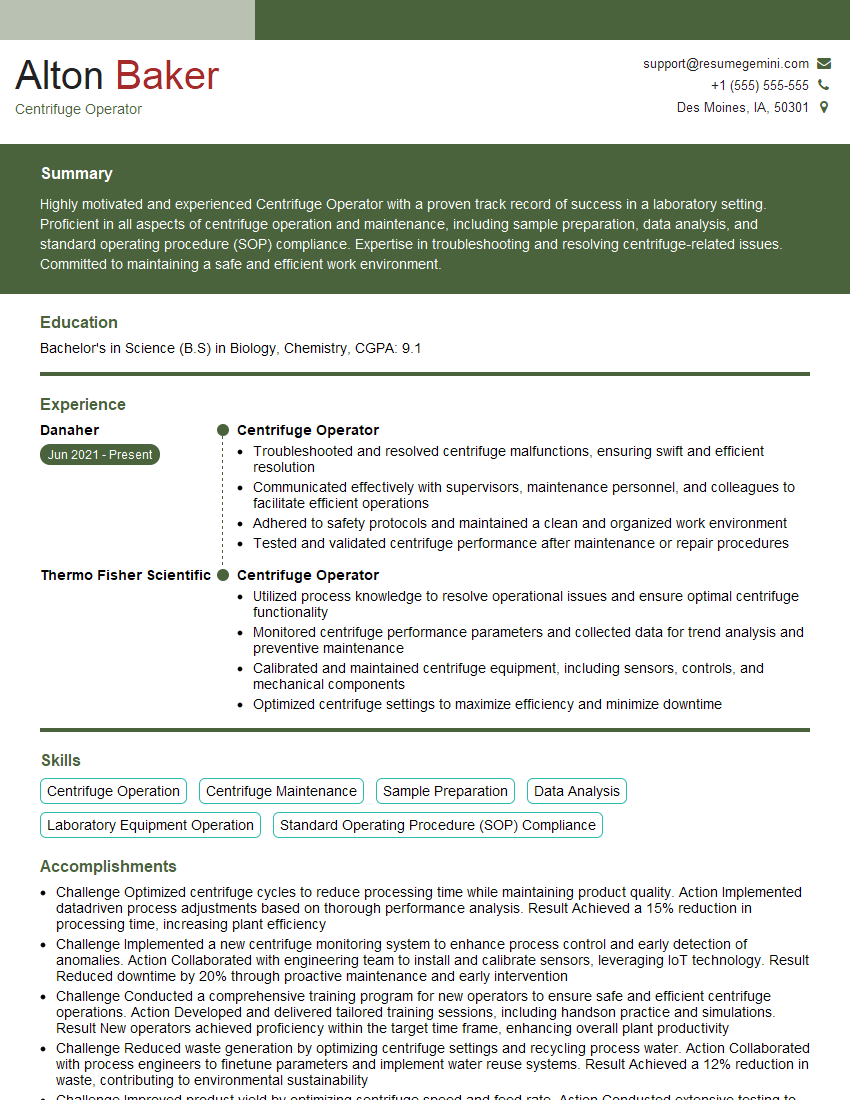
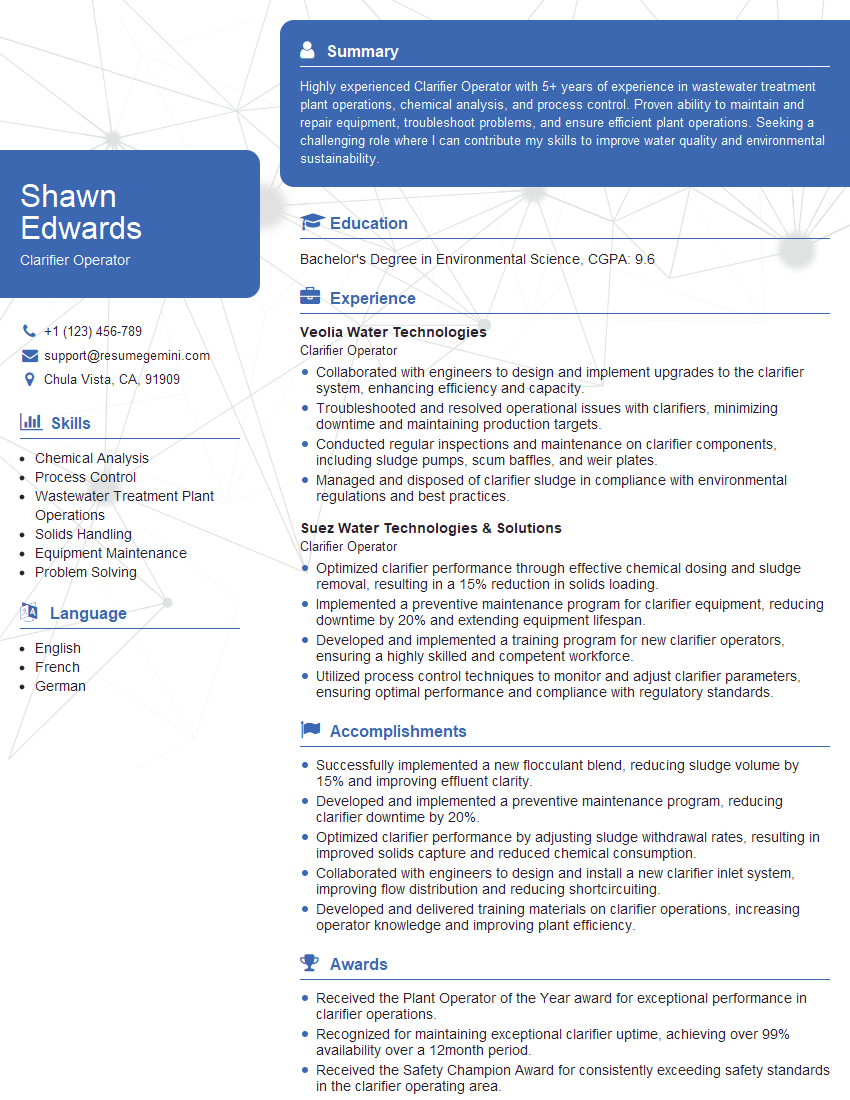
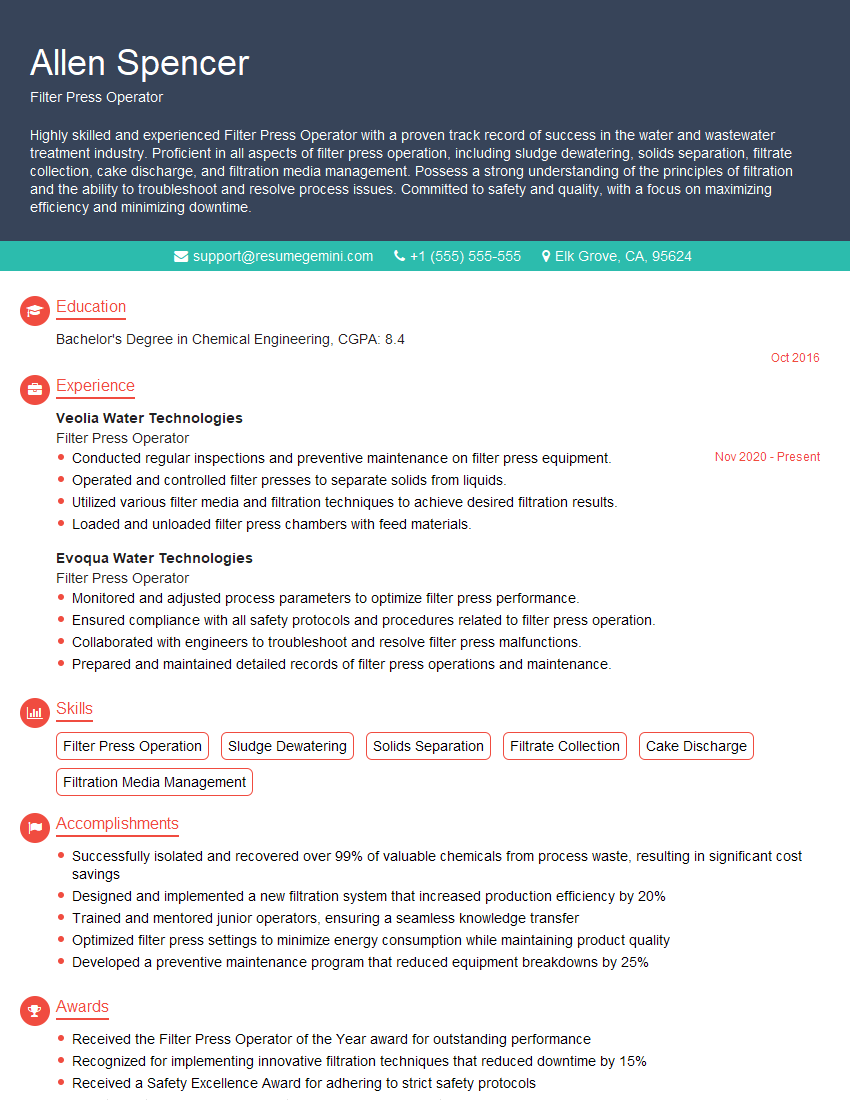
Mastering Separating Machine Operation opens doors to exciting career opportunities within various industries, offering excellent potential for growth and specialization. To maximize your job prospects, it’s essential to create a compelling and ATS-friendly resume that highlights your skills and experience effectively. ResumeGemini is a trusted resource that can help you build a professional and impactful resume, ensuring your qualifications stand out. Examples of resumes tailored to Separating Machine Operation are available to help you get started. Invest time in crafting a strong resume – it’s your first impression with potential employers.
Explore more articles
Users Rating of Our Blogs
Share Your Experience
We value your feedback! Please rate our content and share your thoughts (optional).
What Readers Say About Our Blog
To the interviewgemini.com Webmaster.
Very helpful and content specific questions to help prepare me for my interview!
Thank you
To the interviewgemini.com Webmaster.
This was kind of a unique content I found around the specialized skills. Very helpful questions and good detailed answers.
Very Helpful blog, thank you Interviewgemini team.