Every successful interview starts with knowing what to expect. In this blog, we’ll take you through the top Hunting Etiquette interview questions, breaking them down with expert tips to help you deliver impactful answers. Step into your next interview fully prepared and ready to succeed.
Questions Asked in Hunting Etiquette Interview
Q 1. Describe the principles of fair chase.
Fair chase embodies the ethical pursuit of game animals, emphasizing a sporting challenge and respecting the animal’s inherent wildness. It’s about a level playing field, ensuring the hunter doesn’t have an unfair advantage that negates the animal’s natural survival instincts.
- No technological advantage: This means avoiding the use of technology that significantly increases the hunter’s odds of success beyond what’s considered a fair test of skill, like high-powered rifles in close-range situations or using baiting techniques that heavily attract animals.
- Respect for the animal’s habitat: Hunters should respect the animal’s natural environment and avoid activities that disrupt its natural behavior or habitat.
- Ethical hunting methods: The method of hunting employed should be consistent with the spirit of fair chase. For example, using a bow and arrow for deer hunting would be consistent with fair chase, whereas using a high-powered rifle from a vehicle at close range is not.
- Skill and judgment: A fair chase emphasizes the hunter’s skills in tracking, stalking, and marksmanship. It’s not simply about killing an animal; it’s about the challenge and the respect for the animal.
For example, imagine a hunter using a drone to locate deer from a significant distance, then using a high-powered rifle to shoot them from a concealed position. This is clearly not a fair chase. In contrast, a hunter who tracks a deer for hours, utilizing their skills and knowledge of the animal’s behavior, before taking a well-placed shot, demonstrates a fair chase approach.
Q 2. Explain the importance of obtaining proper hunting licenses and permits.
Obtaining proper hunting licenses and permits is crucial for several reasons: it’s legally mandated, supports conservation efforts, and ensures responsible hunting practices.
- Legal Compliance: Hunting without a license is illegal and can result in substantial fines or even jail time. Licenses verify that you have met the required training and understand the regulations.
- Conservation Funding: License fees and permit revenue directly fund wildlife management and conservation programs. This money is essential for habitat preservation, research, and managing wildlife populations.
- Population Management: Hunting regulations, often determined by licensing and permit systems, help control wildlife populations to ensure healthy ecosystems and prevent overgrazing or other environmental damage.
- Safety and Accountability: License requirements often include hunter safety courses, promoting responsible gun handling and ethical hunting practices. The licensing system helps track hunters and ensures accountability.
Think of it like a driver’s license: you need one to legally operate a vehicle, and it ensures you understand the rules of the road. Similarly, a hunting license demonstrates your understanding of hunting regulations and commitment to responsible hunting.
Q 3. How would you handle a situation where you accidentally trespass on private land?
Accidental trespassing is a serious issue in hunting. The most important thing is to immediately cease all hunting activities and leave the property peacefully.
- Do not shoot or hunt: Immediately stop hunting and secure your firearm.
- Leave the property immediately: Retrace your steps as quietly as possible and leave the property without causing any further disturbance.
- Locate the landowner: Identify the landowner using property records or contacting local authorities if needed. It’s crucial to contact the landowner to apologize for the trespass.
- Apologize sincerely: Express your sincere apologies for the intrusion and explain how the trespass occurred. Avoid making excuses.
- Offer compensation if appropriate: Depending on the situation, offering to compensate for any damages caused could be a thoughtful gesture.
- Respect their decision: If the landowner is upset, respect their feelings and avoid confrontation. Their feelings are completely understandable.
For example, if you inadvertently cross a property line while tracking an animal, immediately cease hunting, exit the property, and contact the landowner. This approach demonstrates respect and responsibility, minimizing any potential negative impact.
Q 4. What are the ethical considerations of using hunting technology (e.g., trail cameras)?
Hunting technology, such as trail cameras, can be both beneficial and ethically problematic, depending on how it’s used.
- Ethical Use: Trail cameras can be used to monitor animal populations, study animal behavior, or scout for hunting locations without significantly altering the natural behavior of the animals. Using them to simply find animals and then kill them is not in the spirit of fair chase.
- Unethical Use: Using trail cameras to locate animals and then artificially manipulate their behavior (e.g., baiting or using calls to lure them to a specific kill zone) would be unethical. It eliminates the challenge inherent in hunting and fundamentally changes the animal’s behavior and natural instincts.
- Data privacy: Placing trail cameras on private land without the landowner’s permission is a violation of privacy and potentially illegal.
- Transparency: When submitting for hunting records or awards, it’s crucial to be transparent about any technology used in your hunting process.
For instance, using a trail camera to determine the general location of deer and then employing fair chase methods to hunt them ethically is acceptable. However, using a trail camera to pinpoint the exact location of a deer and then shooting it from a hidden position is not ethically sound.
Q 5. Explain the concept of ‘Leave No Trace’ in the context of hunting.
‘Leave No Trace’ (LNT) principles apply to hunting just as they do to any outdoor activity. It emphasizes minimizing your impact on the environment, leaving it as pristine as you found it.
- Pack it in, pack it out: Carry out all trash, including spent ammunition casings and packaging materials.
- Minimize campfire impact: If you build a campfire, keep it small, use existing fire rings if available, and ensure it’s completely extinguished before leaving.
- Respect wildlife: Avoid disturbing animals or their habitats, and keep a safe distance.
- Travel and camp on durable surfaces: Avoid trampling vegetation by sticking to established trails or durable surfaces.
- Leave what you find: Don’t remove or damage natural features, including plants, rocks, or artifacts.
An example of following LNT principles is carrying a portable toilet rather than burying waste, carefully burying the animal’s remains properly according to local regulations, and packing out all trash including empty food containers and ammo casings.
Q 6. How do you ensure the humane treatment of harvested animals?
Ensuring humane treatment of harvested animals is paramount. This involves a swift and clean kill, followed by proper field dressing and handling.
- Accurate shot placement: Aim for a vital organ to ensure a quick and humane kill.
- Immediate dispatch: Once the animal is down, use a proper method of dispatch (like a quick, well-placed follow-up shot or other approved methods) to ensure it doesn’t suffer.
- Proper field dressing: Field dressing should be done cleanly and efficiently to prevent contamination and spoilage. This is also a matter of respect for the animal.
- Respectful handling: Handle the carcass with respect and care during transportation and processing.
For instance, a hunter using an appropriate caliber of weapon and ensuring a clean shot placement minimizes suffering, and respectful handling of the carcass throughout the process is essential.
Q 7. Describe proper firearm safety procedures during a hunting trip.
Firearm safety is paramount during any hunting trip. It’s crucial to treat every firearm as if it were loaded.
- Treat every gun as if it were loaded: This is the cardinal rule of firearm safety. Never assume a firearm is unloaded.
- Always point the muzzle in a safe direction: Never point a firearm at anything you don’t intend to shoot.
- Keep your finger off the trigger until ready to shoot: Only place your finger on the trigger immediately before aiming and firing.
- Be sure of your target and beyond: Always identify your target clearly and be aware of what lies beyond it to prevent accidental shootings.
- Unload firearms when not in use: Unload firearms when transporting them, crossing fences, or during any period when they are not being actively used for hunting.
- Store firearms safely: Store firearms securely in gun safes or in other appropriate locations to prevent accidental discharge.
Always double-check that your firearm is safe, unloaded or ready to fire before you begin hunting. Always maintain a safe zone around yourself and fellow hunters.
Q 8. How would you respond to a hunting accident?
Responding to a hunting accident requires immediate, calm action. First priority is ensuring the safety of all involved. This means immediately calling emergency services (911 in the US) and providing them with your precise location.
Next, assess the injured person’s condition and administer first aid to the best of your ability. If it’s a firearm-related injury, prioritize controlling bleeding and stabilizing the casualty. If the injury involves an animal attack, consider immediate steps like removing any constricting elements.
Stay with the injured person until help arrives. Provide any information you have about the circumstances surrounding the accident, including the type of firearm used, location, weather conditions, and any other relevant factors. Never move the injured person unless absolutely necessary to avoid further harm.
Following the emergency response, collaborate fully with law enforcement and any investigating agencies. Maintain accurate records, and be truthful in your statements. Remember, your actions in the immediate aftermath greatly impact the well-being of the injured and the course of any investigation.
Q 9. What are the legal ramifications of violating hunting regulations?
Violating hunting regulations can result in a range of legal penalties, depending on the severity and jurisdiction. These can include hefty fines, suspension or revocation of hunting licenses, community service, and even jail time in serious cases.
Common violations include hunting out of season, exceeding bag limits, hunting without a license, hunting on private property without permission, using illegal hunting methods (such as baiting in prohibited areas or using prohibited weapons), or failing to properly tag harvested animals.
The consequences are more severe for repeat offenders. For example, a first offense might result in a warning or a small fine, while a subsequent offense could lead to significantly higher fines and license revocation. Poaching, which is illegal hunting or killing of wildlife, often carries the harshest penalties due to its detrimental impact on wildlife populations. Always adhere to all local, state, and federal hunting regulations. Checking the specific regulations for your area is crucial before embarking on any hunt.
Q 10. Explain the importance of understanding wildlife behavior when hunting.
Understanding wildlife behavior is paramount for safe and ethical hunting. It allows you to anticipate animal movements, select appropriate hunting strategies, and enhance your chances of a successful, ethical harvest. Knowing the animal’s natural habits, such as feeding patterns, mating seasons, and typical travel routes increases your chances of a successful hunt while minimizing disturbance to other animals in the area.
For example, whitetail deer are most active during dawn and dusk. Understanding this allows you to position yourself strategically for a better chance of observation and a clean shot. Similarly, knowing elk bugle during mating season helps you locate them through their calls.
Ignoring an animal’s behavior can lead to dangerous situations. Approaching a mother bear with cubs, for example, could result in a defensive attack. Similarly, hunting in areas where animals are feeding or resting can disrupt their natural behaviors and compromise their well-being. Respecting wildlife and their habitats is a cornerstone of responsible hunting.
Q 11. How would you educate a new hunter about ethical hunting practices?
Educating a new hunter about ethical hunting practices starts with instilling a deep respect for wildlife and their habitats. This includes emphasizing the importance of following all hunting regulations, prioritizing safety, and understanding the role of hunters in wildlife conservation.
I’d teach them the importance of proper shot placement to ensure a clean, quick kill and minimize the animal’s suffering. Tracking and recovering downed game is a crucial aspect of ethical hunting; ensuring a proper follow-up is essential for ethical practice and to avoid wounding an animal without recovering it.
We’d cover topics like firearm safety, proper use of hunting equipment, and understanding different hunting techniques for various game. I’d also emphasize responsible hunting behavior – respecting private property, leaving no trace behind (cleaning up after yourself), and promoting positive interactions with other hunters and outdoor enthusiasts. Mentorship and hands-on training are critical components to instill ethical hunting practices in new hunters.
Q 12. What is your approach to conservation efforts while hunting?
My approach to conservation while hunting centers around the idea of sustainable use. This means carefully managing harvests to maintain healthy wildlife populations. I support initiatives like purchasing hunting licenses, which often directly fund conservation efforts. I also actively participate in habitat restoration projects and support organizations that promote responsible wildlife management.
I actively participate in programs like hunter-funded wildlife management, which directly contributes to population management and habitat preservation. I always strive to make ethical hunting choices that support wildlife conservation efforts. This includes following bag limits and hunting only what is needed or permitted, ensuring that my hunting activities don’t harm the environment or endanger other wildlife.
Furthermore, I support organizations dedicated to habitat preservation and wildlife research. It’s important to remember that ethical hunting is not just about the hunt itself, but also about playing a role in safeguarding wildlife and their environments for future generations.
Q 13. How do you identify the appropriate hunting equipment for different game animals?
Selecting the right hunting equipment depends entirely on the game being hunted. For small game like rabbits or squirrels, a .22 caliber rifle or a shotgun with appropriate shot size is generally sufficient. For larger game such as deer or elk, a high-powered rifle with appropriate caliber and bullet type is necessary.
Bowhunting requires specific considerations: bow draw weight must be sufficient to ethically harvest the animal, and arrow selection (broadhead type and weight) is crucial. For waterfowl, a shotgun with steel shot (where mandated) is essential, while turkey hunting might involve a shotgun with a tighter choke for longer-range shots.
Beyond firearms, you need appropriate clothing for the conditions and terrain – camouflage to blend in, waterproof outerwear if hunting in wet weather, and sturdy footwear are essential. Other gear includes optics (binoculars and a spotting scope for long-range observation), a hunting knife for field dressing, and a game bag or cart for carrying your harvest. Always check local regulations for permitted and prohibited equipment before the hunt.
Q 14. How do you handle a situation with an aggressive animal encounter?
Encounters with aggressive animals are serious and require careful, deliberate responses. The first priority is always safety. Avoid direct confrontation whenever possible.
If you encounter a potentially dangerous animal, make yourself look larger. Raise your arms, wave your jacket, and make noise to scare it away. Never turn your back or run; maintain eye contact, but don’t stare aggressively. Slowly back away while keeping an eye on the animal.
If the animal attacks, use any available means to defend yourself. Bear spray is extremely effective in deterring many predators. If you are carrying a firearm, and it is legal to do so, and you feel you are in immediate danger, then utilize it as a last resort. After the encounter, report the incident to the relevant wildlife authorities. Remember, prevention is key; understanding an animal’s habitat and behavior minimizes the likelihood of dangerous encounters.
Q 15. Describe appropriate field dressing techniques.
Field dressing is the process of cleaning and preparing a harvested animal for transport and butchering. It’s crucial for maintaining meat quality and preventing spoilage. Proper techniques ensure a clean and safe process.
- Safety First: Always wear gloves to protect yourself from potential pathogens. Use a sharp, clean knife.
- Initial Steps: Begin by making a quick, clean incision along the belly, avoiding the intestines. Carefully cut around the anus and remove the reproductive organs.
- Removing the Intestines: Gently separate the intestines from the abdominal wall, being extremely careful not to puncture them. This prevents contamination of the meat.
- Removing the Internal Organs: Carefully remove the liver, lungs, heart, and kidneys. Keep them separate and inspect for signs of disease. Avoid puncturing the gall bladder.
- Final Cleaning: Thoroughly wash the carcass with cold water. A pressure washer is ideal. Rinse away any remaining blood or debris.
Example: Imagine you’ve harvested a deer. You’ll need to carefully follow these steps in a clean environment to maintain the quality of the meat. Poor technique can result in spoilage, and potentially render the meat unsafe for consumption.
Career Expert Tips:
- Ace those interviews! Prepare effectively by reviewing the Top 50 Most Common Interview Questions on ResumeGemini.
- Navigate your job search with confidence! Explore a wide range of Career Tips on ResumeGemini. Learn about common challenges and recommendations to overcome them.
- Craft the perfect resume! Master the Art of Resume Writing with ResumeGemini’s guide. Showcase your unique qualifications and achievements effectively.
- Don’t miss out on holiday savings! Build your dream resume with ResumeGemini’s ATS optimized templates.
Q 16. Explain the importance of accurate shot placement for ethical hunting.
Accurate shot placement is paramount for ethical hunting. It ensures a quick, clean kill, minimizing the animal’s suffering. A poorly placed shot can lead to a prolonged, painful death, which is unacceptable to any responsible hunter.
- Vital Organ Targeting: Focus on vital organs, such as the heart and lungs, for a swift kill. This requires understanding animal anatomy and shot placement depending on the animal and the hunting scenario.
- Shot Angle: Avoid shooting at animals at extreme angles, as this increases the risk of a non-lethal or difficult-to-recover shot. Quarter-on shots are generally preferred.
- Range and Weapon Capabilities: Know your weapon’s limitations and only shoot at distances you’re confident you can make a clean kill.
- Environmental Factors: Consider factors like wind, light, and obstructions that may affect your shot.
Example: If you’re hunting whitetail deer, aiming for the heart/lung area from an appropriate distance and angle is crucial to ensure a humane harvest. A shot that simply grazes the animal will cause unnecessary suffering.
Q 17. How would you react to another hunter violating hunting ethics?
Witnessing a violation of hunting ethics requires a measured and responsible response. Direct confrontation can be dangerous, so diplomacy is key. I’d approach the situation based on the severity of the violation.
- Minor Violations: For minor infractions (like improper disposal of game), I would politely address the issue and explain the proper procedure. An educational approach might be sufficient.
- Serious Violations: If I witness illegal hunting activities such as poaching or shooting out of season, I’d first ensure my own safety. I would then discreetly document the violation – time, location, description, and license plate number if possible. I’d then immediately report the incident to the local game warden or appropriate authorities.
Example: If I saw someone leaving a gutted deer in a ditch without attempting proper field dressing, I’d approach them respectfully and discuss the issues associated with leaving game like this. However, if I saw them shooting a protected species, I would immediately document the incident and contact the authorities.
Q 18. What steps should be taken to ensure proper meat storage after a hunt?
Proper meat storage is essential for preserving the quality and safety of harvested game. Rapid cooling is the key to preventing spoilage.
- Immediate Cooling: As soon as possible after field dressing, begin cooling the meat. This may involve submerging the carcass in a cold stream or placing it in a cooler with ice.
- Refrigeration: Transport the meat to a refrigerator as quickly as possible. Aim for temperatures below 40°F (4°C).
- Freezing: For long-term storage, freeze the meat in airtight packaging, removing as much air as possible to minimize freezer burn. Label packages with the date and type of meat.
- Processing: Consider processing the meat (e.g., butchering, grinding) quickly after harvesting to ensure optimal quality and safety.
Example: After harvesting a deer, I would immediately get it into a cooler with plenty of ice, and ideally start the transportation to refrigeration within a few hours.
Q 19. How do you identify and report poaching activities?
Identifying and reporting poaching requires vigilance and a clear understanding of local hunting regulations. Poaching undermines wildlife conservation efforts and must be addressed.
- Observe Carefully: Note any suspicious activities, such as hunters operating outside legal hunting hours, using illegal hunting methods (e.g., snares), or harvesting protected species.
- Document Discrepancies: Look for anything inconsistent with legal hunting practices. This could include the number of animals taken or the types of weapons used.
- Gather Evidence: Carefully and safely record observations, including time, date, location, and descriptions of individuals involved. Take pictures if possible without jeopardizing your own safety.
- Report to Authorities: Immediately report suspected poaching to your local game warden or wildlife agency. Provide as much detail as possible.
Example: If I saw someone hunting deer at night using a spotlight, I would note the time, location, description of the vehicle and individuals, take photos if possible and immediately report it to the game warden. Poaching threatens the sustainability of our wildlife populations.
Q 20. Explain the importance of respecting private property rights while hunting.
Respecting private property rights is fundamental to ethical hunting. It’s crucial to ensure you have the proper permission before entering any land that isn’t publicly accessible.
- Obtain Permission: Always ask for permission from the landowner before hunting on their property. This is a courtesy and legally necessary.
- Respect Posted Signs: Adhere to all posted signs regarding hunting restrictions or prohibited areas. ‘No Trespassing’ signs are legally binding.
- Minimize Impact: Be respectful of the landowner’s property. Avoid damaging fences, gates, or crops. Leave the land as you found it.
- Liability: Understand your liability and the consequences of hunting without permission. Damages to the property and injuries can result in serious legal repercussions.
Example: Before hunting on any private land, always contact the landowner, explain your intentions, and obtain written permission. This ensures a smooth hunting experience and avoids potential legal issues.
Q 21. Describe the different types of hunting licenses and their requirements.
Hunting licenses vary greatly depending on location (state or province) and the type of game being hunted. They’re designed to manage wildlife populations and ensure sustainable hunting practices.
- General Hunting License: This is typically required for hunting most game animals within a specific geographic region. Requirements vary, but generally involve passing a hunter safety course and providing personal information.
- Specific Game Licenses: Many jurisdictions require additional licenses or tags for specific game animals such as deer, elk, or waterfowl. These are often limited to control hunting pressure.
- Non-Resident Licenses: Hunters from other states or provinces may need special licenses, often with higher fees, to hunt within a given area.
- Special Permits: Some hunts may require special permits, particularly if dealing with endangered or threatened species.
Example: In many states, you’ll need a general hunting license, a deer tag, and perhaps a waterfowl stamp to hunt deer and ducks. Always check your local regulations to ensure you’re compliant with all legal requirements before participating in a hunt.
Q 22. What is your understanding of hunting regulations concerning bag limits and seasons?
Hunting regulations, specifically bag limits and seasons, are crucial for wildlife conservation. Bag limits define the maximum number of animals a hunter can legally harvest in a given period, preventing overhunting and ensuring sustainable populations. Hunting seasons, similarly, dictate the specific timeframe when hunting particular species is permitted. These restrictions are carefully determined by wildlife agencies based on population studies, habitat conditions, and the need to maintain a healthy balance within the ecosystem.
For example, the bag limit for deer might be one buck per season in a particular area, while the season itself could last only a few weeks in the fall. These limits are often adjusted annually based on the most up-to-date population assessments. Failure to comply with bag limits and season dates can result in hefty fines and the loss of hunting privileges.
Understanding these regulations requires checking with your local wildlife agency for specific information about your hunting location. Always carry a copy of the current hunting regulations while hunting, and if ever unsure, err on the side of caution and contact the agency.
Q 23. How would you handle a disagreement with another hunter concerning hunting practices?
Disagreements among hunters regarding hunting practices are best addressed through calm, respectful communication. Safety and ethical considerations should always take precedence. My approach involves:
- Direct and respectful dialogue: Approaching the other hunter calmly and expressing concerns clearly, focusing on the specific issue, not on personal attacks.
- Referencing regulations: Pointing to relevant hunting regulations to clarify the correct course of action. If the disagreement involves a violation of the law, I would inform the proper authorities.
- Mediation (if necessary): If direct communication fails, seeking mediation from a neutral third party, such as a hunting guide or wildlife officer, could help find common ground.
- Avoiding escalation: Remaining calm and avoiding aggressive or confrontational behavior is crucial. Safety is paramount, and escalating a disagreement could lead to dangerous situations.
For instance, if someone is hunting too close to my stand or neglecting safety protocols, I would politely address the issue. If the behavior continues, I would contact the land owner or game warden.
Q 24. Describe the proper use of tree stands and blinds for safety.
Tree stands and blinds significantly enhance hunting opportunities, but safety must be the top priority. Proper use involves:
- Thorough inspection: Before each use, meticulously inspect the tree stand or blind for any damage or wear. Replace or repair any questionable components.
- Secure harness use: Always wear a full-body safety harness, connected to the tree or stand via a lifeline. This harness should be properly adjusted and worn consistently.
- Safe ascent and descent: Use a climbing method that reduces the risk of falling, such as a climbing stick or steps, and maintain three points of contact (two hands and one foot, or two feet and one hand) at all times.
- Stable platform: Ensure the stand or blind is securely fastened and stable. Check the ground below for any hazards before entering or exiting.
- Weather awareness: Avoid using tree stands or blinds during inclement weather, especially high winds or storms.
Failing to use safety harnesses is a leading cause of hunting accidents. Treat every climb and descent with utmost care, viewing it as a serious undertaking.
Q 25. Explain the ethical considerations of using bait to hunt.
The ethical use of bait in hunting is a complex issue and often highly regulated. While some jurisdictions allow it under specific circumstances, many consider it unethical for several reasons:
- Unfair advantage: Baiting creates an artificial advantage for hunters, attracting animals to a specific location, potentially resulting in the harvest of animals that would not have been hunted otherwise.
- Concentration of animals: It can lead to the concentration of animals, increasing the risk of disease transmission and making them more vulnerable to predators.
- Habitat disruption: The placement of bait can negatively impact the natural foraging behaviors of animals and disrupt the ecosystem.
Even in areas where baiting is legal, it’s crucial to consider the ethical implications and to use it responsibly. One needs to confirm the legality of baiting in the specific hunting area and follow all guidelines closely. Always prioritize fair chase and the well-being of the animal population.
Q 26. How do you ensure your hunting activity does not negatively impact non-target species?
Minimizing the impact on non-target species is a fundamental aspect of ethical hunting. This can be achieved through:
- Species identification: Accurate identification of the target animal is paramount to avoid accidental shooting of non-target species.
- Shot placement: Precise shot placement is crucial for a clean and quick kill, minimizing suffering and avoiding injury to other animals.
- Safe ammunition selection: Choosing appropriate ammunition can reduce the risk of ricochets or overpenetration, which could harm non-target animals.
- Responsible disposal: Proper disposal of carcasses helps prevent scavenging by other animals that could be injured by consumed lead fragments.
- Habitat consideration: Hunting in a manner that minimizes disturbance to the overall habitat helps protect non-target species.
For example, using a rifle with appropriate caliber and bullet type for the specific game animal reduces the risk of a bullet passing through the target and injuring another creature.
Q 27. Describe your knowledge of different hunting techniques and their ethical implications.
Various hunting techniques exist, each with ethical considerations:
- Still hunting: Moving slowly and quietly through the woods, relying on stealth and observation. This is generally considered very ethical, promoting a fair chase.
- Stalking: Approaching game animals unseen, requiring skill and patience. Ethically, it requires careful observation to ensure a clean shot and responsible harvest.
- Spot and stalk: Locating game from a distance and then closing in for a shot. The ethical implications here are similar to stalking.
- Driving: Using a group of hunters to push game towards waiting hunters. Ethical considerations focus on safety and avoiding excessive pressure on the animals.
- Calling: Using calls to attract animals. Ethical implications include considering whether this is considered a ‘fair chase’ depending on local regulations and personal ethics.
The core ethical principle across all techniques is respecting the animal, ensuring a clean kill, and minimizing suffering. Techniques that create an unfair advantage or unnecessarily endanger the animal should be avoided.
Q 28. How would you assess the environmental impact of your hunting activities?
Assessing the environmental impact of hunting activities is crucial for responsible wildlife management. This involves considering:
- Habitat disturbance: Minimize disruption to vegetation, water sources, and nesting areas. Avoid excessive movement through sensitive habitats.
- Waste disposal: Proper disposal of carcasses, including field dressing and packaging, prevents contamination of water sources and habitats.
- Lead ammunition: Consider the use of non-toxic ammunition to reduce lead contamination of the environment.
- Sustainable hunting practices: Following bag limits and season regulations helps ensure sustainable populations and prevents overhunting.
- Long-term effects: Consider the long-term impacts on the ecosystem and animal populations. This includes assessing the overall health and biodiversity of the region.
For instance, the use of non-toxic bullets mitigates the risk of poisoning other animals that might consume lead fragments from fallen game. By carefully considering these factors, hunters can minimize their environmental impact and contribute to the health of the ecosystem.
Key Topics to Learn for Hunting Etiquette Interview
- Respect for Wildlife and the Land: Understanding ethical hunting practices, including fair chase, responsible harvest, and conservation efforts. Practical application: Demonstrate your knowledge of sustainable hunting practices and adherence to regulations.
- Safety Procedures and Regulations: Knowledge of firearm safety, hunting regulations (state/federal), and the importance of hunter education. Practical application: Explain how you ensure safety in various hunting scenarios and how you stay up-to-date on relevant laws.
- Landowner Relations and Permission: Understanding the importance of obtaining permission before hunting on private land, respecting property boundaries, and maintaining positive relationships with landowners. Practical application: Describe your experience in securing hunting permissions and navigating potential conflicts.
- Hunter-Gatherer Collaboration and Teamwork: Effective communication and cooperation within a hunting party, including roles, responsibilities, and safety protocols. Practical application: Provide examples of how you’ve contributed to a successful hunting group, highlighting collaborative problem-solving.
- Game Handling and Processing: Ethical and efficient field dressing, proper care of harvested game, and adherence to waste disposal regulations. Practical application: Describe your proficiency in game handling and your understanding of meat preservation techniques.
- Ethical Considerations and Fair Chase: Understanding the principles of fair chase and the ethical implications of hunting, emphasizing respect for animals and the environment. Practical application: Discuss situations where ethical dilemmas might arise during a hunt and how you would address them.
Next Steps
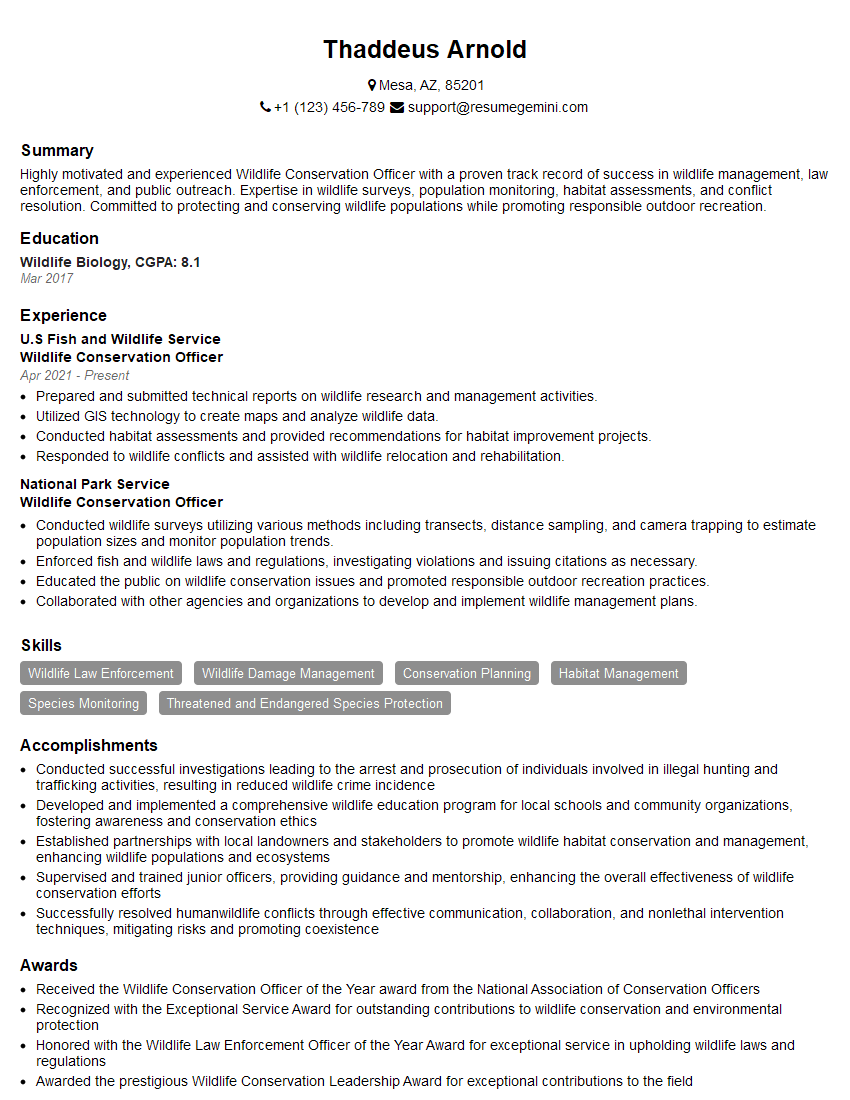
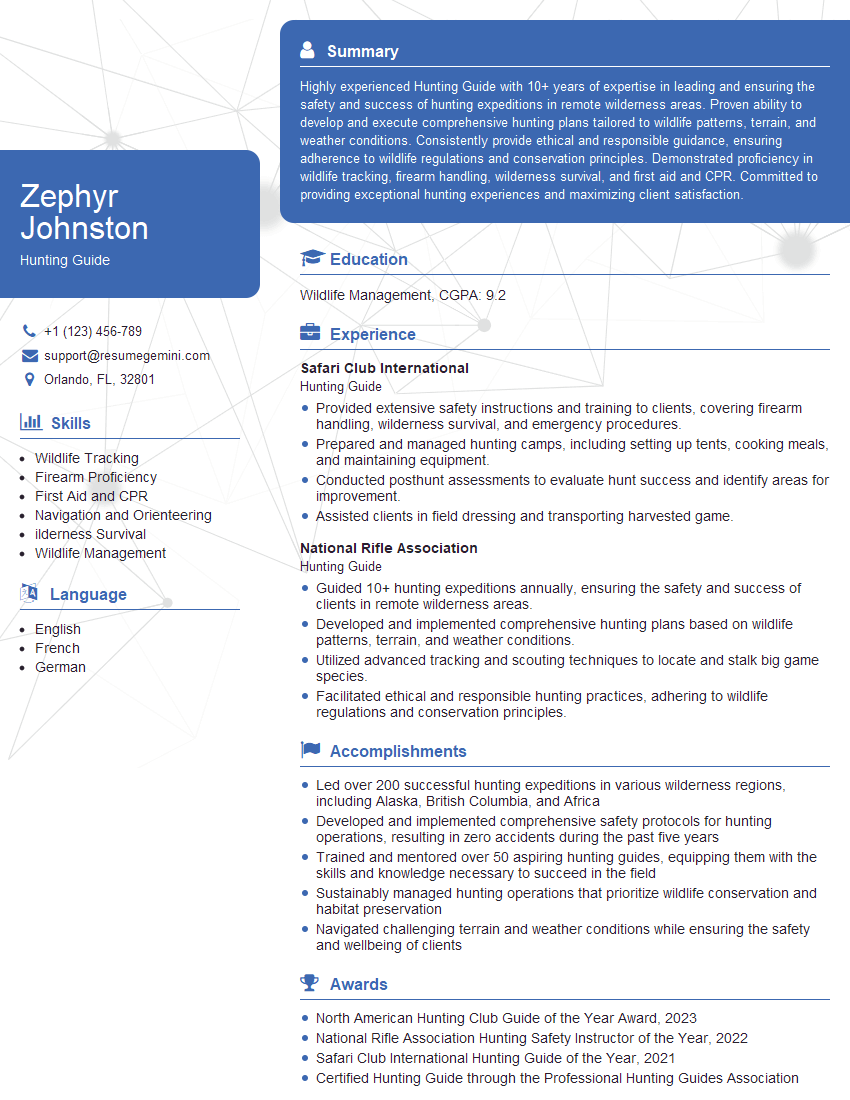
Mastering Hunting Etiquette isn’t just about passing an interview; it’s about demonstrating your commitment to responsible and ethical hunting practices, which are increasingly valued in the field. A strong understanding of these principles will significantly enhance your career prospects. To make a compelling impression, focus on building an ATS-friendly resume that highlights your skills and experience. ResumeGemini is a trusted resource to help you create a professional and impactful resume that gets noticed. We provide examples of resumes tailored to the Hunting Etiquette field to guide you through the process.


Explore more articles
Users Rating of Our Blogs
Share Your Experience
We value your feedback! Please rate our content and share your thoughts (optional).
What Readers Say About Our Blog
To the interviewgemini.com Webmaster.
Very helpful and content specific questions to help prepare me for my interview!
Thank you
To the interviewgemini.com Webmaster.
This was kind of a unique content I found around the specialized skills. Very helpful questions and good detailed answers.
Very Helpful blog, thank you Interviewgemini team.