The thought of an interview can be nerve-wracking, but the right preparation can make all the difference. Explore this comprehensive guide to Radiation Detection and Instrumentation interview questions and gain the confidence you need to showcase your abilities and secure the role.
Questions Asked in Radiation Detection and Instrumentation Interview
Q 1. Explain the principles of operation of a Geiger-Müller counter.
The Geiger-Müller (GM) counter is a classic radiation detector renowned for its simplicity and robustness. It operates on the principle of gas ionization. Imagine a sealed tube filled with a low-pressure inert gas, like argon. A high voltage is applied between a central anode wire and the outer cathode. When ionizing radiation (alpha, beta, or gamma) enters the tube, it interacts with the gas molecules, knocking off electrons and creating ion pairs (positive ions and free electrons).
These ion pairs are then accelerated by the high voltage. The electrons are accelerated towards the anode, and the positive ions towards the cathode. As the electrons accelerate, they cause further ionization through collisions with other gas molecules, leading to an avalanche effect – a cascade of ionizations. This avalanche produces a detectable pulse of current.
This pulse, amplified and processed, is what the counter registers as a ‘count,’ indicating the detection of a single radiation event. Because each ionizing event creates a pulse regardless of its energy, GM counters are not particularly good at energy discrimination; they simply count the events.
In essence: Radiation → Ionization → Avalanche effect → Current pulse → Count
Q 2. Describe the different types of radiation detectors and their applications.
The world of radiation detectors is diverse, with each type excelling in specific applications. Here are a few key examples:
- Geiger-Müller counters: Excellent for simple radiation detection, often used in portable survey meters for monitoring radiation levels. Think of them as the workhorses for general radiation detection – simple, robust and readily available.
- Scintillation detectors: These use scintillating materials that emit light when interacting with radiation. The light is then detected by a photomultiplier tube (PMT) converting it into an electrical signal. They offer good energy resolution, making them suitable for identifying different types of radiation and measuring their energies. Applications include nuclear medicine, spectroscopy, and high-energy physics experiments.
- Semiconductor detectors (e.g., HPGe, Si(Li)): These detectors operate based on the generation of electron-hole pairs in a semiconductor material upon radiation interaction. They provide exceptional energy resolution, which is critical for precise energy measurements and identification of isotopes. They find applications in nuclear safeguards, environmental monitoring, and material analysis.
- Ionization chambers: These measure the amount of ionization directly, usually for measuring high radiation levels. They are often employed for radiation safety monitoring around accelerators or reactors.
- Proportional counters: These detectors amplify the initial ionization signal, offering better sensitivity and energy resolution than GM counters but lower than semiconductor detectors. They are frequently used in specialized applications like alpha particle detection.
The choice of detector depends heavily on the specific application. For instance, high-resolution spectroscopy would necessitate a semiconductor detector, whereas a quick radiation survey would likely employ a Geiger counter.
Q 3. What are the advantages and disadvantages of scintillation detectors?
Scintillation detectors, while powerful, have their strengths and weaknesses:
- Advantages:
- Good energy resolution: They can differentiate between different radiation energies, which is crucial for identifying isotopes and analyzing radiation spectra.
- High detection efficiency: They are often very efficient at detecting radiation across a wide energy range.
- Wide range of applications: They are used in various fields from medical imaging to nuclear physics.
- Relatively simple design (compared to semiconductors): Making them relatively inexpensive and easy to maintain compared to some higher performance systems.
- Disadvantages:
- Sensitivity to temperature and environmental factors: The performance can vary significantly with temperature changes, requiring careful environmental control.
- Hygroscopic nature of some scintillators: Certain scintillating materials absorb moisture, affecting their performance and requiring specific handling procedures.
- Afterglow: Some scintillators exhibit afterglow, emitting light for some time after the radiation interaction, which can affect the accuracy of measurements.
- Limited lifespan of PMTs: The photomultiplier tubes that are often used with scintillators can degrade over time requiring replacement.
Q 4. How does a semiconductor detector work?
Semiconductor detectors leverage the properties of semiconductor materials to detect radiation. Imagine a semiconductor material like germanium or silicon. When ionizing radiation interacts with the material, it creates electron-hole pairs – a negatively charged electron and a positively charged hole. These charges are then collected by applying a reverse bias voltage across the detector, creating an electrical signal.
The number of electron-hole pairs generated is proportional to the energy deposited by the radiation in the semiconductor. This relationship allows for precise energy measurements, giving semiconductor detectors their excellent energy resolution. The high purity and specific crystal structure of these materials are crucial for good detector performance.
Think of it like this: the radiation creates tiny electrical sparks in the crystal, and the number of sparks reflects the energy of the radiation. These tiny sparks are then counted and measured to give the overall energy deposition.
Q 5. Explain the concept of dead time in radiation detection.
Dead time refers to the period after a radiation event is detected during which the detector is unable to register another event. It’s like a brief ‘recovery’ period. This occurs because after an initial interaction, some time is needed for the detector to reset itself. The detector is busy processing the first signal and is temporarily insensitive to new events that may occur. This is important because it can lead to underestimation of the true count rate, especially at high radiation levels.
Various types of detectors have different dead times; a GM counter will have a significantly longer dead time than a semiconductor detector. If you’re measuring a very high radiation field and using a counter with a long dead time, you may significantly underestimate the true radiation level.
Corrections for dead time are crucial for accurate measurements, particularly in high-count-rate environments. Several methods exist, including using dead-time correction formulas or employing dedicated dead-time compensating circuitry.
Q 6. What is energy resolution in a radiation detector, and how is it important?
Energy resolution in a radiation detector refers to its ability to distinguish between radiation events of slightly different energies. It is typically expressed as the Full Width at Half Maximum (FWHM) of a peak in the energy spectrum, divided by the energy of that peak, expressed as a percentage.
A detector with good energy resolution will show sharp, well-defined peaks, allowing for accurate identification of isotopes based on their characteristic gamma-ray or X-ray energies. A detector with poor energy resolution will exhibit broad, overlapping peaks, making it difficult to distinguish between closely spaced energies.
High energy resolution is critical for applications requiring precise energy measurements, such as nuclear spectroscopy, environmental monitoring, and material analysis. For example, in nuclear medicine, good energy resolution helps to accurately quantify the amount of a radioisotope present in a patient’s body.
Q 7. How do you calibrate a radiation detector?
Calibrating a radiation detector involves determining the relationship between the detector’s response (e.g., pulse height or count rate) and the energy or activity of the radiation source. This is essential to ensure accurate and reliable measurements.
Calibration typically involves using sources with known energy and activity. For example, a calibration source might contain a specific isotope emitting gamma rays of known energy. The detector’s response to this source is then measured, and a calibration curve is generated. This curve relates the measured signal from the detector to the actual energy or activity of the radiation source. For semiconductor detectors, this might involve a series of sources of known energy and intensity, and the system will be characterized at these energy points to provide a calibration curve. This curve is then used to convert raw data from subsequent measurements into meaningful units like energy (keV) or activity (Bq).
The calibration procedure varies depending on the type of detector and the application. Regular calibration is crucial to maintain the accuracy of measurements, as detector performance can drift over time due to factors such as aging or environmental changes.
Q 8. Describe the process of background radiation subtraction.
Background radiation subtraction is crucial in radiation detection to isolate the radiation from a specific source from the ever-present ambient radiation. Think of it like trying to hear a whisper in a noisy room – you need to filter out the background noise to hear the whisper clearly. In radiation detection, this ‘noise’ is the background radiation, which comes from various natural and artificial sources like cosmic rays, radon gas, and medical procedures.
The process typically involves measuring the radiation level in the absence of the source (the background count). This measurement is then subtracted from the total radiation count measured when the source is present. This difference represents the radiation emitted by the source of interest.
For example, if a detector measures 100 counts per minute (CPM) with the source present and 20 CPM with the source absent (background), then the net count from the source is 80 CPM (100 CPM – 20 CPM). This subtraction is vital for accurate measurement and analysis, especially in low-level radiation detection applications.
Q 9. Explain the concept of shielding in radiation protection.
Shielding in radiation protection is the strategic placement of materials between a radiation source and a person or sensitive equipment to reduce the intensity of radiation exposure. It’s like putting a wall between yourself and a bright light – the wall absorbs or scatters the light, protecting you from its intensity. The effectiveness of a shield depends on the type of radiation, its energy, and the shielding material’s properties.
Different types of radiation require different types of shielding. For example, alpha particles can be stopped by a sheet of paper, while gamma rays require much denser materials like lead or concrete.
Q 10. What are the different types of radiation shielding materials?
The choice of shielding material depends heavily on the type and energy of the radiation. Here are some common examples:
- Lead: Highly effective against gamma rays and X-rays due to its high density and atomic number. It’s often used in X-ray rooms and nuclear medicine facilities.
- Concrete: Cost-effective for shielding against gamma rays and neutrons. Its thickness needs to be carefully calculated based on the radiation energy.
- Water: Good at shielding against neutrons and gamma rays, especially when used in large quantities. Used in nuclear reactors and spent fuel storage pools.
- Steel: Provides good shielding against beta particles and X-rays, often used in conjunction with other materials.
- Plastics (e.g., polyethylene): Effective against low-energy beta particles and neutrons. Often used for shielding weaker beta sources.
The optimal shielding material and its thickness are determined through radiation transport calculations to ensure adequate protection.
Q 11. What are the safety regulations for handling radioactive materials?
Safety regulations for handling radioactive materials are rigorous and vary depending on the specific isotope and its activity. These regulations are generally based on the ALARA principle (As Low As Reasonably Achievable) and aim to minimize exposure to radiation.
Key regulations typically include:
- Licensing and permits: Handling radioactive materials often requires licenses and permits from relevant regulatory bodies.
- Training and competency: Personnel must undergo thorough training on radiation safety procedures, proper handling techniques, and emergency response protocols.
- Personal protective equipment (PPE): This includes radiation monitoring instruments (e.g., Geiger counters, dosimeters), lead aprons, gloves, and specialized clothing to minimize exposure.
- Containment and storage: Radioactive materials must be stored and handled in designated areas with appropriate containment to prevent leaks or spills.
- Waste management: Proper procedures for the safe disposal and management of radioactive waste are crucial.
- Regular monitoring and surveys: Routine monitoring of radiation levels in the work area and personnel dosimetry ensure compliance with safety limits.
Failure to comply with these regulations can result in severe penalties and health consequences.
Q 12. How do you assess the risk associated with radiation exposure?
Assessing the risk associated with radiation exposure involves considering several factors: the type and energy of the radiation, the dose received, the duration of exposure, and the individual’s susceptibility. It’s not simply a matter of the dose alone; the type of radiation plays a crucial role.
Risk assessment usually involves:
- Dose calculation: Determining the amount of radiation absorbed (measured in Sieverts or Gray).
- Biological effects: Considering the potential health effects of the radiation exposure, ranging from no observable effect to severe health problems, including cancer.
- Risk factors: Assessing individual factors like age, health status, and genetic predisposition that might influence susceptibility to radiation effects.
- Probability of harm: Evaluating the likelihood of adverse health effects based on the dose received and individual risk factors.
Risk assessment is a complex process often requiring specialized expertise and sophisticated computational modeling. Regulatory agencies provide guidance and standards for such assessments.
Q 13. Explain the concept of ALARA (As Low As Reasonably Achievable).
ALARA, which stands for As Low As Reasonably Achievable, is a fundamental principle in radiation protection. It emphasizes that radiation exposure should be kept as low as possible while remaining practical and feasible. It’s not about eliminating all radiation exposure, but about optimizing practices to minimize unnecessary exposure.
ALARA is implemented through a combination of strategies:
- Time: Minimize the time spent near a radiation source.
- Distance: Increase the distance from a radiation source. Radiation intensity decreases with the square of the distance (inverse square law).
- Shielding: Utilize appropriate shielding materials to reduce radiation intensity.
For example, in a nuclear power plant, ALARA principles dictate the use of remote handling equipment to minimize worker exposure during maintenance, or the implementation of extra shielding in areas with high radiation levels.
Q 14. What are the different units used to measure radiation?
Several units are used to measure different aspects of radiation:
- Becquerel (Bq): The SI unit of radioactivity, representing one nuclear disintegration per second. It measures the activity of a radioactive source.
- Curie (Ci): An older unit of radioactivity, equivalent to 3.7 × 10¹⁰ Bq.
- Gray (Gy): The SI unit of absorbed dose, representing the amount of energy deposited per unit mass of tissue. It measures the energy absorbed by the material.
- Rad: An older unit of absorbed dose, equivalent to 0.01 Gy.
- Sievert (Sv): The SI unit of equivalent dose and effective dose, accounting for the biological effects of different types of radiation. It weighs the absorbed dose by a radiation weighting factor.
- Rem: An older unit of equivalent dose and effective dose, equivalent to 0.01 Sv.
Understanding these units is critical for interpreting radiation measurements and assessing potential risks. The choice of unit depends on the specific application and what aspect of radiation is being measured.
Q 15. Describe the biological effects of ionizing radiation.
Ionizing radiation’s biological effects stem from its ability to ionize atoms within living cells, disrupting their normal function. This disruption can cause a range of effects, from minor damage that the body easily repairs to severe damage leading to cell death or mutations. The severity depends on several factors including the type and energy of the radiation, the dose received, and the individual’s sensitivity.
Direct effects occur when radiation directly interacts with critical cellular components like DNA, causing strand breaks or other damage. Indirect effects are more common and involve the radiation first ionizing water molecules in the cell, producing free radicals which then damage cellular components. These free radicals are highly reactive and can cause significant damage to DNA, proteins, and lipids.
High doses of radiation can lead to acute radiation syndrome (ARS), characterized by symptoms such as nausea, vomiting, fatigue, and potentially death. Lower doses over extended periods may increase the risk of long-term health problems like cancer, cataracts, and cardiovascular disease. The risk is generally considered to be proportional to the dose received, although individual responses can vary significantly. For example, a high-dose exposure during a radiation accident can lead to immediate and severe consequences, while low-dose chronic exposure might only slightly increase the lifetime cancer risk. The study of these effects is a complex field involving epidemiology, dosimetry, and radiobiology.
Career Expert Tips:
- Ace those interviews! Prepare effectively by reviewing the Top 50 Most Common Interview Questions on ResumeGemini.
- Navigate your job search with confidence! Explore a wide range of Career Tips on ResumeGemini. Learn about common challenges and recommendations to overcome them.
- Craft the perfect resume! Master the Art of Resume Writing with ResumeGemini’s guide. Showcase your unique qualifications and achievements effectively.
- Don’t miss out on holiday savings! Build your dream resume with ResumeGemini’s ATS optimized templates.
Q 16. What is the difference between alpha, beta, and gamma radiation?
Alpha, beta, and gamma radiation are all types of ionizing radiation, but they differ significantly in their properties and penetrating power. Think of it like this: alpha is a bowling ball, beta is a baseball, and gamma is a tiny marble.
- Alpha radiation consists of two protons and two neutrons (a helium nucleus). It’s relatively massive and has a low penetration power, easily stopped by a sheet of paper or even the outer layer of skin. However, if inhaled or ingested, alpha emitters pose a significant internal radiation hazard due to their high ionization density. An example would be radon decay products.
- Beta radiation consists of high-energy electrons or positrons. It’s more penetrating than alpha radiation, able to pass through a few millimeters of aluminum. Beta radiation poses a moderate external hazard and a significant internal hazard. An example is carbon-14.
- Gamma radiation is high-energy electromagnetic radiation, similar to X-rays but with higher energy. It’s highly penetrating, requiring thick lead or concrete shielding. Gamma radiation poses a significant external hazard. An example would be Cobalt-60, often used in medical radiotherapy.
In summary: Alpha is the least penetrating, beta is intermediate, and gamma is the most penetrating. The biological effects also differ depending on their penetration – alpha causing concentrated damage at the point of interaction, while gamma spreads the damage over a larger volume.
Q 17. How do you interpret a radiation survey report?
Interpreting a radiation survey report requires careful attention to detail and understanding of the measurement units and methodologies. The report should clearly state the location, date, time of the survey, the instruments used, and the measurement units (typically microsieverts per hour (µSv/h) for dose rate and Becquerels per square meter (Bq/m²) for contamination).
First, examine the background radiation level. This is the natural radiation present in the environment and serves as a baseline for comparison. Any significant deviation from the background level suggests a potential radiation source. Next, look for specific readings associated with different locations or objects. Higher readings indicate areas of higher radiation levels or potential contamination. Pay attention to the units – a high reading in µSv/h indicates a high dose rate and needs investigation, while a high reading in Bq/m² indicates a significant amount of radioactive material present on a surface. The report should also indicate whether the detected radiation is consistent with specific isotopes or sources. It’s crucial to understand the limitations of the survey. The measurements represent a snapshot in time, and conditions can change. If the report identifies anomalies, further investigation may be necessary.
For example, a report might show elevated levels in a specific area of a facility, indicating potential equipment malfunction or spill. Understanding the context of the facility and the possible sources of radiation is crucial to accurate interpretation. A professional interpretation usually involves assessing the implications of the findings in relation to regulatory limits and safety guidelines.
Q 18. What are the different types of radiation survey instruments?
A wide variety of radiation survey instruments are available, each with its strengths and weaknesses. The choice depends on the type of radiation being measured, the required sensitivity, and the environment. Some common examples include:
- Geiger-Müller (GM) counters: Simple, relatively inexpensive, and widely used for detecting beta and gamma radiation. They provide a count rate, indicating the intensity of radiation. They are good for quick surveys but don’t provide energy-specific information.
- Scintillation detectors: These use a scintillating material that emits light when radiation interacts with it. The light is then detected by a photomultiplier tube, providing better energy resolution than GM counters. They can be used for both beta and gamma detection and also adapted for alpha detection.
- Proportional counters: Offer better energy resolution than GM counters but are more sensitive to environmental factors. They can differentiate between different types of radiation, though usually still used only for beta and gamma.
- NaI(Tl) scintillation detectors: These use a sodium iodide crystal doped with thallium, providing excellent energy resolution and making them very useful for identifying specific radioactive isotopes.
- High-purity germanium (HPGe) detectors: These offer the best energy resolution available and are widely used in laboratory settings for precise isotope identification. However, they require cryogenic cooling.
- Neutron detectors: These detect neutrons through various methods, such as using a material that undergoes nuclear reactions with neutrons, producing charged particles that can be easily detected.
The selection of the right instrument is crucial for accurate and reliable radiation measurements. Calibration and proper use are also essential for ensuring accurate results. In practice, you might use a handheld GM counter for a quick area scan and then a more sophisticated instrument like a NaI(Tl) detector for precise identification if something unusual is found.
Q 19. Explain the principle of neutron detection.
Neutron detection relies on the indirect detection of neutrons, as they don’t directly ionize matter like charged particles. Various methods exist, all based on inducing a nuclear reaction in a suitable target material that produces charged particles, which are then detected by conventional methods such as scintillation or proportional counting.
Common methods include:
- Helium-3 (3He) proportional counters: Neutrons interact with 3He nuclei, producing charged particles (protons and tritons) that are detected. These are very efficient for thermal neutrons (slow neutrons).
- Boron-lined proportional counters: Neutrons interact with boron-10 nuclei (10B), producing alpha particles and lithium nuclei, which are then detected. These are also sensitive to thermal neutrons.
- Scintillation detectors with neutron-sensitive scintillators: Materials like lithium iodide (LiI) or plastic scintillators containing 6Li or 10B are used. Neutrons interacting with the scintillator create charged particles that cause scintillation light, which is then detected.
- Fission chambers: These use a fissile material (like uranium-235) that undergoes fission when struck by a neutron. The fission fragments are detected as a signal.
The choice of detector depends on the neutron energy spectrum. Thermal neutron detectors are more suitable for low-energy neutrons, while other detectors are needed for fast neutrons (high-energy neutrons). Neutron detection is critical in nuclear reactors, nuclear safeguards, and radiation protection.
Q 20. How do you detect and measure radioactive contamination?
Detecting and measuring radioactive contamination involves identifying the presence and quantifying the amount of radioactive material on surfaces, in air, or in liquids. Different techniques are used depending on the type of contamination and the level of precision required.
Surface contamination: This is often measured using smear tests (taking samples with a swab) or direct measurements with instruments like GM counters or scintillation detectors equipped with appropriate probes. The results are usually expressed in Becquerels per square meter (Bq/m²), representing the activity per unit area.
Airborne contamination: Airborne contamination is assessed using air samplers, which draw air through filters that trap radioactive particles. The activity on the filter is then measured. The results are often expressed in Becquerels per cubic meter (Bq/m³).
Liquid contamination: Liquid contamination can be measured using liquid scintillation counting or other suitable methods. The results are usually expressed in Becquerels per liter (Bq/L).
Calibration and standards are crucial for ensuring the accuracy and reliability of measurements. Contamination levels are often compared to regulatory limits to assess the potential health risks.
Example: A spill of a radioactive solution in a laboratory might require the use of smear tests to assess the extent of surface contamination, air sampling to check for airborne particles, and liquid sampling to determine the contamination level in the spilled solution.
Q 21. Describe your experience with radiation safety procedures.
Throughout my career, I’ve consistently adhered to stringent radiation safety procedures, prioritizing both personal safety and the protection of others. This includes rigorous training and certification in radiation protection principles and practices.
My experience encompasses:
- Proper use of radiation survey instruments: I’m proficient in using a variety of instruments for radiation detection and measurement, ensuring their correct calibration and application for different scenarios.
- Radiation safety planning: I’ve been involved in developing and implementing radiation safety plans for various projects and facilities, incorporating risk assessments, emergency procedures, and appropriate control measures.
- Dosimetry and monitoring: I’m experienced in interpreting personal dosimetry reports and ensuring that radiation workers receive appropriate monitoring and training.
- Contamination control: I’m familiar with techniques for detecting and mitigating radioactive contamination, including decontamination procedures and waste management.
- Regulatory compliance: I understand and comply with all relevant radiation safety regulations and guidelines.
In one instance, I led the investigation of a potential radiation leak in a research facility. By systematically using survey instruments, identifying the source (a faulty seal on a radioactive source container), implementing appropriate controls, and coordinating with regulatory authorities, we effectively resolved the issue, ensuring the safety of personnel and the environment.
My commitment to radiation safety is unwavering. I believe that a proactive approach, thorough training, and meticulous adherence to regulations are essential for preventing radiation-related incidents and protecting individuals and the environment.
Q 22. What is the difference between direct and indirect radiation detection?
Direct radiation detection involves directly measuring the interaction of ionizing radiation with a detector material. Think of it like directly feeling the impact of a raindrop on your skin. Indirect detection, conversely, measures the consequences of radiation interaction, such as the light or charge produced by that interaction. This is like feeling the splash after a raindrop lands in a puddle.
- Direct Detection Examples: Gas-filled detectors (ionization chambers, proportional counters, Geiger-Müller tubes) directly measure the ionization produced by radiation. Semiconductor detectors (like silicon detectors) directly measure the electron-hole pairs generated by radiation.
- Indirect Detection Examples: Scintillation detectors rely on the light emitted by a scintillator material after radiation interaction; this light is then detected by a photomultiplier tube (PMT). Thermoluminescent dosimeters (TLDs) store energy from radiation interaction, which is later released as light when heated.
The choice between direct and indirect detection depends on factors such as the type and energy of radiation, required sensitivity, and cost. For example, Geiger-Müller counters are good for detecting even weak radiation sources, but they provide less energy information compared to scintillation detectors which can provide precise spectral analysis.
Q 23. How do you handle a radiation emergency?
Handling a radiation emergency is a serious matter requiring a swift and coordinated response. It follows a tiered approach prioritizing safety and minimizing exposure.
- Immediate Actions: The first priority is to evacuate personnel from the immediate danger zone. This includes establishing a safe perimeter to prevent further exposure. Emergency response teams should use appropriate personal protective equipment (PPE), including respirators and radiation dosimeters.
- Assessment and Monitoring: Conduct a thorough assessment of the situation to determine the extent of the contamination and the radiation levels. Utilize radiation detection instruments to map the affected area and determine hot spots. Continuously monitor radiation levels and adjust safety measures accordingly.
- Decontamination: Decontamination procedures must be established and implemented for both personnel and equipment. This might involve washing exposed skin, removing contaminated clothing, and utilizing specialized decontamination techniques for equipment.
- Medical Treatment: Provide appropriate medical attention for anyone suspected of radiation exposure. This might involve administration of medication to mitigate the effects of radiation exposure. Treatment will vary depending on the type and level of radiation.
- Long-Term Management: Long-term management involves monitoring the health of exposed individuals, cleaning up the affected area, and implementing measures to prevent future occurrences.
Effective emergency response requires training, proper equipment, and well-defined emergency procedures. Regular drills and simulations are crucial to ensuring a coordinated response. Having pre-established communication channels is also crucial for disseminating information and coordinating efforts.
Q 24. Explain the concept of radiation dose and dose rate.
Radiation dose refers to the total amount of energy deposited by ionizing radiation in a given mass of material, typically expressed in Gray (Gy) or Sieverts (Sv). Think of it as the total amount of rain that fell in a specific area. Dose rate, on the other hand, indicates the rate at which this energy is deposited, usually expressed in Gray per hour (Gy/h) or Sieverts per hour (Sv/h). This is analogous to the rainfall intensity – how fast the rain is falling.
The difference is crucial because a high dose rate means a rapid energy deposition, leading to severe biological effects. A low dose rate might allow for biological repair mechanisms to mitigate the damage. For example, a single high dose of radiation can cause immediate damage, while the same total dose spread over a longer period could have less severe consequences. The distinction between dose and dose rate is critical in radiation protection, informing appropriate safety measures and exposure limits.
Q 25. What is the role of quality assurance in radiation detection?
Quality assurance (QA) in radiation detection is vital to ensure the accuracy, reliability, and consistency of measurements. This involves several key aspects.
- Calibration: Regularly calibrating radiation detectors against traceable standards is crucial for maintaining accuracy. This involves comparing the instrument’s readings to known radiation sources to ensure that its readings are accurate.
- Performance Testing: Routine performance tests assess the detector’s stability, sensitivity, and linearity over time. This ensures that the detector continues to perform as expected.
- Instrument Selection: Choosing the appropriate detector for the specific application is important to ensure adequate sensitivity and accuracy for the task.
- Data Validation: Establishing procedures for verifying the integrity and accuracy of collected data, and for identifying and addressing anomalies.
- Personnel Training: Ensuring operators are properly trained in the safe and proper use of radiation detection equipment is essential to maintain data quality.
QA procedures help minimize errors and ensure that radiation measurements are reliable and can be trusted for decision-making purposes, such as in environmental monitoring, nuclear safety, or medical applications.
Q 26. Describe the importance of proper instrument maintenance.
Proper instrument maintenance is critical for the accuracy and longevity of radiation detection equipment. Neglecting maintenance can lead to inaccurate measurements, safety hazards, and costly repairs.
- Regular Cleaning: Cleaning the instrument to remove dust and debris that could interfere with its performance.
- Calibration Checks: Frequent calibration checks, as mentioned earlier, maintain accuracy over time.
- Preventive Maintenance: Following manufacturer’s guidelines for preventative maintenance to detect and address potential issues before they become significant problems.
- Battery Checks: Regularly testing the batteries and replacing them as needed, especially for portable instruments.
- Repair and Replacement: Prompt repair or replacement of damaged components to ensure the instrument functions correctly.
Regular maintenance not only ensures accurate measurements but also extends the lifespan of expensive equipment, ultimately saving money in the long run. It also significantly reduces the risk of unexpected failures which could have safety implications.
Q 27. What software or data analysis techniques are you familiar with in the context of radiation data?
I’m proficient in various software and data analysis techniques commonly used in radiation data analysis. These include:
- ROOT: A powerful framework for data analysis developed at CERN, widely used in high-energy physics and nuclear science. I’m comfortable using ROOT for tasks like data visualization, histogram generation, fitting, and peak analysis.
- MATLAB: A versatile platform suitable for signal processing and statistical analysis of radiation data. I can use MATLAB for tasks like background subtraction, spectral unfolding, and Monte Carlo simulations.
- Python with SciPy and NumPy: These libraries provide powerful tools for numerical and scientific computing, allowing for efficient data processing and analysis of large datasets. I use them for tasks such as data cleaning, statistical analysis and creating custom algorithms.
- Specialized Radiation Software Packages: I have experience with several commercially available software packages specifically designed for radiation data analysis, including those used for dose calculations, spectrum analysis, and environmental monitoring.
My expertise spans from basic statistical methods to more advanced techniques like deconvolution and spectral fitting, enabling me to extract meaningful insights from complex radiation data.
Q 28. How do you ensure data integrity in radiation measurements?
Ensuring data integrity in radiation measurements is paramount for reliability and trustworthy results. Key strategies include:
- Chain of Custody: Maintaining a meticulous record of the handling and storage of samples and data, which documents everyone who has handled the data and where it has been stored.
- Calibration and Traceability: Utilizing calibrated instruments and traceable standards for all measurements ensures consistent and reliable results. This also provides a clear audit trail.
- Data Validation and Verification: Implementing procedures for checking data for errors, inconsistencies, and outliers. Cross-checking with independent measurements or simulations helps verify results.
- Data Backup and Archiving: Regularly backing up data to prevent data loss and maintaining archived copies for future reference.
- Secure Data Handling: Employing appropriate security measures to prevent unauthorized access, modification, or deletion of data.
- Documentation: Thorough documentation of all measurement procedures, including instrument settings, sample preparation, and data analysis techniques.
These measures, when implemented rigorously, build trust and confidence in the integrity of the data, which is critical for applications where radiation measurements have serious implications, such as nuclear safety and medical diagnostics.
Key Topics to Learn for Radiation Detection and Instrumentation Interview
- Radiation Interactions with Matter: Understand the fundamental processes by which different types of radiation (alpha, beta, gamma, neutron) interact with matter. This forms the basis for detector design and operation.
- Detector Types and Principles: Become familiar with various radiation detectors, including ionization chambers, proportional counters, Geiger-Müller tubes, scintillation detectors, semiconductor detectors, and their respective operating principles. Be prepared to discuss their strengths and weaknesses for specific applications.
- Signal Processing and Electronics: Master the concepts of signal amplification, pulse shaping, noise reduction, and data acquisition techniques crucial for extracting meaningful information from detector signals.
- Spectroscopy and Data Analysis: Understand how to analyze spectral data obtained from radiation detectors to identify radionuclides, measure their activity, and quantify radiation dose. Familiarity with common analysis software is beneficial.
- Radiation Shielding and Safety: Demonstrate a strong understanding of radiation safety principles and the design and implementation of shielding techniques to minimize radiation exposure.
- Calibration and Quality Control: Explain the importance of detector calibration and quality control procedures to ensure accurate and reliable measurements. Be ready to discuss different calibration methods.
- Practical Applications: Be prepared to discuss applications of radiation detection and instrumentation in various fields such as nuclear medicine, nuclear power, environmental monitoring, security, and industrial gauging. Examples of specific applications and case studies will strengthen your interview performance.
- Troubleshooting and Problem-Solving: Showcase your ability to identify and troubleshoot common problems encountered in radiation detection systems. Be ready to explain your analytical approach to problem-solving in this field.
Next Steps
Mastering Radiation Detection and Instrumentation opens doors to exciting and impactful careers in diverse sectors. A strong foundation in this field significantly enhances your job prospects and allows you to contribute meaningfully to advancements in scientific research, technological innovation, and safety regulations. To maximize your chances of landing your dream job, crafting an ATS-friendly resume is crucial. ResumeGemini is a trusted resource to help you build a professional and impactful resume that gets noticed by recruiters. We provide examples of resumes tailored specifically to Radiation Detection and Instrumentation to help guide you through this process. Take the next step towards your successful career today!

Nuclear Engineer Resume Sample

Health Physicist Resume Sample

Environmental Health and Safety Specialist Resume Sample
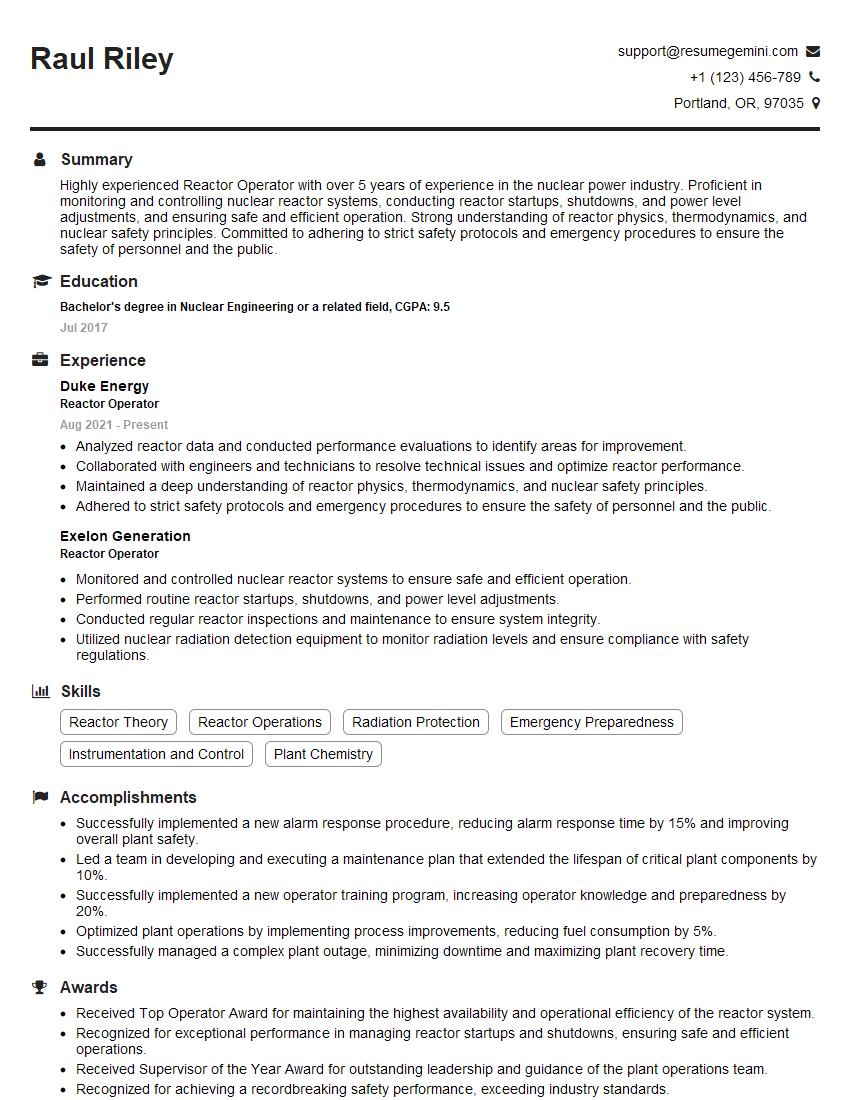
Reactor Operator Resume Sample
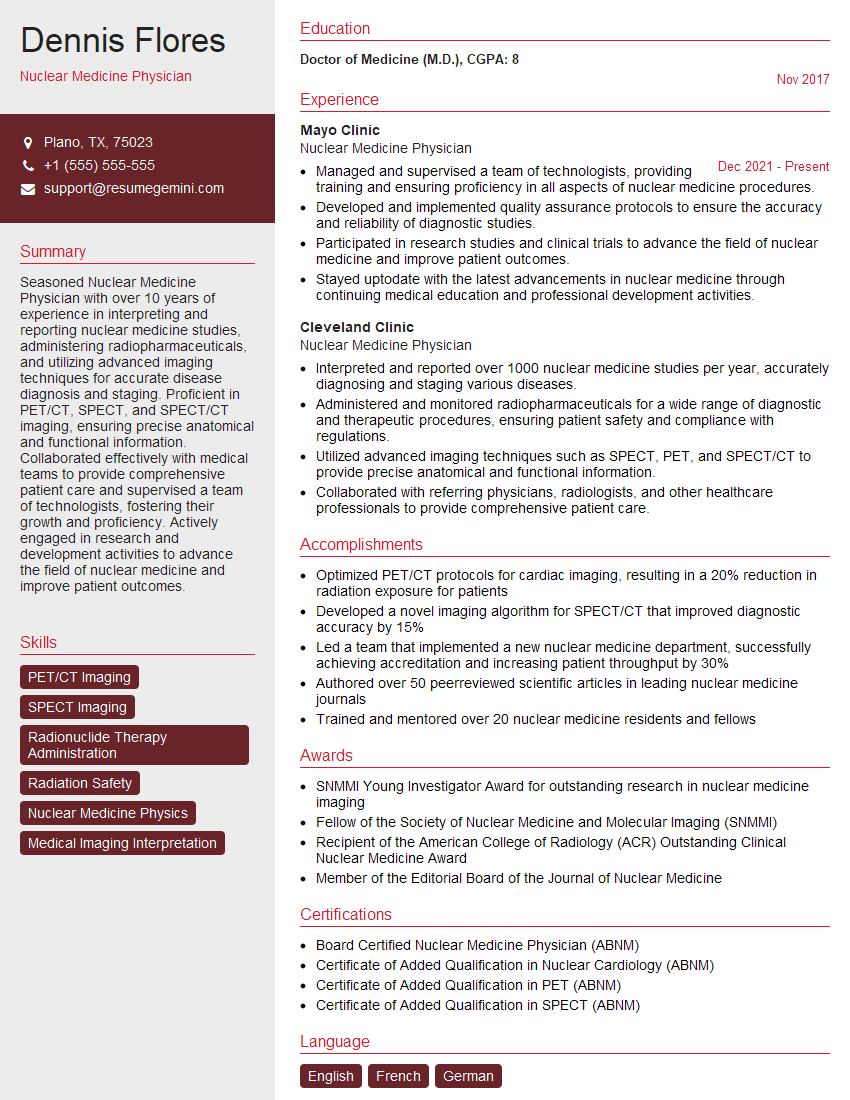
Nuclear Medicine Physician Resume Sample

Dosimetrist Resume Sample

Radiation Therapist Resume Sample
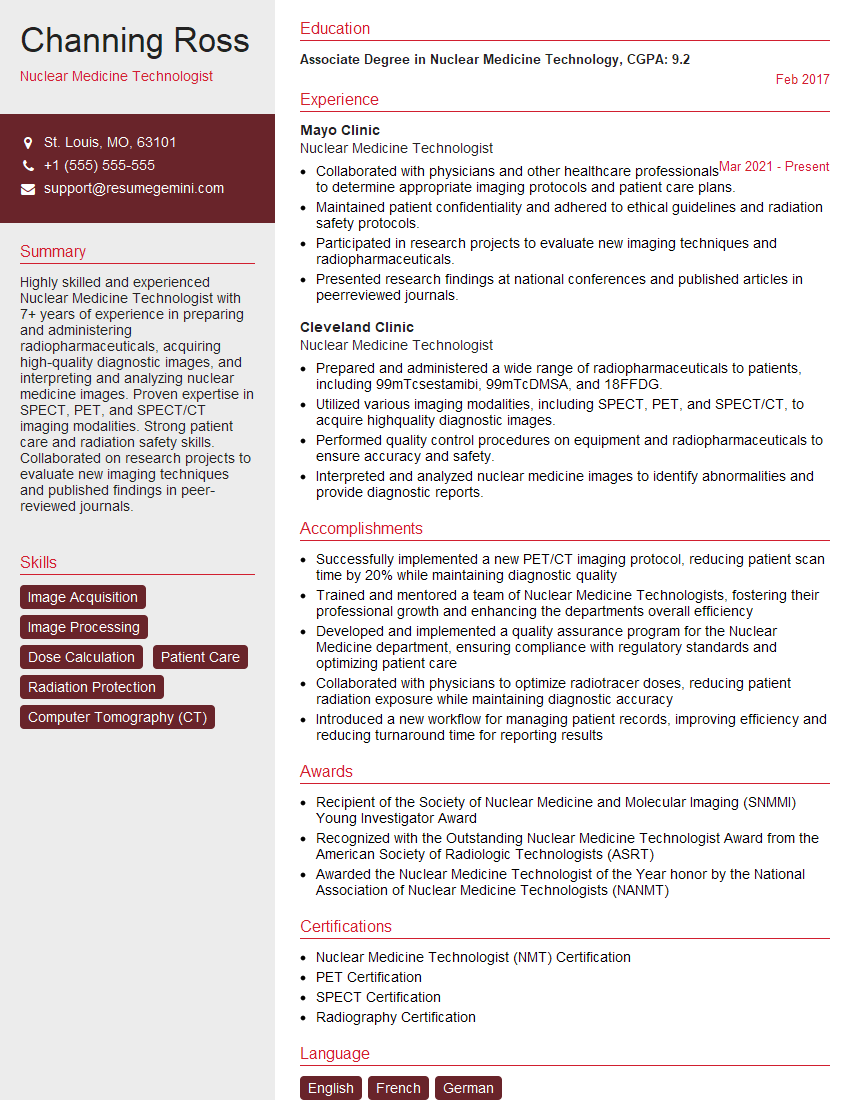
Nuclear Medicine Technologist Resume Sample

Radiation Safety Officer Resume Sample

Radiation Protection Specialist Resume Sample
Explore more articles
Users Rating of Our Blogs
Share Your Experience
We value your feedback! Please rate our content and share your thoughts (optional).
What Readers Say About Our Blog
To the interviewgemini.com Webmaster.
Very helpful and content specific questions to help prepare me for my interview!
Thank you
To the interviewgemini.com Webmaster.
This was kind of a unique content I found around the specialized skills. Very helpful questions and good detailed answers.
Very Helpful blog, thank you Interviewgemini team.