Unlock your full potential by mastering the most common Radiation Protection Software interview questions. This blog offers a deep dive into the critical topics, ensuring you’re not only prepared to answer but to excel. With these insights, you’ll approach your interview with clarity and confidence.
Questions Asked in Radiation Protection Software Interview
Q 1. Explain the principles of ALARA and how they are implemented in radiation protection software.
ALARA, which stands for “As Low As Reasonably Achievable,” is a fundamental principle in radiation protection. It emphasizes keeping radiation exposure to individuals and the environment as low as possible, while considering economic and social factors. Implementation in radiation protection software involves several strategies. First, software often incorporates features that allow users to model various shielding options and evaluate their effectiveness in reducing radiation levels. Second, software can automatically calculate and display the resulting dose for different scenarios, allowing for a direct comparison between options. For instance, a user might model a nuclear reactor core with varying thicknesses of lead shielding; the software would then calculate the dose reduction for each configuration, helping to find the ALARA solution. Third, advanced software packages might even include optimization algorithms that automatically search for the most effective shielding configuration while respecting constraints, ensuring the design adheres to ALARA principles.
For example, a software package might simulate the movement of radioactive material in a medical facility. It would model different pathways and calculate the potential doses received by staff and patients. The user can then analyze the results and modify the layout (e.g., re-position equipment, add shielding) to lower radiation exposures while considering practicality.
Q 2. Describe different types of radiation detectors and their applications in software simulations.
Radiation detectors are crucial for measuring radiation levels. Different types are used depending on the type of radiation and the application. In software simulations, these detectors are modeled to predict the response in real-world scenarios.
- Geiger-Müller counters: These are simple, robust detectors suitable for detecting alpha, beta, and gamma radiation. In software, they are represented by their detection efficiency, which depends on energy and type of radiation. Simulations often use a simplified model to represent their pulse counting.
- Scintillation detectors: These detectors use scintillating materials to convert radiation into light, which is then measured by a photomultiplier tube (PMT). They provide higher energy resolution than Geiger counters and are extensively used for gamma spectroscopy. Simulations would model the scintillator material’s light output and the PMT’s response curve.
- Ionization chambers: These measure the ionization caused by radiation. They are commonly used for dosimetry and radiation monitoring. In simulations, they are modeled by their sensitivity and response time to varying radiation fields.
- Proportional counters: These detectors amplify the ionization signal. They offer better energy resolution than Geiger counters, but less than scintillation detectors. Simulations might include the gas amplification factor and detection efficiency curves.
Software simulations use detector models to predict the count rate or energy spectrum that would be observed with a specific detector type in a given radiation field. This is important for designing experiments, optimizing shielding strategies and interpreting experimental data.
Q 3. How do radiation transport codes work, and what are their limitations?
Radiation transport codes simulate how radiation interacts with matter. They track the paths of individual particles (photons, neutrons, electrons, etc.) as they travel through a material, undergo various interactions (scattering, absorption), and deposit energy. These codes are crucial for predicting dose distributions and radiation levels in a variety of applications.
How they work: The codes start by defining the radiation source, the geometry of the system (the materials and their arrangement), and the interaction cross-sections (probabilities of different interactions). Then, they use numerical methods to track the particles’ paths until they are absorbed or escape the system. The energy deposited along these paths is accumulated to calculate the dose.
Limitations: Despite their power, radiation transport codes have limitations. They require significant computational resources, especially for complex geometries and high-energy radiation. Furthermore, the accuracy of the simulations depends on the accuracy of the input data (e.g., cross-sections, material properties). Approximations in the modeling of physical processes, such as particle interactions, can also lead to uncertainties in the results. Finally, modeling the complex behaviors of materials under irradiation can be challenging, and some codes may have limited capabilities in simulating effects like material damage or chemical changes.
Q 4. What are the key features of a good radiation protection software package?
A good radiation protection software package should possess several key features:
- User-friendly interface: Easy navigation and data input are essential for efficient use. A well-designed interface minimizes the learning curve and allows users to focus on problem-solving.
- Accurate physics models: The software must use validated radiation transport codes and accurate cross-section data. This ensures the reliability and accuracy of the simulation results.
- Versatile geometry modeling: The ability to model complex 3D geometries is crucial for real-world applications. The software should support various geometry creation methods, including CAD import.
- Comprehensive dose calculation: The software must accurately calculate various dose quantities (e.g., effective dose, organ doses) in compliance with relevant radiation protection standards.
- Visualization tools: Advanced visualization capabilities (e.g., 3D rendering of dose distributions) improve understanding of the results and aid in decision-making.
- Report generation: The software must generate professional reports that can be used for regulatory compliance and communication.
- Validation and verification: The software should be rigorously tested against benchmark problems and experimental data to ensure accuracy and reliability.
Q 5. Compare and contrast Monte Carlo and deterministic methods in radiation transport simulations.
Both Monte Carlo and deterministic methods are used in radiation transport simulations, but they differ significantly in their approach.
Monte Carlo methods simulate the individual interactions of particles statistically. They generate a large number of random particle histories, and the results are obtained by averaging over these histories. Monte Carlo methods are very versatile and can handle complex geometries and radiation interactions, but they can be computationally expensive.
Deterministic methods solve the transport equation numerically using deterministic algorithms. They provide a deterministic solution, meaning the result is not subject to statistical fluctuations. Deterministic methods are generally faster than Monte Carlo methods for simple geometries, but they can struggle with complex geometries and highly anisotropic scattering.
Comparison:
- Accuracy: Both methods can achieve high accuracy, but the accuracy of Monte Carlo is limited by statistical uncertainties, while deterministic methods’ accuracy is limited by the numerical approximations used.
- Computational cost: Monte Carlo is generally more computationally expensive, especially for high-precision results. Deterministic methods are usually faster, but their computational cost can increase rapidly with geometric complexity.
- Versatility: Monte Carlo is more versatile and can handle complex geometries and heterogeneous materials more effectively than deterministic methods.
In summary: Monte Carlo is preferred for complex geometries and high-precision results, even at the cost of longer computation time, while deterministic methods are suitable for simpler geometries where speed is a priority. Often, a hybrid approach combining both methods is used to leverage their respective strengths.
Q 6. Explain the concept of effective dose and how it’s calculated in software.
Effective dose is a measure of the overall health risk from exposure to ionizing radiation. It considers the type and energy of the radiation, and the sensitivity of different organs and tissues to radiation. It’s expressed in sieverts (Sv). Software calculates effective dose by first determining the absorbed dose in each organ or tissue. This is done by integrating the energy deposited by radiation in the volume of interest. Next, it uses tissue weighting factors (wT) which represent the relative sensitivity of each tissue to radiation-induced cancer and hereditary effects. Finally, it weights these organ doses with corresponding tissue weighting factors and sums them up to obtain the effective dose (E):
E = Σ wT ⋅ DT
where DT is the equivalent dose in tissue T, and wT is the tissue weighting factor for tissue T. Radiation protection software typically has built-in libraries with the latest tissue weighting factors from international radiation protection organizations (like ICRP). The software then combines the results from the radiation transport calculations with the weighting factors to compute the effective dose. This calculation provides a comprehensive assessment of the potential health impact of a radiation exposure scenario.
Q 7. How do you ensure the accuracy and reliability of radiation protection software?
Ensuring accuracy and reliability in radiation protection software is critical. Several strategies are employed:
- Validation against benchmark problems: The software is tested against well-defined problems with known solutions (benchmarks) to verify its accuracy. These problems often involve simple geometries and well-characterized radiation sources, allowing for a direct comparison between the simulated and expected results.
- Comparison with experimental data: The software’s predictions are compared with experimental measurements from carefully designed experiments. This helps to validate the accuracy of the physical models and input data used in the software.
- Peer review and code audits: Independent experts review the software’s code and algorithms to identify potential errors and weaknesses. Peer review helps to ensure the software’s quality and reliability.
- Use of certified data libraries: The software uses validated nuclear data libraries (cross-sections, decay data) from reputable sources to ensure the accuracy of the input data.
- Regular software updates and maintenance: Continuous improvements, bug fixes, and updates to the physics models are crucial to maintain accuracy and reliability over time. The software should incorporate the most recent advances in radiation transport methods and radiation protection standards.
- Uncertainty analysis: The software should perform uncertainty analysis to assess the uncertainties associated with the input data, physical models, and numerical methods. This allows users to understand the limitations of the simulation results.
By using these techniques, software developers can build confidence in the accuracy and reliability of the software, making it a valuable tool for radiation protection professionals.
Q 8. Describe your experience with specific radiation protection software (e.g., MCNP, FLUKA, EGSnrc).
My experience with radiation protection software spans several leading packages. I’ve extensively used MCNP (Monte Carlo N-Particle Transport Code) for simulating complex geometries and diverse radiation transport problems, particularly in nuclear reactor design and shielding optimization. I’m also proficient in FLUKA, known for its versatility in handling high-energy particles and its accurate modeling of various interactions. My work with EGSnrc (Electron Gamma Shower code) has focused primarily on electron and photon transport simulations, crucial for medical physics applications like dosimetry calculations for radiotherapy. Each code offers unique strengths; MCNP excels in its robust variance reduction techniques, FLUKA in its comprehensive physics models, and EGSnrc in its speed and efficiency for electron-photon simulations. For instance, in a recent project involving the design of a new shielded container for radioactive waste, I leveraged MCNP’s capabilities to meticulously model the geometry and material composition, ensuring accurate prediction of radiation levels and optimizing shielding thickness to meet regulatory limits.
Q 9. How are uncertainty and error analysis handled in radiation protection simulations?
Uncertainty and error analysis are critical in radiation protection simulations because the results directly impact safety. We address uncertainty through several methods. Statistical uncertainties arise from the inherent randomness of Monte Carlo methods; these are quantified through the standard deviation of the results, often expressed as a percentage relative error. We typically run simulations until the relative error reaches an acceptable level. Systematic uncertainties, originating from input data inaccuracies (like material composition or source strength), are assessed through sensitivity studies. We systematically vary input parameters and observe the impact on the results. Error propagation methods are used to combine statistical and systematic uncertainties to obtain a total uncertainty estimate. For example, if we’re calculating dose rates, we might report the result as 10 mSv/h ± 1 mSv/h (where ±1 mSv/h encompasses both statistical and systematic uncertainties). This comprehensive approach ensures realistic estimates of radiation exposure and informed decision-making.
Q 10. Explain the role of shielding calculations in radiation protection software.
Shielding calculations are fundamental in radiation protection software. They aim to determine the optimal shielding materials and thicknesses required to reduce radiation exposure to acceptable levels. Software packages use sophisticated algorithms to simulate the interaction of radiation with shielding materials, including absorption, scattering, and attenuation. The results often include dose rates at various locations behind the shield, allowing us to assess the effectiveness of the shielding design. For example, in designing a shielding wall for a medical linear accelerator, the software would simulate the passage of high-energy photons and electrons through various materials (e.g., concrete, lead) and predict the radiation levels in adjacent areas. This information is crucial for ensuring worker and public safety.
Q 11. How does software handle different types of radiation sources (e.g., gamma, beta, neutron)?
Radiation protection software handles various radiation types through detailed physics models. For gamma radiation, the software simulates photoelectric effect, Compton scattering, and pair production. Beta particles are treated differently, accounting for their interactions through ionization and Bremsstrahlung radiation. Neutron transport is the most complex, encompassing elastic and inelastic scattering, capture reactions, and various nuclear data libraries (like ENDF) to accurately simulate neutron interactions with matter. Each particle type requires specific cross-section data, which the software incorporates to provide accurate transport simulations. The software often allows for the user to select different physics models and nuclear data libraries depending on the specific application and accuracy requirements. A sophisticated simulation might, for instance, incorporate detailed cross-section data for a specific isotope, to accurately reflect the neutron interactions in a given reactor design.
Q 12. Describe the importance of quality assurance and quality control in radiation protection software.
Quality assurance (QA) and quality control (QC) are paramount in radiation protection software. QA ensures that the software development process follows rigorous standards and produces reliable results. This involves regular code reviews, testing, and verification against known solutions and experimental data. QC focuses on validating the software’s output, ensuring that it produces accurate and reliable results for specific applications. This might involve comparisons to benchmark solutions, independent calculations, or experimental measurements. Rigorous QA/QC practices mitigate errors, improve confidence in the software, and ultimately enhance the safety and reliability of radiation protection assessments. For example, a software release might be validated by comparing its shielding calculations with experimental measurements from a physical mockup of a shielded facility.
Q 13. Explain how you would validate the results of a radiation protection simulation.
Validating the results of a radiation protection simulation is a multi-step process. First, we compare the simulation results to analytical solutions or benchmark problems whenever possible. Second, we conduct sensitivity analysis to understand how the results change with variations in input parameters. Third, we might compare the simulation results with experimental measurements or data from similar systems. If significant discrepancies exist, we investigate potential sources of error, including the input data, the physics models, and the simulation parameters. For example, we might validate a simulation of a spent fuel storage pool by comparing the calculated dose rates at various locations with actual measurements taken at a similar facility. This rigorous validation process builds confidence in the simulation’s accuracy and reliability.
Q 14. What are the regulatory requirements for radiation protection software in your country/region?
(Note: Regulatory requirements vary significantly by country/region. The following is a general example and should not be considered legal advice. Consult local regulations for specific requirements.) In many regions, the regulatory requirements for radiation protection software aren’t explicitly defined for the software itself, but rather for the *use* of the software in producing radiation safety assessments. The emphasis is on demonstrating that the software is fit for purpose, validated, and used by qualified personnel. Often, regulatory bodies focus on the accuracy and reliability of the resulting safety assessment rather than the software’s underlying code. They typically mandate that safety analyses be performed according to established standards and guidelines, such as those published by organizations like the IAEA (International Atomic Energy Agency) or national regulatory bodies. Documentation of the methodology, input data, and uncertainty analysis is crucial. Ultimately, the responsibility lies with the user to ensure that the software is used appropriately and that the results are interpreted correctly to meet all regulatory requirements.
Q 15. How do you manage large datasets generated by radiation protection simulations?
Managing large datasets from radiation protection simulations requires a multi-pronged approach focusing on efficient storage, processing, and analysis. Think of it like organizing a massive library – you need a system to find specific books (data points) quickly and effectively.
Data Compression and Storage: We utilize lossless compression techniques to reduce file sizes without data loss. Common formats like HDF5 are invaluable for storing large, multi-dimensional arrays efficiently. Cloud storage solutions can also help manage the sheer volume of data generated by complex simulations.
Parallel Processing: Instead of processing the entire dataset at once, which can be incredibly slow, we employ parallel processing techniques. This involves breaking down the dataset into smaller chunks and processing them simultaneously across multiple CPU cores or even distributed computing environments. This is like having many librarians working on different parts of the library catalog at the same time.
Data Filtering and Subsetting: We often don’t need the entire dataset for a specific analysis. Therefore, sophisticated filtering techniques allow us to select only the relevant data points, significantly reducing processing time. It’s like focusing on a particular section of the library instead of searching the entire collection.
Database Management Systems (DBMS): For complex analyses or long-term storage, relational or NoSQL databases provide structured ways to organize and query data. This allows for more sophisticated data mining and analysis compared to simple file-based storage.
Career Expert Tips:
- Ace those interviews! Prepare effectively by reviewing the Top 50 Most Common Interview Questions on ResumeGemini.
- Navigate your job search with confidence! Explore a wide range of Career Tips on ResumeGemini. Learn about common challenges and recommendations to overcome them.
- Craft the perfect resume! Master the Art of Resume Writing with ResumeGemini’s guide. Showcase your unique qualifications and achievements effectively.
- Don’t miss out on holiday savings! Build your dream resume with ResumeGemini’s ATS optimized templates.
Q 16. Describe your experience with data visualization and reporting in radiation protection software.
Data visualization and reporting are critical for communicating complex radiation protection results clearly and effectively. Imagine trying to explain a complicated scientific finding without any charts or graphs – it’s nearly impossible!
My experience includes using various software packages to create:
Interactive 3D visualizations: To display dose distributions within the human body or in the environment.
Contour plots and heatmaps: To show spatial variations in radiation levels.
Time-series plots: To illustrate the change in radiation levels over time.
Custom reports: Tailored to meet the specific needs of clients or regulatory bodies.
I’m proficient in tools like MATLAB, Python (with libraries such as Matplotlib and Seaborn), and specialized radiation protection software that offer robust visualization capabilities. I always prioritize clear labeling, informative legends, and a user-friendly presentation to ensure easy interpretation of complex results.
Q 17. Explain your understanding of dose reconstruction techniques and their implementation in software.
Dose reconstruction aims to estimate the radiation dose received by individuals in the past, often after exposure to ionizing radiation from accidents, medical procedures, or occupational exposure. It’s like piecing together a puzzle – we use available information to determine the likely radiation dose received.
Software plays a crucial role in implementing dose reconstruction techniques by:
Modeling radiation transport: Simulating the movement of radiation through the body or environment using Monte Carlo or deterministic methods.
Estimating organ doses: Calculating the dose received by specific organs based on the simulation results.
Incorporating dosimetric data: Integrating information from personal dosimeters, environmental monitoring, and medical records.
Statistical analysis: Performing uncertainty analysis to determine the reliability of the dose estimates.
Common techniques used include the use of biokinetic models to describe the movement of radionuclides in the body and sophisticated algorithms to incorporate uncertainties. Software packages often offer a combination of these techniques to provide comprehensive dose reconstruction capabilities.
Q 18. How do you address limitations and uncertainties associated with input parameters in simulations?
Input parameters in radiation protection simulations, such as material compositions, source strengths, and geometry, are often associated with uncertainties. Ignoring these uncertainties can lead to inaccurate results, similar to building a house on a faulty foundation.
To address these limitations, we use several strategies:
Sensitivity analysis: We systematically vary input parameters to assess their impact on the simulation results. This helps identify critical parameters where even small uncertainties can greatly affect the outcome. It’s like testing the strength of each beam of the house.
Uncertainty propagation: We use statistical methods to quantify the uncertainty in the output results based on the uncertainties in the input parameters. This provides a measure of confidence in our findings.
Monte Carlo simulations: By incorporating random variations in input parameters, Monte Carlo methods provide a probabilistic distribution of possible outcomes, rather than a single deterministic result. This helps visualize how the uncertainty affects the result.
Bayesian approaches: These statistical methods use prior information about parameters and combine it with simulation results to provide updated estimates, including uncertainty quantification.
The choice of method depends on the specific problem and available data, but a comprehensive approach often involves multiple techniques.
Q 19. Describe the role of radiation protection software in risk assessment and management.
Radiation protection software is indispensable for risk assessment and management. It allows us to quantify risks, optimize safety measures, and ensure compliance with regulations. Think of it as a crucial tool for preventing accidents and protecting workers and the public.
Its role includes:
Dose calculations: Estimating radiation doses to individuals and populations under various scenarios.
Shielding design: Optimizing shielding configurations to minimize radiation exposure.
Emergency response planning: Developing plans for responding to radiation emergencies, including evacuation and decontamination strategies.
Regulatory compliance: Ensuring adherence to radiation protection standards and regulations.
By providing quantitative data and simulations, this software enables informed decision-making in all aspects of radiation safety and helps minimize radiation risks effectively.
Q 20. How do you troubleshoot and resolve issues related to radiation protection software?
Troubleshooting radiation protection software involves a systematic approach, similar to diagnosing a medical problem – you start with the symptoms and work your way back to the cause.
My approach involves:
Reproducing the error: The first step is to understand the circumstances that lead to the problem. This involves recording all inputs and steps that are required to reproduce the error.
Checking input data: Common issues stem from errors in the input data, such as incorrect units, missing values, or inconsistencies. Data validation and verification checks are necessary to prevent such issues.
Reviewing the software documentation: The software’s user manuals and documentation often contain troubleshooting guides, known issues, and solutions.
Debugging using logs and error messages: Most software generates error messages and log files that provide clues about the cause of the problem.
Contacting technical support: If the problem persists, seeking help from the software vendor or the technical support team is usually necessary.
Effective troubleshooting requires patience, attention to detail, and a good understanding of the software’s functionalities and limitations.
Q 21. What are some common errors encountered when using radiation protection software?
Common errors when using radiation protection software often arise from a combination of user error, software limitations, or data inaccuracies.
Incorrect input parameters: Using the wrong units, values, or material properties can lead to significant errors in the results. Imagine putting in the wrong ingredients when baking – the cake won’t turn out right.
Geometric modeling errors: Inaccuracies in modeling the geometry of the radiation source, shielding, or the object being irradiated can significantly affect the results.
Inappropriate simulation settings: Choosing the incorrect simulation parameters (e.g., mesh size, simulation time) can lead to inaccurate or unconverged results.
Data interpretation errors: Misunderstanding the output of the software or misinterpreting the results can lead to incorrect conclusions.
Software bugs: Although rare, software bugs can sometimes cause unexpected errors. Reporting these to the developers is crucial for improvements.
Regularly verifying results, understanding the limitations of the software, and thorough data quality checks are crucial to avoid these common pitfalls.
Q 22. Describe your experience with the integration of radiation protection software with other systems.
Integrating radiation protection software with other systems is crucial for streamlining workflows and improving data management. This often involves connecting the software to databases containing patient information (for medical applications), environmental monitoring systems (for nuclear facilities), or even geographical information systems (GIS) for mapping radiation sources. The integration methods vary widely, depending on the specific software and systems involved. Common approaches include using Application Programming Interfaces (APIs) for data exchange, creating custom scripts to automate data transfer, and utilizing middleware solutions that act as bridges between different systems. For example, I’ve worked on projects where we integrated a dose assessment software with a hospital’s electronic health record (EHR) system using HL7, a standard protocol for exchanging healthcare data. This allowed for automated recording of patient doses and simplified reporting. Another project involved connecting radiation monitoring equipment in a nuclear power plant to a central control system via a custom-built interface, enabling real-time monitoring and alerts.
Successful integration requires careful planning and testing to ensure data integrity and compatibility between systems. It’s essential to address security concerns, particularly when dealing with sensitive patient or facility data.
Q 23. Explain your experience using scripting languages (e.g., Python) with radiation protection software.
Scripting languages like Python are invaluable for automating tasks, extending the functionality of radiation protection software, and performing data analysis. I extensively use Python with packages like NumPy and SciPy for numerical computations, Matplotlib for data visualization, and Pandas for data manipulation. For instance, I’ve written Python scripts to automate the generation of reports from radiation monitoring data, converting raw data into easily interpretable formats. These scripts significantly reduce manual effort and improve efficiency. Another example is using Python to process large datasets from Monte Carlo simulations, extracting relevant information and performing statistical analysis to assess the uncertainties associated with the radiation dose calculations.
# Example Python code snippet for processing radiation data
import pandas as pd
data = pd.read_csv('radiation_data.csv')
# Perform data analysis and manipulation here
# ...
print(data.describe())
The ability to leverage Python and other scripting languages adds a layer of flexibility and power to radiation protection software, allowing for tailored solutions to specific problems and challenges.
Q 24. How do you stay up-to-date with advancements in radiation protection software and techniques?
Staying current in the dynamic field of radiation protection requires a multi-pronged approach. I regularly attend conferences and workshops, such as those hosted by the Health Physics Society and the International Atomic Energy Agency (IAEA), to learn about the latest software and techniques. I also actively participate in online forums and professional networks, engaging with other professionals to share knowledge and learn from their experiences. Reading peer-reviewed journals and publications focusing on radiation protection, medical physics, and nuclear engineering is essential. Subscribing to newsletters and following influential researchers and organizations in the field also keeps me informed about new developments. Furthermore, I actively seek opportunities for professional development, including taking courses on emerging technologies and software updates. This ensures my expertise remains relevant and aligned with industry best practices.
Q 25. Discuss the ethical considerations involved in using radiation protection software.
Ethical considerations are paramount when using radiation protection software. Accuracy and reliability are key. The software must provide accurate dose estimations and risk assessments. Any inaccuracies could lead to incorrect decisions with potentially serious consequences for patient safety or environmental protection. Data privacy and confidentiality are crucial, especially in medical applications where patient data is involved. The software should adhere to all relevant regulations and guidelines related to data protection and security. Transparency in how the software functions and the limitations of its predictions is also crucial. Users must understand the assumptions made by the software and the potential uncertainties associated with its outputs. Finally, the software should be used responsibly and ethically, ensuring that the benefits of using radiation outweigh the risks.
Q 26. How would you explain complex radiation protection concepts to a non-technical audience?
Explaining complex radiation protection concepts to a non-technical audience requires clear and simple language, avoiding jargon. I often use analogies to illustrate key concepts. For instance, when discussing radiation exposure, I might compare it to the sun’s ultraviolet radiation, explaining that prolonged exposure can have harmful effects, but appropriate protection (like sunscreen or shielding) can mitigate these risks. I use visual aids like charts and diagrams to illustrate dose rates and their effects on the human body. Keeping the explanation focused on the key takeaways and highlighting the practical implications of radiation exposure and protection ensures the audience understands the importance of the topic.
A practical example could be explaining the ALARA principle – As Low As Reasonably Achievable – by emphasizing that we strive to minimize radiation exposure, balancing the benefits of using radiation technologies (like medical imaging) with the need to protect people from unnecessary radiation.
Q 27. Describe a situation where you had to use your radiation protection software expertise to solve a problem.
During a project involving the optimization of radiation shielding in a medical linear accelerator facility, we discovered discrepancies between the initial design calculations and the measured radiation levels. The existing software wasn’t providing an accurate representation of the scattered radiation. I used my expertise to investigate the cause, carefully examining the input parameters of the software, including the materials used, their density and composition, and the geometry of the treatment room. I discovered an error in the modeling of the collimator’s scattering properties. By correcting the model and rerunning the simulation, we generated more accurate predictions, leading to improved shielding design and significantly reduced radiation levels in areas outside the treatment room, ensuring the safety of staff and patients. This involved not just correcting software parameters, but also collaboration with physicists and engineers on-site, showing the importance of interdisciplinary teamwork in radiation protection.
Q 28. What are your future goals related to radiation protection software and its applications?
My future goals involve contributing to the development of more advanced and user-friendly radiation protection software. I’m particularly interested in exploring the applications of artificial intelligence (AI) and machine learning (ML) in radiation dosimetry and risk assessment. AI could potentially automate tasks, improve the accuracy of dose estimations, and facilitate personalized radiation protection strategies. I also aim to expand my work on integrating radiation protection software with other healthcare information systems, leading to better data management and more efficient workflows. Ultimately, my goal is to contribute to safer and more effective use of radiation technologies across various sectors, improving patient safety and protecting the environment.
Key Topics to Learn for Radiation Protection Software Interview
- Radiation Physics Fundamentals: Understand the principles of ionizing radiation, including alpha, beta, gamma, and neutron radiation. This forms the basis for all radiation protection calculations and software functionality.
- Dosimetry and Risk Assessment: Grasp the concepts of dose calculation, effective dose, and risk assessment models used in radiation protection software. Be prepared to discuss different dosimetric quantities and their practical applications.
- Regulatory Compliance: Familiarize yourself with relevant regulations and standards (e.g., ALARA principle) impacting the design and use of radiation protection software. Understanding the legal framework is crucial.
- Software Applications & Modeling: Explore various applications of radiation protection software, including shielding design, dose optimization, and emergency response planning. Be ready to discuss different software packages and their capabilities.
- Monte Carlo Simulations: Understand the principles and applications of Monte Carlo simulations in radiation transport and their role in radiation protection software. This is a key technical area for many roles.
- Data Analysis and Interpretation: Develop your skills in analyzing and interpreting data generated by radiation protection software. This includes understanding uncertainties and limitations of the software’s output.
- Troubleshooting and Problem-Solving: Practice identifying and resolving common issues encountered when using radiation protection software. This could involve debugging, data validation, or interpreting error messages.
- Health Physics Instrumentation: Gain familiarity with the types of radiation detection instruments and how their data is processed and interpreted by the software. Understanding the connection between hardware and software is important.
Next Steps
Mastering Radiation Protection Software is vital for advancing your career in this specialized field. It opens doors to exciting opportunities in research, regulatory agencies, healthcare, and nuclear industries. To maximize your job prospects, creating an ATS-friendly resume is crucial. ResumeGemini is a trusted resource to help you build a professional and impactful resume that highlights your skills and experience effectively. Examples of resumes tailored to Radiation Protection Software are available within ResumeGemini to guide you.
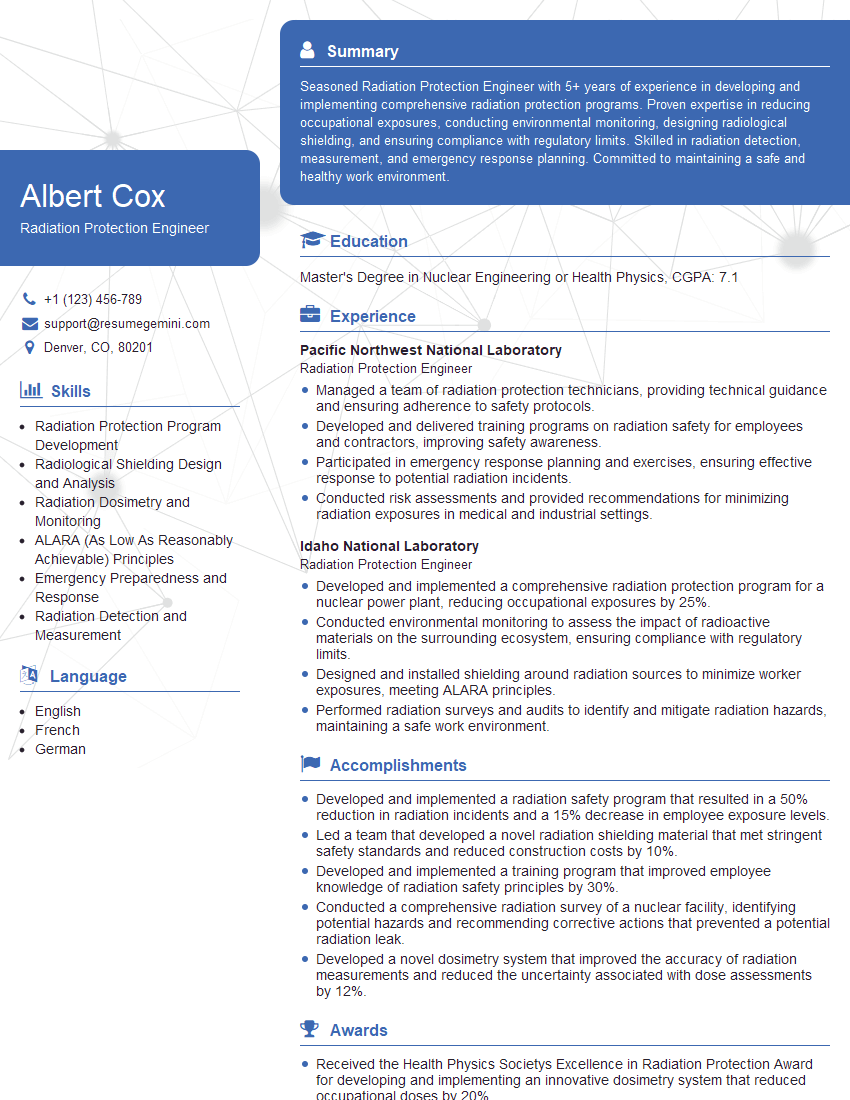
Radiation Protection Engineer Resume Sample

Nuclear Engineer Resume Sample

Nuclear Safety Engineer Resume Sample
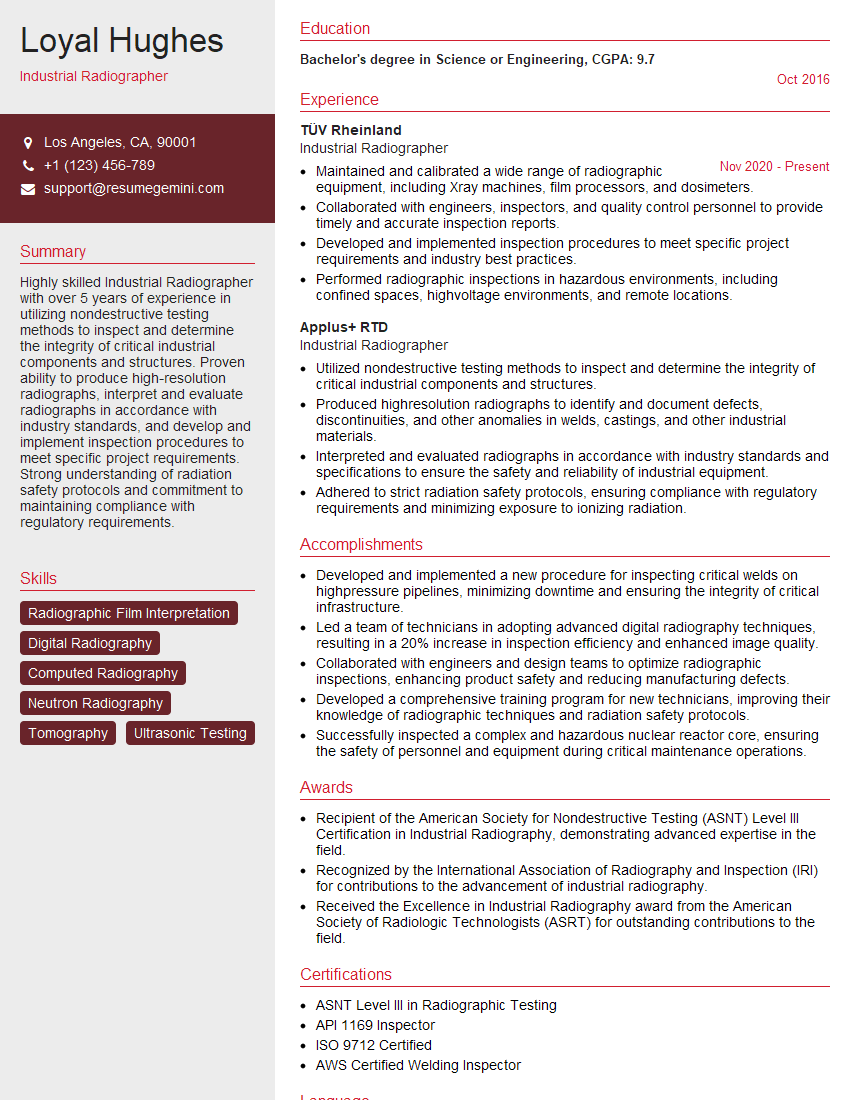
Industrial Radiographer Resume Sample
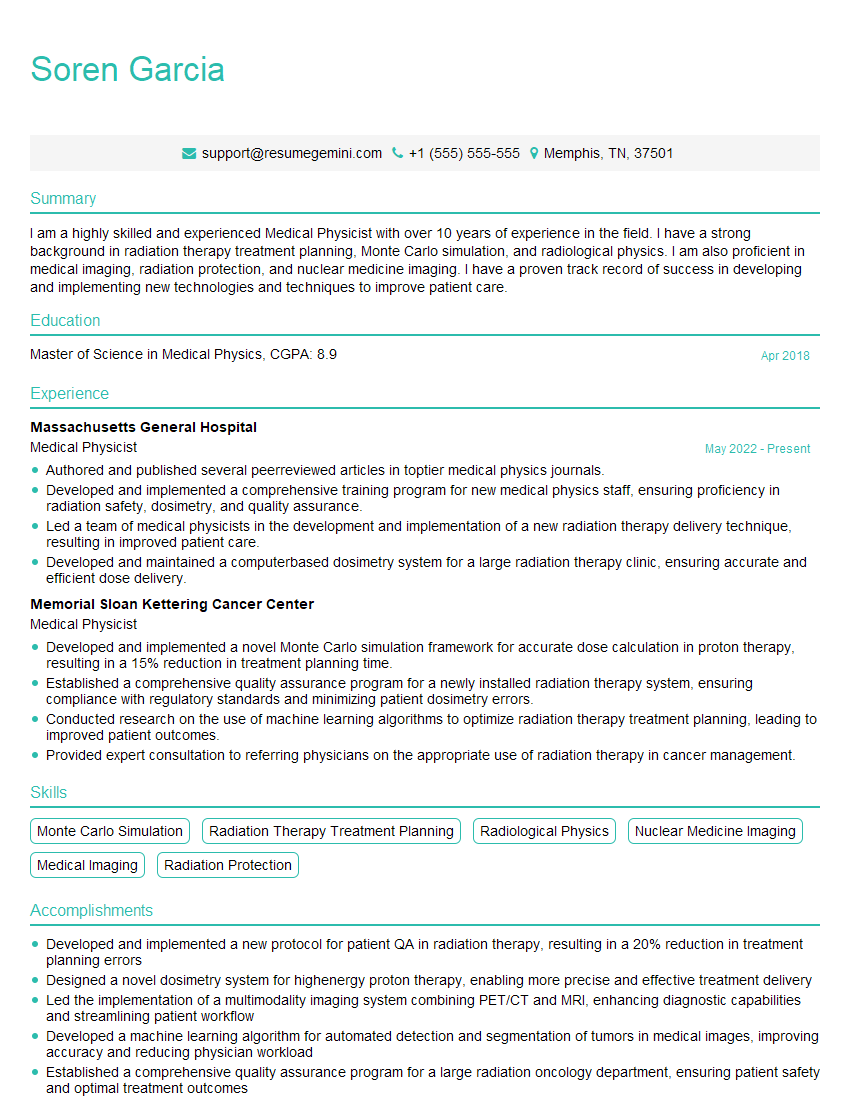
Medical Physicist Resume Sample
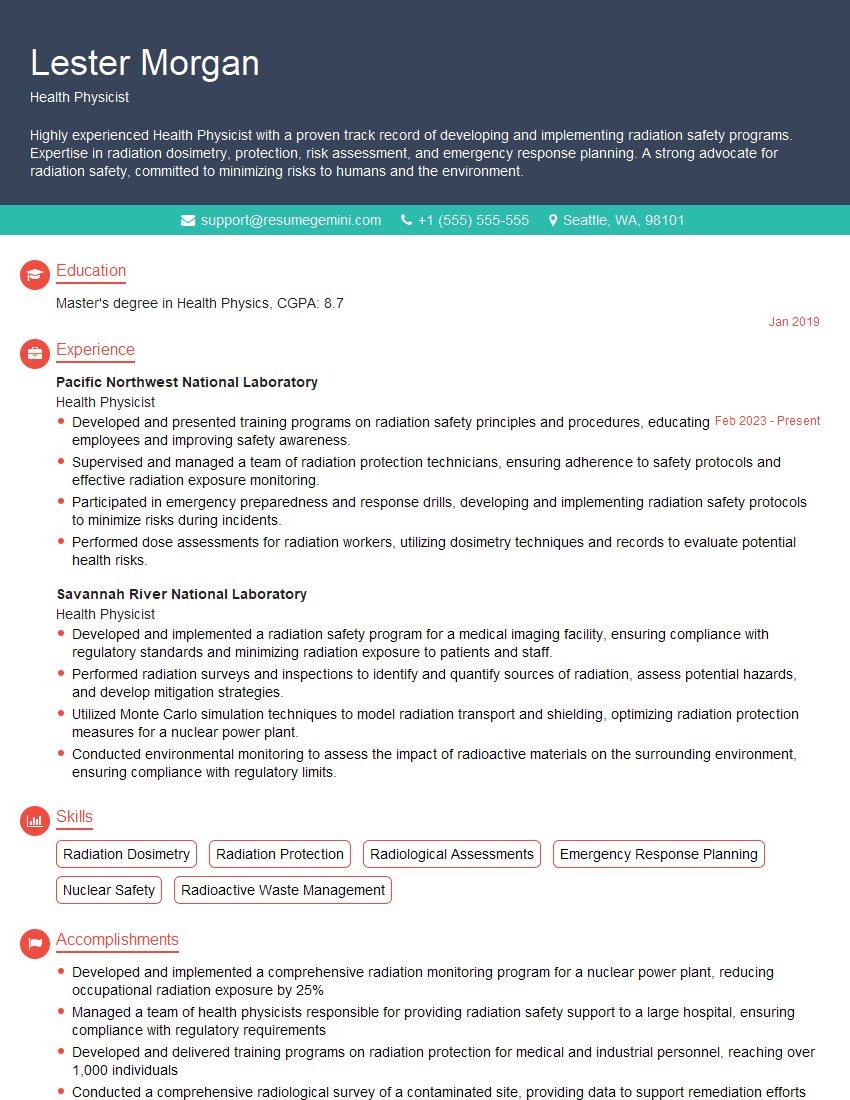
Health Physicist Resume Sample

Dosimetrist Resume Sample
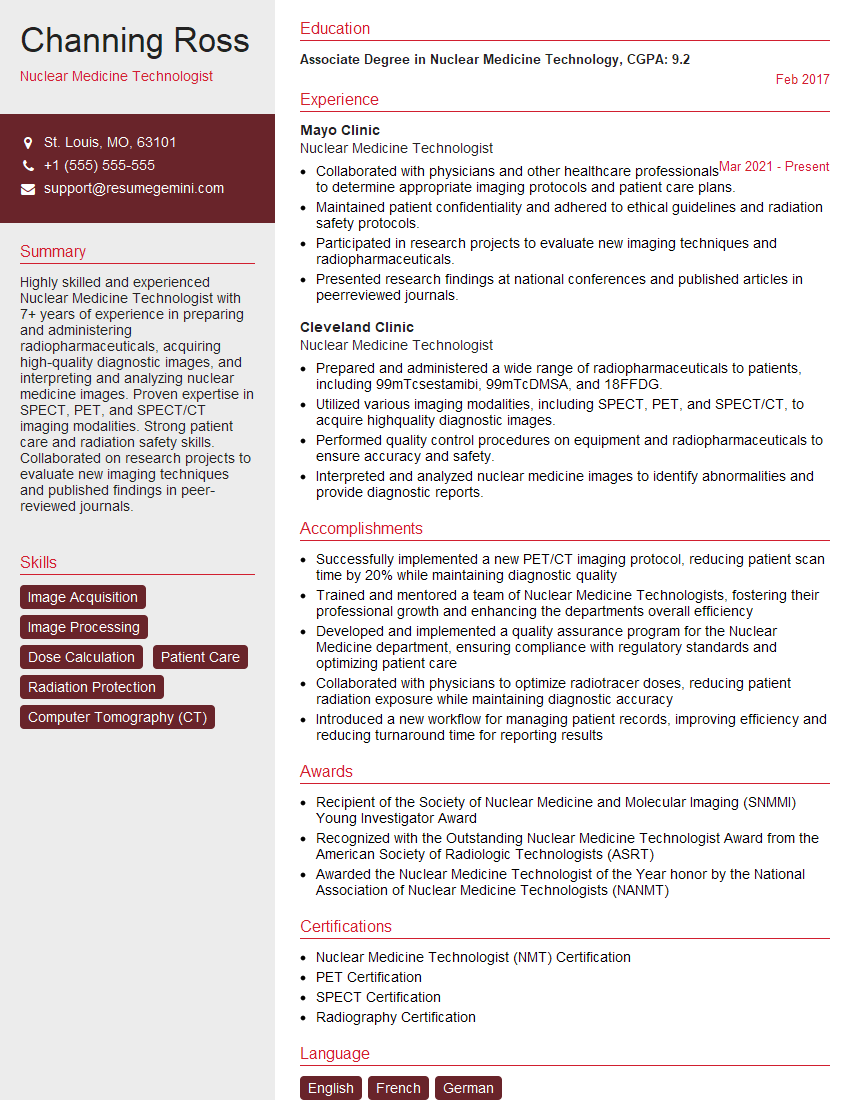
Nuclear Medicine Technologist Resume Sample

Radiation Safety Officer Resume Sample
Explore more articles
Users Rating of Our Blogs
Share Your Experience
We value your feedback! Please rate our content and share your thoughts (optional).
What Readers Say About Our Blog
To the interviewgemini.com Webmaster.
Very helpful and content specific questions to help prepare me for my interview!
Thank you
To the interviewgemini.com Webmaster.
This was kind of a unique content I found around the specialized skills. Very helpful questions and good detailed answers.
Very Helpful blog, thank you Interviewgemini team.