Cracking a skill-specific interview, like one for Park Regulations Enforcement, requires understanding the nuances of the role. In this blog, we present the questions you’re most likely to encounter, along with insights into how to answer them effectively. Let’s ensure you’re ready to make a strong impression.
Questions Asked in Park Regulations Enforcement Interview
Q 1. Describe your experience enforcing park regulations.
My experience in enforcing park regulations spans over eight years, encompassing diverse roles from park ranger to lead enforcement officer. I’ve worked in various park settings, from densely populated urban parks to remote wilderness areas. This has given me a broad understanding of the challenges and nuances involved in balancing visitor enjoyment with environmental protection and public safety. My responsibilities have included patrolling park areas, responding to visitor inquiries and complaints, investigating incidents, and issuing citations or warnings when necessary. I’ve handled a wide range of violations, from simple littering to more serious offenses like unauthorized camping or damaging park property. I’ve developed strong observational skills and honed my ability to identify potential problems proactively, often preventing incidents before they escalate.
For example, during a busy summer weekend, I noticed a group building a campfire in an unauthorized area. By calmly approaching them and explaining the fire ban and associated risks, I was able to prevent a potentially dangerous situation and educate them on responsible park usage. In another instance, I had to deal with a visitor who was persistently harassing wildlife. Through firm but respectful communication, I resolved the issue without causing any further disturbances.
Q 2. Explain your understanding of relevant legislation regarding park use.
My understanding of relevant legislation regarding park use is comprehensive and encompasses both federal and local ordinances. This includes knowledge of laws pertaining to wildlife protection, fire safety, resource preservation, and public health and safety within park boundaries. I’m familiar with specific regulations concerning permits, camping, fishing, hunting (where applicable), and vehicle operation within the park. I stay updated on any changes or amendments to these laws through regular training sessions and legal updates provided by the park authority. A strong grasp of these laws is crucial for effective and lawful enforcement.
For instance, I’m well-versed in the Clean Water Act’s implications on park waterways, and I understand the specific regulations surrounding endangered species found within the park’s ecosystem. This knowledge allows me to accurately identify and address violations related to pollution, habitat disturbance, and the illegal taking of protected species. This legal foundation informs every decision I make in the field.
Q 3. How would you handle a situation involving a visitor violating park rules?
My approach to handling a visitor violating park rules is based on a three-step process: Observation, Communication, and Enforcement. Firstly, I discreetly observe the situation to gather facts and understand the context of the violation. Secondly, I approach the visitor in a calm and respectful manner, clearly explaining the specific rule they are violating and the potential consequences. I strive to educate rather than immediately punish. Thirdly, if the violation is serious or the visitor remains uncooperative, I’ll proceed with enforcement, which may involve issuing a warning, a citation, or contacting appropriate authorities depending on the severity of the infraction.
For example, if I observe someone leaving trash behind, I would first approach them and politely explain the importance of keeping the park clean, offering them a trash bag if necessary. If they refuse to comply, then a warning or citation would be issued. Conversely, if I encounter someone engaging in reckless driving endangering other visitors, immediate action, including possible citation, would be taken.
Q 4. What methods do you use to educate park visitors about regulations?
Educating park visitors about regulations is a crucial aspect of my role. I employ a multi-pronged approach which combines proactive and reactive strategies. Proactively, this includes distributing informational pamphlets and brochures at park entrances and visitor centers, placing signage throughout the park outlining key rules and regulations, and conducting educational programs for groups or schools visiting the park. Reactively, I take every opportunity during interactions with park visitors to emphasize responsible behavior and educate them on park-specific rules, whether they are violating a rule or not.
For instance, I often use interactive demonstrations or storytelling during educational programs to highlight the importance of wildlife conservation. During routine patrols, I’ll engage in friendly conversations with park visitors, explaining the regulations in a conversational way, ensuring understanding and compliance. Social media platforms and park websites are also effective tools for disseminating vital information.
Q 5. How do you prioritize enforcement actions in a busy park environment?
Prioritizing enforcement actions in a busy park environment requires a strategic approach. My priority is always public safety and environmental protection. I assess situations based on their severity and potential impact. Immediate threats to safety, such as reckless behavior or dangerous activities, take precedence over less urgent violations. I also consider the potential consequences of inaction and resource allocation when making decisions.
For instance, a group illegally setting up a large bonfire posing a fire hazard would be addressed immediately, even if other minor infractions are present. I utilize effective time management, prioritizing high-impact violations while making sure to address other issues as resources permit. Utilizing technology like two-way radios and mobile reporting systems further enhances my ability to prioritize and respond effectively to numerous incidents simultaneously.
Q 6. How would you de-escalate a conflict with a visitor who is uncooperative?
De-escalating a conflict with an uncooperative visitor requires patience, empathy, and effective communication skills. I start by actively listening to their concerns and acknowledging their perspective, even if I don’t agree. I use calm and respectful language, avoiding confrontational or judgmental tones. I clearly and concisely restate the park regulations involved, highlighting the consequences of non-compliance in a neutral way. If the situation escalates further, I might seek assistance from a supervisor or other park personnel.
For example, if a visitor becomes upset about a parking ticket, I would empathize with their frustration, reiterate the reasons for the ticket, and clearly outline their options for appeal. Maintaining a calm demeanor and offering clear, concise information diffuses the situation and facilitates a more constructive resolution. If the conversation remains unproductive, I would respectfully disengage and contact a supervisor, documenting the interaction thoroughly.
Q 7. Describe your experience with issuing citations or warnings.
Issuing citations or warnings is a critical part of my role. I maintain meticulous records of every citation or warning issued, ensuring accuracy and following established procedures. Each citation clearly details the violation, the applicable regulation, the date, time, location, and any accompanying fine or penalty. Warnings are usually given for less serious offenses, serving as an educational opportunity to reinforce park rules. I always strive to ensure the visitor understands the reason for the citation or warning and their rights. I provide clear instructions on how to pay fines or appeal a citation if necessary.
For example, a citation for illegal camping would clearly state the relevant regulation violated, the fine amount, and the deadline for payment. Similarly, a verbal warning for littering would clearly explain the rule against littering and the potential environmental consequences. Accurate record-keeping is essential for accountability and transparency.
Q 8. How do you document violations and ensure accurate record-keeping?
Accurate record-keeping is the cornerstone of effective park regulations enforcement. We utilize a multi-faceted approach, combining digital and physical documentation. Every violation is documented using a standardized form, capturing details such as the date, time, location, specific regulation violated, violator’s information (if obtained), witness statements, and photographic or video evidence (where appropriate and legal).
These forms are then entered into a secure, centralized database, allowing for easy retrieval and analysis. This digital record-keeping ensures data integrity and facilitates reporting to supervisors and other agencies. Physical copies are also maintained as a backup and for potential legal proceedings. For example, if someone is illegally camping, the form would detail the campsite location, evidence of overnight stay (e.g., tent, campfire remains), and any interactions with the individual. This detailed documentation is crucial for building a strong case should the matter proceed to court.
The system includes features for generating reports summarizing violations by type, location, and time of year, allowing us to identify trends and target enforcement efforts accordingly. For example, a surge in illegal parking violations near a popular hiking trail might prompt increased patrols in that area during peak hours. Regular audits ensure data accuracy and system integrity.
Q 9. Explain your understanding of different types of park permits and their enforcement.
Park permits are essential for managing park resources and ensuring visitor safety. We encounter several types regularly. These include:
- Camping Permits: These authorize overnight stays in designated campgrounds. Enforcement focuses on ensuring campers stay within designated areas, adhere to fire regulations, and dispose of waste properly. We check permits against registered vehicles and campsite assignments.
- Special Use Permits: These cover events like weddings, film shoots, or large group gatherings. Enforcement verifies compliance with permit conditions, such as noise levels, waste management plans, and site restoration.
- Fishing and Hunting Licenses: We collaborate with state wildlife agencies to verify licensing and compliance with bag limits and regulations. We look for visible licenses and may ask for further verification.
- Vehicle Permits: These grant access to specific areas within the park, often requiring payment of fees. Enforcement verifies permit validity and ensures vehicles are parked in designated areas.
Enforcement involves visual inspections, spot checks, and response to complaints. Failure to possess a required permit or violation of permit conditions can lead to warnings, fines, or even park expulsion depending on the severity.
Q 10. How do you collaborate with other agencies or departments during enforcement actions?
Collaboration is critical for effective enforcement. We regularly work with:
- Local Law Enforcement: We coordinate with police departments for incidents involving serious crimes, such as assaults, theft, or drug offenses.
- State Wildlife Agencies: Joint patrols ensure compliance with hunting and fishing regulations and address wildlife-related issues.
- Fire Departments: We collaborate on fire prevention and suppression efforts, particularly during wildfire seasons.
- Park Maintenance Staff: We share information about areas requiring maintenance or repair based on observed violations, ensuring a safe and enjoyable visitor experience.
Communication is key. We use radio dispatch, shared databases, and regular meetings to exchange information and coordinate actions. For example, if we discover a dangerous situation like a downed power line, we immediately contact the fire department and local power company to ensure public safety. This inter-agency coordination creates a seamless approach to maintaining park safety and enforcing regulations.
Q 11. Describe your experience with search and seizure procedures within park boundaries.
Search and seizure within park boundaries is governed by strict legal standards, mirroring those applied in other public spaces. We strictly adhere to the Fourth Amendment, which protects against unreasonable searches and seizures. We only conduct searches with probable cause, supported by reasonable suspicion of criminal activity. This could involve evidence of illegal drug use, theft, or other offenses. Ideally, we obtain a warrant from a judge, but in certain circumstances, exceptions like consent or exigent circumstances may apply. Exigent circumstances might include imminent danger or destruction of evidence.
Any search is meticulously documented, including the time, location, reason for the search, items seized, and witness information. All seized items are carefully logged and maintained as evidence following established chain-of-custody procedures.
For example, if we observe an individual engaging in illegal drug activity, we might approach, establish probable cause for a search, and conduct it after obtaining consent or if it’s warranted by exigent circumstances. Any evidence found would be documented and passed on to the appropriate law enforcement agency. It’s critical to balance the need for law enforcement with the protection of individual rights.
Q 12. How do you maintain a safe working environment while enforcing park regulations?
Maintaining a safe working environment is paramount. We use several strategies:
- Training and Equipment: Regular training on self-defense, de-escalation techniques, and first aid equips us to handle various situations. We are provided with radios, body cameras, and other safety equipment.
- Partnering and Communication: We work in pairs or small groups, especially during night patrols or in remote areas. Regular communication with dispatch ensures our safety and allows for immediate assistance if needed.
- Risk Assessment: We assess the risks associated with specific locations and time periods, adjusting patrol strategies accordingly. Areas known for higher crime rates or hazardous conditions might require more frequent patrols or alternative approaches.
- Reporting and Feedback: We promptly report any safety concerns or incidents, contributing to ongoing improvements in safety protocols. We provide regular feedback on equipment and training needs, improving overall safety preparedness.
For instance, if a ranger encounters an aggressive animal or a potentially dangerous situation, they rely on radio communication, backup support from other rangers, and clear reporting procedures to ensure their safety and the safety of others in the park.
Q 13. How familiar are you with emergency response procedures in a park setting?
I am thoroughly familiar with emergency response procedures in a park setting. My training covers:
- First Aid and CPR: We are certified in providing immediate medical assistance until professional help arrives.
- Search and Rescue: We participate in search and rescue operations for lost or injured visitors, collaborating with specialized teams when necessary.
- Wildfire Response: We know how to identify and report fire hazards, and can assist in evacuations and firefighting efforts in the initial stages.
- Emergency Communication: We are proficient in using radios and other communication systems to relay information to dispatch and other agencies. We’re trained on using emergency beacons and satellite phones in areas with limited or no cellular service.
We have detailed emergency response plans tailored to different scenarios, ranging from medical emergencies to natural disasters. Regular drills and training maintain our readiness.
Q 14. Describe your experience with handling hazardous materials or situations in a park.
Handling hazardous materials or situations requires specialized training and strict protocols. Our training covers:
- Hazardous Waste Identification: We are trained to identify different types of hazardous materials, including chemicals, contaminated sites, and biological hazards.
- Proper Disposal and Reporting: We know how to handle hazardous waste safely and report discoveries to the appropriate agencies for proper cleanup.
- Safety Procedures: We understand the necessary safety measures to take in hazardous situations, such as evacuation procedures, protective equipment use, and appropriate reporting channels.
- Emergency Response Coordination: We know how to coordinate with other agencies, such as hazmat teams, in the event of a significant hazardous materials incident.
For instance, if we discover an illegal dumping site containing hazardous materials, we will secure the area, contact relevant agencies, and provide them with detailed information for proper cleanup. Strict adherence to safety protocols is critical to minimize risks to park staff and visitors. We always prioritize safety and follow all regulations for handling hazardous situations.
Q 15. How would you respond to an illegal camping situation?
Responding to illegal camping involves a multi-step approach prioritizing safety and education. First, I’d assess the situation remotely – observing from a safe distance to gauge the number of individuals, their location, and any potential hazards (e.g., proximity to cliffs, wildlife). Next, I’d approach cautiously and identify myself clearly as a park ranger. My initial interaction would be educational and informative, explaining the park regulations prohibiting camping in that specific area, emphasizing the reasons for these rules (e.g., environmental protection, visitor safety). I’d offer alternative camping options if available.
If the campers refuse to comply, I would then issue a verbal warning, followed by a written citation if necessary. This might involve documenting the incident, collecting identifying information (if applicable and permitted by local laws), and taking photographs. Finally, I would guide them to a designated camping area or assist with their departure from the park, depending on the situation and local protocols. For example, if it’s late and unsafe to move them, I might choose to give them a longer timeframe to relocate. In cases of severe infractions or repeated offenses, stricter measures such as fines or further legal action could be taken.
Career Expert Tips:
- Ace those interviews! Prepare effectively by reviewing the Top 50 Most Common Interview Questions on ResumeGemini.
- Navigate your job search with confidence! Explore a wide range of Career Tips on ResumeGemini. Learn about common challenges and recommendations to overcome them.
- Craft the perfect resume! Master the Art of Resume Writing with ResumeGemini’s guide. Showcase your unique qualifications and achievements effectively.
- Don’t miss out on holiday savings! Build your dream resume with ResumeGemini’s ATS optimized templates.
Q 16. How would you handle a situation involving wildlife interaction with visitors?
Wildlife interactions require a calm and cautious response, always putting visitor and animal safety first. My immediate action is to assess the situation from a safe distance – the type of animal, its behaviour, and the distance between it and the visitors. I would never approach a wild animal. I’d use my radio to inform dispatch and request backup if needed, particularly with aggressive or dangerous animals. I would then communicate clearly and calmly with the visitors, instructing them to maintain a safe distance, avoid making sudden movements, and never attempt to feed or approach the animal.
Depending on the circumstances, I might use visual deterrents (e.g., raising my arms) or audible warnings (e.g., a loud whistle) to gently scare the animal away. If the situation escalates, I may need to initiate a controlled evacuation of the area. For instance, if a bear is exhibiting aggressive behavior, I’d implement procedures outlined in the park’s wildlife incident response plan, potentially working with trained wildlife professionals. Post-incident, I’d document the event thoroughly and submit a report.
Q 17. What is your approach to resolving disputes between park visitors?
Resolving disputes between park visitors requires active listening, impartiality, and a focus on de-escalation. My approach begins with separating the involved parties to prevent further escalation and allow for individual accounts. I’d listen attentively to each person’s perspective without interrupting, ensuring they feel heard and understood. I’d ask clarifying questions to gain a complete understanding of the situation, avoiding judgment or taking sides. My goal is to find common ground and a mutually acceptable solution.
I’d facilitate a dialogue, encouraging the visitors to communicate directly with each other respectfully. If possible, I’d help them reach a compromise. However, if a resolution cannot be reached amicably, I may need to issue warnings or take more decisive action, including separation or removal from the park, depending on the severity of the conflict and the park’s regulations. For instance, if the dispute involved physical altercation or serious threats, I would involve law enforcement. Documentation of the incident and the resolution is crucial.
Q 18. Describe your experience with using technology (e.g., radios, GPS) in enforcement work.
Technology plays a vital role in modern park enforcement. Two-way radios are essential for maintaining communication with dispatch, other rangers, and emergency services. They allow for immediate response to incidents and coordination of patrols. I am proficient in using GPS technology to track my location, navigate remote areas, and map patrol routes. This is crucial for efficient patrol coverage, quick response to emergencies, and accurate incident reporting. GPS data can also assist in investigating incidents and providing evidence.
Furthermore, I’m trained in using mobile data terminals (MDTs) for access to park regulations, visitor information, incident reporting systems, and real-time updates. This streamlines paperwork and ensures efficient data management. I am comfortable using various mapping and GIS software to monitor park usage patterns, identify high-risk areas, and plan patrols effectively. For example, using heatmaps generated from visitor data, I can predict potential conflict areas and adjust patrol schedules accordingly.
Q 19. How do you adapt your enforcement approach to different visitor demographics?
Adapting my enforcement approach to diverse visitor demographics is crucial for effective communication and respectful interaction. I recognize that different age groups, cultural backgrounds, and levels of familiarity with park regulations require tailored communication styles. I use clear and concise language, avoiding jargon. With younger visitors, I’d use a more playful and engaging approach, emphasizing the importance of safety and responsible park usage. For elderly visitors, I ensure I’m patient and accommodating to any physical limitations they may have.
For visitors with language barriers, I utilize translation services or rely on non-verbal communication techniques when necessary. I always ensure that the rules are explained simply and directly, regardless of the visitors’ background. A respectful and empathetic approach fosters compliance and positive interactions, building trust and encouraging a positive park experience for everyone. For example, when addressing a group of young people ignoring posted signs, I’ll often start by building rapport, inquiring about their visit, and then gently redirecting their behavior.
Q 20. How do you ensure fairness and impartiality in enforcing park regulations?
Fairness and impartiality are paramount in park regulations enforcement. My approach centers on consistent application of the rules to all visitors, regardless of their background or status. I treat everyone with respect, employing unbiased judgment in every situation. I ensure that my actions are based solely on observed violations of park regulations, not on personal biases or assumptions. Documentation of each interaction, including the circumstances, the infraction, and the actions taken, is crucial for demonstrating impartiality and accountability. This meticulous record-keeping allows for scrutiny of my actions and helps prevent any potential claims of unfair treatment.
Transparency is also vital. When issuing citations, I provide clear explanations of the violations and the relevant regulations. I answer visitors’ questions openly and honestly and avoid using coercive or threatening language. In cases of serious disputes, or instances that I believe have been unfairly treated, I follow a chain of command and escalate the case to supervisors for review, ensuring a fair and impartial oversight of the enforcement process. Regular training and reviews of departmental policies help reinforce standards of fairness and ethical conduct.
Q 21. Describe your experience with conducting park patrols and inspections.
Park patrols and inspections are the cornerstone of effective enforcement. My patrols typically involve a combination of vehicle and foot patrols, covering diverse areas of the park depending on the time of day, season, and potential for increased visitor activity or environmental risks. Inspections involve systematically checking for violations – illegal camping, littering, unauthorized fires, and other infractions. I pay close attention to high-traffic areas, known trouble spots, and ecologically sensitive zones. During patrols, I actively engage with visitors, answering their questions and offering guidance on park regulations and safety procedures.
I also conduct routine facility inspections, checking the condition of trails, restrooms, picnic areas, and other infrastructure. This helps identify maintenance needs and potential safety hazards. My reports from these patrols and inspections document my findings, including any observed violations, safety concerns, or maintenance requirements. This information is used to inform management decisions, resource allocation, and overall park improvement strategies. For example, if I observe a consistent pattern of littering in a specific area, I might suggest the addition of more trash receptacles or increased patrol frequency in that zone.
Q 22. What are the common challenges faced in enforcing park regulations?
Enforcing park regulations presents numerous challenges. Resource limitations, such as staffing shortages and limited budgets, often hinder comprehensive patrols and prompt responses to violations. The sheer size of many parks and the varied terrain make surveillance difficult. Additionally, educating the public about regulations and ensuring compliance can be demanding, especially with diverse visitor demographics and varying levels of understanding. Another major challenge is dealing with individuals who actively resist or ignore regulations, potentially leading to conflict.
- Example: A large national park might struggle to adequately monitor all trails and campgrounds due to limited ranger staff, leading to unchecked illegal campfires or off-trail hiking.
- Example: Effectively communicating complex fire restrictions to a diverse group of visitors, including those who may not speak English fluently or have limited literacy, requires multi-faceted communication strategies.
Q 23. How do you prioritize public safety while enforcing park regulations?
Prioritizing public safety is paramount in park regulation enforcement. This involves a layered approach. Immediate threats, like uncontrolled wildfires or hazardous situations involving intoxicated individuals, take precedence. Risk assessment is crucial; we prioritize areas with higher incident rates or inherent dangers. Regular patrols, particularly in high-traffic areas and at times of peak visitation, are essential for prevention. We also collaborate with other agencies, like fire departments and local police, to respond effectively to emergencies and ensure comprehensive safety coverage. Proactive education on potential hazards, such as wildlife encounters or dangerous weather conditions, is also a crucial aspect of public safety.
Example: During a heatwave, patrols would focus on ensuring visitors are adequately hydrated and not engaging in strenuous activities during peak heat hours. A quick response to a reported wildfire would take precedence over addressing less urgent violations like parking infractions.
Q 24. Describe your knowledge of park-specific regulations (e.g., fire restrictions, fishing permits).
My knowledge of park-specific regulations is extensive and covers various aspects. This includes detailed understanding of fire restrictions, which vary based on factors like weather conditions, fuel levels, and current fire danger ratings. I’m proficient in interpreting and enforcing regulations related to fishing permits, including license requirements, catch limits, and designated fishing areas. My expertise also encompasses regulations on camping, including designated campsites, campfire restrictions, and waste disposal. I’m familiar with rules on off-road vehicle use, trail etiquette, wildlife viewing guidelines, and other park-specific prohibitions like collecting natural items or disturbing wildlife habitats. This knowledge ensures consistent and legally sound enforcement.
Example: I know that during high fire danger, all campfires might be prohibited, requiring alternative cooking methods. I can explain the different types of fishing licenses needed and verify their validity based on species and location.
Q 25. How do you balance enforcement with visitor education and positive interactions?
Balancing enforcement with visitor education and positive interactions is crucial for fostering a respectful and safe park environment. A friendly and informative approach can often prevent violations before they occur. Before issuing citations, I attempt to educate visitors about the regulations they are violating. Explaining the rationale behind the rules and their importance for protecting the environment and ensuring visitor safety often fosters compliance. While maintaining a professional demeanor, positive interactions build trust and encourage future responsible behavior. I consider the context of the infraction, and a first-time minor offense might be addressed with a warning instead of a citation.
Example: Instead of immediately issuing a ticket for improper waste disposal, I would first educate the visitor about proper trash disposal practices and offer them assistance in cleaning up.
Q 26. What is your understanding of the legal ramifications of incorrect enforcement?
Incorrect enforcement carries significant legal ramifications. It can lead to lawsuits, complaints, and damage to the park’s reputation. Misinterpreting regulations or applying them inconsistently can result in legal challenges and potential financial liabilities for the park and the enforcement officer. Accurate documentation and clear understanding of legal procedures, including due process and the rights of the accused, are essential to prevent errors. Any improper action can lead to disciplinary measures, including suspension or termination.
Example: Incorrectly interpreting a permit requirement and issuing a citation to someone with a valid permit could lead to legal action against the park and potentially disciplinary action against me.
Q 27. How would you handle a situation where your authority is questioned by a visitor?
If my authority is questioned, I remain calm and professional. I clearly identify myself, displaying my badge or identification. I politely explain the relevant regulation and why the visitor’s action is in violation. I refer to the park’s regulations document or other supporting materials to validate my actions. If the individual remains unconvinced, I might politely invite them to review the park’s rules and regulations at their leisure or contact park management. However, if the situation escalates or becomes unsafe, I would seek backup from other officers or relevant authorities. My aim is always de-escalation and respectful communication.
Example: If someone questions my authority to enforce a parking restriction, I’ll show them my badge, point to the clearly marked signage, and explain why parking in that area is prohibited for safety reasons.
Q 28. Describe your experience with using non-lethal methods for conflict resolution.
My experience with non-lethal conflict resolution methods is extensive. This includes active listening to understand the visitor’s perspective, clear and concise communication, and de-escalation techniques to manage confrontational situations. I’m trained in verbal judo, which involves using communication skills to calm and redirect individuals. I focus on finding common ground and collaborating towards a mutually agreeable solution. I’m proficient in using empathy and understanding to build rapport, reducing tension and preventing escalation. Physical intervention is always a last resort, prioritized only when there is an immediate threat to public safety.
Example: In a situation involving a disgruntled camper, I’d actively listen to their concerns, acknowledge their frustration, and offer solutions within the park’s regulations. If the situation involves verbal aggression, I’d utilize calm, respectful language and de-escalation techniques to avoid physical confrontation.
Key Topics to Learn for Park Regulations Enforcement Interview
- Understanding Park Regulations: Thoroughly familiarize yourself with local, regional, and potentially national park regulations. This includes rules regarding vehicle access, camping, fishing, wildlife interaction, and fire safety.
- Enforcement Procedures: Study the established protocols for issuing warnings, citations, and making arrests. Understand the legal frameworks underpinning your authority and the importance of proper documentation.
- Conflict Resolution and De-escalation: Practice effective communication techniques for managing conflicts with park visitors. Learn how to de-escalate tense situations calmly and professionally, ensuring safety for yourself and others.
- Public Safety and Emergency Response: Understand procedures for handling emergencies, such as medical situations, search and rescue operations, and hazardous material incidents. Know your role in coordinating with other emergency services.
- Environmental Awareness and Conservation: Demonstrate knowledge of park ecosystems, environmental protection measures, and the impact of human activities on the natural environment. Be prepared to discuss sustainable practices.
- Report Writing and Record Keeping: Master the skills necessary for accurately documenting incidents, observations, and enforcement actions. Practice concise and clear report writing to ensure legal compliance.
- Ethical Conduct and Professionalism: Understand the ethical considerations involved in law enforcement within a park setting. Be prepared to discuss examples of maintaining professionalism and integrity in challenging situations.
Next Steps
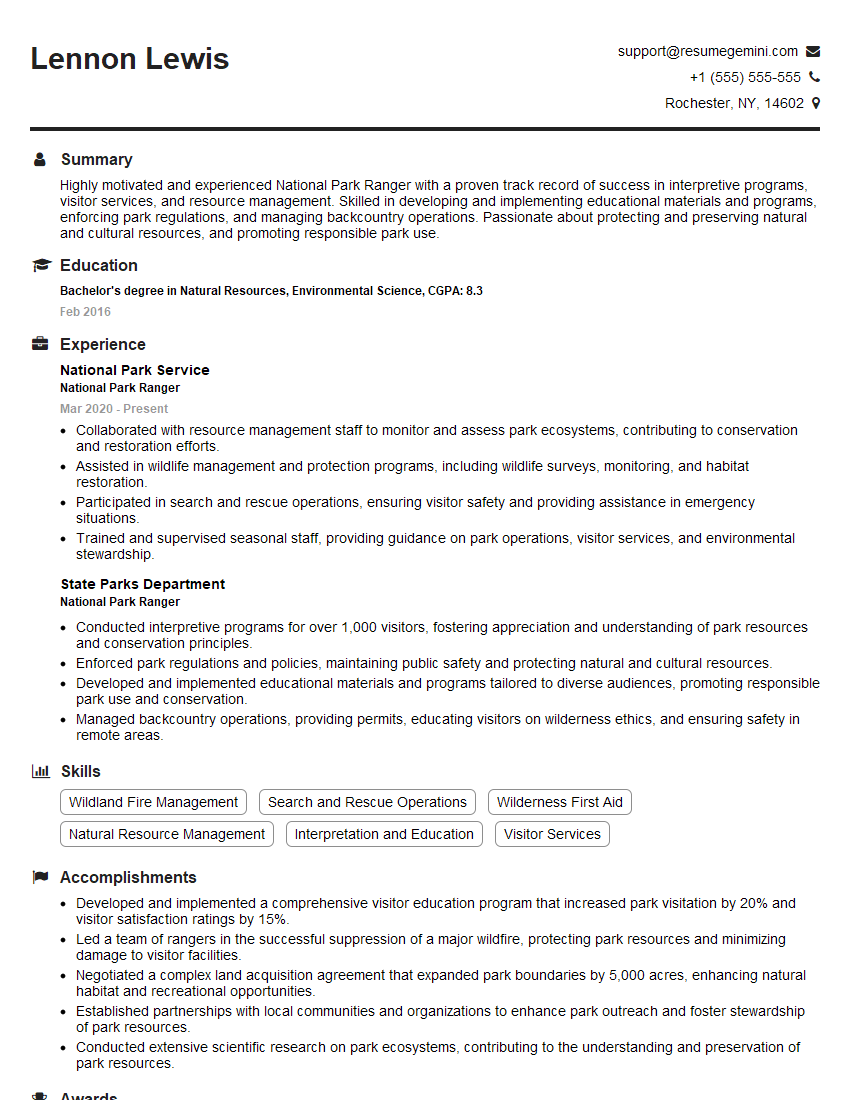
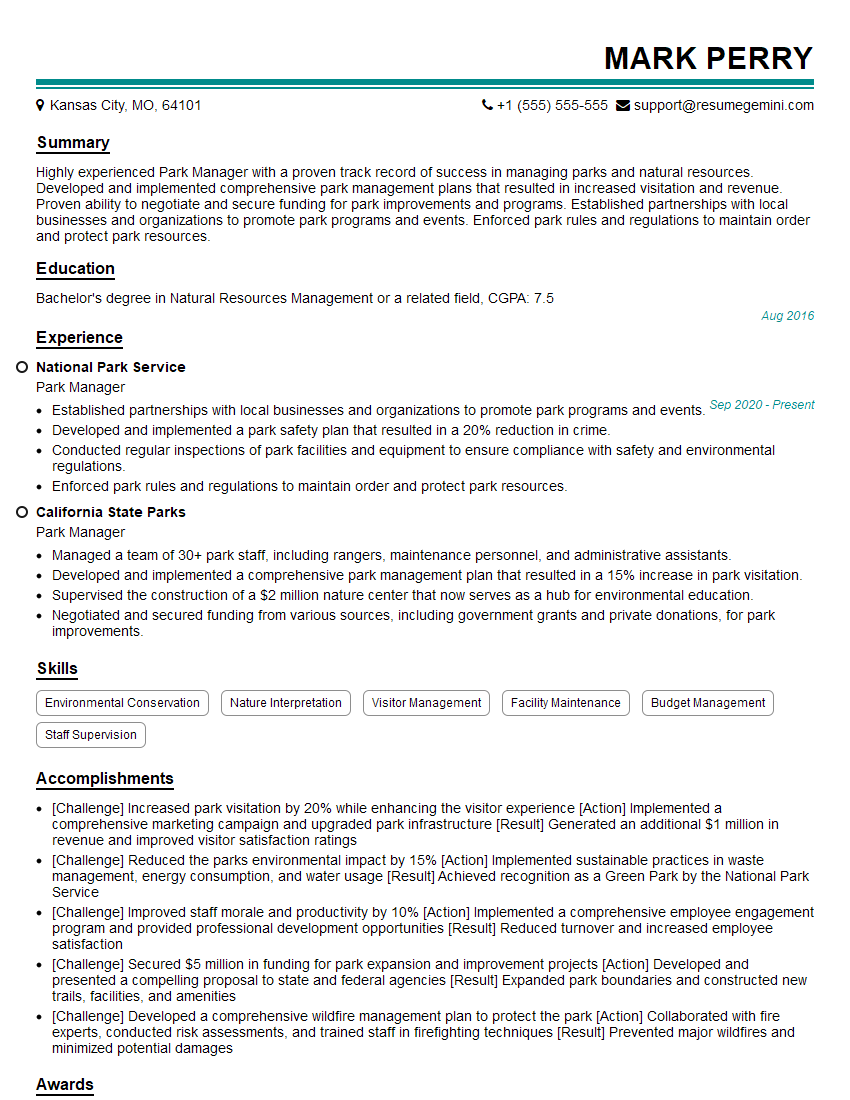
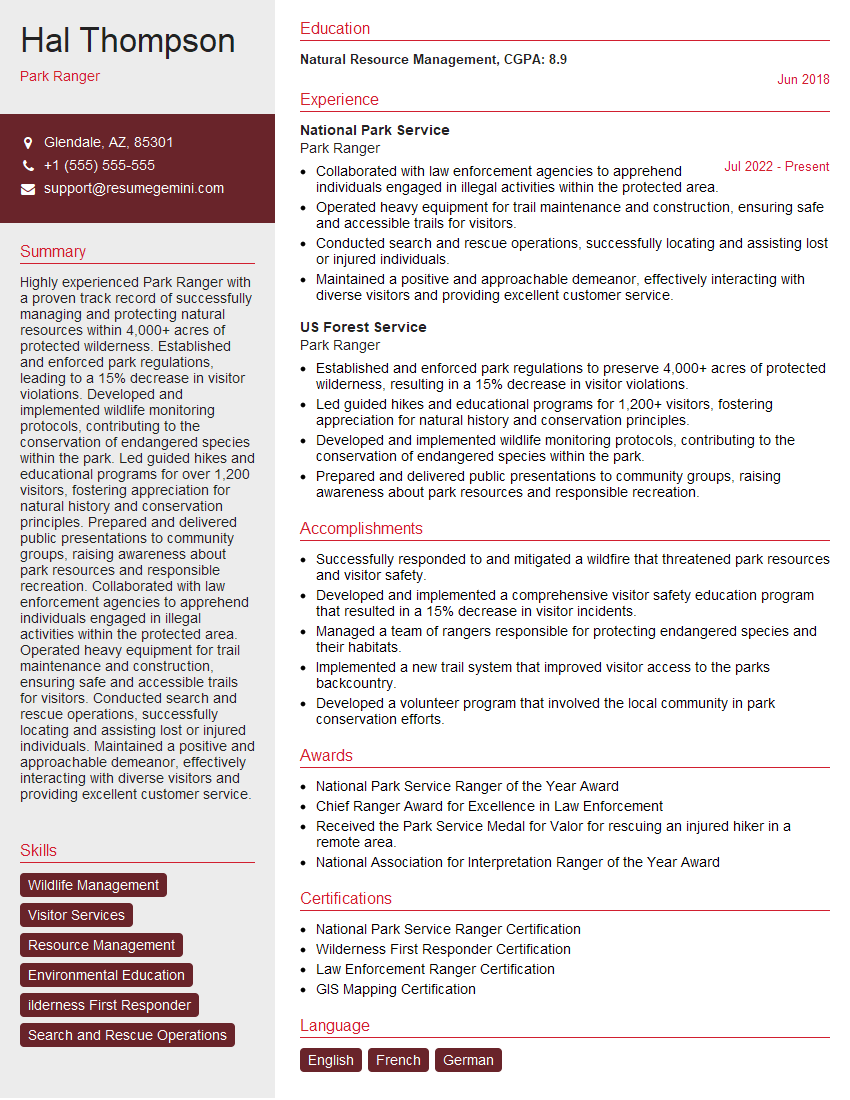
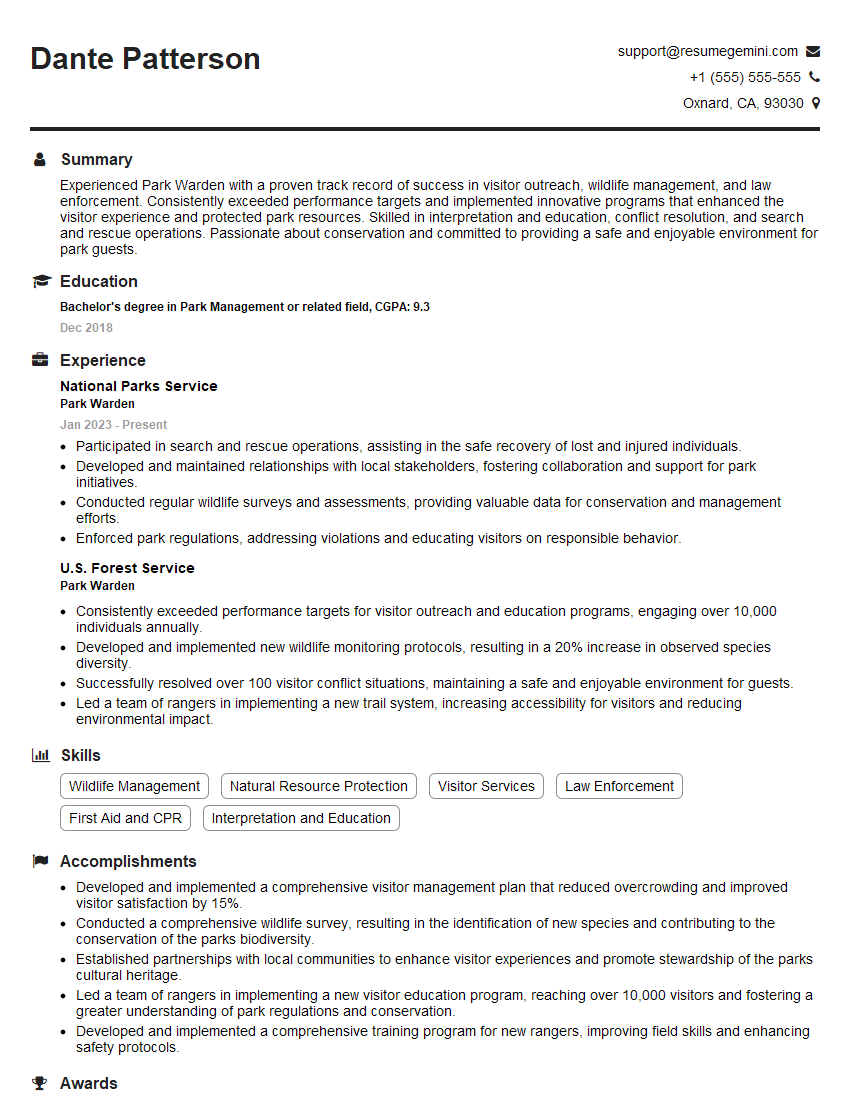
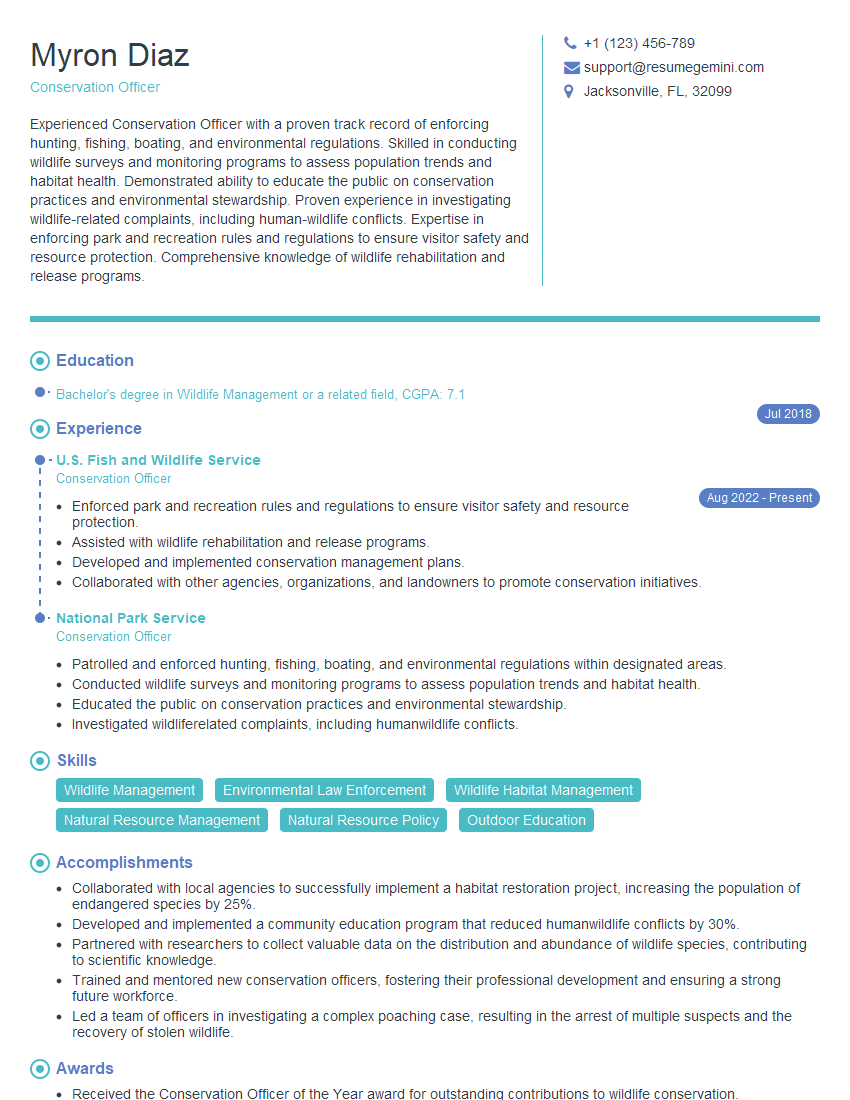
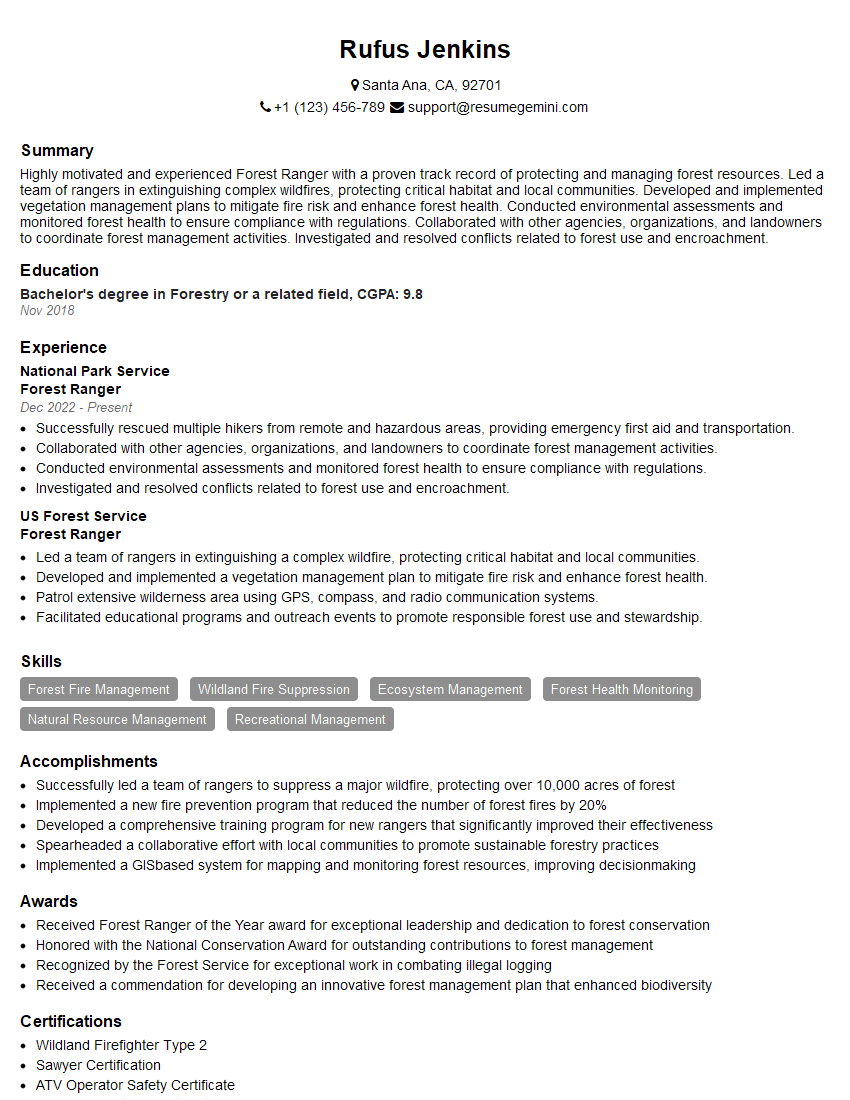
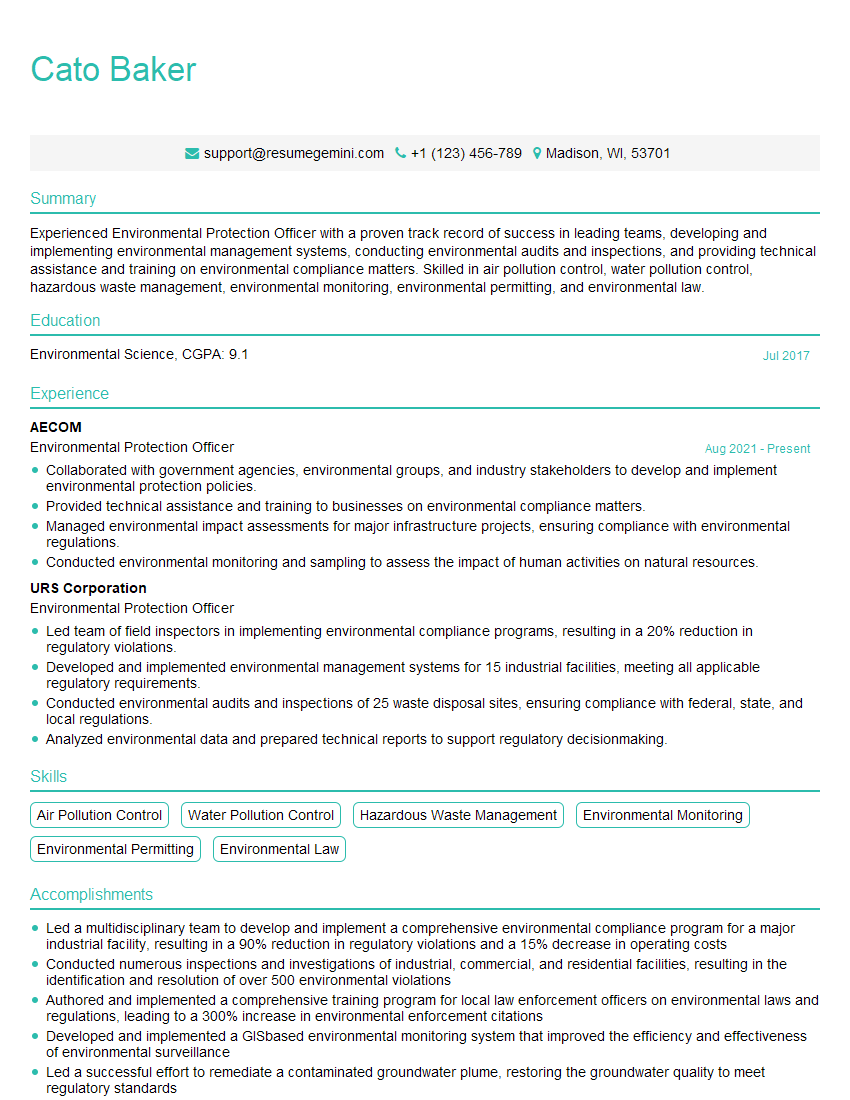
Mastering Park Regulations Enforcement opens doors to a rewarding career with opportunities for advancement and specialization. A strong foundation in these key areas will significantly enhance your interview performance and increase your chances of securing your desired position. To further strengthen your application, focus on crafting an ATS-friendly resume that highlights your relevant skills and experience. ResumeGemini is a trusted resource that can help you build a professional and impactful resume. Examples of resumes tailored to Park Regulations Enforcement are available to guide you through the process.

Explore more articles
Users Rating of Our Blogs
Share Your Experience
We value your feedback! Please rate our content and share your thoughts (optional).
What Readers Say About Our Blog
To the interviewgemini.com Webmaster.
Very helpful and content specific questions to help prepare me for my interview!
Thank you
To the interviewgemini.com Webmaster.
This was kind of a unique content I found around the specialized skills. Very helpful questions and good detailed answers.
Very Helpful blog, thank you Interviewgemini team.