Interviews are more than just a Q&A session—they’re a chance to prove your worth. This blog dives into essential Zoning Board of Appeals interview questions and expert tips to help you align your answers with what hiring managers are looking for. Start preparing to shine!
Questions Asked in Zoning Board of Appeals Interview
Q 1. Explain the difference between a variance and a special exception.
The difference between a variance and a special exception lies in the reason for deviating from zoning regulations. Think of it like this: a variance is a relief granted because strict adherence to the zoning code would impose an undue hardship on the property owner, while a special exception allows a deviation that’s deemed consistent with the overall zoning goals, even though it technically violates a specific rule.
- Variance: This is granted when a property owner faces unique hardship due to the zoning regulations. For example, a small lot might be too narrow to meet setback requirements for a house, creating an undue hardship. The variance allows the owner to slightly reduce the setback, accommodating the building while minimizing negative impacts on the neighborhood. The hardship must be unique to the property and not self-created.
- Special Exception: This allows for a permitted use that may conflict with specific zoning rules but is considered beneficial to the community. Imagine a community zoning plan that permits daycare centers, but only if certain conditions are met (e.g., adequate parking, sound buffering). A special exception allows a daycare to operate on a lot that technically doesn’t fully comply with the parking regulations if the applicant can demonstrate adequate mitigating measures.
In essence, a variance addresses a hardship, while a special exception allows for a desirable use, despite a minor zoning conflict.
Q 2. Describe the process for appealing a zoning decision.
Appealing a zoning decision typically involves a multi-step process. First, a formal appeal must be filed with the Zoning Board of Appeals (ZBA) within a specified timeframe (this timeframe varies by jurisdiction, so check your local ordinances). The appeal must clearly state the grounds for the appeal and provide supporting documentation. The ZBA will then schedule a hearing, notifying all interested parties.
At the hearing, the applicant presents their case, including evidence and testimony. The opposing party (often the municipality) has the opportunity to present their arguments and evidence. The ZBA reviews all submitted evidence and testimony, considers relevant legal precedents, and renders a decision. The decision can affirm the original zoning decision, modify it, or overturn it. If dissatisfied with the ZBA’s decision, further appeals may be possible through the court system, following the established procedures for judicial review of administrative decisions.
Q 3. What are the common grounds for appealing a zoning decision?
Common grounds for appealing a zoning decision often center around claims that the decision was:
- Arbitrary and capricious: The decision was made without a rational basis or was clearly unreasonable.
- Based on insufficient evidence: The decision lacked adequate factual support.
- Procedurally flawed: The decision-making process violated due process, such as failing to provide adequate notice or an opportunity to be heard.
- Inconsistent with the zoning ordinance or other laws: The decision was contrary to the applicable regulations.
- Unconstitutional: The decision violated fundamental rights, such as equal protection or due process.
- Based on error of law: The decision misinterpreted or misapplied the applicable zoning ordinance or other laws.
It’s important to note that the specific grounds for appeal are often defined in state statutes and local ordinances.
Q 4. How does the Zoning Board of Appeals handle conflicts of interest?
Zoning Boards of Appeals take conflicts of interest extremely seriously. Most jurisdictions have strict rules requiring board members to disclose any potential conflicts of interest. If a conflict arises, the board member must recuse themselves from any discussions or votes relating to the matter. This ensures impartiality and maintains public trust. The recusal process usually involves a formal statement by the member declaring the conflict and abstaining from participation. Failure to disclose or recuse oneself can lead to legal challenges and invalidate the board’s decisions.
For instance, if a board member owns property adjacent to the site of a proposed development, they would have a clear conflict of interest and would be obligated to recuse themselves.
Q 5. Explain the concept of ‘substantial detriment’ in zoning appeals.
The concept of ‘substantial detriment’ is often a crucial element in variance cases. It means that adhering strictly to zoning regulations would significantly harm the property owner’s ability to use their land reasonably. It’s not just a minor inconvenience; it’s a significant hardship. The burden of proving substantial detriment usually falls on the applicant seeking the variance.
For example, imagine a property owner with a lot that’s slightly too small to meet the minimum lot size requirement for building a house. Simply being unable to build a house due to this slight difference could be considered a substantial detriment. Conversely, if the owner could easily build a smaller structure or make other reasonable adjustments, the argument of substantial detriment would likely fail.
Q 6. What is the role of evidence and testimony in zoning board hearings?
Evidence and testimony are vital in zoning board hearings. They provide the factual basis for the board’s decisions. Evidence can take many forms, including:
- Surveys and site plans: Showing the physical characteristics of the property and surrounding area.
- Photographs: Depicting existing conditions and proposed changes.
- Expert witness testimony: From engineers, architects, or other professionals providing specialized knowledge.
- Written statements and affidavits: Providing additional context and information.
Testimony from witnesses is also crucial, particularly when providing context, explaining specific aspects of the case, or addressing factual disputes. The ZBA carefully weighs the evidence and testimony to reach a decision that’s fair and consistent with the relevant zoning regulations.
Q 7. How do you determine the appropriate weight to give different types of evidence?
Determining the appropriate weight to give different types of evidence is a key aspect of the ZBA’s role. There’s no single formula, but the board typically considers the following factors:
- Relevance: How directly does the evidence relate to the issues before the board?
- Credibility: How trustworthy are the sources of the evidence and testimony? Consider factors like expertise, consistency, and potential biases.
- Weight of evidence: Is the evidence substantial and convincing, or is it limited and inconclusive?
- Compliance with legal standards: Does the evidence meet the evidentiary standards required for administrative hearings?
For example, a well-documented expert report might be given more weight than anecdotal evidence. Similarly, evidence that contradicts other evidence may be carefully scrutinized to determine which is more reliable. The ZBA acts as a fact-finder, assessing the quality and reliability of all evidence presented.
Q 8. Describe your experience interpreting zoning ordinances and regulations.
Interpreting zoning ordinances requires a deep understanding of legal language and the ability to apply regulations to specific situations. My experience involves meticulously reviewing zoning maps, text amendments, and case law to determine allowable land uses, building heights, setbacks, and density restrictions. I’m proficient in identifying inconsistencies, ambiguities, and conflicts within the ordinances themselves and in understanding how these conflicts are addressed through established precedent.
For example, I recently worked on a case concerning a proposed accessory dwelling unit (ADU). The ordinance allowed ADUs but contained conflicting stipulations about parking requirements. By carefully analyzing the text and consulting related case law, I determined the most appropriate interpretation, ensuring fairness to both the applicant and the surrounding community.
Q 9. How do you handle cases involving complex technical issues?
Complex technical issues, such as those involving environmental impact assessments, engineering plans, or hydrological studies, necessitate a collaborative approach. I leverage my network of experts, including engineers, environmental consultants, and surveyors, to obtain independent assessments. I then carefully review these reports, identifying areas of potential conflict or ambiguity and formulating questions for clarification. This thorough investigation helps to ensure that my decision is based on a sound understanding of all relevant technical information.
In one case involving a proposed development near a wetland, I engaged a hydrologist to assess the potential impact on water flow. Their report revealed a need for mitigation measures not initially proposed by the developer. By incorporating the hydrologist’s findings, we reached a solution that protected the environment while still allowing for responsible development.
Q 10. How do you ensure fairness and impartiality in your decisions?
Fairness and impartiality are paramount. I adhere to strict procedural rules, ensuring all parties receive equal opportunity to present their case. This includes providing ample time for public comment and carefully considering all evidence presented. I strive to maintain a neutral posture, avoiding any personal bias or preconceived notions, and carefully scrutinize my own reasoning to identify potential biases. Transparency is vital; my decisions are carefully documented and explained, providing a clear rationale for each determination.
To ensure impartiality, I regularly participate in continuing education programs focusing on ethics and bias mitigation in decision-making. I actively seek out diverse perspectives and viewpoints, actively soliciting feedback on decisions to avoid unconscious bias.
Q 11. Explain your understanding of due process in the context of zoning appeals.
Due process in zoning appeals is crucial to ensure fairness and protect property rights. It involves guaranteeing the right to a hearing, providing adequate notice, allowing for the presentation of evidence, and ensuring that decisions are made based on relevant facts and the applicable law. This includes the right to legal representation, the opportunity to cross-examine witnesses, and a timely and reasoned decision. Any decision must be supported by sufficient evidence and comply with all applicable statutes and regulations.
An example of ensuring due process would be granting an applicant sufficient time to prepare their case, including providing all relevant documentation from the zoning department and ensuring that all interested parties receive proper notice of hearing dates and times. Furthermore, maintaining a detailed record of proceedings, including all evidence submitted and witness testimony, is paramount to transparency and due process.
Q 12. How familiar are you with relevant state and local laws concerning zoning?
I possess a comprehensive understanding of relevant state and local zoning laws, including the state’s enabling legislation, local ordinances, and related case law. My knowledge extends to interpreting court decisions that shape the application of zoning regulations. I stay abreast of legislative changes and relevant legal interpretations through continuous professional development and by regularly reviewing updates from relevant legal databases and professional publications.
For instance, recent changes to state law regarding affordable housing mandates require me to carefully review and understand their implications for all development projects that come before the board. This involves understanding potential variances, waivers, and the appropriate application of these changes within our local context.
Q 13. Describe your experience working with attorneys, developers, and community members.
My experience involves extensive collaboration with diverse stakeholders, including attorneys, developers, and community members. I’m adept at communicating complex information clearly and concisely to different audiences, fostering constructive dialogue and ensuring all voices are heard. I am skilled in mediating conflicting perspectives and facilitating consensus-building. This involves active listening, respectful communication, and a commitment to finding mutually agreeable solutions.
In one instance, a developer’s proposal faced significant opposition from local residents. Through facilitated discussions, I helped both sides identify their key concerns and potential compromises. This led to a revised proposal that addressed community concerns while still allowing for responsible development.
Q 14. How do you manage conflicting interests among stakeholders?
Managing conflicting interests necessitates a balanced approach prioritizing fairness and adherence to the law. This begins with clearly defining each stakeholder’s interests and concerns. Through structured discussions and the use of objective criteria established by applicable law, I work towards identifying areas of compromise. I utilize conflict resolution techniques, such as mediation and negotiation, to facilitate agreement where possible. When consensus isn’t achievable, I use the established legal framework and evidence presented to make a well-reasoned decision that is transparent and easily understood by all parties.
For example, balancing the needs of a developer seeking maximum density with the concerns of residents regarding traffic and environmental impact requires careful consideration of all evidence, and a solution that might involve compromises on building height, setbacks, or traffic mitigation measures. Transparency in the decision-making process assures all parties that their concerns have been fully considered.
Q 15. How do you make decisions when there is no clear precedent?
When faced with a zoning appeal lacking clear precedent, we rely on a multi-faceted approach. First, we thoroughly examine the relevant zoning ordinance, looking for guiding principles or definitions that can be applied to the unique circumstances of the case. We analyze the intent behind the ordinance, considering the overall goals of zoning regulations – such as public health, safety, and welfare. This interpretive step is crucial.
Second, we look at cases from other jurisdictions with similar zoning codes or factual situations. While not legally binding, these cases offer valuable insights and demonstrate how other boards have interpreted similar issues. We also research legal precedents in related areas of law, such as property rights and environmental regulations, to find any applicable legal principles.
Finally, we carefully weigh the arguments presented by all parties involved, including the applicant, neighbors, and any relevant expert witnesses. The board members must engage in thoughtful deliberation, weighing the potential benefits and drawbacks of the proposed project against the broader community interests and the spirit of the zoning code. In essence, it’s a process of legal interpretation, research, and careful judgment.
Career Expert Tips:
- Ace those interviews! Prepare effectively by reviewing the Top 50 Most Common Interview Questions on ResumeGemini.
- Navigate your job search with confidence! Explore a wide range of Career Tips on ResumeGemini. Learn about common challenges and recommendations to overcome them.
- Craft the perfect resume! Master the Art of Resume Writing with ResumeGemini’s guide. Showcase your unique qualifications and achievements effectively.
- Don’t miss out on holiday savings! Build your dream resume with ResumeGemini’s ATS optimized templates.
Q 16. What are the potential legal ramifications of incorrect zoning decisions?
Incorrect zoning decisions can have significant legal ramifications. Appeals of a zoning board’s decisions are frequently brought to state or superior courts. An incorrect decision, for example, one that violates due process rights or misinterprets the zoning ordinance, could be overturned, leading to potentially costly legal battles for the municipality. The overturned decision could mean the municipality must pay the applicant’s legal fees and costs. Furthermore, if the incorrect decision leads to significant harm – say, an environmentally damaging project – the board could face liability claims.
Beyond legal challenges, incorrect decisions can undermine public trust in the zoning process. This can lead to community disputes, delays in development, and difficulties in implementing future zoning plans. Maintaining the integrity of the decision-making process, therefore, is paramount to avoiding these significant legal and reputational consequences.
Q 17. How do you handle appeals involving emotional or politically charged issues?
Handling appeals involving emotional or politically charged issues requires a delicate balance of empathy and impartiality. We emphasize procedural fairness throughout the process, ensuring all parties have equal opportunity to present their case and evidence. This includes providing clear guidelines, adhering to timelines, and remaining neutral in our interactions. We strive to create an environment where all participants feel respected, even when their views differ significantly.
We focus on the facts and the legal arguments, carefully separating emotion from the legal analysis. While we acknowledge the emotional investment of those involved, we remind ourselves and all participants that our role is to apply the law fairly and consistently, not to favor one side over another based on sentiment. This process is a critical safeguard against arbitrary or biased decisions.
We also utilize mediation or other forms of alternative dispute resolution when appropriate, helping parties find common ground and mitigate potential conflicts. This can help to de-escalate tense situations and promote a more collaborative approach to resolving the issue.
Q 18. How do you ensure the efficiency and timeliness of the appeals process?
Ensuring efficiency and timeliness in the appeals process is crucial for maintaining public trust and avoiding delays in development. We achieve this through a number of strategies. Firstly, we establish clear timelines and deadlines for all stages of the appeals process, from the initial application to the final decision. These deadlines are communicated clearly to all parties involved.
Secondly, we streamline our internal procedures, using technology to manage applications, scheduling hearings efficiently, and documenting decisions effectively. We also proactively identify and address any procedural bottlenecks, aiming to keep the process moving smoothly. Regular review and updates to our processes ensure adaptability to changing demands.
Finally, we encourage cooperation between all parties involved. This includes early engagement with applicants to ensure applications are complete and compliant with the required regulations. Open communication and a commitment to resolving issues quickly help to prevent unnecessary delays and ensure the process is efficient and timely for everyone involved.
Q 19. Describe a challenging zoning case you’ve handled and your approach to resolving it.
One particularly challenging case involved a proposal to build a multi-family residential complex in a primarily single-family residential neighborhood. The applicant argued that the project was consistent with the zoning regulations, providing needed affordable housing. However, neighbors fiercely opposed the project, citing concerns about increased traffic, parking, and potential negative impacts on property values. The case presented a classic conflict between the need for affordable housing and the desires of existing residents to maintain the character of their neighborhood.
My approach involved a careful analysis of the zoning ordinance, reviewing precedent cases involving similar density issues and traffic impact studies. I also facilitated a series of meetings between the applicant, neighbors, and relevant experts to explore potential compromises. This involved presenting data to refute unfounded concerns and identifying possible mitigations like adjustments to the building design or traffic management plans. After significant deliberation and compromise, we reached a solution that involved a slightly reduced density and the inclusion of additional amenities to benefit the surrounding community. The modified plan received broader community acceptance and the project proceeded.
Q 20. How do you stay current with changes in zoning laws and regulations?
Staying current with changes in zoning laws and regulations is essential for effective decision-making. I utilize several strategies. I regularly review updates to state and local zoning codes, attending relevant workshops, seminars, and conferences hosted by professional organizations. Subscription to legal databases and journals provides access to the latest case law and legal commentary.
Furthermore, I maintain professional relationships with other zoning professionals, exchanging information and best practices. This network provides valuable insight into emerging trends and challenges in zoning regulation. Active participation in professional organizations helps me to stay abreast of cutting-edge developments and evolving legal interpretations.
Finally, I am constantly researching and reviewing relevant legal scholarship. By actively engaging in continuing legal education and maintaining a strong professional network, I ensure my knowledge of zoning regulations remains current and comprehensive.
Q 21. What are your strengths and weaknesses in handling zoning appeals?
My strengths lie in my analytical skills, my ability to objectively weigh competing interests, and my commitment to fairness and due process. I’m adept at interpreting complex regulations, conducting thorough research, and explaining legal concepts clearly to a diverse audience. My experience in mediating disputes is also a significant strength.
One area for potential improvement is to further develop skills in anticipating the potential unintended consequences of decisions. While I focus on careful analysis, I constantly strive to refine my foresight, using scenario planning and predictive modelling to better assess the long-term impacts of zoning decisions. This is an ongoing process of professional development.
Q 22. How do you prioritize cases and manage your workload effectively?
Prioritizing cases and managing workload on a Zoning Board of Appeals (ZBA) requires a strategic approach. We utilize a multi-pronged system that combines urgency, complexity, and legal precedence. Cases involving immediate safety concerns, such as dangerous building conditions, take priority. Next, we consider the complexity of the appeal – those involving intricate legal arguments or extensive technical reviews are scheduled accordingly. Finally, we prioritize based on deadlines and the established order of receipt, ensuring fairness and transparency.
Workload management involves leveraging technology (discussed later) and team collaboration. We hold regular meetings to discuss upcoming cases, delegate tasks based on member expertise, and track progress using project management tools. This structured approach ensures that all cases are handled efficiently and effectively, preventing delays and maintaining a smooth workflow.
Q 23. Describe your understanding of the principles of sustainable development in zoning.
Sustainable development in zoning is about balancing environmental protection, economic growth, and social equity. It means making zoning decisions that promote energy efficiency, reduce carbon emissions, protect natural resources, and ensure access to affordable housing and transportation. For example, encouraging higher density housing near transit corridors reduces reliance on cars and helps minimize sprawl. Implementing green building standards in new constructions ensures energy efficiency and reduces the environmental impact.
Incorporating green infrastructure like rain gardens and permeable pavements manages stormwater runoff and improves water quality. Prioritizing mixed-use development creates vibrant, walkable communities that reduce the need for car travel. These principles are integrated into zoning regulations through incentives for sustainable practices, restrictions on environmentally damaging activities, and consideration of environmental impact assessments during the review process.
Q 24. How do you balance the needs of individual property owners with community interests?
Balancing the needs of individual property owners with the broader community interest is a core function of the ZBA. We achieve this balance through careful consideration of all factors involved. We start by carefully examining the applicant’s request, evaluating its compliance with existing regulations and its potential impact on surrounding properties and the community as a whole.
For instance, an application for a variance might benefit an individual but negatively affect neighborhood character or property values. In such cases, we weigh the individual hardship against the potential harm to the community. Public hearings provide a vital platform for community members to voice their concerns and perspectives, enabling informed decision-making. Our decisions strive to create a fair and equitable outcome for all involved, often involving compromise and finding solutions that address both individual needs and broader community goals.
Q 25. What strategies do you employ to ensure clear and effective communication?
Clear and effective communication is paramount. We employ several strategies, including: 1) Using plain language in all communications, avoiding technical jargon whenever possible. 2) Providing timely updates to all stakeholders involved in a case. 3) Maintaining open and accessible communication channels—making ourselves readily available for questions or concerns. 4) Making comprehensive written decisions that clearly explain the reasoning behind our rulings. 5) Utilizing various communication methods like emails, letters, and public hearings to cater to different preferences.
For example, when explaining a decision to an applicant, we might use analogies to help them understand the zoning regulations involved. We also proactively seek feedback on our communication strategies to ensure our messaging remains understandable and effective.
Q 26. How do you incorporate public input into the decision-making process?
Public input is crucial to informed decision-making. We incorporate public input through several mechanisms: 1) Public hearings, where community members can voice their opinions directly to the board. 2) Written comments submitted before or after hearings. 3) Online platforms for feedback and engagement. We actively solicit public comment, providing clear instructions and timelines for participation. We summarize and consider all comments received, noting areas of agreement and disagreement, before making our decision. This ensures the community’s concerns are comprehensively addressed and that our decisions reflect the broader community interest.
For example, if a proposed development sparks significant community opposition, we might ask the applicant to revise their proposal or engage in further discussions with community members to address the concerns raised.
Q 27. Describe your experience with using technology to manage zoning appeals.
Technology plays a significant role in managing zoning appeals. We use a dedicated case management software to track applications, schedule hearings, manage documents, and record meeting minutes. This software facilitates efficient workflow, improves organization, and enhances transparency.
For example, online portals allow applicants to submit applications electronically, track their progress, and access meeting documents online. This streamlines the application process and reduces paperwork. We also use video conferencing to conduct remote hearings, which enhances accessibility and efficiency, especially helpful during times of limited mobility or travel restrictions.
Q 28. What are your expectations regarding the role of a Zoning Board of Appeals member?
My expectations regarding the role of a ZBA member are high. It demands impartiality, fairness, thoroughness, and a deep understanding of zoning regulations, relevant laws, and due process. A ZBA member must be able to analyze complex information, weigh competing interests, and make well-reasoned decisions based on facts and evidence.
This role also requires strong communication skills to interact effectively with applicants, community members, and colleagues. A commitment to transparency and ethical conduct is essential. Above all, a ZBA member should strive to foster a fair and equitable process that balances the needs of individual property owners with the interests of the community as a whole.
Key Topics to Learn for Zoning Board of Appeals Interview
- Zoning Ordinances and Regulations: Understanding the intricacies of local zoning laws, including permitted uses, setbacks, height restrictions, and density regulations. Practical application: Analyzing a hypothetical development proposal and identifying potential zoning violations.
- Variance and Appeal Procedures: Mastering the processes for requesting variances and appealing zoning decisions. Practical application: Developing a compelling argument for a variance based on hardship or unique circumstances.
- Administrative Procedures and Due Process: Familiarizing yourself with the legal framework governing the Zoning Board’s decision-making process, including public hearings, evidence presentation, and record-keeping. Practical application: Understanding the rights of applicants and the responsibilities of the board members.
- Land Use Planning Principles: Grasping fundamental land use planning concepts such as comprehensive planning, sustainable development, and equitable distribution of resources. Practical application: Evaluating the impact of a proposed development on the surrounding community.
- Case Law and Precedent: Understanding relevant case law and past decisions of the board. Practical application: Using precedent to support arguments and predict outcomes.
- Problem-Solving and Decision-Making: Developing strong analytical and critical thinking skills to effectively assess complex zoning issues. Practical application: Evaluating competing interests and finding solutions that balance community needs with individual rights.
- Communication and Interpersonal Skills: Demonstrating the ability to clearly and effectively communicate complex information to diverse audiences, including applicants, board members, and the public. Practical application: Presenting a well-reasoned and persuasive argument in a public setting.
Next Steps
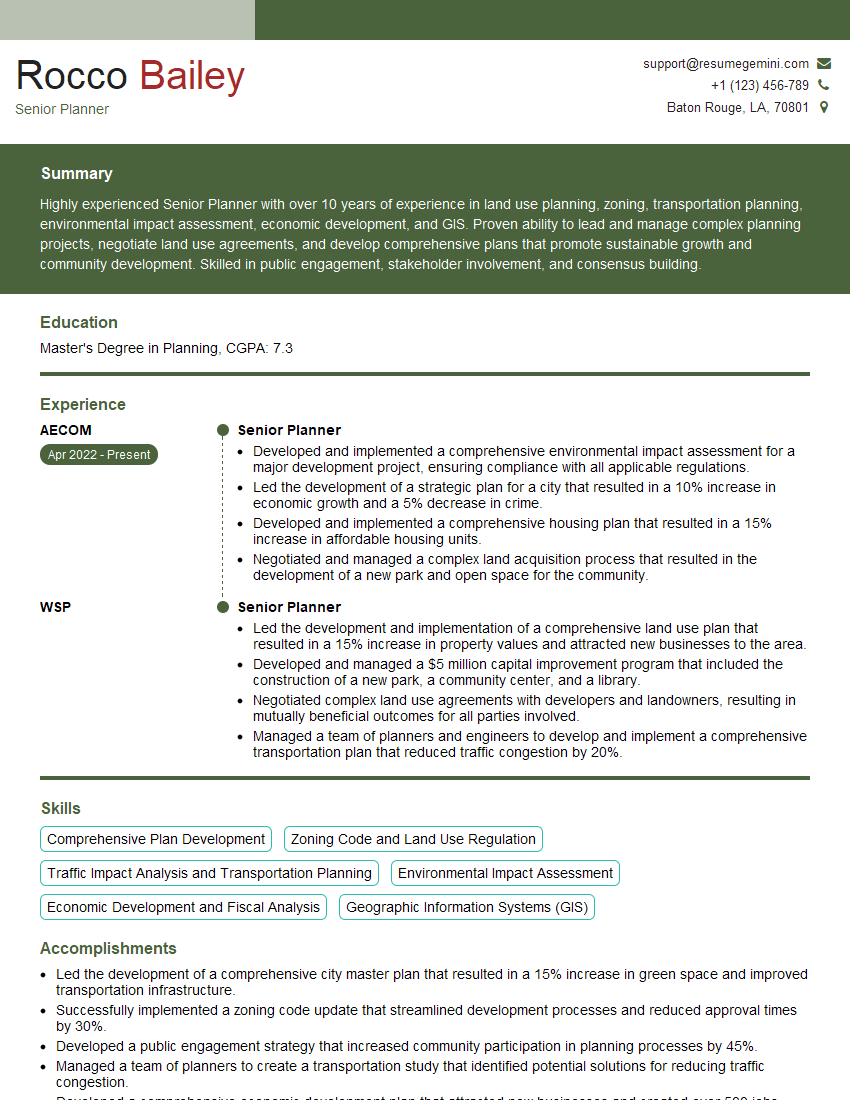
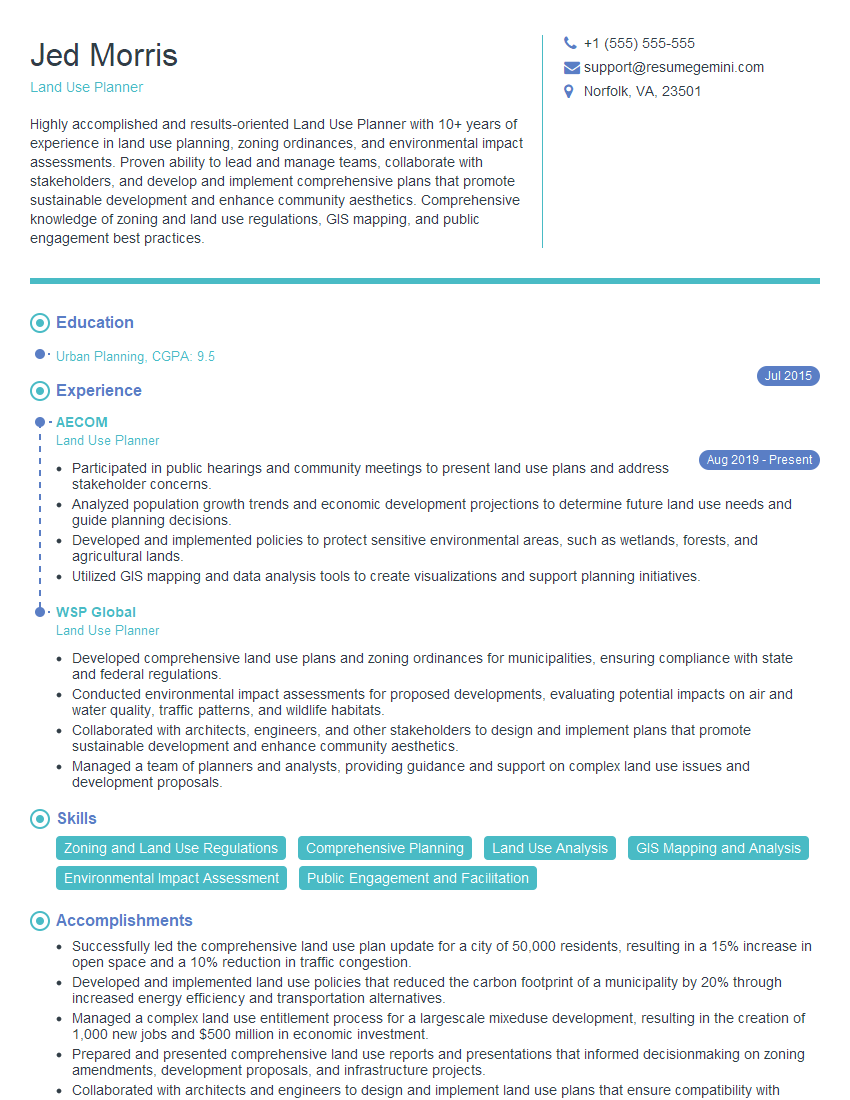
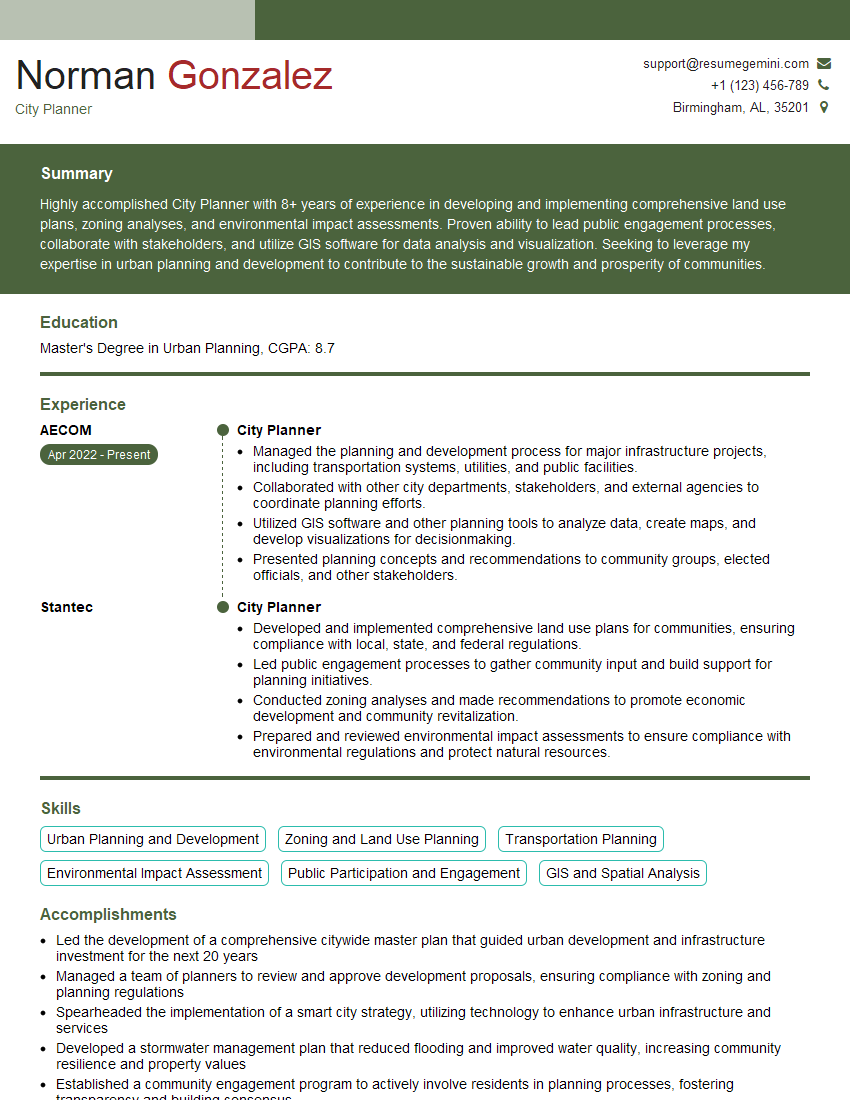
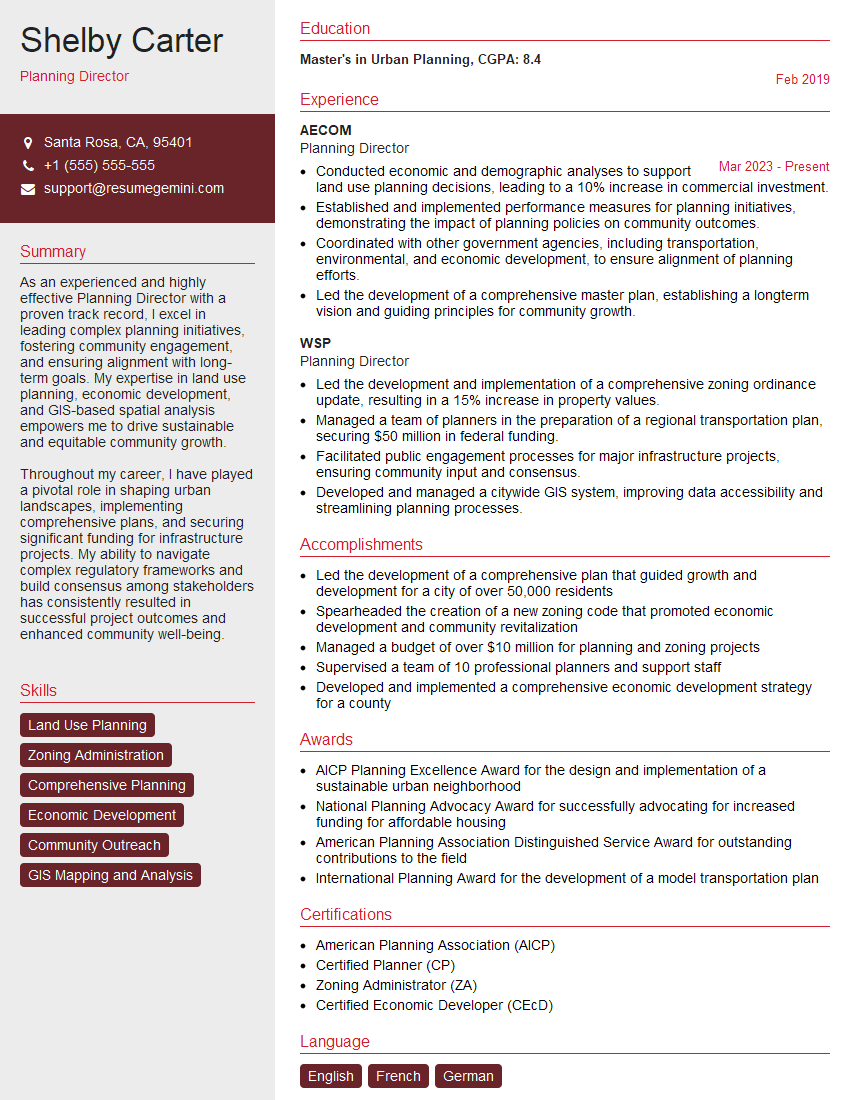
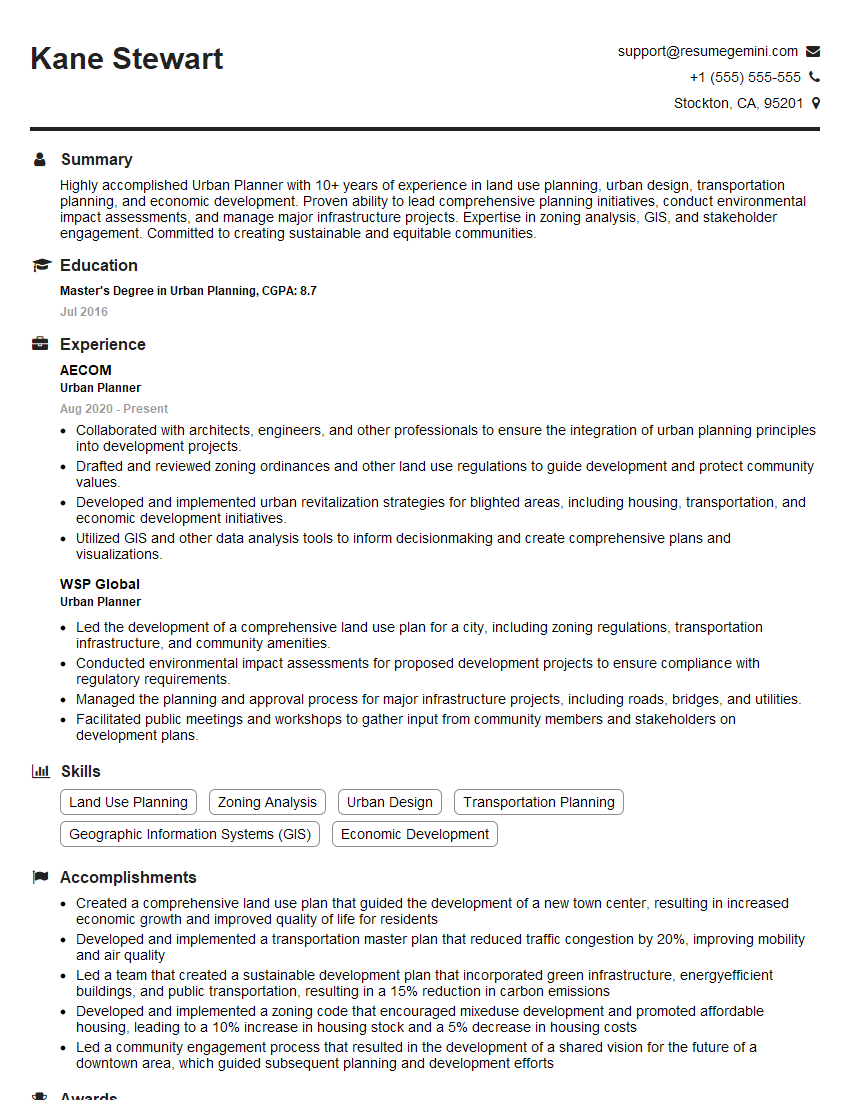
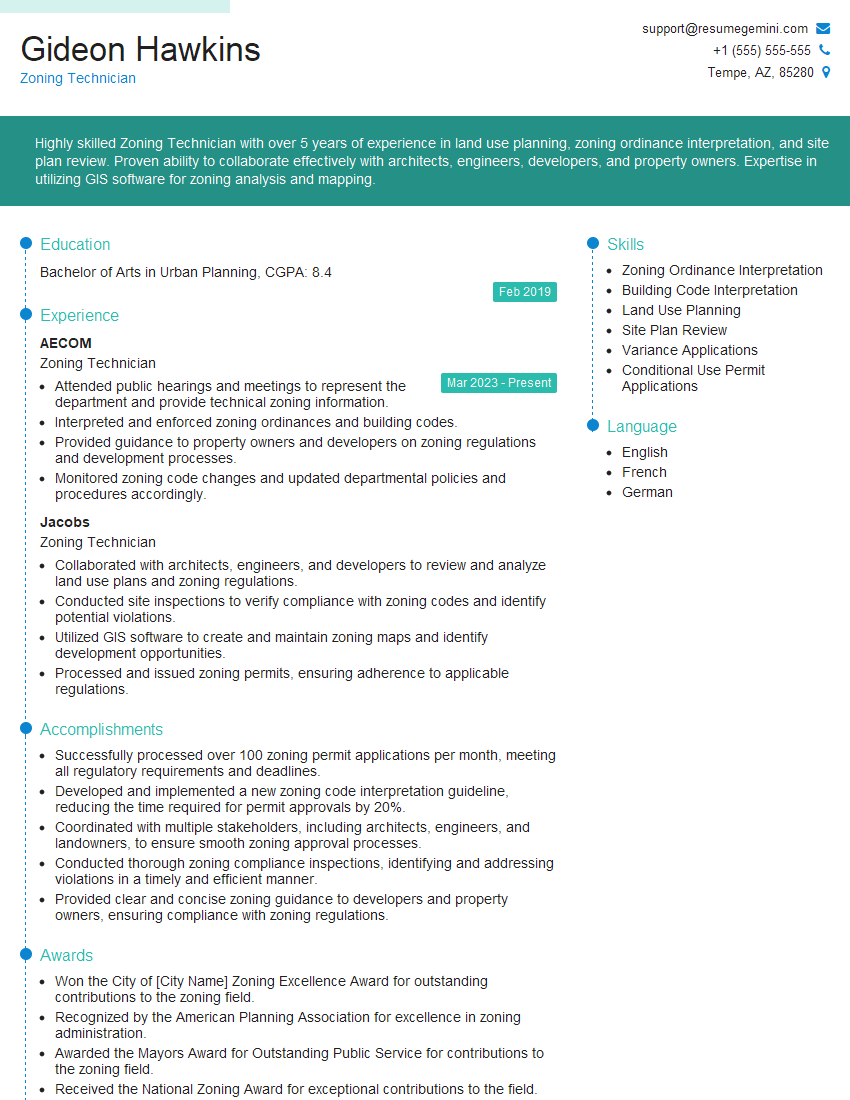
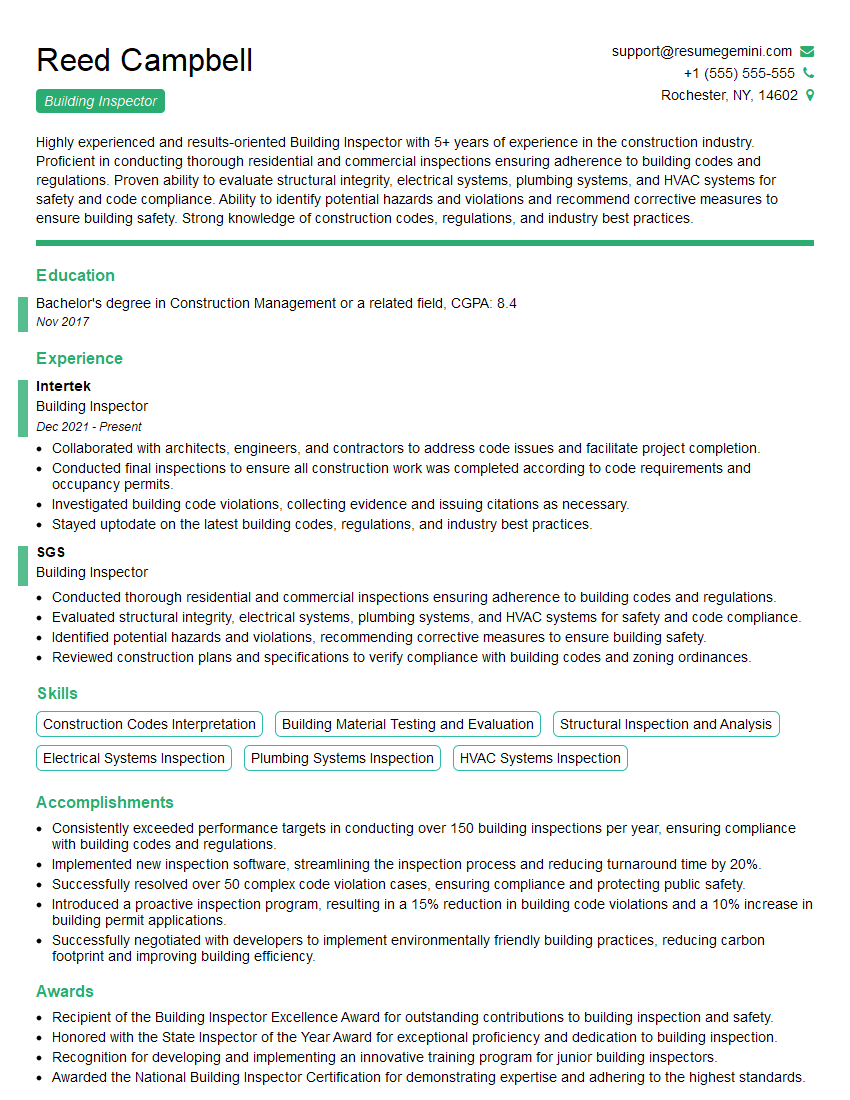
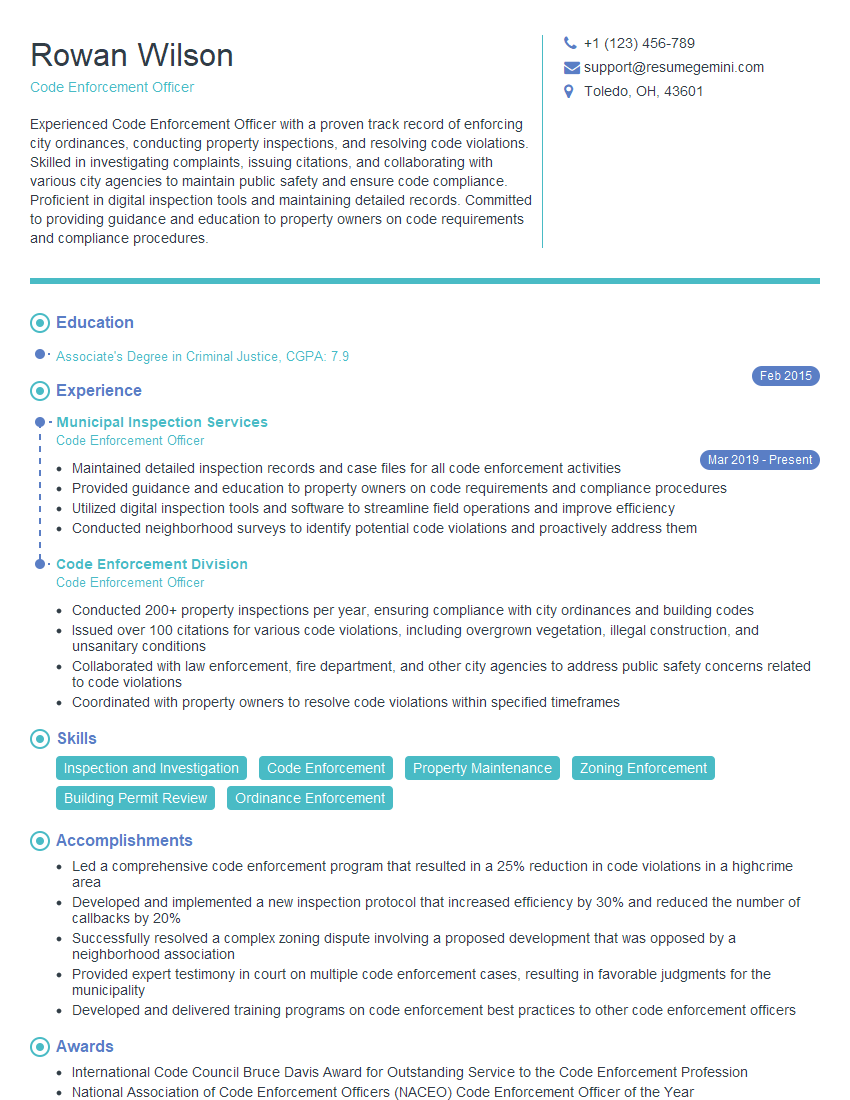
A strong understanding of Zoning Board of Appeals procedures and principles is crucial for career advancement in land use planning, urban development, and related fields. To maximize your job prospects, create an ATS-friendly resume that highlights your relevant skills and experience. ResumeGemini is a trusted resource to help you build a professional and impactful resume. We provide examples of resumes tailored to Zoning Board of Appeals positions to help you get started. Invest time in crafting a compelling resume—it’s your first impression on potential employers.
Explore more articles
Users Rating of Our Blogs
Share Your Experience
We value your feedback! Please rate our content and share your thoughts (optional).
What Readers Say About Our Blog
To the interviewgemini.com Webmaster.
Very helpful and content specific questions to help prepare me for my interview!
Thank you
To the interviewgemini.com Webmaster.
This was kind of a unique content I found around the specialized skills. Very helpful questions and good detailed answers.
Very Helpful blog, thank you Interviewgemini team.