Interviews are opportunities to demonstrate your expertise, and this guide is here to help you shine. Explore the essential Zoning Permit Processing interview questions that employers frequently ask, paired with strategies for crafting responses that set you apart from the competition.
Questions Asked in Zoning Permit Processing Interview
Q 1. Explain the process of obtaining a zoning permit.
Obtaining a zoning permit is a multi-step process designed to ensure proposed developments adhere to local regulations. Think of it like getting a recipe approved before baking a cake – you need to show the ingredients (plans) meet the standards (zoning codes) to avoid a baking disaster (permit denial).
- Pre-application Consultation: It’s highly recommended to meet with the zoning department before submitting a formal application. This allows you to discuss your project and address potential issues early on, saving time and frustration.
- Application Submission: The formal application typically involves detailed plans, site surveys, and forms. These documents clearly outline the proposed use of the land and how it conforms to zoning regulations. Incomplete applications are frequently returned.
- Review and Processing: The zoning department reviews the application against the relevant zoning codes. This includes checking for setbacks (distance from property lines), building height restrictions, parking requirements, and the permitted use of the land in that zone.
- Notification and Public Hearings (if required): Depending on the project’s scope and potential impact, public notices may be posted, and a public hearing could be held. This allows neighbors to voice concerns or support for the project.
- Permit Approval or Denial: After the review process, the department issues a permit if the application is complete and the project complies with zoning regulations. Otherwise, the application may be denied or returned for revisions.
- Permit Issuance and Project Commencement: Once approved, the permit is issued, allowing the project to begin. Regular inspections are often conducted to ensure compliance throughout the construction process.
Q 2. Describe different types of zoning permits and their applications.
Zoning permits come in various types, each tailored to a specific land use or activity. Imagine them as different cooking tools – you use a whisk for one recipe, and a spatula for another.
- Building Permits: These authorize the construction, alteration, or demolition of structures. They often require architectural plans and engineering calculations. For example, building a new home or adding a room to an existing house.
- Sign Permits: These govern the size, location, and type of signs. Think about the restrictions on billboards or storefront signage. This ensures visual consistency within the neighborhood.
- Special Use Permits: These are for activities that are not explicitly permitted but are deemed compatible with the zoning. For example, a daycare in a residential zone, provided it meets specific criteria.
- Variance Permits: These allow exceptions to zoning regulations when strict adherence creates unnecessary hardship. For instance, a building that slightly exceeds the maximum height limit due to unique site constraints.
- Conditional Use Permits: These permits allow certain uses that are usually prohibited in a zone, subject to specific conditions. For example, a brewery located near a residential area under conditions regarding noise and operating hours.
Q 3. How do you handle incomplete or inaccurate permit applications?
Incomplete or inaccurate applications are a common challenge. Our process prioritizes clarity and thoroughness to prevent delays and ensure compliance.
- Identify Deficiencies: We meticulously review each application for missing information or discrepancies. A checklist is used to ensure nothing is overlooked.
- Communicate with Applicant: We promptly contact the applicant to explain the deficiencies and request the necessary corrections or clarifications. This often involves providing specific examples of what is missing or needs to be revised.
- Set Deadlines: Realistic deadlines are set for resubmission of the corrected application. This keeps the process moving forward efficiently.
- Follow-up and Support: We provide support and guidance to applicants throughout the correction process to ensure a successful outcome. This may involve explaining complex regulations or referring them to relevant resources.
Imagine a chef submitting a recipe with missing ingredients – we wouldn’t start cooking until they are provided. Similarly, a complete and accurate application is essential for permit processing.
Q 4. What are the common reasons for zoning permit denials?
Zoning permit denials can stem from various factors. They often boil down to the proposed project not meeting the requirements outlined in the zoning code.
- Non-compliance with Zoning Codes: The most frequent reason is the project violating specific regulations, like setbacks, height restrictions, or parking requirements.
- Incompatible Use: The proposed use might be incompatible with the designated zoning district. For instance, a factory in a residential area.
- Insufficient Information: Incomplete or unclear application documents can lead to denial. The review process relies on accurate and comprehensive information.
- Environmental Concerns: Potential negative impacts on the environment might trigger denial if mitigation measures aren’t adequately addressed.
- Public Opposition: Strong public opposition, following a public hearing, can influence the decision, especially for projects with potential negative impacts on the surrounding neighborhood.
Q 5. How do you ensure compliance with zoning regulations throughout the permit process?
Ensuring compliance throughout the entire process involves proactive measures and ongoing monitoring. This is akin to a quality control process in manufacturing, ensuring the final product adheres to specifications.
- Regular Inspections: Scheduled inspections are conducted at various stages of the project. These verify adherence to approved plans and zoning regulations.
- Strict Adherence to Approved Plans: Any deviations from the approved plans must be formally reviewed and approved before implementation. This ensures that the final development remains compliant.
- Addressing Non-Compliance: Any discovered non-compliance is addressed promptly through notifications, warnings, or, in severe cases, stop-work orders. Corrective action plans might be required.
- Collaboration with Contractors and Developers: Maintaining open communication with contractors and developers ensures mutual understanding and facilitates the smooth execution of the project while abiding by the regulations.
Q 6. Explain the role of zoning codes in land use planning.
Zoning codes are the backbone of land use planning. They are the rules of the game that shape the character and development of a community. They are essentially the guidelines to creating a well-functioning and desirable community.
They serve several crucial purposes:
- Regulating Land Use: Zoning codes determine what types of activities are permitted in specific areas – residential, commercial, industrial, etc. This prevents incompatible land uses from being next to each other, such as a noisy factory next to a school.
- Protecting Property Values: By limiting the types of development allowed in a zone, zoning codes help maintain property values. A well-planned neighborhood tends to maintain higher property values.
- Promoting Public Health and Safety: Zoning codes address aspects like building codes, parking requirements, and setbacks to ensure public safety and health. Think fire safety, adequate parking and appropriate distances from streets.
- Managing Growth and Development: Zoning regulates the density and intensity of development. This helps to manage population growth and preserve green spaces. It ensures organized growth, preventing haphazard expansion.
Q 7. Describe your experience with zoning variance applications.
Zoning variance applications are requests for deviations from the strict letter of zoning regulations. They are used when strict adherence would create an undue hardship on the property owner. Think of it as a special exception to the rules.
My experience involves reviewing these applications carefully, examining the evidence of hardship, and assessing whether the variance would negatively impact the surrounding neighborhood. We consider factors like the size and nature of the variance, the reasons for the request, and the potential impacts on the surrounding community. I’ve worked on cases involving:
- Unusual lot sizes or shapes: Where building a house compliant with standard setbacks proves impossible due to the lot’s unique configuration.
- Topographical challenges: Where the terrain makes it impractical to meet certain building code requirements without incurring excessive costs.
- Pre-existing non-conforming uses: Where an existing building might violate zoning regulations due to changes in regulations over time.
Each case requires a detailed analysis, balancing the applicant’s needs with the overall zoning objectives. The goal is to arrive at a fair and well-reasoned decision. Public hearings are often involved to gather community input.
Q 8. How do you prioritize competing permit requests?
Prioritizing competing permit requests requires a systematic approach that balances fairness, efficiency, and adherence to regulations. We don’t simply use a ‘first-come, first-served’ model; instead, we consider several factors.
- Urgency: Permits for projects with immediate safety concerns or time-sensitive deadlines (e.g., emergency repairs, critical infrastructure projects) take precedence.
- Completeness of Application: Applications with all required documentation submitted are processed faster than incomplete ones. This encourages applicants to be thorough.
- Compliance with Zoning Ordinances: Projects that clearly comply with zoning regulations are prioritized to streamline the approval process. This minimizes delays due to significant revisions.
- Project Size and Impact: Larger projects or those with a greater potential impact on the community might require more extensive review and might not necessarily be prioritized based solely on submission date. We carefully balance the workload to ensure thorough review of all applications.
- Public Health and Safety: Projects that directly address public health and safety concerns, such as necessary building code updates, often take priority.
Imagine a scenario where we receive three applications: one for a minor home repair, one for a large commercial development, and one for an emergency repair after a storm. The emergency repair would clearly take priority, followed by the home repair (assuming it’s complete), and finally the large development project, which requires more in-depth review and potentially public hearings. We use a queuing system that factors in all these criteria to ensure a fair and effective process.
Q 9. What software or systems do you have experience using for zoning permit processing?
Throughout my career, I’ve worked with a variety of software and systems for zoning permit processing. My experience includes:
- Accela Civic Platform: This is a comprehensive platform that streamlines the entire permit process, from application submission to final approval and inspection scheduling. I’m proficient in using its features for managing applications, tracking progress, conducting online inspections, and generating reports.
- Tyler Technologies Munis: Another robust system that integrates with other municipal systems, Munis allows for efficient case management, communication with applicants, and robust data analysis.
- Geographic Information Systems (GIS) Software (e.g., ArcGIS): GIS software is crucial for map interpretation, analyzing project impacts on surrounding areas, and ensuring compliance with zoning regulations. I’m experienced in using ArcGIS to visualize zoning boundaries, overlay project sites, and conduct impact assessments.
My experience with these systems ensures smooth workflow, efficient data management, and transparent communication throughout the permit process. I’m confident in adapting to new software as needed, understanding that technology is continuously evolving in this field.
Q 10. How do you handle appeals of zoning permit decisions?
Appeals of zoning permit decisions are a critical part of ensuring fairness and due process. The process typically involves a formal appeal filed within a specified timeframe, outlining the grounds for the appeal.
- Review of the Decision: The appeal is carefully reviewed to ensure the initial decision was made in accordance with the zoning ordinance and all applicable laws and regulations.
- Evidence and Documentation: New evidence or documentation that wasn’t available during the initial review is carefully examined. This might include expert opinions or further site analysis.
- Hearing or Meeting: Often, a formal hearing or meeting is conducted to allow the applicant to present their case and allow for questioning from the review board or hearing officer.
- Decision on Appeal: After the hearing, a decision is rendered, which may uphold the original decision, reverse it, or modify it.
For example, an applicant might appeal a denial based on the claim that the zoning ordinance was misinterpreted. In such cases, we meticulously review the zoning code, the applicant’s project plans, and any supporting documentation to arrive at a fair and accurate decision on the appeal.
Q 11. Describe your experience with zoning map interpretation.
Zoning map interpretation is fundamental to my role. It involves understanding the symbols, designations, and regulations depicted on the maps to determine permitted uses, setbacks, height restrictions, and other development standards for a given parcel.
- Identifying Zoning Districts: I can accurately identify various zoning districts based on their symbols and colors on the map (e.g., residential, commercial, industrial).
- Understanding Overlay Districts: I’m proficient in interpreting overlay districts that impose additional regulations on top of the base zoning districts (e.g., floodplains, historic districts).
- Determining Permitted Uses: I can determine which uses are permitted, conditional, or prohibited within a specific zoning district, considering any overlay restrictions.
- Measuring Setbacks and Dimensions: I’m skilled in using the map to measure setbacks from property lines, determine building height limitations, and calculate lot areas.
For instance, I might use a zoning map to determine whether a proposed restaurant is permitted in a specific location, considering setbacks from the street and any potential parking requirements. The accuracy of this interpretation is crucial for efficient and legally sound permit processing.
Q 12. How familiar are you with the different zoning districts in [mention specific location]?
Please specify the location. However, I can adapt quickly to any region’s zoning regulations. My approach involves studying the local zoning ordinances, reviewing zoning maps, and understanding the specific characteristics of each district.
For instance, in a hypothetical location, I would familiarize myself with the differences between residential districts (e.g., R-1, R-2, with varying density allowances), commercial districts (e.g., C-1, C-2, with different intensity levels and permitted businesses), and industrial districts (with particular focus on environmental regulations and permissible industrial activities). Understanding the nuances of each district is essential for accurate permit processing and ensuring compliance with all applicable regulations.
Q 13. How do you manage and track zoning permit applications?
Managing and tracking zoning permit applications requires a robust system that ensures accuracy, efficiency, and transparency. This typically involves:
- Centralized Database: All applications are logged into a centralized database, either through dedicated software (like Accela or Munis) or a custom-built system. This allows for easy tracking and retrieval of information.
- Application Tracking Numbers: Each application is assigned a unique tracking number, facilitating communication and tracking progress across various stages.
- Workflow Management: Clear workflows define the steps required for processing applications, from initial review to final approval or denial. This ensures consistent handling of all applications.
- Digital Document Management: All application documents (plans, reports, etc.) are stored digitally, allowing for easy access and reducing paper usage.
- Automated Notifications: Automated email or text message notifications keep applicants informed about the status of their applications.
By using a combination of software, clear procedures, and regular updates, I maintain a highly organized and transparent tracking system for all zoning permit applications. This streamlines the process and ensures timely approvals.
Q 14. What is your experience with site plan review?
Site plan review is a crucial stage in the zoning permit process, where the detailed design and layout of a project are examined to ensure compliance with zoning regulations and other applicable codes.
- Review of Design Plans: Thorough review of site plans includes assessing building placement, setbacks, parking layout, landscaping, and other design elements.
- Compliance with Regulations: This review ensures compliance with zoning regulations related to building height, lot coverage, impervious surface area, and other relevant codes.
- Impact Assessment: The review often involves assessing the project’s impact on surrounding areas, including traffic flow, drainage, and environmental factors.
- Public Input: In many cases, site plan review includes opportunities for public input and review through neighborhood meetings or public hearings.
For example, I might review a site plan for a new apartment building to ensure sufficient parking is provided, that required setbacks are maintained, and that adequate landscaping buffers are incorporated to minimize visual impacts on neighboring properties. My experience in site plan review ensures that projects are designed and built in accordance with regulations and community standards.
Q 15. Explain your understanding of building codes and their relationship to zoning regulations.
Building codes and zoning regulations are distinct but interconnected legal frameworks governing construction and land use. Building codes dictate the minimum standards for construction safety, structural integrity, fire protection, and accessibility. Think of them as the rules for how a building is built. Zoning regulations, on the other hand, control what can be built where – determining permitted land uses (residential, commercial, industrial), building height, density, setbacks, and parking requirements. They act as a blueprint for how land is used within a community.
For example, a building code might specify the minimum size of a stairwell for fire safety. A zoning regulation might dictate that only single-family homes are allowed on a particular lot, regardless of how safely the building is constructed. A permit application must satisfy both sets of rules; a building won’t get approved if it meets code but violates zoning, or vice versa.
Career Expert Tips:
- Ace those interviews! Prepare effectively by reviewing the Top 50 Most Common Interview Questions on ResumeGemini.
- Navigate your job search with confidence! Explore a wide range of Career Tips on ResumeGemini. Learn about common challenges and recommendations to overcome them.
- Craft the perfect resume! Master the Art of Resume Writing with ResumeGemini’s guide. Showcase your unique qualifications and achievements effectively.
- Don’t miss out on holiday savings! Build your dream resume with ResumeGemini’s ATS optimized templates.
Q 16. How do you ensure the accuracy and completeness of zoning permit information?
Ensuring accuracy and completeness is paramount in zoning permit processing. My approach involves a multi-step verification process. First, I thoroughly review the application for completeness, checking for all required documents, plans, and supporting information. This often involves using checklists and templates to standardize the review process.
Next, I meticulously cross-reference the application details with the relevant zoning ordinances and maps using GIS software. This helps to identify any discrepancies or conflicts between the proposed project and the regulations. I often use visual aids – overlaying proposed building footprints onto zoning maps – to clarify potential issues.
Finally, I conduct field inspections to verify information provided in the application. This could involve confirming lot lines, observing existing structures, or assessing site conditions. This on-the-ground verification minimizes errors and ensures all information is accurate and aligns with reality. Any discrepancies are documented and clarified with the applicant before proceeding.
Q 17. Describe your experience working with different stakeholders involved in the zoning permit process (e.g., developers, residents, contractors).
Effective communication and collaboration are essential. I’ve worked with a wide range of stakeholders, including developers, architects, engineers, contractors, residents, and community groups. With developers, my interactions often focus on guiding them through the application process, ensuring their projects comply with regulations. Clear communication about requirements and potential issues is key to maintaining a productive relationship.
I engage residents and community groups through public meetings, presentations, and direct feedback sessions. Addressing their concerns proactively and transparently builds trust and facilitates a smoother approval process. For example, I recently mediated a dispute between a developer and concerned neighbors about the impact of a new building on traffic flow, successfully reaching a solution that satisfied both parties.
With contractors, my interactions focus on ensuring the construction process adheres to approved plans and building codes. Regular site visits, inspections, and maintaining open communication channels are crucial for minimizing conflicts and delays.
Q 18. How do you handle challenging or contentious permit applications?
Handling contentious applications requires a structured, objective, and transparent approach. My first step is to clearly understand the source of contention and all viewpoints. This might involve reviewing all documentation, meeting with involved parties, and potentially involving a mediator. I apply a systematic problem-solving methodology:
- Identify the conflict: Pinpoint the specific areas of disagreement (e.g., building height, setbacks, parking).
- Analyze applicable regulations: Determine which zoning ordinances or building codes are relevant and interpret them accurately.
- Explore options: Brainstorm potential compromises or solutions that address the concerns of all involved parties.
- Document everything: Keep detailed records of all meetings, communications, and decisions made. This documentation is vital if the matter escalates.
- Apply fair and consistent standards: Ensure all decisions are made impartially, according to established regulations and policies.
Sometimes, a permit application needs to be modified or even denied if a compromise cannot be reached and regulations cannot be met. This is always explained clearly and transparently to the applicant.
Q 19. How do you stay updated on changes to zoning regulations?
Staying updated is crucial in this field. My strategies include:
- Regularly reviewing official publications: I subscribe to newsletters, updates, and online resources from the relevant city, county, and state agencies that govern zoning regulations.
- Attending professional development events and workshops: This allows me to network with peers and learn about the latest changes and best practices.
- Participating in professional organizations: Membership provides access to training materials, expert insights, and discussions on evolving zoning regulations.
- Monitoring case law: Keeping abreast of court decisions that interpret zoning regulations can shape the application of the rules in practice.
These strategies combine proactive learning with ongoing engagement in the professional community to maintain current knowledge and best practices.
Q 20. Describe your problem-solving skills in handling unexpected issues during permit processing.
Unexpected issues during permit processing are common. I employ a methodical problem-solving approach:
- Identify the issue: Clearly define the nature and scope of the unexpected problem.
- Gather information: Collect all relevant data, documents, and perspectives.
- Analyze the situation: Determine the cause of the issue and its potential impact.
- Develop solutions: Brainstorm potential solutions, considering their feasibility and consequences.
- Implement the chosen solution: Execute the chosen solution, ensuring thorough documentation and communication.
- Monitor and evaluate: Track the effectiveness of the solution and make adjustments as necessary.
For example, I once encountered a discrepancy between the submitted survey and the actual site conditions. Following this approach, I conducted a new survey, updated the plans accordingly, and communicated the changes to all stakeholders, avoiding delays and ensuring accuracy.
Q 21. What is your experience with using GIS software in zoning permit processing?
I have extensive experience using GIS software in zoning permit processing. I routinely utilize GIS to:
- Verify property boundaries and lot sizes: GIS provides accurate parcel maps which are vital in determining compliance with zoning regulations.
- Analyze site conditions and topography: GIS allows me to assess site characteristics, such as slopes, drainage patterns, and proximity to environmentally sensitive areas.
- Visualize proposed projects: Overlaying proposed building footprints onto zoning maps helps assess compliance and potential conflicts with existing development.
- Identify potential conflicts with existing utilities and infrastructure: GIS helps to avoid conflicts with underground utilities or existing structures.
- Prepare maps and reports: Creating clear and informative visuals for stakeholders, including developers and the public, facilitates understanding and collaboration.
My proficiency in GIS software significantly enhances the accuracy, efficiency, and transparency of the zoning permit process.
Q 22. How would you explain complex zoning regulations to a non-technical audience?
Zoning regulations, at their core, are rules about how land can be used. Think of it like a city’s blueprint for development. They dictate what you can build where – a residential area might only allow houses, while a commercial zone might permit shops and offices. These rules exist to ensure orderly growth, protect property values, and maintain the character of different neighborhoods. For example, imagine a bustling downtown area with high-rise buildings next to a quiet residential street with single-family homes. Zoning ensures this separation, preventing disruptive impacts like excessive noise or traffic congestion in residential areas.
To explain complex aspects, I use analogies and real-world examples. For instance, explaining density restrictions – the number of units allowed per acre – can be compared to how many people can comfortably fit in an elevator. Height restrictions can be illustrated with building height limitations near airports to prevent interference with flight paths. By breaking down complex regulations into digestible chunks and relating them to everyday life, I make them easier to understand for non-technical audiences.
Q 23. Describe your proficiency with relevant regulatory documents and legal frameworks.
My proficiency with zoning regulations extends to a deep understanding of local, state, and sometimes federal codes. I’m adept at navigating complex legal frameworks, including case law impacting zoning interpretations. I’m highly familiar with various regulatory documents such as zoning ordinances, subdivision regulations, building codes, and environmental impact statements. I regularly review updates and amendments to stay current with legislative changes and judicial rulings that affect the zoning landscape. My experience also includes familiarity with GIS mapping software, essential for visualizing zoning districts and property boundaries. I am confident in my ability to interpret and apply these regulations accurately and consistently.
Q 24. How do you ensure timely processing of zoning permits?
Timely processing of zoning permits is achieved through a combination of streamlined workflows, proactive communication, and efficient resource allocation. I begin by thoroughly reviewing each application for completeness and compliance. This includes verifying property ownership, confirming compliance with zoning regulations, and checking for any potential conflicts with other permits or plans. Once a complete application is received, I follow a detailed checklist to track progress through each stage of the approval process. Regular communication with applicants is vital, keeping them informed of the status of their application and any required changes or additional documentation. This approach minimizes delays and ensures transparency. Moreover, utilizing technology such as automated tracking systems and online portals aids efficiency. Finally, identifying and addressing potential bottlenecks proactively, whether it’s staffing shortages or regulatory complexities, is essential for optimal processing times.
Q 25. Describe a situation where you had to resolve a zoning conflict.
I once faced a conflict involving a developer who wanted to build a multi-family dwelling in a zone primarily designated for single-family homes. The developer argued that the existing zoning was outdated and didn’t reflect the current housing demand. The neighborhood association opposed the project, concerned about increased traffic and the potential impact on property values. To resolve this, I facilitated a series of meetings between the developer, the neighborhood association, and the planning commission. We explored various options, including a compromise that allowed for a smaller multi-family structure with specific design elements to minimize the impact on the neighborhood. This involved careful analysis of the zoning ordinance, consideration of the community’s concerns, and negotiation to find a mutually acceptable solution. The final approval reflected a compromise that addressed both development needs and community concerns.
Q 26. What metrics do you use to track the efficiency and effectiveness of the zoning permit process?
Tracking the efficiency and effectiveness of the zoning permit process involves several key metrics. These include:
- Average processing time: This metric tracks the time elapsed between application submission and final approval, identifying areas for potential improvement.
- Application completion rate: This assesses the percentage of applications submitted with all required documentation, reducing delays caused by incomplete submissions.
- Applicant satisfaction: Surveys and feedback mechanisms gauge applicant satisfaction with the transparency and responsiveness of the process.
- Number of appeals: A high number of appeals might suggest areas needing clarification or modification in the zoning regulations or permit process.
- Backlog of applications: This metric helps identify resource needs and potential staffing issues.
By monitoring these metrics regularly, I can identify trends, areas needing improvement, and measure the overall success of our process.
Q 27. How do you contribute to a team environment in a busy permit processing office?
In a busy permit processing office, teamwork is crucial. I actively contribute by sharing my expertise with colleagues, assisting them with complex applications, and participating in training sessions to enhance our collective knowledge. I believe in open communication and collaboration; I readily assist colleagues facing challenging applications and offer support when needed. I also participate actively in team meetings, sharing insights and proposing solutions to improve workflow efficiency. My approach is to create a supportive environment where we learn from each other and work effectively to meet the needs of applicants while adhering to regulatory requirements.
Q 28. Describe your experience in handling environmental considerations related to zoning permits.
Environmental considerations are a significant component of zoning permit processing. My experience includes reviewing environmental impact assessments (EIAs) submitted alongside permit applications. This involves carefully assessing the potential environmental effects of proposed projects, ensuring compliance with relevant environmental regulations such as those related to wetlands, endangered species, and air and water quality. I collaborate with environmental agencies and specialists to ensure that projects meet environmental standards and mitigate potential negative impacts. This process might involve reviewing site plans, conducting field inspections, and requiring mitigation measures as part of the permit conditions. A thorough review helps prevent environmental damage and contributes to sustainable development.
Key Topics to Learn for Zoning Permit Processing Interview
- Zoning Regulations & Ordinances: Understanding the legal framework governing land use and development, including interpreting zoning maps and regulations.
- Application Review & Processing: Familiarize yourself with the step-by-step process, from application intake to final approval, including handling incomplete applications and addressing deficiencies.
- Plan Review & Analysis: Develop skills in assessing site plans, architectural drawings, and engineering documents for compliance with zoning codes and regulations.
- Public Engagement & Communication: Learn effective strategies for communicating with applicants, stakeholders, and the public regarding zoning matters, including handling objections and resolving conflicts.
- Variance & Exception Requests: Understand the process for evaluating and making recommendations on requests for variances or exceptions to zoning regulations.
- Code Enforcement & Compliance: Learn about methods for ensuring compliance with zoning regulations and addressing violations through appropriate procedures.
- Technology & Software: Explore relevant software and databases used in zoning permit processing, including GIS systems and permit tracking software. Familiarity with digital plan review processes is crucial.
- Problem-Solving & Decision-Making: Practice analyzing complex scenarios, identifying potential issues, and developing effective solutions within the legal framework.
Next Steps
Mastering Zoning Permit Processing opens doors to rewarding careers in urban planning, land development, and government service, offering opportunities for growth and specialization. A strong resume is your key to unlocking these opportunities. Creating an ATS-friendly resume is crucial for getting your application noticed by recruiters. To build a professional and impactful resume, we recommend using ResumeGemini. ResumeGemini offers a streamlined process and provides examples of resumes tailored to the Zoning Permit Processing field, helping you present your skills and experience effectively.
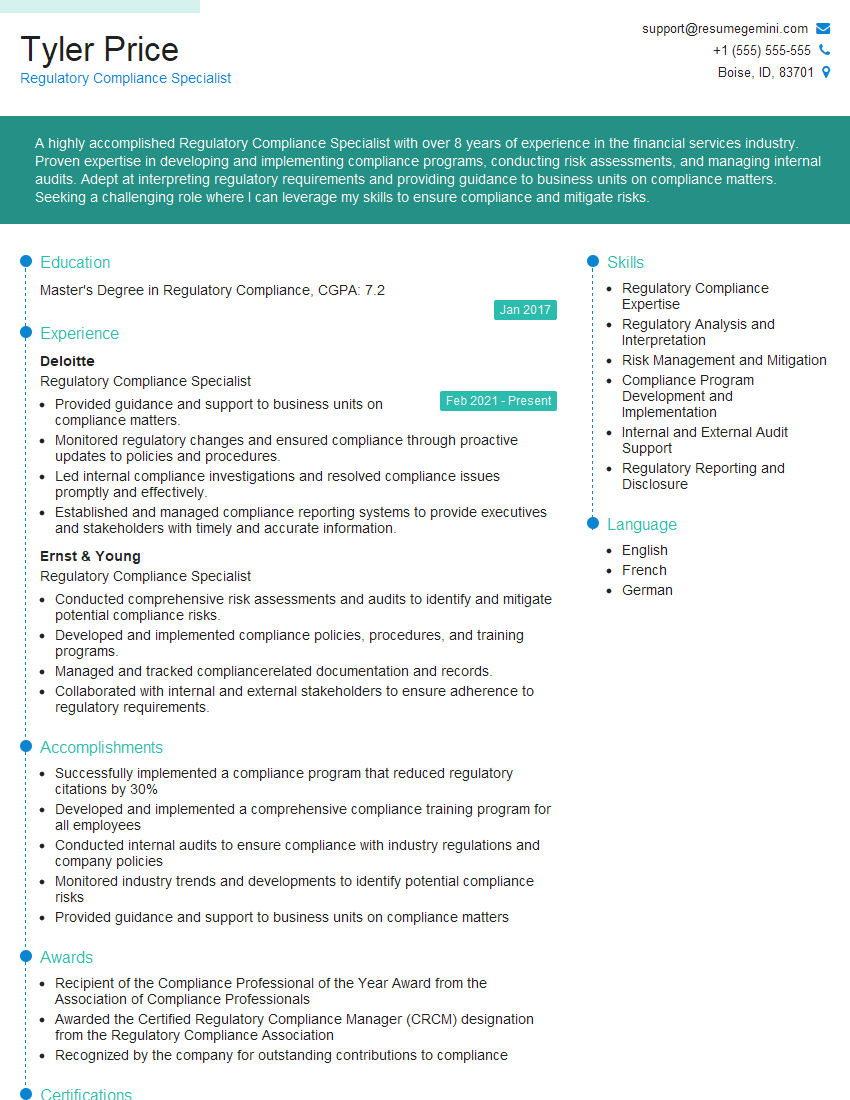
Regulatory Compliance Specialist Resume Sample
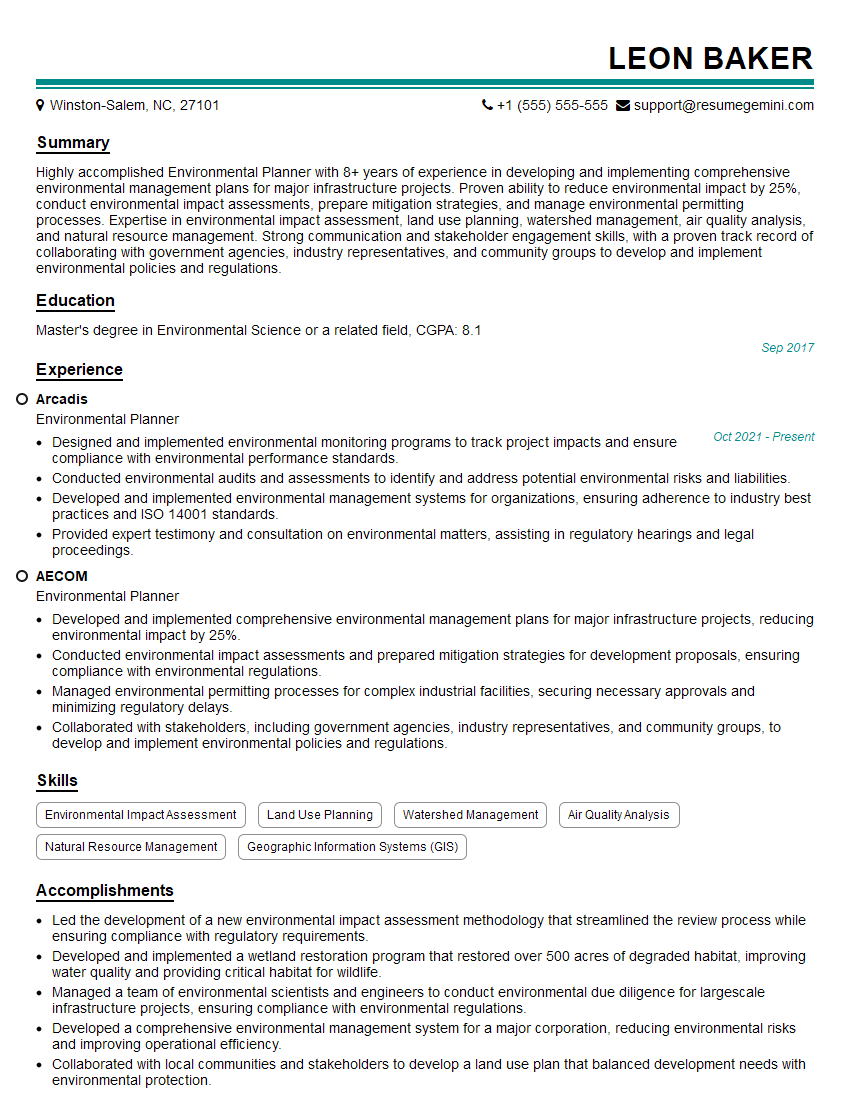
Environmental Planner Resume Sample
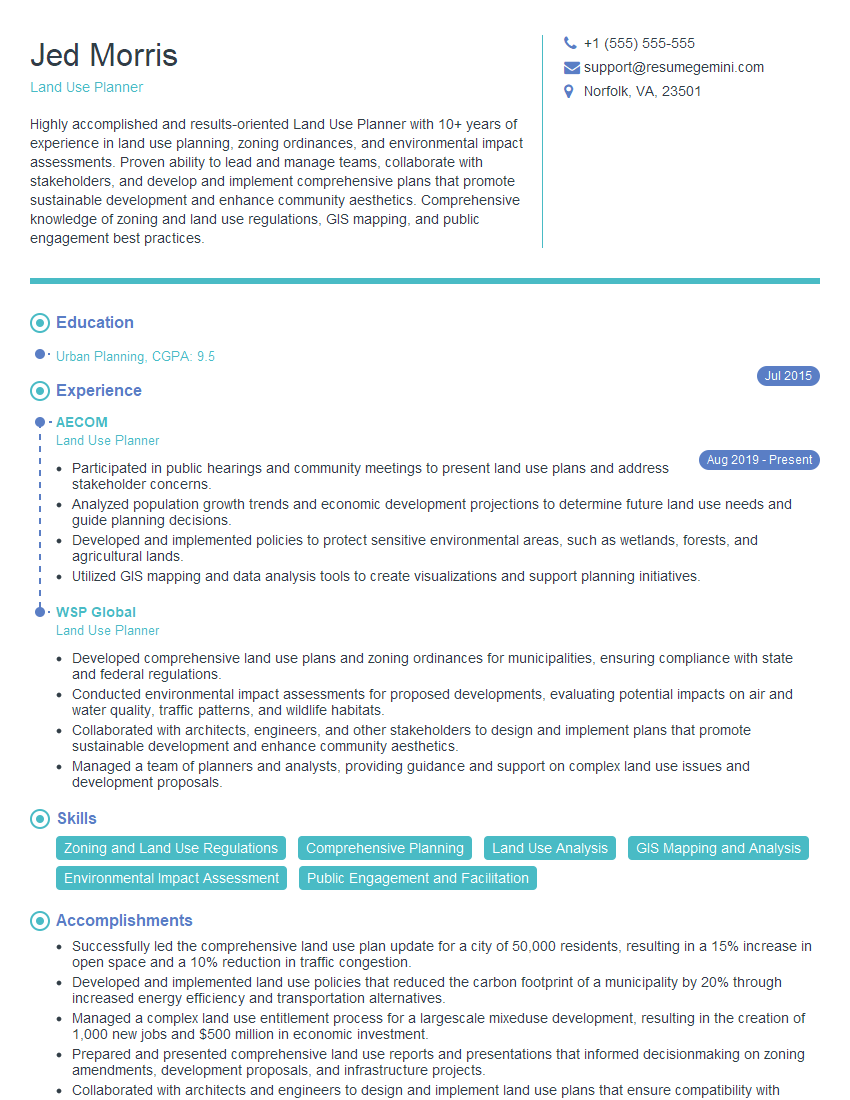
Land Use Planner Resume Sample
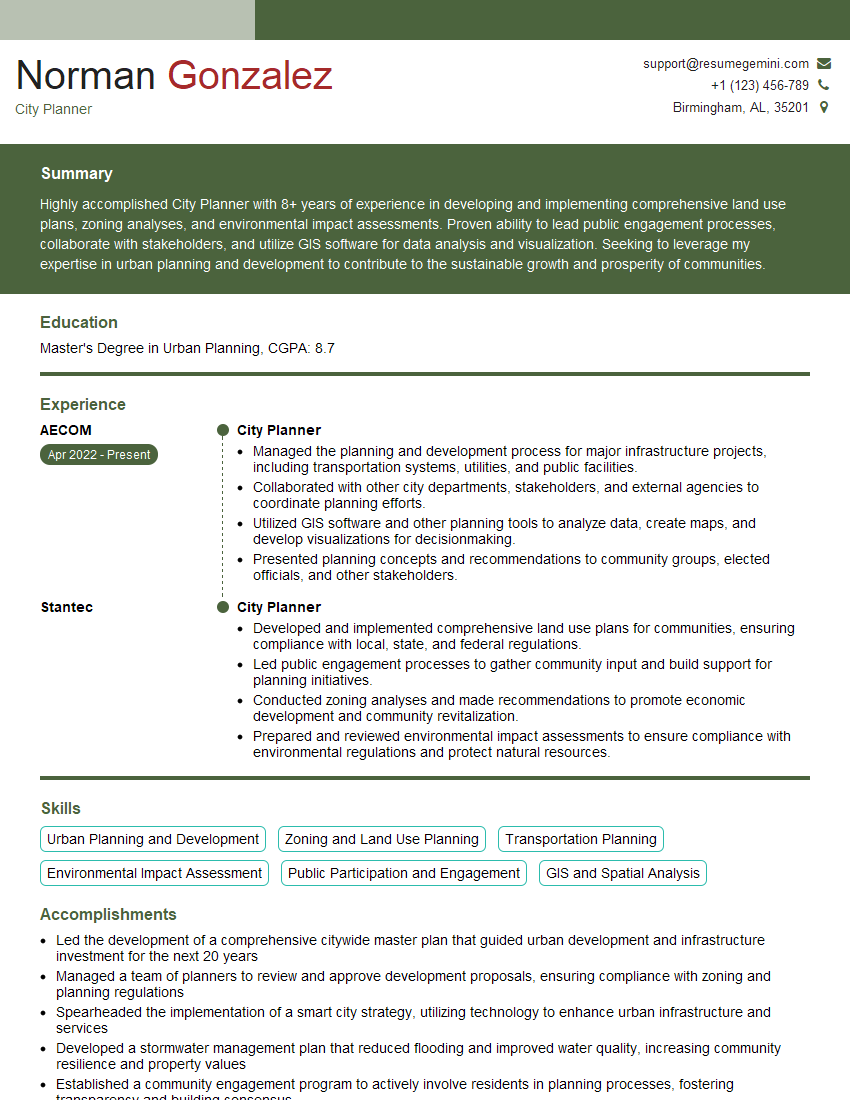
City Planner Resume Sample
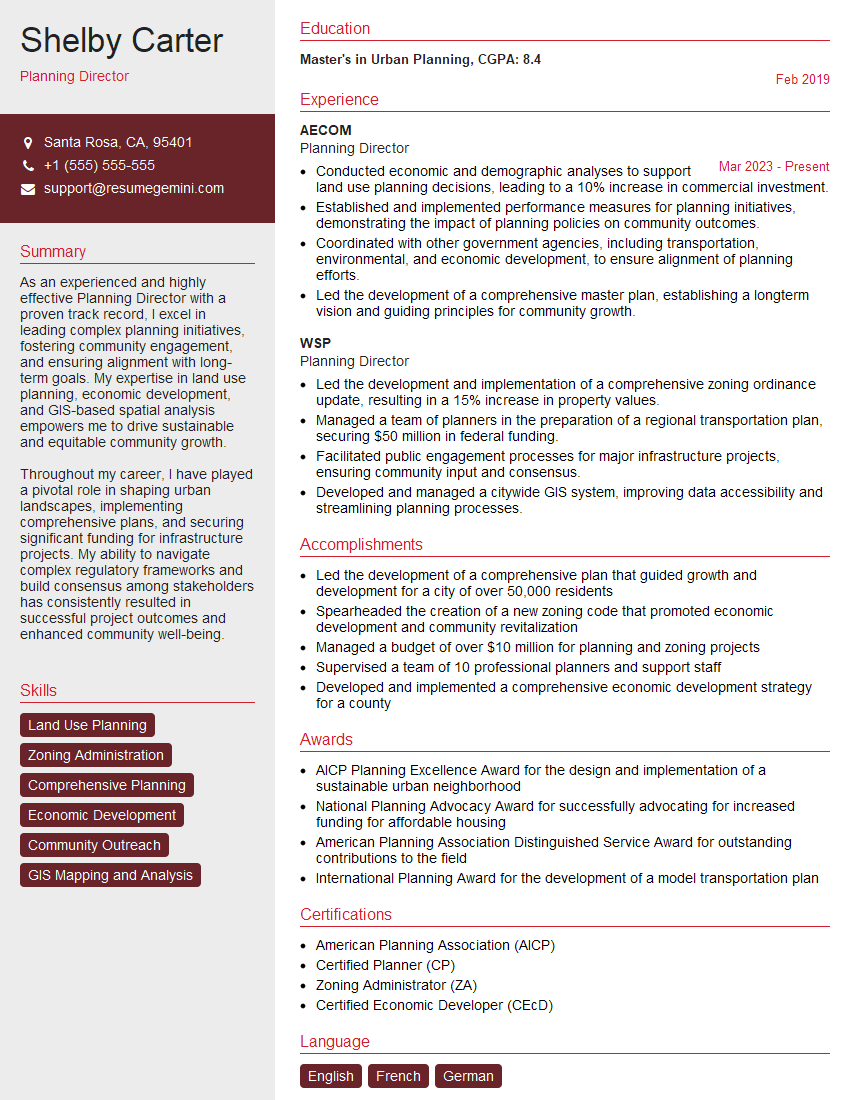
Planning Director Resume Sample
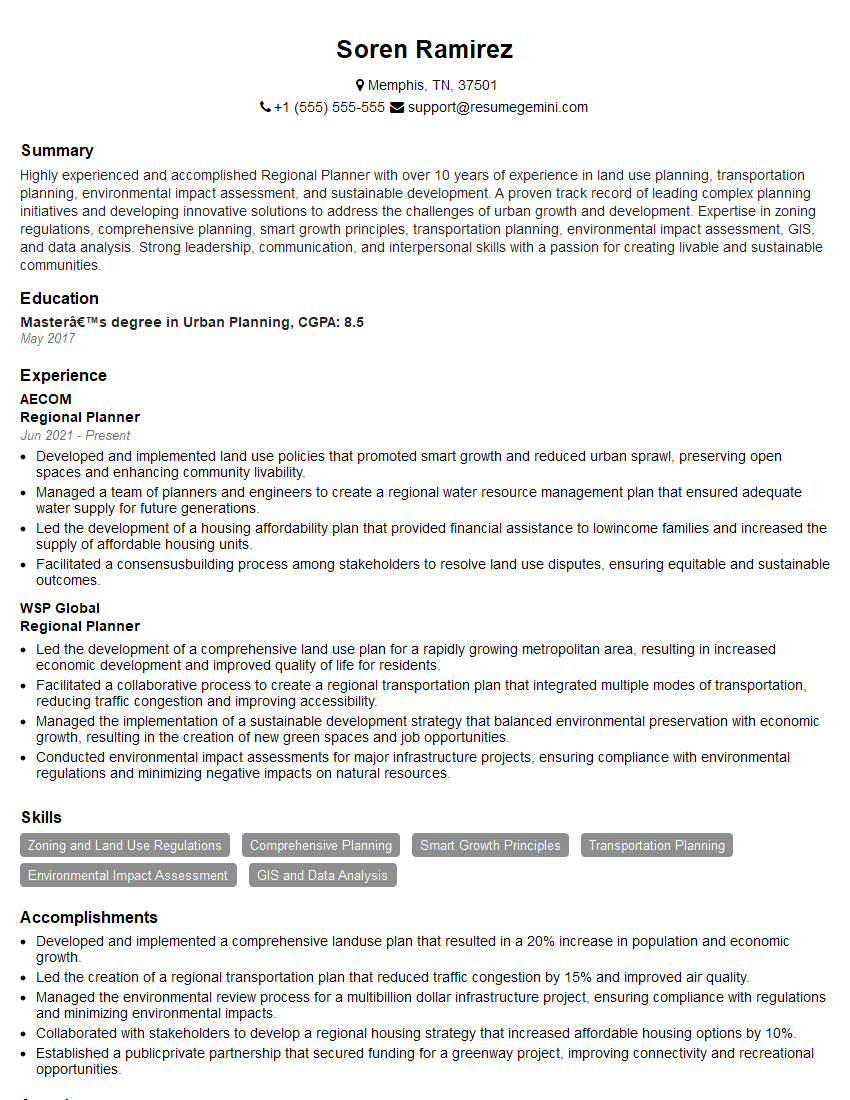
Regional Planner Resume Sample
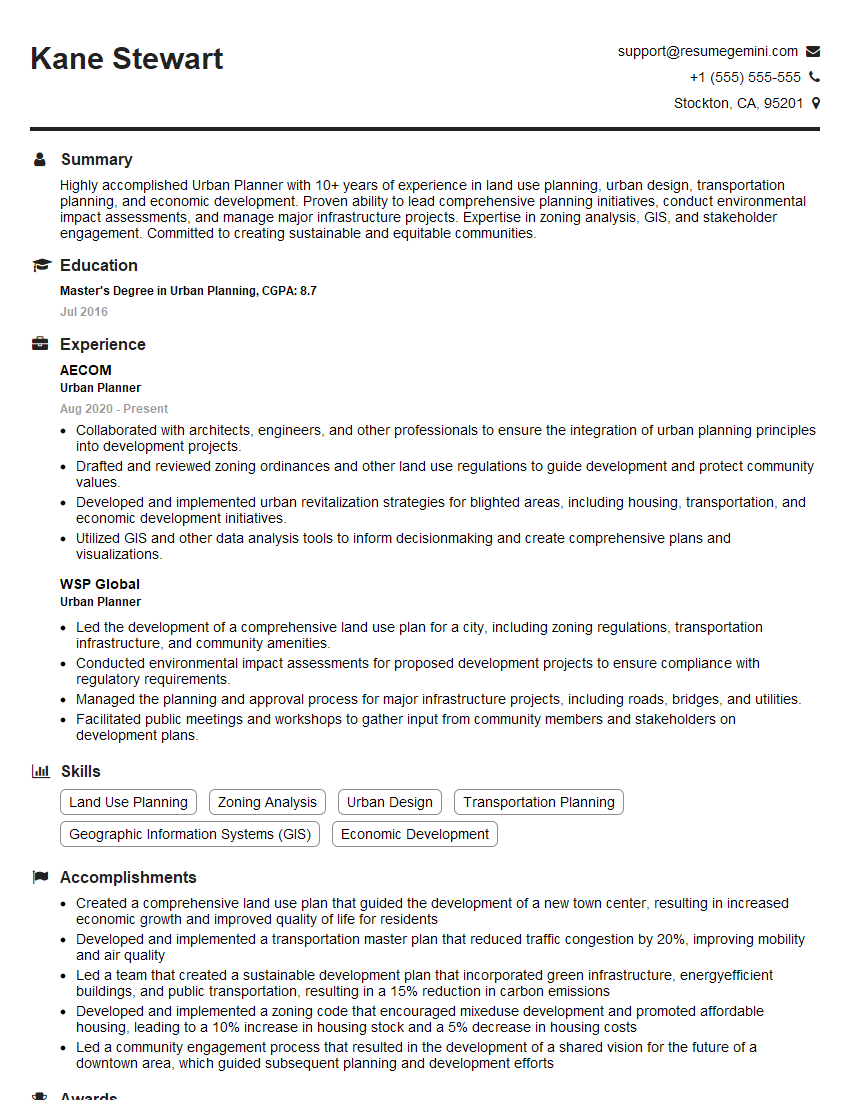
Urban Planner Resume Sample
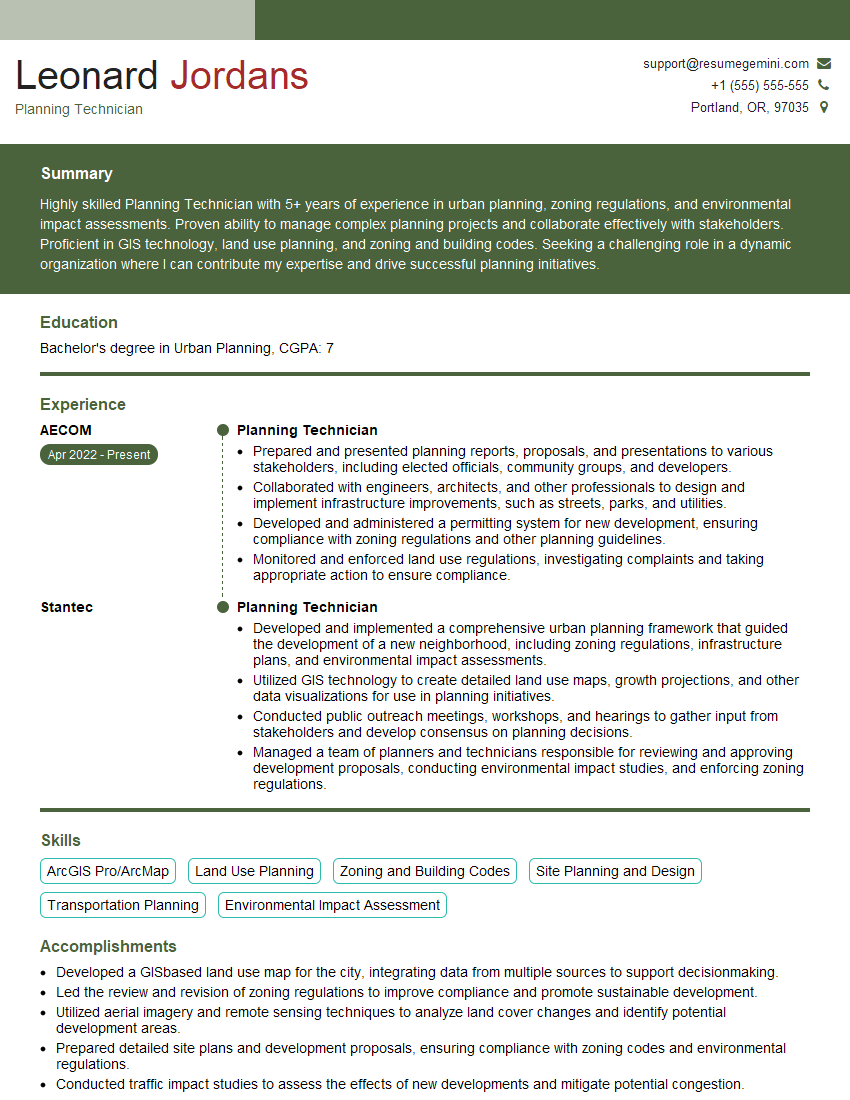
Planning Technician Resume Sample
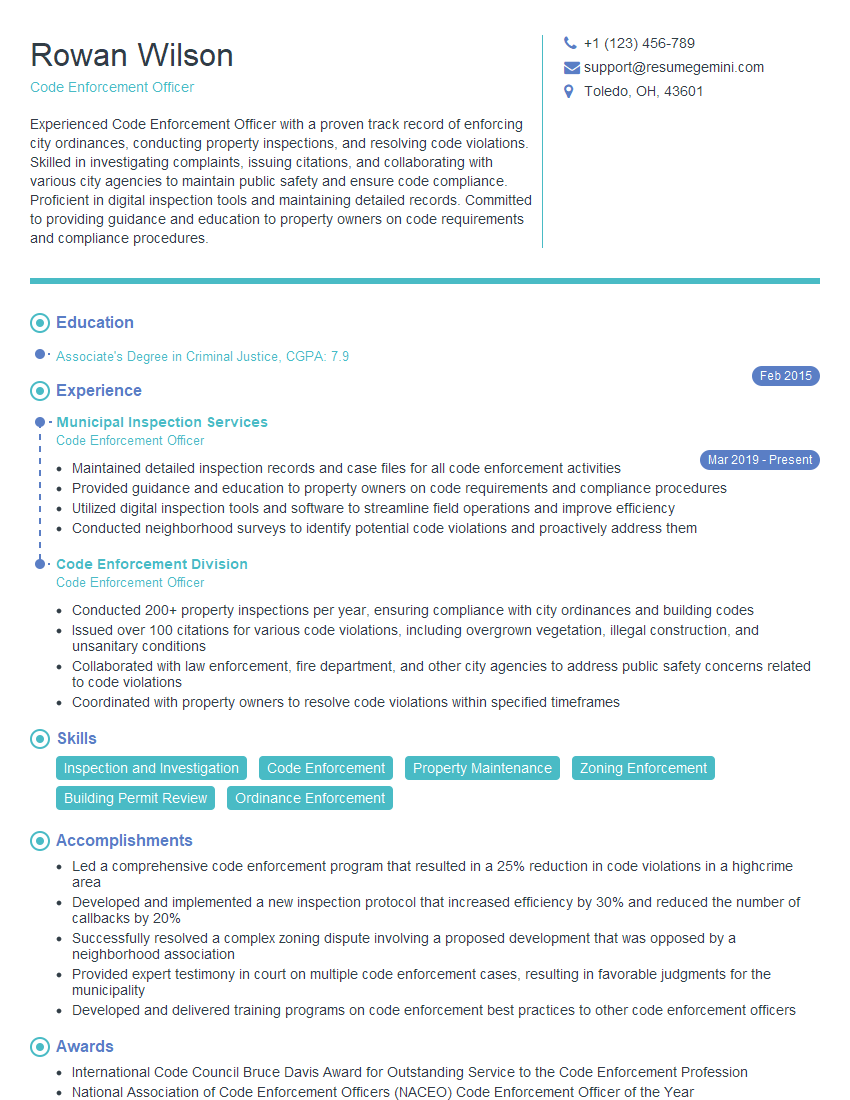
Code Enforcement Officer Resume Sample
Explore more articles
Users Rating of Our Blogs
Share Your Experience
We value your feedback! Please rate our content and share your thoughts (optional).
What Readers Say About Our Blog
To the interviewgemini.com Webmaster.
Very helpful and content specific questions to help prepare me for my interview!
Thank you
To the interviewgemini.com Webmaster.
This was kind of a unique content I found around the specialized skills. Very helpful questions and good detailed answers.
Very Helpful blog, thank you Interviewgemini team.