Feeling uncertain about what to expect in your upcoming interview? We’ve got you covered! This blog highlights the most important Zoning Code Compliance Audits interview questions and provides actionable advice to help you stand out as the ideal candidate. Let’s pave the way for your success.
Questions Asked in Zoning Code Compliance Audits Interview
Q 1. Explain the process of conducting a zoning code compliance audit.
A zoning code compliance audit is a systematic process of verifying that properties and their uses adhere to the local zoning ordinances. It’s like a thorough health check for a property’s legal standing within the community.
The process typically involves these steps:
- Review of Existing Records: Starting with the property’s records – deeds, building permits, previous inspections – to understand its history and permitted uses.
- Site Visit and Physical Inspection: This is where we visually assess the property, comparing what’s built to what’s permitted. We’ll measure structures, note uses, and check for any signs of non-compliance.
- Zoning Map and Ordinance Interpretation: We carefully cross-reference the property’s location on the official zoning map with the relevant zoning ordinances to determine allowed uses and building parameters.
- Documentation and Reporting: We meticulously document our findings, including photographs, measurements, and detailed descriptions of any observed violations. This forms the basis of our comprehensive audit report.
- Follow-up and Enforcement: The report is then reviewed and used to determine whether enforcement actions are necessary. This could range from issuing warnings to initiating legal proceedings.
For example, in one audit, reviewing historical records revealed an unpermitted addition to a residential property. The site visit confirmed this, leading to a notice of violation and a requirement to obtain the necessary permits for the existing structure.
Q 2. What are the common violations encountered during zoning code compliance audits?
Common violations vary depending on the community’s zoning ordinances but frequently include:
- Unpermitted Structures or Additions: Building additions or new structures without obtaining necessary permits.
- Illegal Use of Property: Operating a business in a residentially zoned area, for instance.
- Parking Violations: Insufficient or improperly located parking spaces.
- Setback Violations: Structures built too close to property lines or streets.
- Sign Violations: Signs that are too large, improperly located, or not compliant with design standards.
- Height Restrictions: Buildings exceeding the maximum allowable height.
- Density Violations: Too many dwelling units on a single lot.
Imagine a restaurant operating in a residential zone; that’s a clear violation of zoning codes, affecting neighborhood character and potentially creating safety concerns.
Q 3. How do you interpret zoning maps and regulations?
Interpreting zoning maps and regulations requires meticulous attention to detail and a thorough understanding of cartographic conventions and legal language. Think of it like reading a highly technical legal document illustrated with a complex map.
The process involves:
- Identifying the Property Location: Pinpointing the exact location of the subject property on the zoning map.
- Determining the Zoning District: Identifying the specific zoning district the property falls within (e.g., residential, commercial, industrial).
- Understanding Zoning Symbols and Legends: Familiarizing oneself with the map’s key and symbols to understand designations such as permitted uses, building heights, and density restrictions.
- Reading the Textual Ordinances: The zoning map provides a visual overview, but the detailed rules and regulations are specified in the accompanying written ordinances. These should be carefully reviewed to fully understand the requirements for a specific zoning district.
For example, a zoning map might show a property within a ‘R-1’ (single-family residential) district. The associated ordinance would then specify permitted uses (only single-family dwellings), building height limits, setbacks, and other relevant restrictions.
Q 4. Describe your experience with different zoning districts and their specific regulations.
My experience encompasses a wide range of zoning districts, including residential (R-1, R-2, R-3, etc.), commercial (C-1, C-2, etc.), industrial (I-1, I-2, etc.), and mixed-use districts. Each has its unique regulations regarding building height, density, parking, permitted uses, and setbacks.
For instance:
- Residential Districts (R-1): Typically focused on single-family homes, with strict limitations on density and commercial activities. Setback requirements are usually significant.
- Commercial Districts (C-1, C-2): Allow for a wider range of commercial activities, with increased density and potentially more flexible building height and setback rules.
- Industrial Districts (I-1, I-2): Designed for manufacturing and industrial uses, often with less stringent aesthetic standards and more relaxed setback requirements. Specific regulations are in place for handling hazardous materials and industrial waste.
- Mixed-Use Districts: Combine residential and commercial elements, aiming for a balance between housing and commercial activity.
I’ve worked on numerous projects across these districts, each requiring a nuanced understanding of the specific rules and their impact on property development and use.
Q 5. How do you handle discrepancies between zoning regulations and existing structures?
Discrepancies between zoning regulations and existing structures are common and often require careful consideration. These situations typically involve structures built before current zoning regulations or those that have undergone unpermitted alterations.
We address this through:
- Legal Research: Investigating the history of the property and the zoning ordinances in effect at the time of construction to determine the legality of existing structures under previous regulations.
- Variance and Appeals Process: Exploring the possibility of obtaining a variance or appealing the violation, if appropriate. This often requires demonstrating hardship or providing alternative solutions.
- Legal Non-Conforming Uses: Identifying whether the discrepancy constitutes a legal non-conforming use (a use allowed under previous zoning but now prohibited). Such uses often have restrictions on expansion or alterations.
- Enforcement: If the situation doesn’t qualify for a variance or appeal, and is not a legal non-conforming use, enforcement action might be necessary to bring the property into compliance.
For example, a building might be in violation of current setback regulations, but was legally built before the current code was adopted. This would be considered a legal non-conforming use, though alterations might still be subject to limitations.
Q 6. What methods do you use to document violations during a site visit?
Thorough documentation is critical. We utilize several methods during site visits:
- High-Resolution Photography: Taking detailed photographs of the property from multiple angles, clearly showing any potential violations.
- Measurements and Sketches: Using measuring tools to accurately document dimensions, setbacks, and other critical measurements, often supplemented with hand-drawn sketches for clarification.
- Detailed Notes: Keeping comprehensive written notes describing the observations, including the location of violations and any relevant details about the structures or land use.
- Video Documentation: In some cases, video recordings are used to further substantiate observations and provide a more comprehensive record.
Think of this documentation as building a strong case – a visual and written record that stands up to scrutiny.
Q 7. Explain your experience using GIS software in zoning code compliance.
GIS software is an invaluable tool in zoning code compliance. It allows for efficient visualization and analysis of spatial data related to property boundaries, zoning districts, and violations.
My experience with GIS software includes:
- Overlaying Zoning Maps with Parcel Data: Identifying zoning district boundaries for specific properties and overlaying that information with property line data.
- Creating Thematic Maps: Generating maps displaying the distribution of zoning violations within a specific area.
- Analyzing Setback Distances: Utilizing GIS to precisely measure setbacks and identify violations.
- Integrating Data from Multiple Sources: Combining data from various sources, such as assessor’s records, building permits, and GIS layers to create a comprehensive view of a property’s compliance status.
GIS dramatically improves efficiency and accuracy in identifying and analyzing zoning violations, saving time and resources in the auditing process. For instance, I used GIS to quickly identify all properties in a specific area that were potentially violating parking regulations after a recent zoning ordinance update.
Q 8. How do you prioritize cases during a high volume of complaints?
Prioritizing cases during a high volume of complaints requires a systematic approach. I use a tiered system based on several factors.
- Immediacy of threat: Cases involving immediate safety hazards, like illegal structural modifications posing collapse risks or significant environmental violations, take precedence.
- Severity of violation: Larger-scale violations affecting multiple properties or the public are addressed sooner than minor infractions.
- Chronological order (with exceptions): While generally following a first-in, first-out system, serious issues override the chronological order.
- Resource allocation: The complexity of the case and required resources (inspections, investigations, legal actions) play a role in determining priority.
For example, a complaint about an illegally constructed fence might be lower priority than a complaint about a building lacking essential fire safety systems. I regularly review the queue, re-evaluating priorities as new information emerges or situations change.
Q 9. How do you communicate findings to property owners and developers?
Communicating findings is crucial for effective enforcement. My approach is clear, concise, and professional, maintaining a respectful tone while ensuring the seriousness of the violation is understood.
- Written notification: I issue formal letters detailing the violations, referencing specific sections of the zoning code, and outlining the necessary corrective actions. These letters always include clear deadlines for compliance.
- Follow-up communication: I often follow up with a phone call to explain the findings in detail, answer questions, and clarify any misunderstandings. This personal touch helps build rapport and encourage cooperation.
- In-person meetings (when appropriate): For complex cases or those involving significant disputes, I schedule face-to-face meetings to discuss the findings and work collaboratively towards a resolution.
- Documentation: All communication – letters, emails, meeting notes – is meticulously documented to maintain a clear audit trail.
For example, a letter outlining a violation might include a photo of the violation along with the specific section of the zoning code being violated and the required steps for correction. I find that clear communication and professional courtesy significantly improve cooperation.
Q 10. Describe your experience with conflict resolution in zoning code enforcement.
Conflict resolution is an inherent part of zoning code enforcement. My approach focuses on de-escalation, mediation, and fair application of the code.
- Active listening: I start by attentively listening to the property owner’s concerns and perspective, demonstrating empathy and understanding.
- Clearly explaining the code: I explain the relevant zoning regulations in plain language, avoiding jargon, ensuring the owner understands the basis for the enforcement action.
- Identifying common ground: I look for areas of agreement and collaborate to find solutions that satisfy both parties while adhering to the code.
- Mediation and compromise: When necessary, I mediate discussions, suggesting potential compromises that address the violation while minimizing hardship on the owner.
- Escalation (as a last resort): If mediation fails, I escalate the case through the appropriate channels, possibly involving legal action.
For instance, I once mediated a dispute where a property owner had inadvertently violated setback requirements. By working with them, we agreed on a modified landscaping plan that satisfied the code without requiring them to demolish a recently constructed structure.
Q 11. What is your understanding of due process in zoning code enforcement?
Due process is paramount in zoning code enforcement. It ensures fairness and prevents arbitrary actions. This means property owners have the right to:
- Notice: Be informed of the alleged violation in a clear and timely manner.
- Opportunity to be heard: Have a chance to present their case, challenge the findings, and offer evidence.
- Impartial decision-making: Have their case reviewed by an unbiased official who follows established procedures.
- Appeals process: Have the right to appeal an adverse decision through established channels.
I meticulously document each step of the enforcement process to ensure adherence to due process. This includes detailed records of all communication, inspections, and decisions. Failing to follow due process can lead to legal challenges and undermine the legitimacy of the enforcement action.
Q 12. How do you ensure accuracy and consistency in your audit reports?
Accuracy and consistency in audit reports are vital for maintaining the integrity of the zoning code enforcement program. I use several methods to ensure this:
- Standardized checklists and forms: Using pre-defined checklists and forms ensures all relevant aspects are covered consistently in each audit.
- Detailed photographic documentation: Pictures and videos provide objective evidence supporting findings and reducing ambiguity.
- Cross-referencing with maps and code sections: All findings are cross-referenced with zoning maps and the relevant code sections to ensure accuracy.
- Peer review (when possible): When dealing with complex or controversial cases, a peer review helps ensure objectivity and identifies potential errors.
- Regular quality control checks: I regularly review my own work and the work of my colleagues to maintain consistency and identify areas for improvement.
For instance, I use a standardized form for each audit, which includes sections for property information, code violations, photographic evidence, and recommendations. This standardization helps ensure consistency and eliminates potential discrepancies.
Q 13. Explain your experience with different types of zoning permits and their requirements.
My experience encompasses various zoning permits, each with unique requirements. These include:
- Building permits: These are required for new construction, additions, or significant alterations to existing structures, covering structural integrity, safety, and compliance with building codes.
- Zoning permits: These address land use regulations, ensuring development conforms to zoning classifications, setbacks, density requirements, and other land-use controls.
- Sign permits: Regulate the size, location, and design of signs, ensuring they don’t obstruct views or create visual clutter.
- Demolition permits: Required before demolishing structures, ensuring safety and compliance with environmental regulations.
- Variance permits: Granted for deviations from the standard zoning code, typically when strict adherence causes undue hardship. These require a rigorous justification process.
Each permit type has specific application forms, review procedures, and associated fees. My understanding of these nuances ensures efficient and accurate review of permit applications and effective enforcement against violations.
Q 14. How do you stay current with changes and updates to zoning codes and regulations?
Staying current with zoning code changes is critical for accurate enforcement. My methods include:
- Regular review of code updates: I regularly check for amendments, revisions, and new ordinances published by the relevant authorities.
- Subscription to professional journals and newsletters: Staying abreast of industry trends and changes through relevant publications ensures that my knowledge remains current.
- Participation in professional development courses and conferences: Attending workshops and conferences facilitates networking and learning about new approaches and updated regulations.
- Collaboration with other code enforcement officials: Networking with colleagues provides opportunities to share information and insights on recent updates and enforcement challenges.
- Monitoring case law: Staying informed about relevant legal decisions helps me understand the legal implications and interpretations of the code.
For example, I actively monitor the municipal website and subscribe to relevant email alerts to receive immediate notifications about code amendments. Proactive monitoring is essential for remaining knowledgeable about current and emerging issues.
Q 15. What are some best practices for maintaining accurate records during a compliance audit?
Maintaining accurate records during a zoning compliance audit is paramount for ensuring a fair and legally sound process. Think of it like building a strong case – every piece of evidence needs to be meticulously documented and readily accessible.
Digital Record Keeping: Utilizing a dedicated database or software is crucial. This allows for efficient searching, sorting, and sharing of information. Imagine using a system that categorizes documents by property address, violation type, and date – instantly retrievable for any audit.
Consistent File Naming Conventions: Implement a standardized system for naming files. For example, using a format like
YYYYMMDD_PropertyAddress_ViolationType.pdfensures quick identification and prevents confusion.Chain of Custody: Maintain a detailed record of who handled each piece of evidence and when. This is vital for legal defensibility, proving the integrity of the collected data.
Regular Backups: Data loss can be catastrophic. Regular backups, both on-site and off-site, are essential to protect against hardware failure, cyberattacks, or natural disasters.
Version Control: If documents are updated, maintain a record of all previous versions. This allows for tracking changes and avoids any disputes about the accuracy of information.
Career Expert Tips:
- Ace those interviews! Prepare effectively by reviewing the Top 50 Most Common Interview Questions on ResumeGemini.
- Navigate your job search with confidence! Explore a wide range of Career Tips on ResumeGemini. Learn about common challenges and recommendations to overcome them.
- Craft the perfect resume! Master the Art of Resume Writing with ResumeGemini’s guide. Showcase your unique qualifications and achievements effectively.
- Don’t miss out on holiday savings! Build your dream resume with ResumeGemini’s ATS optimized templates.
Q 16. Describe your experience working with various stakeholders (e.g., residents, developers, contractors).
Effective communication and collaboration are critical in this field. I have extensive experience working with a diverse range of stakeholders, each with their own perspectives and priorities.
Residents: I approach interactions with residents with empathy and patience, understanding that zoning issues can be emotionally charged. I strive to clearly explain regulations, answer questions thoroughly, and explore solutions collaboratively. For example, if a resident is concerned about a neighbor’s construction project, I explain the relevant zoning regulations and facilitate communication between the parties involved.
Developers: My interactions with developers focus on ensuring compliance with zoning codes while fostering a productive working relationship. I provide clear guidance on regulations and proactively address potential issues early in the development process. This can prevent costly delays and disputes later on.
Contractors: With contractors, I emphasize the importance of adhering to building permits and specifications outlined in the approved plans. Regular site visits and clear communication can help prevent violations and ensure the project aligns with zoning regulations.
Building trust and rapport is key. By demonstrating fairness, expertise, and a willingness to listen, I have consistently been able to navigate complex situations and achieve positive outcomes for all parties involved.
Q 17. How do you use technology (e.g., software, databases) to support your work?
Technology plays a vital role in streamlining my work and enhancing accuracy. I leverage several tools to support my duties.
GIS Software (Geographic Information Systems): GIS allows me to visually analyze property locations, zoning boundaries, and the spatial relationships between different elements. This is invaluable for identifying potential violations and understanding the context of a development project.
Database Management Systems: I use databases to store and manage large amounts of data, including property information, permits, violations, and inspection records. This allows for efficient data retrieval and analysis.
Cloud-Based Collaboration Tools: These tools facilitate communication and information sharing with stakeholders, including residents, developers, and other government agencies. They help streamline workflows and ensure everyone has access to the most current information.
Document Management Systems: These systems allow for secure storage and version control of all relevant documents, ensuring the integrity and accessibility of crucial data.
Q 18. Describe your experience in preparing for and testifying in legal proceedings.
I have experience preparing for and testifying in legal proceedings related to zoning violations. This involves meticulous preparation and a deep understanding of legal procedure.
Evidence Gathering and Organization: I meticulously gather and organize all relevant evidence, including photographs, maps, documents, and witness statements. This evidence must be presented in a clear and concise manner to support my findings.
Report Writing: I prepare detailed and accurate reports that clearly articulate the findings of my investigation and the applicable zoning regulations. These reports must withstand scrutiny in a legal setting.
Testifying in Court: I am prepared to provide clear and concise testimony, answering questions accurately and professionally. I am adept at explaining complex technical information in a way that is understandable to a judge or jury.
My experience in this area ensures that I can effectively represent the interests of the municipality in legal proceedings.
Q 19. How do you handle situations where zoning codes are ambiguous or conflicting?
Ambiguous or conflicting zoning codes can present significant challenges. My approach involves a systematic process to address these issues.
Thorough Research: I begin by conducting thorough research to identify all relevant sections of the zoning code and related ordinances. This might involve reviewing past interpretations, case law, or seeking clarification from legal counsel.
Interpretation Based on Intent: When ambiguity exists, I carefully consider the intent of the zoning code. What was the municipality trying to achieve with this regulation? Understanding the underlying purpose helps guide interpretation.
Hierarchy of Regulations: If conflicts exist, I determine which regulation takes precedence. This might involve understanding the order in which ordinances were adopted or consulting legal counsel for guidance.
Seeking Clarification: If necessary, I consult with legal counsel or the zoning board to obtain clarification on ambiguous or conflicting regulations. This ensures consistency and avoids future legal disputes.
It’s crucial to meticulously document all steps taken in resolving these ambiguities to provide a clear and defensible record.
Q 20. What is your understanding of variances and appeals processes related to zoning?
Variances and appeals are integral parts of the zoning process, providing mechanisms for addressing exceptional circumstances and resolving disputes.
Variances: A variance is a permission granted by a zoning authority to deviate from specific zoning regulations. It’s typically granted when strict adherence to the code would impose undue hardship on the property owner, and the variance wouldn’t negatively impact the public interest. Examples include allowing a slightly smaller setback than typically required for a unique lot shape.
Appeals Processes: If a property owner disagrees with a zoning enforcement decision, they have the right to appeal the decision through established administrative or judicial channels. The appeals process involves presenting evidence and arguments to demonstrate why the original decision was incorrect or unfair. This could involve challenging the interpretation of a zoning code or arguing for a variance.
Understanding these processes is crucial for ensuring a fair and equitable zoning system. My role often involves providing information and guidance to both applicants seeking variances and those appealing enforcement decisions.
Q 21. Describe a situation where you identified a complex zoning violation. How did you resolve it?
I once encountered a situation where a developer was constructing a multi-family dwelling that exceeded the permitted height restrictions by several feet. This was a complex violation because it was not immediately apparent due to the building’s design, which incorporated a complex roofline.
Resolution Steps:
Initial Site Inspection and Documentation: I conducted a thorough site inspection, taking detailed measurements, photographs, and drone footage to confirm the height violation.
Review of Building Permits and Plans: I carefully reviewed the approved building permits and construction plans to compare the approved design with the actual construction.
Communication with the Developer: I contacted the developer to discuss the violation and provided clear documentation of the discrepancy. This was done professionally, explaining the code violation and the potential penalties.
Negotiation and Remediation: Together, we explored options for resolving the violation. In this case, the developer agreed to modify the roofline to meet the height restrictions, avoiding costly demolition.
Follow-up Inspections: I conducted follow-up inspections to ensure the corrections were made according to specifications.
This case highlighted the importance of thorough documentation, clear communication, and a collaborative approach to resolving complex zoning violations. The successful resolution resulted in a compliant building and maintained a positive relationship with the developer.
Q 22. How familiar are you with building codes and their relationship to zoning regulations?
Building codes and zoning regulations are intrinsically linked, forming the backbone of safe and organized communities. Building codes dictate the minimum standards for construction, focusing on structural integrity, fire safety, and accessibility. Think of them as the detailed instructions for building a safe house. Zoning regulations, on the other hand, govern the use of land and buildings, dictating what can be built where – residential, commercial, industrial, etc. They’re the city’s blueprint for land use. For example, a building code might specify the minimum fire resistance rating for a wall, while a zoning regulation might prohibit the construction of a factory in a residential zone. A compliance audit considers both; a building might meet building codes but violate zoning regulations if, say, a permitted factory is built too close to residential properties, exceeding the zoning-defined setback distance.
During an audit, I meticulously cross-reference building permits with zoning approvals to ensure complete adherence to both sets of rules. Discrepancies, such as a building exceeding permitted height or using materials not allowed in that zone, are flagged immediately.
Q 23. How do you balance the enforcement of regulations with providing fair and helpful guidance to property owners?
Balancing enforcement with guidance is crucial. My approach involves a three-step process: education, negotiation, and enforcement. I begin by clearly explaining the regulations to property owners, answering questions, and providing helpful resources. This educative phase often resolves minor discrepancies. If violations are more serious, I engage in negotiation, offering options for compliance such as extensions or phased corrections. Only when education and negotiation fail, and violations pose safety or significant public impact issues, do I move to formal enforcement actions.
For instance, if a small business has inadvertently placed signage that exceeds permitted size, I’ll first explain the regulation and offer guidance on correcting it. If they are willing to cooperate, we’ll work collaboratively towards a solution. However, if a building is operating without permits and shows significant safety hazards, enforcement will be necessary, with the possibility of issuing a cease and desist order.
Q 24. What is your approach to ensuring the safety of yourself and others during field inspections?
Safety is paramount. Before every field inspection, I conduct a thorough risk assessment. This includes checking the site conditions (e.g., construction activity, hazardous materials, unstable structures), reviewing the property history for any known safety issues, and ensuring I have all necessary personal protective equipment (PPE) – high-visibility clothing, safety boots, hard hats, etc. I also inform my supervisor of my location and anticipated duration of the visit. During the inspection, I never enter a property alone if there are safety concerns, and I always maintain awareness of my surroundings. I use buddy systems where appropriate. Communication is key; I maintain open communication with the property owner about safety procedures, keeping them informed of any potential hazards.
For instance, if inspecting a large construction site, I would coordinate with the site supervisor beforehand, adhering to their site safety rules and wearing all necessary PPE. I’d also inform them of my inspection route and schedule. This proactive approach safeguards both the property owner’s workers and myself.
Q 25. Describe your experience using different data analysis techniques to identify trends in zoning violations.
Data analysis is a critical part of efficient and effective zoning compliance. I utilize several techniques. First, I use descriptive statistics to summarize violation data, identifying frequently violated codes, geographic hotspots for non-compliance, and seasonal patterns. For example, I might find that violations concerning building height are most common in a particular neighborhood or that illegal additions are prevalent during certain months. Then I employ spatial analysis using Geographic Information Systems (GIS) to map violations and identify potential clusters or patterns. This helps in targeted inspections and resource allocation. Finally, I leverage predictive modeling techniques, such as regression analysis, to forecast future violation patterns based on historical data. This allows for proactive measures to prevent future violations.
Example: A regression model might predict the likelihood of a new construction project violating setback requirements based on factors like the size of the project, the age of the building, and the type of neighborhood.
Q 26. How would you handle a situation where a property owner refuses to cooperate with an audit?
Dealing with uncooperative property owners requires a measured and documented approach. First, I attempt to re-engage them, explaining the legal basis for the audit and emphasizing the importance of compliance. I carefully document all communication attempts. If this fails, I consult with my supervisor and legal counsel to explore available legal options, such as issuing a Notice of Violation with escalating penalties. In extreme cases, court orders might be necessary to gain access for inspection. Maintaining detailed records of all interactions, including dates, times, individuals involved, and outcomes, is critical to support any subsequent legal action. My focus is on ensuring compliance while respecting legal processes. I would never compromise safety or ethical standards to gain cooperation.
For example, if a property owner refused access, I’d document the refusal, send them a formal notice reiterating the need for cooperation and outlining the potential consequences of non-compliance. If still unsuccessful, I’d seek legal assistance to obtain a warrant for inspection.
Q 27. Describe your understanding of environmental regulations related to zoning compliance.
Environmental regulations are heavily intertwined with zoning compliance. For instance, zoning may restrict certain land uses to protect environmentally sensitive areas like wetlands or floodplains. Audits must consider factors like storm water management, waste disposal, air quality, and the protection of natural resources. Specific environmental regulations vary based on location and the type of development, but common overlaps include compliance with the Clean Water Act, the Clean Air Act, and local environmental protection ordinances. Failure to comply with these regulations can lead to serious penalties, beyond the zoning violations themselves.
During an audit, I assess compliance with these regulations, examining aspects such as the presence of erosion and sediment control measures, the proper management of hazardous waste, and compliance with any applicable environmental permits. I often work in collaboration with other agencies to ensure comprehensive environmental compliance.
Q 28. How do you ensure the timely and efficient completion of zoning code compliance audits?
Timely and efficient audit completion requires a structured approach. I begin by prioritizing audits based on risk – properties with a history of violations or those posing significant safety hazards are addressed first. I utilize technology, such as GIS software and mobile data collection apps, to streamline the process. I develop a clear checklist to ensure consistent evaluation across all sites. Before beginning an inspection, I schedule an appointment, notifying the property owner of my visit. I clearly communicate findings promptly, outlining violations and providing guidance for correction. I also maintain regular communication with my supervisor, providing updates on progress and any challenges encountered. By adopting best practices in planning, technology, and communication, I ensure audits are efficient and contribute to the overall effectiveness of the zoning compliance program.
Key Topics to Learn for Zoning Code Compliance Audits Interview
- Understanding Zoning Ordinances: Deep dive into the specific regulations, interpreting their nuances, and recognizing exceptions.
- Field Inspection Techniques: Mastering practical skills like site measurement, documentation (photography, sketching), and data recording for accurate assessments.
- Code Interpretation and Application: Analyzing site plans, construction documents, and existing conditions to determine compliance or violations.
- Identifying Violations: Developing a keen eye for discrepancies between approved plans and actual construction, recognizing potential safety hazards.
- Reporting and Documentation: Creating clear, concise, and legally sound reports detailing findings, including evidence and recommendations.
- Communication and Collaboration: Effectively communicating complex technical information to both technical and non-technical audiences (developers, property owners, colleagues).
- Conflict Resolution and Negotiation: Addressing discrepancies with stakeholders professionally and finding solutions that satisfy regulatory requirements.
- Legal Aspects of Code Enforcement: Understanding the legal framework surrounding zoning compliance, including potential legal challenges and enforcement procedures.
- Technological Tools and Software: Familiarity with GIS mapping software, building plan review software, and other relevant technologies used in compliance audits.
- Ethical Considerations: Maintaining impartiality, objectivity, and adhering to professional standards throughout the audit process.
Next Steps
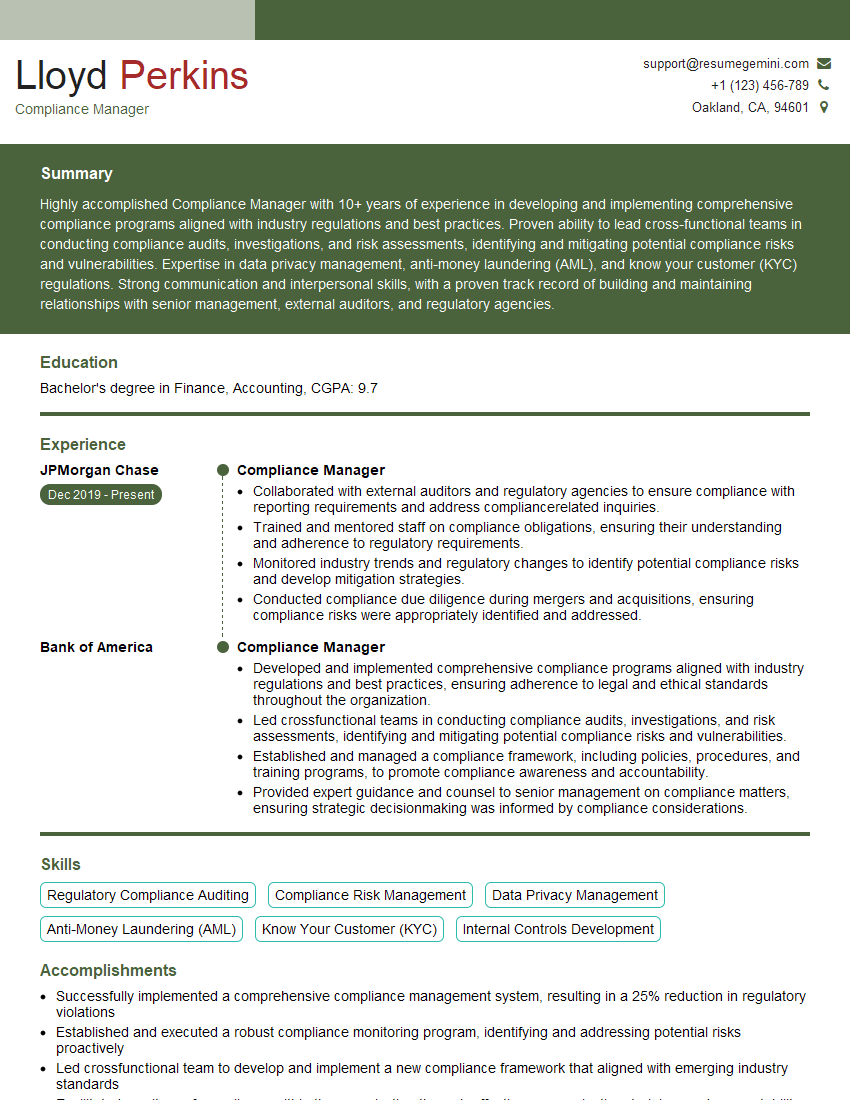
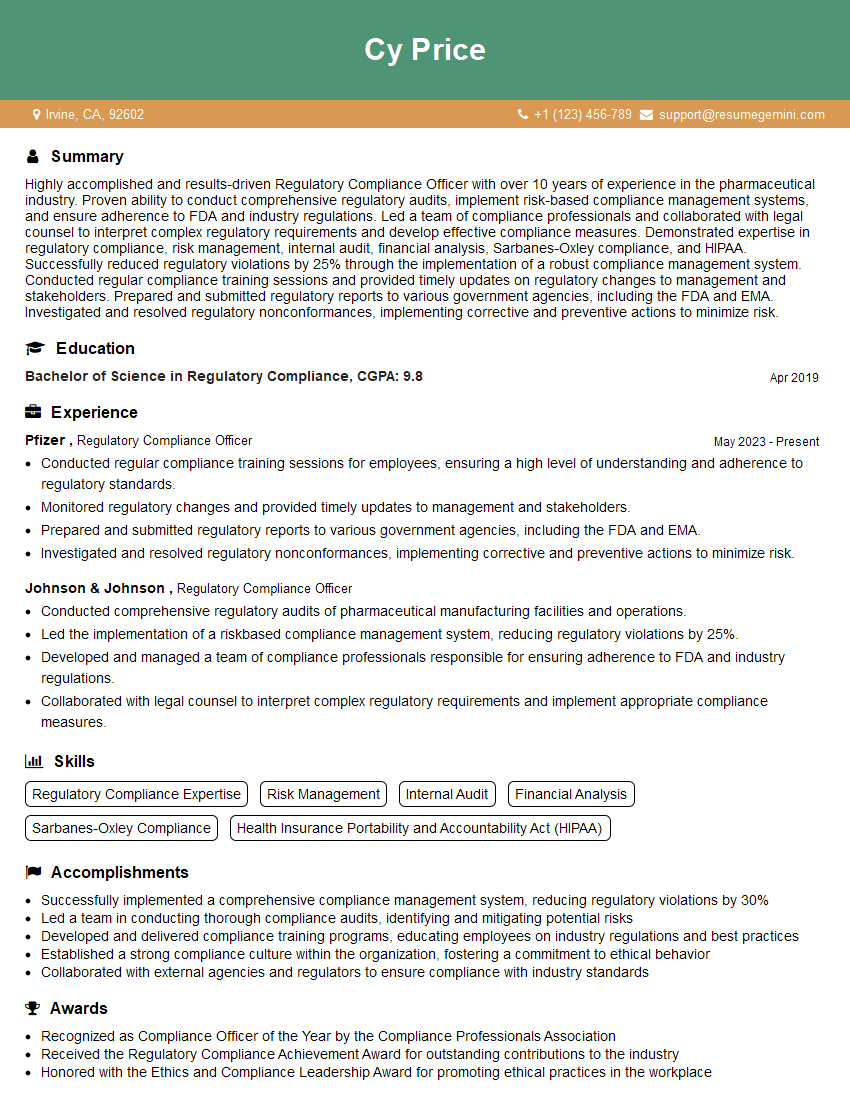
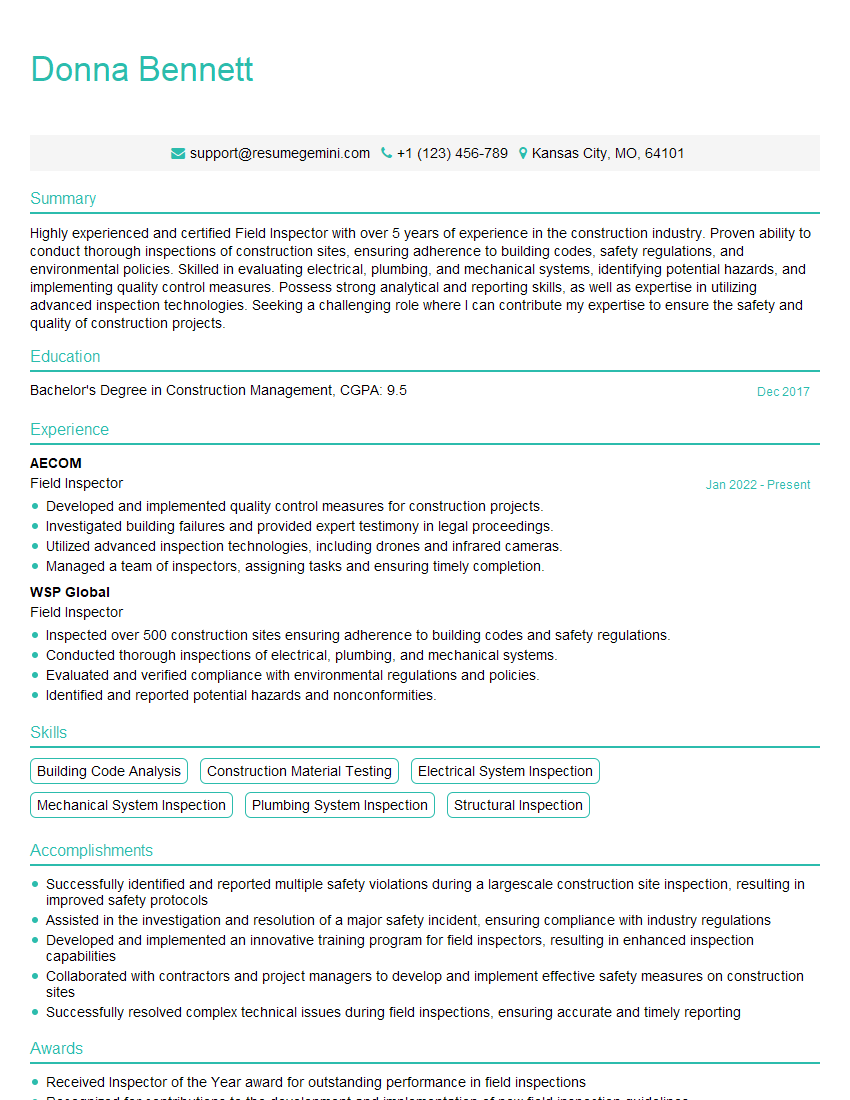
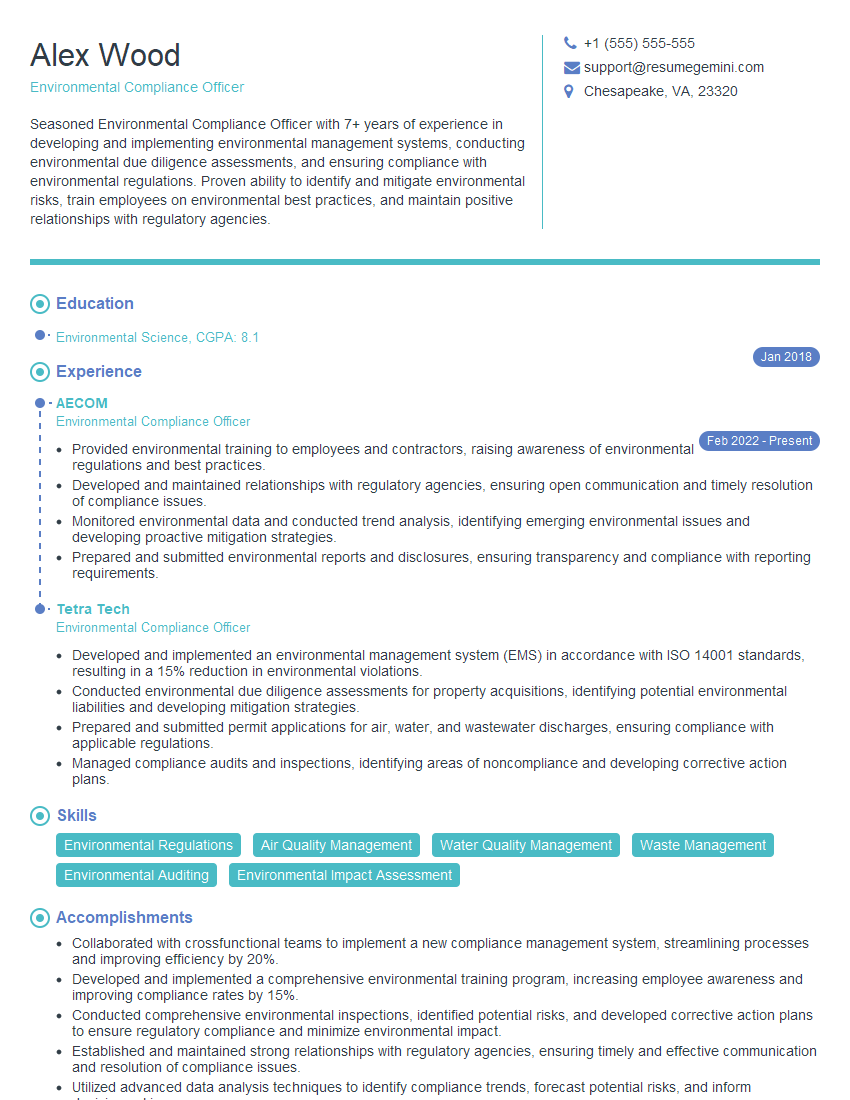
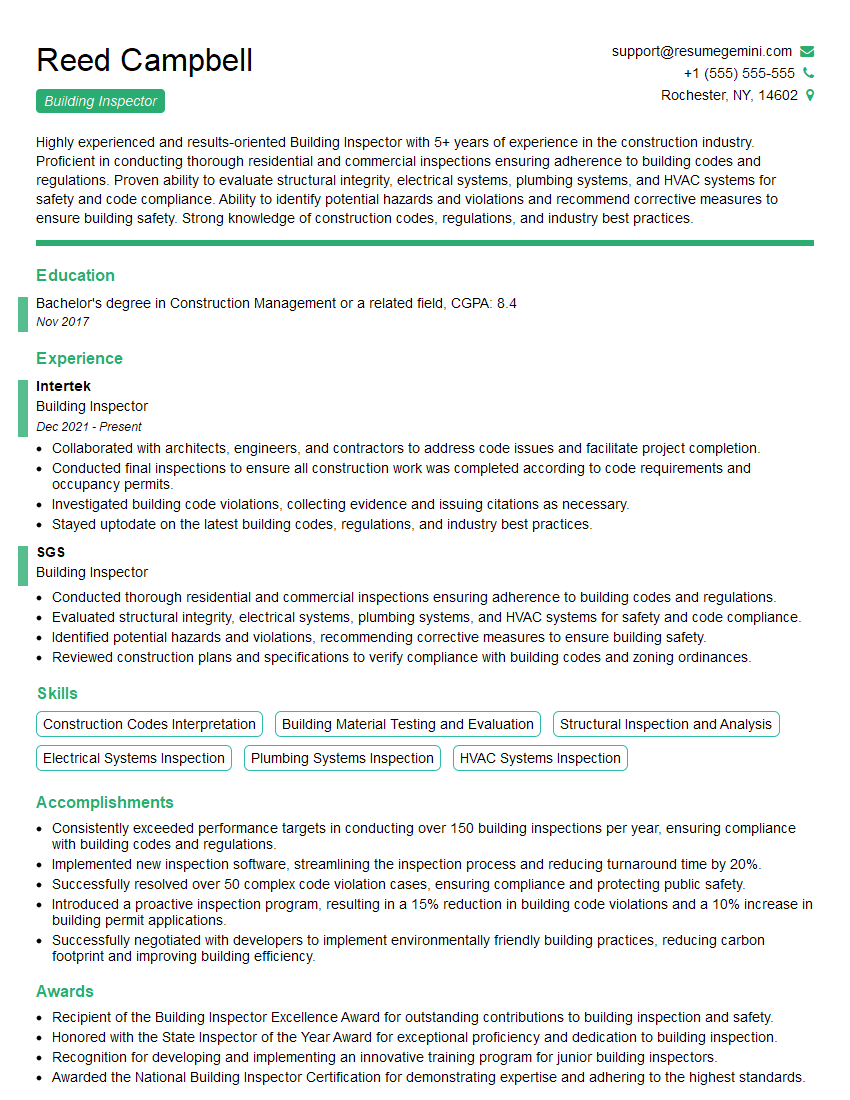
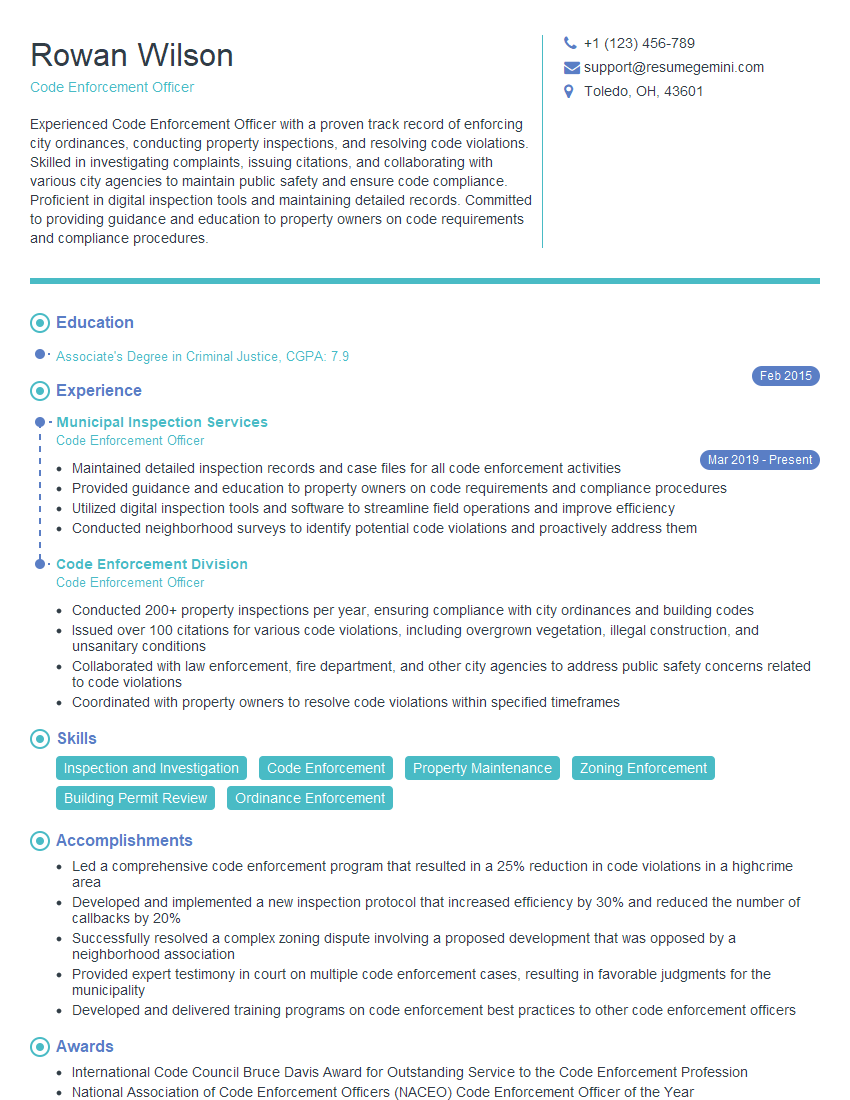
Mastering Zoning Code Compliance Audits opens doors to rewarding careers in urban planning, land development, and government agencies. A strong understanding of these principles is highly sought after and demonstrates a valuable skillset. To significantly boost your job prospects, create a compelling and ATS-friendly resume that highlights your relevant experience and expertise. We strongly recommend using ResumeGemini to build a professional resume that stands out. ResumeGemini provides a user-friendly platform and offers examples of resumes tailored to Zoning Code Compliance Audits to help you craft a winning application.
Explore more articles
Users Rating of Our Blogs
Share Your Experience
We value your feedback! Please rate our content and share your thoughts (optional).
What Readers Say About Our Blog
To the interviewgemini.com Webmaster.
Very helpful and content specific questions to help prepare me for my interview!
Thank you
To the interviewgemini.com Webmaster.
This was kind of a unique content I found around the specialized skills. Very helpful questions and good detailed answers.
Very Helpful blog, thank you Interviewgemini team.