Preparation is the key to success in any interview. In this post, we’ll explore crucial Ability to effectively manage projects and budgets interview questions and equip you with strategies to craft impactful answers. Whether you’re a beginner or a pro, these tips will elevate your preparation.
Questions Asked in Ability to effectively manage projects and budgets Interview
Q 1. Describe your experience with different project management methodologies (e.g., Agile, Waterfall).
My experience spans both Agile and Waterfall methodologies, and I adapt my approach based on the specific project requirements. Waterfall, with its sequential phases, is excellent for projects with clearly defined scopes and minimal anticipated changes. I’ve successfully managed several infrastructure projects using this approach, where predictability and thorough upfront planning are crucial. For example, I led a team in building a new data center, utilizing Waterfall to ensure all regulatory compliance and infrastructure needs were met before moving to the next phase. Conversely, Agile, with its iterative development and flexibility, is ideal for projects requiring adaptability and frequent feedback. I’ve extensively used Scrum and Kanban within Agile frameworks, leading cross-functional teams in developing software applications. A recent project involved building a new customer-facing mobile app. The iterative sprints allowed us to incorporate user feedback early and often, leading to a more successful product launch.
- Waterfall: Suitable for projects with stable requirements and predictable timelines.
- Agile (Scrum, Kanban): Best for projects with evolving requirements, requiring frequent feedback and adaptation.
Q 2. How do you create and manage a project budget?
Creating and managing a project budget involves a multi-step process. It starts with a thorough understanding of the project scope and objectives. I then break down the project into smaller, manageable tasks, estimating the cost for each. This includes labor costs, materials, software licenses, travel, and any other potential expenses. I use a bottom-up approach, aggregating the costs of individual tasks to arrive at a total project budget. This detailed breakdown allows for better tracking and control. Contingency planning is crucial, so I always include a buffer (typically 10-15%) to account for unforeseen expenses. This is presented in a clear, concise budget document, reviewed and approved by stakeholders before project commencement. Regular monitoring and adjustments ensure the project remains on track.
Q 3. What tools and techniques do you use for budget tracking and forecasting?
For budget tracking and forecasting, I rely on a combination of tools and techniques. Spreadsheet software like Microsoft Excel is invaluable for creating detailed budget breakdowns and tracking actual versus planned expenses. Project management software such as Microsoft Project or Jira offer integrated budgeting and reporting functionalities, allowing for real-time monitoring of progress and budget utilization. I also utilize Earned Value Management (EVM) techniques to compare planned costs with actual costs and assess project performance. Forecasting involves analyzing historical data, anticipated changes in resource costs, and potential risks to project the budget’s trajectory throughout the project lifecycle.
Q 4. Explain your approach to identifying and mitigating project risks.
My approach to risk management starts with proactive identification. I conduct thorough risk assessments early in the project lifecycle, using techniques like SWOT analysis (Strengths, Weaknesses, Opportunities, Threats) and brainstorming sessions with the team. This identifies potential risks (e.g., technical challenges, resource constraints, regulatory changes). For each identified risk, I assess its probability and potential impact. A risk register documents each risk, its likelihood, impact, and mitigation strategies. Mitigation strategies might include developing contingency plans, allocating additional resources, or implementing robust quality control measures. Regular risk monitoring ensures that identified risks are being addressed effectively. This process is iterative; new risks may emerge, and existing risks may change in severity.
Q 5. How do you handle budget overruns?
Handling budget overruns requires a prompt and decisive response. First, I investigate the root cause of the overrun. This often involves reviewing actual versus planned expenses, identifying any unexpected issues or delays. Transparency is key—I communicate the situation and the reasons behind the overrun to stakeholders, providing realistic solutions. Options include negotiating additional funding, re-scoping the project to reduce costs (prioritizing essential tasks), or exploring alternative solutions. This often involves difficult conversations but open communication ensures stakeholders understand the situation and collaborate on solutions. Post-project analysis is critical for learning from the experience and preventing similar issues in future projects.
Q 6. Describe a time you had to make difficult trade-offs within a project budget.
During a recent software development project, we faced a critical juncture. We were close to the deadline, and an unexpected bug emerged, requiring significant additional development time and resources. The initial budget did not accommodate this. To stay on schedule, we had to make trade-offs. After thorough analysis and discussions with the stakeholders, we decided to scale back on some less critical features, prioritizing bug fixes and the core functionality. Although painful, this decision allowed us to deliver a functional product on time, maintaining a positive client relationship, even if with reduced feature set. It highlighted the importance of having clear priorities and strong communication during challenging situations.
Q 7. How do you prioritize competing project demands within a constrained budget?
Prioritizing competing demands within a constrained budget requires a systematic approach. I use a combination of techniques, including MoSCoW analysis (Must have, Should have, Could have, Won’t have) to categorize project requirements based on their importance. Cost-benefit analysis helps evaluate the return on investment for each requirement. Prioritization matrices (e.g., value versus effort) provide a visual representation of which tasks offer the most value with the least effort. This process involves collaborating closely with stakeholders to ensure alignment and a shared understanding of the prioritization criteria. The goal is to maximize the value delivered within the budgetary constraints, even if it means delaying or eliminating less critical tasks.
Q 8. How do you communicate budget status updates to stakeholders?
Communicating budget status updates effectively requires a multi-faceted approach, tailored to the specific needs and preferences of each stakeholder. I typically use a combination of methods for optimal transparency and understanding.
Regular Reporting: I provide concise, yet comprehensive, reports at predetermined intervals (weekly, bi-weekly, or monthly, depending on project complexity and stakeholder needs). These reports highlight key metrics like actual spend versus budget, variances, and potential risks.
Visualizations: Charts and graphs (e.g., burn-down charts, Gantt charts with budget overlays) are powerful tools for visualizing budget progress. A picture is often worth a thousand words, making complex data easily digestible.
Stakeholder-Specific Communication: I tailor the level of detail and the communication method to each stakeholder. Executive summaries are sufficient for high-level stakeholders, while project team members need more granular information.
Proactive Communication: I don’t wait for problems to escalate before communicating. Early identification and discussion of potential budget overruns or underperformance allows for collaborative problem-solving and avoids surprises.
Meeting & Presentations: Regular meetings provide opportunities for interactive discussions, clarification of questions, and collaborative decision-making regarding budget adjustments.
For example, in a recent project, I used a dashboard that showed actual vs. planned spending, highlighting areas of concern in red. This allowed the executive team to quickly grasp the overall financial health of the project, while detailed reports were provided to the project team for in-depth analysis and corrective action.
Q 9. What is your experience with Earned Value Management (EVM)?
Earned Value Management (EVM) is a project management technique for measuring project performance and progress. It integrates scope, schedule, and cost data to provide a comprehensive assessment of project health. I have extensive experience applying EVM across various projects, using it to identify variances early and make informed decisions.
My experience includes calculating:
Planned Value (PV): The budgeted cost of work scheduled to be completed at a given point in time.
Earned Value (EV): The value of the work actually completed at a given point in time.
Actual Cost (AC): The actual cost incurred in completing the work.
By analyzing the differences between PV, EV, and AC (e.g., Schedule Variance, Cost Variance, and Schedule Performance Index), I can identify areas of concern and take proactive steps to address them. For instance, a negative cost variance indicates we’re over budget, requiring immediate attention and corrective actions like streamlining processes or renegotiating contracts.
In a past project, using EVM allowed us to identify a potential cost overrun two months in advance. By analyzing the EVM metrics, we pinpointed the cause (a supplier delay), and through effective negotiation and alternative sourcing, we managed to stay within budget.
Q 10. How do you ensure the accuracy of cost estimates?
Ensuring the accuracy of cost estimates is crucial for successful project management. I employ a multi-step process to achieve this:
Detailed Work Breakdown Structure (WBS): A comprehensive WBS is the foundation of accurate estimating. It meticulously decomposes the project into smaller, manageable tasks, allowing for more precise cost estimations.
Historical Data Analysis: I leverage historical data from similar projects to inform estimates. This provides a realistic baseline, adjusted for any project-specific factors.
Expert Judgment: Involving subject matter experts in the estimation process is crucial. Their insights provide a valuable reality check and account for unforeseen complexities.
Contingency Planning: It’s essential to build a contingency buffer into the estimates to account for unforeseen circumstances and risks. This buffer helps mitigate potential cost overruns.
Bottom-Up Estimating: This approach involves estimating the cost of individual tasks and summing them up to arrive at the total project cost, offering greater accuracy than top-down estimation.
Regular Review and Updates: Estimates are not static. Regular review and updates, particularly in dynamic project environments, are vital to maintain accuracy and reflect evolving circumstances.
For example, in a recent software development project, we used a bottom-up approach, estimating the cost of each module individually. We also factored in historical data from previous projects, and a 10% contingency buffer to accommodate potential unforeseen complexities. This meticulous approach resulted in a highly accurate budget and avoided potential cost overruns.
Q 11. Explain your process for allocating resources within a project.
Resource allocation is a critical aspect of project management that directly impacts the project’s success and budget. My approach is data-driven and considers several key factors:
Project Schedule: The project timeline dictates the required resources and their availability. I create a resource schedule that aligns with the project milestones.
Resource Skills and Availability: I identify the necessary skills and expertise for each task, considering the availability of internal and external resources. This involves careful planning to avoid resource conflicts.
Cost Considerations: Resource allocation must be optimized to stay within the project budget. I compare costs associated with different resources and select the most cost-effective options.
Risk Assessment: Potential risks associated with resource allocation, such as skill shortages or resource dependencies, are considered during the planning phase.
Resource Leveling: Techniques such as resource leveling are implemented to smooth out resource demand over time and prevent over-allocation in specific periods. This is particularly important for managing costs and productivity.
In a construction project, for instance, I used a resource allocation software to schedule and assign workers, equipment, and materials optimally. This ensured that resources were available when needed, minimized idle time, and helped keep the project on schedule and within budget.
Q 12. How do you monitor project performance against the budget?
Monitoring project performance against the budget involves continuous tracking and analysis of various metrics. I typically employ the following methods:
Regular Budget Reviews: Frequent budget reviews—at least weekly or bi-weekly—are crucial to ensure that the project is on track financially. These reviews analyze actual costs against planned costs and identify variances.
Variance Analysis: Understanding the reasons for any variances is critical. Analyzing variances helps pinpoint areas needing immediate attention and informs corrective actions.
Earned Value Management (EVM): As mentioned previously, EVM is a robust tool for tracking performance and identifying potential issues early.
Performance Reporting: Regular reports comparing actual performance to the baseline budget provide visibility to stakeholders and allow proactive decision making.
Change Management Procedures: A formal change management process allows for tracking and evaluating any changes to the project scope that impact budget and schedule.
For instance, in a marketing campaign, we monitored the spend against allocated budget on different channels (e.g., social media, Google Ads). By tracking key performance indicators (KPIs) and comparing them with the planned budget, we were able to adjust the allocation dynamically for optimization.
Q 13. What are some common pitfalls to avoid when managing project budgets?
Several common pitfalls can lead to budget overruns or project failure. Careful planning and proactive measures can help avoid these issues:
Inaccurate Cost Estimation: Failing to accurately estimate costs is a major contributor to budget issues. A detailed WBS and thorough analysis are crucial for accurate estimation.
Uncontrolled Scope Creep: Changes to the project scope without proper change management processes can significantly impact the budget. Strict adherence to change control processes is essential.
Poor Risk Management: Failing to identify and mitigate potential risks can lead to unexpected costs. A robust risk management plan should be in place.
Ineffective Communication: Lack of communication between team members and stakeholders can lead to misunderstandings and budget overruns. Open communication is vital.
Lack of Monitoring and Control: Insufficient monitoring and control of budget and resources can result in unnoticed variances and eventual overruns.
For example, a project I previously worked on experienced scope creep due to a lack of clear communication between the client and the development team. This resulted in added features and ultimately, a budget overrun. This experience reinforced the importance of detailed documentation, clear communication, and strict change control procedures.
Q 14. How do you deal with unexpected changes in project scope and budget?
Dealing with unexpected changes requires a structured approach that minimizes disruption and cost overruns. My process includes:
Formal Change Request Process: All scope changes must go through a formal change request process. This process involves assessing the impact of the change on the schedule, budget, and resources.
Impact Assessment: A thorough impact assessment identifies the potential financial, schedule, and resource implications of the change.
Negotiation and Prioritization: If the change is approved, negotiations may be needed to define the adjusted scope, budget, and timeline. Prioritization may be required if multiple changes arise.
Revised Budget and Schedule: Once the changes are approved, the budget and schedule should be updated to reflect the revised scope.
Communication: All stakeholders should be kept informed about any changes and their impact on the project.
For example, in a software development project, a critical bug was discovered after the initial release, necessitating an unscheduled update. By following the change request process, we assessed the impact, negotiated additional budget with the client, and delivered the update without causing significant disruption or cost overruns.
Q 15. Describe your experience with different budgeting techniques (e.g., zero-based budgeting, incremental budgeting).
Budgeting techniques are crucial for effective project management. I’ve had extensive experience with both zero-based budgeting and incremental budgeting, and understand their strengths and weaknesses.
Zero-based budgeting starts from scratch each year. Every expense needs justification. It’s a rigorous approach, ideal for identifying inefficiencies and ensuring every dollar adds value. Imagine building a house – with zero-based budgeting, you’d justify each nail and board, ensuring no unnecessary spending. This is particularly effective for new projects or when significant changes occur.
Incremental budgeting, on the other hand, uses the previous year’s budget as a baseline, adjusting it for inflation and projected changes. It’s faster and easier, making it suitable for projects with stable requirements and predictable costs. Think of it like maintaining a garden; you adjust your fertilizer and water based on last year’s experience, with minor tweaks as needed. I’ve found this approach efficient for ongoing projects with established processes.
In practice, I often combine elements of both. For example, I might use incremental budgeting for ongoing operational costs but employ zero-based budgeting for new initiatives within those projects to ensure optimal resource allocation.
Career Expert Tips:
- Ace those interviews! Prepare effectively by reviewing the Top 50 Most Common Interview Questions on ResumeGemini.
- Navigate your job search with confidence! Explore a wide range of Career Tips on ResumeGemini. Learn about common challenges and recommendations to overcome them.
- Craft the perfect resume! Master the Art of Resume Writing with ResumeGemini’s guide. Showcase your unique qualifications and achievements effectively.
- Don’t miss out on holiday savings! Build your dream resume with ResumeGemini’s ATS optimized templates.
Q 16. How do you ensure that projects are completed within the allocated budget and timeline?
Ensuring projects stay on budget and schedule requires proactive management and meticulous tracking. I use a multi-pronged approach:
- Detailed Project Planning: A comprehensive project plan, including a Work Breakdown Structure (WBS), detailed task assignments, and realistic timelines is fundamental. This allows for accurate cost estimation and efficient resource allocation.
- Regular Monitoring and Reporting: I regularly track progress against the baseline plan. This involves monitoring actual vs. planned costs and timelines, identifying potential risks and deviations early on.
- Earned Value Management (EVM): This powerful technique helps measure project performance by comparing planned work with completed work and associated costs. Any variance from the baseline provides early warning signals that allow for corrective action.
- Contingency Planning: A buffer for unforeseen costs is critical. I typically allocate a percentage of the budget for contingency, allowing for flexibility in handling unexpected issues without derailing the project.
- Change Management: Any project changes – in scope, requirements, or timeline – are formally documented, evaluated for their impact on budget and schedule, and approved through a change control process. This keeps the project on track and avoids cost overruns due to undocumented alterations.
By implementing these practices, I can effectively manage project scope creep and ensure projects are completed within the allocated resources.
Q 17. How do you build consensus among stakeholders regarding budget decisions?
Building consensus around budget decisions requires clear communication, transparency, and stakeholder engagement. My approach involves:
- Clearly Defined Objectives: Establishing shared project goals helps stakeholders understand the rationale behind budget allocations. Everyone needs to be on the same page regarding what we’re trying to achieve.
- Data-Driven Decisions: I present budget proposals supported by data and analysis. This helps justify resource allocation and avoids subjective decisions. I present clear visuals like charts and graphs to illustrate the impact of budget choices.
- Collaborative Budgeting: I involve key stakeholders in the budgeting process. This promotes ownership and buy-in, fostering collaboration rather than resistance. Workshops or meetings are effective for this.
- Negotiation and Compromise: Budget decisions often require compromise. I facilitate open discussions to address conflicting needs and find mutually acceptable solutions.
- Documentation and Communication: All budget decisions are documented and communicated clearly to all stakeholders, ensuring transparency and minimizing misunderstandings.
By focusing on transparency, collaboration, and clear communication, I build trust and ensure buy-in from all stakeholders, leading to smoother budget approval processes.
Q 18. How do you handle conflicting priorities when managing multiple projects with different budgets?
Managing multiple projects with conflicting priorities necessitates a robust prioritization framework. I utilize a combination of techniques:
- Prioritization Matrix: A matrix that ranks projects based on urgency and importance. This helps visualize competing demands and make informed decisions on resource allocation. This allows me to focus on high-impact projects first.
- Resource Allocation Optimization: Careful allocation of resources (personnel, budget, time) based on the prioritized projects. I may need to adjust timelines or scope of less critical projects to free up resources for higher-priority initiatives.
- Regular Project Status Review Meetings: Regular meetings allow for transparent communication about project progress, risks, and resource needs. This enables dynamic adjustment of resource allocation based on real-time project updates.
- Stakeholder Communication: Keeping stakeholders informed about prioritization decisions and potential delays is critical for maintaining trust and minimizing conflicts. Transparent and timely communication is crucial in such situations.
Ultimately, managing conflicting priorities often involves difficult decisions. By using a systematic approach to prioritization, transparent communication, and proactive resource management, I can ensure that the most critical projects receive the necessary resources to succeed.
Q 19. How do you measure the success of a project in terms of budget and timeline adherence?
Measuring project success in terms of budget and timeline adherence relies on key performance indicators (KPIs). I typically track:
- Budget Variance: The difference between the planned budget and actual costs. A low variance indicates effective cost management.
- Schedule Variance: The difference between the planned timeline and actual completion time. A low variance showcases successful timeline management.
- Cost Performance Index (CPI): A ratio that measures the efficiency of spending (Earned Value / Actual Cost). A CPI > 1 signifies that the project is under budget.
- Schedule Performance Index (SPI): A ratio showing the efficiency of project progress (Earned Value / Planned Value). An SPI > 1 means the project is ahead of schedule.
Beyond these metrics, I also assess qualitative aspects like stakeholder satisfaction and the achievement of project objectives. Ultimately, success isn’t solely defined by numbers, but a combination of meeting budget and timeline goals while delivering the expected outcomes and satisfying stakeholders.
Q 20. What software or tools have you used for project budget management?
Throughout my career, I’ve utilized various software and tools for project budget management. These include:
- Microsoft Project: For scheduling, task management, and resource allocation, enabling effective cost tracking linked to tasks.
- MS Excel: For creating detailed budget spreadsheets, tracking expenses, and generating reports. I often use pivot tables to analyze cost trends and identify potential issues.
- Project Management Software (e.g., Asana, Jira, Monday.com): These platforms integrate task management with budget tracking features, offering centralized project oversight.
- Financial Management Software (e.g., QuickBooks, Xero): For managing invoices, payments, and other financial aspects related to project spending.
The specific tools used depend on project size and complexity. But I always aim to leverage tools that enhance efficiency, accuracy, and transparency in budget management.
Q 21. Describe a situation where you had to negotiate with vendors or suppliers to reduce project costs.
In a recent project involving the development of a mobile application, we faced unexpectedly high costs from our initial vendor for server infrastructure. To address this, I initiated a negotiation process. I started by:
- Analyzing the Vendor’s Proposal: I meticulously reviewed the vendor’s proposal, identifying areas where costs seemed inflated or unnecessary. I compared their pricing with market rates for similar services.
- Gathering Competitive Bids: I reached out to other vendors to obtain comparative quotes for the same services. This provided leverage during negotiations.
- Presenting Data-Driven Arguments: In negotiations with the initial vendor, I presented the competitive bids and highlighted discrepancies, using data to justify my request for cost reduction.
- Exploring Alternative Solutions: I also explored alternative solutions, such as utilizing open-source software or cloud-based services to reduce reliance on the vendor’s more expensive offerings.
Through this approach, we successfully negotiated a 15% reduction in server costs without compromising the quality of service. This highlights the importance of thorough research, competitive analysis, and strong negotiation skills in managing project budgets.
Q 22. How do you identify and manage potential cost overruns in a project?
Identifying and managing potential cost overruns requires a proactive and multifaceted approach. It’s not about reacting to problems, but preventing them. I begin by establishing a robust baseline budget, meticulously detailing every cost element. This involves breaking down the project into smaller, manageable tasks, each with its own cost estimate. This granular approach allows for easier tracking and identification of potential deviations.
Next, I implement regular monitoring and variance analysis. This involves comparing actual costs against the baseline budget at set intervals (weekly or bi-weekly, depending on project complexity). Any significant variance triggers an immediate investigation. I use Earned Value Management (EVM) techniques to analyze project performance and predict potential overruns early on. EVM uses metrics like Planned Value (PV), Earned Value (EV), and Actual Cost (AC) to track progress and identify areas of concern.
For example, on a recent software development project, we noticed a variance in the testing phase. Our EVM analysis showed that the actual cost (AC) was exceeding the earned value (EV). Investigation revealed a need for additional testing resources due to unexpected complexity in the software architecture. We addressed this by securing additional budget through a change request, preventing a larger overrun later.
Finally, contingency planning is essential. A certain percentage of the budget (typically 5-10%, depending on project risk) should be allocated as a contingency to absorb unforeseen expenses. This prevents minor issues from escalating into major budget crises.
Q 23. How do you ensure that the project team is aware of the budget constraints?
Ensuring budget awareness within the project team is crucial for effective cost management. I employ several strategies to achieve this. First, I clearly communicate the project budget at the outset, ensuring everyone understands its limitations. This involves distributing a detailed budget breakdown to all team members, outlining their individual responsibilities and associated costs.
Regular budget updates and review meetings are also vital. These meetings allow for open discussion, clarification of cost implications, and identification of potential risks. I utilize visual aids like charts and graphs to present budget data in an easily understandable format. This makes it easier for team members to visualize the project’s financial status and their contribution to it.
Moreover, I encourage proactive communication. Team members are encouraged to immediately flag any potential cost increases, however minor. This ensures that we can address issues early on, before they snowball into major problems. Transparency and open communication prevent hidden costs from derailing the project. Finally, I actively involve the team in budget planning and decision-making, fostering a sense of shared responsibility and accountability.
Q 24. What is your experience with creating and managing project schedules?
I have extensive experience creating and managing project schedules using various project management software and methodologies. My approach typically involves a combination of Work Breakdown Structure (WBS) and Gantt charts. The WBS decomposes the project into smaller, manageable tasks, allowing for a more accurate estimation of timelines. Gantt charts then visually represent these tasks, their dependencies, and their durations. This allows for easy monitoring of progress and identification of potential delays.
I utilize critical path analysis to identify the most critical tasks—those that, if delayed, will delay the entire project. This helps prioritize resources and mitigate risks. For example, in a recent construction project, critical path analysis helped us identify that the foundation work was crucial. By allocating additional resources to this phase, we avoided potential delays in the overall project timeline.
I also regularly update project schedules based on progress and unforeseen circumstances. This requires close monitoring and collaboration with the project team. Using agile methodologies, we can adapt the schedule as needed, making adjustments based on feedback and changes in requirements. This iterative approach allows us to maintain a realistic and achievable project schedule.
Q 25. How do you use data analysis to inform budget decisions?
Data analysis plays a crucial role in informing budget decisions. I use data to identify trends, patterns, and potential risks that could impact the budget. This involves collecting and analyzing data from various sources, such as time sheets, expense reports, and project progress reports. I then use this data to create reports and dashboards that provide a clear picture of the project’s financial health.
For instance, I might analyze historical project data to identify cost drivers. This could reveal that a particular type of resource consistently contributes to cost overruns. This insight would then inform future budgeting decisions, allowing us to allocate resources more effectively and potentially mitigate future cost overruns. I also use data to predict future costs, enabling proactive budget adjustments.
Tools like Excel, project management software, and specialized analytics platforms are instrumental in this process. Data visualization techniques are key to presenting complex data in a digestible format for stakeholders. For example, using charts and graphs to illustrate cost trends makes it easier for management to understand the financial implications of different decisions.
Q 26. Describe your experience with forecasting project costs.
Forecasting project costs accurately is crucial for successful project management. My experience involves a combination of top-down and bottom-up approaches. The top-down approach involves estimating the overall project cost based on historical data or similar projects. This provides a preliminary estimate, which is then refined using a bottom-up approach.
The bottom-up approach involves breaking down the project into smaller tasks and estimating the cost of each task individually. This granular level of detail provides a more accurate cost estimate. I use various techniques, including parametric estimating, analogous estimating, and three-point estimating, to determine the cost of individual tasks. Three-point estimating, in particular, accounts for uncertainty by considering optimistic, pessimistic, and most likely estimates for each task.
I regularly review and refine these forecasts throughout the project lifecycle. This accounts for changes in scope, resource availability, and market conditions. For example, on a recent construction project, we initially underestimated the cost of materials due to unexpected market fluctuations. By regularly reviewing and updating our cost forecasts, we were able to identify and address this issue promptly, minimizing its impact on the project budget.
Q 27. How do you prevent scope creep and its impact on the budget?
Scope creep, the uncontrolled expansion of project requirements, is a major threat to budgets. Preventing it requires a proactive and disciplined approach. First, a well-defined scope statement is essential. This statement clearly outlines the project’s objectives, deliverables, and boundaries. This document serves as a contract between the project team and stakeholders, helping to prevent the addition of unapproved features or tasks.
Regular change management processes are also critical. Any proposed changes to the project scope must be formally documented, assessed, and approved before implementation. This process involves evaluating the impact of the change on the budget, schedule, and resources. It may involve obtaining stakeholder approval through a formal change request process.
Effective communication and collaboration are key. I ensure that all stakeholders understand the project scope and the importance of adhering to it. This involves regular communication updates, providing transparency into progress and proactively addressing potential scope creep issues. Finally, using agile methodologies with iterative development allows for incorporating feedback and minor adjustments, while still maintaining control over the overall scope.
Q 28. Explain your process for closing a project and finalizing the budget.
Closing a project and finalizing the budget is a structured process. First, I ensure that all project deliverables are completed and meet the required quality standards. This involves thorough testing, documentation, and sign-off from stakeholders. Next, I conduct a final budget review, comparing the actual costs against the planned budget. This involves analyzing variances and identifying the root causes of any overruns or underspends.
A post-project review meeting is held with the project team and stakeholders to discuss lessons learned. This helps to identify areas for improvement in future projects. I then prepare a final project report, which includes a comprehensive budget summary, highlighting key financial metrics. This report serves as a record of the project’s financial performance and is shared with relevant stakeholders.
Finally, I ensure that all financial obligations are settled and all necessary documentation is archived. This includes invoices, expense reports, and project contracts. This thorough approach ensures a clean and organized closure of the project, providing valuable insights for future endeavors. A well-documented close-out minimizes the risk of disputes or unforeseen financial liabilities.
Key Topics to Learn for Ability to Effectively Manage Projects and Budgets Interview
- Project Planning & Initiation: Defining project scope, objectives, deliverables, and timelines. Understanding stakeholder needs and creating realistic project plans.
- Budgeting & Resource Allocation: Developing comprehensive budgets, forecasting expenses, and effectively managing resources (time, personnel, materials). Understanding cost-benefit analysis and contingency planning.
- Risk Management & Mitigation: Identifying potential risks and developing strategies to mitigate them. Proactive problem-solving and contingency planning to minimize project delays and cost overruns.
- Project Monitoring & Control: Tracking progress against the project plan, identifying deviations, and implementing corrective actions. Utilizing project management tools and techniques for effective monitoring.
- Communication & Collaboration: Effectively communicating project status, issues, and risks to stakeholders. Fostering collaboration among team members and ensuring open communication channels.
- Project Closure & Evaluation: Completing project deliverables, conducting post-project reviews, and documenting lessons learned for future projects. Analyzing project success and identifying areas for improvement.
- Software & Tools Proficiency: Demonstrating familiarity with relevant project management software (e.g., Asana, Trello, MS Project) and budgeting tools.
Next Steps
Mastering the ability to effectively manage projects and budgets is crucial for career advancement in virtually any field. It demonstrates leadership skills, organizational prowess, and a crucial understanding of fiscal responsibility – highly sought-after qualities by employers. To significantly boost your job prospects, creating an ATS-friendly resume is essential. This ensures your application gets noticed and considered by recruiters. ResumeGemini is a trusted resource that can help you build a professional and impactful resume tailored to highlight your project and budget management expertise. Examples of resumes tailored to effectively showcasing your “Ability to effectively manage projects and budgets” are available within the ResumeGemini platform.
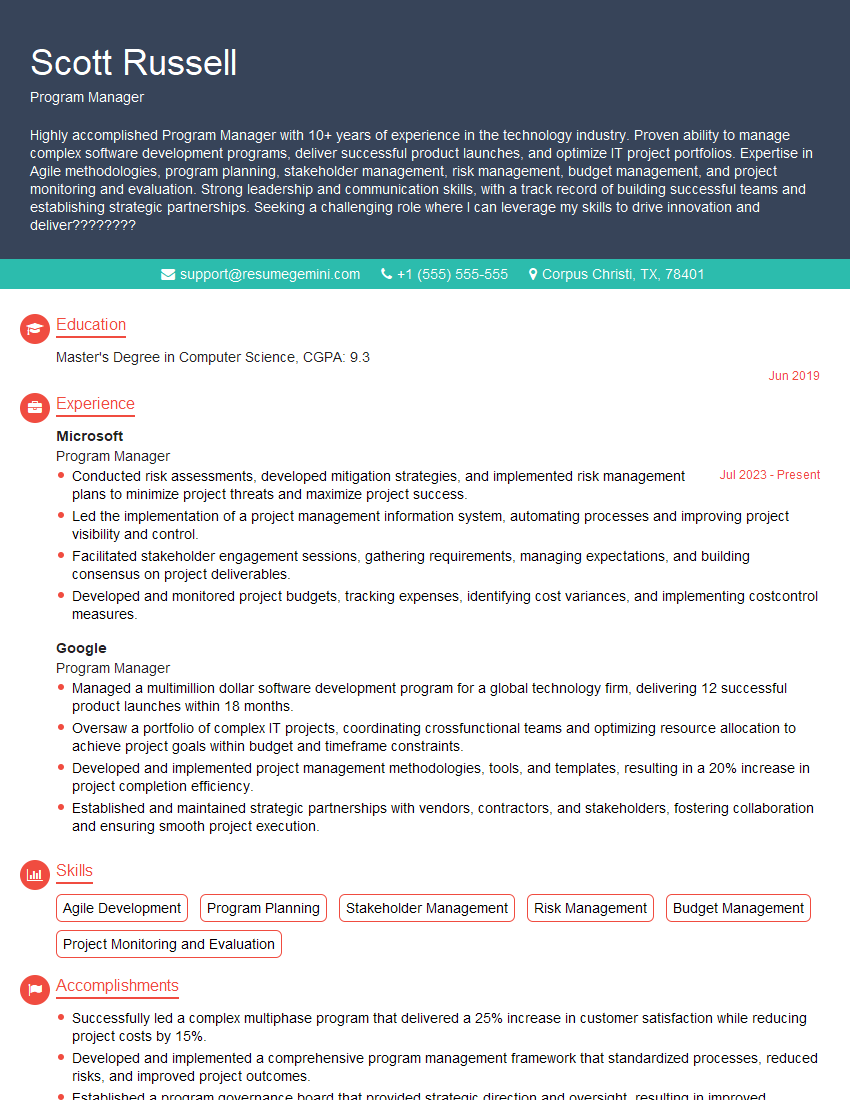
Program Manager Resume Sample

Operations Manager Resume Sample
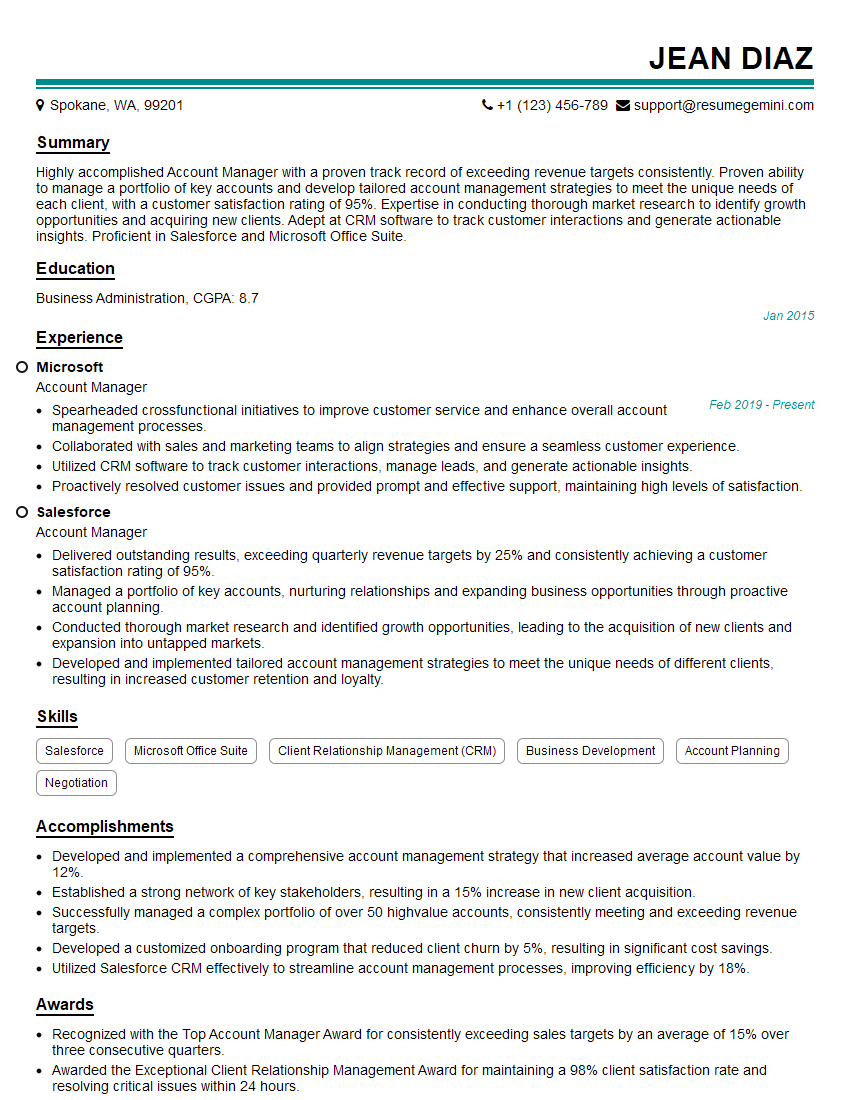
Account Manager Resume Sample
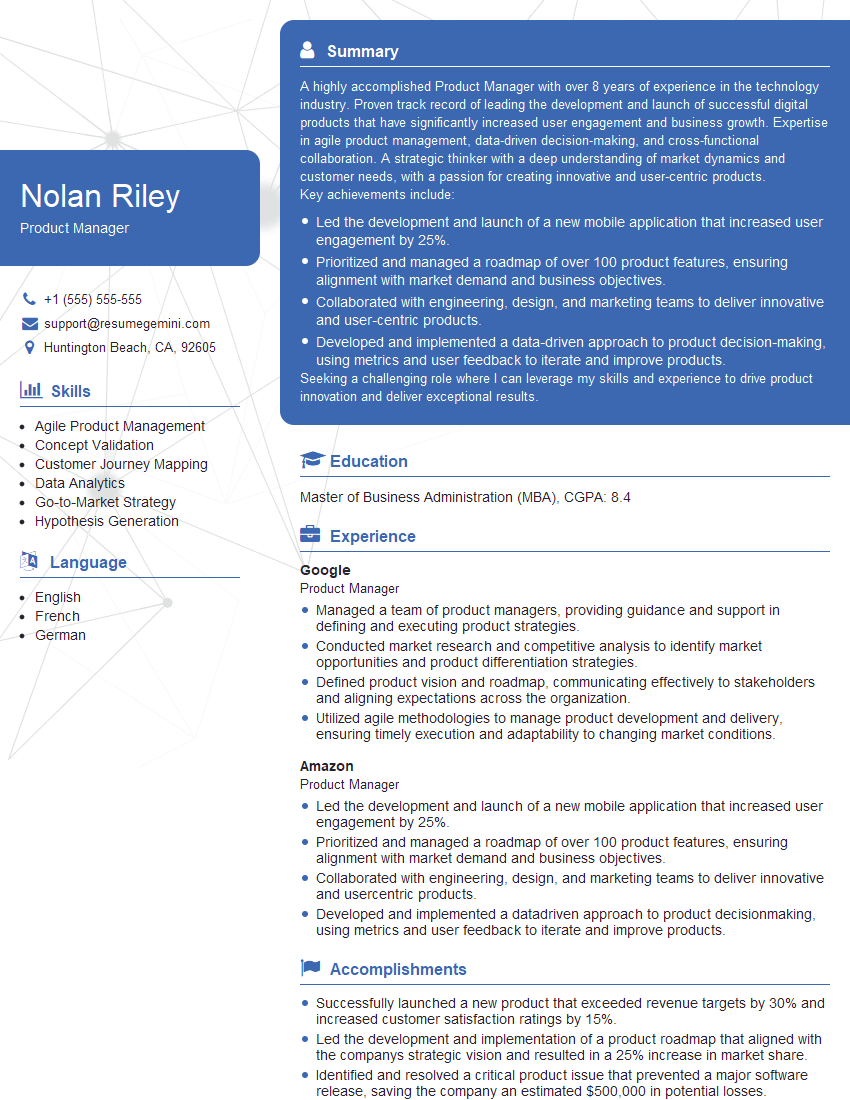
Product Manager Resume Sample
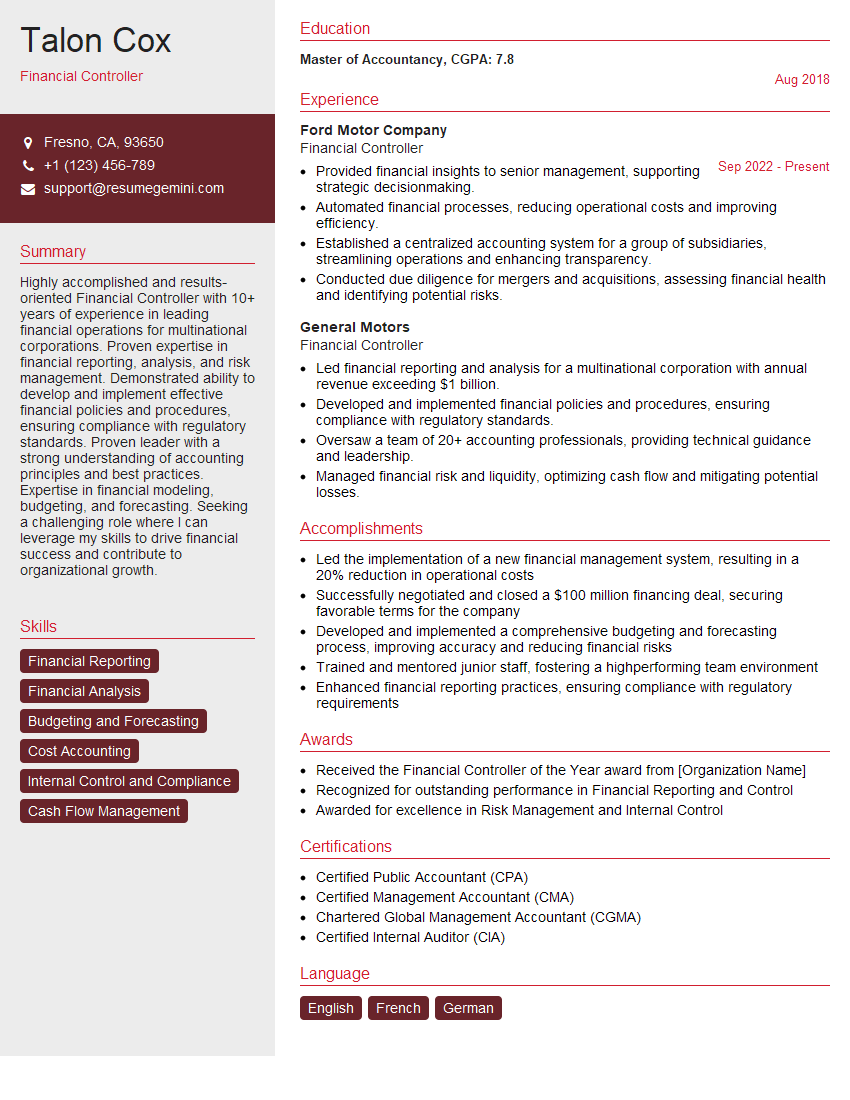
Financial Controller Resume Sample
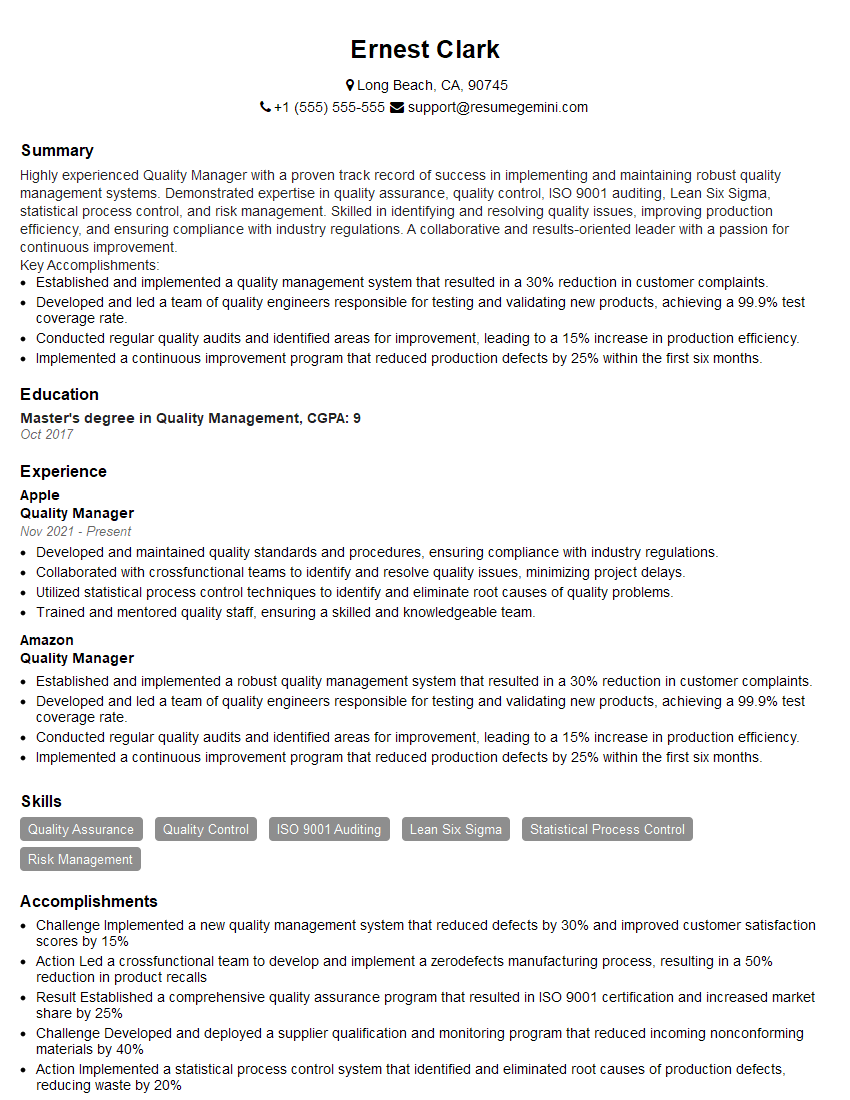
Quality Manager Resume Sample

Procurement Manager Resume Sample
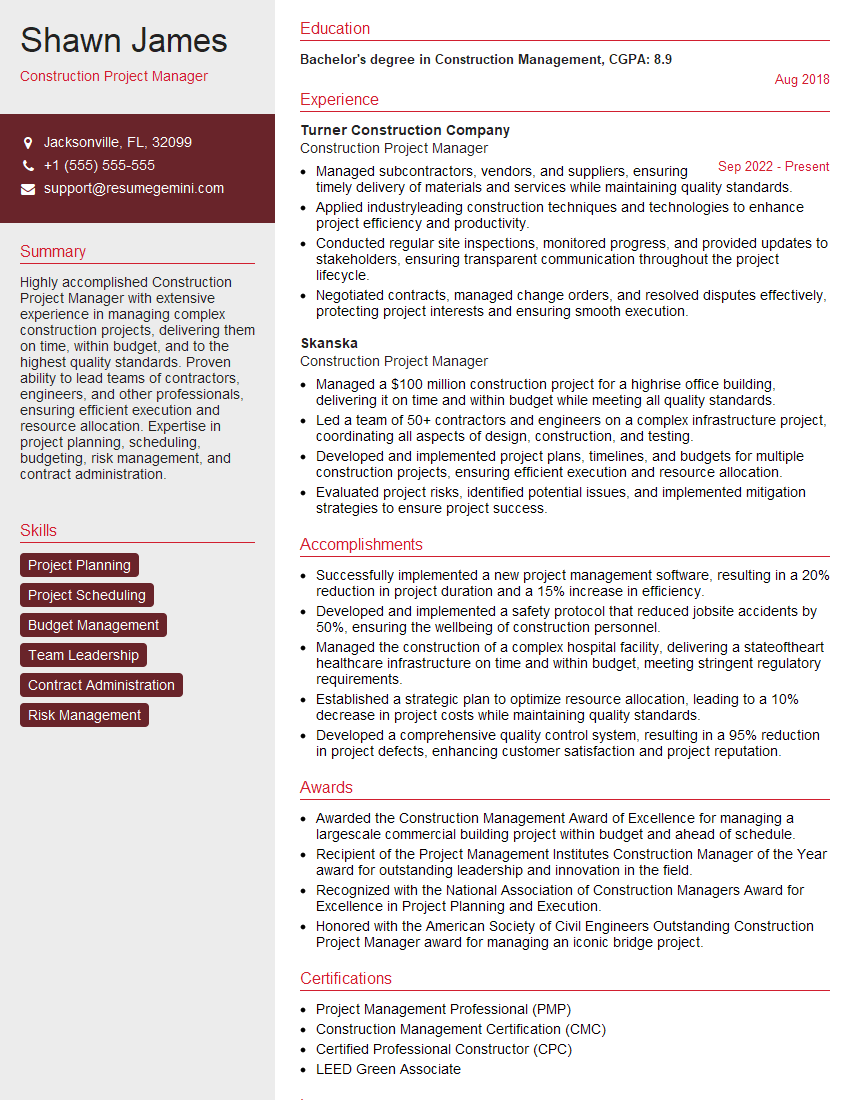
Construction Project Manager Resume Sample

Project Manager Resume Sample
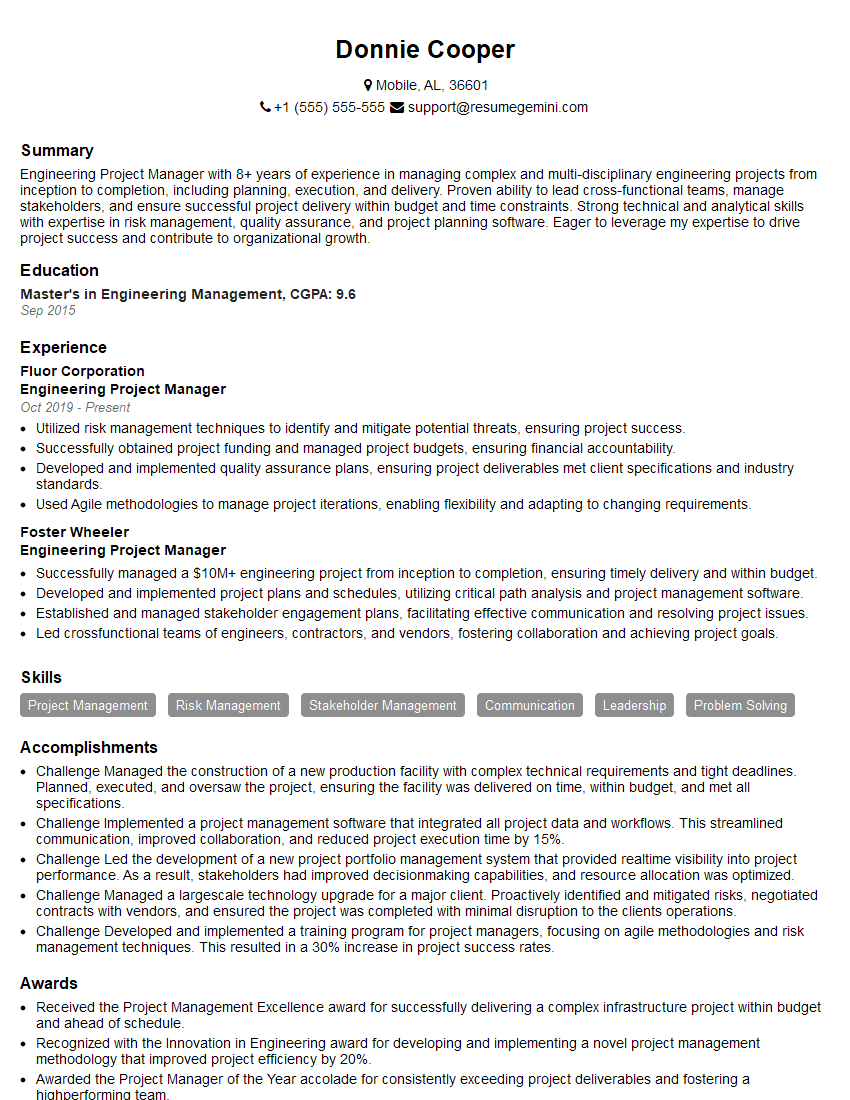
Engineering Project Manager Resume Sample
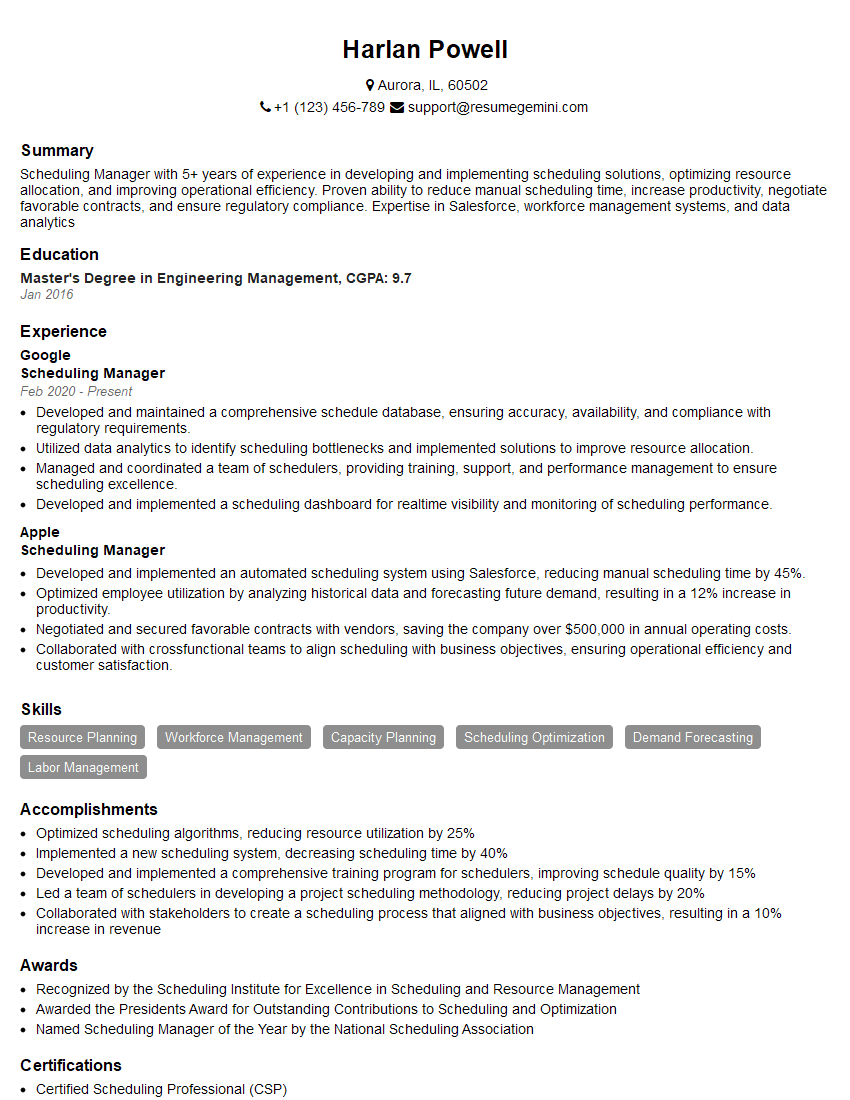
Scheduling Manager Resume Sample
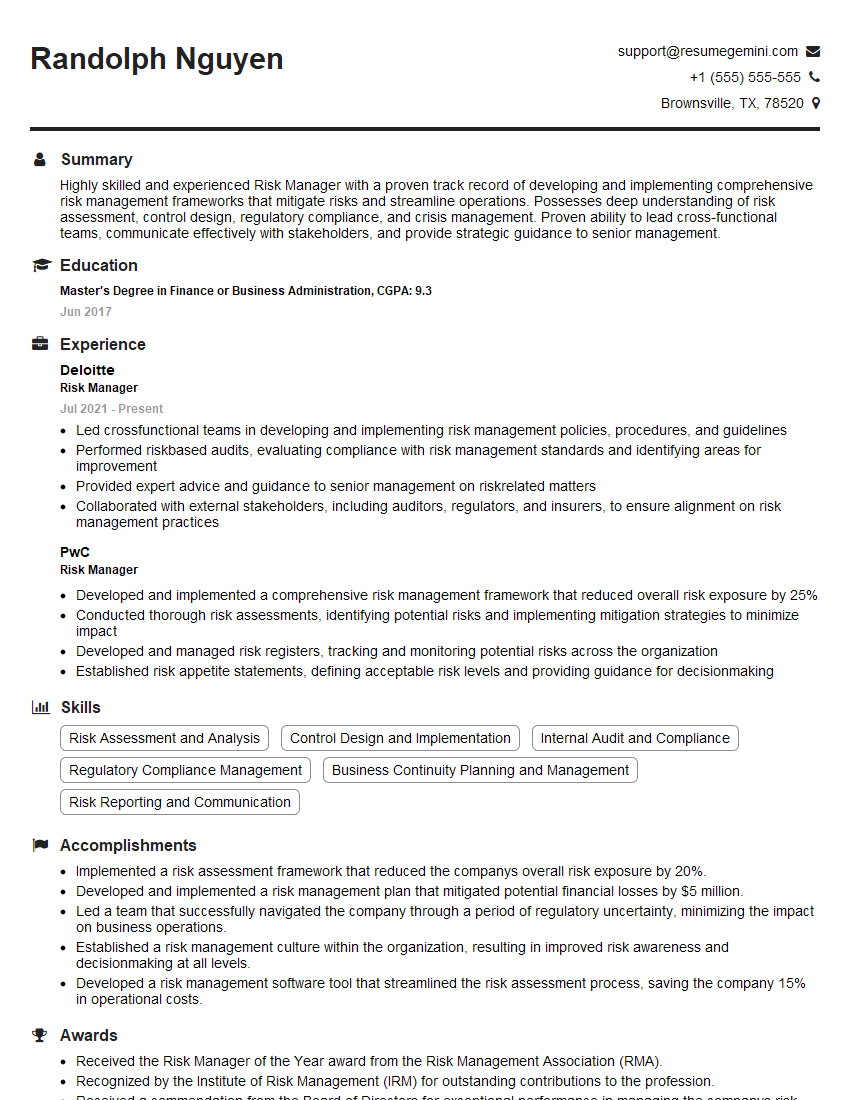
Risk Manager Resume Sample
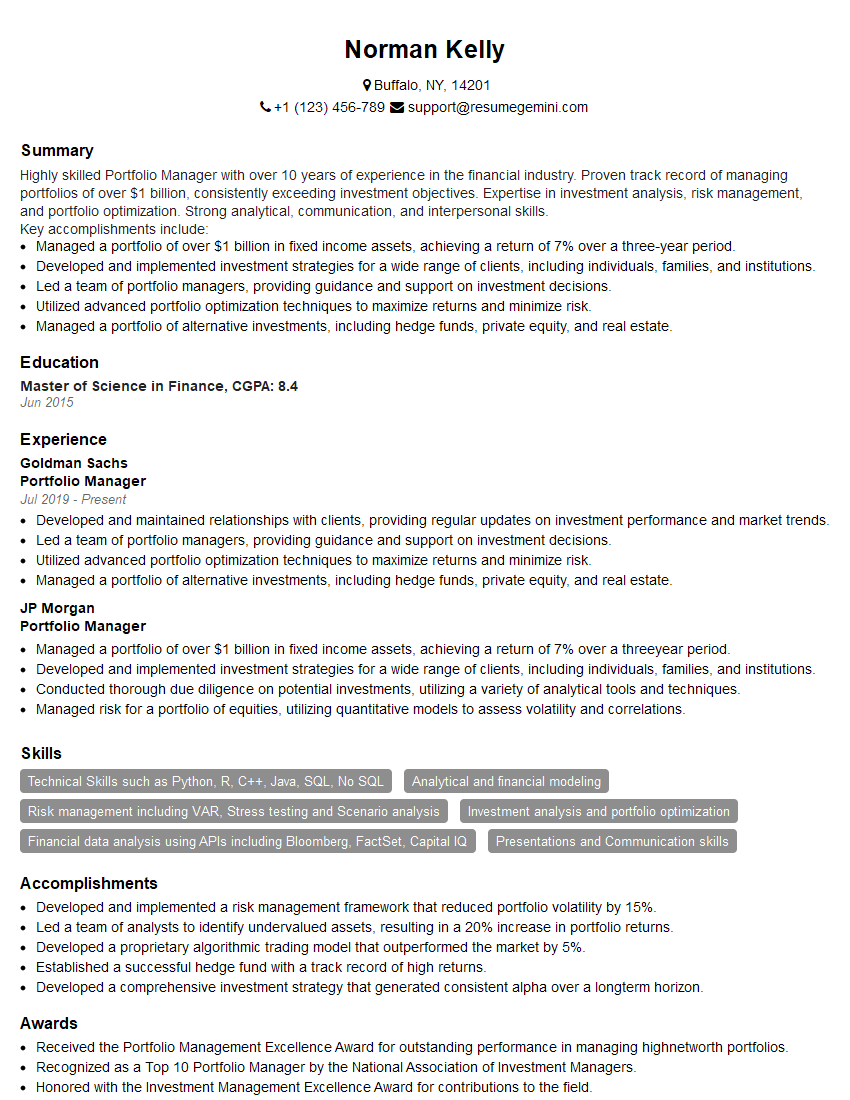
Portfolio Manager Resume Sample
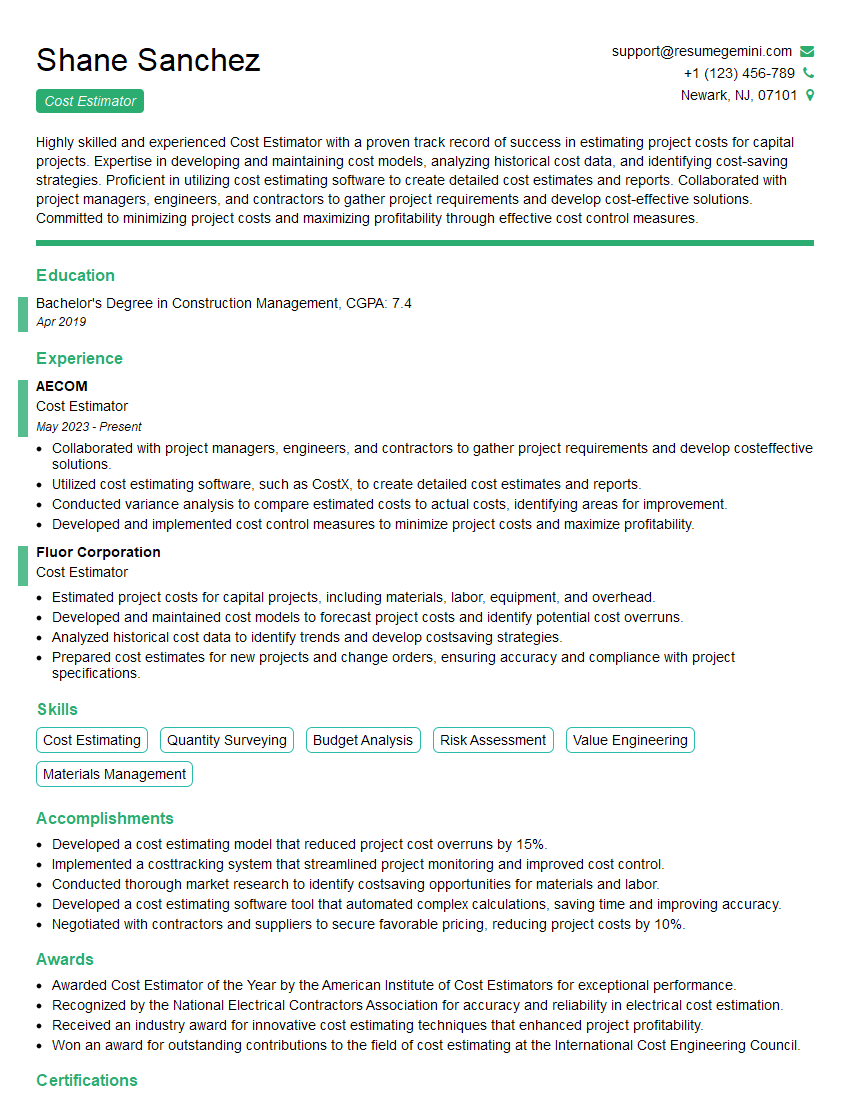
Cost Estimator Resume Sample
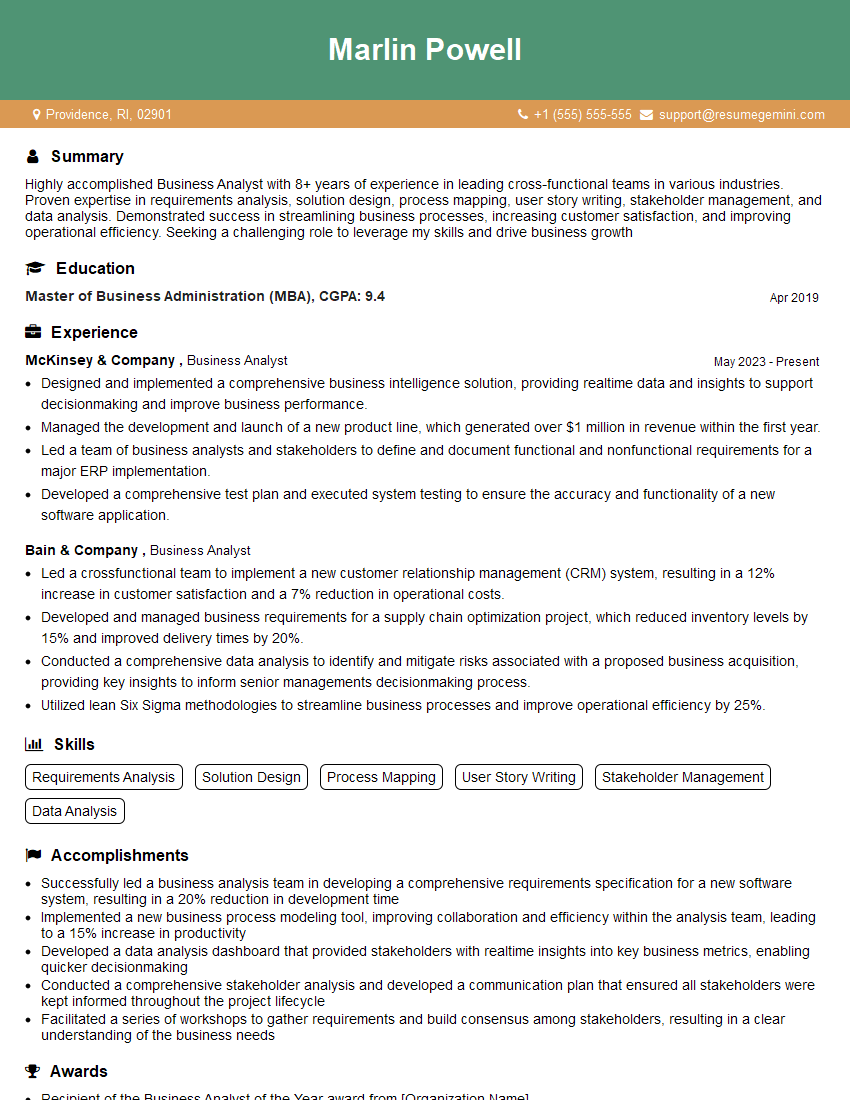
Business Analyst Resume Sample
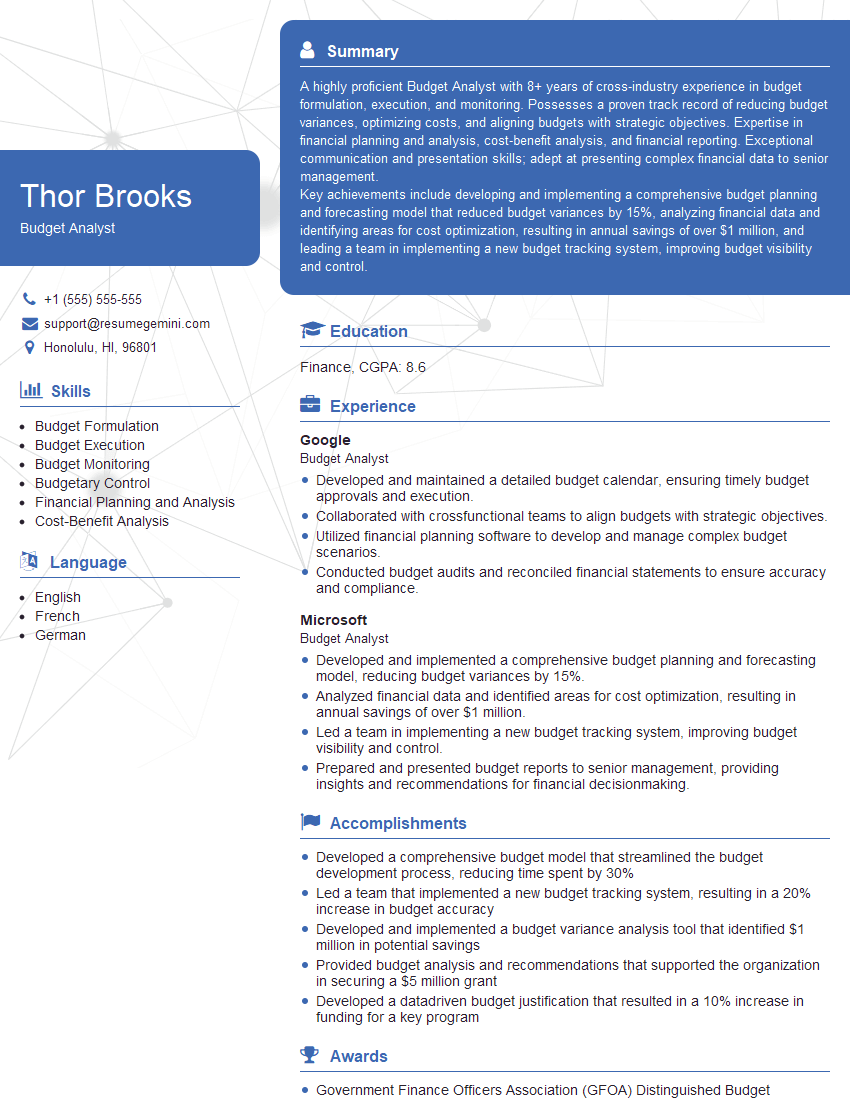
Budget Analyst Resume Sample
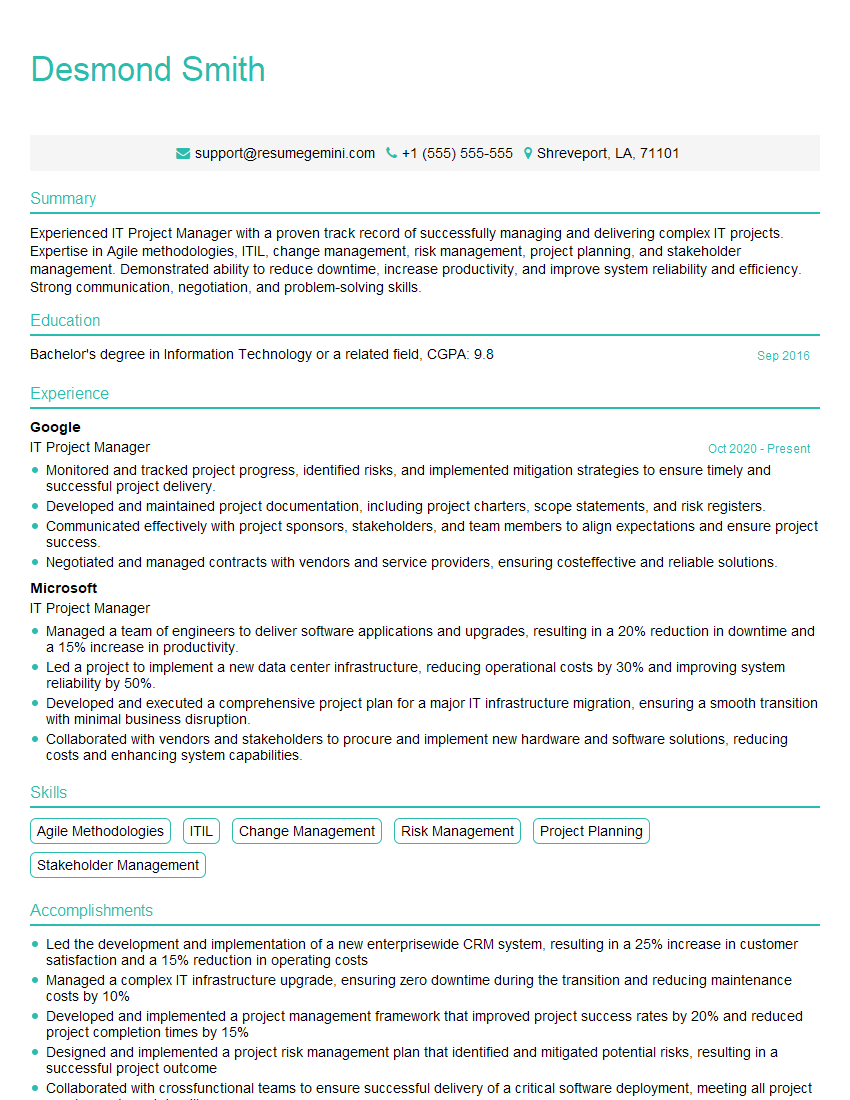
IT Project Manager Resume Sample
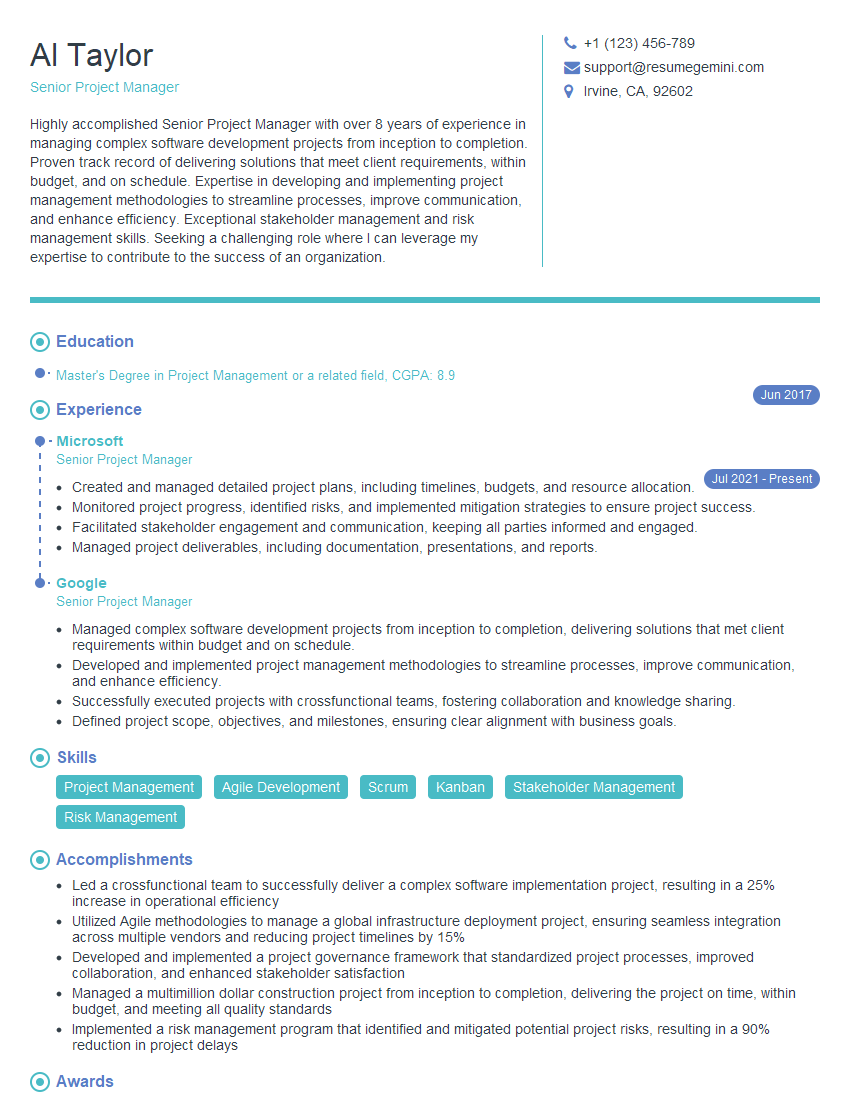
Senior Project Manager Resume Sample
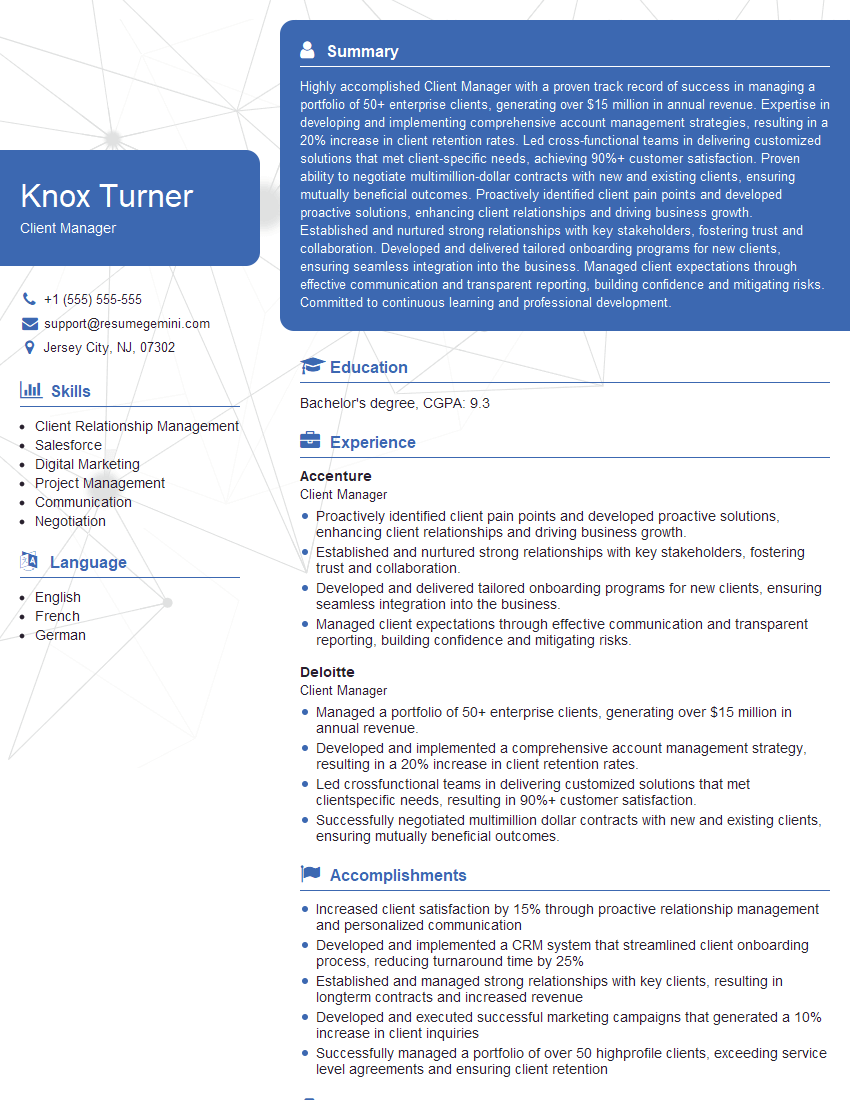
Client Manager Resume Sample
- Program Manager
- Operations Manager
- Account Manager
- Product Manager
- Financial Controller
- Quality Manager
- Procurement Manager
- Construction Project Manager
- Project Manager
- Engineering Project Manager
- Scheduling Manager
- Risk Manager
- Portfolio Manager
- Cost Estimator
- Business Analyst
- Budget Analyst
- IT Project Manager
- Senior Project Manager
- Client Manager
Explore more articles
Users Rating of Our Blogs
Share Your Experience
We value your feedback! Please rate our content and share your thoughts (optional).
What Readers Say About Our Blog
To the interviewgemini.com Webmaster.
Very helpful and content specific questions to help prepare me for my interview!
Thank you
To the interviewgemini.com Webmaster.
This was kind of a unique content I found around the specialized skills. Very helpful questions and good detailed answers.
Very Helpful blog, thank you Interviewgemini team.