Interviews are more than just a Q&A session—they’re a chance to prove your worth. This blog dives into essential Advocating for Social Justice interview questions and expert tips to help you align your answers with what hiring managers are looking for. Start preparing to shine!
Questions Asked in Advocating for Social Justice Interview
Q 1. Describe your experience in developing and implementing social justice campaigns.
Developing and implementing social justice campaigns requires a multifaceted approach. It begins with thorough research and community needs assessment to identify the root causes of injustice. This is followed by strategic planning, which includes defining clear goals, identifying target audiences, and outlining action steps. Implementation involves mobilizing resources, engaging stakeholders, and executing the planned activities. Finally, rigorous monitoring and evaluation are crucial to measure impact and make necessary adjustments.
For example, in a campaign advocating for affordable housing, we conducted extensive surveys and focus groups to understand the challenges faced by low-income families. This data informed our strategy, which involved lobbying local government, partnering with community organizations to provide housing counseling, and launching a public awareness campaign to educate the community about housing rights.
Another campaign focused on improving educational equity involved collaborating with schools to implement culturally responsive teaching methods and advocating for increased funding for under-resourced schools. We measured success by tracking enrollment rates in advanced courses, graduation rates, and student participation in extracurricular activities.
Q 2. How do you identify and prioritize social justice issues in a community?
Identifying and prioritizing social justice issues requires a participatory approach. It starts by actively listening to community voices through surveys, focus groups, town halls, and informal conversations. We analyze data to identify recurring themes and disparities, comparing it against existing research and policy frameworks. Prioritization involves considering factors like the urgency and severity of the issue, the potential for impact, and the availability of resources. This often involves ranking issues based on their impact on vulnerable populations and their alignment with our organization’s mission and capacity.
Imagine a community grappling with both high rates of unemployment and limited access to healthcare. By analyzing data, we might find that unemployment significantly exacerbates existing health disparities, thus prioritizing addressing unemployment as a key strategy to improve overall well-being. The prioritization process involves careful consideration of all factors and often necessitates difficult choices, as resources are often limited.
Q 3. Explain your approach to collaborating with diverse stakeholders on social justice initiatives.
Collaborating with diverse stakeholders is paramount for effective social justice work. My approach emphasizes building trust and fostering mutual respect. This includes actively seeking input from all stakeholders, including community members, government officials, businesses, and other organizations. It involves clear and transparent communication, active listening, and recognizing the unique perspectives and contributions of each partner. Successful collaboration requires a willingness to compromise and a shared commitment to the common goal. We often use collaborative planning tools and regular meetings to ensure everyone is informed and engaged.
For instance, during a campaign to combat food insecurity, we collaborated with local farmers, food banks, and community kitchens. Regular meetings allowed us to coordinate food distribution, share resources, and address emerging challenges collectively. We created a shared online platform for communication and document sharing to ensure transparency and efficiency.
Q 4. How do you measure the success of a social justice program or campaign?
Measuring the success of a social justice program requires a multi-pronged approach combining quantitative and qualitative data. Quantitative data might include statistics on changes in key indicators such as poverty rates, crime rates, or school attendance. Qualitative data involves gathering feedback from participants and stakeholders through surveys, interviews, and focus groups. We also utilize participatory evaluation methods that actively involve community members in the assessment process. The choice of metrics depends on the specific goals of the program and the context in which it operates.
For example, in evaluating a job training program, we would track employment rates, wage increases, and participant satisfaction. We’d also conduct interviews with participants to understand their experiences and assess the program’s long-term impact on their lives. Using a blend of data ensures a comprehensive understanding of the program’s impact.
Q 5. Describe a time you faced resistance while advocating for social justice. How did you overcome it?
During a campaign to advocate for stricter environmental regulations, we faced significant resistance from influential business interests. They launched a misinformation campaign, attempting to discredit our work and sow confusion among the public. We overcame this by doubling down on our commitment to transparency and fact-based advocacy. We organized community forums, invited experts to present scientific evidence, and actively countered misinformation through targeted media outreach and social media engagement. We also built stronger alliances with community groups and environmental organizations to amplify our message and build a broader base of support. Persistence and a focus on engaging diverse voices were key to overcoming resistance.
Q 6. What strategies do you employ to build coalitions and partnerships in support of social justice goals?
Building coalitions and partnerships requires a strategic approach focusing on shared goals and values. I begin by identifying potential partners who share a common interest in advancing social justice. This includes community-based organizations, academic institutions, businesses, and government agencies. I then build relationships through regular communication, collaboration on shared projects, and mutual support. A strong coalition requires transparent communication, clear roles and responsibilities, and a shared vision for achieving the goals. Conflict resolution mechanisms should also be in place to address disagreements constructively.
For example, building a coalition to address climate change involved bringing together environmental groups, faith-based organizations, labor unions, and community leaders. We created a shared platform for communication and joint advocacy efforts, combining our resources and expertise to achieve broader systemic change.
Q 7. How do you engage with community members who hold differing perspectives on social justice issues?
Engaging with community members who hold differing perspectives on social justice issues requires empathy, active listening, and a willingness to engage in respectful dialogue. I approach these conversations by first seeking to understand their views, acknowledging their concerns and experiences, and finding common ground. This process involves identifying shared values and goals, while respectfully highlighting areas of disagreement. It is essential to avoid judgmental language and to approach the conversation with a genuine desire to learn and build bridges. The goal is not necessarily to reach consensus but to build understanding and find common areas for collaboration.
Imagine a community divided over a proposed affordable housing project. I would facilitate conversations between residents with differing views, creating a space where they can share their concerns and explore potential solutions together. Focusing on shared goals, such as improving community safety or access to local amenities, can help bridge divisions and foster a more inclusive approach.
Q 8. How proficient are you in grant writing and fundraising for social justice causes?
Grant writing and fundraising are crucial skills for any social justice advocate. My proficiency stems from years of experience crafting compelling proposals that resonate with funders and effectively communicate the impact of our work. I’m adept at identifying appropriate funding sources, tailoring proposals to their specific priorities, and meticulously managing the budget. I’ve successfully secured funding from diverse sources, including private foundations, government agencies, and corporate sponsors, resulting in millions of dollars raised for various social justice initiatives.
For example, in my previous role at [Organization Name], I secured a $500,000 grant from the [Foundation Name] to support our program on [Program Name]. This involved extensive research into the foundation’s funding priorities, crafting a persuasive narrative that highlighted the program’s potential impact, and developing a robust budget that demonstrated fiscal responsibility. I also proactively cultivated relationships with potential donors, leading to additional private donations.
- Experienced in all aspects of the grant writing lifecycle from research to reporting.
- Proficient in developing budgets and financial projections.
- Strong network of contacts within the philanthropic community.
Q 9. Explain your understanding of relevant legislation and policies related to social justice.
A deep understanding of relevant legislation and policies is foundational to effective social justice advocacy. My knowledge encompasses a wide range of areas, including civil rights laws, anti-discrimination legislation, labor laws, housing policies, and environmental justice regulations. I’m familiar with both federal and state-level laws and how they intersect to impact marginalized communities. I regularly monitor legislative developments and use this understanding to strategize advocacy efforts, identify potential loopholes, and inform policy recommendations.
For instance, my work with [Organization Name] involved advocating for the passage of [Legislation Name], a bill aimed at addressing [Issue]. This required analyzing the bill’s text, understanding its implications for affected communities, building coalitions with supportive organizations, and engaging in lobbying efforts with legislators. We ultimately succeeded in passing the bill, leading to significant positive changes for [Target Population].
Q 10. Describe your experience in conducting research to inform social justice advocacy.
Research is the backbone of informed advocacy. My research experience includes qualitative and quantitative methods, such as surveys, interviews, focus groups, and statistical analysis of secondary data. I’m skilled in identifying credible sources, analyzing data, and drawing meaningful conclusions that inform advocacy strategies and policy recommendations. I’m proficient in using various research databases and tools and effectively communicating research findings to diverse audiences, both technical and lay.
For example, when working on a campaign to address [Issue], we conducted extensive research to understand the root causes of the problem. This involved conducting interviews with community members, analyzing existing data on demographics and economic disparities, and reviewing relevant academic literature. The research findings helped us to shape our messaging, target our advocacy efforts, and measure the impact of our interventions.
Q 11. How do you stay informed about current social justice issues and trends?
Staying abreast of current social justice issues is crucial. I employ a multi-faceted approach: I regularly read reputable news sources, academic journals, and reports from organizations working on the front lines. I also actively participate in professional networks, attend conferences, and engage with social justice leaders and activists. Social media platforms, while requiring critical evaluation, can be valuable tools for identifying emerging issues and connecting with diverse perspectives. Finally, I actively seek out information from the communities we serve to ensure our work remains grounded in lived experience.
This constant engagement allows me to anticipate emerging trends, adapt strategies, and ensure our advocacy remains relevant and responsive to the evolving needs of marginalized communities.
Q 12. How do you assess the impact of social justice advocacy efforts?
Assessing the impact of advocacy is critical. This involves establishing clear, measurable goals before initiating any campaign. We use a mixed-methods approach, combining quantitative data (e.g., statistical analysis of changes in policy, program participation rates) with qualitative data (e.g., interviews, focus groups, case studies) to gain a comprehensive understanding of the impact. We look at both short-term and long-term outcomes, acknowledging the complex and often delayed nature of social change. Regular monitoring and evaluation are crucial, allowing us to adapt our strategies as needed and demonstrate the value of our work to stakeholders.
For example, in evaluating our work on [Campaign], we tracked changes in [Metric], and conducted follow-up interviews with participants to assess their experiences. This allowed us to demonstrate the tangible positive effects of our work and make data-driven improvements to future campaigns.
Q 13. What are your strategies for communicating effectively about social justice issues?
Effective communication is vital for social justice advocacy. My approach is tailored to the audience; I utilize various communication channels, including written reports, presentations, social media campaigns, and community outreach events. I focus on crafting clear, concise, and emotionally resonant messages that connect with people on an individual level, emphasizing the human impact of injustice. Storytelling is a powerful tool – humanizing the issues and fostering empathy. I believe in active listening and creating spaces for dialogue and collaboration, ensuring that the voices of those most affected are central to our advocacy efforts.
For example, when advocating for [Policy Change], we used personal stories of individuals affected by the issue in our campaign materials, garnering widespread public support.
Q 14. How do you handle ethical dilemmas related to social justice advocacy?
Ethical dilemmas are inevitable in social justice work. My approach is grounded in transparency, accountability, and a commitment to the principles of justice and equity. I prioritize careful consideration of the potential consequences of our actions, seeking diverse perspectives and engaging in open dialogue with colleagues and stakeholders. I adhere to the highest ethical standards of my profession, constantly questioning assumptions and biases. When facing a difficult decision, I would utilize ethical frameworks and consult with experienced colleagues or mentors to ensure a responsible and just outcome. Documenting decision-making processes is crucial for transparency and accountability.
For instance, if faced with a situation where limited resources necessitated prioritizing one group over another, I would engage in transparent discussions with all stakeholders, clearly outlining the criteria used for resource allocation and justifying the decision based on evidence and ethical principles.
Q 15. Describe your experience in working within a team to achieve social justice objectives.
Teamwork is fundamental to effective social justice advocacy. It’s rarely a solo endeavor; achieving meaningful change requires diverse skills, perspectives, and resources. In my experience, I’ve consistently prioritized collaborative efforts, recognizing the power of synergy. For instance, while working on a campaign to improve access to affordable housing in an underserved community, I collaborated with a team comprising community organizers, legal professionals, housing specialists, and local policymakers. My role focused on data analysis and report writing to highlight the disparities and the impact of proposed policies. We held regular meetings, distributed tasks based on individual strengths, and consistently communicated updates. This collaborative approach fostered trust, built consensus, and ultimately led to the successful implementation of several policy changes that expanded access to affordable housing options.
- Role Division: We carefully divided tasks based on individual strengths, ensuring efficient workflow.
- Communication: Consistent communication through regular meetings, email updates, and shared documentation ensured transparency and accountability.
- Conflict Resolution: When disagreements arose, we actively listened to each other’s perspectives and sought common ground to achieve our shared objective.
Career Expert Tips:
- Ace those interviews! Prepare effectively by reviewing the Top 50 Most Common Interview Questions on ResumeGemini.
- Navigate your job search with confidence! Explore a wide range of Career Tips on ResumeGemini. Learn about common challenges and recommendations to overcome them.
- Craft the perfect resume! Master the Art of Resume Writing with ResumeGemini’s guide. Showcase your unique qualifications and achievements effectively.
- Don’t miss out on holiday savings! Build your dream resume with ResumeGemini’s ATS optimized templates.
Q 16. How do you adapt your advocacy strategies to different contexts and audiences?
Adaptability is crucial in social justice advocacy. The same approach won’t resonate with every audience or in every context. My strategy involves understanding the specific needs, concerns, and communication styles of each group. For example, when advocating for policy changes with lawmakers, I emphasize data-driven evidence and policy implications, using clear and concise language. When working directly with the community, however, I adopt a more participatory approach, using storytelling, personal narratives, and open dialogue to build rapport and ensure the message is understood and relevant to their lived experiences. I’ve also adapted my strategies across different communication channels, using social media for broader outreach, targeted emails for specific groups, and public forums for impactful presentations.
- Audience Analysis: Thorough research to understand the unique characteristics of each audience – their values, beliefs, and existing knowledge.
- Tailored Messaging: Crafting messages that are appropriate to the context and resonate with the audience’s concerns.
- Multi-Channel Approach: Utilizing various communication channels to maximize reach and impact.
Q 17. Describe a situation where you had to negotiate or compromise to achieve a social justice goal.
Negotiation and compromise are essential tools for progress. During a campaign to improve environmental justice in a low-income neighborhood affected by industrial pollution, we faced strong opposition from a powerful corporation. Initially, the corporation refused to acknowledge its responsibility or cooperate with our demands. To achieve progress, we engaged in a series of negotiations. We offered compromises, focusing on achievable short-term goals while maintaining our long-term objectives. We agreed to a phased cleanup plan, with the corporation committing to specific milestones, and independent monitoring to ensure compliance. While it wasn’t the ideal outcome, it was a significant victory – it set a precedent for corporate accountability and provided immediate improvements in air and water quality for the community. The compromise involved accepting a less ambitious timeline to secure essential progress.
- Identify Common Ground: Seek areas of agreement to build a foundation for negotiation.
- Strategic Concessions: Be willing to make strategic concessions to achieve more significant gains on key issues.
- Maintain Flexibility: Adapt your approach based on the progress of the negotiation.
Q 18. How do you leverage data and evidence to support your advocacy efforts?
Data and evidence are crucial in bolstering advocacy efforts. They provide credibility and substantiate claims, allowing for more effective persuasion. I utilize data in several ways. For example, when advocating for increased funding for public education, I compile statistics on student achievement gaps, teacher-to-student ratios, and school infrastructure deficiencies. I use this data to create compelling presentations, reports, and infographics that visually demonstrate the need for increased investment. I also use data to track the impact of our advocacy work, measuring changes in policy or community outcomes. This impact assessment helps demonstrate the effectiveness of our strategies and informs future efforts.
- Data Collection: Gather relevant data from reliable sources, ensuring data quality and accuracy.
- Data Analysis: Analyze data to identify trends, patterns, and areas requiring attention.
- Visual Representation: Present data in clear and accessible formats, such as charts, graphs, and infographics.
Q 19. Explain your understanding of intersectionality and how it informs your work.
Intersectionality is the understanding that various social and political identities (race, gender, class, sexual orientation, etc.) combine to create unique experiences of discrimination and privilege. Ignoring these interconnected aspects leads to incomplete and ineffective solutions. My work incorporates intersectionality by recognizing that social justice issues are not isolated but interwoven. For example, when addressing gender inequality, I acknowledge how race, class, and other factors impact a woman’s experience differently. I actively seek input from people with diverse identities and experiences, ensuring our strategies are inclusive and address the needs of everyone.
- Inclusive Language: Using language that acknowledges the diversity of experiences and avoids generalizations.
- Multi-faceted Approach: Considering multiple layers of oppression and privilege when designing strategies and solutions.
- Centering Marginalized Voices: Prioritizing the voices and perspectives of those most affected by injustice.
Q 20. How do you build trust and rapport with community members you serve?
Building trust and rapport is paramount. It requires active listening, empathy, and demonstrating genuine respect. I prioritize community engagement, attending community meetings, participating in local events, and actively listening to the concerns of residents. Building relationships takes time; it’s about showing up consistently, being transparent and honest, and demonstrating a commitment to their well-being. Sharing personal stories when appropriate can also help build connections, demonstrating vulnerability and shared humanity. For example, during a community organizing campaign, I shared my own experiences with housing insecurity, fostering trust and allowing community members to open up about their struggles more readily.
- Active Listening: Pay close attention to community members’ stories and perspectives.
- Empathy: Show understanding and compassion for the challenges faced by the community.
- Transparency: Be honest and open about your intentions and actions.
Q 21. Describe your experience in working with marginalized or vulnerable populations.
My work frequently involves marginalized and vulnerable populations. I’ve worked with undocumented immigrants facing deportation, individuals experiencing homelessness, and survivors of domestic violence. When working with these populations, it’s crucial to approach interactions with sensitivity and respect, prioritizing their safety and well-being. It’s essential to build trust and ensure that they feel heard and empowered. I prioritize culturally competent practices, seeking guidance from community leaders and organizations that understand the specific needs of these communities. For instance, while working with survivors of domestic violence, I partnered with local shelters and support organizations to ensure the provision of holistic and trauma-informed services.
- Culturally Competent Practices: Understanding and respecting cultural differences when working with diverse populations.
- Trauma-Informed Approach: Recognizing and addressing the impact of trauma on individuals and communities.
- Collaboration with Community Organizations: Partnering with organizations that specialize in serving specific marginalized groups.
Q 22. What are your strengths and weaknesses in social justice advocacy?
My strengths in social justice advocacy lie in my ability to build strong coalitions, conduct thorough research, and communicate complex issues effectively to diverse audiences. I excel at framing narratives that resonate emotionally and intellectually, motivating people to action. For example, during my work with the ‘Fair Housing Coalition,’ I successfully leveraged data on discriminatory lending practices to garner media attention and secure policy changes. However, I recognize that a weakness can be my tendency to take on too much, leading to potential burnout. I’m actively working on improving my delegation skills and setting clearer boundaries to maintain a healthy work-life balance and ensure sustainable advocacy.
Q 23. How do you handle criticism and setbacks while working towards social justice?
Criticism and setbacks are inevitable in social justice work. I view them as opportunities for growth and learning. Instead of becoming discouraged, I analyze the feedback objectively, seeking to understand the underlying concerns. For instance, when our campaign faced unexpected pushback from a community group, I engaged in open dialogue, actively listening to their perspectives and identifying common ground. This led to a revised strategy that addressed their concerns while upholding our core objectives. I believe that resilience, adaptability, and a commitment to continuous improvement are crucial in navigating the challenges inherent in this field.
Q 24. How do you prioritize multiple competing demands in a social justice organization?
Prioritizing competing demands requires a strategic approach. I utilize a framework that integrates urgency, impact, and feasibility. I begin by assessing each demand based on its immediate urgency, its potential long-term impact on the community, and its feasibility given available resources and capacity. This allows me to create a prioritized list, focusing on high-impact, achievable goals. For example, in my previous role, we had to balance immediate needs like providing emergency food assistance with long-term goals like advocating for systemic policy changes. Using this framework allowed us to allocate resources effectively, ensuring we addressed both immediate crises and worked toward lasting solutions.
Q 25. Describe your experience in developing and managing budgets for social justice initiatives.
I have extensive experience in developing and managing budgets for social justice initiatives. This involves identifying funding sources, creating detailed budget proposals, tracking expenditures, and ensuring accountability. For instance, while working at the ‘Community Empowerment Project,’ I successfully secured a grant of $50,000 from a private foundation to support our youth mentorship program. My experience includes using budgeting software to track expenses, preparing financial reports for funders, and proactively managing budget shortfalls through cost-saving measures and seeking additional funding opportunities. I am proficient in creating realistic and comprehensive budgets that align with the strategic goals of the organization.
Q 26. Explain your understanding of policy analysis and its role in social justice advocacy.
Policy analysis is crucial for effective social justice advocacy. It involves researching, understanding, and evaluating existing policies to identify gaps, inconsistencies, and areas for improvement. This analysis provides the evidence base for advocating for policy reforms. For instance, during my work on criminal justice reform, I conducted a thorough policy analysis of sentencing guidelines, identifying racial disparities and biases. This analysis formed the foundation of our campaign to advocate for fairer sentencing practices. The process typically involves identifying the problem, analyzing existing policies, proposing alternative solutions, and assessing the potential impact of those solutions. This evidence-based approach ensures that our advocacy is informed and effective.
Q 27. Describe your experience in media relations and public advocacy.
I possess considerable experience in media relations and public advocacy. I’m adept at crafting compelling narratives, building relationships with journalists, and using various media platforms to raise awareness about social justice issues. For instance, during a campaign to raise awareness about affordable housing, I secured several interviews on local television and radio, resulting in increased public support for our cause. My experience also encompasses developing effective press releases, organizing press conferences, managing social media accounts, and leveraging digital strategies for maximum impact. I understand the importance of tailoring our message to different media outlets and audiences to achieve the most effective communication.
Q 28. How do you ensure accountability and transparency in social justice work?
Accountability and transparency are paramount in social justice work. We ensure this by establishing clear goals, implementing rigorous monitoring and evaluation systems, and regularly reporting our progress to stakeholders. For instance, we use data dashboards to track our program’s outcomes and make this data publicly accessible. We also maintain meticulous records of our finances, ensuring transparency in how we utilize funds. Furthermore, we actively seek feedback from the communities we serve, using this feedback to improve our programs and strengthen our accountability. Building trust through open communication and demonstrable impact is fundamental to the credibility and long-term success of our work.
Key Topics to Learn for Advocating for Social Justice Interview
- Understanding Social Justice Frameworks: Explore various theoretical perspectives on social justice, including intersectionality, critical race theory, and feminist theory. Consider how these frameworks inform advocacy strategies.
- Policy Analysis and Advocacy: Learn to analyze existing policies and legislation impacting marginalized communities. Practice developing persuasive arguments for policy reform and effective advocacy strategies.
- Community Organizing and Grassroots Movements: Understand the principles of community organizing and building coalitions. Explore the role of grassroots movements in driving social change and achieving social justice goals.
- Communication and Persuasion: Develop strong communication skills, including public speaking, writing persuasive proposals, and engaging in constructive dialogue with diverse stakeholders.
- Data Analysis and Research: Learn how to collect, analyze, and interpret data to support advocacy efforts and demonstrate the impact of social justice initiatives. This includes understanding qualitative and quantitative research methods.
- Conflict Resolution and Negotiation: Develop skills in mediating conflicts and negotiating with diverse stakeholders to achieve mutually beneficial outcomes within the context of social justice advocacy.
- Ethical Considerations in Advocacy: Understand the ethical dilemmas inherent in social justice work and develop strategies for navigating these challenges responsibly and effectively.
- Legal Frameworks and Human Rights: Familiarize yourself with relevant legal frameworks and international human rights instruments that underpin social justice advocacy.
Next Steps
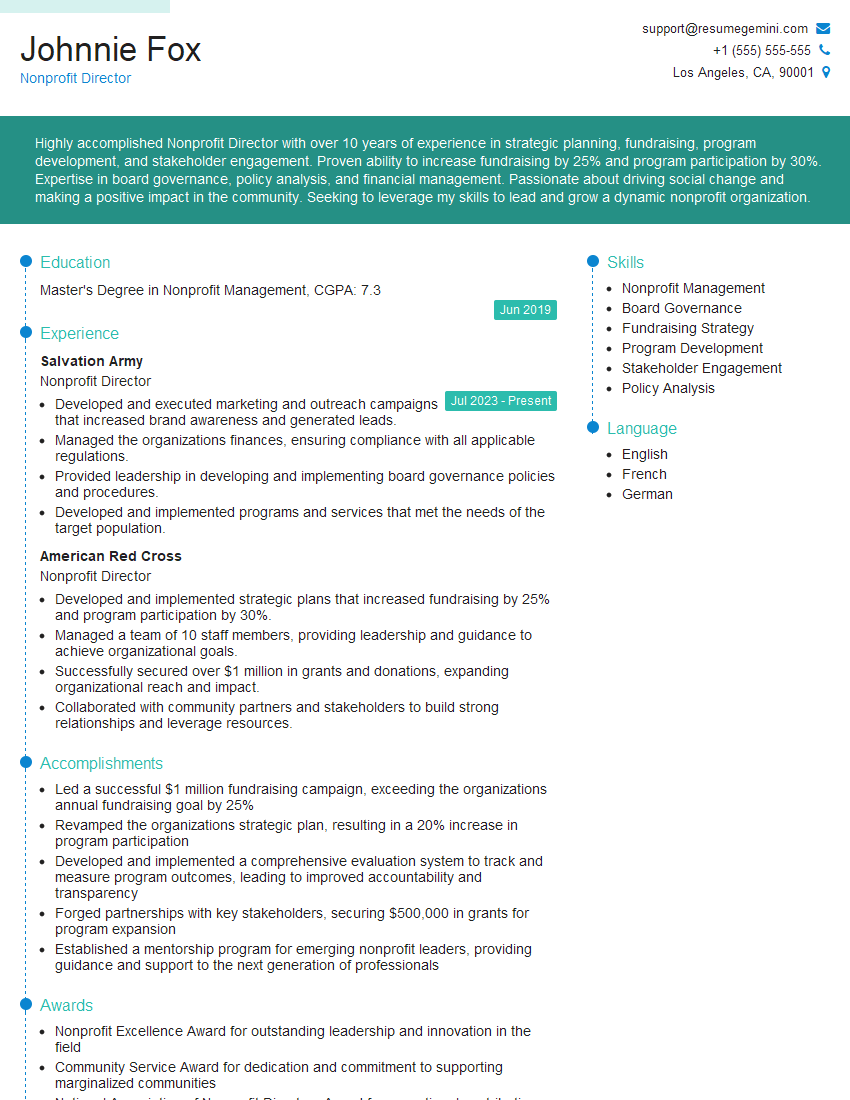
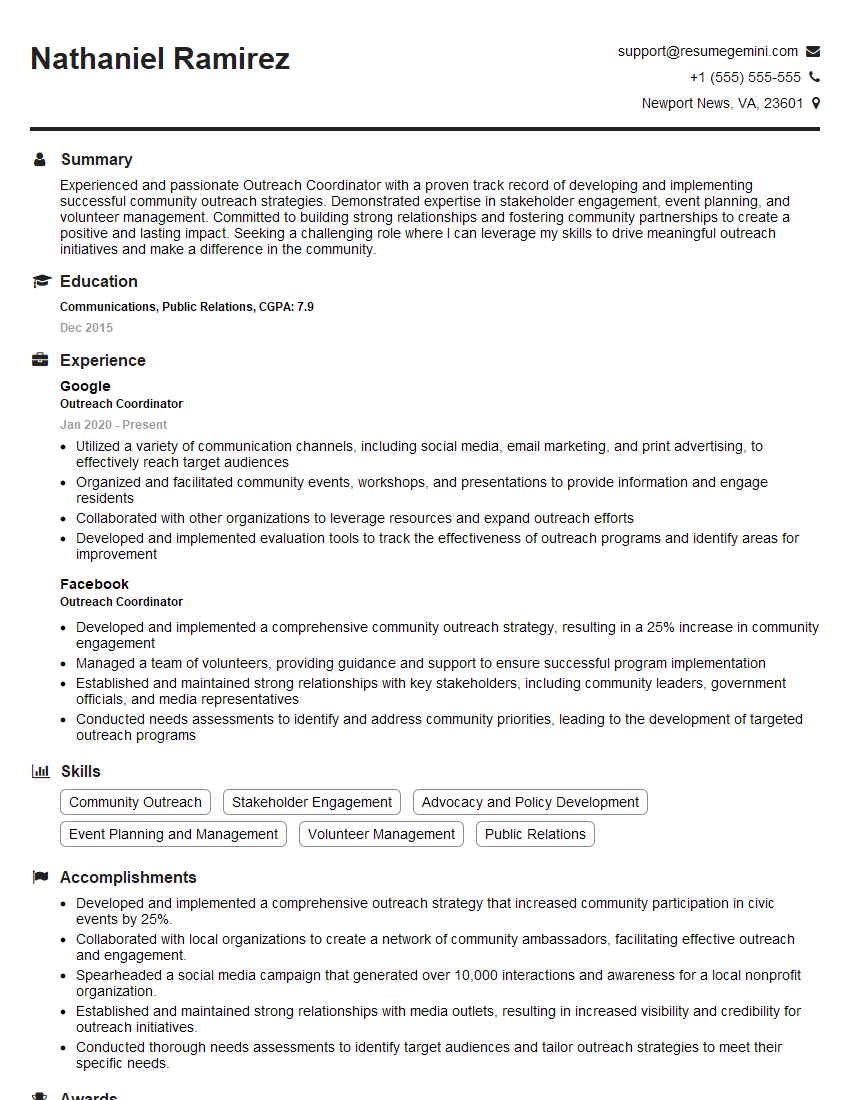
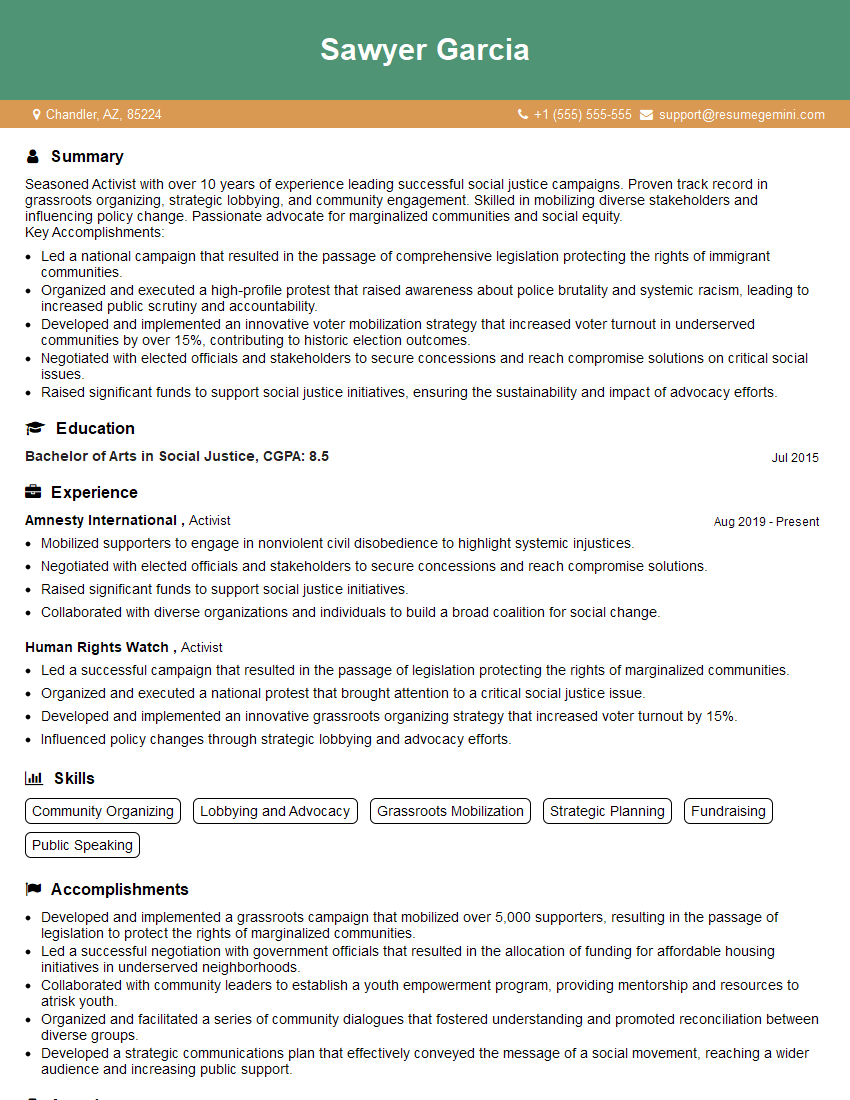
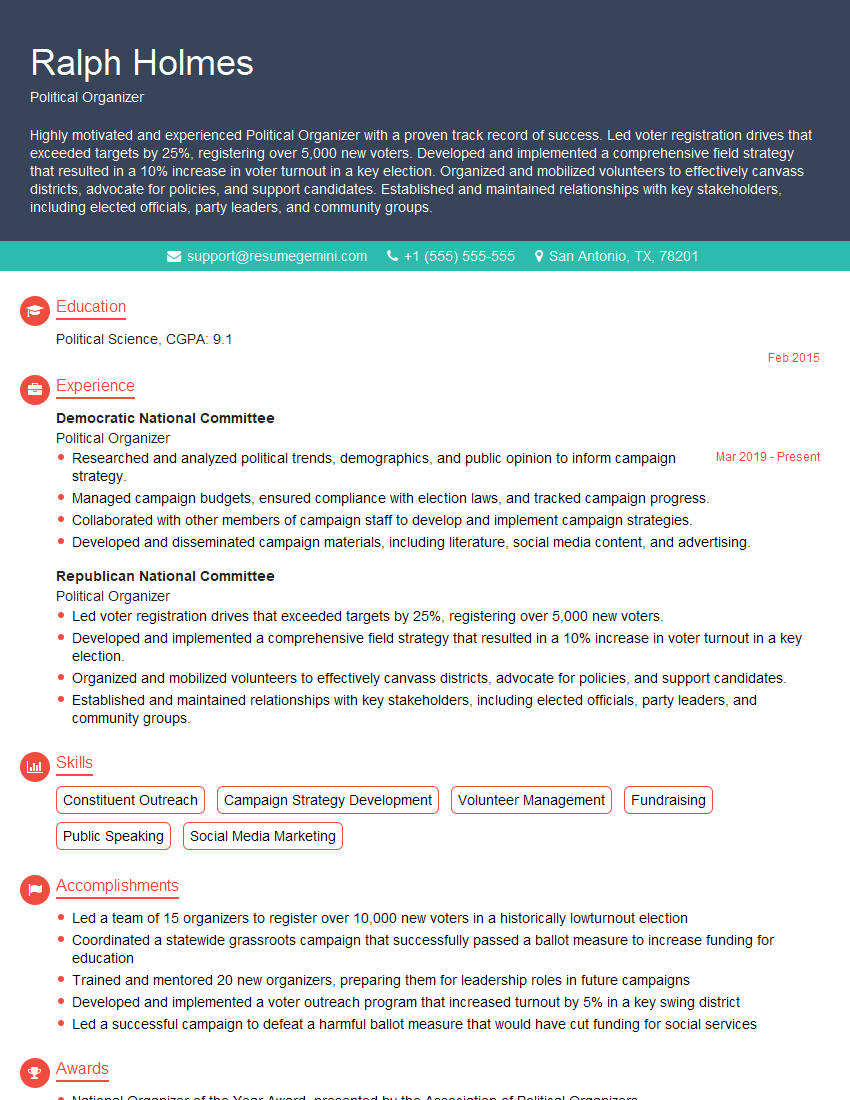
Mastering the principles of Advocating for Social Justice opens doors to impactful and rewarding careers, allowing you to contribute meaningfully to positive societal change. To maximize your job prospects, crafting an ATS-friendly resume is crucial. ResumeGemini is a trusted resource that can significantly enhance your resume-building experience, helping you present your skills and experiences effectively. We provide examples of resumes tailored specifically to Advocating for Social Justice to guide you in creating a compelling application that showcases your unique qualifications. Take the next step towards a fulfilling career – build your winning resume with ResumeGemini today.

Explore more articles
Users Rating of Our Blogs
Share Your Experience
We value your feedback! Please rate our content and share your thoughts (optional).
What Readers Say About Our Blog
To the interviewgemini.com Webmaster.
Very helpful and content specific questions to help prepare me for my interview!
Thank you
To the interviewgemini.com Webmaster.
This was kind of a unique content I found around the specialized skills. Very helpful questions and good detailed answers.
Very Helpful blog, thank you Interviewgemini team.