Are you ready to stand out in your next interview? Understanding and preparing for Aircraft Safety and Compliance interview questions is a game-changer. In this blog, we’ve compiled key questions and expert advice to help you showcase your skills with confidence and precision. Let’s get started on your journey to acing the interview.
Questions Asked in Aircraft Safety and Compliance Interview
Q 1. Explain your understanding of a Safety Management System (SMS).
A Safety Management System (SMS) is a proactive approach to managing safety risks within an organization. Think of it as a holistic framework that goes beyond simply reacting to accidents; it aims to prevent them in the first place. It’s a systematic process involving identifying hazards, assessing risks, implementing controls, and continually monitoring and improving safety performance. A strong SMS isn’t just a set of rules; it’s a culture of safety embedded throughout the organization.
- Hazard Identification: This involves systematically looking for anything that could potentially lead to an accident or incident – from faulty equipment to inadequate training procedures.
- Risk Assessment: Once hazards are identified, their likelihood and severity are assessed to determine the level of risk. This helps prioritize which hazards need immediate attention.
- Risk Mitigation: This step involves implementing controls to reduce or eliminate the identified risks. These controls could be engineering changes, procedural improvements, or additional training.
- Safety Assurance: This is the ongoing monitoring and measurement of the effectiveness of the SMS. Data analysis helps identify trends, weaknesses, and areas for improvement.
- Safety Promotion: Cultivating a strong safety culture involves engaging all employees and fostering a reporting environment where individuals feel comfortable raising safety concerns without fear of reprisal.
For example, an airline might implement an SMS to track incidents of runway incursions, analyze the contributing factors (e.g., communication breakdowns, inadequate lighting), and implement corrective actions such as enhanced communication protocols and improved runway lighting.
Q 2. Describe the role of human factors in aviation accidents.
Human factors play a significant, often dominant, role in aviation accidents. They encompass the physical and mental capabilities and limitations of pilots, air traffic controllers, maintenance personnel, and other aviation professionals. Errors arising from human factors can stem from various sources: fatigue, stress, inadequate training, poor communication, and even complacency.
Imagine a pilot experiencing fatigue due to disrupted sleep schedules. Their decreased alertness and impaired judgment could lead to a lapse in procedure, potentially resulting in a near-miss or even a major accident. Similarly, inadequate communication between the flight crew and air traffic control could lead to a misunderstanding of instructions, causing a conflict on the runway. These human errors often interact with other contributing factors, like technical malfunctions, to create a chain of events leading to an accident.
Understanding human factors is crucial in designing safer aircraft, developing robust training programs, and establishing effective operational procedures. It’s about designing systems and procedures that account for the limitations and vulnerabilities of human beings.
Q 3. What are the key elements of a successful aviation safety program?
A successful aviation safety program hinges on several key elements. It’s not just about compliance; it’s about creating a culture of safety where everyone is committed to preventing accidents.
- Strong Leadership Commitment: Safety needs to be a top priority, actively championed by leadership at all levels.
- Effective Safety Reporting System: A system that encourages the reporting of all safety occurrences, from near-misses to major incidents, without fear of blame or punishment.
- Proactive Hazard Identification and Risk Management: Regularly identifying potential hazards and assessing their associated risks, followed by implementing appropriate controls.
- Comprehensive Training and Education: Providing ongoing training and education to all personnel to enhance their knowledge and skills related to safety procedures and regulations.
- Continuous Improvement: Regularly reviewing safety performance data, analyzing trends, and implementing improvements based on findings.
- Effective Communication and Collaboration: Open communication channels between different departments and stakeholders to facilitate the sharing of safety information and best practices.
For instance, a successful safety program might involve regular safety audits, comprehensive training on emergency procedures, and a robust system for reporting and investigating incidents, coupled with a culture of open communication and proactive hazard identification.
Q 4. How would you investigate a near-miss incident?
Investigating a near-miss incident involves a systematic approach to understand what happened, why it happened, and how to prevent it from happening again. The goal is not to assign blame but to learn from the event and improve safety.
- Data Collection: Gather all relevant information, including pilot reports, air traffic control recordings, maintenance logs, weather data, and any other available evidence.
- Witness Interviews: Interview all individuals involved in the incident or who witnessed it to obtain firsthand accounts.
- Timeline Reconstruction: Create a detailed timeline of the events leading up to and including the near-miss.
- Root Cause Analysis: Use a systematic approach, such as the ‘5 Whys’ method, to identify the underlying causes of the near-miss. Don’t stop at surface-level explanations; dig deep to find the root causes.
- Safety Recommendations: Develop specific recommendations to mitigate the risks identified during the investigation. These could include procedural changes, training enhancements, or equipment modifications.
- Implementation and Follow-up: Ensure that the safety recommendations are implemented, and monitor their effectiveness to ensure the problem is resolved.
For example, if a near-miss involved a runway incursion, the investigation might reveal that inadequate communication between the pilot and air traffic control contributed to the incident. The resulting safety recommendation could be implementing a more standardized communication protocol.
Q 5. Explain your understanding of aviation regulations (e.g., FARs, EASA).
Aviation regulations, such as the Federal Aviation Regulations (FARs) in the United States and the European Union Aviation Safety Agency (EASA) regulations in Europe, are essential for ensuring the safety and efficiency of air travel. These regulations cover all aspects of aviation, from aircraft design and maintenance to pilot licensing and air traffic control.
FARs and EASA regulations are extensive and cover a broad spectrum of topics, including:
- Aircraft Certification: Establishing standards for aircraft design, manufacturing, and maintenance to ensure airworthiness.
- Pilot Licensing and Training: Defining the requirements for pilot training, licensing, and ongoing competency.
- Air Traffic Control: Setting procedures for managing air traffic to ensure safe and efficient separation of aircraft.
- Maintenance and Repair: Specifying the requirements for aircraft maintenance and repair to ensure airworthiness.
- Operations: Setting operational standards for airlines and other aviation operators to ensure safety and efficiency.
Compliance with these regulations is mandatory for all aviation operators and is regularly audited by regulatory authorities. Non-compliance can lead to severe penalties, including fines, grounding of aircraft, and even revocation of operating certificates.
Understanding these regulations is crucial for anyone working in the aviation industry to ensure safe and compliant operations.
Q 6. What is your experience with risk assessment methodologies?
I have extensive experience with various risk assessment methodologies, including qualitative and quantitative approaches. Qualitative methods often involve using expert judgment and experience to assess the likelihood and severity of risks. Quantitative methods use numerical data and statistical analysis to provide a more precise assessment of risk.
Some specific methodologies I’ve used include:
- Fault Tree Analysis (FTA): A top-down approach to identifying the various events that could lead to a specific undesired event (e.g., an aircraft accident).
- Event Tree Analysis (ETA): A bottom-up approach that starts with an initiating event and traces the various possible consequences, based on the success or failure of safety systems.
- Bow-Tie Analysis: A combination of FTA and ETA, providing a comprehensive view of hazards, risks, and controls.
- HAZOP (Hazard and Operability Study): A structured and systematic technique for identifying potential hazards and operability problems in a process or system.
The choice of methodology depends on the specific context and the available data. Often, a combination of qualitative and quantitative methods is used to gain a comprehensive understanding of risks.
Q 7. How do you prioritize safety issues within a busy operational environment?
Prioritizing safety issues in a busy operational environment requires a structured and systematic approach. It’s not just about reacting to immediate problems; it’s about identifying and addressing potential hazards before they escalate into accidents.
I typically use a risk-based approach, considering both the likelihood and severity of each issue. This involves:
- Risk Assessment: Using a structured methodology (as mentioned earlier) to quantify the risks associated with each safety issue.
- Risk Prioritization Matrix: Plotting the risks on a matrix based on their likelihood and severity, enabling easy visualization and prioritization.
- Resource Allocation: Allocating resources (time, budget, personnel) to address the highest-priority risks first.
- Regular Monitoring and Review: Continuously monitoring the effectiveness of implemented safety measures and reviewing the risk priorities as needed.
- Communication and Transparency: Communicating the prioritization process clearly to all stakeholders to ensure everyone is informed and aligned.
For example, a minor issue with a rarely used piece of equipment might be lower priority than a critical safety issue affecting daily operations. By systematically assessing the risks, we can focus our efforts where they will have the greatest impact on safety.
Q 8. Describe your experience with safety audits and inspections.
Safety audits and inspections are crucial for maintaining a high level of safety within an aviation organization. My experience encompasses conducting both internal and external audits, following industry best practices and regulatory requirements. This involves meticulously reviewing operational procedures, maintenance logs, training records, and safety management system (SMS) documentation. I’ve been involved in audits across various operational aspects, including flight operations, maintenance, ground handling, and air traffic control. For example, during a recent audit of a maintenance facility, I identified a discrepancy in the tracking of critical parts replacements, leading to the implementation of a new, more robust tracking system. Another example includes conducting a safety audit of a regional airline’s flight operations, where I assessed their adherence to safety regulations, emergency procedures, and crew resource management (CRM) training.
My approach is always proactive and collaborative. I believe in working closely with the audited team to identify areas for improvement rather than simply pointing out deficiencies. The goal is to help organizations strengthen their safety culture and improve their overall performance.
Q 9. What are the key performance indicators (KPIs) for an effective safety program?
Key Performance Indicators (KPIs) for an effective safety program are vital for monitoring progress and identifying areas needing attention. They should be measurable, relevant, achievable, and time-bound (SMART). Some critical KPIs include:
- Accident/Incident Rate: This measures the number of accidents or incidents per flight hour or operation. A lower rate indicates a safer operation.
- Number of Safety Reports Submitted: A higher number of reports (without indicating a crisis) shows a strong safety culture where employees feel comfortable reporting near misses or safety concerns.
- Time to Corrective Action: This measures the time taken to address reported safety issues. Shorter times demonstrate a proactive approach to risk mitigation.
- Compliance Rate with Safety Regulations: This KPI tracks adherence to all relevant regulatory requirements and internal safety procedures.
- Training Completion Rate: This ensures that all personnel receive necessary safety training and remain up-to-date on best practices.
- Employee Satisfaction with Safety Programs: This provides insight into the effectiveness of safety initiatives and the overall safety culture. A survey can effectively measure this.
These KPIs, when tracked consistently and analyzed, provide valuable insights for continuous improvement of the safety management system.
Q 10. How would you handle a conflict between safety and operational efficiency?
Conflicts between safety and operational efficiency are inevitable. The resolution requires a structured approach, prioritizing safety without necessarily compromising efficiency entirely. My approach involves:
- Risk Assessment: Carefully evaluate the risks associated with both options. A quantitative risk assessment might involve calculating the probability and severity of potential accidents or incidents from compromising safety.
- Cost-Benefit Analysis: Weigh the financial costs associated with implementing safety measures against the potential costs of accidents or incidents. This often necessitates careful consideration of potential legal ramifications and reputational damage.
- Stakeholder Consultation: Engage with all relevant stakeholders (pilots, maintenance personnel, management) to gather diverse perspectives and achieve buy-in for the chosen course of action. Open and transparent communication is key here.
- Implementation of Mitigation Strategies: If operational efficiency needs to be slightly reduced to prioritize safety, implement mitigation strategies to minimize the impact on operations. This could involve scheduling adjustments, process improvements, or investment in new technologies.
- Continuous Monitoring: Monitor the effectiveness of the implemented solution and make adjustments as needed. The safety of operations must always remain paramount.
For example, if a quicker turnaround time jeopardizes thorough pre-flight inspections, the chosen course of action would prioritize thorough inspections, potentially leading to a slight reduction in operational efficiency but significantly increased safety.
Q 11. What is your experience with safety reporting and analysis tools?
I possess extensive experience with various safety reporting and analysis tools. This includes familiarity with both proprietary software systems and open-source solutions. I’m proficient in using databases to track safety reports, analyzing trends, and identifying root causes of incidents. I’ve worked with systems that allow for the anonymization of safety reports while still preserving valuable data for analysis. Furthermore, I’m adept at using statistical software to perform trend analysis, identify patterns, and create visualizations to communicate findings effectively to both technical and non-technical audiences. For instance, I’ve used statistical models to demonstrate a strong correlation between pilot fatigue and certain types of incidents, which led to revisions in flight duty time limitations.
Beyond the software, my experience also encompasses the development and implementation of robust safety reporting systems, ensuring that reporting processes are clear, accessible, and encourage a just culture where individuals feel safe reporting errors or near misses.
Q 12. Explain your understanding of different types of aviation accidents.
Aviation accidents are complex events stemming from various factors. They are typically categorized using various frameworks, but understanding the underlying causal factors is crucial. Broadly, accidents can be classified into:
- Controlled Flight into Terrain (CFIT): Accidents where an airworthy aircraft is flown unintentionally into terrain, water, or obstacles with no indication of loss of control.
- Loss of Control in Flight (LOC-I): Accidents characterized by the inability of the pilot to control the aircraft’s attitude, trajectory, or speed.
- Mid-air Collisions (MAC): Accidents involving the collision of two or more aircraft in flight.
- Runway Incursions/Excursions: Accidents involving aircraft entering or leaving the designated runway area without authorization.
- Ground Accidents: Accidents involving aircraft while on the ground, such as taxiing accidents.
Each category may involve human error, mechanical failure, weather conditions, or a combination of these factors. The investigation process is typically rigorous, aiming to determine the causal factors to prevent similar occurrences in the future. Often, accident investigations utilize tools like fault tree analysis and human factors analysis to unravel the complex interplay of contributing factors.
Q 13. Describe your experience with corrective and preventive actions (CAPA).
Corrective and Preventive Actions (CAPA) are critical for systematically addressing safety issues. My experience in CAPA involves implementing a structured process to investigate incidents, identify root causes, develop effective corrective actions to prevent recurrence of the same event, and implement preventative actions to prevent similar incidents in the future. This includes:
- Incident Investigation: Thoroughly investigate the incident using various techniques (e.g., interviews, data analysis, simulations) to uncover the root causes and contributing factors.
- Root Cause Analysis: Employing tools such as the “5 Whys” method to drill down to the fundamental cause of the incident, rather than just addressing symptoms.
- Corrective Action Implementation: Developing and implementing actions to address the immediate issue and prevent reoccurrence of the same problem. This could range from retraining personnel to repairing or replacing faulty equipment.
- Preventive Action Implementation: Identifying measures to prevent similar incidents from happening in the future. This is often a more systemic approach, potentially requiring process improvements, updated procedures, or changes in training programs.
- Effectiveness Verification: Monitoring the effectiveness of the implemented CAPA through ongoing surveillance and audits to ensure they achieve the intended results.
A recent example involved a near-miss incident during landing. Through CAPA, we identified deficient communication between the air traffic controller and the pilot as a contributing factor. The corrective action was retraining for the air traffic controller; the preventative action was implementing a new communication protocol to improve clarity and reduce ambiguity.
Q 14. How familiar are you with emergency response procedures?
I’m very familiar with emergency response procedures across various aviation contexts. This includes knowledge of emergency plans for various scenarios, such as aircraft accidents, hijackings, bomb threats, and medical emergencies on board. My experience covers both theoretical understanding of these plans and practical application, including participation in drills and exercises. For instance, I’ve participated in numerous emergency response exercises simulating different scenarios, including fire emergencies, evacuation procedures, and search and rescue operations. This involved coordinating with different stakeholders such as airport authorities, emergency services, and airline personnel to ensure a smooth and effective response. My knowledge encompasses the regulatory requirements for emergency response plans, including adherence to international standards (ICAO) and national regulations.
Furthermore, I understand the importance of emergency training for all personnel involved in aviation operations, and the need for regular drills and exercises to maintain a high level of preparedness. A well-rehearsed emergency response plan significantly reduces the risk and improves the outcome in the event of an actual emergency.
Q 15. What is your experience with safety training and education programs?
Throughout my career, I’ve been deeply involved in developing and delivering safety training programs for various aviation personnel, from pilots and mechanics to air traffic controllers and ground crew. My experience spans creating both theoretical and practical training modules. For example, I developed a comprehensive human factors training program that incorporated realistic simulations to teach crew resource management (CRM) techniques. Another project involved designing a recurrent training program for mechanics focusing on the proper maintenance and inspection of critical aircraft systems, emphasizing the importance of meticulous documentation and adherence to manufacturer’s instructions. These programs incorporate various learning methodologies such as interactive workshops, scenario-based learning, and online modules, ensuring effective knowledge transfer and skills development. Furthermore, I have experience in evaluating the effectiveness of training programs through post-training assessments and feedback mechanisms to ensure continuous improvement.
Career Expert Tips:
- Ace those interviews! Prepare effectively by reviewing the Top 50 Most Common Interview Questions on ResumeGemini.
- Navigate your job search with confidence! Explore a wide range of Career Tips on ResumeGemini. Learn about common challenges and recommendations to overcome them.
- Craft the perfect resume! Master the Art of Resume Writing with ResumeGemini’s guide. Showcase your unique qualifications and achievements effectively.
- Don’t miss out on holiday savings! Build your dream resume with ResumeGemini’s ATS optimized templates.
Q 16. Explain your understanding of aviation security regulations.
My understanding of aviation security regulations is extensive, encompassing both national and international standards. I am familiar with regulations set forth by bodies like the FAA (Federal Aviation Administration) in the US, EASA (European Union Aviation Safety Agency) in Europe, and ICAO (International Civil Aviation Organization) globally. These regulations cover a wide spectrum, including but not limited to: airport security, aircraft security, cargo security, and passenger screening procedures. I’m proficient in interpreting and applying regulations concerning security protocols, threat assessments, and the implementation of security technologies. For instance, I’ve worked directly on projects evaluating the effectiveness of various passenger screening technologies and advising on improvements to security procedures at airports. A crucial aspect is understanding the legal liabilities and consequences of non-compliance, ensuring that all operations are conducted within the bounds of the law and international best practices.
Q 17. How do you stay current with changes in aviation safety regulations?
Staying current with changes in aviation safety regulations is paramount in this field. I utilize several methods to maintain up-to-date knowledge. This includes regularly reviewing official publications from the FAA, EASA, ICAO, and other relevant regulatory bodies. I actively subscribe to industry newsletters, journals, and participate in conferences and workshops related to aviation safety. Moreover, I maintain professional memberships in organizations like the AIAA (American Institute of Aeronautics and Astronautics) and participate in industry forums, providing opportunities to network and learn from leading experts. A crucial element is tracking the publication of safety advisories, airworthiness directives (ADs), and any updates to existing regulations. These resources ensure that my understanding is constantly refined, enabling me to contribute to the safest possible aviation environment.
Q 18. Describe your experience with conducting safety investigations.
I have extensive experience conducting safety investigations, applying established methodologies like the SHELL model (Software, Hardware, Environment, Liveware, Liveware-Hardware interaction) and the Swiss cheese model to identify contributing factors. My experience encompasses investigating incidents ranging from minor operational discrepancies to significant occurrences impacting flight safety. A recent example involved a thorough investigation into a runway incursion incident, meticulously analyzing pilot actions, air traffic control communications, and airport ground support operations. The investigation involved gathering data from various sources, including flight data recorders (FDRs), cockpit voice recorders (CVRs), air traffic control recordings, and witness statements. A key aspect of my approach is maintaining objectivity, impartiality, and adherence to established investigative procedures to ensure the accuracy and validity of findings, leading to actionable recommendations to prevent similar incidents in the future.
Q 19. What is your experience with root cause analysis?
Root cause analysis (RCA) is fundamental to my approach to safety investigations. I’m proficient in employing various RCA techniques, including the ‘5 Whys’ method, Fault Tree Analysis (FTA), and Fishbone diagrams. For instance, during an investigation of a hydraulic system failure, I utilized FTA to systematically map out potential causes and their interactions, ultimately identifying the root cause as a faulty component exacerbated by inadequate maintenance procedures. My process involves a structured approach, starting with data collection and event reconstruction, followed by the application of chosen RCA techniques. This leads to a clear identification of the root cause, allowing for the development of effective preventive measures and mitigations. Critical to this process is involving relevant stakeholders, fostering collaboration, and ensuring that the analysis is rigorous and unbiased.
Q 20. How would you communicate safety information to various stakeholders?
Communicating safety information effectively to diverse stakeholders is vital. My approach tailors the message and delivery method to the audience. For pilots, this might involve concise and technical briefings; for management, it may require data-driven presentations emphasizing risk mitigation strategies. I utilize various communication channels such as formal reports, presentations, training materials, and informal briefings. For instance, while communicating the findings of an investigation to a group of pilots, I might use visual aids, like diagrams and flowcharts, to illustrate the sequence of events and contributing factors. For senior management, I would focus on the strategic implications and recommend cost-effective solutions. Clear, concise, and timely communication is paramount to ensuring that safety improvements are implemented effectively.
Q 21. What are your strategies for improving safety culture within an organization?
Improving safety culture is a continuous process that requires a multi-faceted approach. My strategies focus on establishing a just culture where individuals are encouraged to report errors without fear of blame, fostering a learning environment from incidents. This involves implementing a robust reporting system, ensuring confidentiality and focusing on proactive identification and mitigation of hazards. Furthermore, I promote leadership commitment to safety by actively involving senior management in safety initiatives and demonstrating visible support for safety programs. Training and education play a crucial role, providing personnel with the necessary skills and knowledge to identify and manage safety risks effectively. Regular safety audits and performance reviews are essential to monitor progress and identify areas requiring attention. Finally, open communication and feedback loops are crucial to ensuring that all stakeholders feel involved and contribute to a positive safety culture.
Q 22. How would you implement a new safety initiative?
Implementing a new safety initiative requires a structured approach. It begins with a thorough needs assessment, identifying the specific safety problem and its root causes. This often involves analyzing safety data, conducting interviews with personnel, and reviewing past incidents. For example, if we identify a high rate of near-miss incidents related to taxiing procedures, the initiative might focus on improving communication protocols on the ground.
Next, we’d design the initiative. This includes defining clear objectives, outlining specific actions, and assigning responsibilities. For our taxiing example, this might involve developing new checklists, providing additional ground handling training, and implementing a more robust system for reporting near-misses. The initiative would also need defined metrics to measure success, such as a reduction in near-miss incidents.
The implementation phase involves rollout, training, and monitoring. We’d introduce the initiative gradually, providing thorough training to all relevant personnel. Regular monitoring and data collection are crucial to ensure effectiveness. We’d track metrics like the number of incidents, pilot feedback, and procedural compliance. If the initiative isn’t showing results, we’d need to reassess and make adjustments.
Finally, continuous improvement is key. We’d regularly review the initiative’s performance, gather feedback, and make necessary refinements. For example, we might find that a specific aspect of the training isn’t effective and adapt our approach accordingly.
Q 23. Describe your experience with safety data management and reporting.
My experience with safety data management encompasses the entire lifecycle: collection, analysis, reporting, and using the insights gained for continuous improvement. I’ve worked with various safety databases, including both proprietary systems and open-source tools. I’m proficient in data analysis techniques such as trend identification, root cause analysis, and statistical modeling. My experience includes extracting data from different sources – flight data recorders (FDRs), maintenance records, pilot reports (PIREPs), and accident investigation reports – to create a comprehensive picture of safety performance.
Reporting is crucial. I’ve prepared numerous safety reports for management, regulatory bodies, and internal stakeholders. These reports usually highlight key safety trends, identify areas requiring attention, and suggest corrective actions. The format varies depending on the audience, but clarity and accuracy are always paramount. For example, I might present aggregated data showing a rise in incidents related to a particular aircraft system to senior management and then provide a more detailed report with granular data to the engineering team responsible for that system.
I believe in data-driven decision-making. Safety data isn’t just for compliance; it’s a powerful tool for proactively improving safety. By meticulously analyzing the data, we can identify potential hazards before they result in incidents.
Q 24. Explain your understanding of fatigue management in aviation.
Fatigue management in aviation is critical because pilot fatigue significantly increases the risk of human error, leading to accidents. It’s not simply about the number of hours flown; it’s about understanding the cumulative effect of sleep deprivation, disrupted sleep schedules, and other factors on performance.
Effective fatigue management strategies involve several key elements. Firstly, flight and duty time limitations (FDTLs) are crucial. These regulations dictate maximum flight and duty times to prevent excessive fatigue. However, regulations alone aren’t sufficient. Secondly, crew scheduling needs careful consideration. Schedules should minimize disruptions to circadian rhythms, aiming for consistent sleep patterns. Thirdly, education and training play a vital role in empowering pilots to recognize the signs of fatigue and adopt healthy sleep habits. This includes teaching them about sleep hygiene and providing resources for managing fatigue.
Finally, monitoring is essential. Companies often utilize fatigue risk management systems (FRMS) that assess crew fatigue risk based on various factors. This proactive approach allows for adjustments to schedules or crew assignments to mitigate risks. For instance, if an FRMS predicts that a pilot is at high risk of fatigue due to a demanding schedule, alternative arrangements can be made to ensure safety.
Q 25. How would you handle a safety violation by an employee?
Handling a safety violation requires a fair and consistent approach. The first step is a thorough investigation to establish the facts. This involves collecting evidence, interviewing witnesses, and reviewing relevant documentation. The investigation should be impartial and objective, focusing on determining the root cause of the violation rather than assigning blame initially.
Once the facts are established, the appropriate disciplinary action needs to be determined. This will depend on factors like the severity of the violation, the employee’s history, and mitigating circumstances. Disciplinary actions can range from a verbal warning to suspension or termination. The key is to ensure the action is proportionate to the offense. For example, a minor infraction might warrant a verbal warning and retraining, while a serious violation might lead to more severe consequences.
The entire process must be documented and conducted in accordance with company policies and relevant regulations. Transparency and fairness are vital to maintain trust and a positive safety culture. The employee should be given an opportunity to explain their actions and participate in the investigation. Following the disciplinary action, we should focus on prevention – identifying the root cause of the violation and taking steps to prevent similar occurrences in the future.
Q 26. What is your experience with hazard identification and risk assessment?
Hazard identification and risk assessment are fundamental to proactive safety management. Hazard identification is the process of systematically identifying potential hazards that could lead to accidents or incidents. This can involve various techniques, such as checklists, brainstorming sessions, hazard and operability studies (HAZOP), and reviewing historical data. For example, a HAZOP analysis might be used to examine a new aircraft design to pinpoint potential hazards before the aircraft enters service.
Risk assessment involves evaluating the identified hazards, determining the likelihood of occurrence and the severity of the consequences if an incident were to occur. A common tool is a risk matrix, which uses a qualitative or quantitative approach to classify risks based on likelihood and severity. Risks are then prioritized based on their level of risk – high, medium, or low. High-risk hazards require immediate attention and mitigation strategies. For instance, a high likelihood of engine failure during takeoff would require the implementation of multiple mitigation strategies, including redundant systems and rigorous maintenance schedules.
Once risks are assessed, mitigation strategies are developed and implemented. These could include engineering controls (modifying equipment), administrative controls (changing procedures), and personal protective equipment (PPE). Regular monitoring and review of the risk assessment are crucial to ensure its ongoing effectiveness and adapt as conditions change.
Q 27. Describe your understanding of the principles of Just Culture.
Just Culture is a safety framework that aims to create an environment where individuals are encouraged to report errors and near misses without fear of punishment. It’s based on the understanding that errors are inevitable, but the system’s design and management practices can influence whether those errors lead to accidents. It’s not about a culture of blame, but a culture of learning and improvement.
Just Culture distinguishes between human error, at-risk behavior, and reckless behavior. Human error, often caused by unintentional mistakes, warrants training and process improvement. At-risk behavior, where individuals knowingly take risks, requires coaching and intervention. Reckless behavior, involving conscious disregard for safety rules, necessitates disciplinary action. Applying Just Culture requires clear definitions of these categories, consistent application of the framework, and a commitment from leadership to create a learning environment.
The goal of Just Culture is to encourage a culture of reporting, where individuals feel comfortable reporting incidents without fearing retribution. This leads to better data collection, which enables more accurate risk assessment and more effective safety improvements. For instance, if a pilot makes a small navigational error, a Just Culture would focus on understanding why it happened and preventing similar errors through additional training rather than focusing on punishment.
Q 28. How would you ensure compliance with regulatory requirements?
Ensuring compliance with regulatory requirements in aviation is paramount. It involves a multi-faceted approach, starting with a thorough understanding of all applicable regulations, which can be complex and frequently updated. This includes national and international regulations, as well as those specific to the type of aircraft and operation. We’d use tools such as regulatory compliance databases and subscriptions to aviation regulatory updates to stay informed.
Next, we’d implement a robust compliance management system. This involves developing procedures and processes to ensure compliance at all levels of the organization. This would include regular audits and inspections to identify any non-compliance issues. These audits could encompass operational procedures, maintenance practices, and safety management systems (SMS).
Training is key. All personnel must receive the necessary training to understand and comply with the regulations relevant to their roles. This includes recurrent training and refreshers on new regulations or updates. Documentation is critical. We’d maintain comprehensive records of all compliance activities, including training records, audit reports, and corrective actions implemented to address any non-compliance issues. Open communication and a proactive approach to addressing potential non-compliance issues are also crucial. Regular safety meetings and open communication channels encourage reporting and timely rectification of problems before they escalate.
Key Topics to Learn for Aircraft Safety and Compliance Interview
- Regulatory Compliance: Understanding and applying relevant aviation regulations (e.g., FAA, EASA) to aircraft maintenance, operations, and safety management systems. This includes knowledge of airworthiness directives and their implementation.
- Risk Management: Applying risk assessment methodologies (e.g., HAZOP, FMEA) to identify, analyze, and mitigate safety hazards throughout the lifecycle of an aircraft. Practical application involves creating safety cases and demonstrating understanding of risk tolerance.
- Accident Investigation and Reporting: Familiarization with accident investigation processes, reporting procedures, and the importance of data analysis for preventative measures. This includes understanding human factors and their role in aviation accidents.
- Safety Management Systems (SMS): Understanding the principles and implementation of SMS, including proactive hazard identification, risk mitigation, and continuous improvement. Practical knowledge of SMS documentation and auditing is beneficial.
- Aircraft Maintenance and Inspection: Knowledge of aircraft maintenance programs, inspection techniques, and the importance of maintaining airworthiness. This may involve familiarity with maintenance tracking systems and regulatory requirements.
- Human Factors in Aviation: Understanding the impact of human performance limitations and error on aviation safety. This includes knowledge of crew resource management (CRM) and human factors related to fatigue and stress management.
- Emergency Response Procedures: Familiarity with emergency response protocols, evacuation procedures, and aircraft emergency equipment. This includes understanding the role of various emergency services in aviation incidents.
Next Steps
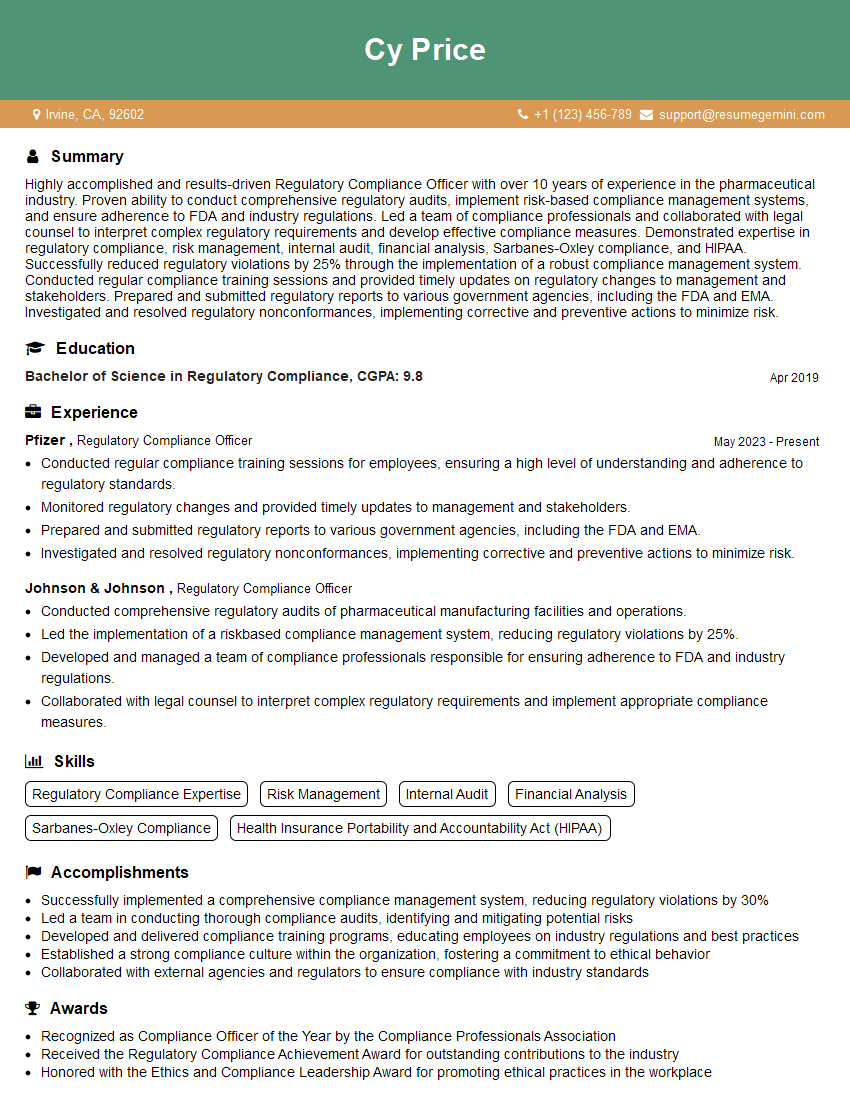
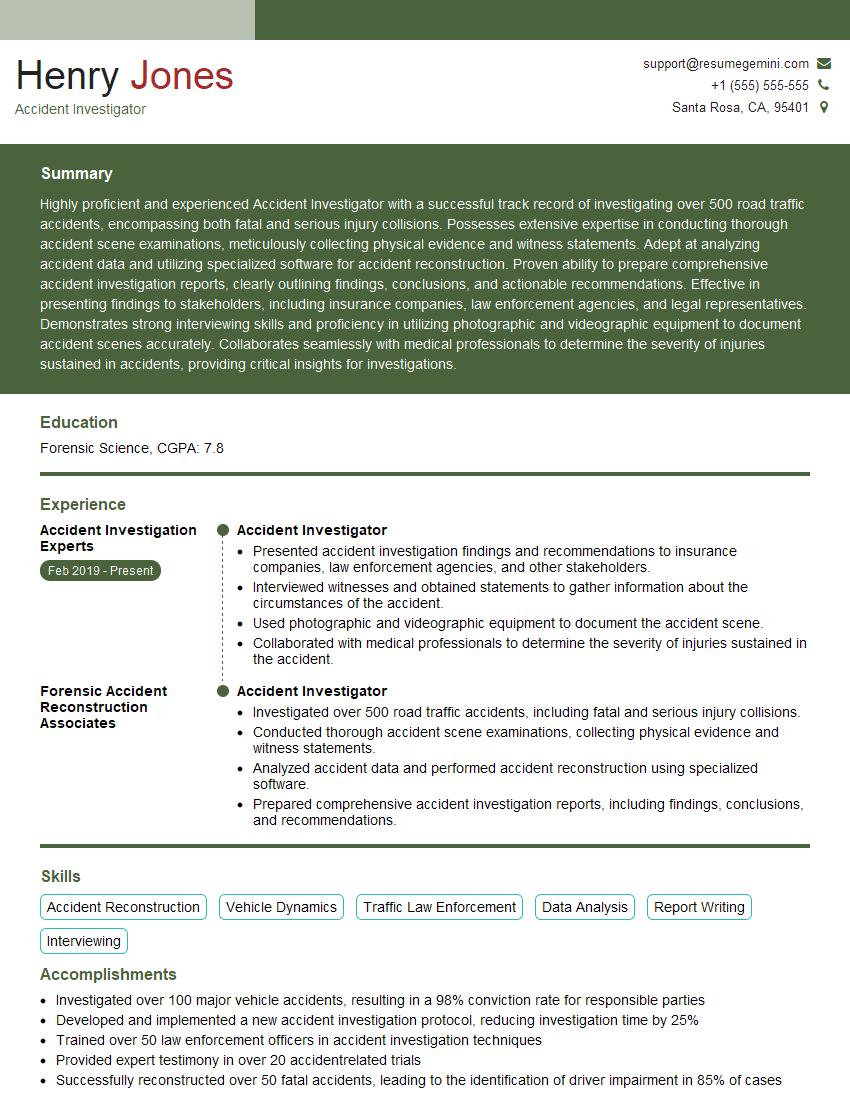
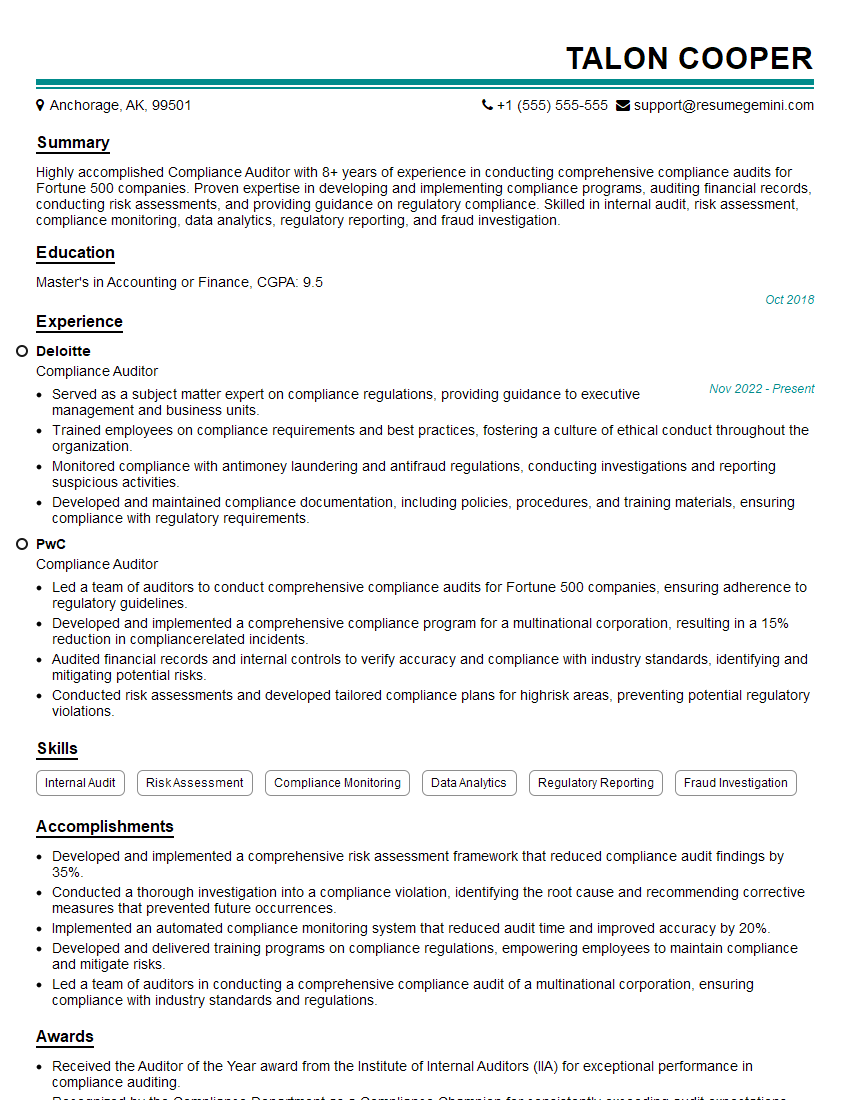
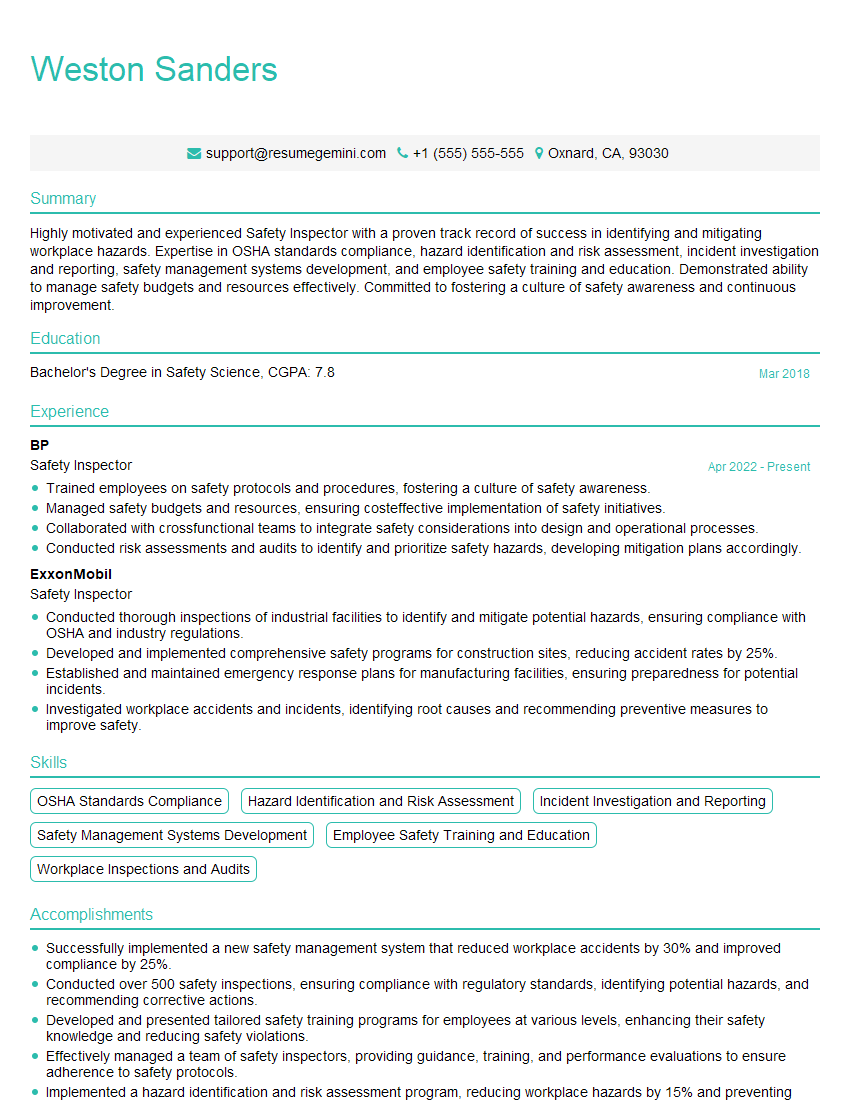
Mastering Aircraft Safety and Compliance opens doors to rewarding and impactful careers, offering significant growth potential within the aviation industry. A strong resume is crucial for showcasing your expertise and securing interviews. Creating an ATS-friendly resume maximizes your chances of getting noticed by recruiters. To make this process easier and more effective, we highly recommend using ResumeGemini. ResumeGemini provides a powerful platform for building professional, impactful resumes, tailored to various industries including Aircraft Safety and Compliance. Examples of resumes specifically designed for this field are available within the ResumeGemini platform to help guide you.
Explore more articles
Users Rating of Our Blogs
Share Your Experience
We value your feedback! Please rate our content and share your thoughts (optional).
What Readers Say About Our Blog
To the interviewgemini.com Webmaster.
Very helpful and content specific questions to help prepare me for my interview!
Thank you
To the interviewgemini.com Webmaster.
This was kind of a unique content I found around the specialized skills. Very helpful questions and good detailed answers.
Very Helpful blog, thank you Interviewgemini team.