Preparation is the key to success in any interview. In this post, we’ll explore crucial Ankle and Foot Surgery interview questions and equip you with strategies to craft impactful answers. Whether you’re a beginner or a pro, these tips will elevate your preparation.
Questions Asked in Ankle and Foot Surgery Interview
Q 1. Describe your experience with ankle arthroscopy.
Ankle arthroscopy is a minimally invasive surgical technique that allows me to diagnose and treat a variety of ankle problems using small incisions and a specialized camera (arthroscope). It’s like having a tiny video camera inside the joint, providing a clear view of the cartilage, ligaments, and bones. This allows for precise diagnosis and treatment of conditions such as ankle impingement, osteochondral lesions, and loose bodies within the joint. My experience encompasses hundreds of cases, ranging from simple diagnostic arthroscopies to complex procedures involving cartilage repair and ligament reconstruction. I routinely use arthroscopy for debridement (cleaning up damaged tissue) and synovectomy (removing inflamed tissue lining the joint). A recent example involved a young athlete with recurrent ankle pain; arthroscopy revealed a significant cartilage defect which we successfully treated with microfracture, leading to a complete return to sport.
The advantages of arthroscopy include smaller incisions resulting in less pain, reduced scarring, faster recovery time, and shorter hospital stays compared to open surgery. However, it’s crucial to remember that not all ankle problems are suitable for arthroscopic treatment; certain complex fractures or severe ligament injuries may require open surgical approaches.
Q 2. Explain your approach to treating Achilles tendon rupture.
My approach to treating Achilles tendon rupture centers around a patient-centered philosophy, tailoring the treatment plan to the individual’s needs, activity level, and overall health. For most patients, I recommend surgical repair, especially for younger, more active individuals. This involves precisely reattaching the torn tendon ends using sutures, often augmented with bioabsorbable or non-absorbable materials to provide additional support during the healing process. I frequently use minimally invasive techniques to reduce the surgical trauma. Post-operatively, the patient undergoes a structured rehabilitation program focused on restoring strength, range of motion, and function.
In some cases, particularly for older, less active individuals or those with specific medical conditions that increase surgical risk, I might recommend non-operative management. This involves immobilization in a cast or boot, followed by gradual weight-bearing and a comprehensive physiotherapy program. Careful monitoring is crucial, as some non-operatively managed ruptures can lead to complications such as delayed healing or rerupture. I always discuss the risks and benefits of both surgical and non-surgical options with the patient to ensure they are making an informed decision.
Q 3. How do you diagnose and manage plantar fasciitis?
Plantar fasciitis is a common cause of heel pain characterized by inflammation of the plantar fascia, a thick band of tissue on the bottom of the foot. Diagnosis typically starts with a thorough clinical examination, focusing on the location and nature of the pain, as well as assessing the patient’s gait and range of motion. Imaging studies like X-rays are usually not necessary unless there’s suspicion of a fracture or other underlying conditions.
My management approach is conservative initially, emphasizing non-surgical treatments. This includes rest, ice, compression, elevation (RICE), stretching exercises to improve flexibility of the plantar fascia and calf muscles, and the use of orthotic devices (custom insoles) to support the arch and reduce strain on the plantar fascia. Over-the-counter pain relievers like ibuprofen or naproxen can help manage pain and inflammation. In cases where conservative treatment fails to provide relief, I may consider corticosteroid injections, extracorporeal shock wave therapy (ESWT), or surgical intervention as a last resort. Surgical intervention is rarely needed and often only considered if conservative options are unsuccessful after several months of treatment.
Q 4. What are the different surgical options for hallux valgus (bunion) correction?
Hallux valgus, or bunion, is a deformity characterized by a prominent bump on the inside of the big toe joint. Surgical correction aims to realign the bones and relieve pain. The choice of surgical technique depends on several factors, including the severity of the deformity, the patient’s age and activity level, and the presence of associated conditions.
- Osteotomy: This involves making a precise cut in the bone to realign the metatarsal and phalangeal bones. Different types of osteotomies exist, including scarf, base wedge, and proximal metatarsal osteotomies, each with its own advantages and disadvantages.
- Arthrodesis: In severe cases, this procedure involves fusing the joint to eliminate pain and motion, but it limits the flexibility of the big toe joint.
- Soft tissue procedures: These techniques address soft tissue imbalances around the joint, often done in conjunction with osteotomies to help ensure stability and proper alignment.
- Cheilectomy: This involves removing bony spurs from the metatarsal head, which could impinge upon the joint.
The decision on which procedure to use requires careful consideration of several patient factors and a detailed assessment. The aim is always to restore proper alignment, improve functionality, and alleviate pain while keeping the risks and recovery time in consideration.
Q 5. Discuss your experience with treating Lisfranc injuries.
Lisfranc injuries involve disruption of the midfoot joints, specifically those between the tarsal and metatarsal bones. These injuries can range from simple sprains to severe fractures and dislocations, often requiring significant surgical intervention. My experience with Lisfranc injuries encompasses a wide spectrum of severity. Initial diagnosis relies on a thorough physical examination and often includes radiographic imaging (X-rays, CT scans) to assess the extent of the injury.
Treatment depends on the severity of the injury. Stable Lisfranc injuries, those with minimal displacement, may be managed non-operatively with immobilization in a cast or boot, followed by gradual weight-bearing and rehabilitation. However, unstable injuries, those with significant displacement or fracture, typically require open reduction and internal fixation (ORIF). This involves surgically realigning the bones and stabilizing them with screws, plates, or other internal fixation devices. Post-operative rehabilitation is crucial for regaining strength and function, and often involves a prolonged period of non-weight-bearing followed by gradual progression to weight-bearing and intense physical therapy.
Q 6. Explain your approach to managing diabetic foot ulcers.
Managing diabetic foot ulcers requires a multidisciplinary approach focusing on preventing infection, promoting healing, and preserving limb integrity. The cornerstone of treatment is meticulous wound care, including debridement (removal of dead tissue), regular assessment of infection, and appropriate dressings to maintain a moist wound environment.
I work closely with a team of specialists including podiatrists, endocrinologists, and infectious disease specialists. Offloading pressure from the affected area is crucial to promote healing; this might involve specialized footwear, crutches, or even a wheelchair. In cases of infection, appropriate antibiotics are essential. Regular blood glucose monitoring is critical to control blood sugar levels. For ulcers that fail to heal despite conservative management, I might consider advanced therapies such as negative pressure wound therapy, growth factor application, or skin grafting. Amputation, as a last resort, is considered only if all other options have failed.
Q 7. Describe your experience with Charcot foot.
Charcot foot is a debilitating complication of diabetes characterized by progressive destruction of the bones, joints, and soft tissues of the foot. It’s often caused by repetitive micro-fractures due to loss of protective sensation (neuropathy) and impaired vascular supply. My approach to managing Charcot foot emphasizes prevention and early intervention. Early diagnosis is key, often requiring a high index of suspicion in patients with diabetes and foot deformities.
Treatment focuses on preventing further bone damage, protecting the foot, and minimizing pain. This involves rigid offloading of the foot (e.g., total contact casts, custom-molded shoes), careful control of blood glucose levels, and management of any associated infections. Surgical intervention is often reserved for cases of severe deformity or instability, such as arthrodesis (joint fusion) or other corrective procedures. Regular follow-up visits and close monitoring of the foot are essential to detect any signs of progression or complications. The ultimate goal is to prevent further deterioration, minimize pain, and maintain ambulation.
Q 8. How do you manage post-operative complications in foot and ankle surgery?
Post-operative complications in foot and ankle surgery are a serious concern, requiring a proactive and multi-faceted approach. These complications can range from minor issues like swelling and stiffness to major problems like infection and non-union (failure of a bone to heal). My management strategy focuses on meticulous pre-operative planning, careful surgical technique, and diligent post-operative care.
Immediate Post-op: This period is critical. We carefully monitor for signs of infection (redness, swelling, increased pain, fever), compartment syndrome (a dangerous build-up of pressure within the leg muscles), and deep vein thrombosis (blood clots). Pain management is crucial, balancing comfort with early mobilization to prevent stiffness. We utilize various pain control modalities, including analgesics, nerve blocks, and potentially patient-controlled analgesia (PCA) pumps.
Long-term Management: Regular follow-up appointments are essential. We monitor wound healing, assess range of motion, and check for any signs of complications. Physical therapy plays a vital role in restoring function and preventing long-term disability. Patients receive tailored exercise programs designed to improve strength, range of motion, and proprioception (body awareness). In cases of non-union or infection, further surgical intervention may be necessary. For example, a patient with a non-union might require bone grafting and internal fixation, while an infection may necessitate debridement (surgical removal of infected tissue) and antibiotics.
Example: A patient undergoing ankle fusion might experience significant swelling and stiffness post-operatively. We address this with elevation, ice, compression, and range-of-motion exercises guided by physical therapy. If the swelling is excessive or doesn’t improve, further investigation is needed to rule out complications.
Q 9. What are the common causes of ankle instability?
Ankle instability arises when the ligaments supporting the ankle joint are damaged or weakened, leading to excessive or abnormal movement. This compromises the joint’s stability and can cause recurrent sprains, pain, and functional limitations. Several factors contribute to this instability:
- Ligamentous Injuries: Ankle sprains, often involving the anterior talofibular ligament (ATFL), calcaneofibular ligament (CFL), and posterior talofibular ligament (PTFL), are the most common cause. These injuries can range from mild stretches to complete tears.
- Previous Fractures: Ankle fractures, especially those affecting the articular surface (the part of the bone forming the joint), can disrupt joint stability and lead to long-term instability.
- Chronic Instability: Repeated ankle sprains can progressively weaken the ligaments, resulting in chronic instability. This often leads to a condition known as ‘functional instability,’ where the ankle feels ‘loose’ or ‘gives way’ even without a significant injury.
- Other Conditions: Conditions like arthritis, neuromuscular diseases, or certain genetic factors can also predispose individuals to ankle instability.
Example: A basketball player who repeatedly sprains their ankle might develop chronic instability over time, requiring surgical intervention to reconstruct damaged ligaments and restore stability.
Q 10. What imaging modalities do you utilize for diagnosing foot and ankle conditions?
Diagnosing foot and ankle conditions requires a comprehensive approach involving clinical examination and various imaging modalities. The choice of imaging technique depends on the suspected condition and clinical findings.
- X-rays: These are typically the first imaging modality used to assess bone alignment, fractures, arthritis, and other bony abnormalities. They are essential for visualizing bony structures but do not provide detailed information about soft tissues.
- Ultrasound: This technique uses sound waves to create images of soft tissues, making it useful for evaluating ligament injuries, tendon tears, and fluid collections. It’s a non-invasive and readily available option.
- MRI (Magnetic Resonance Imaging): MRI provides high-resolution images of both bone and soft tissues. It’s particularly valuable for assessing ligament injuries, cartilage damage, tendon pathology, and bone marrow edema (swelling within the bone). MRI is excellent for detailed anatomical visualization but is more expensive and time-consuming than other modalities.
- CT (Computed Tomography): CT scans offer detailed images of bone and are especially helpful in evaluating complex fractures, bone tumors, and infections. It can provide three-dimensional reconstructions to aid in surgical planning.
Example: Suspecting a ligament injury after an ankle sprain, I might initially order an X-ray to rule out any fractures. If the X-ray is normal but the patient still presents with instability and pain, an MRI would provide more detailed information about the ligamentous structures.
Q 11. Discuss your experience with total ankle replacement.
Total ankle replacement (TAR) is a surgical procedure designed to replace the damaged articular surfaces of the ankle joint with artificial implants. It’s a viable option for patients with severe ankle arthritis that doesn’t respond to conservative management. My experience with TAR encompasses all aspects, from pre-operative assessment and planning to post-operative rehabilitation.
Surgical Technique: I have extensive experience with various TAR implant designs, selecting the most appropriate one based on the patient’s anatomy, activity level, and specific needs. The procedure involves careful removal of the damaged cartilage, preparation of the bone surfaces, and implantation of the prosthetic components. Precise surgical technique is essential to ensure optimal implant fit and stability.
Patient Selection: Careful patient selection is crucial for successful TAR outcomes. Not all patients are candidates for this procedure. Factors considered include the patient’s age, overall health, bone quality, and activity level. Patients with significant bone loss or infection are usually not suitable candidates.
Post-operative Care: Post-operative rehabilitation is crucial for optimal functional recovery following TAR. This involves a structured program of physical therapy focusing on regaining range of motion, improving strength, and restoring ambulation. Regular follow-up is essential to monitor implant stability, assess the patient’s functional outcome, and address any complications.
Example: I recently performed a TAR on a 60-year-old female with severe osteoarthritis of the ankle. She had significant pain and functional limitations. Post-operatively, she underwent intensive physical therapy, and at her six-month follow-up, she reported substantial pain relief and improved mobility.
Q 12. How do you manage infections in foot and ankle surgery?
Infections in foot and ankle surgery are a significant concern, potentially leading to devastating consequences like chronic osteomyelitis (bone infection), joint destruction, and even limb loss. Prophylactic (preventative) measures are critical, including meticulous surgical technique, antibiotic prophylaxis, and appropriate wound care.
Treatment: If infection occurs despite these precautions, immediate and aggressive management is necessary. This involves:
- Wound debridement: Surgical removal of infected tissue, often repeated until all infected material is eliminated.
- Antibiotic therapy: Intravenous antibiotics, tailored to the specific pathogen identified through cultures, are crucial. The duration of treatment depends on the severity and location of the infection.
- Surgical drainage: If an abscess (a collection of pus) forms, surgical drainage is necessary to prevent further spread of infection.
- External fixation: In severe cases, external fixation may be necessary to stabilize the bones and allow for wound healing.
Example: A patient developing a post-operative infection after ankle surgery might require immediate debridement, intravenous antibiotics, and wound cultures to identify the causative organism. Close monitoring for clinical signs of infection and regular blood tests to measure the inflammatory markers (such as CRP) are part of the follow-up plan. In case of non-response to conservative treatment, further intervention might be required.
Q 13. Explain your approach to treating stress fractures of the foot.
Stress fractures of the foot, often occurring in athletes or individuals engaging in high-impact activities, result from repetitive micro-trauma to the bone. Management depends on the location, severity, and patient’s activity level.
Non-operative Management: Most stress fractures can be effectively treated non-operatively with rest, immobilization (using crutches or a walking boot), and gradual weight-bearing as tolerated. Pain management, often using analgesics or NSAIDs, is essential. Physical therapy may be used later to restore strength and improve flexibility. Regular follow-up and imaging studies are used to monitor healing.
Operative Management: Surgical intervention is considered in cases of non-union (failure to heal), displaced fractures, or those causing significant pain despite non-operative treatment. Surgical options include internal fixation (using screws or plates) or bone grafting to promote healing.
Example: A runner with a stress fracture of the second metatarsal would typically be managed with rest, a walking boot, and gradual return to activity as tolerated. Regular follow-up X-rays would be used to monitor bone healing.
Q 14. What are the indications for surgical intervention in flatfoot deformity?
Flatfoot deformity, characterized by a collapse of the medial longitudinal arch of the foot, can cause pain, stiffness, and functional limitations. Surgical intervention is considered when conservative measures such as orthotics, physical therapy, and activity modification fail to provide adequate relief.
Indications for Surgery:
- Persistent pain despite conservative management: If pain persists despite several months of non-operative treatment, surgery may be considered.
- Significant functional limitations: If the deformity severely limits daily activities and ambulation, surgical correction may be warranted.
- Progressive deformity: If the flatfoot deformity is worsening, surgical intervention might prevent further progression and potential complications.
- Severe arthritis: Severe arthritis of the subtalar or talonavicular joints secondary to flatfoot deformity can significantly benefit from surgical reconstruction.
- Tibialis posterior tendon dysfunction: Surgical repair of the tibialis posterior tendon, which plays a critical role in supporting the medial longitudinal arch, might be necessary.
Example: A patient with a severe flatfoot deformity causing persistent pain and significant difficulty walking might require surgical intervention involving procedures like tendon transfers, bone fusions (e.g., subtalar or triple arthrodesis), or implant placement, depending on the specific pathology.
Q 15. Describe your experience with nerve decompression surgeries in the foot and ankle.
Nerve decompression surgeries in the foot and ankle are crucial for alleviating pain and restoring function when nerves are compressed or entrapped. These procedures typically involve identifying the affected nerve, such as the posterior tibial nerve, sural nerve, or common peroneal nerve, and releasing the surrounding tissues causing the compression. This might involve removing scar tissue, releasing tight ligaments, or relocating the nerve to a less constricted area.
My experience encompasses a wide range of cases, from mild entrapment neuropathies to more complex cases involving significant nerve damage. For example, I’ve successfully treated patients with tarsal tunnel syndrome, where the posterior tibial nerve is compressed at the ankle, resulting in pain and numbness in the sole of the foot. Another example is the decompression of the superficial peroneal nerve, often compressed at the fibular head causing pain and paresthesias along the lateral leg and dorsum of the foot. The surgical approach is highly individualized based on the specific nerve involved and the cause of the compression. Post-operative management includes careful immobilization, physiotherapy, and pain management to facilitate optimal nerve regeneration and recovery.
Career Expert Tips:
- Ace those interviews! Prepare effectively by reviewing the Top 50 Most Common Interview Questions on ResumeGemini.
- Navigate your job search with confidence! Explore a wide range of Career Tips on ResumeGemini. Learn about common challenges and recommendations to overcome them.
- Craft the perfect resume! Master the Art of Resume Writing with ResumeGemini’s guide. Showcase your unique qualifications and achievements effectively.
- Don’t miss out on holiday savings! Build your dream resume with ResumeGemini’s ATS optimized templates.
Q 16. How do you manage patients with chronic ankle pain?
Managing chronic ankle pain requires a comprehensive approach combining detailed history, thorough physical examination, and advanced imaging studies like X-rays, MRI, and CT scans to pinpoint the underlying cause. This could range from simple conditions like sprains and tendinitis to more complex issues such as osteoarthritis, nerve entrapment, or even stress fractures.
My approach begins with conservative management focusing on rest, ice, compression, and elevation (RICE), along with physical therapy, orthotics, and non-steroidal anti-inflammatory drugs (NSAIDs). If conservative treatments fail, I explore other options such as corticosteroid injections to reduce inflammation or consider surgical intervention, which might involve arthroscopy for minimal invasive repair, cartilage restoration procedures, or even ankle fusion in severe cases of osteoarthritis. Patient education and ongoing monitoring are crucial for successful long-term management.
For instance, a patient presenting with chronic lateral ankle pain might initially receive physical therapy focusing on strengthening the peroneal tendons. If this proves ineffective, a diagnostic ultrasound can help evaluate tendon integrity, potentially guiding the decision to perform a peroneal tendon repair. A detailed conversation helps determine which path to follow to manage their pain effectively and safely.
Q 17. Explain your experience with pediatric foot and ankle conditions.
Pediatric foot and ankle conditions present unique challenges due to the ongoing growth and development of the child’s musculoskeletal system. My experience includes managing a variety of conditions, including congenital foot deformities like clubfoot (talipes equinovarus), metatarsus adductus, and cavovarus foot. I also treat acquired conditions such as Sever’s disease, Osgood-Schlatter disease, and various types of trauma.
Treatment approaches vary depending on the specific condition and the child’s age. For example, clubfoot often requires a multi-stage approach involving serial casting, bracing, or surgical intervention in severe cases. Conservative management often involves close monitoring, custom-made orthotics, and physical therapy. Surgical techniques in pediatric cases are tailored to minimize disruption to the growth plates to ensure proper bone development. The focus is always on restoring normal foot and ankle mechanics and preventing long-term functional deficits. Communication and collaboration with the child, parents, and other specialists, like physiatrists, are pivotal to positive outcomes.
Q 18. Discuss your familiarity with different types of ankle fixation devices.
Ankle fixation devices are crucial in stabilizing fractures and facilitating bone healing. My familiarity extends to a variety of devices, including plates and screws, intramedullary nails, and external fixators. The choice of device depends on several factors, including the type and location of the fracture, the patient’s overall health, and the surgeon’s preference.
Plates and screws are commonly used for stabilizing articular fractures, providing anatomical reduction and rigid fixation. Intramedullary nails are used for shaft fractures, providing axial stability while minimizing soft tissue disruption. External fixators are invaluable for complex fractures requiring significant soft tissue management or for cases where immediate stability is needed before definitive surgery. I have extensive experience in selecting and applying these various devices, constantly evaluating the latest advancements in biocompatible materials and implant design to optimize patient outcomes. For instance, the use of locking plates has revolutionized ankle fracture management, providing improved stability and facilitating earlier weight-bearing.
Q 19. What are the common complications associated with ankle fusion?
Ankle fusion, or arthrodesis, is a procedure that surgically joins the bones of the ankle joint to alleviate pain and improve stability. While effective for managing end-stage arthritis, it’s important to understand the potential complications.
Common complications include:
- Nonunion: Failure of the bones to fuse together, necessitating further surgery.
- Malunion: Fusion in a malaligned position, resulting in limb length discrepancy or altered gait.
- Infection: A serious complication requiring aggressive treatment with antibiotics and possibly debridement.
- Hardware problems: Loosening, breakage, or protrusion of screws or plates.
- Arthritis in adjacent joints: Increased stress on the subtalar joint may lead to arthritis.
- Limited range of motion: The ankle loses its natural mobility, requiring adjustments in gait and activity levels.
Careful surgical technique, meticulous postoperative care, and patient compliance are crucial in minimizing these risks. Preoperative patient education about these potential complications is also vital for informed consent.
Q 20. How do you assess the biomechanics of the foot and ankle?
Assessing the biomechanics of the foot and ankle is fundamental to diagnosing and treating a wide range of conditions. This involves a comprehensive evaluation that combines several components:
- Gait analysis: Observing the patient’s walking pattern to identify abnormalities in stride, foot placement, and weight-bearing.
- Static postural assessment: Evaluating the alignment of the foot and ankle while the patient is standing still.
- Range of motion assessment: Measuring the flexibility and mobility of the ankle and subtalar joints.
- Muscle strength testing: Assessing the strength of the muscles surrounding the ankle and foot.
- Palpation: Examining the bones, tendons, ligaments, and nerves for tenderness or abnormalities.
- Imaging studies: Utilizing X-rays, CT scans, MRI, or fluoroscopy to visualize bone structures, soft tissues, and joint alignment.
- Custom foot orthotics: These can help reveal imbalances and the impact of correction.
For example, a patient with plantar fasciitis might show increased pronation during gait analysis, indicating the need for supportive orthotics. A person with a suspected ligament tear would show abnormalities in range of motion and palpation of the injured structures. This holistic approach allows for a precise diagnosis and a targeted treatment plan.
Q 21. Describe your experience with treating sports-related injuries of the foot and ankle.
Sports-related injuries of the foot and ankle are common, ranging from simple sprains and strains to complex fractures and dislocations. My experience includes treating athletes across various disciplines. The specific injury depends heavily on the sport. For example, basketball players frequently suffer ankle sprains, runners often experience plantar fasciitis or stress fractures, and dancers may develop tendonitis or stress fractures.
My approach combines a thorough history of the injury mechanism with a detailed physical exam and imaging studies to assess the extent of the damage. Treatment strategies range from conservative management—like rest, ice, compression, elevation (RICE), physical therapy, and bracing—to surgical intervention for more severe cases. Surgical procedures may include ligament reconstruction, tendon repair, or fracture fixation depending on the diagnosis. For example, an acute lateral ankle sprain may be treated with immobilization and physical therapy, while a complete rupture of the anterior talofibular ligament might require surgical repair. Post-operative rehabilitation is crucial, focusing on restoring range of motion, strength, proprioception (balance), and ultimately returning the athlete to their sport safely and effectively. Collaboration with athletic trainers and physical therapists is crucial for a successful outcome.
Q 22. What is your approach to managing patients with peripheral artery disease affecting the lower extremity?
Managing patients with peripheral artery disease (PAD) affecting the lower extremity requires a multidisciplinary approach focusing on improving blood flow and wound healing. It’s crucial to understand that PAD reduces blood supply to the foot and ankle, making healing extremely difficult and increasing the risk of amputation. My approach begins with a thorough vascular assessment, often involving ankle-brachial index (ABI) measurement and possibly Doppler ultrasound or angiography to visualize the arteries. This helps determine the severity of the disease.
Based on the assessment, I tailor the management plan. This might include:
- Medical Management: This is often the first line of defense, involving medications to improve blood flow (e.g., antiplatelet agents like aspirin or clopidogrel, statins to manage cholesterol) and manage risk factors like hypertension and diabetes. We also focus on smoking cessation and lifestyle changes.
- Interventional Radiology: For significant blockages, minimally invasive procedures like angioplasty (balloon dilation) or stenting can restore blood flow. These techniques are often preferred over open surgery for their lower risk and faster recovery.
- Surgical Intervention: In severe cases where revascularization via interventional techniques fails, surgical bypass grafting may be necessary. This involves creating a new pathway around the blocked artery to restore blood flow to the limb. The type of bypass will depend on the location and extent of the blockage. Amputation, unfortunately, remains a last resort in cases of severe tissue loss or infection unresponsive to other treatments.
- Wound Care: Optimal wound care is paramount. This includes regular debridement (removal of dead tissue), appropriate dressings to promote a moist wound environment, and infection control. We often utilize advanced wound therapies like negative pressure wound therapy (NPWT) to speed up healing.
Regular follow-up appointments are crucial to monitor wound healing, assess blood flow, and adjust the treatment plan as needed. The goal is always to save the limb and improve the patient’s quality of life.
Q 23. Explain your understanding of the different types of wound healing.
Wound healing is a complex process involving several overlapping phases. Understanding these phases is critical for effective management. We broadly categorize wound healing into three types:
- Primary Intention Healing: This occurs in clean, well-approximated wounds (surgical incisions, for example). The wound edges are brought closely together, resulting in minimal scar formation and rapid healing. Think of a perfectly stitched surgical wound.
- Secondary Intention Healing: This applies to wounds with significant tissue loss or contamination where the edges cannot be approximated. Healing occurs from the base of the wound outward, resulting in greater scar formation and a longer healing time. A large pressure ulcer would heal by secondary intention.
- Tertiary Intention Healing: This involves delayed primary closure. Initially, the wound is left open to allow for debridement and infection control, then closed surgically once the risk of infection has subsided. This approach is often used for contaminated wounds that need to be observed before closure.
Each phase—inflammation, proliferation, and remodeling—has specific cellular and molecular events. Failure to properly manage any phase can lead to complications, like infection or delayed healing, which we carefully monitor and address with appropriate interventions.
Q 24. How do you counsel patients about the risks and benefits of surgical intervention?
Counseling patients about surgical intervention is a critical part of my role. I believe in shared decision-making, empowering patients to make informed choices. This involves a thorough explanation of the condition, the proposed surgical procedure, and all potential risks and benefits.
The discussion includes:
- Diagnosis and Explanation: A clear and concise explanation of the patient’s condition, using plain language and visual aids if necessary.
- Surgical Procedure: A detailed explanation of the planned procedure, including the steps involved, anesthesia options, and expected recovery time.
- Benefits: Highlighting the potential benefits of the surgery, such as pain relief, improved function, and prevention of further damage.
- Risks: Openly discussing the potential risks and complications associated with the surgery, such as infection, bleeding, nerve damage, non-union (failure of bone to heal), and the possibility of unsatisfactory results. I emphasize the rarity of serious complications while still being upfront about the possibilities.
- Alternatives: Exploring non-surgical options, such as conservative treatment (physical therapy, bracing), and outlining their benefits and limitations in the context of the patient’s specific condition.
- Realistic Expectations: Setting realistic expectations for recovery and outcome, considering factors like age, overall health, and the severity of the condition.
I encourage patients to ask questions and involve family members in the decision-making process. Post-operative care is also discussed thoroughly to prepare patients for a smooth recovery.
Q 25. What are your preferred methods for pain management in foot and ankle surgery?
Pain management is a crucial aspect of foot and ankle surgery, influencing both patient comfort and recovery. My approach is multimodal, employing a combination of techniques tailored to the individual patient and surgical procedure. This often involves:
- Regional Anesthesia: Ankle blocks or regional nerve blocks are frequently used to provide excellent postoperative pain control. These techniques offer significant benefits by reducing the need for opioids and other systemic analgesics.
- Opioids: In some cases, judicious use of opioid analgesics is necessary, especially in the immediate post-operative period. However, we emphasize responsible opioid prescribing, using them for a limited time and implementing strategies to minimize side effects and prevent addiction.
- Non-Opioid Analgesics: NSAIDs (nonsteroidal anti-inflammatory drugs) like ibuprofen or naproxen are helpful for reducing inflammation and pain.
- Adjuvant Analgesics: Other medications such as gabapentin or pregabalin may be used to manage neuropathic pain (nerve pain) that can sometimes be a complication of foot and ankle surgery.
- Physical Therapy: Early mobilization and participation in a structured physical therapy program are essential for managing pain and restoring function. Physical therapists play a crucial role in guiding patients through rehabilitation exercises.
We regularly assess patients’ pain levels using validated pain scales and adjust the pain management strategy as needed, ensuring patient comfort throughout the healing process.
Q 26. Describe your experience with using regenerative medicine techniques in foot and ankle surgery.
Regenerative medicine techniques offer promising advancements in foot and ankle surgery, providing alternatives to traditional surgical approaches. My experience includes using:
- Platelet-Rich Plasma (PRP): PRP therapy involves concentrating a patient’s own platelets to create a solution rich in growth factors. Injecting PRP into the injured area can stimulate tissue regeneration and reduce inflammation. I’ve used it successfully in treating conditions like plantar fasciitis, tendon injuries, and osteoarthritis.
- Autologous Bone Marrow Aspirate Concentrate (BMAC): Similar to PRP, BMAC utilizes the patient’s own bone marrow to stimulate healing. It contains mesenchymal stem cells and growth factors that can promote tissue regeneration and accelerate fracture healing. I find it valuable in treating chronic foot and ankle conditions requiring cartilage or bone regeneration.
- Amniotic Fluid Allografts: These allografts, derived from amniotic fluid, are rich in bioactive factors that can reduce inflammation and stimulate tissue repair. They are helpful in treating chronic wounds and tendon injuries.
While these techniques show significant promise, it’s important to note that they are not a solution for every patient. Careful patient selection and realistic expectations are crucial for successful outcomes. The use of regenerative medicine is often combined with other treatment modalities such as physical therapy.
Q 27. How do you stay current with the latest advancements in foot and ankle surgery?
Staying current with the latest advancements in foot and ankle surgery is critical for providing optimal patient care. I utilize several strategies to maintain my knowledge base:
- Continuing Medical Education (CME): I actively participate in CME courses, conferences, and workshops focused on foot and ankle surgery, both locally and nationally. These events offer opportunities to learn from leading experts and network with colleagues.
- Professional Organizations: Membership in professional organizations like the American Academy of Orthopaedic Surgeons (AAOS) and the American College of Foot and Ankle Surgeons (ACFAS) provides access to journals, publications, and updates on the latest research and surgical techniques.
- Peer-Reviewed Journals: Regularly reading peer-reviewed journals like the Journal of Bone and Joint Surgery and Foot & Ankle International allows me to stay informed about new research findings and treatment approaches.
- Professional Networks: Maintaining strong professional networks allows for the exchange of knowledge and experience with colleagues. This includes attending regional meetings and collaborating with specialists in related fields like podiatry and vascular surgery.
- Online Resources: I also utilize reputable online resources to stay up-to-date on the latest developments in foot and ankle surgery.
This multi-faceted approach allows me to continuously refine my techniques and provide my patients with the most current and effective care.
Q 28. Explain your understanding of evidence-based practice in foot and ankle surgery.
Evidence-based practice (EBP) is fundamental to my approach to foot and ankle surgery. EBP involves integrating the best available research evidence with clinical expertise and patient values to make informed decisions about patient care.
In practice, this means:
- Systematic Literature Reviews: When faced with a clinical question, I start by conducting a thorough review of the relevant literature, focusing on high-quality studies (randomized controlled trials, meta-analyses) to determine the most effective treatment options. I use reliable databases like PubMed and Cochrane Library.
- Critical Appraisal: Critically appraising the quality of the evidence is critical, considering factors such as sample size, study design, and potential biases. Not all studies are created equal, and I prioritize studies with robust methodologies.
- Clinical Expertise: I integrate my own clinical expertise and experience to interpret the evidence and tailor treatment plans to the individual needs of each patient. Factors like age, comorbidities, and patient preferences influence decision-making.
- Patient Values and Preferences: Ultimately, the patient’s values and preferences are paramount. I engage patients in shared decision-making, ensuring that their wishes and concerns are incorporated into the treatment plan.
By integrating the best available research evidence, my clinical expertise, and my patients’ values, I strive to provide high-quality, personalized care that leads to the best possible outcomes.
Key Topics to Learn for Ankle and Foot Surgery Interview
- Ankle Anatomy and Biomechanics: Understanding the intricate structure and function of the ankle joint, including ligaments, tendons, and bones. Consider the implications of different joint pathologies on gait and function.
- Foot Anatomy and Biomechanics: Mastering the complex architecture of the foot, encompassing the arches, metatarsals, phalanges, and their interaction during weight-bearing and locomotion. Explore common deformities and their surgical corrections.
- Trauma Management: Develop a comprehensive understanding of acute ankle and foot injuries, including fracture management, ligament repair, and tendon reconstruction. Practice diagnosing based on clinical presentation and imaging.
- Arthroscopy of the Ankle and Foot: Familiarize yourself with the principles and techniques of arthroscopic surgery for the diagnosis and treatment of various ankle and foot conditions. Be prepared to discuss specific arthroscopic procedures.
- Deformity Correction: Gain proficiency in understanding and managing common foot deformities such as bunions, hammertoes, and flatfoot. Prepare to discuss surgical planning and different corrective techniques.
- Infections and Wound Management: Develop expertise in the prevention, diagnosis, and treatment of infections related to foot and ankle surgery. Understand principles of wound care and management of delayed wound healing.
- Post-operative Care and Rehabilitation: Become familiar with the various post-operative protocols, including pain management, immobilization techniques, and rehabilitation strategies. Understand the importance of patient education and follow-up care.
- Imaging Interpretation: Develop strong skills in interpreting X-rays, CT scans, and MRIs of the ankle and foot, correlating imaging findings with clinical presentation to arrive at accurate diagnoses.
- Surgical Techniques and Instrumentation: Gain a working knowledge of different surgical approaches and instrumentation used in ankle and foot surgery. Be prepared to discuss the advantages and disadvantages of various techniques.
- Current Research and Trends: Stay updated on the latest advancements in ankle and foot surgery, including minimally invasive techniques, new implant designs, and emerging technologies. Demonstrate your ability to critically evaluate research findings.
Next Steps
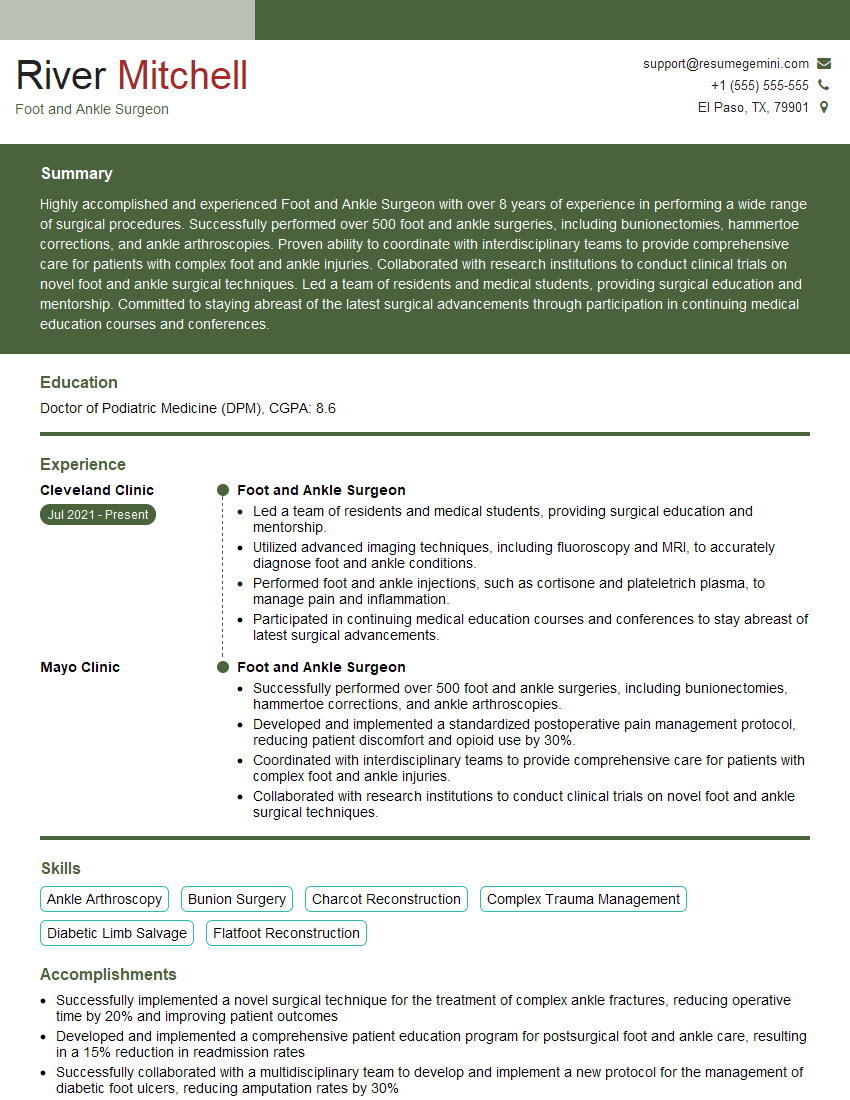
Mastering ankle and foot surgery opens doors to a rewarding career with diverse opportunities in private practice, academic institutions, and research settings. Building a strong and ATS-friendly resume is crucial for maximizing your job prospects. ResumeGemini is a trusted resource to help you craft a professional and impactful resume that highlights your skills and experience effectively. Examples of resumes tailored to Ankle and Foot Surgery are available to guide you in building your own. Invest time in creating a compelling narrative that showcases your expertise and passion for this specialized field.
Explore more articles
Users Rating of Our Blogs
Share Your Experience
We value your feedback! Please rate our content and share your thoughts (optional).
What Readers Say About Our Blog
To the interviewgemini.com Webmaster.
Very helpful and content specific questions to help prepare me for my interview!
Thank you
To the interviewgemini.com Webmaster.
This was kind of a unique content I found around the specialized skills. Very helpful questions and good detailed answers.
Very Helpful blog, thank you Interviewgemini team.