Preparation is the key to success in any interview. In this post, we’ll explore crucial Asphalt Shingle Roofing Systems interview questions and equip you with strategies to craft impactful answers. Whether you’re a beginner or a pro, these tips will elevate your preparation.
Questions Asked in Asphalt Shingle Roofing Systems Interview
Q 1. Describe the different types of asphalt shingles available.
Asphalt shingles come in a variety of types, each with its own characteristics and price point. The most common are:
- 3-Tab Shingles: These are the most economical and widely used. They have a simple, rectangular design with three tabs that create a layered look. Think of them as the ‘classic’ asphalt shingle.
- Architectural Shingles (Dimensional Shingles): These offer a more upscale appearance with thicker profiles and varied dimensions. They create more shadow and texture, mimicking the look of more expensive roofing materials like wood shakes or slate. They’re more durable and weather-resistant than 3-tab shingles.
- Luxury Shingles: These are the high-end option, often incorporating features like thicker construction, enhanced color blends, and even thicker granules for superior protection and longevity. Think of them as the ‘Cadillac’ of asphalt shingles.
The choice depends on budget, aesthetic preferences, and the climate. For example, in areas with harsh weather, architectural or luxury shingles would be a more suitable investment due to their enhanced durability.
Q 2. Explain the proper procedure for installing asphalt shingles.
Proper asphalt shingle installation is crucial for a long-lasting, leak-free roof. It’s a multi-step process:
- Preparation: This includes removing the old roof, inspecting the sheathing for damage, and installing new sheathing if necessary. Proper ventilation is also key at this stage.
- Underlayment Installation: A crucial step to protect the roof deck from moisture damage. This is typically a felt paper or synthetic underlayment, applied following manufacturer instructions.
- Starter Course: A strip of shingles is installed along the eaves to create a straight, even base for the rest of the shingles.
- Shingle Installation: Shingles are applied in overlapping rows, starting from the bottom and working your way up. Proper nail placement and shingle alignment are vital to prevent leaks. Following manufacturer’s guidelines for exposure is essential.
- Ridge and Hip Installation: Special shingles or techniques are used to cap the ridges and hips of the roof, providing a weathertight seal.
- Final Inspection: A thorough inspection ensures all shingles are properly installed and no issues remain before cleanup.
Each step needs precision. For example, using the wrong type of nails could lead to shingle blow-off in high winds.
Q 3. What are the common problems encountered during asphalt shingle installation?
Common problems during asphalt shingle installation include:
- Improper Nail Placement: Nails driven too high, too low, or not straight can lead to shingle blow-off or leaks.
- Insufficient Overlap: Inadequate overlap between shingles leaves gaps that expose the roof deck to moisture.
- Poor Ventilation: Insufficient attic ventilation can lead to moisture buildup, causing premature shingle degradation.
- Damaged Underlayment: Tears or punctures in the underlayment allow water to reach the roof deck.
- Incorrect Flashing: Improper flashing around chimneys, vents, and valleys can create vulnerable points for leaks.
Many issues stem from rushing the job or a lack of experience. A careful and methodical approach is vital.
Q 4. How do you handle damaged or missing shingles during a repair?
Repairing damaged or missing shingles requires careful attention to detail. The steps typically involve:
- Assessment: Determine the extent of the damage. Are only a few shingles affected or is there a larger problem?
- Removal: Carefully remove any damaged or loose shingles, making sure to not damage adjacent shingles during removal.
- Preparation: Clean the area thoroughly to ensure a proper bond for the replacement shingles.
- Installation: Install the replacement shingles using proper techniques, ensuring proper overlap and nail placement.
- Inspection: Thoroughly inspect the repair area for any remaining gaps or issues.
It’s essential to match the replacement shingles to the existing ones to maintain the roof’s aesthetic uniformity.
Q 5. What safety precautions are essential during asphalt shingle roofing work?
Safety is paramount during asphalt shingle roofing work. Essential precautions include:
- Fall Protection: Utilizing harnesses, safety lines, and proper scaffolding is vital, especially on steep roofs.
- Proper Footwear: Wearing sturdy, non-slip boots provides a secure footing on the roof.
- Eye Protection: Safety glasses protect against flying debris and granules.
- Head Protection: Hard hats safeguard against falling objects.
- Gloves: Protect hands from cuts and splinters.
- Weather Awareness: Do not work in hazardous weather conditions, like thunderstorms or high winds.
Ignoring these safety measures can lead to serious injury or even death. Safety should never be compromised.
Q 6. Describe your experience with underlayment installation and its importance.
Underlayment is a crucial part of a roofing system, acting as a secondary water barrier. It protects the roof deck from moisture damage in case the shingles fail. My experience involves installing various types, from standard felt paper to synthetic options like rubberized asphalt or polypropylene. Synthetic underlayments offer superior protection and durability, often with features like improved tear resistance and breathability. I always ensure proper overlapping and fastening according to the manufacturer’s instructions. A poorly installed underlayment can compromise the entire roof’s integrity. I’ve seen cases where inadequate underlayment led to significant water damage, despite seemingly intact shingles. Therefore, meticulous underlayment installation is non-negotiable in my work.
Q 7. How do you determine the necessary amount of shingles for a roofing project?
Determining the shingle quantity requires accurate measurements and calculations. The process involves:
- Measuring the roof area: This usually involves breaking down the roof into simpler geometric shapes (rectangles, triangles) and calculating their individual areas. I always double-check these measurements.
- Accounting for waste: A percentage is added to compensate for cuts, waste, and potential errors. This percentage varies based on roof complexity, but typically ranges from 5-15%. More complex roofs require a higher percentage.
- Checking shingle packaging: The packaging will specify the square footage covered by each bundle of shingles. This information is crucial for calculating the total number of bundles needed.
- Consulting manufacturers’ guidelines: Manufacturers sometimes provide calculators or guidelines to assist with this calculation.
For example, a 1000 sq ft roof with 10% waste would require around 1100 sq ft of shingles. This ensures sufficient material, preventing delays.
Q 8. Explain the process of flashing around chimneys and vents.
Flashing around chimneys and vents is crucial for preventing leaks. It’s like creating a waterproof seal around a vulnerable point in your roof’s armor. The process involves using specialized metal flashing materials—typically galvanized steel, aluminum, or copper—to create a watertight barrier between the chimney or vent and the surrounding roofing materials.
- Step 1: Preparation: Begin by carefully removing any existing damaged shingles around the chimney or vent, creating a clean working area.
- Step 2: Base Flashing: Install a base flashing, a continuous piece of metal that fits snugly against the chimney or vent and extends several inches up the sides. Secure it with roofing cement and nails.
- Step 3: Step Flashing: Install step flashing, individual pieces of metal that overlap the base flashing and are fitted under each layer of shingles. This creates a continuous, overlapping seal that directs water away from the vulnerable area. Each piece of step flashing should be carefully tucked under the shingle above it, ensuring a tight fit.
- Step 4: Counter Flashing: On the chimney itself, install counter flashing, which overlaps the step flashing to form a double layer of protection. This is often tucked under the mortar of the chimney.
- Step 5: Cap Flashing: Finally, cover the top edges of the flashing with cap flashing, a top layer that provides additional protection and keeps the other flashing secure. This process should be repeated on all sides of the chimney or vent.
- Step 6: Shingle Installation: Once the flashing is in place, carefully reinstall the shingles, ensuring a watertight seal over the flashing.
Proper flashing installation is critical for a long-lasting roof. A poorly installed flashing can lead to significant water damage and costly repairs. I’ve seen many roofs ruined because of improperly installed flashing—sometimes a simple oversight can cause a devastating leak.
Q 9. What are the signs of a failing asphalt shingle roof?
A failing asphalt shingle roof shows several telltale signs. It’s like watching a slow-motion disaster unfold; you’ll likely see a combination of these:
- Missing or Damaged Shingles: Obviously, missing or severely curled, cracked, or broken shingles are major indicators. Look for areas where shingles are dislodged or show significant wear.
- Granule Loss: As shingles age, they lose their protective granules. This results in a lighter, more faded appearance and exposes the underlying asphalt, making the roof vulnerable to UV damage and moisture penetration.
- Leaks and Water Stains: Water stains on ceilings or walls, especially after rain, are a clear sign of a leak. Moisture intrusion can lead to mold and structural damage.
- Algae or Moss Growth: The presence of algae or moss indicates dampness and poor ventilation, accelerating roof degradation. They can also weigh down shingles.
- Curling or Cupping Shingles: Shingles that curl upwards (cupping) or downwards indicate moisture damage or improper installation. This significantly reduces their ability to protect the roof.
- Sagging Roofline: A noticeable sag in the roof suggests structural issues, potentially related to water damage or age.
Recognizing these signs early allows for timely repairs or replacement, preventing costly and extensive damage. I once worked on a house where the homeowner ignored subtle signs of granule loss and ended up with a significant leak that required a complete roof replacement. Early detection is key!
Q 10. How do you address ice dams on a roof?
Ice dams, those ridges of ice that form along the eaves of a roof, are a serious problem. They’re caused by warm air escaping from the attic, melting the snow on the roof. This melted snow refreezes at the colder edges, creating a dam that can back up water under the shingles.
Addressing ice dams involves a multi-pronged approach:
- Proper Attic Ventilation: This is crucial to prevent warm air from escaping into the attic and melting the snow. Ensure adequate intake and exhaust vents are installed to maintain proper airflow.
- Ice Dam Removal: Once ice dams form, they need to be carefully removed to prevent water damage. This is usually done using methods that won’t damage the roof, like carefully chipping the ice away or using a steam cleaner. Never use a sharp object to remove the ice as you can damage the roofing membrane underneath.
- Roof De-icing Cables: These electric heating cables can be installed along the eaves to prevent ice formation. They melt the snow before it can refreeze, thus eliminating the problem.
- Improved Insulation: Inadequate insulation in the attic allows heat to escape, contributing to ice dam formation. Increasing insulation levels will help maintain a consistent attic temperature.
Remember, addressing the underlying cause of ice dams (attic ventilation and insulation) is essential for long-term prevention. A quick fix like simply removing the ice won’t solve the root problem.
Q 11. Describe your experience with different types of roofing accessories.
My experience with roofing accessories is extensive. I’ve worked with a wide variety of products, including:
- Flashing: As mentioned earlier, different types of flashing (step, base, counter, cap) are essential for sealing around chimneys, vents, and other roof penetrations. I’m familiar with various materials such as galvanized steel, aluminum, and copper, each suited to specific applications.
- Ridge vents and Hip vents: These are crucial for proper attic ventilation, preventing moisture build-up and ice dam formation. I’ve installed both passive and active ventilation systems.
- Underlayment: I have experience with different types of underlayment, such as felt paper and synthetic underlayments. These provide an additional layer of protection against moisture penetration.
- Drip edges: These metal strips installed along the eaves protect the fascia board from water damage.
- Chimney Caps and cricket installation: These are crucial for preventing water damage around chimney structures.
- Snow guards: These are used to help retain snow on the roof, preventing avalanches that can cause damage to the roof and surrounding areas.
Selecting the appropriate accessories is key to a successful roofing project. I always prioritize quality materials and proper installation techniques. A seemingly small detail like the wrong type of flashing can make a huge difference in the roof’s longevity and performance. For example, using a cheap aluminum flashing in a coastal environment would be a costly mistake because of corrosion.
Q 12. What are the common causes of asphalt shingle roof leaks?
Asphalt shingle roof leaks are usually caused by a combination of factors, and it’s often not one single cause. Think of it as a series of small weaknesses that eventually lead to a major problem. Common causes include:
- Missing, damaged, or improperly installed shingles: This is the most common cause. Wind, age, or poor installation can lead to shingle damage.
- Poor flashing installation: Inadequate flashing around chimneys, vents, or other roof penetrations is a frequent source of leaks.
- Clogged gutters and downspouts: Water backing up in gutters can overflow and penetrate the roofline.
- Damaged underlayment: Tears or holes in the underlayment allow water to penetrate beneath the shingles.
- Improper ventilation: Poor attic ventilation can lead to moisture buildup, causing damage to the shingles and underlayment.
- Aging shingles: Over time, shingles naturally deteriorate, becoming more susceptible to damage and leaks.
- Valley flashing failure: The valleys of your roof are particularly prone to leak issues. Any damage or poor installation of flashing materials in this area can result in leaks.
Troubleshooting roof leaks requires a systematic approach. Starting with a visual inspection and then carefully examining the areas prone to leaks (e.g., valleys, chimneys, flashings) often helps to pinpoint the cause. I’ve had many cases where a seemingly minor problem like a slightly damaged shingle near a chimney caused considerable water damage. Thorough investigation is paramount.
Q 13. How do you inspect a roof for damage before starting a repair or installation?
Inspecting a roof before starting any repair or installation is non-negotiable. It’s like a pre-flight check for an airplane – critical for safety and success. I follow a detailed process:
- Visual Inspection: I start with a thorough visual inspection from the ground, using binoculars to check for missing, damaged, or curling shingles, granule loss, and any obvious signs of leaks or damage.
- Roof Access: I then access the roof, always using appropriate safety equipment like harnesses and fall protection. I conduct a close-up inspection of every area, including valleys, ridges, flashings, chimneys, and vents.
- Check for signs of water damage: I examine the attic for water stains or signs of moisture penetration, which can indicate hidden leaks.
- Assessment of flashing conditions: I pay close attention to the condition of the flashings, checking for rust, cracks, or improper sealing.
- Check gutter and downspout functionality: I inspect the gutters and downspouts to ensure they are clean, free of debris, and properly functioning.
- Photography and Documentation: I take detailed photographs and create a comprehensive report documenting the roof’s condition, including areas requiring attention and any potential problems that could affect the repair or installation.
A thorough inspection is not just about finding problems; it’s about understanding the underlying causes and anticipating potential challenges. I’ve learned that skipping this step can result in unforeseen problems during a repair or installation, which leads to increased costs and frustration. Safety is paramount, and proper inspection methods reduce risk.
Q 14. Explain the process of properly ventilating an attic space.
Proper attic ventilation is essential for preventing moisture build-up, which can lead to mold, mildew, and premature roof deterioration. It’s like providing your roof with a healthy breathing system. It involves a balance of intake and exhaust vents:
- Intake Vents: These vents allow fresh air to enter the attic. Common types include soffit vents (located under the eaves), gable vents (located in the gable ends), and ridge vents (located along the roof ridge).
- Exhaust Vents: These vents allow the moist air to escape the attic. They can be located at the ridge, gable ends, or other high points of the roof.
- Ventilation Ratio: The proper ventilation ratio between intake and exhaust vents should be balanced to ensure effective airflow. The general rule is to have one square foot of vent area for every 300 square feet of attic floor space, divided equally between intake and exhaust. However, this might vary depending on the local climate and roof design, and consultation with a ventilation expert might be necessary.
- Placement: Vents should be strategically placed to ensure proper airflow throughout the attic. Obstructions, insulation blocking vents and poor placement of venting materials, must be avoided.
- Regular Maintenance: Over time, vents can become clogged with debris, reducing their effectiveness. It is necessary to check the ventilation system regularly for any blockages or damage and ensure proper functioning.
I often encounter attics with inadequate ventilation, leading to serious moisture problems. Proper ventilation is a critical part of maintaining a healthy roof and home, preventing costly repairs down the line. I always explain the importance of this system to my clients and advocate for properly sized and appropriately placed venting systems.
Q 15. What are the differences between 3-tab and architectural shingles?
The main difference between 3-tab and architectural asphalt shingles lies in their appearance and durability. 3-tab shingles, the more economical option, have a single layer and a relatively flat profile, resembling three tabs laid side-by-side. They’re easy to install and offer decent protection, but their simpler design means they’re less resistant to wind damage and don’t offer the same visual appeal.
Architectural shingles, also known as dimensional shingles, are thicker and have a more complex design with multiple layers and varying thicknesses creating depth and shadow. This layered construction provides superior durability, wind resistance, and a more aesthetically pleasing, upscale look. They’re often heavier and require slightly more careful installation, resulting in a higher cost. Think of it like this: 3-tab shingles are the basic sedan, while architectural shingles are the luxury SUV – both get you where you need to go, but the SUV offers more features and protection.
- 3-Tab: Economical, simple installation, less wind resistance, flatter profile.
- Architectural: More expensive, enhanced durability and wind resistance, thicker, layered design, more visually appealing.
Career Expert Tips:
- Ace those interviews! Prepare effectively by reviewing the Top 50 Most Common Interview Questions on ResumeGemini.
- Navigate your job search with confidence! Explore a wide range of Career Tips on ResumeGemini. Learn about common challenges and recommendations to overcome them.
- Craft the perfect resume! Master the Art of Resume Writing with ResumeGemini’s guide. Showcase your unique qualifications and achievements effectively.
- Don’t miss out on holiday savings! Build your dream resume with ResumeGemini’s ATS optimized templates.
Q 16. How do you manage a roofing project budget and timeline?
Managing a roofing project budget and timeline requires meticulous planning and proactive communication. First, I conduct a thorough site assessment to accurately determine material quantities and labor hours needed. This detailed estimate forms the basis of the project budget. I then break down the project into smaller, manageable phases, each with its own timeline and associated costs. This allows for better tracking of progress and easier identification of potential cost overruns or delays. Regular communication with the client, transparently sharing updates and any unforeseen issues, is key. We use project management software to track progress, expenses, and deadlines. For example, if we encounter unexpected issues like rotted sheathing, we immediately communicate this with the client, providing options, cost adjustments, and revised timelines, ensuring transparency and collaboration.
Q 17. Describe your experience working with different roofing materials besides asphalt shingles.
My experience extends beyond asphalt shingles to include working with other roofing materials such as tile, metal, and even single-ply membranes. I’ve worked on projects involving clay tile roofs, known for their longevity and aesthetic appeal, but demanding specialized installation techniques and careful handling. I’ve also installed standing seam metal roofs, which are incredibly durable and long-lasting but require precise measurements and specialized tools. Working with single-ply membrane roofs on flat-roof structures demanded a different skill set, focusing on proper seaming and adhesion techniques. Each material presents unique challenges and requires specific knowledge and expertise for successful installation and long-term performance. I adapt my approach based on the specific demands of each material and the project requirements.
Q 18. What are the building codes and regulations related to asphalt shingle roofing in your area?
Building codes and regulations concerning asphalt shingle roofing vary by location, but generally focus on aspects like fire safety, wind resistance, and overall structural integrity. In my area, the International Building Code (IBC) provides the framework. We must adhere to specific requirements regarding the type and grade of shingles, underlayment, and the nailing pattern to ensure the roof can withstand local wind speeds and potential fire hazards. Regular inspections are conducted, and permits are required before starting any roofing work. Failure to comply can result in significant penalties and project delays. We maintain up-to-date knowledge of these codes and regulations and ensure all our projects fully comply.
Q 19. How do you deal with difficult customers or unexpected problems on a job site?
Dealing with difficult customers or unexpected problems requires a proactive, solutions-oriented approach. First, I focus on active listening and understanding the customer’s concerns. Open communication is crucial. If problems arise, we address them transparently, explaining the issue, potential solutions, and the implications of each option. For example, if unexpected water damage is discovered, I explain the cause, document it clearly, and present various repair options with associated costs and timelines. Maintaining a professional and respectful demeanor, even in challenging situations, is paramount. Finding common ground and focusing on collaborative problem-solving ensures a positive outcome for everyone involved.
Q 20. How do you ensure the quality of your workmanship?
Quality workmanship is paramount. We use a multi-layered approach to ensure high standards. Starting with meticulous preparation, including proper underlayment and flashing installation, we follow manufacturer’s recommendations meticulously during shingle installation, paying close attention to nailing patterns, shingle alignment, and proper sealing. Regular quality checks are conducted throughout the project, ensuring compliance with best practices. A thorough final inspection verifies the roof’s integrity and proper drainage. Our commitment to quality is reflected in our warranty, providing ongoing assurance to our clients.
Q 21. What are your strategies for maintaining a safe work environment for your crew?
Safety is our top priority. We provide extensive safety training to our crew, covering topics such as fall protection, proper equipment use, and hazard identification. We use safety harnesses and fall arrest systems on every job, regardless of roof pitch. Regular toolbox talks reinforce safety procedures and address potential hazards specific to each project. The worksite is meticulously organized to minimize tripping hazards. All equipment is regularly inspected and maintained to ensure it’s in safe operating condition. We adhere strictly to OSHA guidelines and maintain a zero-tolerance policy for unsafe practices. A safe working environment isn’t just a regulation; it’s a commitment to the well-being of our team.
Q 22. How do you handle waste disposal during a roofing project?
Waste disposal during a roofing project is crucial for environmental responsibility and legal compliance. We meticulously separate materials. Shingles go to designated recycling facilities or landfills that accept them. Other debris like nails, wood scraps, and underlayment are sorted accordingly. We use dumpsters sized appropriately for the project and ensure all waste is removed promptly, leaving the site clean and safe. Our process minimizes environmental impact and adheres to all local regulations regarding construction waste. We even often find ways to reuse some materials like scrap wood for smaller projects around our shop.
Q 23. Describe your experience with different types of roofing tools and equipment.
My experience with roofing tools and equipment is extensive. I’m proficient with everything from basic hand tools like hammers and utility knives to power tools such as pneumatic nail guns, roofing nailers, and power saws. I’m also experienced with specialized equipment for shingle installation, including shingle elevators that increase efficiency and reduce physical strain. I’ve worked with various types of safety equipment, including harnesses, safety lines, and fall protection systems. My experience also includes operating and maintaining larger equipment, such as skid steers for material transport and dump trucks for waste removal. This range of skills ensures safe and efficient project completion, no matter the scope.
Q 24. What are the limitations of asphalt shingle roofing?
While asphalt shingles are a cost-effective and widely used roofing material, they have limitations. Their lifespan is typically shorter than other roofing options like tile or metal, generally lasting 15-30 years depending on quality and climate. They are susceptible to damage from extreme weather events, such as high winds, hail, and heavy snow. Asphalt shingles also offer less fire resistance than some alternatives and may be prone to algae growth in humid climates, affecting their aesthetic appeal. Regular maintenance is crucial to extend their lifespan.
Q 25. What are the advantages and disadvantages of different shingle installation methods?
Different shingle installation methods each have advantages and disadvantages. The most common is the traditional method, where shingles are nailed directly to the sheathing. This is relatively straightforward and inexpensive. However, it can be labor-intensive and less efficient for larger roofs. Another method involves using starter strips and applying shingles in overlapping courses. This method provides a neater, more uniform finish, increasing the roof’s aesthetic appeal and potential life-span with proper sealing. However, it requires slightly more skill. Choosing the optimal approach depends on several factors, including project scope, budget, and desired aesthetic outcome. We always analyze these and discuss with our client to find the best solution.
Q 26. How do you ensure the long-term durability of an asphalt shingle roof?
Ensuring the long-term durability of an asphalt shingle roof involves several key steps. Starting with a thorough inspection of the existing roof and correcting any underlying problems like rotted sheathing or poor ventilation is crucial. Proper underlayment installation, the choice of high-quality shingles appropriate for the local climate, and precise installation techniques are essential. Finally, regular maintenance, including cleaning debris and addressing minor repairs promptly, significantly extends the roof’s life. We often advise clients on preventative measures to help them avoid costly problems down the road.
Q 27. How do you educate a homeowner about the proper maintenance of their asphalt shingle roof?
Educating homeowners about asphalt shingle roof maintenance is crucial. I emphasize regular inspections (twice a year, spring and fall), focusing on checking for loose or damaged shingles, signs of algae growth, and proper ventilation. I provide clear instructions on how to safely clean debris and address minor repairs. I also highlight the importance of trimming overhanging branches that could damage the shingles and avoiding walking directly on the roof unless absolutely necessary. I provide them with a checklist and resources for finding local roofing professionals should the need arise. I believe empowering the homeowner with this knowledge is key to keeping their roof in prime condition.
Q 28. Describe a time you had to troubleshoot a complex roofing issue.
One time, a homeowner contacted us about consistent leaks despite a seemingly recent roof replacement by another contractor. We found the previous contractor hadn’t properly flashed around the chimney, leading to water penetration. Additionally, some areas lacked proper underlayment. Troubleshooting involved a combination of visual inspection, careful examination of the flashing and underlayment using infrared cameras, and tracking water flow during a simulated rain test. We correctly identified the problem areas, and we fixed the flashing and properly installed the underlayment, completely resolving the leaks and ensuring the homeowner’s satisfaction. It was a complex issue, but our systematic approach combined with years of experience allowed us to efficiently resolve the problem.
Key Topics to Learn for Asphalt Shingle Roofing Systems Interview
- Understanding Asphalt Shingle Composition: Learn about the different types of asphalt shingles (3-tab, architectural, etc.), their components (asphalt, fiberglass mat, granules), and their respective properties (durability, lifespan, fire resistance).
- Roofing System Installation: Master the practical aspects of installing asphalt shingles, including underlayment selection and application, shingle nailing techniques, flashing installation (around chimneys, vents, etc.), and ridge cap application. Understand proper ventilation practices.
- Code Compliance and Safety Regulations: Familiarize yourself with local building codes and safety regulations pertaining to roofing installation. This includes fall protection measures, proper waste disposal, and permit requirements.
- Troubleshooting Common Issues: Be prepared to discuss common problems encountered during asphalt shingle roofing projects, such as shingle blow-off, leaks, and curling. Know how to diagnose and address these issues effectively.
- Estimating and Project Management: Understand how to accurately estimate material costs, labor hours, and project timelines. Familiarize yourself with project management best practices for efficient and successful roofing projects.
- Maintenance and Repair Techniques: Learn about preventative maintenance practices and common repair techniques for asphalt shingle roofs, including minor repairs and larger-scale replacements.
- Sustainability and Green Roofing Practices: Explore environmentally friendly roofing options and techniques within the context of asphalt shingle systems, including responsible waste management and energy-efficient designs.
Next Steps
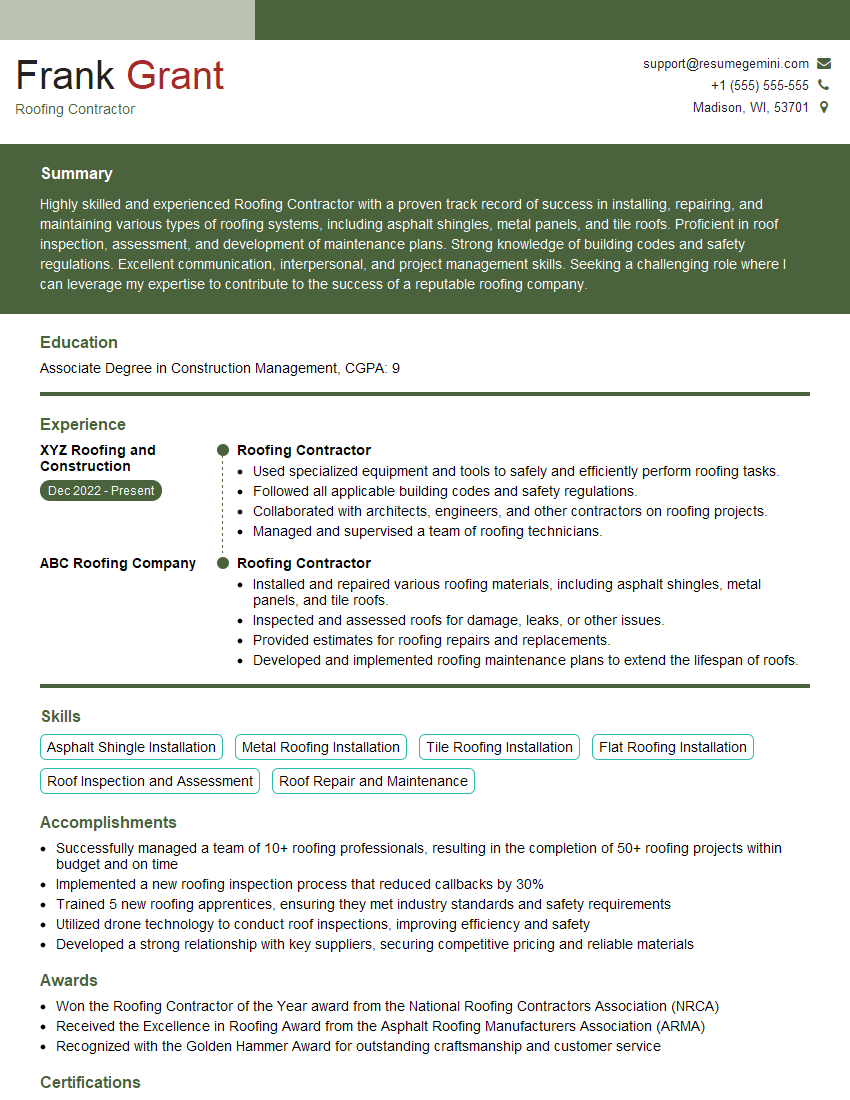
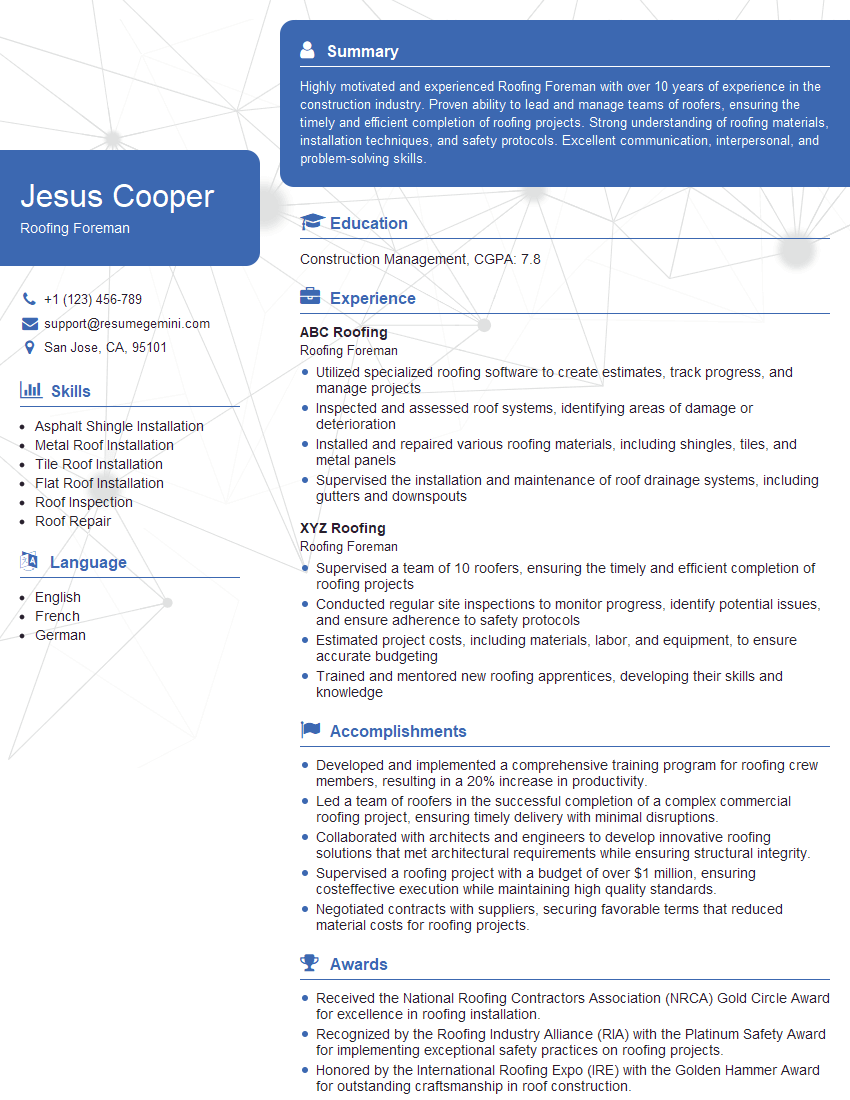
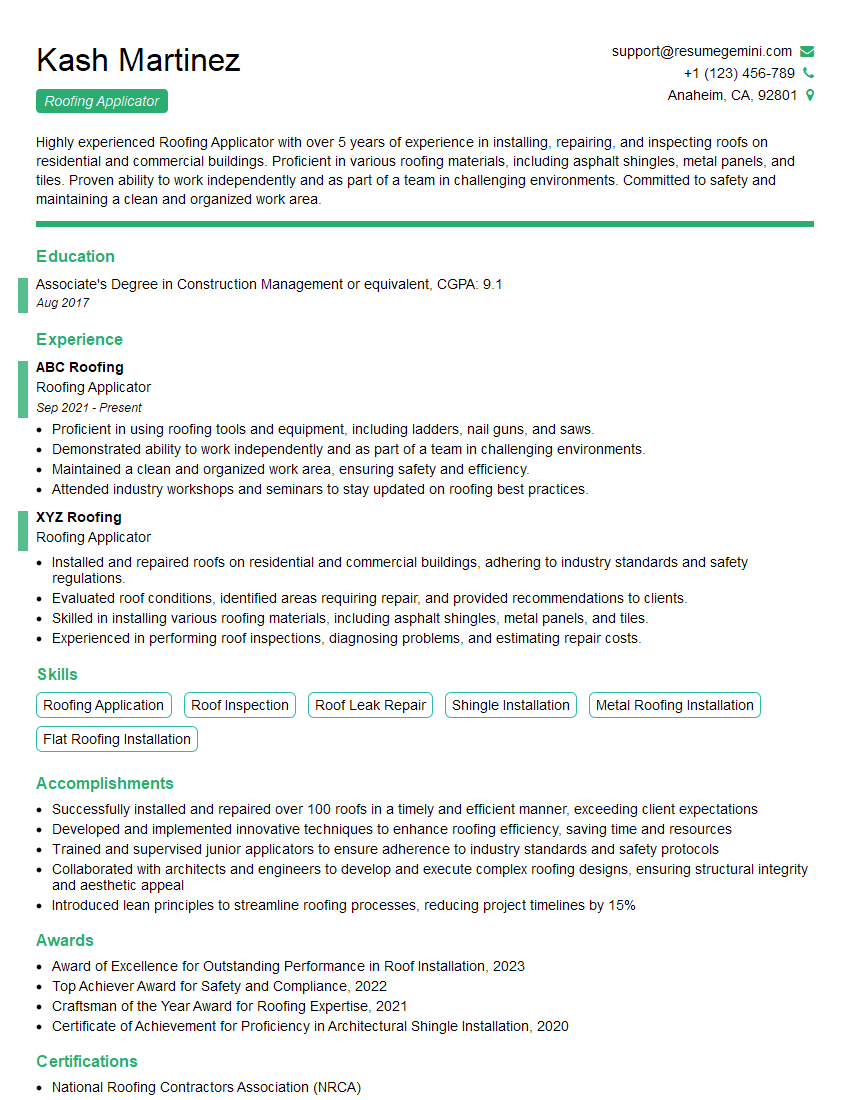
Mastering asphalt shingle roofing systems opens doors to rewarding career opportunities in a consistently in-demand industry. To maximize your job prospects, it’s crucial to present your skills and experience effectively. Building an ATS-friendly resume is key to getting your application noticed. We strongly recommend using ResumeGemini to craft a professional and impactful resume that highlights your expertise in asphalt shingle roofing systems. ResumeGemini provides tools and resources to help you create a standout resume, and examples of resumes tailored to the Asphalt Shingle Roofing Systems industry are available to guide you. Take advantage of these resources to make a compelling case for your candidacy!

Explore more articles
Users Rating of Our Blogs
Share Your Experience
We value your feedback! Please rate our content and share your thoughts (optional).
What Readers Say About Our Blog
To the interviewgemini.com Webmaster.
Very helpful and content specific questions to help prepare me for my interview!
Thank you
To the interviewgemini.com Webmaster.
This was kind of a unique content I found around the specialized skills. Very helpful questions and good detailed answers.
Very Helpful blog, thank you Interviewgemini team.