Unlock your full potential by mastering the most common Behavioral Neurology interview questions. This blog offers a deep dive into the critical topics, ensuring you’re not only prepared to answer but to excel. With these insights, you’ll approach your interview with clarity and confidence.
Questions Asked in Behavioral Neurology Interview
Q 1. Explain the difference between aphasia and apraxia.
Aphasia and apraxia are both neurological disorders affecting communication and action, but they affect different aspects. Aphasia is a language disorder affecting the ability to communicate, either through spoken or written words, or understanding spoken or written language. It’s caused by damage to the language centers of the brain, typically in the left hemisphere. Apraxia, on the other hand, is a motor planning disorder affecting the ability to perform purposeful movements, despite having the physical ability to do so. The brain knows *what* to do but struggles to *plan how* to do it. It’s often associated with damage to the parietal lobes.
Imagine a patient with aphasia trying to order coffee. They may understand the concept of ordering coffee but struggle to produce the words “I would like a latte, please.” Conversely, a patient with apraxia might struggle to stir their coffee, even though their arm and hand function perfectly. They know they should stir, but their brain can’t coordinate the necessary movements. These disorders can co-occur, complicating diagnosis and treatment.
Q 2. Describe the diagnostic criteria for Alzheimer’s disease.
Diagnosing Alzheimer’s disease requires a multi-faceted approach, combining clinical assessment, cognitive testing, and often, neuroimaging. The core diagnostic criteria involve a gradual decline in cognitive function, impacting multiple cognitive domains like memory, language, and executive function. Specific criteria include:
- Progressive cognitive decline: A noticeable decline in cognitive abilities that interferes with daily life.
- Impairment in at least two cognitive domains: This often includes memory loss, but also difficulties with language (aphasia), visuospatial abilities, executive functions (planning, organizing), and/or personality changes.
- Gradual onset and progressive worsening: The symptoms develop slowly and worsen over time.
- Absence of other possible causes: Other conditions that could cause similar symptoms, like stroke, depression, or vitamin deficiencies, must be ruled out.
- Confirmation with biomarkers (often): Neuroimaging (MRI or PET scans) may show characteristic changes in the brain, and cerebrospinal fluid analysis can identify specific biomarkers of Alzheimer’s disease. These are often used to support the clinical diagnosis.
It’s crucial to note that diagnosis is often made clinically first, with neuroimaging and biomarkers helping to confirm the diagnosis and rule out other conditions.
Q 3. What are the common causes of traumatic brain injury (TBI)?
Traumatic brain injury (TBI) encompasses a broad range of injuries resulting from external forces impacting the brain. Common causes include:
- Falls: Falls are a leading cause of TBI, particularly in older adults and young children.
- Motor vehicle accidents: Car crashes are a significant source of TBI, especially those involving high speeds or lack of restraints.
- Assaults: Physical assaults causing head injuries are a considerable factor, often resulting in severe TBI.
- Sports-related injuries: Contact sports like football, boxing, and hockey pose a high risk for TBI, particularly concussions.
- Blast injuries: Exposure to explosions, as in military settings or industrial accidents, can cause significant brain damage.
The severity of TBI can range from mild concussions to severe, life-threatening injuries, depending on the force of the impact and the extent of brain damage.
Q 4. How would you assess executive function in a patient?
Assessing executive function requires a multi-modal approach, combining observation, interview, and standardized neuropsychological tests. Key domains of executive function include:
- Inhibition: The ability to suppress inappropriate thoughts or behaviors (e.g., the Stroop test).
- Working memory: The ability to hold information in mind and manipulate it (e.g., digit span, Corsi block tapping).
- Cognitive flexibility: The ability to switch between tasks or mental sets (e.g., Wisconsin Card Sorting Test).
- Planning: The ability to organize and sequence actions to achieve a goal (e.g., Tower of London test).
Assessment involves observing the patient’s behavior during the examination, asking questions about their daily functioning, and administering formal tests. For example, I might observe a patient’s ability to follow complex instructions, their problem-solving strategies during a specific task, and their ability to inhibit impulsive responses.
Q 5. What are the different types of memory and how are they assessed?
Memory is not a unitary system; rather, it comprises several distinct types. Key types include:
- Short-term memory (STM): The capacity to hold a small amount of information in mind for a brief period (e.g., remembering a phone number). Assessed through digit span tasks.
- Working memory: The ability to manipulate information held in STM (e.g., performing mental arithmetic). Assessed with tasks like backward digit span or complex span tasks.
- Long-term memory (LTM): The capacity to store information over extended periods. This further divides into:
- Declarative memory (explicit): Consciously accessible memories. Further divided into:
- Episodic memory: Personal events (e.g., recalling your last birthday). Assessed through autobiographical memory tasks or recalling personal events.
- Semantic memory: General knowledge (e.g., knowing the capital of France). Assessed through vocabulary tests or general knowledge questions.
- Nondeclarative memory (implicit): Unconscious memories influencing behavior (e.g., procedural memory for riding a bike). Assessed through skill learning tasks, such as mirror drawing.
Assessment involves various tests tailored to each memory type, ranging from simple recall tasks to complex neuropsychological batteries.
Q 6. Explain the process of administering and interpreting the Mini-Mental State Examination (MMSE).
The Mini-Mental State Examination (MMSE) is a brief cognitive screening tool assessing various cognitive domains. Administration involves a structured interview and performance-based tasks. The examiner asks a series of questions and observes the patient’s responses and performance. The total score ranges from 0 to 30, with lower scores indicating greater cognitive impairment.
Administration: The MMSE follows a standardized procedure with specific instructions for each item. This includes orientation questions (date, place), attention and calculation (serial 7s), recall (remembering three words), language (repeating phrases, naming objects, following commands), and visuospatial abilities (copying a geometric design).
Interpretation: Scores are interpreted relative to normative data, considering age, education, and cultural background. A score below 24 generally suggests cognitive impairment warranting further investigation, although the cut-off score can vary slightly depending on the population. The MMSE is not a diagnostic tool on its own but a valuable screening tool to identify individuals who may need more comprehensive neuropsychological testing.
Q 7. Discuss the role of neuroimaging in behavioral neurology.
Neuroimaging plays a crucial role in behavioral neurology, providing invaluable insights into the structural and functional integrity of the brain. Various techniques are used:
- Structural MRI: Provides detailed anatomical images, detecting lesions, atrophy, and other structural abnormalities associated with neurological disorders.
- Functional MRI (fMRI): Measures brain activity by detecting changes in blood flow. Helpful in understanding the neural correlates of cognitive functions and identifying areas of dysfunction.
- Diffusion Tensor Imaging (DTI): Measures the diffusion of water molecules in the brain, providing information about the integrity of white matter tracts, crucial for understanding the connectivity of brain regions.
- PET and SPECT scans: Use radioactive tracers to measure metabolic activity or neurotransmitter binding, helpful in identifying areas of reduced metabolism or altered neurotransmitter function, common in disorders like Alzheimer’s disease.
Neuroimaging helps not only in diagnosing neurological conditions but also in monitoring disease progression and evaluating treatment effects. For instance, in Alzheimer’s, neuroimaging can visualize brain atrophy and detect amyloid plaques and tau tangles, while in stroke, it shows the location and extent of brain damage. The combination of neuroimaging with clinical assessment and neuropsychological testing provides a holistic understanding of the patient’s neurological status.
Q 8. How do you differentiate between depression and dementia?
Differentiating between depression and dementia can be challenging because they share some overlapping symptoms, such as cognitive slowing and memory problems. However, key distinctions exist.
- Onset and Course: Depression typically has a relatively sudden onset, often triggered by a life event, and its symptoms can fluctuate. Dementia, on the other hand, has a gradual and progressive onset, with symptoms worsening over time.
- Cognitive Impairment: In depression, cognitive difficulties are often mild and nonspecific, improving with treatment. Dementia involves a more significant and persistent decline in multiple cognitive domains, such as memory, language, and executive function, which doesn’t improve with treatment.
- Other Symptoms: Depression is characterized by prominent mood symptoms like sadness, loss of interest, and feelings of hopelessness. While some individuals with dementia may experience mood changes, the core feature is the progressive cognitive decline.
- Neuropsychological Testing: Formal neuropsychological testing can help differentiate the two. While both may show cognitive deficits, the pattern and severity of impairments will often differ. For example, in depression, performance may be inconsistent across tests, reflecting motivational factors, while in dementia, a more consistent pattern of impairment across domains is common.
Example: A patient presenting with memory problems and sadness could be suffering from either depression or dementia. A thorough history, including the onset and course of symptoms, mood assessment, and neuropsychological evaluation, is crucial for accurate diagnosis and appropriate management.
Q 9. What are the ethical considerations in conducting neuropsychological assessments?
Ethical considerations in neuropsychological assessments are paramount. We must prioritize the patient’s well-being and rights. Key considerations include:
- Informed Consent: Patients must understand the purpose, procedures, and potential risks and benefits of the assessment before participating. This includes ensuring they have the capacity to consent and addressing any concerns they may have.
- Confidentiality: All information obtained during the assessment must be kept strictly confidential and shared only with authorized individuals, adhering to HIPAA regulations and professional guidelines.
- Competence: Neuropsychologists must conduct assessments within their areas of expertise and use validated, reliable instruments. Misinterpreting or misusing results can have serious consequences for the patient.
- Cultural Sensitivity: Assessments must be culturally appropriate and consider the patient’s language, background, and beliefs. Using culturally biased tests can lead to inaccurate results and misdiagnosis.
- Beneficence and Non-maleficence: Assessments must aim to benefit the patient and avoid causing harm. Results should be interpreted and reported responsibly, considering the patient’s emotional and psychological state. We need to consider the impact of our findings on the patient’s life and avoid any unnecessary anxiety or distress.
- Integrity: Maintaining the highest levels of professional integrity is crucial in the process, avoiding bias and conflicts of interest.
Example: If a patient exhibits cognitive difficulties which might relate to potential elder abuse, our ethical obligation requires reporting the situation to relevant authorities, balancing the patient’s autonomy with their safety.
Q 10. Describe your experience with different neuropsychological tests.
My experience encompasses a wide range of neuropsychological tests, categorized by cognitive domains.
- Memory: I regularly administer tests like the Wechsler Memory Scale (WMS-IV), Rey Auditory Verbal Learning Test (RAVLT), and California Verbal Learning Test (CVLT-III) to assess various aspects of memory, including immediate recall, delayed recall, and recognition.
- Language: Boston Naming Test (BNT), Western Aphasia Battery (WAB), and Token Test are used to evaluate verbal fluency, comprehension, and naming abilities.
- Visuospatial/Constructional Skills: Rey-Osterrieth Complex Figure Test (ROCFT), clock drawing tasks, and block design tasks help assess visual perception, spatial organization, and constructional abilities.
- Executive Functions: Trail Making Test (TMT), Wisconsin Card Sorting Test (WCST), and Stroop Test are employed to evaluate planning, problem-solving, cognitive flexibility, and inhibitory control.
- Attention: Tests like the Digit Span subtest from the Wechsler scales and the Test of Variables of Attention (TOVA) are used to assess sustained and selective attention.
I’m proficient in administering, scoring, and interpreting these tests, considering individual factors and integrating them with clinical observations for a comprehensive evaluation.
Q 11. How would you manage a patient with post-stroke aphasia?
Managing a patient with post-stroke aphasia requires a multidisciplinary approach focusing on rehabilitation and support.
- Speech-Language Pathology (SLP): This is the cornerstone of treatment, with SLPs providing intensive therapy tailored to the specific type and severity of aphasia. Techniques may include melodic intonation therapy, constraint-induced language therapy, and computer-assisted language therapy.
- Occupational Therapy (OT): OT helps patients adapt to daily living challenges caused by aphasia, focusing on communication strategies, compensatory techniques, and assistive devices.
- Pharmacological Interventions: While there isn’t a cure for aphasia, some medications may help manage associated conditions like depression or anxiety, which can impede recovery.
- Cognitive Stimulation: Engaging in stimulating activities, such as reading, puzzles, and social interaction, can improve cognitive function and language skills.
- Support Groups: Connecting patients with support groups provides a sense of community and shared experience, fostering emotional well-being and coping strategies.
Example: A patient with Broca’s aphasia (non-fluent aphasia) might benefit from melodic intonation therapy to improve speech fluency. Combined with occupational therapy for daily living activities and support groups, a comprehensive treatment strategy is built for this patient.
Q 12. What are the common cognitive deficits associated with Parkinson’s disease?
Parkinson’s disease is associated with a range of cognitive deficits that can significantly impact daily living. These deficits don’t always progress at the same rate as motor symptoms.
- Executive Dysfunction: Difficulty with planning, problem-solving, cognitive flexibility, and working memory are common.
- Memory Impairment: Both verbal and visual memory can be affected, although this is usually less severe than in Alzheimer’s disease.
- Visuospatial Deficits: Problems with visual perception, spatial orientation, and constructional abilities are frequently observed.
- Attention and Concentration Difficulties: Sustained attention and concentration may be impaired, leading to difficulty focusing and completing tasks.
- Language Problems: While less prominent than in other dementias, difficulties with verbal fluency, naming, and comprehension may occur.
Example: A patient with Parkinson’s disease might struggle to plan a shopping trip (executive dysfunction), remember the items they needed (memory impairment), or follow a route (visuospatial deficits).
Q 13. Explain the concept of neuroplasticity and its implications for rehabilitation.
Neuroplasticity refers to the brain’s remarkable ability to reorganize itself by forming new neural connections throughout life. This is crucial for recovery after brain injury or disease.
- Mechanisms of Neuroplasticity: Several mechanisms contribute to neuroplasticity, including axonal sprouting (growth of new nerve fibers), synaptogenesis (formation of new synapses), and dendritic branching (growth of new branches on existing neurons).
- Implications for Rehabilitation: Neuroplasticity forms the basis of rehabilitation strategies. Intensive therapy, such as speech therapy, physical therapy, and cognitive rehabilitation, stimulates the brain to reorganize and compensate for lost function.
- Factors Influencing Neuroplasticity: Factors such as age, the extent of brain damage, the intensity and type of rehabilitation, and the individual’s motivation and engagement all influence the extent of neuroplasticity and recovery.
Example: After a stroke affecting language, intensive speech therapy can stimulate the undamaged parts of the brain to take over language functions, showcasing neuroplasticity in action.
Q 14. How do you approach differential diagnosis in behavioral neurology?
Differential diagnosis in behavioral neurology involves systematically differentiating between various neurological and psychiatric conditions that present with similar behavioral symptoms.
- Thorough History: A detailed patient history including onset, progression, and associated symptoms is crucial. This includes medical history, family history, and psychosocial factors.
- Neurological Examination: A comprehensive neurological exam assesses motor function, sensory function, reflexes, cranial nerves, and gait to identify any focal neurological deficits.
- Neuropsychological Assessment: Formal neuropsychological testing helps pinpoint specific cognitive deficits and their pattern, providing valuable information about the underlying neurological condition.
- Neuroimaging: Techniques like MRI and CT scans aid in visualizing brain structure and identifying lesions or abnormalities. Functional neuroimaging (fMRI, PET) can assess brain activity and connectivity.
- Laboratory Tests: Blood tests may be necessary to rule out metabolic or infectious causes.
- Collaboration: A multidisciplinary approach involving neurologists, psychiatrists, and other specialists is often required to arrive at an accurate diagnosis.
Example: A patient presenting with memory loss could have Alzheimer’s disease, vascular dementia, or even depression. A comprehensive assessment considering all the points above would be required to differentiate between these possibilities and provide an accurate diagnosis.
Q 15. Describe your experience with patients with traumatic brain injuries (TBIs).
My experience with patients suffering from traumatic brain injuries (TBIs) is extensive. I’ve worked with a wide spectrum of TBI severity, from mild concussions to severe diffuse axonal injury. This involves a thorough assessment of cognitive, behavioral, and emotional changes post-injury. For example, I’ve worked with patients exhibiting difficulties with memory (both short-term and long-term), executive functions (planning, problem-solving, inhibition), attention, and language. Behavioral changes can range from irritability and emotional lability to aggression and disinhibition. My approach involves a comprehensive evaluation, tailoring rehabilitation strategies to address specific deficits, and collaborating closely with the patient’s family and other healthcare professionals. A recent case involved a young adult with a moderate TBI who presented with significant challenges in impulse control and emotional regulation. Through a combination of cognitive rehabilitation therapy, behavioral therapy, and medication management, we saw significant improvement in his daily functioning and quality of life. This highlights the importance of a personalized approach to TBI rehabilitation, adapting strategies to meet the unique needs of each individual.
Career Expert Tips:
- Ace those interviews! Prepare effectively by reviewing the Top 50 Most Common Interview Questions on ResumeGemini.
- Navigate your job search with confidence! Explore a wide range of Career Tips on ResumeGemini. Learn about common challenges and recommendations to overcome them.
- Craft the perfect resume! Master the Art of Resume Writing with ResumeGemini’s guide. Showcase your unique qualifications and achievements effectively.
- Don’t miss out on holiday savings! Build your dream resume with ResumeGemini’s ATS optimized templates.
Q 16. What are your views on the use of technology in behavioral neurology?
Technology plays an increasingly vital role in behavioral neurology. It enhances both diagnostic accuracy and treatment efficacy. For instance, neuroimaging techniques like fMRI and EEG provide objective data on brain function and structure, helping us understand the neurological underpinnings of behavioral changes. Furthermore, digital tools and apps are increasingly used for cognitive rehabilitation, offering personalized exercises and tracking progress. Telehealth platforms expand access to care, particularly beneficial for patients in remote areas or with mobility limitations. However, it’s crucial to use these tools judiciously, ensuring ethical considerations and data privacy are prioritized. We must also remember that technology is a tool, and the human element—the therapeutic relationship and the individual’s unique needs—remains paramount. For example, I use virtual reality (VR) in conjunction with traditional therapies to engage patients in cognitive rehabilitation exercises, making the process more interactive and enjoyable.
Q 17. Discuss your familiarity with various neuropsychological assessment tools.
My familiarity with neuropsychological assessment tools is comprehensive. I regularly utilize a range of tests to evaluate different cognitive domains. These include tests assessing attention (e.g., Trail Making Test, Stroop Test), memory (e.g., Wechsler Memory Scale, California Verbal Learning Test), executive functions (e.g., Wisconsin Card Sorting Test, Tower of London), language (e.g., Boston Naming Test, Token Test), and visuospatial abilities (e.g., Rey-Osterrieth Complex Figure Test). The choice of tests depends on the patient’s presenting symptoms and the specific questions we need to answer. I also use standardized questionnaires to assess personality, mood, and behavioral problems. Beyond the specific tests, I consider the patient’s performance within the broader context of their history, medical records, and observations during the assessment. It’s not just about the score; it’s about understanding the individual’s cognitive profile and how it impacts their daily life. For instance, a patient might score poorly on a specific memory test but demonstrate excellent real-world memory skills in conversation, offering valuable insights into their cognitive strengths and weaknesses.
Q 18. How do you integrate information from different sources (e.g., neuroimaging, patient history, cognitive testing) to reach a diagnosis?
Integrating information from various sources is crucial for accurate diagnosis in behavioral neurology. It’s a process of triangulation, where we aim for convergence of evidence from different perspectives. Neuroimaging (e.g., MRI, CT scans) provides anatomical information about the brain, revealing lesions, atrophy, or other structural abnormalities. Patient history offers valuable contextual information about their symptoms, onset, progression, and any relevant medical or psychosocial factors. Cognitive testing provides objective measures of cognitive abilities. I then synthesize these diverse data points, considering the temporal relationship between events and the consistency of findings across different modalities. For example, a patient presenting with memory problems might have an MRI showing hippocampal atrophy, a consistent pattern of memory impairment on neuropsychological tests, and a history of head injury. The convergence of these findings strongly supports a diagnosis of memory impairment secondary to the brain injury. This integrative approach allows for a comprehensive understanding of the patient’s condition, guiding the development of appropriate treatment plans.
Q 19. What is your experience with working with diverse populations?
I have extensive experience working with diverse populations, recognizing that cultural background, socioeconomic status, and language proficiency significantly impact both the presentation of neurological disorders and the effectiveness of treatment. I’m sensitive to potential cultural biases in assessment tools and strive to utilize culturally appropriate methods. For instance, I use interpreters when necessary and adapt assessment strategies to consider cultural differences in communication styles and response patterns. Moreover, understanding the socioeconomic context is crucial in addressing factors like access to resources and support systems that impact recovery. I actively work to build rapport and trust with patients from diverse backgrounds, fostering a collaborative relationship centered on their individual needs and preferences. A key aspect of this is actively listening to and acknowledging patients’ lived experiences and perspectives, incorporating these crucial insights into the assessment and treatment process.
Q 20. How do you approach treatment planning for a patient with cognitive impairment?
Treatment planning for cognitive impairment is highly individualized and depends on the underlying etiology, severity, and specific cognitive deficits. It begins with a detailed assessment to identify the patient’s strengths and weaknesses. The plan then integrates various therapeutic interventions tailored to the individual needs. These may include cognitive rehabilitation therapy (CRT) focusing on specific cognitive skills (e.g., memory, attention, executive functions), behavioral therapy to address emotional and behavioral problems, and medication management to address underlying medical conditions or symptoms like depression or anxiety. Furthermore, environmental modifications and adaptive strategies are frequently implemented to maximize the patient’s independence and functional abilities. For example, a patient with memory problems might benefit from memory aids, organizational strategies, and caregiver support. Regular monitoring of progress and adjustments to the treatment plan are essential to ensure effectiveness and optimize outcomes. It’s a dynamic process, continuously refined based on the patient’s response and evolving needs.
Q 21. What is your approach to managing a patient with challenging behaviors?
Managing challenging behaviors in patients with neurological disorders requires a multifaceted approach. It’s crucial to first identify the underlying causes of these behaviors, which can include pain, frustration, cognitive deficits, or underlying psychiatric conditions. A thorough assessment often involves neuropsychological testing, behavioral observation, and interviews with caregivers. Once the causes are understood, interventions can be tailored. This might involve medication management, behavioral therapy techniques (e.g., positive reinforcement, cognitive behavioral therapy), and environmental modifications to minimize triggers. For instance, reducing environmental stimulation for a patient with sensory sensitivity or establishing clear routines for a patient with executive dysfunction can dramatically reduce challenging behaviors. Collaboration with caregivers is essential, providing education, support, and strategies for managing challenging behaviors at home. Safety planning is paramount, addressing potential risks associated with the behaviors and developing strategies to mitigate them. The goal is not only to reduce the frequency and severity of challenging behaviors but also to improve the patient’s overall quality of life and well-being.
Q 22. Discuss the importance of collaborating with other healthcare professionals.
Collaboration is absolutely paramount in behavioral neurology. We rarely work in isolation; our patients present with complex issues that often transcend the boundaries of a single specialty. Think of it like a finely tuned orchestra – each instrument (healthcare professional) plays a vital role, and the harmony achieved through collaboration leads to the best possible outcome for the patient.
- Neuropsychologists: They conduct detailed cognitive assessments, providing crucial data on memory, attention, and executive function, which informs our diagnostic and treatment strategies.
- Psychiatrists: Their expertise in mental health conditions is invaluable, especially in cases involving comorbid psychiatric disorders, ensuring comprehensive care.
- Neurologists: Close collaboration with neurologists is essential for differentiating neurological causes of behavioral changes from primarily psychiatric conditions.
- Speech-language pathologists: Their input is vital for assessing and addressing communication and swallowing difficulties often seen in patients with neurobehavioral disorders.
- Occupational therapists and Physical therapists: These professionals focus on functional rehabilitation and adaptive strategies, helping patients regain independence and improve quality of life.
- Social workers: Providing crucial support to patients and their families, navigating social and emotional challenges that often accompany neurobehavioral conditions.
Effective communication, shared decision-making, and a mutual respect for each other’s expertise are cornerstones of successful interprofessional teamwork. For instance, in a case of traumatic brain injury, regular multidisciplinary meetings allow us to collectively monitor the patient’s progress, adjust treatment plans, and address any emerging complications proactively.
Q 23. Describe a case where you had to overcome a challenge in behavioral neurology.
One particularly challenging case involved a 65-year-old man who presented with progressive personality changes, including disinhibition, apathy, and impaired judgment. Initial imaging revealed frontotemporal atrophy, suggesting frontotemporal dementia (FTD). However, his cognitive testing was surprisingly inconsistent, with some areas showing relatively preserved function. The challenge was differentiating between different subtypes of FTD, particularly behavioral variant FTD (bvFTD) and semantic dementia, as these have distinct underlying pathophysiological mechanisms and treatment approaches.
To overcome this, we employed a multi-pronged strategy:
- Extensive neuropsychological assessment: This helped refine the cognitive profile and identify specific deficits. We discovered a disproportionate impairment in semantic knowledge, supporting a diagnosis leaning towards semantic dementia.
- Genetic testing: We explored genetic mutations associated with FTD subtypes. This revealed a positive finding for the GRN mutation, strengthening the diagnosis of frontotemporal dementia.
- Regular monitoring and adjustment of care plan: His condition progressively worsened, necessitating adaptations to his care plan, with involvement of his family and social workers to provide support and facilitate his transition to a long-term care facility.
This case highlighted the importance of meticulous assessment, integration of multiple data points (neuroimaging, neuropsychological testing, genetics), and ongoing collaborative care to effectively manage a complex neurobehavioral condition. The initial uncertainty was overcome through a systematic and collaborative approach.
Q 24. How do you stay updated with the latest advancements in behavioral neurology?
Staying updated in the rapidly evolving field of behavioral neurology requires a multi-faceted approach.
- Peer-reviewed journals: Regularly reading journals like Neurology, Brain, Journal of Neurology, Neurosurgery & Psychiatry, and others focusing on behavioral neurology keeps me abreast of the latest research findings and clinical trials.
- Professional organizations: Active participation in organizations like the American Academy of Neurology (AAN) and the International Neuropsychological Society (INS) provides access to conferences, workshops, and continuing medical education (CME) opportunities. These events often feature leading experts presenting groundbreaking research and novel treatment approaches.
- Online resources and databases: Databases like PubMed and Google Scholar are invaluable for accessing research articles, reviews, and clinical guidelines. Online continuing education platforms also offer convenient access to updates.
- Networking and collaboration: Engaging in discussions with colleagues, attending seminars and conferences, and participating in collaborative research projects fosters knowledge exchange and facilitates the adoption of new techniques and insights.
Essentially, a proactive and multi-pronged approach ensuring continuous learning is key to maintaining expertise in this dynamic field.
Q 25. What are your strengths and weaknesses as a behavioral neurologist?
My strengths lie in my diagnostic skills, ability to connect with patients and their families, and my commitment to delivering holistic and patient-centered care. I excel at conducting comprehensive neuropsychological evaluations, integrating information from various sources, and formulating effective treatment plans. I’m also a strong communicator, skilled at explaining complex medical information in an understandable way.
However, I acknowledge that my weakness can be a tendency to be perfectionistic. While striving for excellence is a positive trait, it can sometimes lead to taking on too much or feeling overwhelmed. I actively work on prioritizing tasks, delegating when appropriate, and practicing self-care to manage this effectively.
Q 26. Describe your approach to patient education and counseling.
Patient education and counseling are integral components of my approach. I believe patients and their families are active participants in their care, and empowering them with knowledge and support is essential for successful outcomes. My approach is characterized by:
- Clear and concise explanations: I use plain language, avoiding medical jargon whenever possible, to ensure understanding.
- Tailored communication: I adapt my communication style to the patient’s educational background and cognitive abilities.
- Active listening and empathy: I create a safe space for patients to express their concerns and anxieties.
- Collaborative decision-making: I involve patients in the decision-making process, respecting their preferences and values.
- Provision of resources: I connect patients with relevant support groups, rehabilitation services, and other resources to facilitate their journey.
For example, when explaining a diagnosis of Alzheimer’s disease, I would start by discussing the basics of the disease in a simplified manner, then address their specific concerns, answer their questions, and collaborate on a plan of care. This ensures the patient and family are not only informed but also feel supported and empowered throughout the process.
Q 27. What are your salary expectations?
My salary expectations are commensurate with my experience, qualifications, and the specific responsibilities of this position. I’m open to discussing a competitive compensation package that aligns with industry standards and the value I bring to your organization. I’d prefer to discuss this further after gaining a clearer understanding of the full scope of the position and benefits offered.
Q 28. Why are you interested in this particular position?
I’m very interested in this position because of [Insert specific reasons tailored to the job description, e.g., the hospital’s reputation, the opportunity to work with a specific team, the focus on a particular area of behavioral neurology, the institution’s commitment to research, etc.]. I’m particularly drawn to [Mention a specific aspect of the job description that excites you and aligns with your skills and goals]. My skills and experience align perfectly with the requirements outlined, and I’m confident that I can make a significant contribution to your team.
Key Topics to Learn for Behavioral Neurology Interview
- Cognitive Assessment: Understanding and applying various neuropsychological tests to assess cognitive functions like memory, attention, language, and executive functions. Practical application: Interpreting test results to inform diagnosis and treatment planning.
- Neuroanatomy and Neurophysiology: A strong grasp of brain structure and function, including relevant pathways and their roles in behavior. Practical application: Connecting observed behavioral deficits to specific brain regions and potential lesions.
- Common Neurological Disorders: In-depth knowledge of conditions like stroke, traumatic brain injury, dementia (Alzheimer’s, frontotemporal, etc.), Parkinson’s disease, and multiple sclerosis, including their behavioral manifestations.
- Differential Diagnosis: Developing the ability to differentiate between various neurological disorders presenting with similar behavioral symptoms. Practical application: Utilizing clinical history, neurological examination findings, and neuropsychological test results for accurate diagnosis.
- Treatment Approaches: Familiarity with pharmacological and non-pharmacological interventions for managing behavioral symptoms associated with neurological disorders. Practical application: Designing and implementing individualized treatment plans based on patient needs and assessment results.
- Research Methods in Behavioral Neurology: Understanding research designs and methodologies used to investigate the relationship between brain and behavior. Practical application: Critically evaluating research literature and applying evidence-based practices.
- Ethical Considerations: Addressing ethical dilemmas related to patient confidentiality, informed consent, and capacity for decision-making in neurological patients with compromised cognitive abilities.
Next Steps
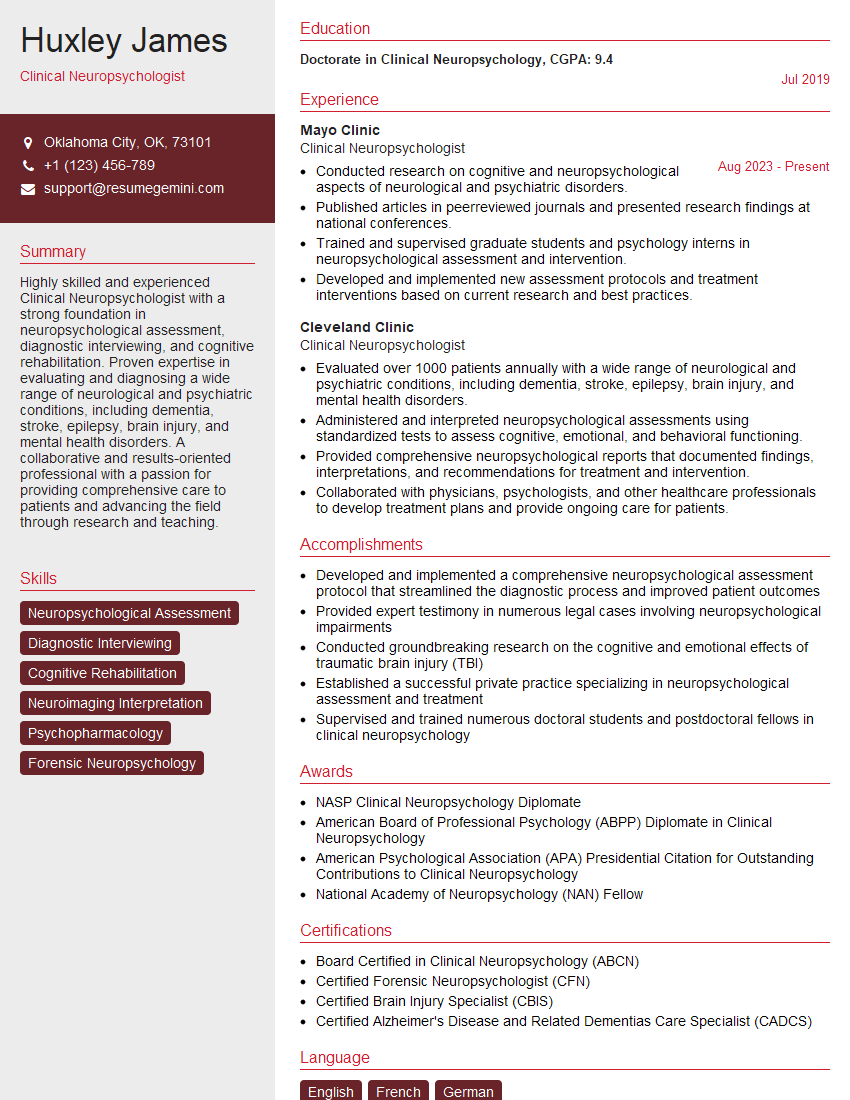
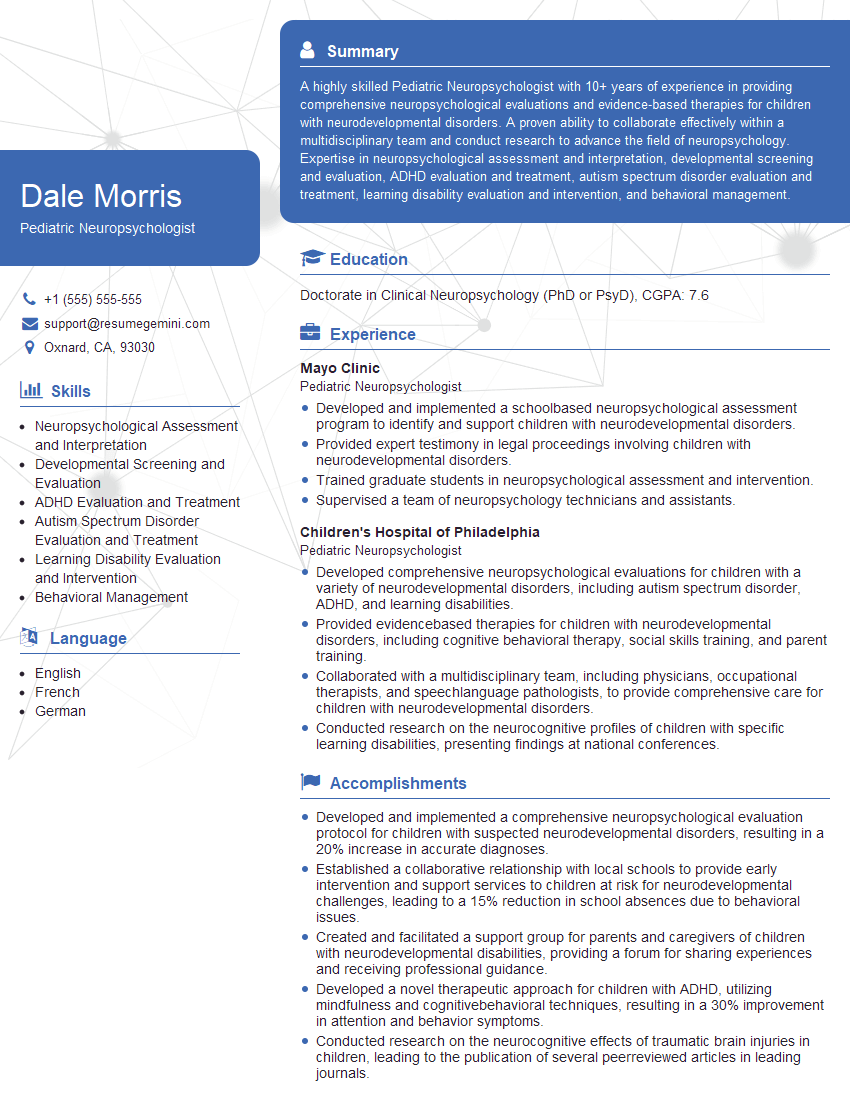
Mastering Behavioral Neurology opens doors to a rewarding career with significant impact on patients’ lives. Advancement opportunities abound for specialists skilled in diagnosis, treatment, and research within this field. To enhance your job prospects, create a compelling and ATS-friendly resume that effectively showcases your skills and experience. ResumeGemini is a trusted resource to help you build a professional resume that stands out. Examples of resumes tailored to Behavioral Neurology are available to guide you. Invest time in crafting a strong resume – it’s your first impression on potential employers.
Explore more articles
Users Rating of Our Blogs
Share Your Experience
We value your feedback! Please rate our content and share your thoughts (optional).
What Readers Say About Our Blog
To the interviewgemini.com Webmaster.
Very helpful and content specific questions to help prepare me for my interview!
Thank you
To the interviewgemini.com Webmaster.
This was kind of a unique content I found around the specialized skills. Very helpful questions and good detailed answers.
Very Helpful blog, thank you Interviewgemini team.