Cracking a skill-specific interview, like one for Boiler Cleaning and Chemical Treatment, requires understanding the nuances of the role. In this blog, we present the questions you’re most likely to encounter, along with insights into how to answer them effectively. Let’s ensure you’re ready to make a strong impression.
Questions Asked in Boiler Cleaning and Chemical Treatment Interview
Q 1. Explain the different methods of boiler cleaning.
Boiler cleaning is crucial for maintaining efficiency and preventing damage. There are several methods, each suited to different levels of fouling and boiler types.
- Chemical Cleaning: This involves circulating a specially formulated cleaning solution through the boiler system to dissolve and remove deposits like scale and sludge. The choice of chemical depends on the type of deposit. For example, acidic solutions are effective against scale, while alkaline solutions work better on oily deposits. After cleaning, a thorough rinsing is essential to remove all traces of the chemical.
- Mechanical Cleaning: This method involves physically removing deposits using tools like brushes, scrapers, and water jets. It’s often used in conjunction with chemical cleaning, especially for stubborn deposits or large-scale cleaning. This method is more labor-intensive and requires careful attention to avoid damaging the boiler’s internal surfaces.
- Hydro-blasting: This high-pressure water jetting method effectively removes scale and other deposits. It is particularly useful for cleaning large boilers and removing stubborn deposits that are resistant to chemical cleaning. However, it requires specialized equipment and training to avoid damage to the boiler.
- Electro-chemical Cleaning: This technique uses electrical current to dissolve deposits. It is highly efficient for specific deposits but requires specialized equipment and expertise.
The choice of cleaning method depends on factors like the type and severity of fouling, the boiler’s design, and the available resources. Often, a combination of methods yields the best results.
Q 2. Describe your experience with various chemical treatments for boiler water.
My experience encompasses a wide range of chemical treatments, each tailored to specific boiler water conditions. I’ve worked with various types of water treatment chemicals, including:
- Oxygen Scavengers: These chemicals, such as hydrazine or catalyzed sodium sulfite, react with dissolved oxygen in the boiler water, preventing oxygen pitting corrosion. The choice depends on environmental regulations and boiler operating pressure.
- Scale Inhibitors: These chemicals, often phosphates or organophosphonates, prevent the formation of scale by interfering with the crystallization process. The selection is critical; an inappropriate inhibitor can lead to sludge formation.
- Sludge Conditioners: These chemicals promote the formation of a soft, easily removed sludge rather than hard scale. This is especially important in boilers where complete scale prevention is difficult.
- pH Adjusters: Chemicals like caustic soda or sulfuric acid maintain the optimal pH range for corrosion prevention and scale control. Precise control is essential to avoid corrosive conditions.
- Anti-foaming Agents: These chemicals prevent foaming, which can lead to carryover of water and solids into the steam system. This is crucial for maintaining steam purity.
In my experience, successful chemical treatment requires regular water testing and analysis to monitor effectiveness and adjust the treatment program as needed. I’ve successfully tackled many challenging cases by carefully analyzing water chemistry, identifying the root cause of problems, and implementing a targeted treatment strategy.
Q 3. How do you identify and address boiler water scaling issues?
Boiler water scaling, the formation of hard mineral deposits on boiler surfaces, reduces heat transfer efficiency, leading to increased fuel consumption and potential overheating. Identification begins with regular water testing. High levels of hardness minerals (calcium and magnesium) are a primary indicator.
Addressing scaling involves a multi-pronged approach:
- Identify the type of scale: Different scales (calcium carbonate, calcium sulfate, silica) require different treatment approaches.
- Chemical cleaning: As mentioned earlier, acids (like hydrochloric or citric acid) can dissolve many types of scale. The choice depends on the scale type and boiler material. A thorough rinse is crucial afterwards.
- Preventative measures: Implementing proper water treatment, including scale inhibitors and maintaining optimal pH, is crucial for long-term prevention. Regular blowdown helps to remove dissolved solids before they can precipitate as scale.
- Water softening: Pre-treatment of feedwater through ion exchange or reverse osmosis can significantly reduce hardness minerals before they enter the boiler.
For instance, I once encountered severe calcium carbonate scaling in a low-pressure boiler. A combination of acid cleaning and subsequent implementation of a phosphate-based scale inhibitor resolved the issue and prevented future recurrence.
Q 4. What are the common causes of boiler corrosion, and how can they be prevented?
Boiler corrosion is a serious concern leading to leaks, reduced lifespan, and potential safety hazards. Several factors contribute:
- Dissolved Oxygen: Oxygen reacts with iron in the boiler steel, causing pitting corrosion. Oxygen scavengers are crucial for prevention.
- Low pH: Highly acidic conditions accelerate corrosion. Maintaining the correct pH range is essential.
- High-concentration of dissolved solids: High concentrations of salts can lead to caustic embrittlement in high-pressure boilers, making the metal brittle and prone to cracking.
- Carbon Dioxide: Carbon dioxide dissolves in water to form carbonic acid, contributing to corrosion. Proper deaeration of feedwater helps minimize this.
- Chloride ions: Chloride ions are particularly corrosive, especially in high-pressure boilers.
Prevention involves a comprehensive approach:
- Proper water treatment: Using oxygen scavengers, maintaining appropriate pH, and controlling dissolved solids are key.
- Deaeration: Removing dissolved gases from feedwater is crucial.
- Regular inspection: Visual inspection and non-destructive testing help identify corrosion early.
- Material selection: Choosing corrosion-resistant materials for boiler components minimizes corrosion risk.
For example, in a high-pressure boiler suffering from pitting corrosion, I implemented a strict oxygen scavenging regime and adjusted the pH, effectively mitigating the issue.
Q 5. Explain the importance of regular boiler water testing and analysis.
Regular boiler water testing and analysis are paramount for maintaining efficient and safe operation. It provides a snapshot of the boiler’s internal environment, allowing for proactive adjustments to prevent problems before they escalate.
Key parameters include:
- pH: Indicates the acidity or alkalinity of the water.
- Dissolved oxygen: Measures the amount of oxygen in the water, a major contributor to corrosion.
- Hardness: Indicates the concentration of calcium and magnesium ions, precursors to scale formation.
- Conductivity: Measures the total dissolved solids in the water, an indicator of water purity.
- Silica: High silica levels can contribute to scale formation.
- Phosphate levels: Monitors the effectiveness of phosphate-based scale inhibitors.
Analyzing these parameters allows for timely adjustments to the water treatment program. For example, a sudden rise in dissolved oxygen could indicate a leak in the system, requiring immediate action. Consistent testing provides a historical record that helps identify long-term trends and optimizes the overall water treatment strategy.
Q 6. Describe your experience with boiler blowdown procedures.
Boiler blowdown is a crucial process for removing dissolved and suspended solids from the boiler water, preventing scale formation and maintaining water purity. It involves periodically releasing a small portion of boiler water to maintain concentration levels within acceptable limits.
There are two main types:
- Continuous Blowdown: A small continuous flow of water is released, providing consistent removal of solids.
- Intermittent Blowdown: Periodically, a larger volume of water is quickly released, offering a more thorough cleaning of the boiler.
My experience includes optimizing blowdown procedures for various boiler types and sizes. This involves careful calculation to balance the need for solids removal with minimal energy and water waste. Effective blowdown minimizes scaling, corrosion, and carryover of solids into the steam system, enhancing operational efficiency and the lifespan of the boiler. Improper blowdown can lead to excessive water and energy losses, necessitating careful planning and monitoring.
Q 7. How do you maintain proper boiler water chemistry?
Maintaining proper boiler water chemistry is vital for efficient and safe boiler operation. This involves a multi-faceted approach, combining chemical treatment with regular monitoring and adjustments.
Key aspects include:
- Regular water testing: As discussed earlier, regular testing is fundamental for understanding the boiler’s water chemistry.
- Chemical treatment: Employing the appropriate chemicals in the correct dosages based on testing results. This may involve oxygen scavengers, scale inhibitors, sludge conditioners, pH adjusters, and anti-foaming agents.
- Blowdown management: Proper blowdown procedures are critical for managing the concentration of dissolved and suspended solids.
- Feedwater treatment: Pre-treatment of feedwater through softening or demineralization reduces the entry of impurities into the boiler.
- Maintaining optimal pH: Ensuring the boiler water pH remains within the specified range to prevent corrosion.
- Monitoring oxygen levels: Maintaining low oxygen levels to prevent oxygen pitting corrosion.
Maintaining proper boiler water chemistry is not a one-size-fits-all approach. It requires a detailed understanding of the specific boiler and its operating conditions, as well as continual monitoring and adaptation to changing circumstances. A systematic approach, combining regular testing with appropriate chemical treatments, ensures optimal boiler performance and longevity.
Q 8. What safety precautions do you take when working with boiler chemicals?
Safety is paramount when handling boiler chemicals. These substances can be corrosive, toxic, or even explosive depending on their composition and concentration. My safety protocols always begin with a thorough review of the Safety Data Sheets (SDS) for each chemical used. This provides crucial information on handling, storage, personal protective equipment (PPE), and emergency procedures.
- PPE: I always wear appropriate PPE, including chemical-resistant gloves, eye protection, and a respirator, as required by the SDS. The type of PPE varies depending on the chemical being used; for example, handling strong acids requires more robust protection than handling a milder cleaning agent.
- Ventilation: Adequate ventilation is crucial, especially when working with volatile chemicals. In enclosed spaces, I ensure proper ventilation or use respiratory protection.
- Spill Response: I’m trained in spill response procedures, knowing how to contain and neutralize spills safely, using appropriate neutralizing agents and absorbent materials. This includes proper disposal according to local regulations.
- Training and Awareness: Regular safety training keeps me updated on best practices and any changes in regulations. I always ensure that any team members working alongside me are equally well-trained and equipped.
- Emergency Preparedness: I’m familiar with the location and use of emergency eyewash stations, safety showers, and fire extinguishers. I also understand the facility’s emergency response plan.
For example, during a recent descaling operation involving hydrochloric acid, I meticulously followed the SDS, using specialized acid-resistant gloves, eye protection, and a respirator with appropriate cartridges. I also ensured adequate ventilation and prepared a neutralizing agent (sodium bicarbonate solution) in case of a spill.
Q 9. Explain the process of identifying and resolving boiler leaks.
Identifying and resolving boiler leaks requires a systematic approach. The first step is to pinpoint the leak’s location using visual inspection, listening for unusual hissing sounds, or checking for wet spots. Advanced techniques may include using dye penetrants, pressure testing, or ultrasonic leak detection for more subtle or inaccessible leaks.
Once the location is identified, the severity needs assessment. Minor leaks might be addressed by tightening fittings or replacing gaskets. For more significant leaks, the damaged section may require repair or replacement. This could involve welding, patching, or even replacing a damaged pipe or component.
Example: During a routine inspection, I discovered a small leak at a flange connection. I initially tried tightening the bolts. When this didn’t resolve the issue, I inspected the gasket. Replacing the worn-out gasket completely solved the problem. However, if the leak was within a pressure vessel or was extensive, it could require shutting down the system for more significant repairs.
The repair process always includes: proper isolation of the affected section, pressure release, draining the system, the repair itself, pressure testing to ensure the integrity of the repair, and refilling and recommissioning the boiler.
Q 10. How do you troubleshoot common boiler malfunctions?
Troubleshooting boiler malfunctions involves a methodical process. It starts with identifying the symptoms – low steam pressure, erratic temperature fluctuations, unusual noises, or burner issues. This helps narrow down the potential causes.
- Systematic Checklists: I use a systematic checklist to investigate the cause. This often involves checking fuel supply, ignition system, burner operation, water level, pressure gauges, safety controls, and related equipment.
- Data Analysis: Analyzing boiler operating data (pressure, temperature, fuel consumption) from the control system is crucial in pinpointing inconsistencies. This can indicate problems with efficiency or possible malfunctions.
- Component Inspection: Visual inspection of components, such as pumps, valves, and sensors, helps identify obvious issues like leaks, blockages, or damage.
- Diagnostic Tools: Specialized tools, such as pressure gauges, thermometers, and combustion analyzers, are employed for accurate measurements and data gathering.
Example: If the boiler is not producing sufficient steam, I would systematically check the fuel supply, burner operation (flame quality, gas pressure), water level, and the condition of the heat exchanger. If the problem is insufficient fuel, I’d check the fuel line, filter, and fuel supply pressure. If the burner is faulty, I’d check ignition components and potentially call in a specialist.
Q 11. What are the different types of boiler feedwater treatment?
Boiler feedwater treatment is essential to prevent scaling, corrosion, and fouling, thus extending the boiler’s lifespan and efficiency. There are several methods:
- Chemical Treatment: This involves adding chemicals to the feedwater to control water chemistry. Commonly used chemicals include:
- Oxygen scavengers: Remove dissolved oxygen, preventing corrosion.
- Phosphate treatments: Control scale formation by precipitating calcium and magnesium ions.
- pH adjusters: Maintain the optimal pH level for corrosion control.
- Dispersants: Prevent the formation of large scale particles.
- Physical Treatment: These methods involve processes like:
- Filtration: Removes suspended solids and other impurities from the water.
- Softening: Reduces the hardness of the water by removing calcium and magnesium ions (e.g., ion exchange).
- De-aeration: Removes dissolved gases, primarily oxygen, from the feedwater.
- Combination Treatment: Combining both chemical and physical treatment methods provides the most effective protection for the boiler. The choice depends upon the water quality and boiler type.
For example, in a high-pressure boiler, a combination of de-aeration, softening, and chemical treatment using oxygen scavengers and phosphate would be crucial to prevent corrosion and scaling.
Q 12. Explain your understanding of boiler efficiency and how to improve it.
Boiler efficiency refers to the percentage of heat energy input that is converted into useful steam output. Higher efficiency means less fuel consumption and lower operating costs. Several factors influence boiler efficiency:
- Proper Combustion: Ensuring complete combustion of fuel through proper air-fuel ratio adjustment and regular maintenance of burners. A combustion analyzer helps optimize this.
- Insulation: Adequate insulation on boiler surfaces minimizes heat loss. Regular inspection and repairs of insulation are vital.
- Scale and Fouling: Regular cleaning of the boiler internals removes scale and deposits, improving heat transfer efficiency.
- Feedwater Treatment: Correctly treated feedwater prevents the build-up of scale and corrosion, maintaining optimal heat transfer.
- Air Leaks: Air infiltration into the furnace reduces combustion efficiency. Regular inspection and sealing of air leaks is critical.
- Blowdown Management: Efficient blowdown practices remove impurities without excessive loss of heat.
Improving efficiency involves a multifaceted approach. Regular maintenance, proper operation, optimized combustion, and effective water treatment are essential for achieving and maintaining optimal boiler performance. For example, investing in advanced control systems can help monitor and optimize boiler operation in real time, leading to significant efficiency improvements. Regular inspections and cleaning schedule adherence also save costs in the long run.
Q 13. How do you interpret boiler water test results?
Boiler water test results provide crucial insights into the boiler’s water chemistry. Key parameters include:
- pH: Indicates the acidity or alkalinity of the water. A slightly alkaline pH is generally preferred for corrosion control.
- Alkalinity: Measures the buffering capacity of the water, which helps maintain stable pH.
- Hardness: Represents the concentration of calcium and magnesium ions, which can cause scaling.
- Dissolved Oxygen: High levels indicate a risk of corrosion.
- Silica: High silica levels can cause silica deposits.
- Chloride and Sulfate: High concentrations of chloride and sulfate can contribute to corrosion.
Interpreting these results requires understanding the acceptable ranges for each parameter. Deviations from these ranges signal potential problems that need to be addressed through adjustments in chemical treatment or cleaning procedures. For example, consistently high hardness indicates a need for increased softening or adjusting chemical treatment to prevent scale formation. High dissolved oxygen suggests a need to improve de-aeration or add oxygen scavengers to the feedwater.
Q 14. Describe your experience with various types of boiler cleaning equipment.
My experience encompasses a range of boiler cleaning equipment, each suited to different cleaning tasks and boiler types. This includes:
- Manual Cleaning Tools: These include various brushes, scrapers, and lances for removing loose deposits from accessible areas.
- High-Pressure Water Jetting Systems: These use high-pressure water jets to remove scale and deposits from boiler tubes and other components. The pressure and nozzle type are selected based on the type and severity of deposits.
- Chemical Cleaning Systems: These utilize specialized cleaning chemicals and circulation pumps to dissolve and remove scale and other deposits. The chemical selected depends on the type of deposit. Safe handling and disposal of these chemicals are crucial.
- Automated Cleaning Systems: These systems are employed in larger boiler systems and offer automated cleaning cycles, reducing downtime and improving efficiency. These systems might utilize robotic cleaning devices or sophisticated chemical delivery systems.
- Specialized Tools: For instance, specialized tools are needed for cleaning fire-side deposits or those in hard-to-reach areas.
Choosing the right equipment depends on several factors such as boiler size, type, the severity of fouling, and access to cleaning locations. For example, a small, low-pressure boiler might be effectively cleaned manually. In contrast, large industrial boilers often require high-pressure water jetting or chemical cleaning systems, potentially combined with automated equipment.
Q 15. What are the signs of boiler tube failure, and what actions should be taken?
Boiler tube failure can manifest in several ways, often subtly at first. Early signs might include decreased boiler efficiency, a slight drop in steam pressure, or unusual noises emanating from the boiler. More severe signs include visible leaks, bulges or swelling in the tubes, or even complete tube rupture. The latter is a major emergency.
Actions to take depend on the severity:
- Minor issues (decreased efficiency, unusual noises): Conduct a thorough inspection, potentially using non-destructive testing methods like ultrasonic testing to identify potential weaknesses. Schedule a cleaning and chemical treatment to address potential scale buildup or corrosion.
- Visible leaks or bulges: Immediately isolate the affected section of the boiler and shut it down. Conduct a complete inspection to determine the extent of the damage. Repair or replace the affected tubes. This requires skilled boilermakers and might involve a significant downtime.
- Tube rupture: This is a critical emergency requiring immediate shutdown of the boiler. Secure the area to prevent injury and ensure the boiler is depressurized safely. Contact emergency services and your boiler insurance provider. A comprehensive investigation is necessary to determine the root cause.
Example: In one instance, a subtle decrease in steam pressure led to a thorough inspection revealing minor cracks in several tubes. Early detection allowed for preventative repairs, preventing a catastrophic failure.
Career Expert Tips:
- Ace those interviews! Prepare effectively by reviewing the Top 50 Most Common Interview Questions on ResumeGemini.
- Navigate your job search with confidence! Explore a wide range of Career Tips on ResumeGemini. Learn about common challenges and recommendations to overcome them.
- Craft the perfect resume! Master the Art of Resume Writing with ResumeGemini’s guide. Showcase your unique qualifications and achievements effectively.
- Don’t miss out on holiday savings! Build your dream resume with ResumeGemini’s ATS optimized templates.
Q 16. How do you ensure compliance with environmental regulations related to boiler operation?
Compliance with environmental regulations for boiler operation centers around minimizing emissions and responsible waste disposal. This involves adhering to local, regional, and national standards regarding air and water quality.
Key aspects of compliance include:
- Regular monitoring of emissions: This involves using monitoring equipment to measure pollutants like NOx (nitrogen oxides), SOx (sulfur oxides), and particulate matter. These readings are then documented and reported to the relevant authorities. Regular maintenance and optimization of the boiler combustion process are key for minimizing these emissions.
- Proper waste management: Blowdown water from the boiler contains chemicals and impurities. This must be treated properly before discharge to prevent environmental contamination. This often involves using a water treatment system that removes or neutralizes harmful substances. Documentation of disposal practices is crucial.
- Fuel management: Using lower-sulfur fuels reduces SOx emissions. Proper fuel storage and handling minimizes the risk of spills and environmental contamination.
- Regular inspections and record-keeping: Maintaining comprehensive records of emissions readings, chemical treatments, maintenance activities, and waste disposal is crucial for demonstrating compliance. These records are often required for audits.
Example: Our facility routinely undergoes emissions testing and maintains detailed records. We also employ a blowdown water treatment system to ensure safe discharge, exceeding regulatory requirements.
Q 17. Describe your experience with boiler automation and control systems.
My experience encompasses various boiler automation and control systems, from basic PLC (Programmable Logic Controller)-based systems to sophisticated distributed control systems (DCS). I’m proficient in integrating these systems to monitor and control key parameters such as water level, steam pressure, fuel flow, and temperature.
Specific examples of my experience include:
- PLC programming and troubleshooting: I’ve designed and implemented PLC programs to automate boiler start-up, shutdown, and load control, optimizing efficiency and safety. I am proficient in troubleshooting PLC code and hardware issues.
- DCS integration and monitoring: I’ve worked with DCS systems to monitor boiler parameters in real time, generating alerts for abnormal conditions and facilitating remote monitoring and control.
- Data acquisition and analysis: I’ve used data acquisition systems to collect boiler operational data for analysis, identifying areas for improvement in efficiency and reducing maintenance costs. I have experience using software to track key performance indicators (KPIs) like steam production, fuel consumption, and overall efficiency.
- Safety systems integration: I understand the critical role of safety interlocks and alarm systems within a boiler control system. I have a strong background in designing and implementing these, ensuring the safe operation of the boiler.
I’m comfortable working with various communication protocols, including Modbus and Profibus, to integrate different components within the automation system. The goal is always to optimize boiler performance while ensuring safe and efficient operation.
Q 18. What are the different types of boiler scale, and how are they formed?
Boiler scale is a hard, mineral deposit that forms on boiler tube surfaces due to the evaporation of boiler water. Different types of scale form depending on the water’s mineral composition.
Common types of boiler scale include:
- Calcium carbonate (CaCO3): The most common type, formed from calcium and bicarbonate ions in the water. It’s relatively soft compared to other scales.
- Calcium sulfate (CaSO4): Forms at higher temperatures and is harder and more difficult to remove than calcium carbonate.
- Silica (SiO2): Very hard and adheres strongly to tube surfaces, leading to significant heat transfer reduction and potential tube damage. Often found in high-silica water sources.
- Magnesium silicate (MgSiO3): Forms similarly to silica scale and exhibits similar problematic characteristics.
Scale formation is primarily due to:
- Evaporation: As water evaporates in the boiler, dissolved minerals become concentrated, exceeding their solubility limit and precipitating out as scale.
- High temperature and pressure: These conditions accelerate the precipitation process.
- Alkalinity: Higher alkalinity can increase the tendency for scale formation.
Understanding the specific type of scale present is crucial for selecting the most effective cleaning method. For instance, chemical cleaning agents are more effective for certain types of scale than others.
Q 19. Explain the role of oxygen scavengers in boiler water treatment.
Oxygen scavengers are chemical compounds added to boiler water treatment to remove dissolved oxygen. Oxygen is highly corrosive, and its presence in boiler water can lead to significant damage, particularly pitting corrosion in metal components.
The role of oxygen scavengers is to:
- Prevent corrosion: By reacting with and consuming dissolved oxygen, oxygen scavengers protect boiler surfaces from oxidation and the formation of rust. This extends the lifespan of the boiler and reduces maintenance costs.
- Maintain water quality: Removing oxygen improves overall water quality in the boiler, reducing the risk of other types of corrosion and fouling.
Common types of oxygen scavengers include:
- Hydrazine (N2H4): A highly effective but potentially hazardous scavenger that has been largely phased out due to its toxicity.
- Sodium sulfite (Na2SO3): A common and relatively safe alternative to hydrazine. It reacts with dissolved oxygen to form sodium sulfate (Na2SO4).
- Ascorbic acid (Vitamin C): A less commonly used but environmentally friendly option. It is an effective oxygen scavenger, particularly in lower-pressure boilers.
The choice of oxygen scavenger depends on several factors, including boiler pressure, water chemistry, and environmental regulations. Proper dosage is critical to ensure effectiveness without leaving undesirable residues.
Q 20. How do you handle emergency situations related to boiler operation?
Handling boiler emergencies requires a calm, systematic approach, prioritizing safety and minimizing damage. My experience equips me to handle a range of emergencies effectively.
My emergency response protocol typically involves:
- Immediate assessment of the situation: Determine the nature and severity of the emergency (e.g., low water level, high pressure, fire, leak).
- Secure the area: Evacuate personnel from the immediate vicinity and establish a safe perimeter. Alert emergency services as needed.
- Take immediate corrective actions: This depends on the specific situation. For example, low water level might require immediate shutdown and refilling, while high pressure necessitates a controlled depressurization. Following established emergency procedures is paramount.
- Shutdown the boiler safely: If shutdown is necessary, follow the established emergency shutdown procedures to ensure safe depressurization and minimize the risk of damage. Ensure all valves are correctly positioned to isolate the problem area.
- Conduct a post-emergency assessment: After the emergency is contained, a thorough investigation is carried out to identify the root cause. This prevents recurrence and informs any necessary adjustments to operating procedures or maintenance schedules.
- Documentation and reporting: Detailed documentation of the incident, actions taken, and damage sustained is crucial for insurance claims and future preventative measures. This might include photographs and witness statements.
Example: I once responded to a low water level emergency. By following the established procedure, we safely shut down the boiler, preventing further damage. A subsequent investigation revealed a faulty level sensor, which was replaced.
Q 21. What are the advantages and disadvantages of different boiler cleaning methods?
Several methods exist for boiler cleaning, each with its own advantages and disadvantages. The optimal method depends on factors such as scale type, boiler design, and operational constraints.
Common boiler cleaning methods include:
- Chemical cleaning: Involves using chemical solutions to dissolve or loosen scale deposits. It is effective for many types of scale but requires careful control of chemical concentration and temperature to avoid damaging boiler materials.
- Mechanical cleaning: Utilizes tools such as brushes, scrapers, or water jets to remove scale. Effective for soft scales, but it can be labor-intensive, damage tubes if not done carefully, and may not remove all scale.
- Hydro-blasting: High-pressure water jets are used to remove scale and other deposits. It is more effective than traditional mechanical cleaning but requires specialized equipment and skilled operators. It can also cause damage if improperly applied.
- Electrochemical cleaning: Uses an electric current to loosen scale, and it’s effective for removing tenacious scale. It’s less common but can be very efficient for specific types of deposits.
Advantages and Disadvantages Summary:
| Method | Advantages | Disadvantages |
|---|---|---|
| Chemical Cleaning | Effective for various scales, relatively fast | Potential for material damage, requires careful chemical handling, waste disposal |
| Mechanical Cleaning | Relatively simple, inexpensive (for smaller-scale operations) | Labor-intensive, potential for tube damage, not always effective |
| Hydro-blasting | Effective scale removal, relatively fast | Requires specialized equipment, potential for damage, disposal of water |
| Electrochemical Cleaning | Effective for tenacious scale | Specialized equipment needed, may be costly |
Choosing the right method requires careful consideration of all factors to ensure the most efficient and safe cleaning operation.
Q 22. Describe your experience with boiler pressure testing and inspection.
Boiler pressure testing and inspection are crucial for ensuring safe and efficient operation. My experience encompasses a wide range of testing methods, from hydrostatic testing – where we fill the boiler with water under pressure to check for leaks – to pneumatic testing using compressed air (less common due to the risk of explosion if not carefully controlled). Inspections involve a thorough visual examination of all boiler components, including tubes, drums, welds, and safety devices, looking for signs of corrosion, pitting, scaling, or other damage. I’m proficient in interpreting pressure test results and identifying any necessary repairs or replacements. For example, I once identified a hairline crack in a boiler tube during a hydrostatic test that would have otherwise resulted in a catastrophic failure during operation. This highlights the importance of these regular checks. I also have experience with non-destructive testing (NDT) methods like ultrasonic testing to detect internal flaws without damaging the boiler.
Q 23. Explain your understanding of the different types of boiler failures and their causes.
Boiler failures can be broadly categorized into several types, each with its specific causes. Waterside failures are frequently caused by corrosion (often pitting or general corrosion), scale buildup (reducing heat transfer efficiency and leading to overheating), and caustic gouging (due to concentrated hydroxide). Fireside failures are often related to overheating due to insufficient airflow, fuel imbalances, or burner malfunctions leading to tube failures or warping. Mechanical failures can result from problems like low water levels (leading to overheating), fatigue from thermal stress (repeated heating and cooling cycles), or improper installation and maintenance. For instance, a failure due to scale buildup can be prevented through proper water treatment, while overheating problems often point to issues with the burner management system or fuel supply. Understanding these failure mechanisms allows for preventative maintenance strategies and proactive problem-solving.
Q 24. How do you maintain accurate records of boiler maintenance and chemical treatments?
Maintaining accurate boiler maintenance and chemical treatment records is paramount for compliance, safety, and optimization. I utilize a combination of digital and physical records. We typically use computerized maintenance management systems (CMMS) to track all aspects of boiler maintenance, including cleaning schedules, chemical treatments administered (type, amount, date), inspection reports, pressure test results, and any repairs conducted. These systems allow for easy data retrieval and analysis. In addition, we maintain physical logs – often bound notebooks – for immediate recording of daily observations and crucial data points, especially during emergency situations. These physical logs are then later transcribed into the CMMS. This dual approach ensures data redundancy and reliability, providing comprehensive and readily accessible historical information for analysis and future maintenance planning. This is especially important for demonstrating regulatory compliance.
Q 25. What is your experience with different types of boiler fuels and their impact on water treatment?
Different boiler fuels significantly impact water treatment strategies. Natural gas combustion produces relatively clean flue gases with minimal solid contaminants, minimizing the fireside challenges. However, even with natural gas, there are still concerns regarding dissolved gases in the water. Oil-fired boilers, on the other hand, can introduce more contaminants like sulfates and chlorides into the boiler water, necessitating more aggressive water treatment to prevent corrosion and scale formation. Coal-fired boilers present even greater challenges with higher levels of impurities. The choice of fuel dictates the water treatment program’s focus. For example, a boiler fueled by oil might require more frequent blowdowns to remove dissolved solids and the use of oxygen scavengers to mitigate corrosion. Similarly, a coal-fired system would demand a more robust treatment strategy to handle the increased potential for scaling and corrosion. A thorough understanding of the fuel being used is crucial for designing an effective and cost-efficient water treatment plan.
Q 26. Describe a time you had to troubleshoot a complex boiler problem. What was your approach?
I once encountered a situation where a boiler experienced a sudden drop in steam pressure, accompanied by unusual vibrations. My approach was systematic and involved several steps: Firstly, I immediately shut down the boiler to prevent further damage. Next, I systematically checked all gauges and safety devices. Then, I initiated a thorough visual inspection, looking for external leaks or signs of damage. The cause was ultimately traced to a loose internal baffle plate within the furnace. The vibration was due to its contact with the furnace walls, and this was leading to reduced heat transfer efficiency. My approach involved isolating the boiler, performing a visual inspection to determine the source of the problem (using a borescope where necessary), followed by repairs and a subsequent hydrostatic pressure test to ensure the integrity of the system. Finally, I logged the incident, the solution, and preventative measures to prevent this from recurring in the future. This case highlighted the importance of comprehensive diagnostics and the potential for seemingly minor issues to cause significant disruptions.
Q 27. Explain your understanding of the relationship between boiler water chemistry and corrosion.
Boiler water chemistry is intrinsically linked to corrosion. Maintaining optimal water chemistry is crucial to mitigate corrosion. For example, excessive dissolved oxygen in boiler water can lead to significant corrosion, particularly pitting corrosion of metal surfaces. Similarly, high levels of chloride and sulfate ions can accelerate corrosion rates, particularly under high-pressure conditions. Conversely, maintaining an appropriate pH and alkalinity helps to establish a protective passive film on the metal surfaces, preventing corrosion. This protective layer acts as a barrier against corrosive agents. Controlling these parameters through appropriate water treatment—including the use of oxygen scavengers, corrosion inhibitors, and other chemicals—is critical for extending boiler life and ensuring efficient operation. Failure to manage boiler water chemistry effectively can result in significant economic losses due to premature equipment failure and costly repairs.
Q 28. How would you handle a situation where a chemical treatment is not effective?
If a chemical treatment is proving ineffective, the first step is to meticulously review the water analysis data to identify any changes or anomalies that might explain the issue. Then I would check the dosing system itself to ensure accurate chemical feed and proper mixing within the boiler. Sometimes, the problem lies in external factors such as increased contamination, an unexpected surge in boiler load, or a change in water quality. If this proves to be ineffective, further tests might be needed to determine the underlying cause. This may involve more sophisticated water analyses and possibly consulting specialized water treatment experts. Finally, a review of the chemical treatment program and potentially switching to a different treatment regime or chemical composition could be necessary to address the problem effectively. This situation underscores the importance of ongoing monitoring, thorough analysis, and a willingness to adjust the treatment strategy as needed to maintain optimal boiler water chemistry.
Key Topics to Learn for Boiler Cleaning and Chemical Treatment Interview
- Boiler Water Chemistry: Understanding water quality parameters (pH, alkalinity, conductivity, dissolved oxygen, silica), their impact on boiler operation, and methods for control and treatment.
- Internal Boiler Cleaning Methods: Familiarize yourself with various cleaning techniques (chemical cleaning, acid cleaning, water washing), their applications, advantages, and limitations. Consider the safety protocols and environmental considerations involved.
- Chemical Treatment Programs: Learn about different types of boiler water treatment chemicals (oxygen scavengers, corrosion inhibitors, scale inhibitors), their functions, and how to select appropriate treatments based on boiler type and water quality.
- Boiler System Diagnostics: Understand how to interpret boiler water test results, identify potential problems (scale formation, corrosion, carryover), and recommend appropriate corrective actions.
- Safety Procedures and Regulations: Demonstrate knowledge of relevant safety regulations, handling of hazardous chemicals, and personal protective equipment (PPE) requirements for boiler cleaning and chemical treatment.
- Troubleshooting and Problem-Solving: Be prepared to discuss practical scenarios, like dealing with foaming, carryover, or other common boiler issues, and explain your approach to troubleshooting and remediation.
- Equipment and Instrumentation: Show familiarity with common equipment used in boiler cleaning and chemical treatment (pumps, filters, analyzers) and their operation.
- Environmental Considerations: Understand the environmental impact of boiler water treatment chemicals and waste disposal procedures.
Next Steps
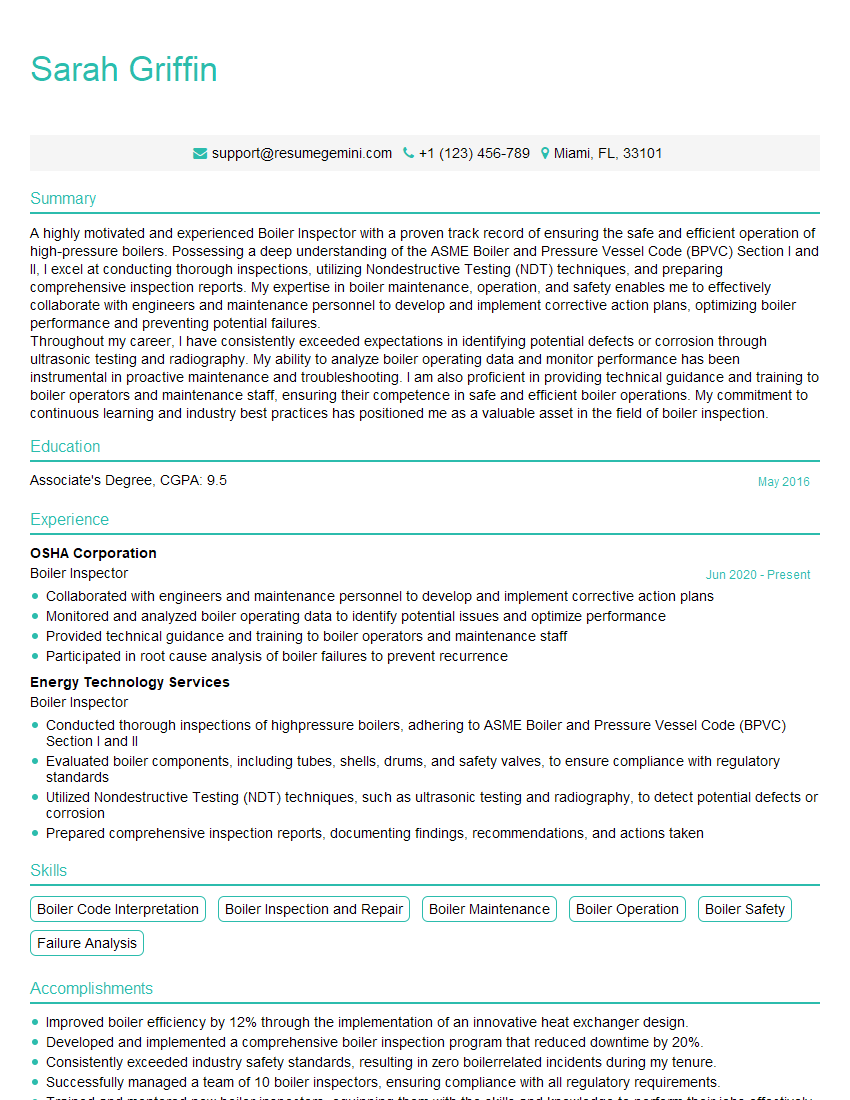
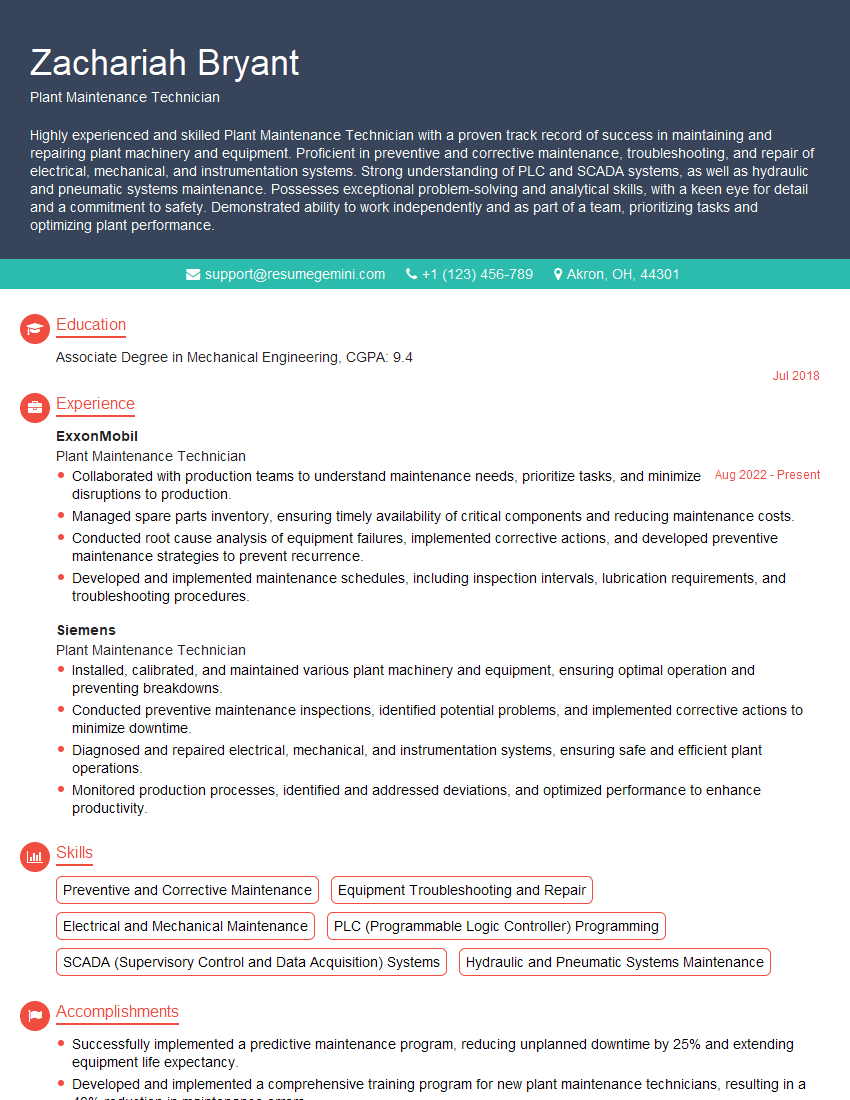
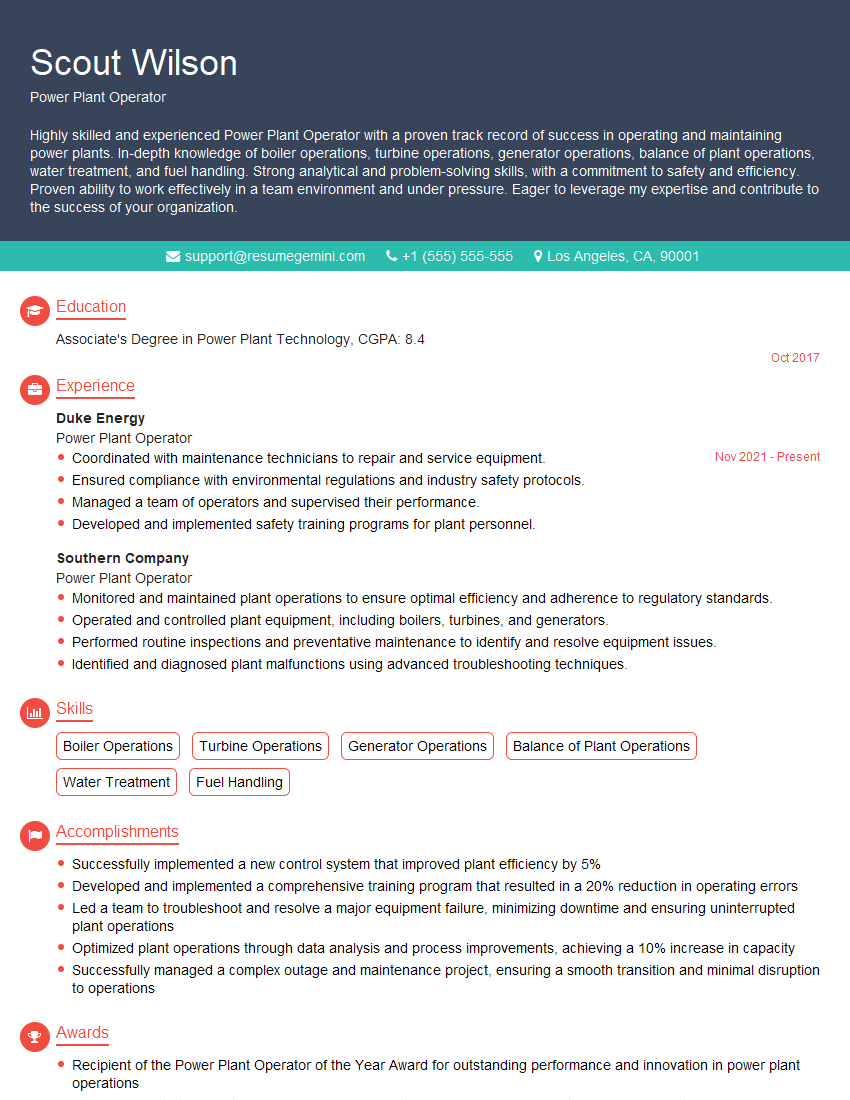
Mastering Boiler Cleaning and Chemical Treatment opens doors to exciting career opportunities in power generation, industrial facilities, and more. A strong understanding of these processes is highly valued and will significantly enhance your career prospects. To make your skills shine, you need a compelling resume that attracts potential employers. Creating an ATS-friendly resume is key to getting your application noticed by Applicant Tracking Systems used by many companies. ResumeGemini is a trusted resource that can help you build a professional and effective resume. They provide examples of resumes tailored to the Boiler Cleaning and Chemical Treatment industry, ensuring yours stands out from the competition. Take the next step and elevate your job search today!
Explore more articles
Users Rating of Our Blogs
Share Your Experience
We value your feedback! Please rate our content and share your thoughts (optional).
What Readers Say About Our Blog
To the interviewgemini.com Webmaster.
Very helpful and content specific questions to help prepare me for my interview!
Thank you
To the interviewgemini.com Webmaster.
This was kind of a unique content I found around the specialized skills. Very helpful questions and good detailed answers.
Very Helpful blog, thank you Interviewgemini team.