Cracking a skill-specific interview, like one for Boiler Efficiency Testing, requires understanding the nuances of the role. In this blog, we present the questions you’re most likely to encounter, along with insights into how to answer them effectively. Let’s ensure you’re ready to make a strong impression.
Questions Asked in Boiler Efficiency Testing Interview
Q 1. Explain the principle of boiler efficiency.
Boiler efficiency represents how effectively a boiler converts the energy in its fuel into useful heat for a given application, such as heating water or producing steam. Imagine it like this: you’re trying to make a cake (heat). The ingredients (fuel) are your flour, sugar, eggs etc. A highly efficient boiler uses most of its ‘ingredients’ to bake a delicious cake (generate usable heat), while an inefficient boiler wastes a significant portion. It’s all about maximizing the output (heat) while minimizing the input (fuel).
Efficiency is expressed as a percentage, calculated by comparing the heat output to the heat input. A higher percentage means greater efficiency and lower operating costs.
Q 2. Describe the different methods for measuring boiler efficiency.
Several methods exist for measuring boiler efficiency, broadly categorized as direct and indirect methods. The direct method involves directly measuring the heat input and heat output. This is generally more precise but can be more complex and expensive to implement.
The indirect method uses calculations based on measurements like fuel consumption, flue gas temperature, and composition. It’s often more practical for routine monitoring but slightly less precise than the direct method. Another approach involves using sophisticated instruments and software that continuously monitor boiler parameters and calculate efficiency in real-time.
- Direct Method: Measures heat output directly using calorimetry, measuring the temperature change of water or steam. This is then compared with the energy content of fuel.
- Indirect Method: Relies on calculations using fuel consumption data, flue gas temperature and analysis, and other factors. The heat loss is estimated indirectly from known energy balances.
- Continuous Monitoring Systems: These systems use sensors to continuously measure relevant parameters, feeding the data into sophisticated algorithms to automatically calculate and track boiler efficiency.
Q 3. What are the common causes of boiler inefficiency?
Inefficient boilers often result from a combination of factors. Some of the most common culprits include:
- Scale and deposits: Build-up on heat transfer surfaces reduces efficiency by insulating the heat transfer surfaces, hindering heat transfer.
- Air leaks: Excess air in the combustion process leads to increased fuel consumption without a proportional increase in heat output.
- Poor combustion: Incorrect air-fuel ratio, inadequate mixing, or insufficient combustion air leads to incomplete combustion and reduced efficiency.
- Dirty or clogged burners: This restricts fuel flow and affects combustion efficiency.
- Fouling of heat transfer surfaces: Deposits of soot, ash, or other materials on boiler tubes decrease heat transfer and reduce efficiency.
- Insulation issues: Damaged or inadequate insulation results in heat loss to the surroundings.
- Inadequate maintenance: Regular maintenance checks and cleaning are crucial to maintain efficiency. Neglect leads to degradation of components and increased inefficiencies.
Let’s say a boiler with scale buildup might only achieve 70% efficiency, whereas a clean and well-maintained boiler of the same type could easily reach 85% efficiency.
Q 4. How do you calculate boiler efficiency using the direct method?
The direct method calculates efficiency by directly measuring the heat output and the heat input. It’s generally considered more accurate. Here’s a simplified calculation:
Efficiency (%) = (Heat Output / Heat Input) x 100
To illustrate: Let’s assume a boiler heats 100 kg of water from 20°C to 100°C (specific heat capacity of water is approximately 4.18 kJ/kg°C). The heat output would be: 100 kg x 4.18 kJ/kg°C x (100°C – 20°C) = 33,440 kJ. If the boiler consumed 40,000 kJ of fuel, the efficiency would be: (33,440 kJ / 40,000 kJ) x 100 = 83.6%.
Note: Accurate measurement of heat input requires detailed fuel analysis to determine the precise calorific value of the fuel. Accurate measurement of heat output requires detailed accounting of heat losses to the surroundings, which is often challenging.
Q 5. How do you calculate boiler efficiency using the indirect method?
The indirect method estimates efficiency by analyzing the energy balance of the boiler, subtracting the heat losses from the heat input. It’s typically less precise than the direct method, particularly when several heat loss factors are difficult to account for exactly.
The formula is complex, but generally involves the following:
Efficiency (%) = 100% – (% Heat Loss Due to Dry Flue Gases + % Heat Loss Due to Moisture in Fuel + % Heat Loss Due to Unburnt Fuel + % Heat Loss Due to Radiation and Convection)
Each heat loss component requires specific measurements and calculations using parameters such as fuel analysis, flue gas temperature, and composition. For example, the heat loss due to dry flue gases is calculated using the flue gas temperature and its specific heat capacity. A simplified example is not feasible here due to the many variables and the varying methods used to determine these parameters based on the type of boiler and fuel used.
Software tools and spreadsheets are commonly used to calculate indirect efficiency based on input data from various sensors.
Q 6. Explain the importance of combustion air control in boiler efficiency.
Combustion air control is vital for boiler efficiency. Proper air-fuel ratio is essential for complete combustion. Too little air results in incomplete combustion, producing carbon monoxide (CO) and other pollutants, leading to heat loss. Too much air, conversely, increases the volume of flue gases that carry heat away, decreasing efficiency. Think of it like a barbecue: you need the right amount of oxygen for the charcoal to burn efficiently. Too little, and the coals smolder; too much, and the heat escapes quickly.
Advanced control systems, often incorporating oxygen sensors in the flue gas, continuously adjust the air supply to optimize the air-fuel ratio, thus maximizing boiler efficiency and minimizing emissions. This control is usually a combination of feedforward and feedback control, with some inputs based on known operating conditions and others based on continuous monitoring of the combustion process.
Q 7. What is the role of flue gas analysis in boiler efficiency testing?
Flue gas analysis is crucial in boiler efficiency testing. By analyzing the composition of the flue gas, we can determine the extent of complete combustion and identify potential inefficiencies. Key parameters include:
- Oxygen (O2): High O2 levels indicate excess air, while low levels suggest insufficient combustion.
- Carbon Monoxide (CO): CO presence signifies incomplete combustion, a significant source of heat loss.
- Carbon Dioxide (CO2): CO2 levels provide information on the completeness of combustion. High CO2 levels normally correlate with efficient combustion but can suggest incomplete combustion if associated with high CO levels.
- Nitrogen Oxides (NOx): These emissions contribute to pollution and indicate potential combustion inefficiencies and excessive combustion temperature.
By carefully measuring these components, we can assess the combustion process, detect problems such as air leaks or burner malfunctions, and optimize the boiler operation to improve efficiency and reduce emissions. For example, high CO levels in the flue gas clearly indicate incomplete combustion which leads to significant heat loss and reduced boiler efficiency.
Q 8. Describe different types of boiler efficiency testing equipment.
Boiler efficiency testing relies on a suite of instruments to accurately measure various parameters. The specific equipment needed depends on the boiler type and the desired level of detail in the assessment. Commonly used equipment includes:
Oxygen Analyzers: These devices precisely measure the oxygen content in the flue gas, providing insight into the combustion process. A higher oxygen level often indicates incomplete combustion and inefficiency.
Flue Gas Analyzers: These multi-parameter analyzers measure not only oxygen but also carbon dioxide (CO2), carbon monoxide (CO), and potentially other combustion byproducts like NOx (oxides of nitrogen). This comprehensive data is crucial for optimizing boiler operation and identifying potential safety hazards.
Temperature Sensors: Accurate temperature measurements of the flue gas, boiler water, and steam are essential for calculating heat transfer efficiency. These sensors, often thermocouples or RTDs (Resistance Temperature Detectors), should be calibrated regularly for reliable data.
Flow Meters: Measuring fuel flow rate (gas or liquid) and steam/water flow rate is critical for calculating energy input and output. Various methods exist, such as orifice plates, vortex flow meters, or ultrasonic flow meters, each suited for specific applications.
Pressure Gauges: Monitoring steam and water pressure is important for boiler operation and safety. Accurate pressure readings ensure that the boiler is operating within its design parameters.
Data Loggers: These devices continuously record the readings from various sensors, providing a comprehensive dataset for analysis and trend identification. Modern data loggers often come with software for data visualization and reporting.
In addition to these core instruments, specialized equipment like calorimeters (for precise fuel energy content determination) might be needed for more rigorous testing.
Q 9. How do you interpret boiler efficiency test results?
Interpreting boiler efficiency test results involves a systematic approach. The primary outcome is the boiler efficiency, typically expressed as a percentage. This represents the ratio of useful heat output (steam or hot water produced) to the heat input (fuel consumed). For example, an efficiency of 85% indicates that 85% of the fuel’s energy is converted into useful heat, while the remaining 15% is lost.
Beyond the overall efficiency, the results provide insights into the areas for improvement. High levels of CO in the flue gas signify incomplete combustion, suggesting insufficient air supply or improper fuel-air mixing. High oxygen levels suggest excessive air, leading to unnecessary fuel consumption. Analyzing the temperature differences between various points in the boiler system can pinpoint locations of significant heat loss. For example, excessive stack temperature indicates heat escaping without being utilized.
A detailed report will also include the measured values of each parameter, allowing for trend analysis and comparison with previous tests. This helps to track the boiler’s performance over time and identify potential problems before they lead to major issues. Identifying recurring patterns in the data can point towards necessary maintenance or upgrades.
Q 10. What are the key parameters to monitor during a boiler efficiency test?
Monitoring key parameters during a boiler efficiency test is crucial for a reliable and accurate assessment. These parameters are interrelated and provide a holistic understanding of the boiler’s performance.
Fuel flow rate and type: Knowing the exact amount and type of fuel consumed is fundamental to calculating heat input.
Steam/hot water production rate: This measures the useful heat output from the boiler.
Flue gas temperature: High flue gas temperature implies significant heat loss.
Flue gas composition (O2, CO2, CO, NOx): Analysis of these gases reveals the combustion efficiency and potential environmental impact.
Boiler water temperature and pressure: These parameters indicate the boiler’s operating conditions.
Ambient temperature and pressure: These environmental factors can affect the test results and need to be considered.
Steam pressure and temperature: These are essential for determining the enthalpy of the steam produced.
Data loggers are invaluable in ensuring consistent and continuous monitoring of these parameters during the test.
Q 11. How do you identify and troubleshoot boiler leaks?
Identifying and troubleshooting boiler leaks requires a systematic approach. The first step is to visually inspect the boiler and its associated piping for any visible signs of leakage, such as water stains, dripping water, or steam escaping.
Non-destructive testing methods can be employed for detecting leaks that aren’t readily apparent. These include:
Dye penetrant testing: A dye is applied to the surface, and any cracks or leaks will draw the dye into the opening, making them visible.
Ultrasonic testing: This method uses ultrasonic waves to detect leaks by identifying changes in the acoustic properties of the material.
Acoustic leak detection: This technique involves listening for the sound of leaks using specialized microphones.
Once a leak is located, the repair method depends on the nature and severity of the leak. Small leaks might be repairable with welding or patching, while larger leaks may necessitate replacing sections of piping or components. Regular inspections and preventative maintenance are essential to minimize the likelihood of leaks.
Example: Imagine a leak in a weld joint. Dye penetrant testing might reveal a hairline crack in the weld, which can then be repaired using specialized welding techniques.
Q 12. Explain the concept of heat loss in boilers.
Heat loss in boilers represents the energy that isn’t converted into useful heat (steam or hot water) and is instead lost to the environment. These losses significantly reduce efficiency and increase operating costs. Several mechanisms contribute to heat loss:
Stack Losses: Heat carried away by the flue gases represents a significant loss. This loss can be minimized through efficient combustion and heat recovery systems.
Radiation Losses: Heat radiates from the boiler surface into the surrounding environment. Insulation of the boiler reduces these losses.
Conduction Losses: Heat is conducted through the boiler walls and supports. Proper insulation minimizes this loss.
Unburned Fuel Losses: Incomplete combustion leaves some fuel unburned, leading to energy loss and potential safety hazards. Proper air-fuel mixture and efficient burner operation are essential to minimize this loss.
Blowdown Losses: Regular blowdown of boiler water to remove impurities results in heat loss in the discharged water.
Minimizing heat loss is crucial for increasing boiler efficiency. This often involves improving insulation, optimizing combustion controls, and implementing heat recovery systems, such as economizers or air preheaters.
Q 13. What are the environmental impacts of inefficient boilers?
Inefficient boilers have significant environmental impacts, primarily due to increased fuel consumption and higher emissions:
Increased Greenhouse Gas Emissions: Burning more fuel to produce the same amount of heat releases more carbon dioxide (CO2) and other greenhouse gases into the atmosphere, contributing to climate change.
Air Pollution: Inefficient combustion results in higher emissions of pollutants like carbon monoxide (CO), nitrogen oxides (NOx), and particulate matter, harming air quality and human health.
Water Consumption: Inefficient boilers may require more water for cooling or other processes, increasing water stress in some regions.
Waste Generation: Higher fuel consumption results in more ash and other waste products.
Modern, efficient boilers, coupled with proper operation and maintenance, significantly reduce these environmental impacts. Investing in energy-efficient technologies is crucial for mitigating the environmental consequences of heat generation.
Q 14. How does boiler water treatment impact efficiency?
Boiler water treatment plays a vital role in maintaining boiler efficiency and preventing costly damage. Treating boiler water removes impurities, scale formation, and corrosion, ensuring optimal heat transfer and prolonging the boiler’s lifespan.
Scale formation, caused by mineral deposits, reduces heat transfer efficiency as the scale acts as an insulator between the boiler tubes and the water, requiring more fuel to achieve the same output. Corrosion weakens the boiler components, leading to leaks and premature failure. Fouling, which is caused by the accumulation of suspended solids, also impairs heat transfer.
Proper water treatment techniques, such as chemical treatment or ion exchange, prevent these problems. By maintaining clean boiler tubes and preventing scale build-up, water treatment significantly enhances the heat transfer efficiency of the boiler and decreases fuel consumption, leading to cost savings and reduced environmental impact. Regular water testing and analysis are vital for ensuring the effectiveness of the water treatment program.
Q 15. Explain the importance of boiler maintenance for efficiency.
Regular boiler maintenance is crucial for maximizing efficiency and lifespan. Think of it like a car – neglecting regular servicing leads to decreased performance and eventual breakdown. For boilers, neglecting maintenance leads to a buildup of scale, corrosion, and inefficient combustion. This results in higher fuel consumption, increased operational costs, and premature equipment failure.
- Cleaning: Regular cleaning of the boiler’s heat transfer surfaces removes scale and deposits, improving heat transfer and efficiency. Imagine trying to boil water in a heavily soiled pot – it takes much longer and wastes energy.
- Inspection: Regular inspections identify potential problems early, preventing costly repairs down the line. This is like catching a small crack in your car’s windshield before it spreads.
- Component replacement: Worn or damaged components, such as pumps, valves, and burners, should be replaced promptly to maintain optimal performance. This is equivalent to replacing worn brake pads on your car before they become a safety hazard.
In a real-world scenario, a manufacturing plant neglecting boiler maintenance might see its energy costs increase by 15-20%, ultimately impacting profitability. A proactive maintenance program significantly reduces these risks.
Career Expert Tips:
- Ace those interviews! Prepare effectively by reviewing the Top 50 Most Common Interview Questions on ResumeGemini.
- Navigate your job search with confidence! Explore a wide range of Career Tips on ResumeGemini. Learn about common challenges and recommendations to overcome them.
- Craft the perfect resume! Master the Art of Resume Writing with ResumeGemini’s guide. Showcase your unique qualifications and achievements effectively.
- Don’t miss out on holiday savings! Build your dream resume with ResumeGemini’s ATS optimized templates.
Q 16. How does the type of fuel used affect boiler efficiency?
The type of fuel significantly impacts boiler efficiency. Different fuels have varying energy densities and combustion characteristics. For instance, natural gas generally boasts higher efficiency compared to coal due to its cleaner burning properties and easier control over combustion.
- Natural Gas: Known for its relatively clean burning and high efficiency, typically achieving efficiencies of 80-90% or even higher with advanced technologies.
- Coal: Less efficient than natural gas due to higher ash content and lower energy density. Efficiencies typically range from 70-85%, depending on the type of coal and boiler technology.
- Oil: Offers moderate efficiency, often falling between natural gas and coal, with efficiencies ranging from 75-85%. The type of oil (e.g., heavy fuel oil vs. light fuel oil) also significantly impacts efficiency.
For example, switching from coal to natural gas in a power plant can lead to substantial efficiency gains, directly translating into cost savings and reduced environmental impact. The choice of fuel also needs to consider factors like availability, cost, and environmental regulations.
Q 17. What are the benefits of using economizers in boilers?
Economizers are heat recovery devices that preheat boiler feedwater using the waste heat from the flue gas. Think of it as reusing heat that would otherwise be lost to the atmosphere. This preheating reduces the amount of fuel needed to raise the feedwater to its boiling point, resulting in higher efficiency and reduced fuel consumption.
- Improved Efficiency: Economizers can increase boiler efficiency by 5-15%, depending on the design and operating conditions.
- Reduced Fuel Consumption: Less fuel is required to generate the same amount of steam, directly translating to cost savings.
- Lower Emissions: Reduced fuel consumption leads to lower greenhouse gas emissions and a smaller environmental footprint.
In a large industrial setting, such as a paper mill, implementing economizers can lead to substantial reductions in annual energy costs and a significant reduction in their carbon footprint. The investment in an economizer is usually recovered within a few years through energy savings.
Q 18. What are the benefits of using air preheaters in boilers?
Air preheaters improve boiler efficiency by preheating the combustion air using the waste heat from the flue gas. This preheated air allows for more complete combustion, leading to higher efficiency and reduced fuel consumption. Think of it as preparing your ingredients before cooking – preheating ensures a more efficient cooking process.
- Improved Combustion: Preheating the air improves the combustion process, leading to better heat transfer and increased efficiency.
- Reduced Fuel Consumption: As with economizers, less fuel is needed to generate the same amount of steam, directly resulting in cost savings.
- Reduced Stack Temperature: By extracting more heat from the flue gas, the stack temperature is lowered, reducing heat loss to the atmosphere.
Consider a cement plant; installing air preheaters can significantly enhance their overall operational efficiency and reduce their energy bills. The payback period on the initial investment is typically relatively short.
Q 19. Explain how boiler scale affects efficiency.
Boiler scale is a hard deposit that forms on heat transfer surfaces due to mineral buildup from the feedwater. This scale acts as an insulator, reducing the efficiency of heat transfer. Imagine trying to cook food in a pan with a thick layer of burnt residue – it takes much longer and wastes energy.
- Reduced Heat Transfer: Scale significantly reduces the boiler’s ability to transfer heat from the combustion gases to the water, leading to decreased efficiency.
- Increased Fuel Consumption: The boiler needs to burn more fuel to generate the same amount of steam, resulting in higher operational costs.
- Overheating and Damage: Scale can lead to overheating of boiler tubes, potentially causing damage and even failure.
In a power generation plant, even a thin layer of scale can lead to a noticeable decrease in efficiency, translating to millions of dollars in lost revenue annually. Regular water treatment and chemical cleaning are crucial to mitigate this issue.
Q 20. What are the different types of boiler controls?
Boiler controls are essential for maintaining optimal operating conditions and ensuring safe and efficient operation. They monitor various parameters and adjust the boiler’s operation accordingly. These systems range from simple on/off controls to sophisticated computerized systems.
- On/Off Controls: These are the simplest controls, turning the boiler on or off based on a set temperature threshold. These are suitable for smaller applications where precise control isn’t critical.
- Proportional-Integral-Derivative (PID) Controls: PID controllers offer more precise control by adjusting the fuel input based on the error between the desired and actual steam pressure or temperature. This approach is widely used in many industrial boilers.
- Computerized Control Systems: These advanced systems use programmable logic controllers (PLCs) and sophisticated algorithms to manage multiple boiler parameters, optimize efficiency, and ensure safe operation. They often include features like data logging and remote monitoring.
For example, a large industrial boiler in a chemical plant would utilize a computerized control system for optimal efficiency and safety, monitoring variables such as steam pressure, water level, fuel flow, and oxygen levels. The system can dynamically adjust various parameters to maintain optimal operating conditions.
Q 21. How do you optimize boiler operation for maximum efficiency?
Optimizing boiler operation for maximum efficiency involves a multi-faceted approach, focusing on both operational practices and regular maintenance. It’s like fine-tuning a musical instrument – each component needs to work in harmony to produce the best sound.
- Regular Maintenance: As discussed earlier, regular maintenance, including cleaning, inspection, and component replacement, is essential for preventing efficiency losses.
- Proper Combustion Control: Ensuring proper air-fuel ratio is critical for efficient combustion. Too much air leads to unnecessary heat loss, while insufficient air results in incomplete combustion and lower efficiency.
- Optimized Feedwater Treatment: Proper water treatment prevents scale formation and corrosion, maintaining the integrity of heat transfer surfaces and maximizing efficiency.
- Efficient Controls: Implementing advanced control systems with features like PID controllers or computerized systems ensures optimal operation and minimizes energy waste.
- Regular Monitoring and Data Analysis: Regularly monitoring key parameters and analyzing data can identify inefficiencies and areas for improvement.
For instance, a manufacturing facility can optimize its boiler operation by implementing a predictive maintenance program, using data analytics to predict potential failures and schedule maintenance proactively. This approach minimizes downtime and keeps the boiler running at peak efficiency.
Q 22. Describe the different types of boilers and their efficiency characteristics.
Boilers come in various types, each with unique efficiency characteristics. Think of it like choosing the right car for your needs – some are fuel-efficient, others are powerful but less efficient. Let’s explore some common types:
- Fire-tube boilers: These are simpler and less expensive, with hot gases passing through tubes surrounded by water. Their efficiency is generally lower (70-80%) compared to water-tube boilers due to limitations in heat transfer.
- Water-tube boilers: Water circulates inside tubes surrounded by hot gases. They offer better heat transfer, higher operating pressures, and thus higher efficiency (80-90%), but are more complex and expensive. Imagine a more intricate system for better performance.
- Electric boilers: These use electricity to heat water directly, offering high efficiency (98-99%) but higher operating costs depending on electricity prices. They are very clean and easy to maintain, though.
- Packaged boilers: Pre-assembled units combining a boiler, burner, controls, and sometimes pumps. They are convenient but efficiency can vary depending on the design and components.
Efficiency is determined by several factors including design, operating conditions, maintenance, and the quality of fuel used. A well-maintained water-tube boiler operating under optimal conditions will generally have higher efficiency than a poorly maintained fire-tube boiler.
Q 23. What are the regulatory requirements for boiler efficiency?
Boiler efficiency regulations vary depending on location and boiler size. Generally, regulations aim to minimize emissions and ensure safe operation. Key aspects include:
- Emission Standards: Limits on pollutants like NOx, SOx, and particulate matter are common. These regulations often involve regular stack testing to verify compliance.
- Efficiency Standards: Some jurisdictions mandate minimum efficiency levels for new boilers, encouraging the adoption of more efficient technologies. This is often expressed as a minimum thermal efficiency percentage.
- Safety Standards: Regular inspections, maintenance, and operational procedures are mandated to prevent accidents. These may involve pressure vessel inspections, safety valve testing, and operator training.
- Permitting and Reporting: Boiler owners typically need permits and must report on emissions and operation regularly. This ensures accountability and allows for monitoring of overall environmental impact.
Compliance varies widely; you need to consult the specific regulations in your area – it is very location specific and often depends on the boiler’s age and size. Failing to meet regulations can result in penalties and legal action.
Q 24. How do you ensure safe boiler operation during testing?
Safety is paramount during boiler efficiency testing. We follow a strict protocol that includes:
- Lockout/Tagout Procedures: Isolating the boiler from its fuel and power sources before commencing any work. Think of it as carefully turning off all switches before working on any electrical appliance.
- Personal Protective Equipment (PPE): Ensuring all personnel wear appropriate PPE, such as safety glasses, gloves, and hearing protection. This is non-negotiable.
- Pressure and Temperature Monitoring: Continuous monitoring of pressure and temperature gauges to prevent unsafe operating conditions. We use calibrated instruments to ensure accuracy and record readings at regular intervals.
- Emergency Procedures: Having a clear plan in place to handle potential emergencies, such as leaks or fires. We perform regular drills to ensure personnel are trained and responsive.
- Competent Personnel: Only certified and experienced personnel are allowed to conduct the tests. This ensures proper handling of equipment and interpretation of results.
Safety checks are performed before, during, and after the testing. A comprehensive safety assessment is conducted before starting any testing.
Q 25. How do you document boiler efficiency test results?
Thorough documentation is critical to ensure traceability and compliance. Our documentation includes:
- Test Procedure: A detailed description of the testing method used, including instrument calibration data. We reference industry-standard procedures like ASME PTC 4.1.
- Test Data: Raw data collected during the testing, such as fuel consumption, steam production, pressure, temperature, and flue gas analysis. We utilize data logging software for accuracy and efficient storage.
- Calculations and Results: Detailed calculations used to determine boiler efficiency, along with a summary of the results. The results are presented in clear, concise tables and graphs.
- Equipment Information: Details about the boiler and testing equipment used, including manufacturer and model numbers. This allows for future reference and repeatability.
- Signatures and Dates: Signatures from the testing personnel and witnesses, along with the date and time of the testing. This is for official verification and validation.
All documentation is stored securely and made accessible to relevant stakeholders. We often use a digital system to improve organization and facilitate sharing of information.
Q 26. What are the best practices for boiler efficiency improvement?
Improving boiler efficiency is crucial for cost savings and environmental responsibility. Key strategies include:
- Regular Maintenance: Preventive maintenance, including cleaning of tubes, soot blowers, and burners, is essential. Think of it as regular servicing for your car to keep it running optimally.
- Proper Combustion Control: Optimizing air-fuel ratio to ensure complete combustion and minimize energy loss. This often involves adjusting burner settings and monitoring flue gas analysis.
- Insulation: Proper insulation of boiler and piping minimizes heat loss to the surroundings. This is akin to dressing warmly in winter to retain body heat.
- Economizers: Preheating feedwater using waste heat from flue gases improves efficiency. It’s like using leftover heat to improve the overall performance.
- Air Preheating: Preheating combustion air reduces energy consumption. This improves efficiency by allowing the system to get started quicker and use less fuel to reach operating temperature.
- Condensing Boilers: Utilizing latent heat in the flue gases for increased efficiency, especially suitable for natural gas and other condensing fuels.
A comprehensive audit helps identify areas for improvement. Combining these strategies often leads to significant efficiency gains.
Q 27. Describe a situation where you had to troubleshoot a boiler efficiency problem.
In one instance, a boiler’s efficiency dropped significantly. Initial investigation showed high flue gas temperatures. We systematically checked:
- Combustion Air: We verified proper air supply, eliminating air leaks and ensuring adequate airflow to the burner. It turned out the air intake was partially blocked by debris.
- Fuel Supply: We checked fuel pressure and quality. There was no issue there.
- Heat Transfer: Inspection revealed significant scale buildup on heat transfer surfaces. This was restricting heat transfer and leading to higher flue gas temperatures.
- Burner Adjustments: We adjusted the burner to ensure optimal fuel-air mixture. This further improved combustion and decreased emissions.
After cleaning the heat exchanger and making burner adjustments, efficiency returned to normal. This highlighted the importance of regular inspections and the need to address even seemingly minor issues promptly. Regular maintenance would have certainly prevented this problem.
Q 28. How do you stay updated on the latest advancements in boiler technology and efficiency?
Staying updated is crucial in this dynamic field. My strategies include:
- Professional Organizations: Active membership in organizations like ASME (American Society of Mechanical Engineers) provides access to publications, conferences, and networking opportunities. This is invaluable for keeping abreast of new research and technologies.
- Industry Publications: Regularly reading trade magazines and journals keeps me informed about the latest advancements. This includes online publications and professional magazines.
- Conferences and Workshops: Attending industry conferences and workshops offers direct exposure to new technologies and best practices. This is a great opportunity to learn from experts and network with peers.
- Online Resources: Utilizing reputable online resources, including manufacturers’ websites and research databases, to stay updated on new products and research findings. This ensures up-to-date knowledge on different aspects of boiler technology.
- Continuing Education: Participating in continuing education programs and training courses to maintain and enhance my skills and knowledge. This shows commitment to professional development and allows me to adapt to the latest technological improvements.
This combination ensures I am equipped with the latest knowledge and skills to address challenges and improve boiler efficiency effectively.
Key Topics to Learn for Boiler Efficiency Testing Interview
- Fundamentals of Combustion: Understanding the stoichiometry of fuel combustion, including air-fuel ratios and the impact on efficiency.
- Heat Transfer Principles: Analyzing heat transfer mechanisms within a boiler (conduction, convection, radiation) and their influence on overall efficiency.
- Boiler Types and Operation: Familiarize yourself with various boiler types (fire-tube, water-tube, etc.) and their operational characteristics, including start-up, shutdown, and load variations.
- Instrumentation and Measurement Techniques: Mastering the use of instruments like gas analyzers, thermocouples, and flow meters for accurate data acquisition during testing.
- Efficiency Calculation Methods: Understanding and applying different efficiency calculation methods (e.g., direct, indirect methods) and interpreting the results.
- Data Analysis and Reporting: Properly analyzing collected data, identifying potential inefficiencies, and creating comprehensive reports with clear recommendations for improvement.
- Troubleshooting and Problem-Solving: Developing the ability to identify and diagnose common boiler efficiency issues, such as air leaks, soot accumulation, and burner malfunctions.
- Energy Conservation and Sustainability: Understanding the role of boiler efficiency in reducing energy consumption and environmental impact.
- Relevant Codes and Standards: Familiarity with industry standards and regulations related to boiler operation and testing.
- Practical Application: Consider case studies where you analyze real-world scenarios of boiler performance and troubleshoot efficiency issues.
Next Steps
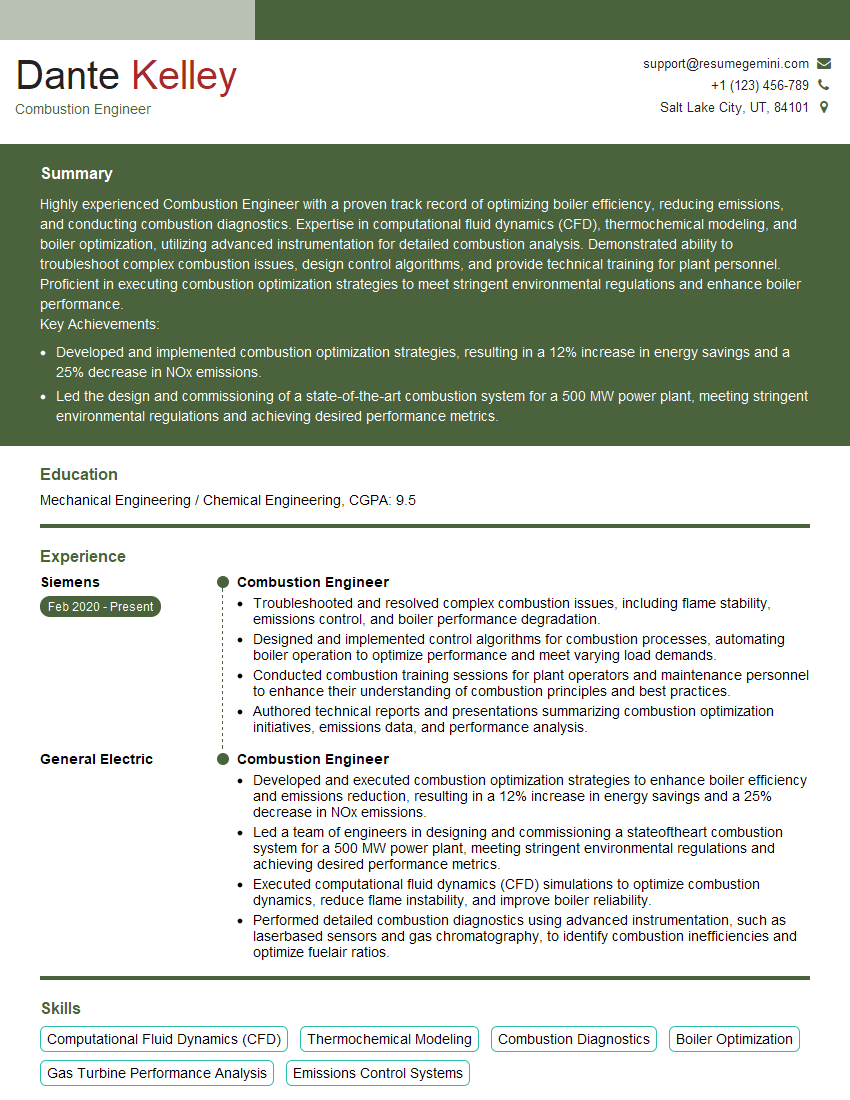
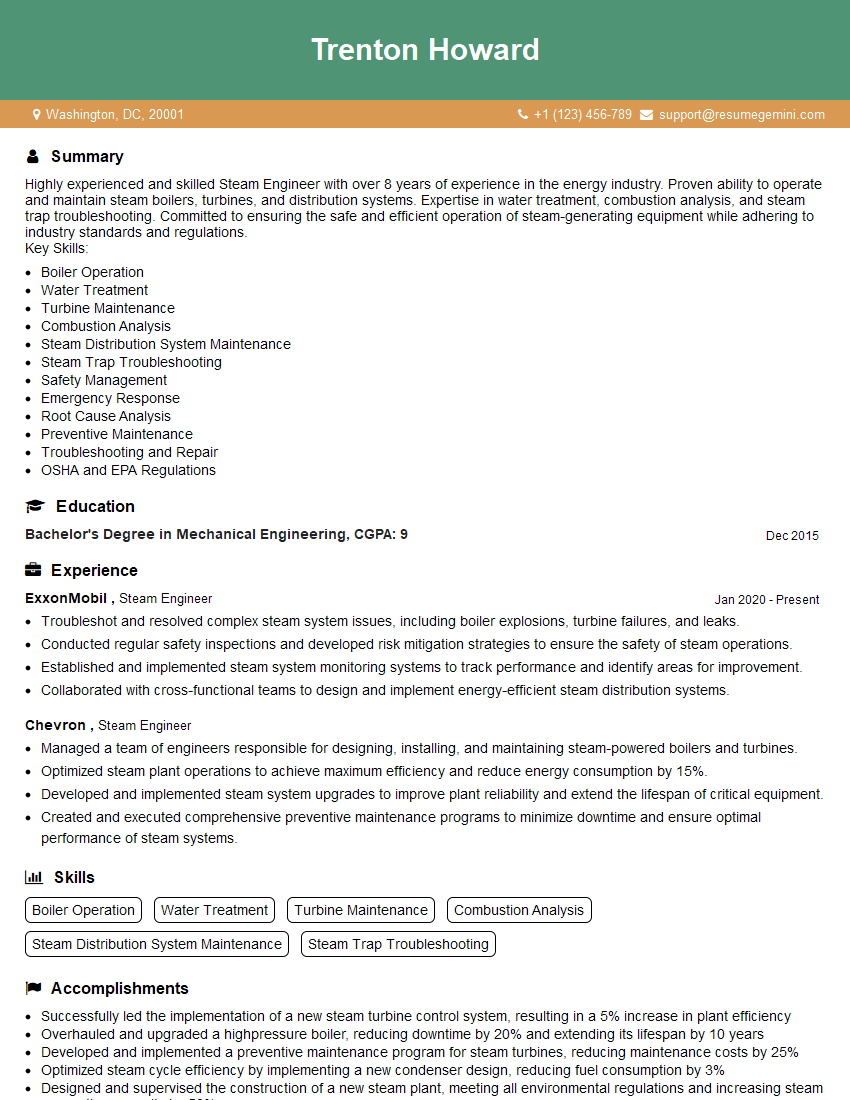
Mastering boiler efficiency testing opens doors to exciting career opportunities in energy management, environmental engineering, and industrial maintenance. A strong understanding of these concepts is highly valued by employers. To maximize your job prospects, it’s crucial to present your skills effectively. Create an ATS-friendly resume that highlights your expertise. ResumeGemini is a trusted resource to help you build a professional and impactful resume. Examples of resumes tailored to Boiler Efficiency Testing are available to guide you. Investing time in crafting a compelling resume is an investment in your future success.
Explore more articles
Users Rating of Our Blogs
Share Your Experience
We value your feedback! Please rate our content and share your thoughts (optional).
What Readers Say About Our Blog
To the interviewgemini.com Webmaster.
Very helpful and content specific questions to help prepare me for my interview!
Thank you
To the interviewgemini.com Webmaster.
This was kind of a unique content I found around the specialized skills. Very helpful questions and good detailed answers.
Very Helpful blog, thank you Interviewgemini team.