Feeling uncertain about what to expect in your upcoming interview? We’ve got you covered! This blog highlights the most important Boiler Insulation Installation interview questions and provides actionable advice to help you stand out as the ideal candidate. Let’s pave the way for your success.
Questions Asked in Boiler Insulation Installation Interview
Q 1. What types of insulation materials are commonly used for boiler systems?
Several insulation materials are suitable for boiler systems, each with its own strengths and weaknesses. The choice depends on factors like temperature, operating conditions, and budget.
- Fiberglass: A common and cost-effective choice, offering good thermal performance. It’s often available in blankets, pipe sections, or pre-fabricated blocks. However, it requires careful handling due to its fiberous nature and potential for irritation.
- Mineral Wool: Another popular option, known for its excellent thermal and acoustic insulation properties. It’s more resilient than fiberglass and can handle higher temperatures. Again, it’s important to wear appropriate protective gear during handling.
- Calcium Silicate: Ideal for high-temperature applications, calcium silicate offers superior fire resistance and durability. It’s often used in areas with extreme heat or fire hazards, making it a more robust and premium choice.
- Aerogel: A cutting-edge material, known for its exceptionally low thermal conductivity. It’s very lightweight and effective, making it suitable for demanding situations, but often more expensive than other options.
- Polyurethane Foam: Frequently sprayed onto surfaces, offering a seamless insulation layer. It’s effective but requires skilled application to ensure a uniform thickness and avoid voids.
For example, in a smaller residential boiler, fiberglass might be sufficient. However, in an industrial setting with high temperatures and safety concerns, calcium silicate or aerogel would be more appropriate.
Q 2. Explain the importance of proper insulation thickness in boiler applications.
Proper insulation thickness is crucial for maximizing energy efficiency and minimizing heat loss in boiler systems. Think of it like wearing a coat – a thin one provides minimal warmth, while a thick one provides significantly more protection against the cold.
Insufficient insulation leads to higher energy bills as more fuel is required to maintain the desired temperature. It also increases the risk of scalding and burns due to exposed hot surfaces. The required thickness depends on several factors, including the operating temperature of the boiler, the ambient temperature, and the type of insulation material used. Industry standards and relevant codes provide guidance on appropriate thicknesses. Using a thermal calculation software often assists in determining the right thickness.
For instance, a poorly insulated pipe might lose 20% of its heat, while properly insulated pipe might only lose 5%. This seemingly small difference translates to substantial savings over the lifespan of the boiler.
Q 3. Describe the different methods of applying boiler insulation.
Several methods are used to apply boiler insulation depending on the type of insulation material and the geometry of the boiler system.
- Wrapping/Lagging: Insulation materials such as fiberglass or mineral wool are wrapped around pipes and fittings, often using pre-formed sections or blankets secured with straps or bands. This method is common for pipes and smaller components.
- Spray Application: Polyurethane foam or other sprayable insulations are applied directly onto surfaces, creating a seamless layer. It’s excellent for irregular shapes and complex configurations. Requires specialized equipment and trained personnel.
- Prefabricated Sections/Blocks: For larger components, pre-fabricated blocks of insulation are often used. These are placed strategically over the boiler casing or other equipment and secured in place.
- Loose Fill Insulation: Materials like vermiculite or perlite can be poured into cavities or spaces. While effective, this method can be messy and requires careful attention to ensure complete coverage.
The choice of method is determined by numerous factors including the size and complexity of the boiler, cost, and safety regulations.
Q 4. How do you ensure proper insulation coverage around valves and fittings?
Insulating around valves and fittings requires special attention to ensure complete coverage and avoid heat loss while maintaining accessibility for maintenance and operation. Specialized insulation shapes and techniques are often used.
Pre-formed insulation sections are usually designed to fit snugly around valves and flanges. These sections are often easier to install and provide a more effective seal than attempting to cut and shape standard insulation. Flexible insulation materials like sleeves can be wrapped around pipes leading to valves, ensuring continuous insulation without compromising accessibility. Properly installed insulation shouldn’t interfere with valve operation. Whenever possible we create insulated sleeves with openings for valve handles.
For example, for a valve, we might use a split-section insulation that opens and closes easily without damaging the insulation, making maintenance more straightforward.
Q 5. What safety precautions are necessary when installing boiler insulation?
Safety is paramount during boiler insulation installation. The potential hazards include exposure to hot surfaces, sharp edges of insulation materials, and the release of irritating fibers during cutting or handling.
- Personal Protective Equipment (PPE): Always wear appropriate PPE, including gloves, safety glasses, respirators (especially when working with fiberglass or mineral wool), and heat-resistant clothing.
- Lockout/Tagout Procedures: Before commencing work, ensure the boiler system is completely shut down and locked out to prevent accidental startup.
- Hot Surface Precautions: Never work on a hot boiler. Allow the system to cool down completely before any insulation work begins. Use appropriate heat-resistant tools.
- Proper Lifting Techniques: Use proper lifting techniques and equipment to avoid injuries when handling heavy insulation materials.
- Fall Protection: If working at heights, use appropriate fall protection measures.
Failure to follow these precautions can lead to serious injuries or fatalities. A thorough risk assessment should be performed before any insulation work commences.
Q 6. How do you identify and address insulation deficiencies in an existing boiler system?
Identifying insulation deficiencies requires a thorough visual inspection combined with thermal imaging or other testing methods.
Visual Inspection: Look for signs of damage, such as cracks, gaps, missing sections, or water damage. Check for areas where the insulation has deteriorated or become compressed. Note the presence of any asbestos-containing insulation (requires specialized removal procedures).
Thermal Imaging: Using an infrared camera can help pinpoint areas of significant heat loss, indicating insufficient or damaged insulation. This provides a non-destructive way to identify weaknesses.
Addressing Deficiencies: Once deficiencies are identified, the damaged insulation must be carefully removed, and replaced with new material. If there is asbestos, specialized removal is required. The repair process should follow the same procedures as the initial installation.
For example, if a thermal scan reveals a high heat signature on a section of pipe, it indicates a deficiency in insulation at that point requiring attention.
Q 7. What are the common causes of insulation failure in boiler systems?
Several factors contribute to insulation failure in boiler systems.
- Water Damage: Moisture ingress can degrade the insulation’s performance and structural integrity, often leading to mold growth.
- Mechanical Damage: Physical damage from impacts, abrasion, or improper handling can compromise the insulation’s effectiveness.
- High Temperatures: Insulation exposed to excessively high temperatures beyond its rated limit may degrade or break down over time.
- Chemical Degradation: Exposure to certain chemicals can weaken or destroy insulation materials.
- Ultraviolet (UV) Exposure: Prolonged exposure to sunlight can cause some types of insulation to deteriorate.
- Improper Installation: Poor workmanship, gaps, or inadequate thickness during installation greatly reduce efficiency and lifespan.
Regular inspections and maintenance are essential for detecting and addressing these issues before they lead to significant problems. Preventing these issues through proper installation and material selection is key to the long-term integrity of the boiler insulation.
Q 8. Explain the impact of improper insulation on boiler efficiency and energy costs.
Improper boiler insulation leads to significant energy losses and increased operational costs. Think of it like leaving your windows open in winter – heat escapes, forcing your boiler to work harder and consume more fuel to maintain the desired temperature. This wasted energy translates directly into higher utility bills.
Specifically, inadequate insulation allows heat to radiate away from the boiler’s surfaces, reducing its efficiency. This reduced efficiency means that a larger portion of the energy input is lost to the surroundings instead of being used to heat water or the process stream. A poorly insulated boiler might require 20% more energy to achieve the same output as a well-insulated one, dramatically increasing your energy costs over time. This is particularly impactful in industrial settings where boilers operate for extended periods.
- Increased Fuel Consumption: More fuel is needed to compensate for heat loss.
- Higher Utility Bills: Directly related to increased fuel consumption.
- Reduced Boiler Lifespan: Excessive heat cycling can stress boiler components, leading to premature failure.
- Increased Environmental Impact: Higher fuel consumption contributes to a larger carbon footprint.
Q 9. How do you determine the appropriate type of insulation for a specific boiler application?
Selecting the right boiler insulation involves considering several factors specific to the application. It’s not a one-size-fits-all solution. We need to analyze the operating temperature of the boiler, the environmental conditions (ambient temperature, humidity), and the specific requirements of the installation. For example, a boiler operating at 600°C requires a different insulation material than one operating at 150°C.
The process typically involves:
- Temperature assessment: Determining the maximum surface temperature of the boiler components to be insulated.
- Environmental analysis: Considering factors like humidity, exposure to chemicals, and potential fire hazards.
- Material selection: Choosing an insulation material with an appropriate thermal conductivity, operating temperature limit, and chemical resistance.
- Thickness calculation: Determining the necessary insulation thickness to achieve the desired heat loss reduction, often guided by industry standards and energy efficiency guidelines.
- Code compliance: Ensuring the chosen material and installation method comply with all relevant building codes and safety regulations.
For example, in a high-temperature industrial application, calcium silicate would be preferred for its excellent thermal performance and fire resistance, while in a lower-temperature application, fiberglass might suffice due to its cost-effectiveness.
Q 10. Describe your experience with different insulation materials (e.g., fiberglass, mineral wool, calcium silicate).
I have extensive experience working with various insulation materials, including fiberglass, mineral wool, and calcium silicate. Each has its strengths and weaknesses, making them suitable for different applications.
Fiberglass: A common and cost-effective option suitable for lower temperature applications. It’s easy to work with but requires careful handling due to the potential for skin irritation. I’ve used it extensively in residential and some light commercial projects.
Mineral wool: More robust and heat-resistant than fiberglass, offering better thermal performance. Its higher density makes it suitable for higher temperatures and provides better sound absorption. I’ve used this on medium-temperature industrial boilers and in situations requiring sound dampening.
Calcium silicate: This high-temperature insulation material is ideal for high-pressure, high-temperature systems. It offers excellent fire resistance and superior thermal performance, particularly in demanding industrial applications. I’ve utilized it in power plants and chemical processing facilities where safety and efficiency are paramount. It is a more costly option.
Q 11. What are the advantages and disadvantages of each insulation material?
Let’s compare the advantages and disadvantages of each material:
| Material | Advantages | Disadvantages |
|---|---|---|
| Fiberglass | Cost-effective, easy to install, good thermal performance (for lower temperatures) | Can irritate skin, lower temperature limit, less durable than other options |
| Mineral Wool | Better thermal performance than fiberglass, good sound absorption, more durable | Slightly higher cost than fiberglass, can irritate skin |
| Calcium Silicate | Excellent thermal performance, high-temperature resistance, fire-resistant, durable | High cost, more challenging to install, brittle |
The best choice always depends on the specific needs of the application. A cost-benefit analysis often plays a crucial role in material selection. While calcium silicate offers the best thermal performance, its higher cost might make it unsuitable for some applications where fiberglass or mineral wool would suffice.
Q 12. How do you handle insulation around high-temperature components?
Insulating high-temperature components requires meticulous attention to safety and the selection of appropriate materials. We always prioritize safety. The primary concern is preventing burns and ensuring the insulation remains effective at high temperatures without degrading or becoming a fire hazard. We typically use high-temperature insulation materials such as calcium silicate or ceramic fiber blankets.
The installation process involves several key steps:
- Proper PPE: Wearing heat-resistant gloves, clothing, and eye protection is paramount.
- Material selection: Choosing materials with appropriate temperature ratings. The insulation must withstand temperatures significantly higher than the surface temperature of the component.
- Careful installation: Ensuring a tight fit and minimizing gaps to prevent heat loss. Special attention is paid to seams and joints.
- Protective layers: In some cases, additional layers of insulation or a protective outer jacket might be necessary to improve safety and longevity.
- Regular inspection: After installation and periodically during operation, inspections are crucial to identify any signs of damage or degradation.
For example, when insulating a boiler’s furnace, we’d use calcium silicate blocks or blankets, potentially with an outer layer of high-temperature cement to ensure a smooth surface and further protect against heat loss.
Q 13. How do you measure the thermal conductivity of insulation materials?
Measuring the thermal conductivity of insulation materials typically involves using a device called a guarded hot plate apparatus. This apparatus measures the heat flow rate through a known thickness of the material under controlled conditions. The thermal conductivity (k) is calculated using the following formula:
k = (Q * L) / (A * ΔT)
Where:
kis the thermal conductivity (W/m·K)Qis the heat flow rate (W)Lis the thickness of the material (m)Ais the cross-sectional area of the material (m²)ΔTis the temperature difference across the material (K)
More advanced methods, like the Laser Flash Method, can be employed for faster and more precise measurements, especially for materials with low thermal conductivity. These methods are often used in research and quality control settings. Results are then compared to manufacturers’ specifications to ensure the material meets the required performance standards.
Q 14. Explain the importance of using proper tools and equipment for insulation installation.
Using the correct tools and equipment is crucial for safe and effective boiler insulation installation. Improper tools can lead to inefficient installations, potential safety hazards, and ultimately, reduced insulation effectiveness. For example, using dull cutting tools can lead to uneven cuts and gaps in the insulation, compromising its thermal performance.
Essential tools and equipment include:
- Measuring tools: Tape measures, levels, and thermometers for accurate measurements and assessing surface temperatures.
- Cutting tools: Sharp knives, utility cutters, and specialized tools for cutting insulation materials cleanly and precisely.
- Installation tools: Adhesives, fasteners, and application tools specifically designed for the chosen insulation material (e.g., spray foam applicators, mastics).
- Safety equipment: Gloves, safety glasses, respirators (for certain materials), and heat-resistant clothing are essential for worker safety.
- Lifting equipment: Hoists or other lifting equipment may be needed for handling larger or heavier insulation materials.
Using the right tools ensures a professional, efficient, and safe installation, contributing to the overall quality and longevity of the insulation.
Q 15. How do you maintain cleanliness and order during the insulation installation process?
Maintaining a clean and organized workspace during boiler insulation installation is crucial for safety, efficiency, and the final product’s quality. It’s about more than just tidiness; it’s about minimizing risks and ensuring a professional finish.
- Pre-installation planning: Before starting, we carefully plan the work area, designating specific zones for materials, tools, and waste disposal. This prevents clutter and allows for smooth workflow.
- Protective coverings: We use drop cloths and protective barriers to shield surrounding areas from debris, dust, and spills. This protects the client’s property and ensures a cleaner post-installation environment.
- Regular cleanup: Throughout the process, we regularly clean up excess insulation material, scraps, and debris. This prevents accidents and keeps the workspace manageable. We utilize appropriate waste disposal methods to comply with environmental regulations.
- Organized tool management: Tools are organized and stored in designated areas to avoid tripping hazards and ensure easy access to necessary equipment. This promotes efficiency and prevents delays.
- Final cleanup: After completion, we conduct a thorough cleaning, removing all debris and waste, leaving the area cleaner than when we arrived. This is a critical step in demonstrating professionalism and client satisfaction.
For example, on a recent project in a hospital, meticulous cleanliness was paramount. We used specialized vacuum systems to minimize dust generation during the spray-on insulation application, ensuring minimal disruption to hospital operations.
Career Expert Tips:
- Ace those interviews! Prepare effectively by reviewing the Top 50 Most Common Interview Questions on ResumeGemini.
- Navigate your job search with confidence! Explore a wide range of Career Tips on ResumeGemini. Learn about common challenges and recommendations to overcome them.
- Craft the perfect resume! Master the Art of Resume Writing with ResumeGemini’s guide. Showcase your unique qualifications and achievements effectively.
- Don’t miss out on holiday savings! Build your dream resume with ResumeGemini’s ATS optimized templates.
Q 16. Describe your experience working with different types of boilers (e.g., steam, hot water).
My experience spans various boiler types, each presenting unique insulation challenges. Understanding these differences is vital for effective and safe installation.
- Steam boilers: These require high-temperature insulation capable of withstanding significant thermal stress. Materials like calcium silicate, fiberglass, or ceramic fiber are common choices. The focus here is on preventing heat loss and maintaining safe surface temperatures.
- Hot water boilers: These generally operate at lower temperatures than steam boilers, allowing for a broader range of insulation materials. Fiberglass, mineral wool, or polyurethane foam are often suitable options. The primary goal is energy efficiency and preventing heat loss, thereby reducing operational costs.
- Specific considerations: Regardless of the boiler type, factors like operating pressure, boiler size, and the surrounding environment influence insulation material selection and installation techniques. For instance, a boiler located in a humid environment might necessitate moisture-resistant insulation.
In one project involving a large industrial steam boiler, we utilized a combination of high-temperature lagging and wrapping techniques to achieve optimal thermal performance and safety. The different sections of the boiler required tailored insulation approaches due to variations in temperature and access.
Q 17. How do you comply with relevant safety regulations and codes during insulation installation?
Safety is our top priority. We strictly adhere to all relevant OSHA (Occupational Safety and Health Administration) and local regulations during insulation installation. This includes using appropriate personal protective equipment (PPE) and following established safety procedures.
- PPE: This includes respirators (especially when working with fibrous insulation), safety glasses, gloves, and protective clothing. The type of PPE varies depending on the materials used and the specific task.
- Lockout/Tagout procedures: We always follow lockout/tagout procedures to ensure the boiler is safely shut down and isolated before any work begins. This prevents accidental energization and related hazards.
- Fall protection: When working at heights, we use appropriate fall protection equipment, such as harnesses and safety lines, to mitigate the risk of falls.
- Confined space entry: If access requires entering confined spaces, we follow strict confined space entry protocols, including atmospheric monitoring and rescue procedures.
- Hot work permits: If hot work (e.g., cutting, welding) is involved near the boiler, we obtain necessary hot work permits and follow the relevant safety guidelines.
We maintain detailed records of all safety measures taken during each project, ensuring accountability and traceability.
Q 18. Explain your experience with different insulation installation techniques (e.g., lagging, wrapping, spraying).
My experience encompasses a variety of insulation techniques, each suited for different applications and boiler designs.
- Lagging: This involves applying pre-formed insulation sections (often cylindrical) directly to pipes and equipment. It’s efficient for relatively straightforward installations and offers a neat, finished appearance. We often use this method for pipes and smaller boiler components.
- Wrapping: This technique uses insulation blankets or rolls wrapped around pipes or equipment, secured with various fasteners. It’s adaptable to irregular shapes and is frequently used on complex piping systems. We ensure proper overlap and secure fastening for optimal thermal performance.
- Spraying: This utilizes spray-applied foam insulation, providing a seamless, airtight seal. It’s ideal for irregularly shaped surfaces and areas with limited access. We use this method when dealing with complex geometries or when achieving a high level of thermal efficiency is critical.
Choosing the right technique depends on factors like boiler design, access limitations, and the desired level of thermal performance. For instance, in a retrofit project with limited space, spray-on foam insulation might be the most practical solution.
Q 19. How do you handle challenging installation situations (e.g., limited access, complex piping).
Challenging installations require creativity and problem-solving skills. We adapt our techniques and utilize specialized equipment to overcome limitations.
- Limited access: In tight spaces, we employ smaller insulation sections, flexible materials, and specialized tools to maneuver around obstacles. We might use pre-fabricated components to minimize on-site work.
- Complex piping: For intricate piping systems, we use a combination of wrapping and lagging techniques, carefully tailoring the approach to each section. This often requires precise measurements and meticulous cutting.
- Unusual shapes: Irregularly shaped boilers necessitate custom-cut insulation sections or spray-on foam for optimal coverage. We carefully plan these custom solutions to avoid gaps and ensure a proper seal.
For instance, on a recent project involving a boiler in a confined basement, we used flexible mineral wool blankets and strategically placed smaller insulation segments to navigate the limited access and achieve complete coverage.
Q 20. What is your experience with different types of insulation fasteners and adhesives?
Selecting the right fasteners and adhesives is crucial for secure and durable insulation installation. The choice depends heavily on the insulation material, surface type, and environmental conditions.
- Fasteners: We use various fasteners, including metal bands, wire ties, and specialized clips, depending on the insulation type and application. Each fastener needs to be strong enough to secure the insulation without causing damage.
- Adhesives: We use high-performance adhesives suitable for high-temperature applications, ensuring a strong bond between the insulation and the boiler surface. The adhesive must be compatible with both the insulation and the boiler material.
- Considerations: Factors like temperature resistance, chemical resistance, and moisture resistance influence our choice of fasteners and adhesives. For example, in high-temperature applications, we might use high-temperature silicone adhesive and stainless steel fasteners.
We always follow the manufacturer’s recommendations for the specific materials we are using to ensure proper installation and longevity.
Q 21. How do you ensure the integrity of the insulation after installation?
Ensuring insulation integrity after installation involves a multi-step approach focused on both immediate and long-term considerations.
- Visual inspection: After completion, we perform a thorough visual inspection to identify any gaps, damage, or inconsistencies in the insulation. We address any issues immediately.
- Thermal imaging: In many cases, we use thermal imaging to detect areas of heat loss, which can indicate imperfections in the insulation. This allows for targeted adjustments.
- Documentation: We maintain detailed records of the insulation installation, including the materials used, techniques employed, and any issues encountered. This is crucial for future maintenance and troubleshooting.
- Regular maintenance: We advise clients on regular inspection and maintenance procedures to ensure the continued integrity of the insulation. This might involve checking for damage, replacing deteriorated sections, or cleaning accumulated debris.
By taking these steps, we help clients maximize the energy efficiency and safety of their boiler systems over their lifespan.
Q 22. How do you perform quality control checks during and after insulation installation?
Quality control in boiler insulation installation is crucial for energy efficiency and safety. My approach involves a multi-stage process, starting during installation and continuing after completion. During installation, I regularly check for:
- Correct Insulation Thickness: I use measuring tools to ensure the insulation consistently matches the specified thickness, preventing gaps that compromise thermal performance. For instance, if we’re using 2 inches of fiberglass, I’ll spot-check at least every 3 feet to maintain uniformity.
- Seamless Joints and Proper Sealing: I meticulously inspect all joints to ensure they are properly sealed with appropriate mastic or tape, preventing air infiltration and heat loss. A poorly sealed joint can be like a hole in a bucket – all the insulation is useless if air gets through.
- Adherence to Installation Plans: I continuously refer to the approved plan, verifying that insulation is placed correctly in relation to pipes, valves, and other equipment. This prevents installation errors that would necessitate costly rework.
After installation is complete, I conduct a thorough inspection covering:
- Visual Inspection for Gaps and Defects: I meticulously examine the entire insulated surface, looking for any visible cracks, gaps, or damaged sections of insulation. I use bright lighting to improve visibility in tight areas.
- Thermal Imaging (where applicable): In projects demanding higher precision, I utilize thermal imaging cameras to identify areas with unusual heat dissipation, pinpointing potential insulation defects not readily visible to the naked eye. This is like an X-ray for heat loss!
- Documentation: Detailed photographs and records of the inspection process are crucial for future maintenance and reference. This also ensures accountability and allows for easy traceability of any issues.
Q 23. What are the signs of insulation damage or deterioration?
Signs of insulation damage or deterioration can significantly impact a boiler’s efficiency and safety. Recognizing these signs early is crucial for preventative maintenance. Common indicators include:
- Visible Cracks or Tears: Physical damage to the insulation material, especially in high-traffic areas, is a major warning sign. This weakens the thermal barrier and can allow moisture ingress.
- Moisture Accumulation: Damp or wet insulation is a serious problem, as it significantly reduces its insulating properties and can lead to mold growth. This often manifests as discoloration or a musty smell.
- Sagging or Settling: Over time, gravity can cause some insulation materials to sag or settle, creating gaps and reducing effectiveness. This is more common with loose-fill insulation.
- Deterioration of Protective Jacket: If the insulation has an outer jacket (e.g., metal cladding, protective coating), damage to this jacket can expose the underlying insulation to the elements, accelerating deterioration.
- Dust and Debris: Loose-fill insulation, such as vermiculite or perlite, may shed particles over time. This may be a sign of aging or improper installation.
If any of these signs are observed, immediate action, including a full assessment and potential remediation, should be undertaken.
Q 24. How do you prepare a surface for insulation installation?
Surface preparation is paramount for successful boiler insulation installation. A poorly prepared surface will lead to poor adhesion, gaps, and ultimately, reduced effectiveness. My preparation process typically involves these steps:
- Cleaning: The surface must be thoroughly cleaned to remove any dust, dirt, grease, oil, or loose debris. This can involve using brushes, compressed air, or solvents, depending on the surface material and type of contamination. Think of it like preparing a wall for painting – a clean surface ensures a good bond.
- Repairing Damage: Any existing damage, such as cracks or holes in the pipe or equipment, must be repaired before insulation is applied. This might involve welding, patching, or other appropriate repair techniques.
- Surface Treatment (if necessary): Depending on the surface material, a primer or sealant may be required to improve adhesion and prevent moisture penetration. This is especially true for metallic surfaces or those prone to corrosion.
- Moisture Content Assessment: High moisture content can negatively affect the insulation’s performance. Measuring the surface moisture content using a moisture meter is essential to prevent problems down the line.
Proper surface preparation is not just about aesthetics; it’s about creating a firm foundation for a long-lasting, effective insulation system.
Q 25. Describe your experience with different types of scaffolding and safety harnesses.
My experience with scaffolding and safety harnesses is extensive. I’m proficient in erecting and dismantling various types of scaffolding, including mobile towers, system scaffolding, and custom-built structures, always adhering to strict safety regulations and best practices. I am familiar with different scaffold materials, such as steel and aluminum, and understand the importance of proper base plates, bracing, and tie-in points.
When working at heights, I always utilize appropriately rated safety harnesses, ensuring they are correctly fitted and attached to properly anchored lifelines. I am knowledgeable about fall arrest systems, including shock-absorbing lanyards and self-retracting lifelines. I understand the importance of regular inspections to ensure the scaffolding and harness are in optimal condition. Safety is never a compromise. I’ve worked on projects requiring complex scaffolding configurations, and my experience enables me to select and implement the safest and most efficient methods for the given task.
Q 26. What is your experience with creating and following insulation installation plans?
I have extensive experience creating and following insulation installation plans. My process typically begins with a thorough review of the boiler system’s design and specifications. This involves understanding heat transfer characteristics, operating temperatures, and any spatial constraints. I then utilize specialized software and blueprints to create detailed plans that specify insulation type, thickness, location, and any special requirements.
These plans detail the sequence of installation steps, including material quantities, tools required, and potential challenges. I often incorporate 3D models to visualize the project and identify potential installation conflicts early on. While following pre-existing plans, I’m also adept at making on-site modifications, ensuring optimal insulation coverage and efficient material usage without compromising safety or performance. The plan is my roadmap, and I ensure that everyone on the team understands and follows it.
Q 27. How do you manage your time and workload effectively during insulation installation?
Effective time and workload management is critical in insulation installation, where delays can impact project timelines and budgets. My approach involves a combination of careful planning and on-site adaptability. I begin by breaking down the project into smaller, manageable tasks. I estimate the time required for each task, considering factors like access, material handling, and potential unforeseen issues. This allows me to create a realistic schedule.
On-site, I prioritize tasks based on urgency and dependencies. I maintain open communication with the team to identify any potential bottlenecks or delays. I use tools like checklists and progress reports to track our progress against the schedule. And importantly, I’m always prepared to adjust the schedule as needed based on unforeseen circumstances or changes in requirements. Flexibility is crucial in this dynamic environment.
Q 28. What is your experience working within a team environment?
I thrive in team environments. I believe effective teamwork is essential for successful insulation projects. My experience includes working with diverse teams comprising skilled tradespeople, engineers, and project managers. I actively participate in team meetings, contributing my expertise and offering support to colleagues. I’m comfortable sharing knowledge, offering assistance, and working collaboratively to resolve problems and maintain a positive, productive work environment.
I am a strong communicator and value open and respectful dialogue. I believe in proactive problem-solving and actively encourage constructive feedback from my team members. I’ve been a key contributor to high-performing teams, consistently exceeding expectations and delivering high-quality work on time and within budget. My experience demonstrates my ability to contribute positively to a team, fostering collaboration and achieving collective success.
Key Topics to Learn for Boiler Insulation Installation Interview
- Understanding Boiler Systems: Types of boilers (firetube, watertube), their operational principles, and common components.
- Insulation Materials: Properties of various insulation materials (e.g., fiberglass, mineral wool, calcium silicate), their suitability for different applications and temperature ranges, and their thermal conductivity values.
- Installation Techniques: Proper methods for applying insulation to different boiler components (pipes, vessels, valves), including the use of appropriate fasteners, adhesives, and coatings. Understanding best practices for minimizing heat loss and preventing condensation.
- Health and Safety Regulations: Familiarization with relevant safety regulations and procedures concerning handling insulation materials, working at heights, and confined space entry.
- Energy Efficiency Calculations: Basic understanding of heat transfer principles and how insulation impacts energy efficiency. Ability to perform simple calculations related to heat loss reduction.
- Troubleshooting and Maintenance: Identifying potential problems with boiler insulation (e.g., damage, deterioration, inadequate coverage) and understanding repair or replacement procedures.
- Code Compliance: Knowledge of relevant building codes and standards pertaining to boiler insulation installation.
- Practical Application: Describe your experience in measuring, cutting, fitting, and securing insulation materials. Detail how you’ve handled different insulation types and addressed on-site challenges.
- Problem-Solving: Explain how you’ve resolved issues related to insulation installation, such as uneven surfaces, difficult-to-access areas, or material limitations.
Next Steps
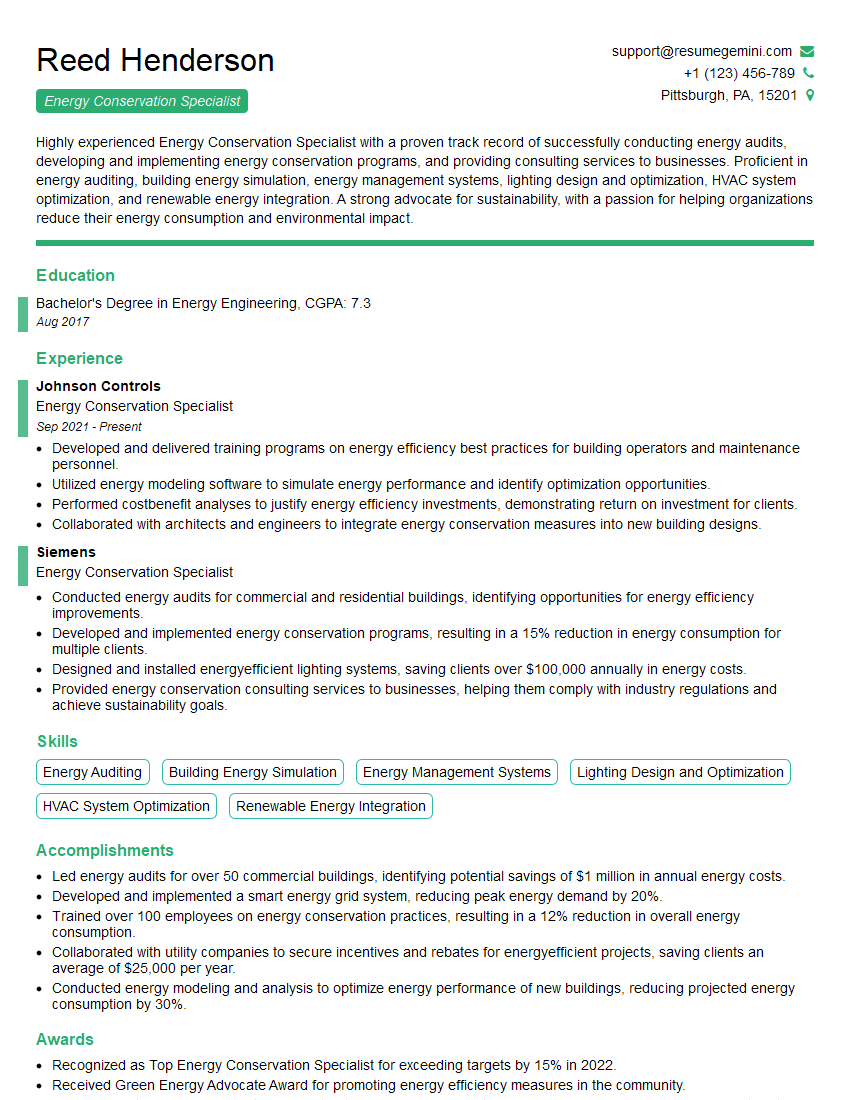
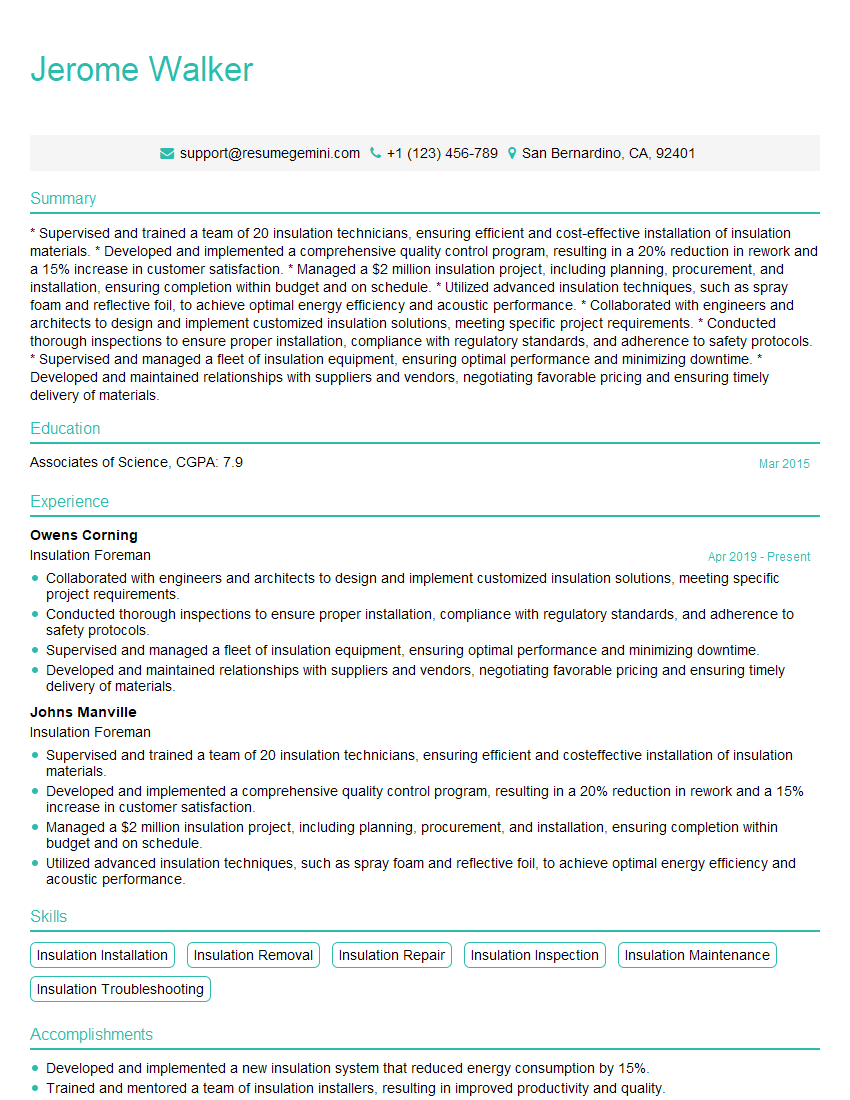
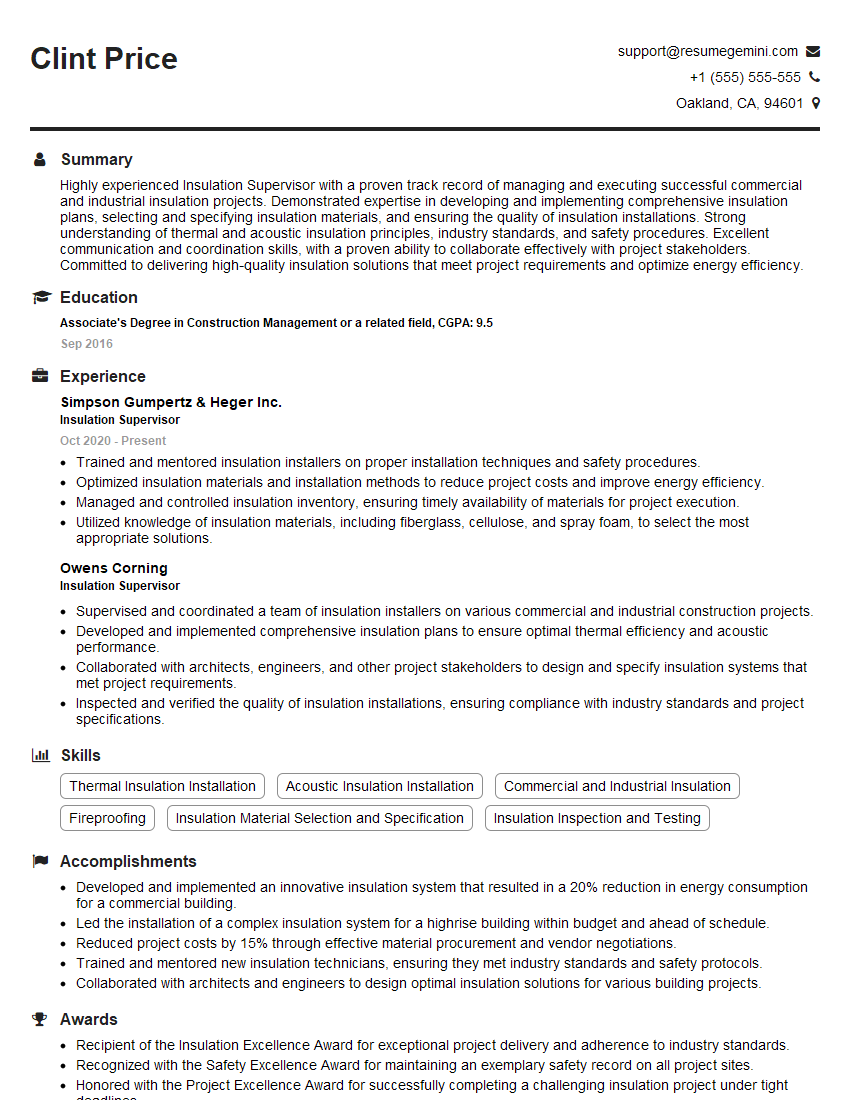
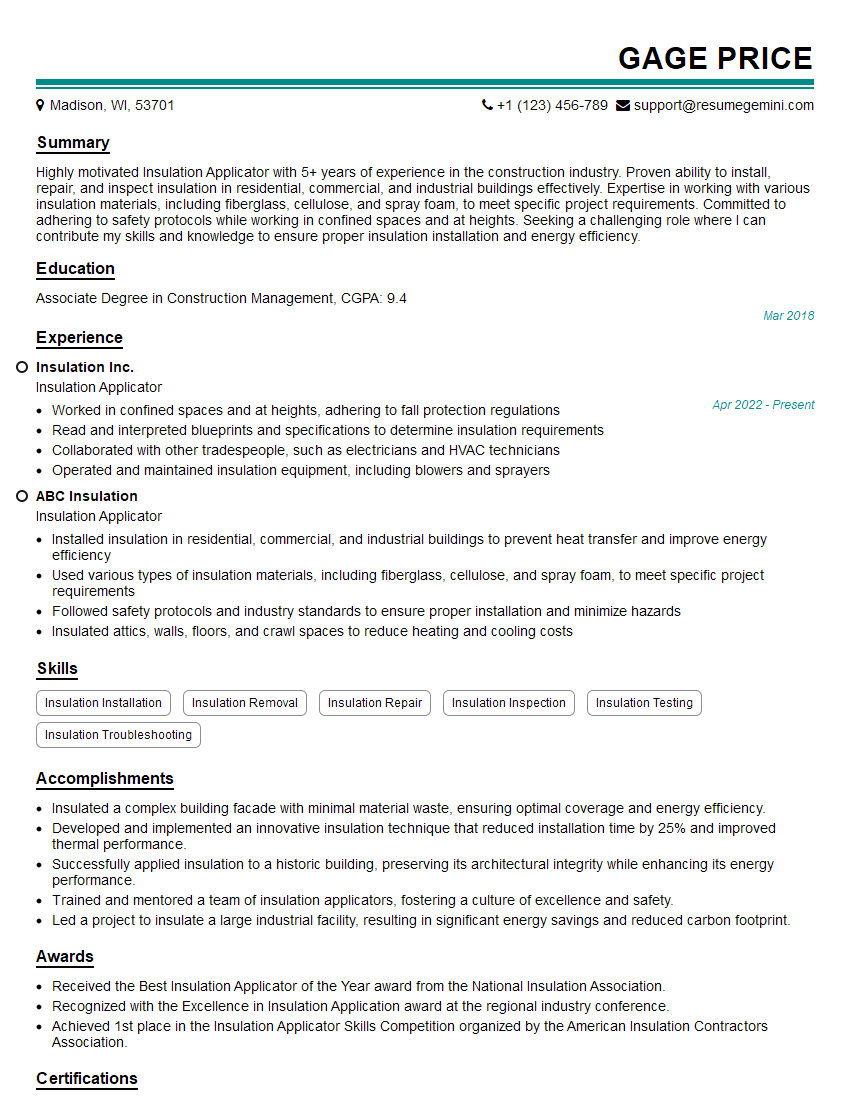
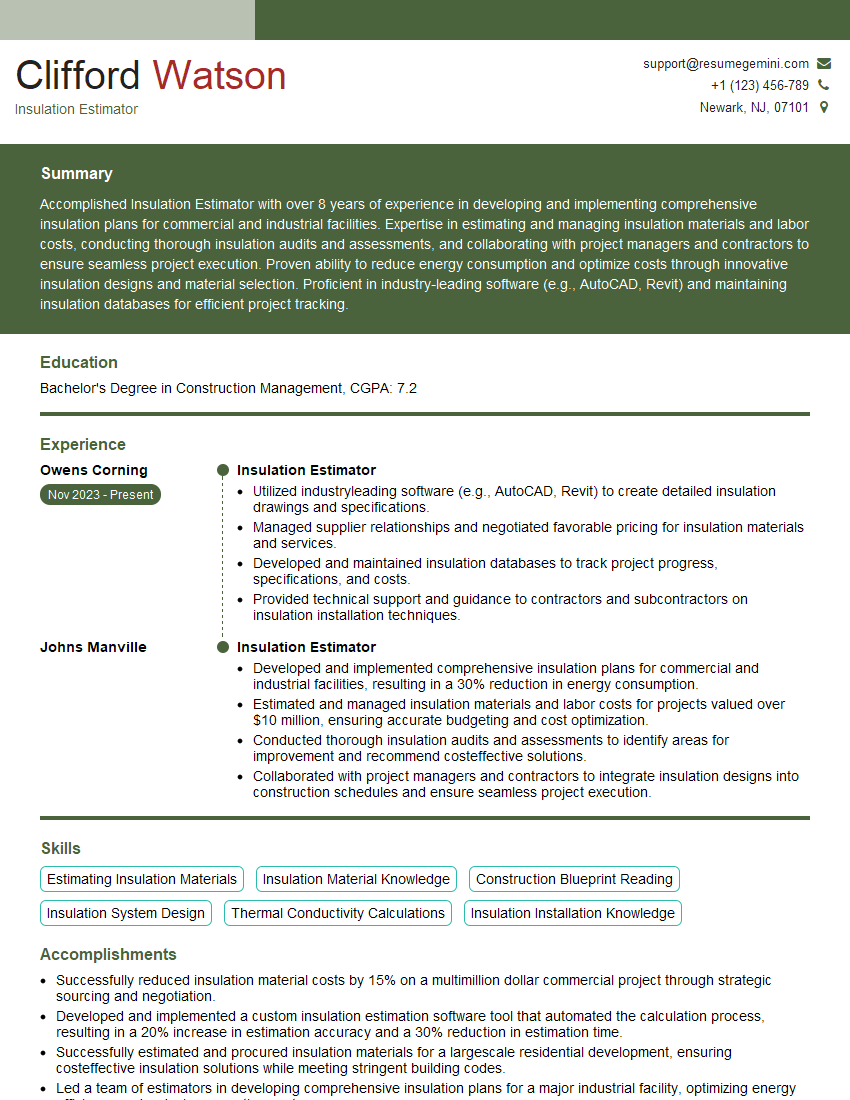
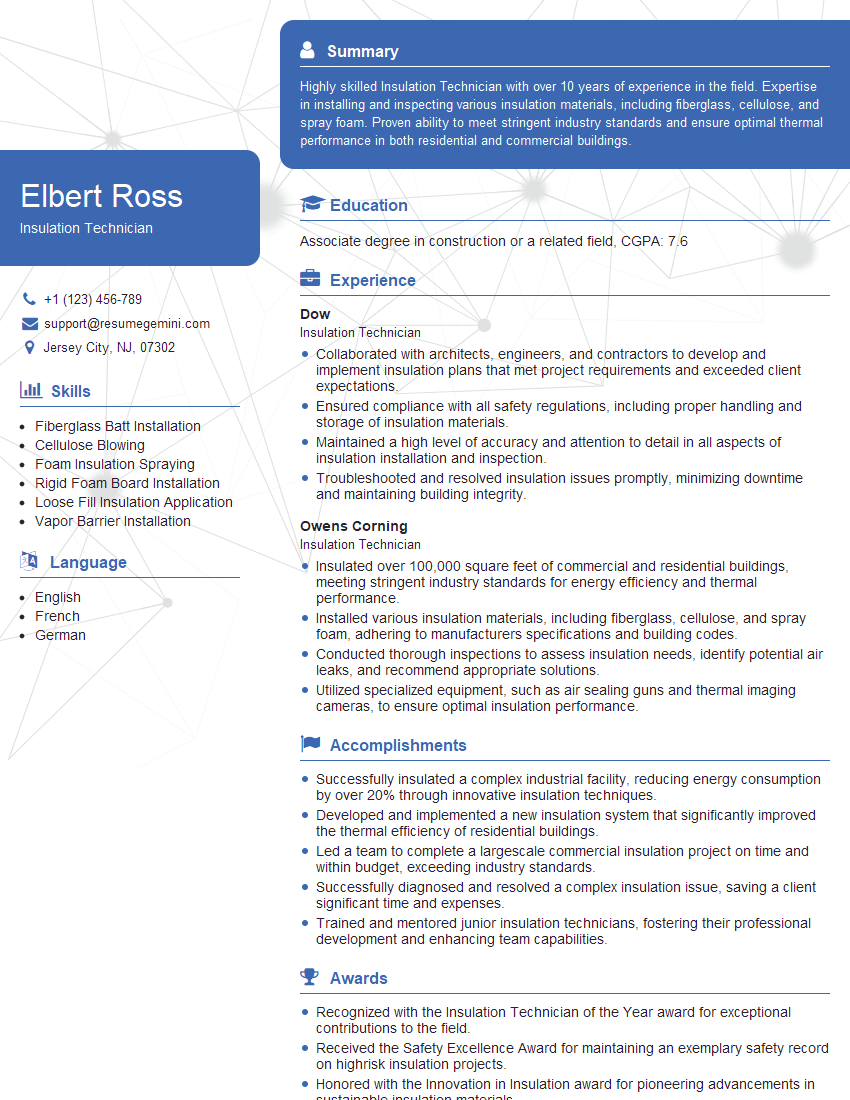
Mastering boiler insulation installation opens doors to a rewarding career with excellent growth potential. Demand for skilled professionals in this field is consistently high, offering opportunities for advancement and specialization. To maximize your job prospects, it’s crucial to present your skills effectively. Creating an ATS-friendly resume is key to ensuring your application gets noticed by hiring managers. We highly recommend using ResumeGemini to build a professional and impactful resume. ResumeGemini offers a user-friendly platform and provides examples of resumes tailored to Boiler Insulation Installation, helping you showcase your qualifications in the best possible light.
Explore more articles
Users Rating of Our Blogs
Share Your Experience
We value your feedback! Please rate our content and share your thoughts (optional).
What Readers Say About Our Blog
To the interviewgemini.com Webmaster.
Very helpful and content specific questions to help prepare me for my interview!
Thank you
To the interviewgemini.com Webmaster.
This was kind of a unique content I found around the specialized skills. Very helpful questions and good detailed answers.
Very Helpful blog, thank you Interviewgemini team.