Are you ready to stand out in your next interview? Understanding and preparing for Boiler Jacket Fabrication interview questions is a game-changer. In this blog, we’ve compiled key questions and expert advice to help you showcase your skills with confidence and precision. Let’s get started on your journey to acing the interview.
Questions Asked in Boiler Jacket Fabrication Interview
Q 1. Describe your experience with different welding techniques used in boiler jacket fabrication.
My experience encompasses a wide range of welding techniques crucial for boiler jacket fabrication. The choice of technique depends heavily on the material thickness, joint design, and required weld quality. I’m proficient in several key methods:
Gas Metal Arc Welding (GMAW) or MIG Welding: A highly versatile process ideal for medium-to-thick plate sections in boiler jacket construction. Its high deposition rate makes it efficient for large-scale projects. I often use GMAW with pulsed current for improved penetration and reduced spatter on thinner sections.
Gas Tungsten Arc Welding (GTAW) or TIG Welding: Essential for critical welds requiring high precision and excellent appearance. I utilize GTAW for welding thinner sections and for intricate joint configurations where superior quality is paramount. The precise control offered by GTAW allows for clean, consistent welds crucial for preventing leaks.
Shielded Metal Arc Welding (SMAW) or Stick Welding: A robust method suitable for outdoor and field applications, though it’s less commonly employed for the majority of boiler jacket fabrication due to the slower speed compared to GMAW or GTAW. I rely on SMAW in situations with limited access or when power supply is a constraint. Proper electrode selection is crucial here to achieve the necessary weld properties.
In my past projects, I’ve successfully implemented these techniques to fabricate jackets for a variety of boiler types, from small industrial units to large-scale power generation systems. Selecting the optimal welding method is a crucial decision, based on a detailed assessment of the project requirements.
Q 2. What are the common materials used in boiler jacket construction, and what are their properties?
Boiler jackets are typically constructed from materials chosen for their strength, corrosion resistance, and ability to withstand high temperatures and pressures. Common choices include:
Carbon Steel: A cost-effective option for many applications, offering good strength and weldability. However, it’s susceptible to corrosion, particularly in harsh environments. We typically use carbon steel for jackets operating under less demanding conditions.
Stainless Steel: Provides superior corrosion resistance compared to carbon steel, making it suitable for applications involving chemicals or high humidity. Different grades of stainless steel, like 304 and 316, offer varying levels of corrosion resistance and strength. I specify stainless steel when corrosion is a major concern.
Low-Alloy Steel: These steels offer enhanced strength and creep resistance compared to carbon steel, making them suitable for high-temperature applications. I’ve used low-alloy steels in high-pressure boiler jackets to ensure long-term durability.
The selection of material is always made considering factors such as operating temperature, pressure, environment, and budget constraints. A thorough material selection process is essential to ensure the long-term integrity and safety of the boiler jacket.
Q 3. Explain the importance of proper fit-up in boiler jacket fabrication.
Proper fit-up is absolutely critical in boiler jacket fabrication. It’s the foundation for producing high-quality, leak-free welds. Poor fit-up leads to increased weld distortion, incomplete penetration, and stress concentrations, all of which compromise the structural integrity of the jacket.
Think of it like building a brick wall – you wouldn’t expect a strong wall if the bricks weren’t properly aligned. Similarly, if the plates aren’t accurately aligned and positioned before welding, the resulting weld won’t be sound. I ensure proper fit-up through the following measures:
Precise cutting and shaping of plates: Using CNC cutting or other accurate methods to minimize gaps and misalignments.
Jigs and fixtures: Employing jigs and fixtures to hold the plates securely in their correct positions during welding, preventing warping and shifting.
Tack welding: Carefully applying small tack welds to temporarily hold the plates in place before performing the main welds.
Regular checks and adjustments: Constantly monitoring the fit-up throughout the process to ensure everything remains aligned.
By meticulously addressing fit-up, I significantly reduce the risk of weld defects and ensure the final product meets the required standards.
Q 4. How do you ensure the dimensional accuracy of a fabricated boiler jacket?
Dimensional accuracy is paramount in boiler jacket fabrication. Deviation from specified dimensions can affect the proper fit and functionality of the jacket, potentially leading to leaks or structural failure. We ensure dimensional accuracy using a combination of methods:
Precise measurements and marking: Using accurate measuring tools, such as laser measuring devices, to obtain precise dimensions and mark them onto the plates.
CNC cutting and machining: Leveraging CNC equipment for cutting and shaping plates to the exact specifications, reducing manual errors significantly.
Regular inspection and verification: Checking dimensions at various stages of fabrication, using calipers, measuring tapes, and other instruments to catch any discrepancies early.
3D modeling and design software: Employing software to design and simulate the jacket, ensuring all components fit together perfectly before fabrication.
By combining careful planning and advanced technology, we minimize errors and guarantee the fabricated boiler jacket adheres precisely to the design specifications, providing a secure and reliable component.
Q 5. What are the critical quality control checks during boiler jacket fabrication?
Rigorous quality control is integral to every stage of boiler jacket fabrication. We perform several critical checks:
Material verification: Ensuring the used materials meet the required specifications, including chemical composition and mechanical properties.
Weld inspection: Visual inspection for defects such as cracks, porosity, undercutting, and incomplete fusion. This often involves magnifying glasses and specialized lighting.
Dimensional inspection: Verifying that all dimensions are within tolerance, using appropriate measuring instruments.
Leak testing: After completion, pressure testing to identify any leaks in the jacket.
Documentation: Maintaining detailed records of all inspections and tests performed. This provides a traceable history of the fabrication process.
By adhering to these checks, we guarantee the boiler jacket’s safety, reliability, and compliance with industry standards and regulations. Failure to properly maintain quality control could lead to catastrophic consequences.
Q 6. Describe your experience with non-destructive testing (NDT) methods for boiler jackets.
Non-destructive testing (NDT) plays a crucial role in ensuring the integrity of fabricated boiler jackets. I’m experienced with several NDT methods:
Radiographic Testing (RT): Uses X-rays or gamma rays to detect internal flaws such as cracks, porosity, and inclusions within the weld. RT provides a detailed image of the internal structure.
Ultrasonic Testing (UT): Uses high-frequency sound waves to detect internal flaws. UT is particularly useful for detecting cracks and delaminations.
Magnetic Particle Testing (MT): A method used to detect surface and near-surface flaws in ferromagnetic materials. MT is effective in finding cracks and other discontinuities.
Dye Penetrant Testing (PT): A surface inspection method used to detect small cracks and other discontinuities on the surface. PT is simple and cost effective for surface examination.
The selection of the appropriate NDT method depends on the specific requirements of the project and the type of defects being sought. The results from these tests are documented and reviewed to ensure the jacket meets the required quality standards.
Q 7. How do you handle weld defects discovered during inspection?
Discovering weld defects during inspection is never ideal, but it’s a crucial part of ensuring quality. The handling of such defects depends on their severity and location. Minor defects, like minor surface porosity, might be acceptable within allowable limits specified in codes and standards. However, major defects such as cracks or incomplete penetration require immediate attention. The standard procedure we follow is:
Assessment: Thorough evaluation of the defect’s size, location, and type to determine its severity.
Documentation: Detailed record of the defect, including location, size, and type.
Repair or Replacement: For unacceptable defects, we either repair the weld using appropriate techniques (e.g., grinding, re-welding) or replace the affected section. The repair or replacement method is selected based on the defect’s severity and the design requirements.
Re-inspection: After repair or replacement, the area undergoes a thorough re-inspection using appropriate NDT methods to ensure the defect has been successfully addressed.
Our priority is always the safety and integrity of the boiler jacket. A systematic and thorough approach to addressing defects ensures that the final product meets the highest quality standards.
Q 8. Explain the process of repairing damaged boiler jackets.
Repairing damaged boiler jackets requires a meticulous approach, prioritizing safety and adherence to codes. The process begins with a thorough inspection to assess the extent of the damage. This involves identifying the type of damage (corrosion, cracking, dents, etc.), its location, and severity. Then, depending on the damage, we proceed with the appropriate repair method.
- Minor Damage (Scratches, minor dents): These can often be addressed through grinding, smoothing, and repainting. This is a relatively straightforward process ensuring the surface integrity is restored.
- Moderate Damage (Cracks, significant corrosion): This often involves section removal and replacement. This requires precise cutting of the damaged section, fabrication of a replacement patch using compatible materials, and welding it into place using appropriate welding procedures. Post-weld inspection is critical to ensure a robust repair.
- Major Damage (Extensive corrosion, structural weakening): Significant damage may require a more extensive repair or even complete jacket replacement. This is typically a complex undertaking requiring detailed engineering assessments and adherence to stringent safety protocols. In such cases, detailed documentation and approvals are crucial.
Throughout the repair process, rigorous quality control checks are essential. Non-destructive testing (NDT) methods such as ultrasonic testing (UT) or radiographic testing (RT) are often employed to verify the integrity of the repair and ensure it meets the required standards.
Q 9. What safety precautions are essential during boiler jacket fabrication and repair?
Safety is paramount in boiler jacket fabrication and repair. Working with high-pressure vessels requires strict adherence to safety protocols to prevent accidents. These protocols include:
- Lockout/Tagout Procedures: Before commencing any work, ensuring the boiler is completely isolated and depressurized using proper lockout/tagout procedures is mandatory. This prevents accidental energization of the system.
- Personal Protective Equipment (PPE): Appropriate PPE including safety glasses, gloves, respirators, and hearing protection must be used at all times. This protects workers from potential hazards such as sparks, fumes, and noise.
- Confined Space Entry Procedures: If working inside the boiler jacket is necessary, strict confined space entry protocols must be followed, involving atmospheric monitoring, proper ventilation, and a designated standby person.
- Hot Work Permits: Hot work, such as welding or grinding, requires hot work permits, ensuring proper fire prevention measures are in place.
- Regular Inspections: Regular inspections of equipment and work areas are essential to identify and mitigate potential hazards.
Regular safety training for all personnel involved is crucial. We conduct toolbox talks frequently to emphasize safe working practices and address any specific risks associated with the job at hand.
Q 10. How familiar are you with ASME Section VIII, Division 1?
I am very familiar with ASME Section VIII, Division 1, the widely accepted standard for the design, fabrication, inspection, and testing of pressure vessels. I understand the various requirements detailed in this code, including design rules, material specifications, welding procedures, and inspection requirements. My experience includes applying these rules in the fabrication of boiler jackets, ensuring compliance with all relevant sections and subsections of the code.
For instance, I frequently refer to Section VIII, Division 1, when selecting appropriate materials for a boiler jacket, ensuring they meet the required strength and corrosion resistance characteristics, and choosing the correct welding procedures to guarantee weld quality and structural integrity. I also rely on the code’s guidance for performing the necessary inspections and non-destructive testing to ensure the finished product meets the required safety standards.
Q 11. Explain your understanding of pressure vessel design codes.
Pressure vessel design codes are crucial for ensuring the safety and reliability of equipment operating under pressure. These codes provide detailed rules and guidelines for various aspects of design, including material selection, stress calculations, fabrication, inspection, and testing. They are based on engineering principles, extensive research, and industry best practices to minimize the risk of failure.
My understanding encompasses a range of codes, including but not limited to ASME Section VIII, Division 1 and 2, and other relevant national and international standards. Understanding these codes is essential for ensuring that boiler jackets and other pressure vessels are designed and fabricated to withstand the operating pressures and temperatures without compromising safety. This includes understanding concepts like allowable stresses, fatigue considerations, and corrosion allowances.
Q 12. What is your experience with blueprint reading and interpretation in boiler jacket fabrication?
Blueprint reading and interpretation are fundamental to my work. I have extensive experience interpreting complex engineering drawings, including isometric drawings, fabrication drawings, and assembly drawings. I’m proficient in understanding various symbols, notations, and dimensions to ensure accurate fabrication. This includes understanding tolerances, material specifications, and weld details.
For instance, I’ve successfully interpreted blueprints for numerous boiler jacket projects, accurately identifying dimensions, material types, weld joint configurations, and other critical information needed for fabrication. I also use software such as AutoCAD to create and manipulate blueprints when necessary.
Q 13. Describe your experience with different types of welding joints used in boiler jacket fabrication.
My experience encompasses various welding joints commonly used in boiler jacket fabrication. The choice of weld joint depends on several factors including the design requirements, accessibility, and the desired strength. Some frequently used joints include:
- Butt Joints: Used for joining two pieces of material end-to-end, providing a strong and seamless connection. Various techniques like single-V, double-V, and full-penetration welds are employed depending on thickness and application.
- Fillet Welds: Used to join two intersecting plates, suitable for situations where full penetration is not required. They are simpler to execute but may offer lower strength compared to butt welds.
- Lap Joints: Suitable for joining overlapping plates, generally used for less critical applications. They are relatively easy to weld but might not be as strong as butt joints.
I am proficient in various welding processes, including shielded metal arc welding (SMAW), gas metal arc welding (GMAW), and gas tungsten arc welding (GTAW), selecting the most appropriate process based on the specific requirements of the job and the material being welded. My experience ensures adherence to welding codes and standards to guarantee weld quality and structural integrity.
Q 14. How do you manage a fabrication project to meet deadlines and budgets?
Managing a fabrication project to meet deadlines and budgets requires a structured and organized approach. My process involves several key steps:
- Detailed Planning: I begin with a thorough review of the project specifications, including blueprints, material requirements, and the schedule. This includes creating a detailed work breakdown structure (WBS) outlining all tasks and their dependencies.
- Resource Allocation: I carefully plan resource allocation, ensuring the right equipment, materials, and personnel are available when needed. This may include coordinating with suppliers and subcontractors.
- Progress Monitoring: Regular monitoring of progress against the planned schedule is essential. I use various techniques such as Gantt charts, progress meetings, and regular inspections to track progress and identify any potential delays or issues.
- Problem Solving: I proactively identify and address potential problems, employing contingency plans to minimize delays and cost overruns. This may involve adjusting the schedule, finding alternative solutions, or negotiating with suppliers.
- Quality Control: Rigorous quality control measures are implemented at each stage to ensure the final product meets the specified requirements. This includes regular inspections and testing to identify defects and correct any anomalies.
Through careful planning, effective communication, and proactive problem-solving, I have consistently delivered projects on time and within budget, maintaining the highest standards of quality and safety.
Q 15. What software or CAD programs are you proficient in for boiler jacket design and fabrication?
For boiler jacket design and fabrication, I’m proficient in several software packages. My primary tools are AutoCAD for 2D drafting and creating detailed fabrication drawings, and SolidWorks for 3D modeling, allowing for comprehensive visualization and analysis of the jacket’s geometry and structural integrity before fabrication. I also have experience with Autodesk Inventor, which I utilize for more complex assemblies and simulations, particularly stress analysis to predict potential issues under operational conditions. Finally, I’m familiar with specialized software for Finite Element Analysis (FEA), which allows for precise prediction of stress and strain distribution under various load scenarios, vital for ensuring the jacket can withstand the rigors of high-temperature and high-pressure environments. This helps optimize design for both strength and weight.
Career Expert Tips:
- Ace those interviews! Prepare effectively by reviewing the Top 50 Most Common Interview Questions on ResumeGemini.
- Navigate your job search with confidence! Explore a wide range of Career Tips on ResumeGemini. Learn about common challenges and recommendations to overcome them.
- Craft the perfect resume! Master the Art of Resume Writing with ResumeGemini’s guide. Showcase your unique qualifications and achievements effectively.
- Don’t miss out on holiday savings! Build your dream resume with ResumeGemini’s ATS optimized templates.
Q 16. Describe your experience with different types of boiler jackets.
My experience encompasses a wide range of boiler jacket types. I’ve worked on both field-erected jackets, constructed on-site around existing boilers, and shop-fabricated jackets, built in a controlled environment and then installed. Material-wise, I’ve handled carbon steel, stainless steel, and even specialized alloys depending on the boiler’s operating parameters and the corrosive nature of the environment. The design itself varies depending on the boiler type; I’ve worked on jackets for fire-tube boilers, water-tube boilers, and even specialized industrial boilers. For example, a fire-tube boiler might need a simpler, more straightforward jacket design, while a water-tube boiler with complex piping might require a more intricate and segmented jacket. Understanding the specific needs of each boiler is crucial for proper jacket design and fabrication.
Q 17. How do you address challenges related to material distortion during welding?
Material distortion during welding is a significant concern in boiler jacket fabrication. To address this, I employ several strategies. Preheating the base material reduces the thermal gradient during welding, minimizing warping. The preheat temperature is carefully chosen based on the material’s properties and the welding process. I also use appropriate welding techniques, such as multiple passes with inter-pass cooling, to control the heat input and reduce distortion. In critical areas, I might use fixtures and clamping systems to hold the components in place during welding and minimize distortion. For particularly challenging geometries or materials, I might even utilize specialized welding processes like pulsed GMAW (Gas Metal Arc Welding) to further refine heat input control. Post-weld straightening and machining are sometimes needed to correct minor distortions after the welding process is complete.
Q 18. What is your experience with preheating and post-weld heat treatment?
Preheating and post-weld heat treatment (PWHT) are essential parts of my fabrication process. Preheating, as mentioned before, reduces residual stresses by allowing for slower cooling and prevents cracking. The specific preheat temperature is determined by the material and welding procedure specifications (WPS). Post-weld heat treatment further reduces residual stresses and improves the material’s overall toughness and ductility. This reduces the risk of stress corrosion cracking, particularly in high-pressure, high-temperature applications. PWHT involves heating the entire assembly to a specific temperature, holding it for a specific time, and then slowly cooling it down. The parameters for PWHT are determined by the material’s specifications and relevant industry codes like ASME Section VIII Division 1. Careful documentation of both preheating and PWHT processes is essential for quality control and traceability.
Q 19. Explain your understanding of stress relief in boiler jacket fabrication.
Stress relief in boiler jacket fabrication is crucial for preventing cracks and ensuring the jacket’s long-term integrity. Residual stresses develop during welding, and if left unaddressed, they can lead to distortion, cracking, and premature failure under operational loads. Stress relief, often achieved through PWHT as discussed earlier, aims to reduce these stresses to acceptable levels. The selection of the appropriate stress-relieving method—whether PWHT or other techniques—depends on the material, thickness, geometry, and welding procedures used. We use non-destructive testing (NDT) methods like ultrasonic testing to confirm stress relief effectiveness and ensure compliance with relevant codes and standards.
Q 20. How do you ensure the proper alignment and fit of components during assembly?
Ensuring proper alignment and fit during assembly is paramount for a successful boiler jacket fabrication project. I use a combination of techniques, starting with precise fabrication of individual components. This includes careful attention to dimensional tolerances during cutting, forming, and welding. During assembly, I utilize jigs and fixtures to guide the placement of components, ensuring precise alignment. Laser alignment tools are often employed for critical components to ensure accurate positioning. Temporary tack welding is performed before final welding, allowing for adjustments and verification of alignment before the final weld is made. Finally, regular checks during assembly using measuring instruments are essential to confirm the correct placement and fit of all components.
Q 21. What is your experience with troubleshooting and resolving fabrication issues?
Troubleshooting and resolving fabrication issues is a routine part of my work. It often involves a systematic approach. First, I identify the issue thoroughly. This might involve visual inspection, dimensional checks, or NDT methods. Then, I analyze the root cause. Was it a design flaw, a fabrication error, or a material issue? Finally, I develop a corrective action plan. This could range from minor adjustments to redesigning specific components or even re-fabricating parts. For example, if a weld shows cracks, I might use radiographic testing to locate the defect and then determine whether repair, rework, or even replacement of the component is necessary. Maintaining detailed records of the issue, the cause, and the corrective action taken is crucial for learning from mistakes and preventing similar issues in future projects.
Q 22. Describe your experience with working with different types of steel used in boiler jackets.
My experience encompasses a wide range of steels used in boiler jacket fabrication, each chosen based on specific operational requirements and budget considerations. For instance, low-carbon steel (like mild steel) is commonly used for its weldability and cost-effectiveness, particularly in less demanding applications. However, for higher-pressure or high-temperature applications, we often utilize higher-strength alloys like carbon-molybdenum steels (e.g., ASTM A516 Grade 70) or even stainless steels (like 304 or 316) for superior corrosion resistance and creep strength. The choice also depends on the specific boiler type and its operating environment. For example, boilers exposed to aggressive chemicals might necessitate the use of corrosion-resistant stainless steels, while those operating under extreme temperatures may demand creep-resistant alloys. I’ve personally worked with projects requiring each of these materials, adapting fabrication techniques to meet the unique challenges presented by their individual properties.
Q 23. What are your experiences with different types of Boiler Jacket design?
Boiler jacket designs vary significantly depending on the boiler’s size, pressure rating, and operating conditions. I’ve worked extensively with both cylindrical and rectangular designs, each offering its own set of fabrication challenges. Cylindrical jackets are common for their strength and efficient manufacturing, often fabricated using rolled and welded plate sections. Rectangular jackets, on the other hand, are frequently used for smaller boilers or those requiring a specific footprint, often constructed using multiple welded panels. Beyond the basic shapes, we also consider features like access panels for maintenance, insulation layers for heat retention, and specialized nozzles for feedwater or steam outlets. One challenging project involved designing a custom jacket with integrated supports to accommodate the thermal expansion of the boiler during operation. This required careful consideration of material properties and stress analysis to prevent warping or failure.
Q 24. How do you determine the appropriate welding parameters for different materials?
Determining appropriate welding parameters is critical for achieving strong, sound welds and preventing defects. This process begins with understanding the material’s properties – its thickness, tensile strength, and chemical composition. For example, welding thin sheets of stainless steel requires lower heat input compared to thicker plates of carbon steel to avoid burn-through or excessive heat-affected zone (HAZ). I usually consult welding procedure specifications (WPS) and qualified welding procedures (PQR) which are essential documentation specifying the parameters for different combinations of base metal and filler materials, including pre-heat temperature, current, voltage, travel speed, and post-weld heat treatment (PWHT) where necessary. These are often validated through destructive and non-destructive testing to ensure the weld meets the required quality standards. I’ve personally developed and qualified several WPSs for various boiler jacket materials and configurations, ensuring consistent weld quality across different projects.
Q 25. Describe your understanding of different types of welding filler metals.
My experience includes using various welding filler metals, each selected based on its compatibility with the base metal and the desired weld properties. For low-carbon steels, E7018 electrodes are frequently used for their good mechanical properties and all-position weldability. However, for high-strength steels like those mentioned previously, higher-strength filler metals with matching chemical composition may be required to maintain the desired material strength and toughness in the weld. In high-temperature applications, special filler metals with enhanced creep resistance might be employed. Stainless steel welding often uses filler metals like ER308 or ER316 to match the corrosion resistance of the base metal. The selection process considers factors like the strength, ductility, toughness, and corrosion resistance required for the specific application, always ensuring compliance with relevant codes and standards.
Q 26. How do you select the appropriate welding process for a specific application?
Choosing the right welding process depends on several factors, including material thickness, joint design, accessibility, and required weld quality. Shielded metal arc welding (SMAW) is a versatile process suitable for various materials and thicknesses but might be less efficient for large-scale projects. Gas metal arc welding (GMAW) offers higher deposition rates and improved efficiency, ideal for thick materials. Gas tungsten arc welding (GTAW) provides excellent control and weld quality, particularly beneficial for critical welds and thin sections. For instance, when welding thin stainless steel components, GTAW is usually preferred for its precise control and prevention of burn-through. On a recent project involving a large cylindrical boiler jacket, GMAW proved most efficient for the majority of the welds, while GTAW was employed for critical fillet welds and nozzle attachments.
Q 27. What are your experiences working with various inspection methods and reports?
Thorough inspection is crucial to guarantee the integrity and safety of the boiler jacket. I am experienced with various methods including visual inspection, liquid penetrant testing (LPT), magnetic particle testing (MPT), ultrasonic testing (UT), and radiographic testing (RT). Visual inspection is the first step, checking for surface imperfections. LPT and MPT detect surface-breaking defects, while UT and RT reveal internal flaws. Each method has its strengths and limitations; UT is excellent for detecting internal discontinuities in thicker materials, while RT provides a permanent record of weld quality. I am proficient in interpreting inspection results and generating comprehensive reports that meet industry standards, including ASME Section IX, for certification and documentation purposes. Documentation is carefully maintained for traceability and quality control.
Q 28. What are your experiences troubleshooting and preventing common fabrication problems?
Troubleshooting and preventing fabrication problems require a proactive approach combining experience and knowledge. Common issues include weld defects like porosity, cracks, and incomplete penetration, often caused by improper welding parameters or inadequate joint preparation. Distortion is another concern, especially in large structures, mitigated through proper fixturing and pre-heating. I address these issues by carefully planning the fabrication process, utilizing appropriate jigs and fixtures, employing certified welders, and implementing rigorous quality control measures. For instance, using pre-heat and post-weld heat treatment (PWHT) reduces the risk of cracking in high-strength steels. Addressing issues promptly involves detailed defect analysis, corrective actions, and follow-up inspections to ensure the problem doesn’t recur. Proactive measures are key; this includes regular calibration of equipment, ongoing welder training, and adherence to strict safety protocols.
Key Topics to Learn for Boiler Jacket Fabrication Interview
- Material Selection and Properties: Understanding the characteristics of different materials (steel, stainless steel, alloys) used in boiler jacket fabrication and their suitability for various applications and operating conditions. This includes knowledge of material strength, corrosion resistance, and thermal properties.
- Fabrication Processes: Familiarity with various fabrication techniques such as cutting, forming, welding (different types and their applications), bending, and assembly. This also includes understanding the importance of precision and tolerances in the process.
- Blueprint Reading and Design Interpretation: Ability to accurately interpret engineering drawings, specifications, and other technical documents related to boiler jacket design and fabrication. This includes understanding dimensions, tolerances, and material specifications.
- Quality Control and Inspection: Knowledge of quality control procedures and inspection techniques used to ensure the structural integrity and safety of fabricated boiler jackets. This includes understanding relevant industry standards and codes.
- Welding Techniques and Procedures: Deep understanding of different welding methods (e.g., MIG, TIG, SMAW) and their appropriate application in boiler jacket fabrication, including weld preparation, parameters, and post-weld inspection.
- Troubleshooting and Problem-Solving: Ability to identify and resolve common fabrication challenges, such as material defects, welding imperfections, and dimensional inaccuracies. This involves practical experience and analytical skills.
- Safety Regulations and Procedures: Thorough understanding of relevant safety regulations and procedures related to boiler jacket fabrication, including personal protective equipment (PPE) and hazard identification.
- Industry Standards and Codes: Familiarity with relevant industry standards and codes (e.g., ASME, AWS) that govern the design, fabrication, and inspection of boiler jackets.
Next Steps
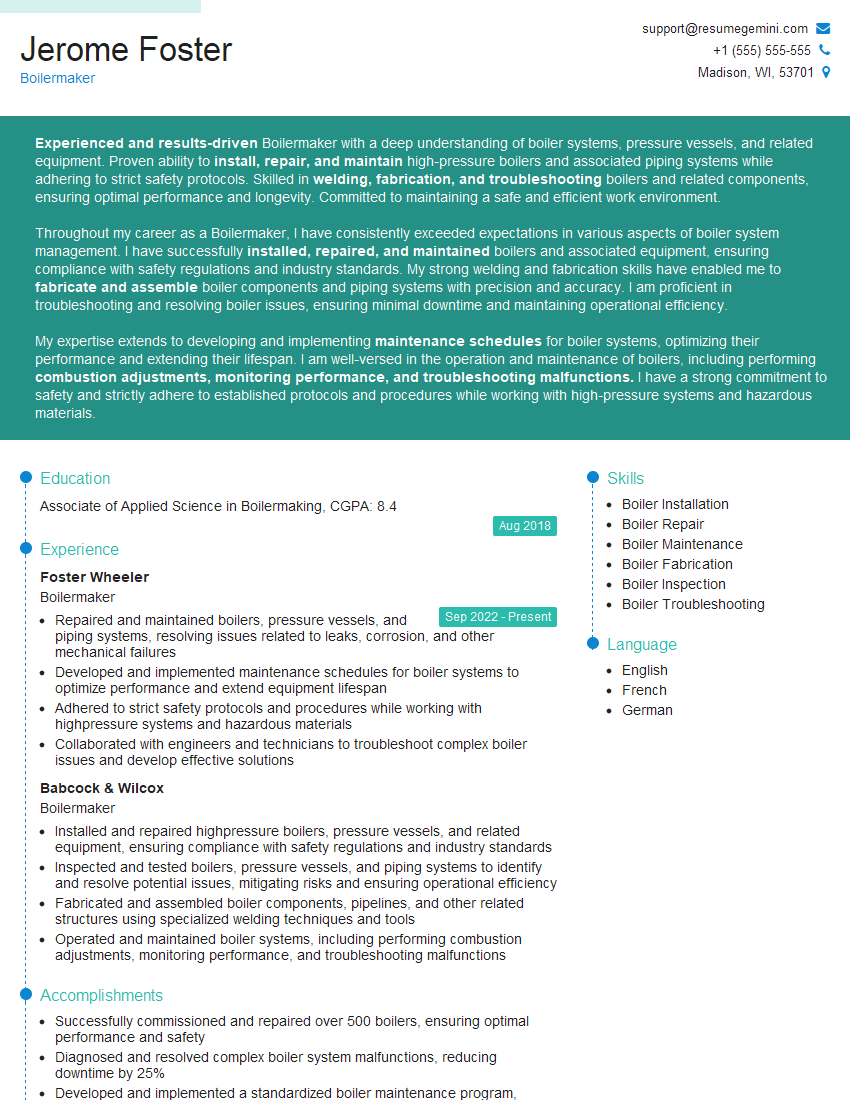
Mastering boiler jacket fabrication opens doors to rewarding careers in power generation, process industries, and manufacturing. Demonstrating expertise in this field significantly boosts your employability and sets you apart from other candidates. To maximize your job prospects, create an ATS-friendly resume that highlights your skills and experience effectively. ResumeGemini is a trusted resource to help you build a professional and impactful resume. They even offer examples of resumes tailored specifically to the Boiler Jacket Fabrication industry to guide you. This will ensure your qualifications shine through and land you that interview.
Explore more articles
Users Rating of Our Blogs
Share Your Experience
We value your feedback! Please rate our content and share your thoughts (optional).
What Readers Say About Our Blog
To the interviewgemini.com Webmaster.
Very helpful and content specific questions to help prepare me for my interview!
Thank you
To the interviewgemini.com Webmaster.
This was kind of a unique content I found around the specialized skills. Very helpful questions and good detailed answers.
Very Helpful blog, thank you Interviewgemini team.