The thought of an interview can be nerve-wracking, but the right preparation can make all the difference. Explore this comprehensive guide to Brain biopsy interpretation interview questions and gain the confidence you need to showcase your abilities and secure the role.
Questions Asked in Brain biopsy interpretation Interview
Q 1. Describe the different types of brain biopsies and their indications.
Brain biopsies are crucial for diagnosing neurological conditions. Several types exist, each chosen based on the location and suspected nature of the lesion.
- Stereotactic biopsy: This is the most common type, using imaging guidance (CT or MRI) to precisely target a deep-seated lesion with a small incision. It’s ideal for lesions inaccessible through open surgery. Think of it like using a GPS to pinpoint a location within the brain.
- Open biopsy: This involves a larger surgical incision, often used for lesions near the surface of the brain or those requiring larger tissue samples. This is more invasive but allows for better visualization and potentially more tissue removal if needed.
- Needle biopsy: This minimally invasive technique uses a needle to obtain a small tissue sample. It’s used for lesions that are difficult to access using other methods, but the sample size might be limiting.
Indications for brain biopsy include suspected tumors (primary or metastatic), inflammatory conditions (like abscesses or granulomas), infectious processes, and other conditions where a tissue diagnosis is needed to guide treatment.
Q 2. What are the key histological features to differentiate glioblastoma from other gliomas?
Differentiating glioblastoma (GBM) from other gliomas requires careful histological examination. GBM, the most aggressive glioma, displays specific features that set it apart.
- Necrosis: GBM typically shows areas of pseudopalisading necrosis, where tumor cells arrange around areas of dead tissue in a palisade-like pattern. This is a hallmark feature but not always present.
- Microvascular Proliferation: GBM often exhibits an abnormal proliferation of blood vessels, appearing as twisted and hypercellular vessels. This increased vascularity contributes to the tumor’s rapid growth.
- Nuclear Pleomorphism: GBM cells show significant variation in size and shape of their nuclei. This means that the nuclei of the cells are very different from one another in size and shape.
- Mitotic Activity: GBM demonstrates a high mitotic index, meaning numerous actively dividing cells. This rapid cell division underscores the tumor’s aggressive nature.
Other gliomas, like oligodendrogliomas or astrocytomas, may show some of these features, but usually to a lesser extent. The overall pattern and the combination of features are key to accurate diagnosis. For example, an oligodendroglioma might have some nuclear atypia, but it typically lacks the extensive necrosis and microvascular proliferation seen in GBM.
Q 3. How would you interpret a brain biopsy showing microvascular proliferation and pseudopalisading necrosis?
Finding microvascular proliferation and pseudopalisading necrosis in a brain biopsy is highly suggestive of glioblastoma (GBM), the most common and aggressive malignant primary brain tumor. The combination of these features is a strong indicator of GBM. However, it’s crucial to consider the full histological picture, including the degree of nuclear atypia and mitotic activity, to confirm the diagnosis.
It’s important to remember that not every case of GBM will exhibit both features equally prominently; the presence of one is often still strong evidence to support the diagnosis and further investigation. It’s vital to correlate these findings with clinical information, such as imaging studies, to reach a comprehensive diagnosis and treatment plan.
Q 4. Explain the significance of finding oligodendroglial cells in a brain biopsy.
The presence of oligodendroglial cells in a brain biopsy is significant as it suggests a possible oligodendroglial tumor or a component of a mixed glioma. Oligodendrogliomas are a type of glioma with a distinct histological appearance.
Key features that help identify oligodendroglial cells include their round, relatively uniform nuclei, a characteristic “fried egg” appearance due to their abundant clear cytoplasm, and the frequent presence of microcalcifications. The identification of oligodendroglial cells is crucial because oligodendrogliomas often respond well to chemotherapy, unlike many other types of gliomas. This information significantly influences treatment decisions.
Q 5. What are the common artifacts encountered in brain biopsy specimens and how do they affect interpretation?
Brain biopsy specimens can suffer from various artifacts that complicate interpretation. These artifacts can mimic disease processes, leading to misdiagnosis if not properly accounted for.
- Ischemia: Lack of oxygen during tissue processing can cause cell shrinkage and damage, obscuring the true architecture and cellular features.
- Crush artifact: Compression of tissue during sampling or processing can distort the structure, making it difficult to assess cellular details.
- Sampling error: A small biopsy sample might not be representative of the entire lesion, leading to incomplete or misleading findings. Think of it like trying to understand the whole pie based on a tiny sliver.
- Fixation artifacts: Inadequate fixation can lead to tissue degradation and alteration of cellular morphology.
Experienced neuropathologists are trained to recognize these artifacts and minimize their impact on diagnosis. Careful evaluation of the entire biopsy sample, and considering clinical context, is crucial to differentiate true pathological findings from artifacts.
Q 6. Differentiate between pilocytic astrocytoma and diffuse astrocytoma on histology.
Pilocytic astrocytoma and diffuse astrocytoma represent different grades and behaviors of astrocytic tumors.
- Pilocytic astrocytoma: This is a low-grade tumor characterized by a relatively benign course. Histologically, it shows cells with eosinophilic cytoplasm, often arranged in a fascicular (bundle-like) pattern. Rosenthal fibers (thick, eosinophilic, corkscrew-shaped fibers) and granular eosinophilic bodies are frequently observed. Think of it as a more orderly and less aggressive arrangement of cells.
- Diffuse astrocytoma: This encompasses a range of grades (WHO grades II-IV) of astrocytic tumors. It exhibits varying degrees of nuclear atypia, cellularity, and mitotic activity depending on the grade. High-grade diffuse astrocytomas (anaplastic astrocytoma and glioblastoma) show more significant nuclear abnormalities and increased mitotic figures compared to their lower-grade counterparts. The cells appear less organized and show a higher degree of cellular abnormality.
The key difference lies in the cellular architecture, degree of atypia, and mitotic activity. Pilocytic astrocytomas have a more distinct, less chaotic pattern, while diffuse astrocytomas show a greater level of cellular disorder and aggressiveness reflecting the higher grade.
Q 7. How do you approach the interpretation of a brain biopsy suspected to be an infectious process?
Interpreting a brain biopsy suspected of infection requires a multi-faceted approach combining histopathological findings with clinical information and special stains.
The histological findings may reveal features such as inflammatory cell infiltration (neutrophils, lymphocytes, macrophages), tissue necrosis, and evidence of tissue destruction. Special stains such as Gram stain, Grocott-Gomori methenamine silver stain (GMS), and acid-fast stain are used to detect bacteria, fungi, and other microorganisms, respectively. Immunohistochemical stains can help identify specific infectious agents or inflammatory responses. It is crucial to look for the presence of microorganisms in the tissue.
For example, an abscess might show extensive necrosis, surrounded by a ring of inflammatory cells. In fungal infections, special stains would identify characteristic fungal hyphae. The combination of histopathology, microbiology, and clinical presentation is essential for accurate diagnosis and targeted treatment of infectious processes within the brain.
Q 8. What immunohistochemical markers would you use to characterize a brain tumor?
Immunohistochemistry (IHC) is crucial for characterizing brain tumors by identifying specific proteins expressed by tumor cells. This helps determine the tumor type, grade, and potential treatment strategies. The choice of markers depends on the suspected diagnosis but commonly includes:
- GFAP (Glial fibrillary acidic protein): A marker for astrocytes; its expression helps identify astrocytomas.
- S-100: Expressed by Schwann cells, melanocytes, and some other cell types; helpful in diagnosing schwannomas and melanomas.
- Synaptophysin and chromogranin: Neuroendocrine markers used to identify neuroendocrine tumors.
- EMA (Epithelial membrane antigen): While less specific to brain tumors, it can be helpful in differentiating certain tumor types.
- Ki-67: A proliferation marker that helps determine the tumor’s growth rate and grade. A high Ki-67 index indicates aggressive growth.
- IDH (Isocitrate dehydrogenase) mutations: Specific mutations in IDH genes are common in certain gliomas and can provide prognostic information.
- ATRX (Alpha thalassemia/mental retardation syndrome X-linked) and p53: These are important in distinguishing between different types of gliomas and assessing prognosis.
For example, a tumor positive for GFAP and exhibiting a high Ki-67 index might suggest a high-grade astrocytoma. The panel of markers used is tailored to the initial clinical and histological suspicion.
Q 9. Describe your experience with molecular testing on brain biopsies.
My experience with molecular testing on brain biopsies is extensive. We routinely utilize techniques such as:
- Next-Generation Sequencing (NGS): This allows for comprehensive genomic profiling, identifying mutations, copy number variations, and gene fusions. This is invaluable for identifying specific driver mutations like IDH1/2, EGFR, or TP53, which have significant implications for treatment selection.
- Fluorescence In Situ Hybridization (FISH): Useful for detecting specific chromosomal abnormalities, such as deletions or amplifications, particularly relevant in certain gliomas and lymphomas.
- Polymerase Chain Reaction (PCR): A targeted approach used to detect specific gene mutations or rearrangements. We use this often for identifying IDH mutations in gliomas.
Integrating these molecular findings with histological analysis significantly improves diagnostic accuracy and allows for personalized treatment plans. For instance, the identification of an IDH mutation in a glioma can significantly alter the prognosis and treatment approach compared to a glioma without such a mutation.
Q 10. How do you correlate the histological findings with the clinical presentation of the patient?
Correlating histological findings with clinical presentation is critical for accurate diagnosis and management. This involves integrating information from several sources:
- Patient history: Age, symptoms (e.g., headaches, seizures, neurological deficits), duration of symptoms, and any relevant family history.
- Neuroimaging: MRI or CT scans provide information about the tumor’s location, size, and extent of involvement.
- Histopathology: Microscopic examination of the biopsy reveals the cellular characteristics and architecture of the tumor.
- Immunohistochemistry & Molecular testing: Provides further characterization of the tumor at the molecular level.
For example, a patient presenting with focal neurological deficits and a rapidly growing enhancing lesion on MRI, who then has a biopsy revealing a high-grade glioma with high Ki-67 index, paints a picture consistent with a very aggressive tumor needing immediate intervention. Conversely, a patient with slowly progressive symptoms and imaging showing a well-circumscribed lesion may have a low-grade tumor requiring a less aggressive approach.
Q 11. Explain the role of special stains in the diagnosis of brain tumors.
Special stains play a vital role in brain tumor diagnosis by highlighting specific cellular components or structures not easily visible with routine hematoxylin and eosin (H&E) staining. Examples include:
- Periodic acid-Schiff (PAS): Detects fungal elements, which might be crucial in identifying cases of fungal infections masquerading as brain tumors.
- Oil Red O: Identifies lipids, which might be a useful marker in certain tumors.
- Reticulin stain: Demonstrates the delicate supporting framework of connective tissue, aiding in evaluating tumor architecture.
- Jones methenamine silver: Highlights fungal elements and also aids in the identification of microorganisms.
Using these stains helps differentiate between various tumor types and non-neoplastic conditions. For instance, a PAS stain can help in identifying a fungal abscess that may mimic a tumor on neuroimaging.
Q 12. Describe your approach to evaluating a brain biopsy with suspected lymphoma.
Evaluating a brain biopsy suspected of being a lymphoma requires a multi-pronged approach.
- Histological examination: Looking for characteristic features of lymphoma, such as a diffuse infiltrate of lymphoid cells.
- Immunohistochemistry: Using a panel of markers like CD20, CD3, CD79a, and CD10 to characterize the lymphoid cells and determine the lymphoma subtype (e.g., B-cell or T-cell lymphoma).
- Molecular testing: May be crucial to detect specific genetic alterations, such as gene rearrangements, frequently used for diagnosing and subtyping lymphomas.
It’s crucial to differentiate primary CNS lymphoma from other brain tumors or reactive lymphoid infiltrates that might mimic lymphoma. A thorough assessment integrating all of these aspects is essential for accurate diagnosis and appropriate management.
Q 13. How do you assess the grade of a glioma based on a brain biopsy?
Grading gliomas, particularly astrocytomas, relies on histological features, such as cellularity, nuclear atypia (abnormal cell nuclei), mitotic activity (frequency of cell division), endothelial proliferation (increased blood vessel formation), and necrosis (cell death). The WHO classification system is used to grade these tumors.
- Grade I (pilocytic astrocytoma): Well-differentiated, slow-growing tumor.
- Grade II (diffuse astrocytoma): Moderately differentiated, slow-to-intermediate growth rate.
- Grade III (anaplastic astrocytoma): Poorly differentiated, faster-growing tumor, with more pronounced nuclear atypia and mitotic activity.
- Grade IV (glioblastoma): Highly malignant, rapidly growing tumor, with extensive necrosis and angiogenesis (formation of new blood vessels).
Immunohistochemical markers, such as Ki-67, and molecular testing (IDH mutation status) provide additional information which can help refine the grading and prognosis. For example, a glioma with high mitotic activity, significant nuclear atypia, and necrosis along with a high Ki-67 index will strongly suggest a grade III or IV glioma.
Q 14. What are the limitations of brain biopsy in diagnosis?
Brain biopsies, while crucial, have limitations:
- Sampling error: The biopsy may not represent the entire tumor’s heterogeneity. A small biopsy might miss areas of high-grade tumor or important molecular features.
- Invasive procedure: It carries risks such as hemorrhage, infection, or neurological deficits.
- Tumor location: Some tumors are located in inaccessible areas, making biopsy difficult or impossible.
- Potential for incomplete resection: A biopsy does not remove the entire tumor, only a sample of it; further surgical treatment is often required.
Despite these limitations, a well-performed biopsy is essential for accurate diagnosis and treatment planning. Integrating biopsy results with neuroimaging and clinical information helps mitigate these limitations and achieve the best possible outcome.
Q 15. How would you interpret a brain biopsy revealing amyloid plaques and neurofibrillary tangles?
Finding amyloid plaques and neurofibrillary tangles in a brain biopsy is highly suggestive of Alzheimer’s disease. Amyloid plaques are abnormal clumps of a protein fragment called beta-amyloid, while neurofibrillary tangles are twisted fibers of another protein called tau. These are the hallmark pathological features of Alzheimer’s. The diagnosis, however, isn’t solely based on the presence of these features. We need to consider the density and distribution of these plaques and tangles within the brain tissue. A higher density and widespread distribution strongly support the diagnosis. We also need to rule out other conditions that can mimic Alzheimer’s. For example, a similar pathology may be seen in other tauopathies, although the specific pattern of tau deposition might differ. The complete interpretation involves careful assessment of the overall histopathological picture, considering the patient’s clinical presentation and other relevant investigations.
For instance, if we see abundant senile plaques and neurofibrillary tangles predominantly in the hippocampus and neocortex, with characteristic neuritic plaques, this would strongly indicate Alzheimer’s disease. However, if the plaques are limited or the distribution is atypical, we may need further investigations or consider differential diagnoses, such as frontotemporal dementia or other forms of dementia.
Career Expert Tips:
- Ace those interviews! Prepare effectively by reviewing the Top 50 Most Common Interview Questions on ResumeGemini.
- Navigate your job search with confidence! Explore a wide range of Career Tips on ResumeGemini. Learn about common challenges and recommendations to overcome them.
- Craft the perfect resume! Master the Art of Resume Writing with ResumeGemini’s guide. Showcase your unique qualifications and achievements effectively.
- Don’t miss out on holiday savings! Build your dream resume with ResumeGemini’s ATS optimized templates.
Q 16. What are the challenges in interpreting biopsies from small or fragmented specimens?
Interpreting small or fragmented brain biopsy specimens presents significant challenges. The limited tissue sample may not be representative of the overall pathology in the brain. Sampling error is a major concern; the small piece might not encompass the key areas affected by the disease process. Furthermore, the fragmentation itself can complicate microscopic analysis, making it difficult to assess the tissue architecture and the spatial relationships between different pathological features. Accurate diagnosis becomes much harder as we lack the complete picture of the disease process within the brain. In such cases, we might rely on immunohistochemical stains to pinpoint specific proteins and potentially reach a more confident conclusion even with limited tissue, though this isn’t always definitive.
Imagine trying to understand the composition of a cake by only examining a tiny crumb. You might get some clues, but you can’t definitively describe the whole cake’s structure or flavor profile. Similarly, a small biopsy sample provides only limited information about the brain’s overall pathological condition.
Q 17. How do you ensure quality control in the processing and interpretation of brain biopsies?
Quality control in brain biopsy processing and interpretation is crucial for accurate diagnosis. We employ rigorous protocols at every step. This begins with proper tissue handling at the time of biopsy to prevent artifacts. We use standardized fixation techniques, typically formalin fixation, to preserve the tissue morphology and antigenicity. The processing involves careful embedding in paraffin wax and sectioning to obtain high-quality slides. Each step is documented meticulously. We perform routine quality control checks on our stains and reagents. Furthermore, multiple pathologists often review the slides independently, comparing findings and reaching a consensus diagnosis. Immunohistochemical stains are often used to confirm suspected diagnoses. The use of standardized reporting templates further ensures consistency and reduces inter-observer variability. Internal quality assurance programs and participation in external quality assessment schemes are essential to maintain the highest standards.
For example, we have a strict protocol for formalin fixation, including the time and concentration of formalin used. Any deviation from this protocol is documented and addressed. Regular calibration of our equipment and regular monitoring of stain quality are also standard practice.
Q 18. Describe your experience in using digital pathology for brain biopsy interpretation.
Digital pathology has significantly improved my efficiency and the quality of brain biopsy interpretation. Instead of relying solely on glass slides, I use whole-slide imaging scanners to create digital representations of the tissue sections. These digital slides can be viewed and analyzed on a computer screen using specialized software. This offers several advantages. I can zoom in and out seamlessly, allowing for detailed examination of tissue architecture at different magnifications. It enables easy sharing of cases with colleagues for consultation or second opinions, facilitating collaborative diagnosis. Digital pathology also facilitates quantitative analysis of pathological features, allowing for more objective assessments, for instance, measuring the density of amyloid plaques. Moreover, advanced image analysis tools can help identify subtle features that might be missed during conventional microscopy. The ability to easily annotate and store digital slides improves record-keeping and facilitates longitudinal case monitoring.
In a recent case, sharing a digital slide with a neuro-oncology expert from another institution proved invaluable in reaching a more nuanced diagnosis for a challenging glial tumor.
Q 19. How do you handle discrepancies between imaging findings and biopsy results?
Discrepancies between imaging findings (like MRI or CT scans) and biopsy results necessitate careful consideration. Such discrepancies are not uncommon. They can stem from several factors, including limitations in imaging resolution, sampling error in the biopsy, or the presence of heterogeneous lesions that may not be fully captured by a single biopsy. In such cases, we need to re-evaluate the imaging data in light of the biopsy findings and potentially consider further investigations. We also have to take into account the inherent limitations of both imaging and biopsy techniques. Imaging might reveal a lesion’s size and location but not its precise cellular composition. Conversely, a biopsy may represent a small fraction of the lesion’s overall heterogeneity.
For example, if MRI shows a large mass with features suggestive of a particular type of glioma, but the biopsy reveals a different type of glioma or another non-neoplastic process, it may indicate that the imaging captured the surrounding edema or that the biopsy was not representative. A larger biopsy or additional imaging might be necessary for clarification. Clinical correlation is paramount; the patient’s symptoms and overall clinical presentation are essential factors to integrate into the interpretation.
Q 20. Explain the importance of proper fixation and processing of brain biopsy samples.
Proper fixation and processing of brain biopsy samples are absolutely critical for accurate and reliable interpretation. Fixation, typically with formalin, preserves the tissue morphology and prevents autolysis (self-digestion of the tissue). This is crucial for maintaining the structural integrity of cells and ensuring the proper preservation of antigens for immunohistochemical studies. Inadequate fixation can lead to tissue artifacts and misinterpretation. Suboptimal processing can result in poor tissue quality and staining problems. Proper processing, involving dehydration, clearing, and paraffin embedding, facilitates thin sectioning for microscopic examination. Any procedural error at these stages can significantly impair the quality and diagnostic accuracy of the biopsy.
Imagine trying to build a model with poorly preserved components. The model would be fragile and inaccurate. Similarly, inadequately fixed and processed brain tissue provides a flawed representation of the original pathology. Following standardized protocols meticulously ensures reproducible results and minimizes errors.
Q 21. What are your strategies for managing challenging or unusual cases?
Managing challenging or unusual cases requires a multi-pronged approach. First, I carefully review the clinical history, radiological findings, and any other relevant laboratory data. Then I consult with colleagues, particularly specialists in neuro-oncology or neuropathology, for a second opinion. Immunohistochemistry and other special stains, such as electron microscopy, may be needed to further characterize the tissue. Molecular testing, such as next-generation sequencing, can provide additional insights into the genetic profile of the lesion. I also maintain up-to-date knowledge of the current literature and new diagnostic techniques. In truly unusual cases, presenting the case at a multidisciplinary tumor board or similar forum can provide valuable collective expertise. Documentation of all steps in the diagnostic process is essential for clarity, transparency, and the ability to revisit the case if needed in the future.
For instance, if we encounter a lesion with unusual histological characteristics, we might use immunohistochemical stains to explore the expression of a wide range of markers. This helps to classify the lesion accurately, perhaps identifying a rare tumor type not immediately obvious from morphology alone.
Q 22. Describe your experience in presenting brain biopsy findings to clinicians.
Presenting brain biopsy findings to clinicians requires a clear, concise, and collaborative approach. I begin by summarizing the key findings in plain language, avoiding overly technical jargon. This is followed by a detailed description of the microscopic features, including cellular morphology, tissue architecture, and any special stains used (e.g., immunohistochemistry). I correlate these findings with the clinical presentation and imaging data provided, offering a differential diagnosis and, whenever possible, a definitive diagnosis. I emphasize the limitations of the biopsy, particularly if the sample is small or fragmented. Finally, I collaborate with the clinicians to discuss treatment options and further investigations, ensuring we develop a shared understanding and plan of care.
For instance, I might say something like: “The biopsy reveals a predominantly glial neoplasm with features consistent with a grade II astrocytoma. The cells are relatively well-differentiated, with low mitotic activity. However, we only have a limited sample, so this represents one snapshot. We should consider further imaging and possibly repeat biopsies to fully characterize the extent of the tumor.” I would then discuss potential treatment pathways, emphasizing the importance of multidisciplinary input.
Q 23. How do you stay up-to-date with advances in brain biopsy interpretation?
Staying current in the rapidly evolving field of neuropathology requires a multi-pronged approach. I actively participate in professional organizations like the United States and Canadian Academy of Pathology (USCAP) and the International Society of Neuropathology (ISN), attending conferences and workshops to learn about the latest research and diagnostic techniques. I regularly review peer-reviewed journals such as Acta Neuropathologica, Brain Pathology, and The American Journal of Surgical Pathology. Furthermore, I utilize online resources such as professional societies’ websites and reputable medical databases like PubMed to access the most recent literature and guidelines. I also participate in internal quality assurance meetings within my department to discuss challenging cases and refine our diagnostic strategies. Continuous learning ensures I maintain the highest level of diagnostic accuracy and offer the best possible care to my patients.
Q 24. Discuss your familiarity with different brain regions and their associated pathology.
My familiarity with brain regions and their associated pathologies is extensive. I understand that each region of the brain has unique cytoarchitecture and is therefore susceptible to specific disease processes. For example, the hippocampus is highly vulnerable to ischemic injury and is frequently affected in temporal lobe epilepsy. The cerebellum is prone to certain types of tumors like medulloblastomas and metastatic disease. The frontal lobes, with their critical roles in higher cognitive functions, exhibit unique patterns of injury in conditions like traumatic brain injury or frontotemporal dementia. I utilize this regional knowledge in conjunction with histological features to arrive at a precise diagnosis. This contextual understanding is critical in interpreting biopsies, as the location of a lesion can significantly influence the differential diagnosis and guide further investigations.
For example, a biopsy showing neuronal loss and gliosis in the hippocampus might suggest a diagnosis of hippocampal sclerosis, whereas the same findings in the cerebellum might point towards a different underlying process. My expertise extends to a wide range of pathologies, from infectious and inflammatory diseases to vascular lesions, neoplastic processes, and degenerative disorders.
Q 25. How do you approach the interpretation of a brain biopsy from a patient with a history of prior radiation therapy?
Interpreting a brain biopsy from a patient with a history of radiation therapy requires a cautious and nuanced approach. Radiation therapy induces significant changes in tissue architecture, often leading to fibrosis, vascular damage, and cellular atypia, which can mimic malignant features. This makes distinguishing radiation-induced changes from recurrent tumor or a new lesion challenging. I carefully examine the biopsy for evidence of radiation-induced changes, such as telangiectasia, hyalinization, and nuclear atypia with pleomorphism, and try to differentiate these from malignant cells. Immunohistochemistry and molecular studies can be invaluable in these cases. We must also consider the time elapsed since radiation therapy, as the post-radiation changes evolve over time.
For example, finding atypical cells in a post-radiation biopsy requires careful evaluation. If the cellular morphology does not clearly suggest malignancy, and if the patient’s clinical picture doesn’t indicate recurrence, we might conclude that the changes are likely radiation-related. However, additional studies, such as molecular testing for tumor markers, might be warranted to confirm the diagnosis.
Q 26. Explain your understanding of the ethical considerations involved in brain biopsy interpretation.
Ethical considerations are paramount in brain biopsy interpretation. Accuracy and honesty are essential; we must strive to provide the most accurate diagnosis based on available data, even if it is not definitive. Transparency is crucial in communicating uncertainties and limitations to clinicians and patients. We must also respect patient autonomy and ensure that the biopsy findings are communicated sensitively and ethically to the patient and their family. The results of brain biopsies can have significant implications for treatment decisions and prognosis, and it is imperative that the findings are relayed responsibly. Furthermore, maintaining patient confidentiality and adhering to all relevant data protection regulations is non-negotiable.
For example, if a biopsy shows inconclusive findings, I would clearly communicate this uncertainty to the treating physician, emphasizing the need for further investigations. I would also discuss the potential diagnostic implications of such ambiguity while highlighting the importance of patient discussion regarding subsequent steps.
Q 27. Describe your experience with intraoperative consultations on brain biopsies.
Intraoperative consultations on brain biopsies provide an invaluable opportunity for real-time assessment and guidance during neurosurgical procedures. I have extensive experience in this setting, receiving fresh tissue samples directly from the surgeon. This allows for rapid assessment of the tissue’s gross features and immediate microscopic examination, often using frozen sections. The results of this rapid assessment can directly influence the surgical strategy, including the extent of resection or the need for further sampling. This collaborative approach ensures optimal surgical management and facilitates immediate diagnostic feedback.
In a real-world scenario, if a frozen section during surgery reveals malignant cells in a suspected tumor, the surgeon can immediately adjust the surgical plan to achieve maximal tumor resection while minimizing damage to surrounding brain tissue. Such rapid, in-the-moment decisions are critical for patient outcomes.
Key Topics to Learn for Brain Biopsy Interpretation Interview
- Specimen Handling and Processing: Understanding proper techniques for receiving, processing, and preparing brain biopsy samples for microscopic examination. This includes fixation, embedding, sectioning, and staining methods.
- Microscopic Examination Techniques: Mastering the use of light microscopy, including H&E staining interpretation, special stains (e.g., silver stains, immunohistochemistry), and understanding the limitations of each technique.
- Cellular Pathology of the Brain: Developing a comprehensive understanding of normal brain architecture and identifying common and rare neoplastic and non-neoplastic lesions. This includes recognizing glial tumors, neuronal tumors, and inflammatory conditions.
- Tumor Classification and Grading: Familiarizing yourself with WHO classification systems for brain tumors and the implications of grading for prognosis and treatment strategies. This includes understanding the molecular and genetic features associated with different tumor types.
- Differential Diagnosis: Developing strong problem-solving skills to differentiate between various brain pathologies based on microscopic findings. This involves integrating clinical information and imaging data with histopathological observations.
- Reporting and Communication: Mastering the art of concise and accurate reporting of biopsy findings, including generating clear and informative pathology reports for clinicians.
- Emerging Technologies and Techniques: Staying abreast of advancements in molecular diagnostics and other emerging technologies used in brain biopsy interpretation, such as next-generation sequencing (NGS).
Next Steps
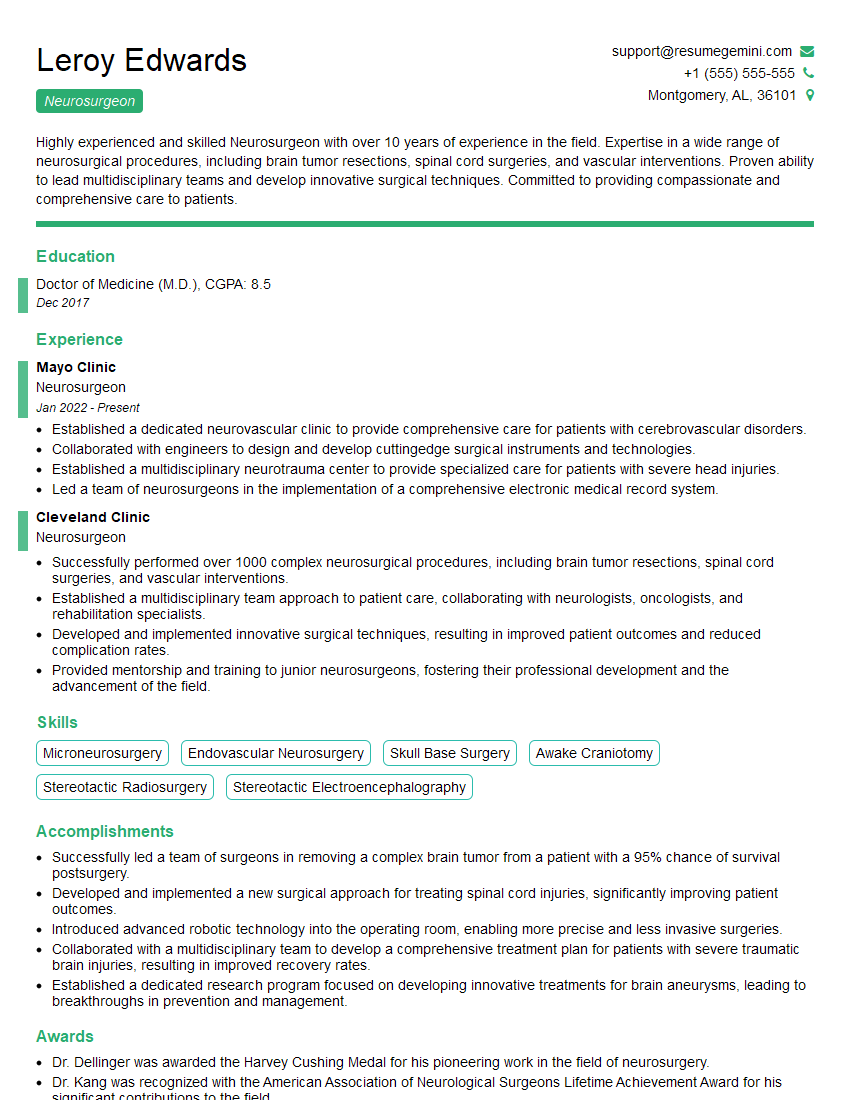
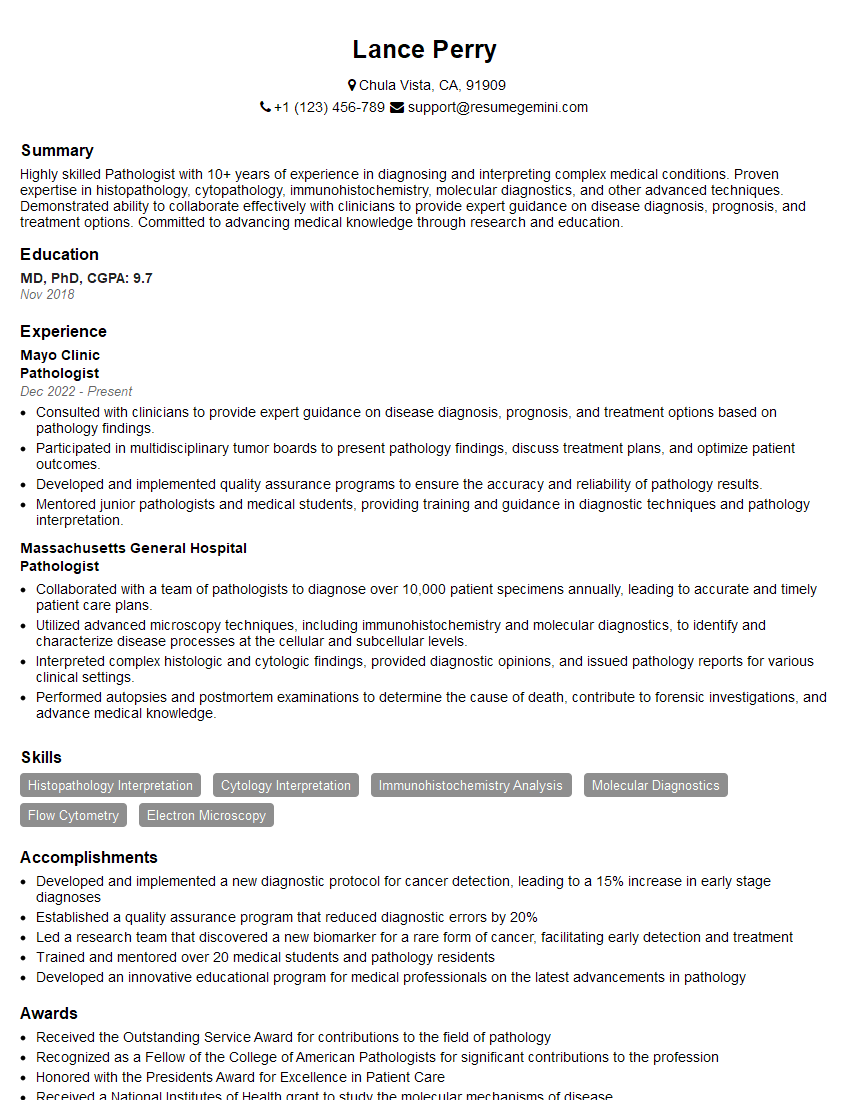
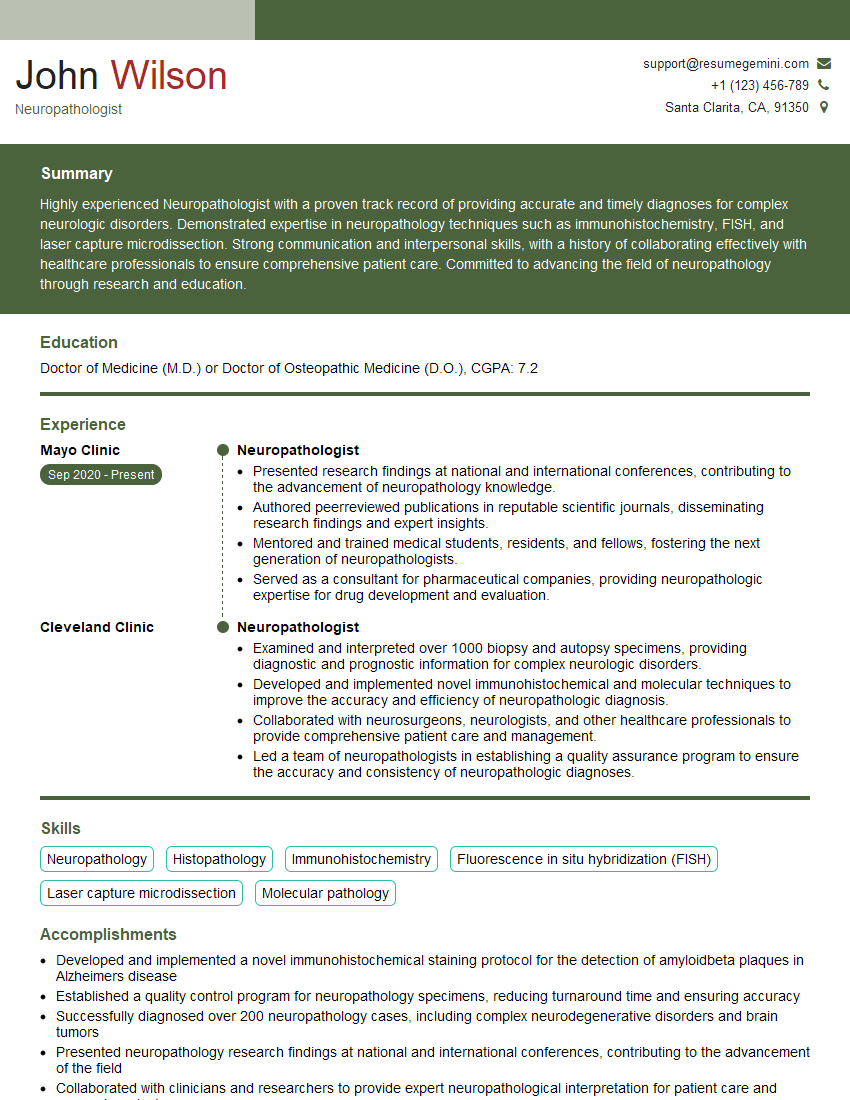
Mastering brain biopsy interpretation is crucial for career advancement in neuropathology and related fields. It opens doors to specialized roles with increased responsibility and higher earning potential. To maximize your job prospects, creating an ATS-friendly resume is paramount. A well-crafted resume highlights your skills and experience effectively, increasing your chances of getting noticed by recruiters and hiring managers. We recommend using ResumeGemini to build a professional and impactful resume. ResumeGemini offers a user-friendly platform and provides examples of resumes tailored to brain biopsy interpretation, helping you showcase your expertise effectively.
Explore more articles
Users Rating of Our Blogs
Share Your Experience
We value your feedback! Please rate our content and share your thoughts (optional).
What Readers Say About Our Blog
To the interviewgemini.com Webmaster.
Very helpful and content specific questions to help prepare me for my interview!
Thank you
To the interviewgemini.com Webmaster.
This was kind of a unique content I found around the specialized skills. Very helpful questions and good detailed answers.
Very Helpful blog, thank you Interviewgemini team.