Every successful interview starts with knowing what to expect. In this blog, we’ll take you through the top Cabinets and Millwork interview questions, breaking them down with expert tips to help you deliver impactful answers. Step into your next interview fully prepared and ready to succeed.
Questions Asked in Cabinets and Millwork Interview
Q 1. Explain the difference between face frame and frameless cabinetry.
The primary difference between face frame and frameless cabinetry lies in their construction. Face frame cabinets have a visible frame surrounding the cabinet doors and drawers, providing structural support and a more traditional look. Frameless cabinets, also known as European-style cabinets, omit this frame, resulting in a sleeker, more modern aesthetic. The doors and drawers attach directly to the cabinet boxes.
- Face Frame Cabinets: Think of a picture frame around the cabinet; the frame is a key part of the structure and adds visual weight. They tend to be more robust and can hide minor imperfections in the box construction.
- Frameless Cabinets: Imagine a smooth, clean surface; the doors and drawers are the main visual elements. They offer more interior storage space since there’s no frame taking up room. They require precise manufacturing and assembly for maximum stability.
The choice depends on design preference and budget. Face frame cabinets are generally less expensive to manufacture, while frameless cabinets often utilize higher-quality hardware and construction.
Q 2. Describe your experience with various cabinet materials (wood types, veneers, laminates).
My experience encompasses a wide range of cabinet materials. I’ve worked extensively with various wood species, each possessing unique characteristics:
- Hardwoods: Solid cherry, maple, oak, and walnut are popular choices due to their durability and beautiful grain patterns. Cherry darkens with age, offering a rich, warm tone; maple is known for its clean, bright appearance; oak’s strength and grain variation lend a rustic appeal; and walnut provides a deep, luxurious look.
- Softwoods: Pine and fir are less expensive alternatives often used in less visible areas or when cost is a major factor. They are softer and more susceptible to dents and scratches.
- Veneers: I frequently use veneers to achieve a high-end look at a more manageable price. Veneers are thin layers of hardwood applied to a core material like plywood or MDF, providing the visual appeal of solid wood without the expense. Veneers can be matched to create large, seamless surfaces.
- Laminates: Laminates offer a durable, moisture-resistant, and cost-effective solution, particularly in kitchens and bathrooms. They come in a vast array of colors and patterns, mimicking the look of wood, stone, or other materials.
Material selection is critical. The choice depends on the client’s budget, desired aesthetic, and the intended use and environmental conditions of the cabinetry.
Q 3. What are the common types of wood joinery used in cabinetmaking?
Cabinetmaking relies heavily on strong joinery techniques to ensure durability and longevity. Common methods I employ include:
- Dowel Joints: Simple, strong, and relatively quick to assemble. Dowels are inserted into pre-drilled holes for alignment and stability.
- Pocket Hole Screws: Utilizing a jig to create angled holes, screws are countersunk, allowing for strong hidden joinery. It’s a fast and efficient method, especially for face frame cabinets.
- Mortise and Tenon Joints: A classic joinery technique where a tenon (a protruding piece) fits into a mortise (a hole). This is a strong and visually appealing joinery, ideal for more intricate pieces or visible areas.
- Biscuit Joints: Oval-shaped biscuits are inserted into slots to align and strengthen joints, often used for attaching cabinet sides and shelves.
- Dado Joints: A groove or channel is cut into one piece to receive the edge of another. This is ideal for shelf supports within the cabinet itself.
The choice of joinery depends on the cabinet design, material, and the desired level of strength and aesthetic.
Q 4. How do you ensure accurate measurements and cut lists for cabinet installations?
Accurate measurements and cut lists are paramount for successful cabinet installations. My process involves:
- Thorough Site Survey: I carefully measure the space, noting any obstructions, irregularities, or existing features that could affect the design.
- Detailed Drawings and CAD Models: I utilize CAD software to create precise drawings and 3D models, ensuring proper fit and functionality. This allows for adjustments and revisions before actual construction.
- Computerized Cut Lists: The CAD model generates a detailed cut list, specifying dimensions and quantities of each component. This minimizes material waste and ensures all parts are accounted for.
- Double-Checking: I meticulously review all measurements and calculations to catch potential errors before proceeding with construction. A second pair of eyes is invaluable in this process.
- Templates and Mockups: For complex installations, I create templates or mockups to ensure everything fits perfectly before committing to the final product.
This multi-step approach significantly reduces the chance of errors and ensures a precise fit during installation.
Q 5. Describe your experience with cabinet hardware installation.
Cabinet hardware installation requires precision and attention to detail. My experience encompasses various types of hardware, including hinges, drawer slides, knobs, and pulls. I use a variety of tools, from simple screwdrivers to specialized jig systems, depending on the specific hardware and cabinet construction.
- Hinges: I ensure proper alignment and adjustment for smooth and quiet door operation. Different hinges cater to various door styles and weight requirements.
- Drawer Slides: I carefully align and install slides, ensuring smooth and consistent drawer movement. I use both undermount and side-mount slides, depending on the design.
- Knobs and Pulls: I carefully consider the placement and spacing to create an aesthetically pleasing and functional arrangement. I match the style to the cabinet’s overall design.
I always test the functionality after installation to ensure everything operates correctly before handing over the project.
Q 6. Explain your process for finishing cabinets (staining, painting, sealing).
Finishing cabinets involves a meticulous process that significantly impacts their appearance and durability. My typical approach is as follows:
- Preparation: This is crucial. The surfaces are carefully sanded to create a smooth finish, removing any imperfections. Dust removal is essential to avoid blemishes.
- Staining (if applicable): I apply stain according to manufacturer’s instructions, allowing sufficient drying time between coats. Multiple coats might be needed to achieve the desired color and depth. Wiping off excess stain is crucial to prevent uneven results.
- Painting (if applicable): I use high-quality paints suitable for cabinetry, applying several thin coats for a smooth, even finish. Proper priming is critical, especially for wood species requiring it.
- Sealing: A clear sealant protects the finish and enhances durability. I apply several coats of sealant, allowing sufficient drying time between coats. This seals the finish, adding protection from moisture and wear.
The finishing process is tailored to the specific material and the client’s preferences. Achieving a perfect finish requires patience, attention to detail, and the right tools and materials.
Q 7. How do you handle unexpected issues or changes during a cabinet installation?
Unexpected issues arise occasionally in cabinet installations. My approach involves:
- Assessment: I carefully assess the issue, determining its cause and potential impact on the project.
- Communication: Open and transparent communication with the client is crucial. I explain the issue, potential solutions, and any implications on timeline or budget.
- Problem Solving: I develop a solution that addresses the problem while maintaining the quality and integrity of the project. This might involve adjustments to the design, sourcing replacement materials, or utilizing alternative techniques.
- Documentation: I meticulously document the issue, the solution, and any changes made to the project. This is crucial for reference and to avoid similar problems in the future.
My experience and problem-solving skills enable me to handle unexpected situations efficiently and effectively, minimizing disruptions and ensuring client satisfaction.
Q 8. What safety measures do you follow when working with power tools?
Safety is paramount in my work. Before even touching a power tool, I ensure I’m wearing the appropriate Personal Protective Equipment (PPE), including safety glasses, hearing protection, and a dust mask. This is non-negotiable. For each tool, I familiarize myself with its specific safety instructions, paying close attention to the guards and any potential kickback zones. I always make sure the work area is clean, well-lit, and free of clutter to minimize trip hazards.
For example, when using a table saw, I always use the push stick to avoid my fingers getting too close to the blade. Similarly, when operating a router, I employ a router table and a featherboard to maintain control and prevent workpiece slippage. Regular maintenance of the tools themselves is crucial – ensuring blades are sharp and correctly aligned minimizes the risk of accidents. I also understand the importance of taking breaks to avoid fatigue, a major contributor to workplace incidents.
Q 9. Describe your experience with reading and interpreting shop drawings and blueprints.
Reading and interpreting shop drawings and blueprints is a fundamental skill in my profession. I’m proficient at deciphering various symbols, scales, and notations to understand the project’s scope, dimensions, and specifications. This includes interpreting elevation views, section cuts, and detailed drawings of cabinet components. I can identify materials, hardware requirements, and finish specifications from these documents.
For instance, I recently worked on a project with complex curved cabinetry. The blueprints showed intricate details of the radius and the joinery techniques required for a seamless finish. My ability to accurately interpret these blueprints was key to successfully constructing these challenging elements.
Q 10. What software are you proficient in for cabinet design or fabrication (e.g., AutoCAD, SketchUp)?
I’m highly proficient in AutoCAD and SketchUp. AutoCAD allows me to create precise 2D drawings for production and shop drawings, ensuring accurate dimensions and component details. SketchUp, on the other hand, offers a powerful 3D modeling environment, ideal for visualizing designs, creating photorealistic renderings for client presentations, and experimenting with different design concepts before committing to production. I can seamlessly transition between 2D and 3D models, adapting my approach based on project requirements.
For example, I recently utilized SketchUp to model a kitchen design for a client, allowing them to virtually “walk through” their future kitchen and make changes before construction even began. This significantly reduced potential revisions later in the process.
Q 11. How do you manage your time and prioritize tasks on a busy project?
Time management and prioritization are critical, especially on complex projects with tight deadlines. I employ a combination of strategies. I start by thoroughly reviewing the project specifications and breaking down the tasks into smaller, manageable units. Then I create a detailed schedule using project management software, assigning realistic timelines to each task. I prioritize tasks based on their dependencies and deadlines, focusing on critical path activities first.
Regularly, I review my progress and make adjustments as needed. This might involve re-prioritizing tasks or seeking assistance if I anticipate falling behind schedule. Open communication with the project team is key to ensuring that everyone is on the same page and that potential delays are addressed proactively.
Q 12. Explain your experience with different cabinet door styles and construction methods.
My experience encompasses a wide range of cabinet door styles and construction methods. I’m familiar with traditional raised panel doors, flat panel doors, shaker style doors, and more contemporary designs. I understand the nuances of different construction techniques, including frame-and-panel construction, slab construction, and the use of various joinery methods like mortise and tenon, dowel joints, and pocket hole screws.
For example, a raised panel door requires precise milling and joinery to create the characteristic raised panel effect, while a slab door necessitates careful attention to edge banding and finishing for a clean, professional appearance. My understanding of these techniques allows me to select the most appropriate method for each project, balancing aesthetics and functionality with budget and time constraints.
Q 13. Describe your knowledge of building codes and regulations related to cabinetry.
I have a strong understanding of relevant building codes and regulations pertaining to cabinetry, including those related to fire safety, accessibility, and structural integrity. This includes knowledge of International Residential Code (IRC) and other local building codes as they apply to cabinet construction and installation. I understand requirements for things like clearances around appliances, the use of fire-rated materials in specific areas, and accessibility standards for kitchen cabinets in homes with individuals who have disabilities.
For instance, I’m aware of the specific requirements for cabinet clearances around gas ranges and the importance of using appropriate materials and construction techniques to meet fire safety regulations. I ensure that all my work complies with these regulations to ensure both safety and legal compliance.
Q 14. How do you ensure the quality and accuracy of your work?
Quality and accuracy are fundamental to my work. I employ several strategies to maintain high standards. This begins with careful planning and precise measurements. I use high-quality materials and tools, and I meticulously follow the design specifications. Throughout the fabrication process, I conduct regular quality checks to ensure that each step is executed accurately and to the required standards.
After assembly, I perform a final inspection to verify that everything aligns perfectly and meets the client’s expectations. I always double-check my work and use precise measuring tools to ensure accuracy. This includes using digital calipers and levels to ensure components are precisely sized and aligned. Addressing any issues promptly and proactively is crucial to maintain the quality of the final product.
Q 15. How do you handle customer feedback or complaints?
Customer feedback is crucial for continuous improvement. I handle complaints by first actively listening to understand the client’s perspective completely. This involves asking clarifying questions to ensure I grasp the issue fully, before offering any solutions. Then, I prioritize the issue based on severity and urgency. For minor issues, I may offer immediate solutions like adjustments or explanations. For major issues, I meticulously document the problem, involve relevant team members if necessary (e.g., the design team if there’s a design flaw), and develop a plan to resolve the issue, always keeping the client updated on progress. I aim for a resolution that exceeds expectations, turning a negative experience into a positive one, thereby fostering customer loyalty. For example, if a client is unhappy with a minor gap in the cabinetry, I would immediately schedule a return visit to remedy the situation, explaining the steps to ensure this doesn’t happen again. If a complete refabrication is needed, I outline the process, timeline, and any costs involved upfront for full transparency.
Career Expert Tips:
- Ace those interviews! Prepare effectively by reviewing the Top 50 Most Common Interview Questions on ResumeGemini.
- Navigate your job search with confidence! Explore a wide range of Career Tips on ResumeGemini. Learn about common challenges and recommendations to overcome them.
- Craft the perfect resume! Master the Art of Resume Writing with ResumeGemini’s guide. Showcase your unique qualifications and achievements effectively.
- Don’t miss out on holiday savings! Build your dream resume with ResumeGemini’s ATS optimized templates.
Q 16. What are your experience with different types of countertop materials and their installation?
My experience encompasses a wide range of countertop materials, including natural stone (granite, marble, quartz), engineered stone (like Caesarstone and Silestone), laminate, and solid surface materials (like Corian). I’m proficient in the installation techniques for each. Natural stone requires precise cutting and meticulous attention to detail during installation to avoid cracking or chipping. Engineered stone, while more durable, still needs careful handling. Laminate installation requires precise measurement and alignment to achieve a seamless finish. Solid surface materials are easier to work with, often allowing for seamless integration and complex shapes. I understand the specific requirements of each material, including proper sealing, edge profiling, and the use of appropriate adhesives and fasteners. For example, when installing granite countertops, I use a template to ensure perfect fit and employ specialized tools to avoid damaging the delicate material. I also know how to address potential issues like uneven surfaces or misaligned seams through creative problem-solving.
Q 17. Describe your experience with installing crown molding and other millwork details.
Installing crown molding and other millwork details requires precision and an eye for detail. My experience includes working with various materials such as wood, MDF, and polyurethane. I’m adept at miter cuts, cope cuts, and compound miters, ensuring a seamless and aesthetically pleasing finish. I understand the importance of proper preparation, including accurate measurements, using the right adhesives and fasteners, and ensuring proper alignment. I’ve worked on intricate designs incorporating various profiles and transitions. For example, when installing crown molding, I always pre-assemble sections on the ground to ensure a perfect fit before transferring them to the wall, minimizing on-site adjustments. I’m also experienced in handling challenges like uneven walls or ceilings, employing techniques to ensure a professional finish despite imperfections. This might involve shimming or using flexible caulk to accommodate minor discrepancies.
Q 18. Explain your process for managing inventory and ordering materials.
Efficient inventory management is key to smooth project execution. My process begins with detailed material lists generated from project plans. I then cross-reference these lists with existing inventory, identifying materials that need to be ordered. I use a combination of digital inventory management software and physical stock checks to maintain accuracy. I work with reliable suppliers who offer competitive pricing and timely delivery. I also factor in lead times for custom orders and incorporate buffer stock to mitigate potential delays. Regular review and analysis of inventory levels help optimize stock and prevent overstocking or shortages. For example, I might forecast demand based on past projects and seasonal trends to proactively order materials, ensuring we’re not caught short on a busy project.
Q 19. What is your experience with different types of cabinet hinges and drawer slides?
I have extensive experience with various cabinet hinges and drawer slides. My knowledge covers full overlay, partial overlay, and inset hinges, as well as various drawer slide types such as undermount, side-mount, and soft-close mechanisms. I understand the advantages and disadvantages of each type and can recommend the best option based on project requirements and budget. For example, soft-close hinges and drawer slides enhance user experience and prevent slamming, while full-overlay hinges offer a sleek, modern look. I’m also familiar with different hinge and slide brands, understanding their quality and performance characteristics. I choose the right hardware based on factors like weight capacity, durability, and aesthetic appeal. I can also troubleshoot issues with malfunctioning hinges or slides, determining whether the problem stems from faulty hardware, improper installation, or other factors.
Q 20. How do you troubleshoot problems with cabinet installation or functionality?
Troubleshooting is a significant part of my work. My approach is systematic, starting with a visual inspection to identify the source of the problem. If a cabinet door is misaligned, I check hinge placement, screw tightness, and door adjustment mechanisms. If drawers are sticking, I inspect the drawer slides for debris or damage, making adjustments as needed. I use a combination of experience and problem-solving skills to identify the root cause. If the problem persists, I may consult technical manuals or contact manufacturers for assistance. I always document troubleshooting steps and solutions to learn from experiences and improve future installations. For instance, a cabinet door that won’t close properly might be due to a warped door, requiring replacement or planing, or it could be because the hinges are not properly aligned. I’d systematically check each potential issue before making any changes.
Q 21. What is your experience with custom cabinet design and fabrication?
Custom cabinet design and fabrication is a core competency of mine. I begin by meeting with clients to understand their needs, preferences, and budget. I then use CAD software to create detailed designs, incorporating their specifications and suggesting design solutions based on my expertise. The design process involves refining dimensions, materials, finishes, and hardware selections. Once the design is finalized, I manage the fabrication process, ensuring adherence to specifications and quality control. I’m proficient in using various woodworking tools and machinery to fabricate custom cabinets, including cutting, shaping, assembling, and finishing. I’ve handled various complex design elements, such as curved cabinets, integrated appliances, and specialized storage solutions. A recent project involved designing and building a curved media cabinet with integrated lighting and hidden wiring, a testament to my expertise in custom fabrication.
Q 22. Describe your knowledge of different cabinet finishing techniques.
Cabinet finishing is a crucial aspect of millwork, impacting both aesthetics and durability. There’s a wide range of techniques, each offering a unique look and level of protection.
- Painting: This is a popular and versatile method, allowing for a vast array of colors and finishes. From a simple flat finish to a high-gloss polyurethane, painting provides excellent durability and can mask imperfections in the wood. Preparation is key; proper sanding and priming are essential for a flawless result.
- Staining: Staining penetrates the wood, enhancing its natural grain and color. The depth of color depends on the type of stain and the wood’s porosity. Different finishes, such as polyurethane or lacquer, are then applied to protect the stain and provide durability. For instance, a cherry cabinet might be stained to deepen its reddish hue, while oak could be stained darker to achieve a more formal look.
- Lacquer: A fast-drying, hard finish that provides excellent durability and a smooth, glassy surface. It’s often sprayed on, providing an even coat. Lacquer is ideal for high-traffic areas and pieces that require frequent cleaning.
- Varnish: Similar to lacquer but usually more durable and resistant to scratching. It offers a harder finish and is a good choice for high-end cabinets.
- Wax: A natural finish that enhances the wood’s beauty and provides a subtle sheen. It’s easier to repair than other finishes but offers less protection.
Choosing the right technique depends on the project’s requirements, budget, and desired aesthetic. For example, a modern kitchen might feature sleek lacquered cabinets, while a traditional setting might call for stained and varnished wood.
Q 23. What is your experience with working with different types of wood veneers?
Working with wood veneers is a specialized skill, requiring precision and attention to detail. Different veneers offer varying properties and aesthetic qualities.
- Types: I’ve worked extensively with various veneers, including oak, maple, cherry, walnut, and exotic woods like mahogany and zebrawood. Each offers a unique grain pattern and color, influencing the final appearance of the cabinetry.
- Application: My experience includes applying veneers using various methods, including edge banding, bookmatching, and figure matching. Bookmatching creates a symmetrical pattern by mirroring two adjacent veneer sheets, while figure matching involves aligning the grain patterns for a more consistent look.
- Challenges: Veneer work requires careful handling to avoid damage. The thin layers are susceptible to cracking and warping, especially during the gluing and finishing processes. Expertise in handling these delicate materials is critical for quality results. For instance, a poorly applied veneer can lead to bubbling or delamination, requiring significant rework.
I’ve found that understanding the specific characteristics of each veneer—its stability, workability, and finish acceptance—is crucial for a successful project. For example, a highly figured veneer like burl walnut might require more careful handling during application to prevent cracking.
Q 24. How familiar are you with CNC machining for cabinet production?
CNC machining has revolutionized cabinet production, offering precision, efficiency, and repeatability. My experience involves programming and operating various CNC routers and cutting machines.
- Programming: I’m proficient in using CAM software (Computer-Aided Manufacturing) to translate design files into CNC instructions. This includes creating toolpaths for cutting, routing, and drilling operations. For instance, I use software to create optimized toolpaths to minimize cutting time and waste while maintaining high accuracy.
- Operation: I’m skilled in setting up and operating CNC machines, including loading materials, performing tool changes, and monitoring the machining process to ensure quality and safety. I’m meticulous about checking the machine’s calibration to avoid errors.
- Applications: CNC machining is crucial for producing complex shapes, intricate details, and repetitive cuts with high precision. This significantly reduces manual labor and minimizes errors in cabinet components like doors, drawer fronts, and decorative moldings. We use CNCs to create custom designs impossible to achieve through traditional methods.
The combination of design software and CNC machinery provides exceptional control over the manufacturing process, resulting in superior quality and reduced production times. For example, creating intricate carvings on a cabinet door becomes highly efficient and precise with CNC routing.
Q 25. Describe your knowledge of different types of cabinet construction methods.
Cabinet construction methods significantly impact a cabinet’s strength, durability, and cost. There are several prevalent techniques:
- Face Frame Construction: This traditional method uses a frame around the cabinet box, providing structural integrity and a finished look. It’s more robust and often preferred for custom cabinets.
- Frameless Construction (European Style): This modern approach eliminates the face frame, offering a sleek, minimalist appearance and maximizing interior space. It relies on precisely made components and strong hardware for stability.
- Plywood Construction: Using plywood for cabinet boxes offers superior strength and dimensional stability compared to solid wood, especially in humid climates.
- MDF (Medium-Density Fiberboard) Construction: MDF is a cost-effective material ideal for painted cabinets. It provides a smooth surface and is easy to work with. However, it is less durable and water-resistant than plywood or solid wood.
The choice of construction method depends on factors such as budget, desired aesthetic, and the cabinet’s intended use. For instance, a high-end kitchen might utilize frameless construction with plywood boxes and high-quality hardware, while a budget-friendly option might employ face frame construction with MDF boxes.
Q 26. How do you maintain your tools and equipment?
Maintaining tools and equipment is paramount for ensuring safety, prolonging their lifespan, and maintaining the quality of my work. My routine includes:
- Regular Cleaning: After each use, I clean my tools, removing sawdust, glue residue, and other debris. This prevents buildup that can affect performance and cause damage.
- Sharpening and Honing: Sharp tools are essential for precise cuts and safe operation. I regularly sharpen my blades, chisels, and other cutting tools using appropriate methods.
- Lubrication: I lubricate moving parts of machinery, such as router bits and drill presses, to ensure smooth operation and prevent wear and tear.
- Storage: Proper tool storage is crucial. I keep my tools organized and protected from damage, using toolboxes, racks, and protective cases.
- Preventative Maintenance: I regularly inspect my equipment for wear and tear, replacing or repairing parts as needed. This includes checking belts, checking for loose screws, and performing routine checks on CNC machines according to the manufacturer’s guidelines.
By following a consistent maintenance schedule, I can prevent costly repairs and downtime, ensuring my tools and equipment remain in optimal condition for producing high-quality work. This preventative approach saves time and money in the long run.
Q 27. What are some common problems encountered in cabinet installation and how do you resolve them?
Cabinet installation can present various challenges. Some common problems include:
- Uneven Walls: Out-of-plumb walls require careful shimming and adjustments to ensure cabinets are properly aligned and level.
- Inconsistent Measurements: Slight discrepancies in measurements during the design or construction phase can lead to installation problems. Careful double-checking and precise cutting are crucial.
- Plumbing and Electrical Interference: Existing plumbing and electrical lines can interfere with cabinet placement. Careful planning and coordination with other trades are essential.
- Door and Drawer Alignment: Improper adjustment of doors and drawers can result in misalignment and functionality issues. Careful attention to detail during installation is key.
Resolution strategies involve careful planning, precise measurements, and the use of appropriate shims, levelers, and adjustment tools. For uneven walls, I often use shims to level and plumb the cabinets before securing them to the wall. For alignment issues, I use adjustment screws and templates to ensure proper fit. Communication and coordination with other tradespeople are crucial to avoid conflicts and delays.
Q 28. Describe a time you had to solve a complex problem related to cabinetry.
One challenging project involved a curved staircase with built-in cabinetry. The client wanted a seamless integration of the cabinetry into the curved wall, with custom-fitted doors and drawers. The complex curves made standard construction methods impossible.
Problem: The curved wall wasn’t consistently curved; the radius varied, making it difficult to create precisely fitting cabinet components. The solution required not only skilled carpentry but also advanced design and fabrication techniques.
Solution: I started by creating a 3D model of the staircase and cabinetry, using CAD software. This allowed me to precisely map the irregular curves and design the cabinet components to fit perfectly. The cabinets were then constructed using flexible materials and custom-cut pieces to conform to the wall’s curves. The doors were constructed using flexible bending techniques to perfectly fit and operate smoothly along the irregular curve. The CNC machine was instrumental in crafting the irregular components of the cabinets with accuracy.
Outcome: The project was completed successfully, resulting in a stunning, custom-fit installation that exceeded the client’s expectations. It highlighted the value of combining design software with fabrication techniques, demonstrating adaptability to intricate architectural challenges. This experience solidified the importance of thorough planning, innovative solutions, and precise execution in high-end cabinetry projects.
Key Topics to Learn for Your Cabinets and Millwork Interview
- Cabinet Construction & Design: Understanding various cabinet box constructions (face frame, frameless), materials (wood types, veneers, laminates), and design principles (kitchen layouts, space optimization).
- Millwork Techniques & Processes: Familiarity with woodworking machinery (routers, planers, saws), finishing techniques (staining, painting, sealing), and common joinery methods (dadoes, rabbets, mortise and tenon).
- Material Selection & Sourcing: Knowledge of different wood species, their properties, and cost-effectiveness. Understanding sustainable sourcing practices and material certifications.
- Estimating & Costing: Ability to accurately estimate material costs, labor hours, and project timelines. Understanding profit margins and pricing strategies.
- Installation & Finishing: Practical experience with cabinet installation, including alignment, leveling, and adjusting. Knowledge of proper finishing techniques to ensure a high-quality product.
- Blueprint Reading & Interpretation: Ability to accurately read and interpret architectural drawings, specifications, and shop drawings for cabinets and millwork.
- Problem-Solving & Troubleshooting: Experience identifying and resolving common issues during the design, fabrication, or installation phases. Adaptability to unexpected challenges on the job site.
- Safety Regulations & Practices: Understanding and adhering to relevant safety regulations and best practices for woodworking machinery and on-site installations.
- Project Management & Communication: Experience managing projects, communicating effectively with clients and contractors, and meeting deadlines.
Next Steps: Unlock Your Career Potential
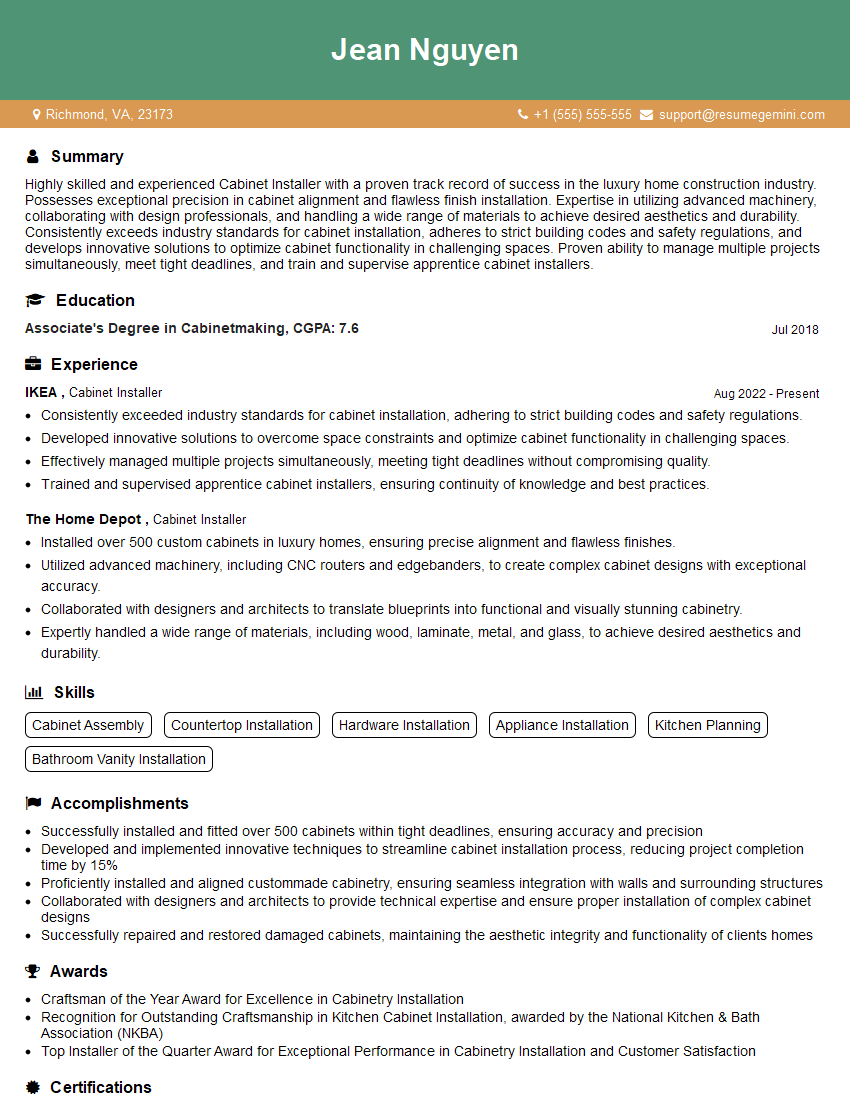
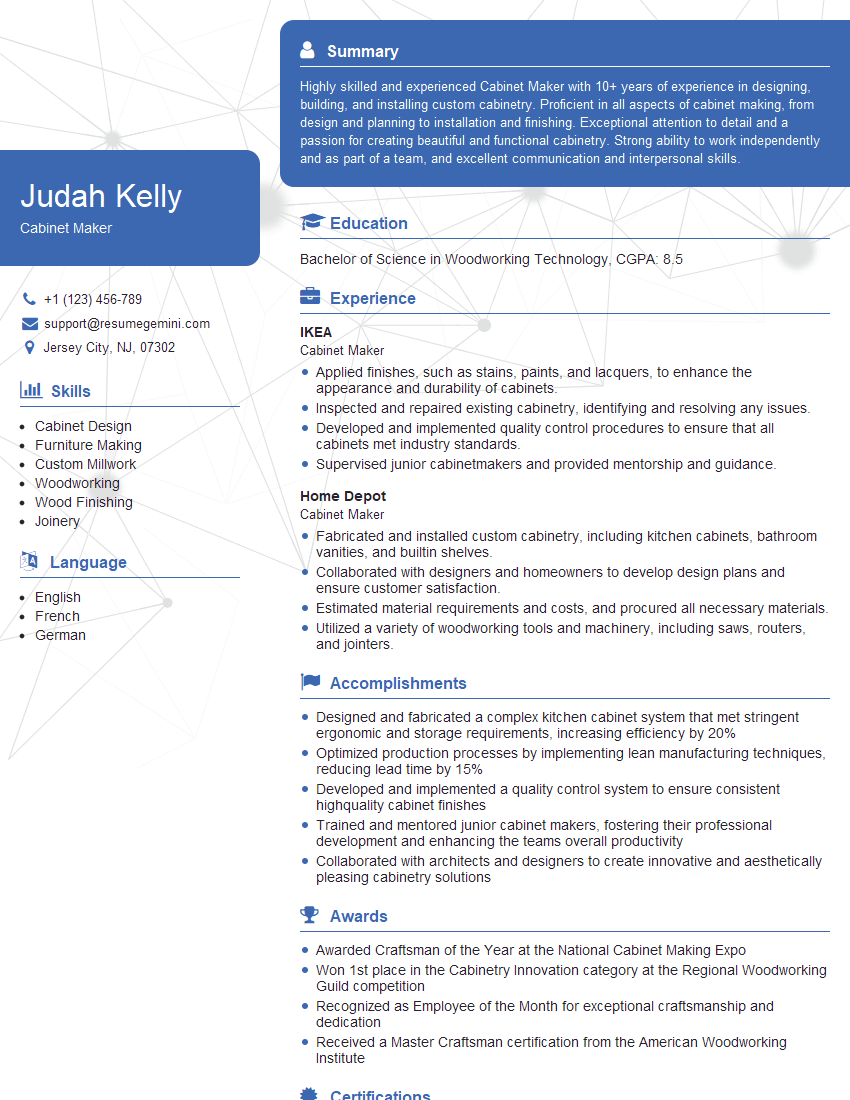
Mastering the skills and knowledge within Cabinets and Millwork opens doors to rewarding careers with excellent growth potential. From skilled craftsman to project manager, the industry offers diverse paths for advancement. To maximize your job prospects, creating a strong, ATS-friendly resume is crucial. ResumeGemini can help you build a professional resume that highlights your unique skills and experience, making you stand out from the competition. We even provide examples of resumes tailored specifically to the Cabinets and Millwork industry, giving you a head start in your job search.
Explore more articles
Users Rating of Our Blogs
Share Your Experience
We value your feedback! Please rate our content and share your thoughts (optional).
What Readers Say About Our Blog
To the interviewgemini.com Webmaster.
Very helpful and content specific questions to help prepare me for my interview!
Thank you
To the interviewgemini.com Webmaster.
This was kind of a unique content I found around the specialized skills. Very helpful questions and good detailed answers.
Very Helpful blog, thank you Interviewgemini team.