Every successful interview starts with knowing what to expect. In this blog, we’ll take you through the top Child Abuse and Neglect Evaluation interview questions, breaking them down with expert tips to help you deliver impactful answers. Step into your next interview fully prepared and ready to succeed.
Questions Asked in Child Abuse and Neglect Evaluation Interview
Q 1. Describe the different types of child abuse and neglect.
Child abuse and neglect encompass a range of harmful actions or omissions that endanger a child’s physical, emotional, or mental well-being. It’s crucial to remember that abuse is not always physical; it can be subtle and insidious.
- Physical Abuse: This involves non-accidental physical injury, such as hitting, kicking, burning, or shaking. Think of a caregiver intentionally inflicting pain or injury on a child.
- Neglect: This refers to the failure to provide a child with basic needs, including food, clothing, shelter, medical care, and supervision. For example, a parent consistently failing to provide adequate food or neglecting a child’s medical needs constitutes neglect.
- Emotional Abuse: This involves behaviors that harm a child’s self-worth and emotional development. Examples include constant criticism, threats, intimidation, and isolation. Imagine a child constantly being told they’re worthless or unloved.
- Sexual Abuse: This involves any sexual act, exploitation, or contact with a child. This can range from inappropriate touching to rape and includes the use of children in pornography.
- Medical Neglect: This involves withholding necessary medical treatment or providing inappropriate care. This could be refusing to get a child medical attention for a serious illness.
Understanding the nuances of each type is crucial for accurate assessment and intervention. The overlap between categories is also important to note – a child may experience multiple forms of abuse simultaneously.
Q 2. Explain the key components of a forensic interview with a child.
A forensic interview with a child is a critical step in a child abuse investigation. It aims to gather information from the child in a way that is both legally sound and trauma-informed. The key components include:
- Building Rapport: The interviewer creates a safe and comfortable environment, emphasizing that the child is believed and it’s okay to not know the answers. This initial connection is paramount for eliciting information.
- Open-Ended Questions: The interview avoids leading questions (‘Did he touch you?’) and instead uses open-ended prompts (‘Tell me what happened’). This allows the child to narrate freely, avoiding influencing their answers.
- Use of Anatomically Correct Dolls: In cases of sexual abuse, these can help children communicate about sensitive events, particularly when verbal description is difficult. It’s vital to use these tools carefully, acknowledging that they aren’t foolproof.
- Minimizing Interruptions: The interviewer allows the child to speak without interruption, unless clarification is absolutely necessary. Interrupting could disrupt the flow of the narrative.
- Documentation: The entire interview is meticulously documented, including the child’s statements, body language, and the interviewer’s observations. This ensures accuracy and legal defensibility.
- Child-Centered Approach: The child’s needs and comfort level are prioritized throughout. The goal is to obtain information while minimizing further trauma.
The interviewer must be highly trained in forensic interviewing techniques to ensure the integrity and admissibility of the information obtained.
Q 3. What are the ethical considerations in conducting a child abuse investigation?
Ethical considerations in child abuse investigations are paramount. The focus must always be on the child’s well-being and rights. Key ethical principles include:
- Confidentiality: While mandated reporters must disclose information to authorities, maintaining confidentiality to the extent possible is crucial, building trust and encouraging disclosure.
- Objectivity and Impartiality: The investigation must be unbiased, ensuring that all evidence is considered without preconceived notions. Avoiding jumping to conclusions is vital.
- Competence: Only trained and qualified professionals should conduct interviews and assessments. This ensures adherence to best practices and safeguards against harm caused by inexperience.
- Avoiding Leading Questions: Leading questions can distort the truth and influence a child’s responses, jeopardizing the accuracy of the investigation.
- Minimizing Trauma: The investigation process itself should minimize further trauma to the child. This requires sensitivity, patience, and a child-centered approach.
- Respect for Cultural Differences: Interviewers need to demonstrate an understanding of and sensitivity to the cultural background of the child and family.
Ethical dilemmas can arise, and careful consideration of all factors is essential to ensure the safety and well-being of the child.
Q 4. How do you assess the credibility of a child’s statement?
Assessing the credibility of a child’s statement is complex and multifaceted. There’s no single indicator of truthfulness or deception. Instead, a holistic approach is essential, considering several factors:
- Consistency of the Statement: Does the child’s account remain consistent across multiple interviews? Inconsistencies might indicate memory problems or fabrication, but not necessarily.
- Details Provided: Rich details, including sensory information (sounds, smells, sights), often suggest a genuine memory. However, overly detailed accounts could be memorized, not experienced.
- Child’s Developmental Level: The interviewer must account for the child’s age and cognitive abilities, understanding that younger children may have different ways of expressing themselves or remembering events.
- Behavioral Observations: Body language, emotional responses, and demeanor are important, though must be interpreted cautiously. Avoid assumptions based on stereotypes.
- Forensic Evidence: Physical evidence, such as medical records or DNA, can corroborate or contradict the child’s statement.
- Multiple Sources of Information: Gathering information from other sources (e.g., parents, teachers, other witnesses) can help build a comprehensive picture.
Ultimately, credibility assessment is a professional judgment based on all available information. It’s crucial to avoid confirmation bias and consider all possibilities. Remember that children may delay disclosure, change their stories over time, or show inconsistencies due to normal developmental processes and trauma.
Q 5. Discuss the role of mandated reporters in child abuse cases.
Mandated reporters are individuals who are legally required to report suspected child abuse or neglect to the appropriate authorities. These individuals hold positions where they are likely to encounter children and have a professional obligation to protect them. Examples include:
- Teachers: Educators often spend significant time with children and may observe signs of abuse or neglect.
- Social Workers: Professionals in this field frequently work with families and children who may be at risk.
- Doctors and Nurses: Medical professionals may identify injuries or conditions that raise concerns.
- Law Enforcement Officers: Police officers may encounter situations where child abuse is suspected.
- Childcare Providers: Those working in daycares or other childcare settings are in a position to observe children and report suspected abuse.
The failure to report suspected abuse can have serious legal consequences. The key is that suspicion of abuse, not certainty, triggers the reporting requirement. Mandated reporters play a crucial role in safeguarding children by alerting the authorities to potential dangers.
Q 6. What are some common indicators of child sexual abuse?
Recognizing indicators of child sexual abuse is crucial for intervention. However, it’s vital to remember that the absence of these indicators doesn’t rule out abuse, and their presence doesn’t definitively confirm it. Some common indicators include:
- Physical Symptoms: Injuries in the genital area, sexually transmitted infections, or unexplained pain are potential signs, but they could also have other causes. Medical examination is crucial.
- Behavioral Changes: Sudden changes in behavior, such as withdrawal, anxiety, nightmares, or unusual sexual knowledge or behavior, are warning signs. These changes can manifest in various ways depending on the child’s age and personality.
- Sexualized Behavior: Children may exhibit sexual behaviors that are beyond what’s developmentally appropriate for their age, such as engaging in sexual play with other children or inappropriate sexual behaviors towards adults.
- Emotional and Psychological Problems: Depression, anxiety, self-harm, low self-esteem, and difficulty forming attachments are common emotional consequences of sexual abuse.
- Delayed or Inconsistent Disclosure: Many children don’t disclose abuse immediately, and the stories may change over time due to fear, shame, or manipulation.
It’s essential to view these indicators within the context of the child’s overall development and life circumstances. A thorough assessment by qualified professionals is always necessary.
Q 7. How do you differentiate between accidental injury and abuse?
Differentiating between accidental injury and abuse requires a careful and systematic approach. A simple ‘bruise’ can have many causes.
- Mechanism of Injury: Consider whether the explanation for the injury aligns with the child’s developmental capabilities and the circumstances. Is the injury consistent with the explanation provided? A fall from a low height resulting in a skull fracture would warrant suspicion.
- Pattern of Injuries: Multiple injuries in various stages of healing, particularly those consistent with specific patterns (e.g., cigarette burns, belt marks), are strong indicators of abuse. Accidental injuries are usually singular events.
- Child’s History: A child’s past history of injuries or medical neglect is a significant factor. Repeated injuries or delays in seeking medical attention should raise concern.
- Inconsistencies: Discrepancies between the explanation of the injury and the child’s statements, the caregiver’s account, or physical findings raise red flags.
- Medical Examination: A thorough medical evaluation by a pediatrician or forensic physician is crucial to assess the nature and extent of the injury and determine its cause.
- Imaging Studies: X-rays, CT scans, or MRI scans can reveal internal injuries not visible to the naked eye and help determine the nature of the injury.
No single factor definitively distinguishes between accidental injury and abuse. A holistic assessment, considering all available evidence and professional judgment, is necessary.
Q 8. What are the legal requirements for reporting suspected child abuse?
Legal requirements for reporting suspected child abuse vary by jurisdiction but generally mandate that mandated reporters – including doctors, teachers, social workers, and law enforcement – report any reasonable suspicion of abuse or neglect to the appropriate child protective services agency. Failure to report can result in legal penalties.
For example, in many states, a teacher who suspects a student is being physically abused is legally obligated to report this suspicion to the local child protective services agency or law enforcement, even if they aren’t entirely certain. The threshold for reporting is generally ‘reasonable suspicion,’ meaning there are facts or circumstances that would lead a reasonable person to believe that abuse is occurring. It’s better to err on the side of caution and report, as the consequences of failing to report can be far more severe than reporting a false positive.
The specific details of reporting procedures, such as timelines and required information, are usually detailed in state statutes and regulations. These may include providing information about the child, the suspected abuser, the nature of the abuse, and any evidence available.
Q 9. Describe your experience with conducting child abuse assessments.
My experience in conducting child abuse assessments spans over [Number] years, encompassing a wide range of cases involving physical abuse, neglect, sexual abuse, and emotional maltreatment. My approach is comprehensive and multi-faceted, incorporating various assessment tools and methodologies to gather a thorough understanding of the situation.
This typically begins with a detailed interview with the child, conducted in a manner that is developmentally appropriate and trauma-informed. I use open-ended questions and avoid leading statements, creating a safe space for the child to share their experience. I also interview parents and other relevant caregivers, obtaining their perspectives and accounts of the events. The interviews are meticulously documented, paying close attention to verbal and nonverbal cues.
Beyond interviews, I employ standardized assessments to evaluate the child’s developmental level, emotional state, and potential signs of trauma. These might include tools like the Child Behavior Checklist (CBCL) or the Trauma Symptom Checklist for Children (TSCC). I also review medical records, school records, and any available collateral information to build a complete picture of the child’s life and circumstances. The goal is to form an objective and well-supported assessment of whether abuse or neglect has occurred and the level of risk to the child’s safety and wellbeing.
Q 10. How do you document your findings in a child abuse investigation?
Documentation in child abuse investigations is paramount and must be thorough, objective, and legally sound. Every interaction, interview, assessment, and observation is meticulously recorded. My documentation adheres to strict confidentiality protocols.
I use a standardized format to ensure consistency and clarity. This generally includes:
- Identifying information: Names, dates of birth, addresses, etc.
- Chronological account: A detailed description of events, including dates, times, and locations.
- Quotes: Direct quotes from all individuals interviewed, accurately capturing their statements.
- Observations: Detailed descriptions of the child’s appearance, demeanor, and behavior.
- Assessment results: Summaries of assessment scores and interpretations.
- Conclusions and recommendations: Clear, concise statements summarizing findings and outlining specific recommendations for intervention and safety planning.
All documentation is kept secure and confidential, adhering to all relevant legal and ethical guidelines. I utilize secure electronic record-keeping systems to safeguard the information. The accuracy and completeness of the documentation are essential, as these records often serve as critical evidence in legal proceedings.
Q 11. Explain the importance of trauma-informed care in working with abused children.
Trauma-informed care is crucial when working with abused children because it recognizes the profound and lasting impact that trauma can have on their development, behavior, and mental health. It shifts the focus from what is ‘wrong’ with the child to understanding their reactions within the context of their traumatic experiences.
Trauma-informed care incorporates several key principles:
- Safety: Creating a safe and predictable environment where the child feels secure and protected.
- Trustworthiness and Transparency: Building trust with the child through open communication and honesty.
- Peer Support: Connecting the child with peers who share similar experiences.
- Collaboration and Mutuality: Working collaboratively with the child and their family to develop individualized plans.
- Empowerment, Voice and Choice: Giving the child a sense of control over their lives and their healing process.
- Cultural, Historical, and Gender Issues: Acknowledging and addressing the impact of cultural, historical, and gender factors on the child’s experience of trauma.
For example, a child who has experienced sexual abuse might exhibit behavioral problems like aggression or withdrawal. A trauma-informed approach would focus on understanding these behaviors as coping mechanisms resulting from the trauma, rather than simply labeling the child as ‘difficult’ or ‘bad’. The focus would be on helping the child develop healthy coping strategies and building resilience.
Q 12. What are some common challenges in investigating child abuse cases?
Investigating child abuse cases presents numerous challenges. One significant hurdle is the difficulty in obtaining reliable information from children, particularly younger children or those with developmental delays. Children may struggle to articulate their experiences, be influenced by others, or fear retaliation.
Other common challenges include:
- Lack of Disclosure: Many abused children do not disclose the abuse, making detection difficult.
- Delayed Disclosure: Children may disclose abuse years after the event occurred, making investigation more complex.
- Conflicting Accounts: Disparities between the child’s statement and the accounts of caregivers or other witnesses can be confusing.
- Coercion or Manipulation: Abusers may manipulate children to prevent disclosure or to change their stories.
- Parental Resistance: Parents may deny or minimize the abuse, hindering the investigation.
- Limited Evidence: Physical evidence of abuse may not always be present.
Successfully navigating these challenges requires patience, thorough investigation, a collaborative approach with other professionals, and a deep understanding of child development and trauma.
Q 13. How do you manage the emotional toll of working with abused children?
Working with abused children can be emotionally demanding. The stories of trauma are often heart-wrenching, and witnessing the suffering of vulnerable children can take a toll on one’s emotional wellbeing. It’s crucial to have strategies in place to manage this emotional burden.
My self-care strategies include:
- Regular Supervision: Meeting regularly with a supervisor to discuss cases and process my emotional responses.
- Peer Support: Connecting with colleagues who understand the challenges of this work.
- Self-Reflection: Taking time for self-reflection to process my emotions and maintain a healthy perspective.
- Mindfulness and Relaxation Techniques: Practicing mindfulness, meditation, or other relaxation techniques to manage stress.
- Maintaining Boundaries: Setting clear professional boundaries to prevent emotional burnout.
- Seeking Professional Help: Accessing professional support when needed, such as therapy or counseling.
Recognizing the emotional impact of this work is vital for both personal wellbeing and professional effectiveness. Ignoring the emotional toll can lead to compassion fatigue and burnout, compromising the quality of care provided to the children.
Q 14. Describe your experience with collaborating with other professionals in child abuse cases.
Collaboration is essential in child abuse cases. I frequently work with a multidisciplinary team including law enforcement, child protective services workers, therapists, medical professionals, attorneys, and educators.
My experience demonstrates the value of collaborative case management. For example, in a recent case involving suspected physical abuse, I worked closely with a pediatrician to evaluate the child’s injuries, a social worker to assess the family’s dynamics, and a law enforcement officer to investigate potential criminal charges. The combined expertise and perspectives of the team allowed us to develop a comprehensive plan that addressed the child’s immediate safety needs and long-term wellbeing. Effective communication and information sharing among team members are key to successful outcomes. Regular meetings, shared documentation platforms, and clear communication protocols are critical for efficient and coordinated care.
Q 15. What are some effective strategies for interviewing reluctant witnesses?
Interviewing reluctant witnesses, especially children, requires patience, empathy, and a carefully crafted approach. The key is building rapport and trust. I begin by explaining the importance of their testimony in a language they understand, emphasizing that their information can help protect other children or ensure a safe environment for themselves. I avoid leading questions and allow them to speak freely, using open-ended prompts like ‘Tell me what happened’ or ‘Can you describe that day for me?’
- Building Rapport: I start by acknowledging their feelings, validating their hesitations, and assuring them that they’re not in trouble and that their comfort is my priority. I might begin with casual conversation unrelated to the case to create a relaxed atmosphere.
- Active Listening: I pay close attention to their verbal and nonverbal cues. Silence can be a powerful tool. It allows the witness time to reflect and gather their thoughts. I use mirroring and paraphrasing to show I’m listening and understanding.
- Using Visual Aids: For younger children, I might use dolls or drawings to help them express themselves non-verbally. This can be particularly helpful when describing sensitive events.
- Multiple Interviews: In some cases, it may be beneficial to conduct multiple shorter interviews rather than one long, intense session. This can reduce stress and improve the quality of information obtained.
For example, in a case involving a child who witnessed domestic violence, I might start by asking about their favorite activities before gradually transitioning to questions about the events they witnessed. I would use their answers to guide my following questions, allowing them to lead the narrative, but also ensuring all relevant aspects are covered.
Career Expert Tips:
- Ace those interviews! Prepare effectively by reviewing the Top 50 Most Common Interview Questions on ResumeGemini.
- Navigate your job search with confidence! Explore a wide range of Career Tips on ResumeGemini. Learn about common challenges and recommendations to overcome them.
- Craft the perfect resume! Master the Art of Resume Writing with ResumeGemini’s guide. Showcase your unique qualifications and achievements effectively.
- Don’t miss out on holiday savings! Build your dream resume with ResumeGemini’s ATS optimized templates.
Q 16. How do you ensure the safety and well-being of children during an investigation?
Ensuring the safety and well-being of children is paramount in any child abuse investigation. It’s not just about gathering evidence; it’s about protecting the child from further harm. This involves multiple layers of safeguarding:
- Prioritizing Child’s Safety: The investigation should be conducted in a child-friendly, safe, and comfortable environment. This might mean interviewing the child in a familiar setting, such as their school or a playroom, or having a trusted adult present.
- Trauma-Informed Approach: We use a trauma-informed approach, recognizing the impact of abuse on a child’s emotional development. Interview techniques should minimize further trauma, and careful consideration must be given to the child’s age and emotional state.
- Mandated Reporting: If abuse or neglect is suspected, I am legally obligated to report it to the appropriate authorities, such as Child Protective Services. This ensures timely intervention and protection for the child.
- Collaboration with other professionals: I work closely with other professionals, including social workers, therapists, medical personnel and law enforcement, to coordinate the investigation and ensure the child receives the necessary support and protection.
- Minimizing Re-traumatization: We avoid repetitive questioning, and ensure that the child’s physical and emotional well-being are checked and taken care of throughout the process. Support systems like therapeutic interventions are often integrated to aid healing.
For instance, if a child discloses abuse, I would immediately ensure their physical safety and refer them to appropriate medical and therapeutic services. I would also coordinate with Child Protective Services to develop a safety plan to remove the child from harm’s way, if necessary.
Q 17. What are the different types of evidence used in child abuse cases?
Evidence in child abuse cases is multifaceted and can include:
- Medical Evidence: Physical examinations can reveal injuries consistent with abuse, such as bruises, fractures, or burns. Medical reports are crucial in establishing the nature and severity of the injuries.
- Witness Testimony: This includes statements from the child, family members, teachers, or other individuals who may have witnessed the abuse or have relevant information. Detailed accounts with specific dates and times strengthen the testimony.
- Forensic Evidence: This can include DNA evidence, fingerprints, or other physical trace evidence found at the scene. Forensic analysis is essential in some cases to corroborate witness accounts.
- Photographic and Video Evidence: Pictures or videos documenting injuries, the child’s condition, or the scene of the abuse can be powerful evidence. Proper chain of custody and authentication are essential.
- Behavioral Evidence: Changes in a child’s behavior, such as withdrawal, aggression, or fear of specific individuals, can indicate abuse. This needs to be documented carefully and considered within the context of the broader evidence base.
- Statements and Documents: This includes official reports from law enforcement, case notes from social workers, school records, therapeutic notes and personal accounts that are consistent and credible.
For example, a combination of medical evidence showing injuries consistent with abuse, a child’s disclosure, and witness accounts from other family members would strengthen the case significantly. The absence of one piece of evidence doesn’t invalidate the others; it’s the overall weight and consistency of the evidence that matters.
Q 18. How do you handle cases involving allegations of false reporting?
Allegations of false reporting are serious and require a thorough and unbiased investigation. My approach involves:
- Careful Examination of the Allegation: The claim of false reporting must be investigated with the same rigor as an allegation of abuse. This involves interviewing all parties involved, reviewing all available evidence, and looking for inconsistencies or motivations for false accusations.
- Bias Avoidance: It is crucial to approach the case without bias toward either side. The goal is to ascertain the truth, whether it involves confirming or refuting the allegation of abuse.
- Assessment of Motivation: Factors that may contribute to false reports include family conflicts, custody disputes, or attempts to manipulate the child protection system. Understanding the context of the accusation is essential.
- Collaboration with other agencies: This could involve consulting with law enforcement, child protection services or mental health professionals to gather a comprehensive understanding of the situation.
- Documentation: Detailed documentation of all interviews, evidence examined, and findings are crucial in determining whether the initial allegations are valid or if a false report has been made.
For instance, if a parent accuses the other parent of abuse during a contentious custody battle, I would carefully examine the evidence, looking for objective indicators of abuse as well as motivations behind the accusation. My report would detail the investigation, weighing the evidence meticulously, and concluding whether the allegation of abuse or the allegation of a false report is supported.
Q 19. What is your understanding of the legal standards of proof in child abuse cases?
Legal standards of proof in child abuse cases vary depending on the context. In criminal cases, the standard is ‘beyond a reasonable doubt,’ meaning the prosecution must present sufficient evidence to convince the jury or judge that there is no other logical explanation for the facts except that the defendant is guilty. In civil cases, or child protection proceedings, the standard is usually ‘preponderance of the evidence,’ which means that it is more likely than not that the alleged abuse occurred.
Understanding these different standards is critical for interpreting evidence and formulating conclusions. The burden of proof rests with the party making the allegation, and the evidence presented must meet the required standard to result in a finding of abuse or neglect.
It’s important to remember that while the legal standard defines the level of certainty needed for a legal determination, child welfare professionals operate on a ‘reasonable suspicion’ standard; a lower threshold of evidence triggering the need for investigation. The aim is to prioritize the safety of the child, launching an investigation where there is a reasonable belief that abuse or neglect has occurred.
Q 20. Describe your experience with testifying in court regarding child abuse cases.
I have extensive experience testifying in court regarding child abuse cases. I’ve testified in both criminal and civil proceedings, providing expert testimony on topics such as child development, the dynamics of abuse, and the interpretation of behavioral and medical evidence.
Preparing for court testimony involves carefully reviewing all case files, ensuring thorough documentation of all aspects of the evaluation, and practicing my testimony to ensure clarity and accuracy. I am prepared to explain my methodology, findings, and conclusions in a way that is accessible and understandable to the court, even if the subject matter is sensitive or complex.
The most crucial aspect is maintaining impartiality and objectivity. My role is to present the facts of the case as determined by my evaluation, not to advocate for a specific outcome. I am prepared to face rigorous cross-examination and provide clear, concise answers to questions, while remaining respectful and professional.
In the courtroom, I prioritize clear and concise communication, avoiding technical jargon when possible. I strive to present my findings in a way that is understandable to a non-expert audience, yet maintains scientific rigor. I have consistently found that clear, confident delivery and respectful interaction with the court contribute to successful testimony.
Q 21. How do you assess the risk of re-abuse or neglect?
Assessing the risk of re-abuse or neglect involves a multi-faceted approach, drawing on various sources of information and employing validated risk assessment tools. This is a crucial aspect of case management, informing decisions regarding child protection and family support.
- History of Abuse and Neglect: A thorough review of the history of abuse or neglect, including frequency, severity, and the types of abuse experienced, helps determine the likelihood of future events.
- Parental Characteristics: Assessment of parental characteristics such as parenting skills, impulse control, substance use, mental health issues and available social supports are critical. Factors indicating a low level of support and limited adaptive coping strategies raise red flags.
- Child’s Vulnerability: A child’s age, developmental stage, pre-existing conditions, disabilities, and temperament are significant factors to consider. Younger children and those with vulnerabilities are at greater risk.
- Family Dynamics: The overall family environment, including household stress, domestic violence, and family support systems, plays a major role in determining the risk. A stable, supportive environment decreases risk significantly.
- Risk Assessment Tools: Standardized risk assessment tools help structure the evaluation and ensure consistent application of criteria. These tools often integrate multiple factors to provide a quantitative risk score.
After comprehensively considering these factors, a risk rating (low, moderate, high) is assigned. This informs recommendations regarding child protection plans that may include increased supervision, family therapy, parental education, or removal of the child from the home. The overall objective is to minimize the risk of re-abuse and provide a safe and stable environment for the child.
Q 22. What are some effective strategies for supporting the family of an abused child?
Supporting families involved in child abuse cases requires a multifaceted approach focusing on both the immediate safety of the child and the long-term well-being of the family unit. It’s crucial to remember that parents often need support as much as the child. Effective strategies involve a combination of services tailored to the family’s specific needs.
Trauma-Informed Care: Understanding that the family has likely experienced trauma is essential. Interventions should avoid re-traumatization and instead create a safe and supportive environment for sharing and processing emotions. This might involve individual or family therapy sessions designed to address the root causes of the abuse and build coping mechanisms.
Parenting Skills Training: Many parents involved in abuse cases lack the skills to effectively manage child behavior and meet their children’s needs. Providing evidence-based parenting classes, such as Positive Parenting Program (Triple P) or other similar programs, empowers them to create a more nurturing environment.
Case Management: A dedicated case manager can coordinate services, navigate the legal and child welfare system, and ensure that the family receives the necessary support, connecting them with resources such as housing assistance, food banks, and mental health services.
Substance Abuse Treatment: If substance abuse is a contributing factor, access to addiction treatment and recovery support is crucial. This may include detoxification, therapy, and support groups.
Financial Assistance: Financial instability can contribute to stress and conflict within families, exacerbating the risk of child abuse. Connecting families with resources such as financial aid programs can alleviate some pressure and promote family stability.
For example, I once worked with a family where the father had a history of substance abuse. By coordinating substance abuse treatment, parenting classes, and case management, we managed to create a significantly safer environment for the children and help the family rebuild a healthier relationship.
Q 23. Explain your knowledge of different therapeutic interventions for child abuse survivors.
Therapeutic interventions for child abuse survivors are diverse and tailored to the child’s age, developmental stage, and the nature of the abuse. The goal is to help the child process their trauma, develop healthy coping mechanisms, and rebuild a sense of safety and self-worth.
Trauma-Focused Cognitive Behavioral Therapy (TF-CBT): This evidence-based approach combines cognitive restructuring, relaxation techniques, and in-vivo exposure to help children process traumatic memories and manage related symptoms such as anxiety and depression. It’s often used with children who have experienced sexual abuse or other forms of trauma.
Play Therapy: For younger children, play therapy uses play activities as a medium for communication and emotional expression. It allows children to express themselves non-verbally and work through their feelings in a safe and supportive environment.
Art Therapy: Similar to play therapy, art therapy allows children to express their emotions and experiences through art. It’s particularly helpful for children who struggle to articulate their feelings verbally.
Eye Movement Desensitization and Reprocessing (EMDR): EMDR is a specialized therapy that helps to process traumatic memories by using bilateral stimulation (like eye movements) while focusing on the traumatic memory. It’s often effective for children experiencing PTSD.
The choice of intervention depends on a thorough assessment of the child’s individual needs and the severity of the trauma. A multi-disciplinary approach involving therapists, social workers, and medical professionals is often the most effective strategy. For example, a child experiencing nightmares and flashbacks after sexual abuse may benefit from a combination of TF-CBT and EMDR.
Q 24. How do cultural factors influence your approach to child abuse investigations?
Cultural factors significantly influence my approach to child abuse investigations. Understanding cultural norms, beliefs, and practices is essential to avoid misinterpreting behaviors and ensuring a culturally sensitive and equitable assessment. Ignoring these factors can lead to inaccurate conclusions and potentially harm the child and family.
Parenting Styles: Different cultures have varying parenting styles. What might be considered abuse in one culture could be viewed as discipline in another. It’s vital to avoid imposing personal or societal biases and to thoroughly assess the context in which observed behaviors occur.
Communication Styles: Cultural differences in communication styles can affect how information is gathered and interpreted. For example, some cultures emphasize nonverbal communication more than verbal communication. Using interpreters or cultural brokers when needed is vital.
Family Structures: Family structures vary across cultures, impacting the dynamics of the family and the potential for child abuse. Understanding these structures is critical for conducting a comprehensive assessment.
Religious Beliefs: Religious beliefs can influence how families approach childrearing and discipline. Respect for religious beliefs is essential, ensuring that assessments are not biased against specific cultural or religious practices.
For instance, in some cultures, physical discipline is more readily accepted. However, it doesn’t imply that such practices are not abusive. A careful assessment requires understanding the context, intensity, and the child’s response to determine if it crosses the line into abuse. A thorough understanding of the cultural context ensures a more accurate and fair evaluation.
Q 25. Describe your experience working with children with disabilities who may be at increased risk of abuse.
Children with disabilities are at an increased risk of abuse and neglect. This is due to several factors, including their vulnerability, communication challenges, and the potential for caregivers to experience increased stress. My experience working with these children has taught me the importance of using specialized assessment techniques and adapting my approach to their unique needs.
Communication Challenges: Children with communication difficulties may struggle to report abuse. Utilizing alternative communication methods, such as assistive technology or visual aids, is crucial to facilitate communication and elicit information.
Behavioral Manifestations: Abuse may manifest differently in children with disabilities. For example, a child with autism spectrum disorder may exhibit self-injurious behaviors as a manifestation of trauma rather than direct verbal reporting. Careful observation of behavioral changes is essential.
Accessibility Concerns: Ensuring that the assessment environment is accessible and accommodating for children with physical disabilities is crucial. This might involve adapting the physical space, using appropriate assistive devices, or adjusting the interview style to cater to their specific needs.
Collaboration with Specialists: Working in collaboration with therapists, educators, and medical professionals who are familiar with the child’s specific needs is essential for a thorough assessment.
For example, I once worked with a nonverbal child with cerebral palsy who was experiencing physical abuse. Through close observation of her nonverbal cues and collaboration with her therapists and medical team, I was able to identify the abuse and ensure her safety. This highlighted the vital role of collaborative effort and adapting assessment methods to the child’s unique needs.
Q 26. How do you maintain objectivity and avoid bias in your assessments?
Maintaining objectivity and avoiding bias in child abuse assessments is paramount to ensuring fair and accurate evaluations. It requires constant self-reflection and the application of rigorous methods.
Structured Assessment Tools: Utilizing standardized assessment tools helps to minimize bias by providing a consistent framework for data collection and interpretation. These tools often include specific questions and scoring criteria that reduce reliance on subjective judgment.
Cross-referencing Information: I always strive to gather information from multiple sources, including the child, parents, caregivers, teachers, and medical professionals. Comparing and contrasting accounts helps to identify discrepancies and reduces the reliance on a single perspective.
Regular Self-Reflection: Recognizing my own biases and potential blind spots is an ongoing process. I regularly reflect on my assumptions and actively seek supervision or consultation when necessary to ensure objectivity.
Continuing Education: Staying updated with the latest research and best practices in child abuse assessment helps to reduce biases and enhance professional competence.
For example, if I have a preconceived notion about a particular family based on their socioeconomic status, I actively challenge that assumption throughout the assessment process, ensuring that my judgments are based on the evidence gathered, not on stereotypes or personal biases.
Q 27. What are the limitations of using certain assessment tools in evaluating child abuse?
While assessment tools are valuable in evaluating child abuse, they have limitations. It’s crucial to understand these limitations to avoid drawing inaccurate conclusions.
Cultural Bias: Some assessment tools may not be culturally sensitive, leading to misinterpretations of behaviors in children from diverse backgrounds.
Developmental Appropriateness: Some tools might not be suitable for children of specific ages or developmental levels. A tool designed for older children may not be effective for a toddler.
Limited Scope: Many tools focus on specific types of abuse (e.g., sexual abuse) and may not be comprehensive enough to assess the full range of abuse and neglect.
Subjectivity: Even structured assessments contain elements of subjectivity. The interviewer’s interpretation of a child’s response can introduce bias. The best way to overcome this is by meticulous documentation and verification.
Therefore, I always use assessment tools in conjunction with other methods, such as clinical interviews, observations, and review of medical and school records, to create a comprehensive and nuanced understanding of the situation. Relying solely on a single assessment tool can be misleading and potentially harmful.
Q 28. How do you ensure the confidentiality of information obtained during an investigation?
Confidentiality is crucial in child abuse investigations. I adhere strictly to ethical guidelines and legal requirements to protect the privacy of all individuals involved.
Informed Consent: I obtain informed consent from parents or legal guardians before initiating any assessment. For children, I tailor my explanations to their age and developmental level.
Data Security: All information gathered during the investigation is stored securely, both electronically and physically. Access is restricted to authorized personnel only.
Mandatory Reporting: I am obligated to report any suspected cases of child abuse or neglect to the appropriate authorities, following the legal mandates of my jurisdiction. This obligation overrides confidentiality concerns in cases where a child is at risk.
Anonymization: When sharing information with other professionals or agencies, I ensure that identifying information is anonymized or redacted to the extent possible while maintaining the integrity of the information.
I always strive to balance the need for confidentiality with the requirement to protect children. This means carefully considering the ethical implications of information sharing and acting within the bounds of the law while prioritizing the safety and well-being of the child.
Key Topics to Learn for Child Abuse and Neglect Evaluation Interview
- Child Development & Trauma: Understanding typical child development milestones and the impact of trauma on a child’s behavior and development. Practical application: Assessing a child’s developmental age and identifying potential discrepancies related to suspected abuse or neglect.
- Types of Abuse and Neglect: Defining and differentiating various forms of abuse (physical, emotional, sexual) and neglect (physical, educational, medical). Practical application: Analyzing case scenarios to accurately identify the type(s) of maltreatment present.
- Legal and Ethical Considerations: Familiarity with relevant laws, regulations, and ethical guidelines pertaining to child protection and reporting procedures. Practical application: Understanding mandatory reporting requirements and the implications of breaching confidentiality.
- Interviewing Techniques: Mastering effective communication and interviewing skills for children and adults involved in abuse and neglect investigations. Practical application: Employing age-appropriate questioning techniques to elicit accurate and reliable information.
- Assessment Tools and Methods: Knowledge of various assessment tools and methodologies used in child abuse and neglect evaluations (e.g., standardized questionnaires, observations). Practical application: Selecting and appropriately applying assessment tools based on the specific circumstances of the case.
- Case Management and Collaboration: Understanding the role of multidisciplinary teams and effective collaboration with other professionals involved in child protection (e.g., social workers, law enforcement). Practical application: Describing strategies for coordinating care and ensuring the safety and well-being of the child.
- Risk Assessment and Safety Planning: Developing and implementing effective risk assessment strategies to identify and mitigate threats to a child’s safety. Practical application: Creating a comprehensive safety plan to protect the child from further harm.
Next Steps
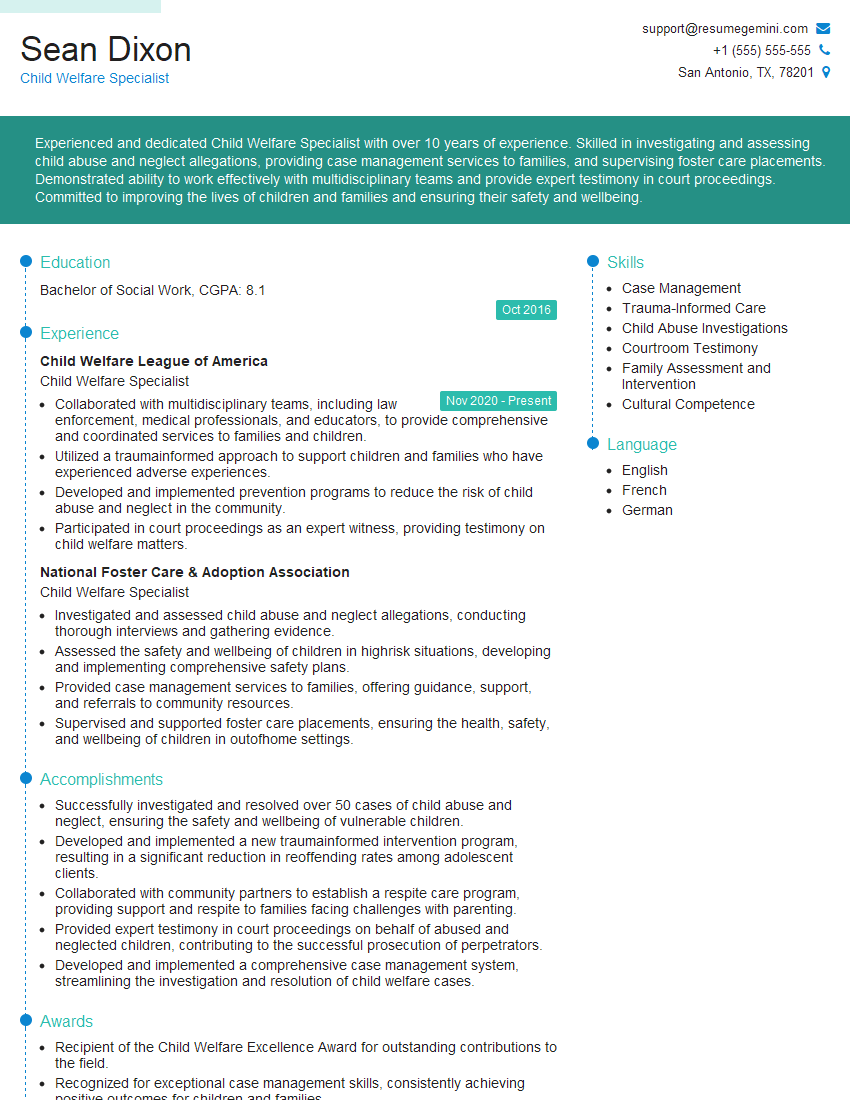
Mastering Child Abuse and Neglect Evaluation is crucial for career advancement in this vital field. A strong understanding of these concepts will significantly enhance your interview performance and open doors to rewarding opportunities. To further boost your job prospects, creating a compelling and ATS-friendly resume is essential. We recommend using ResumeGemini to build a professional resume that highlights your skills and experience effectively. ResumeGemini provides examples of resumes tailored specifically to Child Abuse and Neglect Evaluation roles, ensuring your application stands out from the competition.
Explore more articles
Users Rating of Our Blogs
Share Your Experience
We value your feedback! Please rate our content and share your thoughts (optional).
What Readers Say About Our Blog
To the interviewgemini.com Webmaster.
Very helpful and content specific questions to help prepare me for my interview!
Thank you
To the interviewgemini.com Webmaster.
This was kind of a unique content I found around the specialized skills. Very helpful questions and good detailed answers.
Very Helpful blog, thank you Interviewgemini team.