Preparation is the key to success in any interview. In this post, we’ll explore crucial Client Relations and Stakeholder Engagement interview questions and equip you with strategies to craft impactful answers. Whether you’re a beginner or a pro, these tips will elevate your preparation.
Questions Asked in Client Relations and Stakeholder Engagement Interview
Q 1. Describe your experience building and maintaining client relationships.
Building and maintaining strong client relationships is the cornerstone of successful business. It’s a continuous process that involves understanding their needs, exceeding expectations, and fostering trust. My approach involves several key stages:
- Initial Onboarding: I prioritize a thorough understanding of the client’s business goals, challenges, and preferred communication styles during the initial phase. This sets the foundation for a productive partnership.
- Regular Communication: I believe in proactive and transparent communication. This involves regular check-ins, progress reports, and open dialogue about any concerns or issues. I utilize various communication channels—email, phone calls, video conferencing—tailored to the client’s preference.
- Proactive Problem Solving: Instead of merely reacting to problems, I strive to anticipate potential issues and proactively offer solutions. This demonstrates foresight and commitment to the client’s success.
- Relationship Building: Building rapport goes beyond just business. I actively listen to clients, understand their perspectives, and build a genuine connection. I try to find common ground and create a comfortable space for open communication.
- Continuous Improvement: Regular feedback sessions help me gauge client satisfaction and identify areas for improvement. I always seek opportunities to refine my approach and strengthen the relationship.
For example, in my previous role, I successfully retained a key client facing significant restructuring by anticipating their concerns, proactively adjusting our service offerings, and providing regular updates that demonstrated our adaptability and commitment.
Q 2. How do you identify and prioritize key stakeholders?
Identifying and prioritizing key stakeholders requires a strategic approach. It’s not just about identifying individuals with titles; it’s about understanding their influence and interest in the project or initiative. I typically use a power/interest grid:
- Identify All Stakeholders: Begin by brainstorming a comprehensive list of all individuals or groups affected by or influencing the project or initiative. This includes internal teams, clients, regulators, community groups, etc.
- Assess Power and Interest: For each stakeholder, assess their level of power (influence over decisions) and interest (level of concern or involvement). This can be done through discussions, observation, or reviewing relevant documents.
- Categorize and Prioritize: Plot stakeholders on a power/interest grid. High power, high-interest stakeholders require close engagement. High power, low-interest stakeholders need to be kept informed. Low power, high-interest stakeholders require active communication and engagement to manage their expectations. Low power, low-interest stakeholders can be monitored passively.
The power/interest grid provides a visual representation for prioritizing stakeholder engagement efforts, allowing me to allocate resources effectively and manage expectations appropriately.
Q 3. Explain your approach to managing conflicting stakeholder interests.
Managing conflicting stakeholder interests requires a diplomatic and collaborative approach. It’s about finding solutions that meet the needs of multiple parties as much as possible, rather than simply choosing a side. My approach includes:
- Open Communication: Creating a safe space for all stakeholders to express their concerns and perspectives is crucial. I facilitate open dialogues, actively listening and acknowledging everyone’s viewpoints.
- Identify Common Ground: Even with conflicting interests, there’s often common ground. Focusing on shared objectives and goals helps build consensus.
- Negotiation and Compromise: I utilize negotiation techniques to find mutually acceptable solutions. This often involves compromise, where all stakeholders need to make some concessions.
- Facilitation and Mediation: If necessary, I can act as a facilitator or mediator, guiding stakeholders towards a resolution. This requires impartiality and strong conflict-resolution skills.
- Documentation and Transparency: Maintaining clear records of agreements, decisions, and rationale helps ensure transparency and accountability.
In one instance, I managed conflicting interests between a client who wanted a faster delivery and the development team who needed more time to ensure quality. By facilitating a collaborative discussion, we agreed on a phased delivery approach that satisfied both parties.
Q 4. How do you handle difficult client interactions or complaints?
Handling difficult client interactions or complaints requires empathy, professionalism, and a solution-oriented approach. My steps typically include:
- Active Listening: I start by actively listening to the client’s concerns without interruption, demonstrating empathy and understanding.
- Validate Feelings: Acknowledging the client’s frustrations and validating their feelings helps de-escalate the situation.
- Gather Information: I gather all relevant information to fully understand the issue and identify the root cause.
- Offer Solutions: I present potential solutions, clearly outlining the steps involved and the expected outcomes.
- Follow Up: I follow up with the client to ensure the solution has been implemented effectively and address any remaining concerns.
For example, once a client was upset about a delayed project. By actively listening, validating their concerns, and offering a revised timeline with a clear explanation for the delay, I was able to restore their trust and confidence.
Q 5. What strategies do you use to build trust and rapport with clients?
Building trust and rapport with clients is essential for long-term success. It’s a combination of demonstrating competence, displaying empathy, and consistently delivering value. My strategies include:
- Professionalism and Expertise: Delivering high-quality work consistently demonstrates competence and builds credibility.
- Empathy and Active Listening: Showing genuine interest in the client’s needs and concerns cultivates trust.
- Clear and Transparent Communication: Open and honest communication prevents misunderstandings and builds confidence.
- Reliability and Consistency: Following through on commitments and maintaining consistent performance fosters trust.
- Value-Added Services: Providing additional value beyond the initial agreement demonstrates commitment and strengthens the relationship.
For instance, proactively anticipating a client’s potential needs and offering solutions before they even raised them significantly strengthened our relationship and built trust in our expertise.
Q 6. Describe a time you exceeded client expectations. What was your approach?
I once exceeded client expectations by anticipating a potential issue and proactively implementing a solution. The client was launching a new product and was concerned about potential negative online reviews. While the initial project scope didn’t include social media monitoring, I proactively set up a social media monitoring system to track mentions of their product. This allowed us to identify and address concerns promptly, minimizing potential negative impact.
My approach involved:
- Identifying the Potential Problem: I understood the client’s concerns and recognized the potential for negative reviews.
- Proposing a Solution: I proposed a solution outside of the initial project scope but crucial for the client’s success.
- Executing the Solution Efficiently: I swiftly implemented the social media monitoring system.
- Communicating Results: I regularly reported the findings and actions taken, demonstrating proactive problem-solving.
The client was extremely pleased with our proactive approach, as it avoided a potential PR crisis. This went beyond their expectations, strengthening our relationship and leading to future projects.
Q 7. How do you measure the success of your client relations efforts?
Measuring the success of client relations efforts requires a multi-faceted approach. I use a combination of quantitative and qualitative measures:
- Client Satisfaction Surveys: Regular surveys gauge client satisfaction with our services and identify areas for improvement.
- Net Promoter Score (NPS): This metric measures client loyalty and willingness to recommend our services.
- Client Retention Rate: High retention rates indicate successful client relationships.
- Qualitative Feedback: Gathering qualitative feedback through meetings, email correspondence, and informal conversations provides valuable insights into client experiences.
- Project Success Metrics: On-time and within-budget project completion demonstrates effectiveness.
By tracking these metrics, I can monitor the success of my client relations efforts, identify areas needing improvement, and demonstrate the value of my contributions to the organization.
Q 8. How do you adapt your communication style to different stakeholders?
Adapting communication style is crucial for effective stakeholder engagement. It’s about understanding your audience and tailoring your message to resonate with their needs, preferences, and communication styles. I approach this using a personalized strategy, considering factors like their seniority, technical expertise, and preferred communication channels.
- Senior Executives: I focus on concise, high-level summaries, emphasizing strategic impact and key results. I prefer email or brief in-person meetings.
- Technical Teams: I use precise language, detailed information, and visual aids to ensure clarity and understanding. I might utilize project management software or video conferencing for collaborative discussions.
- Clients: I prioritize active listening, empathy, and building rapport. The communication style needs to be professional but approachable, utilizing the client’s preferred method of contact (email, phone, video conference) and adjusting the tone accordingly based on the situation (e.g., a celebratory update versus a challenging problem).
For example, when presenting a project update to a C-suite executive, I’d focus on the overall strategy, key performance indicators (KPIs), and potential risks. However, when discussing the same project with the engineering team, I’d delve into the technical details, challenges, and proposed solutions.
Q 9. How do you proactively identify potential client issues or risks?
Proactive risk identification is essential for maintaining strong client relationships. I employ a multi-faceted approach, combining data analysis with ongoing communication and observation.
- Data Analysis: I regularly review client data, including project timelines, resource allocation, and performance metrics, to identify potential bottlenecks or deviations from expected outcomes. This might involve using project management tools to track progress and flag potential issues.
- Regular Check-ins: I schedule regular meetings or calls with clients to discuss project progress, address concerns, and solicit feedback. This allows for early detection of emerging issues before they escalate.
- Active Listening: I pay close attention to verbal and non-verbal cues during client interactions to understand their concerns, frustrations, or unspoken needs. Subtle shifts in tone or hesitancy can often indicate potential problems.
- Industry Knowledge: Keeping abreast of industry trends and challenges allows me to proactively anticipate potential risks and develop mitigation strategies. For example, understanding impending regulatory changes could allow me to advise a client and avoid potential pitfalls.
For instance, if I notice a project is consistently behind schedule, I’d proactively investigate the root cause, discuss the issue with the client, and propose solutions to get the project back on track. This prevents a minor delay from turning into a major conflict.
Q 10. How do you use technology to enhance client relations?
Technology plays a vital role in enhancing client relations. It facilitates efficient communication, improves collaboration, and provides valuable data-driven insights.
- CRM Systems: These systems centralize client information, track interactions, and automate tasks, leading to improved organization and personalized service. (More on my CRM experience below)
- Project Management Software: Tools like Asana or Jira allow for real-time project tracking, facilitating transparent communication and collaborative problem-solving.
- Communication Platforms: Utilizing platforms like Slack or Microsoft Teams enhances communication speed and keeps everyone informed. Video conferencing tools further enhance this by allowing for face-to-face interactions.
- Client Portals: These provide clients with secure access to project documents, progress reports, and other relevant information, empowering them and fostering a sense of involvement.
For example, using a client portal to share project updates, documents, and feedback forms simplifies the process and improves transparency. It eliminates the back-and-forth emails and keeps everyone on the same page.
Q 11. Describe your experience using CRM software.
I have extensive experience using CRM software, primarily Salesforce and HubSpot. My experience goes beyond simply inputting data; I leverage these tools to optimize client interactions and enhance the overall client experience.
- Data Management: I meticulously maintain accurate and up-to-date client information, including contact details, interaction history, project details, and preferences.
- Workflow Automation: I utilize automation features to streamline tasks such as sending follow-up emails, scheduling appointments, and generating reports, freeing up time for more strategic client interactions.
- Reporting and Analytics: I leverage CRM data to generate reports on client satisfaction, project performance, and sales trends, providing valuable insights for strategic decision-making.
- Segmentation and Targeting: I use CRM capabilities to segment clients based on various criteria (industry, size, needs) to tailor communication and service offerings.
In a past role, I implemented a new CRM system, training the team and developing customized reports that significantly improved our ability to track client engagement and identify potential at-risk accounts. This proactive approach resulted in a measurable increase in client retention.
Q 12. How do you manage multiple client relationships simultaneously?
Managing multiple client relationships simultaneously requires strong organizational skills, effective prioritization, and a clear understanding of each client’s unique needs and expectations. I use a combination of strategies to ensure all clients receive the attention and service they deserve.
- Prioritization Matrix: I use a prioritization matrix (e.g., Eisenhower Matrix – Urgent/Important) to identify and address the most critical client needs first. This ensures that urgent issues don’t get overlooked.
- Dedicated Time Blocks: I schedule dedicated time blocks in my calendar for each client or project, ensuring sufficient time to address their specific needs without feeling rushed.
- Effective Delegation: Where possible, I delegate tasks to team members, ensuring clear communication and accountability. This allows me to focus my time and attention on high-priority client interactions.
- Regular Communication: I maintain regular communication with all clients, even those not currently requiring immediate attention, to ensure they feel valued and informed.
Imagine juggling multiple balls – each ball representing a client. My approach ensures that I don’t let any ball drop, but rather maintain a smooth and controlled juggling act.
Q 13. How do you handle client feedback, both positive and negative?
Client feedback, both positive and negative, is invaluable for improving services and strengthening relationships. I approach all feedback with a proactive and solution-oriented mindset.
- Positive Feedback: I acknowledge and appreciate positive feedback, using it to reinforce successful strategies and recognize team accomplishments. I might use this feedback in case studies or testimonials to highlight our successes.
- Negative Feedback: I view negative feedback as an opportunity for improvement. I actively listen to understand the client’s concerns, empathize with their perspective, and promptly address the issues. I document the feedback, analyze the root causes, and implement corrective actions.
- Follow-up: Regardless of the nature of the feedback, I always follow up with the client to demonstrate my commitment to resolving their concerns and ensuring their satisfaction.
For example, if a client expresses dissatisfaction with a specific aspect of our service, I’d investigate the problem, apologize sincerely, and outline the steps we’re taking to rectify the situation. This demonstrates accountability and commitment to resolving the issue.
Q 14. How do you prioritize competing client demands?
Prioritizing competing client demands requires a structured approach that balances urgency, importance, and long-term client relationships. My approach is to be transparent and communicative with clients.
- Clearly Defined Priorities: I start by establishing clear priorities based on contractual obligations, project deadlines, and the potential impact of delays on client business. A prioritization matrix is very helpful here.
- Transparent Communication: When facing competing demands, I communicate openly and honestly with all affected clients, explaining the situation and outlining the prioritization strategy. This maintains trust and builds stronger relationships.
- Negotiation and Collaboration: If possible, I negotiate with clients to adjust timelines or expectations, finding mutually agreeable solutions that minimize disruption. Collaboration is key to navigating conflicting priorities.
- Time Management Techniques: I use time management techniques such as time blocking and the Pomodoro Technique to efficiently allocate my time and ensure all tasks are completed effectively.
For instance, if two clients require urgent attention simultaneously, I might prioritize the client with a more critical deadline or a more significant impact on their business. I’d then communicate with the other client, providing a realistic timeline for addressing their concerns.
Q 15. Describe a time you had to negotiate a challenging situation with a client.
Negotiating with clients is a crucial aspect of client relations. It requires a delicate balance of empathy, assertiveness, and strategic thinking. One challenging situation involved a client who insisted on a significant scope change midway through a project, despite the contract specifying a fixed scope. This threatened both the project timeline and budget.
My approach involved first actively listening to understand their concerns. They felt the original scope was insufficient to address a newly discovered need. Then, I presented a clear and structured response, outlining the impact of the changes on the timeline and budget. I didn’t simply say ‘no.’ Instead, I proposed alternative solutions: a revised timeline with a cost increase, or a phased approach to implement the additional features, prioritizing the most critical aspects. We collaboratively assessed the options, highlighting the trade-offs of each, to reach a mutually agreeable solution that involved a modified scope and a revised timeline with transparent costing adjustments. The key was focusing on mutual understanding and finding a solution that accommodated their needs while protecting the project’s integrity. Open communication and collaborative problem-solving were essential to achieving a successful outcome.
Career Expert Tips:
- Ace those interviews! Prepare effectively by reviewing the Top 50 Most Common Interview Questions on ResumeGemini.
- Navigate your job search with confidence! Explore a wide range of Career Tips on ResumeGemini. Learn about common challenges and recommendations to overcome them.
- Craft the perfect resume! Master the Art of Resume Writing with ResumeGemini’s guide. Showcase your unique qualifications and achievements effectively.
- Don’t miss out on holiday savings! Build your dream resume with ResumeGemini’s ATS optimized templates.
Q 16. How do you build consensus among stakeholders with differing opinions?
Building consensus among stakeholders with conflicting viewpoints necessitates a structured and inclusive approach. It’s like conducting an orchestra; each instrument (stakeholder) has a unique role, and the conductor (you) needs to harmonize them.
- Facilitate open dialogue: Create a safe space for all stakeholders to express their opinions and concerns.
- Identify common ground: Look for areas of agreement to build a foundation for compromise.
- Prioritize stakeholder needs: Understand the priorities and concerns of each stakeholder, weighting them appropriately based on their influence and impact.
- Employ collaborative decision-making tools: Techniques like nominal group technique or brainstorming sessions can help structure the discussion and facilitate reaching a compromise.
- Document agreements: Ensure that all decisions are documented clearly and communicated effectively to all stakeholders to avoid misunderstandings and future conflicts.
For example, in a project involving several departments, each with differing priorities and resource constraints, I used a collaborative planning session to visualize the project dependencies and constraints. By using a shared whiteboard and facilitating a discussion, we identified areas of overlap and prioritized tasks based on overall project goals. This transparency and collaborative approach led to a unified plan that each department could support.
Q 17. What are your preferred methods for communicating with clients?
My preferred communication methods are multifaceted and tailored to the client’s preferences and the context. There’s no one-size-fits-all approach.
- Regular Project Updates: I usually schedule weekly or bi-weekly progress meetings, using both video conferencing and email to maintain efficient and accessible communication.
- Project Management Software: Tools like Asana or Monday.com allow for transparent task management, file sharing, and progress tracking, keeping clients informed and engaged.
- Formal Written Communication: For critical decisions, project proposals, or contract changes, I prefer formal email exchanges or documentation for clarity and record-keeping.
- Informal Communication (as appropriate): Quick questions and informal updates can be handled via instant messaging tools, maintaining an approachable and responsive client experience. This fosters a strong client relationship.
The key is to proactively communicate and ensure all parties are on the same page, adapting my approach depending on the client’s preferences and the urgency of the matter.
Q 18. How do you ensure client satisfaction throughout the project lifecycle?
Ensuring client satisfaction is a continuous process, not a one-time event. It requires proactive management throughout the project lifecycle.
- Establish clear expectations upfront: Detailed project scopes, timelines, and deliverables are essential at the outset to align expectations.
- Proactive communication: Regular updates, highlighting milestones achieved and challenges addressed.
- Seek regular feedback: Actively solicit feedback at various project stages to address any concerns or misalignments promptly.
- Manage change effectively: Implement a structured process for managing scope changes, ensuring transparency and agreement on any cost or schedule implications.
- Post-project follow-up: A formal post-project survey or feedback session helps gather valuable insights for improvement and demonstrates a commitment to ongoing client relationships.
For instance, in a recent web development project, we conducted weekly check-in meetings where we not only shared progress but also invited the client to showcase their own progress on their internal responsibilities. This collaborative approach helped build trust and fostered a sense of shared ownership, leading to exceptional client satisfaction.
Q 19. How do you stay organized and manage your workload effectively in a fast-paced environment?
In a fast-paced environment, organizational skills are paramount. My approach relies on a blend of technology and strategic time management.
- Project Management Software: I leverage project management tools to assign tasks, set deadlines, and track progress, creating a centralized hub for all project-related information.
- Prioritization techniques: Employing methods like Eisenhower Matrix (urgent/important) helps focus on high-impact tasks first.
- Time blocking: Allocating specific time blocks for different tasks prevents multitasking and improves focus.
- Regular review and adjustment: Daily or weekly reviews of my schedule allow for course correction and prevent task overload.
- Delegation (when possible): Identifying tasks that can be effectively delegated frees up time for higher-priority activities.
For instance, I use a combination of Asana and a personal calendar to manage my workload. I schedule specific times for client communications, task execution, and administrative work, ensuring a balanced allocation of time and minimizing conflicts.
Q 20. Describe your experience in developing client proposals and presentations.
Developing compelling client proposals and presentations requires a strategic approach, combining strong writing skills with persuasive delivery.
- Understanding client needs: Thorough research and clear understanding of the client’s business context are fundamental to creating a relevant proposal.
- Structured proposal format: A clear and concise structure, highlighting the problem, solution, benefits, and pricing, enhances readability and persuasiveness.
- Visual aids: Incorporating charts, graphs, and images to illustrate key points makes the proposal more engaging.
- Compelling narrative: The proposal should tell a story, demonstrating how the solution addresses the client’s specific needs and challenges.
- Practice and refinement: Rehearsing the presentation ensures a smooth and confident delivery.
A recent example involved a proposal for a new CRM system. By deeply understanding their sales process and pain points, we were able to tailor the proposal to directly address their specific challenges. We showcased success stories of similar clients, strengthening our credibility and improving the proposal’s impact. The result was a successful proposal and a new client.
Q 21. How do you manage client expectations effectively?
Managing client expectations is vital for building trust and preventing conflicts. It requires transparent communication and proactive management.
- Set realistic expectations: Clearly define project scopes, timelines, and deliverables, avoiding over-promising.
- Proactive communication: Regularly update clients on project progress, challenges, and potential delays.
- Address concerns promptly: Acknowledge and address client concerns with empathy and a commitment to finding solutions.
- Document agreements: Formalize agreements through contracts and project plans to create a shared understanding of expectations.
- Manage scope creep: Establish a process for managing scope changes to avoid unexpected delays and cost increases.
In a project with a tight deadline, we proactively communicated any potential risks or delays, providing alternative solutions to keep the project on track and meet the client’s goals. This transparency, despite the challenges, reinforced their trust and strengthened our relationship.
Q 22. How do you measure client satisfaction and loyalty?
Measuring client satisfaction and loyalty is crucial for sustained business growth. It’s not just about asking ‘Are you happy?’, but understanding the why behind their responses. My approach is multifaceted, incorporating both quantitative and qualitative data.
Quantitative Methods: These involve numerical data and include surveys (using platforms like SurveyMonkey or Qualtrics) with standardized scoring, Net Promoter Score (NPS) calculations, and analyzing customer lifetime value (CLTV).
Qualitative Methods: These explore deeper insights. I conduct regular client interviews, analyze feedback from support tickets and reviews (on platforms like Google Reviews or Yelp), and actively participate in focus groups to understand unmet needs and pain points.
Combining Data: I synthesize the quantitative and qualitative data to build a holistic picture. For instance, a low NPS score might point towards a general dissatisfaction. Interviews then help me pinpoint the root cause – perhaps a specific feature is problematic or customer service responses are lacking. This combined approach provides actionable insights for improvement.
Example: In a previous role, we noticed a dip in our NPS. Quantitative data showed dissatisfaction with our onboarding process. Qualitative interviews revealed the problem wasn’t the process itself, but inadequate training materials for new users. By addressing this, we saw a significant improvement in NPS and client retention.
Q 23. What is your experience with conflict resolution in client relationships?
Conflict resolution is an inevitable part of client relationships. My approach is based on empathy, active listening, and a commitment to finding mutually beneficial solutions. I follow a structured process:
Active Listening: I begin by patiently listening to the client’s concerns, ensuring I fully understand their perspective without interruption.
Empathy and Validation: I acknowledge their feelings, even if I don’t agree with their assessment. This shows respect and builds trust.
Joint Problem-Solving: Instead of assigning blame, I collaboratively work with the client to identify the root cause of the conflict and brainstorm solutions together. This fosters a sense of shared ownership and responsibility.
Documentation and Follow-up: I clearly document the agreed-upon solution and the steps required for implementation. I also follow up to ensure the resolution is effective and the client is satisfied.
Example: A client once complained about a missed deadline. Instead of making excuses, I apologized for the inconvenience, explained the reasons for the delay transparently, and offered a revised timeline and compensatory measures. This resulted in a stronger client relationship than before.
Q 24. How familiar are you with different communication channels and their effectiveness for clients?
Effective communication is key in client relations. My familiarity extends across various channels, each with its strengths and weaknesses:
Email: Ideal for formal communication, documentation, and providing detailed information. However, it can lack immediate feedback and may lead to misinterpretations.
Phone calls: Allow for real-time interaction, immediate clarification, and building rapport. But they’re less convenient and lack a written record.
Video conferencing (Zoom, Teams): Combines the benefits of phone calls with visual communication, enhancing engagement and understanding. It requires technological proficiency from both parties.
Project management software (Asana, Trello): Excellent for task management, collaboration, and tracking progress. It centralizes communication and provides a clear record of interactions.
Instant messaging (Slack, Microsoft Teams): Suitable for quick updates and informal communication. However, it can become overwhelming if not managed properly and may lack a formal record.
My selection of communication channels depends on the context, the client’s preferences, and the urgency of the matter. I always aim for clarity, professionalism, and responsiveness, regardless of the channel.
Q 25. Describe a time you failed to meet a client’s expectations. What did you learn?
In a previous project, we underestimated the complexity of integrating a third-party system. This led to a significant delay in delivering a key feature to a client, causing frustration and impacting their operations. While we worked tirelessly to rectify the situation, the initial delay eroded trust.
Lessons Learned:
Thorough Requirements Gathering: I now prioritize detailed upfront discussions with clients to ensure complete understanding of their needs and potential complexities.
Realistic Project Planning: I implement more conservative timelines, incorporating buffer time to account for unforeseen issues.
Transparent Communication: Proactive and transparent communication about potential challenges is crucial. Instead of hiding problems, we now address them early and collaboratively brainstorm solutions with clients.
This experience taught me the importance of proactive risk management and transparent communication. It reinforced the idea that client relationships are built on trust, and trust is earned through honesty and accountability.
Q 26. How do you contribute to a positive team environment while working with clients?
Contributing to a positive team environment is crucial for successful client relations. My approach focuses on several key aspects:
Collaboration and Knowledge Sharing: I actively participate in team discussions, share my expertise, and support my colleagues. This creates a collaborative spirit and ensures consistent client experience.
Open Communication: I maintain open and transparent communication within the team, keeping everyone informed about client progress and challenges. This prevents misunderstandings and promotes efficiency.
Constructive Feedback: I provide and receive constructive feedback openly and respectfully. This encourages continuous improvement and fosters a learning environment.
Positive Attitude: Maintaining a positive and supportive attitude contributes to a pleasant and productive work atmosphere. This positivity spills over into interactions with clients.
Example: During a particularly challenging project, I actively mentored a junior team member, sharing my experience and providing support. This not only helped the team deliver the project successfully but also strengthened our team cohesion.
Q 27. Describe your approach to onboarding new clients.
Onboarding new clients is a critical process for setting the stage for a successful and long-lasting relationship. My approach is structured and personalized:
Initial Kick-off Meeting: This meeting sets clear expectations, confirms project scope, clarifies timelines, and establishes communication protocols. It allows me to understand the client’s business objectives and challenges.
Documentation and Processes: We provide clear and concise documentation, outlining our processes, responsibilities, and expectations. This minimizes confusion and ensures everyone is on the same page.
Regular Check-ins: We establish regular check-in meetings to monitor progress, address any concerns, and ensure alignment with the client’s goals.
Feedback Mechanisms: We implement systems for ongoing feedback, allowing the client to voice their thoughts and concerns throughout the onboarding process.
This structured approach ensures a smooth transition and builds a foundation of trust and collaboration from the start.
Q 28. How do you identify opportunities for cross-selling or upselling to existing clients?
Identifying opportunities for cross-selling and upselling involves a deep understanding of the client’s needs and our product/service offerings. My approach is proactive and relationship-focused:
Regular Client Reviews: These meetings provide opportunities to discuss the client’s evolving needs and identify potential gaps where our additional services could add value. This involves active listening and careful observation.
Market Research and Trends: Staying informed about industry trends and competitor offerings allows me to proactively suggest solutions that might benefit the client.
Analyzing Client Data: Examining usage patterns and feedback can reveal areas for upselling or suggesting add-ons that would improve their experience or efficiency.
Building Rapport: A strong relationship with the client allows for open conversations about their future plans and potential needs, opening doors for cross-selling opportunities.
Example: A client initially subscribed to our basic service. During a review meeting, I learned about their growing team and the need for enhanced collaboration tools. This led to a successful upsell to our premium package, increasing their satisfaction and our revenue.
Key Topics to Learn for Client Relations and Stakeholder Engagement Interview
- Building Rapport and Trust: Understanding the nuances of communication styles, active listening techniques, and empathy to establish strong relationships with clients and stakeholders.
- Effective Communication Strategies: Mastering both written and verbal communication, including tailoring messages to different audiences and using appropriate channels for different situations (e.g., email, phone calls, presentations).
- Conflict Resolution and Negotiation: Developing skills to proactively identify and address potential conflicts, negotiate win-win solutions, and manage challenging stakeholders effectively.
- Stakeholder Management & Analysis: Identifying key stakeholders, understanding their needs and priorities, and developing strategies to effectively engage and manage their expectations.
- Relationship Management Systems (CRM): Demonstrating familiarity with CRM software and its application in tracking interactions, managing contacts, and improving client relationships.
- Project Management Principles: Understanding how to apply project management methodologies to ensure successful client projects and stakeholder satisfaction.
- Performance Measurement and Reporting: Tracking key performance indicators (KPIs) related to client satisfaction and stakeholder engagement, and preparing clear and concise reports.
- Problem-solving and Decision-Making in Client Interactions: Applying critical thinking skills to resolve client issues effectively and make data-driven decisions that benefit all parties.
Next Steps
Mastering Client Relations and Stakeholder Engagement is crucial for career advancement. Strong interpersonal skills are highly valued across all industries, leading to increased responsibility, leadership opportunities, and higher earning potential. To enhance your job prospects, creating a powerful, ATS-friendly resume is essential. ResumeGemini can significantly help you achieve this. We offer a trusted platform for building professional resumes, and we provide examples of resumes specifically tailored to Client Relations and Stakeholder Engagement to guide you. Invest time in crafting a compelling resume that highlights your skills and experience – it’s your first impression with potential employers.
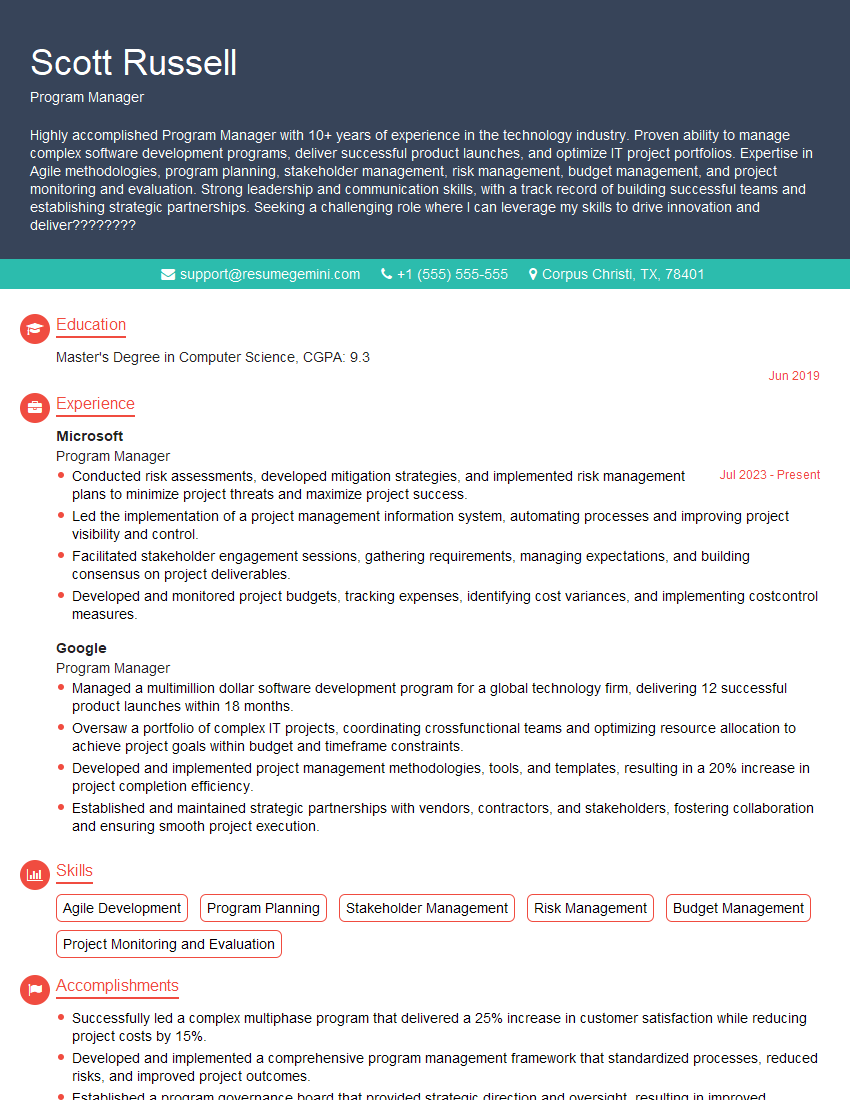
Program Manager Resume Sample
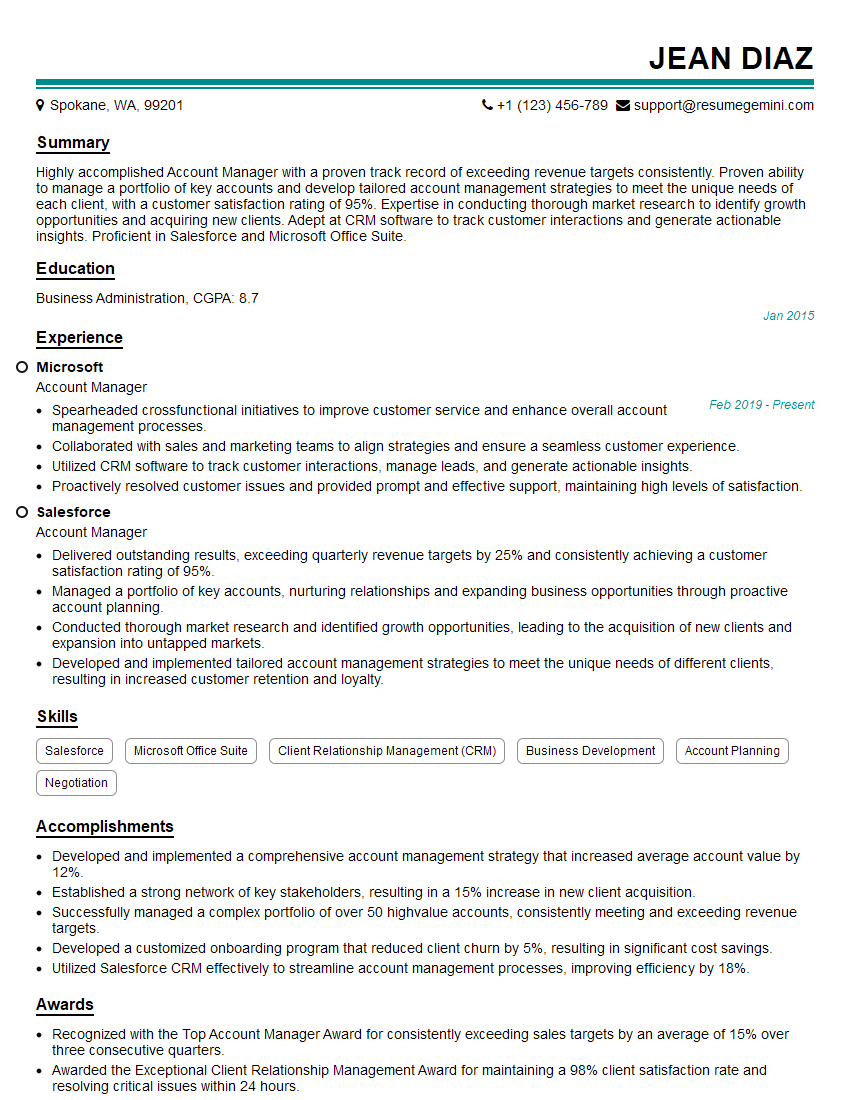
Account Manager Resume Sample
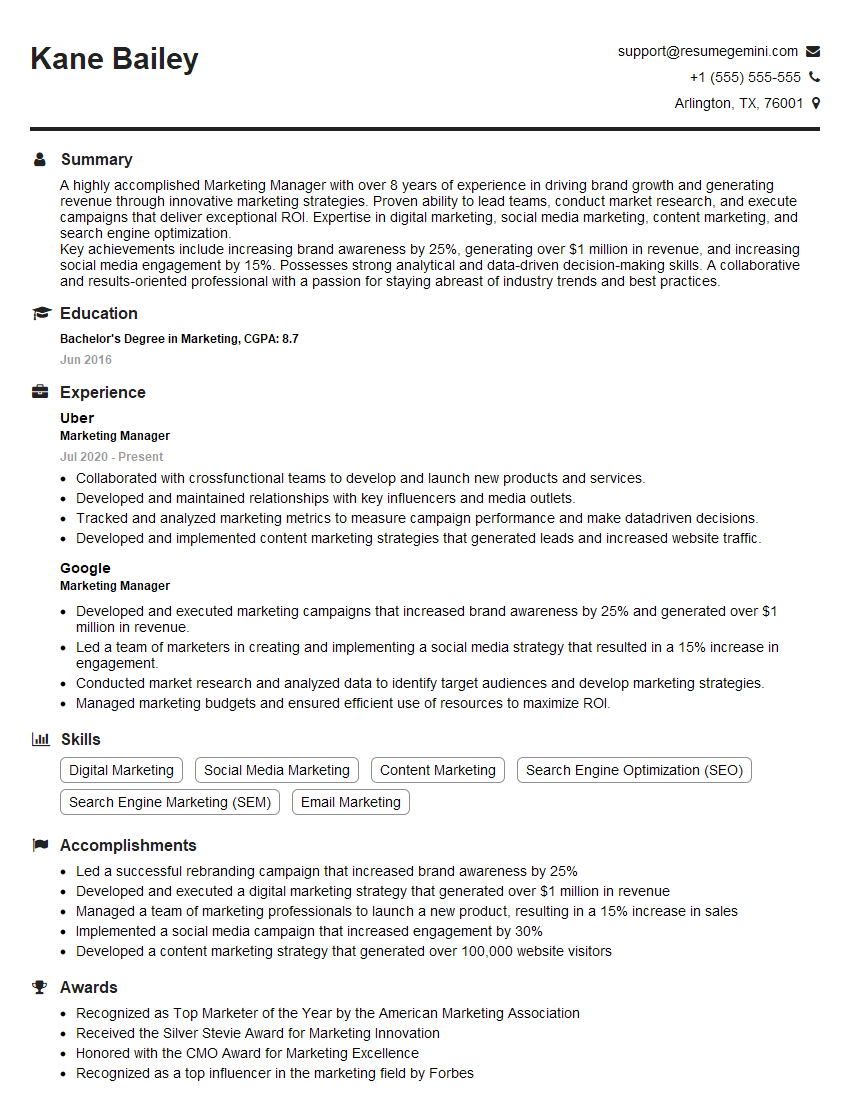
Marketing Manager Resume Sample
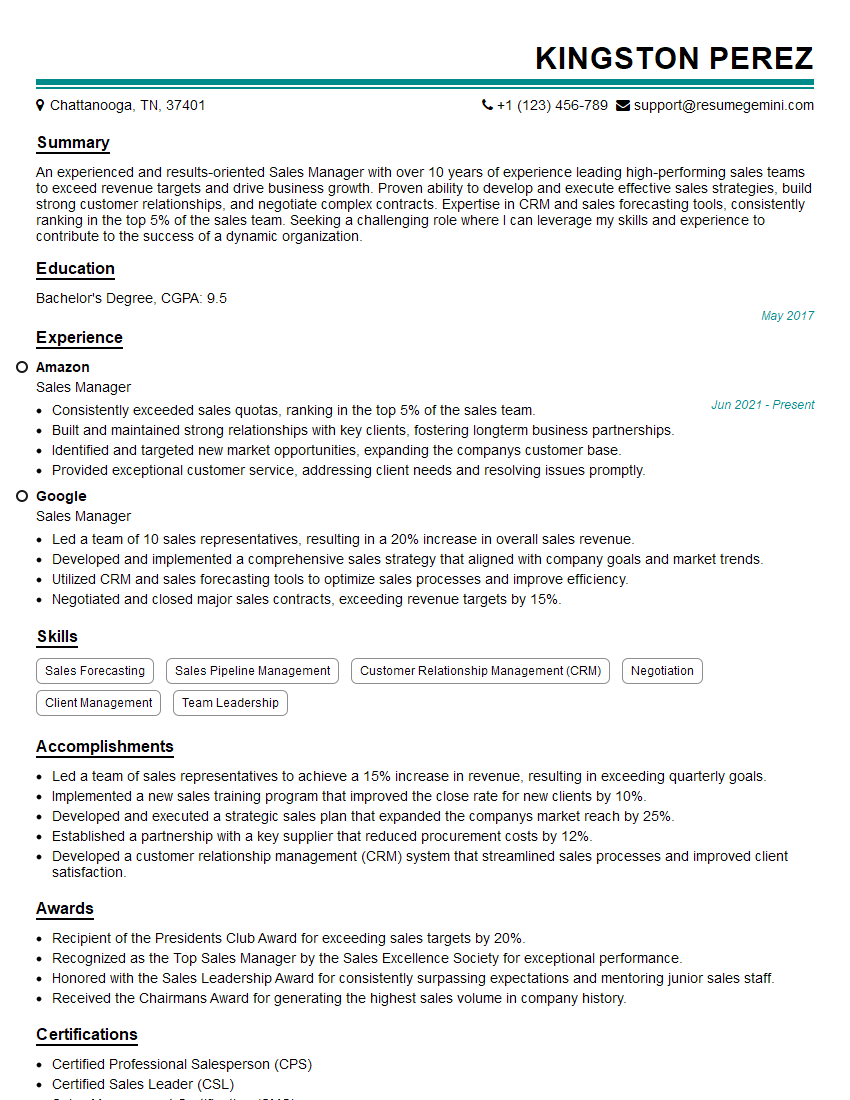
Sales Manager Resume Sample
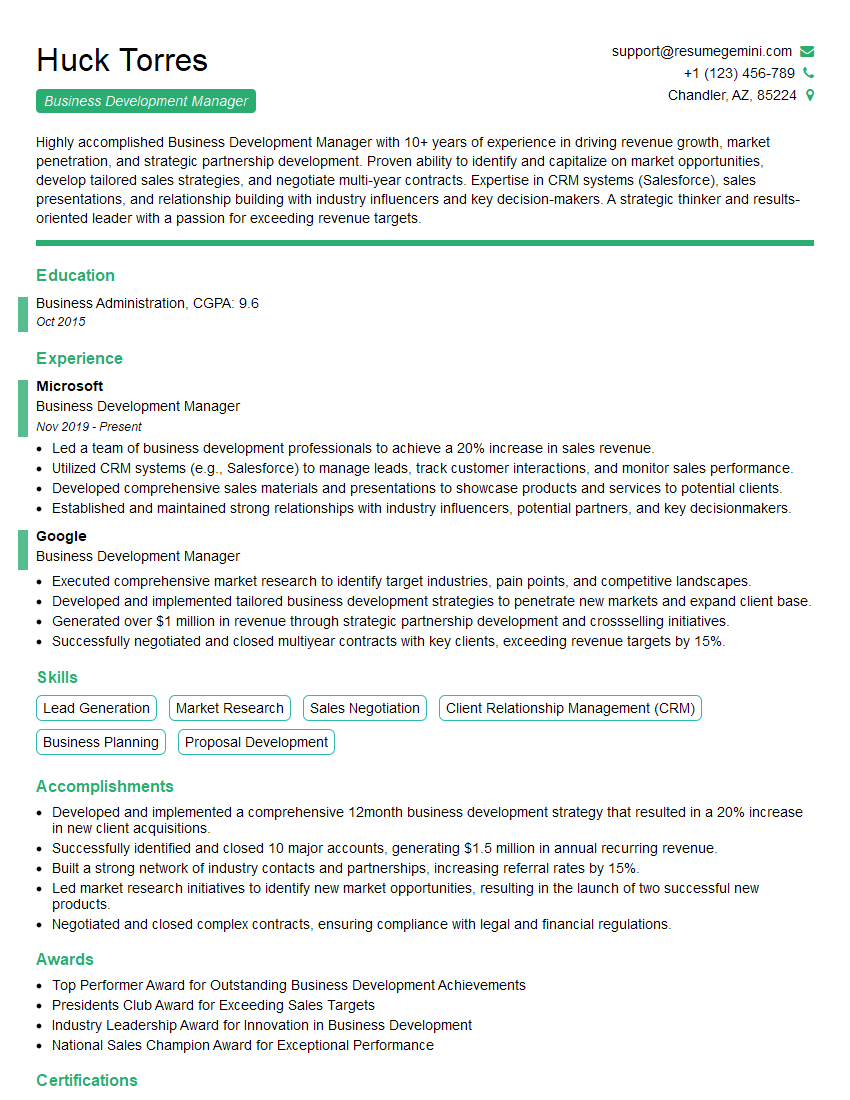
Business Development Manager Resume Sample

Communications Manager Resume Sample
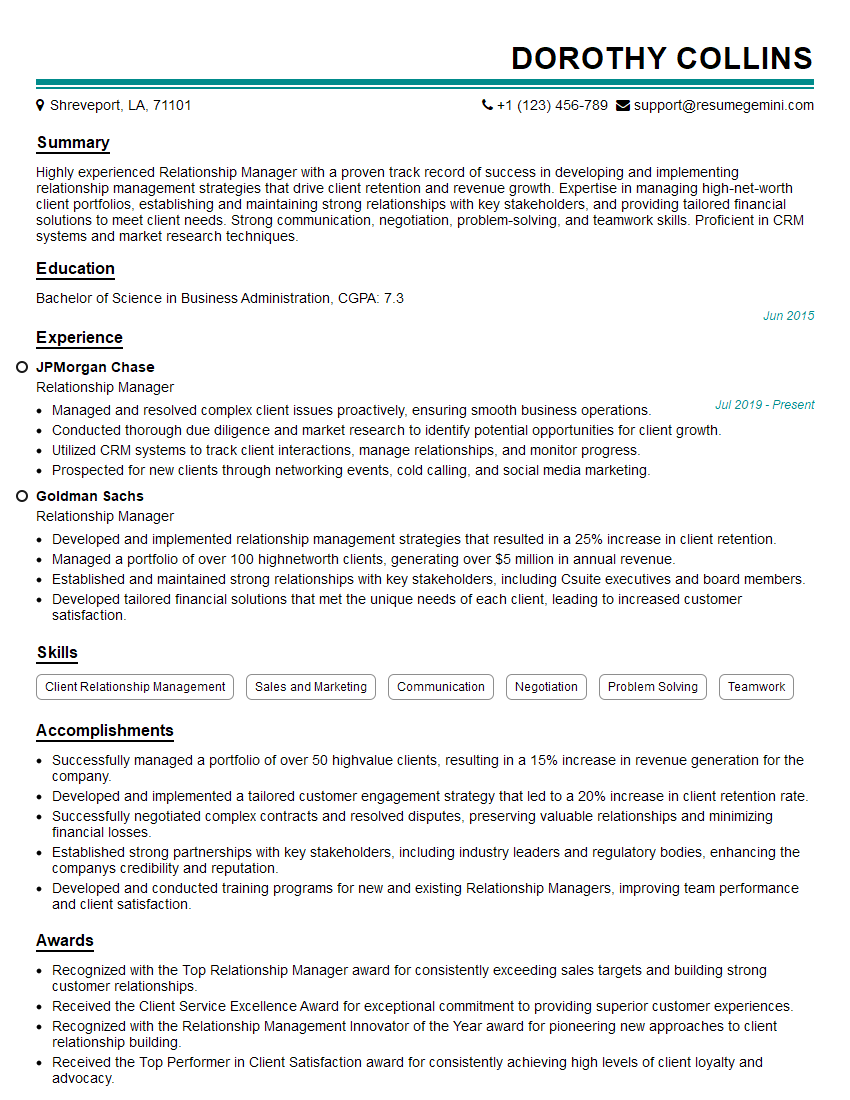
Relationship Manager Resume Sample

Project Manager Resume Sample
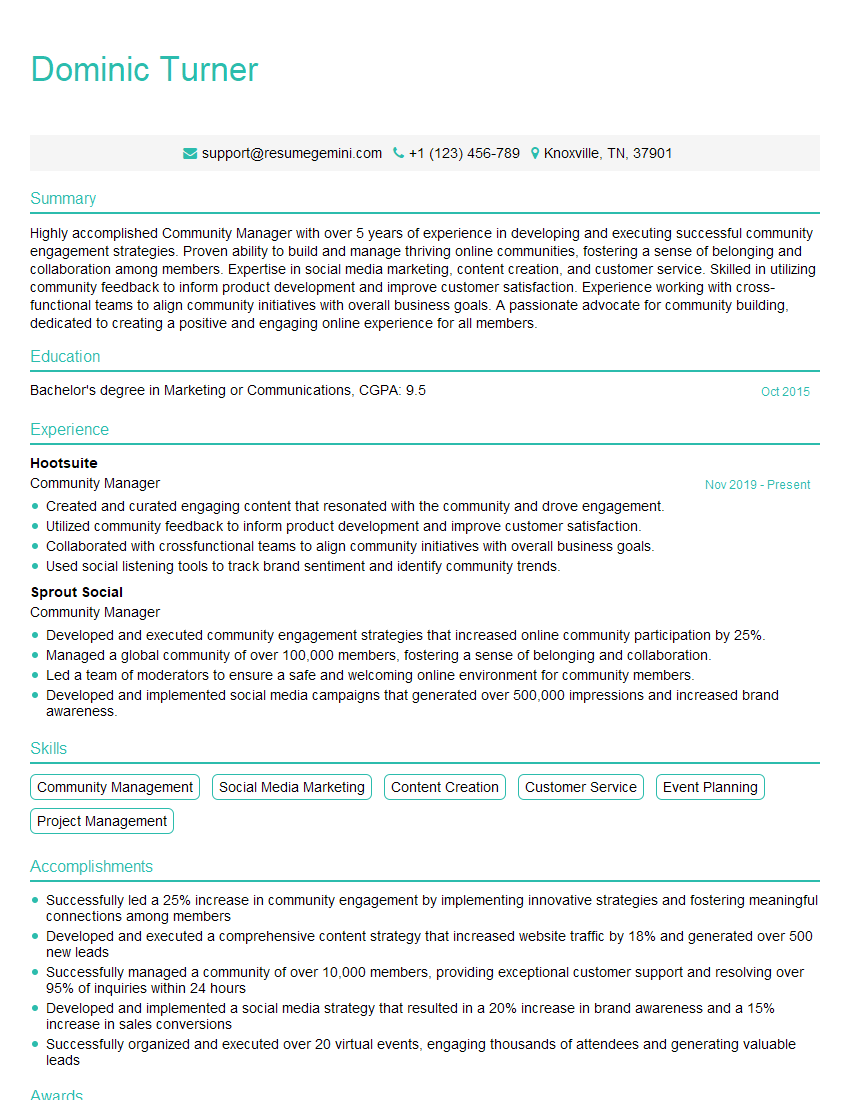
Community Manager Resume Sample
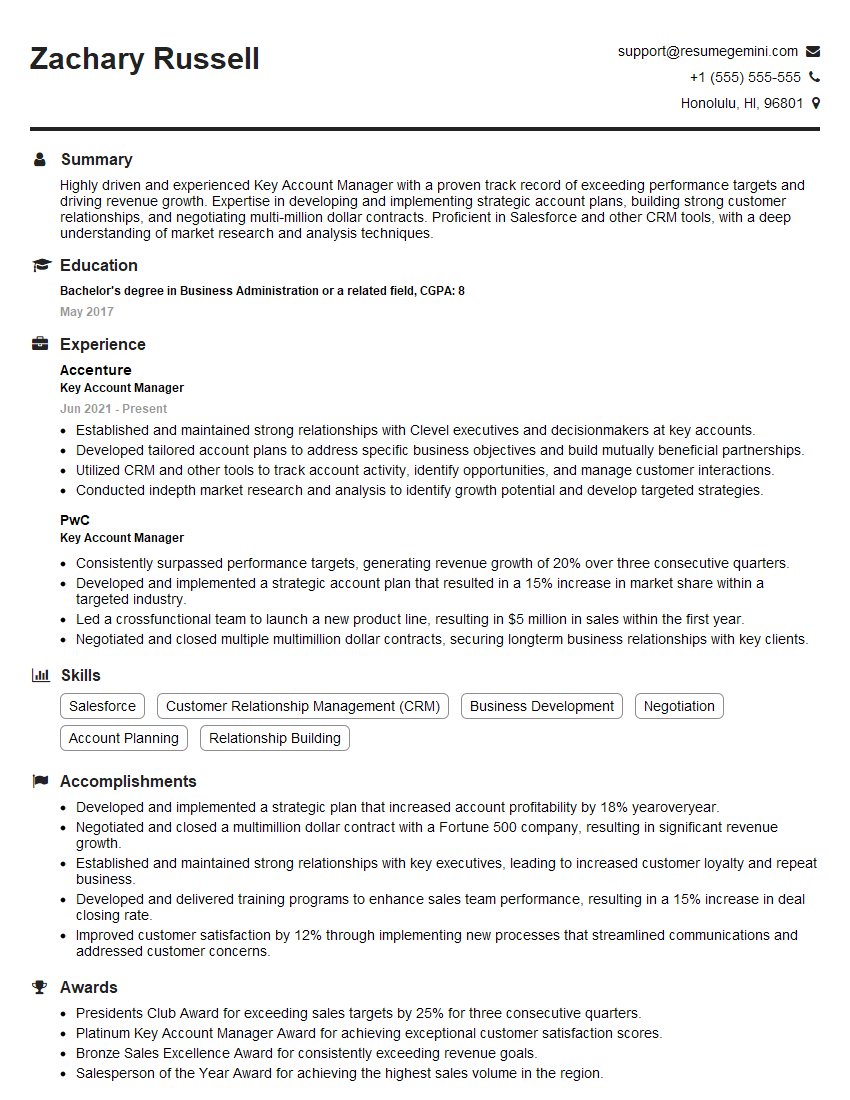
Key Account Manager Resume Sample
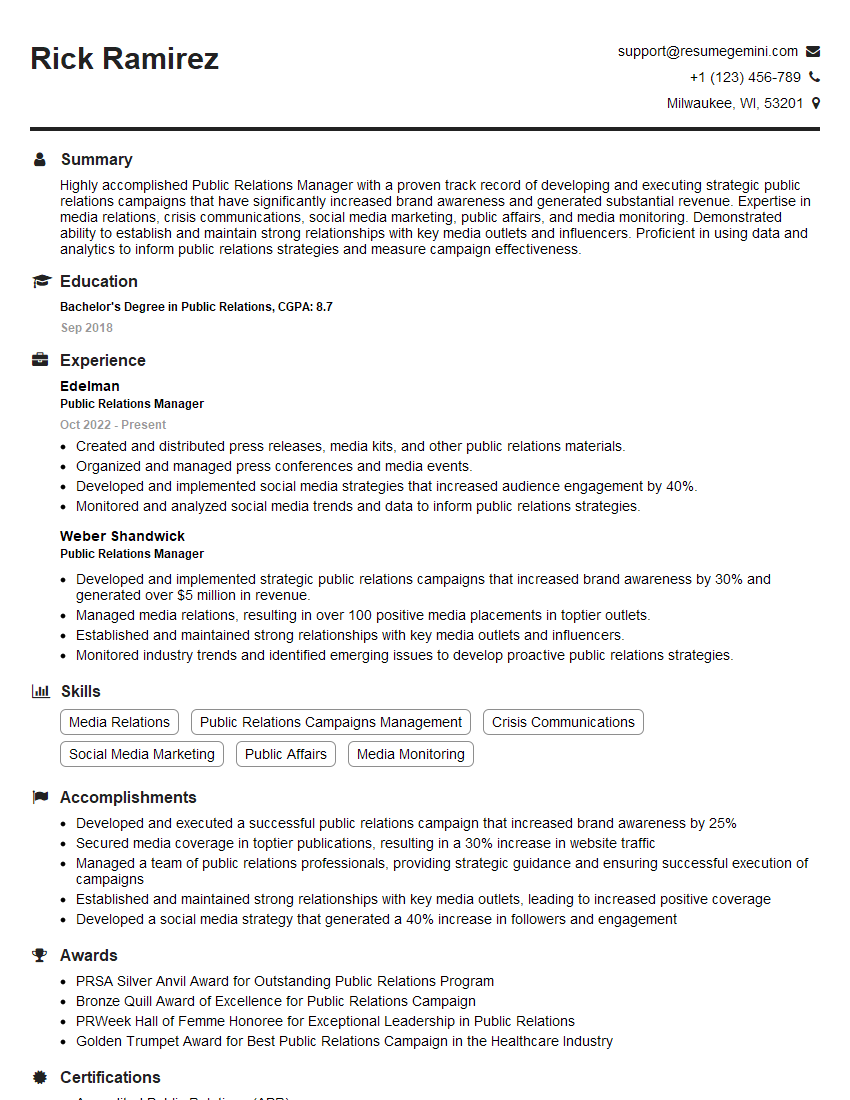
Public Relations Manager Resume Sample
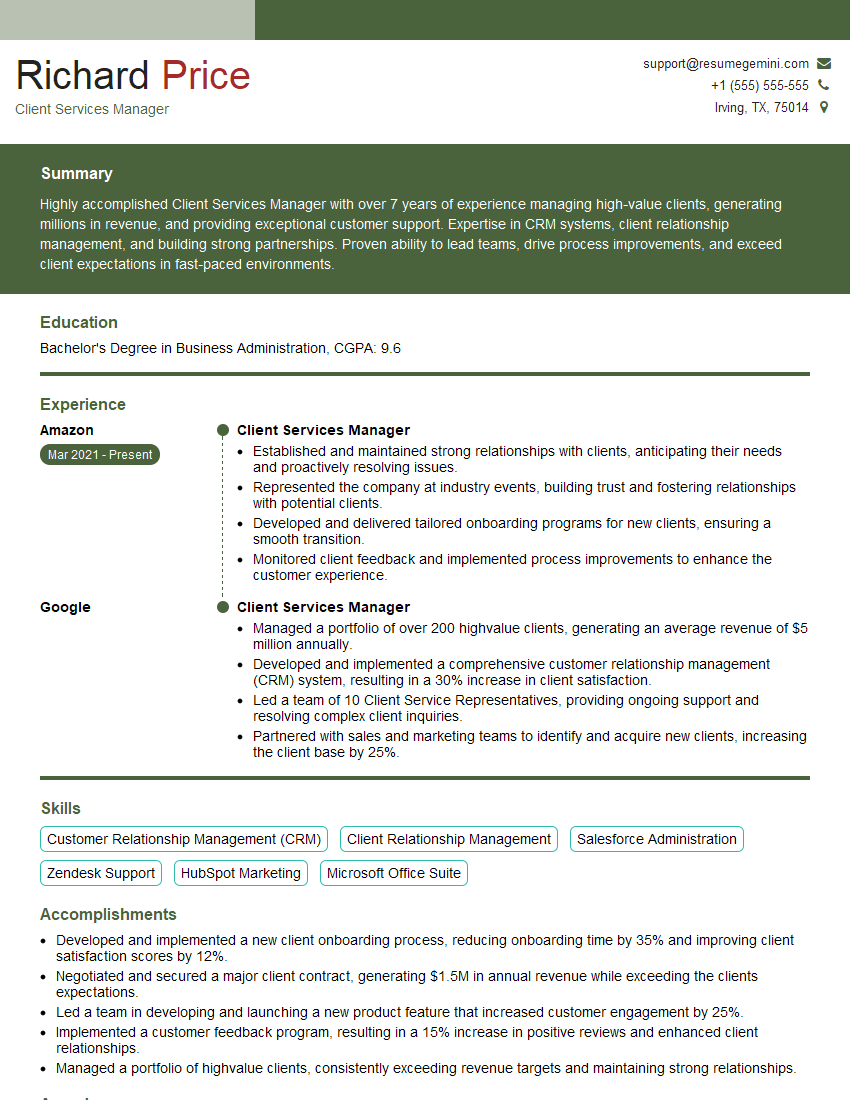
Client Services Manager Resume Sample
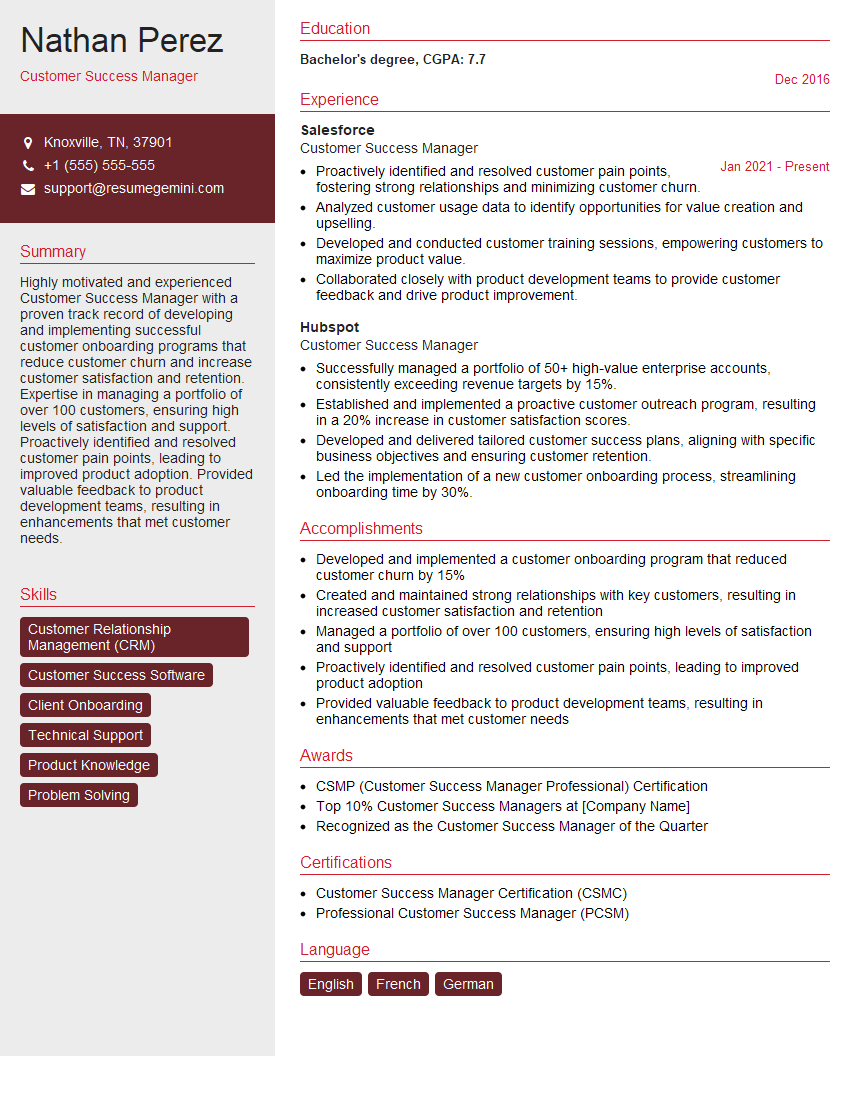
Customer Success Manager Resume Sample
Explore more articles
Users Rating of Our Blogs
Share Your Experience
We value your feedback! Please rate our content and share your thoughts (optional).
What Readers Say About Our Blog
To the interviewgemini.com Webmaster.
Very helpful and content specific questions to help prepare me for my interview!
Thank you
To the interviewgemini.com Webmaster.
This was kind of a unique content I found around the specialized skills. Very helpful questions and good detailed answers.
Very Helpful blog, thank you Interviewgemini team.