Interviews are more than just a Q&A session—they’re a chance to prove your worth. This blog dives into essential Climate Justice interview questions and expert tips to help you align your answers with what hiring managers are looking for. Start preparing to shine!
Questions Asked in Climate Justice Interview
Q 1. Define climate justice and its core principles.
Climate justice is the fair treatment and meaningful involvement of all people regardless of race, color, national origin, or income, with respect to the development, implementation, and enforcement of environmental laws, regulations, and policies.
Its core principles revolve around:
- Recognition of historical responsibility: Acknowledging that industrialized nations bear the primary responsibility for climate change due to their historical emissions.
- Equity and fairness: Ensuring that the burdens and benefits of climate action are distributed equitably, recognizing that vulnerable populations often bear the brunt of climate impacts despite contributing the least to the problem.
- Participation and empowerment: Giving marginalized communities a voice in decision-making processes that affect their lives and environments.
- Rights-based approach: Upholding human rights, including the right to a healthy environment, in all climate-related actions.
- Precautionary principle: Taking preventative action to avoid potentially harmful environmental impacts even in the absence of complete scientific certainty.
Essentially, climate justice ensures that the fight against climate change doesn’t exacerbate existing inequalities, but rather contributes to a more just and sustainable world.
Q 2. Explain the intersection of climate change and social justice.
Climate change and social justice are inextricably linked. Climate change disproportionately affects vulnerable populations who often lack the resources to adapt or cope with its impacts. This includes communities already marginalized due to poverty, race, gender, or geographic location. For example, low-income communities are more likely to live in areas prone to flooding or heat waves, lacking the financial means to relocate or implement protective measures.
Social injustices like systemic racism and economic inequality amplify the effects of climate change. Indigenous communities, for instance, often have deep cultural ties to their land and are disproportionately impacted by deforestation, resource extraction, and displacement due to climate-related disasters. Climate change, in turn, exacerbates existing social inequalities, creating a vicious cycle of disadvantage.
Q 3. Describe the disproportionate impact of climate change on vulnerable populations.
Vulnerable populations experience a disproportionate impact from climate change due to several factors:
- Limited resources: They often lack the financial resources, infrastructure, and technological capabilities to adapt to climate change impacts, such as extreme weather events, sea-level rise, or water scarcity.
- Geographic location: Many live in areas highly susceptible to climate hazards, such as coastal regions prone to flooding or arid regions facing drought.
- Pre-existing vulnerabilities: Social inequalities, such as poverty, discrimination, and lack of access to healthcare and education, make them more vulnerable to climate change impacts.
- Dependence on climate-sensitive sectors: Many rely heavily on climate-sensitive livelihoods such as agriculture or fishing, making them especially vulnerable to climate-related disruptions.
For example, small island developing states are particularly vulnerable to sea-level rise and extreme weather events, threatening their very existence. Similarly, farmers in developing countries may experience crop failures due to changing weather patterns, leading to food insecurity and economic hardship.
Q 4. What are some key international agreements related to climate justice?
Several international agreements address aspects of climate justice, though the degree of success in implementation varies:
- The Paris Agreement (2015): While not explicitly mentioning “climate justice,” it implicitly acknowledges the principle of common but differentiated responsibilities and respective capabilities (CBDR-RC). This principle recognizes that developed countries bear a greater responsibility for climate change due to their historical emissions and should provide financial and technological support to developing countries.
- The United Nations Framework Convention on Climate Change (UNFCCC): This foundational treaty sets the stage for international climate action and explicitly addresses equity and fairness in addressing climate change.
- The Sendai Framework for Disaster Risk Reduction (2015): This framework emphasizes the importance of reducing disaster risk, including climate-related hazards, with a particular focus on vulnerable populations.
These agreements highlight the global recognition of the need to address climate change equitably, but their implementation often faces challenges related to political will, financial resources, and technological transfer.
Q 5. How can climate mitigation and adaptation strategies promote equity?
Climate mitigation and adaptation strategies can promote equity by:
- Prioritizing vulnerable communities: Focusing resources and support on those most affected by climate change, ensuring they have access to adaptation measures such as early warning systems, disaster relief, and climate-resilient infrastructure.
- Promoting just transitions: Ensuring that the shift towards a low-carbon economy is fair and equitable, providing support for workers and communities affected by the phasing out of fossil fuels.
- Investing in renewable energy equitably: Ensuring that the benefits of renewable energy are shared broadly, preventing the concentration of power and resources in the hands of a few.
- Empowering marginalized communities: Providing them with the capacity and resources to participate in decision-making processes related to climate action.
For example, investing in climate-resilient agriculture can help vulnerable farmers adapt to changing climate conditions, while supporting the development of renewable energy projects in marginalized communities can create jobs and improve access to clean energy.
Q 6. Discuss the role of corporations in addressing climate justice.
Corporations play a significant role in addressing climate justice, both positively and negatively. Their historical contributions to greenhouse gas emissions have significantly contributed to the climate crisis. However, they also possess significant resources and technological capabilities to drive climate solutions.
To address climate justice, corporations must:
- Reduce their carbon footprint: Commit to ambitious emissions reduction targets, invest in renewable energy, and improve energy efficiency.
- Support climate-resilient supply chains: Work with suppliers to reduce their emissions and improve their resilience to climate impacts.
- Invest in climate adaptation measures: Support initiatives that help vulnerable communities adapt to climate change impacts.
- Promote transparency and accountability: Publicly disclose their environmental performance and take responsibility for their contribution to climate change.
- Engage with stakeholders: Work with governments, civil society organizations, and affected communities to develop equitable climate solutions.
Ultimately, corporate responsibility is crucial for achieving climate justice. This involves not only mitigating their own environmental impact but actively contributing to global efforts to address climate change equitably.
Q 7. Explain the concept of carbon footprint and its relevance to climate justice.
A carbon footprint is the total amount of greenhouse gases (including carbon dioxide, methane, and nitrous oxide) generated by our actions. This includes the emissions from energy consumption, transportation, food production, waste disposal, and manufacturing of goods and services.
Its relevance to climate justice lies in the understanding that those with larger carbon footprints often contribute disproportionately to climate change, while those with smaller footprints often bear the brunt of its consequences. High-consumption lifestyles in developed countries contribute significantly to global emissions, while many vulnerable populations in developing countries have a minimal carbon footprint yet experience the most severe climate impacts. Therefore, reducing carbon footprints, particularly in high-emitting countries and sectors, is essential for achieving climate justice. This requires a shift towards sustainable consumption and production patterns that ensure equity and reduce the environmental burden on vulnerable populations.
Q 8. How can community engagement enhance climate justice initiatives?
Community engagement is absolutely crucial for effective climate justice initiatives. It’s not enough to simply develop policies; we need the active participation of those most affected by climate change to ensure solutions are equitable and sustainable.
Think of it like building a house – you can’t build a strong, livable structure without the input of the people who will live in it. Similarly, climate solutions need to be co-created with the communities they impact. This involves incorporating local knowledge, understanding diverse perspectives, and addressing specific needs. For example, indigenous communities often possess invaluable traditional ecological knowledge that can inform climate adaptation strategies. Engaging them not only ensures their needs are met but also enriches the overall approach.
- Participatory mapping: Involving communities in identifying vulnerable areas and prioritizing climate adaptation projects.
- Community-based monitoring: Empowering local residents to track environmental changes and report issues.
- Capacity building: Providing training and resources to communities to build resilience and participate meaningfully in decision-making processes.
By prioritizing community engagement, we can move away from top-down, often ineffective, approaches and build more just and sustainable solutions.
Q 9. What are some effective strategies for climate change advocacy?
Effective climate change advocacy requires a multi-pronged strategy that combines grassroots mobilization with high-level policy engagement. It’s about influencing both public opinion and political decision-making.
- Grassroots mobilization: This involves organizing community groups, holding public demonstrations, and raising awareness through educational campaigns. Think of the success of the Fridays for Future movement, which leveraged the power of youth activism to bring climate change to the forefront of the global agenda.
- Lobbying and policy advocacy: Engaging with policymakers directly, submitting policy recommendations, and influencing legislative processes. This may involve working with NGOs, think tanks, and other organizations to create pressure on government bodies.
- Legal action: Utilizing legal means to challenge policies that exacerbate climate change or fail to protect vulnerable populations. This could involve filing lawsuits against corporations or governments, or using legal frameworks to promote climate-friendly policies.
- Public education and awareness: Creating informative materials, organizing workshops, and utilizing various media platforms to educate the public about the urgency and implications of climate change and fostering a greater understanding of climate justice.
Ultimately, successful climate advocacy necessitates building coalitions, leveraging diverse skills and resources, and maintaining a long-term perspective. It’s a marathon, not a sprint.
Q 10. Describe the importance of climate education and awareness.
Climate education and awareness are foundational to achieving climate justice. Without a widespread understanding of the causes, impacts, and solutions to climate change, effective action is impossible. It’s akin to trying to fix a car without knowing how the engine works.
Climate education goes beyond simply teaching the science; it must also address the social, economic, and ethical dimensions of climate change. This means understanding how climate change disproportionately impacts vulnerable populations, exploring the historical context of environmental injustices, and promoting critical thinking about solutions. For example, understanding the concept of ‘climate debt’ – the responsibility of wealthy nations to assist developing countries in mitigating and adapting to climate change – is crucial.
- Empowering individuals: Educated citizens are more likely to demand climate action, make informed choices, and advocate for policies that support climate justice.
- Promoting critical thinking: Education can help individuals understand the complexity of climate change and distinguish between credible information and misinformation.
- Building resilience: Educating communities about adaptation strategies can enhance their ability to cope with climate change impacts.
Effective climate education involves utilizing diverse methods, including formal education curricula, community-based programs, and public awareness campaigns.
Q 11. What are some challenges in measuring the effectiveness of climate justice programs?
Measuring the effectiveness of climate justice programs presents significant challenges due to the complex and multifaceted nature of climate change and its impacts. It’s not simply a matter of quantifying emissions reductions; it involves assessing social, economic, and environmental outcomes across diverse contexts.
- Attribution: It can be challenging to isolate the specific impact of a program from other contributing factors, making it difficult to directly attribute observed changes to the program’s intervention.
- Long-term impacts: Many climate justice initiatives address long-term challenges, making it difficult to measure their effectiveness within short timeframes. The impacts might only become fully apparent years or even decades later.
- Data limitations: Access to reliable and comprehensive data, particularly in vulnerable communities, can be a significant hurdle. Many impacts are not easily quantifiable, such as changes in community resilience or social equity.
- Defining success: Determining appropriate indicators and metrics for success can be subjective, depending on the specific goals and context of the program.
Addressing these challenges requires the use of mixed methods, including quantitative data analysis (e.g., measuring emissions reductions) and qualitative methods (e.g., conducting interviews and focus groups to assess community perceptions and experiences). It also requires a commitment to long-term monitoring and evaluation.
Q 12. How can data analysis contribute to climate justice efforts?
Data analysis plays a vital role in climate justice efforts by providing evidence-based insights to inform policy, advocacy, and program design. It helps to identify vulnerable populations, understand the distribution of climate impacts, and evaluate the effectiveness of interventions.
- Identifying vulnerable communities: Analyzing demographic, socioeconomic, and environmental data can pinpoint communities disproportionately affected by climate change, enabling targeted interventions.
- Tracking climate impacts: Data analysis of environmental indicators (e.g., temperature, precipitation, sea-level rise) can reveal the extent and severity of climate impacts, informing adaptation planning.
- Evaluating program effectiveness: Data from monitoring and evaluation activities can be analyzed to assess the effectiveness of climate justice initiatives, allowing for adjustments and improvements.
- Promoting transparency and accountability: Data-driven approaches can increase transparency and accountability in climate action by providing a clear picture of progress and challenges.
For instance, analyzing satellite imagery can reveal changes in land use and deforestation patterns, informing strategies for protecting forests and their role in carbon sequestration. Similarly, analyzing socioeconomic data can help allocate resources effectively to communities most in need.
Q 13. Discuss the ethical considerations in climate change policy making.
Ethical considerations are paramount in climate change policy-making. The decisions made today will have profound and long-lasting consequences for current and future generations, particularly vulnerable populations. The core principle is ensuring that policies are just, equitable, and sustainable.
- Intergenerational equity: Policies should consider the needs and rights of future generations, preventing the burden of climate change from being disproportionately shifted onto those who did least to cause it.
- Distributive justice: The benefits and burdens of climate action should be distributed fairly among different groups and nations, recognizing that some communities are more vulnerable to climate change impacts than others.
- Procedural justice: Decision-making processes should be transparent, inclusive, and participatory, ensuring that all stakeholders have a voice in shaping climate policies.
- Respect for human rights: Climate policies should uphold human rights, including the right to life, health, and an adequate standard of living. This includes addressing issues such as climate migration and displacement.
For example, prioritizing renewable energy while ensuring a just transition for workers in fossil fuel industries is crucial. This involves providing retraining opportunities and supporting communities economically affected by the shift.
Q 14. How can technology be leveraged to promote climate justice?
Technology offers powerful tools to promote climate justice, from monitoring environmental changes to facilitating community engagement and developing innovative solutions.
- Remote sensing and monitoring: Satellites and drones provide real-time data on environmental conditions, helping to track deforestation, monitor pollution, and assess the impacts of climate change on vulnerable ecosystems.
- Early warning systems: Technology can be used to develop early warning systems for extreme weather events, providing communities with vital time to prepare and evacuate.
- Climate modeling and prediction: Sophisticated climate models can project future climate scenarios, allowing policymakers and communities to plan for adaptation and mitigation.
- Renewable energy technologies: Solar, wind, and other renewable energy technologies offer sustainable alternatives to fossil fuels, promoting energy access and reducing greenhouse gas emissions.
- Digital platforms for community engagement: Online platforms can facilitate communication and collaboration among communities, allowing for increased participation in decision-making processes.
However, it’s crucial to address the potential downsides, ensuring that technological solutions are accessible, affordable, and do not exacerbate existing inequalities. For instance, deploying renewable energy infrastructure must consider the needs and rights of local communities, preventing environmental damage and ensuring equitable benefit sharing.
Q 15. What are the key economic considerations in implementing climate justice initiatives?
Implementing climate justice initiatives requires careful consideration of economic factors. It’s not simply about cost, but about equitable distribution of burdens and benefits. We must move beyond a purely cost-benefit analysis to one that incorporates ethical and social dimensions.
- Investment in renewable energy and green infrastructure: This represents a significant upfront cost, but yields long-term economic benefits through job creation, reduced energy dependence, and avoided climate-related damages. Think of it as a long-term investment with substantial returns.
- Just Transition for workers in fossil fuel industries: Shifting away from fossil fuels necessitates supporting workers whose livelihoods depend on them. This requires retraining programs, job creation in green sectors, and social safety nets. Failing to do so would exacerbate existing inequalities.
- Climate finance for developing nations: Developed countries bear a disproportionate responsibility for climate change. Providing financial and technological assistance to developing nations for adaptation and mitigation is crucial for climate justice. This is not just charity; it’s about shared responsibility and acknowledging historical emissions.
- Economic diversification in vulnerable regions: Climate change disproportionately impacts vulnerable regions, often those with economies heavily reliant on climate-sensitive sectors like agriculture. Diversifying these economies is crucial to build resilience.
In essence, economic considerations in climate justice demand a shift from short-term profits to long-term sustainability and equity. We need economic models that incorporate the true costs of carbon emissions and the value of ecosystem services.
Career Expert Tips:
- Ace those interviews! Prepare effectively by reviewing the Top 50 Most Common Interview Questions on ResumeGemini.
- Navigate your job search with confidence! Explore a wide range of Career Tips on ResumeGemini. Learn about common challenges and recommendations to overcome them.
- Craft the perfect resume! Master the Art of Resume Writing with ResumeGemini’s guide. Showcase your unique qualifications and achievements effectively.
- Don’t miss out on holiday savings! Build your dream resume with ResumeGemini’s ATS optimized templates.
Q 16. Explain the role of government policy in achieving climate justice.
Government policy plays a pivotal role in achieving climate justice. It provides the framework for action, creating incentives and regulations that steer society towards a more equitable and sustainable future.
- Carbon pricing mechanisms: Carbon taxes or cap-and-trade systems internalize the cost of carbon emissions, incentivizing emissions reductions. Revenue generated can be used to fund climate adaptation measures and support vulnerable communities.
- Investment in renewable energy infrastructure: Government subsidies, tax breaks, and feed-in tariffs can stimulate investment in renewable energy, making it more competitive with fossil fuels. This can also create jobs.
- Regulations on pollution and emissions: Stringent regulations on emissions from industry, transportation, and other sectors are critical for reducing overall greenhouse gas emissions.
- Climate adaptation policies: Governments need to invest in infrastructure and policies to help communities adapt to the impacts of climate change, such as sea-level rise, extreme weather events, and water scarcity. This includes things like improved early warning systems and disaster preparedness.
- Environmental justice initiatives: Policies should specifically address the disproportionate impact of climate change on marginalized communities, ensuring that these communities are not left behind in the transition to a greener economy.
Effective government policy requires a holistic approach, integrating environmental, social, and economic considerations. It must also involve broad public consultation and participation to ensure legitimacy and effectiveness. Failing to account for social justice considerations can lead to policies that exacerbate inequalities.
Q 17. What are some examples of successful climate justice campaigns?
Many successful climate justice campaigns demonstrate the power of grassroots mobilization and advocacy.
- The divestment movement: This campaign successfully pressured universities, institutions, and individuals to divest their investments from fossil fuel companies. It showed the power of collective action in shifting societal norms and financial flows away from polluting industries.
- The fight against fossil fuel infrastructure projects: Communities have successfully resisted the construction of pipelines, coal mines, and other fossil fuel projects, often highlighting the environmental and social injustices associated with these projects. The Standing Rock Sioux Tribe’s resistance to the Dakota Access Pipeline is a prime example.
- Environmental justice movements in the Global South: Many campaigns in developing countries are centered around securing climate finance, adaptation support, and accountability from developed nations for historical emissions. These movements often highlight the unequal distribution of climate impacts.
These campaigns highlight the importance of community participation, strategic advocacy, and raising public awareness to achieve climate justice. Success often hinges on forming coalitions across different sectors and leveraging diverse forms of pressure.
Q 18. Describe the importance of international cooperation in addressing climate change.
International cooperation is absolutely paramount in addressing climate change. Climate change is a global problem that transcends national borders, requiring collective action on a global scale.
- The Paris Agreement: This landmark agreement establishes a framework for international cooperation on climate change, setting targets for emissions reductions and providing a platform for collaboration.
- Sharing of technology and resources: Developed countries have a responsibility to share their clean technologies and resources with developing countries to help them achieve their climate goals. This is essential for fostering equitable solutions.
- Climate finance: Developed countries have pledged to provide financial assistance to developing countries to support their climate mitigation and adaptation efforts. Meeting these commitments is critical for achieving climate justice.
- Collaborative research and data sharing: International collaboration on climate science, monitoring, and research is crucial for improving our understanding of climate change and developing effective solutions.
Without robust international cooperation, efforts to mitigate and adapt to climate change will be fragmented and ineffective. The interconnected nature of the climate system demands a unified global response.
Q 19. How can climate justice initiatives be integrated into urban planning?
Integrating climate justice into urban planning is essential for creating resilient and equitable cities. It necessitates a shift from traditional approaches that often prioritize economic growth above all else.
- Prioritizing public transport and cycling infrastructure: This reduces reliance on private vehicles, improving air quality and promoting active travel. It also reduces emissions and makes urban spaces more accessible and inclusive.
- Creating green spaces and enhancing urban biodiversity: Green spaces provide crucial ecosystem services, mitigating urban heat islands and improving air quality. They also create more livable and equitable spaces.
- Ensuring access to affordable and sustainable housing: Urban planning needs to address housing affordability and ensure that all residents have access to safe and climate-resilient housing.
- Promoting energy efficiency in buildings: Building codes should mandate high energy efficiency standards, reducing energy consumption and lowering carbon emissions.
- Planning for climate risks: Cities need to plan for increased risks from extreme weather events and sea-level rise, ensuring that infrastructure and populations are protected.
- Community engagement: Involving communities in the urban planning process is essential to ensure that climate justice initiatives are equitable and address the specific needs of different groups.
Climate-just urban planning requires a systemic approach that prioritizes social equity, environmental sustainability, and community participation. It’s about creating cities that are both resilient to climate change and equitable for all residents.
Q 20. Discuss the concept of climate debt and its implications for justice.
Climate debt is a concept that recognizes the historical responsibility of industrialized nations for the overwhelming majority of greenhouse gas emissions that are causing climate change. It argues that these nations owe a debt to developing nations, who are disproportionately bearing the brunt of climate change impacts despite having contributed the least to the problem.
- Historical emissions: Developed countries have emitted far more greenhouse gases over the past two centuries, accumulating a ‘carbon debt’ that has fueled global warming.
- Unequal impact of climate change: Developing nations are more vulnerable to the impacts of climate change, facing more frequent and severe extreme weather events, sea-level rise, and other climate-related disasters.
- Moral and ethical responsibility: Climate debt highlights the moral and ethical responsibility of developed countries to provide financial and technical assistance to developing nations to help them adapt and mitigate the impacts of climate change.
- Compensation and reparations: Some argue that climate debt implies a need for compensation or reparations from developed countries to developing nations, although this is a highly debated topic.
The concept of climate debt underscores the need for a more equitable distribution of responsibility and resources in addressing climate change. It challenges the notion of shared responsibility, arguing for differentiated responsibilities based on historical emissions and capacity.
Q 21. Explain the role of Indigenous knowledge in climate change adaptation.
Indigenous knowledge plays a vital role in climate change adaptation. Indigenous peoples have lived in close relationship with their environments for generations, developing deep understanding of local ecosystems and climate patterns. This traditional knowledge holds invaluable insights for adapting to climate change.
- Traditional ecological knowledge (TEK): TEK encompasses the accumulated knowledge, practices, and beliefs concerning the relationship between people and their environment. It offers valuable insights into climate patterns, resource management, and disaster preparedness.
- Resilient agricultural practices: Many Indigenous communities have developed drought-resistant crops, water harvesting techniques, and other sustainable agricultural practices that enhance resilience to climate change.
- Adaptation strategies: Indigenous communities often have traditional practices for managing forests, wetlands, and other ecosystems in ways that enhance their resilience to climate change.
- Community-based monitoring: Indigenous peoples often play a key role in monitoring environmental changes and informing adaptation strategies.
Integrating Indigenous knowledge into climate change adaptation strategies is crucial for creating truly effective and equitable solutions. This requires respecting Indigenous rights, recognizing their traditional knowledge, and actively involving Indigenous communities in decision-making processes.
Q 22. What are some strategies for ensuring climate justice in the transition to renewable energy?
Ensuring climate justice in the renewable energy transition requires a multifaceted approach that prioritizes equity and fairness. It’s not enough to simply switch to renewable energy; we must ensure this transition doesn’t exacerbate existing inequalities.
Just Transition Policies: These policies aim to support workers and communities dependent on fossil fuels during the shift to renewables. This might involve retraining programs, job creation in the renewable energy sector, and financial assistance for affected communities. For example, a coal mining town could receive funding to develop a solar panel manufacturing plant, retraining miners to work in this new industry.
Equitable Energy Access: Renewable energy benefits must reach marginalized communities, often those disproportionately affected by pollution from fossil fuels. This requires investing in infrastructure and providing affordable access to clean energy for all, regardless of socioeconomic status or geographic location. Think about providing solar power to remote villages in developing countries that lack access to electricity.
Community Ownership and Control: Communities should have a say in the development of renewable energy projects in their areas, ensuring they benefit directly from the project and are not merely displaced or marginalized. For instance, a wind farm could be partly owned by the local community, providing them with revenue and a sense of ownership.
Addressing Environmental Racism: Siting of renewable energy projects must avoid disproportionately impacting marginalized communities. Careful environmental impact assessments and community consultation are crucial. This could involve considering the placement of wind farms to minimize noise pollution affecting nearby residential areas, particularly those with higher populations of vulnerable groups.
Q 23. How can climate justice be integrated into corporate sustainability strategies?
Integrating climate justice into corporate sustainability strategies is crucial for long-term success and ethical responsibility. It requires moving beyond simply reducing carbon emissions to actively addressing the social and economic impacts of climate change.
Supply Chain Transparency and Accountability: Corporations must trace their supply chains to identify and address human rights and environmental violations, ensuring fair labor practices and responsible sourcing of materials. This involves auditing supplier operations and setting standards to ensure ethical production processes.
Investment in Climate Resilient Communities: Companies can invest in initiatives that support climate adaptation and resilience in vulnerable communities. This could include funding projects that enhance water security, improve infrastructure resilience, and support community-based disaster preparedness.
Engagement with Affected Communities: Corporations should engage in meaningful dialogue with communities affected by their operations and climate change impacts. This involves actively listening to concerns, collaborating on solutions, and ensuring fair compensation for any damages caused.
Supporting Just Transition Initiatives: Businesses can actively participate in just transition initiatives by retraining workers, investing in green jobs, and supporting communities impacted by the shift away from fossil fuels. This shows a commitment beyond minimal compliance.
Public Transparency and Reporting: Companies should publicly disclose their climate justice efforts, including metrics that demonstrate progress towards equity and fairness.
Q 24. What are some indicators for measuring progress towards climate justice?
Measuring progress towards climate justice requires a multi-dimensional approach that considers both environmental and social indicators.
Reduced Emissions Disparities: Tracking the reduction of greenhouse gas emissions in vulnerable communities compared to wealthier ones. This involves comparing emission reduction rates across different demographic groups.
Improved Access to Clean Energy and Resources: Measuring the increase in access to clean energy, water, and other essential resources in marginalized communities.
Enhanced Climate Resilience: Assessing the increased resilience of vulnerable communities to climate change impacts (e.g., through improved infrastructure, disaster preparedness, and early warning systems).
Economic Opportunity and Job Creation in Green Sectors: Monitoring the creation of green jobs and economic opportunities in historically disadvantaged communities.
Improved Public Health Outcomes: Tracking improvements in public health indicators (e.g., reduced rates of respiratory illnesses) in areas previously impacted by pollution.
Increased Community Participation and Empowerment: Measuring the level of community participation in climate action initiatives and the degree of control communities have over decisions affecting them.
It’s crucial to use a combination of quantitative and qualitative data to gain a holistic understanding of progress. For example, simply reducing emissions overall is insufficient; you must also examine if that reduction is equitable across different demographics.
Q 25. Describe the importance of restorative justice in addressing climate change impacts.
Restorative justice offers a powerful framework for addressing the harms caused by climate change. Unlike traditional punitive approaches, restorative justice focuses on repairing relationships and restoring balance within communities affected by climate change impacts.
Community-Based Dialogue and Reconciliation: Facilitating dialogue between communities impacted by climate change and those responsible for contributing to it. This process allows for open communication, shared understanding, and collaborative solutions.
Repairing Environmental Damage: Restorative justice can involve projects that restore damaged ecosystems and compensate communities for environmental losses. This could involve reforestation initiatives, wetland restoration, or soil remediation efforts.
Compensation and Restitution: Providing fair compensation to communities for the harms they have suffered due to climate change impacts. This might involve financial compensation, access to resources, or support for rebuilding infrastructure.
Promoting Accountability and Responsibility: Holding those responsible for climate change impacts accountable for their actions while simultaneously emphasizing repair and reconciliation.
Restorative justice can offer a path towards healing, building trust, and achieving lasting solutions that address both the environmental and social dimensions of climate change.
Q 26. Discuss the challenges of achieving climate justice in a globalized world.
Achieving climate justice in a globalized world presents significant challenges due to the interconnectedness of economies, the uneven distribution of resources, and differing national priorities.
Unequal Responsibility and Capacity: Developed nations bear a disproportionate responsibility for historical greenhouse gas emissions, yet developing nations often face the most severe impacts of climate change and lack the resources to adapt. This creates a significant power imbalance.
Global Governance Challenges: Reaching international agreements on climate action requires collaboration among nations with diverse interests and priorities. Negotiations can be complex, and agreements may not adequately address the needs of vulnerable nations.
Carbon Leakage: Companies relocating production to countries with less stringent environmental regulations can undermine climate action efforts in countries striving for higher standards. This creates a race to the bottom, potentially hindering overall progress.
Economic Inequality: Climate change disproportionately impacts the most vulnerable populations, who often lack the resources to adapt or recover from climate-related disasters. Addressing this requires tackling deep-seated economic inequalities.
Migration and Displacement: Climate change can lead to mass migration and displacement, creating new challenges for both sending and receiving countries. This demands proactive planning and international cooperation.
Addressing these challenges requires strengthening international cooperation, promoting equitable burden-sharing, and prioritizing the needs of vulnerable populations.
Q 27. How can climate justice be effectively communicated to diverse audiences?
Effective communication about climate justice requires tailoring messages to resonate with diverse audiences, considering their cultural backgrounds, values, and existing knowledge.
Storytelling and Personal Narratives: Sharing personal stories and narratives from individuals and communities impacted by climate change can create empathy and understanding.
Visual Communication: Using images, videos, and infographics to convey complex information in an accessible and engaging way.
Community-Based Approaches: Engaging with communities directly to build trust and understanding, ensuring messages are relevant and culturally sensitive.
Multi-Platform Strategies: Utilizing a range of communication channels (e.g., social media, traditional media, community events) to reach diverse audiences.
Addressing Misinformation and Disinformation: Proactively addressing misinformation and disinformation about climate change and climate justice.
Framing Messages Positively: Focusing on solutions and opportunities, rather than solely highlighting the negative aspects of climate change.
Effective communication requires a nuanced understanding of different audiences and a commitment to building trust and fostering collaboration.
Q 28. What are your personal values and how do they align with climate justice?
My personal values are deeply rooted in equity, sustainability, and social justice. I believe everyone deserves a safe and healthy environment, regardless of their background or location. This aligns directly with the principles of climate justice, which emphasizes the moral imperative to address the disproportionate impacts of climate change on vulnerable populations.
I’m driven by a commitment to ensuring a just and sustainable future for all. This commitment guides my work in advocating for equitable climate policies, supporting community-led initiatives, and promoting research that sheds light on the social and environmental dimensions of climate change. My personal experiences have shown me the devastating impact of environmental injustices and deepened my resolve to work towards a more equitable world. Seeing the real-world impact of climate change on vulnerable populations strengthens my belief in the urgency and importance of climate justice.
Key Topics to Learn for Climate Justice Interview
- Climate Change Impacts and Vulnerability: Understanding the disproportionate effects of climate change on vulnerable populations and communities, including the intersection of climate change with social and economic inequalities.
- Climate Policy and Governance: Analyzing international agreements (like the Paris Agreement), national climate policies, and the role of various stakeholders (governments, NGOs, corporations) in shaping climate action.
- Environmental Justice Frameworks: Exploring theoretical frameworks and practical applications of environmental justice principles in addressing climate change challenges. This includes concepts like procedural justice, distributive justice, and restorative justice.
- Climate Mitigation and Adaptation Strategies: Evaluating the effectiveness of various mitigation strategies (renewable energy, carbon capture) and adaptation strategies (climate-resilient infrastructure, disaster risk reduction) within a climate justice framework.
- Community-Based Approaches to Climate Action: Understanding the importance of community participation, local knowledge, and grassroots movements in driving effective and equitable climate solutions. This includes exploring case studies of successful community-led initiatives.
- Climate Finance and Investment: Examining the role of finance in addressing climate change, including discussions on green investments, climate finance mechanisms, and equitable access to funding for climate adaptation and mitigation.
- Data Analysis and Modeling for Climate Justice: Applying quantitative and qualitative data analysis techniques to assess the social and environmental impacts of climate change and evaluate the effectiveness of climate policies. This may include familiarity with relevant software and methodologies.
Next Steps
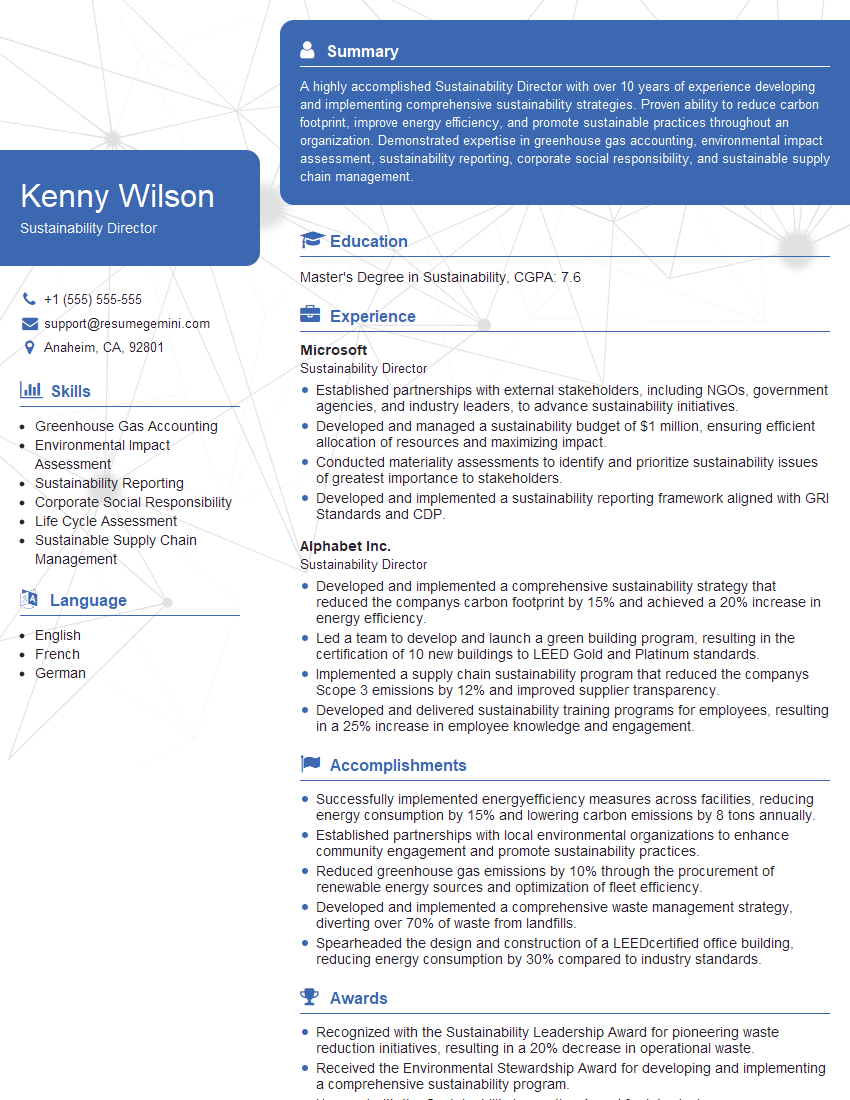
Mastering Climate Justice is crucial for career growth in a rapidly evolving field. Demand for professionals skilled in navigating the complex intersection of environmental sustainability and social equity is soaring. To stand out, create an ATS-friendly resume that showcases your skills and experience effectively. We strongly recommend using ResumeGemini to build a professional and impactful resume. ResumeGemini provides a streamlined process and offers examples of resumes tailored to Climate Justice roles, helping you present your qualifications compellingly to potential employers.




Explore more articles
Users Rating of Our Blogs
Share Your Experience
We value your feedback! Please rate our content and share your thoughts (optional).
What Readers Say About Our Blog
To the interviewgemini.com Webmaster.
Very helpful and content specific questions to help prepare me for my interview!
Thank you
To the interviewgemini.com Webmaster.
This was kind of a unique content I found around the specialized skills. Very helpful questions and good detailed answers.
Very Helpful blog, thank you Interviewgemini team.