Interviews are more than just a Q&A session—they’re a chance to prove your worth. This blog dives into essential Cloud and Atmospheric Correction interview questions and expert tips to help you align your answers with what hiring managers are looking for. Start preparing to shine!
Questions Asked in Cloud and Atmospheric Correction Interview
Q 1. Explain the concept of atmospheric scattering and its impact on remote sensing data.
Atmospheric scattering is the phenomenon where electromagnetic radiation (like sunlight) interacts with atmospheric particles (e.g., air molecules, aerosols, water droplets), causing it to be redirected in various directions. This scattering affects remote sensing data because the sensor doesn’t just receive the radiation reflected directly from the Earth’s surface; it also receives scattered radiation, leading to inaccurate measurements of surface reflectance. Imagine trying to photograph a red car on a sunny day. The sunlight scattering in the atmosphere might wash out the red color, making the car appear less vibrant or even a different color in the photograph. This is analogous to how atmospheric scattering affects the spectral signatures recorded by a satellite sensor.
The impact on remote sensing data is significant. Scattering can lead to:
- Reduced image contrast
- Increased haze and blurring
- Misrepresentation of surface reflectance values
- Errors in quantitative analysis of land cover, vegetation, or water bodies
Accurate atmospheric correction is crucial to mitigate these effects and obtain reliable information from remote sensing data.
Q 2. Describe different atmospheric correction methods (e.g., dark object subtraction, empirical line methods).
Several atmospheric correction methods exist, each with its own assumptions and limitations. Here are a few:
- Dark Object Subtraction (DOS): This simple method assumes the darkest pixel in an image represents the atmospheric contribution. It’s suitable for relatively homogenous scenes and situations with minimal atmospheric scattering. However, it’s not accurate in heterogeneous scenes where the darkest pixel may not truly represent atmospheric radiance.
- Empirical Line Methods: These methods establish a relationship between the reflectance of targets with known properties and their corresponding atmospheric radiance. The relationship is typically expressed as a linear regression. They are relatively easy to implement but require prior knowledge of the target properties. A commonly used example is the linear regression established between highly reflective surfaces and their spectral signatures. This line is used to estimate and subsequently remove the atmospheric effect from other features in the image.
- Radiative Transfer Models (RTMs): These are physically-based models that simulate the interactions between radiation and the atmosphere. They are significantly more complex and computationally intensive but generally provide the most accurate atmospheric correction. Examples include MODTRAN and 6S. These models use atmospheric parameters (e.g., aerosol optical depth, water vapor content) to accurately predict the atmospheric effect on measured radiation.
Q 3. What are the advantages and disadvantages of using different atmospheric correction models?
The choice of atmospheric correction model depends heavily on the specific application, data characteristics, and available resources. Here’s a comparison of advantages and disadvantages:
- Dark Object Subtraction:
- Advantages: Simple, computationally inexpensive.
- Disadvantages: Inaccurate in heterogeneous scenes, sensitive to sensor noise.
- Empirical Line Methods:
- Advantages: Relatively simple, reasonably accurate for specific conditions.
- Disadvantages: Requires prior knowledge of target properties, limited applicability.
- Radiative Transfer Models:
- Advantages: Most accurate, physically-based, applicable to diverse conditions.
- Disadvantages: Computationally expensive, requires detailed atmospheric information.
In summary, simpler methods are preferred for preliminary analysis or when resources are limited. RTMs are favored for high-accuracy applications, even though they demand more computational power and data. The best method is usually a trade-off between accuracy and practicality.
Q 4. How do you handle cloud contamination in satellite imagery?
Handling cloud contamination is crucial in satellite imagery analysis because clouds obscure the underlying land surface, preventing accurate observation and analysis. The process usually involves a two-step approach:
- Cloud Detection (Masking): Identify and mark cloud-covered areas in the imagery using various techniques.
- Cloud Removal/Inpainting: If possible, replace the cloud-covered areas with estimates of the underlying surface reflectance or simply exclude the contaminated data.
Techniques for cloud removal include sophisticated interpolation methods that leverage the surrounding uncontaminated pixels to estimate values under clouds. However, complete removal of clouds is often not possible, and the choice between exclusion and estimation depends on the application.
Q 5. Explain the concept of cloud masking and different algorithms used for cloud detection.
Cloud masking is the process of identifying and flagging cloud-covered pixels in satellite imagery, creating a mask that separates cloudy regions from clear-sky areas. Various algorithms are used for cloud detection, typically relying on a combination of spectral and spatial characteristics:
- Thresholding methods: These methods set thresholds on specific spectral bands (e.g., near-infrared and visible red bands) to identify pixels with high reflectance values indicative of clouds. Pixels exceeding the thresholds are flagged as cloudy.
- Machine learning techniques: Advanced algorithms, such as support vector machines (SVM) or random forests, can be trained on labeled datasets to classify pixels as cloudy or clear. This approach can use a wider variety of spectral and contextual information. A recent approach uses deep learning to create advanced cloud masks that even distinguish different cloud types.
- Temperature-based methods: These methods use thermal infrared bands to identify colder pixels, which often correspond to cloud tops. This approach relies on differences in temperature between clouds and the surface.
The choice of algorithm depends on the sensor characteristics, data quality, and application requirements. Often, a combination of methods is used for more robust cloud detection.
Q 6. What are the key factors to consider when selecting an appropriate atmospheric correction method?
Selecting an appropriate atmospheric correction method requires careful consideration of several factors:
- Data characteristics: Sensor type, spatial resolution, spectral bands, and overall data quality influence the suitability of different methods. For instance, high-resolution data may benefit from RTMs, while low-resolution data may be adequately corrected with simpler methods.
- Atmospheric conditions: Aerosol loading, water vapor content, and cloud cover significantly affect the atmospheric correction. RTMs excel in various conditions, while simpler methods perform poorly under heavy aerosol loading or dense cloud cover.
- Application requirements: The accuracy needed for the application dictates the choice of method. High-precision analysis needs accurate RTMs, while rapid assessments may favor simple, faster methods.
- Computational resources: RTMs are computationally demanding, while simpler methods require less processing power. Limited computational resources may favor the simpler methods.
- Availability of ancillary data: Accurate atmospheric correction often benefits from ancillary data, such as AOD measurements. RTMs often require more ancillary data than simpler methods.
The best atmospheric correction method is a balance between accuracy, computational cost, data availability, and application needs.
Q 7. Describe the role of aerosol optical depth (AOD) in atmospheric correction.
Aerosol Optical Depth (AOD) is a crucial parameter in atmospheric correction. It represents the extinction of light caused by aerosols (tiny particles suspended in the atmosphere) along a vertical path through the atmosphere. AOD is crucial because aerosols significantly scatter and absorb radiation, affecting both the amount and spectral composition of light reaching the sensor. Higher AOD values imply stronger atmospheric effects.
In atmospheric correction, AOD is often used as an input for radiative transfer models (RTMs). Accurate AOD values are essential for accurate simulation of atmospheric effects. These values are often obtained from independent sources, such as ground-based sunphotometers or satellite-based instruments (e.g., AERONET, MODIS AOD products). Using AOD in atmospheric correction allows for a more accurate removal of aerosol effects, resulting in more realistic surface reflectance values.
Q 8. How do you validate the accuracy of your atmospheric correction results?
Validating atmospheric correction accuracy is crucial for reliable remote sensing data. We primarily use several approaches. First, we compare our corrected surface reflectance with in-situ measurements. This involves collecting ground truth data – measurements of reflectance taken on the ground at the same time as the satellite overpass. The closer the match between the two, the better our correction.
Secondly, we can leverage independent data sources, like other satellite sensors with differing spectral bands or spatial resolutions. If multiple datasets, after correction, show consistent results for the same area, this provides further validation.
Finally, we perform internal consistency checks. For example, we might examine the statistical properties of the corrected data, looking for unrealistic values or unexpected patterns. A consistent, physically plausible distribution of surface reflectance is a key indicator of a successful correction. We also use established statistical metrics like RMSE (Root Mean Square Error) and R2 (R-squared) to quantify the agreement between corrected data and reference data. A low RMSE and a high R2 indicate good agreement and accuracy.
Q 9. What are some common sources of error in atmospheric correction?
Atmospheric correction is a complex process susceptible to several error sources. Inaccurate aerosol characterization is a major one. Aerosols (dust, smoke, pollution) scatter and absorb light, and if their properties aren’t correctly modeled, significant errors will result in surface reflectance estimates.
Another common error stems from uncertainties in water vapor content. Water vapor strongly absorbs light in certain spectral bands, and slight variations in its concentration can lead to sizeable errors. Similarly, clouds present a significant challenge; even thin cirrus clouds can affect data significantly. Cloud detection and masking are therefore crucial but imperfect.
Errors can also arise from limitations of the radiative transfer models (RTMs) themselves. RTMs are simplifications of reality, and neglecting certain atmospheric constituents or making assumptions about their properties can lead to biases. Finally, calibration errors in the sensor itself and uncertainties in the ancillary data (e.g., atmospheric profiles) contribute to the overall error budget. Proper error propagation analysis is essential to quantify the overall uncertainty in the final corrected surface reflectance.
Q 10. Explain the difference between TOA reflectance and surface reflectance.
Top-of-Atmosphere (TOA) reflectance and surface reflectance represent fundamentally different aspects of light interaction with the Earth’s surface and atmosphere. TOA reflectance is the reflectance measured by a satellite sensor at the top of the atmosphere. It represents the fraction of incoming solar radiation reflected back to space from the entire atmosphere-surface system. Think of it as the raw, uncorrected signal the satellite receives.
Surface reflectance, on the other hand, is the reflectance of the Earth’s surface itself, independent of atmospheric effects. It’s what we want to measure for most remote sensing applications. Imagine shining a light on the ground; surface reflectance tells us how much light bounces back from the ground alone. To get from TOA reflectance to surface reflectance, we have to perform atmospheric correction, removing the atmospheric scattering and absorption effects.
For example, a high TOA reflectance value could result from a highly reflective surface or from a very thick layer of haze in the atmosphere. Atmospheric correction is necessary to isolate the effect of the surface, allowing for meaningful analysis of land cover, vegetation health, or water quality.
Q 11. How does water vapor affect remote sensing data, and how is it accounted for?
Water vapor significantly impacts remote sensing data due to its strong absorption of light in specific wavelengths, particularly in the near-infrared (NIR) and shortwave infrared (SWIR) regions of the electromagnetic spectrum. This absorption leads to decreased signal in those bands, masking the true surface reflectance. Imagine a fog that obscures visibility; water vapor similarly obscures our view of the Earth’s surface.
Accounting for water vapor effects requires accurate estimations of its columnar abundance (the total amount of water vapor in the atmospheric column above a given location). This is often achieved using ancillary data from meteorological models (like ERA5 or MERRA-2), radiosondes (weather balloons carrying sensors that measure atmospheric parameters), or even using water vapor retrieval algorithms from the satellite data itself. This information is then fed into an atmospheric correction model, which simulates the water vapor absorption and adjusts the TOA reflectance accordingly to estimate the surface reflectance.
Q 12. Discuss the impact of different atmospheric conditions (e.g., haze, fog) on remote sensing data.
Different atmospheric conditions dramatically affect remote sensing data. Haze, for instance, is caused by the scattering of light by fine particles (aerosols) in the atmosphere. This scattering increases the path length of radiation, leading to a diffused signal and a reduction in the contrast between features. The effect is similar to looking through a dirty window – the view is blurred and details are lost.
Fog, being a more dense form of haze (consisting of many small water droplets), has an even more significant impact. It can completely obscure the ground features, making data interpretation impossible in many cases. Dense fog often requires complete removal of the data from analysis.
Both haze and fog cause an increase in atmospheric path radiance, which can lead to overestimation of surface reflectance in many spectral bands. Advanced atmospheric correction techniques need to account for these effects accurately to extract reliable information about the underlying surface. Accurate aerosol modelling is critical in these situations.
Q 13. What are the limitations of atmospheric correction techniques?
Despite significant advancements, atmospheric correction techniques face limitations. One key limitation is the inherent uncertainty associated with atmospheric parameters. Even with sophisticated models and ancillary data, there is always uncertainty in our knowledge of the atmosphere’s exact state (aerosol type, water vapor concentration, cloud cover).
Another limitation arises from the complexity of the atmosphere itself. Many atmospheric correction models make simplifying assumptions, such as assuming a homogenous atmosphere or neglecting certain complex interactions. These simplifications can lead to biases and inaccuracies, particularly in highly complex atmospheric conditions.
Finally, the spatial and temporal variability of the atmosphere adds another challenge. Atmospheric conditions can change rapidly, making it difficult to capture a true snapshot of the atmosphere at the precise time of the satellite overpass. Therefore, any atmospheric correction is an approximation, representing the average atmospheric condition within a certain window of time and space.
Q 14. Explain the use of radiative transfer models in atmospheric correction.
Radiative Transfer Models (RTMs) are the heart of atmospheric correction. These sophisticated mathematical models simulate the interaction of light with the atmosphere and the Earth’s surface. They consider numerous factors, including scattering and absorption by atmospheric gases (water vapor, ozone, etc.), aerosols, and clouds; and surface reflectance properties.
In atmospheric correction, an RTM is used to solve the inverse problem: given the measured TOA reflectance, the RTM is used to estimate the surface reflectance. This involves iteratively adjusting the surface reflectance until the modeled TOA reflectance matches the measured TOA reflectance. Common RTMs used include MODTRAN, 6SV, and libRadtran. These models require input parameters describing the atmosphere (e.g., aerosol optical depth, water vapor profile) and surface characteristics. The selection of the appropriate RTM and its input parameters is crucial for the accuracy of the atmospheric correction.
For example, 6SV (Second Simulation of the Satellite Signal in the Solar Spectrum Vector) is a well-known RTM that’s often used for atmospheric correction of satellite imagery. It allows for detailed modelling of atmospheric effects and is particularly useful for correcting imagery acquired under varying atmospheric conditions.
Q 15. Describe your experience with specific atmospheric correction software or tools.
My experience encompasses a wide range of atmospheric correction software and tools. I’ve extensively used ATCOR, a robust and widely accepted package known for its accuracy and flexibility in handling various sensor types and atmospheric conditions. I’m also proficient in using FLAASH (Fast Line-of-sight Atmospheric Analysis of Spectral Hypercubes), particularly effective for hyperspectral imagery. Furthermore, I’m familiar with the open-source tools available within ENVI and IDL, allowing for customized atmospheric correction workflows tailored to specific project needs. For example, in one project involving Landsat 8 data over a highly variable terrain, I found ATCOR’s ability to incorporate detailed digital elevation models (DEMs) crucial for accurate correction, especially in mountainous regions where shadowing effects are significant. In another project using Sentinel-2 data, I leveraged FLAASH’s speed and efficiency to process large volumes of data for a timely land cover mapping application.
Career Expert Tips:
- Ace those interviews! Prepare effectively by reviewing the Top 50 Most Common Interview Questions on ResumeGemini.
- Navigate your job search with confidence! Explore a wide range of Career Tips on ResumeGemini. Learn about common challenges and recommendations to overcome them.
- Craft the perfect resume! Master the Art of Resume Writing with ResumeGemini’s guide. Showcase your unique qualifications and achievements effectively.
- Don’t miss out on holiday savings! Build your dream resume with ResumeGemini’s ATS optimized templates.
Q 16. How do you handle complex atmospheric scenarios during atmospheric correction?
Handling complex atmospheric scenarios requires a multi-pronged approach. First, I meticulously assess the available ancillary data. This includes high-resolution meteorological data (temperature, pressure, humidity, aerosol properties) obtained from weather stations or reanalysis products. The accuracy of these inputs directly impacts the atmospheric correction’s reliability. Second, I carefully select the appropriate atmospheric correction model. For instance, if dealing with significant aerosol loading, a model accounting for aerosol scattering and absorption (like the MODTRAN radiative transfer model used within ATCOR or FLAASH) is essential. Third, iterative processing and validation are key. I often compare the results with ground truth data or reference images to refine the correction parameters and ensure accurate results. If dealing with extreme conditions like dense clouds or significant atmospheric haze, I might employ techniques like cloud masking, followed by interpolation of the corrected data in the cloud-free regions, or I may need to utilize advanced techniques such as multiple scattering calculations to obtain sufficiently accurate results.
Q 17. How do you assess the quality of remotely sensed data before and after atmospheric correction?
Assessing data quality is critical before and after atmospheric correction. Before correction, I examine the raw imagery for obvious artifacts like cloud cover, striping, or sensor noise using visual inspection and statistical analysis (e.g., histogram analysis). After correction, I use various metrics. Visual inspection remains a powerful tool, looking for unnatural colors or patterns. Quantitatively, I evaluate the corrected data’s statistical properties, examining histograms and comparing them to known reflectance values for the area of interest. I also assess the spectral consistency of known features across the image. Significant deviations might indicate areas where the atmospheric correction was less successful. Further, I may use indices like the Normalized Difference Vegetation Index (NDVI) to check for consistency and plausibility of the results. For example, if the NDVI values for known vegetated areas appear unusually low after correction, it points to a potential issue in the correction process that needs further investigation.
Q 18. Explain the concept of BRDF and its relevance to atmospheric correction.
Bidirectional Reflectance Distribution Function (BRDF) describes how the reflectance of a surface varies with the viewing and illumination geometry (sun and sensor angles). It’s crucial for atmospheric correction because the amount of light reflected to the sensor is highly dependent on these angles. Ignoring BRDF effects can lead to significant errors in surface reflectance estimation. Atmospheric correction models often account for BRDF using sophisticated algorithms or lookup tables. Accurate BRDF correction is particularly important when analyzing changes in surface properties over time, because BRDF effects are themselves variable. Failure to account for this can lead to misinterpretations of actual change in surface properties.
Q 19. Describe how you would approach correcting atmospheric effects in hyperspectral imagery.
Correcting atmospheric effects in hyperspectral imagery is challenging due to the high spectral resolution. My approach would involve utilizing specialized software like FLAASH, designed to handle the complexities of numerous narrow spectral bands. I’d carefully select an appropriate atmospheric model within the software, considering the specific atmospheric conditions and sensor characteristics. Accurate calibration of the sensor data is crucial. Pre-processing steps like radiometric calibration are crucial. Careful consideration of the spectral response function of the sensor is also critical, accounting for any potential mismatches between the spectral bands and the atmospheric model’s assumed wavelengths. Rigorous quality control measures, including visual inspection and statistical analysis of the corrected data, are essential to validate the results. A robust approach includes independent validation of results using field spectrometry data or well-established ground reference targets, if available.
Q 20. What are the challenges associated with atmospheric correction of high-resolution imagery?
Atmospheric correction of high-resolution imagery presents several challenges. The high spatial resolution reveals fine-scale variations in topography, resulting in complex illumination and shadowing effects. These effects are difficult to model accurately within standard atmospheric correction algorithms. Another significant challenge is the increased computational cost of processing large high-resolution datasets. Furthermore, the need for extremely accurate ancillary data, like high-resolution DEMs and detailed meteorological data, can pose significant challenges. The availability of such high-quality ancillary data may be limited, which can introduce uncertainties into the correction process.
Q 21. How do you determine the appropriate spatial and spectral resolutions for your atmospheric correction process?
Determining appropriate spatial and spectral resolutions depends on the research objectives and the characteristics of the imagery. For example, if the goal is to map broad land cover types, a coarser spatial resolution might suffice. However, to study fine-scale features like individual trees, a much higher spatial resolution is necessary. Similarly, the spectral resolution must be appropriate. If the focus is on vegetation indices derived from red and near-infrared bands, a lower spectral resolution might be acceptable. However, studies requiring detailed spectral signatures of minerals or other materials would demand high spectral resolution. I would always strive for a balance between the desired level of detail and computational feasibility, considering available computing resources and time constraints. The choice of resolution is not simply a technical decision; it’s a critical part of designing a successful research strategy.
Q 22. Explain your experience working with different sensor platforms (e.g., Landsat, Sentinel, MODIS).
My experience spans a wide range of sensor platforms crucial for remote sensing applications. I’ve extensively worked with Landsat, Sentinel, and MODIS data, each presenting unique challenges and opportunities in atmospheric correction. Landsat, with its long-term archive, is invaluable for change detection studies, but its relatively coarse spatial resolution necessitates careful consideration of atmospheric effects. Sentinel, with its higher spatial and temporal resolution, allows for more detailed analyses but demands robust atmospheric correction to mitigate the impact of atmospheric variations. MODIS, with its global coverage and high temporal frequency, is ideal for monitoring large-scale phenomena, but its lower spatial resolution requires appropriate upscaling or aggregation techniques after atmospheric correction. For instance, in a project studying deforestation in the Amazon, I used Landsat’s historical data to establish a baseline, Sentinel’s high-resolution imagery for detailed change mapping, and MODIS data for monitoring large-scale deforestation patterns over time. The choice of platform depends entirely on the specific research question and the required spatial and temporal resolution.
Q 23. How do you incorporate ancillary data (e.g., meteorological data) in atmospheric correction workflows?
Incorporating ancillary data, particularly meteorological data, is critical for accurate atmospheric correction. Think of it like this: atmospheric correction is like removing a hazy filter from a photograph. To effectively remove that haze, we need information about the haze itself – its density, composition, and location. Meteorological data provides this essential information. I typically use data from weather stations or reanalysis products (like ERA5) that provide parameters such as air temperature, pressure, water vapor content, and aerosol optical depth. These parameters are crucial inputs to atmospheric correction models like the 6S or MODTRAN. For example, water vapor content significantly affects the scattering and absorption of light, which in turn affects the observed radiance. By incorporating accurate water vapor data, we significantly improve the accuracy of the atmospheric correction process, leading to more reliable surface reflectance estimates. The specific incorporation method varies depending on the chosen atmospheric correction algorithm, but typically involves inputting these parameters into the model to simulate the atmospheric effects.
Q 24. Discuss the impact of atmospheric correction on downstream applications (e.g., land cover classification, change detection).
Atmospheric correction has a profound impact on downstream applications. It’s the foundation for reliable and accurate analysis of remotely sensed data. Without proper correction, errors introduced by atmospheric scattering and absorption can severely affect the accuracy of land cover classification, change detection, and other analyses. Imagine trying to classify vegetation types based on images where the atmosphere is obscuring the true spectral signature of the vegetation. The resulting classification would be inaccurate and unreliable. Similarly, in change detection, incorrect atmospheric correction can lead to false positives or negatives, misrepresenting actual changes on the ground. For instance, in a land cover classification project, I found that failing to account for atmospheric effects resulted in a 15% misclassification rate, highlighting the crucial role of accurate atmospheric correction for reliable results. In change detection of urban areas, ignoring atmospheric effects can lead to the misinterpretation of construction activity as changes in land cover type.
Q 25. How do you handle uncertainties and errors associated with atmospheric correction in your analyses?
Addressing uncertainties and errors in atmospheric correction is paramount. It involves a multifaceted approach. First, I carefully select the appropriate atmospheric correction model based on the sensor characteristics, atmospheric conditions, and the desired accuracy. Second, I rigorously assess the quality of the ancillary data used in the correction process. Inconsistencies or errors in meteorological data will directly propagate to the corrected reflectance values. Third, I utilize error propagation techniques to quantify the uncertainty associated with the corrected data. This involves considering the uncertainties in the input parameters and propagating them through the atmospheric correction model. Finally, I conduct sensitivity analyses to assess the impact of uncertainties in input parameters on the corrected reflectance. In a recent project, we quantified the uncertainty associated with our corrected data using Monte Carlo simulations, which allowed us to assess the confidence in our results and to understand the limitations of our atmospheric correction approach.
Q 26. Describe your experience with programming languages (e.g., Python, R) for atmospheric correction tasks.
I’m proficient in both Python and R for atmospheric correction tasks. Python’s versatility and extensive libraries, such as scikit-image, rasterio, and numpy, make it ideal for processing large datasets and implementing complex atmospheric correction algorithms. I often use Python to automate the workflow, integrating atmospheric correction tools with other geospatial processing steps. R’s statistical capabilities are valuable for analyzing uncertainties and visualizing results. Here is an example of a Python code snippet for reading a GeoTIFF file:
import rasterio
with rasterio.open('my_image.tif') as src:
    array = src.read()
Similarly, I leverage R packages like sp and rgdal for data manipulation and analysis. The choice between Python and R often depends on the specific needs of the project; for large-scale processing, Python often proves more efficient, while R shines for detailed statistical analyses of the corrected data.
Q 27. What are some recent advancements in atmospheric correction techniques?
Recent advancements in atmospheric correction are focused on improving accuracy and efficiency. The increasing availability of high-resolution data, coupled with advancements in machine learning, are leading to more sophisticated approaches. For instance, the use of deep learning models trained on large datasets of ground truth measurements is proving highly effective in improving the accuracy of atmospheric correction. These methods can learn complex relationships between atmospheric parameters and spectral signatures, leading to more accurate estimates of surface reflectance. Another advancement is the integration of multiple data sources for more comprehensive atmospheric characterization, such as combining satellite observations with ground-based measurements for better accuracy. Also, advancements in radiative transfer models are leading to more realistic simulations of atmospheric effects.
Q 28. Explain how you would troubleshoot issues related to atmospheric correction in a remote sensing project.
Troubleshooting atmospheric correction issues often involves a systematic approach. First, I thoroughly examine the input data, checking for data quality issues, such as cloud contamination or sensor artifacts. Second, I carefully review the atmospheric correction parameters used in the model, ensuring they are appropriate for the specific sensor and atmospheric conditions. Third, I compare the results with independent datasets or ground truth measurements to identify potential discrepancies. For instance, if the corrected reflectance values are unrealistically high or low, it indicates a problem in the correction process. Fourth, I carefully investigate the output of the correction algorithm. Does it produce plausible results given the scene’s characteristics? If problems persist, I’ll experiment with different atmospheric correction models or explore alternative ancillary datasets to find the source of the error. Lastly, I always document the entire workflow, including the parameters used and any adjustments made, to maintain transparency and facilitate reproducibility.
Key Topics to Learn for Cloud and Atmospheric Correction Interview
- Radiative Transfer Models: Understanding the physics behind how light interacts with the atmosphere and clouds. This includes concepts like scattering, absorption, and emission.
- Atmospheric Correction Algorithms: Familiarize yourself with various algorithms used to remove atmospheric effects from remotely sensed data (e.g., Dark Object Subtraction, Empirical Line Methods, Atmospheric Correction using MODTRAN). Understand their strengths and limitations.
- Cloud Detection and Masking Techniques: Learn different methods for identifying and removing cloud contamination from imagery. This includes thresholding, spectral indices, and machine learning approaches.
- Error Analysis and Uncertainty Quantification: Understand the sources of uncertainty in atmospheric correction and how to quantify and propagate these errors in your analysis.
- Sensor Specific Considerations: Become familiar with the characteristics of different remote sensing platforms (e.g., Landsat, Sentinel, MODIS) and how these impact atmospheric correction techniques.
- Practical Applications: Explore how cloud and atmospheric correction is used in various fields, such as precision agriculture, environmental monitoring, climate change research, and disaster response. Be prepared to discuss specific examples.
- Advanced Topics (for senior roles): Consider exploring advanced topics such as aerosol characterization, polarization correction, and the use of machine learning in atmospheric correction.
Next Steps
Mastering Cloud and Atmospheric Correction opens doors to exciting careers in remote sensing, environmental science, and geospatial technology. These skills are highly sought after, offering excellent growth potential and diverse job opportunities. To maximize your chances of landing your dream role, create an ATS-friendly resume that effectively highlights your expertise. ResumeGemini is a trusted resource to help you build a professional and impactful resume. We provide examples of resumes tailored to Cloud and Atmospheric Correction to help you showcase your skills and experience effectively.
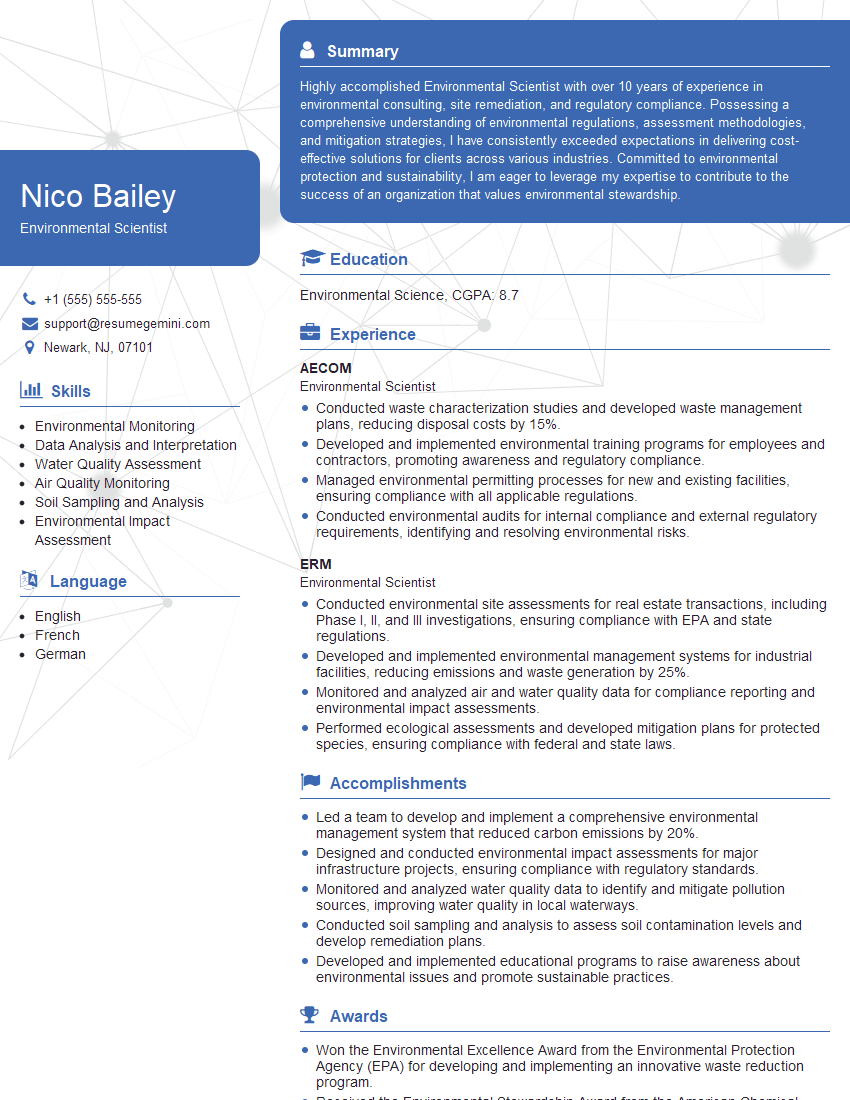
Environmental Scientist Resume Sample
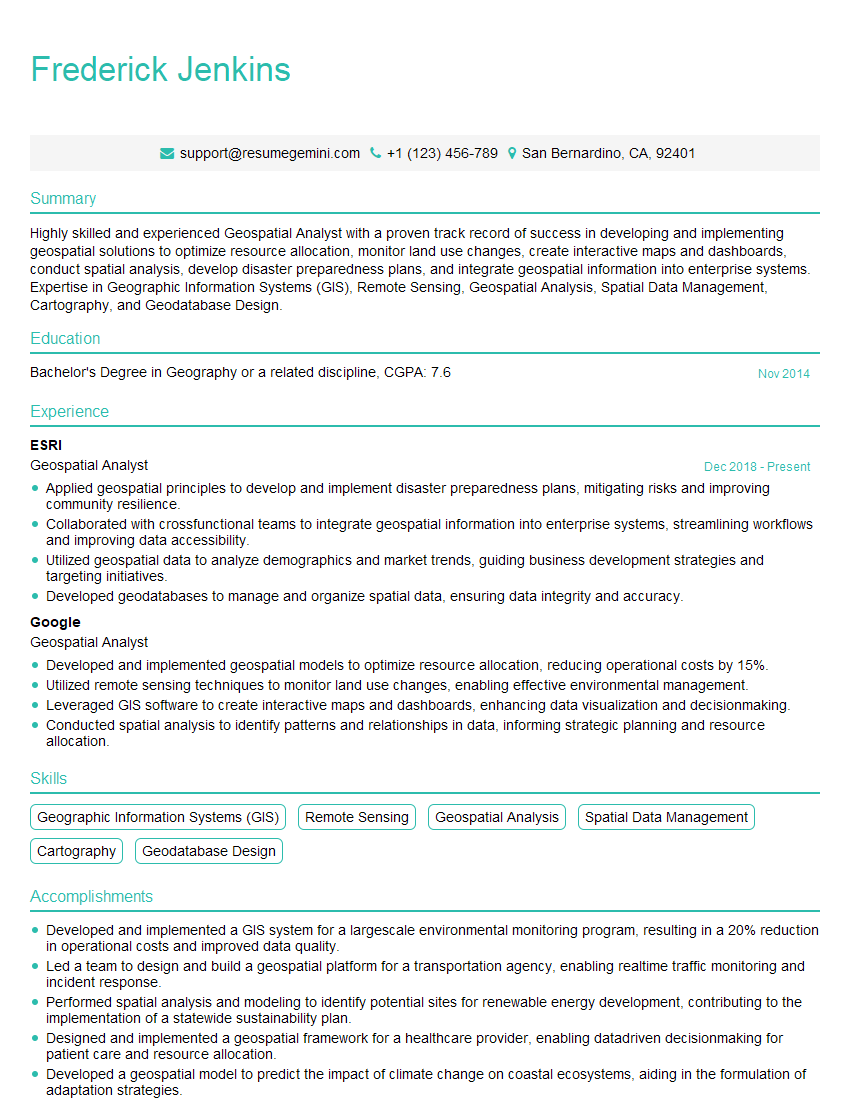
Geospatial Analyst Resume Sample

Cartographer Resume Sample

Photogrammetrist Resume Sample

Atmospheric Scientist Resume Sample

Climatologist Resume Sample
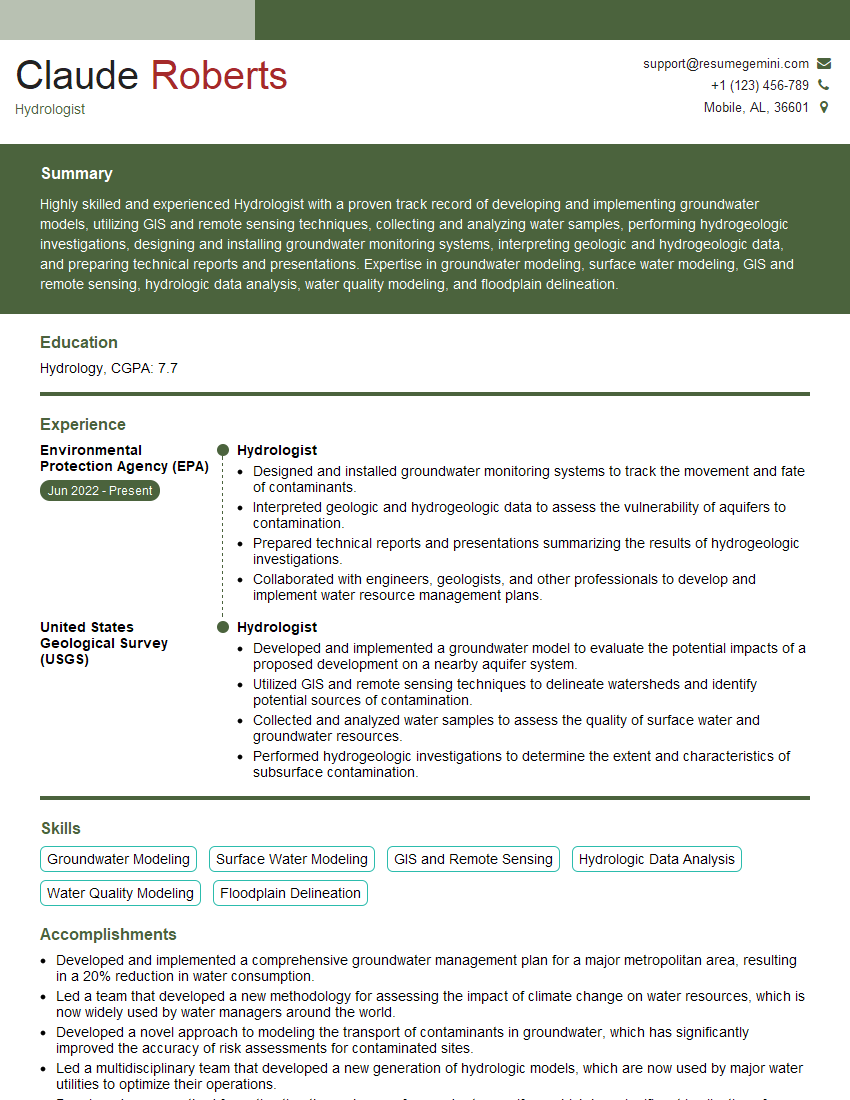
Hydrologist Resume Sample
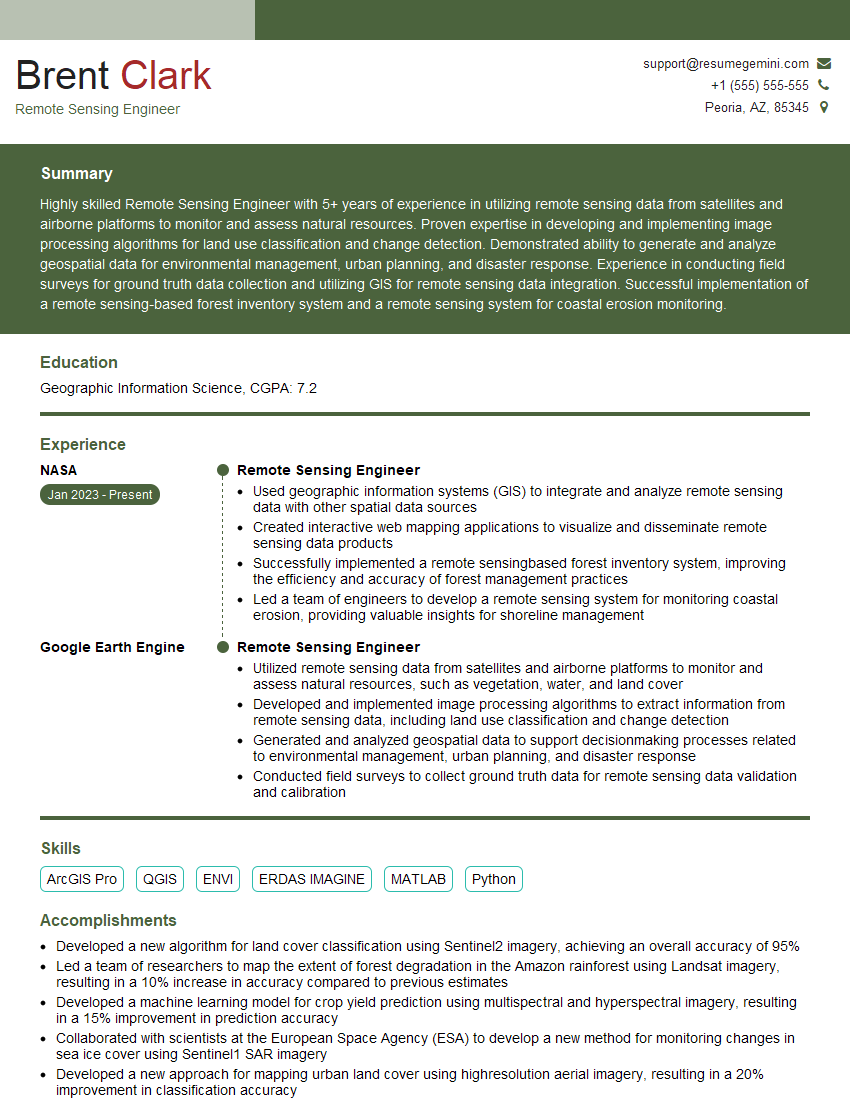
Remote Sensing Engineer Resume Sample

Remote Sensing Scientist Resume Sample
Explore more articles
Users Rating of Our Blogs
Share Your Experience
We value your feedback! Please rate our content and share your thoughts (optional).
What Readers Say About Our Blog
To the interviewgemini.com Webmaster.
Very helpful and content specific questions to help prepare me for my interview!
Thank you
To the interviewgemini.com Webmaster.
This was kind of a unique content I found around the specialized skills. Very helpful questions and good detailed answers.
Very Helpful blog, thank you Interviewgemini team.