Are you ready to stand out in your next interview? Understanding and preparing for Commercial and Industrial Insulation Applications interview questions is a game-changer. In this blog, we’ve compiled key questions and expert advice to help you showcase your skills with confidence and precision. Let’s get started on your journey to acing the interview.
Questions Asked in Commercial and Industrial Insulation Applications Interview
Q 1. What are the different types of insulation materials used in commercial and industrial applications?
Commercial and industrial insulation utilizes a wide variety of materials, each chosen based on factors like temperature range, application, cost, and environmental impact. Here are some key types:
- Fiberglass: A common and cost-effective option, often used in batts, rolls, and blankets for various applications. Its versatility makes it suitable for many projects, from walls and attics to pipe insulation.
- Mineral Wool (Rockwool and Glasswool): These offer excellent thermal and acoustic properties, often used in high-temperature applications and situations requiring fire resistance. They’re resilient and durable, making them suitable for industrial settings.
- Cellular Glass: Highly durable and resistant to moisture, making it ideal for underground applications or areas prone to flooding. It’s also very effective in high-temperature environments.
- Polyisocyanurate (Polyiso): A rigid foam insulation known for its high R-value per inch, making it an efficient choice for roofing and wall applications. It often has a foil facing for added reflectivity.
- Extruded Polystyrene (XPS): A rigid foam insulation offering excellent moisture resistance, often used in foundation walls and below-grade applications. It’s strong and durable.
- Expanded Polystyrene (EPS): A less expensive rigid foam option, commonly used in packaging and less demanding applications. It’s less resistant to moisture than XPS.
- Spray Foam Insulation (Polyurethane and Polyurea): Applied as a liquid and expanding to fill cavities, this offers excellent air sealing and thermal performance. Closed-cell varieties offer superior moisture resistance.
The selection process involves careful consideration of the specific requirements of each application, balancing thermal performance, cost, and the environmental impact of the material.
Q 2. Explain the R-value and its significance in insulation selection.
The R-value represents the thermal resistance of a material. Think of it like this: a higher R-value means the material is better at resisting heat flow. It’s expressed as ‘R-hours per foot per degree Fahrenheit (hr·ft²·°F/Btu)’. A higher R-value translates directly to better insulation and reduced energy consumption for heating and cooling. For example, an R-13 wall insulation will resist heat flow better than an R-7 wall insulation.
In insulation selection, the required R-value is determined by building codes and climate zone, aiming to minimize energy loss. A proper R-value calculation will depend on the specific application, climate conditions, and desired level of energy efficiency. Overlooking this crucial factor can lead to underperforming insulation, higher energy bills, and potential discomfort for building occupants. It’s essential to consult building codes and energy efficiency guidelines to determine the appropriate R-value for a specific project.
Q 3. Describe the installation process for rigid insulation on a pipe.
Installing rigid insulation on a pipe involves several steps, ensuring a secure and effective insulation system. Here’s a typical process:
- Measure and Cut: Accurately measure the pipe’s diameter and cut the insulation to the correct length, using a sharp knife or specialized cutting tool for a clean cut. Avoid excessive compression during this process.
- Prepare the Pipe: Ensure the pipe surface is clean and dry. Any dirt or debris can hinder proper adhesion of the insulation.
- Apply Adhesive (if needed): Depending on the type of insulation and pipe material, an adhesive may be necessary to secure the insulation in place. Apply it according to manufacturer’s instructions.
- Install Insulation: Carefully slip the insulation over the pipe, ensuring a snug fit. For larger pipes, multiple sections of insulation might be required, ensuring proper alignment and overlap.
- Secure Insulation (if needed): Use straps, bands, or other fasteners to securely attach the insulation to the pipe, preventing slippage or movement.
- Apply a Protective Jacket (if required): Depending on the application, a protective layer such as aluminum foil or a weather-resistant jacket may be added over the insulation for added protection and durability.
Proper installation is crucial to achieve the desired thermal performance. Following the manufacturer’s instructions carefully is critical for success.
Q 4. What are the safety precautions for working at heights during insulation installation?
Safety is paramount when working at heights during insulation installation. Never compromise on safety practices. Here are some crucial precautions:
- Fall Protection: Always use appropriate fall protection equipment, such as harnesses, lifelines, and anchor points. Regularly inspect equipment for wear and tear.
- Scaffolding and Access Equipment: Use stable and properly erected scaffolding or other access equipment. Ensure it’s rated for the weight capacity and conforms to safety standards.
- Proper Training: All personnel involved must receive adequate training in fall protection, working at heights, and the safe handling of tools and materials.
- Personal Protective Equipment (PPE): Wear appropriate PPE, including safety helmets, gloves, safety glasses, and high-visibility clothing.
- Weather Conditions: Avoid working at heights during adverse weather conditions, such as strong winds, rain, or snow.
- Regular Inspections: Conduct regular inspections of the work area and equipment to identify and address any potential hazards.
Working at heights always involves significant risks. Prioritizing safety procedures is not optional; it’s essential for preventing injuries and ensuring a safe working environment.
Q 5. How do you determine the appropriate thickness of insulation for a specific application?
Determining the appropriate insulation thickness depends on several factors: the desired R-value (discussed earlier), the climate, the application (walls, pipes, roofs etc.), and the thermal properties of the structure itself.
Building codes and energy efficiency standards usually specify minimum R-values for different climate zones and construction types. Manufacturers provide R-value data for their products. One can calculate the required thickness by using this R-value and thickness data. For example, if you need an R-20 wall insulation and your chosen material has an R-value of 5 per inch, you’d need 4 inches of insulation (R-20 / R-5 per inch = 4 inches).
Often, thermal modeling software is utilized for complex scenarios, allowing for precise calculations and optimization of insulation thickness, minimizing energy losses and maximizing cost-effectiveness.
Ignoring proper thickness calculations leads to insufficient insulation, resulting in higher energy costs and reduced thermal comfort. It’s crucial to use professional calculation methods and consult with specialists, especially for complex systems.
Q 6. Explain the differences between closed-cell and open-cell spray foam insulation.
Both closed-cell and open-cell spray foam insulation are popular choices, but they have distinct differences that affect their application and performance.
- Closed-cell: Has a dense structure with few gaps. This provides superior moisture resistance, higher R-value per inch, and better structural support. It’s ideal for applications where moisture control is critical, such as foundation walls or below-grade insulation.
- Open-cell: Has a less dense structure with more air pockets. This results in a lower R-value per inch compared to closed-cell. However, it offers better sound absorption. It’s often preferred for applications focusing on sound dampening and where moisture is less of a concern.
The choice depends on the specific requirements of the project. A scenario requiring high moisture resistance might opt for closed-cell, while a situation prioritizing soundproofing and where moisture is less critical may utilize open-cell. Often both types are used effectively in conjunction within one project, based on the needed properties in a specific area.
Q 7. What are the common challenges faced during insulation installation in industrial settings?
Industrial settings present unique challenges for insulation installation:
- Difficult Access: Industrial equipment and structures can have complex geometries and limited access, making insulation installation challenging and time-consuming. Specialized tools and techniques may be required.
- High Temperatures: Many industrial processes involve high temperatures, demanding insulation materials that can withstand extreme heat without compromising their thermal performance.
- Hazardous Environments: Industrial settings may contain hazardous materials or environments, requiring specialized safety precautions and training for workers.
- Vibration and Movement: Vibration from machinery and equipment can affect the longevity of insulation, requiring robust installation techniques and durable materials.
- Maintenance and Repair: Access to existing insulation in industrial settings for repair or replacement is often challenging, highlighting the importance of proper initial installation.
- Coordination with other trades: Working around other trades (electricians, plumbers, etc.) requires careful planning and coordination to prevent conflicts and ensure safety.
Overcoming these challenges requires meticulous planning, specialized knowledge, skilled labor, and the use of appropriate materials and tools. A detailed risk assessment is essential before commencement of any work.
Q 8. How do you ensure the proper adhesion of insulation materials to various substrates?
Proper adhesion of insulation is crucial for a long-lasting and effective insulation system. It prevents gaps, which lead to heat transfer and energy loss. The approach depends heavily on both the substrate (the surface being insulated) and the insulation material itself.
- Surface Preparation: This is paramount. The substrate must be clean, dry, and free from dust, oil, grease, or other contaminants that could hinder bonding. This often involves cleaning with appropriate solvents and possibly mechanical abrasion, like wire brushing for rough surfaces.
- Primer Application: Primers are often used to enhance adhesion, especially on porous surfaces like concrete or wood. They help create a consistent surface for the adhesive to bond to. The choice of primer is vital and will depend on the substrate and insulation type.
- Appropriate Adhesive: Different adhesives are designed for different insulation materials and substrates. For example, you’d use a different adhesive for rigid foam insulation on metal than you would for fiberglass batts in a wood-framed wall. Always refer to the manufacturer’s specifications for both the adhesive and the insulation.
- Application Technique: Adhesives must be applied evenly and according to the manufacturer’s instructions. For spray adhesives, consistent coverage is key, while for contact adhesives, both surfaces need to be properly coated and allowed to flash off before joining.
- Mechanical Fasteners: While adhesives are the primary method for securing many insulation types, mechanical fasteners such as screws, nails, or pins can provide additional security, especially in high-wind or high-vibration environments, or with heavier insulation types. These should be appropriately sized and spaced to avoid damaging the insulation.
For instance, when insulating a steel pipe, I’d use a specialized high-temperature adhesive designed for metallic substrates, and potentially add fiberglass straps for added security. On a concrete wall, I’d ensure the surface is meticulously clean and possibly use a primer before applying a cementitious adhesive for rigid foam insulation.
Q 9. What are the environmental considerations for selecting and installing insulation?
Environmental considerations in insulation selection and installation are increasingly important. We must consider the entire lifecycle, from manufacturing to disposal.
- Global Warming Potential (GWP): Some insulation materials have higher GWPs than others. For example, certain foams have higher GWP compared to mineral wool. Choosing materials with lower GWP contributes to reducing greenhouse gas emissions.
- Ozone Depletion Potential (ODP): We need to avoid materials with high ODP. This is less of a concern now with the phasing out of ozone-depleting substances, but it is still important to be aware of the potential impact of certain insulation materials and their manufacturing processes.
- Recycled Content: Many insulation materials are available with significant recycled content. Using these materials reduces the demand for new resources and minimizes landfill waste. For instance, recycled glass is widely used in the manufacture of certain types of insulation.
- Health and Safety: Some insulation materials, especially those containing formaldehyde or other volatile organic compounds (VOCs), can pose health risks during installation and use. Choosing low-VOC or VOC-free materials is vital for worker and occupant safety. Proper personal protective equipment (PPE) is always essential during installation.
- Disposal: At the end of the insulation’s lifespan, its disposal should also be considered. Some materials are easier to recycle than others. Opting for recyclable insulation minimizes environmental impact.
In my practice, I always prioritize choosing insulation materials with low GWP and ODP, high recycled content, and low VOC emissions. I work closely with suppliers to source sustainable options and ensure proper disposal procedures are followed throughout the project’s lifecycle.
Q 10. Describe your experience with different insulation fastening methods.
Insulation fastening methods vary depending on the type of insulation and the substrate. My experience includes a range of techniques:
- Adhesives: As mentioned earlier, this is the primary method for many insulation types. The choice of adhesive depends on factors like the substrate, the insulation material, and environmental conditions.
- Mechanical Fasteners: These include screws, nails, and staples, primarily used for rigid insulation boards or for added security to other insulation types. Proper fastener selection is critical to avoid damaging the insulation or the substrate. Fasteners must be appropriate for the substrate and the thermal properties of the material being attached.
- Wire and Straps: These are commonly used to secure pipe insulation, particularly for larger diameter pipes. They provide both thermal and mechanical support to prevent insulation from sagging or shifting.
- Friction Fitting: Insulation batts often rely on friction fitting within the framing of walls or ceilings, ensuring a snug fit that reduces air gaps.
- Clips and Channels: These are designed to secure certain types of insulation and aid in creating a continuous and seamless installation, especially for metal cladding buildings.
I’ve successfully utilized all these methods on various projects, selecting the most appropriate approach based on project specifics, budget, and regulatory requirements. For example, I’ve used specialized clips for mineral wool insulation on curved surfaces to prevent any sagging or unevenness in the overall insulation layer. For spray foam insulation, the focus is on precise application and appropriate curing time, which eliminates the need for fasteners.
Q 11. Explain the importance of vapor barriers in insulation systems.
Vapor barriers are crucial components of insulation systems, preventing moisture from entering the insulation. Moisture can significantly reduce the thermal performance of insulation, leading to mold growth, structural damage, and increased energy costs.
Think of insulation like a warm winter coat – a good coat keeps you warm by trapping your body heat. But if that coat gets wet, it loses its ability to keep you warm. Similarly, moisture in insulation reduces its effectiveness. A vapor barrier acts as a shield, preventing moisture vapor from migrating into the insulation.
- Preventing Condensation: Warm, moist air can condense within the insulation if there’s a temperature difference across the barrier. This condensation creates a wet environment that reduces the insulation’s R-value (thermal resistance) and promotes mold growth.
- Maintaining R-Value: Wet insulation significantly decreases its R-value, reducing its effectiveness at insulating and increasing energy bills.
- Protecting Building Materials: Moisture can damage the building structure, causing rot, warping, and other problems. A vapor barrier helps protect the framing members and other building components from moisture damage.
Vapor barriers are typically installed on the warm side of the insulation (inside the building in cold climates), and the proper placement is dependent on the climate and building specifics. Common materials include polyethylene sheeting, foil-faced insulation, and specialized vapor retarder membranes. The installation needs to be meticulous, ensuring there are no gaps or tears to compromise its effectiveness.
Q 12. How do you handle irregularities in surfaces during insulation installation?
Irregularities in surfaces are a common challenge in insulation installations. Addressing these effectively is essential for a seamless and efficient insulation system.
- Surface Preparation: Before installing insulation, the surface must be prepared to accommodate the irregularities. This might involve filling large gaps or cracks with appropriate materials like caulk or expanding foam.
- Shimming: Thin pieces of material (shims) can be used to level out smaller irregularities and ensure a consistent thickness of insulation. This is particularly relevant for rigid board insulation.
- Flexible Insulation: Using flexible insulation materials (like fiberglass batts or rolls) can help conform to irregular surfaces more easily. Careful installation is necessary to avoid gaps and ensure full coverage.
- Spray Foam Insulation: For complex geometries and irregular surfaces, spray foam insulation offers an excellent solution because it can be easily applied to conform to various shapes and sizes. It fills gaps and creates a seamless layer without creating thermal bridges.
- Two-Part Installation: In some cases, a two-part installation might be the best approach. This involves first filling significant gaps and irregularities and then layering more uniform insulation over the top.
For example, when insulating an attic with uneven rafters, I might use flexible fiberglass batts to fill the spaces, ensuring a snug fit and minimizing air gaps. For irregular walls, spray foam is particularly effective, as it can seamlessly fill all cavities and irregularities. Careful planning and attention to detail are crucial to avoid any gaps and guarantee an efficient insulation system, regardless of the surface irregularities.
Q 13. What are the different types of thermal insulation used for HVAC systems?
HVAC systems utilize various types of thermal insulation depending on the application and requirements. Here are some common ones:
- Fiberglass: A common and cost-effective option, fiberglass is available in batts, rolls, and blankets. It offers good thermal performance but can be somewhat brittle and irritating to handle.
- Mineral Wool: Made from rock or slag, mineral wool is more robust and less irritating than fiberglass. It also provides better fire resistance and sound absorption properties.
- Cellular Glass: This rigid insulation is highly durable, moisture resistant, and provides excellent thermal performance, particularly in high-temperature applications.
- Polyurethane Foam: Available as spray foam or rigid boards, polyurethane foam offers excellent thermal performance and air sealing capabilities. However, it has environmental concerns related to its manufacturing process.
- Polyisocyanurate (Polyiso): A rigid foam insulation with excellent R-value per inch, often used in roofing and wall applications. It’s typically faced with foil for added vapor barrier protection.
- Aerogel: A relatively new insulation material with exceptional thermal performance. It’s lightweight and has extremely low thermal conductivity, making it suitable for specialized applications.
The selection depends on factors such as the temperature range, environmental conditions, cost considerations, and the specific requirements of the HVAC system. For example, I’d likely use polyiso for roofing applications, while spray foam could be ideal for irregularly shaped ductwork.
Q 14. How do you calculate the heat loss or gain through an insulated wall?
Calculating heat loss or gain through an insulated wall requires understanding several factors and applying the principles of heat transfer. The most common method is using the formula for overall heat transfer coefficient (U-value), which is the inverse of the R-value.
Simplified Formula: Q = U * A * ΔT
Q= Heat flow (in BTUs per hour or Watts)U= Overall heat transfer coefficient (U-value, in BTU/(hr·ft²·°F) or W/(m²·K))A= Surface area of the wall (in ft² or m²)ΔT= Temperature difference between inside and outside (in °F or K)
Calculating U-value: The U-value considers the thermal resistance of all the layers in the wall assembly (insulation, sheathing, drywall, etc.). Each layer has its own R-value (thermal resistance), and the overall R-value is the sum of the individual R-values. The U-value is then calculated as U = 1 / Rtotal
Example: Let’s say we have a wall with an R-value of 20 (ft²·°F·hr/BTU), an area of 100 ft², and a temperature difference of 20°F. The heat loss would be:
U = 1 / 20 = 0.05 BTU/(hr·ft²·°F)
Q = 0.05 * 100 * 20 = 100 BTU/hr
Important Considerations: This is a simplified calculation. In reality, other factors can influence heat transfer, including air infiltration, thermal bridging, and solar radiation. More sophisticated calculations, often utilizing specialized software, are needed for greater accuracy in complex situations. However, understanding the basic principles and the formula provided above provides a solid foundation for evaluating thermal performance of buildings.
Q 15. Describe your experience with different types of insulation removal techniques.
Insulation removal is a crucial yet often challenging aspect of commercial and industrial projects. The technique employed depends heavily on the type of insulation, its condition, and the surrounding environment. My experience encompasses several methods:
Mechanical Removal: This involves using tools like scrapers, chisels, and demolition hammers for removing rigid insulation, fiberglass batts, and some spray foam. Safety precautions, including proper PPE (Personal Protective Equipment) and dust control measures, are paramount. For example, on a recent project involving asbestos-containing materials, we adhered strictly to EPA regulations, employing specialized contractors for safe abatement before proceeding with other removal.
Chemical Removal: Certain types of spray foam insulation can be removed chemically using specialized solvents. This requires careful consideration of environmental impact and the potential health hazards associated with the chemicals used. We always select the appropriate solvent based on the foam’s composition and follow strict safety protocols, including proper ventilation and protective gear.
Encapsulation: In situations where complete removal is impractical or hazardous (e.g., friable asbestos), encapsulation involves sealing the existing insulation with a protective layer. This method prevents further degradation and reduces the risk of exposure. Choosing the right encapsulant is crucial for long-term effectiveness and compliance with relevant regulations.
Controlled Demolition: In large-scale projects, controlled demolition might be necessary to remove large sections of insulated structures. This requires meticulous planning, coordination with other trades, and adherence to strict safety protocols to minimize risks to personnel and the surrounding environment.
Career Expert Tips:
- Ace those interviews! Prepare effectively by reviewing the Top 50 Most Common Interview Questions on ResumeGemini.
- Navigate your job search with confidence! Explore a wide range of Career Tips on ResumeGemini. Learn about common challenges and recommendations to overcome them.
- Craft the perfect resume! Master the Art of Resume Writing with ResumeGemini’s guide. Showcase your unique qualifications and achievements effectively.
- Don’t miss out on holiday savings! Build your dream resume with ResumeGemini’s ATS optimized templates.
Q 16. What are the fire safety regulations related to insulation installation?
Fire safety is paramount in insulation installation. Regulations vary by location but generally encompass:
Material Selection: Using insulation materials with appropriate fire ratings (e.g., Class A, B, or C fire-rated insulation) is crucial. These ratings indicate the material’s resistance to fire spread. The choice depends on the application; for example, Class A is preferred for locations with high fire risk.
Installation Practices: Proper installation is vital to prevent fire spread. Gaps and voids should be minimized to avoid creating pathways for flames. This includes carefully fitting insulation around penetrations (pipes, wiring) and ensuring continuous coverage.
Fire Barriers and Seals: Fire-resistant barriers and seals are often mandated around penetrations and joints to compartmentalize fire and prevent its rapid spread. Specific requirements are defined in building codes.
Permits and Inspections: Obtaining necessary permits and undergoing regular inspections are mandatory to ensure compliance with fire safety regulations. Failure to comply can result in significant fines and project delays.
We always familiarize ourselves with the local building codes and fire safety standards at the project’s outset and maintain detailed records of all materials used and installation practices.
Q 17. How do you ensure the quality control of insulation installation?
Quality control in insulation installation is a multi-faceted process that begins with planning and extends through completion. It’s essential to prevent thermal bridging, ensure air tightness, and maintain consistent thickness. Here’s how I approach it:
Pre-Installation Checks: Verifying the insulation’s specifications against the blueprints, checking for any damage or defects in the materials, and confirming the compatibility of the chosen insulation with the existing structure. For example, ensuring the correct R-value (thermal resistance) is used for the intended climate.
Installation Oversight: Regular on-site monitoring of the installation process, ensuring that workers follow best practices and use appropriate tools and techniques. This might involve checking the density of blown-in insulation or verifying the proper installation of rigid panels.
Post-Installation Inspections: Performing thorough inspections after completion, checking for gaps, voids, or inconsistencies. Thermal imaging can detect areas of inadequate insulation.
Documentation: Maintaining detailed records, including material specifications, installation dates, and inspection results. This ensures traceability and facilitates future maintenance or repairs.
A documented quality control process helps mitigate errors, reduces rework, and ensures the project meets the required standards and energy efficiency targets.
Q 18. Explain your experience with using different insulation testing equipment.
My experience includes using a variety of insulation testing equipment for quality assurance and troubleshooting. These include:
Moisture Meters: Used to measure the moisture content in insulation, helping to identify potential problems such as water infiltration, which can significantly reduce the effectiveness of the insulation and cause mold growth.
Thermal Imagers (Infrared Cameras): These cameras detect temperature differences, allowing us to identify areas with inadequate insulation or thermal bridging, enabling us to address potential heat loss or gain issues.
Thickness Gauges: These tools ensure that the insulation is installed to the specified thickness, which is critical for achieving the desired R-value and performance.
Air Permeability Testers: Used to measure the air leakage through insulation, particularly important in air-sealing applications to ensure energy efficiency.
Proficient use of this equipment is crucial for ensuring the quality and performance of the installed insulation, and I regularly calibrate equipment to ensure accurate readings.
Q 19. Describe your experience with reading and interpreting insulation blueprints.
Reading and interpreting insulation blueprints is a fundamental skill. I am proficient in interpreting architectural drawings, specifications, and detail drawings to determine the type, quantity, and location of insulation needed. This involves understanding symbols, abbreviations, and specifications related to R-values, insulation types, and fire ratings.
For example, a typical blueprint will show wall sections, indicating the required insulation thickness and type for different areas, such as exterior walls versus interior partitions. I pay close attention to details like penetrations for pipes and electrical conduits, which require special attention to prevent thermal bridging and maintain insulation integrity. Understanding these drawings is crucial for accurate material estimation, cost planning, and efficient installation.
Q 20. How do you manage a team of insulation installers on a large-scale project?
Managing a team of insulation installers on a large-scale project requires strong leadership, planning, and communication skills. My approach involves:
Pre-Project Briefing: Holding a detailed briefing at the project’s start to ensure everyone understands the scope of work, safety protocols, and quality standards.
Task Assignment and Delegation: Assigning tasks based on individual skills and experience, ensuring fair workload distribution and clear responsibilities.
On-Site Supervision and Guidance: Providing regular on-site supervision and guidance to ensure efficient and safe execution of the work, addressing any challenges promptly.
Open Communication: Maintaining open communication channels, encouraging team members to raise concerns or suggestions, and fostering a collaborative environment.
Performance Monitoring and Feedback: Regularly monitoring the progress of the work, providing feedback, and addressing any performance issues constructively.
A well-managed team ensures project completion on time and within budget, while maintaining high safety and quality standards.
Q 21. How do you handle conflicts or disagreements within your insulation crew?
Conflicts within the insulation crew are inevitable. My approach focuses on early intervention, clear communication, and fair resolution:
Prompt Identification: Addressing disagreements as soon as they arise, before they escalate into larger issues. This often involves informal discussions to understand the root cause of the conflict.
Mediation and Facilitation: Acting as a mediator to facilitate discussions, ensuring that all parties have a chance to express their perspectives and reach a mutually acceptable solution.
Objective Evaluation: Evaluating the situation objectively, ensuring fairness and impartiality in the resolution process. This often involves reviewing project specifications, safety rules, and work standards to ensure a fair judgment.
Consequences and Follow-up: Implementing consequences for unacceptable behavior, such as repeated safety violations or insubordination. Following up to ensure that the resolution is effective and that similar conflicts are avoided in the future.
My focus is on maintaining a positive and productive work environment where team members feel respected and valued, leading to greater collaboration and efficiency.
Q 22. What is your approach to problem-solving during insulation installation?
My approach to problem-solving during insulation installation is systematic and proactive. It begins with a thorough understanding of the project requirements – the specific needs of the client, the building’s design, and the environmental conditions. I then perform a detailed site assessment to identify any potential challenges, like unusual geometries or existing infrastructure. This helps me choose the right insulation materials and installation methods.
My problem-solving strategy follows these steps:
- Identify the problem: Clearly define the issue. Is it a material incompatibility? An installation challenge? A regulatory compliance issue?
- Gather information: Collect data through site inspections, reviewing blueprints, and consulting with relevant stakeholders (engineers, contractors, clients).
- Develop solutions: Brainstorm multiple solutions, weighing their pros and cons (cost, efficiency, safety, longevity).
- Implement and monitor: Execute the chosen solution, carefully documenting the process. Regularly monitor the results to ensure efficacy and address any emerging problems.
- Document and learn: Keep detailed records of the problem, the solution, and the outcome. This is invaluable for future projects and for continuous improvement of my processes.
For example, on a recent project, we encountered unexpected air gaps in the wall cavity. Instead of simply filling the gaps with any material, I investigated the cause – it was a design oversight. We collaborated with the architect to revise the design, ensuring proper insulation placement. This prevented future thermal bridging and energy loss.
Q 23. Describe a time you had to adapt to changing circumstances during an insulation project.
During a recent project involving the insulation of a large industrial chiller, we faced unexpected delays due to a supplier issue with the specified rigid foam insulation boards. The original material was unavailable for several weeks. Instead of halting the project, I quickly explored alternative solutions. We identified a comparable, high-performance insulation with similar thermal properties and fire ratings, sourced from a different supplier.
The change required some minor adjustments to the installation process and detailed communication with the client to ensure their understanding and approval. While the substitute material was slightly more expensive, it allowed us to maintain the project timeline and prevent significant cost overruns associated with prolonged downtime. This experience highlighted the importance of flexibility, resourcefulness, and proactive communication in managing unforeseen circumstances.
Q 24. How do you stay updated on the latest advancements and regulations in insulation technology?
Staying updated in this rapidly evolving field is crucial. I actively participate in industry conferences and workshops organized by organizations like ASHRAE (American Society of Heating, Refrigerating and Air-Conditioning Engineers) and IIR (International Institute of Refrigeration). I also subscribe to relevant industry publications, journals, and online resources. This keeps me informed about new insulation materials, installation techniques, and regulatory changes.
Furthermore, I maintain professional memberships that provide access to ongoing training and educational resources. Regularly reviewing updated building codes and energy efficiency standards is also a critical part of my professional development. Staying current ensures that I apply best practices and meet all legal and safety requirements on every project.
Q 25. What are the common causes of insulation failures and how to prevent them?
Insulation failures can stem from various sources. Common causes include:
- Incorrect installation: Gaps, voids, and improper sealing drastically reduce insulation’s effectiveness. This is often caused by inexperienced installers or a lack of attention to detail.
- Material degradation: Exposure to moisture, chemicals, or UV radiation can degrade insulation properties over time, particularly in foams and fiberglass.
- Thermal bridging: Uninsulated metal studs or other conductive elements create paths for heat transfer, negating some of the insulation’s effect.
- Poor material selection: Choosing the wrong type of insulation for the specific application (e.g., using fiberglass in a high-humidity environment) will lead to failure.
- Insufficient thickness: Using insufficient insulation thickness will not provide the desired level of thermal performance.
Preventing these failures requires:
- Careful material selection: Choose insulation appropriate for the application’s conditions (temperature, humidity, fire risk).
- Meticulous installation: Ensure proper sealing, continuous insulation, and attention to detail in all aspects of the installation process. Adhering strictly to manufacturer’s guidelines is essential.
- Regular inspections: Inspect the insulation regularly to identify and address any potential issues early.
- Using proper Vapor Barriers: Preventing moisture penetration is crucial for the long-term performance of many types of insulation.
For instance, using a moisture barrier before applying foam insulation prevents water damage and maintains its thermal efficiency. Similarly, carefully sealing all joints prevents thermal bridging and ensures the system’s overall performance.
Q 26. Explain your experience with different types of mechanical fastening systems for insulation.
My experience encompasses a wide range of mechanical fastening systems for insulation, chosen based on the specific insulation material and application. These systems aim to securely attach insulation to the substrate, maintaining its integrity and thermal performance. Some common systems include:
- T-bar systems: Used for securing fiberglass or mineral wool blankets to metal decking, providing a strong and even support structure.
- Fasteners and adhesives: Often used in conjunction for rigid foam insulation boards. Fasteners provide structural stability, while adhesives ensure airtight sealing.
- Wire Mesh Systems: Used for spray foam application to provide additional support and stability.
- Self-Adhesive Systems: Some insulation materials come with self-adhesive backing, simplifying installation, but proper surface preparation is key.
The choice depends heavily on factors like the insulation type (rigid board, flexible batts, spray foam), the substrate (metal, concrete, wood), and the environment (temperature, humidity).
For example, in a cold storage facility, we used a combination of adhesive and mechanical fasteners for rigid polyurethane foam boards, ensuring a robust, airtight system resistant to temperature fluctuations. In a pipe insulation application, we would utilize pre-fabricated insulation jackets with integrated fastening systems for speed and ease of installation.
Q 27. How do you maintain a safe work environment while installing insulation?
Maintaining a safe work environment during insulation installation is paramount. This starts with thorough risk assessment, identifying potential hazards such as falls from heights, exposure to hazardous materials (e.g., asbestos, fiberglass fibers), and electrical hazards. We use a multi-faceted approach:
- Personal Protective Equipment (PPE): This includes respirators to filter out particles, safety glasses or goggles, gloves to protect against skin irritation, and fall protection equipment such as harnesses and safety lines.
- Proper training and supervision: All team members receive training on safe handling procedures for insulation materials and the proper use of equipment.
- Hazard communication and signage: Clear communication and appropriate signage warn of potential hazards and safety procedures.
- Housekeeping: Maintaining a clean and organized workspace reduces trip hazards and minimizes the risk of accidents.
- Equipment maintenance and inspections: Regularly checking and maintaining equipment ensures that it’s functioning correctly and is safe to use.
- Emergency procedures: A comprehensive plan outlining emergency procedures and contact information is in place and regularly reviewed.
Following strict safety protocols is non-negotiable. For example, when working at heights, we always use fall protection equipment and follow strict fall protection procedures. When working with fiberglass insulation, we always wear respirators to prevent the inhalation of harmful particles. This comprehensive approach is vital in protecting workers and preventing incidents.
Q 28. Describe your experience with working with various types of building materials and their impact on insulation installation.
My experience encompasses a variety of building materials, and understanding their properties is essential for successful insulation installation. Different materials present unique challenges and require specific approaches.
- Concrete: Concrete structures often require specialized adhesives or mechanical fasteners to secure insulation, ensuring a tight seal to prevent thermal bridging.
- Metal framing: Metal framing is common in commercial buildings and requires careful consideration to prevent thermal bridging. This might involve using insulation specifically designed for metal framing or utilizing thermal breaks.
- Wood framing: Wood framing is more common in residential buildings. It requires a different approach regarding fastening and sealing to accommodate the differences in material properties.
- Existing insulation: Working with existing insulation requires careful assessment of its condition and compatibility with new materials. In some cases, retrofitting insulation requires specialized techniques or removing the older insulation.
For instance, when insulating a building with existing brick walls, we had to first assess the wall’s condition for any moisture issues and then select an insulation system that accounts for the breathability of the brick to prevent moisture buildup. In another project involving a metal building, we used a combination of clips and insulation with a reflective surface to maximize energy efficiency and minimize thermal bridging through the metal framework. The selection process always begins with a full understanding of the building materials’ properties and potential interactions with the insulation.
Key Topics to Learn for Commercial and Industrial Insulation Applications Interview
- Insulation Materials: Understanding the properties and applications of various insulation materials (fiberglass, mineral wool, foam, etc.), including their thermal conductivity, R-value, and moisture resistance.
- Installation Techniques: Familiarize yourself with proper installation methods for different insulation types in various applications, such as pipe insulation, tank insulation, and building envelope insulation. Consider the importance of adhering to safety regulations and best practices.
- Energy Codes and Standards: Knowledge of relevant building codes and energy efficiency standards (e.g., ASHRAE, IECC) related to insulation requirements and practices is crucial.
- Thermal Calculations and Heat Transfer: Grasping the fundamental principles of heat transfer (conduction, convection, radiation) and the ability to perform basic thermal calculations to determine insulation needs.
- Environmental Considerations: Understanding the environmental impact of insulation materials and the importance of sustainable insulation practices.
- Troubleshooting and Problem Solving: Be prepared to discuss common insulation problems, such as air infiltration, thermal bridging, and moisture accumulation, and how to address them effectively.
- Cost Estimation and Budgeting: Familiarity with estimating material costs, labor costs, and overall project budgeting for insulation projects.
- Safety Procedures and Regulations: Demonstrate a thorough understanding of relevant safety regulations and procedures related to working at heights, handling insulation materials, and using specialized equipment.
- Specific Application Knowledge: Deepen your understanding of specific applications like HVAC insulation, refrigeration insulation, or industrial piping insulation depending on your target role.
Next Steps
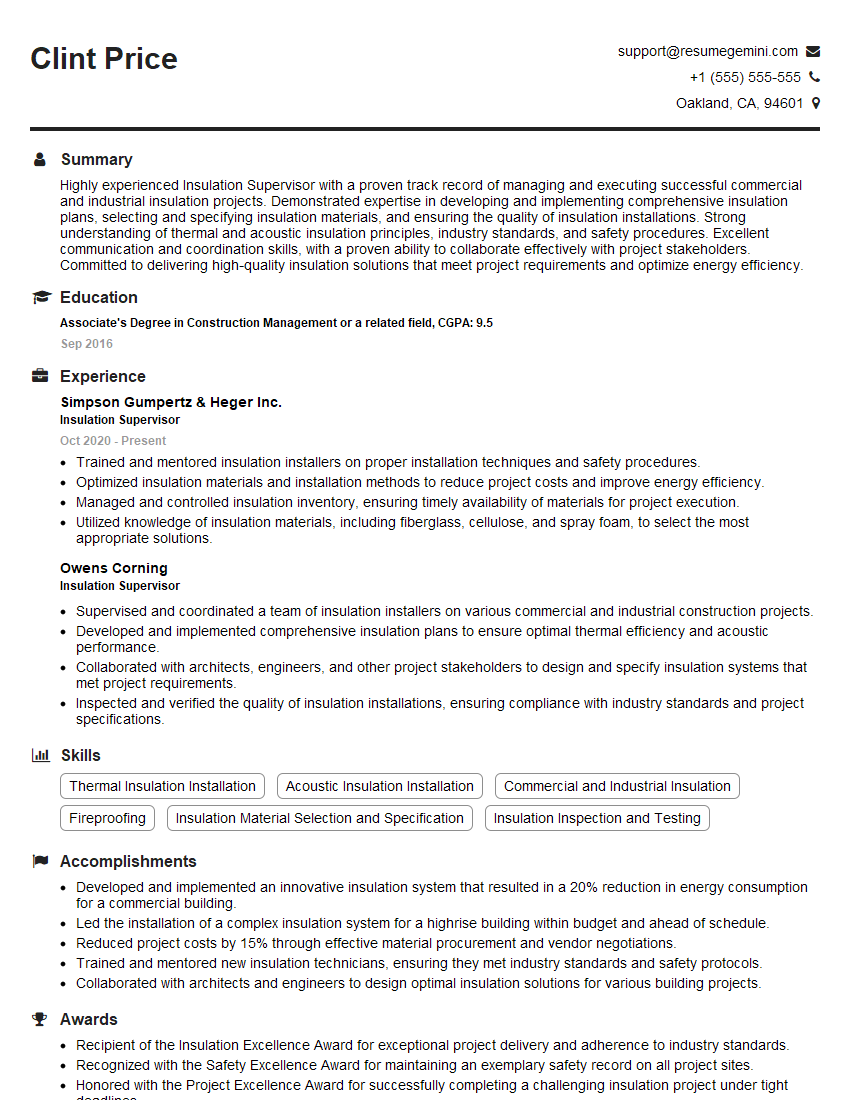
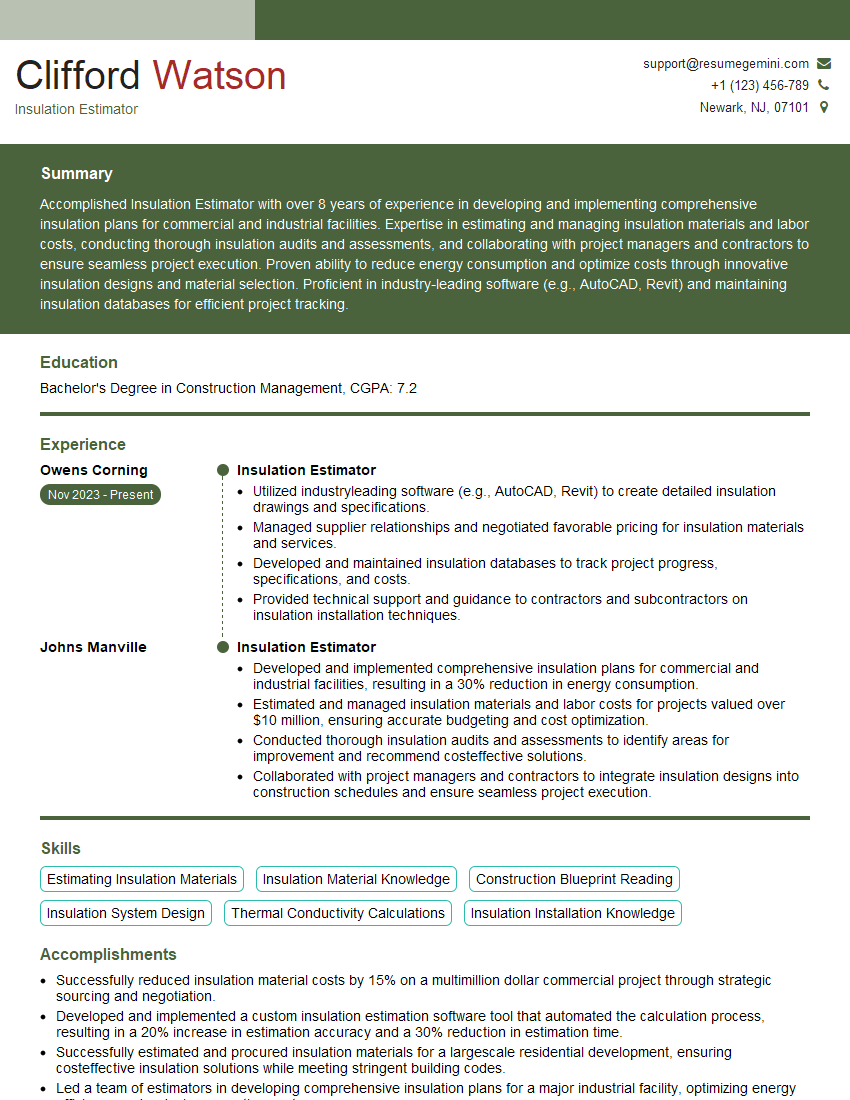
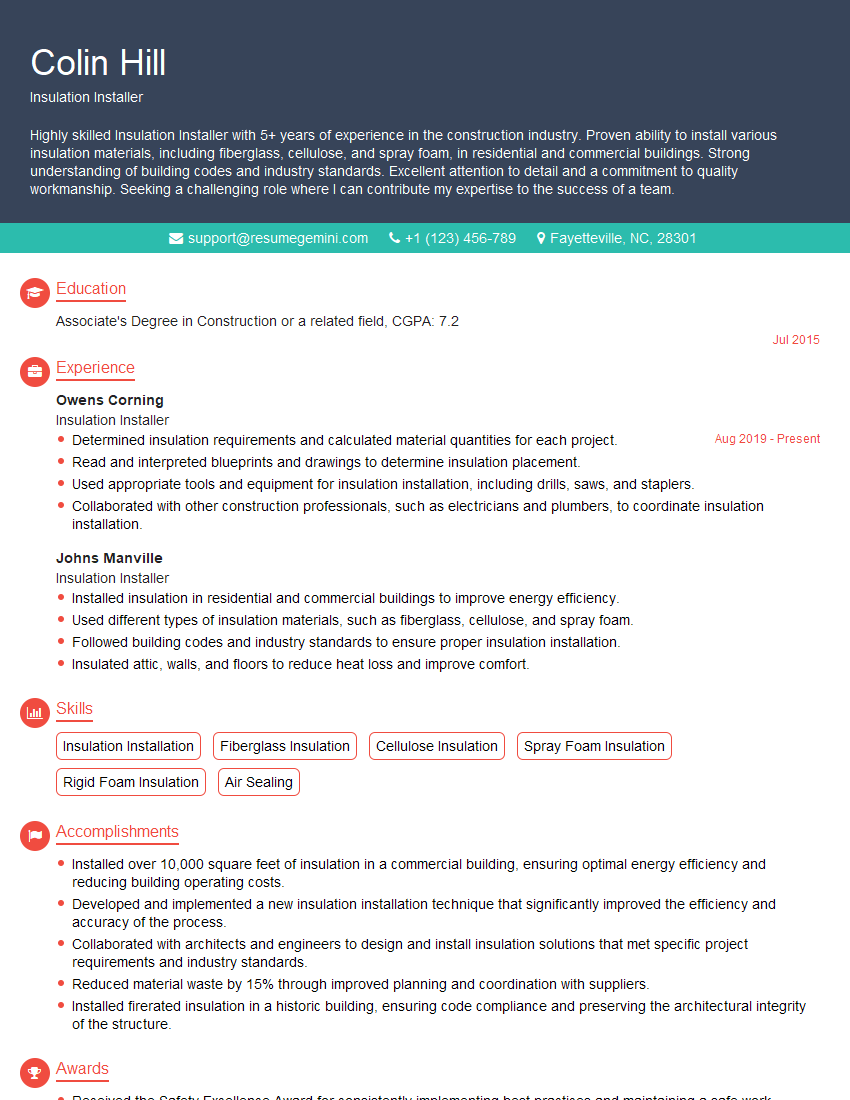
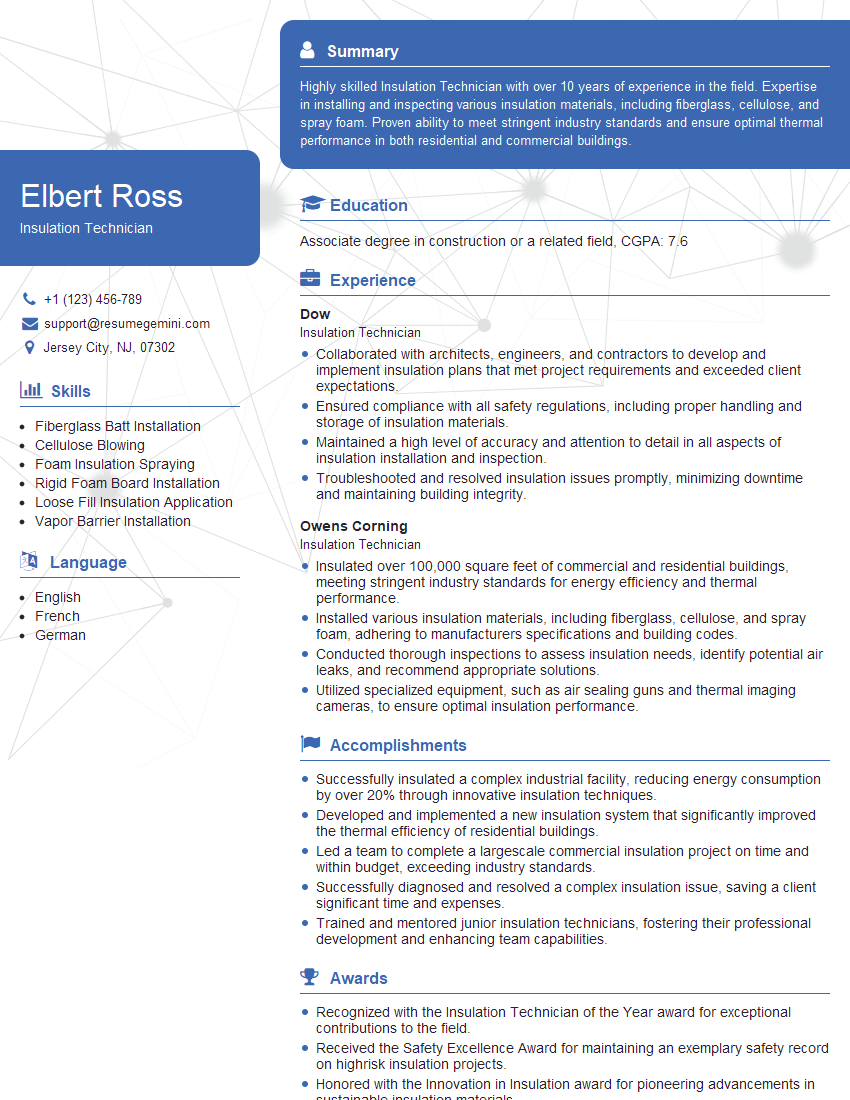
Mastering Commercial and Industrial Insulation Applications is vital for career advancement in this growing field. A strong understanding of these concepts demonstrates expertise and commitment to energy efficiency and sustainable practices, making you a highly sought-after candidate. To significantly boost your job prospects, create an ATS-friendly resume that highlights your skills and experience effectively. ResumeGemini is a trusted resource that can help you build a professional and impactful resume tailored to the specific demands of the Commercial and Industrial Insulation sector. Examples of resumes specifically designed for Commercial and Industrial Insulation Applications are available to guide you.

Explore more articles
Users Rating of Our Blogs
Share Your Experience
We value your feedback! Please rate our content and share your thoughts (optional).
What Readers Say About Our Blog
To the interviewgemini.com Webmaster.
Very helpful and content specific questions to help prepare me for my interview!
Thank you
To the interviewgemini.com Webmaster.
This was kind of a unique content I found around the specialized skills. Very helpful questions and good detailed answers.
Very Helpful blog, thank you Interviewgemini team.