Preparation is the key to success in any interview. In this post, we’ll explore crucial Commercial Storefront Glazing interview questions and equip you with strategies to craft impactful answers. Whether you’re a beginner or a pro, these tips will elevate your preparation.
Questions Asked in Commercial Storefront Glazing Interview
Q 1. What types of glass are commonly used in commercial storefront glazing?
Commercial storefront glazing utilizes a variety of glass types, each selected based on factors like budget, aesthetics, and performance requirements. Common choices include:
- Annealed Glass: This is the most basic and cost-effective type, suitable for less demanding applications. It’s easily broken, however, so it’s not ideal for high-traffic areas.
- Tempered (Heat-Strengthened) Glass: Much stronger than annealed glass, tempered glass shatters into small, relatively harmless pieces when broken, enhancing safety. It’s a popular choice for storefronts.
- Laminated Glass: Composed of two or more layers of glass bonded together with a polyvinyl butyral (PVB) interlayer, laminated glass offers enhanced safety and security. It’s resistant to breakage and helps mitigate impact damage. In case of breakage, the PVB interlayer holds the glass fragments together.
- Insulated Glass Units (IGUs): These consist of two or more panes of glass separated by a spacer filled with dehydrated air or inert gas (like argon or krypton). IGUs provide superior insulation, reducing energy costs and improving soundproofing. This is a very common choice for commercial applications, especially in climates with extreme temperatures.
- Low-Emissivity (Low-E) Glass: Coated with microscopic metallic layers, Low-E glass reflects infrared radiation, reducing heat transfer and improving energy efficiency. It’s often incorporated into IGUs.
The selection of the appropriate glass type is crucial for optimizing the storefront’s performance and meeting the specific needs of the building and its occupants.
Q 2. Explain the process of installing a storefront curtain wall system.
Installing a storefront curtain wall system is a complex process requiring precision and expertise. Here’s a simplified breakdown:
- Site Preparation and Surveying: Accurate measurements and site surveys are crucial to ensure a perfect fit. This includes checking for existing building conditions and potential obstacles.
- Framing Installation: The aluminum or steel framework is erected, typically starting from the bottom and working upwards. This framework provides support for the glass panels and ensures structural integrity. Precise leveling and alignment are paramount at this stage.
- Glass Panel Installation: Each glass panel (or IGU) is carefully inserted into the frame, using specialized tools and techniques to ensure a secure and watertight seal. Glazing sealant is applied to prevent leaks. The use of suction cups and other handling equipment is essential for safety.
- Sealant Application: High-quality sealant is crucial to prevent water infiltration and air leaks. This is applied around the perimeter of each glass panel to create a weathertight barrier. Different types of sealant are used depending on the application.
- Hardware Installation: Doors, windows, and other hardware are installed, ensuring smooth operation and a secure fit. This often involves specialized tools and techniques.
- Inspection and Testing: A thorough inspection is carried out to verify that all components are correctly installed and that the system meets the required safety and performance standards. This often involves air and water leakage testing.
- Finishing Touches: Any necessary cleaning or finishing work is completed.
Remember, this process involves specialized tools and safety procedures. It’s crucial to have experienced professionals handle the installation.
Q 3. Describe different types of storefront framing systems.
Storefront framing systems are broadly categorized into two types:
- Stick Systems: These involve assembling individual mullions (vertical framing members) and transoms (horizontal framing members) to create the frame. They offer greater design flexibility, allowing for customized configurations. Think of it like building with LEGOs – each piece is assembled individually.
- Unitized Systems: In this approach, prefabricated modules (sections of the frame with glass already installed) are assembled on-site. This method accelerates installation and reduces on-site labor but offers less design flexibility. It’s like receiving pre-assembled LEGO sets.
Within these categories, various materials are used:
- Aluminum: A lightweight yet strong material, commonly used for its corrosion resistance and ease of fabrication.
- Steel: Offers greater strength but is heavier and more susceptible to corrosion. Often used for larger or more structurally demanding storefronts.
The choice of framing system depends on factors such as project size, budget, design requirements, and aesthetic preferences.
Q 4. How do you ensure the structural integrity of a storefront glazing system?
Ensuring structural integrity in storefront glazing is paramount for safety and longevity. Key aspects include:
- Engineering Design: A qualified structural engineer must design the system to withstand anticipated loads (wind, snow, seismic activity). This includes precise calculations and specifications for materials and connections.
- Proper Material Selection: Using high-quality materials rated for the intended application is critical. This includes glass type, frame material, sealant, and fasteners.
- Accurate Installation: Precise installation following the engineer’s specifications is crucial. Improper installation can lead to structural weaknesses and potential failures.
- Regular Inspection and Maintenance: Periodic inspection helps identify any potential issues early on, such as cracked glass or sealant failure. Regular maintenance ensures the system’s longevity and safety.
- Compliance with Building Codes: The design and installation must strictly adhere to all relevant building codes and safety regulations.
Ignoring these steps can lead to costly repairs, safety hazards, and potential structural failures.
Q 5. What safety precautions are essential during storefront glazing installation?
Safety is paramount during storefront glazing installation. Essential precautions include:
- Fall Protection: Working at heights is inherent in glazing work. Harnesses, safety lines, and scaffolding are crucial to prevent falls.
- Personal Protective Equipment (PPE): Workers must use safety glasses, gloves, and hard hats to prevent injuries from falling objects or sharp edges.
- Proper Handling of Glass: Glass panels are heavy and fragile. Using suction cups, handling straps, and appropriate lifting equipment is vital to avoid breakage and injury.
- Safe Use of Tools and Equipment: All tools and equipment must be properly maintained and operated according to manufacturer’s instructions. Regular safety inspections are necessary.
- Site Security: The work area should be properly secured to prevent unauthorized access and ensure the safety of workers and pedestrians.
- Emergency Response Plan: A plan should be in place to handle any emergencies, including accidents or medical situations.
Adhering to rigorous safety protocols is not just a good practice – it’s a legal requirement and essential for preventing workplace accidents and injuries.
Q 6. What are the common challenges encountered during storefront glazing projects?
Storefront glazing projects often encounter various challenges:
- Weather Conditions: Extreme weather (rain, wind, snow) can delay or disrupt installation, affecting timelines and budgets.
- Site Constraints: Limited access, existing building conditions, or unexpected obstacles can complicate installation.
- Material Availability: Delays in material delivery can disrupt the project schedule.
- Coordination with Other Trades: Effective coordination with other trades (electrical, plumbing) is crucial to avoid conflicts and delays.
- Budget and Schedule Constraints: Working within tight budgets and deadlines can be challenging, requiring careful planning and management.
- Design Changes: Late changes to the design can necessitate rework and increase costs.
Careful planning, meticulous preparation, and effective communication are essential to mitigate these challenges.
Q 7. How do you handle unexpected issues during a glazing installation?
Handling unexpected issues requires a methodical approach:
- Assess the Situation: Identify the nature and extent of the problem – is it a minor defect or a major structural issue?
- Document the Problem: Take photos, make detailed notes, and involve relevant stakeholders (engineer, client).
- Develop Solutions: Explore possible solutions, weighing cost, time, and safety implications. Consult with experts if needed.
- Implement the Solution: Execute the chosen solution following safety protocols. Ensure that the repair or modification meets quality standards.
- Verify the Solution: After implementing the solution, verify that it resolves the problem and doesn’t create new issues. This may involve testing or inspections.
- Document the Resolution: Keep records of the issue, its resolution, and any costs involved. This documentation is vital for future reference and potential insurance claims.
Proactive communication with the client is crucial throughout this process to manage expectations and maintain transparency.
Q 8. What are your experience with different types of sealants and their applications?
Selecting the right sealant is crucial for the longevity and performance of storefront glazing. My experience encompasses a wide range of sealants, each with its unique properties and applications. For example, I’ve extensively used silicone sealants, known for their flexibility and excellent adhesion to various substrates like glass and metal. These are ideal for sealing joints and preventing water ingress in curtain wall systems and storefront frames. However, silicone can be challenging to clean up, and its curing time needs careful consideration during installation.
I’ve also worked extensively with polyurethane sealants, which offer excellent strength and durability, particularly in applications requiring high structural integrity. These are often preferred for larger joints or areas subject to significant stress. Choosing between a one-part or two-part polyurethane system depends on the project’s size and the required cure speed. Finally, I’m familiar with butyl sealants, primarily used as primary sealants in insulated glass units (IGUs) because of their excellent long-term stability and resistance to UV degradation. The selection process always considers factors like movement capability of the joint, exposure to the elements, and the specific materials being joined.
- Silicone: Excellent flexibility, good adhesion, various colors available.
- Polyurethane: High strength, durable, fast curing options available.
- Butyl: Excellent long-term stability, ideal for IGUs.
Q 9. Describe your experience with different types of glass and their properties (e.g., tempered, laminated, insulated).
Glass selection significantly impacts the storefront’s performance, aesthetics, and safety. My experience includes working with various types of glass, each tailored to specific project requirements.
- Annealed Glass: This is standard float glass, economical but prone to shattering into large, sharp pieces under stress. It’s generally unsuitable for high-traffic areas or exterior applications unless laminated. I’ve used it in interior partitions where safety isn’t a primary concern.
- Tempered Glass (Heat-Strengthened): Much stronger than annealed glass; when broken, it shatters into small, relatively harmless granules. This is a standard for storefront applications demanding safety and durability, particularly in high-impact zones like entrances.
- Laminated Glass: Composed of two or more layers of glass bonded together with a polyvinyl butyral (PVB) interlayer. This interlayer keeps the glass fragments together in the event of breakage, enhancing safety and security. It also offers better acoustic insulation and UV protection. We often utilize laminated glass for security applications and areas prone to vandalism.
- Insulated Glass Units (IGUs): These consist of two or more panes of glass separated by a sealed air or gas-filled space. IGUs provide superior thermal insulation, reducing energy costs and improving indoor comfort. I have extensively specified and installed IGUs in various storefront projects, selecting the appropriate gas fill (argon or krypton) based on climate and performance needs.
Q 10. What is your experience with measuring and cutting glass for storefront applications?
Precise measuring and cutting of glass are critical for a successful storefront installation. I have extensive experience using both manual and automated glass cutting equipment. Manual cutting requires skill and precision, utilizing a specialized glass cutter to score the glass before snapping it along the score line. This technique demands accuracy to avoid chipping or cracking. For large-scale projects or complex cuts, we employ CNC (computer numerical control) glass cutting machines, which provide greater speed, accuracy, and repeatability. This allows us to handle intricate designs and high-volume production with minimal waste. Post-cutting, all edges are carefully polished or ground to remove sharp edges and ensure safety. I always double-check all measurements against the shop drawings before proceeding with cutting to prevent errors.
Q 11. How familiar are you with building codes and regulations related to glazing?
Building codes and regulations concerning storefront glazing are paramount for ensuring safety and compliance. My experience includes a thorough understanding of International Building Code (IBC), local building codes, and relevant safety standards like ANSI Z97.1 (safety glazing). I’m familiar with requirements related to impact resistance, wind load resistance, and energy efficiency. I ensure all glazing systems meet or exceed the mandated standards for the specific project location. This involves meticulous documentation, review of specifications, and coordination with architects and engineers to ensure compliance throughout the design and installation processes. For example, I’ve had to adapt designs to meet hurricane impact requirements in coastal areas, using specific laminated glass types and reinforcement systems. Any deviations from code require obtaining necessary approvals and permits.
Q 12. How do you ensure the proper alignment and leveling of storefront glazing components?
Proper alignment and leveling are crucial for both aesthetics and performance. I use a combination of precision measuring tools and techniques to ensure the perfect installation. This begins with careful planning and fabrication, making sure the framework is perfectly square and level. Then during the installation of glazing units, I use levels, laser levels, and shims to ensure each pane is precisely aligned and plumb. Any deviations, even minor ones, can lead to stress on the sealant and frame, potentially resulting in leaks or premature failure. We also employ adjustable glazing clips and other specialized hardware to facilitate fine adjustments during installation. Finally, thorough inspections are conducted at each stage, paying particular attention to alignment and the absence of any gaps or misalignments.
Q 13. What experience do you have with different types of hardware used in storefront systems?
Storefront systems rely on a variety of hardware components, and my experience includes working with a broad range of these. I’m proficient with various types of glazing clips, ensuring secure and adjustable attachment of the glass to the framing system. I’m also knowledgeable about different types of hinges, locks, and handles, selecting those that meet the project’s specific security and aesthetic requirements. In addition, I’m experienced with mullion systems, which provide structural support and divide large glass areas into smaller panels, improving impact resistance and providing design flexibility. My familiarity extends to the installation and adjustment of these components, ensuring their smooth operation and long-term durability. Understanding the material compatibility of each hardware component is vital for preventing corrosion and ensuring a smooth, long-lasting function.
Q 14. How do you address issues related to water leakage in storefront glazing systems?
Water leakage is a serious issue in storefront glazing, often leading to damage and costly repairs. My approach to addressing such issues is systematic and thorough. It begins with a careful inspection to pinpoint the source of the leak. This may involve pressure testing, visual inspection, and even using specialized leak detection equipment. Once the source is identified, the solution varies. It could involve replacing damaged sealant, repairing cracks in the glass or frame, adjusting glazing clips, or even replacing entire components. Preventive measures, such as the use of high-quality sealants and proper installation techniques, are critical in minimizing future issues. Proper flashing and drainage systems are also crucial elements in ensuring that water doesn’t accumulate near the glazing system.
Q 15. Explain your experience with different types of glazing systems, including stick systems and unitized systems.
My experience encompasses a wide range of glazing systems, primarily stick-built and unitized systems. Stick systems, also known as ‘on-site’ glazing, involve assembling the framing and glazing units on-site. This offers greater flexibility in design and adaptation to existing structures but can be more time-consuming and susceptible to weather delays. I’ve worked extensively with various stick systems, from simple aluminum frames to more complex curtain wall systems incorporating high-performance insulated glass units (IGUs).
Unitized systems, conversely, are pre-fabricated off-site in a controlled factory environment. These systems arrive on-site as complete, pre-assembled modules, significantly reducing on-site installation time and improving overall quality control. My experience includes working with large unitized curtain wall systems for high-rise buildings as well as smaller storefront applications utilizing various materials like aluminum, steel, and composite materials. The choice between stick and unitized systems depends heavily on factors such as project size, budget, design complexity, and the site conditions. For instance, a complex, bespoke design for a high-end retail space might favor a stick system, while a large, repetitive facade on an office building would benefit from the efficiency of a unitized system.
Career Expert Tips:
- Ace those interviews! Prepare effectively by reviewing the Top 50 Most Common Interview Questions on ResumeGemini.
- Navigate your job search with confidence! Explore a wide range of Career Tips on ResumeGemini. Learn about common challenges and recommendations to overcome them.
- Craft the perfect resume! Master the Art of Resume Writing with ResumeGemini’s guide. Showcase your unique qualifications and achievements effectively.
- Don’t miss out on holiday savings! Build your dream resume with ResumeGemini’s ATS optimized templates.
Q 16. How do you manage a team during the installation of a large storefront glazing project?
Managing a team on a large storefront glazing project requires meticulous planning and effective communication. I begin by clearly defining roles and responsibilities within the team, ensuring everyone understands their tasks and how they contribute to the overall project goal. This usually involves assigning skilled glaziers, installers, and assistants with specific areas of expertise. Daily briefings and regular progress meetings are crucial for maintaining transparency, addressing potential challenges promptly, and fostering collaboration. Safety is paramount, so implementing and strictly enforcing safety protocols – including the use of appropriate PPE (Personal Protective Equipment) and adherence to fall protection measures – is a non-negotiable part of my management style. I also focus on proactive problem-solving; anticipating potential issues and developing contingency plans keeps the project on track even when unexpected challenges arise. For instance, on a recent project, we experienced a supplier delay. By communicating proactively with the client and adapting our schedule, we managed to mitigate the impact and avoided major delays.
Q 17. Describe your experience with the use of specific tools and equipment used in commercial glazing.
My experience with tools and equipment is extensive, ranging from hand tools to specialized machinery. Basic hand tools like measuring tapes, levels, and various types of screwdrivers are essential for precise work. I am proficient in using power tools such as drills, impact wrenches, and grinders for efficient and accurate installation. Specialized tools include suction cups for handling large glass panels, glazing sealants application guns, and specialized tools for handling different types of glazing systems. In addition to this, we utilize advanced equipment for measuring and cutting materials, including laser measuring devices and CNC-controlled cutting machines for precise and efficient execution of intricate details. For example, when working with insulated glass units (IGUs), I have experience with specialized handling equipment to prevent damage to these delicate and high-value components. Safety is always a primary consideration when using this equipment.
Q 18. What is your experience with troubleshooting and repairing faulty storefront glazing systems?
Troubleshooting and repairing faulty storefront glazing systems requires a systematic approach. I start by thoroughly inspecting the affected area to identify the root cause of the problem – this could range from simple issues like faulty seals or damaged components to more complex structural problems. My experience helps me quickly determine the best course of action; whether the issue requires a simple repair, replacement of individual components, or even a more extensive overhaul of the system. I’ve encountered numerous issues, from leaky seals (which I address using proper sealant application techniques and materials) to cracked glass (requiring careful removal and replacement using appropriate safety precautions) and even structural issues related to the building’s framing or movement. Documenting each step of the troubleshooting and repair process is crucial, both for ensuring the longevity of the repair and for maintaining clear records for warranty claims.
Q 19. How do you estimate the materials and labor costs for a storefront glazing project?
Estimating material and labor costs involves a detailed breakdown of each aspect of the project. I begin by carefully reviewing the architectural drawings and specifications to determine the quantities of materials needed. This includes calculating the amount of glass, framing, sealants, and other hardware required. Then I obtain pricing from reputable suppliers, factoring in potential price fluctuations and lead times. The labor cost estimation involves assessing the complexity of the project, the number of workers needed, their skill levels, and the estimated time required for each task. I utilize project management software to create detailed estimates, breaking down the costs into manageable categories (materials, labor, equipment rental, permits, etc.). Contingency buffers are also included to account for unforeseen issues or material price increases. This meticulous approach ensures accurate bidding and helps avoid cost overruns.
Q 20. What software or technology are you proficient in using for commercial glazing projects?
Proficiency in relevant software is critical in today’s commercial glazing industry. I am adept at using AutoCAD for reviewing architectural drawings and creating shop drawings. I am also proficient with various project management software such as Microsoft Project and others for scheduling, cost tracking, and resource allocation. This software significantly improves our efficiency and accuracy. In addition to this, I regularly use specialized software for creating detailed material takeoffs, calculating glass sizes, and designing complex curtain wall systems. This ensures that the glazing system is optimized for performance and aesthetics, and is correctly manufactured.
Q 21. What quality control measures do you implement during storefront glazing installation?
Quality control is paramount throughout the entire process. We begin with rigorous inspection of all incoming materials to ensure they meet the required specifications. Throughout the installation process, regular quality checks are implemented at key stages, following established checklists and quality control procedures. This includes verifying the accuracy of measurements, the proper installation of components, and the quality of sealant application. Final inspections are conducted upon project completion to ensure adherence to the design specifications and the absence of any defects. We use digital documentation, including photographs and videos, to maintain a record of each stage of the project, ensuring traceability and accountability for any issues. A comprehensive quality control system ensures the client receives a high-quality, long-lasting installation. Regular maintenance and safety checks are incorporated into our quality control process to anticipate potential problems and maintain a high level of safety during installation.
Q 22. How do you ensure adherence to project schedules and deadlines?
Adhering to project schedules in storefront glazing requires meticulous planning and proactive management. I begin by thoroughly reviewing project blueprints and specifications, identifying potential challenges and creating a detailed work breakdown structure (WBS). This WBS outlines all tasks, their dependencies, and estimated durations. I then utilize project management software to track progress, assign tasks to team members, and monitor deadlines. Regular progress meetings, both internally and with clients, are critical for identifying and addressing any delays proactively. For example, on a recent project involving a large-scale retail installation, we anticipated potential supply chain issues for specialized glass. By ordering materials well in advance and establishing contingency plans for alternative suppliers, we successfully avoided any significant schedule slippage.
Furthermore, I utilize critical path analysis to pinpoint tasks crucial to the overall timeline. Focusing resources on these critical tasks helps mitigate delays. Any potential issues are flagged early, allowing for immediate corrective action rather than reacting to problems later. Open communication is key; I keep all stakeholders informed of our progress and any anticipated changes to the timeline.
Q 23. Explain your understanding of different glazing techniques and methods.
My understanding of glazing techniques encompasses various methods, each chosen based on the project’s specific requirements and aesthetic goals. For example, direct glazing involves securing the glass directly to the building’s frame using specialized sealant and clips, offering a clean, minimalist look. This is commonly used in modern designs. In contrast, indirect glazing employs a secondary frame, providing additional insulation and soundproofing benefits. This system is particularly effective in colder climates or high-noise areas.
Laminated glass, comprising multiple layers of glass bonded with a polymer interlayer, provides enhanced safety and security. It’s ideal for high-traffic areas or locations where impact resistance is crucial. Insulated glazing units (IGUs), also known as double or triple-glazed units, consist of two or more panes of glass separated by a desiccated air or gas-filled space. This significantly improves energy efficiency and reduces noise. The selection of the appropriate glazing method, glass type, and sealant is vital for ensuring the longevity and performance of the storefront.
Furthermore, I’m proficient in various installation methods, including butt glazing (where glass panels meet edge-to-edge), channel glazing (where glass sits within a frame channel), and silicone glazing (using silicone sealant to bond glass to the frame). The choice depends on factors such as the glass type, frame material, and desired aesthetic.
Q 24. Describe your experience with working at heights and using safety equipment.
Safety is my paramount concern when working at heights. I possess extensive experience utilizing various fall protection systems, including harnesses, lifelines, and anchor points. Before commencing any work at height, I conduct a thorough site-specific risk assessment, identifying potential hazards and developing a comprehensive safety plan. This plan includes detailed procedures for the use of safety equipment, emergency procedures, and communication protocols. I ensure that all team members are properly trained and equipped with the necessary personal protective equipment (PPE), including safety helmets, high-visibility clothing, and appropriate footwear.
I’m familiar with and strictly adhere to all relevant safety regulations and best practices. Regular safety briefings and toolbox talks are implemented to reinforce safety awareness and address any emerging concerns. For instance, on a recent high-rise project, we employed a suspended platform system to ensure safe access to the upper levels. Thorough inspection and maintenance of all equipment are carried out before, during, and after each work session.
Q 25. What is your experience with working in collaboration with other trades on construction sites?
Collaborating effectively with other trades is crucial for successful project completion. I maintain open and proactive communication with other contractors, including masons, electricians, and HVAC installers, to coordinate our work schedules and avoid conflicts. This includes regular meetings to discuss progress, identify potential conflicts, and establish clear communication channels. For example, on a recent project, we coordinated closely with the structural steel team to ensure accurate framing dimensions for the glazing system installation, preventing costly delays and rework.
My approach involves utilizing collaborative project management tools to share information and track progress. I’m adept at resolving conflicts arising from schedule clashes or material compatibility issues through open discussion and compromise. Building strong working relationships with other trades is paramount; mutual respect and understanding ensure a safe and productive work environment. This approach leads to efficient workflow and overall project success.
Q 26. How do you handle client communication and manage expectations during a project?
Client communication is a cornerstone of successful projects. From the initial consultation, I strive to understand the client’s vision and expectations, providing clear and concise information about the project’s scope, timeline, and budget. Regular updates, both written and verbal, keep clients informed of progress, any potential challenges, and how these are being addressed. I use a variety of communication methods, including email, phone calls, and on-site meetings, to ensure effective communication. For example, I provide regular photographic documentation of progress, allowing clients to visualize the project’s development.
Managing expectations involves setting realistic timelines and budgets. Any potential changes or unforeseen challenges are discussed transparently with the client, ensuring their understanding and agreement before proceeding. Proactive communication helps prevent misunderstandings and maintains a positive client relationship. I strive to address client concerns promptly and professionally, ensuring they are satisfied with the outcome of the project. The end result is increased client satisfaction and positive referrals.
Q 27. What is your experience with different types of storefront doors and their installation?
My experience with storefront doors encompasses a wide range of types, including swing doors, sliding doors, revolving doors, and automatic doors. Each type has unique installation requirements and considerations. Swing doors, for example, require precise adjustment of hinges and closers to ensure smooth operation and proper sealing. Sliding doors necessitate accurate track installation and alignment to prevent binding or malfunction. Revolving doors present more complex installation challenges, requiring expertise in mechanical systems and alignment.
Automatic doors incorporate electronic components and safety features, demanding specialized knowledge of control systems and programming. I’m experienced in installing doors made from various materials, including aluminum, steel, and wood, and I’m proficient in the installation of various hardware components, such as locks, handles, and closers. Safety is paramount during the installation process, ensuring that all doors meet relevant safety standards and codes. I always ensure proper testing and commissioning of all installed doors to guarantee their functionality and safety.
Key Topics to Learn for Commercial Storefront Glazing Interview
- Glass Types & Properties: Understanding the characteristics of various glass types (e.g., annealed, tempered, laminated, insulated) and their suitability for different applications. This includes considerations for thermal performance, security, and aesthetic appeal.
- Framing Systems: Familiarity with common framing materials (aluminum, steel, etc.) and their respective strengths, weaknesses, and installation techniques. Consider the impact of different framing systems on overall project cost and aesthetic design.
- Installation Techniques: Knowledge of safe and efficient installation procedures, including glazing techniques, sealant application, and weatherproofing. This should encompass both practical application and adherence to building codes and safety regulations.
- Code Compliance & Regulations: Understanding relevant building codes and safety standards related to storefront glazing. This involves knowing how to interpret and apply these regulations to ensure projects meet requirements.
- Project Management & Budgeting: Ability to understand project timelines, material costs, and labor estimations. This includes experience in managing resources effectively and adhering to project budgets.
- Troubleshooting & Problem-Solving: Experience in identifying and resolving common issues encountered during installation, such as leaks, cracks, or structural problems. This includes practical problem-solving approaches and decision-making skills.
- Energy Efficiency & Sustainability: Understanding the role of glazing in energy efficiency and the use of sustainable materials and practices in commercial storefront projects. This could include knowledge of low-E coatings and other energy-saving technologies.
- Health & Safety: Thorough understanding and adherence to safety protocols and procedures during all stages of a commercial storefront glazing project. This includes the safe handling of glass and other materials, as well as the use of appropriate personal protective equipment (PPE).
Next Steps
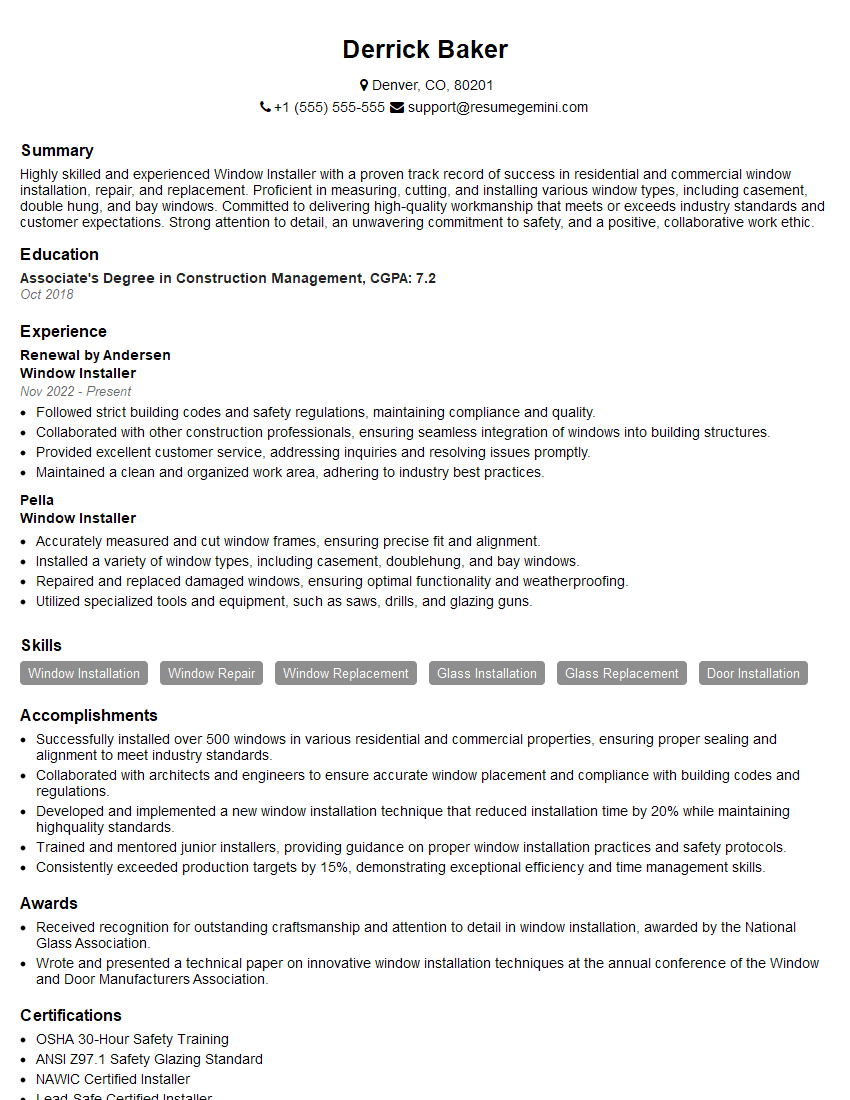
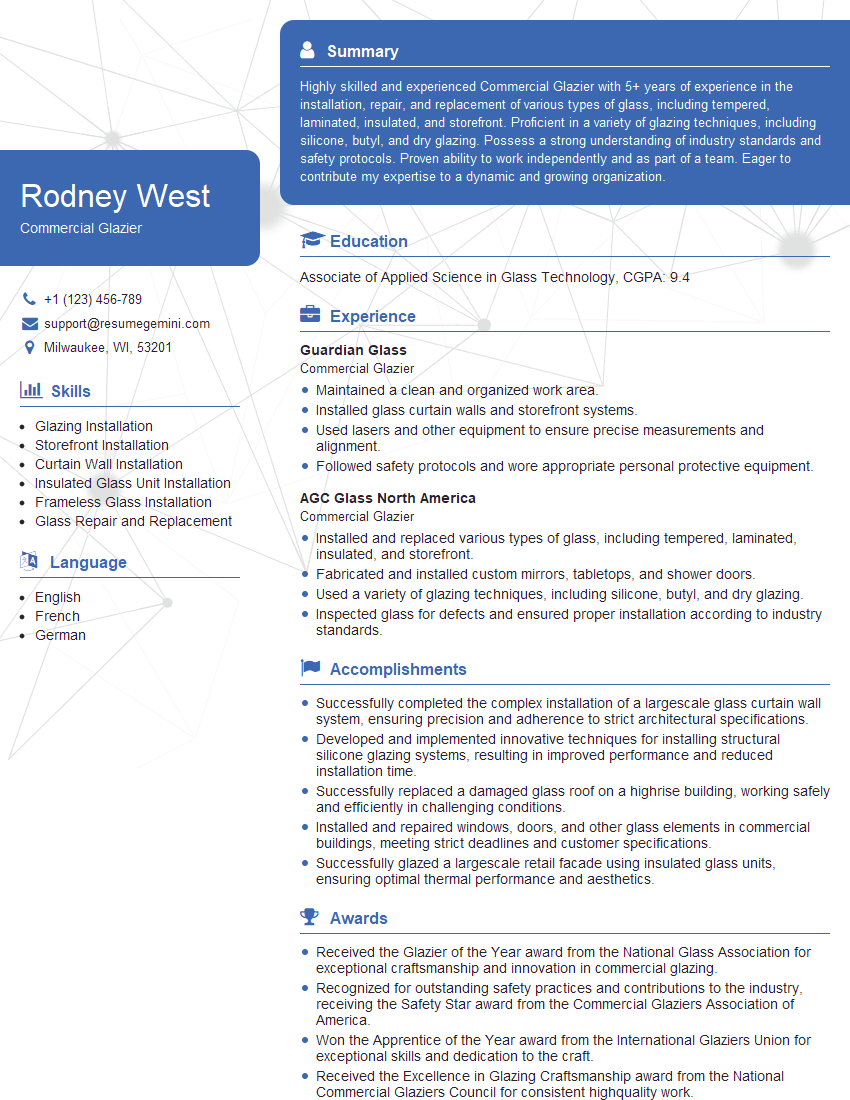
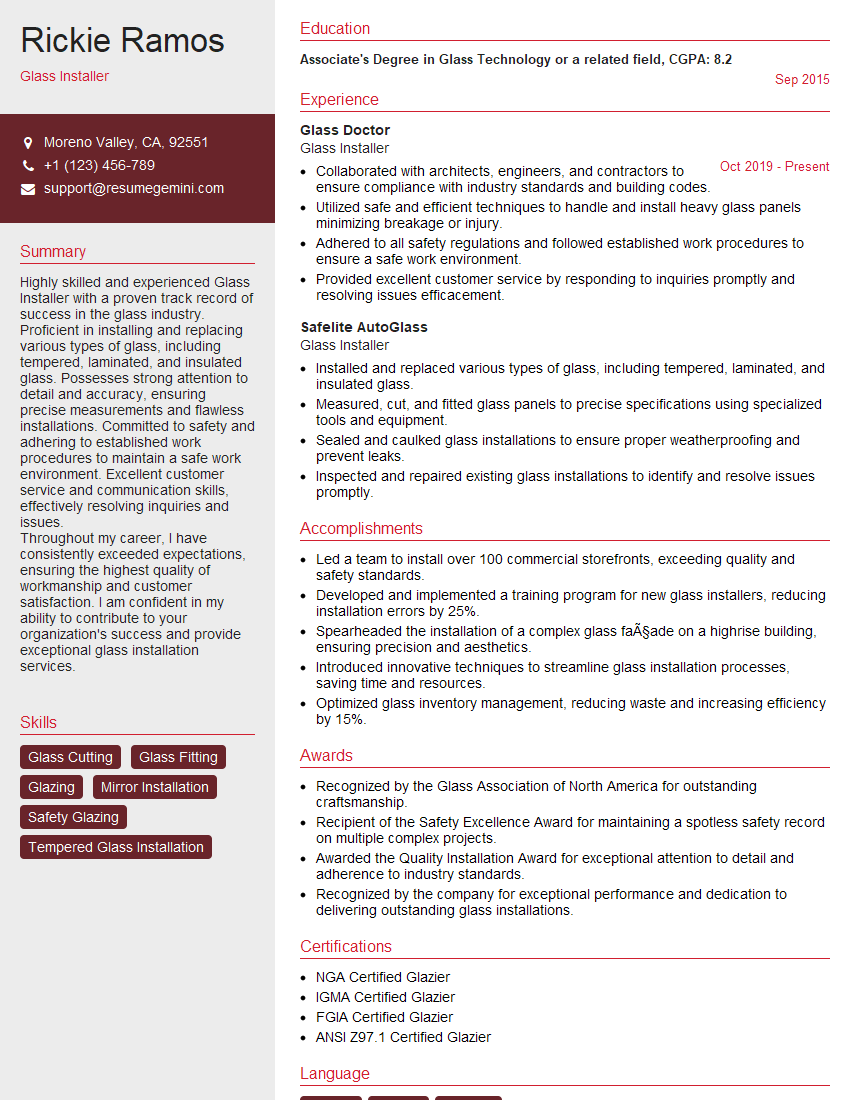
Mastering Commercial Storefront Glazing opens doors to rewarding and diverse career opportunities within the construction and architectural industries. A strong understanding of these concepts, coupled with practical experience, significantly enhances your employability and earning potential. To maximize your job prospects, it’s crucial to create a professional and ATS-friendly resume that effectively highlights your skills and experience. We highly recommend using ResumeGemini to build a compelling resume tailored to this specialized field. ResumeGemini offers a user-friendly platform and provides examples of resumes specifically designed for Commercial Storefront Glazing professionals to guide you.
Explore more articles
Users Rating of Our Blogs
Share Your Experience
We value your feedback! Please rate our content and share your thoughts (optional).
What Readers Say About Our Blog
To the interviewgemini.com Webmaster.
Very helpful and content specific questions to help prepare me for my interview!
Thank you
To the interviewgemini.com Webmaster.
This was kind of a unique content I found around the specialized skills. Very helpful questions and good detailed answers.
Very Helpful blog, thank you Interviewgemini team.