Every successful interview starts with knowing what to expect. In this blog, we’ll take you through the top Conducting environmental impact assessments interview questions, breaking them down with expert tips to help you deliver impactful answers. Step into your next interview fully prepared and ready to succeed.
Questions Asked in Conducting environmental impact assessments Interview
Q 1. Explain the process of conducting an Environmental Impact Assessment (EIA).
An Environmental Impact Assessment (EIA) is a systematic process used to identify, predict, evaluate, and mitigate the biophysical, social, and other relevant effects of development proposals prior to major decisions being taken and commitments made. Think of it as a comprehensive health check for a project before it even begins. It’s crucial for ensuring environmentally responsible development.
The process involves a detailed investigation into the potential environmental consequences of a project, considering various aspects from air and water quality to biodiversity and socio-economic impacts. The goal is not to stop development but to ensure it happens sustainably, minimizing negative effects and maximizing benefits.
Q 2. Describe the key stages involved in an EIA.
A typical EIA involves several key stages:
- Screening: Determining whether an EIA is required based on the project’s size, location, and potential impacts. This often involves checking against regulatory thresholds.
- Scoping: Identifying the key environmental issues and the specific information needed for the assessment. This involves consulting stakeholders and defining the assessment’s boundaries.
- Baseline Data Collection: Gathering existing information on the environment before the project starts. This establishes a ‘before’ picture to compare against future conditions.
- Impact Prediction and Assessment: Predicting the project’s likely environmental impacts using various techniques like modeling and expert judgment. This stage identifies potential positive and negative impacts.
- Mitigation and Enhancement Measures: Developing strategies to avoid, minimize, or compensate for negative impacts and enhance positive ones. This could involve using cleaner technologies or restoring damaged habitats.
- Impact Evaluation: Assessing the significance of the predicted impacts, considering both magnitude and probability. This often involves comparing impacts against predetermined thresholds or criteria.
- Reporting and Review: Preparing an EIA report that summarizes findings, proposed mitigation measures, and conclusions. The report undergoes review by regulatory agencies and stakeholders.
- Monitoring and Auditing: Post-project monitoring to track actual impacts and assess the effectiveness of mitigation measures. This allows for adjustments if necessary.
Q 3. What are the different types of environmental impacts considered in an EIA?
EIAs consider a wide range of environmental impacts. These can be broadly categorized as:
- Biophysical Impacts: Changes to air and water quality, soil erosion, noise pollution, biodiversity loss (habitat destruction, species extinction), greenhouse gas emissions, and changes to climate.
- Socio-economic Impacts: Effects on human health, livelihoods, cultural heritage, displacement of communities, and changes to local economies. For example, a dam project might flood agricultural land, impacting farmers’ incomes.
- Landscape and Visual Impacts: Changes to the visual character of a landscape, including the effects of new infrastructure on scenic views. The construction of a large wind farm could impact a scenic vista.
- Cumulative Impacts: The combined effects of the project with other existing or planned developments. This considers the additive or synergistic effects of multiple projects in a given area.
The specific impacts considered will vary greatly depending on the nature of the project and its location.
Q 4. How do you identify and assess significant environmental impacts?
Identifying and assessing significant environmental impacts involves a multi-step process:
- Qualitative Assessment: Using expert judgment and descriptive scales (e.g., low, medium, high) to characterize the magnitude and likelihood of impacts. This often involves using matrices to visually represent the relationship between project activities and environmental receptors.
- Quantitative Assessment: Employing numerical data and models to predict the magnitude of impacts. This could involve air quality modeling or hydrological simulations to predict changes in water flows.
- Significance Criteria: Establishing thresholds or criteria for determining whether an impact is significant. These criteria may be based on legal requirements, environmental standards, or expert judgment. For example, an exceedance of air quality standards might be considered a significant negative impact.
- Impact Rating Methods: Using various methods (e.g., Leopold Matrix, Battelle method) to systematically rate the significance of impacts based on their magnitude, duration, and other factors.
- Stakeholder Consultation: Engaging stakeholders to gain their perspectives on the significance of different impacts. Public perception plays a role in assessing significance.
The selection of the appropriate methods depends on the project’s specific context and the available data.
Q 5. What are the key environmental regulations and guidelines relevant to EIAs?
Key environmental regulations and guidelines governing EIAs vary by jurisdiction but generally include national and/or regional environmental laws, regulations, and policies. For example:
- National Environmental Policy Act (NEPA) in the United States: Requires federal agencies to prepare EIAs for major projects.
- European Union Directive on EIA: Sets standards for EIAs across EU member states.
- International standards (e.g., ISO 14001): Provide frameworks for environmental management systems that can inform EIA practices.
These regulations often specify the types of projects requiring an EIA, the information to be included in the assessment, and the public participation process. It’s essential to consult the relevant regulations for the specific geographic location of the project.
Q 6. Explain the significance of baseline data collection in an EIA.
Baseline data collection is crucial because it provides a reference point against which to measure project impacts. Think of it as taking a ‘before’ photo before a makeover – you need it to see the difference afterward. It allows for a sound assessment of the project’s effect on the environment.
Baseline data typically includes information on:
- Physical environment: Air and water quality, soil characteristics, geology, topography.
- Biological environment: Flora and fauna, habitats, biodiversity.
- Socio-economic environment: Population demographics, land use patterns, employment, cultural heritage.
Accurate and comprehensive baseline data is essential for credible impact prediction and evaluation. Without it, the assessment is fundamentally flawed.
Q 7. How do you incorporate stakeholder engagement in the EIA process?
Stakeholder engagement is critical for successful EIAs. It ensures that the assessment considers the concerns and perspectives of all affected parties, leading to a more robust and socially acceptable outcome. It fosters transparency and trust in the process.
Effective stakeholder engagement strategies involve:
- Identifying stakeholders: Identifying all individuals, groups, and organizations affected by the project (e.g., local communities, indigenous groups, government agencies, NGOs).
- Communication and Consultation: Using various communication methods (e.g., public meetings, workshops, surveys, online platforms) to inform stakeholders about the project and seek their input.
- Feedback Incorporation: Actively incorporating stakeholder feedback into the EIA process. This shows respect for their concerns and contributes to a more complete and objective assessment.
- Dispute Resolution: Establishing mechanisms for addressing disagreements and conflicts among stakeholders. This could involve mediation or other conflict-resolution techniques.
Early and ongoing engagement is key to building trust and ensuring the EIA reflects the diverse needs and concerns of the affected communities.
Q 8. Describe your experience with environmental modeling and prediction techniques.
Environmental modeling and prediction are crucial for anticipating the impacts of a project on the environment. I have extensive experience using various techniques, from simple statistical models to complex spatial analysis tools. For instance, I’ve used GIS software like ArcGIS to map potential habitat loss due to road construction, incorporating factors such as species distribution data and terrain characteristics. Another project involved using hydrodynamic models to predict changes in water quality resulting from industrial effluent discharge. These models allowed us to simulate different scenarios and evaluate the effectiveness of proposed mitigation measures. My experience also extends to air quality dispersion modeling, using software like AERMOD to assess the impact of emissions from power plants on surrounding communities. These models help predict pollutant concentrations downwind and inform the design of effective pollution control strategies. Beyond these specific software packages, I am proficient in the statistical methods underpinning many of these models, ensuring the proper application and interpretation of results.
Q 9. How do you evaluate the effectiveness of mitigation measures in an EIA?
Evaluating mitigation measures requires a robust and systematic approach. It’s not enough to simply propose measures; we must demonstrate their effectiveness in reducing or offsetting predicted impacts. My process typically involves:
- Quantitative Assessment: Using the same models used for predicting impacts (e.g., air quality or water quality models), we simulate scenarios with and without the proposed mitigation measures implemented. The difference quantifies the measure’s effectiveness.
- Qualitative Assessment: We evaluate qualitative aspects, such as changes in community perception or improvements in biodiversity. This often involves stakeholder consultations and expert reviews.
- Monitoring and Evaluation Plan: A key aspect of evaluating mitigation measures is establishing a monitoring plan to track their effectiveness in the post-construction phase. This plan defines parameters to measure, frequency of monitoring, and methods for data analysis.
Q 10. What are the key differences between Strategic Environmental Assessment (SEA) and EIA?
While both SEA and EIA assess environmental impacts, they differ significantly in scope and timing.
- Strategic Environmental Assessment (SEA) is a process for evaluating the potential environmental effects of policies, plans, and programs before decisions are taken. It’s a broader, higher-level assessment looking at the big picture. For example, an SEA might assess the environmental implications of a regional transportation plan, considering various options and their cumulative impacts.
- Environmental Impact Assessment (EIA) focuses on the environmental effects of specific projects, such as a new power plant or a highway section. EIAs happen after a project is more concretely defined, providing more detailed assessments.
Q 11. How do you handle uncertainties and data gaps in an EIA?
Uncertainty and data gaps are inevitable in EIAs. I employ several strategies to handle these challenges:
- Sensitivity Analysis: We test the model’s sensitivity to changes in uncertain parameters. This helps to identify the critical variables driving the results and quantify the uncertainty associated with the predictions.
- Scenario Planning: Exploring various plausible scenarios, considering different data assumptions and levels of uncertainty, provides a range of potential outcomes rather than relying on a single prediction.
- Expert Judgement: When data is scarce, expert elicitation from relevant fields can provide valuable insights and help to fill knowledge gaps.
- Adaptive Management: Building flexibility into the project design allows for adjustments in response to new information or unexpected outcomes obtained during the monitoring phase.
Q 12. Explain your experience with environmental impact assessment software.
I am proficient in several environmental impact assessment software packages. My experience includes using GIS software (ArcGIS, QGIS) for spatial analysis, mapping, and data visualization. I’ve used specialized modeling software such as AERMOD (air quality modeling), hydrodynamic models (e.g., MIKE 11 for water quality), and various statistical packages (R, SPSS). My expertise extends beyond simply running these programs; I have a deep understanding of the underlying methodologies and the appropriate interpretation of the results. I’m adept at choosing the right tool for a specific task, depending on the type of project and data available. This includes understanding the model’s limitations and appropriately communicating uncertainties.
Q 13. Describe your experience with preparing EIA reports and documentation.
Preparing EIA reports and documentation is a critical aspect of my work. I follow established guidelines and regulations, ensuring a clear, comprehensive, and legally sound document. My experience encompasses all stages, from initial scoping and baseline studies through impact prediction, mitigation planning, and the final report. I’m skilled in writing concise and impactful reports for various audiences. Reports I have prepared include detailed descriptions of methodologies, comprehensive assessments of impacts, clear presentation of mitigation strategies, and robust monitoring and evaluation plans. The reports adhere to the standards of the relevant regulatory agencies, and I have a strong understanding of public review and comment processes.
Q 14. How do you present complex environmental information to non-technical audiences?
Presenting complex environmental information to non-technical audiences requires clear communication and effective visualization. I use several techniques to achieve this:
- Simple Language: Avoiding jargon and using plain English is crucial. Technical terms should be defined or replaced with simpler explanations.
- Visual Aids: Graphs, charts, maps, and infographics are effective tools for conveying complex data in an easily digestible format.
- Analogies and Metaphors: Relating environmental concepts to everyday experiences helps people grasp the ideas more easily.
- Interactive Presentations: Interactive elements, such as Q&A sessions and demonstrations, can enhance audience engagement and comprehension.
Q 15. What are the ethical considerations involved in conducting EIAs?
Ethical considerations in EIAs are paramount, ensuring fairness, transparency, and accountability throughout the process. It’s about upholding the principles of environmental justice and protecting vulnerable populations.
- Independence and Objectivity: Maintaining impartiality is crucial. We must avoid any bias towards the project proponent and ensure our assessment is based solely on scientific evidence and established methodologies. For example, we might refuse to work on a project where we have a pre-existing financial interest in the outcome.
- Transparency and Public Participation: The EIA process should be open and accessible to all stakeholders, including the public, allowing for meaningful engagement and feedback. This could involve holding public forums, providing clear and accessible reports, and responding to concerns raised by the community.
- Confidentiality and Data Security: Protecting sensitive data, such as proprietary information or confidential stakeholder communications, is critical. This involves adhering to data protection regulations and ensuring secure data storage and handling procedures.
- Competence and Professionalism: EIAs require specialized expertise. We must only undertake projects for which we have sufficient knowledge and experience, adhering to professional standards and best practices. This might involve collaborating with specialists in other fields like ecology or hydrology.
Ignoring these ethical considerations could lead to flawed assessments, environmental damage, social unrest, and legal repercussions.
Career Expert Tips:
- Ace those interviews! Prepare effectively by reviewing the Top 50 Most Common Interview Questions on ResumeGemini.
- Navigate your job search with confidence! Explore a wide range of Career Tips on ResumeGemini. Learn about common challenges and recommendations to overcome them.
- Craft the perfect resume! Master the Art of Resume Writing with ResumeGemini’s guide. Showcase your unique qualifications and achievements effectively.
- Don’t miss out on holiday savings! Build your dream resume with ResumeGemini’s ATS optimized templates.
Q 16. How do you ensure the quality and accuracy of EIA data?
Ensuring EIA data quality and accuracy is fundamental. It begins with meticulous planning and extends through every stage of the process. We utilize a multi-pronged approach.
- Rigorous Data Collection Methods: We employ standardized methodologies and validated techniques for data collection. For example, in assessing water quality, we use established protocols for sampling, analysis, and reporting, adhering to internationally recognized standards.
- Data Validation and Quality Control: We implement rigorous quality control checks at every stage. This includes peer review, independent verification of data, and using statistical methods to identify and address anomalies. For example, if we notice unexpected inconsistencies, we retrace our steps to identify and correct potential errors.
- Data Transparency and Documentation: All data collection methods, results, and analysis are meticulously documented. We maintain a clear chain of custody for samples, and all data is traceable. This transparency promotes accountability and allows for independent scrutiny.
- Use of Reputable Data Sources: We prioritize using data from reputable sources, including government agencies, scientific publications, and established databases. We critically evaluate data sources, assessing their reliability and relevance before incorporating them into our assessment.
By following these practices, we significantly reduce the risk of bias and ensure the EIA conclusions are based on sound, reliable data.
Q 17. What is your experience with environmental auditing in relation to EIAs?
Environmental auditing plays a crucial role in verifying the accuracy and effectiveness of an EIA’s predicted and implemented mitigation measures. It’s essentially a post-project review of environmental performance.
My experience includes conducting post-construction audits to assess if the environmental impacts predicted in the EIA are materializing as expected, and whether mitigation measures are indeed effective. For example, I’ve audited construction projects where the EIA predicted noise pollution in nearby residential areas. The audit involved measuring noise levels and comparing them with the predicted levels in the EIA and assessing the efficacy of the noise barriers implemented. I’ve also conducted audits focusing on water quality, biodiversity, and air emissions. Discrepancies between predicted and actual impacts are identified, and we recommend remedial actions to address any shortcomings.
These audits help improve the accuracy of future EIAs by highlighting areas where the initial assessment might have been lacking or where mitigation measures proved insufficient.
Q 18. How do you manage conflicts of interest in an EIA project?
Conflicts of interest are a serious ethical issue in EIAs and must be proactively addressed. Transparency and clear protocols are key to managing this.
- Declaration of Interest: All team members are required to declare any potential conflicts of interest at the outset of a project. This includes financial interests, personal relationships with project stakeholders, or prior involvement with the project proponent.
- Independent Review Panels: Utilizing an independent review panel helps ensure objectivity. This panel can critically evaluate the EIA process and flag any potential conflicts of interest that may have been missed.
- Strict Adherence to Ethical Guidelines: We strictly adhere to professional codes of conduct and ethical guidelines for environmental professionals. This provides a framework for navigating potential conflicts and ensuring ethical practice.
- Recusal when Necessary: If a conflict of interest arises that cannot be mitigated, it’s crucial for the involved individual to recuse themselves from the project to maintain impartiality.
Failing to manage conflicts of interest effectively can severely undermine the credibility and objectivity of the EIA, leading to potentially devastating consequences for the environment and communities affected by the project.
Q 19. Describe your approach to risk assessment and management in EIAs.
Risk assessment and management in EIAs are critical for identifying potential environmental impacts and mitigating their severity. We follow a structured approach.
- Hazard Identification: This involves systematically identifying potential environmental hazards associated with the project, such as air pollution, water contamination, or habitat loss. We use checklists, expert opinion, and literature reviews to achieve this.
- Risk Assessment: We evaluate the likelihood and severity of each identified hazard. This often involves using quantitative methods, such as probability analysis and consequence modeling. For example, we might estimate the probability of a chemical spill and its potential impact on a nearby river.
- Risk Mitigation: Based on the risk assessment, we develop appropriate mitigation measures to reduce the likelihood or severity of negative impacts. This might involve engineering controls, procedural changes, or environmental monitoring programs.
- Risk Monitoring and Review: We implement a robust monitoring program to track the effectiveness of the mitigation measures. This allows for adaptive management, where mitigation measures are adjusted as needed to effectively address the risks.
A well-defined risk assessment and management plan ensures that the project is developed and executed in a way that minimizes environmental damage and protects human health.
Q 20. What is your experience with cumulative impact assessment?
Cumulative impact assessment (CIA) considers the combined effects of multiple projects or activities on the environment over time. It’s crucial because individual project EIAs may not capture the full picture of environmental stress.
My experience includes several projects where we conducted CIAs for regions experiencing multiple developments, such as large-scale infrastructure projects, industrial development, and urbanization. For example, we assessed the cumulative impact of several proposed wind farms on bird populations in a coastal region, incorporating the effects of existing wind farms and other human activities. This involved collating data from various sources, using spatial modelling to map the cumulative effects, and integrating the results into a comprehensive impact assessment. The CIA provided a more holistic understanding of the environmental impacts than individual project EIAs could have.
CIA requires sophisticated data analysis and modeling techniques, often involving collaboration with experts in various fields. The results help identify potential hotspots of cumulative impacts and inform sustainable development planning strategies.
Q 21. How do you incorporate climate change considerations into EIAs?
Climate change considerations are increasingly integral to EIAs. We incorporate climate change impacts and vulnerabilities in several ways.
- Climate Change Scenarios: We assess the project’s vulnerability to climate change impacts, such as sea-level rise, increased storm frequency, or changes in rainfall patterns. This might involve using climate change projection models to estimate future risks.
- Greenhouse Gas Emissions Assessment: We quantify the project’s direct and indirect greenhouse gas emissions, using life-cycle assessment methodologies. This allows us to understand the project’s contribution to climate change and consider mitigation strategies, like using renewable energy sources or improving energy efficiency.
- Climate Change Adaptation and Resilience: We design mitigation measures that build resilience to climate change impacts. For example, we might recommend using drought-resistant plants for landscaping or designing infrastructure to withstand extreme weather events.
- Climate Change Mitigation: We explore opportunities to reduce the project’s carbon footprint and contribute to climate change mitigation goals. This might involve integrating carbon capture technologies or supporting the use of low-carbon transportation.
By integrating climate change considerations into EIAs, we ensure that projects are not only environmentally sustainable in the present but also resilient and adaptable to the challenges of a changing climate.
Q 22. What are your experiences with different EIA methodologies?
My experience encompasses a wide range of EIA methodologies, adapting my approach to the specific project and its context. I’m proficient in both strategic level assessments, looking at broad policy and planning impacts, and project-specific EIAs focusing on detailed environmental effects.
- Baseline studies: I’ve conducted numerous baseline studies to establish the pre-project environmental conditions, using techniques like habitat mapping, water quality sampling, and noise level measurements. For example, on a recent wind farm project, we used detailed ornithological surveys to map bird migration patterns before assessing potential impacts.
- Impact prediction: I use various modelling techniques, including predictive software and mathematical models, to forecast the potential impacts of a project on air quality, water resources, biodiversity, and socio-economic factors. One project involved modelling the dispersion of pollutants from a proposed industrial plant to determine its potential impact on air quality in surrounding communities.
- Mitigation and enhancement measures: A core part of my work is identifying and designing effective mitigation and enhancement measures to minimize negative impacts and even create positive environmental outcomes. In a recent highway project, this involved designing wildlife crossings and implementing noise barriers.
- EIA reporting and review: I’m experienced in preparing comprehensive EIA reports, adhering to relevant guidelines and regulations, and responding to stakeholder and regulatory agency comments. This includes navigating the often-complex processes of public consultation and regulatory review.
My approach is always iterative and adaptive, continually refining the methodology based on the findings and feedback received throughout the process.
Q 23. How familiar are you with Life Cycle Assessment (LCA) principles?
Life Cycle Assessment (LCA) is a crucial component of many EIAs, providing a holistic view of a project’s environmental impacts across its entire lifespan, from raw material extraction to disposal. I’m highly familiar with the four stages of LCA: goal and scope definition, inventory analysis, impact assessment, and interpretation.
- Goal and scope definition: This involves clearly defining the project’s boundaries, the environmental impacts to be assessed, and the intended audience of the LCA. For instance, in assessing a hydroelectric dam, we might focus on greenhouse gas emissions, water consumption, and impacts on aquatic biodiversity.
- Inventory analysis: This stage involves quantifying all inputs and outputs of the project throughout its life cycle. This often includes using software tools that compile data on energy consumption, material use, and emissions.
- Impact assessment: This involves evaluating the environmental significance of the quantified inputs and outputs using various impact categories, such as climate change, resource depletion, and ecotoxicity. Different methods like midpoint and endpoint impact assessments might be used depending on the project’s characteristics.
- Interpretation: The final stage involves interpreting the results of the LCA, identifying the ‘hot spots’ or areas of greatest environmental concern, and informing decision-making regarding project design, mitigation, and alternatives.
I’ve used LCA in various projects, including building construction, renewable energy projects and waste management schemes. The LCA findings have been crucial in optimizing project designs and selecting materials with lower environmental impacts.
Q 24. Describe your experience using Geographic Information Systems (GIS) in EIA projects.
GIS is an indispensable tool in my EIA work, enabling me to visualize, analyze, and manage spatial data efficiently. I have extensive experience using GIS software like ArcGIS to map environmental features, predict impacts, and communicate findings effectively.
- Spatial data integration: I utilize GIS to integrate various spatial datasets such as topographic maps, satellite imagery, environmental data (e.g., soil type, water quality), and socio-economic data to create comprehensive spatial models.
- Impact mapping: GIS allows for accurate mapping of potential impacts, visualizing the spatial extent and magnitude of effects on different environmental components. For example, in a pipeline project, we used GIS to map potential impacts on wetlands, sensitive habitats, and population centres.
- Stakeholder engagement: GIS-based maps and visualizations are effective tools for communicating complex environmental information to stakeholders, fostering transparency and engagement. Interactive maps can help communicate potential impacts and alternative project scenarios.
- Mitigation planning: GIS helps in designing and evaluating mitigation measures, including determining optimal locations for conservation areas, wildlife corridors, or noise barriers.
My expertise with GIS ensures efficient data management, robust impact analysis and clear communication, all of which are crucial for effective EIA projects.
Q 25. How do you ensure compliance with environmental regulations throughout the EIA process?
Ensuring compliance with environmental regulations is paramount in EIA. My approach involves a multi-faceted strategy that begins at the project’s inception and continues throughout its lifecycle.
- Regulatory research: I conduct thorough research to identify all applicable environmental laws, regulations, and guidelines at the national and regional levels. This might include permits, licenses, and specific standards or thresholds.
- Permitting and licensing: I work closely with regulatory agencies to obtain the necessary permits and licenses, ensuring the project adheres to all regulatory requirements.
- Compliance monitoring: I design and implement compliance monitoring plans to track the project’s adherence to permit conditions and environmental regulations throughout its operational phase. This often involves regular site visits, data collection, and reporting.
- Contingency planning: I develop contingency plans to address potential compliance issues, and establish protocols for responding to any environmental incidents or emergencies.
- Documentation: Meticulous record-keeping and transparent documentation is critical, providing a clear audit trail of the project’s compliance activities.
My commitment to compliance goes beyond simply meeting minimum requirements. I strive to exceed expectations, proactively identifying and addressing potential risks, and ensuring the project leaves a positive environmental legacy.
Q 26. Explain your experience with environmental monitoring and reporting.
Environmental monitoring and reporting are essential to verify the accuracy of predictions made in the EIA, track the effectiveness of mitigation measures, and ensure ongoing compliance. My experience includes developing and implementing comprehensive environmental monitoring programs, collecting and analyzing data, and preparing regular reports.
- Monitoring plan design: I design detailed monitoring plans that specify the parameters to be monitored (e.g., air and water quality, noise levels, biodiversity), the methods to be used, the frequency of monitoring, and the responsible parties.
- Data collection and analysis: I employ a range of techniques for data collection, from manual measurements to automated sensor networks. Statistical analysis is used to assess trends and identify significant changes or deviations from baseline conditions.
- Reporting and interpretation: I prepare clear and concise reports that present the monitoring results, interpret the findings in relation to project impacts, and assess the effectiveness of mitigation measures. These reports are often used to inform adaptive management strategies.
- Compliance verification: Monitoring data is used to verify the project’s ongoing compliance with environmental permits and regulations.
For example, in a mining project, I designed a comprehensive water quality monitoring program that tracked various parameters to assess the potential impacts of mine tailings on downstream water bodies. The monitoring data was crucial in implementing adaptive management strategies and ensuring compliance with water quality regulations.
Q 27. How do you evaluate the economic and social impacts of projects within an EIA?
Evaluating the economic and social impacts of projects is integral to a comprehensive EIA. This involves assessing both direct and indirect effects, positive and negative, on the local community and wider economy.
- Economic impact assessment: This involves quantifying the economic benefits and costs of the project, including job creation, increased tax revenue, changes in property values, and potential impacts on local businesses. Techniques such as cost-benefit analysis might be applied.
- Social impact assessment: This assesses the project’s effects on the social fabric of the community, including changes to living conditions, cultural heritage, social equity, and public health. Methods like community consultations and surveys are commonly used.
- Stakeholder engagement: Active engagement with the local community is vital. This might involve public consultations, workshops, and surveys to understand their concerns and incorporate their perspectives into the EIA process.
- Mitigation and enhancement: Measures to mitigate negative social and economic impacts, and enhance positive effects are identified and incorporated into the project design and implementation plan.
In a recent highway project, we conducted extensive social impact assessments involving community surveys and consultations to understand the project’s potential effects on local residents, including noise pollution, traffic congestion and access to services. The findings were used to inform the design of mitigation measures, such as noise barriers and improved public transport.
Q 28. What are your strategies for managing time constraints and project deadlines in an EIA?
Managing time constraints and deadlines in EIA is crucial. My strategy focuses on efficient planning, proactive communication, and a flexible approach.
- Detailed work plan: I develop a detailed work plan with clear timelines and milestones for each task, ensuring that all aspects of the EIA are addressed within the allocated timeframe.
- Resource allocation: Efficient allocation of resources, including personnel, equipment, and budget, is essential to avoid delays.
- Risk management: Identifying and mitigating potential risks and delays early on in the project is critical. This includes establishing contingency plans to deal with unexpected challenges.
- Regular progress monitoring: Regular progress meetings and monitoring ensure that the project remains on schedule. Any potential delays are identified and addressed promptly.
- Prioritization and adaptation: Sometimes, priorities need to shift based on new information or urgent deadlines. I am adept at prioritizing tasks, reallocating resources, and adapting my approach to keep the project on track.
Effective communication with all stakeholders, including regulatory agencies and the project proponent, is essential to manage expectations and ensure everyone is aware of the project’s progress and any potential challenges.
Key Topics to Learn for Conducting Environmental Impact Assessments Interview
- Environmental Legislation and Regulations: Understanding national and international environmental laws, policies, and guidelines relevant to EIA processes. Practical application: Knowing how different regulations impact the scope and methodology of an assessment.
- EIA Methodologies and Techniques: Mastering various EIA methodologies (e.g., baseline studies, impact prediction, mitigation planning) and data analysis techniques. Practical application: Choosing the appropriate methodology for a specific project and justifying your choice.
- Environmental Impact Prediction and Assessment: Developing skills in predicting the potential environmental impacts of projects (e.g., air, water, noise pollution, biodiversity loss). Practical application: Using modeling software and data analysis to quantify and qualify predicted impacts.
- Mitigation and Compensation Strategies: Designing effective mitigation measures to reduce negative impacts and developing compensation strategies for unavoidable impacts. Practical application: Creating a robust mitigation plan that is feasible and cost-effective.
- Stakeholder Engagement and Communication: Understanding the importance of effective communication with stakeholders (communities, government agencies, etc.) throughout the EIA process. Practical application: Developing and presenting clear and concise reports and presentations.
- Environmental Monitoring and Auditing: Knowing how to design and implement environmental monitoring programs to track project impacts and ensure compliance with regulations. Practical application: Interpreting monitoring data and reporting on project performance.
- Environmental Impact Statement (EIS) Preparation: Mastering the skills required to write a clear, concise, and comprehensive EIS that meets regulatory requirements. Practical application: Structuring an EIS effectively to highlight key findings and recommendations.
- Sustainability and Life Cycle Assessment (LCA): Understanding the principles of sustainability and incorporating LCA principles into EIA processes. Practical application: Evaluating the long-term environmental impacts of a project throughout its life cycle.
- Geographic Information Systems (GIS) and Remote Sensing: Proficiency in using GIS and remote sensing technologies to collect, analyze, and visualize environmental data. Practical application: Using GIS to map potential environmental impacts and inform decision-making.
Next Steps
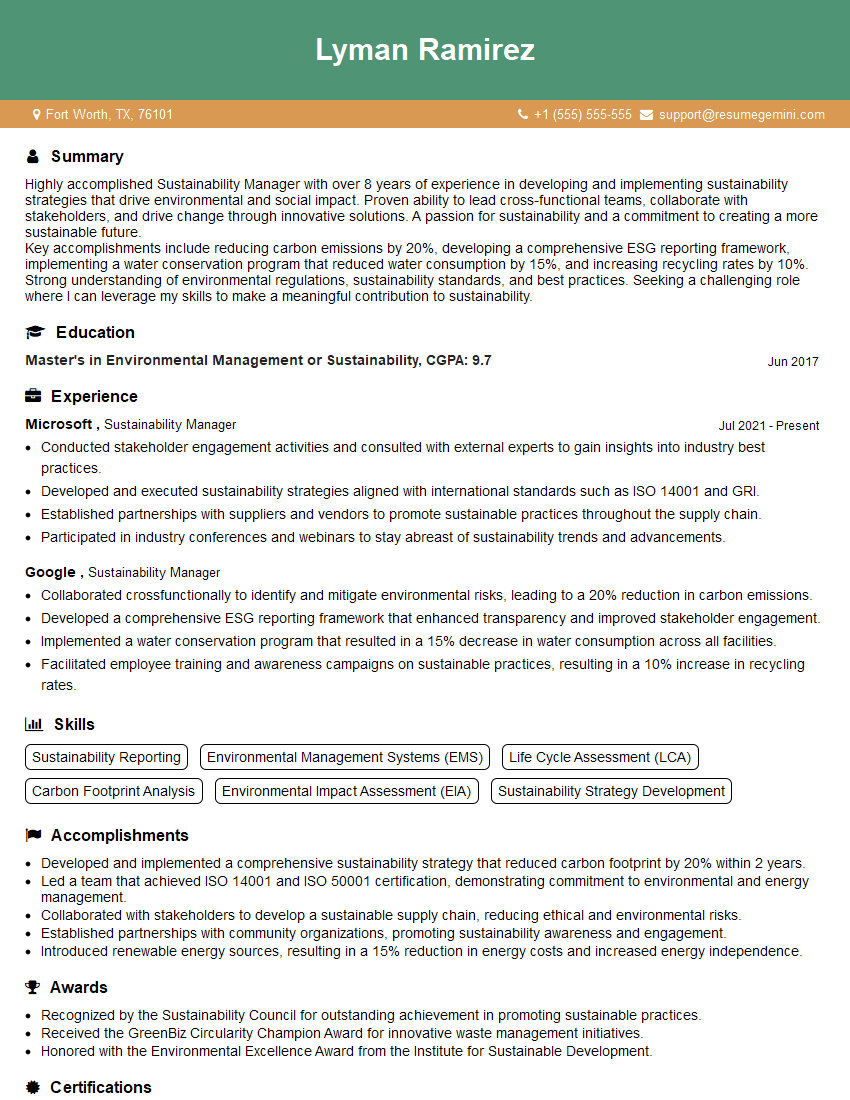
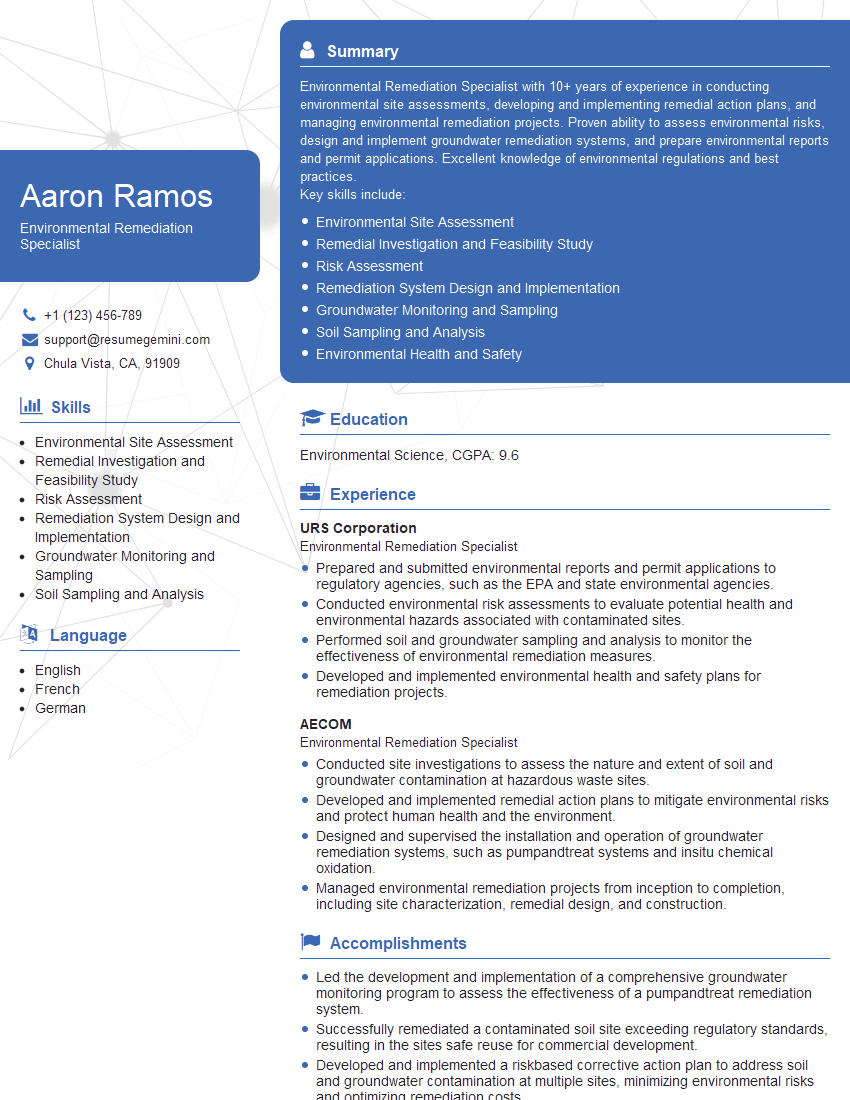
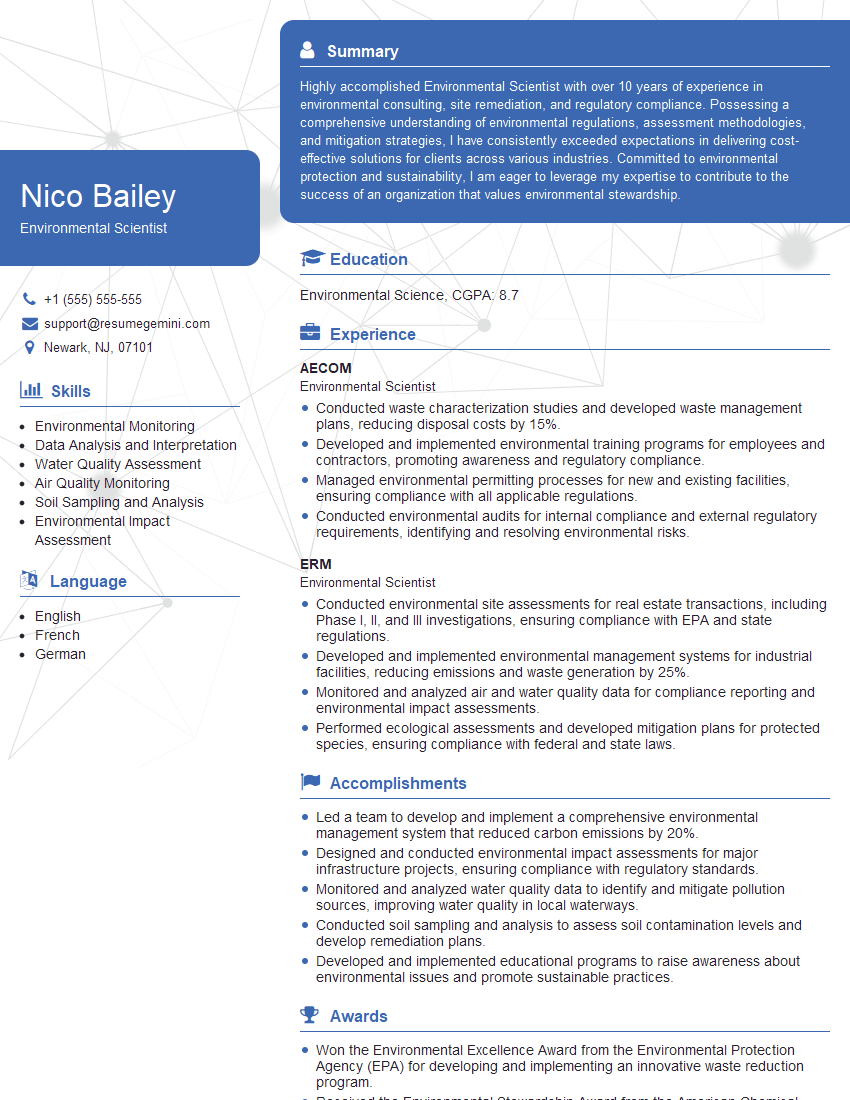
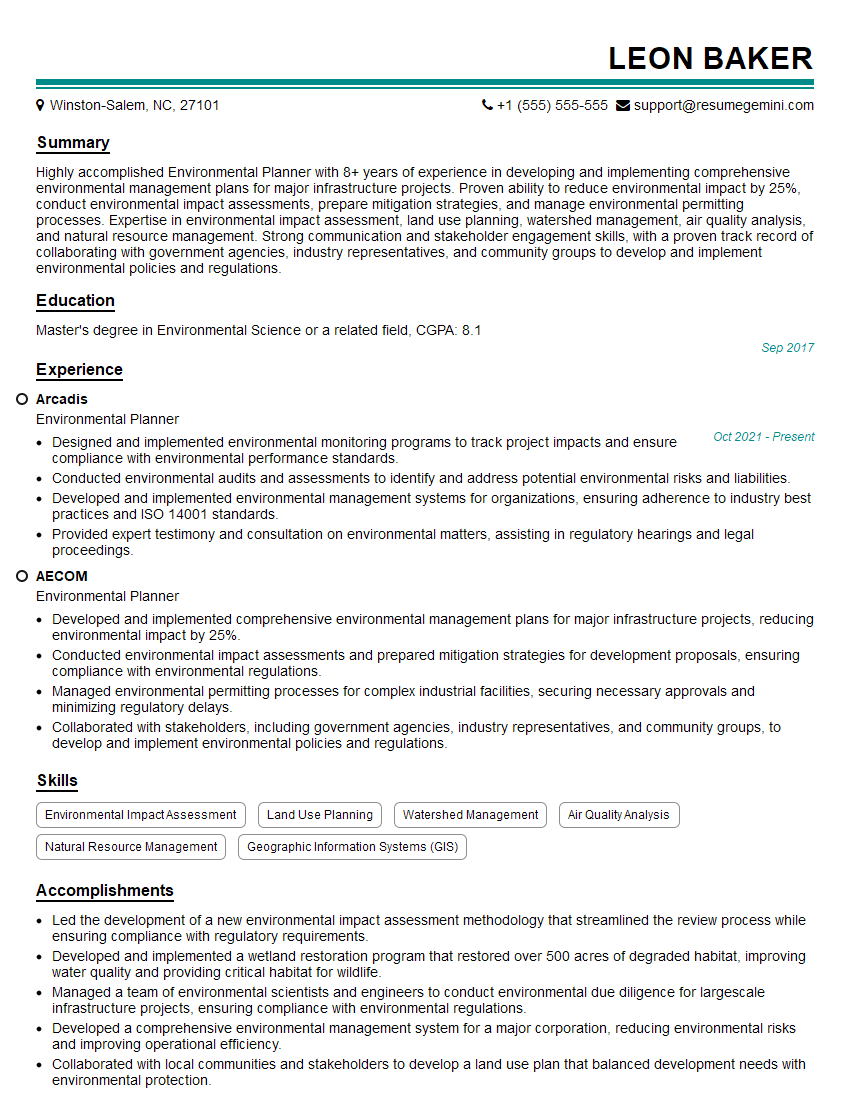
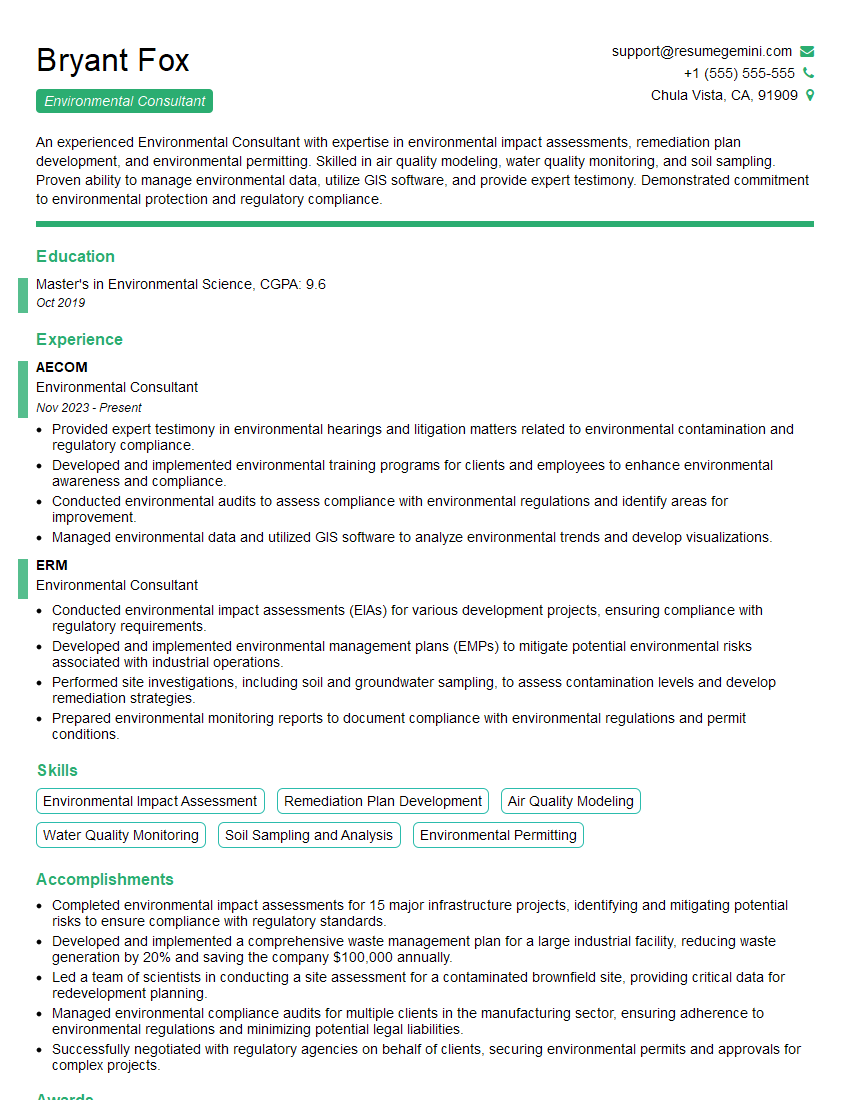
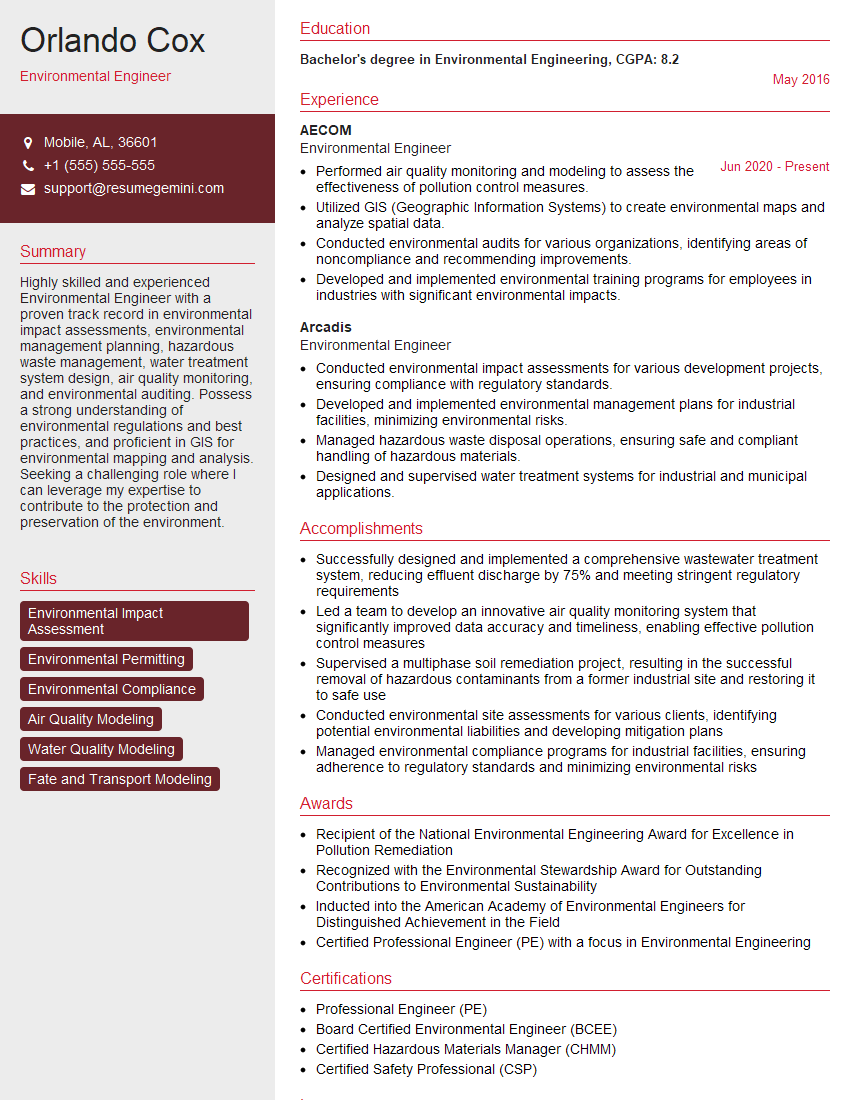
Mastering the art of conducting environmental impact assessments is crucial for a successful and rewarding career in environmental management and consulting. It demonstrates a commitment to sustainable development and opens doors to challenging and impactful roles. To maximize your job prospects, focus on building a strong, ATS-friendly resume that highlights your skills and experience. ResumeGemini is a trusted resource for crafting professional resumes that stand out. They provide examples of resumes tailored to Conducting Environmental Impact Assessments, ensuring your application effectively showcases your expertise. Take the next step towards your dream career today!

Explore more articles
Users Rating of Our Blogs
Share Your Experience
We value your feedback! Please rate our content and share your thoughts (optional).
What Readers Say About Our Blog
To the interviewgemini.com Webmaster.
Very helpful and content specific questions to help prepare me for my interview!
Thank you
To the interviewgemini.com Webmaster.
This was kind of a unique content I found around the specialized skills. Very helpful questions and good detailed answers.
Very Helpful blog, thank you Interviewgemini team.