Cracking a skill-specific interview, like one for Conduit Installation and Wiring, requires understanding the nuances of the role. In this blog, we present the questions you’re most likely to encounter, along with insights into how to answer them effectively. Let’s ensure you’re ready to make a strong impression.
Questions Asked in Conduit Installation and Wiring Interview
Q 1. What are the different types of conduit materials and their applications?
Conduit, the protective housing for electrical wiring, comes in various materials, each suited for different applications. The choice depends on factors like the environment, cost, and required durability.
- Steel Conduit: The most common type, offering excellent strength and protection against physical damage. It’s available in rigid (RMC) and intermediate metal conduit (IMC), with IMC being lighter and easier to bend. Ideal for industrial settings and areas requiring high mechanical protection.
- Aluminum Conduit: Lighter than steel, making it easier to handle and install, particularly in larger diameter sizes. It’s less resistant to corrosion than steel, so it’s often used in less harsh environments. Aluminum conduit is a good option for cost-effectiveness in less demanding applications.
- PVC Conduit (Polyvinyl Chloride): A lightweight, non-metallic option that’s corrosion-resistant and easy to work with. It’s less expensive than metal conduit but is more susceptible to damage from impact and sunlight. Commonly used in residential and commercial settings where mechanical protection isn’t paramount.
- High-Density Polyethylene (HDPE) Conduit: Offers excellent corrosion resistance and durability. Suitable for underground installations and harsh environments, especially where chemical resistance is needed. It’s more expensive than PVC.
For instance, in a corrosive environment like a coastal area, PVC or HDPE conduit would be preferred over steel. Conversely, in a factory setting with heavy machinery, rigid steel conduit offers the best protection.
Q 2. Explain the process of bending conduit using a bender.
Bending conduit accurately is crucial for neat and efficient installations. A hydraulic bender is typically used for this process.
- Select the Correct Bender and Die: Choose a bender appropriate for the conduit size and material. Each bender has specific dies to match different conduit diameters.
- Position the Conduit: Securely place the conduit into the bender’s die, ensuring it’s centered and snug.
- Measure the Bend: Use a measuring device (often marked on the bender itself) to mark the desired bend radius and angle on the conduit. Accurate measurement is critical to avoid kinks or misaligned bends.
- Apply Pressure: Slowly and steadily apply pressure to the bender’s handle, using a smooth, controlled movement. Avoid jerking or sudden force, which can damage the conduit.
- Inspect the Bend: Once the desired angle is reached, carefully inspect the bend for any kinks, irregularities or flattening. A properly bent conduit should maintain its circular shape.
Think of it like carefully shaping clay—gentle, even pressure yields the best results. Using excessive force leads to breaks or a distorted bend, requiring reworking.
Q 3. How do you calculate the correct conduit bend radius?
The bend radius is the distance from the center of the conduit bend to the center of the conduit’s curve. Calculating this correctly prevents sharp bends that can damage the wires during pulling. The minimum bend radius is usually specified by the conduit manufacturer and varies by conduit material and diameter.
For example, rigid steel conduit often has a minimum bend radius of 6 times the conduit diameter (6D). This means if you are working with 1-inch conduit, the minimum bend radius should be at least 6 inches. Using a bender with the correct die significantly helps in achieving this.
The calculation is simple: Minimum Bend Radius = Conduit Diameter x Multiplier (e.g., 6 for rigid steel)
Failing to use the correct bend radius can lead to difficult wire pulling, potential damage to the wires, and even conduit failure.
Q 4. Describe different methods for pulling wires through conduit.
Pulling wires through conduit requires appropriate techniques to avoid damage. Several methods are employed depending on conduit length, wire type, and number of wires.
- Hand Pulling: Suitable for shorter runs with fewer wires. Using a fish tape or wire pulling lubricant can ease the process.
- Pulling Grip: A pulling grip provides a secure way to grab the wire and exert pulling force while minimizing damage.
- Pulling Lubricant: Applying a specially formulated lubricant to the wires reduces friction, making pulling easier. It also protects the wires from damage.
- Mechanical Pulling: For longer conduit runs or large cable bundles, a cable pulling device (e.g., a motorized winch or hydraulic puller) is employed. This requires specialized training and safety precautions.
- Using a Fish Tape: A fish tape is a flexible metal tape with a tip for navigating bends. It’s used to pull a rope or string through the conduit first, which is then used to pull the actual wires.
Remember, always inspect the conduit for obstructions before pulling. Excessive force during pulling should be avoided to prevent damage to the wires or the conduit itself.
Q 5. What are the safety precautions when working with conduit and wiring?
Safety is paramount when working with conduit and wiring. Numerous hazards exist that necessitate strict adherence to safety protocols.
- Lockout/Tagout Procedures: Always de-energize circuits before working on them. Use lockout/tagout procedures to prevent accidental energization.
- Personal Protective Equipment (PPE): Wear appropriate PPE, including safety glasses, gloves, and hard hats. Use safety footwear with electrical hazard protection.
- Fall Protection: If working at heights, use appropriate fall protection equipment.
- Proper Lifting Techniques: Conduit and cable reels can be heavy. Use proper lifting techniques or mechanical aids to prevent back injuries.
- Awareness of Overhead Hazards: Be mindful of overhead power lines and other hazards.
- Proper Grounding: Ensure all equipment and metal conduit is properly grounded to prevent electrical shock.
- Proper Ventilation: Use adequate ventilation when working in confined spaces or areas with fumes from lubricants or chemicals.
Always follow relevant safety standards and regulations, and if unsure about a procedure, seek guidance from a qualified supervisor.
Q 6. How do you identify different types of wire and cable?
Identifying different types of wire and cable is critical for ensuring correct installation and avoiding potential hazards. Several key characteristics are used for identification.
- Color Coding: Wires and cables often have color-coded insulation to indicate their function (e.g., black for hot, white for neutral, green for ground). However, color codes can vary depending on the application and regional standards.
- Markings and Printing: Manufacturers typically print information on the cable jacket indicating voltage rating, wire gauge, material, and other relevant specifications.
- Gauge: The wire gauge indicates the conductor’s thickness, which affects its current-carrying capacity.
- Insulation Material: Different insulation materials are used depending on the application’s voltage and environmental conditions (e.g., thermoplastic, rubber, Teflon).
- Cable Construction: The construction of the cable, such as the number of conductors and their arrangement, provides further identification clues.
Consult manufacturer documentation or electrical codes for precise identification when in doubt. Using the wrong type of wire can lead to overheating, fire hazards, and system malfunction.
Q 7. What are the common electrical codes and regulations you follow?
Electrical codes and regulations provide essential guidelines for safe and efficient electrical installations. Compliance is mandatory to ensure public safety and avoid potential hazards.
Common codes include the National Electrical Code (NEC) in the United States, the Canadian Electrical Code (CEC) in Canada, and the IEE Wiring Regulations (BS 7671) in the United Kingdom. These codes specify requirements for:
- Conduit sizing and bending: They dictate the minimum conduit size based on the number and size of conductors, along with acceptable bending radii.
- Grounding and bonding: They mandate proper grounding and bonding practices to prevent electrical shock and equipment damage.
- Wiring methods: They prescribe methods for installing wires, including appropriate supports, clamps, and cable management techniques.
- Overcurrent protection: They specify the requirements for overcurrent protection devices (fuses or circuit breakers) to prevent overloading and fire hazards.
- Splices and connections: They outline rules for making splices and connections to ensure electrical continuity and safety.
Staying updated on the latest code revisions and adhering to them diligently is vital for responsible and safe electrical work. Failure to comply can lead to significant legal penalties and safety risks.
Q 8. Explain the importance of grounding and bonding in electrical systems.
Grounding and bonding are critical for safety in electrical systems. Grounding connects non-current-carrying metal parts of equipment and the electrical system to the earth, providing a low-resistance path for fault currents. This prevents dangerous voltage buildup on exposed metal surfaces, protecting people from electric shock. Bonding connects multiple metal parts within the system to each other, ensuring they’re all at the same electrical potential. This prevents voltage differences that could lead to arcing and fires. Imagine it like this: grounding is like a safety valve, releasing excess electricity harmlessly to the ground, while bonding is like connecting all the pipes in a plumbing system, preventing pressure build-up in any one section.
For example, in a residential setting, the metal conduit itself is grounded. If a wire were to somehow come into contact with the conduit, the fault current would flow directly to the ground through the conduit, tripping a breaker and preventing a shock. Bonding is crucial in places like switchboards, where many metal components need to be electrically connected to prevent voltage spikes or differences.
Q 9. Describe your experience with different conduit fittings and connectors.
My experience encompasses a wide range of conduit fittings and connectors, including threaded couplings, compression fittings, set-screw fittings, and various types of connectors for different conduit materials (e.g., PVC, EMT, rigid steel). Threaded couplings offer a secure mechanical connection, suitable for both rigid and intermediate metal conduit. Compression fittings are faster to install and require less torque, often used with EMT conduit. Set-screw fittings provide a quicker installation for smaller conduits. I’m also familiar with various connectors for joining conduits of different materials or sizes, and different types of boxes and enclosures.
In one project, we used compression fittings for EMT conduit in a commercial building due to their speed and ease of installation, while in another residential project requiring high durability, we opted for threaded couplings for rigid steel conduit. Selecting the right fittings is crucial for ensuring the integrity and safety of the electrical system, considering factors such as the type of conduit, the environment, and the amperage of the wiring.
Q 10. How do you troubleshoot problems with conduit installation or wiring?
Troubleshooting conduit installations and wiring problems requires a systematic approach. I typically start by visually inspecting the system, checking for loose connections, damaged conduits, or any signs of overheating. I’ll then use a voltage tester to check for voltage presence and continuity, making sure that power is turned off before making any physical checks. If a circuit isn’t working, I trace the wiring back, checking connections at outlets, junction boxes, and the main panel.
A common problem is poor grounding, which can be detected with a ground tester. If I find a problem, I’ll document it precisely, using pictures and notes, before implementing the necessary repairs. This might involve replacing damaged conduit, tightening connections, or rerouting wires. In complex situations, specialized testing equipment such as a cable fault locator might be used to pinpoint precise issues within long conduit runs.
Q 11. What are the best practices for organizing and labeling wires in a conduit?
Organizing and labeling wires within a conduit is critical for safety and maintainability. I always use wire markers or labels that clearly identify the circuit number, voltage, and purpose of each wire. I also follow a consistent color-coding system, and bundle wires neatly to prevent tangling and make it easier to access individual wires later.
For example, in a commercial setting, I’d use numbered labels with clear descriptions like “Circuit 12 – Lighting – Office 3” to avoid confusion during any future maintenance. This makes tracing individual circuits significantly easier and reduces the risk of accidental disconnections during repairs. Furthermore, I always leave enough slack in the wires to allow for future modifications and prevent stress on the connections.
Q 12. Explain the process of installing conduit in various environments (e.g., underground, walls, ceilings).
Installing conduit varies significantly depending on the environment. Underground conduit requires careful planning and trenching to ensure proper depth and protection from damage. This often includes using specific conduit types designed for direct burial. In walls, the conduit is run within wall cavities, following established building codes to avoid obstructions and ensure adequate clearances. Ceiling installations might require the use of different types of hangers or supports to secure the conduit properly.
For underground installations, I’d carefully plan the route, avoiding underground utilities, and ensure the conduit is properly bedded and backfilled to prevent damage. In walls, I’d use appropriate methods for securing the conduit within the wall structure, while in ceilings, I’d use clips or straps suitable for the ceiling type. Each installation requires meticulous attention to detail to ensure the conduit is protected from damage and complies with all relevant regulations.
Q 13. What tools and equipment are essential for conduit installation?
Essential tools for conduit installation include conduit benders, reamers, cutters, threaders, and various types of connectors. For underground installations, trenching tools are also necessary. Additionally, voltage testers, wire strippers, and other electrical tools are required for wiring the conduit. Safety equipment such as safety glasses, gloves, and hard hats are always critical.
The specific tools will vary depending on the job. For example, when working with rigid steel conduit, a bender and threader are crucial, while for EMT conduit, a bender and compression fitting tool are more important. A quality reamer ensures smooth conduit ends to prevent damage to the wires. Regular maintenance and proper care of these tools ensure a more efficient and safer work process.
Q 14. How do you ensure proper wire fill in a conduit?
Ensuring proper wire fill is critical for preventing overheating and ensuring that the conduit can withstand short circuit currents. Overfilling can cause excessive heat buildup, potentially leading to fires. Underfilling is not ideal either, making it more susceptible to physical damage. Electrical codes specify the maximum allowable fill for different conduit sizes and types of wire. I always refer to these codes to calculate the correct wire fill before starting an installation.
I use wire fill charts or calculators to determine the appropriate size conduit for the number and size of wires. Several factors influence wire fill, including the type and size of conductors, their insulation type, and the conduit type. It’s always better to slightly underfill, given the potential for expansion due to heat and the added safety margin.
Q 15. What are the different methods for supporting conduit?
Conduit support methods ensure the integrity and safety of the electrical system. The choice depends on factors like conduit material, size, location, and the environment. We need to prevent sagging, ensure proper grounding, and protect the conduit from damage.
- Direct Support: This involves using straps, clamps, or hangers attached directly to the conduit. Think of it like hanging a picture – you need a secure hook. These are commonly used for smaller conduits and in areas where the conduit runs straight.
- Strut and Tray Systems: For larger runs or complex layouts, strut and tray systems provide a more robust support structure. Imagine a highway overpass; the struts and trays are the supporting infrastructure. This method allows for easier cable routing and maintenance.
- Building Structures: Sometimes conduits can be directly affixed to the building structure itself, like running along the ceiling joists or within walls. This needs to be done in accordance with building codes and ensures conduit stability and protection.
- Concealed Support: In some cases, the conduit is run within walls or ceilings. This requires careful planning and execution to ensure the conduit is properly supported and accessible if necessary. We must always be aware of possible obstacles and plan the routing to avoid future problems.
For instance, in a recent project, we used a combination of strut and tray systems for the main feeder conduits and direct support for smaller branch circuits. This balanced robustness and cost-effectiveness.
Career Expert Tips:
- Ace those interviews! Prepare effectively by reviewing the Top 50 Most Common Interview Questions on ResumeGemini.
- Navigate your job search with confidence! Explore a wide range of Career Tips on ResumeGemini. Learn about common challenges and recommendations to overcome them.
- Craft the perfect resume! Master the Art of Resume Writing with ResumeGemini’s guide. Showcase your unique qualifications and achievements effectively.
- Don’t miss out on holiday savings! Build your dream resume with ResumeGemini’s ATS optimized templates.
Q 16. Describe your experience with different types of cable terminations.
Cable terminations are critical for safety and system performance. They ensure a secure, reliable connection and protect the conductors from damage. My experience encompasses various types, including:
- Compression Connectors: These use a crimping tool to create a secure mechanical connection. Think of it like a strong handshake – the tighter the grip, the better the connection. They’re quick and efficient for many applications.
- Insulated Pressure Connectors: These offer insulation and protection against environmental elements. It’s like adding a protective layer to the handshake. These are ideal for outdoor installations.
- Solderless Connectors: These connectors require no soldering, minimizing the risk of burns or fire hazards. This is a very efficient method, ideal for high volume projects.
- Heat-Shrink Tubing: Used to insulate and seal connections, it shrinks tightly around the termination providing weatherproofing and mechanical protection. This is like adding a waterproof glove to a handshake.
I’ve worked extensively with various termination styles, adapting my methods to the specific needs of each project, consistently ensuring compliance with all safety regulations.
Q 17. How do you handle conduit installations in hazardous locations?
Hazardous locations demand specialized conduit installation techniques to prevent ignition hazards. This requires a deep understanding of relevant codes such as NEC (National Electrical Code) Article 500 and 501. The specific requirements depend on the class and division of the hazardous area (classified by the presence of flammable gases, dust, or fibers).
- Explosion-Proof Fittings: These fittings are designed to withstand internal explosions without causing ignition outside the enclosure. Think of it as a pressure cooker – pressure builds up inside, but it’s safely contained.
- Intrinsic Safety: This approach limits the energy available to the electrical system, making it incapable of igniting a hazardous atmosphere. This is a passive safety method and is a preferred method.
- Purge and Pressurization Systems: These systems continuously purge the conduit with an inert gas to displace flammable gases. It’s like constantly replacing flammable air with something that can’t burn. These are usually used in high risk environments.
- Specialized Conduit Materials: Certain conduit materials, like rigid steel conduit with proper grounding, are better suited for hazardous locations. It’s choosing a strong material to prevent damage.
In a recent petrochemical plant project, we employed explosion-proof fittings and intrinsic safety techniques to ensure the electrical system met the stringent safety requirements.
Q 18. Explain the importance of proper conduit sizing.
Proper conduit sizing is paramount for safety and performance. An undersized conduit can lead to overheating, creating a fire hazard and potentially damaging cables. Oversizing is less of a safety concern but represents a waste of resources.
The size is determined by the number and size of the cables being run, along with fill percentage requirements outlined in the NEC. The fill percentage is the amount of space within the conduit that is occupied by cables. Too much fill can lead to overheating. We use conduit fill calculators and tables based on the NEC to determine appropriate sizing to minimize risk and ensure proper operation. Imagine trying to fit too many people into a small elevator – it’s cramped, unsafe, and inefficient.
Incorrect sizing can lead to voltage drop issues, affecting equipment performance and system efficiency. Always calculate the correct size for the specific application; it is a critical safety feature.
Q 19. What are your experiences with different types of raceways?
Raceways are channels or pathways for running electrical wiring, protecting it from physical damage and environmental factors. My experience spans various types:
- Metallic Conduits (EMT, Rigid Steel, IMC): These provide superior protection and grounding capabilities. They’re like a suit of armor for your cables. This protects against physical damage and fires.
- Non-Metallic Conduits (PVC): These are lightweight and cost-effective, suitable for less demanding applications. They are less robust and are not suitable for hazardous areas.
- Wireways and Cable Trays: These provide open channels for multiple cables, commonly used in industrial settings. This allows for easier access, maintenance, and installation.
- Surface Metal Raceways: These are used to run cables along surfaces and are available in various forms, including those that allow easy access and maintenance.
The selection of the appropriate raceway is dictated by factors such as cost, environment, and required protection. A recent project in a commercial building utilized surface metal raceways for aesthetics and ease of access.
Q 20. Describe your experience with working with PVC, EMT, and Rigid conduit.
I have extensive experience working with PVC, EMT, and Rigid conduit, each having its own set of characteristics and applications.
- PVC Conduit: Lightweight and easy to install. It’s like using plastic straws to run wires. Great for dry, non-hazardous environments. However, it’s susceptible to damage and offers less protection than metallic conduits.
- EMT (Electrical Metallic Tubing): Flexible and durable. Think of it as a more robust and protective version of PVC. It’s suitable for a wider range of environments but requires proper bending techniques to avoid kinking.
- Rigid Conduit: The strongest and most durable option, offering excellent protection. It’s like a steel pipe, very sturdy. However, it’s more difficult to install, requiring specialized tools and techniques. Ideal for high-risk areas or applications where superior protection is required.
The choice among these depends on the specific project requirements. For instance, a project in a corrosive environment may benefit from Rigid conduit, while a residential setting may utilize PVC.
Q 21. How do you manage the installation of large diameter conduits?
Installing large diameter conduits requires specialized techniques and equipment due to their weight and size. Safety is paramount in these situations.
- Mechanical Pulling Equipment: Using winches, pulling grips, and lubricants is essential for pulling cables through these conduits. It’s like using a tow truck to move a heavy object – the more powerful the equipment, the easier it is to install the larger conduit.
- Proper Grounding and Bonding: These are critical for safety and performance, especially with larger metal conduits. It’s like adding a safety net to prevent accidents.
- Support System Enhancement: Large conduits require a more robust support system than smaller ones. Think of using reinforced supports for a heavier load.
- Teamwork and Coordination: Installing large conduits often requires a team to manage the weight and maneuver the materials. It is a safety precaution that requires precise cooperation.
For example, in a recent project involving a large diameter conduit for a high-power feeder, we used a specialized winch system and a team of experienced installers to ensure the successful and safe installation.
Q 22. What is your approach to preventing damage to cables during installation?
Preventing cable damage during conduit installation is paramount for ensuring a long-lasting, safe, and efficient electrical system. My approach is multi-faceted and begins even before the installation starts.
Careful Planning and Preparation: Before any digging or pulling commences, I meticulously review the blueprints and plans to understand the exact cable routing and any potential obstacles. This includes identifying areas with sharp objects or potential stress points.
Proper Conduit Selection and Preparation: Selecting the right size and type of conduit is crucial. Oversized conduits reduce the risk of cable damage during pulling. I always ensure that the conduit is clean, free of burrs or sharp edges that could snag the cables. Lubricants, like conduit lubricant, are essential to ease cable pulling and minimize friction.
Safe Pulling Techniques: I never use excessive force during cable pulling. Instead, I employ appropriate pulling equipment like cable pullers or winches to distribute the force evenly and prevent strain on the cables. I regularly check for resistance and obstructions during the pulling process. Using a fish tape or a similar tool first can greatly help in assessing the path and clearing any blockages before pulling heavier cables.
Cable Protection: For particularly delicate or sensitive cables, I use protective measures such as cable wraps or sleeves to prevent abrasion. This is especially important in areas with sharp bends or close quarters.
Regular Inspection: Throughout the installation, I conduct regular inspections to check for any signs of damage. Even small abrasions can compromise the integrity of the cable and lead to future problems.
For example, on a recent project involving high-voltage cables, we employed a specialized pulling lubricant to minimize friction and ensure a smooth installation, avoiding any potential damage to the sensitive wiring.
Q 23. Describe your familiarity with NEC (National Electrical Code) requirements.
I am intimately familiar with the NEC (National Electrical Code) and its requirements for conduit installation and wiring. My experience ensures that every project adheres to the strictest safety standards and regulations. I regularly update my knowledge to stay abreast of any code changes or revisions.
My understanding encompasses a range of areas, including:
Conduit Fill: I meticulously calculate conduit fill to ensure it doesn’t exceed the allowable percentage per the NEC, preventing overheating and potential fire hazards. The type and number of conductors significantly influence this calculation.
Bending Radii: I adhere to the minimum bending radius for different cable types and conduit materials, preventing damage to the cable insulation. Improper bending can lead to insulation breakdown and potential short circuits.
Grounding and Bonding: I understand the importance of proper grounding and bonding practices as outlined in the NEC, ensuring the safety of the electrical system and preventing electrical shocks.
Splices and Connections: All splices and connections are made according to NEC requirements, using appropriate connectors and techniques to maintain system integrity.
Specific Article Requirements: I’m very familiar with the sections of the NEC relevant to conduit installation and wiring, including Articles 300, 314, 318, and 340, among others.
Understanding the NEC is not just about following rules; it’s about prioritizing safety and building a reliable electrical system. It’s a critical part of my professional responsibility.
Q 24. How do you work efficiently and safely within a team?
Effective teamwork is fundamental to successful conduit installation. I believe in open communication, clear roles, and mutual respect. I actively contribute to a positive and collaborative work environment.
Communication: I maintain clear and consistent communication with my team members, ensuring everyone understands the project goals and their individual responsibilities. I proactively seek feedback and address any concerns promptly.
Collaboration: I actively participate in team discussions and brainstorming sessions, contributing my expertise and experience to find the most efficient and safe solutions. I’m comfortable sharing my knowledge and assisting others in need of help.
Safety Awareness: I prioritize safety for myself and my colleagues. I am always vigilant in following safety protocols and procedures and I call out any unsafe practices immediately. Before commencing a task, I will also ensure I have discussed potential risks with team members.
Problem Solving: When challenges arise, I actively participate in collaborative problem-solving. I use a calm and positive approach to assist in determining the best course of action, prioritizing a solution that prioritizes both safety and efficiency.
For instance, on a recent large-scale project, we faced unexpected underground obstructions. By working collaboratively, communicating openly, and utilizing our combined skills, we successfully navigated the obstacle without compromising safety or the project timeline.
Q 25. How do you manage your time effectively to meet deadlines?
Effective time management is crucial in conduit installation, as projects often involve tight deadlines and multiple tasks. My approach involves planning, prioritization, and continuous monitoring.
Detailed Planning: I meticulously review project plans and break down large tasks into smaller, manageable steps. This provides a clear roadmap and allows me to allocate time effectively.
Prioritization: I prioritize tasks based on their urgency and importance, focusing on critical path items to ensure timely completion. This might involve using a project management tool or simply creating a prioritized to-do list.
Resource Allocation: I consider the resources required for each task – equipment, materials, personnel – and allocate them efficiently to avoid delays.
Continuous Monitoring: I regularly monitor my progress against the project timeline, identifying and addressing potential delays promptly. This allows for timely adjustments and prevents unforeseen setbacks.
Flexibility: I am prepared to adapt to unforeseen challenges and adjust my schedule accordingly. This requires flexibility and a willingness to re-prioritize tasks.
For example, during a recent renovation, we encountered unexpected delays due to material shortages. By quickly re-prioritizing tasks and coordinating with suppliers, I ensured the project stayed on track and met the final deadline.
Q 26. How do you adapt to changing project requirements?
Adaptability is essential in the dynamic world of conduit installation. Project requirements frequently change, and I have developed strategies to manage these adjustments effectively.
Open Communication: I maintain open communication with project managers and stakeholders to understand any changes in requirements promptly. This allows me to integrate modifications efficiently.
Flexibility and Problem Solving: I remain flexible and approach changes as opportunities for problem-solving. I utilize my skills and experience to find creative solutions that meet the revised requirements without compromising quality or safety.
Team Collaboration: I involve my team in the adaptation process, discussing the changes and collaboratively developing a plan to implement them.
Documentation: I meticulously document all changes, including revisions to plans, specifications, and installation procedures. This ensures consistency and accountability.
In a recent project, the client decided to change the location of several electrical outlets. By quickly adapting our plans, re-routing conduits, and maintaining open communication, we successfully accommodated this change with minimal disruption to the project timeline.
Q 27. Describe your problem-solving skills in the context of conduit installation.
Problem-solving is a core competency in conduit installation. I approach challenges systematically, using a combination of experience, knowledge, and critical thinking.
Problem Definition: I begin by clearly defining the problem, gathering all relevant information, and identifying its root cause.
Brainstorming Solutions: I brainstorm potential solutions, considering their feasibility, safety implications, and cost-effectiveness.
Evaluation and Selection: I evaluate the potential solutions and select the most appropriate one based on the context and available resources. This often includes considering the pros and cons of each approach.
Implementation and Monitoring: I implement the chosen solution, carefully monitoring its effectiveness and making necessary adjustments.
Documentation: I document the problem, the solution implemented, and the outcome. This helps improve future problem-solving and knowledge sharing within the team.
For example, during a recent installation, we encountered unexpected conduit blockage. Instead of brute force, I carefully analyzed the situation, using a specialized camera to assess the blockage. We then developed a targeted solution, using a smaller diameter fish tape to clear the obstruction without damaging the existing conduit. This approach minimized disruption and cost.
Key Topics to Learn for Conduit Installation and Wiring Interview
- National Electrical Code (NEC) Requirements: Understanding and applying relevant NEC articles related to conduit bending, installation methods, and grounding practices is crucial. Be prepared to discuss specific articles and their implications.
- Conduit Bending Techniques: Mastering various bending techniques (e.g., 90-degree bends, offsets, saddle bends) using appropriate tools and ensuring accurate measurements. Practice explaining the process and potential challenges.
- Conduit Fill Calculations: Accurately calculating conduit fill based on the number and size of conductors to ensure compliance with NEC regulations and prevent overheating. Understand the impact of different conductor types and conduit materials.
- Types of Conduit and Fittings: Familiarize yourself with various conduit materials (e.g., PVC, EMT, rigid steel), their applications, and appropriate fittings. Be prepared to discuss the advantages and disadvantages of each.
- Grounding and Bonding: Thoroughly understand grounding and bonding techniques for conduit systems, including the use of grounding clamps and bonding jumpers. Know the importance of safety and code compliance.
- Troubleshooting and Problem-Solving: Be ready to discuss common issues encountered during conduit installation, such as improper bending, poor grounding, or conduit damage, and how to effectively address them.
- Safety Procedures and Practices: Demonstrate a strong understanding of OSHA regulations and safety protocols related to electrical work, including lockout/tagout procedures and personal protective equipment (PPE) usage.
- Practical Application: Be prepared to discuss real-world scenarios and how you’ve applied your knowledge and skills in past projects. Focus on problem-solving and your ability to work efficiently and safely.
Next Steps
Mastering Conduit Installation and Wiring is key to advancing your career in the electrical field, opening doors to higher-paying positions and more challenging projects. A strong resume is essential for landing your dream job. Creating an ATS-friendly resume that highlights your skills and experience is crucial for getting noticed by potential employers. ResumeGemini is a trusted resource to help you build a professional and effective resume. Examples of resumes tailored to Conduit Installation and Wiring are available, providing you with a head start in your job search.
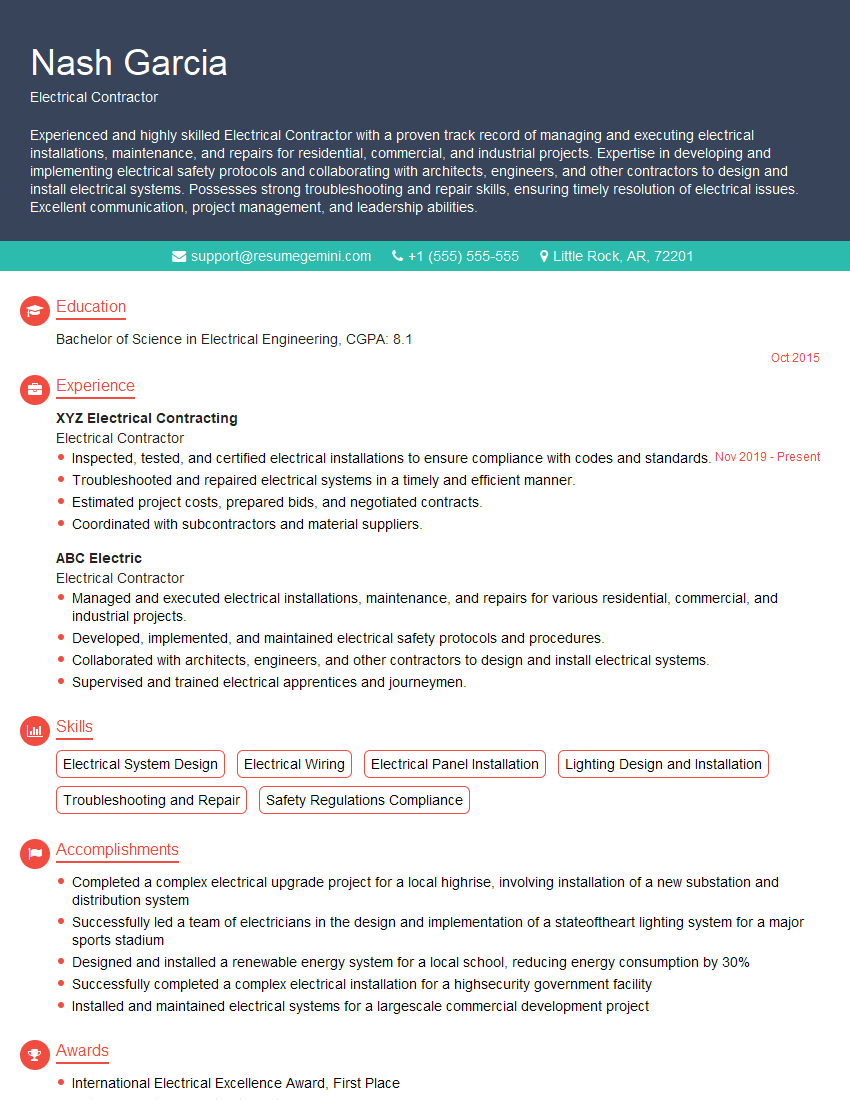
Electrical Contractor Resume Sample
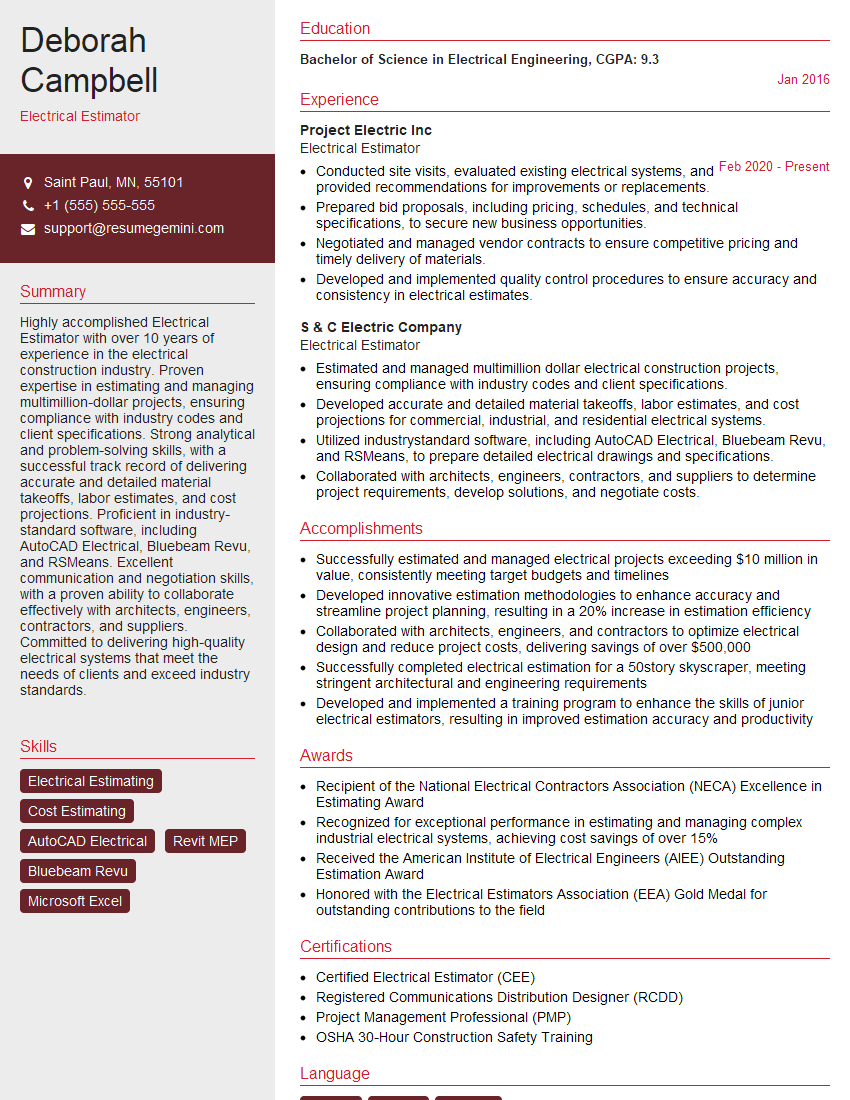
Electrical Estimator Resume Sample
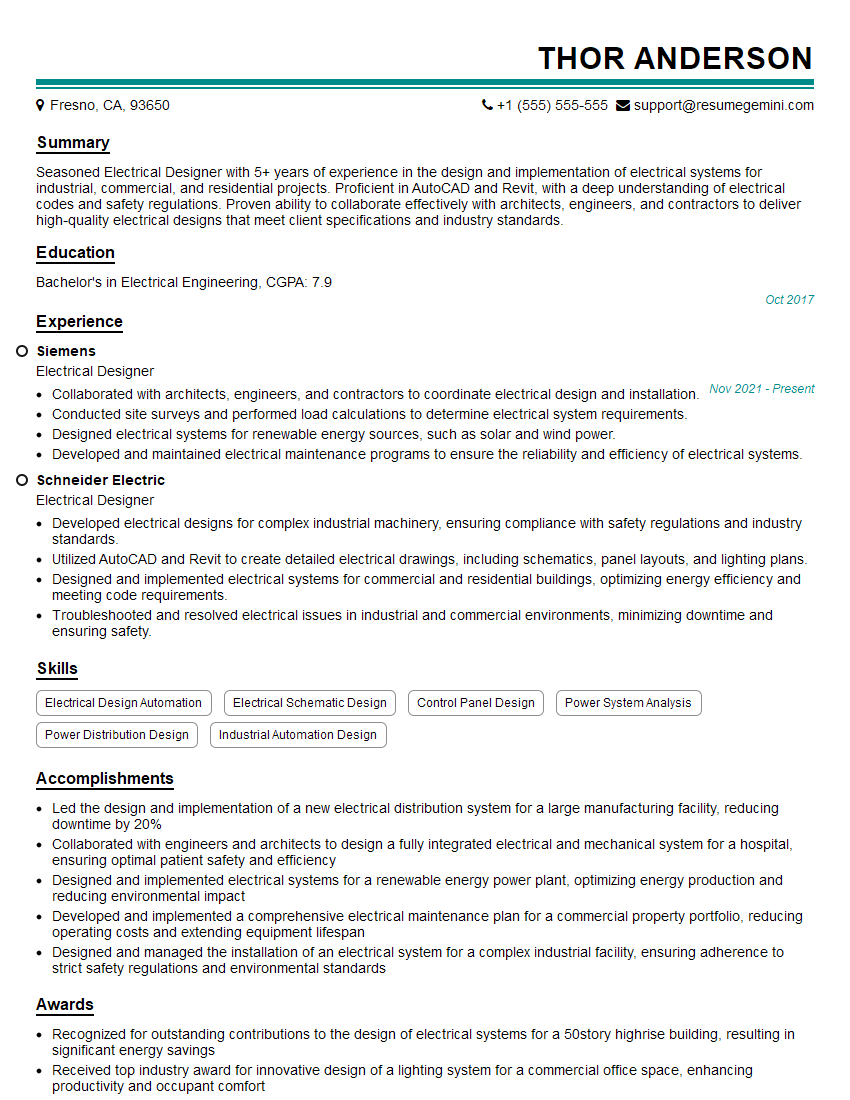
Electrical Designer Resume Sample
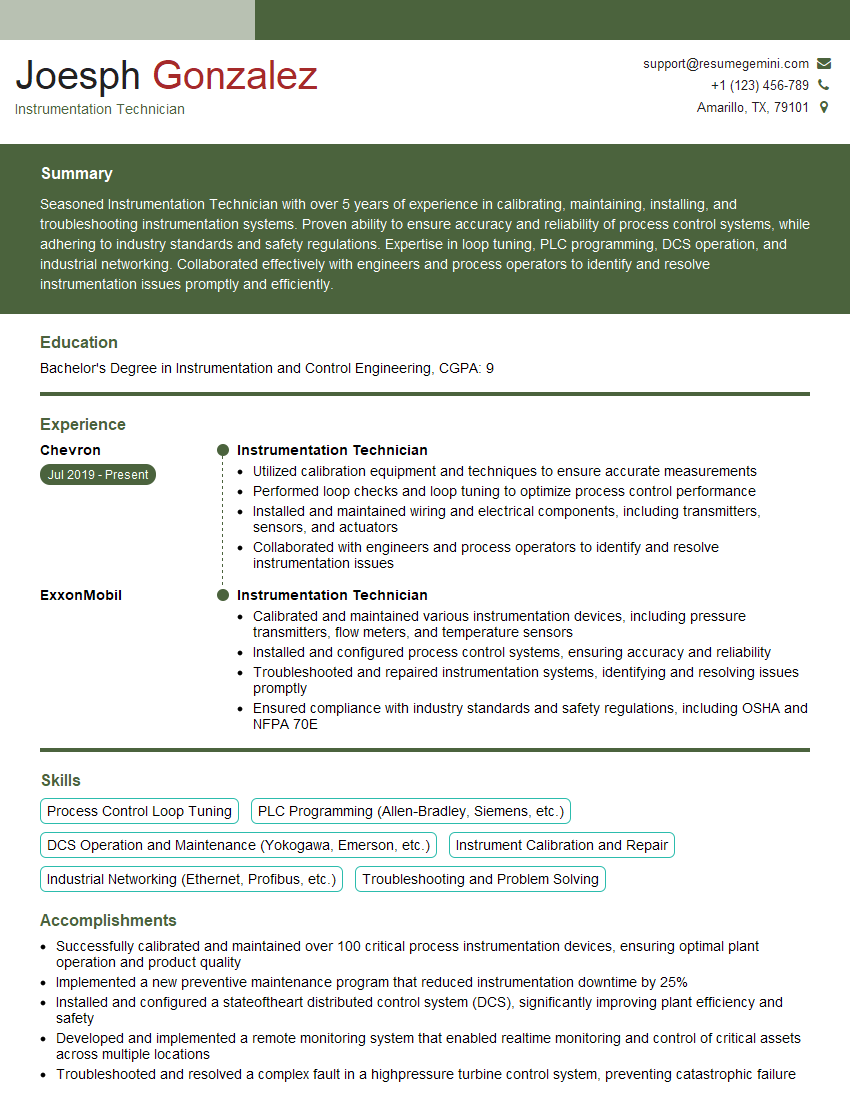
Instrumentation Technician Resume Sample
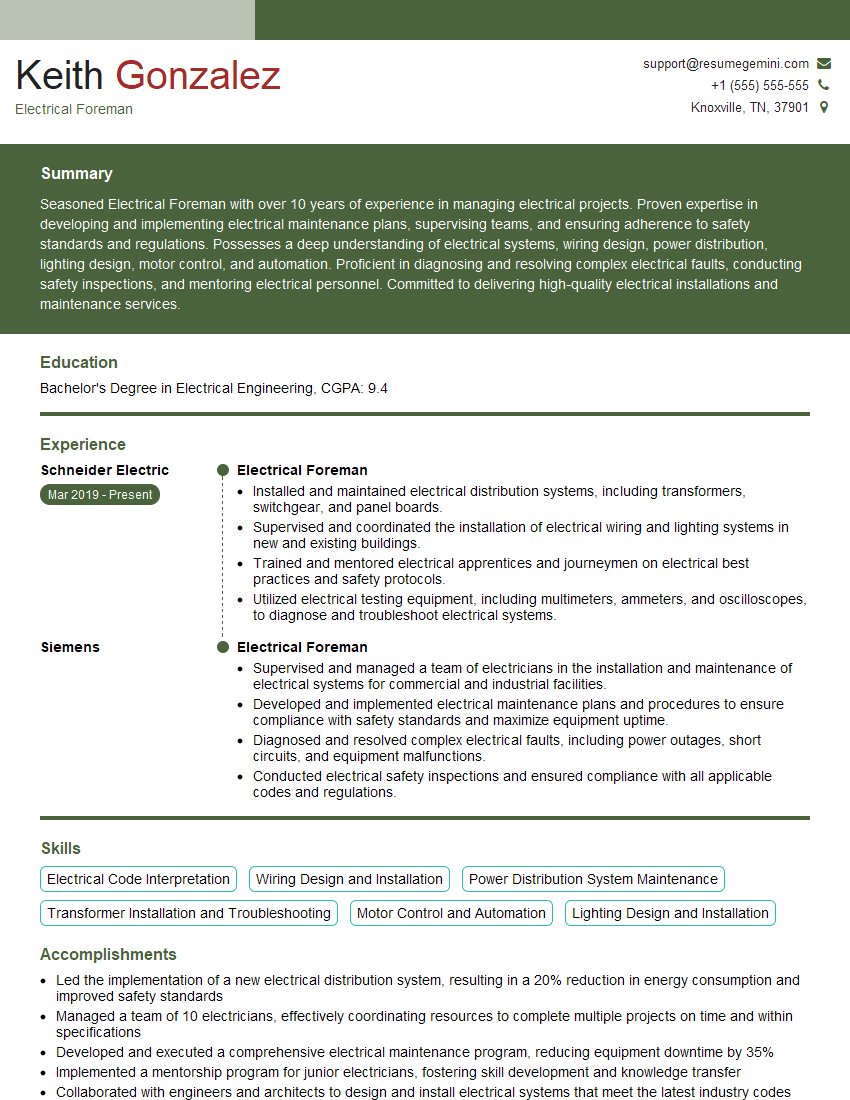
Electrical Foreman Resume Sample
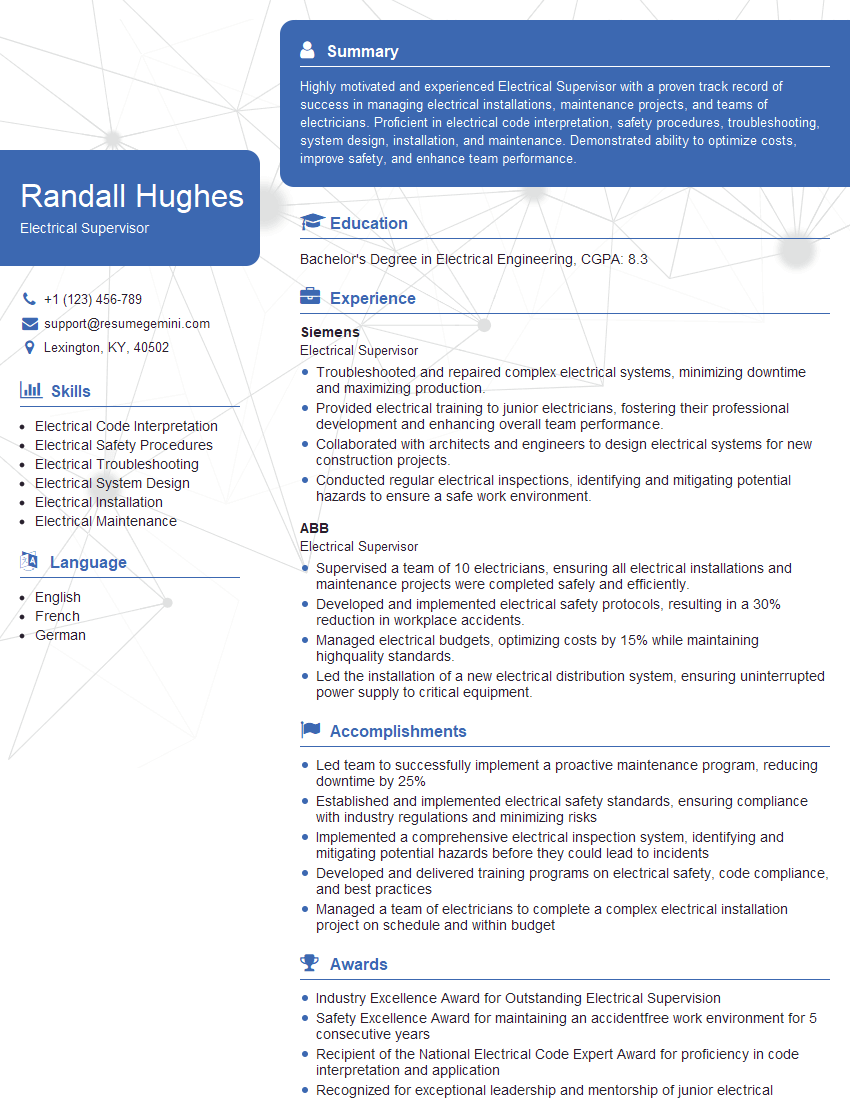
Electrical Supervisor Resume Sample
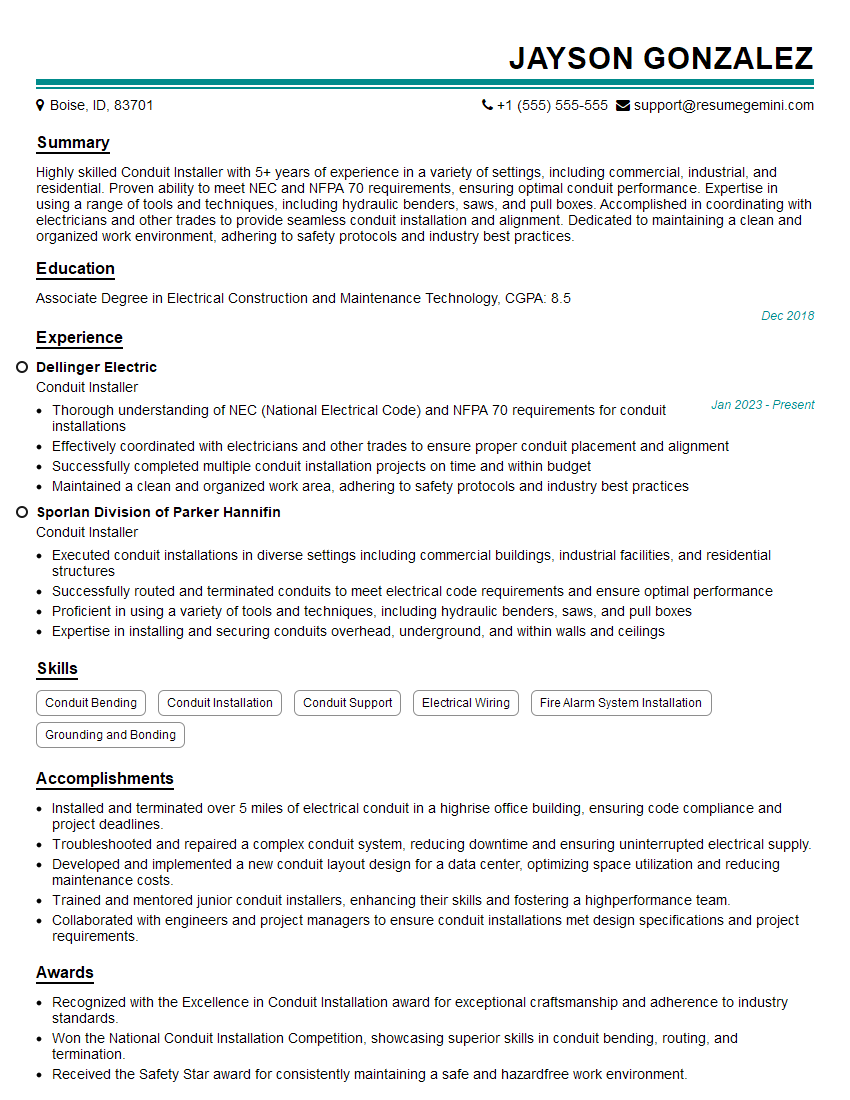
Conduit Installer Resume Sample
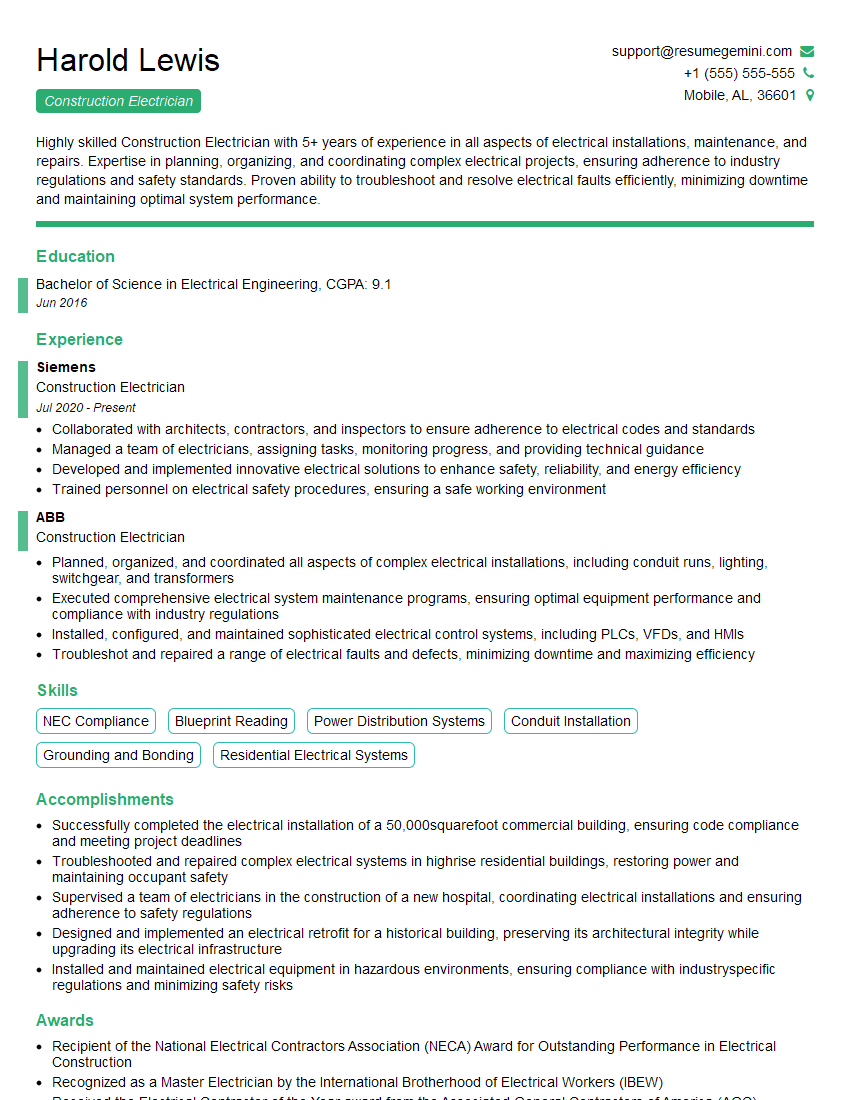
Construction Electrician Resume Sample
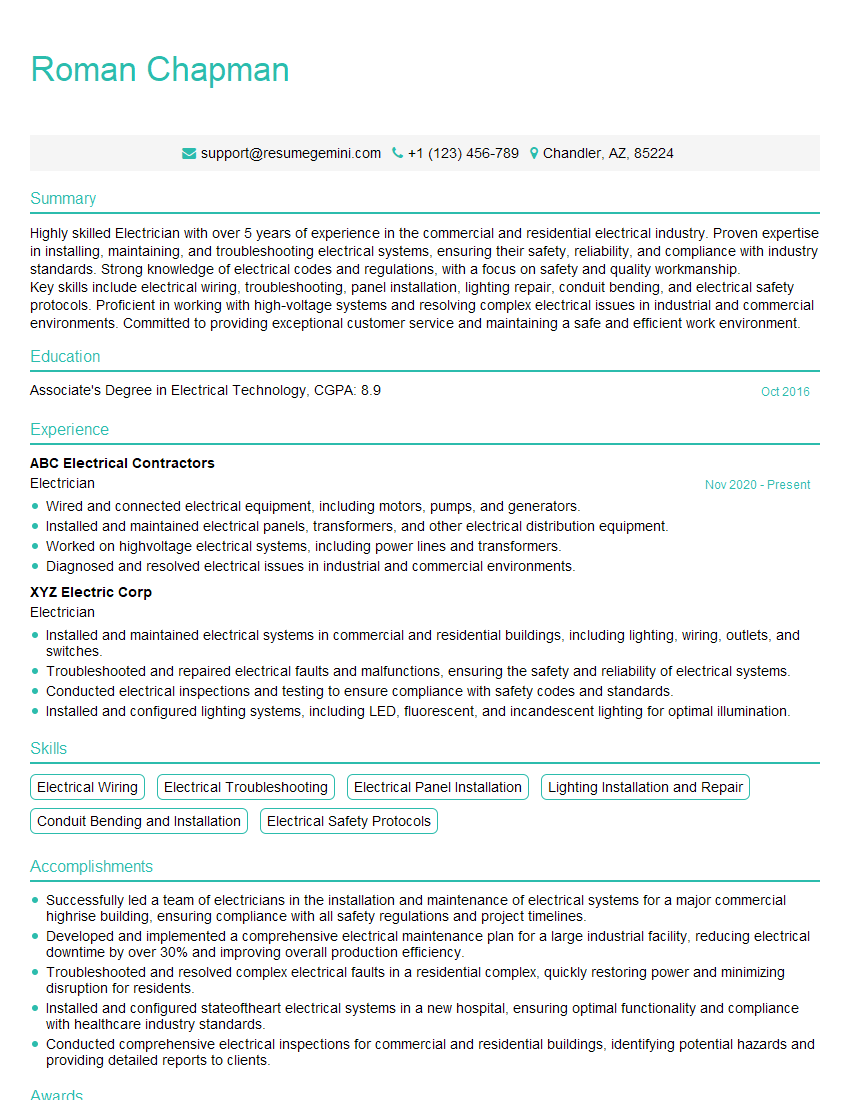
Electrician Resume Sample
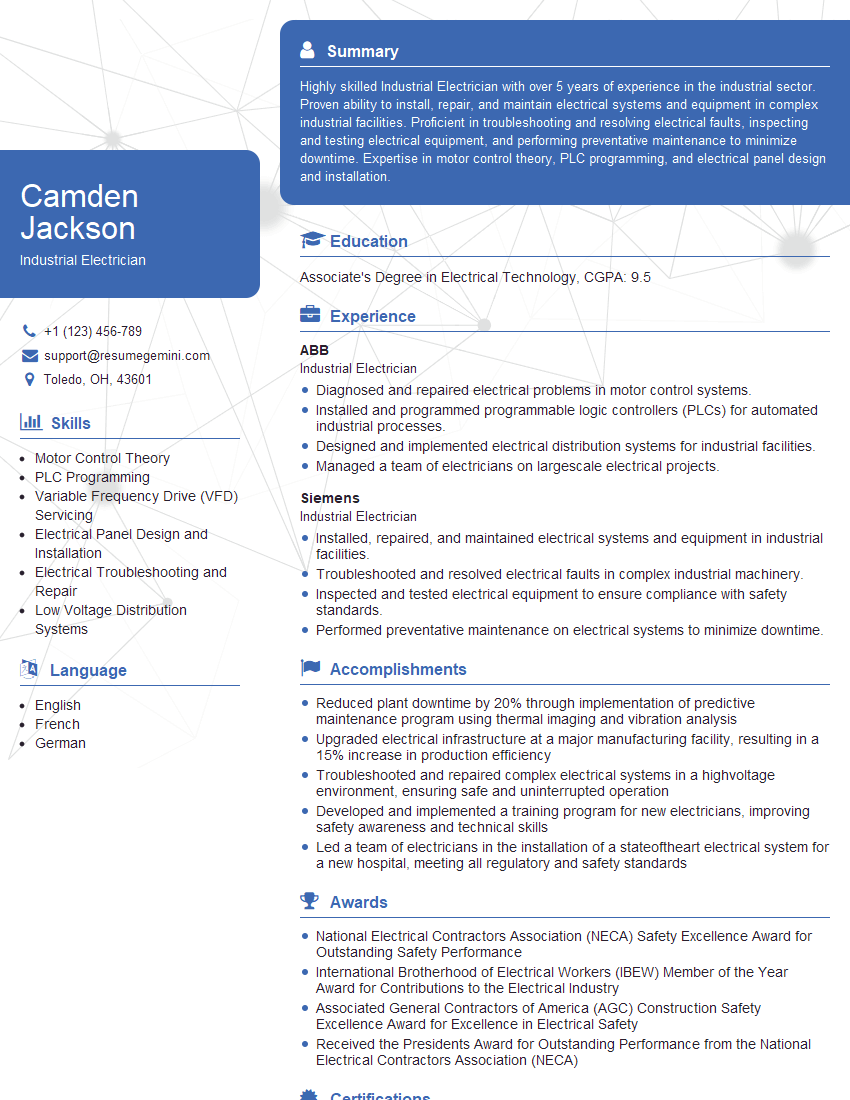
Industrial Electrician Resume Sample
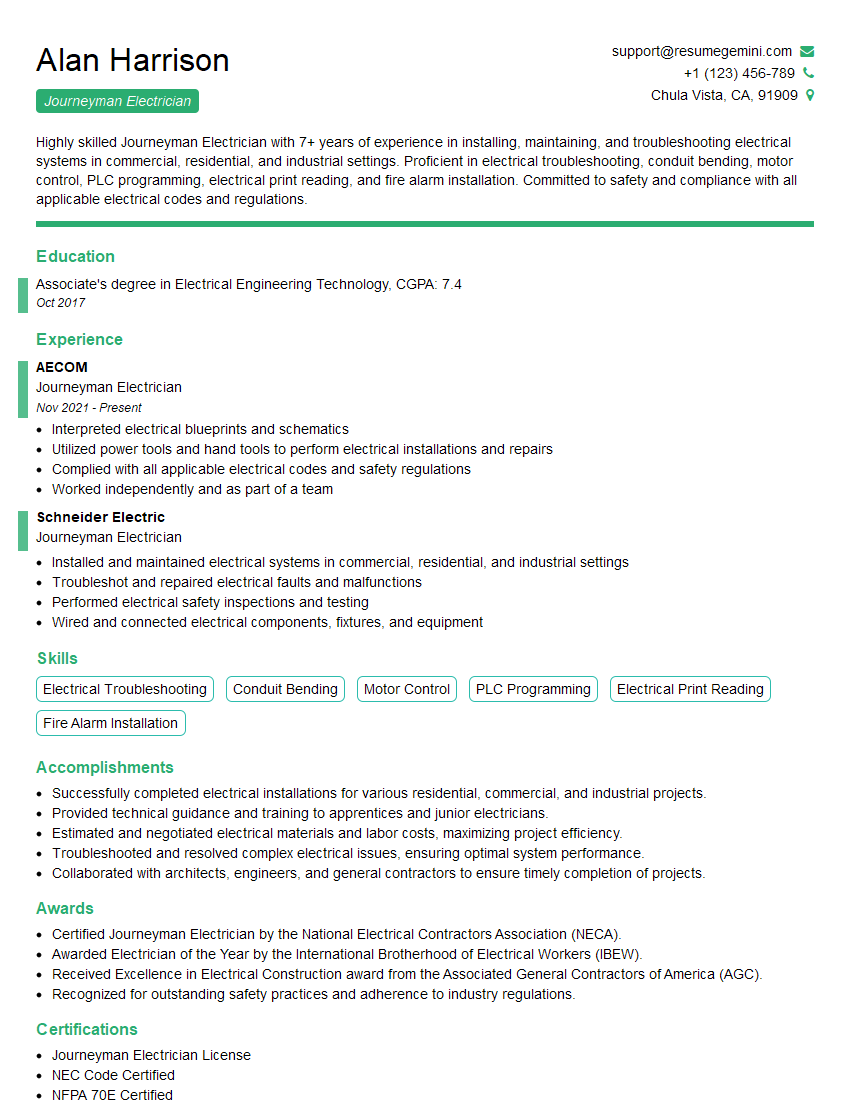
Journeyman Electrician Resume Sample
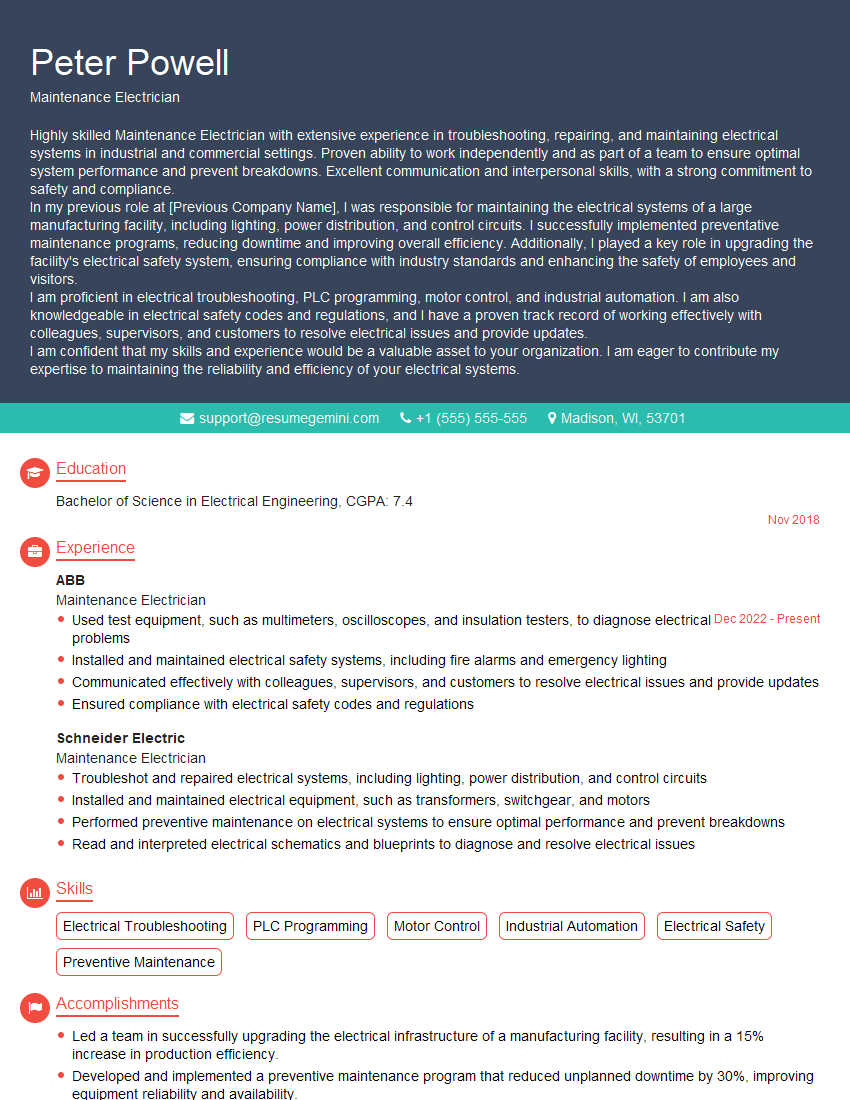
Maintenance Electrician Resume Sample
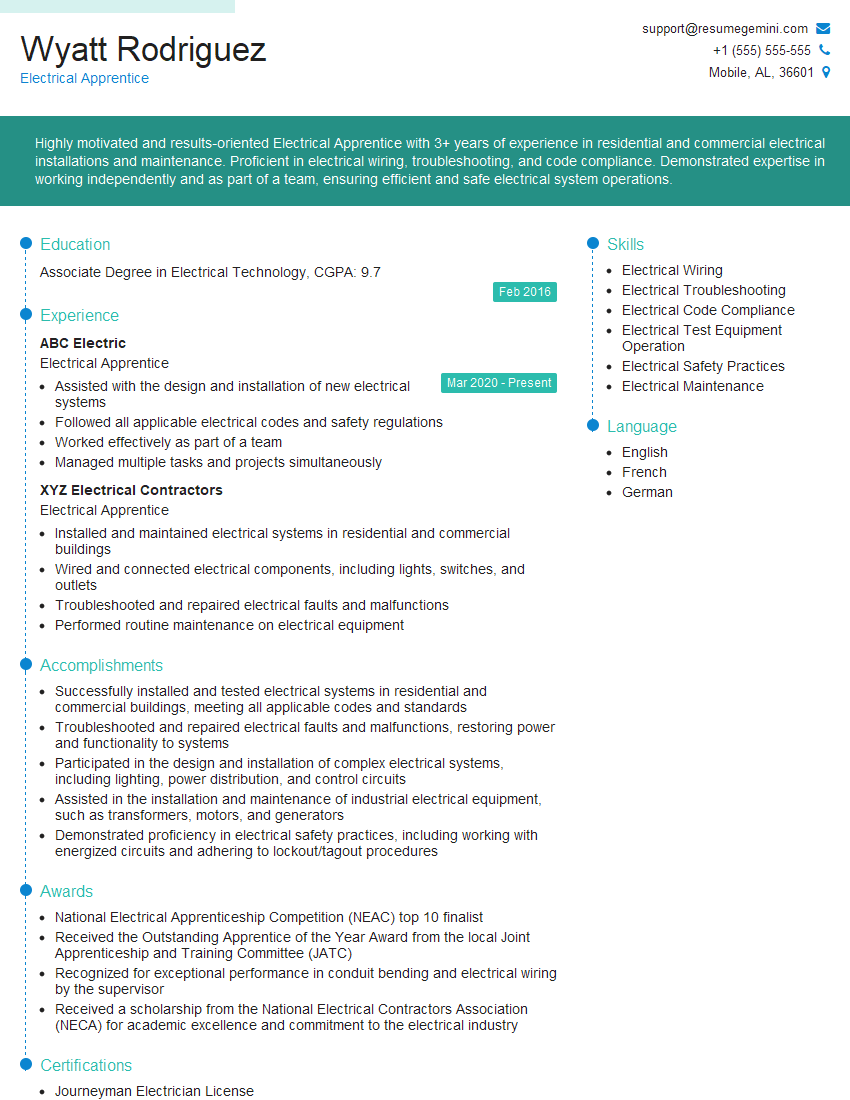
Electrical Apprentice Resume Sample
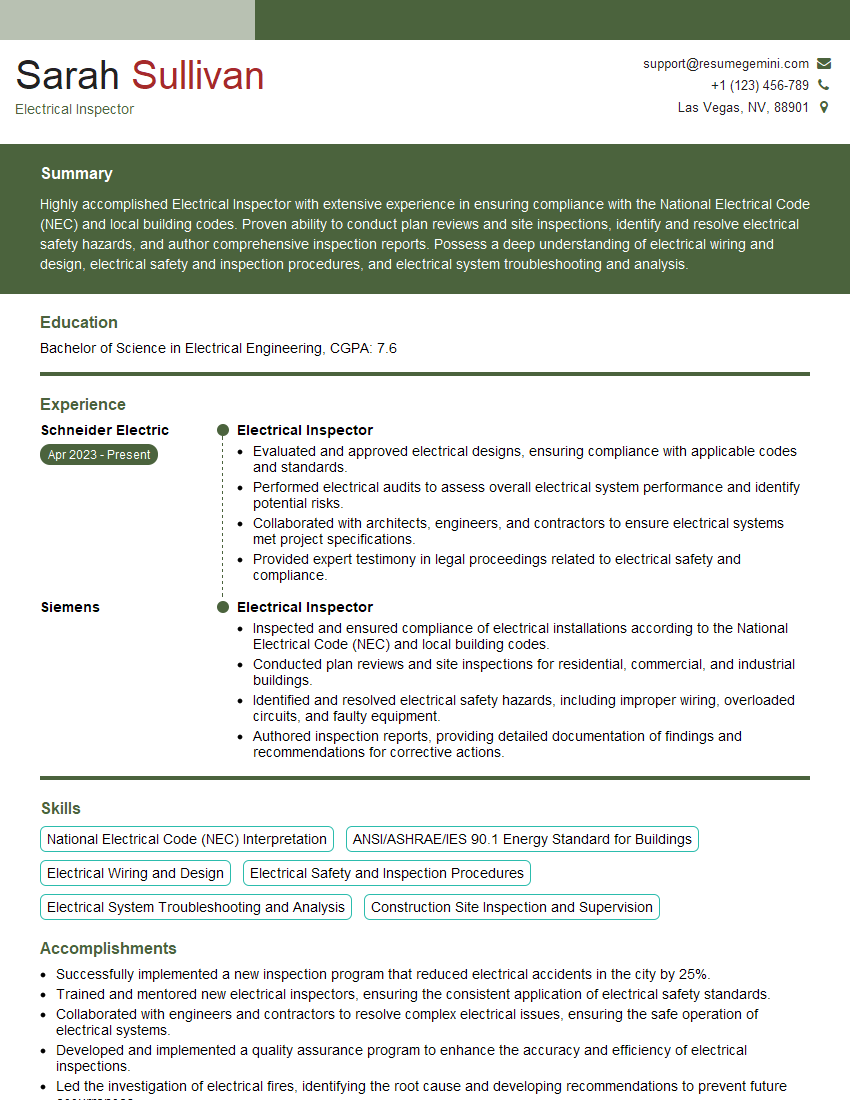
Electrical Inspector Resume Sample
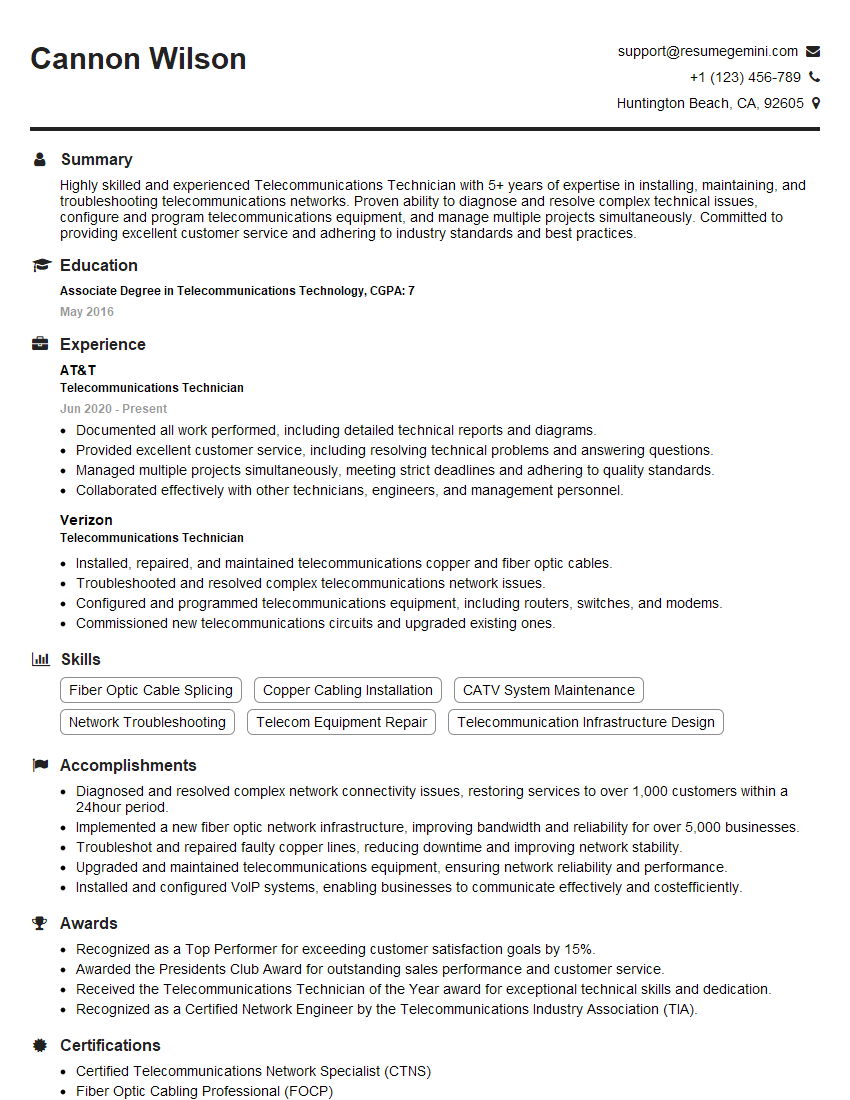
Telecommunications Technician Resume Sample
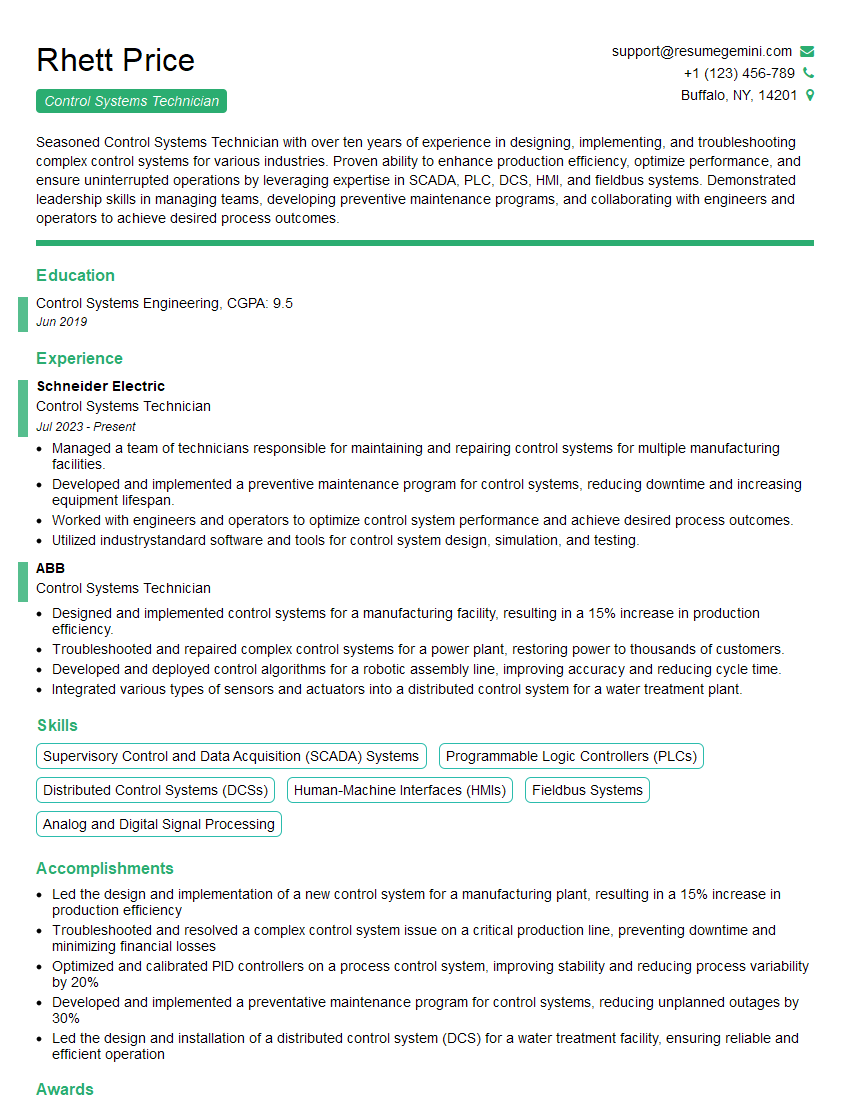
Control Systems Technician Resume Sample
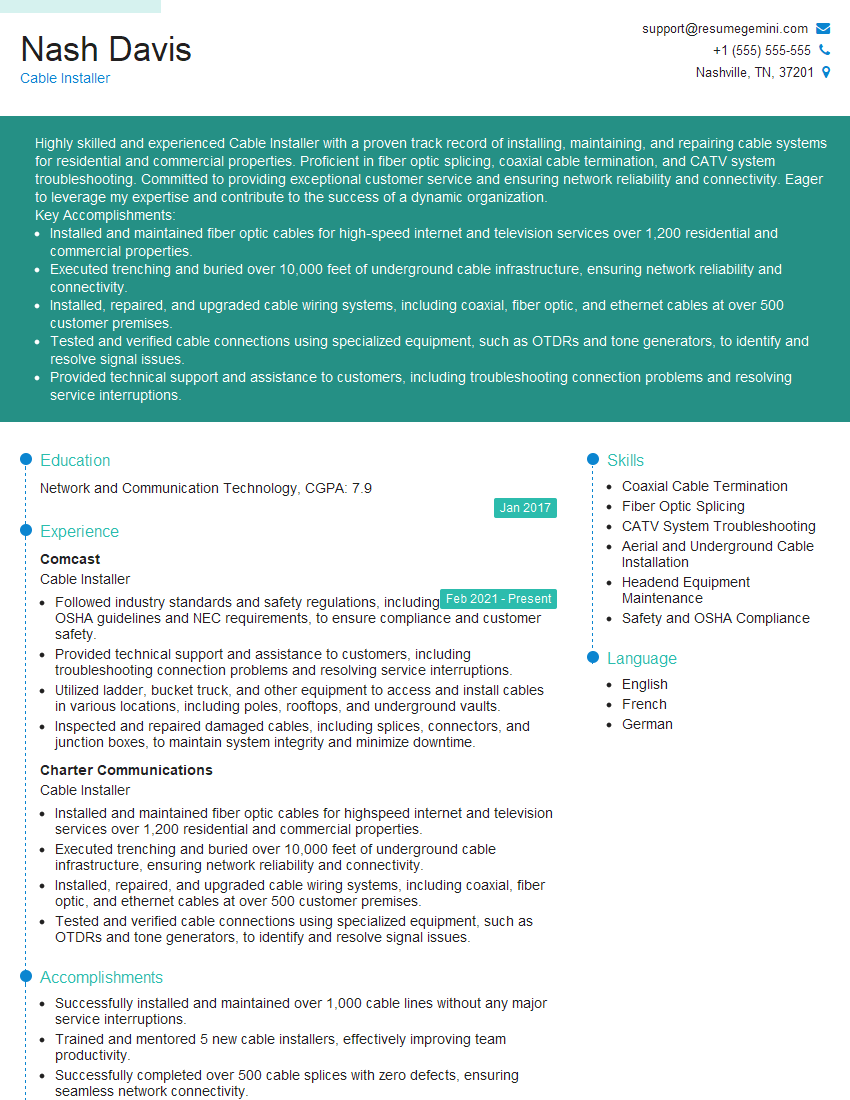
Cable Installer Resume Sample
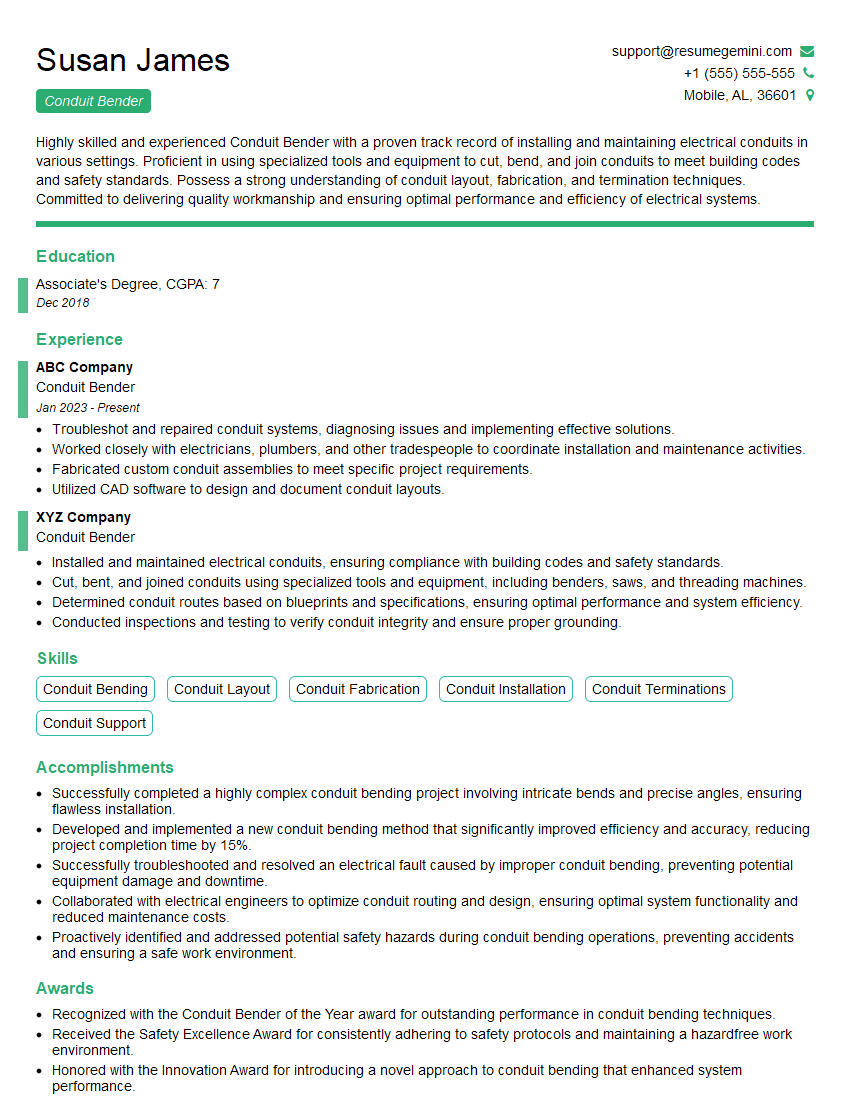
Conduit Bender Resume Sample
- Electrical Contractor
- Electrical Estimator
- Electrical Designer
- Instrumentation Technician
- Electrical Foreman
- Electrical Supervisor
- Conduit Installer
- Construction Electrician
- Electrician
- Industrial Electrician
- Journeyman Electrician
- Maintenance Electrician
- Electrical Apprentice
- Electrical Inspector
- Telecommunications Technician
- Control Systems Technician
- Cable Installer
- Conduit Bender
Explore more articles
Users Rating of Our Blogs
Share Your Experience
We value your feedback! Please rate our content and share your thoughts (optional).
What Readers Say About Our Blog
To the interviewgemini.com Webmaster.
Very helpful and content specific questions to help prepare me for my interview!
Thank you
To the interviewgemini.com Webmaster.
This was kind of a unique content I found around the specialized skills. Very helpful questions and good detailed answers.
Very Helpful blog, thank you Interviewgemini team.