Preparation is the key to success in any interview. In this post, we’ll explore crucial Construction Tool Maintenance interview questions and equip you with strategies to craft impactful answers. Whether you’re a beginner or a pro, these tips will elevate your preparation.
Questions Asked in Construction Tool Maintenance Interview
Q 1. Describe your experience with preventative maintenance schedules.
Preventative maintenance schedules are the backbone of keeping construction tools in top condition. They’re essentially a roadmap outlining regular checks and servicing to prevent major breakdowns and extend the lifespan of equipment. Think of it like regular check-ups for your car – much better to catch small issues before they become big problems.
- Frequency: Schedules vary depending on the tool and its usage. High-usage equipment like jackhammers might need weekly checks, while less frequently used tools might only require monthly inspections.
- Components: A typical schedule includes checking fluid levels (oil, hydraulic fluid), inspecting belts and hoses for wear, lubricating moving parts, and testing functionality. For example, a preventative maintenance check for a circular saw would involve checking the blade for sharpness, ensuring the safety guard is intact, and testing the motor for smooth operation.
- Documentation: Meticulous record-keeping is crucial. Every inspection should be documented, noting any issues found and the actions taken. This history aids in predicting future maintenance needs and identifying potential recurring problems.
- Customization: Schedules aren’t one-size-fits-all. They need to be tailored to the specific tools and the work environment. A job site in a dusty environment will require more frequent cleaning and maintenance compared to a controlled indoor setting.
In my experience, implementing and adhering to well-defined preventative maintenance schedules has significantly reduced downtime on projects, minimized repair costs, and boosted overall job site safety.
Q 2. Explain the process of troubleshooting a malfunctioning power tool.
Troubleshooting a malfunctioning power tool is a systematic process. It’s about using logical deduction to isolate the problem. I always start by ensuring basic safety precautions—unplugging the tool and inspecting it carefully.
- Visual Inspection: Look for obvious issues like damaged cords, loose connections, or broken parts. A quick check can often reveal the problem.
- Check Power Source: Confirm that the power outlet is working correctly and the tool is properly plugged in. This is often overlooked but surprisingly common.
- Test Functionality: Try operating the tool. Is it not starting at all, running weakly, or making unusual noises? This helps narrow down the problem area.
- Component Checks: Based on the symptoms, systematically check individual components. For example, if a drill isn’t working, check the battery, the chuck, and the switch.
- Refer to the Manual: Power tool manuals often include troubleshooting guides and diagrams that can be extremely helpful.
- Seek Professional Help: If the problem persists after thorough troubleshooting, it’s best to seek professional repair. Attempting complex repairs without proper expertise can be dangerous and further damage the tool.
For instance, if a circular saw is not spinning, I would first check the power cord and outlet. If that’s fine, I’d then inspect the power switch and finally, the motor brushes (if it’s a brushed motor). Often, a simple fix like replacing worn-out brushes solves the issue.
Q 3. How do you identify and address hydraulic leaks in construction equipment?
Identifying and addressing hydraulic leaks in construction equipment requires careful observation and the right tools. Hydraulic systems use pressurized fluid to operate machinery, and leaks can lead to significant damage and safety hazards.
- Visual Inspection: Carefully inspect all hydraulic hoses, fittings, cylinders, and the reservoir for signs of leaks. Look for wet spots, dripping fluid, or puddles under the equipment.
- Pressure Testing: Once a leak is identified, use a pressure gauge to pinpoint the exact location. This involves pressurizing the system and observing where the pressure drops.
- Leak Repair: Minor leaks in hoses can often be repaired with specialized clamps or by replacing a damaged section of hose. More significant leaks, like those in cylinders or fittings, typically require professional repair or component replacement.
- Fluid Analysis: After fixing the leak, it’s good practice to analyze the hydraulic fluid. This helps identify any contamination that might have caused the leak or contributed to other damage.
- Safety Precautions: Always wear appropriate safety gear like gloves and eye protection when working with hydraulic systems. Hydraulic fluid can be hazardous, and pressurized systems can cause serious injuries.
For example, a leak in a hydraulic excavator’s arm cylinder might require replacing seals or even the entire cylinder. Understanding the hydraulic schematic and using a pressure tester are vital for effective repair.
Q 4. What are the common causes of engine overheating in heavy machinery?
Engine overheating in heavy machinery is a serious issue that can lead to significant damage. Several factors can contribute to this problem:
- Insufficient Coolant: Low coolant levels, due to leaks or improper maintenance, are a primary cause of overheating. Coolant is crucial for transferring heat away from the engine.
- Clogged Radiator: A radiator blocked by debris like dirt or insects prevents efficient heat dissipation.
- Faulty Thermostat: A malfunctioning thermostat can prevent the coolant from circulating correctly, leading to localized overheating.
- Water Pump Problems: A failing water pump can’t effectively circulate the coolant, resulting in overheating.
- Fan Issues: A broken or malfunctioning cooling fan hinders heat dissipation.
- Engine Wear: Excessive engine wear can lead to reduced efficiency and increased heat generation.
Think of an engine like a human body: if its cooling system is compromised, it overheats. Regularly checking coolant levels, keeping the radiator clean, and ensuring the fan and water pump are functioning correctly are essential for preventing engine overheating.
Q 5. Describe your experience with diesel engine maintenance and repair.
My experience with diesel engine maintenance and repair encompasses a wide range of tasks, from routine servicing to major overhauls. Diesel engines, while robust, require specific attention due to their complexity.
- Routine Maintenance: This includes regular oil changes, fuel filter replacements, air filter cleaning, and checking fluid levels (coolant, transmission fluid).
- Fuel System: Diesel fuel systems are particularly sensitive to contamination. Regular cleaning and maintenance of fuel injectors, fuel lines, and fuel filters are vital to prevent problems.
- Engine Performance: I routinely diagnose and address issues like poor starting, rough running, smoke emissions, and low power output. These problems often stem from issues within the fuel injection system, air intake system, or the engine itself.
- Electrical Systems: Diesel engines have sophisticated electrical systems. Diagnosing and repairing issues within the starting system, alternator, or other electrical components requires specialized knowledge.
- Major Overhauls: In cases of significant engine wear or damage, I have extensive experience in performing major overhauls, including replacing pistons, cylinder heads, and other internal components.
I’ve worked on a variety of diesel engines, from those found in excavators and bulldozers to larger engines in construction vehicles. A good understanding of diesel engine operation, combined with meticulous attention to detail, is essential for effective maintenance and repair.
Q 6. How do you diagnose and repair electrical issues in construction tools?
Diagnosing and repairing electrical issues in construction tools necessitates a methodical approach and a sound understanding of basic electrical principles. Safety is paramount, always ensure the power is disconnected before working on any electrical components.
- Visual Inspection: Check for loose wires, damaged insulation, broken connectors, and corrosion.
- Continuity Testing: Use a multimeter to test for continuity in circuits. This confirms whether the circuit is complete and free from breaks.
- Voltage Testing: Measure voltage at various points in the circuit to identify where the voltage drops off, indicating a faulty component.
- Component Replacement: Once a faulty component is identified, replace it with a suitable equivalent. Ensure correct voltage and amperage ratings are matched.
- Wiring Diagrams: Refer to the tool’s wiring diagrams to trace circuits and identify components.
For instance, if a power drill stops working, I might first check the power switch using a multimeter. If the switch shows no continuity, it would need replacement. Similarly, a faulty motor winding would show a short circuit or an open circuit in the continuity test.
Q 7. What safety precautions do you follow when maintaining power tools?
Safety is my top priority when maintaining power tools. A moment of carelessness can lead to serious injury.
- Lockout/Tagout: Before commencing any maintenance, always disconnect the power source and implement a lockout/tagout procedure to prevent accidental energizing of the tool.
- Personal Protective Equipment (PPE): I always wear appropriate PPE, including safety glasses, gloves, hearing protection, and appropriate footwear. The type of PPE depends on the specific task.
- Proper Handling: Tools should be handled with care, ensuring they are stable and secured during maintenance.
- Grounding: Ensure tools are properly grounded to prevent electrical shocks.
- Ventilation: Adequate ventilation is crucial when working with tools that produce fumes or dust.
- Work Area: Maintain a clean and organized work area to prevent accidents.
I never compromise on safety. My experience has taught me that a few extra minutes spent on safety precautions can prevent serious injuries and ensure efficient, safe work practices.
Q 8. Explain your experience with welding and its application in tool repair.
Welding is an essential skill in construction tool repair, allowing for the joining of metals to restore damaged or broken parts. My experience encompasses various welding techniques, including MIG (Metal Inert Gas), TIG (Tungsten Inert Gas), and stick welding. I’ve used these techniques to repair everything from cracked excavator buckets and damaged saw blades to broken drill bits and even repairing the frames of smaller power tools. For example, I once repaired a severely cracked welding clamp using TIG welding, ensuring a precise and strong repair that restored its functionality completely. The choice of welding technique depends on the metal type, thickness, and the desired finish. TIG welding provides a very clean, precise weld ideal for delicate repairs, while MIG welding is faster and better suited for thicker materials. Proper preparation, including cleaning and grinding the weld area, is crucial for a strong and lasting repair.
Q 9. How do you maintain and repair pneumatic tools?
Maintaining and repairing pneumatic tools involves a multi-step process. First, I always disconnect the air supply and inspect the tool for any visible damage. Then, I check the air hose for leaks and ensure all connections are secure. Regular lubrication is critical; I use a high-quality pneumatic tool lubricant, making sure to follow the manufacturer’s recommendations. Common repairs include replacing worn-out seals, which often cause air leaks leading to reduced power. This requires disassembling the tool, carefully removing the old seals, and installing new ones of the correct size and type. I also regularly check and replace air filters to prevent dust and debris from damaging internal components. For example, recently I diagnosed a significant loss of power in a nail gun. After careful inspection, I identified a torn seal in the cylinder. Replacing this seal completely restored the tool’s performance. It’s also essential to check for any internal damage, such as bent or broken components. In those cases, replacement parts are usually necessary.
Q 10. Describe your familiarity with different types of lubricants and their applications.
My familiarity with lubricants extends across various types, each suited for specific applications. For example, I use lithium-based greases for heavy-duty applications, such as bearings in jackhammers and excavators, because of their high load-carrying capacity and resistance to water. For pneumatic tools, I prefer specialized pneumatic tool lubricants that minimize friction and prevent corrosion. Engine oils, often with specific viscosity grades (e.g., 10W-30, 20W-50), are used for maintaining internal combustion engines in construction equipment. I also utilize specialized chain lubricants for chainsaw chains and other high-friction applications. The selection of lubricant is critical; using the wrong type can damage the equipment. Think of it like choosing the right oil for your car – using the wrong viscosity can ruin the engine. Always consult the manufacturer’s recommendations for the appropriate lubricant type and application frequency.
Q 11. How do you manage inventory of spare parts for construction tools?
Effective spare parts inventory management is crucial for minimizing downtime. I use a combination of methods. A computerized inventory system helps track parts, quantities, and their locations. This system provides alerts when stock levels reach a pre-determined minimum, allowing for timely ordering. I also maintain a physical inventory log, providing a secondary check and allowing for immediate visual confirmation of available parts. Regular audits are conducted to compare physical inventory against the system’s records, ensuring accuracy. Categorizing parts by tool type and frequency of use is essential for efficient organization and prioritization of purchasing. For high-demand parts, I maintain a larger buffer stock. For less frequently needed parts, I rely on just-in-time ordering to minimize storage costs.
Q 12. What is your experience with diagnostic software for construction equipment?
My experience with diagnostic software varies depending on the equipment manufacturer. Many modern construction machines utilize onboard diagnostic systems (OBD) that provide error codes and performance data. I’m proficient in using the software interfaces provided by major manufacturers like Caterpillar, John Deere, and Komatsu to troubleshoot malfunctions. These systems allow for detailed analysis of various parameters, including engine performance, hydraulic pressure, and electrical system diagnostics. For instance, I recently used diagnostic software to pinpoint a faulty sensor in a bulldozer’s hydraulic system, leading to a quick and efficient repair. The software provided specific error codes, indicating the exact sensor that needed replacement, avoiding unnecessary dismantling and reducing downtime. Different software packages have varying functionalities; it is imperative to be familiar with the specific software relevant to each piece of equipment on the job site.
Q 13. Explain your understanding of hydraulic systems in heavy machinery.
Hydraulic systems are fundamental to heavy machinery, using pressurized fluid to power various functions, like lifting, digging, and turning. My understanding includes the various components: pumps, valves, cylinders, hoses, and filters. I’m experienced in diagnosing issues such as leaks (which can be identified by visual inspection, pressure testing, or dye testing), low hydraulic fluid levels, and malfunctioning valves. Troubleshooting involves systematically checking each component, analyzing pressure readings, and identifying any leaks or blockages. For instance, I’ve successfully resolved a hydraulic leak in an excavator arm by tracing the leak to a damaged hose and replacing it, restoring the arm’s functionality. Safety is paramount when working with hydraulic systems; proper training and adherence to safety protocols are essential to avoid injury from high-pressure fluid.
Q 14. How do you prioritize maintenance tasks in a fast-paced construction environment?
Prioritizing maintenance tasks in a fast-paced construction environment requires a systematic approach. I employ a combination of preventive and corrective maintenance strategies. A prioritized list, based on criticality and urgency, guides my work. Critical equipment that impacts overall project progress is prioritized first, followed by tools and machinery that pose safety risks. Preventive maintenance, like regular lubrication and inspections, prevents major breakdowns. Corrective maintenance addresses urgent repairs to maintain productivity and safety. I use a scheduling system, integrating planned preventive maintenance into the project timeline, minimizing disruptions. A visual management system, like a whiteboard showing tasks and their priority, aids coordination and facilitates communication among the team. Flexibility is key; unexpected repairs might require shifting priorities to keep the project on schedule.
Q 15. Describe a time you had to troubleshoot a complex tool malfunction.
One time, we had a significant malfunction with a large hydraulic excavator. The boom wouldn’t extend, and the operator reported unusual noises and vibrations. Initially, we suspected a hydraulic leak or a problem with the hydraulic pump. However, after a thorough visual inspection revealing nothing obvious, I systematically checked the entire hydraulic system.
My troubleshooting process involved a step-by-step approach. First, I checked the hydraulic fluid level and condition – it was low and contaminated. Then, I inspected the hydraulic lines for leaks; none were immediately apparent. Next, I checked the hydraulic pump itself for any signs of damage or excessive heat – it was operating normally. Finally, using a hydraulic pressure gauge, I discovered low pressure in the boom extension circuit. This narrowed down the problem to either the pressure relief valve or a blockage within the boom’s cylinder. After tracing the hydraulic lines carefully, I discovered a small piece of debris lodged in the boom cylinder’s valve. Removing the obstruction restored full functionality. This highlighted the importance of regular maintenance and keeping the hydraulic system clean to prevent such costly downtime and potential damage.
Career Expert Tips:
- Ace those interviews! Prepare effectively by reviewing the Top 50 Most Common Interview Questions on ResumeGemini.
- Navigate your job search with confidence! Explore a wide range of Career Tips on ResumeGemini. Learn about common challenges and recommendations to overcome them.
- Craft the perfect resume! Master the Art of Resume Writing with ResumeGemini’s guide. Showcase your unique qualifications and achievements effectively.
- Don’t miss out on holiday savings! Build your dream resume with ResumeGemini’s ATS optimized templates.
Q 16. What are the common causes of premature wear and tear on construction tools?
Premature wear and tear on construction tools is often caused by a combination of factors, largely preventable through proper usage and maintenance. Think of it like this: neglecting your car will lead to faster depreciation. The same applies to construction tools.
- Operator Error: Incorrect usage, overloading tools, and lack of proper technique are significant contributors. For instance, forcing a drill through tough material without proper lubrication will dull the bit quickly.
- Lack of Maintenance: Neglecting regular cleaning, lubrication, and sharpening is a major culprit. Imagine a saw blade left rusty in the rain; it’ll lose its sharpness and functionality much faster.
- Environmental Factors: Exposure to harsh weather conditions like extreme temperatures, moisture, and dust accelerates corrosion and wear. This is especially true for tools working outdoors.
- Poor Quality Parts: Using cheap or poorly manufactured parts can lead to premature failure of the entire tool. Investing in good quality components pays off in the long run.
- Insufficient Lubrication: Moving parts without proper lubrication experience increased friction, leading to excessive wear. This is crucial for tools with many moving components.
Q 17. How do you ensure the safety and compliance of maintained equipment?
Ensuring safety and compliance is paramount. We meticulously follow all relevant safety standards and regulations, such as OSHA guidelines. This includes regular inspections, maintenance logs, and operator training.
- Regular Inspections: Every tool is inspected before each use to identify any potential hazards like damaged cables, worn parts, or loose connections. We also implement a visual checklist for thorough inspection.
- Preventative Maintenance: We adhere to a strict preventative maintenance schedule to mitigate the risk of accidents. This ensures that potential problems are caught early.
- Operator Training: All operators receive comprehensive training on the safe and proper use of all equipment. This includes safety procedures and emergency protocols.
- Documentation: We maintain detailed records of all inspections, maintenance activities, and repairs. This ensures traceability and accountability.
- Safety Equipment: Operators always use appropriate personal protective equipment (PPE), such as safety glasses, gloves, and hearing protection, according to the specific job requirements.
Q 18. Explain your experience with using technical manuals and schematics.
Technical manuals and schematics are indispensable tools for effective troubleshooting and maintenance. They provide detailed information about a tool’s components, functionalities, and repair procedures. I have extensive experience using them.
I’m proficient in interpreting complex diagrams, identifying component locations, and understanding the operational sequence of various systems. For instance, when troubleshooting a malfunctioning engine, I’ve relied heavily on schematics to trace wiring diagrams and identify faulty sensors or connectors. I regularly consult manuals to understand proper torque specifications for bolts or to interpret error codes. This ensures that repairs are performed correctly and efficiently, preventing further damage or costly errors.
Q 19. What is your experience with different types of construction equipment?
My experience encompasses a wide range of construction equipment, including heavy machinery, power tools, and hand tools. I’ve worked on excavators, bulldozers, loaders, forklifts, concrete mixers, generators, and a variety of pneumatic and electric power tools. This experience covers both preventative maintenance and complex repairs.
For example, I’ve performed regular maintenance on excavators, including checking hydraulic fluids, lubricating moving parts, and inspecting wear plates. I have also diagnosed and repaired electrical problems on various equipment using schematics and diagnostic tools. This broad experience gives me a holistic understanding of the maintenance needs of different types of construction equipment.
Q 20. How do you keep accurate records of maintenance performed on equipment?
Accurate record-keeping is critical for tracking maintenance and ensuring compliance. We use a computerized maintenance management system (CMMS) to keep accurate and easily accessible records.
This system allows us to document all maintenance activities, including dates, performed tasks, parts used, and any identified issues. It generates automated reports to facilitate preventative maintenance scheduling and tracks the overall health of each piece of equipment. We also maintain a physical file for each tool, containing manufacturer’s manuals and past repair records. This ensures that we have backup documentation should there be a problem with the CMMS.
Q 21. Describe your experience with engine diagnostics and repair.
I have significant experience with engine diagnostics and repair. This includes both gasoline and diesel engines found in various construction equipment. My skills involve using diagnostic tools such as scan tools, multimeters, and compression testers to identify and troubleshoot engine problems.
I’m familiar with various engine components, including fuel systems, ignition systems (for gasoline engines), and injection systems (for diesel engines). For example, I’ve diagnosed and repaired problems like faulty fuel injectors, worn piston rings, and ignition issues. I’m comfortable performing tasks like engine tune-ups, cylinder head repairs, and valve adjustments. Troubleshooting often involves a systematic approach, starting with a visual inspection, followed by testing various engine parameters to pinpoint the source of the malfunction.
Q 22. Explain the importance of regular inspections of construction equipment.
Regular inspections are the cornerstone of effective construction tool maintenance. Think of it like a doctor’s checkup for your equipment – catching small problems early prevents major breakdowns and costly downtime. These inspections identify wear and tear, potential safety hazards, and needed repairs before they escalate into significant issues.
- Visual Inspection: Checking for cracks, dents, loose parts, corrosion, and leaks is crucial. For example, a cracked weld on a welding machine could lead to serious injury.
- Functional Test: Operating each tool to ensure it functions correctly. A simple example is testing the brake system on a forklift; a malfunction could have catastrophic consequences.
- Lubrication Check: Ensuring proper lubrication is essential to prevent friction and premature wear. Under-lubricated gears in a concrete mixer, for example, can lead to rapid failure.
By implementing a consistent inspection schedule tailored to the specific tool and its usage, you minimize risks, extend the lifespan of your equipment, and maintain a safe work environment.
Q 23. How do you handle emergency repairs in a construction site?
Emergency repairs require a swift, systematic approach prioritizing safety. The first step is always to secure the area, ensuring no one is injured or at risk. This might involve shutting down power, isolating the equipment, or evacuating the immediate vicinity.
Next, I assess the damage – is it a minor fix or something requiring specialized skills or parts? For minor issues, I might utilize readily available tools and materials to make temporary repairs to restore functionality. For example, a quick weld on a broken bracket might suffice temporarily. However, for more extensive damage, I would contact specialized repair services or notify the appropriate supervisors. Detailed documentation of the emergency, the repairs made (temporary or otherwise), and any remaining issues is crucial for insurance purposes and future preventative measures.
Safety is paramount. If the repair is beyond my skillset or poses too great a safety risk, I would prioritize safety and wait for qualified personnel.
Q 24. What are the common safety hazards associated with construction tool maintenance?
Construction tool maintenance presents several safety hazards, many stemming from the tools themselves or the environment surrounding them. These include:
- Sharp edges and points: Improperly maintained cutting tools like chisels or blades can easily cause lacerations or puncture wounds.
- Moving parts: Working on equipment with moving parts, such as a running engine, poses a serious risk of entanglement or crushing injuries.
- Electrocution: Improper handling of electrical tools can lead to shocks or electrocution.
- Chemical exposure: Using or cleaning tools with hazardous chemicals like solvents requires protective gear and careful handling to prevent burns, inhalation hazards, or skin irritation.
- Confined spaces: Performing maintenance within confined spaces like engine compartments requires extra caution to avoid suffocation or injury.
To mitigate these, Personal Protective Equipment (PPE) like gloves, safety glasses, hearing protection, and appropriate clothing are mandatory. Proper lockout/tagout procedures are also essential when working with electrical or powered tools.
Q 25. How familiar are you with OSHA regulations regarding tool maintenance?
I am very familiar with OSHA regulations concerning tool maintenance. I understand that OSHA mandates regular inspections, preventative maintenance schedules, and proper training to ensure that tools are in safe working order. These regulations cover a wide range, including:
- Lockout/Tagout procedures: Ensuring energy sources are safely disconnected before maintenance is performed.
- Personal Protective Equipment (PPE): The correct use and provision of PPE for workers performing maintenance.
- Safe handling of hazardous materials: Proper storage, handling, and disposal of lubricants, solvents, and other potentially hazardous substances used in tool maintenance.
- Proper record-keeping: Documentation of inspections, repairs, and training to demonstrate compliance.
Staying compliant is not just about avoiding fines; it’s about fostering a culture of safety on the job site. I actively incorporate OSHA standards into my maintenance practices and training protocols.
Q 26. Describe your experience with different types of cutting tools and their maintenance.
My experience encompasses a variety of cutting tools, including:
- Circular saws: Regular blade sharpening and checking for balance are crucial for safe and efficient operation. I also ensure the saw’s guard is functioning correctly and that the blade is properly secured.
- Hand saws: Maintaining the sharpness of hand saws through filing and setting the teeth prevents binding and improves cutting efficiency. A dull saw is more likely to cause injury due to increased force needed to cut.
- Angle grinders: These require checking the disc’s integrity for cracks or damage before use. Proper disc changes following manufacturer guidelines are also important to avoid kickback. Regular cleaning of the vents is necessary for effective cooling and safe operation.
- Plasma cutters: I ensure the proper gas flow, electrode condition, and tip alignment for optimal cutting performance and safety. Regular inspection and cleaning of the cutting nozzle is important to prevent clogging and damage.
Maintenance for each tool varies, but common elements include regular cleaning, lubrication (where applicable), proper storage, and the timely replacement of worn parts to ensure both efficiency and safety. I always prioritize using the correct maintenance procedures as recommended by the manufacturer.
Q 27. How do you stay updated on the latest advancements in construction tool technology?
Staying current with advancements in construction tool technology is critical. I utilize several methods to achieve this:
- Trade publications and journals: Reading industry publications like Engineering News-Record or Construction Equipment keeps me informed of new tools and maintenance techniques.
- Manufacturer websites and training materials: Manufacturers frequently provide updated information on their products, including maintenance procedures and troubleshooting guides.
- Industry conferences and workshops: Attending conferences and workshops allows me to network with other professionals and learn about new developments firsthand. It’s a great opportunity to see demonstrations of the latest technologies.
- Online forums and communities: Engaging in online forums and communities dedicated to construction equipment maintenance allows for the exchange of knowledge and best practices.
This multifaceted approach allows me to not only maintain my existing skills but also to adapt to evolving technologies and best practices in the field.
Q 28. What is your approach to training junior technicians on proper maintenance procedures?
Training junior technicians is a crucial aspect of my role. I employ a layered approach combining theoretical knowledge with hands-on practice:
- Classroom Instruction: I begin with classroom instruction covering safety regulations, tool-specific maintenance procedures, and troubleshooting techniques. Using visual aids and real-world examples enhances understanding.
- On-the-Job Training: I provide supervised hands-on experience allowing trainees to work alongside me on maintenance tasks, gradually taking on more responsibility as their skills develop. This includes detailed explanations and demonstrations of each step involved.
- Mentorship: I serve as a mentor, providing ongoing support and guidance to address any challenges or questions they may encounter. Regular feedback sessions further solidify their learning.
- Practical Assessments: I utilize practical assessments to evaluate their skill level and identify areas needing further attention. These might involve conducting inspections, performing basic repairs, or troubleshooting common issues.
This structured approach ensures that junior technicians receive comprehensive training and develop the necessary skills to safely and effectively maintain construction tools. I see training as an investment in long-term safety and productivity.
Key Topics to Learn for Construction Tool Maintenance Interview
- Preventive Maintenance Schedules: Understanding the importance of regular inspections, lubrication, and cleaning for extending tool lifespan and preventing costly repairs. Practical application: Developing and implementing a preventative maintenance schedule for a specific tool set.
- Troubleshooting Common Tool Malfunctions: Diagnosing and resolving issues with common construction tools such as power drills, saws, and generators. Practical application: Describing your approach to identifying the root cause of a malfunctioning tool and implementing a solution.
- Safety Procedures and Regulations: Understanding and adhering to OSHA safety guidelines and best practices for handling and maintaining construction tools. Practical application: Explaining how you ensure a safe working environment while performing maintenance tasks.
- Tool Repair and Replacement: Identifying when repair is feasible versus replacement, understanding the cost-benefit analysis, and executing minor repairs. Practical application: Detailing your experience with repairing or replacing parts on various construction tools.
- Inventory Management: Tracking tool inventory, managing spare parts, and ensuring proper storage and organization. Practical application: Describing a system you’ve used for tracking tools and managing inventory.
- Understanding Different Tool Types and Their Maintenance Needs: Demonstrating familiarity with various power tools, hand tools, and specialized equipment, and their unique maintenance requirements. Practical application: Comparing and contrasting the maintenance needs of different types of tools.
- Record Keeping and Documentation: Maintaining accurate and detailed records of maintenance activities, repairs, and inspections. Practical application: Explaining your experience with maintaining maintenance logs or databases.
Next Steps
Mastering Construction Tool Maintenance is crucial for career advancement in the construction industry. Proficiency in this area demonstrates reliability, attention to detail, and a commitment to safety – all highly valued qualities. To maximize your job prospects, creating an ATS-friendly resume is essential. ResumeGemini can help you build a professional and impactful resume that highlights your skills and experience effectively. ResumeGemini provides examples of resumes tailored to Construction Tool Maintenance to help you get started. Invest the time to craft a compelling resume – it’s your first impression with potential employers.

Maintenance Planner Resume Sample

Maintenance Supervisor Resume Sample

Calibration Technician Resume Sample

Field Service Technician Resume Sample

Maintenance Coordinator Resume Sample

Hydraulic Mechanic Resume Sample

Diesel Mechanic Resume Sample
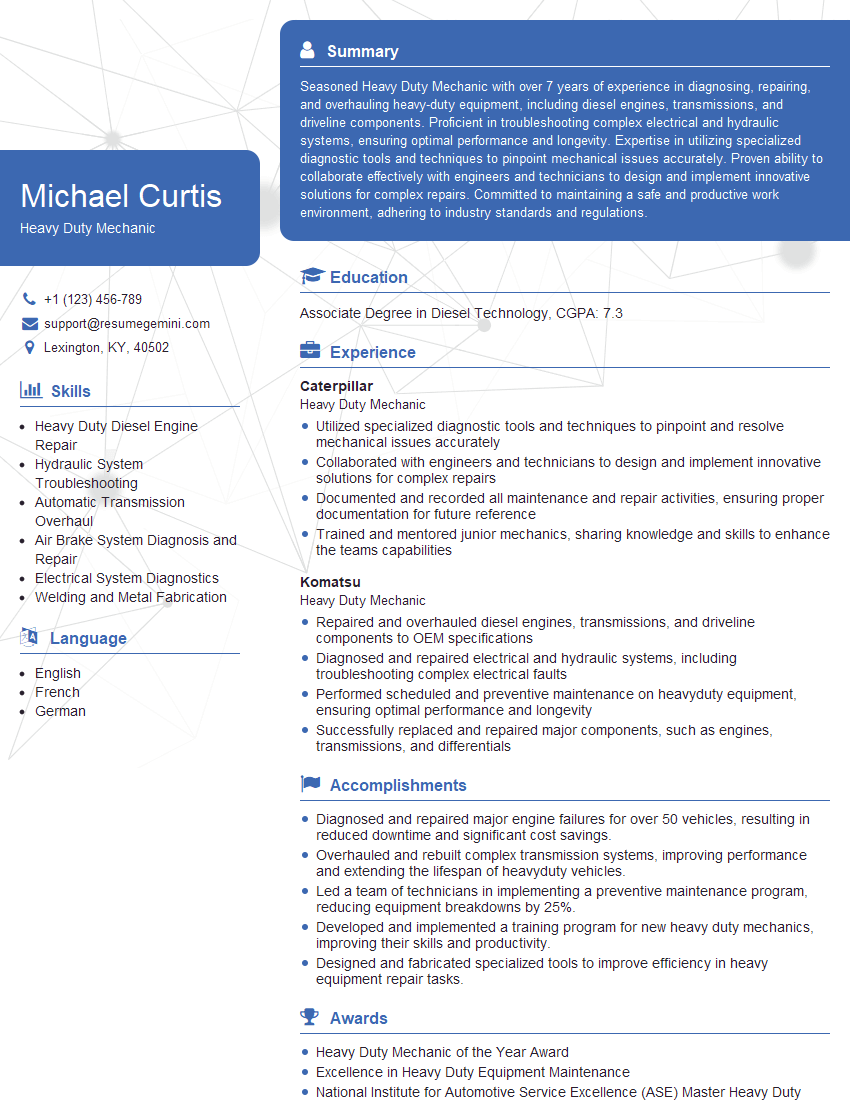
Heavy Duty Mechanic Resume Sample

Shop Mechanic Resume Sample
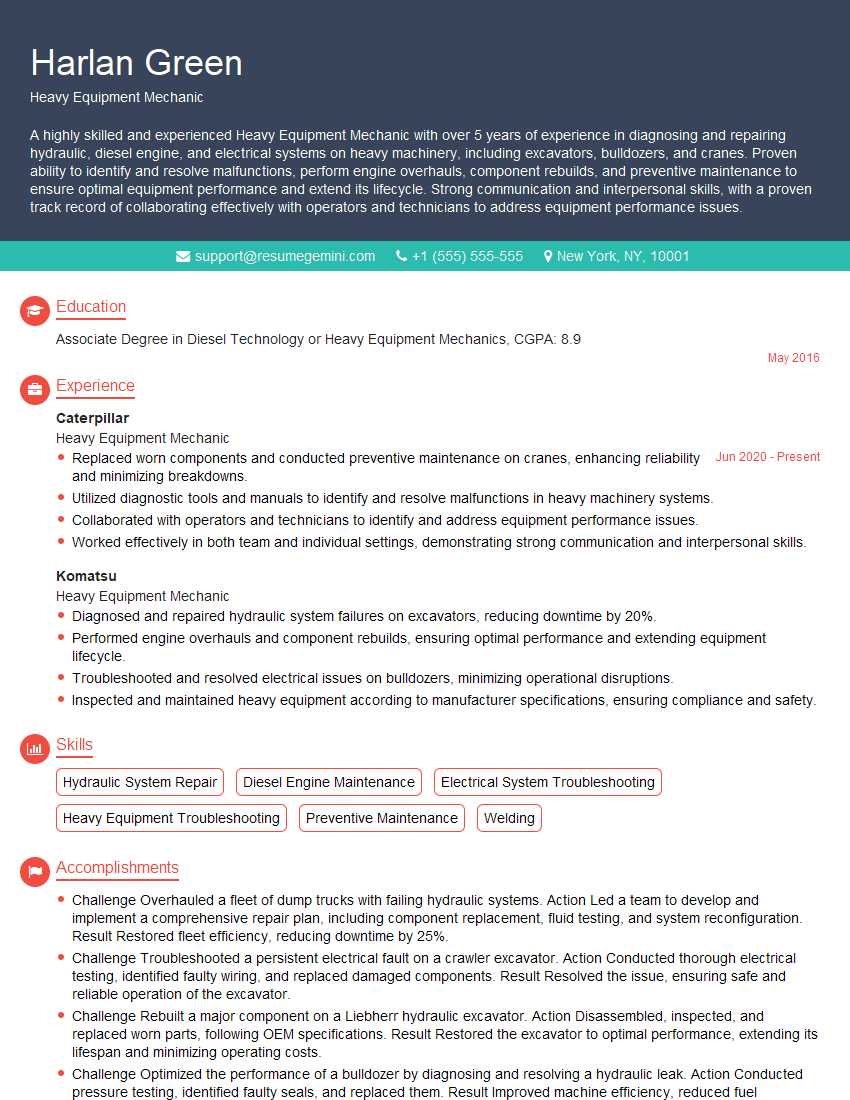
Heavy Equipment Mechanic Resume Sample

Mobile Equipment Mechanic Resume Sample
Explore more articles
Users Rating of Our Blogs
Share Your Experience
We value your feedback! Please rate our content and share your thoughts (optional).
What Readers Say About Our Blog
To the interviewgemini.com Webmaster.
Very helpful and content specific questions to help prepare me for my interview!
Thank you
To the interviewgemini.com Webmaster.
This was kind of a unique content I found around the specialized skills. Very helpful questions and good detailed answers.
Very Helpful blog, thank you Interviewgemini team.