Preparation is the key to success in any interview. In this post, we’ll explore crucial Consultation and Collaboration with Coaches and Trainers interview questions and equip you with strategies to craft impactful answers. Whether you’re a beginner or a pro, these tips will elevate your preparation.
Questions Asked in Consultation and Collaboration with Coaches and Trainers Interview
Q 1. Describe your experience designing and delivering training programs.
Designing and delivering training programs is a multifaceted process requiring a deep understanding of adult learning principles and the specific needs of the target audience. My approach involves a systematic process starting with a thorough needs analysis (which I’ll detail in the next answer), followed by curriculum development, material creation, and finally, program delivery and evaluation. I’ve designed and delivered numerous programs, ranging from leadership development workshops for senior executives to technical skills training for entry-level employees. For example, I recently designed a leadership development program for a tech startup, focusing on agile methodologies and effective communication. This involved creating interactive workshops, simulations, and online modules, all tailored to their specific company culture and learning styles. The program resulted in a measurable improvement in team collaboration and project management effectiveness, as evidenced by post-training surveys and performance data.
Q 2. Explain your approach to needs analysis for training initiatives.
My approach to needs analysis is crucial for creating effective training. It’s not just about guessing what people need, but about systematically gathering data to understand the performance gap. I typically use a mixed-methods approach, combining quantitative and qualitative data collection techniques. This might involve:
- Surveys: To gather broad feedback on skills and knowledge levels from a large group.
- Interviews: To delve deeper into individual experiences and perspectives with key stakeholders.
- Focus groups: To facilitate discussions and identify common themes and challenges.
- Performance data analysis: Examining metrics like productivity, error rates, and customer satisfaction to pinpoint areas requiring improvement.
- Observation: Directly observing employees performing their tasks to identify areas for improvement.
For example, when conducting a needs analysis for a sales team, I would analyze sales data, conduct interviews with sales managers and individual reps, and observe sales calls to understand the current performance and identify the specific skills or knowledge gaps hindering their success. The results of this analysis directly inform the design and content of the training program.
Q 3. How do you identify and address learning gaps in a training program?
Identifying and addressing learning gaps is an iterative process that happens throughout the training program. During the needs analysis phase, I identify the initial gaps. During the program itself, I use various methods to address them:
- Pre-tests and assessments: Used to measure existing knowledge and identify individual learning needs before the training begins. This allows me to tailor the instruction to address specific weaknesses.
- Regular formative assessments: Incorporating quizzes, activities, and discussions throughout the training to check for understanding and identify areas needing further clarification.
- Feedback mechanisms: Encouraging participants to provide ongoing feedback on the clarity and effectiveness of the training materials and delivery.
- Personalized learning plans: Developing customized plans for participants who require additional support or have unique learning challenges.
For instance, if pre-tests reveal that a significant portion of the participants lack fundamental knowledge in a particular area, I would dedicate more time to that topic and provide supplemental materials. Ongoing formative assessment allows me to adapt my teaching style and content in real-time to address any confusion or misconceptions.
Q 4. What methodologies do you utilize to evaluate the effectiveness of training programs?
Evaluating training effectiveness is critical to demonstrate ROI and ensure continuous improvement. I utilize a multi-pronged approach that includes:
- Post-tests and assessments: Measuring knowledge and skill acquisition after the training.
- Performance evaluations: Tracking on-the-job performance to see if the training has led to improved outcomes.
- Surveys and feedback forms: Gathering participant feedback on the training’s effectiveness, content, and delivery.
- Return on investment (ROI) calculations: Quantifying the financial benefits of the training program through metrics such as increased productivity, reduced errors, or improved customer satisfaction.
- Focus groups or interviews (post-training): Gathering qualitative data about the application of new skills and the long-term impact of the training.
I believe in using a balanced approach – quantitative data provides objective evidence, while qualitative feedback reveals valuable insights into participant experiences and perspectives. This combined approach provides a comprehensive view of the training’s impact.
Q 5. How do you collaborate with coaches to align training with coaching strategies?
Collaboration with coaches is essential for ensuring that training and coaching strategies are aligned and mutually reinforcing. I work closely with coaches to:
- Define shared learning objectives: We collaborate to define clear, measurable learning objectives that align with both training and coaching goals.
- Identify key competencies: We identify the specific competencies and skills that need to be developed and strengthened through both training and coaching interventions.
- Develop integrated learning pathways: We design learning pathways that leverage both training and coaching, ensuring a seamless transition between the two.
- Coordinate scheduling and activities: We coordinate the timing and content of training and coaching sessions to avoid duplication and maximize impact.
- Share progress and feedback: We regularly communicate and share progress data, feedback from participants, and adjust the approach as needed.
For instance, if a company is implementing a new sales methodology, I would work with the sales coaches to integrate the training on the new methodology into their coaching sessions, ensuring that participants receive consistent messaging and support. This integrated approach leads to more effective and lasting skill development.
Q 6. Describe your experience in developing curriculum for training programs.
Curriculum development is a structured process that involves defining learning objectives, selecting appropriate learning activities, and designing assessments. My approach focuses on creating engaging and relevant content that fosters active learning. I typically follow these steps:
- Define learning objectives: Clearly state what participants should know, understand, and be able to do after completing the training.
- Select learning activities: Choose a variety of activities that cater to different learning styles, such as lectures, group discussions, case studies, simulations, and hands-on exercises.
- Design assessments: Develop assessments to measure participant learning and progress, including pre-tests, post-tests, quizzes, and performance evaluations.
- Structure the curriculum: Organize the content in a logical and sequential manner, ensuring that the building blocks are taught before more complex topics.
- Develop learning materials: Create engaging and accessible learning materials, such as presentations, handouts, workbooks, and online modules.
For example, when developing a curriculum for a customer service training program, I would incorporate role-playing exercises to practice handling difficult customer interactions, case studies to analyze real-world scenarios, and online modules to reinforce key concepts. The final curriculum is a well-structured and engaging learning experience.
Q 7. How do you adapt your training style to diverse learning styles?
Adapting my training style to diverse learning styles is paramount for ensuring that all participants benefit from the training. I recognize that learners process information differently, so I incorporate a variety of teaching methods and learning materials to cater to visual, auditory, and kinesthetic learners. This might include:
- Visual aids: Using presentations, diagrams, charts, and videos to cater to visual learners.
- Audio-based learning: Incorporating discussions, lectures, and audio recordings for auditory learners.
- Hands-on activities: Designing activities that involve movement, interaction, and manipulation of objects for kinesthetic learners.
- Variety of activities: Incorporating a mix of lectures, group work, individual exercises, and simulations to cater to a broader range of learning preferences.
- Differentiated instruction: Providing additional support and resources to learners who require extra assistance.
For instance, in a technical training program, I might provide both written instructions and video tutorials, allowing participants to choose the method that best suits their learning style. By incorporating diverse learning modalities, I aim to create an inclusive and engaging learning environment where everyone feels supported and can achieve their learning objectives.
Q 8. How do you incorporate technology into your training programs?
Technology is crucial for creating modern, engaging training programs. I integrate technology in several ways, focusing on enhancing learner experience and program effectiveness.
- Learning Management Systems (LMS): We utilize platforms like Moodle or Canvas to deliver course content, track progress, facilitate communication, and administer assessments. This allows for flexible learning, anytime, anywhere access.
- Interactive Simulations and Gamification: To make learning more engaging, I incorporate interactive simulations that mimic real-world scenarios. Gamification elements, like points, badges, and leaderboards, motivate learners and foster healthy competition.
- Virtual Reality (VR) and Augmented Reality (AR): For certain training programs, especially those requiring hands-on skills development, VR and AR offer immersive experiences that significantly enhance learning outcomes. For example, a medical training program might use VR to simulate surgical procedures.
- Video Conferencing and Webinars: Live online sessions using platforms like Zoom or Google Meet are effective for interactive training, facilitating real-time Q&A and discussions. Recorded webinars can provide access to participants who missed the live session.
- Microlearning Modules: Short, focused learning modules delivered via mobile apps or online platforms cater to busy learners who prefer shorter, digestible content chunks.
The specific technologies used depend on the training program’s objectives, target audience, and budget. We always prioritize user-friendliness and accessibility.
Q 9. What are some common challenges you encounter when collaborating with coaches?
Collaboration with coaches can present unique challenges. One common issue is differing coaching styles and philosophies. For instance, some coaches might favor a highly structured approach while others prefer a more flexible, learner-centric method. This requires careful communication and alignment of approaches to ensure a cohesive training experience.
- Communication Gaps: Misunderstandings or lack of clear communication regarding training objectives, content, and timelines can lead to delays and inconsistencies.
- Conflicting Methodologies: Coaches may have different teaching methodologies, making it difficult to maintain a consistent learning experience for participants.
- Resistance to Change: Coaches may be resistant to incorporating new technologies or teaching methods, especially if they are comfortable with their established practices.
- Availability and Scheduling Conflicts: Coordinating schedules and ensuring availability of coaches can be challenging, particularly with busy schedules.
To overcome these challenges, I emphasize clear communication, collaborative planning, and regular check-ins throughout the training process. Building strong relationships based on mutual respect and trust is essential.
Q 10. How do you handle conflicting priorities between training and other business objectives?
Balancing training priorities with other business objectives requires careful planning and strategic alignment. The key is to demonstrate the value and ROI of training initiatives to secure necessary resources and support.
- Strategic Alignment: Training programs must be directly linked to overall business goals. For example, if the company aims to improve customer service, training should focus on enhancing customer interaction skills.
- Prioritization and Resource Allocation: Determine which training initiatives are most critical and allocate resources accordingly. This might involve prioritizing high-impact programs over less crucial ones.
- Stakeholder Management: Communicate the value and impact of training to key stakeholders, such as senior management and department heads, to garner support and buy-in.
- Data-Driven Decision Making: Use data to demonstrate the effectiveness of training programs and justify continued investment. This includes tracking key metrics like participant satisfaction, performance improvements, and return on investment (ROI).
Often, this involves creating a compelling business case that highlights the return on investment of training initiatives compared to the costs of not investing in employee development.
Q 11. Describe your experience in creating engaging and interactive training materials.
Creating engaging and interactive training materials is paramount. I employ a variety of techniques to achieve this.
- Storytelling and Real-World Examples: Relatable stories and real-world examples make the learning material more engaging and memorable. This helps learners connect with the content on a personal level.
- Interactive Exercises and Activities: Incorporating activities such as quizzes, group discussions, case studies, and role-playing keeps learners actively involved and promotes knowledge retention.
- Multimedia Content: Using videos, audio clips, images, and animations makes the training visually appealing and caters to different learning styles.
- Varied Content Formats: I avoid lengthy blocks of text by using a mix of formats, including infographics, short videos, and interactive exercises. This maintains learner interest and avoids cognitive overload.
- Personalized Learning Paths: Tailoring content to the individual needs and learning styles of participants enhances engagement and effectiveness. This can be achieved through adaptive learning platforms or personalized learning modules.
For instance, in a leadership training program, I might use a case study involving a real-life leadership challenge, followed by a group discussion to explore different solutions. This hands-on approach is far more effective than simply presenting theory.
Q 12. How do you ensure your training programs meet the specific needs of your target audience?
Ensuring training meets the specific needs of the target audience is crucial for success. This involves a thorough needs analysis to understand their existing skills, knowledge gaps, and learning preferences.
- Needs Assessment: Before designing any training, I conduct a comprehensive needs assessment, utilizing surveys, interviews, and observations to identify specific learning needs and objectives.
- Learner Profiles: Developing detailed learner profiles provides insights into the demographics, learning styles, and experience levels of the target audience.
- Content Customization: The training content, delivery methods, and assessment strategies are tailored to meet the identified needs and preferences of the learners.
- Feedback Mechanisms: Regular feedback mechanisms, such as surveys and focus groups, are implemented throughout the training process to ensure relevance and effectiveness. This allows for continuous improvement and adaptation based on learner needs.
For example, if training sales representatives, I’d focus on sales techniques and product knowledge, while training managers might require leadership development and strategic planning skills. Tailoring the content directly addresses the specific skill gaps and performance needs of each group.
Q 13. How do you measure the ROI of a training program?
Measuring the ROI of a training program requires a multi-faceted approach. It’s not just about immediate results, but also the long-term impact on individual performance and organizational outcomes.
- Pre- and Post-Training Assessments: Comparing performance before and after training provides quantifiable data on skill improvement. This might involve knowledge tests, practical skills assessments, or simulations.
- Performance Metrics: Tracking key performance indicators (KPIs) relevant to the training objectives, such as sales figures, customer satisfaction scores, or error rates, helps evaluate the program’s impact on business outcomes.
- Participant Feedback: Collecting feedback from participants through surveys or interviews provides insights into their learning experience and identifies areas for improvement.
- Return on Investment (ROI) Calculation: This involves calculating the return on investment by comparing the cost of the training program to the financial benefits it generates. For example, increased sales, improved productivity, or reduced errors.
A robust ROI calculation will consider factors like training costs, time saved, improved productivity, and reduced errors. For example, if the training resulted in a 10% increase in sales and cost $5,000, a cost-benefit analysis would be performed to show the return on investment.
Q 14. Describe a situation where you had to adapt a training program based on participant feedback.
In a recent leadership development program, we initially focused heavily on theoretical frameworks. However, participant feedback revealed a strong preference for practical application and real-world case studies. They felt the initial content was too theoretical and lacked relevance to their daily work.
Based on this feedback, we adapted the program mid-way through. We reduced the theoretical content and incorporated more interactive exercises, case studies based on participants’ real-life experiences, and role-playing scenarios. We also incorporated more opportunities for peer-to-peer learning and mentoring. The result was a significantly improved learning experience, increased engagement, and more positive feedback from participants.
This demonstrates the importance of actively seeking and incorporating feedback throughout the training process. Flexibility and responsiveness to learner needs are crucial for program success.
Q 15. What are your preferred methods for delivering training (e.g., online, in-person, blended learning)?
My preferred method for delivering training is a blended learning approach, combining the strengths of both online and in-person modalities. This allows for flexibility and caters to diverse learning styles. For example, I might use online modules for self-paced learning of foundational concepts, followed by in-person workshops for interactive exercises, group discussions, and personalized feedback. In-person sessions are particularly effective for building rapport and fostering collaboration, while online modules offer convenience and scalability. I carefully consider the specific training objectives and the audience’s needs when deciding on the optimal blend.
Purely online training can be effective for large audiences or geographically dispersed participants using platforms like Zoom or interactive learning portals. However, the lack of face-to-face interaction can sometimes hinder engagement. Purely in-person training is excellent for hands-on activities and building strong team dynamics, but it can be expensive and logistically challenging for large or geographically dispersed groups.
Career Expert Tips:
- Ace those interviews! Prepare effectively by reviewing the Top 50 Most Common Interview Questions on ResumeGemini.
- Navigate your job search with confidence! Explore a wide range of Career Tips on ResumeGemini. Learn about common challenges and recommendations to overcome them.
- Craft the perfect resume! Master the Art of Resume Writing with ResumeGemini’s guide. Showcase your unique qualifications and achievements effectively.
- Don’t miss out on holiday savings! Build your dream resume with ResumeGemini’s ATS optimized templates.
Q 16. How do you use data to inform your training decisions?
Data is crucial for evidence-based training design and evaluation. I use data from various sources to inform my decisions. Pre-training assessments help gauge learners’ existing knowledge and identify areas needing more focus. During training, I track participant engagement through quizzes, polls, and observations, adjusting my approach as needed. Post-training evaluations, including surveys, performance assessments, and follow-up observations, reveal the effectiveness of the training and identify areas for improvement. For example, if post-training surveys reveal low satisfaction with a particular module, I’ll revise it based on the feedback received. Similarly, if performance data shows a lack of improvement in a specific skill, I’ll adjust the training content to address the skill gap more effectively.
Q 17. How do you stay current with the latest trends in training and development?
Staying current in training and development is a continuous process. I regularly attend industry conferences and workshops, read peer-reviewed journals and industry publications, participate in online professional development courses, and actively engage with professional networks. Following thought leaders on social media and subscribing to relevant newsletters also keeps me updated on the latest trends. For example, I recently attended a conference focused on microlearning strategies and have since incorporated short, engaging video modules into my training programs. This keeps the learning process concise and impactful for busy professionals.
Q 18. Describe your experience with different learning management systems (LMS).
I have extensive experience with several Learning Management Systems (LMS), including Moodle, Canvas, and TalentLMS. My experience encompasses everything from course creation and content uploading to managing user accounts, tracking progress, and generating reports. Each LMS offers unique features and functionalities. Moodle, for instance, is highly customizable and suitable for complex training programs; Canvas is user-friendly and provides excellent collaboration tools; and TalentLMS is known for its ease of use and integration capabilities. My selection of an LMS depends on the specific training needs, budget, and technical infrastructure. I always ensure that chosen systems are accessible and user-friendly for all participants.
Q 19. How do you foster a positive and supportive learning environment?
Creating a positive and supportive learning environment is paramount. I foster this by establishing clear expectations, providing regular and constructive feedback, and promoting a culture of collaboration and respect. I encourage learners to share their experiences and perspectives, creating a sense of community. Icebreakers, group activities, and opportunities for peer-to-peer learning help build rapport and make learning more engaging. I also prioritize active listening and address learner concerns promptly and empathetically. For example, I might use anonymous feedback mechanisms to encourage honest participation and address any issues early on.
Q 20. How do you manage the expectations of stakeholders involved in a training program?
Managing stakeholder expectations begins with clear communication and collaboration from the outset. I work closely with stakeholders to define training goals, identify key performance indicators (KPIs), and establish realistic timelines and budgets. Regular progress updates, both formal and informal, keep stakeholders informed and allow for timely adjustments. I use various communication methods, including emails, presentations, and progress reports, to ensure transparency and maintain alignment. Addressing concerns proactively and collaboratively helps avoid misunderstandings and maintains positive relationships.
Q 21. How do you ensure the sustainability of training programs beyond the initial implementation?
Ensuring the sustainability of training programs involves several key strategies. First, I design programs that are relevant to learners’ roles and responsibilities, ensuring continued application of learned skills in their daily work. Second, I incorporate opportunities for ongoing learning and development, such as mentorship programs, access to resources, and booster sessions, to reinforce learning over time. Third, I integrate the training into the organization’s overall performance management system, making it an integral part of employee development. Fourth, I develop user-friendly documentation and support materials to ensure that learners can easily access and utilize the training materials long after the initial implementation.
Q 22. What are your strengths and weaknesses as a training consultant?
My greatest strengths as a training consultant lie in my ability to build strong rapport with clients and participants, tailoring training to specific needs, and effectively facilitating collaborative learning environments. I excel at needs analysis, ensuring the training aligns perfectly with organizational goals. I’m also adept at designing engaging and interactive training materials, utilizing diverse methods to cater to different learning styles. A weakness I’m actively working on is delegation. While I’m capable of managing multiple projects simultaneously, sometimes I take on too much myself. I’m actively improving my delegation skills to better utilize team members’ strengths and improve overall efficiency.
For example, I recently worked with a client who was struggling with onboarding new employees. Instead of simply presenting a standard onboarding program, I conducted thorough needs analysis, interviewing key stakeholders to understand their specific challenges and objectives. This allowed me to develop a highly customized training program that directly addressed their needs and resulted in improved employee retention and performance.
Q 23. Describe a time you had to resolve a conflict between two team members in a training environment.
In one instance, two team members – let’s call them Sarah and Mark – clashed during a leadership training program. Sarah, a seasoned manager, felt Mark, a relatively new team leader, wasn’t taking the training seriously enough and was disrupting the flow. Mark, in turn, felt Sarah was being condescending and not acknowledging his contributions. The conflict manifested as interrupting each other during group discussions and exhibiting passive-aggressive behavior.
To resolve this, I first created a safe space for them to express their concerns. I used active listening techniques, focusing on understanding their perspectives individually before bringing them together. I emphasized that both their views were valid and that their differing experiences were valuable assets to the team. We discussed the importance of respectful communication and collaborative problem-solving within a structured team environment. The solution involved setting clear communication guidelines during the training sessions and a collaborative project aimed at resolving a hypothetical workplace challenge that required their joint effort. This approach not only resolved the immediate conflict but also fostered a more collaborative and respectful working relationship between them.
Q 24. How do you incorporate adult learning principles into your training design?
I incorporate adult learning principles into my training design by focusing on the following key aspects:
- Experience-based learning: I leverage participants’ prior knowledge and experiences through case studies, group discussions, and real-world scenarios.
- Relevance and application: The training materials and activities are directly related to participants’ jobs and daily tasks, demonstrating clear value and immediate application.
- Active participation: I design interactive sessions, encouraging active participation through group work, simulations, and problem-solving exercises. Passive lecturing is minimized.
- Self-directed learning: I offer resources and opportunities for participants to continue learning beyond the formal training sessions, including online resources and mentoring programs.
- Collaboration and peer learning: I facilitate group activities and discussions to encourage peer learning and knowledge sharing. This helps create a supportive learning environment and fosters a sense of community among participants.
For example, instead of simply lecturing on a new software, I might design a simulation where participants have to complete a real-world task using the software, then debrief as a group to share challenges and best practices. This active learning approach enhances knowledge retention and skill development.
Q 25. What are some key performance indicators (KPIs) you use to measure the success of your training programs?
To measure the success of my training programs, I use a variety of KPIs. These include:
- Knowledge gain: Pre- and post-training assessments measure the increase in knowledge and understanding of the subject matter.
- Skill application: Practical tests or observations assess the participants’ ability to apply newly acquired skills in realistic situations.
- Participant satisfaction: Feedback surveys gather participants’ opinions on the training’s effectiveness, content, and delivery.
- Behavioral changes: Post-training observation of on-the-job performance measures whether participants are applying the learned skills and behaviors.
- Return on investment (ROI): This measures the financial benefits of the training, such as improved productivity, reduced errors, or increased sales. This often requires collaboration with the client to establish baseline metrics prior to the training.
For instance, in a customer service training program, I would measure the improvement in customer satisfaction scores after the training, as well as the reduction in the number of customer complaints.
Q 26. How do you handle difficult questions or challenges from participants during training sessions?
Handling difficult questions or challenges requires a calm and respectful approach. I begin by acknowledging the question’s validity and importance. I avoid dismissing or interrupting the participant. If I don’t know the answer immediately, I acknowledge that and offer to find out. If the question is disruptive or off-topic, I politely redirect the conversation back to the training objectives, while still acknowledging the participant’s point. I might say something like, “That’s an excellent question, and it’s certainly related to what we’re discussing, however, to stay on track with today’s agenda let’s focus on [topic] for now. We can address your question more thoroughly during the Q&A at the end or perhaps offline.” Sometimes, a difficult question can signal a gap in understanding among several participants, making it an opportunity to revisit a key concept. Using humor appropriately can also help diffuse tense situations and create a more relaxed learning environment.
Q 27. Describe your experience working with diverse teams and individuals in a training context.
I have extensive experience working with diverse teams and individuals. I understand that diverse groups bring a wealth of perspectives and experiences to the learning process, and I leverage that diversity to create richer and more engaging training. My approach involves being culturally sensitive, adapting communication styles, and utilizing inclusive language. I ensure that training materials and activities are accessible to all learners, regardless of their backgrounds or learning styles. I actively seek diverse perspectives and experiences during training sessions to promote inclusivity and understanding. I incorporate inclusive activities and materials into the training to cater to different learning styles and needs. This might involve employing visual aids, hands-on activities, and group discussions to cater to different learning preferences. It also includes adjusting my communication style to accommodate different communication preferences and cultural norms.
For example, in a cross-cultural training program, I carefully adapt my communication and teaching style to resonate with the various cultural backgrounds represented. I am mindful of nonverbal communication cues and engage participants in activities that promote understanding and appreciation of cultural differences. This approach ensures that all participants feel valued, respected, and included in the learning process.
Key Topics to Learn for Consultation and Collaboration with Coaches and Trainers Interview
- Understanding Coaching Philosophies: Explore various coaching models (e.g., behavioral, cognitive, solution-focused) and their practical applications in different training contexts.
- Needs Assessment & Goal Setting: Learn how to effectively conduct needs assessments with clients (coaches and trainers) to define clear, measurable, achievable, relevant, and time-bound (SMART) goals for training programs or individual coaching plans.
- Collaboration & Communication Strategies: Master techniques for effective communication, active listening, and conflict resolution in collaborative settings with coaches and trainers. Practice building consensus and navigating diverse perspectives.
- Program Design & Delivery: Understand the principles of adult learning and instructional design. Explore different training methodologies and how to adapt them to various learning styles and contexts.
- Evaluation & Feedback Mechanisms: Learn how to develop and implement effective methods for evaluating training programs and providing constructive feedback to coaches and trainers. This includes understanding data analysis and reporting.
- Ethical Considerations: Familiarize yourself with ethical guidelines and best practices related to coaching, training, and client confidentiality.
- Technological Proficiency: Understand the use of various technologies used in coaching and training delivery (e.g., Learning Management Systems (LMS), video conferencing, online assessment tools).
- Problem-Solving & Decision-Making in Collaborative Environments: Develop strategies for identifying and resolving challenges that may arise during collaborative projects with coaches and trainers.
Next Steps
Mastering Consultation and Collaboration with Coaches and Trainers is crucial for career advancement in the training and development field. It demonstrates valuable skills in communication, teamwork, and strategic planning, opening doors to leadership roles and higher earning potential. To significantly boost your job prospects, creating an ATS-friendly resume is essential. ResumeGemini is a trusted resource to help you build a professional resume that highlights your relevant skills and experience effectively. We provide examples of resumes tailored to Consultation and Collaboration with Coaches and Trainers to guide you in showcasing your qualifications.
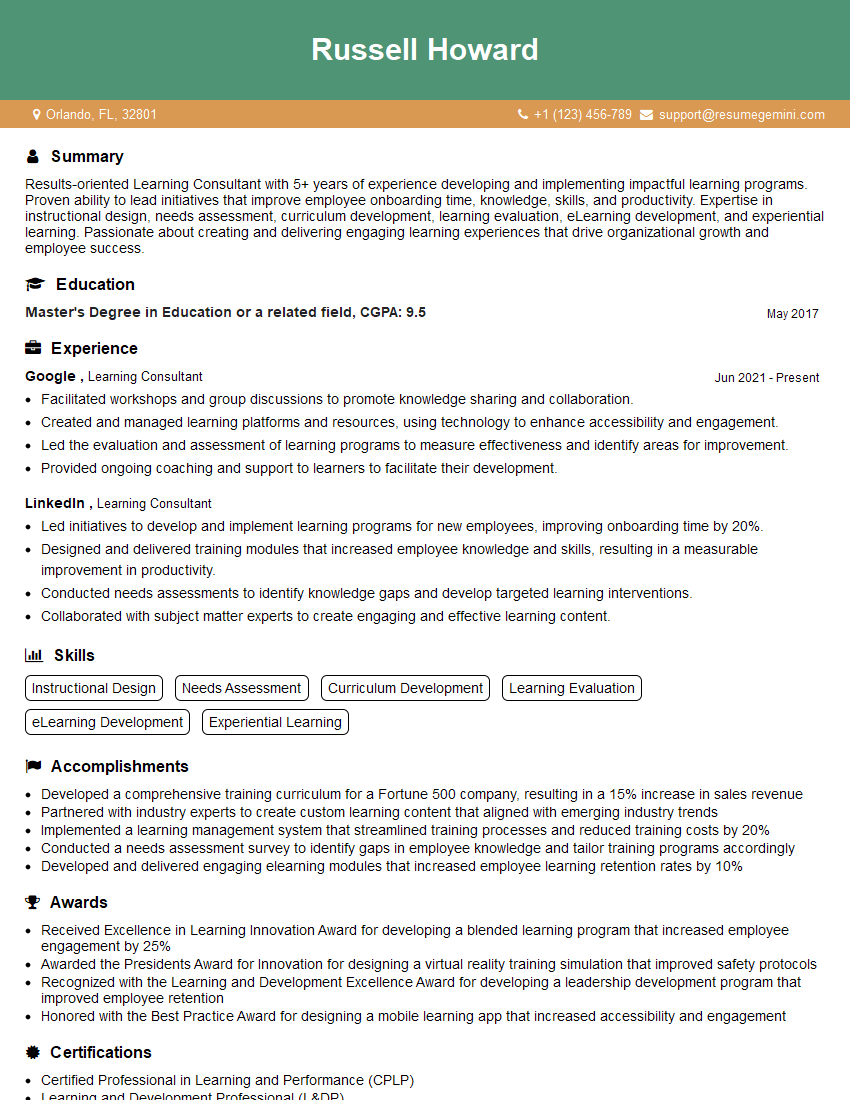
Learning Consultant Resume Sample
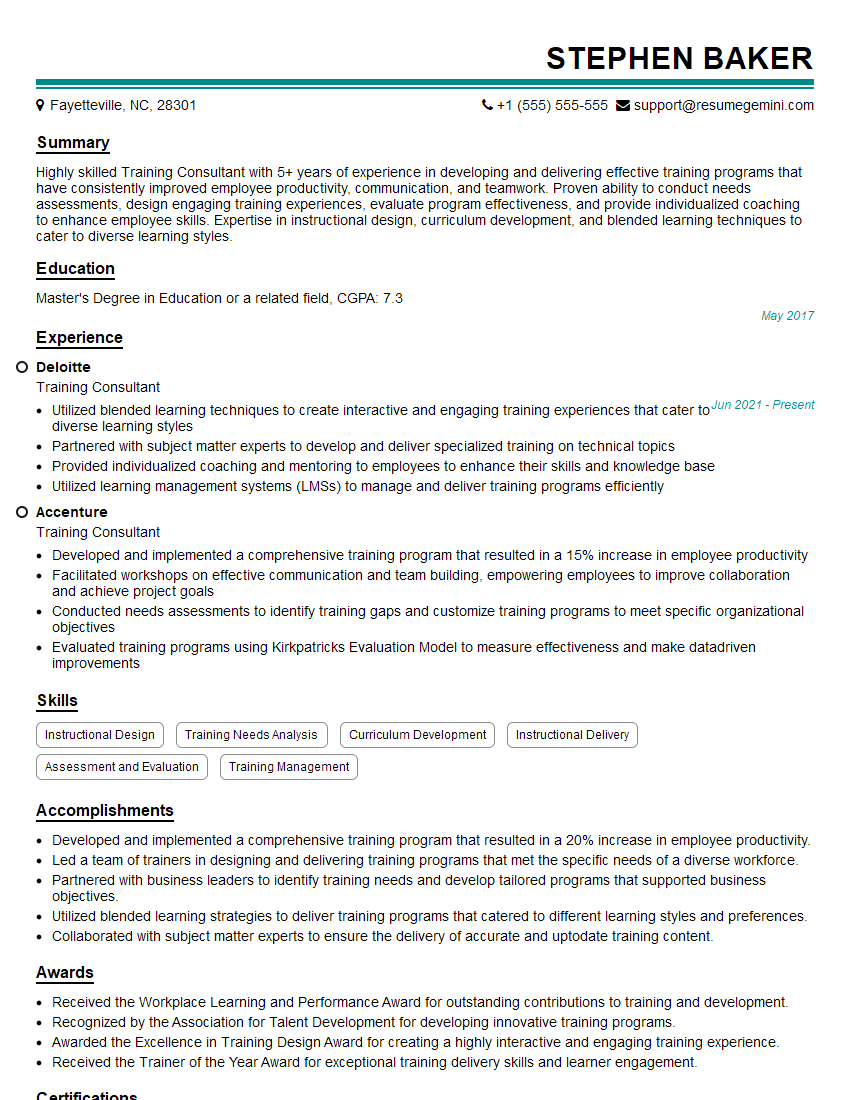
Training Consultant Resume Sample
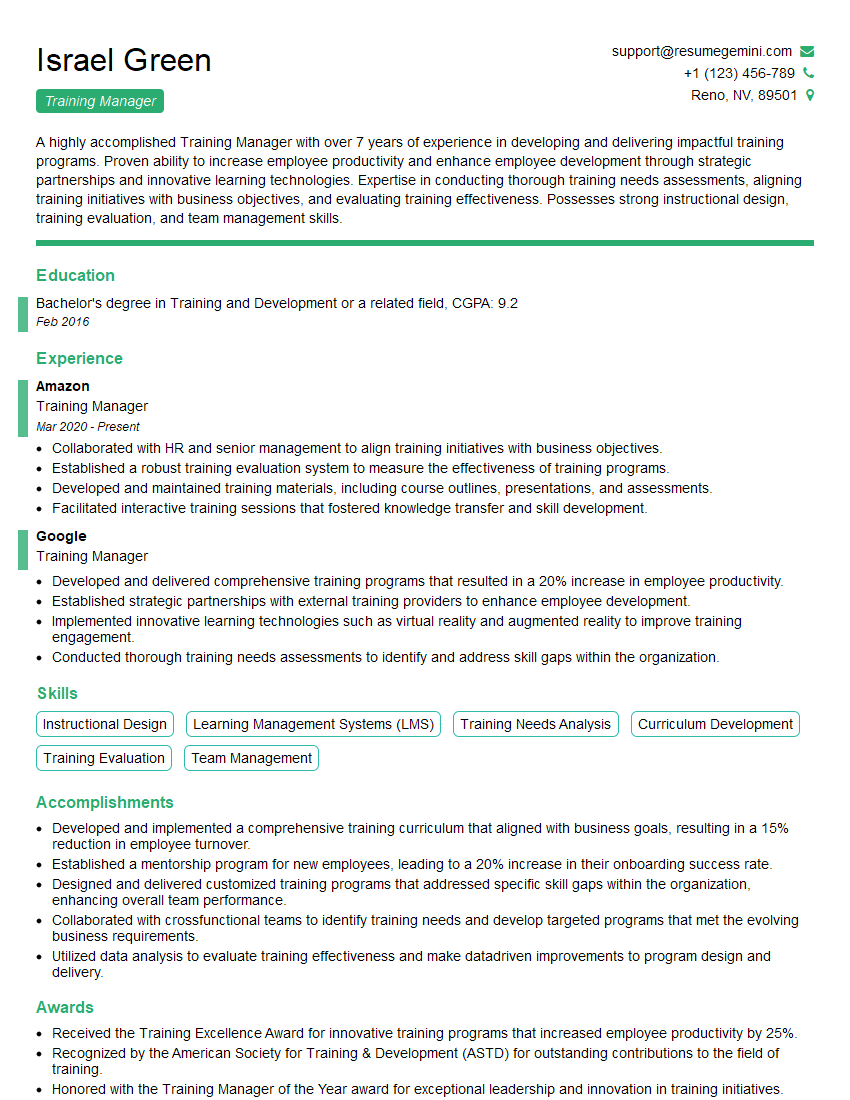
Training Manager Resume Sample
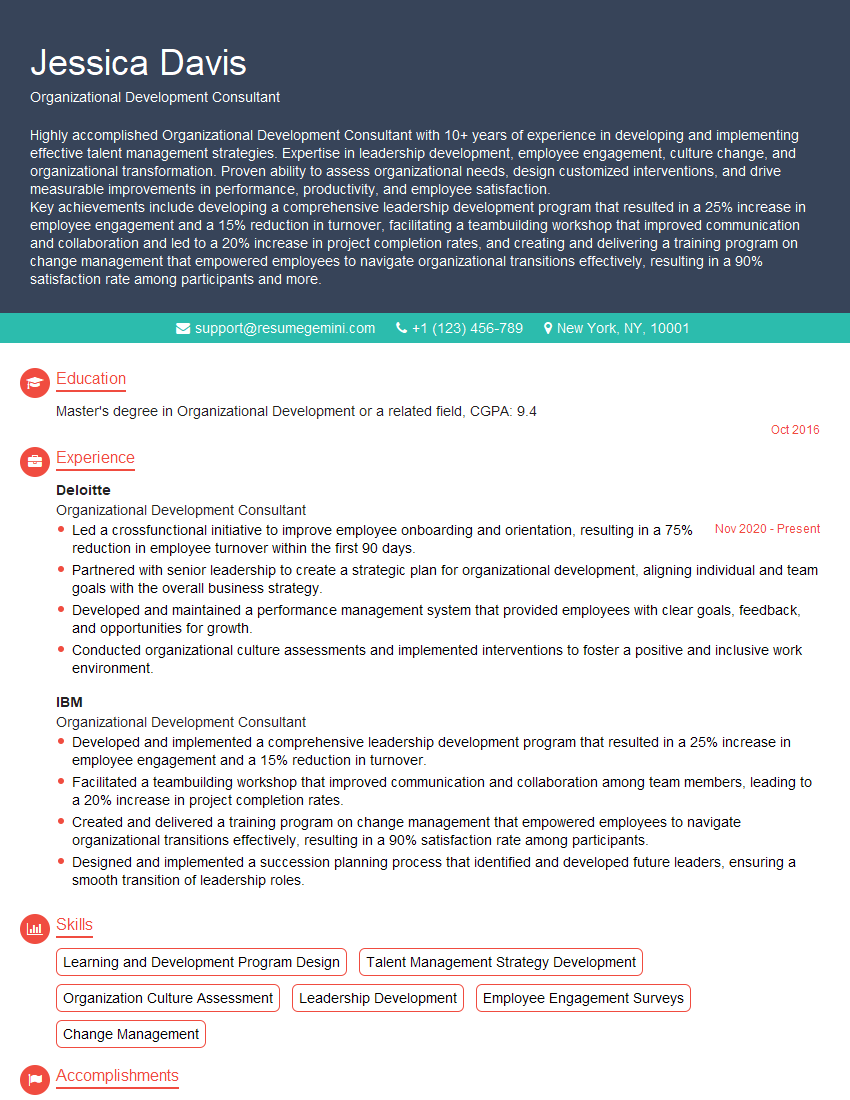
Organizational Development Consultant Resume Sample
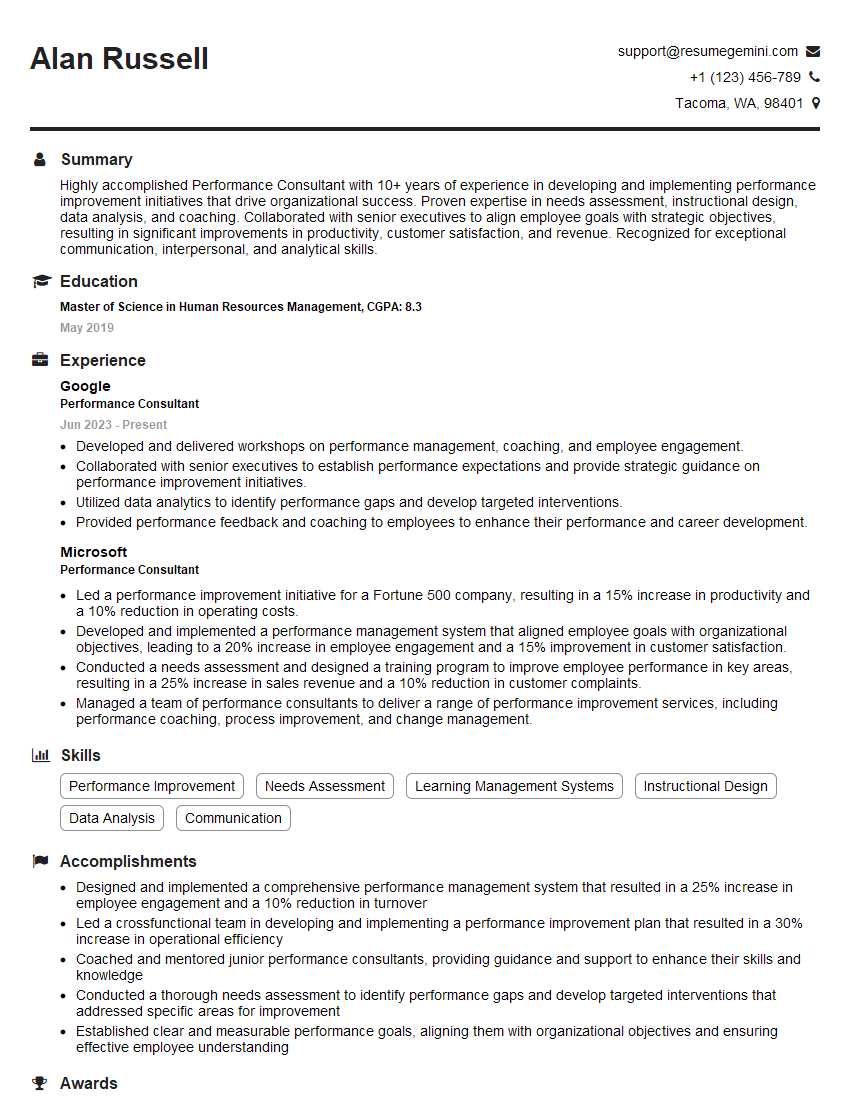
Performance Consultant Resume Sample
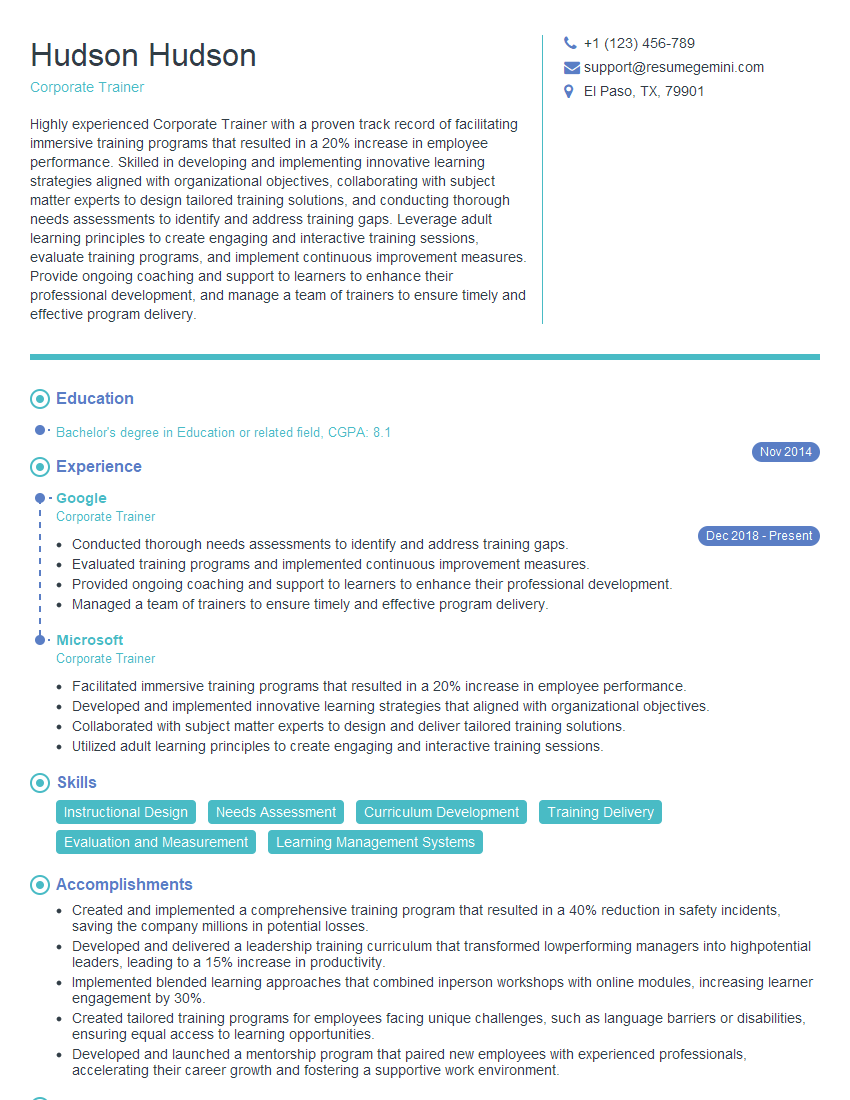
Corporate Trainer Resume Sample

Curriculum Developer Resume Sample
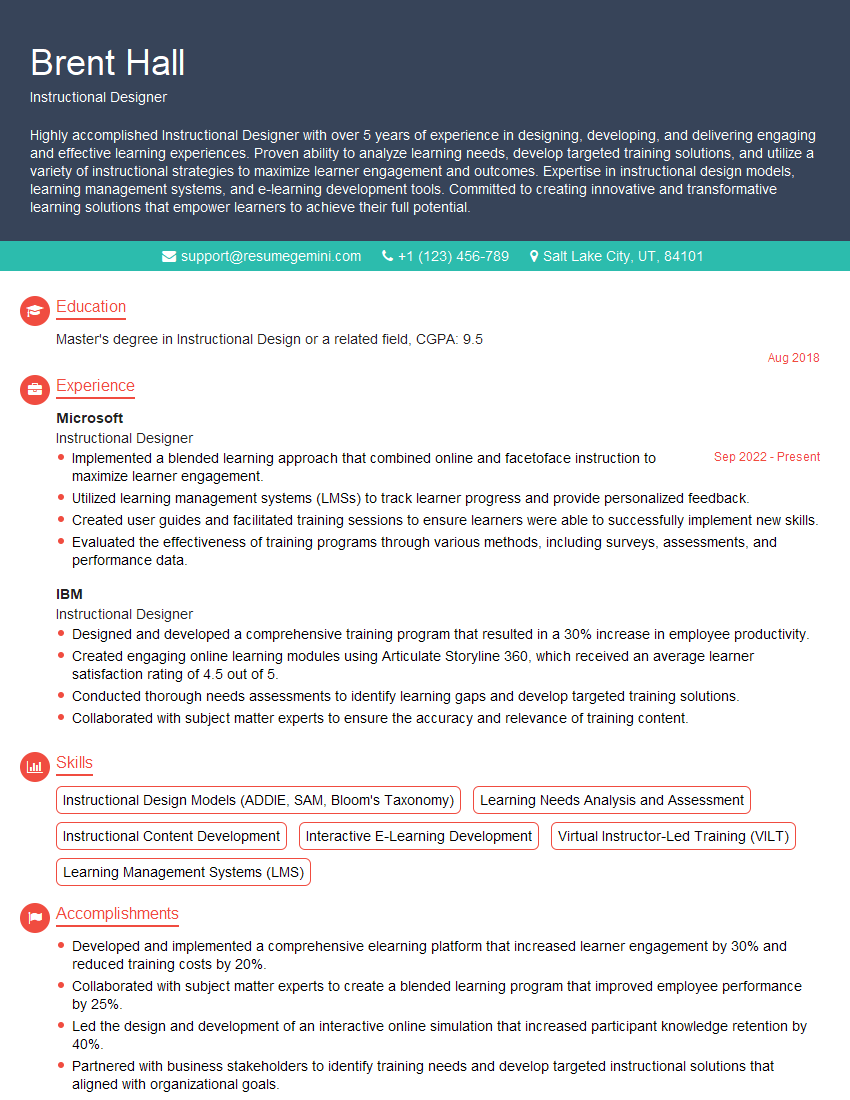
Instructional Designer Resume Sample
Explore more articles
Users Rating of Our Blogs
Share Your Experience
We value your feedback! Please rate our content and share your thoughts (optional).
What Readers Say About Our Blog
To the interviewgemini.com Webmaster.
Very helpful and content specific questions to help prepare me for my interview!
Thank you
To the interviewgemini.com Webmaster.
This was kind of a unique content I found around the specialized skills. Very helpful questions and good detailed answers.
Very Helpful blog, thank you Interviewgemini team.