Every successful interview starts with knowing what to expect. In this blog, we’ll take you through the top Continuous Improvement and Process Innovation interview questions, breaking them down with expert tips to help you deliver impactful answers. Step into your next interview fully prepared and ready to succeed.
Questions Asked in Continuous Improvement and Process Innovation Interview
Q 1. Describe your experience with Lean methodologies.
Lean methodologies are all about maximizing customer value while minimizing waste. My experience spans several years, encompassing various roles where I’ve implemented Lean principles to streamline processes and boost efficiency. This includes leading Kaizen events, facilitating Value Stream Mapping exercises, and training teams on Lean thinking. I’ve worked across different industries, from manufacturing to software development, adapting Lean principles to suit each unique context. For example, in a previous role at a manufacturing plant, we used 5S (Sort, Set in Order, Shine, Standardize, Sustain) to drastically reduce workplace clutter and improve safety, resulting in a 15% reduction in accidents. In another project, we employed Kanban to manage workflow and reduce lead times in a software development team, leading to a 20% increase in on-time project delivery.
Q 2. Explain the DMAIC cycle in Six Sigma.
DMAIC is a data-driven, five-phase problem-solving methodology central to Six Sigma. It’s an iterative process used to improve existing processes. Let’s break down each phase:
- Define: Clearly define the problem, project goals, and customer requirements. This involves setting measurable targets and understanding the scope of the project. For instance, ‘Reduce customer wait time in our call center by 20%.’
- Measure: Gather data to understand the current state of the process. This includes identifying key performance indicators (KPIs) and collecting data on process metrics. We might use tools like control charts or histograms.
- Analyze: Analyze the data to identify the root causes of the problem. This often involves using statistical tools like Pareto charts or fishbone diagrams to understand the key factors contributing to the issue.
- Improve: Develop and implement solutions to address the root causes identified in the analysis phase. This could involve process redesign, technology upgrades, or employee training.
- Control: Monitor the improved process to ensure the gains are sustained. This includes establishing control charts and implementing procedures to prevent regression.
Imagine a scenario where a manufacturing process produces a high defect rate. Using DMAIC, we’d define the goal of reducing defects, measure the current defect rate, analyze the root causes (maybe faulty equipment or insufficient training), implement improvements (repair equipment, provide training), and finally monitor the defect rate to ensure the improvements hold.
Q 3. How have you used data analysis to identify process improvements?
Data analysis is the bedrock of any successful process improvement initiative. I’ve consistently used data analysis to pinpoint areas for improvement. For example, in one project, we analyzed customer service call data to identify common issues and bottlenecks. We used histograms to visualize call duration and identified a spike in long calls related to a particular product feature. This data-driven insight led us to redesign the product documentation and improve employee training on that specific feature, resulting in a significant reduction in call times and improved customer satisfaction. Similarly, I’ve utilized statistical process control (SPC) charts to monitor process stability and identify variations that suggest potential problems before they escalate.
Another example involves analyzing operational data to optimize warehouse operations. We used scatter plots and correlation analysis to identify relationships between warehouse layout, order picking times, and transportation costs. This enabled us to propose a more efficient warehouse layout, reducing the overall operational cost by 10%.
Q 4. What is your experience with Kaizen events?
Kaizen events, or Kaizen workshops, are short, focused improvement projects involving a cross-functional team. My experience includes facilitating numerous Kaizen events, focusing on rapid improvement cycles and collaborative problem-solving. These events often tackle a specific process or area for improvement. The approach typically includes defining a clear scope, identifying improvement opportunities, developing solutions, and implementing changes within a short timeframe (often a few days). I find that Kaizen events are particularly effective for quickly addressing bottlenecks and enhancing team engagement. For example, in a previous role, a Kaizen event focused on streamlining the order fulfillment process led to a 15% reduction in processing time and improved order accuracy.
Q 5. Describe a time you identified a process bottleneck and how you resolved it.
In a previous project involving a customer onboarding process, we identified a significant bottleneck at the verification stage. Customers experienced delays due to a manual verification process prone to errors and inconsistencies. This led to frustrated customers and increased operational costs. To resolve this, we implemented a multi-step approach:
- Analysis: We used process mapping to visualize the onboarding process and pinpoint the exact location of the bottleneck. Data analysis revealed the specific steps causing delays and the frequency of errors.
- Solution Design: We explored several solutions, including automating the verification process through a custom-built script that integrated with our CRM system, as well as re-engineering the verification form to be more concise and intuitive.
- Implementation: We gradually implemented the automated verification script and introduced the improved form. This included training employees on the new processes.
- Monitoring: Post-implementation, we monitored key metrics such as verification time and error rate to assess the effectiveness of the improvements.
The automated verification script significantly reduced processing time and minimized errors, resulting in a smoother and faster onboarding experience for customers and a 30% decrease in operational costs.
Q 6. Explain your understanding of Value Stream Mapping.
Value Stream Mapping (VSM) is a lean management technique used to visualize the flow of materials and information in a process. It identifies areas of waste and helps prioritize improvement efforts. A VSM typically shows all the steps involved in a process, from beginning to end, including value-added steps and non-value-added activities (waste). It uses symbols and diagrams to represent different aspects of the process, making it easy to understand and communicate. For example, you might use different shapes to represent processes, transportation, inventory, delays, etc.
Building a VSM usually involves a team effort, engaging people from different parts of the process. The creation of a current state VSM is crucial as it reveals the current waste and inefficiencies. A future state VSM is then created envisioning how process improvements could streamline the flow and reduce waste. This allows for a clear visualization of the impact of proposed changes before they are implemented.
Q 7. How do you prioritize improvement projects?
Prioritizing improvement projects requires a balanced approach, considering factors such as potential impact, feasibility, and urgency. I commonly use a prioritization matrix that incorporates several key criteria:
- Impact: How significant is the potential improvement in terms of cost savings, efficiency gains, customer satisfaction, or other key metrics?
- Feasibility: How realistically can this improvement be implemented given available resources, time constraints, and technical capabilities?
- Urgency: How pressing is the need for this improvement? Are there immediate business needs or risks associated with delays?
- Alignment with Strategic Goals: Does the project align with the overall strategic objectives of the organization?
I typically use a weighted scoring system to quantify these criteria, assigning higher weights to more critical factors. This allows for a more objective comparison of potential improvement projects. A simple example would be assigning weights of 40% to impact, 30% to feasibility, 20% to urgency, and 10% to strategic alignment. Each project would be scored based on these weighted factors and ranked accordingly, ensuring that the most impactful and feasible projects are addressed first.
Q 8. What metrics do you use to measure process improvement success?
Measuring process improvement success requires a balanced scorecard approach, going beyond simple efficiency gains. We need to track metrics across several key areas to get a holistic view.
- Throughput/Cycle Time: This measures how quickly a process delivers output. A reduction indicates improved efficiency. For example, if we reduced the average order fulfillment time from 5 days to 3 days, that’s a significant improvement.
- Defect Rate/Error Rate: This shows the frequency of errors or defects in the process. A lower rate signifies better quality control. Imagine reducing the number of faulty products from 5% to 1% – that’s a huge quality improvement.
- Cost Reduction: This metric quantifies the savings achieved through process improvements. For instance, streamlining a manufacturing process might lower material waste by 10%, resulting in substantial cost savings.
- Customer Satisfaction: Ultimately, process improvements should lead to happier customers. We measure this through surveys, feedback forms, and Net Promoter Score (NPS).
- Employee Satisfaction: Improved processes often lead to more efficient and less stressful work environments. Tracking employee morale and feedback is crucial.
It’s important to establish baseline metrics before implementing any improvements to accurately track progress and demonstrate the impact of our efforts.
Q 9. Describe your experience with root cause analysis techniques.
Root cause analysis (RCA) is fundamental to continuous improvement. My experience spans several techniques, each with its strengths and weaknesses.
- 5 Whys: This simple yet effective method involves repeatedly asking ‘why’ to drill down to the root cause. For instance, if a project is late, we might ask: Why is it late? (Lack of resources). Why is there a lack of resources? (Budget constraints). Why are there budget constraints? (Unforeseen expenses). And so on, until we identify the core issue.
- Fishbone Diagram (Ishikawa Diagram): This visual tool helps brainstorm potential causes categorized by factors like people, methods, machines, materials, environment, and measurement. It’s great for collaborative RCA sessions.
- Fault Tree Analysis (FTA): This is more sophisticated, using a top-down approach to depict the chain of events leading to a failure. It’s particularly useful for complex systems where a failure can have multiple contributing factors.
I choose the most appropriate technique based on the complexity of the problem and the time available. Often, I combine methods for a more comprehensive analysis. The key is to be systematic, gather data objectively, and involve the right people in the process.
Q 10. How do you handle resistance to change during process improvement initiatives?
Resistance to change is common in process improvement initiatives. Addressing it effectively requires empathy, communication, and a collaborative approach.
- Understand the Resistance: First, identify the source of resistance. Is it fear of the unknown, lack of trust, or perceived loss of control? Open communication is key to understanding concerns.
- Involve Stakeholders Early: Get people involved in the design and implementation of the changes from the outset. This fosters a sense of ownership and reduces resistance.
- Communicate Clearly and Frequently: Regular communication about the reasons for the change, its benefits, and the implementation plan builds trust and transparency.
- Address Concerns Directly: Actively listen to concerns and address them openly and honestly. Provide solutions and demonstrate how the changes will benefit everyone.
- Provide Training and Support: Ensure adequate training and ongoing support are available to help people adapt to the new processes.
- Celebrate Successes: Acknowledge and celebrate early wins to build momentum and demonstrate the value of the changes.
Sometimes, despite best efforts, resistance persists. In such cases, it might be necessary to involve leadership to address concerns and make the changes mandatory.
Q 11. What is your experience with implementing process automation?
I have extensive experience in implementing process automation, leveraging technologies like Robotic Process Automation (RPA) and workflow management systems. Automation is a powerful tool for improving efficiency, accuracy, and consistency.
In one project, we automated a manual data entry process using RPA. This reduced error rates by 90% and freed up valuable employee time for higher-value tasks. The implementation involved:
- Process Mapping: Carefully documenting the existing manual process to identify automation opportunities.
- Technology Selection: Choosing the appropriate RPA software based on our needs and budget.
- Development and Testing: Building and rigorously testing the automated process to ensure accuracy and reliability.
- Deployment and Monitoring: Deploying the automated process and continuously monitoring its performance to identify and address any issues.
Successful automation requires careful planning, a clear understanding of the process, and a commitment to ongoing monitoring and optimization. It’s not just about replacing humans with robots; it’s about empowering employees to focus on more strategic and creative work.
Q 12. Explain your experience with change management frameworks.
My experience encompasses several change management frameworks, including ADKAR, Kotter’s 8-Step Process, and Prosci’s methodology. Each framework provides a structured approach to managing the people side of change.
For instance, I’ve successfully applied Kotter’s 8-step model during a major organizational restructuring. This involved:
- Creating Urgency: Clearly demonstrating the need for change and highlighting the potential consequences of inaction.
- Building a Guiding Coalition: Assembling a team of influential leaders to champion the change.
- Formulating a Strategic Vision and Initiatives: Developing a clear vision of the desired future state and outlining concrete steps to achieve it.
- Enlisting a Volunteer Army: Communicating the vision and inspiring others to support the change.
- Enabling Action by Removing Barriers: Addressing any obstacles to the implementation of the change.
- Generating Short-Term Wins: Celebrating small successes along the way to build momentum and maintain motivation.
- Sustaining Acceleration: Continuing to build on momentum and reinforce the changes.
- Instituting Change: Making the changes permanent by integrating them into the organization’s culture and processes.
The choice of framework depends on the specific context, but the common thread is a focus on people, communication, and engagement.
Q 13. How do you ensure sustainability of process improvements after implementation?
Sustainability of process improvements is critical; otherwise, the effort is wasted. This requires a multi-pronged approach:
- Embedding Improvements in Processes and Systems: Integrating the improvements into standard operating procedures (SOPs), training materials, and technology systems.
- Building Ownership and Accountability: Assigning clear responsibility for maintaining the improvements and ensuring ongoing compliance.
- Monitoring and Measuring Performance: Continuously tracking key metrics to identify any deviations from expected performance and address them promptly.
- Providing Ongoing Training and Support: Providing refresher training and ongoing support to ensure employees are familiar with the improved processes.
- Establishing a Continuous Improvement Culture: Fostering a culture where improvement is a continuous process, not a one-time event. This often involves regular reviews and feedback sessions.
- Linking Improvements to Business Objectives: Clearly demonstrating the value of the improvements in relation to overall business goals.
Without ongoing attention, even the best process improvements can degrade over time. A commitment to continuous monitoring, adaptation, and reinforcement is essential for long-term success.
Q 14. Describe your experience with process documentation and standardization.
Process documentation and standardization are cornerstones of continuous improvement. Well-documented processes ensure consistency, reduce errors, and facilitate training.
My experience involves developing and maintaining process documentation using various tools and techniques, including:
- Flowcharts: Visual representations of the process steps, helping to identify bottlenecks and areas for improvement.
- Swimlane Diagrams: Flowcharts that show the roles and responsibilities of different individuals or departments in a process.
- Process Maps: Detailed descriptions of each step in a process, including inputs, outputs, and key performance indicators (KPIs).
- Standard Operating Procedures (SOPs): Step-by-step instructions that standardize how a process is performed, ensuring consistency and reducing errors.
I ensure that documentation is clear, concise, and readily accessible to all relevant personnel. Regular reviews and updates are essential to maintain accuracy and relevance as processes evolve. Standardized processes improve efficiency, quality, and compliance.
Q 15. How do you measure the ROI of process improvement projects?
Measuring the ROI of process improvement projects requires a multifaceted approach. It’s not just about the bottom line, but also considering qualitative improvements. We need to define clear, measurable metrics before starting the project. This avoids the trap of focusing only on what’s easily quantifiable while ignoring significant, though harder-to-measure, benefits.
Steps to Measuring ROI:
- Identify Key Performance Indicators (KPIs): Before initiating any project, determine KPIs directly impacted by the process change. Examples include cycle time reduction, defect rate decrease, customer satisfaction scores, cost savings (labor, materials, etc.), and increased throughput.
- Baseline Measurement: Establish a baseline for each KPI before implementing the improvements. This provides a benchmark against which to measure progress.
- Cost Calculation: Accurately estimate all project costs (personnel time, software, training, etc.).
- Post-Implementation Measurement: After the project’s completion, carefully monitor the KPIs over a sufficient period. This allows for a stable assessment of the impact.
- ROI Calculation: The simplest ROI formula is:
(Net Benefits - Total Costs) / Total Costs. Net benefits are the difference between the post-implementation KPI value and the baseline value, multiplied by its monetary equivalent. - Qualitative Assessment: While quantitative data is crucial, consider also the less tangible benefits. These could include improved employee morale, better collaboration, enhanced product quality, and stronger customer relationships. Documenting these is vital for a complete ROI picture.
Example: In a previous role, we implemented a Kanban system to streamline our software development process. Our baseline cycle time was 14 days. After implementing Kanban, cycle time dropped to 8 days. Calculating the cost savings from reduced development time, combined with improved customer satisfaction, yielded a significant ROI within 6 months.
Career Expert Tips:
- Ace those interviews! Prepare effectively by reviewing the Top 50 Most Common Interview Questions on ResumeGemini.
- Navigate your job search with confidence! Explore a wide range of Career Tips on ResumeGemini. Learn about common challenges and recommendations to overcome them.
- Craft the perfect resume! Master the Art of Resume Writing with ResumeGemini’s guide. Showcase your unique qualifications and achievements effectively.
- Don’t miss out on holiday savings! Build your dream resume with ResumeGemini’s ATS optimized templates.
Q 16. What is your experience with different process improvement tools (e.g., Kanban, 5S)?
I have extensive experience with various process improvement tools. My experience spans from lean methodologies like 5S to agile techniques like Kanban and even more structured approaches like Six Sigma.
- 5S (Sort, Set in Order, Shine, Standardize, Sustain): This is a foundational methodology for creating a more organized and efficient work environment. I’ve used it numerous times to declutter workplaces, improve workflow, reduce waste, and enhance safety. A recent project involved implementing 5S in a warehouse, resulting in a 15% increase in picking efficiency.
- Kanban: I’ve successfully used Kanban to manage workflow in software development teams and project management offices. Its visual nature and emphasis on limiting work in progress (WIP) make it incredibly effective in reducing bottlenecks and improving predictability. A practical application involved using Kanban boards in a software development project, which led to a 20% reduction in project cycle time and improved predictability of delivery dates.
- Six Sigma: While more data-intensive, Six Sigma has proved valuable in addressing specific process problems and minimizing variation. I have utilized DMAIC (Define, Measure, Analyze, Improve, Control) to reduce defects in manufacturing and enhance the consistency of service delivery.
My approach is not to rigidly apply one tool, but rather to tailor the methodology to the specific context and challenge. Often, a combination of these tools proves most effective.
Q 17. Describe your experience with project management methodologies in the context of process improvement.
Project management methodologies are integral to successful process improvement. I’ve applied both Agile and Waterfall approaches, choosing the method best suited to the complexity and nature of the improvement project.
- Agile (Scrum, Kanban): I favor Agile for iterative process improvement projects. Its flexibility allows for adjustments based on feedback and changing requirements. The iterative approach means we can learn and adapt quickly.
- Waterfall: For larger, more complex projects with well-defined requirements, a structured Waterfall approach might be more suitable. It ensures clear milestones and accountability.
Regardless of the methodology, I emphasize:
- Clear Project Scope Definition: Clearly defining the goals, objectives, and deliverables of the project is paramount to success.
- Robust Planning: This involves identifying tasks, assigning responsibilities, setting timelines, and allocating resources.
- Risk Management: Identifying and mitigating potential risks are crucial for keeping the project on track.
- Communication: Regular and transparent communication with stakeholders is essential for keeping everyone informed and engaged.
- Continuous Monitoring & Evaluation: Regularly reviewing progress, addressing challenges, and making adjustments ensures project success.
For instance, a recent process optimization project in a supply chain utilized Scrum methodology. The team held daily stand-ups, regularly reviewed progress using a Kanban board, and adapted to unforeseen delays smoothly. This agile approach ensured the project’s completion ahead of schedule and under budget.
Q 18. How do you communicate process improvement initiatives to stakeholders?
Communicating process improvement initiatives effectively is crucial for buy-in and success. I employ a multi-pronged strategy:
- Early Engagement: Involving stakeholders early on, from the initial stages of identifying the problem to developing solutions, ensures their perspectives are considered and increases their commitment.
- Storytelling: Framing the initiatives within a compelling narrative helps stakeholders understand the ‘why’ behind the changes. This approach emphasizes the value proposition and avoids simply presenting a technical description.
- Visual Communication: Using visual aids such as charts, graphs, and diagrams helps to convey complex information simply and effectively. Data visualization makes the impact of the improvements clear and understandable.
- Regular Updates: Providing consistent updates on progress, challenges, and successes keeps stakeholders informed and builds trust.
- Two-way Communication: Creating opportunities for feedback and questions ensures that stakeholders feel heard and their concerns are addressed.
- Demonstrating Value: It’s vital to showcase the positive outcomes and quantifiable benefits of the process improvements.
In a past project, we used a combination of presentations, regular email updates, and interactive workshops to communicate the benefits of a new inventory management system to warehouse staff. This resulted in a high level of engagement and successful implementation.
Q 19. What is your experience with using technology to support process improvement (e.g., BPM software)?
Technology plays a vital role in supporting and accelerating process improvement. My experience encompasses using various technologies, notably Business Process Management (BPM) software.
- BPM Software: I’ve utilized BPM software to model, automate, and monitor processes. This allows for better visibility into process flows, identification of bottlenecks, and facilitates data-driven decision-making. Features like workflow automation, reporting dashboards, and process simulation are invaluable.
- Data Analytics Tools: Tools like Tableau or Power BI are indispensable for analyzing process data, identifying trends, and measuring the effectiveness of implemented improvements.
- Collaboration Platforms: Platforms like Microsoft Teams or Slack facilitate communication and collaboration among team members, stakeholders, and subject matter experts.
For instance, in a previous engagement, we implemented a BPM system to automate a complex order fulfillment process. The system streamlined operations, reduced processing times by 30%, and decreased errors significantly. The data-driven insights provided by the BPM system were crucial in identifying and addressing subsequent improvement opportunities.
Q 20. How do you identify and manage risks associated with process changes?
Risk management is an essential component of successful process improvement. Ignoring potential risks can lead to project failure or unintended negative consequences.
Risk Identification & Management Framework:
- Identify Potential Risks: Brainstorm potential risks systematically. Consider factors like technical challenges, resistance to change, resource constraints, and external factors.
- Assess Risk Probability and Impact: For each identified risk, assess the likelihood of it occurring and the potential impact if it does. This helps prioritize risks.
- Develop Mitigation Strategies: For high-priority risks, develop specific mitigation strategies. These strategies should address how to prevent the risk from happening or minimize its impact if it does.
- Risk Monitoring and Control: Regularly monitor identified risks throughout the project lifecycle. If new risks emerge or existing ones change, adjust mitigation strategies accordingly.
- Contingency Planning: Prepare contingency plans for high-impact risks, outlining alternative approaches if the primary strategy fails.
Example: In a recent process redesign project, we identified the risk of employee resistance to the new system. We mitigated this by actively involving employees in the design process, providing extensive training, and addressing their concerns openly. This proactive approach minimized resistance and ensured a smooth transition.
Q 21. Describe a time you failed to improve a process. What did you learn?
In one instance, we attempted to implement a new customer relationship management (CRM) system without adequately considering the needs and workflows of the sales team. While the system itself was robust, the lack of user-centric design led to significant resistance and low adoption rates.
Lessons Learned:
- User-centric design is paramount: It’s crucial to involve end-users early in the design and implementation phases to ensure the system meets their needs and aligns with their workflows.
- Comprehensive Training is Essential: Adequate training is crucial for user acceptance and successful implementation. Simple training is insufficient; training needs to be comprehensive and tailored to the users’ skill levels.
- Change Management is Crucial: Process improvements often involve significant change, and managing this change effectively is critical for success. Effective communication, stakeholder involvement, and addressing employee concerns are vital.
- Iterative Approach: Implementing a new system in stages allows for continuous feedback and adjustments, preventing large-scale problems later.
This experience reinforced the importance of a human-centered approach to process improvement and the need for comprehensive change management strategies. It taught me the value of user feedback and iterative development, lessons I now apply consistently.
Q 22. How do you ensure that process improvements align with organizational goals?
Aligning process improvements with organizational goals is paramount for success. It’s not enough to simply improve a process; the improvement must contribute meaningfully to the overall strategic objectives. I achieve this alignment through a multi-step process:
- Strategic Goal Identification: I start by clearly defining the organization’s overarching strategic goals, often working with leadership and strategy teams to understand their priorities (e.g., increased market share, improved customer satisfaction, reduced operational costs).
- Process Mapping & Analysis: I then map out the processes under consideration, identifying bottlenecks, inefficiencies, and areas for improvement. This allows us to understand the current state and its impact on the strategic goals.
- Impact Assessment: For each potential improvement, I conduct a thorough impact assessment, quantifying the expected benefits in terms of achieving the strategic goals. This could involve using Key Performance Indicators (KPIs) like reduced cycle time, improved defect rates, or increased revenue generation.
- Prioritization & Resource Allocation: Based on the impact assessment, improvements are prioritized. This involves a careful consideration of resources, timelines, and potential risks. Only those improvements that directly contribute to the strategic goals and offer the highest return on investment are selected.
- Continuous Monitoring & Adjustment: Finally, post-implementation, I continuously monitor the results, comparing actual outcomes against the projected benefits. This allows for timely adjustments and ensures the improvements remain aligned with the evolving strategic priorities.
For example, in a previous role, we focused on reducing order fulfillment time as a key strategic goal. By streamlining the warehouse picking process through improved inventory management and workflow optimization, we achieved a 20% reduction in fulfillment time, directly contributing to improved customer satisfaction and increased sales.
Q 23. What is your experience with different types of process mapping?
My experience with process mapping encompasses various techniques, each suited for different purposes and levels of detail. I’m proficient in:
- Flowcharts: These are excellent for visualizing the overall flow of a process, highlighting sequential steps and decision points. They’re useful for high-level process understanding and identifying major bottlenecks. I frequently use Lucidchart or similar tools.
- Swimlane Diagrams: These show the process flow across different departments or actors, revealing handoffs and potential areas for collaboration improvements. They’re particularly valuable in complex, multi-departmental processes.
- Value Stream Mapping (VSM): VSM is a more detailed approach that focuses on identifying value-added and non-value-added activities within a process. It’s crucial for lean process improvement initiatives, helping to eliminate waste and optimize workflow.
- SIPOC Diagrams (Suppliers, Inputs, Process, Outputs, Customers): This technique helps define the scope of a process by clearly outlining its inputs, outputs, and key stakeholders. This provides a crucial starting point for any process improvement project.
The choice of mapping technique depends on the complexity of the process, the level of detail required, and the specific improvement goals. I often combine different techniques for a comprehensive understanding.
Q 24. How do you foster a culture of continuous improvement within a team?
Fostering a culture of continuous improvement requires a multifaceted approach focusing on leadership, training, and employee engagement. I believe in:
- Leading by Example: Leaders must actively participate in improvement initiatives, demonstrating their commitment and showcasing the value of continuous improvement. This builds trust and encourages participation.
- Training and Development: Providing employees with the necessary skills and knowledge, through workshops, training programs, or mentorship, is critical. This ensures they have the tools to identify and address process inefficiencies.
- Empowerment and Recognition: Creating an environment where employees feel empowered to suggest improvements and are recognized for their contributions is essential. This could include rewards, public acknowledgment, or opportunities for professional development.
- Regular Feedback Mechanisms: Implementing regular feedback loops, such as team meetings, suggestion boxes, or surveys, ensures ongoing communication and allows for the identification of emerging challenges or opportunities for improvement.
- Data-Driven Decision Making: Using data to track progress, measure the impact of improvements, and identify areas for further optimization creates a culture of accountability and continuous learning.
In one project, I introduced a suggestion box system and a monthly recognition program. This led to a 30% increase in improvement suggestions, many of which were successfully implemented, resulting in significant process efficiency gains.
Q 25. Describe your understanding of the relationship between process improvement and customer satisfaction.
The relationship between process improvement and customer satisfaction is directly proportional. Improved processes directly translate to enhanced customer experiences. This is because efficient and effective processes:
- Reduce Errors: Improved processes lead to fewer mistakes, resulting in higher quality products or services and fewer customer complaints.
- Increase Speed and Efficiency: Faster turnaround times, quicker responses, and streamlined processes lead to improved customer satisfaction.
- Enhance Communication: Clear communication channels throughout the process improve customer interactions and reduce misunderstandings.
- Boost Reliability and Consistency: Well-defined processes ensure consistent service delivery, enhancing customer trust and loyalty.
For example, reducing wait times for customer support calls, streamlining order processing, or simplifying product returns directly impact customer perception and ultimately boost satisfaction. Using customer feedback mechanisms to inform process improvements ensures that efforts are focused on areas that matter most to customers.
Q 26. Explain how you would approach improving a complex, multi-departmental process.
Improving a complex, multi-departmental process requires a structured and collaborative approach. I would use a phased approach:
- Define Scope and Objectives: Clearly define the boundaries of the process, including all involved departments and stakeholders. Establish measurable objectives and KPIs.
- Cross-Functional Team Formation: Assemble a team with representatives from all relevant departments. This ensures diverse perspectives and fosters buy-in from all stakeholders.
- Process Mapping and Analysis: Conduct a thorough process mapping exercise using techniques like swimlane diagrams to identify bottlenecks, redundancies, and areas for improvement across departments.
- Root Cause Analysis: Use techniques like the 5 Whys or Fishbone diagrams to delve into the root causes of identified problems, going beyond surface-level issues.
- Solution Development and Prioritization: Develop potential solutions, evaluate their feasibility and impact, and prioritize them based on their potential for improvement and resource requirements.
- Pilot Testing and Implementation: Implement the chosen solutions in a pilot phase to test their effectiveness before full-scale rollout. This minimizes risk and allows for adjustments based on feedback.
- Monitoring and Evaluation: Continuously monitor the process post-implementation to track progress against KPIs and make necessary adjustments to ensure sustained improvement.
For example, improving an order-to-cash process spanning sales, operations, and finance would require representatives from each department to collaborate on identifying pain points, devising solutions, and ensuring smooth implementation across the entire process.
Q 27. What are your preferred methods for gathering data and feedback for process improvement initiatives?
Gathering data and feedback is crucial for effective process improvement. My preferred methods include:
- Process Data Analysis: Analyzing historical data on key process metrics (e.g., cycle times, error rates, throughput) reveals patterns and identifies areas requiring improvement. This often involves using data visualization tools and statistical analysis.
- Surveys and Questionnaires: Targeted surveys can gather feedback from various stakeholders, including employees, customers, and suppliers. Well-designed questionnaires ensure meaningful data collection.
- Interviews and Focus Groups: In-depth interviews and focus groups allow for richer qualitative data, providing insights into the perspectives and experiences of different stakeholders.
- Observation and Shadowing: Direct observation of the process in action allows for identifying bottlenecks, inefficiencies, and areas for improvement that may not be apparent from data analysis alone.
- Suggestion Boxes and Feedback Forms: Providing easily accessible channels for employees and customers to provide feedback fosters a culture of continuous improvement.
Combining quantitative data from process metrics with qualitative feedback from stakeholders provides a holistic understanding of the process and enables informed decision-making.
Q 28. Describe your experience working with cross-functional teams on process improvement projects.
I have extensive experience collaborating with cross-functional teams on process improvement projects. Success in this context hinges on:
- Clear Communication and Collaboration: Establishing clear communication channels and fostering a collaborative environment are crucial. Regular meetings, shared documentation, and transparent communication ensure alignment and shared understanding.
- Conflict Resolution: Differences in opinion and priorities are inevitable. Effective conflict resolution strategies are essential to navigate disagreements and reach consensus.
- Shared Goals and Objectives: Ensuring that all team members understand and are aligned with the project’s overall goals and objectives is key to maintaining motivation and focus.
- Respect for Diverse Perspectives: Valuing the diverse perspectives and expertise of team members from different departments is essential for generating creative solutions and avoiding blind spots.
- Effective Facilitation: Skilled facilitation ensures productive meetings, effective decision-making, and the efficient progression of the project.
In a recent project involving sales, marketing, and customer service, I facilitated regular cross-functional meetings, established clear communication protocols, and implemented a shared project management system. This enabled effective collaboration and resulted in the successful implementation of a new customer onboarding process that reduced onboarding time by 40%.
Key Topics to Learn for Continuous Improvement and Process Innovation Interview
- Lean Principles: Understand the core tenets of Lean manufacturing, including value stream mapping, 5S methodology, Kaizen events, and waste elimination (Muda). Consider practical applications in diverse settings, from manufacturing to software development.
- Six Sigma Methodology: Grasp DMAIC (Define, Measure, Analyze, Improve, Control) and DMADV (Define, Measure, Analyze, Design, Verify) methodologies. Be prepared to discuss real-world examples of how Six Sigma has been used to solve complex problems and improve process efficiency.
- Process Mapping and Analysis: Demonstrate proficiency in creating and interpreting process maps (flowcharts, swim lane diagrams). Be ready to discuss techniques for identifying bottlenecks, inefficiencies, and areas for improvement.
- Data Analysis and Interpretation: Showcase your ability to collect, analyze, and interpret data to identify trends, root causes, and measure the effectiveness of improvement initiatives. Familiarity with statistical process control (SPC) is beneficial.
- Change Management: Discuss strategies for effectively implementing process changes and managing resistance to change within an organization. Consider the human element in process improvement.
- Innovation Methodologies: Explore various innovation frameworks such as Design Thinking, Agile, and Scrum. Understand how these approaches can be integrated with continuous improvement initiatives.
- Metrics and Measurement: Understand the importance of defining and tracking key performance indicators (KPIs) to measure the success of continuous improvement projects.
- Root Cause Analysis Techniques: Demonstrate familiarity with tools like the 5 Whys, fishbone diagrams (Ishikawa diagrams), and fault tree analysis to effectively identify the root causes of problems.
Next Steps
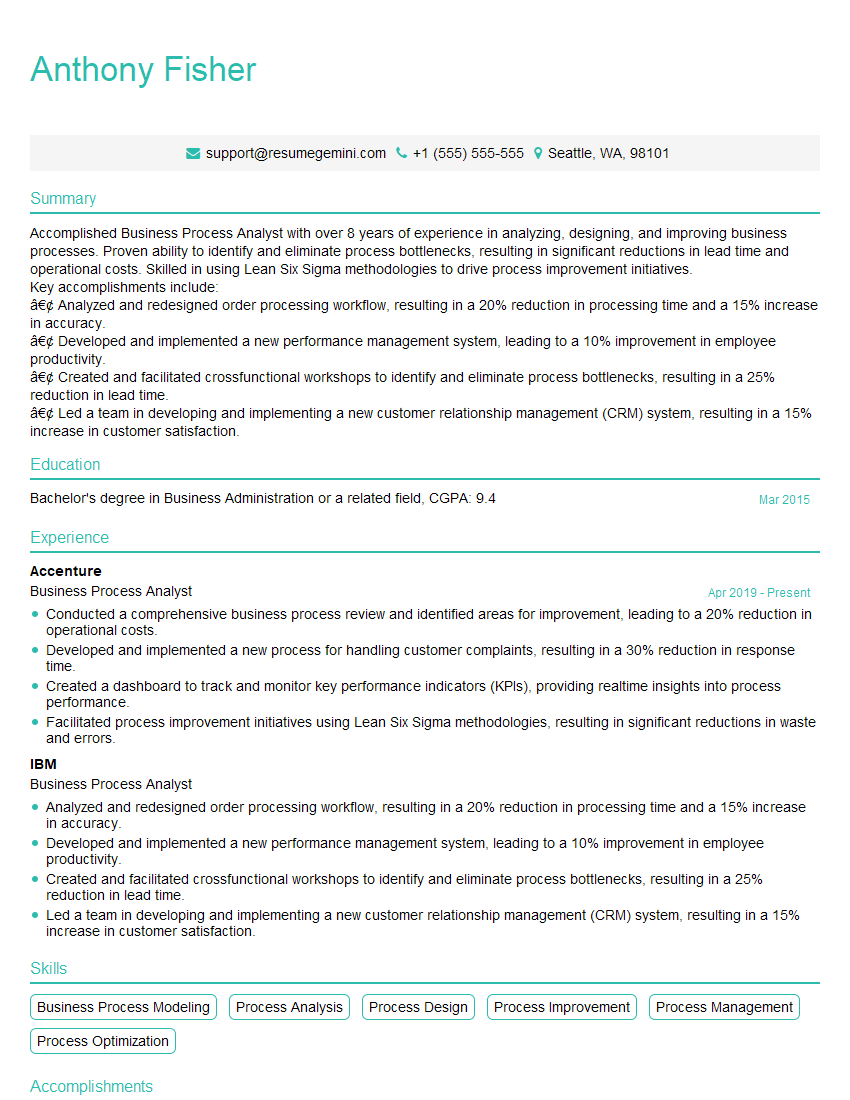
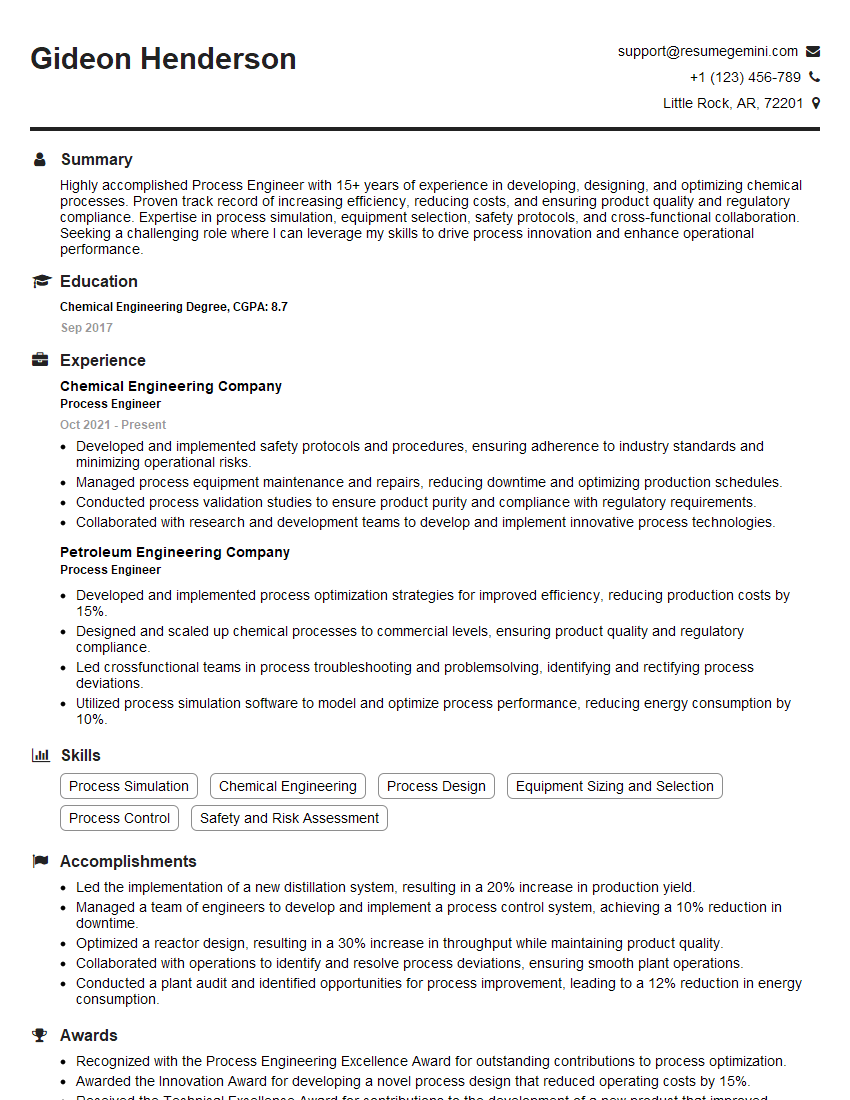
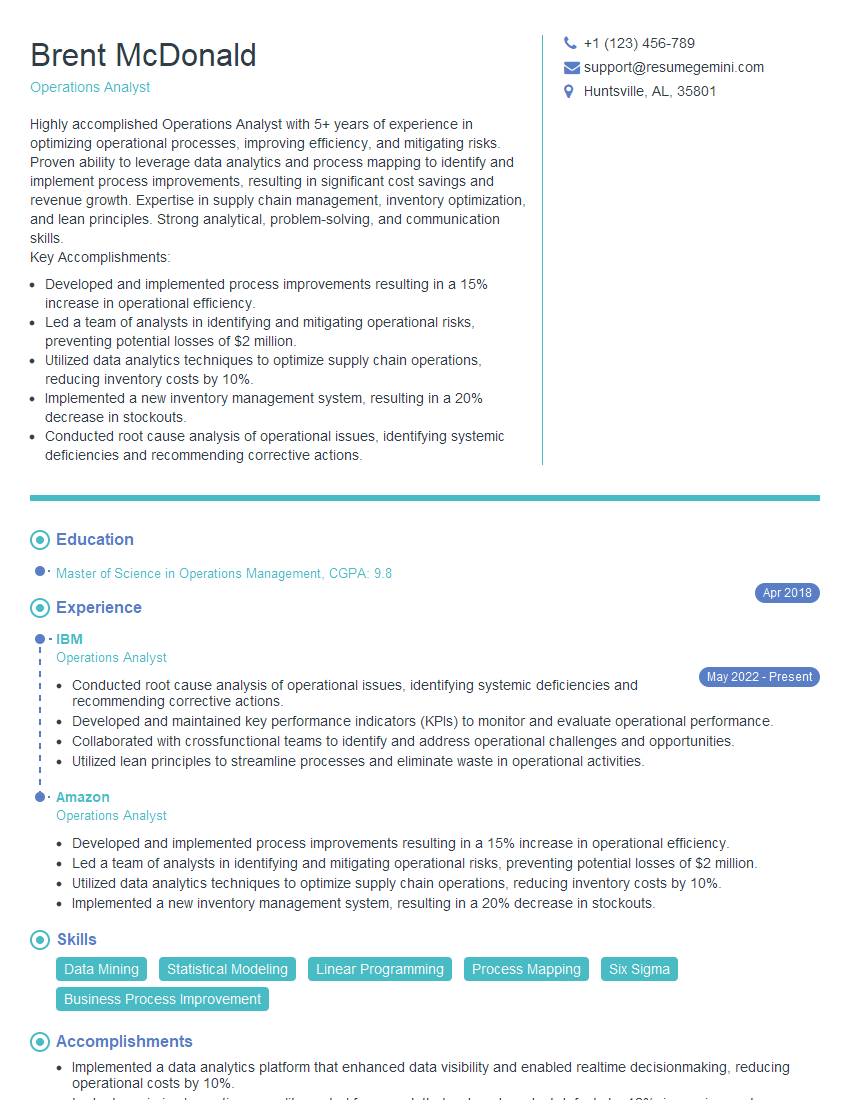
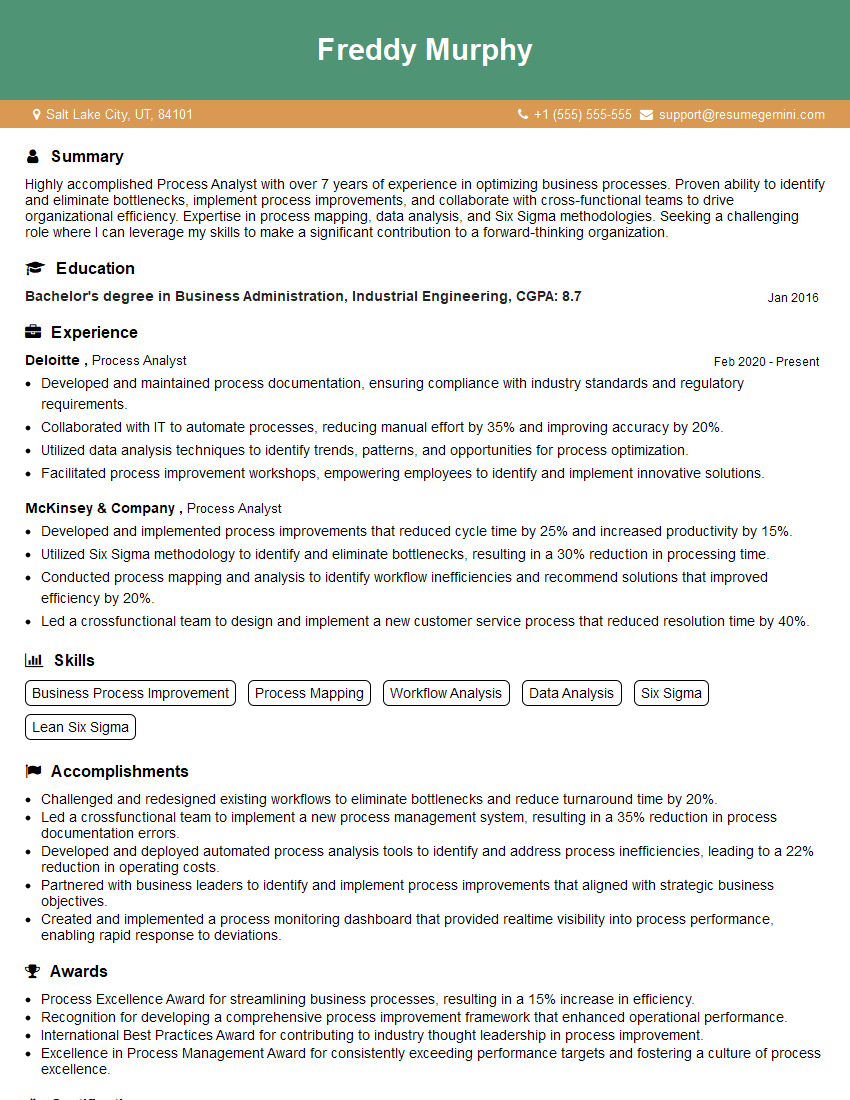
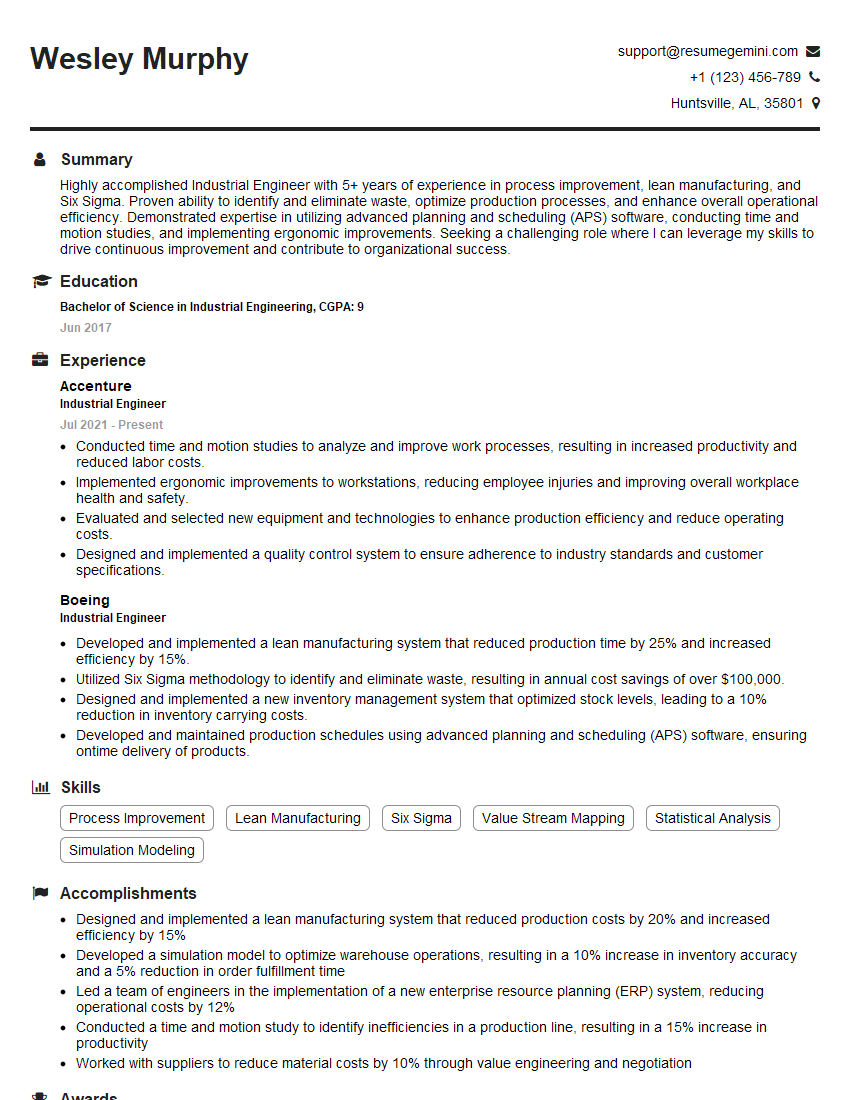
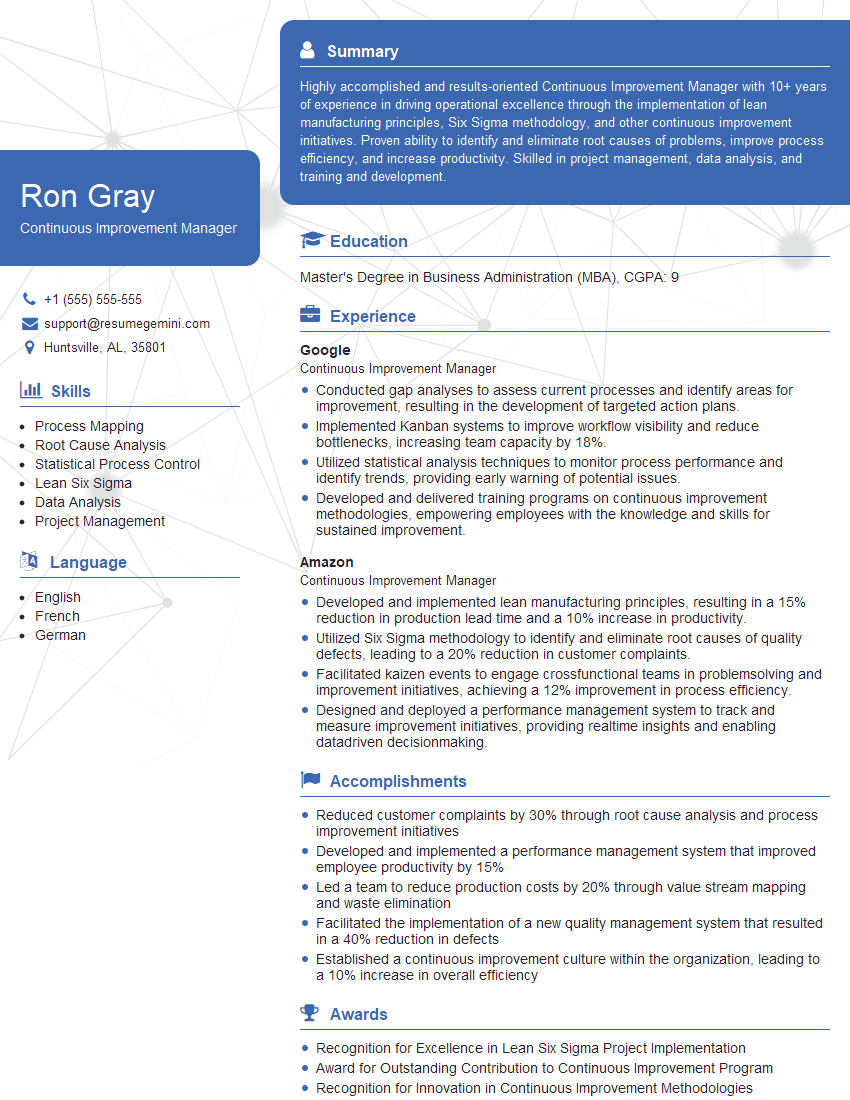
Mastering Continuous Improvement and Process Innovation is crucial for career advancement in today’s dynamic business environment. These skills are highly sought after, demonstrating your ability to drive efficiency, reduce costs, and enhance overall organizational performance. To maximize your job prospects, create a compelling and ATS-friendly resume that highlights your relevant skills and accomplishments. ResumeGemini is a trusted resource to help you build a professional resume that truly showcases your capabilities. We provide examples of resumes tailored to Continuous Improvement and Process Innovation roles to help you craft the perfect application.
Explore more articles
Users Rating of Our Blogs
Share Your Experience
We value your feedback! Please rate our content and share your thoughts (optional).
What Readers Say About Our Blog
To the interviewgemini.com Webmaster.
Very helpful and content specific questions to help prepare me for my interview!
Thank you
To the interviewgemini.com Webmaster.
This was kind of a unique content I found around the specialized skills. Very helpful questions and good detailed answers.
Very Helpful blog, thank you Interviewgemini team.